
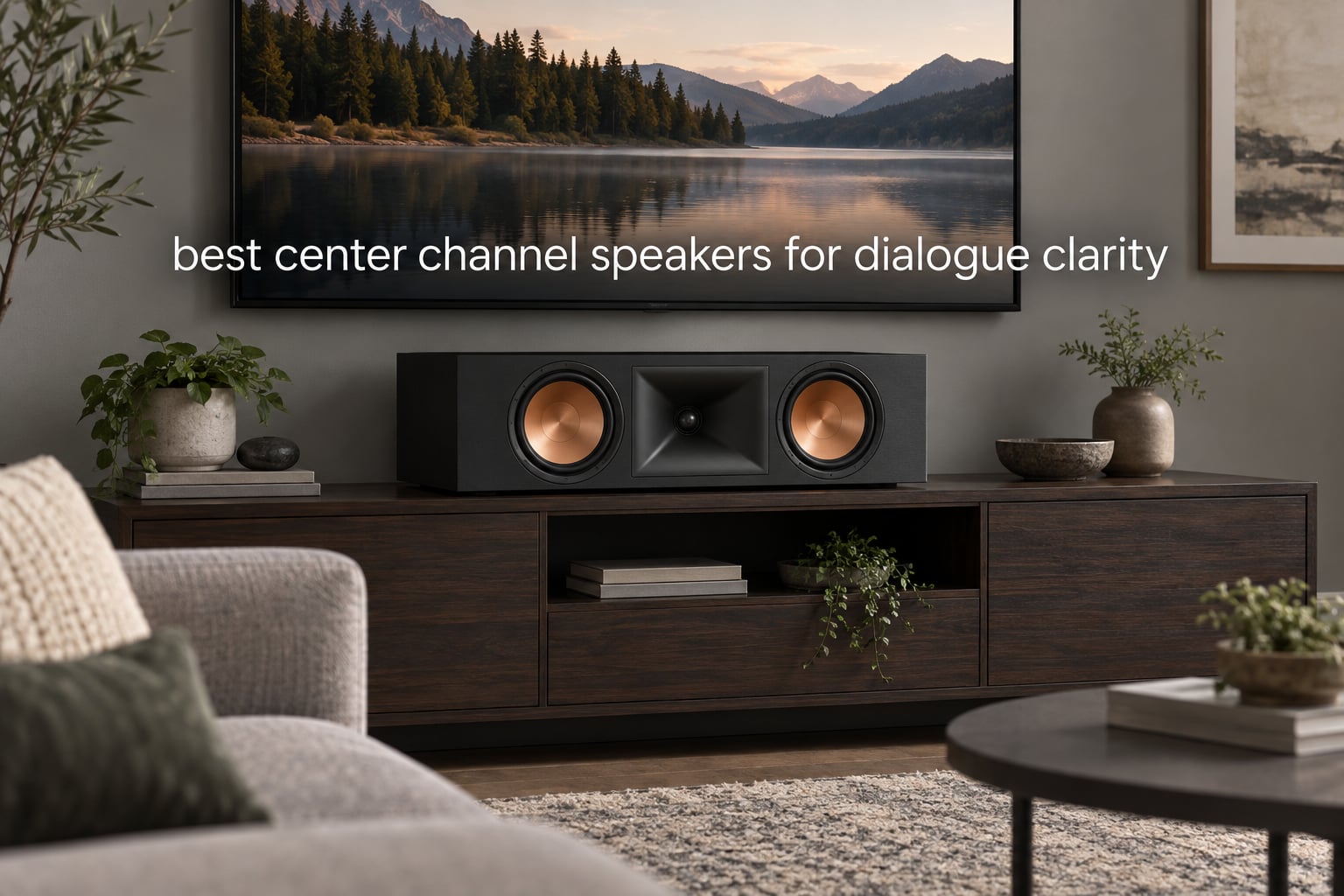
Most of the words you hear in a film come out of one speaker: the center channel. Mixers put dialogue there and keep music, gunfire and engine noise out of it, which is why a good center channel speaker for dialogue clarity changes the whole experience rather than just adding volume. If you have ever turned the volume up during a quiet scene only to be blasted during the next one, the center channel is where the fix starts.
Updated for October 2026, this guide covers the ten dedicated center channel speakers that do the most for speech intelligibility, from a compact budget model to a true 3-way design. We looked at driver configuration, tweeter type, sensitivity, impedance, cabinet dimensions and the long-term owner feedback behind each one. Every model here is a passive speaker, which matters for one reason: labels like “Dolby Atmos compatible” on a passive center channel mean nothing, because Atmos is a processing format, not a property of a driver. Some of the ranking guides on this topic repeat that claim anyway, and we have left it out.
Our method was simple. We read the specifications, then read what owners actually reported after living with each speaker, and we weighted the things that change intelligibility: how a cabinet handles the midrange, how controlled its dispersion is, and whether it can play dialogue without strain in a real room. We also flag the physical constraints, because the clearest speaker in the world is the wrong buy if it does not fit your shelf. If you are still building the rest of the system, our picks for the best bookshelf speakers for stereo listening and the best powered floorstanding speakers for home use pair well with the centers below.
Table of Contents
Top 3 Center Channel Speakers for Dialogue Clarity in 2026
These three cover the most common situations. The Klipsch R-52C is the strongest all-rounder, the Polk Blackstone TL1 is the cheapest way to rescue a muffled front stage, and the Polk Audio T30 is the easiest match for a first home theater system.
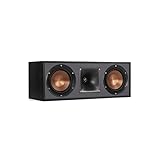
Klipsch R-52C
- Dual 5.25 inch spun copper IMG woofers
- 1 inch aluminum LTS tweeter in 90x90 Tractrix horn
- 95dB sensitivity
- 400W power handling
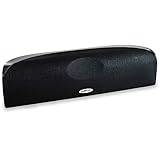
Polk Audio Blackstone TL1
- Dual 2.5 inch Dynamic Balance mid/woofers
- 1/2 inch silk dome tweeter
- Time Lens driver alignment
- 8 ohm impedance
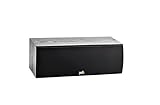
Polk Audio T30
- Dual 5.25 inch Dynamic Balance woofers
- 1 inch silk dome tweeter
- Tuned rear port
- Timbre matched to Polk T-Series
All 10 Speakers at a Glance in 2026
Every model below is a dedicated center channel, which means it is designed to sit under or over a screen and to handle dialogue alone. Features listed here are the ones that matter for voice intelligibility.
| Product | Specs | Action |
|---|---|---|
| Klipsch R-52C |
|
Check Latest Price |
| Polk Audio Blackstone TL1 |
|
Check Latest Price |
| Polk Audio T30 |
|
Check Latest Price |
 Klipsch Reference R-25C Klipsch Reference R-25C |
|
Check Latest Price |
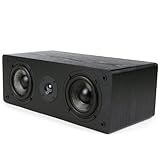 Micca MB42-C Micca MB42-C |
|
Check Latest Price |
 Klipsch RP-504C Klipsch RP-504C |
|
Check Latest Price |
 Polk Audio Signature Elite ES35 Polk Audio Signature Elite ES35 |
|
Check Latest Price |
 Yamaha NS-C210BL Yamaha NS-C210BL |
|
Check Latest Price |
 ELAC Debut 2.0 C5.2 ELAC Debut 2.0 C5.2 |
|
Check Latest Price |
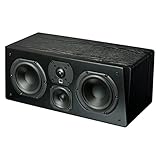 SVS Prime Center SVS Prime Center |
|
Check Latest Price |
What Makes a Center Channel Speaker Clear?
Dialogue lives in the midrange, roughly between 800Hz and 4kHz. That band carries vowel formants, most consonants and the differences between one voice and another. Regulars on AVS Forum describe clarity in exactly those terms: look for a speaker with no large, wide dips in frequency response in the 800Hz to 4kHz range. A dip there is a hole where detail should be, and your brain fills that hole with the background effects competing underneath.
That band is also the hardest part of a speaker to get right, because the same drivers that produce it are trying to move enough air for a large screen at low frequencies. A driver pushed too hard in the midrange distorts exactly where speech lives. That is the core reason a 3-way or 2.5-way center often beats a simple 2-way design at the same size, and it is why forum regulars on r/BudgetAudiophile keep recommending centers with dedicated center-aligned mid-woofers.
Four things decide the outcome, and they are worth checking before you buy:
A midrange that stays flat between 800Hz and 4kHz. This is the single biggest factor in intelligibility. Look for a driver size and crossover that hand the vocal range to one or two dedicated drivers rather than to a single driver running from bass to treble.
Tweeter type and dispersion control. A horn-loaded tweeter or a soft dome with a waveguide sends more of the high midrange energy toward the seats where people actually sit. A plain dome in a flat baffle throws less of it at the off-center seats, and intelligibility drops noticeably at the edges of a wide sofa.
Driver topology. A 2-way center puts mids and treble on one driver. A 2.5-way adds a network so the inner woofer rolls off early, which improves off-axis behaviour. A 3-way MTM array gives the midrange its own driver between two woofers and a tweeter, and forum experts consistently rate that topology as the most articulate.
Cabinet and port design. A shallow, lightly braced box tuned to a single frequency boosts one narrow slice of the midrange and does nothing for the rest, which is what makes very cheap centers sound muffled or honky. Front-firing ports also let you place a speaker against a wall without losing the bass port’s output.
One more factor is outside the speaker entirely: placement. A center channel that sits well below or above ear level loses high midrange energy before the sound even reaches you, and the loss grows as you move off the center seat. We cover placement and receiver settings in its own section below, because it changes the result more than most people expect.
1. Klipsch R-52C – Best Overall for Dialogue Clarity
Klipsch R-52C Powerful Detailed Center Channel Home Speaker – Black
Dual 5.25 inch spun copper IMG woofers
1 inch aluminum LTS tweeter in a 90x90 Tractrix horn
95dB sensitivity, 400W handling
89Hz to 21kHz plus or minus 3dB
Pros
- Holds dialogue clear in loud action scenes
- 4.8 average across more than 3100 reviews
- 95dB sensitivity is easy to drive
- 400W handling suits most systems
Cons
- 18.75 inch wide cabinet needs a large shelf
- 13.5 pounds is heavy for a shelf mount
- Measured sensitivity is often closer to 90dB in-room
The R-52C is the one we recommend to most people, and the reason is the horn. Klipsch built it around a 1 inch aluminum LTS tweeter loaded into a 90 by 90 degree square Tractrix horn, and that waveguide is what puts a concentrated, even dose of high midrange energy across the front rows. Voices come forward and stay forward even when the soundtrack underneath gets loud.
Below the tweeter sit dual 5.25 inch spun copper IMG woofers, which cover the lower midrange and give consonants enough body to cut through effects. The stated response runs 89Hz to 21kHz within plus or minus 3dB, and the sensitivity figure of 95dB at 2.83V means a modest receiver can drive it properly. With 400 watts of power handling, it also has headroom for a dedicated theater room.
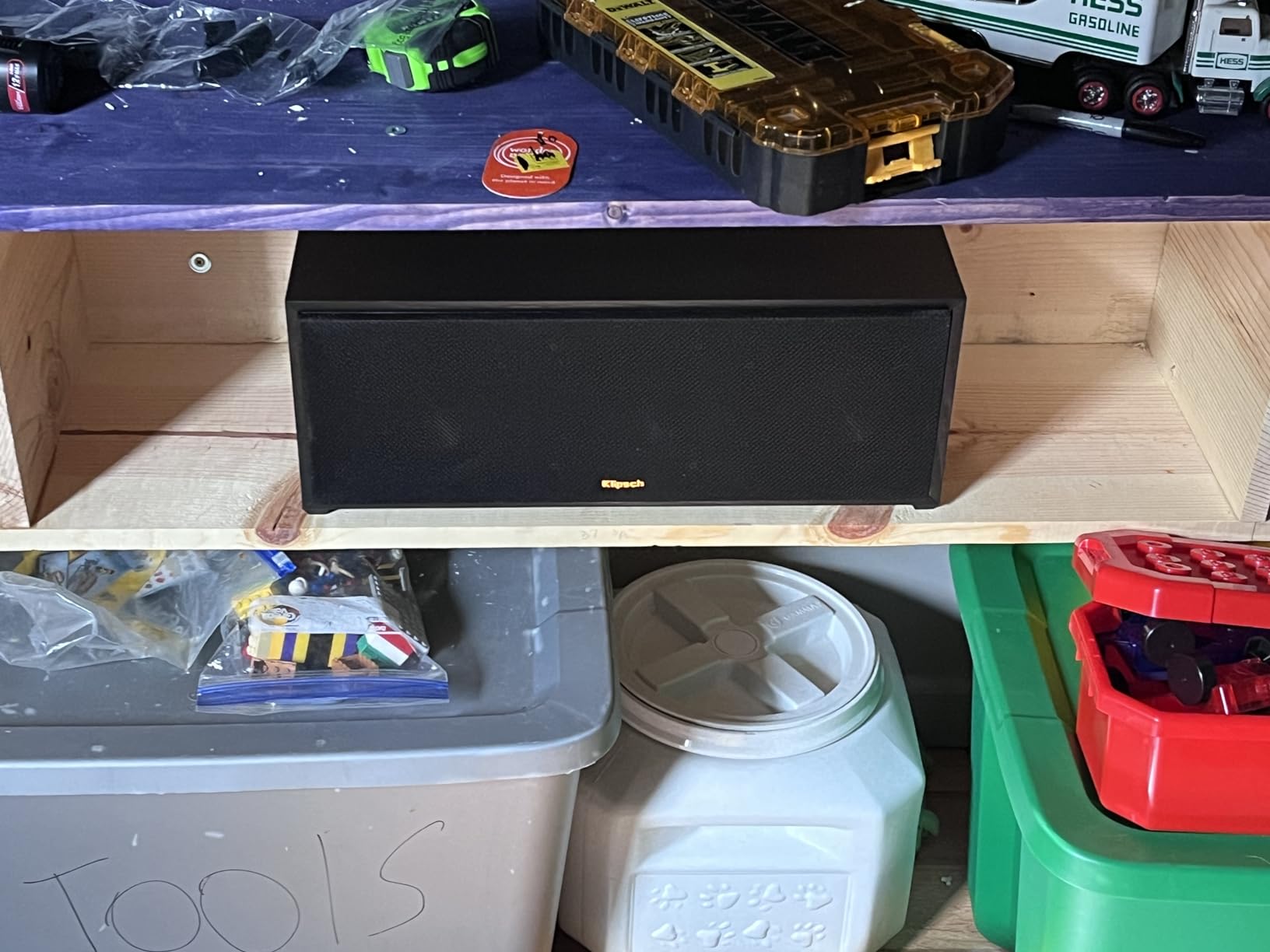
Owner feedback is unusually consistent for a model with this much history. Buyers describe replacing a soundbar or an aging center and finding that quiet dialogue stopped disappearing during busy scenes, and 88 percent of ratings are five stars. The high sensitivity is repeatedly credited with letting people run a mid-range receiver without the dialogue sounding thin.
There is one catch that comes up constantly, and it is physical rather than acoustic. At 18.75 inches wide and 13.5 pounds, the cabinet needs a wide, sturdy shelf, and buyers who measured their media console first report far fewer headaches. Some listeners also note the horn makes the presentation treble-forward next to warmer main speakers, so pairing it with Polk or ELAC towers usually needs a small high-frequency cut in the receiver.
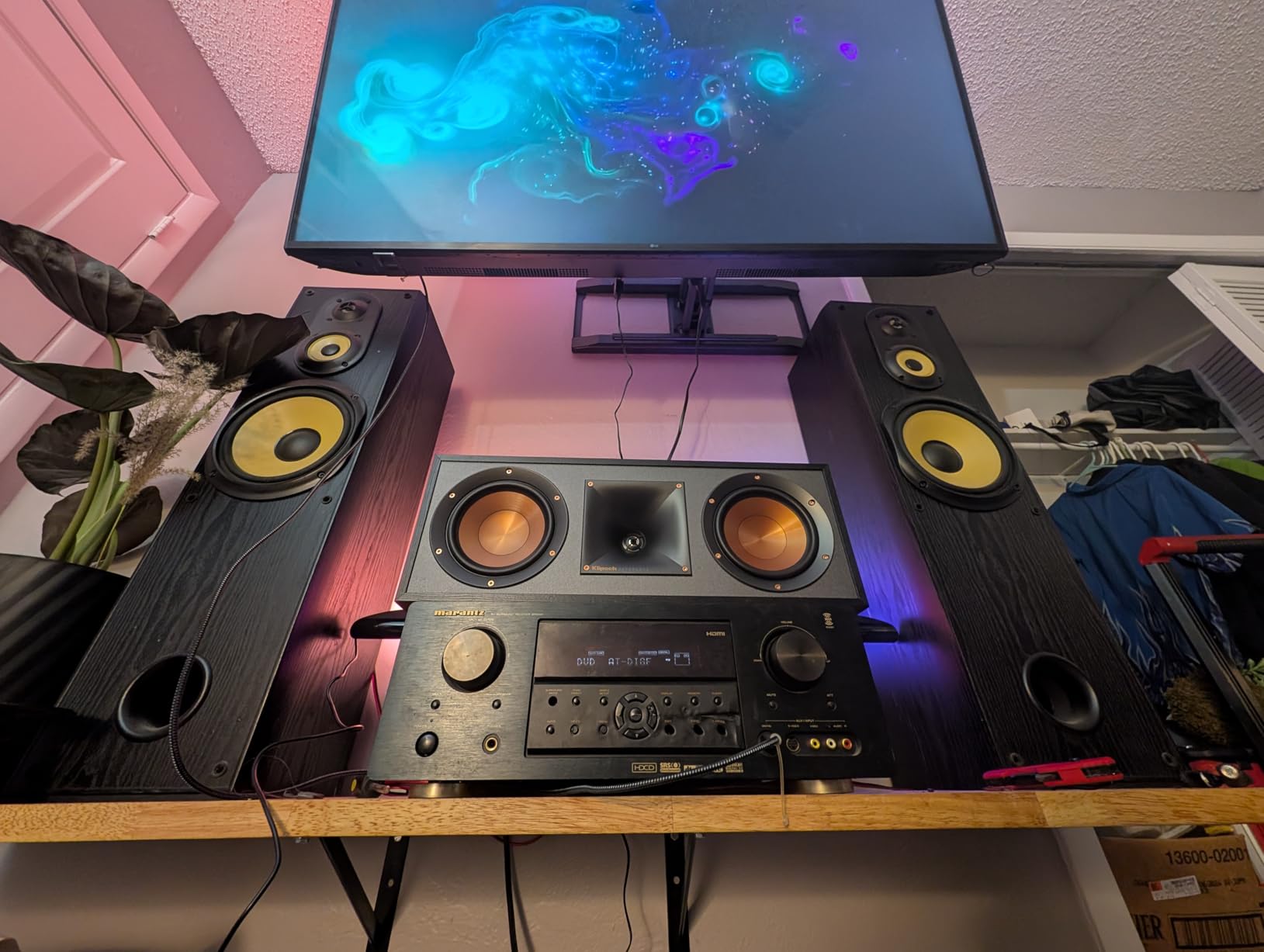
How clear is dialogue on the R-52C?
Very clear at normal listening levels, and it holds up as you push volume, which is where most two-way designs start to lose consonants. The 95dB sensitivity figure means you are not asking a small amplifier to do all the work.
The horn concentrates the clarity band rather than scattering it, so the effect is strongest in the middle seats and fades a little toward the far ends of a very wide sofa. If your seating is unusually wide, the 2.5-way design in the RP-504C is a better fit.
Who should skip the R-52C?
If your TV stand has a narrow center compartment, measure it first. This cabinet is nearly 19 inches wide and will not fit many of the slimmer units sold with current flat-panel televisions.
It is also not the gentlest option for listeners who dislike horn energy. If bright sibilance bothers you at normal levels, start with a soft dome model such as the ELAC Debut 2.0 C5.2 before committing.
2. Polk Audio Blackstone TL1 – Best Budget Fix for Muffled Dialogue
Polk Audio Blackstone TL1 Center Channel Speaker, Hi-Gloss Finish
Dual 2.5 inch Dynamic Balance mid/woofers
1/2 inch silk dome tweeter
Time Lens driver alignment
8 ohm impedance, 125W max output
Pros
- Compact 15 inch wide and 3.4 pound cabinet fits tight media units
- Wall-mountable with recessed terminals
- Owners report dialogue improves over generic center channels
- Warm full sound with no boomy character
Cons
- Very little low frequency output from 2.5 inch drivers
- Will not fill a large room on its own
- May need center delay adjusted on older receivers
The TL1 exists for one job: making muffled dialogue intelligible again without taking over the room. Most owners bought it after replacing a much older center, and the recurring story is that quiet lines became followable again even under loud action. It carries a 4.6 average across more than 2,000 reviews, which is a lot of long-term evidence for a design this small.
The drivers are tiny, a 1/2 inch silk dome tweeter above dual 2-1/2 inch Dynamic Balance mid/woofers, but Polk’s Time Lens technology aligns the acoustic centers of the drivers so the soundstage stays coherent. The result is a warm, full character with no boomy or tinned quality that speakers this small often have.
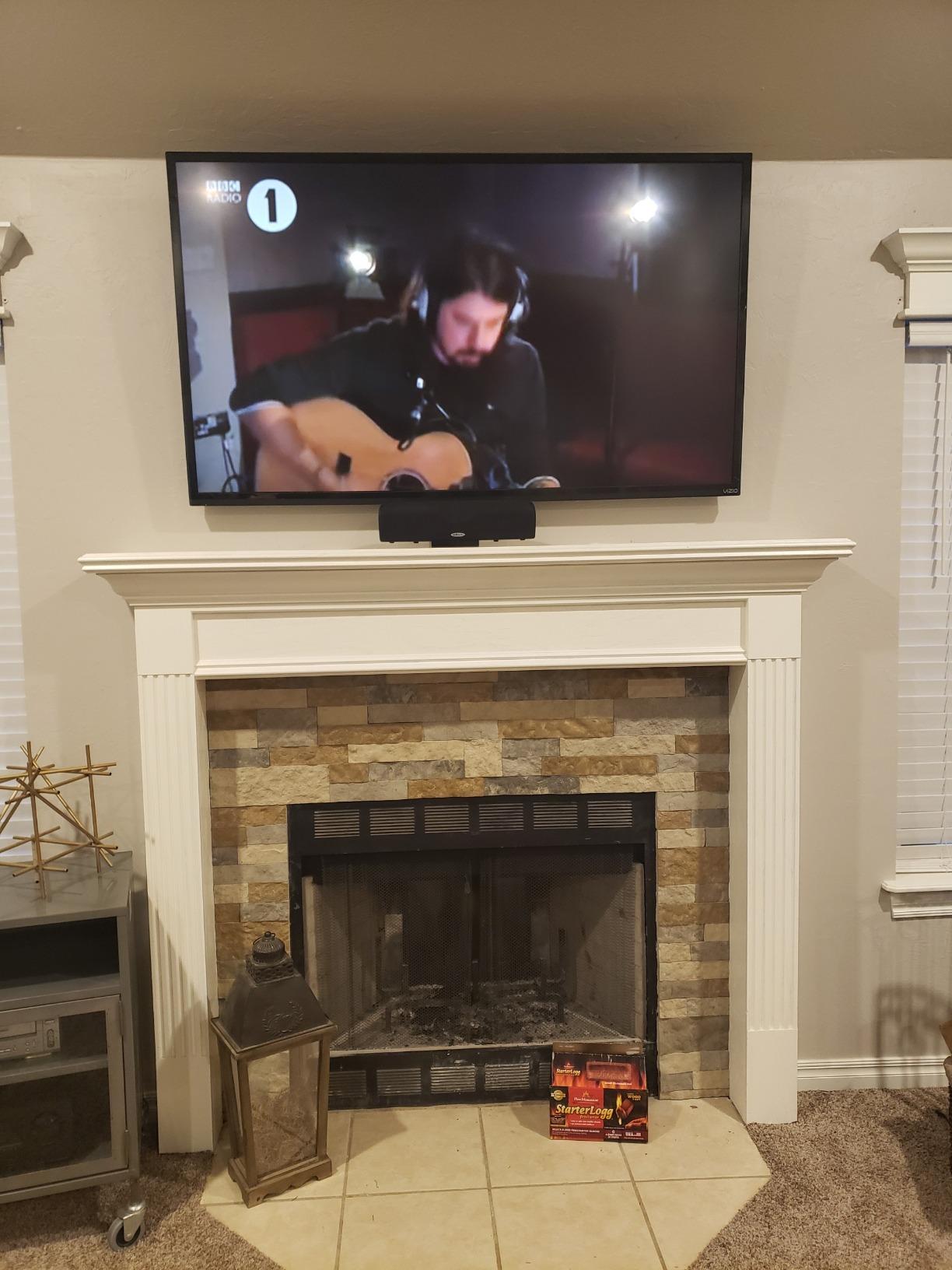
Where this speaker really earns its place is placement. At 15 inches wide, 4 inches tall and 3.4 pounds, it fits media cabinets that reject nearly every other center on this list, and the recessed terminals let it mount flush to a wall under a screen. For an apartment living room or a bedroom setup, that flexibility is worth more than output capability.
The limits are honest ones. Two 2.5 inch drivers cannot move much air, so there is no deep bass and limited room-filling output, and it works best alongside front speakers and a subwoofer rather than as a stand-alone system. A few buyers also had to re-run receiver calibration or adjust the center delay after installing it, which is normal when you change speakers but worth knowing.
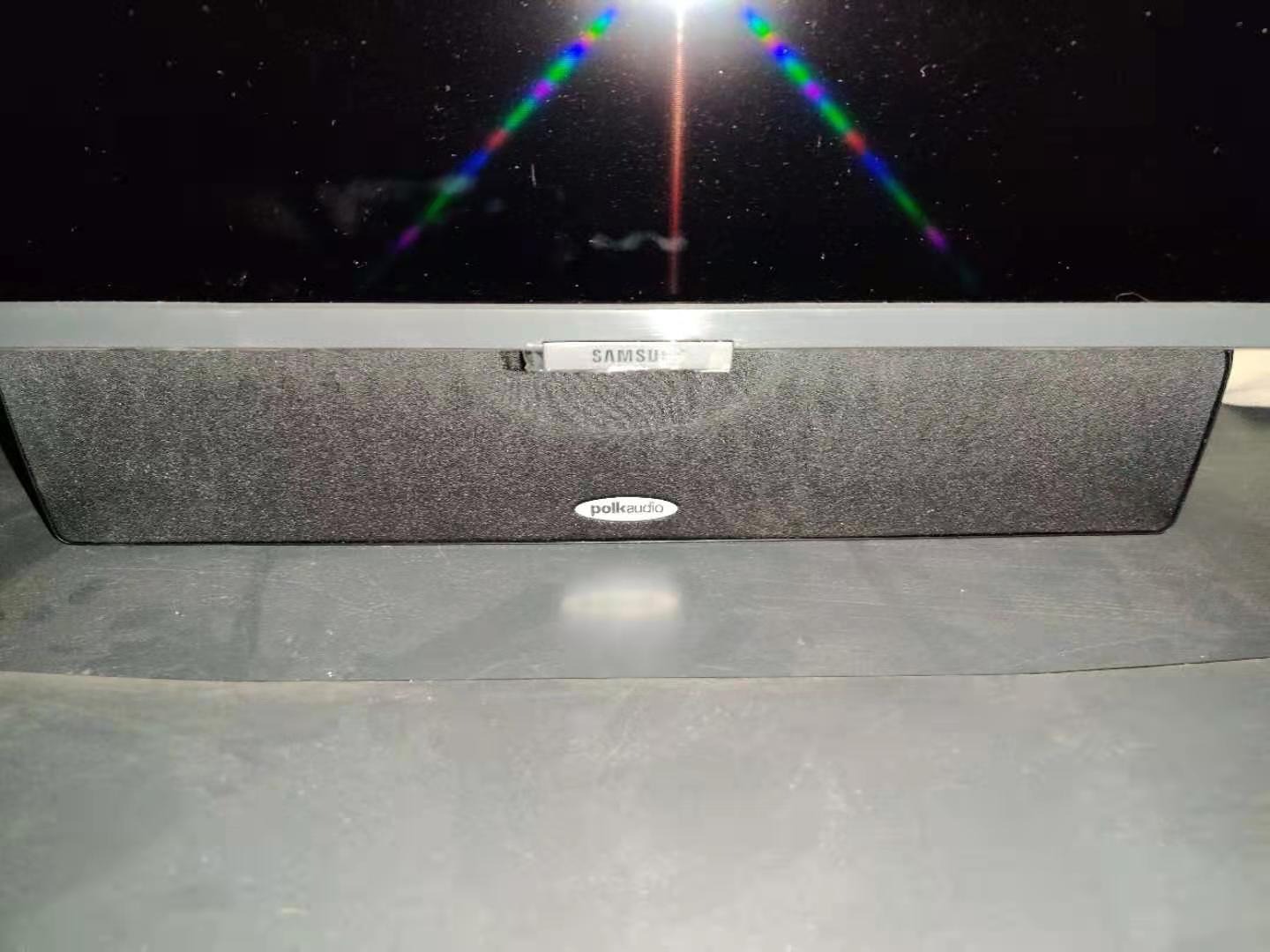
Will the TL1 actually make dialogue clearer?
Yes, if your current center is the weak link. Owners replacing generic or decade-old centers report a clear intelligibility gain, and the silk dome keeps sibilance gentle rather than sharp.
It will not fix a room problem or a badly placed speaker, and it will not deliver dynamics on a large screen. For a small or medium room with other speakers doing the heavy lifting, it does the job well.
Who should skip the TL1?
If you are building a main system and this is the only speaker, look at something with 5.25 inch drivers such as the Polk T30. Scale matters on a large screen.
Owners of a dedicated theater room or a very large living space will find it runs out of level before the soundtrack does. It is a fix for intelligibility, not for impact.
3. Polk Audio T30 – Best Timbre-Matched Upgrade for First-Time Systems
Polk Audio T30 Home Theater Center Channel Speaker, 100W Single, Black
Dual 5.25 inch Dynamic Balance woofers
1 inch silk dome tweeter
Tuned rear port for bass
6 ohm impedance, 200W max output
Pros
- Owners report markedly better vocal intelligibility
- Timbre matched to the Polk T-Series
- Punchy ported bass for its size
- Works with older budget receivers
Cons
- Slightly bright top end
- Small tonal mismatch against Klipsch mains
- 19 inch wide cabinet needs a wide shelf
The T30 is the pick for anyone starting a first 5.1 system on Polk towers or bookshelves, because Polk tunes it to the same tonal target as the rest of the T-Series. That voice matching is the reason it disappears into a matched system instead of sounding like a separate object, and it is the factor forum buyers rate most highly when mixing a new center into an existing setup.
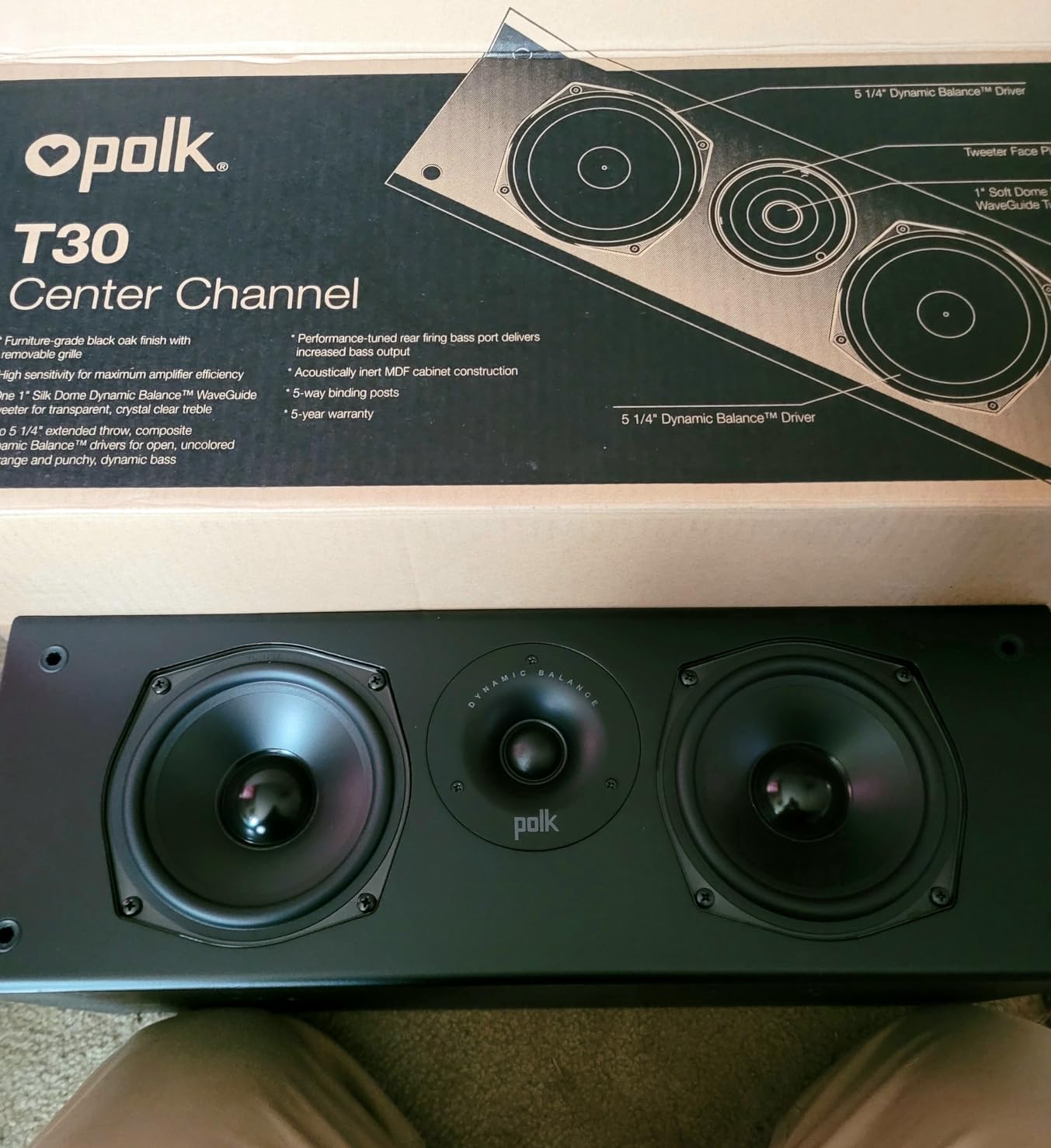
Driver-wise it is a conventional two-way: dual 5.25 inch Dynamic Balance woofers with a tuned rear port, crossed over to a 1 inch silk dome tweeter. The port gives it more low-frequency weight than its size suggests, and response reaches 24,000Hz. With 6 ohm impedance and 200 watts of maximum output, it is comfortable on older budget receivers, and owners report clear results on units more than a decade old.
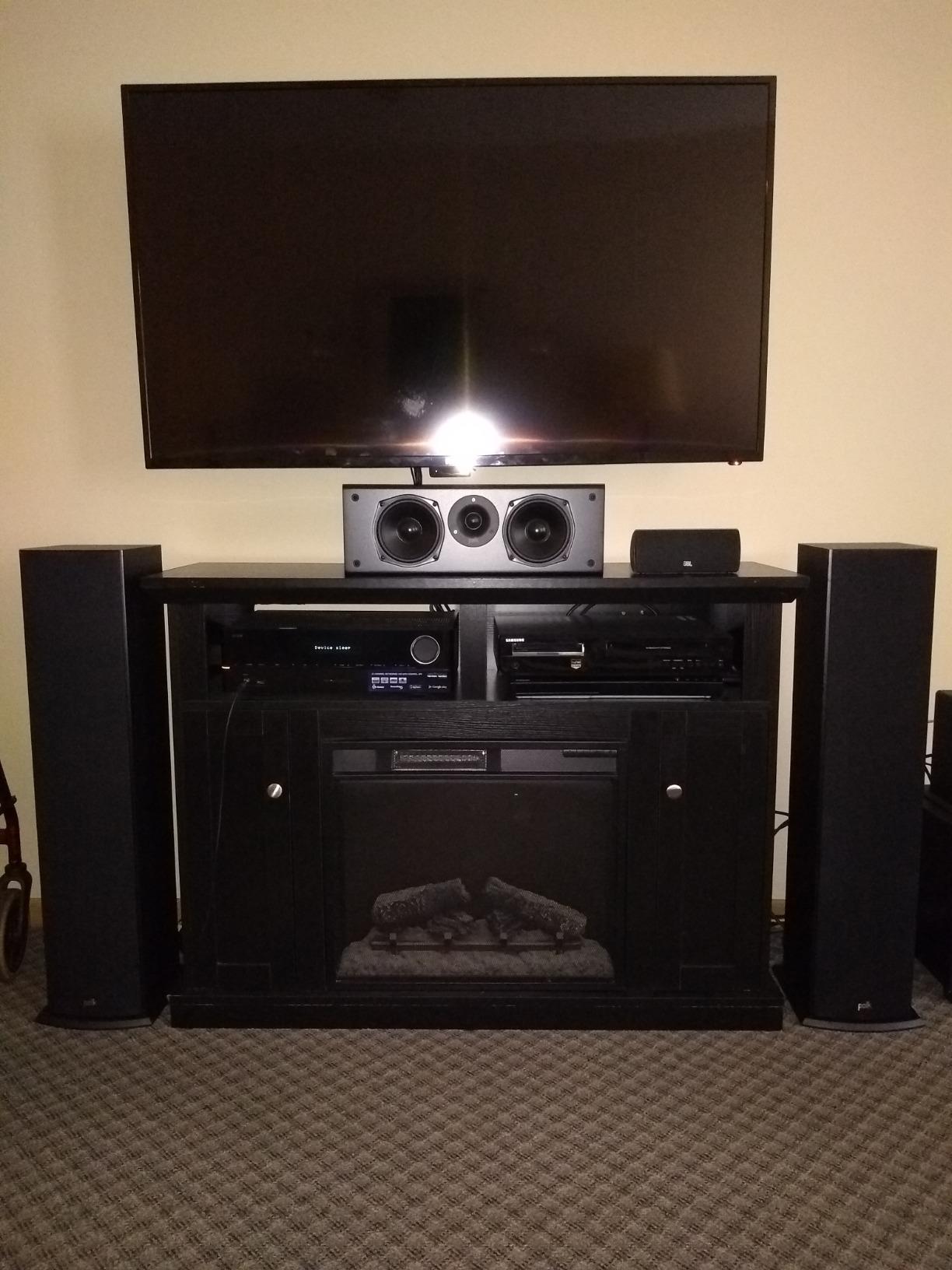
The owner narrative is remarkably uniform. Buyers describe replacing an aging center channel and finding that quiet dialogue stopped getting buried under music and effects, often without touching any settings. The 4.7 average comes with 82 percent five-star ratings across more than 1,600 reviews, and vocal intelligibility is the single word that recurs.
The criticism is tonal rather than functional. Several listeners note a slightly bright or treble-forward signature and use receiver EQ to take the edge off, and owners pairing it with Klipsch mains report a small brightness difference that needs the same correction. That is a normal cross-brand result, not a defect, and it is worth knowing before you mix brands.
Is the T30 good for dialogue in a mixed-brand system?
Yes, and most buyers prove it. The T30 is paired with Polk towers as often as anything else, and a small brightness difference against horn-loaded Klipsch mains is easy to correct with a receiver’s high-frequency trim.
Timbre matching still matters more than most shoppers expect, though. If your front speakers are a matched pair from one series, matching the center to that same series gives the smoothest result across the front soundstage.
Who should skip the T30?
Measure your shelf first. At 19 inches wide and 11.5 pounds, it needs a wide surface, and that is the most common reason buyers return a center channel.
Listeners who are very sensitive to treble energy may find the silk dome a touch forward at first. A short break-in period and a one-step high-frequency cut usually settle it.
4. Klipsch Reference R-25C – Best Horn-Loaded Clarity for Reference Series Owners
Klipsch Reference R-25C Reference Two-Way Center Channel Speaker, 400W Peak Power
Two-way Reference series center channel
1 inch aluminum tweeter in a Tractrix horn
Dual copper-spun IMG woofers
400W peak power handling
Pros
- 4.8 average with 86 percent five-star ratings
- Reference tier horn tweeter at a mid-tier price
- 400W peak power handling
- Consistently described as clear and intelligible
Cons
- Superseded by the newer R-52C
- 18.75 inches wide and 14.8 pounds needs a substantial shelf
- Less written review detail than newer models
The R-25C is the straightforward horn-loaded choice if your front speakers are already Klipsch Reference models. It carries the same 1 inch aluminum tweeter in a Tractrix horn as the rest of the series, above dual copper-spun IMG woofers, and that shared architecture is what keeps the front soundstage tonally consistent as the camera pans across it.
It holds a 4.8 average with 86 percent five-star ratings across roughly 1,250 reviews, and owners consistently describe the vocal reproduction as clear and intelligible. With 400 watts of peak power handling, it covers both modest and more powerful receivers, and the wood cabinet is a step up in finish from the entry-level models.
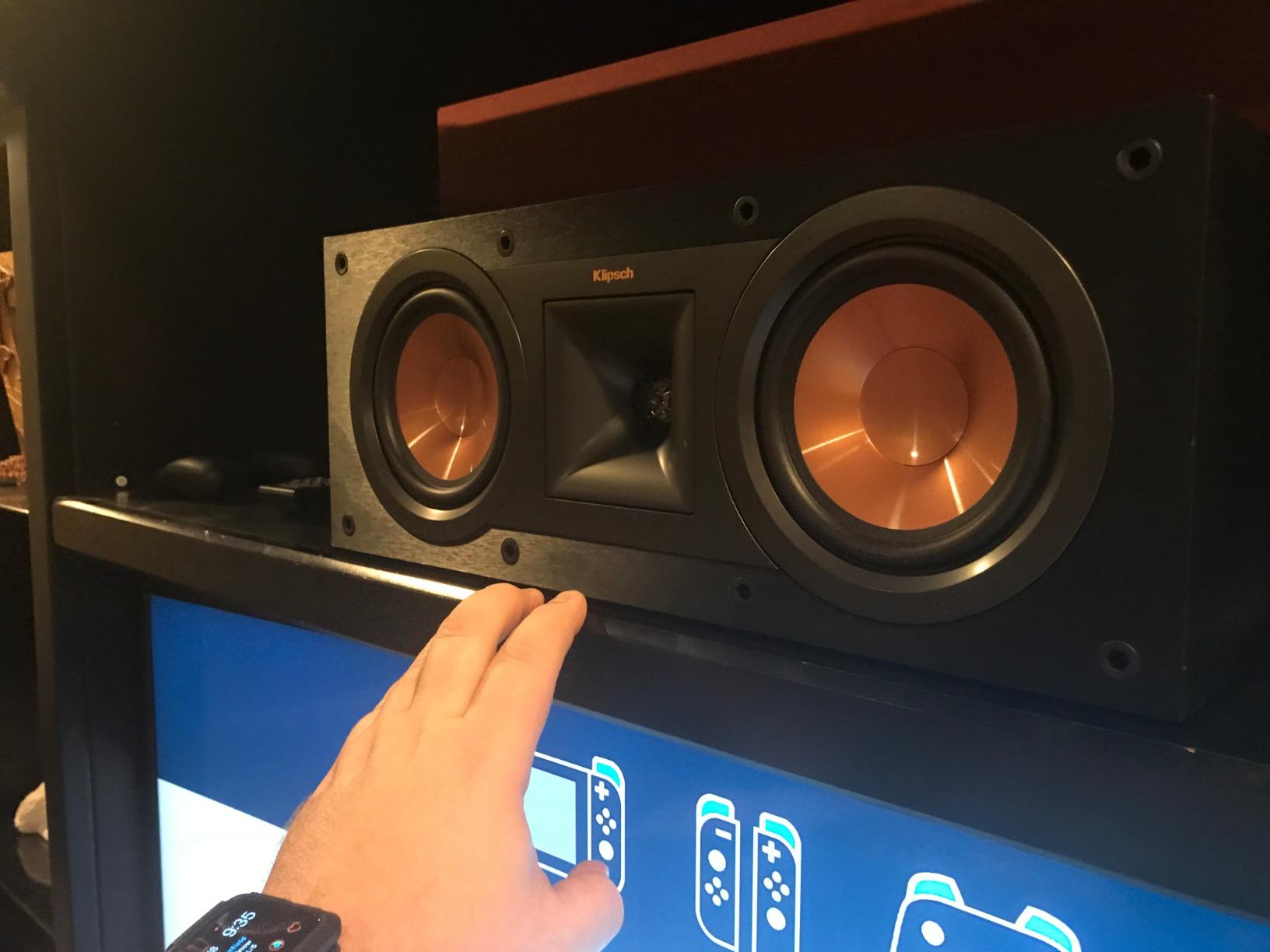
The catch is straightforward: Klipsch has moved on. The R-52C replaced this model in the lineup, and the newer cabinet uses spun copper rather than copper-spun cones, so if you are buying new, the R-52C is the more current buy at a similar size. The R-25C still makes sense if you want to complete an older Reference system and prefer its voicing.
Because this listing dates from an earlier generation, it returns less written review detail than the newer models here. Ratings carry more of the evidence, which is worth weighing if you are deciding between it and something with a modern review history.
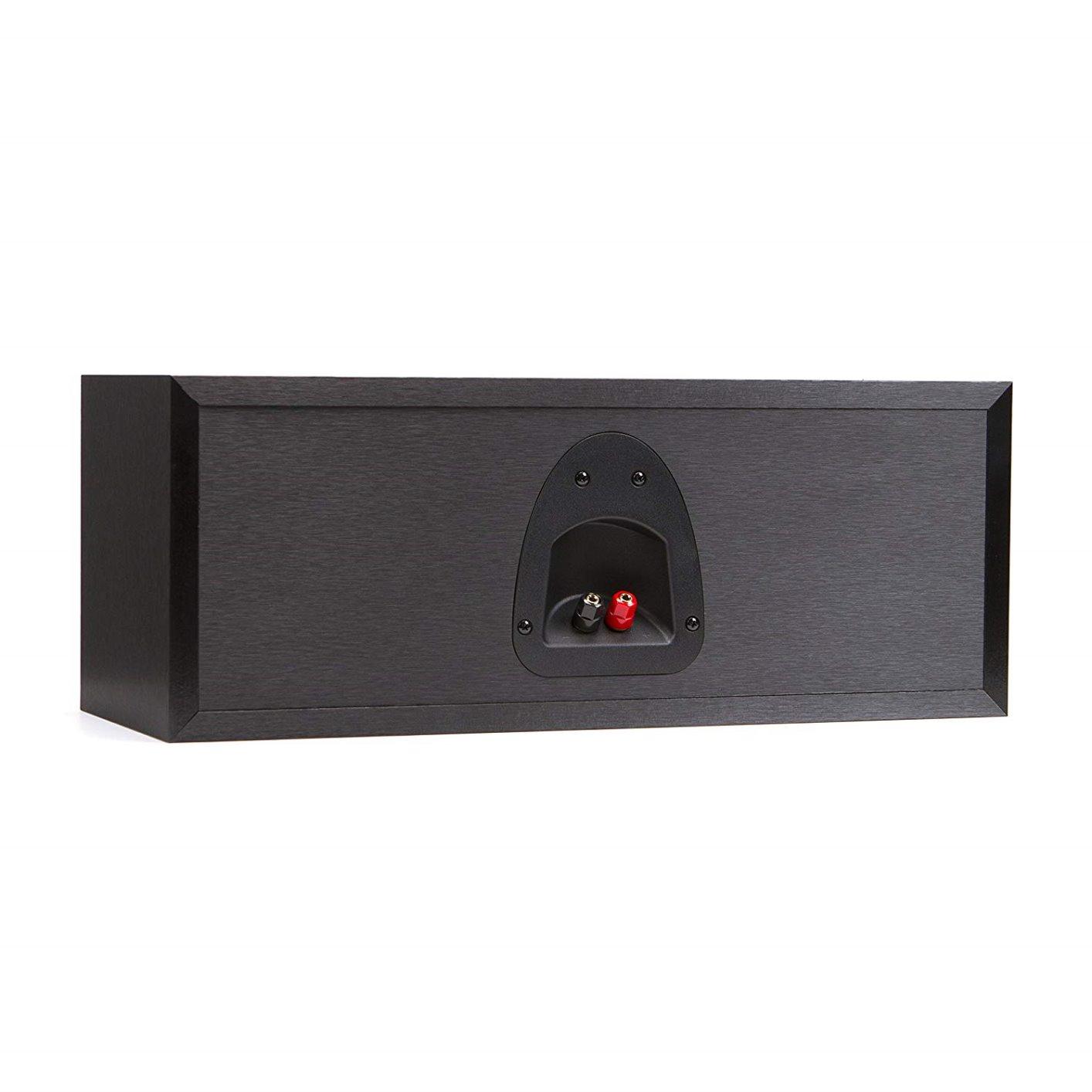
Does the R-25C improve dialogue over a soundbar?
Substantially, and for a specific reason. The horn directs high midrange energy forward across the front rows instead of letting it spread, so consonants stay defined even when the effects mix is loud.
It also plays cleanly well above normal levels, so you do not lose intelligibility as you raise the volume for action sequences.
Who should skip the R-25C?
If you are starting a system today with no existing Klipsch speakers, the R-52C offers the same horn design with newer drivers and a much larger body of owner feedback to draw on.
The physical constraints are identical to the R-52C, roughly 18.75 inches wide and nearly 15 pounds, so the same shelf measurement applies.
5. Micca MB42-C – Best for Small Rooms and Tight Shelves
Micca MB42-C 2-Way Passive Center Channel Speaker Home Theater, Each, Black
Dual 4 inch woven carbon fiber woofers
0.75 inch silk dome tweeter
Ported wood enclosure tuned for low distortion
8 ohm impedance, 100W max output
Pros
- Neutral accurate tuning with a vocal forward signature
- Carbon fiber woofers give more bass impact than budget rivals
- Only 5 pounds and 15 inches wide
- Easy to place and easy to live with
Cons
- One year warranty is the shortest here
- 100W maximum output suits average rooms
- 60Hz listed low frequency figure is the shallowest of the group
The MB42-C is the one we suggest when the room is modest and the shelf is cramped. At 15 inches wide and 5 pounds it is easy to place almost anywhere, and the ported wood enclosure is tuned for extended bass with low distortion, which is unusual at this size.
Sound signature matters more than size here. Owners describe the tuning as neutral and accurate, and the vocal clarity that comes with it is exactly what this roundup is about. The 0.75 inch silk dome tweeter handles the top of the vocal range smoothly, and the woven carbon fiber woofers deliver more low-frequency impact than most budget centers manage.
Its rating distribution is slightly less top-heavy than the Klipsch and Polk flagships, which is a fair signal that it is a very good speaker rather than a flawless one. In practice that means the notes are about capability limits: 100 watts of maximum output suits average-sized rooms, and it is not the model to push in a large dedicated theater.
The documented drawback is the warranty. One year of coverage stands out against the multi-year terms on the Klipsch, Polk, ELAC and Yamaha models here, and for passive speakers that get wired in permanently it is a real consideration.
Is the MB42-C clear enough for dialogue-only listening?
Yes. Its neutral, vocal forward tuning is well suited to podcasts, news and documentary narration, where there is no effects mix to compete with and accuracy matters most.
It is sold as a single center channel speaker, so it replaces a center rather than adding one, and it pairs well with any decent pair of fronts as the anchor for a 5.1 layout.
Who should skip the MB42-C?
If warranty length is important to you, the Polk T30 covers five years at a similar size, and it is a larger-driver design with more output headroom.
Large rooms and high listening levels are also a poor match. The 100 watt ceiling is the real limit here, not the tuning.
6. Klipsch RP-504C – Best for Large Rooms and Wide Seating
Klipsch RP-504C Reference Premiere Center Channel Speaker (Ebony)
Four 5.25 inch Cerametallic woofers
1 inch vented titanium tweeter in a 90x90 Tractrix horn
2.5-way crossover
8 ohm impedance
Pros
- Dialogue stays clear in high intensity scenes
- 2.5-way crossover holds clarity off-axis for side seats
- Four woofers output real level in large rooms
- 90 percent five-star ratings
Cons
- 31 inches wide and 39.7 pounds needs a dedicated shelf
- Treble is boosted and can sound sibilant without EQ
- Needs careful angling toward ear level
The RP-504C is the one to buy when the room is big or the sofa is wide. It is the only 2.5-way design in this group, with separate crossover networks for the inner and outer woofers, and that topology is exactly what keeps the soundstage coherent for listeners sitting off to either side.
The engineering detail is unusually well documented for a center channel. A compressed molded silicon face is matted to the 90 by 90 degree Tractrix horn to reduce horn resonance, the titanium tweeter is vented to stop standing waves forming behind the diaphragm, and the four Cerametallic woofers sit in stamped-steel baskets with dual-layer copper voice coils. The rear Tractrix port is matched to the cabinet and drivers for low-distortion airflow.
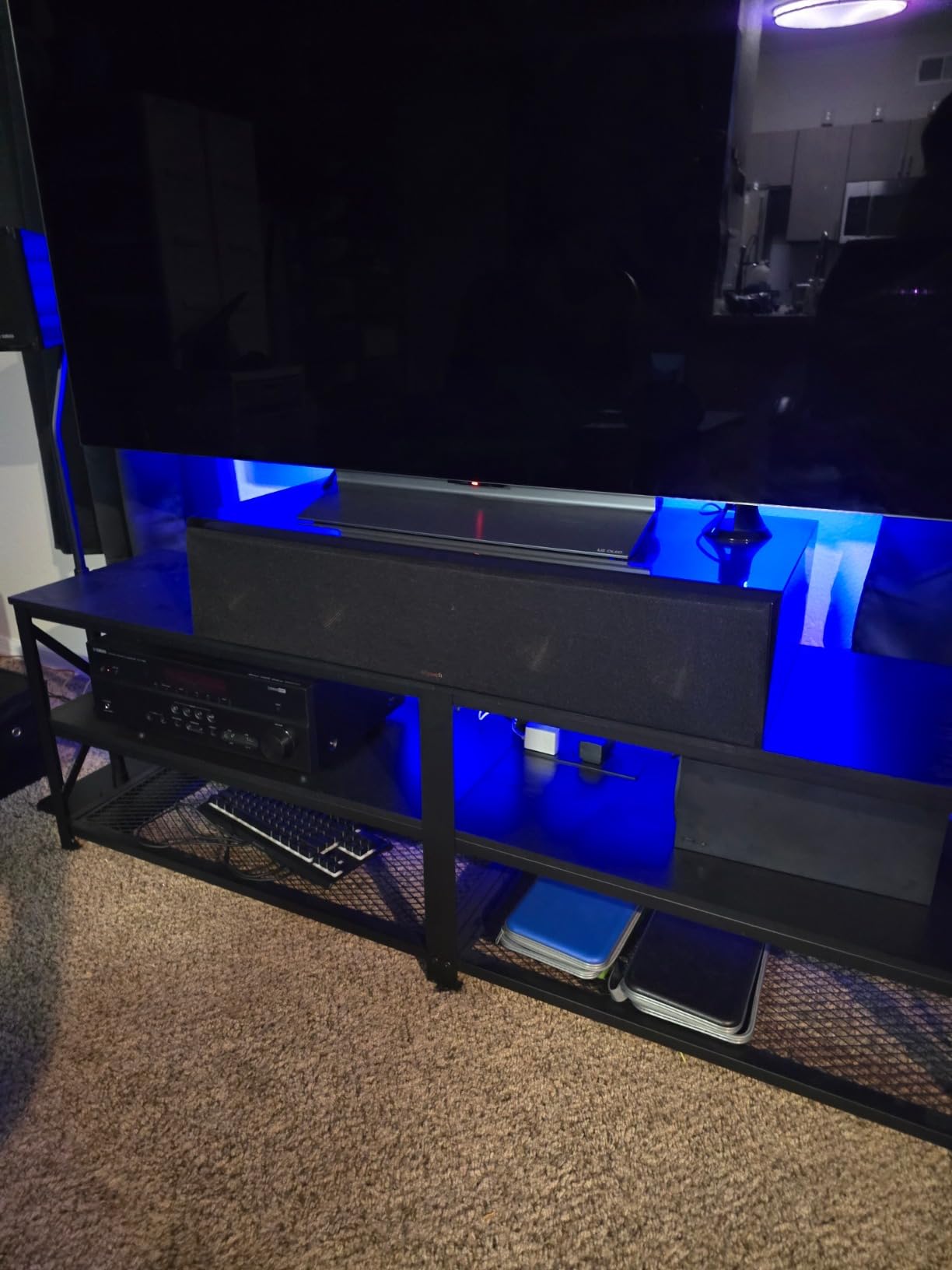
Owner feedback reads like a dialogue remedy. Multiple buyers describe upgrading from a soundbar or an entry-level Klipsch center and finding that speech finally became intelligible during the busiest scenes. Ninety percent of ratings are five stars, the highest five-star share in this group, and the 2.5-way network is singled out for keeping clarity strong across a wide seating area.
Size is the reason it is not our main pick. At 31.13 inches wide, 6.81 inches tall and 39.7 pounds, it will not fit most entertainment centers, and several buyers report buying a new TV stand or wall-mounting their television to accommodate it. A small number of listeners also find the treble boosted and sibilant until they apply a minor EQ cut.
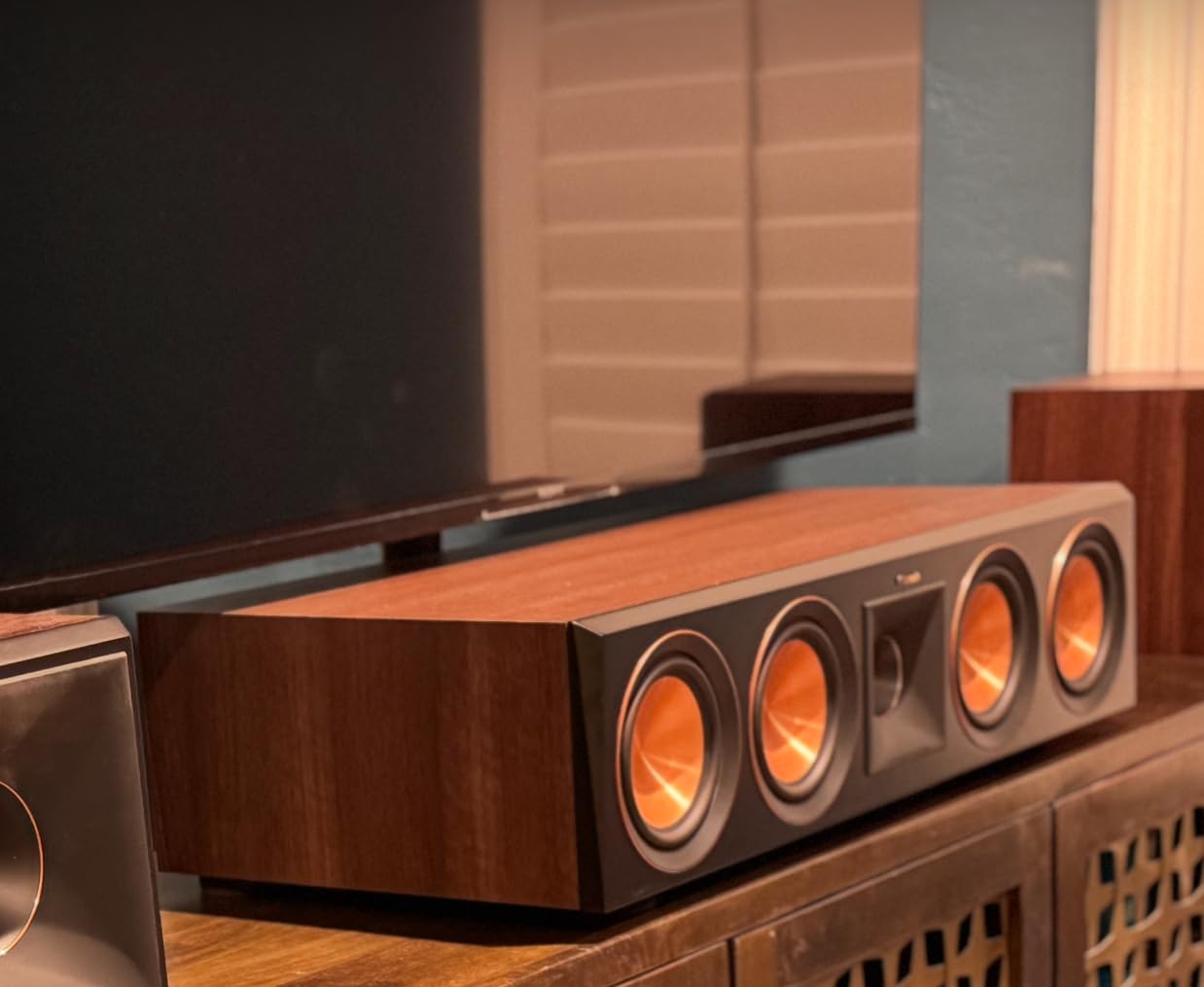
Does the RP-504C hold clarity for people seated at the edges?
Better than any other two-way design here, and that is the 2.5-way network doing its job. The inner woofers roll off early, so the sound does not change character as a voice moves toward the left or right seat.
Several owners also praise the wide cabinet for spreading output across a large group of seats, which matters on a big screen viewed by more than two people.
Who should skip the RP-504C?
Anyone with a narrow media console. Measure the center compartment and the load-bearing surface before ordering, because this is a genuinely heavy speaker for a stand.
It is also a poor match for sensitive ears at out-of-box settings. If sibilance is an issue for you, set expectations for an EQ cut, or look at a soft dome design instead.
7. Polk Audio Signature Elite ES35 – Best for Wall Mounting Below a TV
Polk Audio Signature Elite ES35 Slim Center Channel Speaker, Stunning Black
Six 3 inch woofers with cascading crossovers
1 inch Terylene dome tweeter
Power Port bass extension
4 ohm and 8 ohm compatible
Pros
- Slim 7.5 inch height suits slim bezel televisions
- Wall-mounts below a screen without blocking the IR sensor
- Power Port gives more low end than the cabinet suggests
- Works with both 4 ohm and 8 ohm amplifiers
Cons
- 4 percent one-star rating is the highest negative share here
- About 14 pounds is heavy for slim competitors
- Six small woofers do not replace a subwoofer for deep effects
The ES35 is chosen for placement problems, and it solves a real one. At 20 inches wide but only 7.5 inches tall, it can sit on a shelf or be wall-mounted below a television without blocking the IR sensor, which full-size centers frequently do on modern thin-bezel sets.
Under the slim cabinet is a Dynamically Balanced Acoustic Array of six 3 inch woofers arranged around a 1 inch Terylene dome tweeter, with cascading crossovers that shape how each driver contributes. The patented Power Port delivers more low-frequency output than the cabinet dimensions suggest, and owners consistently report room-filling clarity for the price.
Another useful detail is the impedance rating. It is specified as compatible with both 4 ohm and 8 ohm amplifiers, which widens the range of receivers it will work with, and 150 watts of maximum output is adequate for most living rooms. It can also double as a pair of surrounds in a Signature Elite system if you are building gradually.
Its 4.6 average comes with a 4 percent one-star share, the largest negative proportion in this group. Those complaints cluster around bass depth relative to larger drivers rather than dialogue performance, and the honest fix is a subwoofer rather than expecting a 7.5 inch tall cabinet to handle the lowest effects.
Is the ES35 clear enough for dialogue-heavy TV?
Yes. The six-driver array and cascading crossovers give it a stable, forward midrange, and the slim profile means more people can actually place it properly, which matters as much as the drivers themselves.
For dialogue-only listening in a normal-size living room, it is one of the easier recommendations here, with no EQ required to tame the top end.
Who should skip the ES35?
If you want a single speaker to handle deep cinematic effects without a subwoofer, look for larger drivers. Six 3 inch woofers do not replace dedicated bass management.
At roughly 14 pounds it is also heavier than other slim designs, so check your wall bracket or shelf rating before committing.
8. Yamaha NS-C210BL – Best for Compact TV Stands
Yamaha Audio NS-C210BL Center Channel Speaker – Each (Black)
2-way bass reflex center channel
4 inch light aluminum cone woofers
7/8 inch balanced dome tweeter
6 ohm impedance, 80W max output
Pros
- Narrowest cabinet here at 13.4 inches for tight media units
- Light aluminum cones give a fast transient response for clear dialogue
- Elegant Piano Black finish
- Includes 4 meters of speaker cable
Cons
- 80W maximum output is the lowest figure here
- Limited bass output against 5.25 inch woofer designs
- Only 2 years of warranty coverage
The Yamaha wins on footprint. At 13.4 inches wide and 4.4 pounds, it is the narrowest center channel in this group, and buyers with compact TV stands or a narrow media console consistently name that as the deciding factor rather than any sonic preference.
It is a two-way bass-reflex design with 4 inch woofers built from light aluminum cones and a 7/8 inch balanced dome tweeter above them. The light cone material is the interesting part: it gives the driver a fast transient response, which is what keeps consonants crisp when dialogue starts and stops quickly.
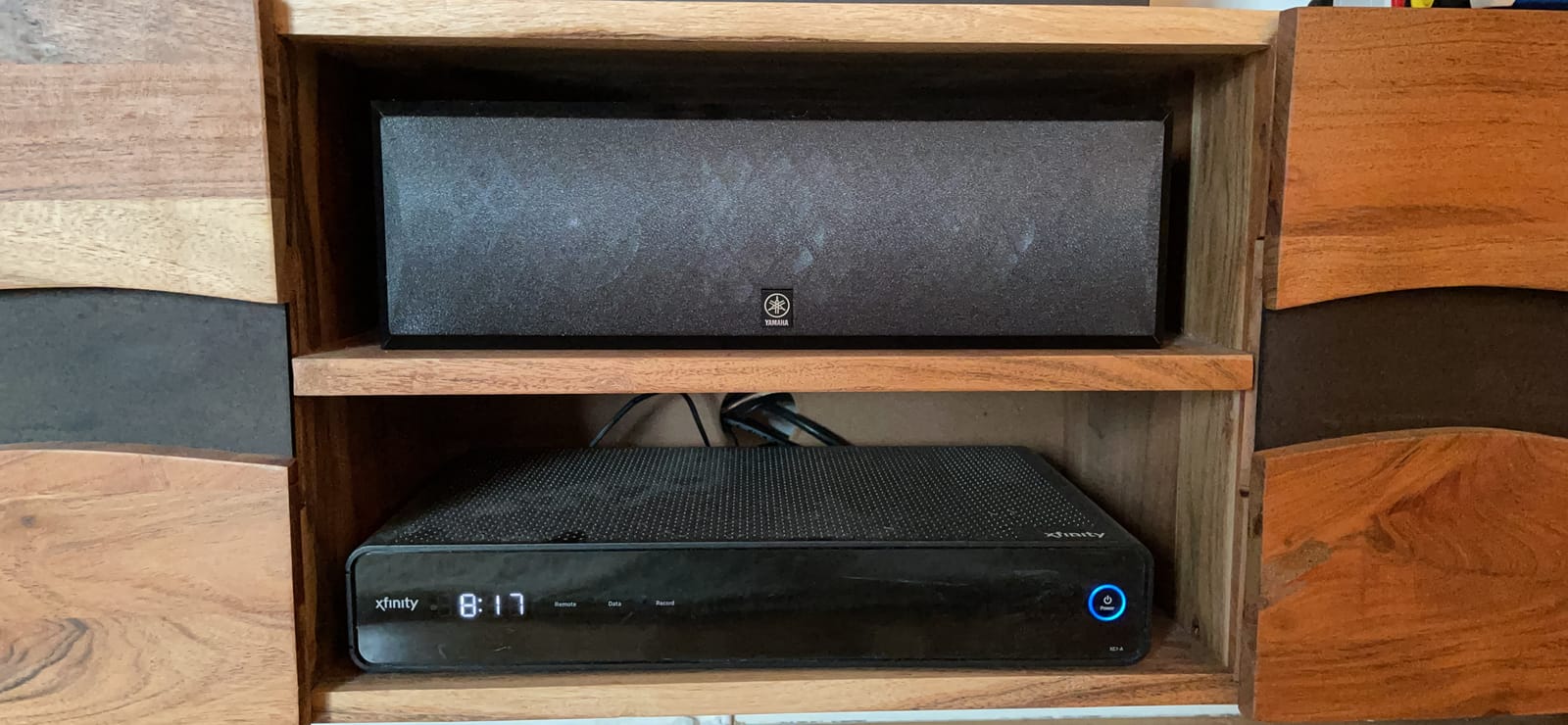
Owners like the Piano Black cabinet in a living room setting, and the manufacturer offers three other finishes if black is not your preference. A 4 meter speaker cable in the box removes one small annoyance on installation, and the 4.6 average comes with 75 percent five-star ratings across 875 reviews.
The compromise is power handling. Eighty watts is the lowest maximum output figure of the models here, and combined with 4 inch drivers it means this is a speaker for a modest receiver in a small to medium room with a subwoofer handling the bass. The two-year warranty is also the second shortest in this roundup.
Does the NS-C210BL produce clear dialogue in a small room?
Yes, and the light aluminum cones are why. A fast transient response is exactly what speech needs, because most consonants are short events that get smeared by drivers that accelerate and decelerate slowly.
In a small room with a subwoofer doing the low end, it is a genuinely complete center channel for its size.
Who should skip the NS-C210BL?
If you plan to run it loud in a large space, the 80 watt ceiling will be the first thing you notice. The RP-504C or the SVS Prime Center are built for that scenario.
Home theater newcomers who want a speaker that grows with the room should spend up and get a 5.25 inch driver design, such as the Polk T30 or the ELAC C5.2.
9. ELAC Debut 2.0 C5.2 – Best for Listeners Who Find Horns Harsh
ELAC Debut 2.0 C5.2 Center Channel Speaker, Black – 1” Cloth Dome Tweeter & Dual 5.25” Aramid Fiber Woofers – 2-Way Bass Reflex – Up to 35,000 Hz Response
1 inch cloth dome tweeter with wide-roll surround and waveguide
Dual 5.25 inch woven aramid fiber woofers
Response to 35,000 Hz
Internally braced MDF with front-firing ports
Pros
- 1 inch cloth dome tweeter with a waveguide for controlled directivity and reduced diffraction
- Optimized impedance lowers the power demand on the receiver
- Front-firing ports work against a wall or in a bookcase
Cons
- Heaviest compact 5.25 inch center at 18.3 pounds
- 21.3 inch wide cabinet needs a large shelf
- Fewer reviews than the Klipsch and Polk entries
The C5.2 is the answer for anyone who has tried horn-loaded centers and found them fatiguing. The 1 inch cloth dome tweeter, mounted in a waveguide with a wide-roll surround, delivers the top of the vocal range without the sibilance that metal domes can produce, and owners single that out as the reason the speaker is easy to listen to for long sessions.
Below it sit dual 5.25 inch woven aramid fiber woofers, a stiff and well-damped cone material that gives smoother, more extended low frequencies than most centers at this level. Response is listed up to 35,000Hz, and the soft dome keeps that upper range smooth rather than etched.
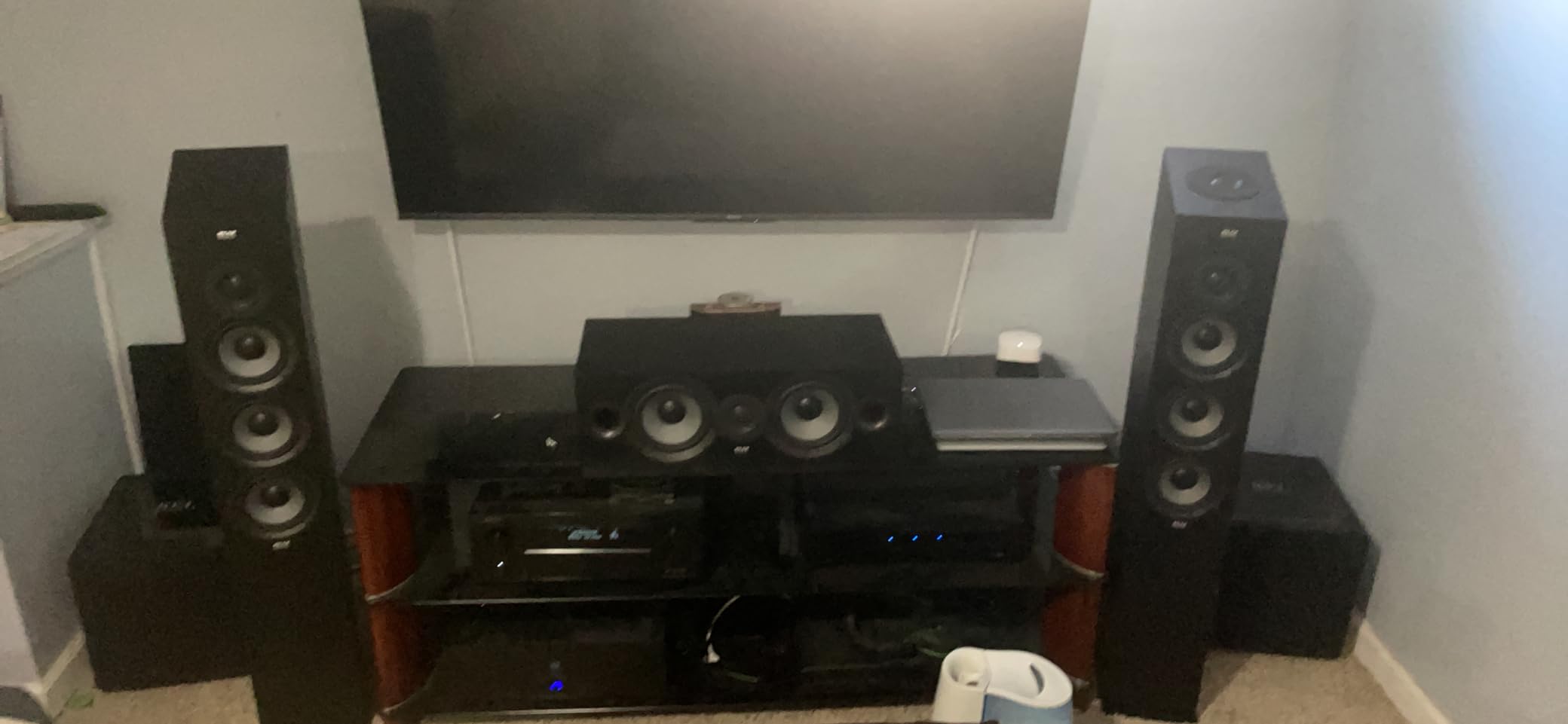
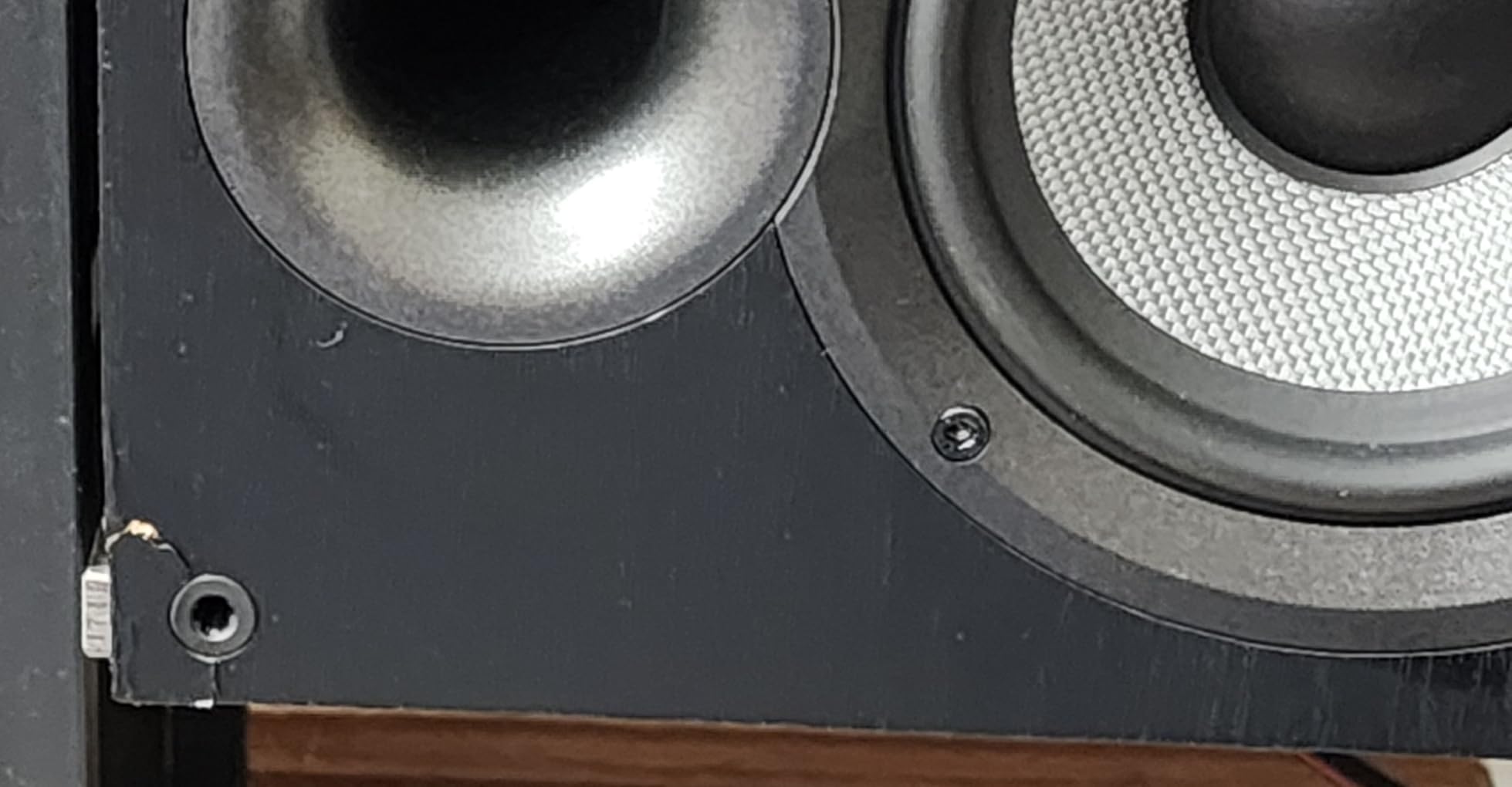
Two engineering decisions are worth knowing about. The cabinet is internally braced MDF with front-firing ports, so it can sit against a wall or inside a bookcase without the port being blocked, which is a real placement advantage in tight rooms. ELAC also states that sensitivity and impedance were optimized specifically to reduce the power burden on the AV receiver, and owners pair it successfully with lower-cost units.
The practical drawback is weight and width. At 18.3 pounds and 21.3 inches across, it is the heaviest and widest of the compact 5.25 inch centers here, and it needs a substantial shelf. Its 4.7 average comes from a smaller sample of 439 reviews, so there is less long-term owner evidence than the Klipsch and Polk models carry.
Is the C5.2 better for dialogue than a horn-loaded center?
For some listeners, yes, and the difference is comfort rather than clarity. The horn designs put more high midrange energy at the listener, which is more efficient for intelligibility but can read as harsh over a long film.
The waveguide still gives the cloth dome controlled directivity, so the C5.2 does not give up the off-axis clarity that makes a good center worthwhile.
Who should skip the C5.2?
If you want the strongest evidence base available, the Klipsch and Polk models here carry several times the review volume. The C5.2 rating is high, but it rests on a smaller sample.
Check your shelf width first. At 21.3 inches it is the widest cabinet in the group outside the horn-loaded Reference Premiere model.
10. SVS Prime Center – Best True 3-Way Design
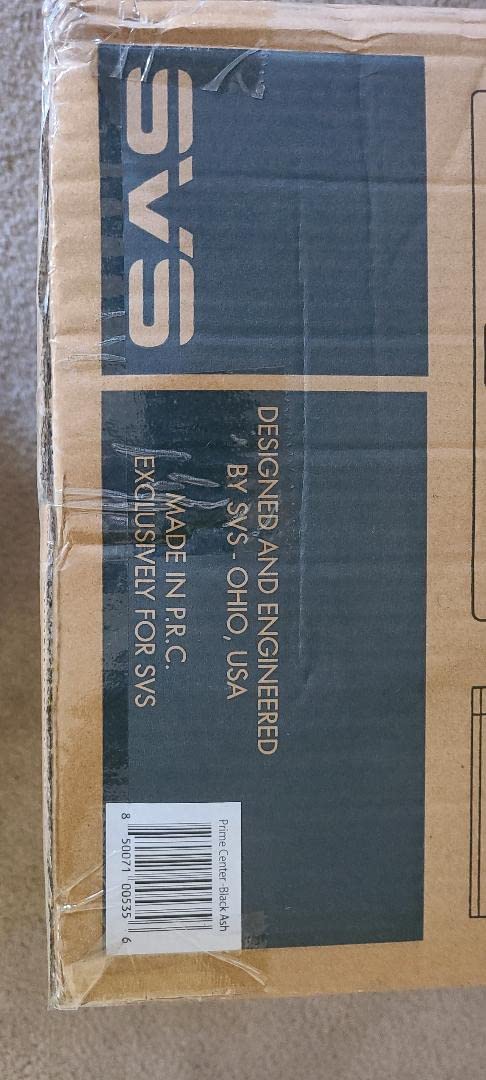
SVS Prime Center Speaker – Premium Black Ash
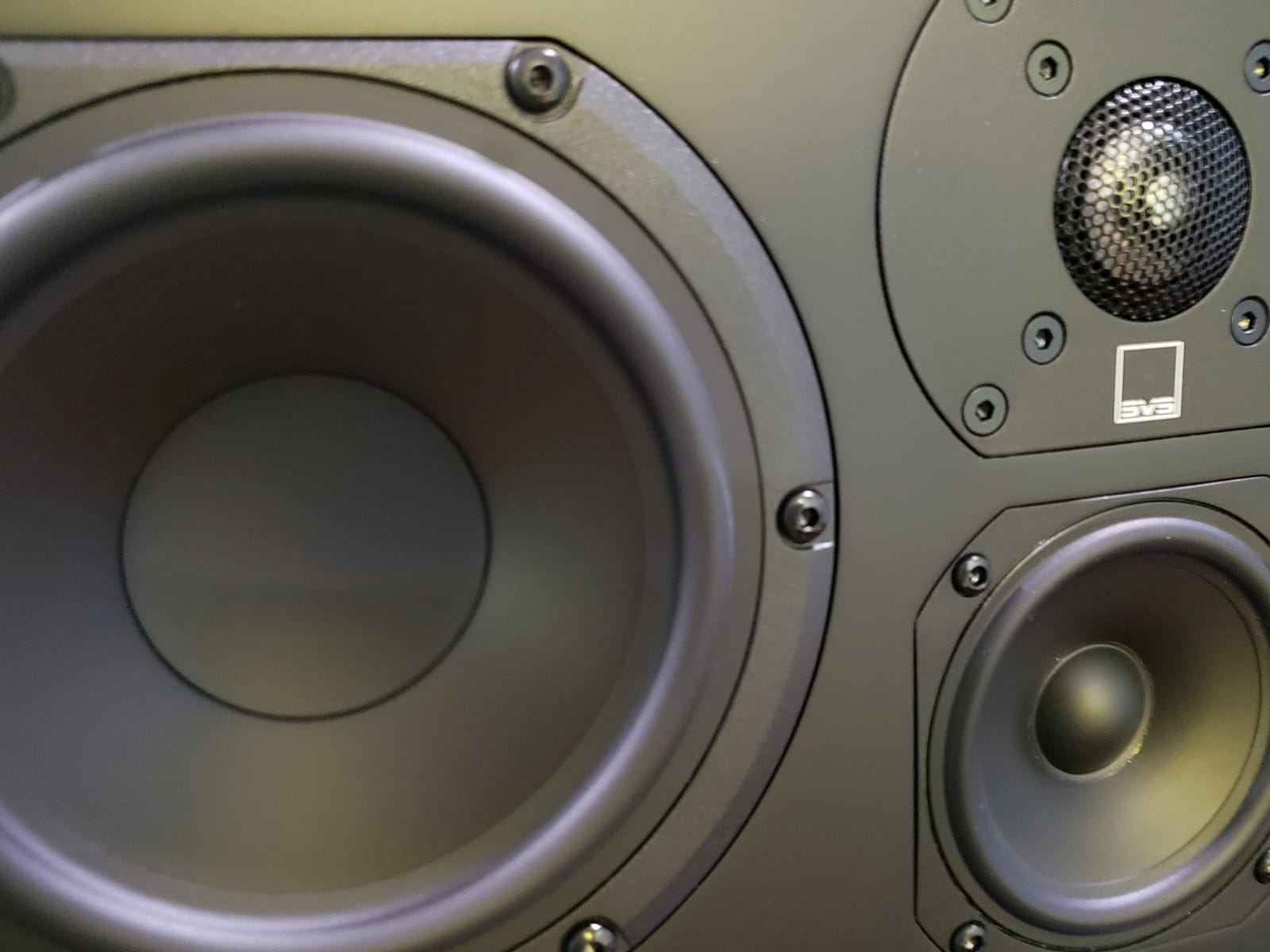
True 3-way crossover with dual 5.25 inch woofers and a 1 inch aluminum dome tweeter
SoundMatch crossover for phase coherence
Cast ABS-fiberglass composite woofer baskets
8 ohm impedance, 200W max output
Pros
- Only true 3-way design in this group
- Aluminum dome tweeter stays composed at high volume
- Strong off-axis clarity well beyond 90 degrees from center
- Warmer balance than horn-loaded centers
Cons
- Bright out of the box for some listeners
- Rear-ported only so it needs clearance behind the cabinet
- 20 pounds and 13 inches deep makes it bulky
The Prime Center is the only true 3-way design in this roundup, and that single fact shapes everything about it. Two 5.25 inch woofers handle the low end, a 1 inch aluminum dome tweeter handles the top, and the SVS SoundMatch crossover hands the midrange to dedicated drivers with phase-coherent transitions. The result is a dialogue layer that does not share duty with bass, which is where two-way designs have to work hardest.
Owners moving up from 2-way centers describe an immediate improvement in intelligibility and in the separation of voices from effects. They also highlight off-axis behaviour: dialogue stays clear well beyond 90 degrees from the center seat, and several listeners describe the tonal balance as warmer and easier to live with than a horn-loaded Klipsch center.
Be aware of the sample size. Its 4.6 average comes from 216 reviews, the smallest pool of the ten models here, so the ratings carry less weight than the multi-thousand-review scores on the Klipsch and Polk models. The engineering case is strong; the volume of long-term owner evidence is not yet comparable.
The recurring caveat is tonal. Several buyers found the presentation a little bright out of the box and either lowered the center level or applied EQ, though several also report it settling down after break-in. The cabinet is rear-ported only, so leave clearance behind it, and at 20 pounds and 13 inches deep it is one of the bulkiest boxes on this list.
Why is a 3-way center better for dialogue?
Because the midrange gets its own driver. On a 2-way design, the same cone producing chest thump at 80Hz is also asked to render the 2kHz consonants of a voice, and it distorts more as you push it. A 3-way array removes that compromise.
Forum experts rate 3-way MTM designs as the most articulate option, and that is the design philosophy this speaker represents.
Who should skip the SVS Prime Center?
If you need it to sit tight against a wall, look for a front-ported design such as the ELAC C5.2. The Prime Center wants breathing room behind the cabinet.
Anyone who is sensitive to treble energy should also know it can read as bright before break-in, and plan to run your receiver’s room correction after a few days of use.
How to Match a New Center to Speakers You Already Own
Most people buying a center channel already own front speakers, and that changes how you should choose. Voice matching matters more than any single spec, because when a film’s dialogue pans across the front soundstage, a tonal jump between the center and the left or right speaker is far more noticeable than a small change in bass weight.
The rule forum regulars repeat is simple: same brand, same series, whenever possible. If you cannot do that, work through these four factors in order.
Driver configuration and size. A 3-way MTM array gives the midrange a dedicated driver, which is the single most useful upgrade in this category. A 2.5-way design is a good second choice because the separate inner and outer woofer networks improve off-axis behaviour. A basic 2-way design works when the drivers are appropriately sized for the room. What you want to avoid is a single 2.5 inch driver asked to do the work of a 5.25 inch cone.
Tweeter character. Horn-loaded and waveguide tweeters are more efficient at putting high midrange energy where people sit, which usually means louder, more forward dialogue. Soft dome tweeters are smoother and easier on sensitive ears. Either is defensible; a mismatch is what causes a front soundstage that changes timbre as the camera moves.
Sensitivity and impedance, in plain English. Sensitivity tells you how much output you get per watt of amplifier power, so a 95dB speaker plays loudly from a modest receiver while an 87dB speaker asks for more. Impedance is the electrical load, and 8 ohm is the easiest to drive. Anything rated 4 ohm, including the Polk Signature Elite ES35 in this roundup, needs a receiver that is comfortable with low-impedance loads.
Power handling and room size. Maximum output power tells you how hard the speaker can be pushed before it distorts. Match it to the room rather than to the rest of the system: a compact bedroom setup does not need 400 watts, and a large dedicated theater room benefits from it. Distance from the screen is the other half of this, and the same guideline that applies to your front speakers applies here.
Forum buyers also ask about a lone center upgrade, and the answer is generally yes. Because dialogue is mixed to a single channel, replacing a weak center is the most efficient single change you can make. You do not need to replace the whole system, and pairing a better center with unchanged fronts is a common and effective way to spend a limited budget.
One last avenue worth knowing about: the used market. Forum users frequently hunt for older horn-loaded and 3-way designs, and models like the JBL 530s or the KEF Q150 come up often for vocal intelligibility. If you go that route, check the driver condition carefully, since decades-old foam surrounds are the most common failure, and re-run your receiver’s calibration after installation.
Placement and Receiver Settings That Make Dialogue Clearer
Placement changes the result more than most shoppers expect. Even a well-designed center loses clarity in the wrong position, because vertical dispersion is not unlimited and the high midrange falls away as you move up or down from the tweeter’s axis.
Here is the sequence that works for most rooms:
Aim the tweeter at ear level. Seated ear height is the reference. If the center sits below the screen, tilt it up toward the seats rather than leaving it flat; most centers have angled feet for exactly this reason.
Keep it close to the screen. The further the center is from the image, the more obvious the disconnect between what you see and what you hear. Directly below or immediately above the screen is the target.
Leave room for the port. Rear-ported models need clearance behind the cabinet. Front-ported designs, such as the ELAC C5.2, can sit tight against a wall without losing bass output.
Re-run calibration after every change. Swapping in a new center alters level and delay. Run your receiver’s room correction again, or manually reset the center distance and delay, because the automatic settings from your old speaker will be wrong.
On the receiver side, most models include a dialogue or vocal mode that lifts the center channel in the mix, and a dynamic range control that compresses the difference between quiet and loud passages. Both help with intelligibility, and both are blunt instruments. Forum users of Klipsch cinema systems keep a dialogue enhancement mode switched on at a low setting as a matter of course, which is a reasonable starting point, but we would reach for the EQ and room correction first and treat the mode as a finishing touch.
Finally, consider the seating. If people regularly sit well off to the left or right, vertical and horizontal dispersion become the deciding specs, and that is where a 2.5-way design such as the Klipsch RP-504C or a true 3-way such as the SVS Prime Center earns its extra cost. Speakers designed to sound good on axis and everywhere else do not exist.
Frequently Asked Questions
Which center channel speaker is best for dialogue clarity?
The Klipsch R-52C is our top pick. Its 1 inch aluminum LTS tweeter sits in a 90×90 degree Tractrix horn that directs high midrange energy toward the listening seats, and dual 5.25 inch spun copper woofers give consonants enough weight to cut through effects. It holds a 4.8 average across more than 3,100 reviews, and 95dB sensitivity means a modest receiver can drive it well.
Should I get 3-way or 2-way center channel speakers?
For dialogue clarity, a 3-way design is the stronger choice. Giving the midrange its own driver removes the compromise of a single cone trying to produce chest thump and speech consonants at the same time, which is exactly where two-way designs distort. A 2.5-way design is a good second option because its separate inner and outer woofer networks improve off-axis clarity. Two-way designs remain perfectly usable when the driver size suits the room.
What are the clearest sounding center channel speakers?
The clearest models in this roundup share two traits: a midrange that stays flat between roughly 800Hz and 4kHz, and controlled dispersion that keeps high midrange energy at off-center seats. The Klipsch R-52C, RP-504C and R-25C achieve it with horn-loaded tweeters, while the SVS Prime Center uses a true 3-way array. The soft-domed ELAC C5.2 is the gentlest of the group for sensitive listeners.
Is a center channel speaker better than a soundbar for clear dialogue?
A dedicated center channel is better for dialogue because the sound is isolated, anchored to the screen and free of the left and right speakers competing for the same frequencies. A soundbar’s dialogue is usually fine until a soundtrack gets busy. The one thing to know is that a soundbar cannot be used as a passive center channel, because soundbars are amplified and take their own signal.
Why does my center channel speaker sound muffled?
The usual causes are a dip in response across the 800Hz to 4kHz range where speech lives, a small driver asked to move too much air, and placement far above or below ear level. System-level causes also matter: a center channel set to the wrong distance or delay in your receiver, or a center channel turned down relative to the front speakers. Re-run room calibration after any speaker swap.
Should my center channel match my front left and right speakers?
Yes, matching brand and series is the best result. Dialogue pans across the front soundstage, and a tonal jump between the center and the mains is very noticeable. If you must mix brands, match the tweeter character instead, since the midrange and treble dominate intelligibility, and plan to correct any brightness difference with the receiver’s high-frequency trim.
How far should a center channel speaker be from the TV?
Keep it as close to the screen as the cabinet allows, either directly below the bottom bezel or immediately above the top bezel. The goal is that dialogue appears to come from the people on screen. Aiming the tweeter at seated ear height matters more than exact distance, so tilt the speaker up if it sits low rather than pushing it further forward.
Which Center Channel Speaker Should You Buy?
The Klipsch R-52C is the best center channel speaker for dialogue clarity in 2026 for most people, because the horn-loaded tweeter puts voices forward and the 95dB sensitivity keeps it easy to drive. If your shelf is narrow, the Polk Audio Blackstone TL1 rescues muffled dialogue for very little money, and the Polk Audio T30 is the cleanest timbre match for a Polk T-Series system. Larger rooms and wide seating call for the Klipsch RP-504C, and if you want the midrange on a dedicated driver, the SVS Prime Center is the only true 3-way here.
Whichever you choose, mount it close to the screen, aim the tweeter at ear level, and re-run your receiver calibration afterwards. For the rest of the system, our guides to the best pillow speakers with volume control and the best PA speakers for live performance cover the other corners of the audio market.