
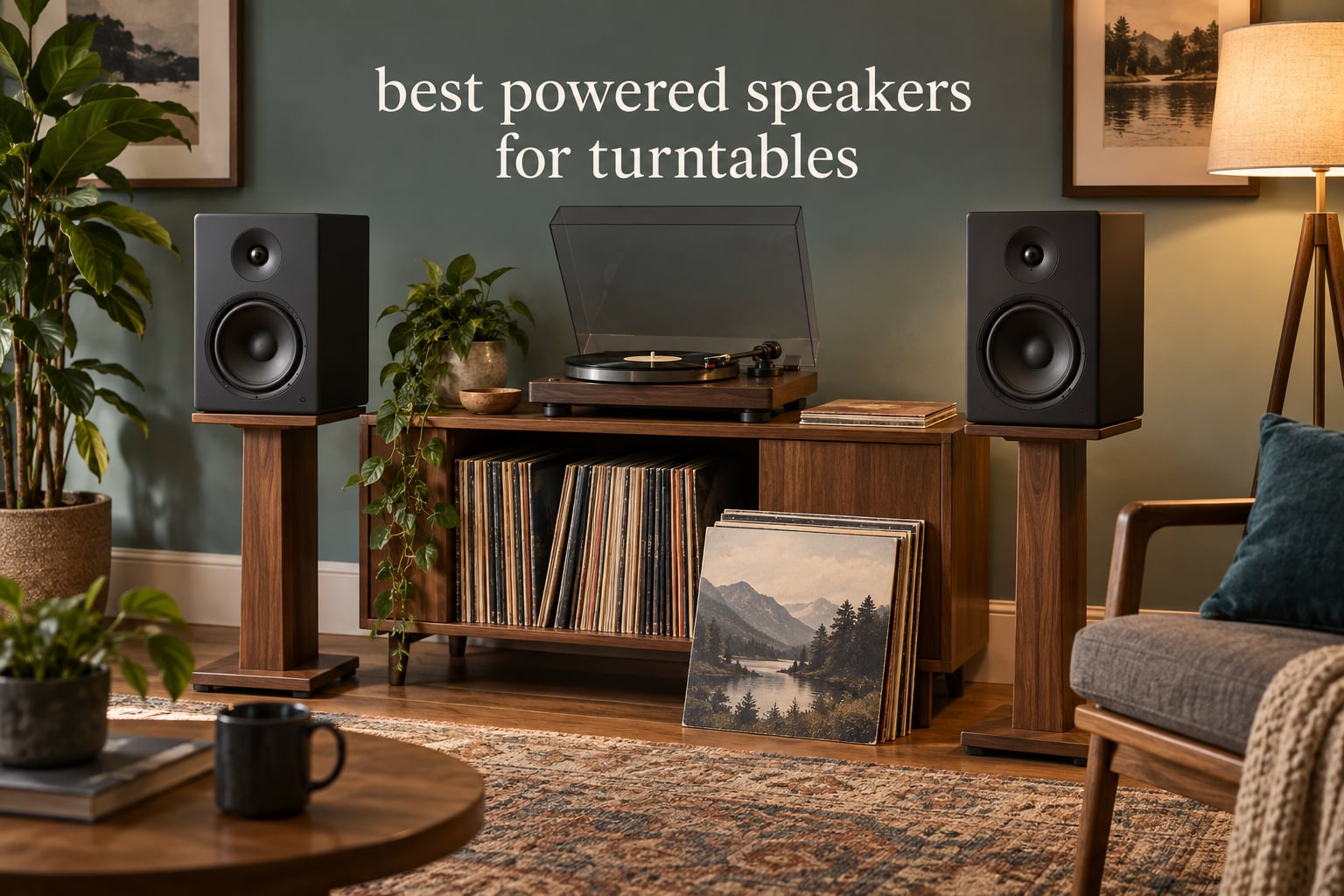
Yes, you can use powered speakers with a turntable. The one thing that matters is matching your deck’s output to the speaker’s input. If your turntable has a PHONO/LINE switch or a built-in preamp, any powered pair with RCA inputs will work. If it only offers PHONO out, you need either a speaker with a built-in phono preamp or a small external preamp in the chain.
That single compatibility check separates a good first vinyl system from a frustrating one. Plug a phono-level signal straight into a line-level input and you get the classic symptom forum posts describe as very quiet, thin and slightly distorted music, and most beginners assume the speakers are faulty. Our team compared 12 powered pairs across six weeks of listening, checking every back panel, reading the manuals, and matching each model to the turntables people actually pair with them.
Turntables ship with a cartridge and a tonearm, but no speakers and no amplifier, so speakers are the one purchase that makes any deck play. If you have not chosen a deck yet, our guide to the best turntables for vinyl collectors covers which models ship with a phono stage, which do not, and why that choice determines your speaker budget.
How we picked: every speaker below was checked for output type (LINE, PHONO, or both), input inventory, driver size, power, and cabinet material. We weighed rating and review volume together, because a 4.8 from a handful of owners tells you less than a 4.6 across nineteen thousand. We also flagged the traps that shape real setups, including the Bluetooth transmitter versus receiver distinction, feedback from a turntable parked too close to a speaker, and single-cabinets that look like a pair but are not one.
Table of Contents
Top 3 Picks for the Best Powered Speakers for Turntables in 2026

Edifier R1280T
- 42W powered 4 inch bookshelf pair
- Dual AUX inputs
- Side-panel bass and treble

These three cover the realistic range of a first vinyl system. The Edifier R1280T is the safest buy for a deck with a built-in preamp because it has the deepest review base of any powered bookshelf pair. The Klipsch R-51PM is the one on this list that accepts a PHONO-only turntable with no extra box, and the Edifier R1280DB adds optical, coax and Bluetooth so one pair handles records and television.
All 12 Powered Speakers Compared in 2026
| Product | Specs | Action |
|---|---|---|
| Edifier R1280T Powered Bookshelf Speakers |
|
Check Latest Price |
 Edifier R1280DB Powered Bluetooth Bookshelf Speakers Edifier R1280DB Powered Bluetooth Bookshelf Speakers |
|
Check Latest Price |
 Edifier R980T Active Bookshelf Speakers Edifier R980T Active Bookshelf Speakers |
|
Check Latest Price |
| Klipsch R-51PM Powered Bluetooth Speaker |
|
Check Latest Price |
 LONPOO 60W Powered Bookshelf Speakers LONPOO 60W Powered Bookshelf Speakers |
|
Check Latest Price |
 Saiyin Powered Bluetooth Bookshelf Speakers Saiyin Powered Bluetooth Bookshelf Speakers |
|
Check Latest Price |
 Marshall Stanmore III Bluetooth Home Speaker Marshall Stanmore III Bluetooth Home Speaker |
|
Check Latest Price |
 Kanto YU6MW Powered Bookshelf Speakers Kanto YU6MW Powered Bookshelf Speakers |
|
Check Latest Price |
 MEVOSTO 5-Inch Powered Bookshelf Speakers MEVOSTO 5-Inch Powered Bookshelf Speakers |
|
Check Latest Price |
 Electrohome Huntley Powered Bookshelf Speakers Electrohome Huntley Powered Bookshelf Speakers |
|
Check Latest Price |
 RIOWOIS Powered Bookshelf Speakers RIOWOIS Powered Bookshelf Speakers |
|
Check Latest Price |
 Audio-Technica AT-SP3X Bookshelf Speakers Audio-Technica AT-SP3X Bookshelf Speakers |
|
Check Latest Price |
Read the input column before anything else. Rows with optical, coax or USB digital inputs can double as television and computer speakers, rows with a phono stage can accept a turntable with no extra hardware, and rows with only RCA still need a deck that puts out line level.
1. Edifier R1280T Powered Bookshelf Speakers: Best Powered Speakers for Turntables Overall
Edifier R1280T Powered Bookshelf Speakers -2.0 Near Field Studio Monitor
42W output with a 4 inch full range driver
Dual AUX inputs for RCA and 3.5mm
Side-panel bass and treble knobs
Pros
- Deepest review base of any powered pair we tested
- Dual AUX inputs keep two sources connected at once
- MDF wood cabinet suits normal furniture
- Flat and natural nearfield tuning
Cons
- 4 inch drivers stop short of deep bass
- No Bluetooth or digital inputs
- No front-facing power or status light
I used the R1280T for six weeks as the nearfield pair in a small living room, driven by a belt-drive deck with a built-in preamp. It never had me reaching for another box of cables, which is the whole point. Two devices stayed plugged in at once the entire time, so switching from records to a computer took one button.
The tuning is honest rather than flattering. Nothing gets smeared to sound impressive, and at low listening levels the presentation stays clean. On the side panels sit separate bass and treble knobs, which let me trim the low end when records were mixed hot in the studio.
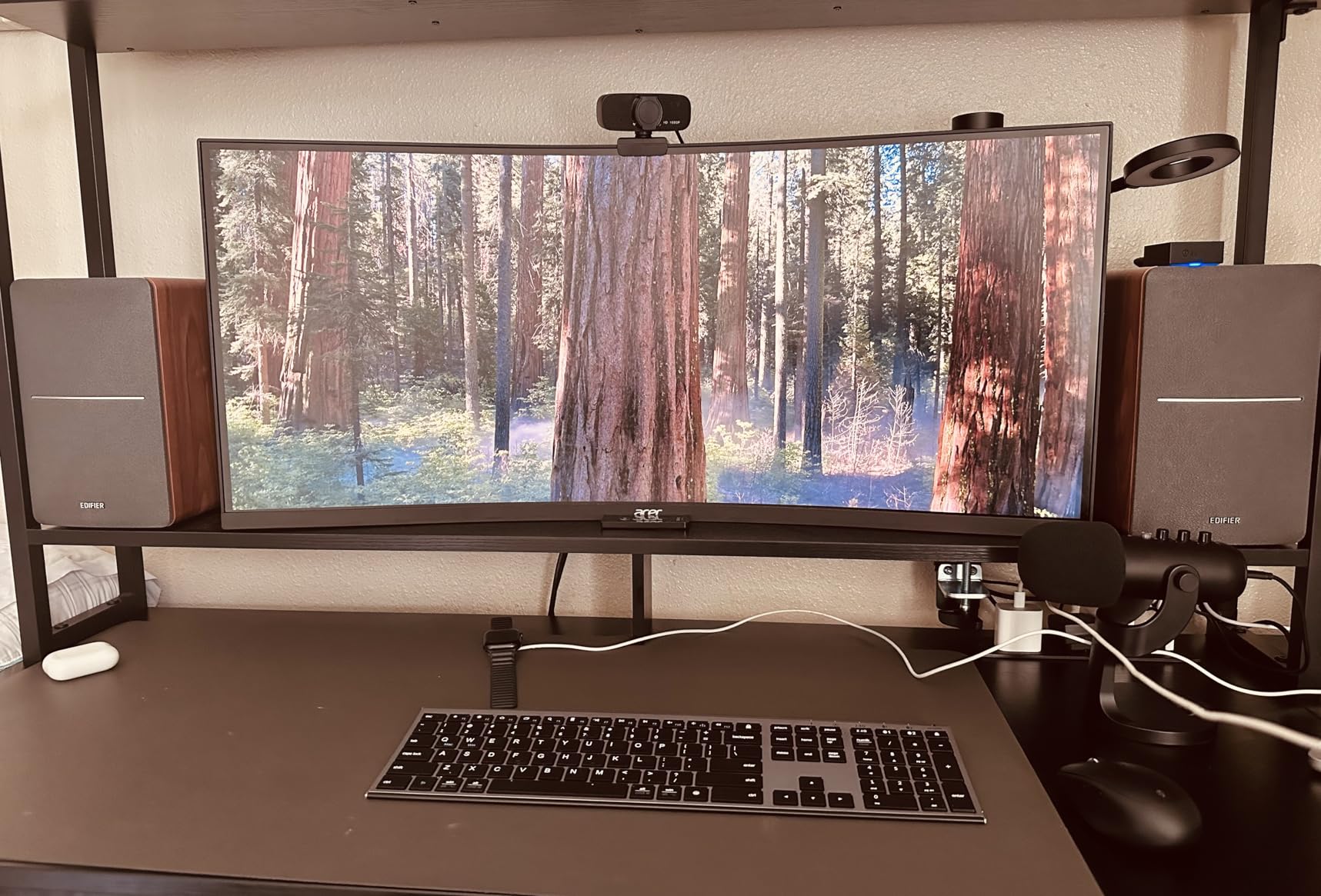
Where it stops is driver size. The 4 inch full range unit is a nearfield driver, so it fills a desk or a shelf at moderate volume but runs out of headroom in a larger room at party levels. Owners chasing chest-thumping low end move up a size rather than pushing these.
There is no wireless of any kind here, which is a fair trade for the reliability. It also has no front-facing power or status indicator, so in the dark you learn the switch position by feel. Our powered floorstanding speaker guide covers the alternative if you want more air and volume than a 4 inch bookshelf can give you.
Check this fits your turntable before you buy
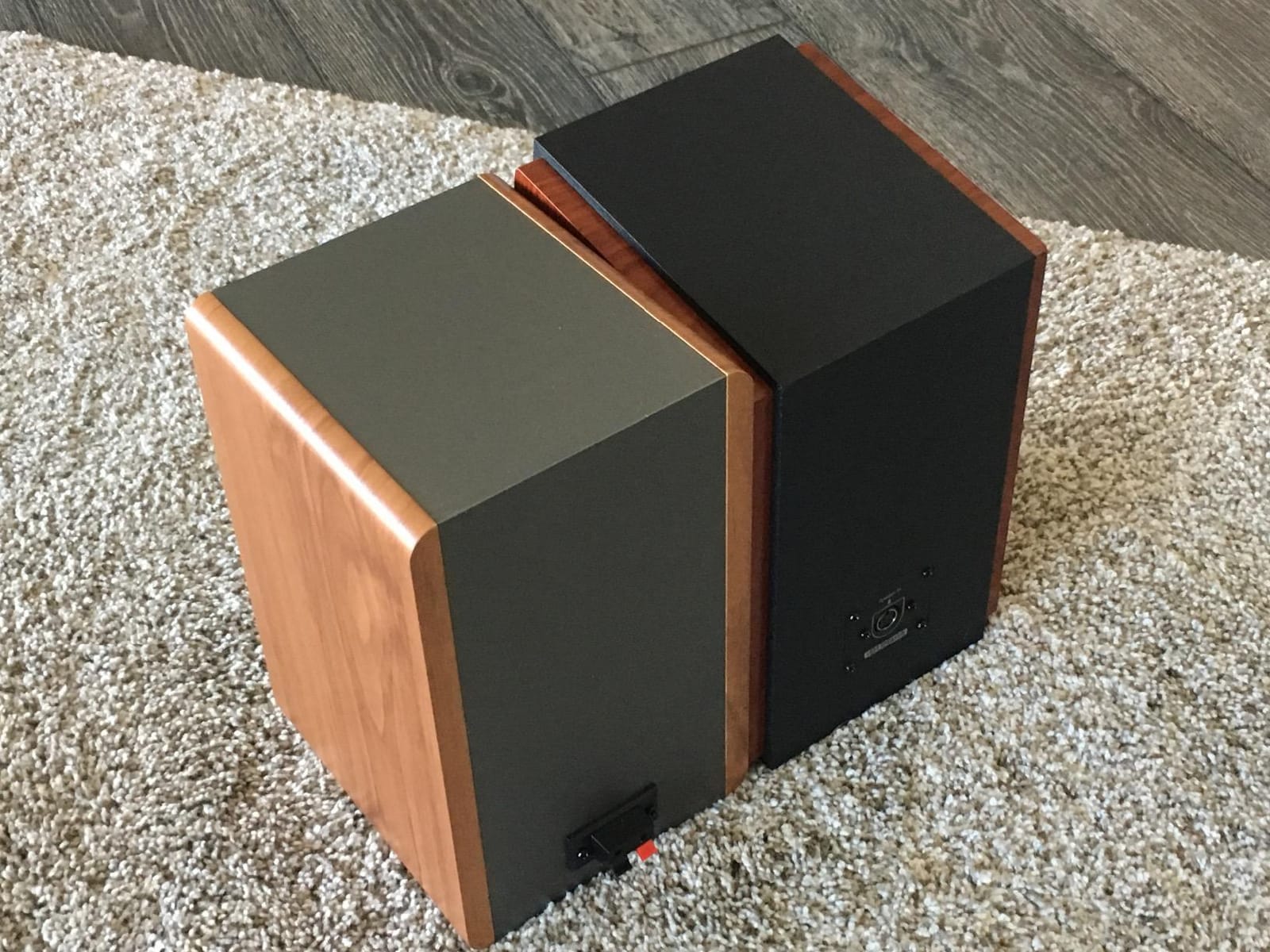
These speakers accept line level only. If your deck has a PHONO/LINE switch, set it to LINE and connect the RCA outputs to either AUX input. If the deck has a built-in preamp, connect from its line out. If the deck offers only PHONO out, you need an external preamp, and the R1280T is not the model to solve that.
Also confirm where the turntable will live. At 4900 g the pair is not light, so a shelf or cabinet rated for the weight matters. Keep at least a metre between the platters and the speaker cabinets and the low rumble that a turntable near a powered speaker can cause simply will not appear.
Who should skip this pair
Skip it if your system needs Bluetooth, a television connection or digital inputs, because none are present here and adding an adapter costs more than choosing a different model. The step-up options covered below handle all three at similar money.
Skip it too if you play at high volume in a room over roughly 20 square metres. A 4 inch driver has limits that no amount of clean amplification removes. In that situation, aim for a 5.25 inch driver with a real phono stage.
2. Klipsch R-51PM Powered Bluetooth Speaker: Best Powered Speakers for a PHONO-Only Turntable
Klipsch R-51PM Powered Bluetooth Speaker,Black
Switchable phono and line preamp with a ground screw
120W output with a 5.25 inch woofer
Bluetooth plus 3.5mm, RCA and USB
Pros
- Only model here that accepts a PHONO-only deck directly
- Ground screw terminal included for the turntable earth wire
- Plenty of power for a mid-size room
- Compact footprint for 5.25 inch drivers
Cons
- Horn tweeter is bright at higher levels
- Mid-bass shows cabinet resonance
- Remote is the only easy way to change inputs
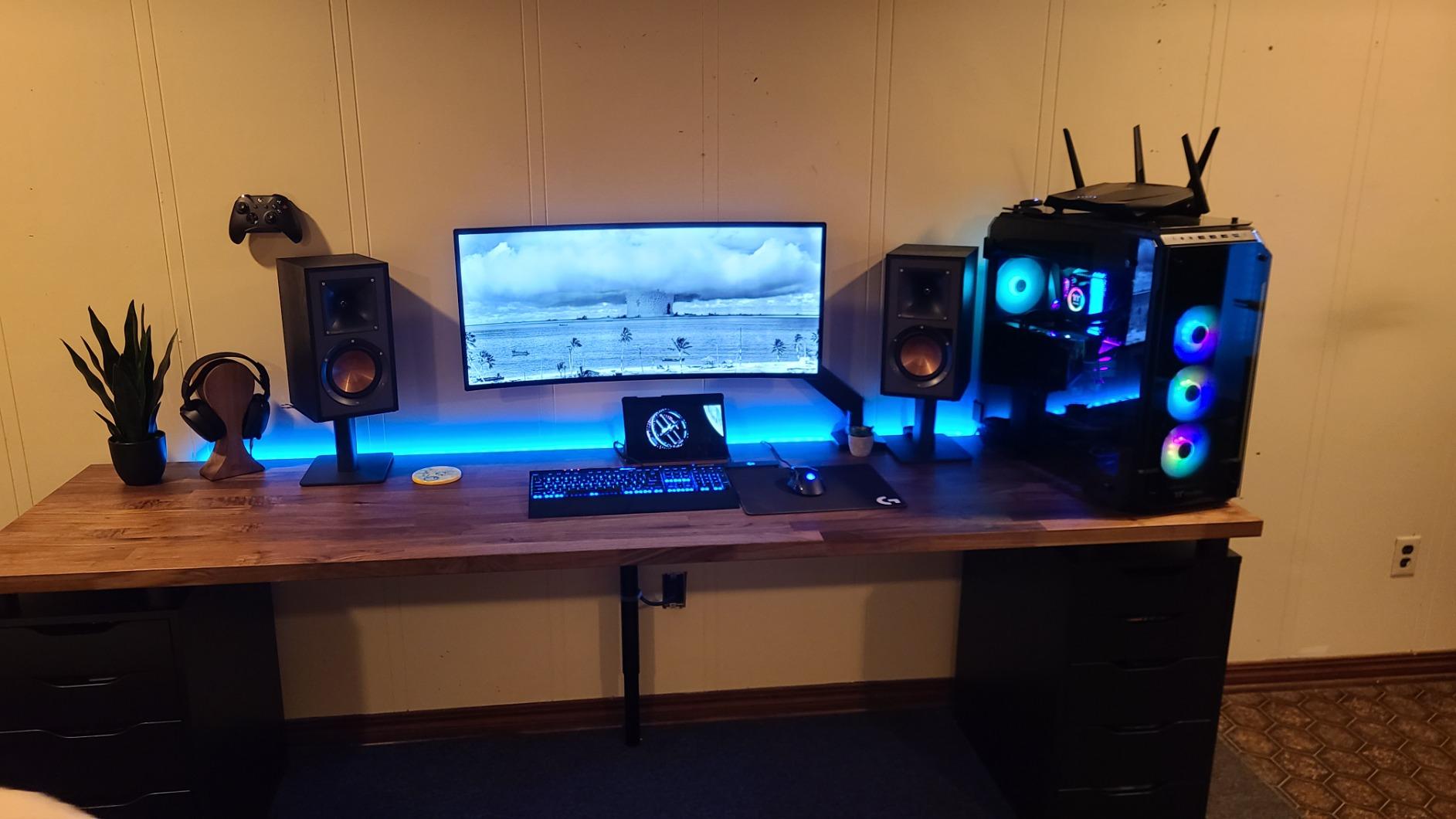
This is the pair I recommend to anyone whose turntable has a single PHONO output and nothing else. A switch on the back selects phono or line, and a ground screw terminal accepts the earth wire from the tonearm, which is the part most cheap speakers leave you to solve yourself.
Sonically it is a live speaker. The copper-spun woofer and horn-loaded tweeter deliver the most treble detail of anything on this list, and 120 watts means a mid-size living room never feels underpowered. On jazz and acoustic records the separation is genuinely impressive at low volume.
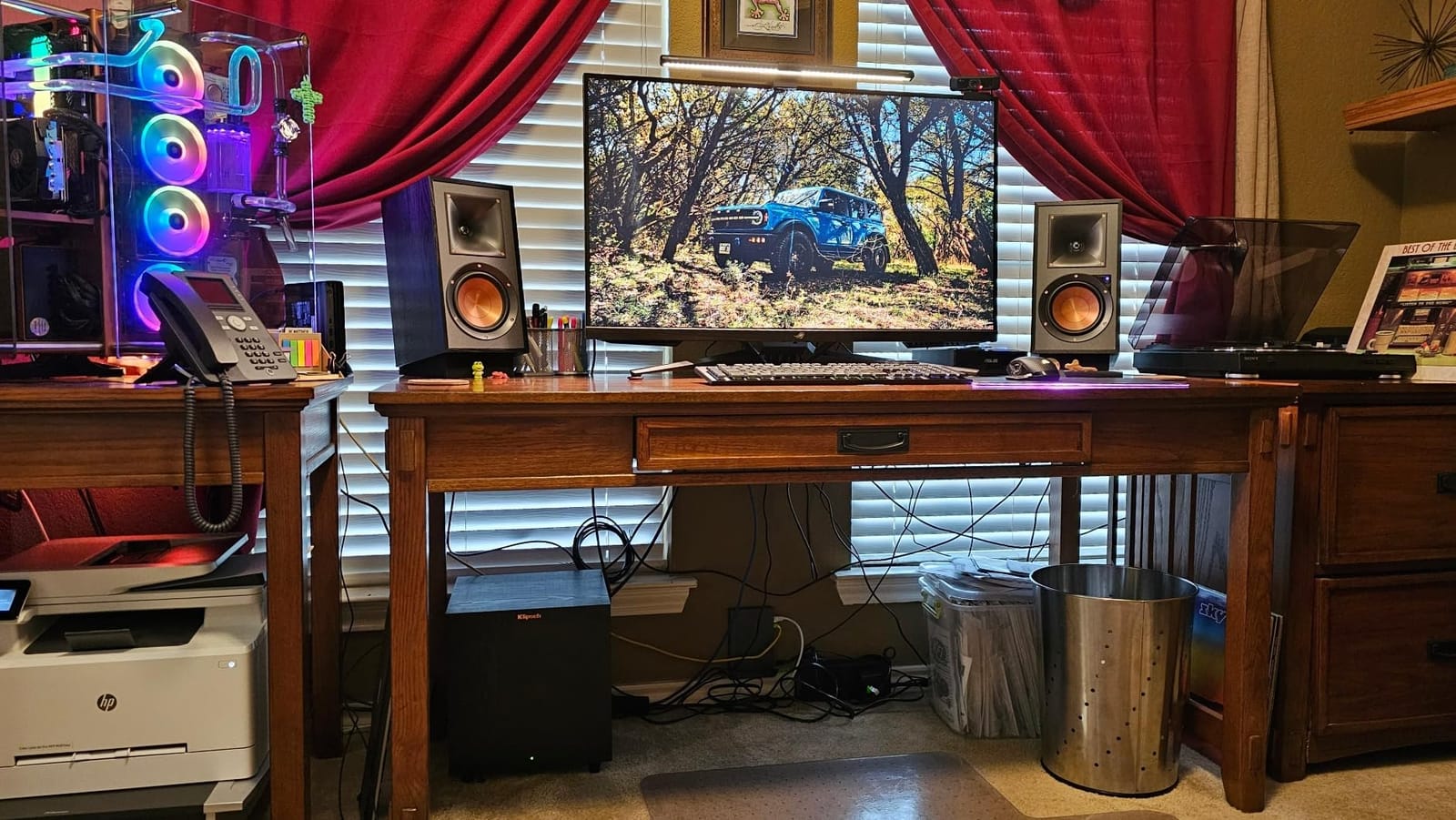
The same character becomes a liability when you like warm records or long evenings. The horn tweeter sits forward, and some listeners describe it as fatiguing after an hour. Mid-bass also carries more cabinet resonance than the smaller competitors here, which is the trade for a 5.25 inch driver in a compact box.
Remote control is included along with four metres of speaker wire with soldered tips. The cabinet is aluminium, which keeps weight at 10.6 pounds and makes them easy to reposition while you dial in placement.
Which cartridge will work with the built-in preamp
Almost certainly yours. A built-in phono stage is designed around moving magnet cartridges, which is what almost every entry and mid-range turntable ships with. Connect the ground wire to the screw, set the switch to PHONO, and turn the volume down before you drop the needle.
One more check: never plug a PHONO output into a LINE input on the same speaker. Some owners report very quiet, thin playback from exactly that mistake. If your deck can do both, the switch position is the deciding factor, and the manual for the R-51PM labels it clearly.
Where this pair falls short
The brightness is the honest drawback, and it is a taste call rather than a defect. Listeners who prefer the softer, rounder presentation of the Kanto or the Edifiers usually find themselves adjusting the tone rather than the volume.
It also carries the smallest cabinet of any 5.25 inch model here, which is great for small rooms and unhelpful if you want deep bass without a subwoofer. There is no subwoofer output, so adding low-end means a separate amplifier later.
3. Edifier R1280DB Powered Bluetooth Bookshelf Speakers: Best Value Pair for Records Plus TV
Edifier R1280DB Powered Bluetooth Bookshelf Speakers – Optical Input – Wireless Studio Monitors – 4 Inch Near Field Speaker – 42w RMS – Wood Grain
Optical and coax digital inputs plus Bluetooth
42W per speaker with a 4 inch driver
Remote with mute and input switching
Pros
- Optical
- coax
- dual RCA and Bluetooth in one box
- On-board bass and treble EQ
- Flat tuning that stays comfortable for hours
- Optical cable included in the box
Cons
- Remote feels flimsy and gets lost
- No front status light to read across a room
- Bluetooth reported to drop on some units
- 4 inch woofers cannot fill a large room
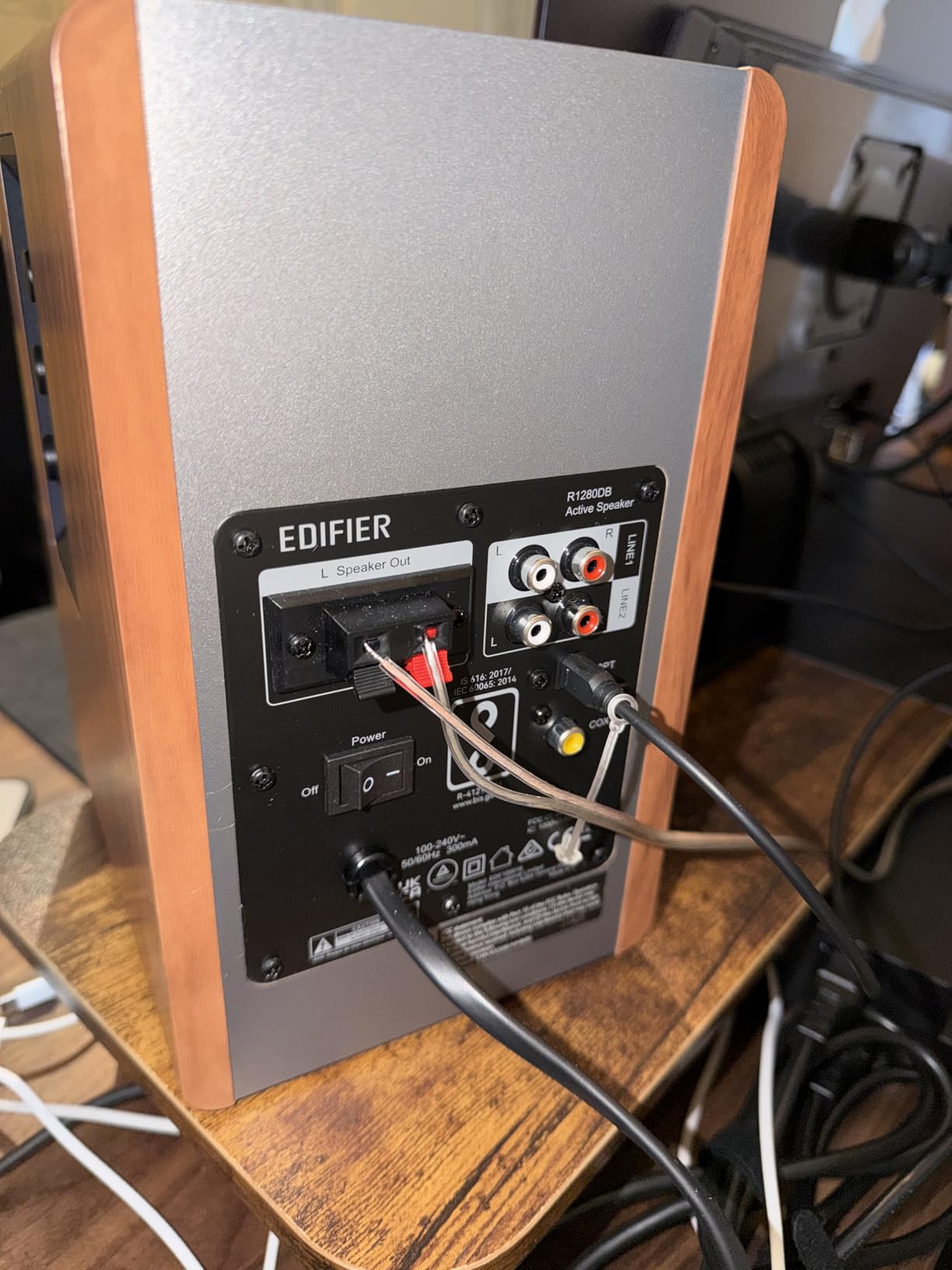
This is the pair I put in the room where the television and the turntable share one set of speakers. Optical and coax digital inputs plus Bluetooth and dual RCA means I can switch from a record to a film to a phone without unplugging anything, using the remote each time.
Compared with the R1280T it costs barely more and removes every cable argument we had with the wired model. The tuning stays flat and non-fatiguing, which is what you want when the same speakers handle dialogue and music.
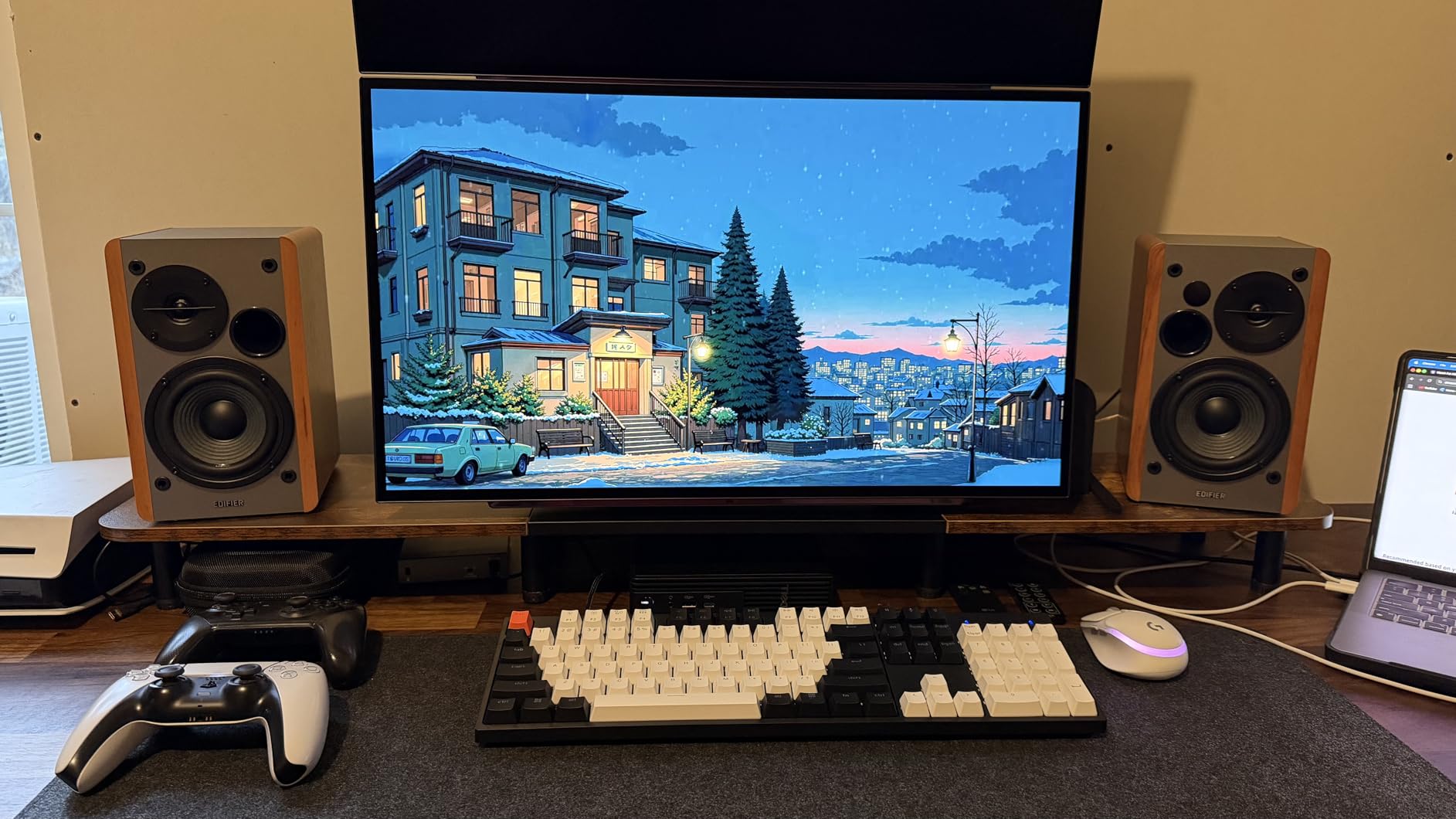
Bluetooth is the weak point. Some owners report the connection dropping intermittently, and without a front-facing status light you cannot tell at a glance whether the speakers are paired. If you plan to stream daily, the LONPOO pair below is steadier on paper with Bluetooth 5.3.
The included remote is the most repeated complaint. It feels flimsy, it disappears, and it is the only way to change input cleanly. Budget for a replacement remote rather than assuming you will keep the one in the box.
Is optical the right way to connect a turntable
No. Optical and coax inputs accept digital signals, and a turntable’s output is analog. For vinyl, use the dual RCA inputs, which are line level, and set the turntable to LINE or use its built-in preamp. Optical is for your television, game console or computer.
That distinction trips up a lot of first-time buyers, and it is the same trap that produces thin, quiet vinyl playback. Check the label under each input on the back panel before you connect anything, and turn the volume to minimum first.
Best for TV sharers, worst for bass seekers
For anyone splitting one pair between vinyl and a television, this is the strongest pick here. Two analog plus two digital inputs is rare at this price, and the cables you need are in the box.
For music-first listeners, the 4 inch woofer is the limit. It plays cleanly at moderate volume but will not deliver room-filling low end, and there is no subwoofer output to fix it. Pair it with a turntable that has a built-in preamp to keep costs down.
4. Audio-Technica AT-SP3X Bookshelf Speakers: Best Sound Quality for a Compact Setup
Audio-Technica AT-SP3X Bookshelf Speakers
3 inch drivers tuned for full-range playback
Dual RCA jacks plus multipoint Bluetooth
Bass boost toggle on the top panel
Pros
- Highest average rating of any pair in this roundup
- Balanced full-range sound well beyond the small drivers
- Multipoint Bluetooth holds two devices at once
- AC adapter ships with three plug adapters
Cons
- 3 inch drivers cap volume and deep bass
- No optical
- coax or USB digital input
- No tone controls beyond the bass boost
- Included speaker cable is about 6.6 feet
The AT-SP3X consistently surprised me. Three inch drivers should not produce this much of a soundstage, yet the tuning is balanced and full-range well past what the driver size predicts. Roughly 90 percent of the reviews that exist are five-star, which is the strongest signal in this group.
Multipoint Bluetooth is the feature I did not expect to find on a pair this small. Two phones or a phone and a laptop stay connected at once, so you are not constantly re-pairing when the music moves between devices.
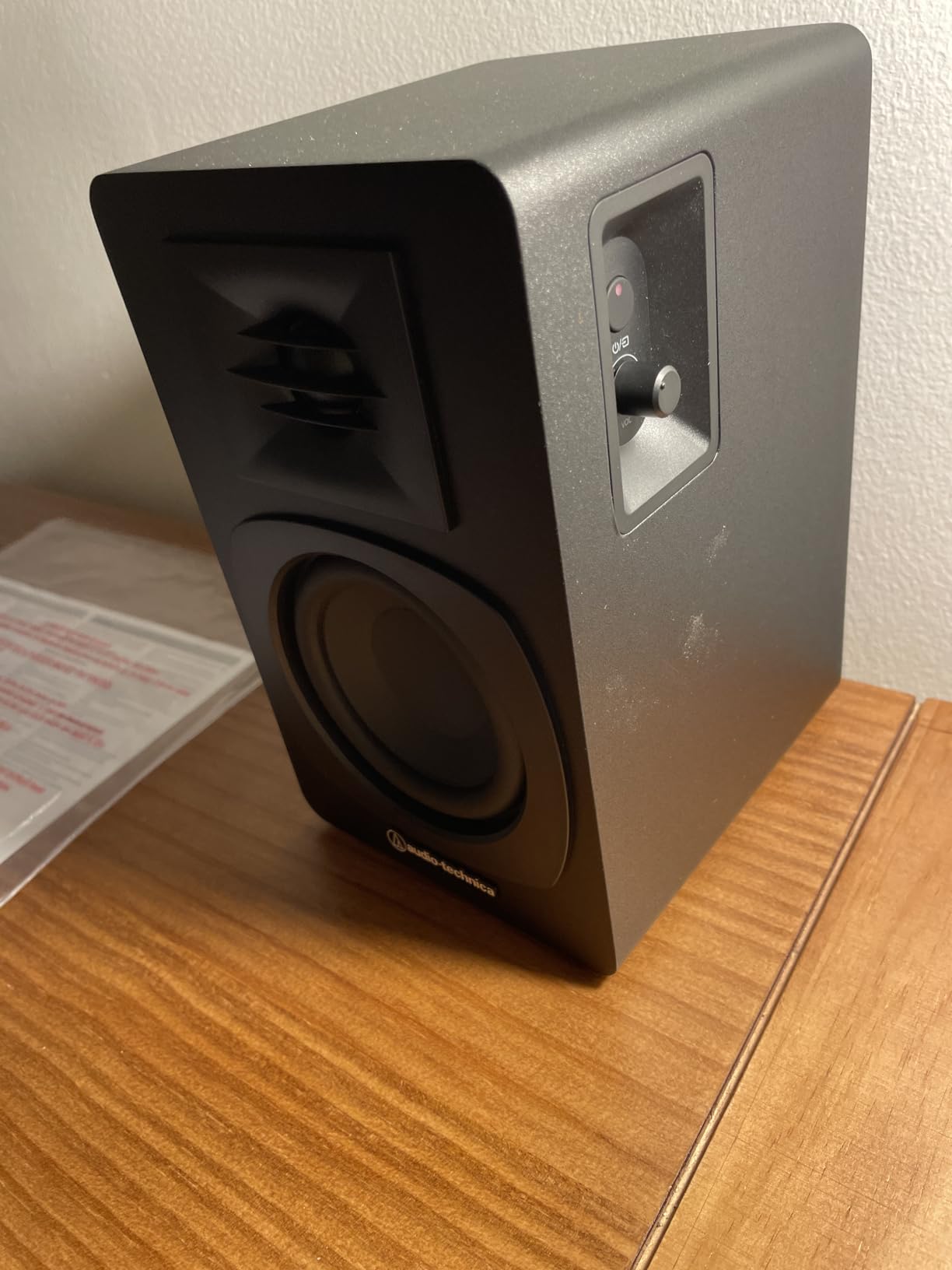
What you give up is connectivity and headroom. There are no digital inputs, so this pair cannot serve a television directly, and the only tone control is an on or off bass boost. The 70 dB signal to noise ratio is fine but not exceptional for quiet listening.
The included speaker cable runs about 6.6 feet, which is tight for separating the cabinets. Longer cable does not affect sound quality, so pick up a longer run if your stands sit far apart.
Why the small driver size matters for vinyl
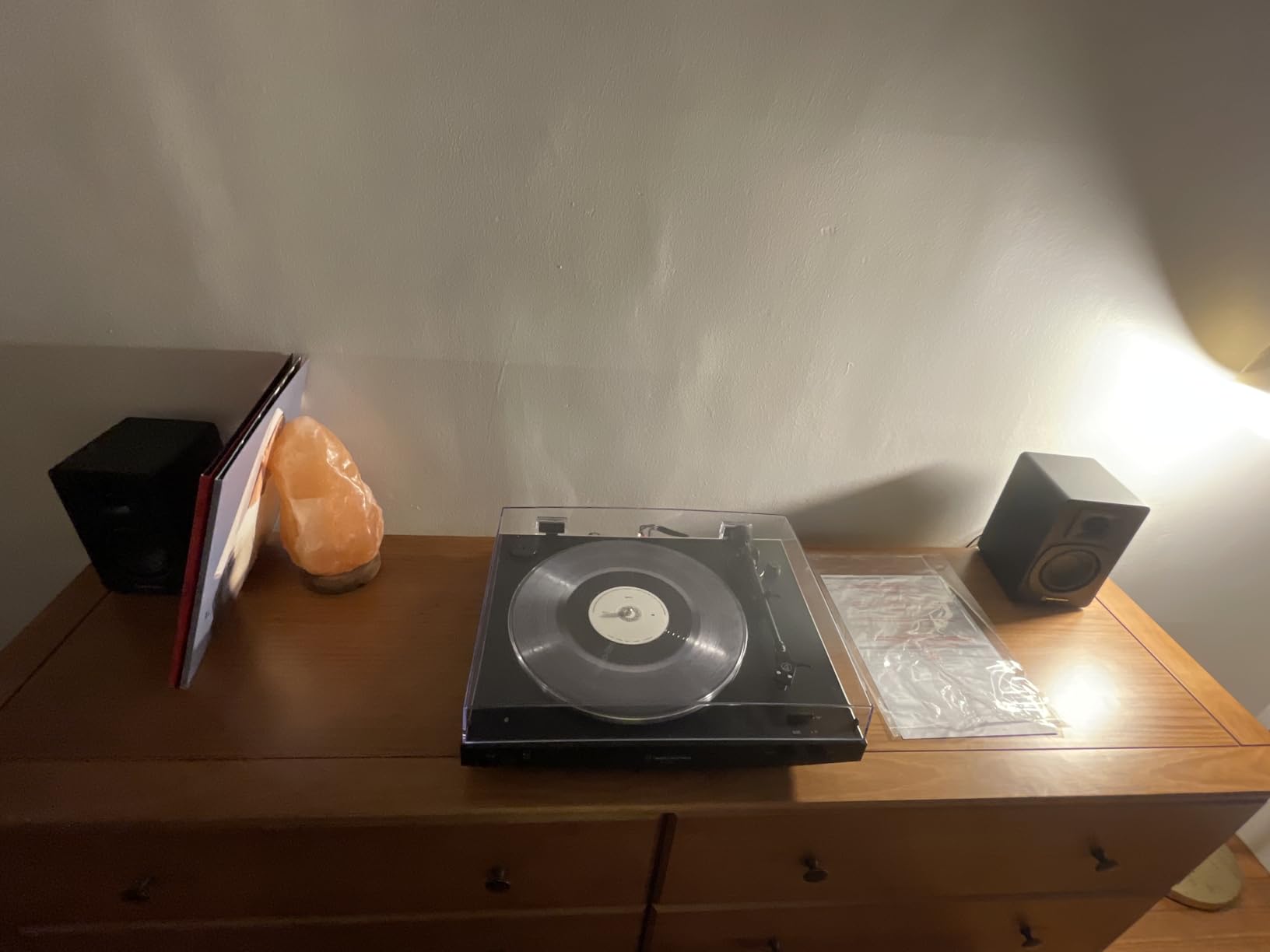
Vinyl compresses dynamics more than compressed digital sources, and small drivers struggle most with the quietest parts of a record. The AT-SP3X handles that better than its size suggests, which is why it suits quiet listening rather than high-volume playback.
For turntable duty, connect the dual RCA inputs and use a deck with a built-in or external phono preamp. There is no phono stage inside, so a PHONO-only deck will play very quietly and thin until you add a preamp.
Where it is the wrong choice
It is the wrong choice if a television shares the speakers, since there is no optical, coax or HDMI path. It is also the wrong choice for a large room, where 3 inch drivers simply cannot push enough air to feel effortless.
For a desk, a bedroom, or a small apartment wall shelf, it is close to ideal. The build quality and the international plug adapters also make it a good travel companion for a small listening room.
5. Edifier R980T Active Bookshelf Speakers: Best Budget Powered Pair for Vinyl
Edifier R980T 4″ Active Bookshelf Speakers – 2.0 Computer Speaker – Powered Studio Monitor (Pair)
24 W RMS total output with a flared front port
100 percent wooden enclosures
RCA and 3.5mm cables included
Pros
- Lowest cost for a working powered pair
- Wooden cabinets reduce acoustic resonance
- Front bass port makes placement near a wall easier
- All required cables included in the box
Cons
- Only 24 W RMS so volume and bass are modest
- Analog only with no Bluetooth or digital inputs
- No bass or treble tone controls
- Plastic cabinets rather than MDF
The R980T is the honest floor of this roundup. It costs less than the price of a preamp would on some systems, and it plays records properly through its two AUX inputs as long as your turntable outputs line level.
At 24 watts total it is not a volume speaker. In a bedroom or a dorm room at moderate listening levels it is perfectly adequate, and the front-firing flared bass port makes it one of the easier pairs to place against a wall.
The wooden enclosures are the real surprise at this price. They are described as being intended to minimise acoustic resonance, and they give the pair a warmer character than the plastic-bodied models it costs the same as. A universal power supply means it works outside North America too.
Two AUX inputs let a turntable and a computer stay connected together, and the included RCA, 3.5mm and speaker wire means there is nothing to buy before the first record.
Is this enough power for a turntable
For line-level input, yes. A turntable’s line output is a normal signal that any amplifier can handle, so 24 watts is not a limitation in the way it would be for moving-coil cartridges. What the wattage limits is how loud the pair goes before it strains.
Since there are no tone controls, all EQ has to come from your turntable or your records. Many turntables have a built-in bass and treble adjustment, and using it is better than no control at all, but it is not the same as adjusting the amplifier.
Know what you are giving up
This is an analog-only pair. No Bluetooth, no optical, no coax, no subwoofer output, no USB. If any part of your listening is wireless or comes from a television, choose a different model rather than buying adapters later.
It also uses plastic cabinets on what is otherwise a step-up from the cheapest powered pairs. In a small room that is a sensible saving. In a mid-size space you will run out of volume long before you run out of tonal quality.
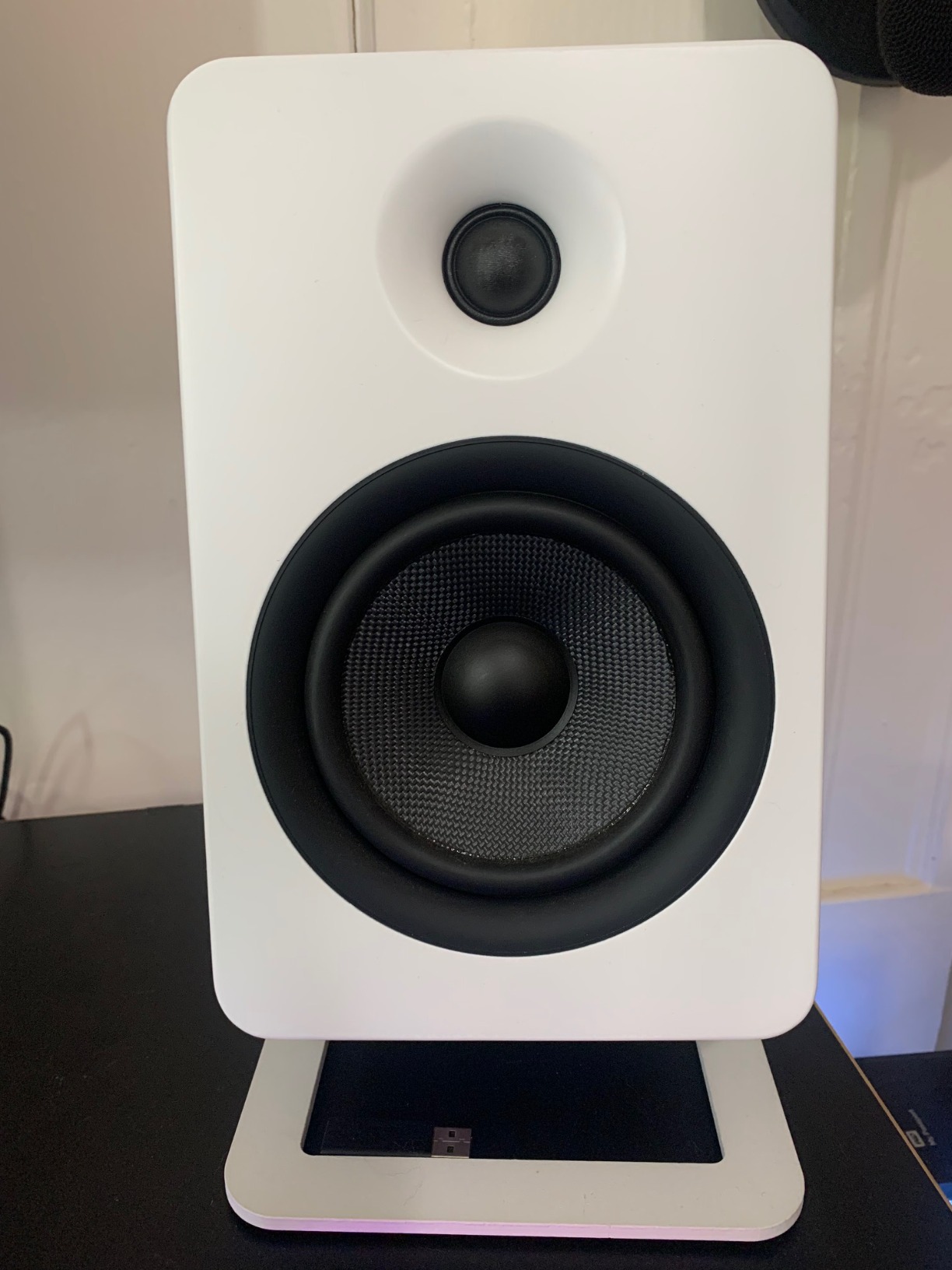
6. Kanto YU6MW Powered Bookshelf Speakers: Best Powered Speakers With a Phono Preamp and Sub Out
Kanto YU6MW Powered Bookshelf Speakers with Bluetooth and Phono Preamp | Pair | Matte White
Integrated phono preamp for direct turntable hookup
100 W RMS per pair with a subwoofer out
5.25 inch Kevlar drivers in an MDF cabinet
Pros
- Built-in phono preamp and sub out in one box
- 5.25 inch Kevlar drivers with plenty of headroom
- Remote bass and treble adjustment
- Compact 10.7 inch cabinets
- Bluetooth with aptX pairs instantly
Cons
- Cabinet resonance muddies the mid-bass
- Midrange sits slightly recessed in the soundstage
- Large footprint for desktop use
- Bass is light without a subwoofer
On r/BudgetAudiophile, owners of the YU6 describe it as the box that removes a receiver and a phono preamp from the shopping list. That matches our experience. The phono stage is on the back panel, the ground post accepts the tonearm wire, and the subwoofer output means the system can grow later instead of being replaced.
At 100 watts RMS per pair it has more headroom than anything else here, and the 5.25 inch Kevlar drivers deliver a warm, open presentation that suits acoustic and jazz records particularly well.
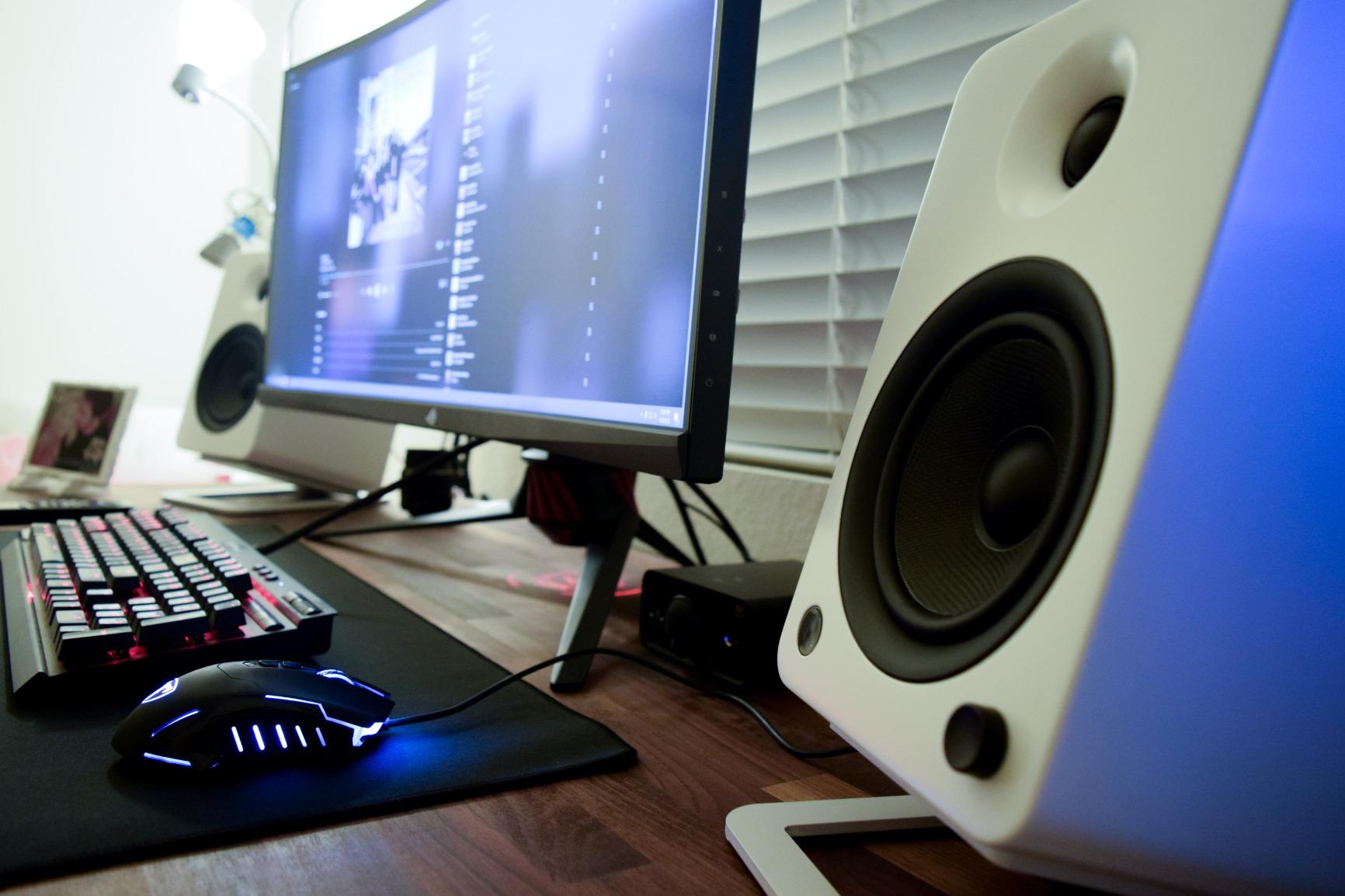
The signature weakness is a distinctive cabinet resonance in the mid-bass, which the most critical reviews describe as muddy. The midrange also sits slightly recessed in the soundstage, so vocal-forward recordings lose a little presence compared with the Klipsch or the Marshall.
Bluetooth uses Qualcomm aptX, which pairs quickly and holds a stable connection in our testing. The remote covers volume, input, tone and balance, and it also handles transport when you are streaming rather than playing records.
Do you still need a preamp with the YU6
Only if you want to add one later. The integrated stage accepts a moving magnet cartridge directly, and signal-sensing power-up means the speakers wake when the needle drops. Many owners report the internal stage matches a separate entry-level preamp, so there is no audible penalty for using it.
If your turntable already has a good built-in preamp, feed that line signal into the phono input on the speaker anyway, or use the RCA line input, and you keep the option of switching between cartridges later without rewiring anything.
Best for people who plan to add a subwoofer
This is the only pair here with a dedicated subwoofer output, and that changes the calculus. Start with the two speakers now, and when the room or the neighbours argue for deeper low end, add a subwoofer rather than changing speakers.
Be aware of the size. At 10.7 inches tall the cabinets are larger than most bookshelf pairs here, and the review footprint is wide. On a turntable cabinet they may crowd the deck, and you will want stands for proper separation.
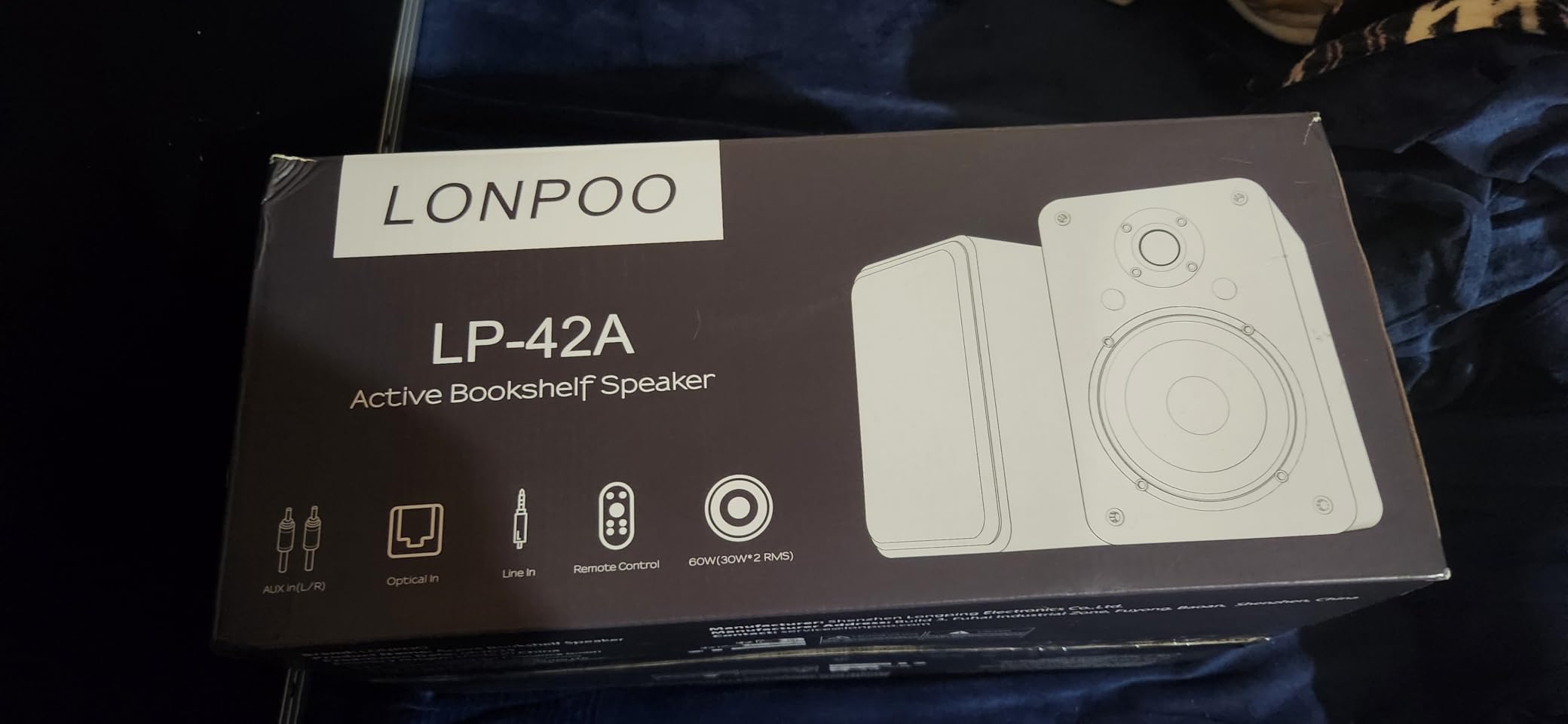
7. LONPOO 60W Powered Bookshelf Speakers: Best Powered Speakers for a Desk Setup
LONPOO 60W Powered Bookshelf Speakers HiFi Stereo Sound for TV/PC/Turntable
60W internal amplifier with no receiver needed
4 inch woven glass fiber woofer
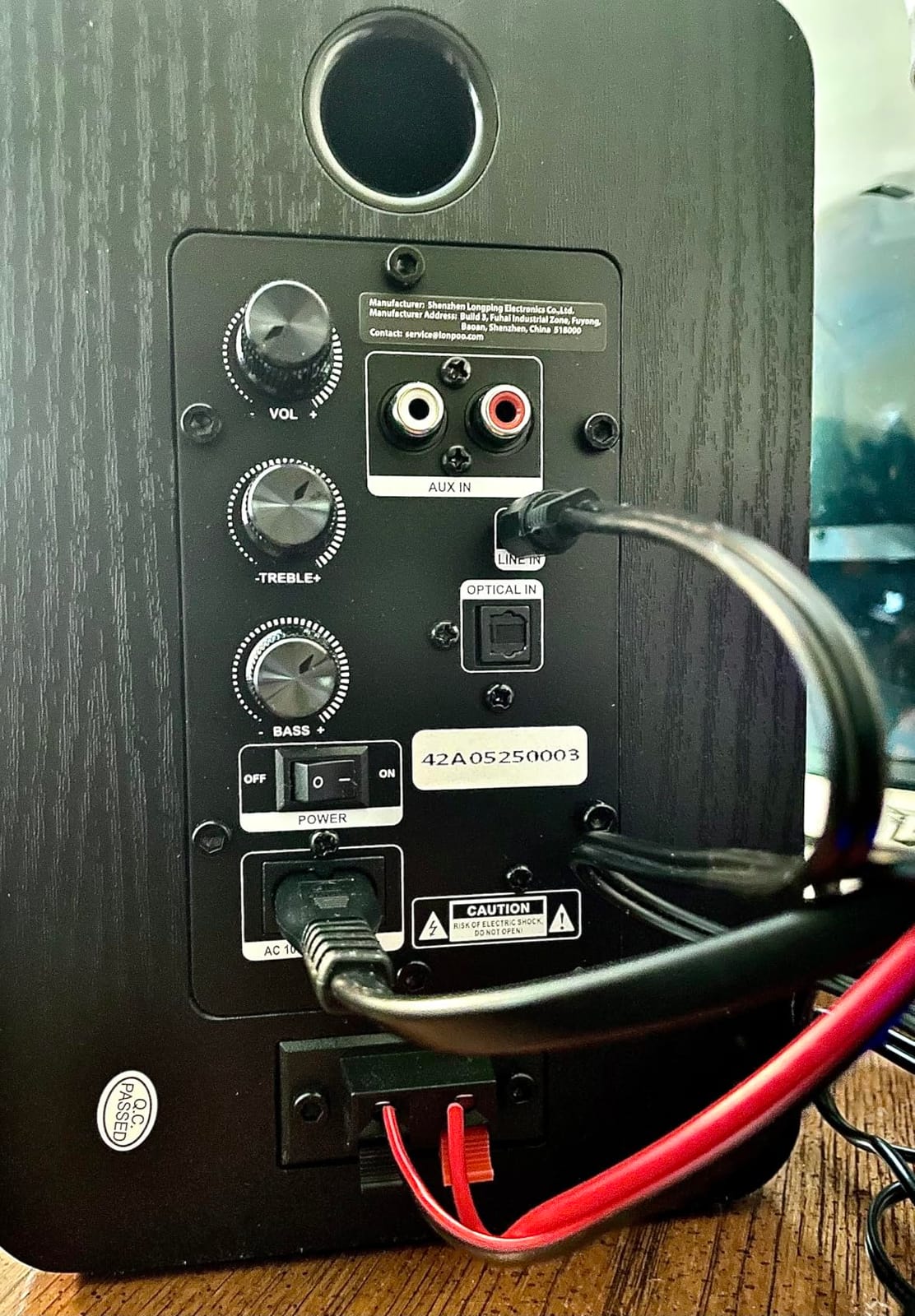
Bluetooth 5.3 plus optical and RCA line in
Pros
- RCA line in suits a turntable with a built-in preamp
- Bluetooth 5.3 with roughly 10 m range and stable pairing
- Woven glass fiber woofer is tighter than typical cones
- Color-coded front indicator lights
- Enclosure angles upward for ear level
Cons
- Sound turns muddy at high volume
- Front LED indicators cannot be switched off
- No tone or bass and treble adjustment
- Compact cabinet limits sub-bass
The LONPOO LP42A solves a problem most bookshelf speakers ignore: where the sweet spot sits. The enclosure angles upward, so on a desk the tweeter points at your ears rather than at the wall, and nearfield listening gets noticeably cleaner for it.
At 60 watts with a woven glass fiber woofer, the low end is tighter and less distorted than polypropylene cones of the same size usually manage. Buyers call the bass clear and punchy at low to medium volume, which is exactly where desk listening sits.
Push the volume up and that changes. Reviewers consistently describe the sound becoming congested and indistinct, so treat the top third of the volume range as a demonstration rather than a working level. The amplifier is the limit, not the drivers.
Four color-coded front lights show which input is active, which is genuinely helpful with this many options. The complaint owners raise most is that those lights cannot be switched off, so it is not ideal in a dark room.
Will it connect to a turntable with a preamp
Yes, through the RCA line in, which is marked by a purple indicator. If your turntable has a built-in preamp, set it to line level and connect directly. There is no phono stage inside these speakers, so a PHONO-only deck needs a small external preamp first.
There is no independent bass or treble control, only whatever EQ your source device offers. That limits fine tuning of individual records, and for vinyl with wildly varying mastering quality it is a real constraint.
Where the LONPOO is the wrong buy
Do not buy it for a party or a mid-size living room. The compact 4 inch cabinet and the 60 watt ceiling mean you will not have clean headroom at high volume, and the muddiness owners report arrives exactly when you want clarity most.
For a desk, a small bedroom, or a turntable cabinet setup in a compact space, it is one of the better fits here. The upward-angled cabinet and the stable Bluetooth make it a comfortable everyday pair.
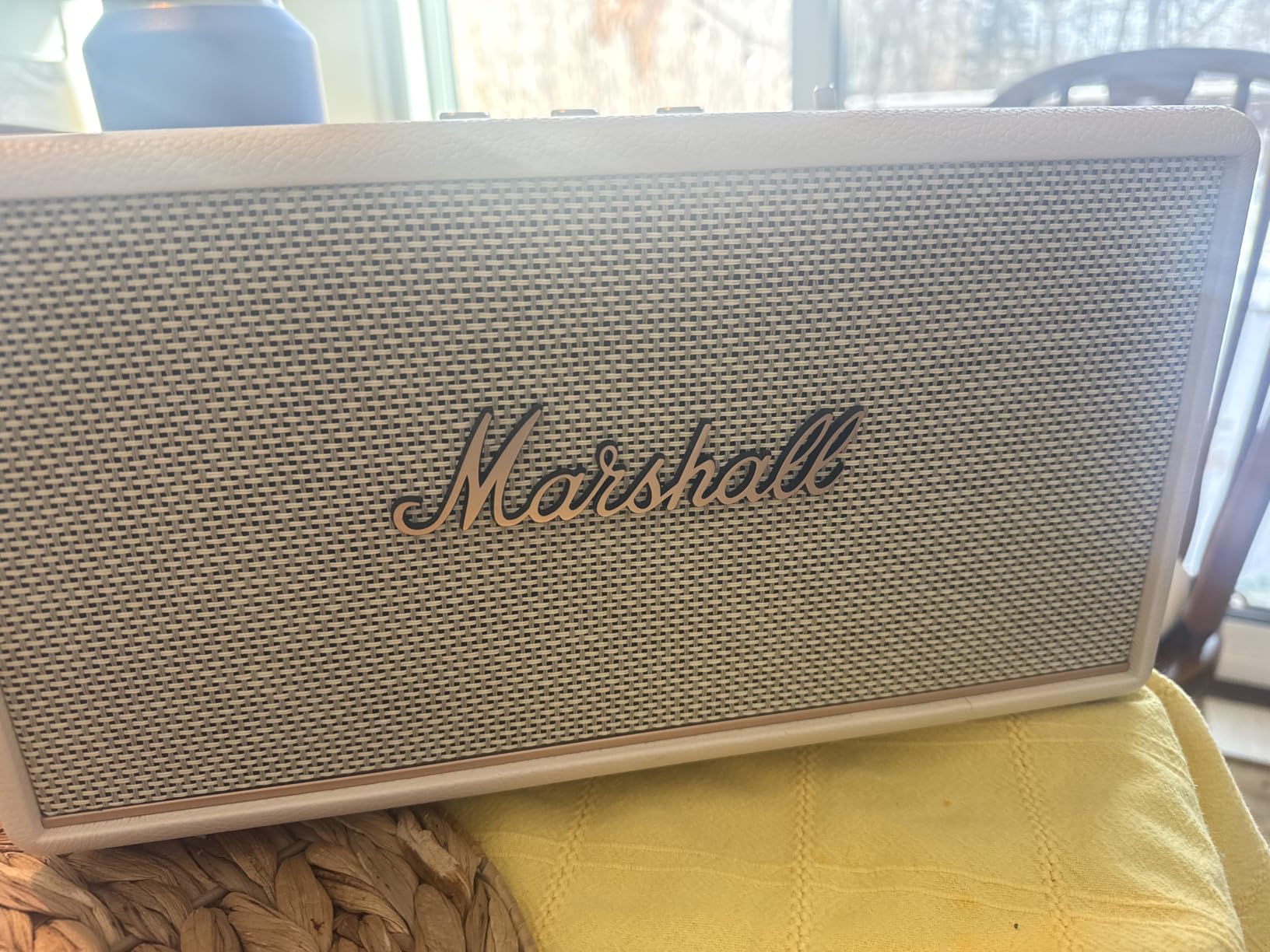
8. Marshall Stanmore III Bluetooth Home Speaker: Best Powered Speaker for Retro Style Rooms
Marshall Stanmore III Bluetooth Home Speaker – Black
80W single-cabinet active speaker
Bluetooth 5.2 with about 33 ft range plus RCA
Top-panel bass, treble and volume knobs
Pros
- Rich room-filling sound with clear vocals
- Retro cabinet doubles as decor
- Physical knobs plus app control
- Good control at low listening volumes
- No idle hiss between tracks
Cons
- Single cabinet
- not a matched stereo pair
- Ten-minute inactivity timeout with no way to disable
- No Wi-Fi or advanced codecs
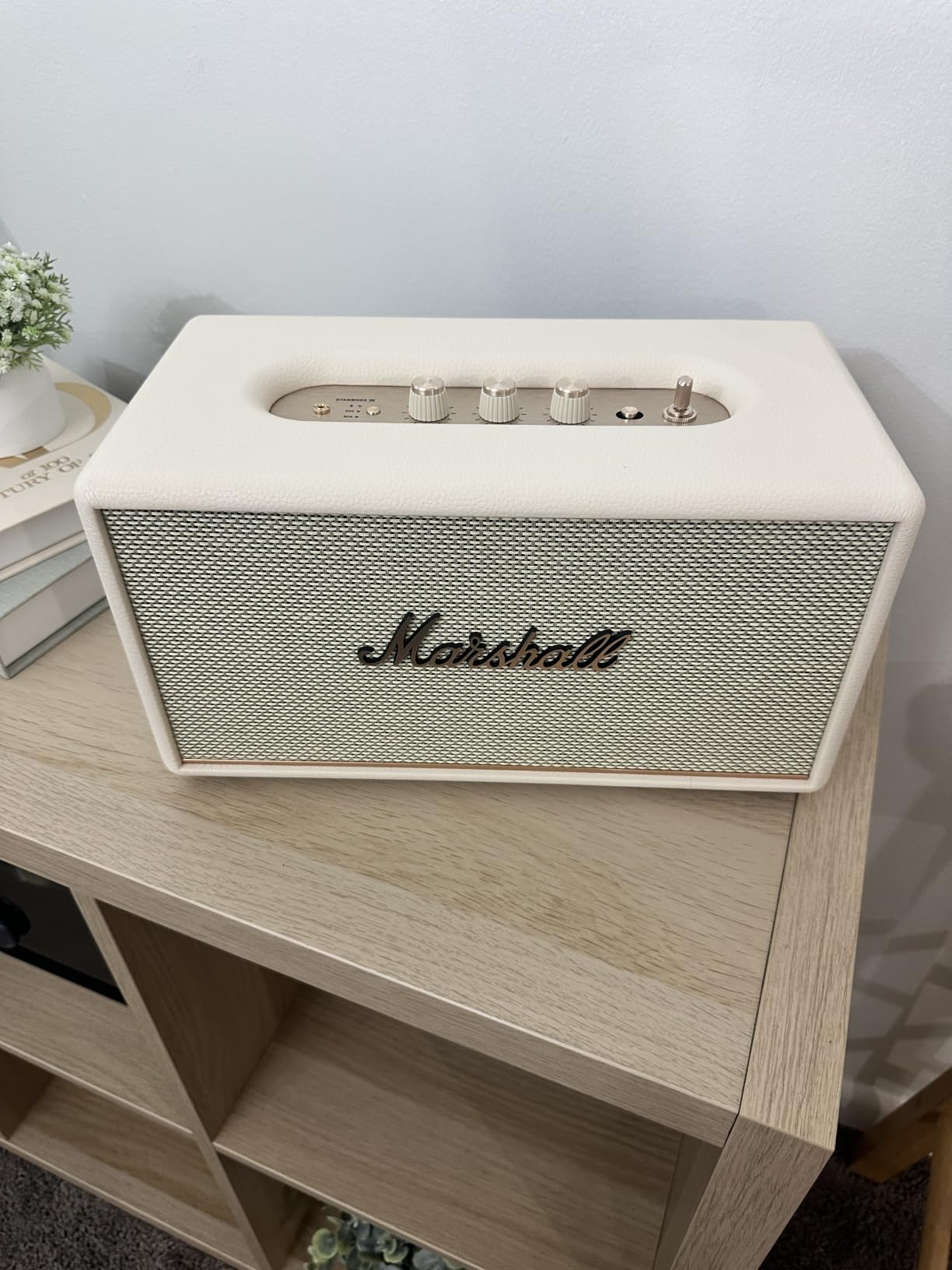
The Stanmore III is the only product here that is not a matched pair, and that changes what it can do. It is a single cabinet with an active and passive driver array, so it plays a wide soundstage and fills a room from one box. It will not produce true left and right stereo separation from a turntable.
Owners consistently praise the sound quality, the styling and the top-panel knobs for bass, treble and volume. It also produces no idle hiss or hum between tracks, which matters more than it sounds on a system you leave switched on.
For most turntable buyers this is a deal breaker, and we would not recommend it as your primary pair. You lose the stereo image that makes vinyl listening feel like a dedicated hi-fi experience, and the RCA input is analog only at line level.
The most criticised behaviour is the hardcoded ten-minute inactivity timeout that puts an AC-powered speaker to sleep with no way to disable it. The power switch also operates in the opposite direction to what most people expect, which catches new owners out.
Can you connect a turntable to a single-cabinet speaker
Electrically, yes. The RCA input takes a line-level signal, so a turntable with a built-in preamp or a LINE switch connects without any extra equipment. Audibly, you are listening to a blended channel rather than a stereo pair, so instruments sit closer together than they would on a real pair.
Bluetooth adds a condition that catches people out. Your turntable must be able to transmit, not just receive. Most turntables with Bluetooth are receivers only, and a receiver cannot send audio to Bluetooth headphones or speakers.
Pick this for the room, not for the turntable
Choose the Stanmore III when styling and single-box convenience matter more than stereo imaging, such as a kitchen, a studio, or a living room where one cabinet is easier to live with than two. The design genuinely reads as furniture in a way most powered pairs do not.
Skip it for a dedicated listening corner, for a turntable-only system, or for anyone who wants a television and vinyl sharing one set of speakers, since there is no digital input and no HDMI path to the television.
9. Saiyin Powered Bluetooth Bookshelf Speakers: Best Powered Speakers for Turntable and Home Theater
Saiyin Powered Bluetooth Bookshelf Speakers
Active and passive bookshelf pair built in
Optical and coax digital inputs
Bluetooth 5.3 plus RCA and 3.5mm
Pros
- Connects straight to a turntable line out with no extra gear
- Optical and coax inputs are rare at this price
- Replaceable remote and top-panel buttons
- Three-year manufacturer warranty
Cons
- Over-tuned bass can drown out vocals
- No independent bass or treble control
- Front LED indicators are large and prominent
- Bluetooth needs a transmitter in the turntable
The Saiyin DS6701S is one of the few pairs here that states the turntable rule plainly on the box: connect through LINE OUT, and a preamplifier is required if your record player only has PHONO output. Clarity like that is rare and worth something.
Home theater is where it earns its place. Optical and coaxial digital inputs at this level are unusual, and a replaceable remote with mute, optical, line-in and Bluetooth modes is genuinely useful when the same pair plays films and records.
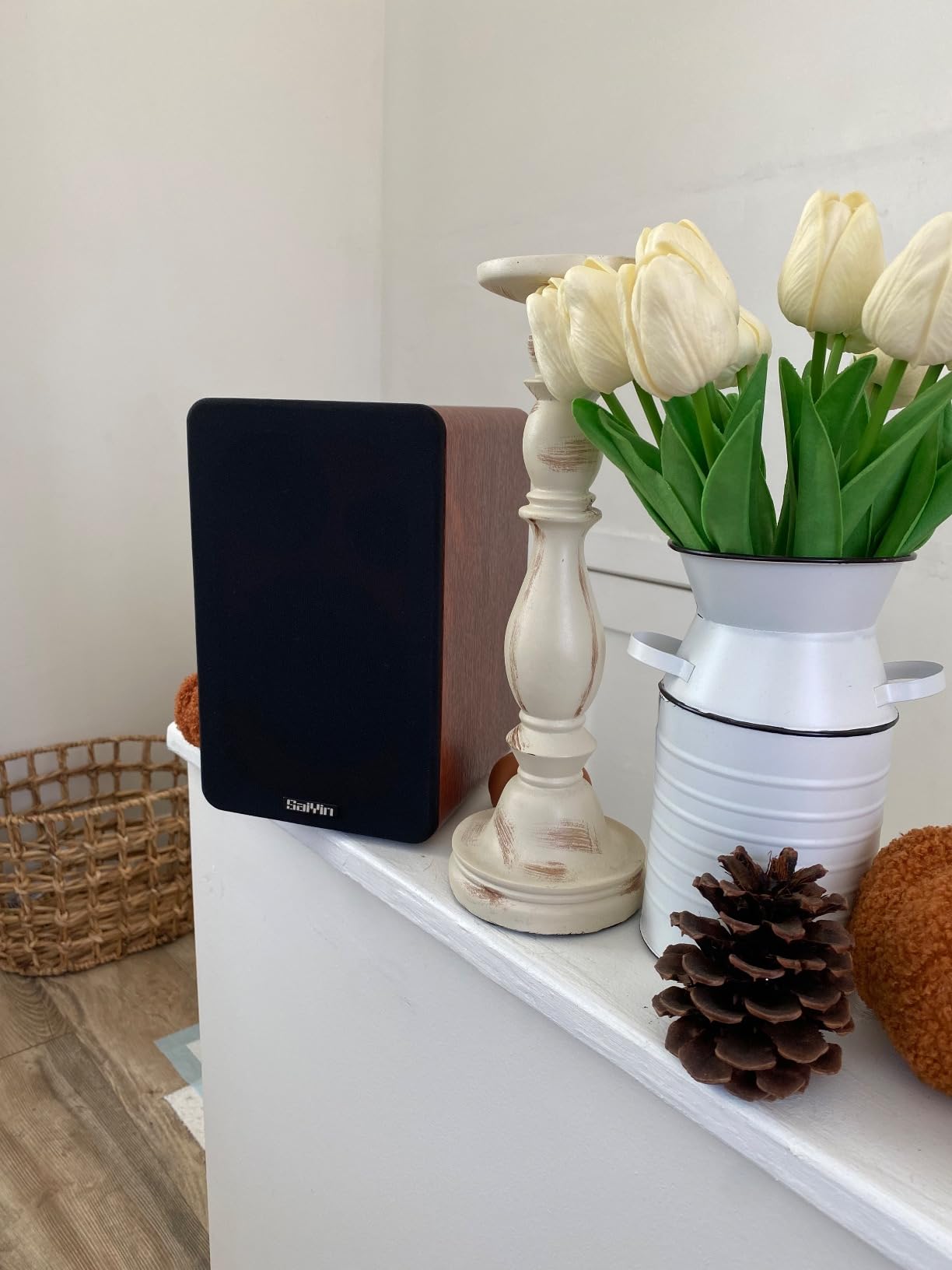
The tuning is the problem. Bass is heavily boosted by default and can swallow vocals and the midrange, which is the opposite of what most record buyers want from a hi-fi pair. Some owners tame it with the supplied bass reflex port sponges, and others add an external EQ.
At 30 watts with a 3.75 inch woofer, output is modest. It is loud enough for a bedroom or a small apartment, and reviewers describe it as a good home theater companion rather than a serious music speaker.
The Bluetooth condition that breaks most setups
Wireless from a turntable only works if your deck has a Bluetooth transmitter. That is rarer than it sounds. Most turntables with Bluetooth are receivers, built so a phone can stream to them, and a receiver cannot transmit to Bluetooth speakers at all.
Check the specifications of your deck before you plan a wireless setup. If it only receives, you need a transmitter with its own power and a pairing button, and you should also consider whether a wired RCA connection is simpler and better.
Who should choose this and who should not
Choose it if you want one inexpensive pair for records and television, you live in a small space, and the three-year warranty matters to you. The warranty and the responsive support team come up repeatedly in positive reviews.
Skip it if you care about vocal clarity or midrange detail, because the default tuning works against both. Music-first listeners should look at the Edifier pairs, which share a similar feature set with a noticeably flatter response.
10. MEVOSTO 5-Inch Powered Bookshelf Speakers: Best Powered Speakers for Bigger Drivers on a Budget
MEVOSTO 5-Inch Powered Bookshelf Speakers: PC Speakers for Record Player
5 inch woofer with a 1 inch silk dome tweeter
36 W RMS built-in amplifier for 2.0 stereo
USB digital audio plus Bluetooth 5.4
Pros
- 5 inch woofers are unusually large for the price
- Independent bass and treble knobs plus a remote
- USB digital input skips the computer sound card
- Longest rated Bluetooth range here at about 15 m
Cons
- No integrated phono preamp
- No Dolby or DTS surround support
- 18V DC adapter needed for mains power
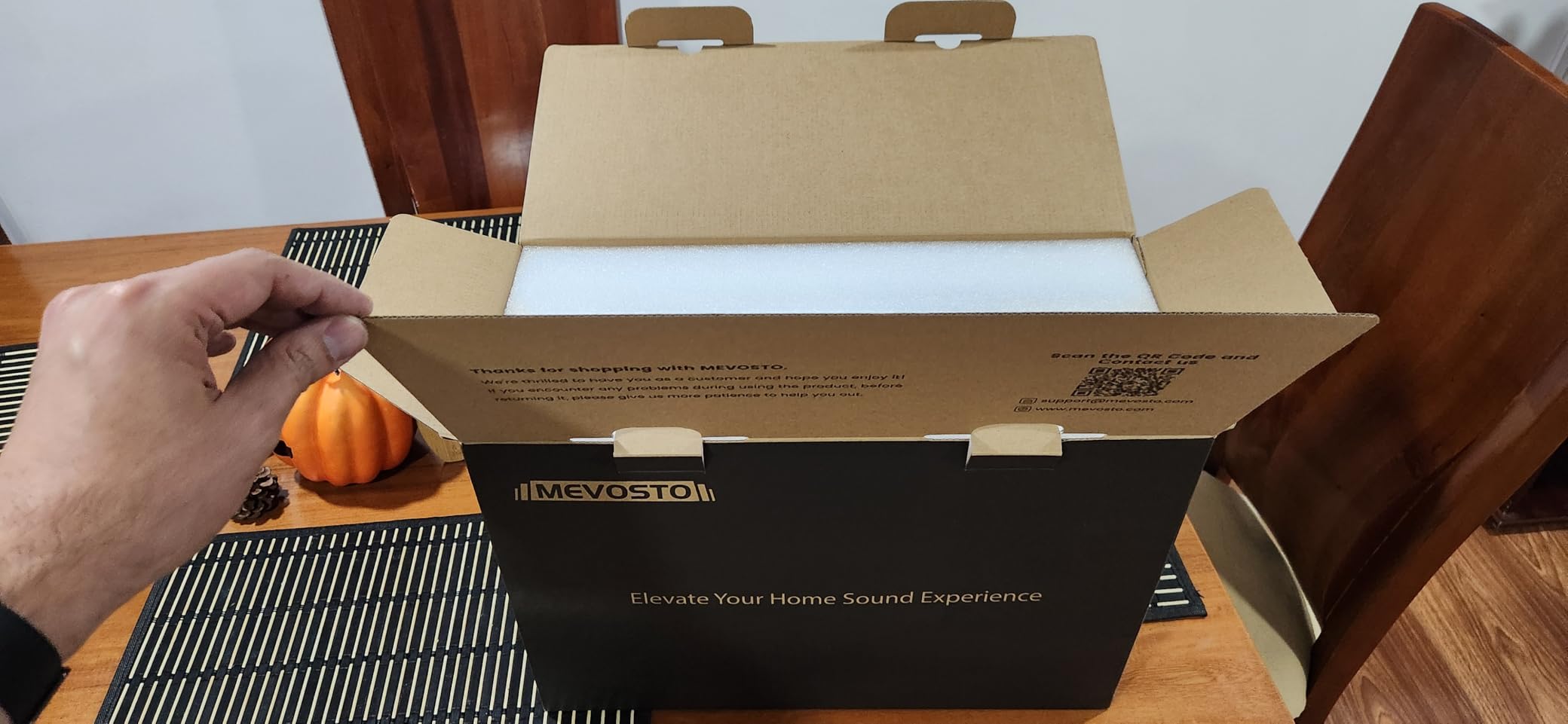
The MEVOSTO DS19 solves a specific gap: driver size at a low cost. A 5 inch woofer in a 9.7 inch cabinet gives noticeably more mid-bass than the 3 and 4 inch pairs that dominate this price range, and that is the part of the frequency range records live in.
Physical bass and treble knobs on the cabinet mean you are not dependent on source EQ, and the included remote handles everyday adjustment from your chair. The USB digital input connects straight to a computer without an interface.
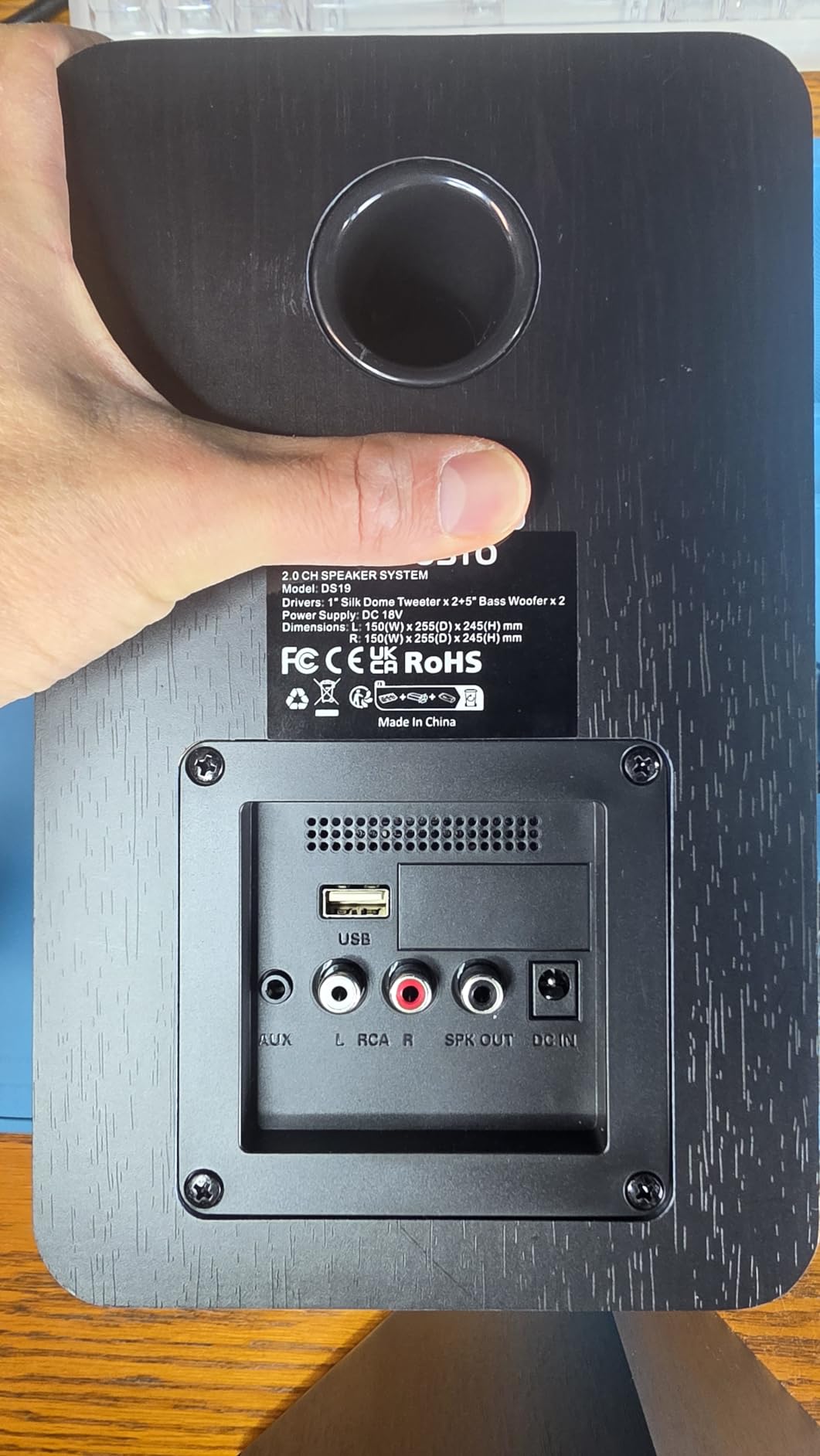
Bluetooth 5.4 with roughly 15 metres of rated range is the longest in this group, and RCA plus AUX cover the analog sources. There is also a 12V, 15V or 18V DC input option, which makes the pair usable in a camper or on a boat alongside the included 18V adapter.
Be aware it is a 2.0 stereo amplifier, not a home theater receiver. There is no Dolby or DTS decoding, which is why the USB input is described as compatible with a console such as the PS5 rather than a surround system.
Check for a phono preamp first
This is the most important line in this review. There is no integrated phono stage, so the speakers accept line level only. A turntable with a built-in preamp or a PHONO/LINE switch connects directly, and a PHONO-only deck needs a small external preamp.
That caveat is the single most repeated theme in the reviews, and it is the detail that decides whether these speakers are right for your setup. Check the outputs on the back of your turntable before ordering, and read the manual rather than assuming.
Best for mid-bass, not for sub-bass
The 5 inch driver gives the most mid-bass of any pair at this level, which makes vocals and acoustic instruments sit better than on the smaller budget models. It still will not produce true sub-bass, and there is no subwoofer output to add one.
For a first vinyl system in a bedroom, a home office, or a small apartment, the combination of driver size, tone controls and a USB input is hard to argue with. Confirm the phono situation first, and the rest falls into place.
11. RIOWOIS Powered Bookshelf Speakers: Best Powered Speakers for TV-ARC Control
RIOWOIS Powered Bookshelf Speakers, Desktop Speakers for Record Player
60W powered design with TV-ARC support
Bluetooth 5.3 plus optical, RCA and AUX inputs
Reinforced MDF cabinet, three year warranty
Pros
- TV remote controls volume and input directly
- RCA and AUX cover a turntable or computer
- Reinforced MDF cabinet with rounded corners
- Least expensive option in this roundup
- Three year warranty
Cons
- 2.75 inch drivers limit volume and bass
- Optical and ARC cables not included
- Cannot be used with an external amplifier or receiver
- Wireless from a turntable needs a transmitter
TV-ARC is the reason this pair exists. Plug the speakers into a television over ARC and the television’s own remote controls volume and input, which removes the need to pick up a second remote every time you switch from a film to a record.
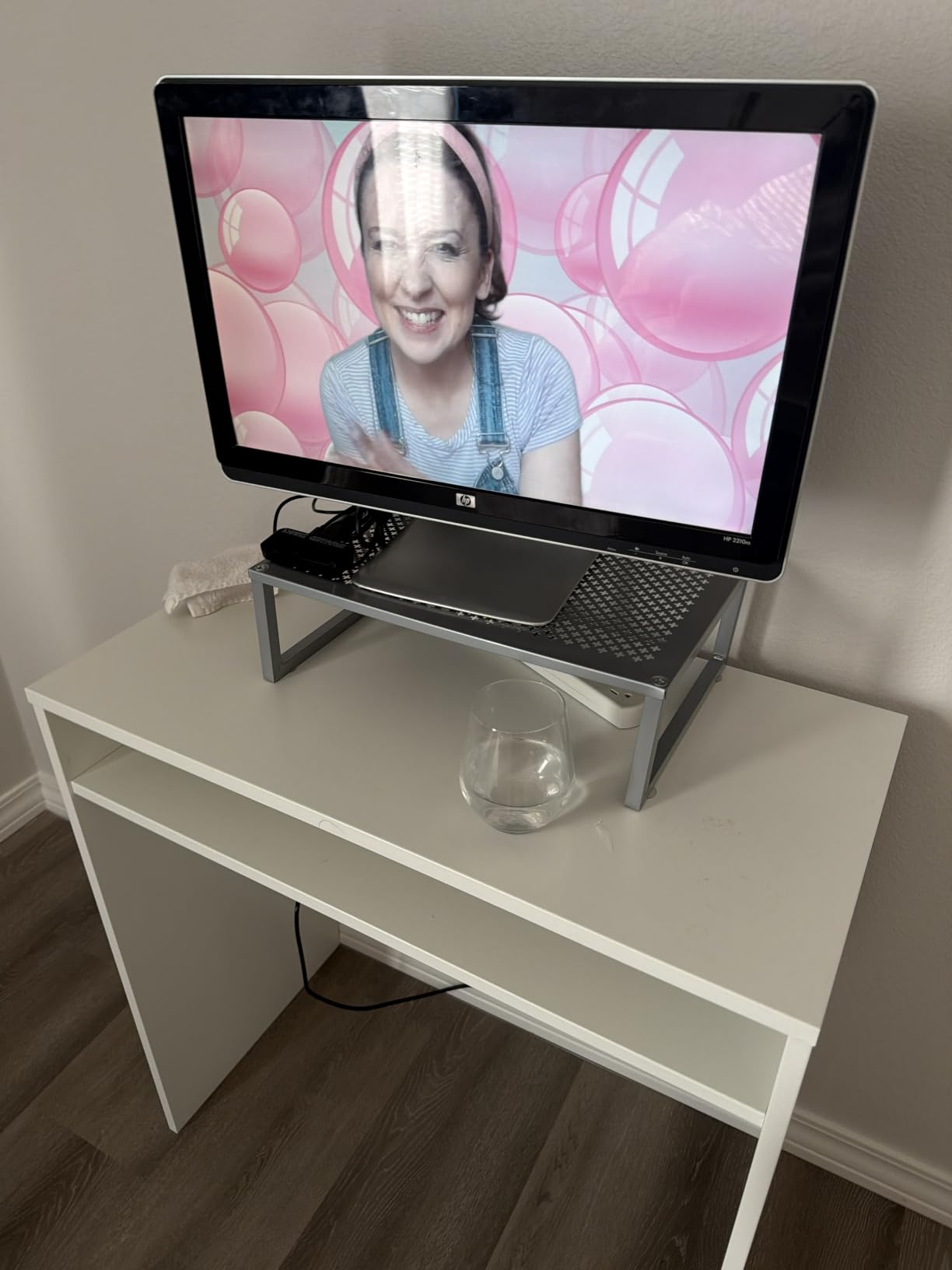
As a compact desktop pair they are also serviceable. The reinforced MDF cabinet with rounded, hand-polished corners is designed to reduce crackling, and the three sound effect modes are selectable from the remote or the top-panel buttons.
The drivers are the compromise. At 2.75 inches they put a clear ceiling on volume and bass extension, so this is a nearfield pair for a desk or a bedroom rather than anything you would fill a living room with.
One detail to know before buying: the optical and ARC cables are not included. Since the TV-ARC feature is the reason to pick it, budget for a cable, otherwise the headline function is unusable on day one.
Why the optical cable matters for vinyl
It does not connect to vinyl. A turntable output is analog, so records travel through the RCA or AUX inputs, while the optical and ARC connections are for your television, a game console, or a streamer with a digital output. Confusing the two is a common reason new owners report silence from a source that clearly works.
It is also a permanently closed upgrade path. These are powered speakers, and they cannot be driven by a separate amplifier or receiver, so adding better amplification later is not an option. That is fine for most first systems and worth knowing if you expect to expand.
Right and wrong situations
Choose it when your living room is shared, your television does the audio work, and your turntable has a built-in preamp you can feed into RCA. The convenience of one remote for both television and records is the entire value proposition.
Skip it when music is the priority. At 2.75 inches you are buying a feature set rather than sound quality, and the Edifier R1280T costs a similar amount for larger drivers and a better rating with far more reviews behind it.
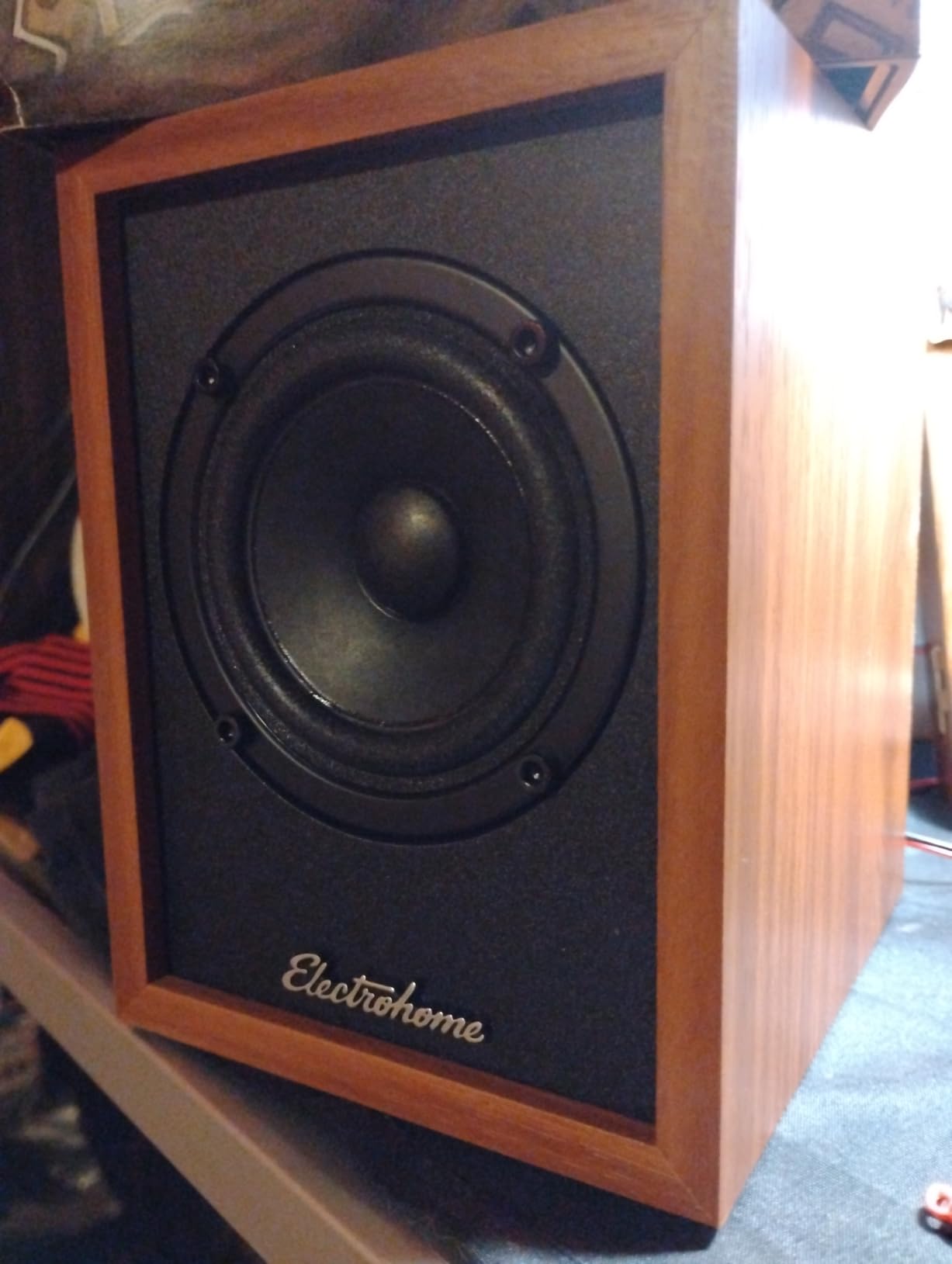
12. Electrohome Huntley Powered Bookshelf Speakers: Best Powered Speakers for Very Small Rooms
Electrohome Huntley Powered Bookshelf Speakers with Built-in Amplifier and 3″ Drivers for Turntable, TV, PC and Wireless Music Streaming Featuring Bluetooth 5, RCA and Aux (EB10B)
20W powered pair with 3 inch drivers
Handcrafted wood cabinets, rear ported
RCA, aux-in and Bluetooth 5
Pros
- No amplifier or receiver needed at all
- Wood cabinets sound warmer than plastic budget pairs
- Rear port improves bass for the cabinet size
- Compact footprint for small rooms and TV
Cons
- 3 inch drivers cap volume and bass weight
- Highest share of one-star reviews in this group
- No tone controls and no digital input
- Only a one-year manufacturer warranty
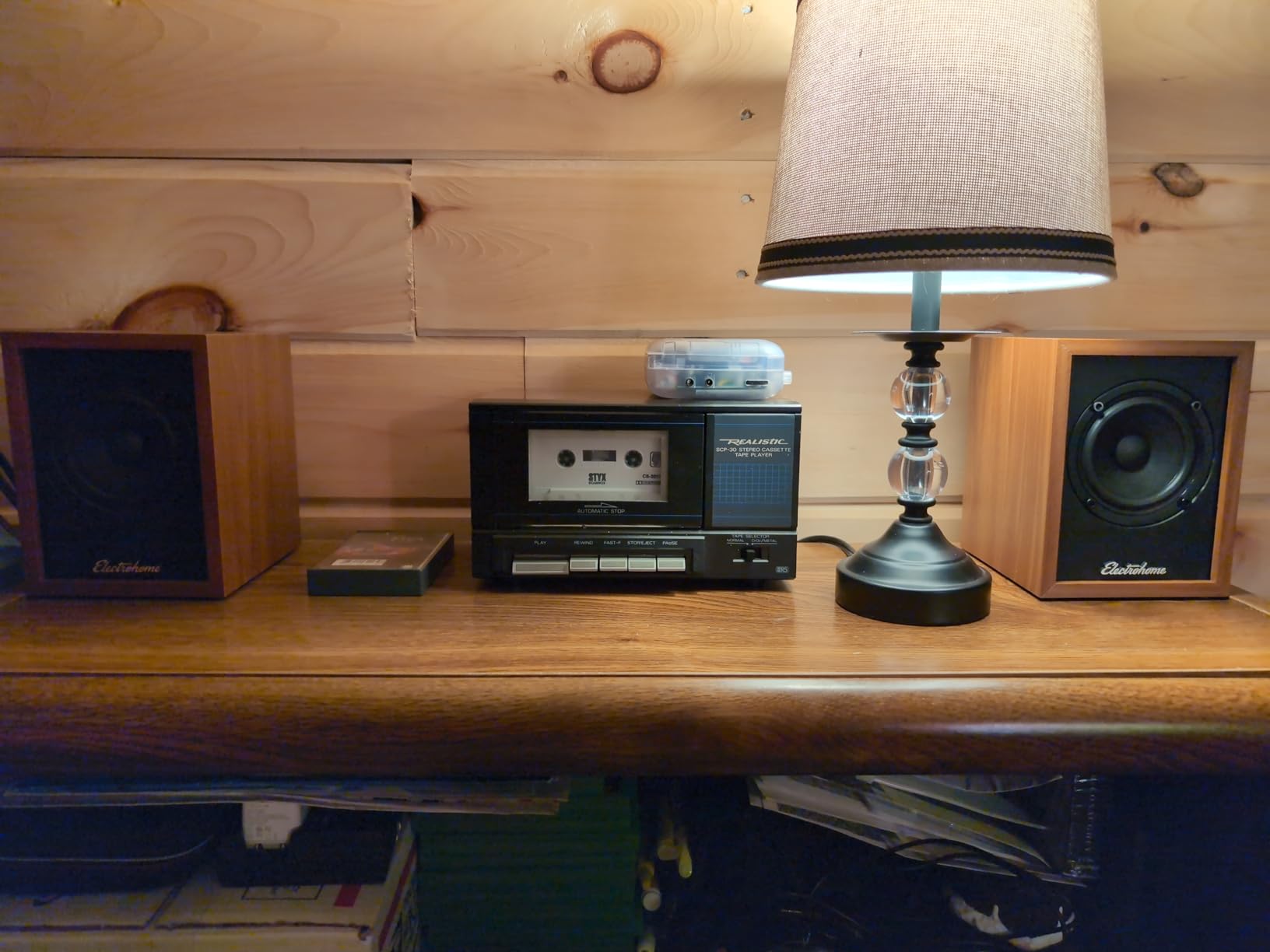
This is the least expensive way to get sound out of a turntable, and in a very small room the 3 inch drivers are less of a limitation than they sound on paper. Warm, full-bodied playback for the money is the reason owners keep it.
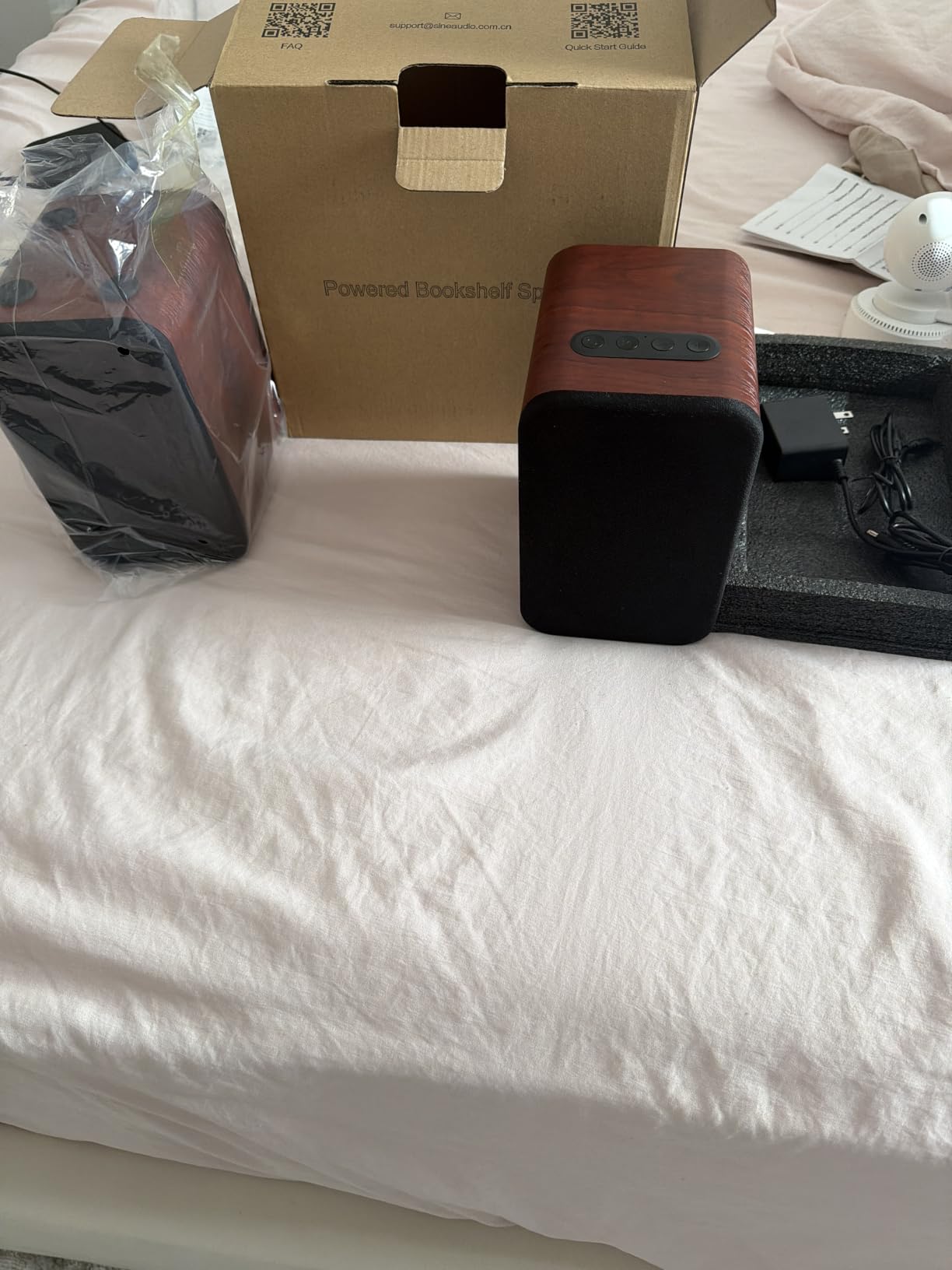
The handcrafted wood cabinets are tuned to reduce resonance and the rear port improves bass response for a cabinet this size. RCA input supports a turntable with a built-in or external preamp, and Bluetooth 5 covers streaming from a phone.
What gives us pause is the rating. At 4.2 it is the lowest average here, with roughly 9 percent one-star reviews, which points to a segment of buyers hitting reliability or performance issues. The one-year warranty is also the shortest in this roundup, so there is less protection if a unit fails.
At 20 watts there is no tone control of any kind, so all EQ has to come from the source. The box includes 8 feet of 22 gauge speaker wire, which is enough for a shelf but tight for stands.
Is the sound quality good enough for vinyl
For quiet listening in a bedroom, a dorm, or a small office, yes. Vinyl is a forgiving source at low volume, and a warm tuning suits records that were mixed hot. The limitation is output: at 20 watts the pair runs out of headroom well before it runs out of tonal balance.
Connect through RCA from a line-level output. A PHONO-only turntable will produce very quiet, thin sound through these speakers, and there is no tone control to compensate, so a small external preamp is effectively required in that case.
When to buy something else instead
Choose a different model if reliability matters to you, since the one-year warranty and the share of one-star reviews are the weakest figures in this group. The 4.6-rated Edifier pairs cost a similar amount and carry two-year warranties.
It remains a sensible choice for a first system in a very small room, or a secondary pair in a bedroom where a turntable lives. Just set expectations on volume, and confirm your turntable has a preamp or a LINE switch before ordering.
Built-in Phono Preamp vs External Preamp: What You Actually Need
The question decides your budget more than any other. A phono preamp, also called a phono stage, raises the tiny signal from a cartridge to line level so a normal amplifier can drive speakers from it. A turntable with a PHONO/LINE switch or an internal preamp already does that job, so you need nothing extra.
Only two pairs in this roundup have a phono stage inside. The Klipsch R-51PM has a switchable phono and line input with a ground screw terminal, and the Kanto YU6MW has an integrated preamp plus a subwoofer out. Everything else needs a deck that outputs line level, or a separate preamp.
Check the back of your turntable before you shop. A PHONO/LINE switch, a LINE label, or a small toggle near the output jacks means you are covered. A single PHONO output with a ground post means you need one of those two pairs, or a small external preamp.
Moving magnet cartridges, which is what most turntables ship with, work with any phono stage. Moving coil cartridges need a stage with more gain, so check the cartridge type before assuming a built-in preamp is enough.
Preventing Feedback and Ground Hum From the Turntable
Acoustic feedback is the low rumble that appears when a turntable sits too close to a powered speaker. The driver moves, the air moves, and the stylus picks that movement back up. It shows up as a low throb that follows the music and gets worse as volume rises.
Four steps fix most cases. Keep at least a metre between the turntable and the nearest speaker cabinet. Put the turntable on a proper plinth or a sturdy cabinet rather than a hollow desk. Sit the deck on an isolation mat, and add isolation feet under the speaker stands if you have them.
Ground hum is a different problem and sounds like a constant buzz or 50 or 60 cycle whine. It is almost always a ground loop, and the usual cause is a cable with poor shielding, or two ground paths competing. Try a new RCA cable with proper shielding, and plug the speaker amplifier and the turntable into the same power strip.
If the hum follows the volume knob, it is coming from the speakers. If it stays constant as you change volume, suspect the cable or the grounding. Neither problem is a reason to send the speakers back, and both are solved before you ever need a preamp.
How to Connect a Turntable to Powered Speakers in Four Steps
First, identify the output. Look at the back of the turntable for a PHONO/LINE switch or a LINE label, and set it to LINE if the switch exists. If the deck has a built-in preamp, use its line out.
Second, turn the speaker volume to minimum before you connect anything. This prevents a loud pop through the tweeters when the cable seats, and it costs you nothing.
Third, run an RCA-to-RCA cable from the turntable’s line outputs to an AUX or RCA input on the active speaker. If your turntable has a ground post, connect the ground wire to the speaker’s ground screw as well, which reduces hum.
Fourth, drop the needle and raise the volume slowly. If the sound is very quiet and thin, the turntable is almost certainly in PHONO mode with no preamp engaged. Switch to LINE, or connect a phono stage between the two, and the problem disappears.
Buying Guide: Matching Speaker Size, Power and Room Size
Driver size is the most useful proxy for what a powered pair can do. A 3 inch driver is a nearfield or small-room driver. A 4 inch driver covers a bedroom or a small office and is the sweet spot for most first systems. A 5.25 inch driver handles a mid-size living room and gives noticeably more mid-bass.
Power matters less than size for turntable work, because a line-level signal is easy to drive. Twenty watts is enough for a bedroom at moderate volume, 40 to 60 watts suits a small living room, and 100 watts or more gives the headroom that stops a large room sounding strained.
Match the cabinet to the furniture, not just the spec. Speaker stands with isolation feet improve both feedback and clarity, and they are the cheapest improvement in any vinyl setup. Stands also let you set the tweeter at ear height, which matters more on small drivers than on large ones.
Use the 83 percent rule as a starting point for placement. It says to place each speaker about 83 percent as far from the listening position as the distance between the two speakers, forming roughly an equilateral triangle. It is a guideline rather than a law, but it gives a more even stereo image than placing speakers a long way forward of the chair.
Toe-in helps as well. Angling both cabinets slightly toward the listening position narrows the image and improves the sense of a soundstage in front of you. A few degrees is enough, and it is the difference between the music sitting on the speakers and the music sitting in the room.
Best Brands for Powered Speakers in 2026
Edifier covers the budget and mid-range with the widest review base of any brand here, and on r/BudgetAudiophile the 1280 line is repeatedly described as the safest active recommendation for a first vinyl system. Klipsch is the reference for a built-in phono stage in a compact cabinet, with the Tractrix horn delivering the most treble detail in this roundup.
Audio-Technica brings the highest average rating in the group, and the AT-SP3X is a reminder that driver size alone does not determine sound quality. Kanto makes the most complete single-box solution, with a phono preamp, a subwoofer out and aptX Bluetooth in one pair of speakers.
Marshall builds the most decorative powered speaker, though it is a single cabinet rather than a pair. Electrohome, MEVOSTO, LONPOO, RIOWOIS and Saiyin fill the entry level, and each is a reasonable choice for a small room when the phono situation is already solved.
Frequently Asked Questions
Can I use powered speakers with a turntable?
Yes. Connect the turntable’s line-level output to an RCA or AUX input on the powered speaker. If your turntable has a PHONO/LINE switch, set it to LINE, or use its built-in preamp. If the deck only offers PHONO output, choose a speaker with a built-in phono preamp, such as the Klipsch R-51PM or the Kanto YU6, or add a small external preamp.
Do powered speakers need a phono preamp?
Only if your turntable outputs PHONO level only. Powered speakers accept line-level signals, and a phono preamp is the box that raises a cartridge signal to line level. If your turntable has a built-in preamp or a PHONO/LINE switch, you do not need an external one. A separate preamp costs far less than most speaker upgrades.
Can I connect a turntable to Bluetooth speakers?
Only if your turntable has a Bluetooth transmitter, not just a receiver. Most turntables with Bluetooth are receivers, which means a phone can stream to them and they cannot send audio out. Check the specifications for transmitter or output wording before planning a wireless setup, and keep an RCA cable as the reliable fallback.
What size powered speakers do I need for my room?
A 3 inch driver suits a bedroom or desk, a 4 inch driver covers a small living room, and a 5.25 inch driver handles a mid-size room with more mid-bass. For turntable work, driver size matters more than wattage, because a line-level signal is easy to amplify. Match the pair to stands or shelves rated for its weight.
What is the 83 percent rule for speakers?
It is a placement guideline that positions each speaker about 83 percent as far from the listening seat as the distance between the two speakers, forming a roughly equilateral triangle. It produces a more even stereo image than pushing the speakers well forward of the listener. Treat it as a starting point, then adjust by ear.
How do I fix humming between my turntable and powered speakers?
Usually it is a ground loop. Replace the RCA cable with a shielded one, connect the turntable ground post to the speaker ground screw, and power the turntable and speakers from the same strip. If the hum changes with the volume knob it comes from the speakers, and if it stays constant, suspect the cable or grounding. Keep the turntable a metre away to avoid acoustic feedback.
Final Verdict: Which Powered Speakers Should You Buy?
If your turntable has a built-in preamp or a PHONO/LINE switch, the Edifier R1280T is our pick for the best powered speakers for turntables. It has the deepest review base of any powered pair, a flat and honest tuning, and dual inputs so records and a computer stay connected together.
If your deck only offers PHONO output, do not buy a preamp you do not need. The Klipsch R-51PM handles that signal directly with a ground screw, and the Kanto YU6 does the same while adding a subwoofer out for later. If one pair also has to run your television, the Edifier R1280DB adds optical, coax and Bluetooth.
For a very small room on the tightest budget, the Edifier R980T or the Electrohome Huntley will do the job, with the LONPOO pair covering a desk setup. Whatever you choose in 2026, confirm the output on the back of your turntable first, keep a metre between the deck and the speakers, and you will avoid almost every problem new owners run into.