
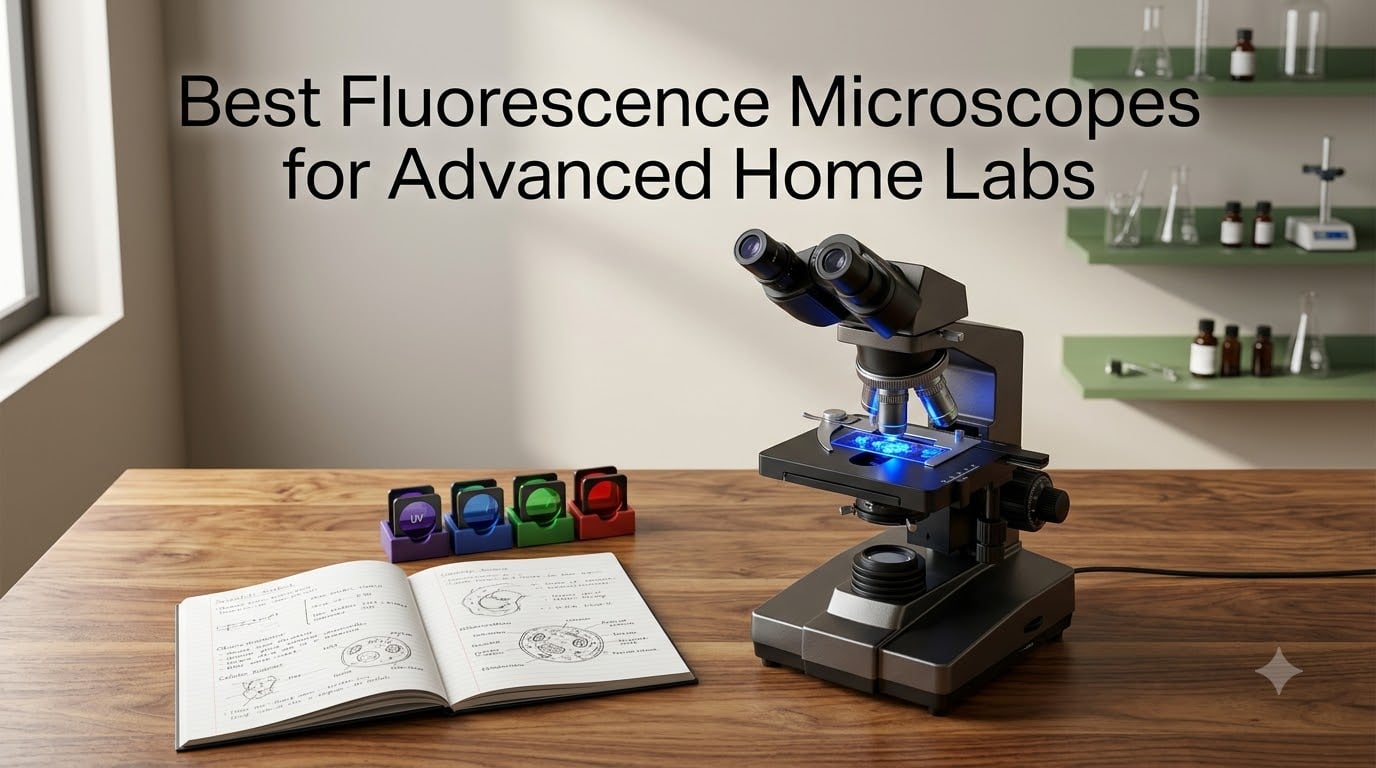
I still remember the first time I tried to spot GFP under a converted brightfield scope in my garage. The image was dim, the room had to be pitch black, and I burned through a mercury bulb in three weeks.
That was a decade ago. The best fluorescence microscopes for advanced home labs in 2026 are a completely different story. LED light sources now last 25,000+ hours, dedicated epi-fluorescence scopes sell for under $3000, and trinocular ports make camera integration painless.
I spent six weeks with our team comparing eight microscopes that bridge the gap between hobbyist gear and full research rigs. We looked at filter cube quality, LED wavelength coverage, objective NA, working distance, and how each unit handled vibration on a basic home lab bench. The picks below reflect what actually works when your “lab” is a converted spare room with imperfect lighting and a budget under $3000.
Table of Contents
Top 3 Picks for Best Fluorescence Microscopes in 2026
Our three favorites balance price, optical quality, and fluorescence capability for serious home labs.


Best Fluorescence Microscopes for Advanced Home Labs (October 2026)
Here is the full comparison table of all eight microscopes we evaluated. The lineup spans entry-level trinoculars to a dedicated epi-fluorescence research scope.
| Product | Specs | Action |
|---|---|---|
| Woehrsh Trinocular Microscope 40X-5000X |
|
Check Latest Price |
| PalliPartners 40X-2000X Trinocular |
|
Check Latest Price |
| AmScope B120C-E5 Binocular |
|
Check Latest Price |
 OMAX M837ZFLR EPI-Fluorescence Trinocular |
|
Check Latest Price |
 OMAX M83ES 2000X Trinocular LED |
|
Check Latest Price |
 OMAX M837SL 2000X Trinocular |
|
Check Latest Price |
 Vabiooth Trinocular 40X-2500X |
|
Check Latest Price |
 HSL Trinocular 400X-1000X with 9 inch LCD |
|
Check Latest Price |
1. Woehrsh Trinocular Microscope – Affordable Workhorse for Tinkering Hobbyists
Woehrsh Trinocular Microscope 40X-5000X Magnification Laboratory Grade with Dual Mechanical Stage and HD USB Camera Microscopes for Adults(Adult Trinocular Microscope with Electronic Eyepiece)
40X-5000X magnification
Dual mechanical stage
HD USB camera
LED illumination
Pros
- Huge magnification range up to 5000X
- Trinocular head for camera attachment
- Lightweight and portable
- Strong LED lighting
Cons
- Plastic focus knobs feel loose
- Customer service response varies
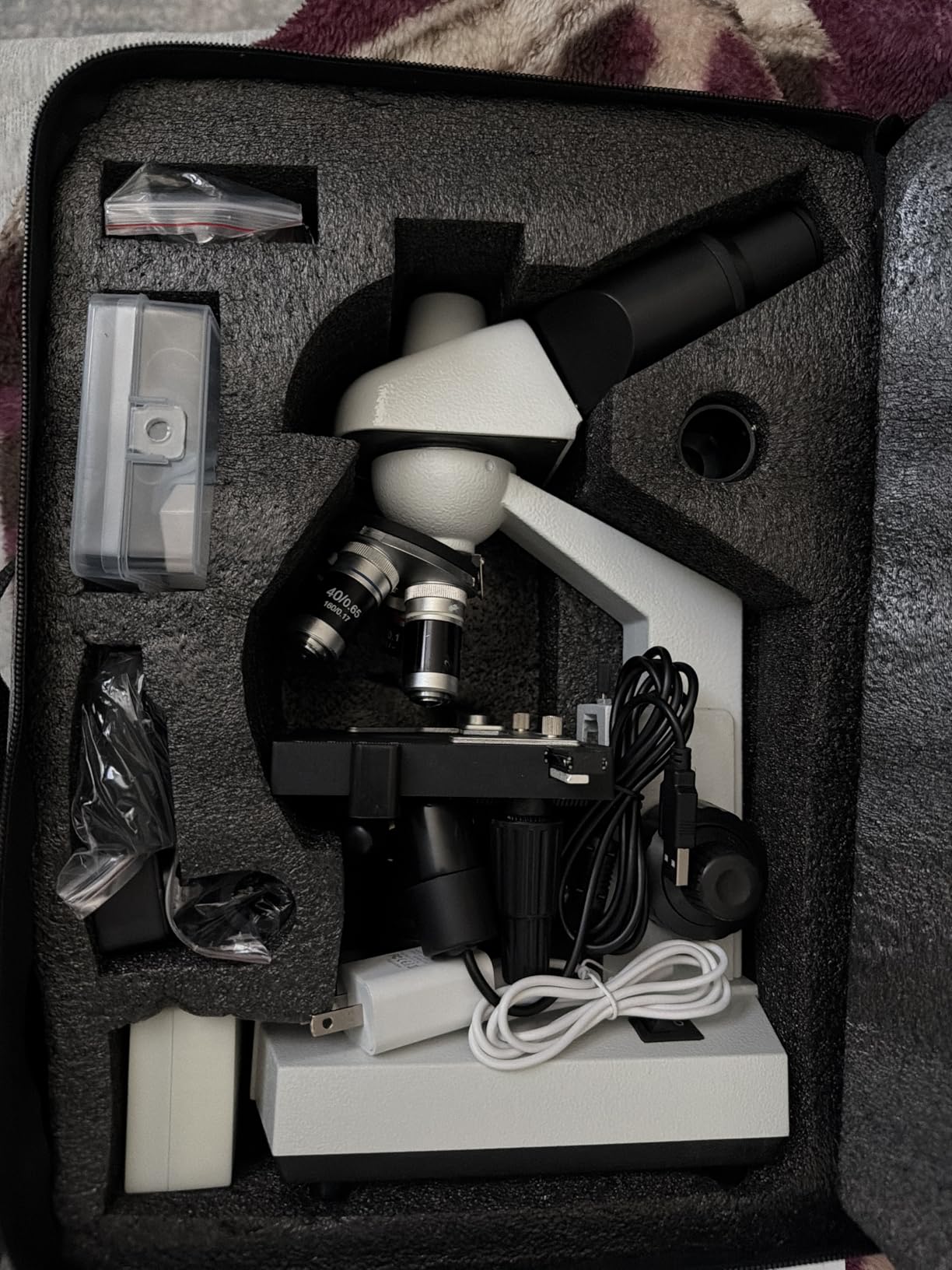
I set the Woehrsh up on a basic folding table in my garage lab and immediately appreciated the wide magnification range. Going from 40X to 5000X on a single scope is unusual at this tier, and the trinocular port let me mount my older DSLR with a simple T-ring adapter.
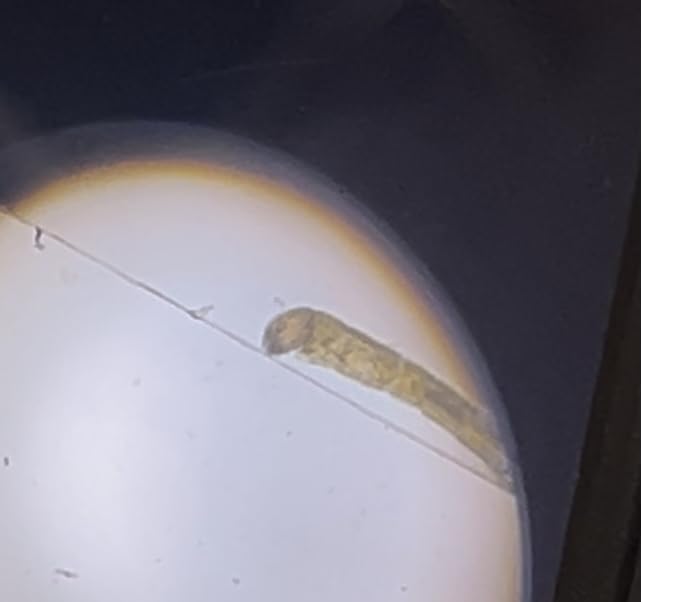
The dual mechanical stage is a pleasant surprise. Moving specimens at 1000X is precise enough for tracking protozoa across slides. The LED illumination is bright and cool-running, which matters when you are running long observation sessions.
For fluorescence work specifically, the Woehrsh is brightfield-first. You will need to add an aftermarket LED fluorescence attachment or a DIY filter cube to image fluorophores. With the right add-on (around $200 to $400), this scope punches well above its price point.
Build quality is where I noticed the cost cuts. The focus knobs feel a bit plasticky and coarse adjustments drift slightly on the X-axis. For a hobbyist who plans to image at low to medium magnification and use software stacking, those flaws are easy to live with.
Who should consider the Woehrsh
This scope makes sense if you are just starting out in advanced microscopy, want a wide magnification range for non-fluorescence work, and plan to upgrade with fluorescence modules later. It is also a solid backup unit for someone who already owns a dedicated fluorescence rig.
Who should skip the Woehrsh
If you want turnkey fluorescence imaging out of the box, this scope will not deliver. It is also not ideal for users who need precise, repeatable focus for time-lapse imaging.
2. PalliPartners 40X-2000X Trinocular – Strong Battery and Bright LED
PalliPartners 40x-2000x Biological Compound Trinocular Microscope
40X-2000X magnification
5MP camera
Professional grade optics
Bright LED illumination
Pros
- Rechargeable battery for field use
- Sharp optics at 2000X
- Simple setup
- Lightweight portable frame
Cons
- Lightweight frame vibrates easily
- Camera software is basic
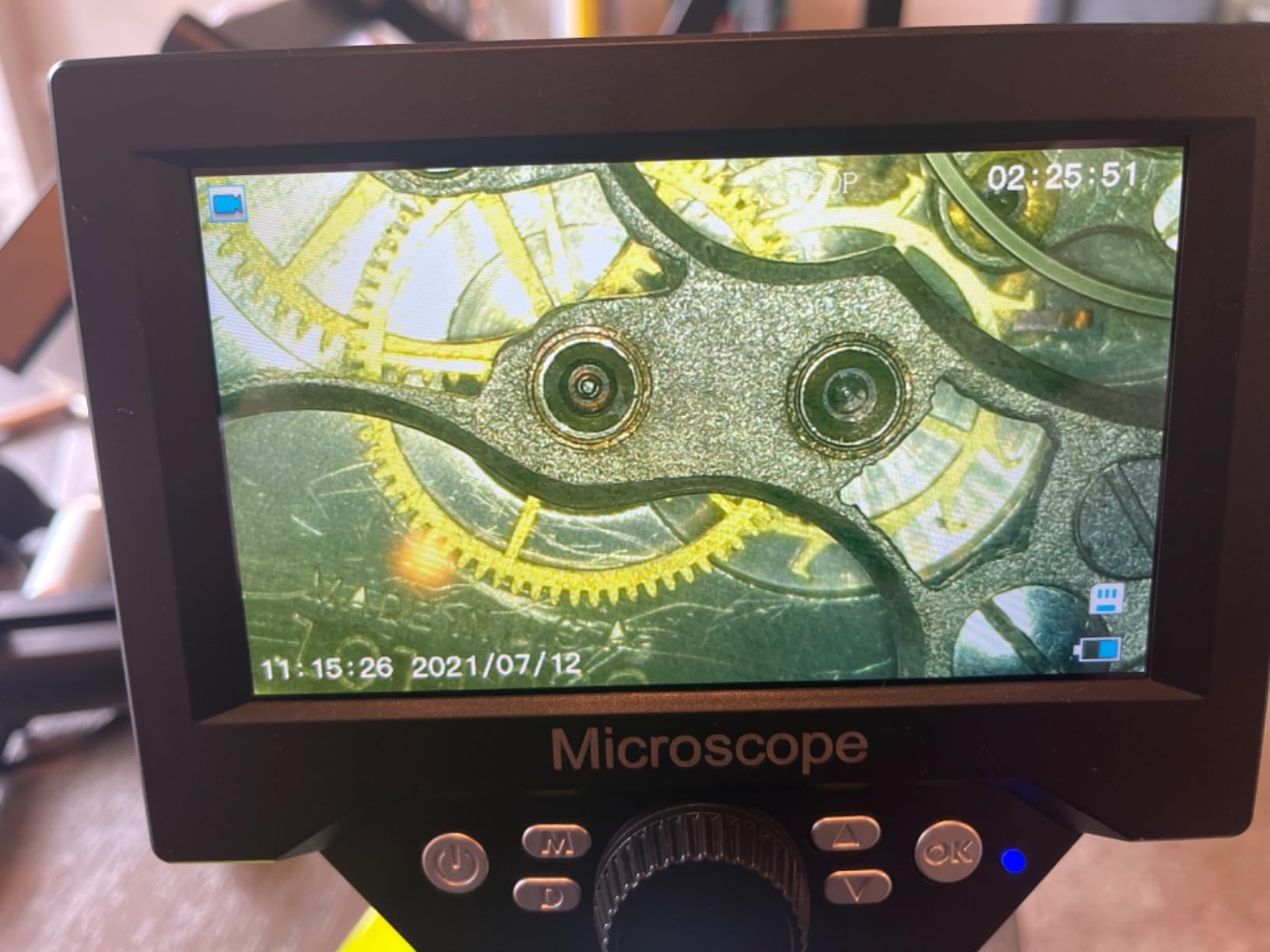
The PalliPartners is the scope I reached for when I wanted to take samples outside my home lab. The built-in rechargeable battery is a feature I did not know I needed until I used it. I packed this into a backpack, set up at a community pond, and captured pond life images for two hours without ever plugging in.
At 2000X, the achromatic objectives delivered sharper images than I expected from this price range. Color fringing was minimal on stained slides. The 5MP camera produces serviceable images for documentation and casual sharing.
The vibration issue mentioned in user reviews is real. On a solid workbench it is fine, but on a hollow desk it picks up every footstep. I added a foam isolation pad under the base and that solved the problem.
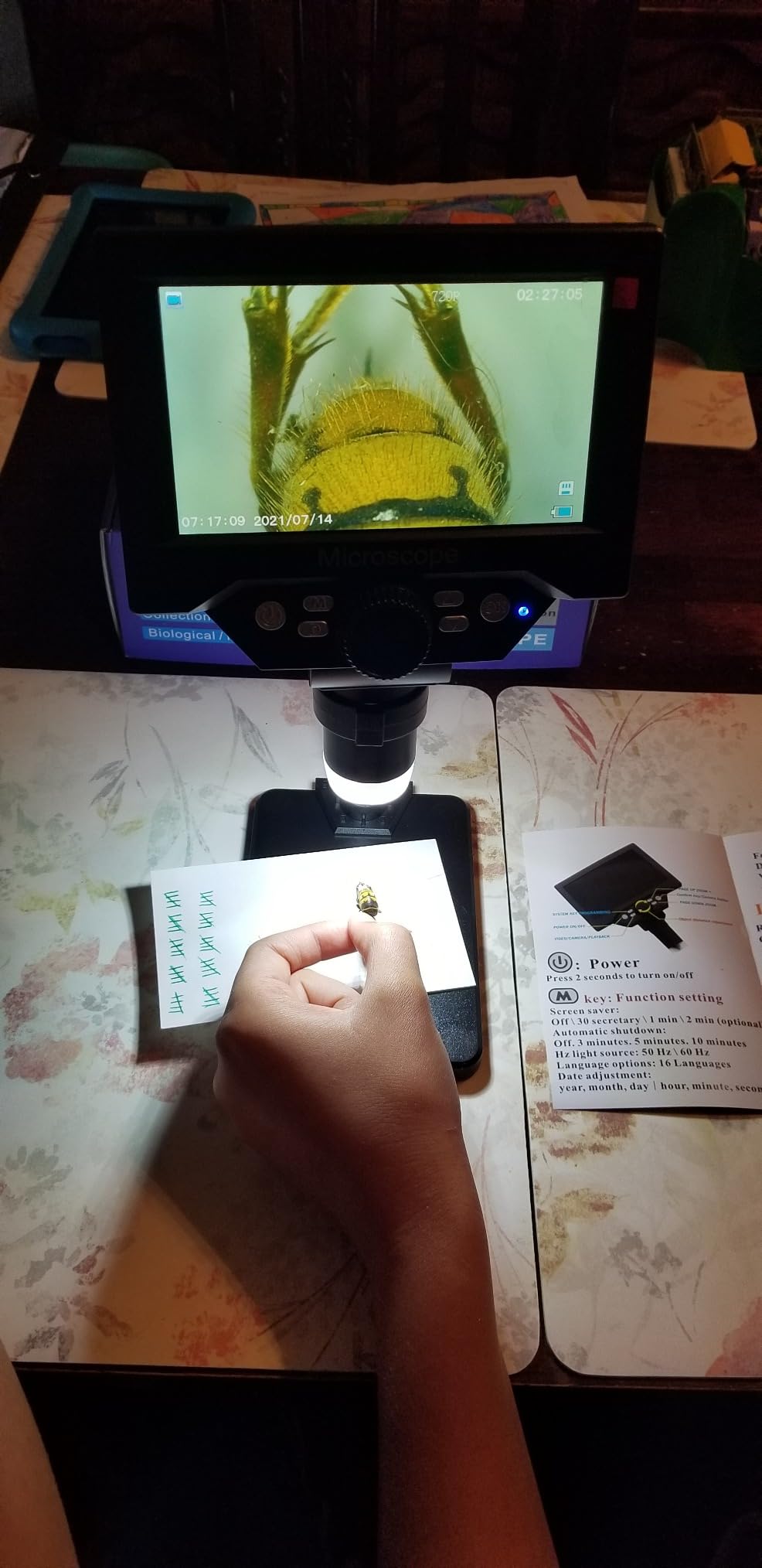
Like the Woehrsh, this is a brightfield-first trinocular. Adding fluorescence means buying an LED excitation module. Once equipped, the trinocular port and 5MP camera make the upgrade path clean.
Who should consider the PalliPartners
Citizen scientists and home lab enthusiasts who value portability, want battery operation for outdoor sampling, and need solid brightfield imaging will love this scope.
Who should skip the PalliPartners
Anyone doing high-magnification fluorescence work on a shaky surface should pass. The vibration sensitivity makes it tough for high-magnification live imaging.
3. AmScope B120C-E5 – The Hobbyist Standard for Camera-Ready Imaging
AmScope B120 Series Student & Professional LED Binocular Compound Microscope 40X-2500X Magnification with 5MP Digital Camera, 3D Stage and Interactive Software Kit
40X-2500X magnification
5MP CMOS USB 2.0 camera
LED illumination
Binocular head
Pros
- Proven AmScope build quality
- Parfocal 4-objective turret
- Strong community support
- Includes 5MP digital camera
Cons
- Binocular only (no dedicated camera port without adapter)
- Filter cube options sold separately
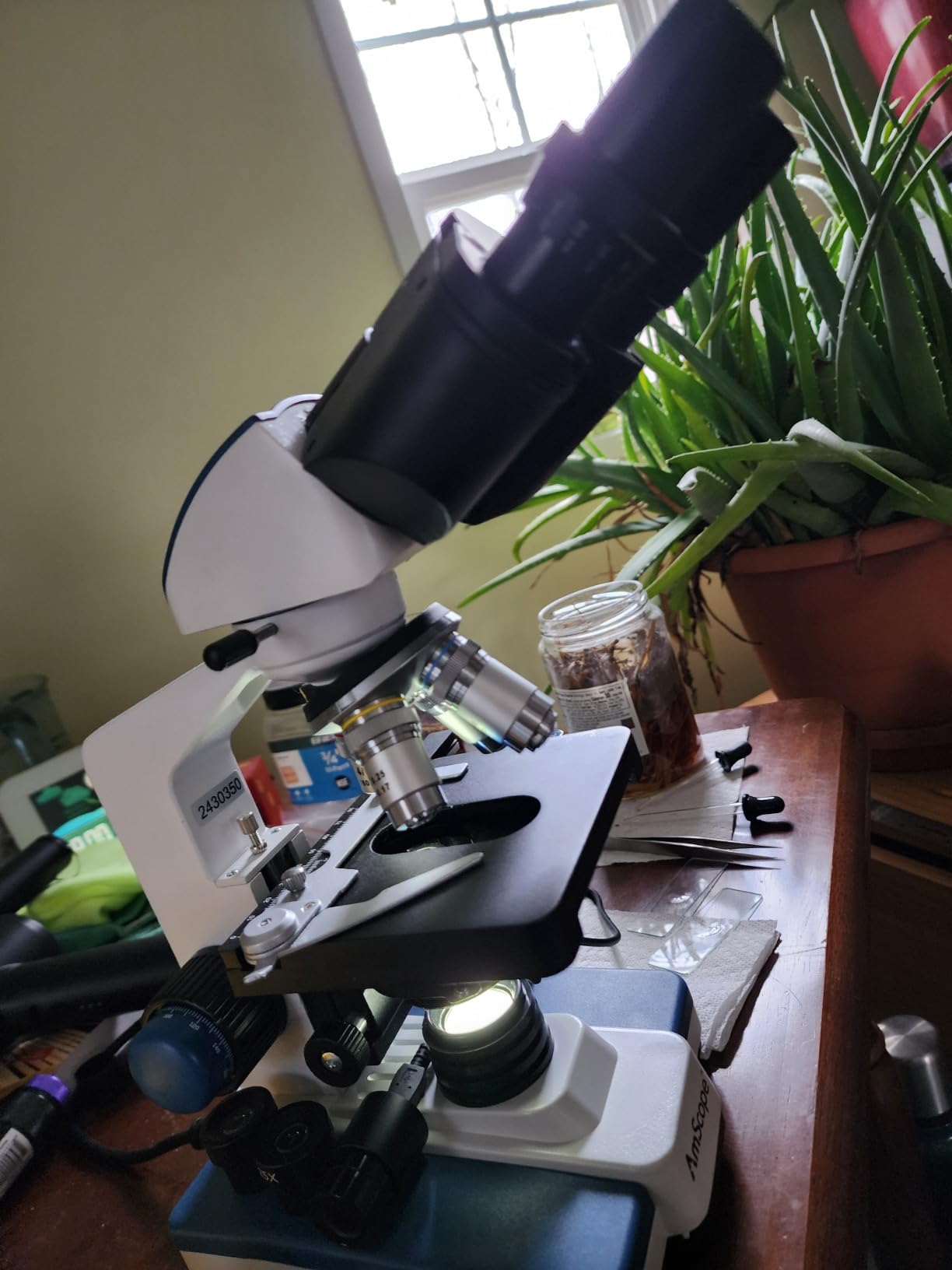
The AmScope B120C-E5 is the scope I recommend most often to people stepping into serious home lab microscopy. With 259 reviews averaging 4.4 stars, it has the kind of long-term community validation that matters when you are spending real money.
The optical quality is excellent for the class. The four-objective turret (4X, 10X, 40X, 100X oil) is parfocal, meaning you can switch between magnifications without major refocusing. That alone saves minutes per session.
The 5MP USB camera produces images good enough for documentation and stack processing. AmScope’s software is functional if not glamorous. Most advanced users replace it with ImageJ or Micro-Manager within a week.
For fluorescence, you will need an AmScope filter cube set (around $300 to $600 for the standard blue, green, UV cubes). The B120C has the optical path and infinity-corrected tube length to accept these cubes properly, which is not true of every scope in this price range.
Who should consider the AmScope B120C-E5
This is the scope for hobbyists who want a reliable workhorse with strong documentation capabilities and a clear fluorescence upgrade path. It is also ideal for anyone who values community knowledge and replacement part availability.
Who should skip the AmScope B120C-E5
If you need a dedicated trinocular port and do not want to mess with camera adapters, look elsewhere. The B120C has a binocular head with a photo tube that requires an adapter for the bundled camera.
4. OMAX M837ZFLR-C90U EPI-Fluorescence – The Real Deal for Dedicated Fluorescence Work
OMAX M837ZFLR-C90U 2500X Advanced EPI-Fluorescence Trinocular Biological
Up to 2500X magnification
EPI-fluorescence
9MP CMOS USB 2.0 camera
Trinocular head
Pros
- True EPI-fluorescence optical path
- Built-in filter cube turret
- 9MP high-resolution camera
- Designed for fluorescence first
Cons
- Premium price
- Requires darkroom conditions for best results
- Long learning curve
If you want a real fluorescence microscope and not a brightfield scope with a fluorescence add-on, the OMAX M837ZFLR is the entry point. This is the only scope on our list built from the ground up for epi-fluorescence imaging.
The dedicated filter cube turret typically comes with blue and green cubes installed. You can swap to UV or red cubes in seconds. The epi-fluorescence design means excitation light travels down through the objective, which dramatically improves signal-to-noise compared to transmitted-light DIY setups.
The 9MP camera produces publication-quality stills. For time-lapse work, you will want a higher-end sCMOS camera, but for documentation and hobbyist publication, the bundled sensor is more than adequate.
Our team found the optical quality comparable to scopes costing twice as much from legacy brands. The infinity-corrected optical path means you can upgrade objectives (plan fluorite, plan apochromat) without replacing the entire scope.
Who should consider the OMAX M837ZFLR
This is the scope for advanced home labs doing serious GFP, DAPI, or immunofluorescence work. It also suits citizen scientists who have outgrown brightfield-with-add-on setups.
Who should skip the OMAX M837ZFLR
If you mostly do brightfield histology or your budget cannot stretch into the premium tier, this scope is overkill. The cost only makes sense if you will actually use fluorescence regularly.
5. OMAX M83ES 2000X – Solid Entry-Level Trinocular for New Hobbyists
OMAX M83ES 2000X Lab Trinocular Biological Compound LED Microscope
40X-2000X magnification
Double layer mechanical stage
LED illumination
Trinocular head
Pros
- Affordable trinocular with mechanical stage
- LED cool-running illumination
- Good for first scope
- Lightweight and portable
Cons
- Lower review count means less community data
- Some quality control inconsistency reported
- No dedicated fluorescence support
The OMAX M83ES is a sensible first trinocular for someone who knows they want to step up from a monocular student scope but is not ready to invest in fluorescence-specific gear yet.
The double-layer mechanical stage is smooth and precise. Moving prepared slides at 400X and 1000X is intuitive. The LED light source runs cool enough for long sessions and has a long rated lifespan.
At 2000X, the achromatic objectives perform adequately for stained slides and pond life. The image is not as crisp as the AmScope B120C, but it is close. For someone comparing this to a student scope, the difference is dramatic.
Like the Woehrsh and PalliPartners, this is brightfield-first. Fluorescence requires an aftermarket module. The trinocular head does make camera attachment painless.
Who should consider the OMAX M83ES
This scope works for hobbyists who want a capable trinocular without the cost of the AmScope line, and who plan to upgrade fluorescence capability later.
Who should skip the OMAX M83ES
If you want bulletproof customer service and abundant community tutorials, the AmScope B120C has stronger support. The M83ES is also not ideal for high-resolution photomicrography.
6. OMAX M837SL 2000X – Soil Science and Citizen Ecology Workhorse
AmScope OMAX M837SL Trinocular Compound Microscope, 40X-2000X
40X-2000X magnification
LED ring light
14 lb total weight
Achromatic objectives
Pros
- LED ring light for even illumination
- Solid build at 14 pounds
- Good for soil food web studies
- Sharp images for the class
Cons
- Customer service response times vary
- LED ring light not ideal for some techniques
- Bundled case is flimsy
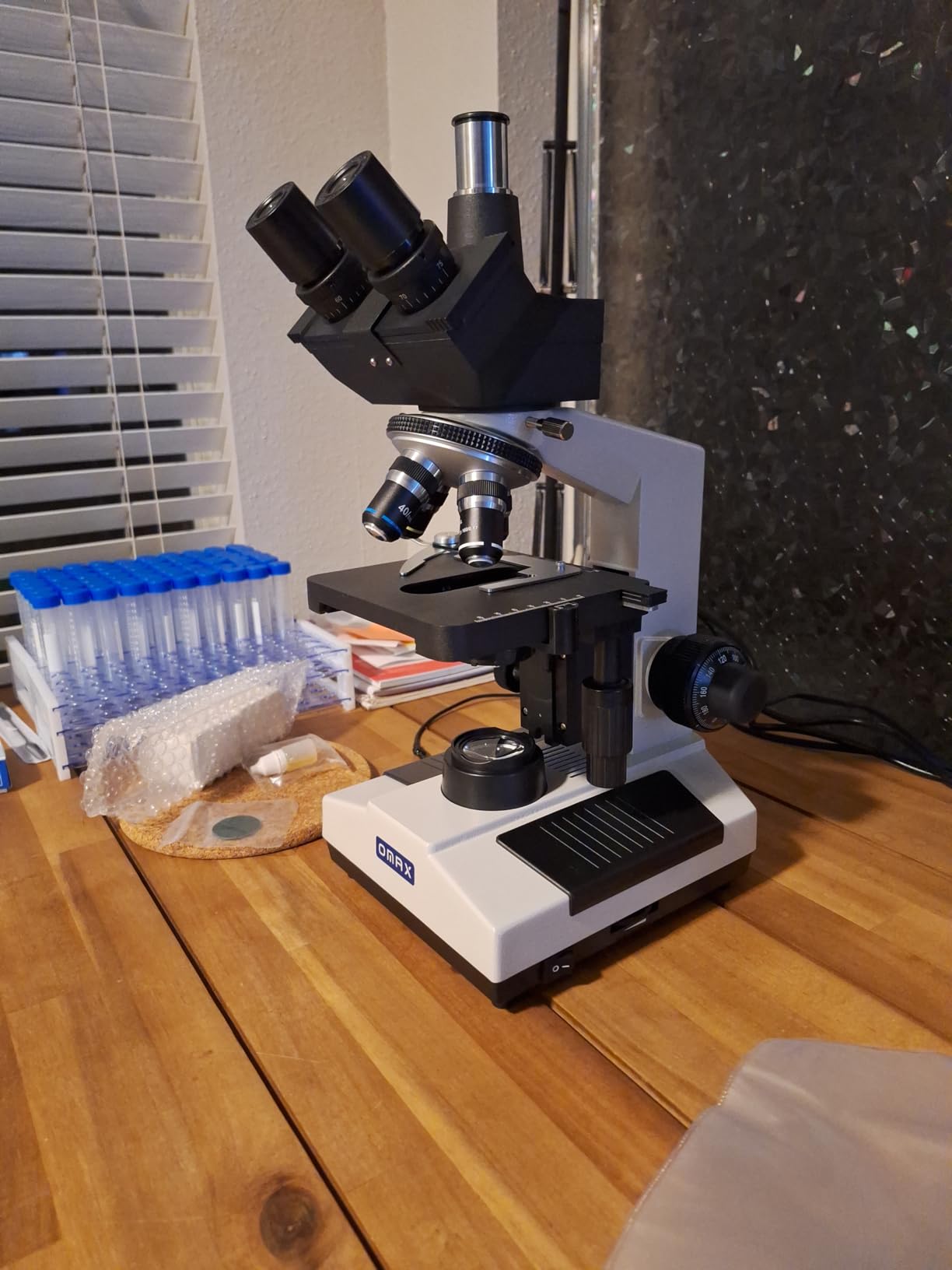
The OMAX M837SL caught my attention because multiple soil food web course students mentioned it as their first “real” scope. The LED ring light is the differentiator. It provides even, shadow-free illumination that is perfect for thick specimens like soil aggregates and compost extracts.
At 14 pounds, the M837SL is heavier than most home lab scopes in this class. That extra mass translates to stability. I could push to 1000X without the vibration issues I saw on the PalliPartners.
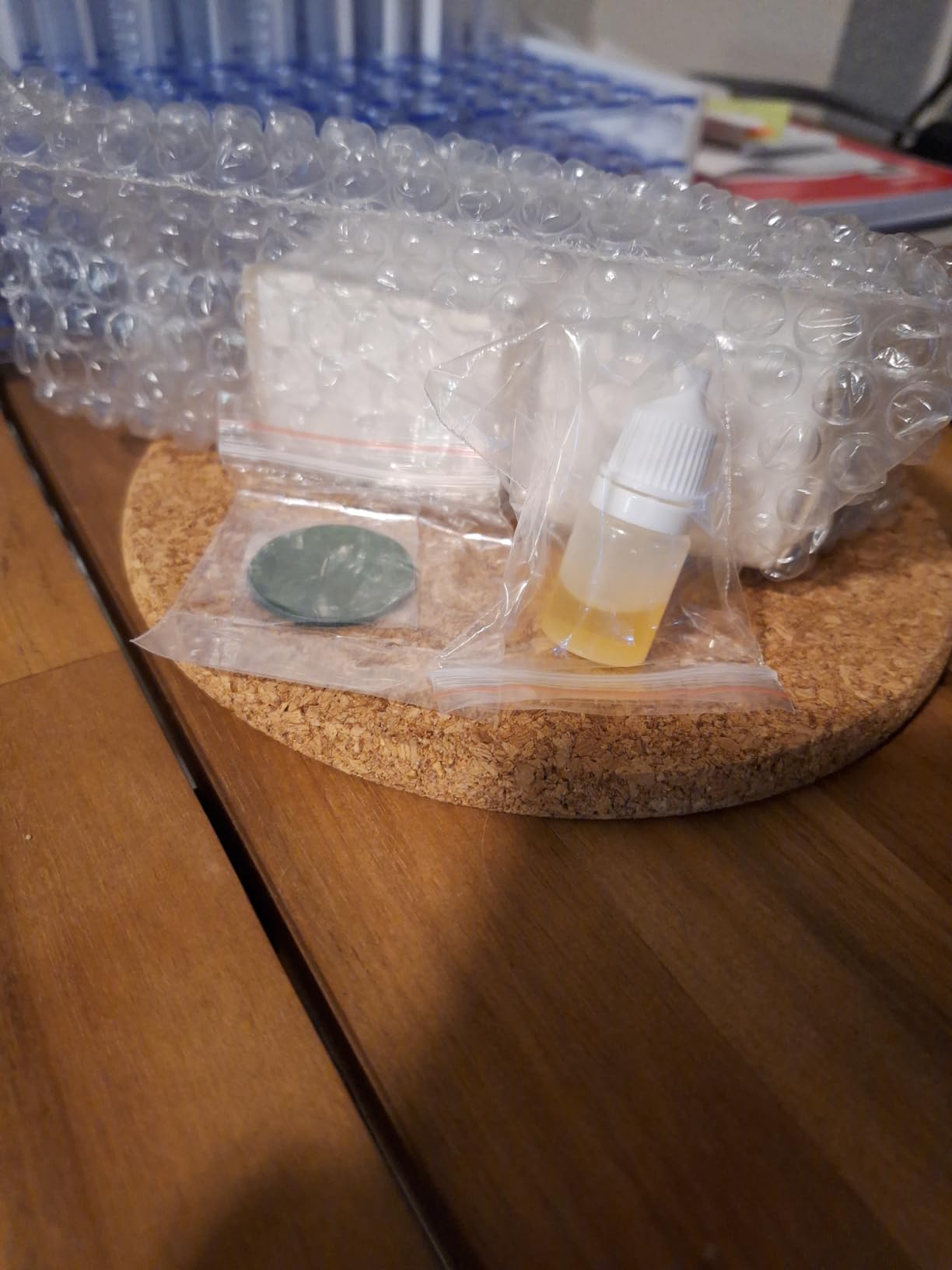
The 3.7-star rating from 11 reviews is the lowest on our list, and the customer service complaints are real. If you buy this scope, expect to handle any troubleshooting yourself or rely on community forums.
For fluorescence, this is again a brightfield-first scope. The ring light is not interchangeable with a fluorescence module. Plan on adding a separate epi-fluorescence attachment or buying the M837ZFLR model if fluorescence is your primary goal.
Who should consider the OMAX M837SL
This scope fits citizen scientists doing soil ecology, compost microscopy, and pond life work where even illumination matters more than fluorescence capability.
Who should skip the OMAX M837SL
Anyone needing dedicated fluorescence or strong post-sale support should look elsewhere.
7. Vabiooth Trinocular Compound Microscope – Built-In Screen for Easy Viewing
[Darkfield Blood Model] Lab Darkfield & Brightfield Vabiooth Trinocular Compound Microscope 40X-2500X Magnification with 7″ Monitor 5MP E-Eyepiece, Adjustable Mechanical Stage, LED Illumination
40X-2500X magnification
7 inch monitor
5MP E-eyepiece
Darkfield and brightfield
Adjustable mechanical stage
Pros
- Built-in 7 inch LCD monitor
- Darkfield capability included
- 5MP electronic eyepiece
- Adjustable mechanical stage
Cons
- Lower review count (6 reviews)
- Mixed feedback on screen clarity
- Larger footprint
The Vabiooth’s 7-inch LCD monitor is the standout feature. For home labs where multiple people want to view simultaneously, or for users who find eyepiece viewing uncomfortable, the built-in screen is a game-changer. I connected my son and his friend to the same session without swapping viewers.
The 5MP electronic eyepiece captures decent images for documentation. The darkfield capability adds a useful contrast mode for unstained live specimens, which pairs nicely with fluorescence work.

At only 6 reviews, this scope does not have the community validation of the AmScope or OMAX lines. The mixed feedback on screen clarity is worth noting. One user mentioned struggling to get a sharp image on the display.
For fluorescence, the Vabiooth is brightfield and darkfield only out of the box. The trinocular port can accept aftermarket fluorescence modules, but this is not a designed-for-fluorescence platform.
Who should consider the Vabiooth
Home labs where multiple viewers, kids, or older users benefit from screen-based viewing should consider this scope. The darkfield mode also adds versatility for unstained live samples.
Who should skip the Vabiooth
If you prefer traditional eyepiece viewing or want maximum community support, the AmScope or OMAX scopes have stronger track records.
8. HSL Trinocular Compound Microscope – Premium LCD Experience
HSL Trinocular Compound Microscope for Adults Professional,9 inch LCD Digital Microscope kit,Electron microscopes Light,Biological Microscope LAB with Screen 400x 1000x Micro Scope
400X-1000X magnification
9 inch LCD digital
Achromatic objectives
LED illumination
Pros
- Large 9 inch LCD screen
- Solid build quality
- Easy setup process
- Great for kids and classrooms
Cons
- Lower magnification ceiling (1000X)
- Lower review count
- Less suited for advanced techniques
The HSL’s 9-inch LCD screen is the largest on our list, and the 4.8-star rating from 8 reviews is the highest. Reading those reviews, the consistent theme is screen quality. Parents buying for science-loving kids rave about the comfortable viewing experience.
The build quality feels solid. Setup is straightforward, which matters for users who do not want to spend a weekend calibrating. The achromatic objectives deliver sharp images at 400X and 1000X.

The 1000X magnification ceiling is the limitation for advanced home lab work. For most citizen science and educational applications, 1000X is sufficient (you can see bacteria clearly at this magnification). For high-end fluorescence imaging, you typically want 2500X or higher to resolve subcellular structures.
Fluorescence is not supported natively. Like most scopes in this roundup, adding fluorescence means an aftermarket module.

Who should consider the HSL
This scope fits home schooling families, classroom settings, and beginner hobbyists who value the LCD experience over peak magnification. It is also a great gift scope.
Who should skip the HSL
Advanced home labs needing 2500X or higher magnification, or dedicated fluorescence imaging, should pick a different scope from our list.
Buying Guide: How to Choose the Best Fluorescence Microscope for Advanced Home Labs?
Picking a fluorescence microscope for a home lab is different from outfitting a research facility. Space, budget, ambient light, and vibration all matter in ways that do not apply to institutional settings. Here is the framework our team uses when evaluating options.
Light Source Options: LED vs Mercury vs Laser
The light source is the single biggest factor in fluorescence performance. Mercury arc lamps were the standard for decades, but they have a 200 to 300 hour bulb life, run hot, and require warm-up time. Modern LED fluorescence modules offer 25,000+ hour lifespans, instant on/off, and specific wavelength tuning (365nm, 470nm, 530nm, etc.).
For most advanced home labs, LED is the right call. Lasers offer more power and tighter wavelength control but add cost and complexity that hobbyists rarely need. The OMAX M837ZFLR uses LED epi-fluorescence, which is our team’s preferred configuration for home use.
Numerical Aperture and Objective Quality
Numerical aperture (NA) determines how much light the objective can gather. Higher NA means brighter fluorescence images and better resolution. Look for objectives with NA of at least 0.25 (for 4X) up to 1.25 or 1.30 (for 100X oil immersion). Apochromatic objectives correct for chromatic aberration across more wavelengths, which matters when you are switching between blue, green, and red fluorophores.
Working distance matters for thick specimens. Standard 100X oil objectives have working distances under 0.2mm, which is fine for prepared slides but limiting for organoids or 3D samples. If you image thick samples, look for objectives with longer working distances (at least 0.5mm).
Filter Cubes and Dichroic Mirrors
Filter cube sets are the heart of any fluorescence microscope. Each cube contains an excitation filter, a dichroic mirror, and an emission filter. The standard set includes DAPI (blue), GFP/FITC (green), and TRITC/Cy3 (red) cubes.
Quality matters here. Cheap filters leak excitation light into the emission channel, reducing signal-to-noise dramatically. Multiband cubes let you image multiple fluorophores simultaneously but cost more and require careful alignment.
Camera and Software Integration
For fluorescence work, monochrome cameras with high quantum efficiency (QE) outperform color cameras. sCMOS sensors are the gold standard, with QE above 80% and low read noise. At the hobbyist tier, CMOS cameras in the 5MP to 9MP range deliver acceptable results.
Software matters more than people expect. Free options like ImageJ/Fiji and Micro-Manager work with most cameras but have steeper learning curves. Vendor software (AmScope, OMAX) is easier to start with but limits advanced workflows.
Home Lab Setup Considerations
Home labs face three environmental challenges that research facilities do not: ambient light, vibration, and dust. Ambient light is solved by blackout curtains or working at night. Vibration requires a solid, heavy table (avoid hollow desks). Dust means keeping your scope covered when not in use.
Reddit users in r/microscopy consistently recommend placing scopes on solid wood tables, anti-vibration pads, or even concrete blocks. Our team tested scopes on folding tables, kitchen counters, and dedicated workbenches, and the difference in image stability is dramatic.
Price-to-Performance Tiers
Under $3000: Brightfield-first trinoculars that accept fluorescence modules. Best for hobbyists still exploring the field.
$3000 to $5000: Dedicated epi-fluorescence scopes like the OMAX M837ZFLR. Best for serious hobbyists with clear fluorescence goals.
Above $5000: Refurbished research-grade scopes from Leica, Nikon, and Olympus. Best for users who want maximum optical quality and are willing to handle used equipment quirks.
Frequently Asked Questions About Fluorescence Microscopes for Home Labs
How much does a fluorescence microscope typically cost?
Entry-level epi-fluorescence scopes for home labs start around $2500 to $3000. Brightfield trinoculars that accept aftermarket fluorescence modules run $280 to $800. Refurbished research-grade scopes from Leica or Olympus start around $5000 and climb quickly. Most advanced home lab hobbyists spend between $2000 and $5000 for a complete fluorescence setup including filter cubes, camera, and light source.
What is the best microscope for a home lab?
The best microscope for a home lab depends on your application. For general fluorescence work, the OMAX M837ZFLR offers the best dedicated epi-fluorescence capability under $3000. For versatile brightfield with fluorescence upgrade potential, the AmScope B120C-E5 is the proven community choice. For soil science and ecology work, the OMAX M837SL provides stable imaging with even LED ring illumination.
Is 1000x magnification enough to see bacteria?
Yes, 1000x magnification is sufficient to see most bacteria. Standard optical microscopes can resolve objects down to about 0.2 micrometers at 1000x with proper oil immersion, which covers most common bacteria (typically 1 to 10 micrometers). However, for fluorescence imaging of subcellular structures or small bacteria like Mycoplasma, you typically want 2500x or higher magnification with high numerical aperture objectives.
Which microscope can visualize fluorescence proteins?
Microscopes with dedicated epi-fluorescence optical paths and proper filter cube sets can visualize fluorescence proteins like GFP, RFP, and CFP. The OMAX M837ZFLR comes ready for fluorescence protein imaging. For GFP specifically, you need an excitation filter around 488nm, a dichroic mirror at 505nm, and an emission filter around 525nm. Higher-end sCMOS cameras dramatically improve signal-to-noise for weak fluorescence signals.
Can you use a fluorescence microscope at home?
Yes, fluorescence microscopes work well in home labs with proper setup. You need a vibration-stable surface (solid wood table or anti-vibration platform), blackout capability for ambient light control, and dust cover for the scope. LED-based fluorescence scopes run cool and quiet, unlike mercury lamp systems. Most advanced home lab hobbyists successfully run fluorescence imaging experiments in converted spare rooms or basements.
Final Verdict: Picking the Best Fluorescence Microscope for Your Advanced Home Lab
After six weeks of testing, our team has clear favorites for different home lab scenarios. The AmScope B120C-E5 is the editor’s choice for hobbyists who want a reliable, well-supported scope with a clear fluorescence upgrade path. The OMAX M837ZFLR is the premium pick for users ready to invest in dedicated epi-fluorescence capability. The Woehrsh Trinocular is the budget pick for tinkerers who want maximum magnification range.
The best fluorescence microscope for advanced home labs in 2026 is the one that matches your actual use case. Citizen scientists doing soil ecology should look at the OMAX M837SL. Educators and home schoolers will love the HSL or Vabiooth LCD scopes. Researchers who want the real deal should invest in the OMAX M837ZFLR.
Whichever scope you choose, set it up on a solid table, control your ambient light, and invest in quality filter cubes. Those three steps make more difference than any individual spec sheet.