
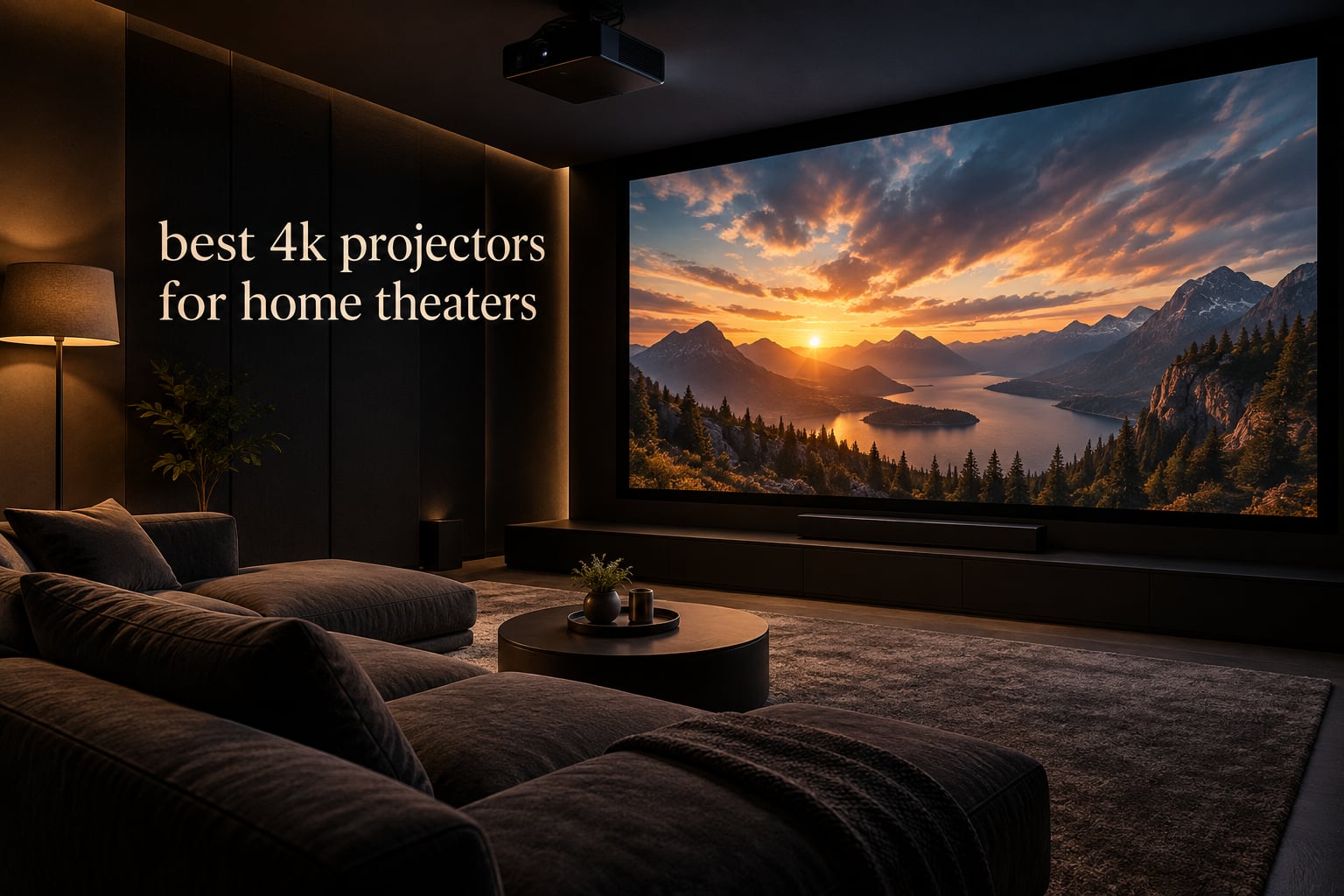
The best 4K projectors for home theaters in 2026 split into three very different groups, and which one suits you depends almost entirely on your room. A blacked-out media room rewards a long-throw laser with real black level, a living room with daylight needs serious brightness, and a shallow cabinet points at ultra short throw. We compared 12 current models across every tier.
Our overall pick is the Valerion VisionMaster Max 4K Laser, which pairs a triple laser engine with an iris-driven black field engine and a wide throw ratio that makes almost any room workable. For colour accuracy on a cinema-scope screen, the Epson Home Cinema 4010 is the pick. For the biggest image per inch of depth, the AWOL VISION LTV-3000 Pro projects 150 inches from about 13 inches away.
One more thing worth saying up front. Several budget machines advertise 4K but only accept a 4K signal or reach it through pixel shifting, so the claim on the box means very different things across this list. Our broader home theater projector guide covers the basics.
Table of Contents
Top 3 Picks for 4K Home Theater in 2026

Valerion VisionMaster Max
- Triple laser with 3500 ISO lumens
- NoirScene iris black engine
- 0.9-1.5:1 throw with 105% vertical lens shift
- IMAX Enhanced and Dolby Vision

Epson Home Cinema 4010
- Full DCI-P3 wide colour gamut
- 3-axis motorized lens with 10 memory presets
- 2400 lumens of colour and white brightness
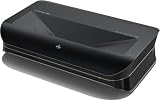
AWOL VISION LTV-3000 Pro
- Triple laser with no colour wheel
- 0.25:1 ultra short throw to 150 inches
- 107% BT.2020 and 147% DCI-P3 coverage
The Full 4K Projector Shortlist in 2026
Every projector below is judged on the same four questions: can it fill your screen with light, does it hold black in a dark room, will it mount cleanly where you want it, and does it stay out of the way when you press play.
| Product | Specs | Action |
|---|---|---|
| Valerion VisionMaster Max 4K Laser |
|
Check Latest Price |
| Epson Home Cinema 4010 |
|
Check Latest Price |
| AWOL VISION LTV-3000 Pro |
|
Check Latest Price |
 XGIMI HORIZON 20 XGIMI HORIZON 20 |
|
Check Latest Price |
 Hisense PX4-Pro Hisense PX4-Pro |
|
Check Latest Price |
 Epson Home Cinema 3800 Epson Home Cinema 3800 |
|
Check Latest Price |
 BenQ TK800M BenQ TK800M |
|
Check Latest Price |
 Hisense M2 Pro Hisense M2 Pro |
|
Check Latest Price |
 ViewSonic LS901-4K ViewSonic LS901-4K |
|
Check Latest Price |
 ViewSonic PX701-4K ViewSonic PX701-4K |
|
Check Latest Price |
 BenQ TK700 BenQ TK700 |
|
Check Latest Price |
 Epson Home Cinema 2350 Epson Home Cinema 2350 |
|
Check Latest Price |
1. Valerion VisionMaster Max 4K Laser – the pick for a dedicated theater
Valerion VisionMaster Max 4K Laser Projector, 3500 ISO Lumens, Anti-RBE, Speckle-Reduction, Flagship Black Level, 0.9–1.5:1 Optical Zoom, 300″, IMAX Enhanced, HDR10+, 3D, Gigabit 4ms 240Hz
Triple laser
3500 ISO lumens
110% Rec.2020
0.9-1.5:1 throw
105% vertical lens shift
Pros
- Industry-leading black level from the NoirScene engine and precision iris
- Anti-rainbow laser engine suits long viewing sessions
- 0.9-1.5:1 throw ratio with 105% vertical lens shift and optical zoom
- 110% Rec.2020 gamut with ISF certification
- Dolby Vision IMAX Enhanced HDR10+ and Active 3D
Cons
- Bulky 7.5 kg chassis needs deliberate placement in the room
- Premium price at the very top of the home theatre market
Of the twelve models here, this one gets closest to a commercial screening room. The NoirScene dark field engine combines an EBL algorithm with a precision iris aperture and a stray light shield, producing a 50,000:1 viewing contrast figure nothing else in this list approaches.
Installation flexibility is the quiet star. A 0.9-1.5:1 native throw ratio with plus or minus 105% vertical lens shift and lossless optical zoom means you can place it almost anywhere and still land a rectangular image without digital keystone correction, which is where resolution and brightness get thrown away.
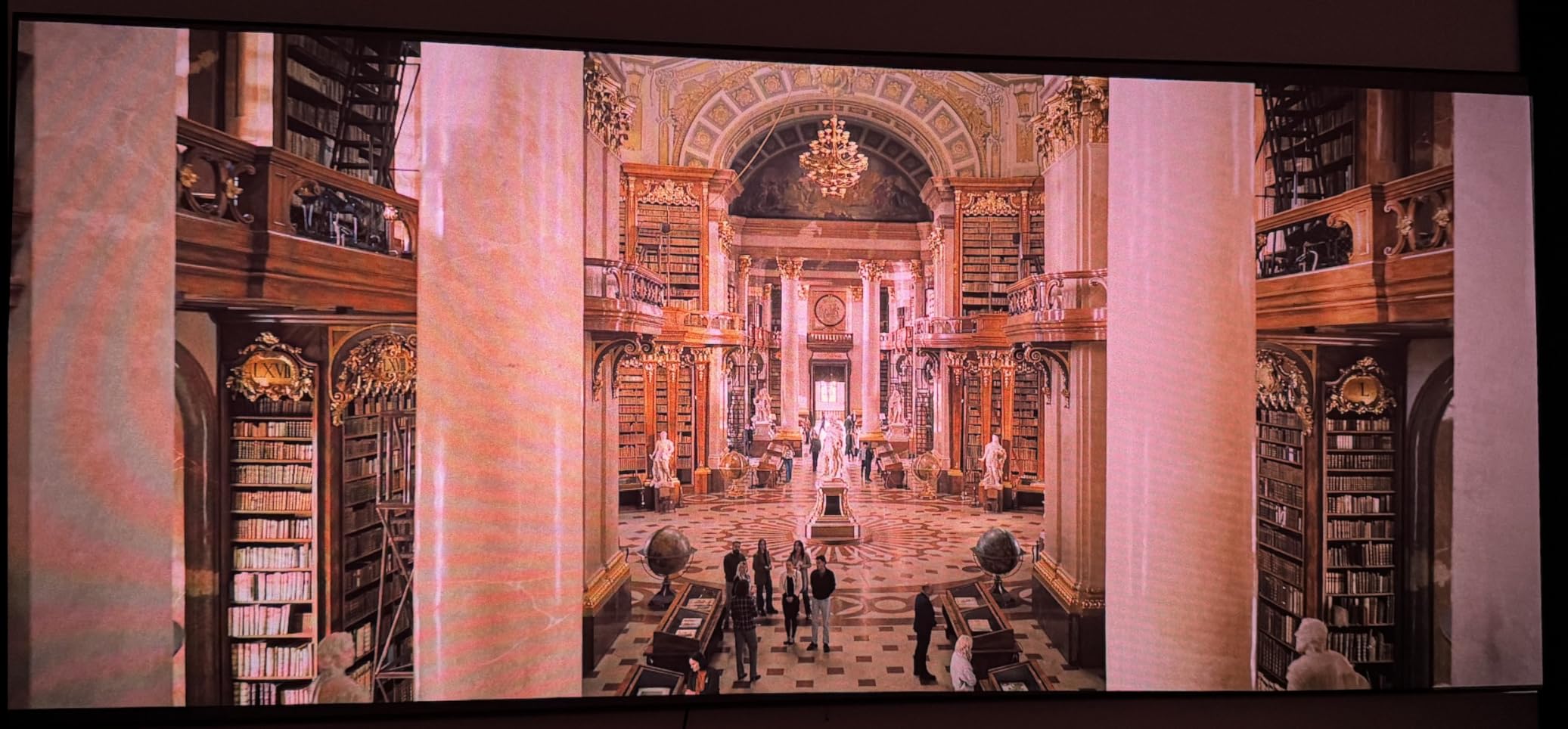
The optics pair with 110% Rec.2020 colour, ISF certification and dynamic tone mapping, and it decodes Dolby Vision, IMAX Enhanced, HDR10+ and Active 3D. Colour accuracy is not something you have to fight to reach here.
Owners are unusually positive about the anti-rainbow laser engine, and at roughly 4ms in gaming mode at 240Hz it handles fast action without the lag that spoils competitive play.
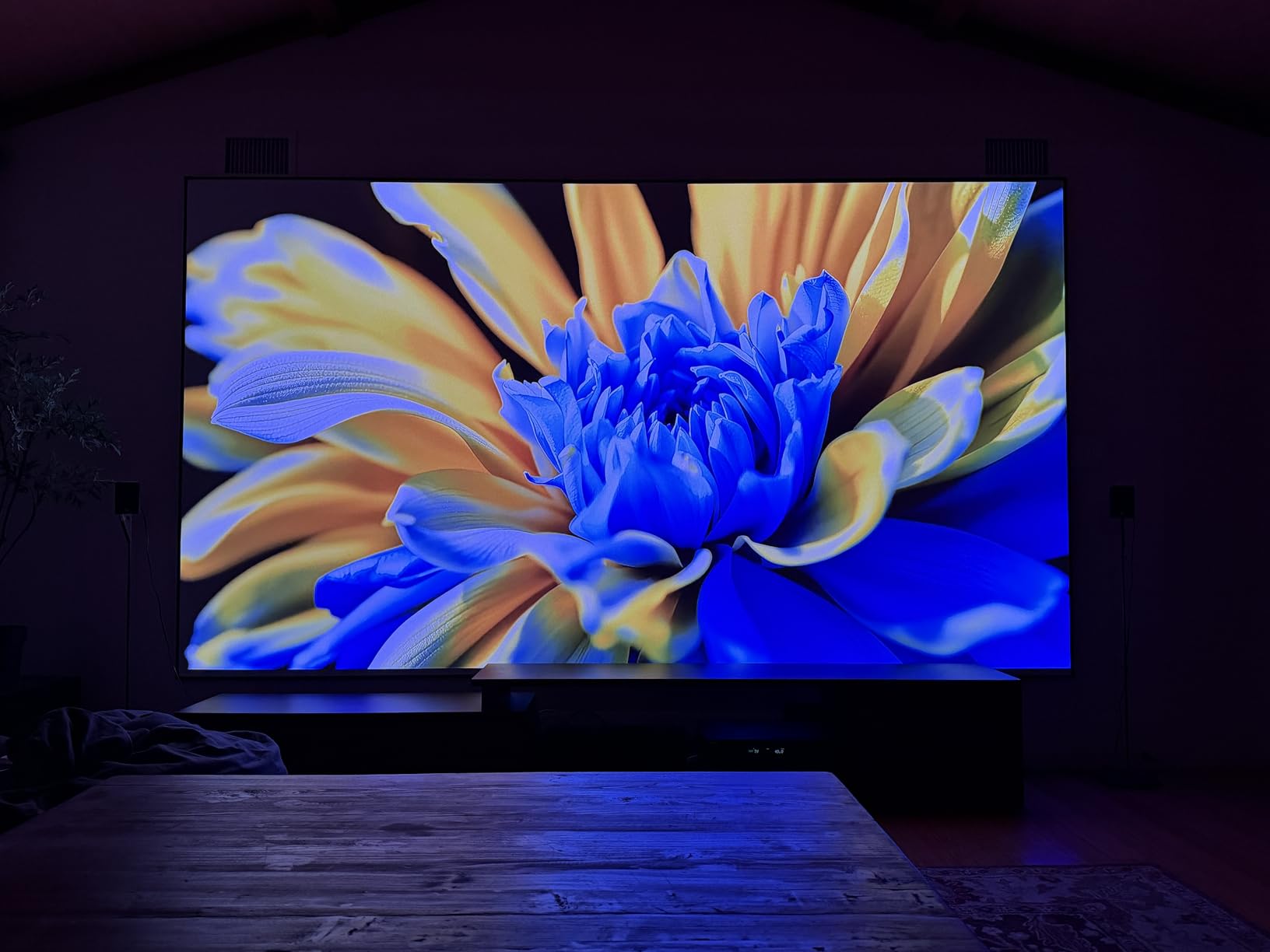
What makes it worth the money in a dedicated room
Black level is the whole argument. On a 100-inch screen with dark walls and curtains, competing projectors leak grey light into dark scenes, and that grey is what makes a projected image look cheap. This one holds the frame. Format support is also unusually complete, so you are not choosing a cinema format and giving up the others.
Where it is the wrong choice
The chassis weighs 7.5 kg and measures 46 by 43 by 44 inches, so it is a permanent installation rather than a portable one. Warranty coverage is a single year, shorter than several rivals carry. The picture is the reason to buy it, not the smart platform.
2. Epson Home Cinema 4010 – cinema-grade colour and a motorized lens
Epson Home Cinema 4010 4K PRO-UHD 3-Chip 3LCD Home Theater Video Projector
3-chip 3LCD
2400 lumens
Full DCI-P3
3-axis motorized lens
10 memory presets
Pros
- Full DCI-P3 gamut for cinema-grade colour
- 3-axis motorized lens with 47% horizontal and 96% vertical shift
- 10 lens memory presets remove keystone on scope screens
- Quiet operation outside the Dynamic lamp mode
Cons
- Very large and heavy at 24.3 lb so ceiling mounting needs care
- No optical or analog audio output so a receiver is required
- Only accepts 4K HDR at 30Hz not 60Hz
This is the enthusiast reference point in the mid-range, and owners compare it directly to D-ILA and SXRD machines costing more. The 3-chip 3LCD engine shows 100% RGB with no rainbowing and no colour brightness loss, the opposite trade-off to a single-chip DLP.
Colour is the headline. It is one of the first home cinema projectors with full DCI-P3 colour space, roughly 50% wider than Rec.709 one-chip units, and the 15-element Epson Precision optics target edge-to-edge focus uniformity with no light leakage.
The 3-axis motorized lens with 47% horizontal and 96% vertical shift and ten memory presets is the feature that changes how you build a room. Watching in 2.39:1, you can shift the image into a fixed-height screen without shrinking it with keystone.
At 2,400 lumens of equal colour and white brightness with full 10-bit HDR and 12-bit real-time processing, this is a projector built for a room you control rather than one you fight.
Where it beats models above it
No rainbow effect at all, which matters if fringes on text and dark scenes bother you. The DCI-P3 gamut is also wider than most DLP units here, and long-term owners describe multi-year reliability.
What to watch out for
At 24.3 lb with a 20.5 inch deep chassis, ceiling mounting needs a proper mount and a second pair of hands. There is no audio output at all, and 4K HDR input tops out at 30Hz, so this is not the machine for high-refresh gaming.
3. AWOL VISION LTV-3000 Pro – a 150-inch image in a shallow cabinet
AWOL VISION LTV-3000 Pro 4K 3D Ultra Short Throw Triple Laser Projector, Dolby Vision & Atmos, HDR10+, 150″ UST Laser TV Home Theater Projector
Triple laser
3000 ANSI lumens
0.25:1 ultra short throw
80 to 150 inch
Dolby Vision
Pros
- Genuine 4K triple laser with no colour wheel artefacts
- 107% BT.2020 and 147% DCI-P3 coverage
- 150-inch image from about 12.84 inches of depth
- 25000 hour laser source with no bulb replacement
Cons
- Fixed 0.25:1 ratio makes placement unforgiving
- Needs a dark room or an ALR screen to hold contrast
- Limited to 150 inches so it cannot grow into a dedicated cinema
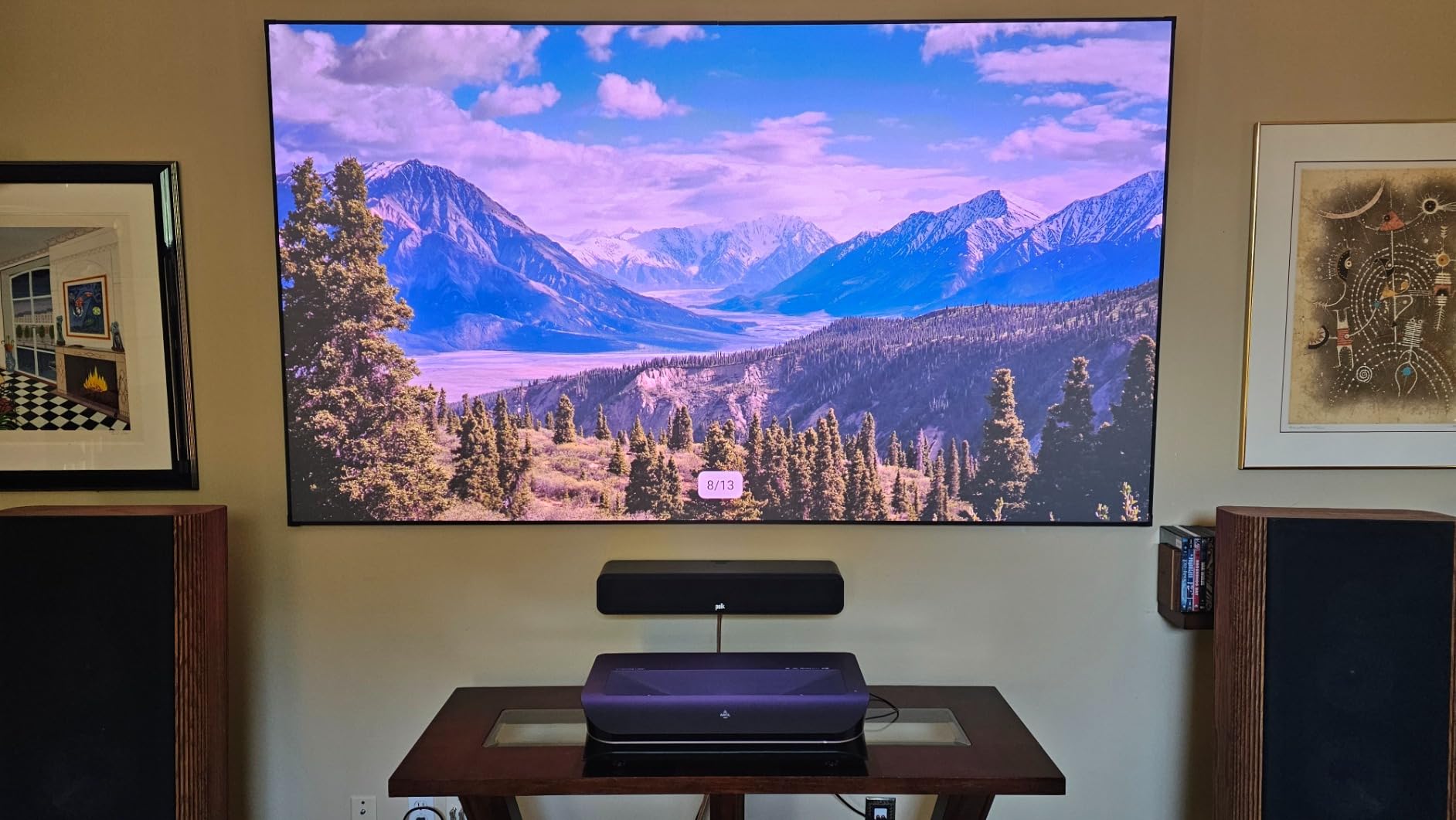
This is the TV replacement in this list, and the numbers explain why. A fixed 0.25:1 throw ratio puts a 100-inch image about 8.54 inches from the wall and a 150-inch image about 12.84 inches away, so it lives on a console rather than a ceiling bracket at the back of the room.
The triple laser engine has no colour wheel, which removes the artefact colour wheels cause and gives pure RGB output at 107% BT.2020 and 147% DCI-P3 coverage. Dolby Vision, HDR10+ and 3D are supported, with Dolby Atmos decoding and a built-in center channel speaker.
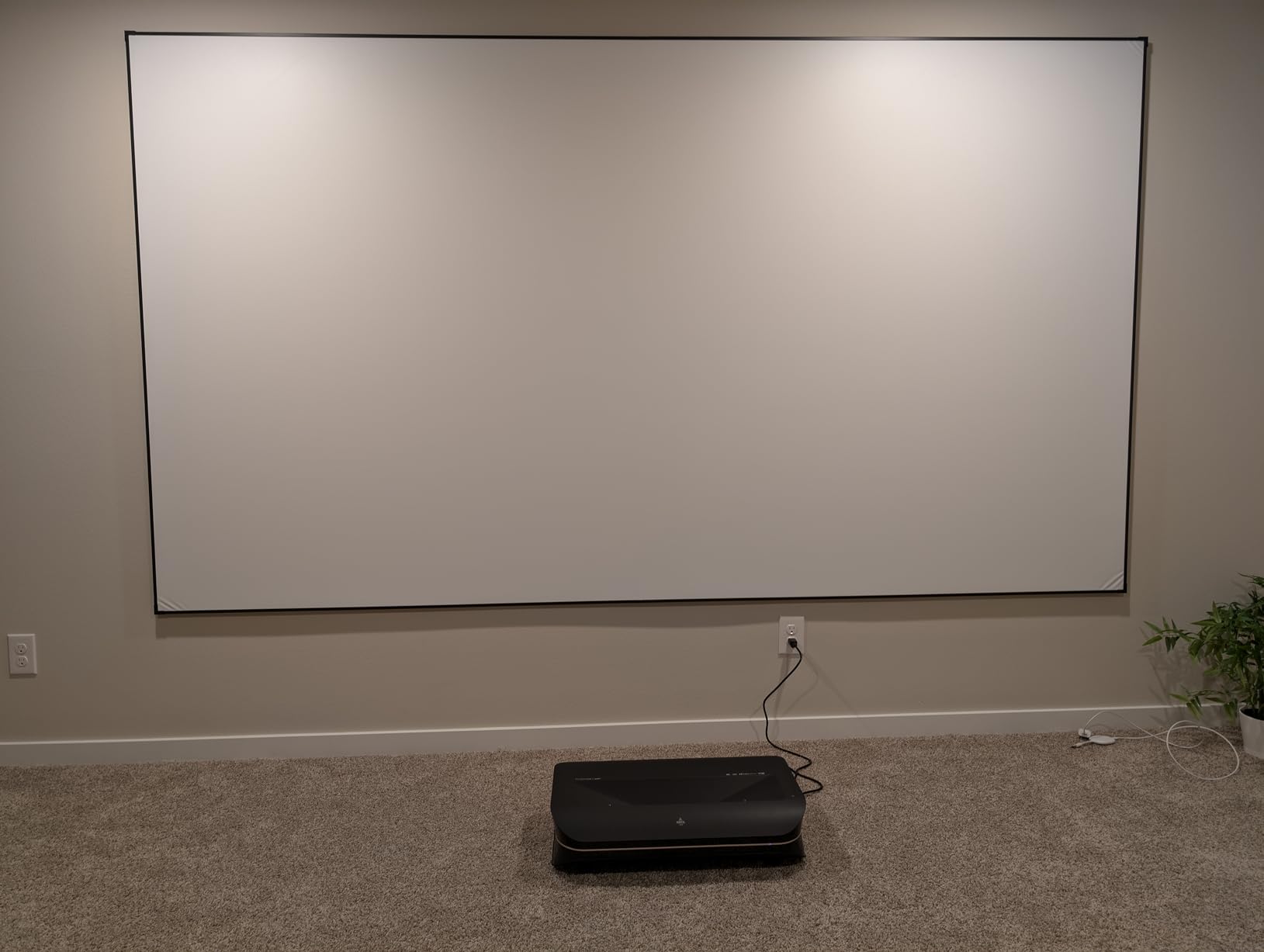
Owners treat it as a large-screen replacement rather than a theater component, and the 25,000-hour laser source removes bulb replacement and its running cost. PJ Link IP control also lets it drop into Control4 or similar automation.
If you rent, or want one device that does double duty in a living room, that combination of throw ratio, colour and box size is unusual at this level.
Why the ultra short throw route makes sense
Ultra short throw removes the two hardest parts of projector ownership. You are not running cable back through a wall, and you are not drilling into a ceiling to find a stud. It also means no throw-distance math at all.
The catch with ultra short throw
A fixed throw ratio is unforgiving, so the unit must sit precisely, and a motorized slider is worth budgeting for if cabinet depth is tight. Contrast at 2,500:1 is also well short of a long-throw laser, and the ceiling is 150 inches. In daylight you want an ALR screen, not a plain wall.
4. XGIMI HORIZON 20 – triple laser that sets itself up
XGIMI HORIZON 20 4K RGB Triple Laser Home Projector, 3200 ISO Lumens
RGB triple laser
3200 ISO lumens
100000:1 contrast
Google TV
1ms response
Pros
- Clean colour-accurate picture with no manual tweaking
- 3200 ISO lumens handles ambient room light
- Practically silent laser engine
- Auto keystone autofocus and obstacle avoidance
- Built-in Harman Kardon audio
Cons
- Laser speckle is visible on a standard 1.0 gain screen
- Some white content shows brief colour separation on movement
- Setup requires a Google account
The HORIZON 20 is the pick for anyone who does not want to spend a Saturday aligning a projector. Auto keystone, autofocus, obstacle avoidance, screen alignment, wall colour adaptation and eye protection are all handled by the unit, and owners report the picture looks right out of the box.
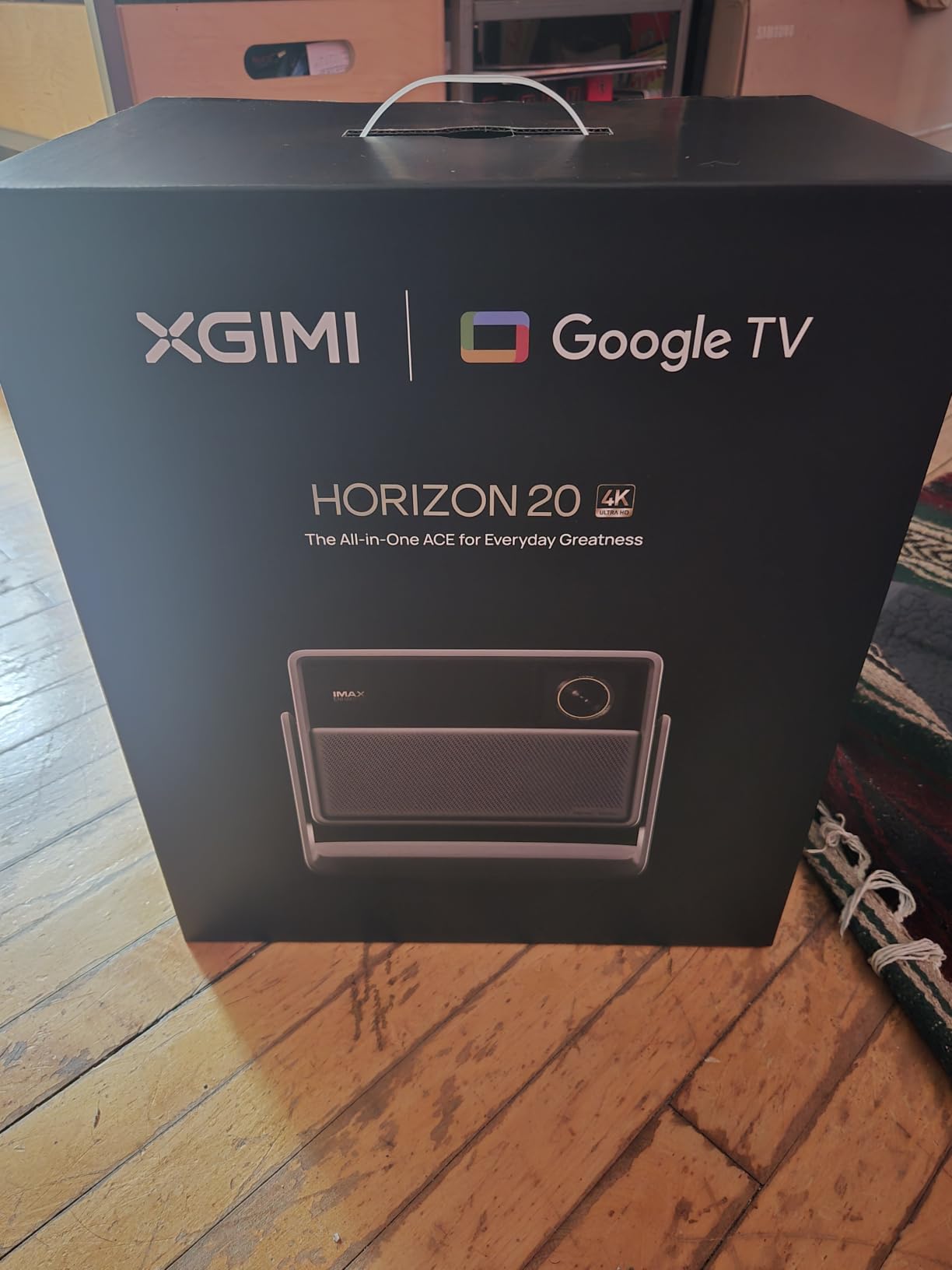
Behind that automation sits a serious engine: an X-Master RGB triple laser at 3,200 ISO lumens with 100,000:1 contrast, images up to 300 inches, IMAX Enhanced, Dolby Vision, HDR10+ and Filmmaker Mode, plus lens shift and optical zoom for distortion-free placement.
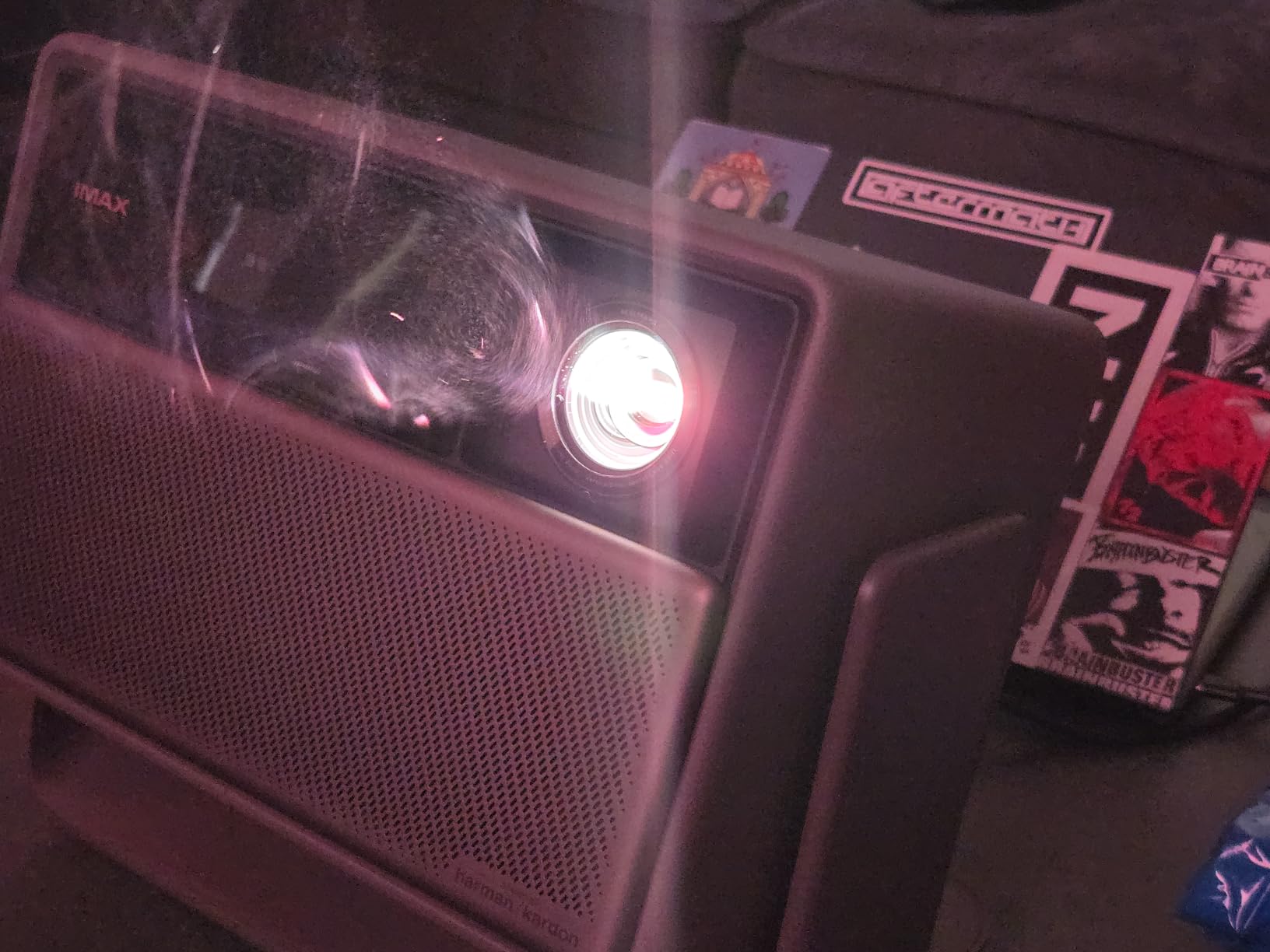
For gaming it lists 1ms response, 240Hz, VRR and ALLM, and a 360-degree rotating base with a threaded ceiling mount insert means it can go overhead when you want it gone.
Built-in Google TV with licensed Netflix and Harman Kardon speakers remove two more boxes from the equation, which is why this one works in a rental where a full AV chain is unrealistic.
Why setup automation is worth paying for
Most disappointed first-time owners are not disappointed by the image, they are disappointed by installation. Keystone that softens the picture, a unit that will not focus square to the screen, and menus buried three layers deep all cause it.
What the automation cannot fix
Laser speckle. On a standard 1.0 gain screen it is visible in bright areas and on faces, and no setup routine removes a physical property of the light source. Because Google TV is the startup screen, setup also assumes you have a Google account to hand.
5. Hisense PX4-Pro – the biggest ultra short throw image here
Hisense PX4-Pro Ultra Short Throw RGB Laser Cinema,3500 ANSI Lumens,6500:1 Contrast,Iris Lens,80″-200″,IMAX ENHANCED,Dolby Vision|Dolby Atmos,Devialet Audio,1ms Low Latency,FreeSync™ Premium Certified
RGB triple laser
3500 ANSI lumens
6500:1 contrast
80 to 200 inch
0.2 throw ratio
Pros
- Sharp 4K image that holds up even on a painted wall
- Bright enough for a room without a dedicated ALR screen
- Delta-E 0.9 colour accuracy with a 0.47 inch DMD chip
- 1ms low latency at 2K 240Hz with FreeSync Premium
Cons
- Slight rainbow effect for sensitive viewers
- Automatic keystone needs a photo uploaded to a web page
- Floor placement and exposed leveling feet make installation awkward
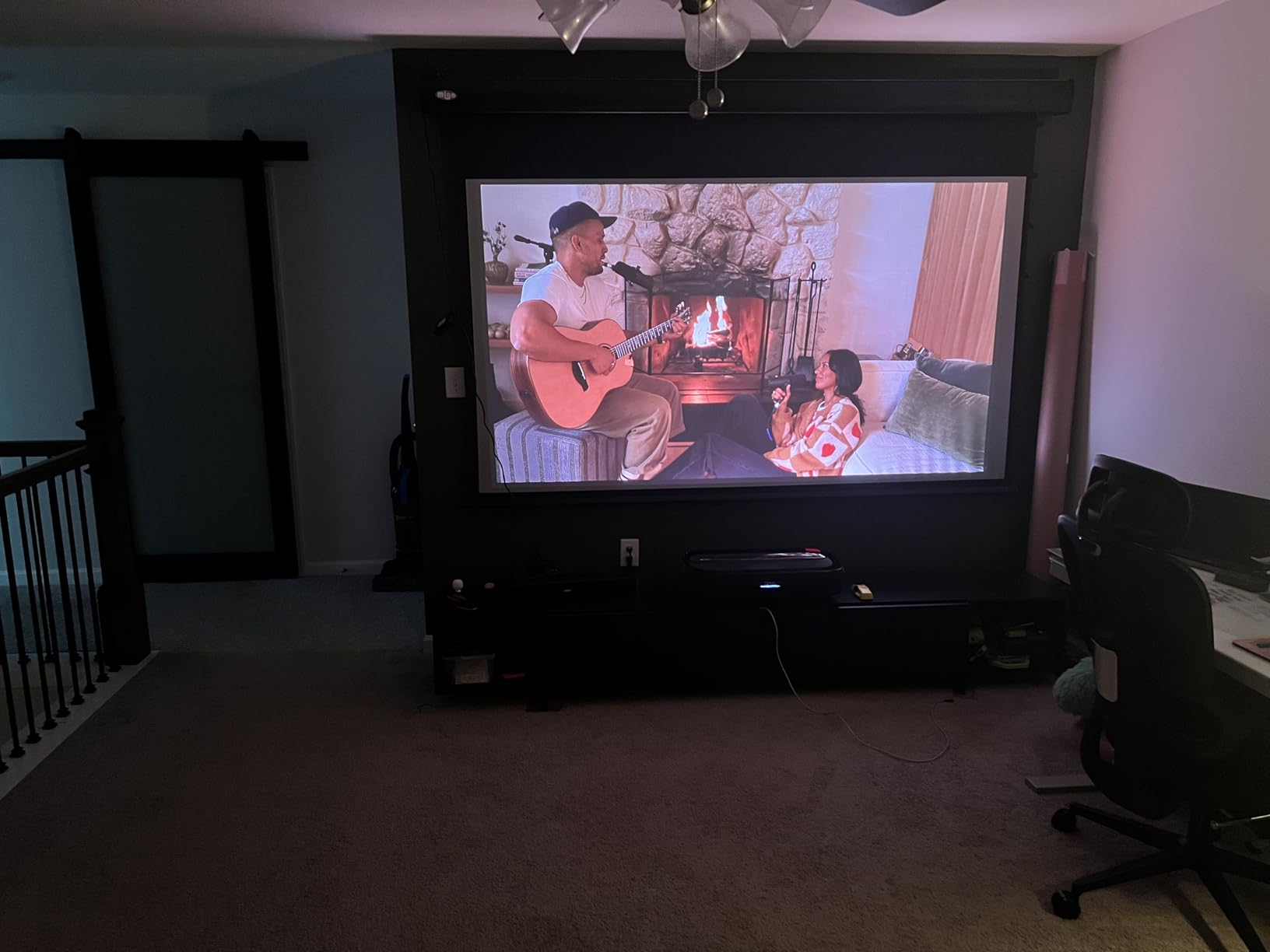
Where most ultra short throw units stop at 150 inches, the PX4-Pro runs from 80 to 200 inches on a 0.2 throw ratio, paired with 3,500 ANSI lumens. That is the combination you want in a bright room, because you do not need a specialist ALR screen to hold the picture together.
The LPU Digital Laser Engine 3.0 delivers 118% BT.2020 colour volume with Delta-E 0.9 accuracy, and CineBlack Pro with its EBL algorithm manages 6,500:1 contrast and dynamic greyscale. Owners repeatedly report the image holding up on an ordinary painted wall.

Sound is the surprise. Devialet-tuned Dolby Atmos 4.0.2 rated at 66W with two up-firing speakers is genuinely good for built-in projector audio, and IMAX Enhanced plus Dolby Vision cover the main cinema formats.
With 1ms low latency at 2K 240Hz and FreeSync Premium certification, this is one of the few ultra short throw units that also works as a gaming display.
When this is the right call
Choose it when the room is too shallow for a long throw, the walls are not dark, and you want a genuinely huge image. The 25,000-hour laser source means no bulb replacement, and the brightness headroom buys you a real screen later.
What to sort out before it arrives
The rainbow effect is the most common complaint for susceptible viewers, and it is a property of single-chip DLP rather than a fault. Installation is the other catch: the automatic keystone asks you to photograph the screen and upload it to a web page, which owners find cumbersome, and the leveling feet sit on the floor rather than the chassis.
6. Epson Home Cinema 3800 – 3LCD purity with no rainbow effect
Epson Home Cinema 3800 4K PRO-UHD 3-Chip 3LCD Projector with HDR Technology
3-chip 3LCD
3000 lumens
100000:1 contrast
10-bit HDR
lens shift
Pros
- No rainbow effect from the three-chip 3LCD engine
- 3000 lumens of equal colour and white brightness
- 100000:1 contrast with a fast quiet auto iris
- Extensive calibration tools including panel alignment and RGBCMY
- Long lens shift range avoids keystone in most rooms
Cons
- Lamp-based light source needs eventual bulb replacement
- Focus not perfectly uniform at the zoom extreme on some units
- No built-in streaming platform
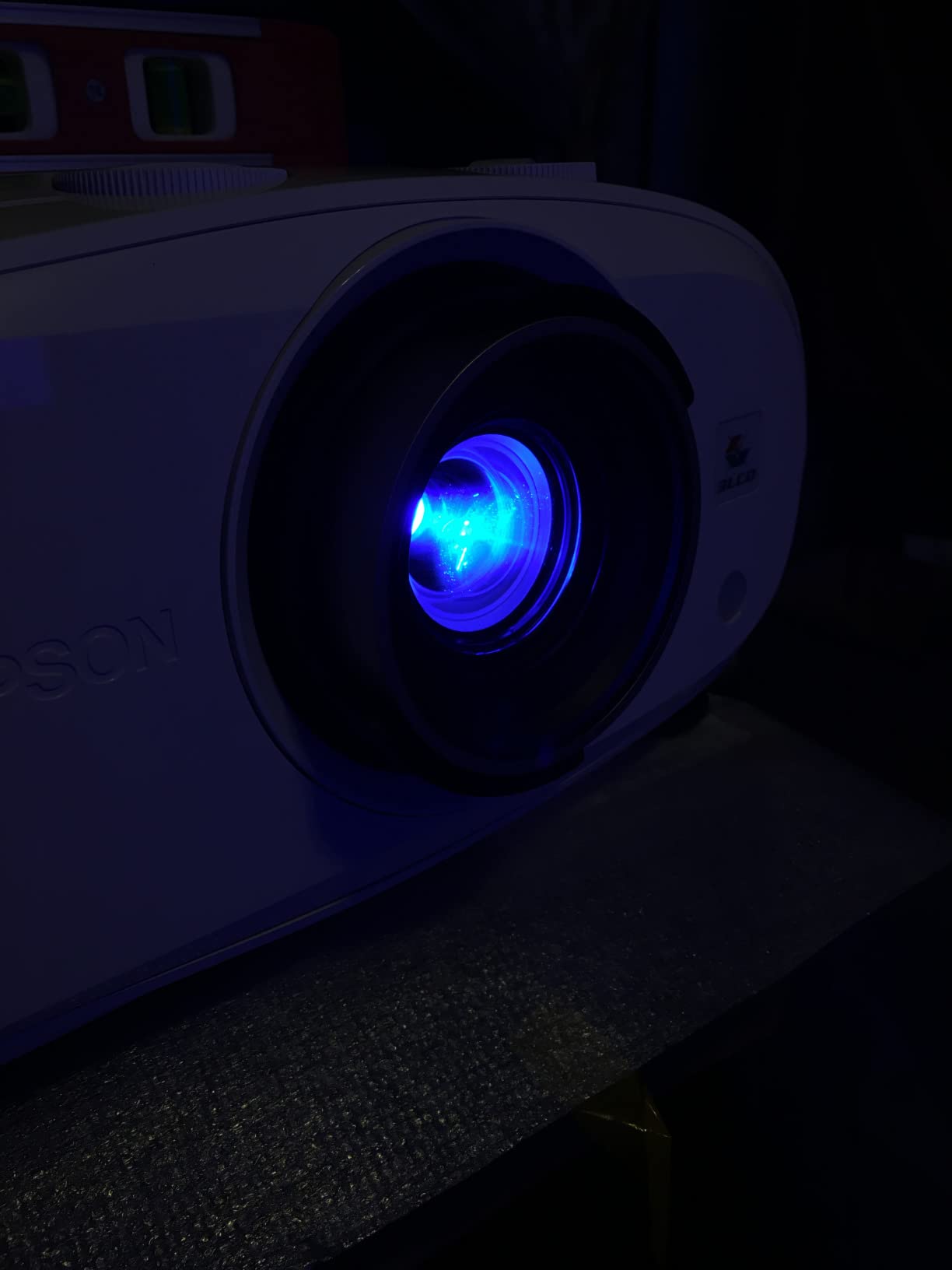
The 3800 is the middle of Epson’s home cinema line and the one most people end up owning. It uses 4K PRO-UHD pixel-shifting enhancement across three LCD chips, and the practical result is a stable, artefact-free image rather than a literal 3840 by 2160 panel.
Over the entry model you gain full 10-bit HDR with HLG, 12-bit real-time processing, 100,000:1 contrast, an Epson Precision lens with vertical and horizontal lens shift, and dual 10W speakers with apt Bluetooth for casual viewing.
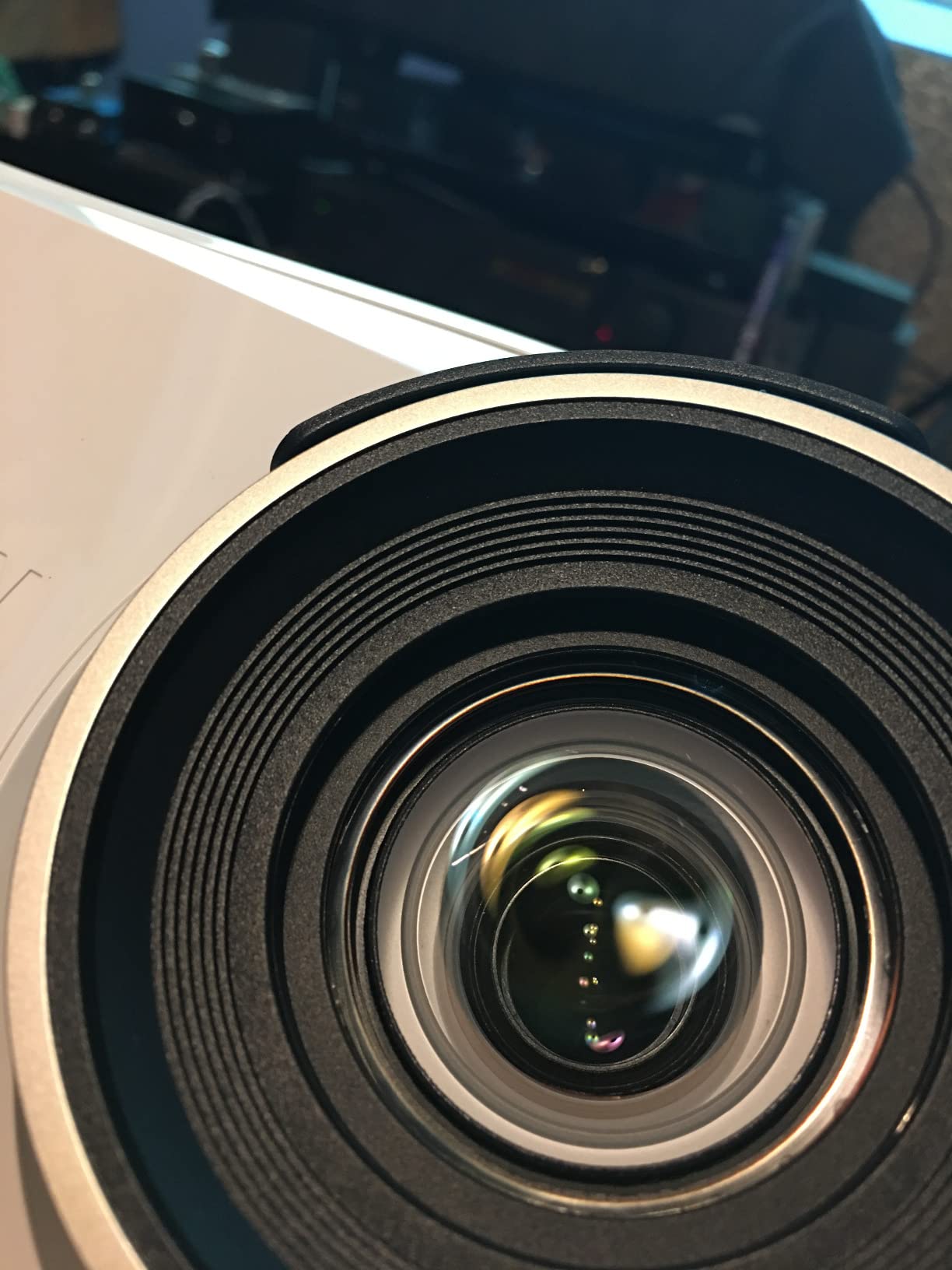
Long-term owners commonly describe five years of reliable use. The most repeated theme in reviews is that out-of-the-box settings are far too bright and saturated, and that the deep greyscale and RGBCMY controls make a proper calibration straightforward once you have a meter.
That combination of no rainbow effect, a long lens shift range and deep calibration controls is why it stays our recommendation for sensitive viewers who also like adjusting the image themselves.
Who benefits most from 3LCD
Anyone who notices rainbow fringing on text and dark scenes. Three separate chips mean no sequential colour flashes and no colour brightness loss, so the rated lumens hold across the spectrum. It is also the better choice for mixed content, with no screen-door effect.
Where it disappoints
The lamp. Budget owners rank lamp failure among the most common ownership complaints, and this unit will need a bulb where a laser will not. Expect fan noise in Dynamic mode on a quiet room, slightly uneven focus at the zoom extreme on some units, and 4K HDR capped at 60Hz.
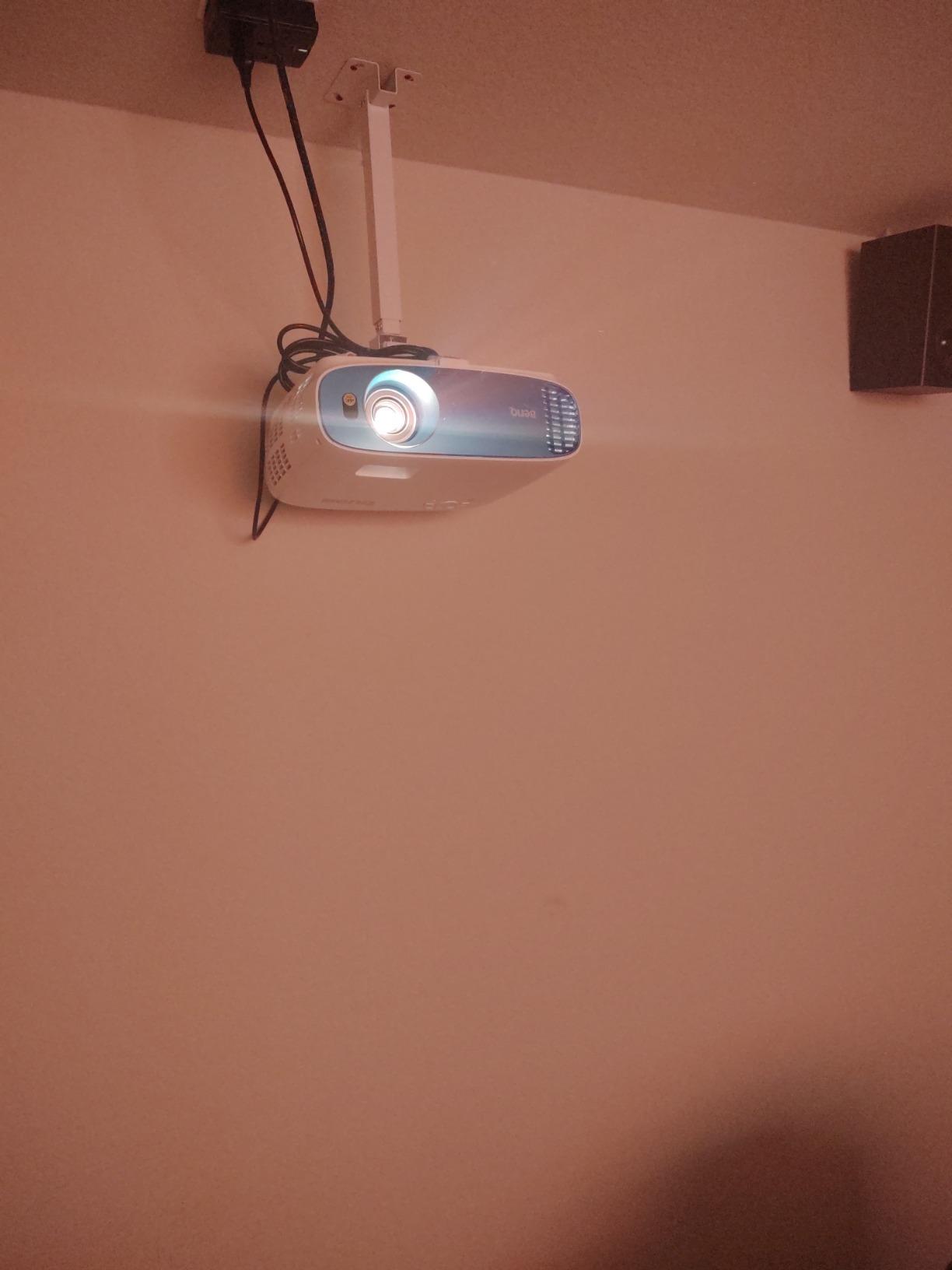
7. BenQ TK800M – true 4K for rooms with daylight
BenQ TK800M 4K UHD Home Theater Projector with HDR and HLG | 3000 Lumens for Ambient Lighting | 96% Rec. 709 for Accurate Colors | Keystone for Easy Setup | 3D Capable
True 4K UHD
3000 lumens
96% Rec.709
All-glass 7-element lens
Low input lag
Pros
- Genuine 8.3 million distinct pixel image from an all-glass lens array
- 3000 lumens bright enough for sports and daytime viewing
- 96% Rec.709 coverage gives natural skin tones
- Port selection includes HDMI VGA RS-232 and a 12V trigger
Cons
- No built-in smart operating system
- Bulky 9.2 lb chassis
- Keystone placement is less precise than a unit with real lens shift
The TK800M is one of the few budget machines where 4K means the real thing. Its 4096 by 2160 DLP panel is native rather than pixel-shifted, and the all-glass 7-element 4K-optimized lens array is a step up from the plastic lenses on cheaper units.
At 3,000 lumens with 96% Rec.709 coverage and a native contrast ratio listed at 10,000:1, it suits living rooms where you want to watch a match in the afternoon rather than after dark. It is 3D capable and includes keystone.
The port list is unusually generous: two HDMI, VGA, 3.5mm audio in and out, USB, RS-232 and a 12V trigger, which makes it easy to fit into a control system rather than a living room television. Owners treat it as the value entry into true 4K home cinema.
Lower input lag is frequently called out as a bonus for console play.
Why true 4K matters at this price
Pixel-shifted units shift a lower-resolution panel four times per frame. That is genuinely detailed at normal seating, and a strong 1080p image beats a weak upscaled one, but native 4K removes the argument entirely. The all-glass lens matters just as much, because edge sharpness on a large screen is where cheaper projectors fail first.
The trade-offs to accept
There is no smart operating system, the 9.2 lb body is bulky by laser standards, and with no lens shift you rely on keystone correction, which softens the picture slightly. This is a projector for someone who wants the best image per pound in a room they cannot fully black out.
8. Hisense M2 Pro – the projector you can move by hand
Hisense M2 Pro, Triple Laser Smart Portable Lifestyle Projector, 4K UHD, 65” – 200”, 1,300 Lumens, Dolby Vision,Optical Zoom, Intelligent Screen Adjustments, Vidaa OS, Netflix Included
Triple laser
1300 ANSI lumens
65 to 200 inch
360/135 degree gimbal
Dolby Vision
Pros
- 8.6 lb body with a 360 and 135 degree gimbal for flexible placement
- Automatic keystone focus obstacle avoidance and eye protection
- Triple laser source rated to 25000 hours
- Dolby Vision and IMAX Enhanced with Filmmaker Mode
- Vidaa smart OS with Netflix included
Cons
- 1300 ANSI lumens is the lowest brightness in this group
- One year manufacturer warranty against two years on most rivals
- Not designed as a fixed dedicated-theatre installation
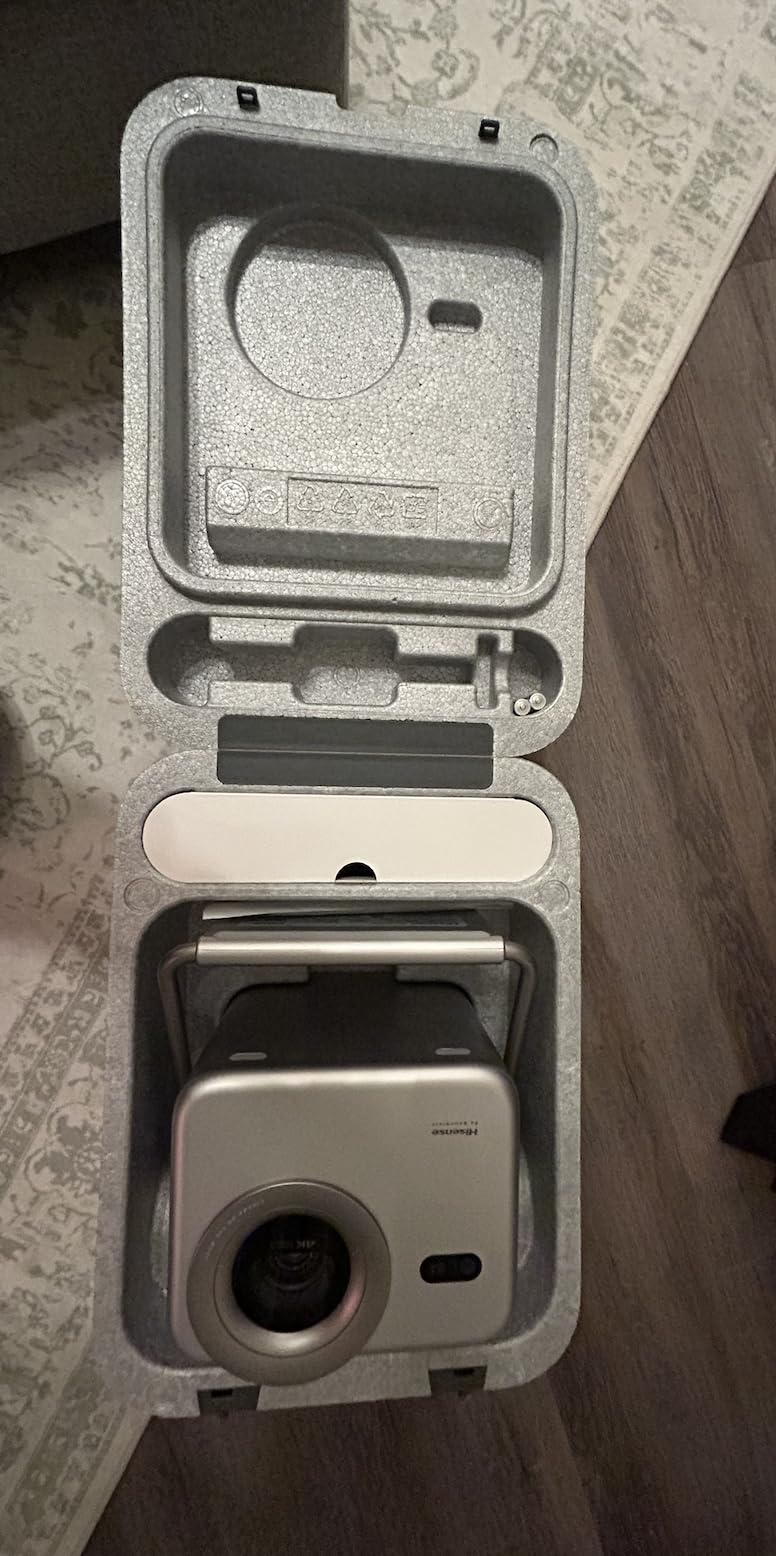
The M2 Pro is the one to look at if you move, or if you do not want a ceiling mount. At 8.6 lb with a built-in gimbal that swings 360 degrees horizontally and 135 degrees vertically, it can point at a wall, a screen or upward for ceiling projection without anyone touching the settings.
The picture side is a triple laser source rated to 25,000 hours, 4K UHD with a 4K AI upscaler, Dolby Vision and IMAX Enhanced with Filmmaker Mode, and optical zoom across a 65 to 200 inch range. The Vidaa operating system includes Netflix, so no dongle is needed.
It rates 4.6 from 85 reviews with 79% five-star, among the highest rating averages in this group. Feedback centres on how the gimbal and automatic adjustments make it genuinely easy to use rather than a project.
Auto focus, auto keystone, auto obstacle avoidance, auto screen adaptation and intelligent eye protection cover setup, which is why owners recommend it for patios, guest rooms and rentals.
When a portable unit is the honest answer
If you rent, travel between homes, or want a screen on the patio for a few months a year, a fixed installation is a waste. This one carries under 9 lb and sets itself up when you arrive, and in a small apartment a 65-inch image is more realistic than a 120-inch long throw.
Where brightness runs out
At 1,300 ANSI lumens it is the dimmest projector here, and that is a real constraint. In a dim room or on an ALR screen it looks excellent; in a sunlit living room at 150 inches it will not hold up. The one year warranty is also the shortest in this list.
9. ViewSonic LS901-4K – 5500 lumens and native 21:9
ViewSonic LS901-4K 4K UHD Laser Projector 5500 Lumens, HDR Home Theater
True 4K UHD laser
5500 lumens
20000 hour source
Native 21:9
1.7x optical zoom
Pros
- Very high brightness for a large image in a room with ambient light
- Laser source rated to 20000 hours removes bulb replacement
- Native 21:9 aspect ratio for a true ultra-wide frame
- 1.7x optical zoom gives placement flexibility
Cons
- No built-in smart platform or speakers
- Higher power draw at full brightness
- Small review base means limited long-term owner data
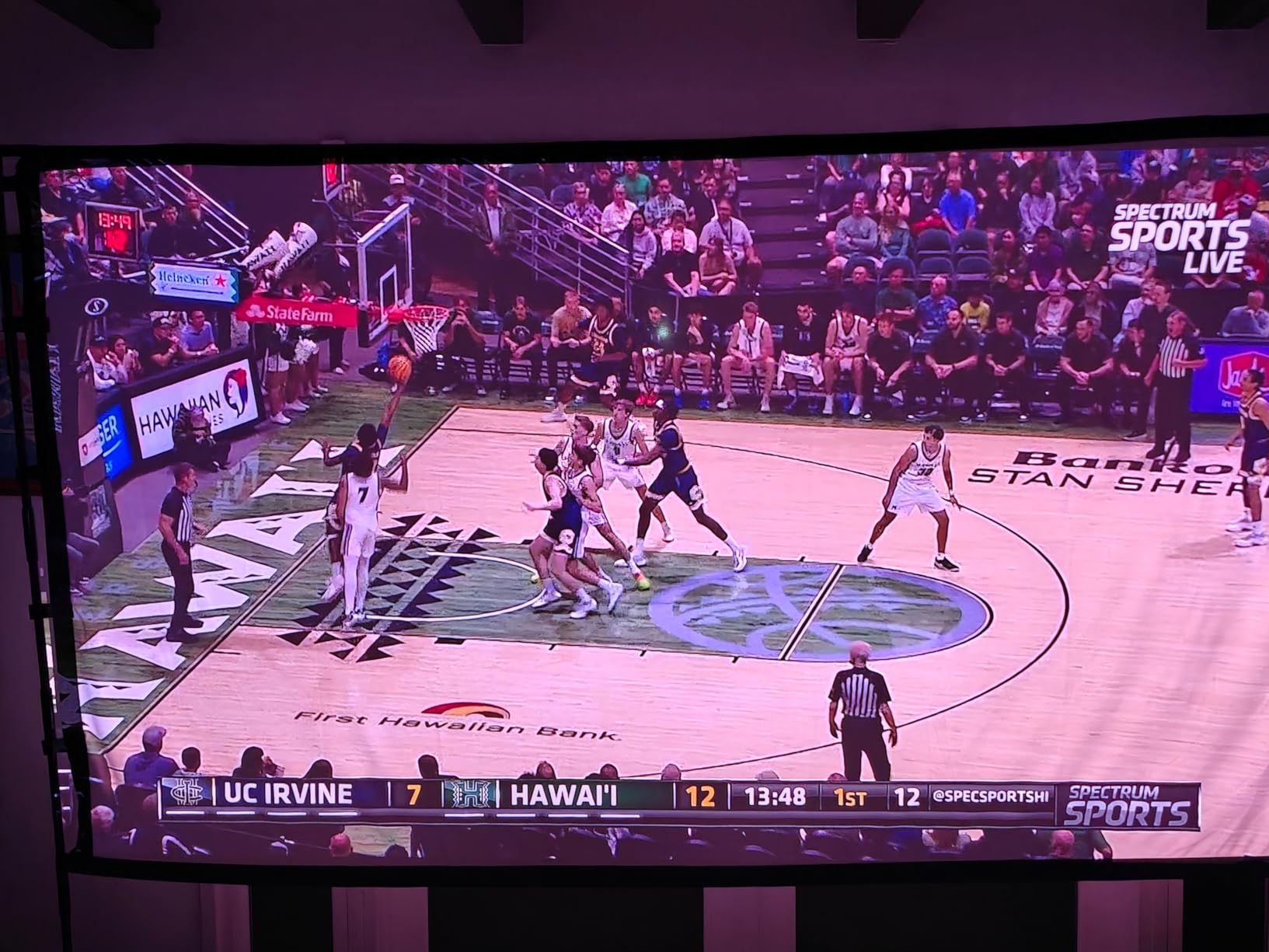
Brightness is the entire argument for this one. At 5,500 ANSI lumens on a true 3840 by 2160 panel, it is the projector here that can fill a very large screen in a room that will never be fully dark, which is the situation that flattens most home cinema images.
It is a laser unit rated to 20,000 hours, so there is no bulb to replace, and it supports HDR and HLG with a native 21:9 mode for ultra-wide framing. A 1.7x optical zoom with keystone and four-corner adjustment gives more placement range than most rivals.
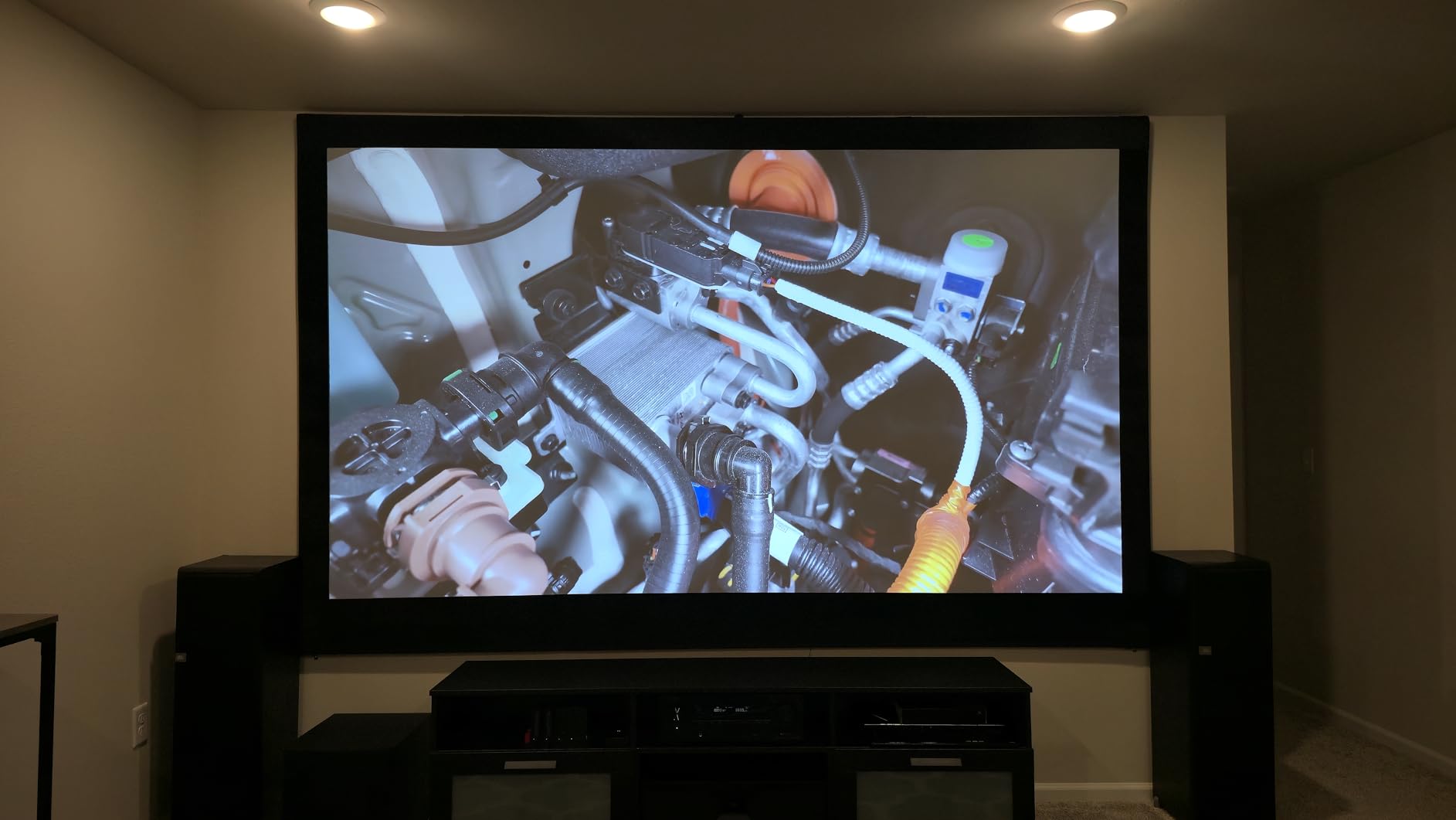
It also handles motion well for a large-screen unit, with a 240Hz refresh rate and 4.2ms input lag, and a golf simulation mode that boosts environmental colour. At 10.7 lb it is a straightforward ceiling mount, and a 100-inch image arrives from 8.7 feet.
Native 21:9 is a nice extra for anyone who wants a real ultra-wide frame without cropping a 16:9 signal.
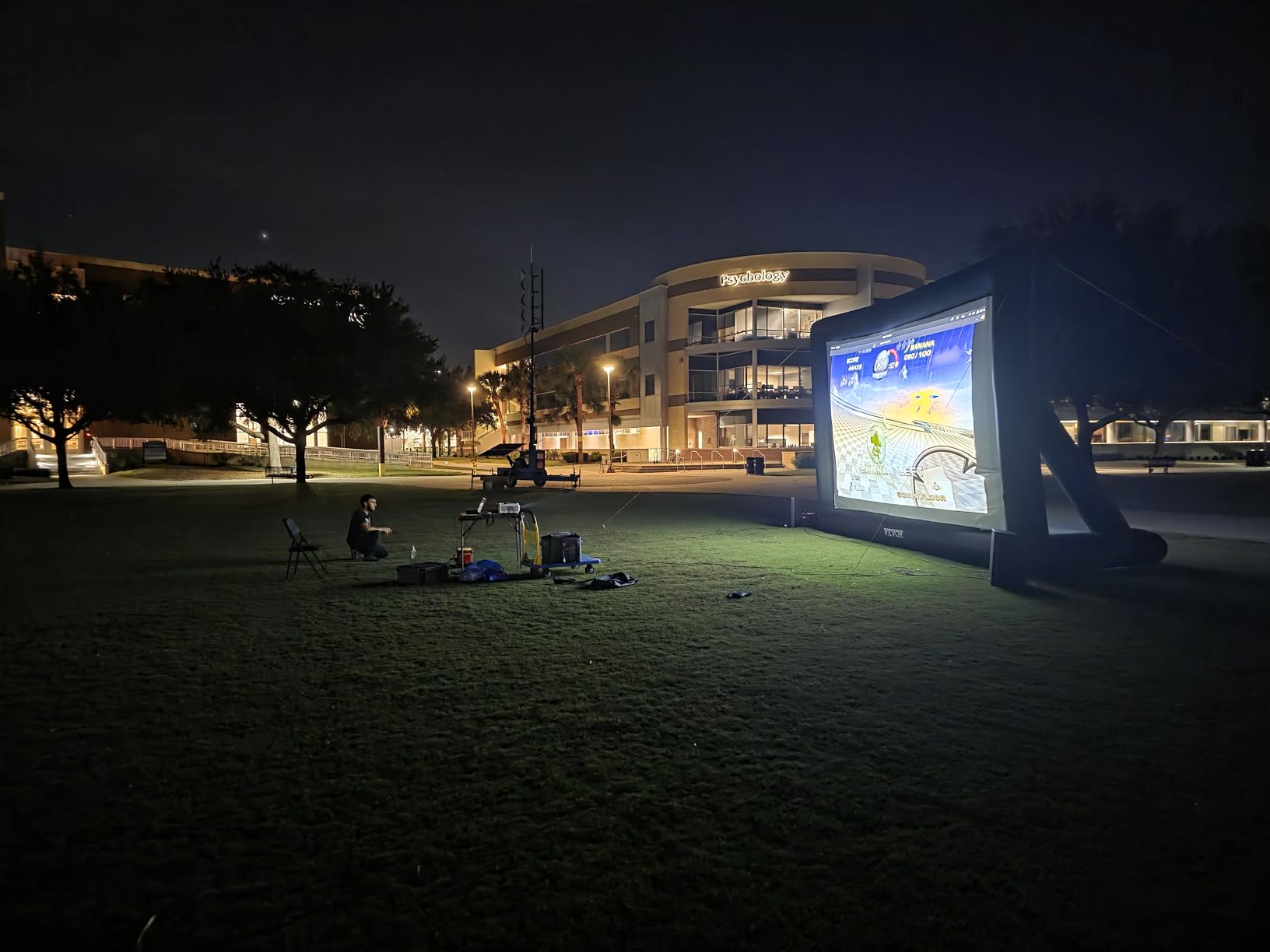
When brightness is the whole decision
If your room has windows you cannot fully block, brightness beats contrast. A 5,500-lumen projector in a semi-lit room beats a 1,600-lumen cinema projector every time, because the grey wash from a dim source is more objectionable than a slightly less pure white.
What you give up
There is no smart platform and no built-in speakers, so external devices cover streaming and sound. Power draw at full brightness is higher than the rest of this list, and with only 30 ratings it is the least reviewed product here, so long-term reliability data is thin. Weigh that against an easy brightness spec.
10. ViewSonic PX701-4K – bright true 4K with 4.2ms latency
ViewSonic PX701-4K UHD Projector, 3200 Lumens, 240Hz HDR, Auto Keystone DLP
True 4K DLP
3200 ANSI lumens
240Hz
4.2ms input lag
1.1x optical zoom
Pros
- Sharp true 4K image bright enough for rooms with some ambient light
- 4.2ms latency at 240Hz for competitive gaming
- Auto keystone and four-corner adjustment simplify setup
- 700+ reviews give a solid long-term owner record
Cons
- No built-in streaming platform so a dongle is required
- 30 inch minimum image size limits tiny-room placement
- DLP light engine can produce a rainbow effect
With 767 reviews this is the most owner-tested projector in the list, and the consensus is consistently positive. It delivers a true 3840 by 2160 DLP image at 3,200 ANSI lumens, so it works in a room with some ambient light rather than demanding total darkness.
The headline spec for gamers is a 240Hz refresh rate with 4.2ms input lag, fast enough for competitive play on a projected image, which most projectors at this brightness are not. HDR and HLG are supported with SuperColor wide gamut.
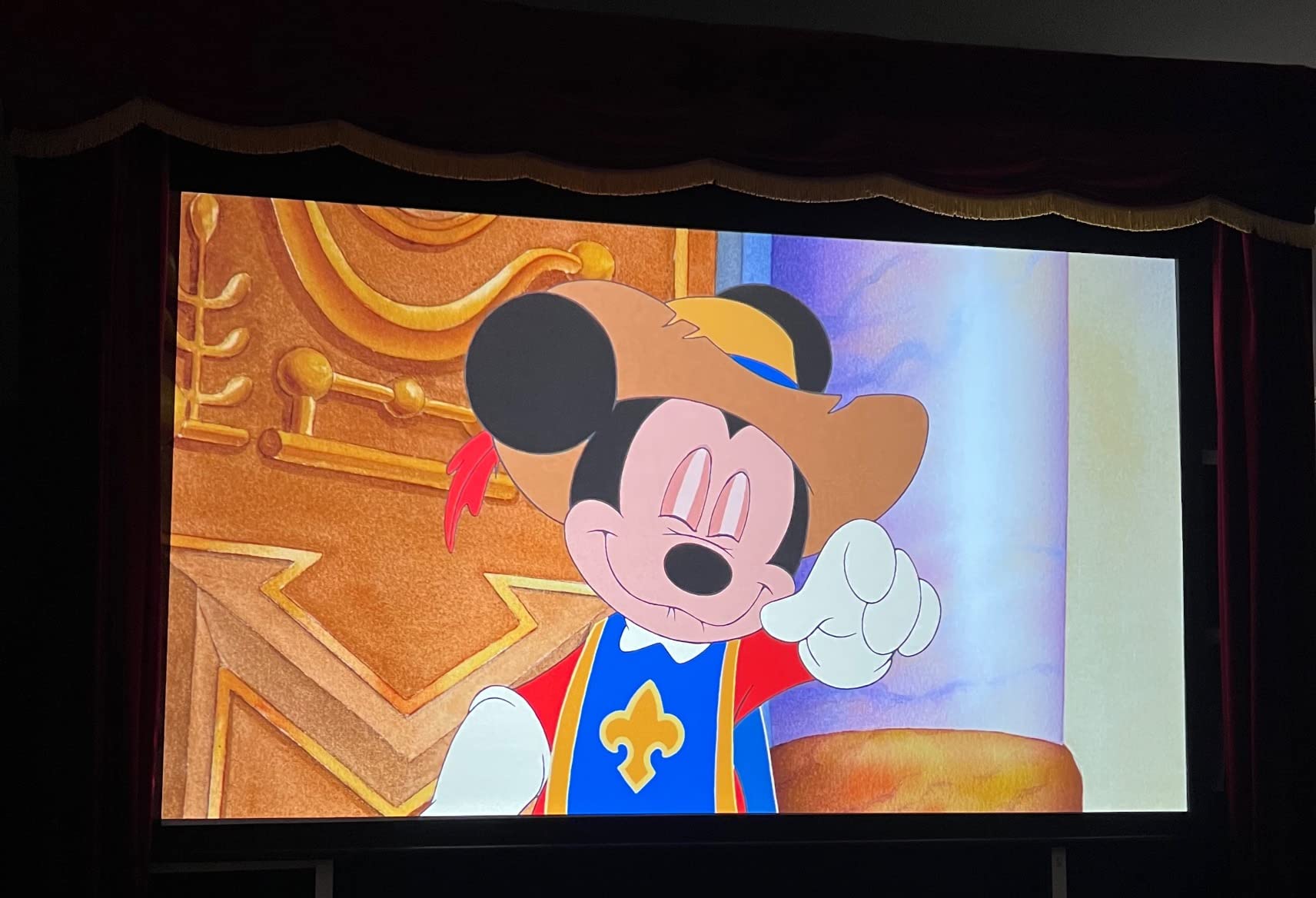
Placement is flexible for its class: 1.1x optical zoom, auto keystone, four-corner adjustment, curved-screen support, and a 100-inch image from 10.9 feet with sizes up to 150 inches. A three-year limited warranty and dual HDMI with a powered USB-A port round it out.
A low-latency receiver or a PC at 240Hz gets the most from it, since the projector stops being the limiting factor.

Why 4.2ms changes the experience
Most projectors in the 3,000-lumen class sit around 20ms to 30ms, which is fine for films and noticeable in shooters or fighting games. Sub-5ms removes almost all of that difference, so console gaming stops being a compromise.
Where it falls short
There is no built-in streaming platform, and the 30-inch minimum image size is unusual and does matter in very small rooms. As with any single-chip DLP, sensitive viewers may see a rainbow effect on dark scenes, and 12,000:1 contrast is not the deep black an iris system reaches.
11. BenQ TK700 – native 4K for current consoles
BenQ TK700 4K HDR Home Entertainment Gaming & Movie Projector 4.2ms Latency
Native 4K DLP
3200 lumens
4.2ms fast mode
100 inch at 8.2 feet
HDCP 2.2
Pros
- Genuine native 4K input with HDCP 2.2 rather than upscaling
- 3200 lumens bright enough for daylight viewing
- 4.2ms fast mode makes it a capable budget gaming projector
- Built-in 5W Dolby Atmos speaker and three year warranty
Cons
- Fast mode disables keystone so it must be mounted squarely
- No optical or analog audio out
- Some owners have reported early bulb failure
The TK700 is aimed squarely at console owners. It accepts a genuine 3840 by 2160 signal with HDCP 2.2 over HDMI 2.0, which is what a PS5 or Xbox needs to output 4K HDR without being scaled, and it is rated ready for both.
Brightness is 3,200 lumens, so it is usable in daylight, and the fast mode drops input lag to 4.2ms from a standard 16ms. A built-in 5W Dolby Atmos speaker covers the case where you have no sound system yet.
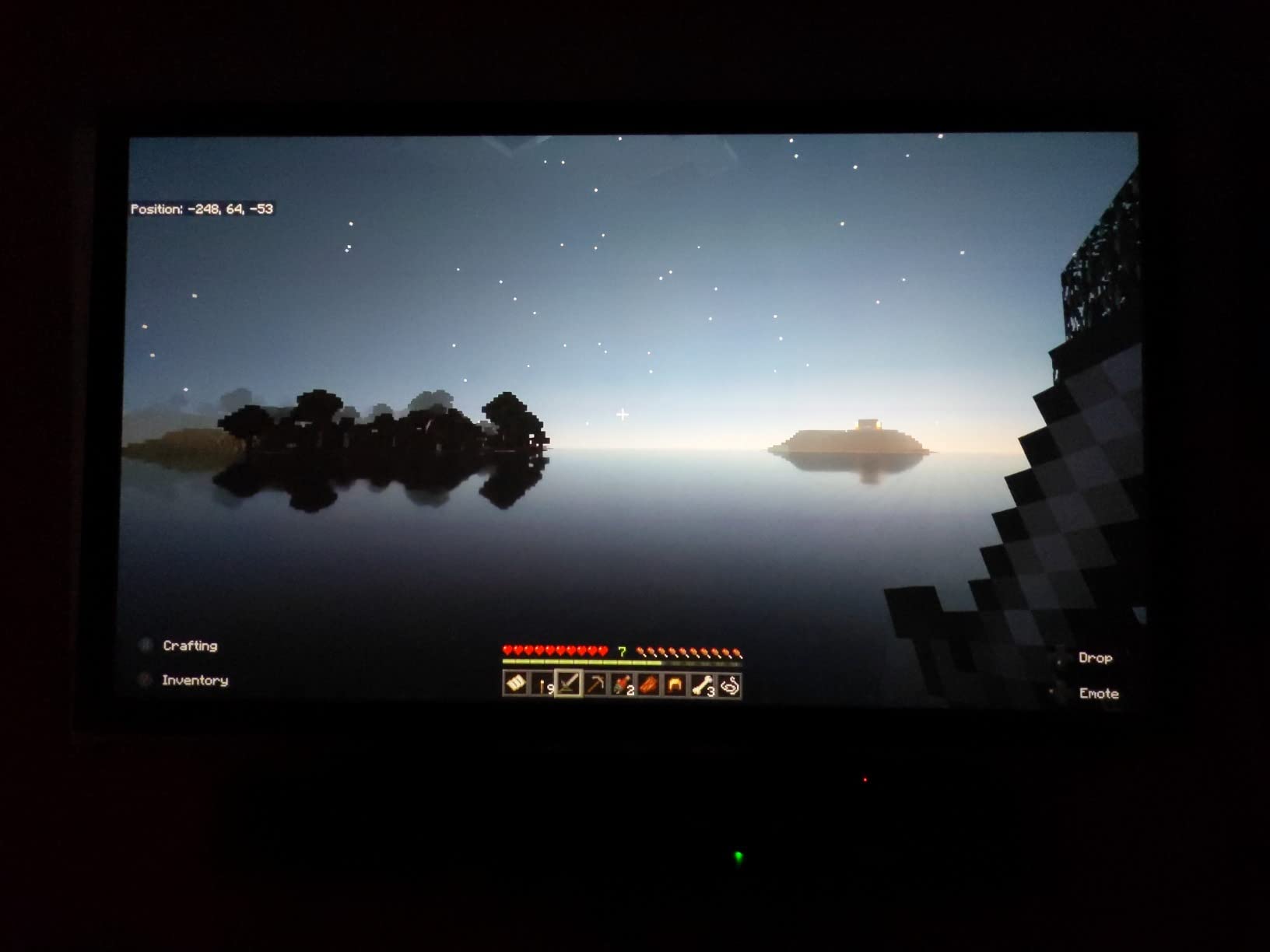
It is a standard throw design producing a 100-inch image at 8.2 feet, HDR10 is supported with black detail enhancement, and the three-year warranty is longer than most here. Owners report more than a year of trouble-free daily use.
So it serves console owners better than cheaper pixel-shifted alternatives, and black level holds up in fast action without motion blur.
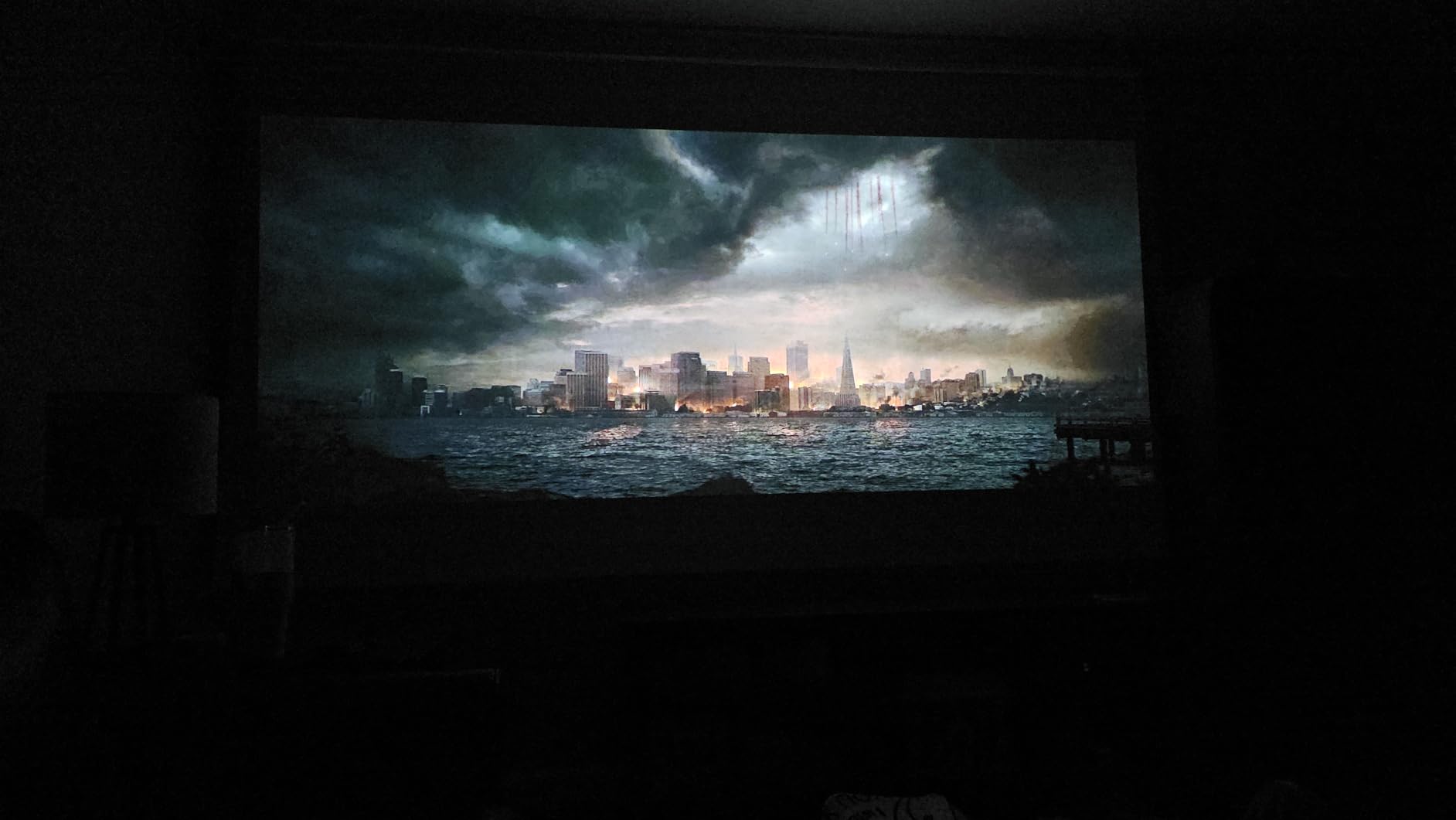
Why HDCP 2.2 matters more than the label
Plenty of inexpensive projectors advertise 4K while only accepting a 1080p signal. HDCP 2.2 with 18 gigabits of bandwidth is the detail that guarantees a real 4K HDR signal, so check that line before buying anything in this tier.
The setup catch and the audio catch
Fast mode disables keystone correction, so the unit has to sit square to the screen; if your ceiling mount is not plumb you are choosing between low lag and a rectangular image. There is also no optical or analog audio out and no Bluetooth, and a small number of owners have reported early bulb failure on this lamp-based unit.
12. Epson Home Cinema 2350 – the least costly way into 3LCD
Epson Home Cinema 2350 4K PRO-UHD Smart Streaming Projector with Android TV
3-chip 3LCD
2800 lumens
4K PRO-UHD
Android TV built in
Under 20ms low latency
Pros
- The most affordable route to a 3-chip 3LCD engine with no rainbow effect
- Android TV built in so no streaming dongle is needed
- 2800 lumens suits mixed lighting conditions
- Low latency mode under 20ms for console play
Cons
- 35000:1 contrast is low next to the 3LCD flagships
- Entry-level panel shows more colour fringing than higher Epson models
- Lamp-based light source will need a bulb eventually
The 2350 is the most common first home theater projector, and the reason is simple. It is the least expensive way to get three independent LCD chips, which removes the rainbow effect that turns people off single-chip DLP. At 4.0 from 184 reviews it is the mildest rated product here, but the sentiment is about limitations rather than reliability.
It uses 4K PRO-UHD pixel shifting and upscaling, outputs 2,800 lumens of colour and white brightness, supports HDR10 and HLG, and carries a 35,000:1 contrast ratio with a maximum image size listed at a generous 500 inches.
What sets it apart at the entry level is the Android TV platform with voice search and Google Assistant, plus Netflix, Amazon Prime Video, Hulu, Disney+ and HBO Max on board. Most rivals in this bracket need a separate streaming device.
Low latency mode keeps input lag under 20ms with current consoles, and at 9 lb it is the easiest unit here to move between a shelf and a mount.

Why 3LCD matters at the entry level
The difference between three chips and one is not a marketing line at this budget. It is the absence of rainbow fringing on dark scenes and on text, and it means you are not evaluating a display type before you can judge the picture.
Where the money shows
Contrast of 35,000:1 is well below the flagships, so blacks in a dark room are lighter than on the 3800 or 4010, and the entry-level panel produces more colour fringing than higher Epson models. Plan for a bulb eventually, and treat the Android TV platform as a bonus rather than a cinema-grade source.
How to Choose a 4K Home Theater Projector
Most disappointed projector buyers overestimate resolution and underestimate brightness. A remarkable 4K panel in a sunlit room looks washed out, while a good 1080p projector in a blacked-out theater looks superb. Work out your room first, then your screen, then the projector.
Native 4K, pixel-shifted 4K and 4K supported are not the same thing
Native 4K means a 3840 by 2160 panel, which here covers the Valerion, the AWOL LTV-3000 Pro, the XGIMI HORIZON 20, the Hisense PX4-Pro and M2 Pro, the ViewSonic LS901-4K and PX701-4K, the BenQ TK800M and TK700, and the Epson 2350 by panel resolution.
Pixel-shifted 4K, sold by Epson as 4K PRO-UHD, shifts a lower-resolution LCD panel four times per frame. On the 4010 and 3800 the result is genuinely detailed at normal seating, but it is not the same as a native panel and we would not describe it as one. 4K supported usually means the unit accepts a 4K signal but outputs 1080p, which is why the presence of HDCP 2.2 with 18 Gbps of bandwidth is the detail that confirms real 4K input.
Brightness by room condition
Forum advice we agree with is blunt: a projector cannot fight ambient light. The 4-6-8 rule is a useful shorthand, meaning screen widths of 4 feet for basic viewing, 6 feet for comfortable home cinema and 8 feet for a large dedicated room, with roughly 100 foot-lamberts of reflected light as the target in a properly dark room.
In a fully blacked-out media room, 1,600 to 2,400 lumens is plenty and buys deeper blacks. In a partially controlled room, aim for 2,800 to 3,500. In a bright living room with daylight you need 4,000 lumens or more, which is what the ViewSonic LS901-4K at 5,500 lumens is for. Watch for the marketing catch too: colour and white lumens and peak manufacturer figures are not the same as ANSI lumens, and only ANSI is measured to a repeatable standard.
Light source, and what it costs you over five years
Laser units here are rated from 20,000 to 25,000 hours, which at five hours a day is roughly ten years before the source needs attention. Lamp units are listed between 4,000 and 6,000 hours, so expect a bulb or two over the same period plus the noise of a cooling fan that never quite goes away. Laser also holds its brightness, so a five-year-old laser still looks new where a lamp projector slowly dims.
Throw distance, screen size and the 4-6-8 rule
For a standard throw unit, a 100-inch 16:9 screen needs roughly 10 to 12 feet of distance and a 120-inch screen around 12 to 15 feet. The minimum throw distance catches people: if the room is shallower than the projector can throw, the only answer is an ultra short throw model.
Here the BenQ TK700 hits 100 inches at 8.2 feet, the ViewSonic LS901-4K at 8.7 feet, the PX701-4K at 10.9 feet, and the AWOL LTV-3000 Pro does it in 8.54 inches. Then check the projector fits your ceiling height or cabinet depth.
Placement, screen pairing and gaming
Lens shift is the feature most buyers underrate. Vertical and horizontal shift moves the image without digital correction, so you keep full pixel sharpness and full brightness. The Epson 4010 with a 3-axis motorized lens and ten presets, and the Valerion with 105% vertical shift, are the two here where a fixed screen shape is realistic.
Screen choice is the most common source of a disappointing first experience. A matte white 1.0 gain screen suits long-throw in a dark room, a grey high-gain screen improves contrast with ambient light, and an ALR screen is close to mandatory for ultra short throw because it rejects light from the side.
For gaming, check two numbers: input lag and whether the ports accept 4K at 120Hz. The PX4-Pro, the XGIMI HORIZON 20, the Valerion and the ViewSonic pair deliver sub-5ms latency, but not all accept high refresh 4K signals, so verify against your console.
Five common projector mistakes
First, buying on the advertised maximum screen size, which is how most newcomers end up with a mismatched throw distance. Second, choosing on resolution alone and ignoring brightness. Third, projecting onto a white wall and assuming you saved money. Fourth, ignoring fan noise in a room you will use at night. Fifth, skipping calibration, which is why community advice for anything above the mid-range is to have it done properly. More installation-ready options are covered in our classroom projector roundup.
One more: if you do not own a screen, decide the size from your seating distance rather than the projector. A 120-inch image in a small room is uncomfortable no matter how good the projector is. If you need something you can carry instead, our portable projector guide covers that case and the battery-powered options cover outdoor viewing.
Frequently Asked Questions
What are the best projectors for a home theater?
For a dedicated dark room, the Valerion VisionMaster Max leads on black level and lens shift flexibility, with the Epson Home Cinema 4010 close behind for DCI-P3 colour accuracy. In a living room, brightness matters more, so the Hisense PX4-Pro or ViewSonic LS901-4K make more sense. For a shallow cabinet, the AWOL VISION LTV-3000 Pro projects 150 inches from about 13 inches of depth.
Which type of projector is best for home theater?
DLP single-chip models are sharp and compact but can show a rainbow effect on sensitive viewers. Three-chip 3LCD models such as the Epson 3800 and 4010 have no rainbow effect and full colour brightness but use a lamp. Laser light sources last far longer than lamps and hold brightness better over time. SXRD and D-ILA sit at the enthusiast end of the market.
What is the best portable 4K projector for home theater?
The Hisense M2 Pro is the strongest portable option here: an 8.6 pound triple laser body with a 360 and 135 degree gimbal, automatic keystone, autofocus and obstacle avoidance, Dolby Vision and a bundled Netflix platform. It reaches 200 inches, though at 1,300 ANSI lumens it suits a dim room or an ALR screen rather than a sunlit space.
What kind of projectors do theaters use?
Commercial cinemas use three-panel LCD and DLP cinema systems with xenon or laser light sources, running at resolutions and brightness levels far beyond any home projector. The home models here borrow the same ideas: triple laser RGB engines, iris-based black control and IMAX Enhanced or Dolby Vision tone mapping, which is why premium home units now track cinema grading closely.
Is 5000 lumens bright enough for a projector?
Yes, and 5,000 lumens is enough for a large image in a room you cannot fully darken. In a blacked-out media room you need far less, roughly 1,600 to 2,400 lumens, because excess light lifts black level and makes the picture look grey. Between those, 2,800 to 3,500 lumens covers a partially controlled living room.
Final Verdict: Which 4K Projector Wins
After comparing 12 projectors across brightness, contrast, placement flexibility and format support, the Valerion VisionMaster Max 4K Laser is the best 4K projector for home theaters in 2026 for anyone with a room they can genuinely darken. Nothing else here matches its black level, and the 0.9-1.5:1 throw ratio with 105% vertical lens shift makes it the easiest to install well.
Buy the Epson Home Cinema 4010 instead if colour accuracy on a cinema-scope screen matters more than absolute black, or if anyone in the household notices rainbow effects. Buy the AWOL VISION LTV-3000 Pro if your room is shallow, and the Hisense PX4-Pro if it is shallow and bright and you want 200 inches. For pure brightness in an unblockable room, the ViewSonic LS901-4K.
Whatever you choose, set your screen size from your seating distance and your brightness target from your light levels before you read a single spec sheet. For ambient-lit and low-key viewing rather than cinema, see our star projector roundup for bedrooms.