
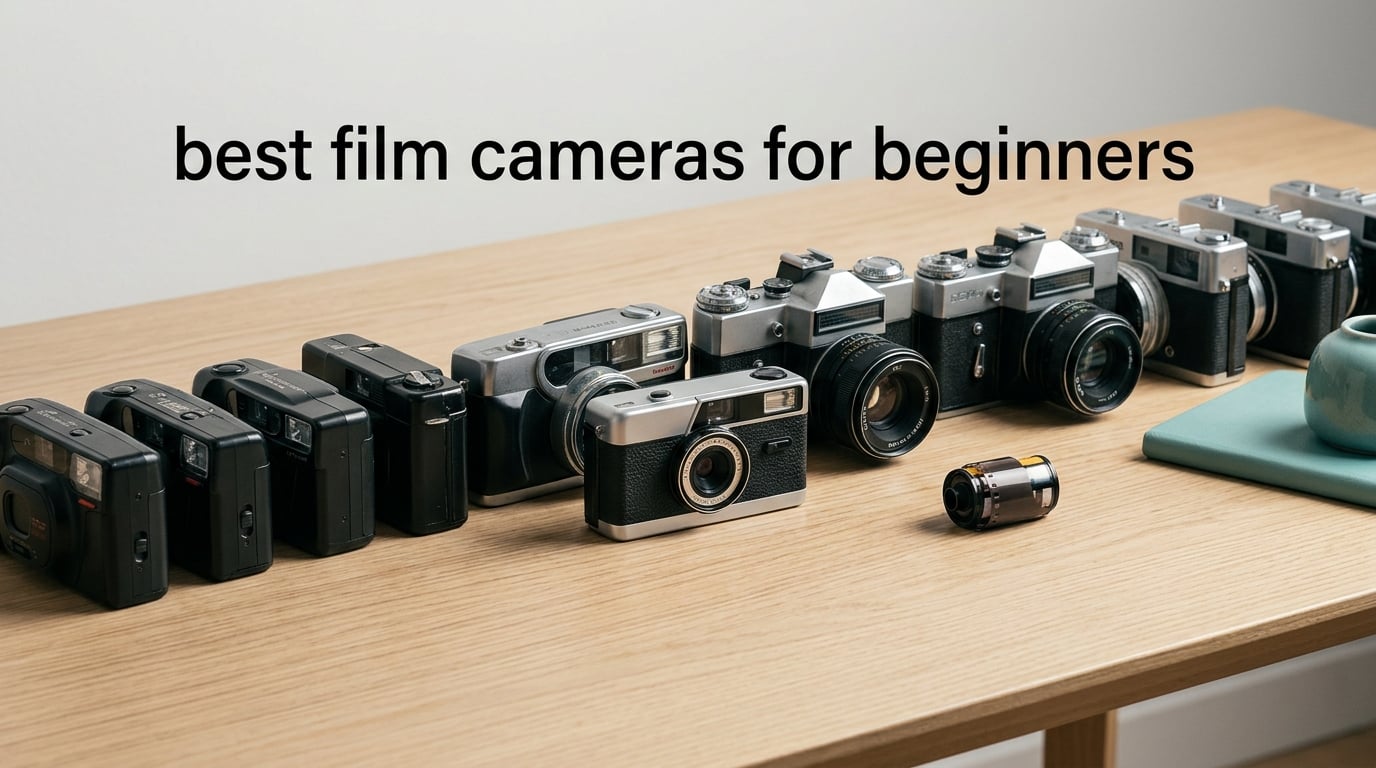
The best film cameras for beginners are the small, meter-equipped 35mm bodies that ask you to do almost nothing: point, press, and count the frames. If you want zero friction, the KODAK Ektar H35 half-frame turns one roll into roughly 72 exposures and weighs 100 g, so it never becomes the reason you left the house without a camera. If you want to start learning exposure properly, the Canon AE-1 with a 50mm f/1.8 gives you a through-the-lens meter and a full interchangeable lens system.
I have been shooting, teaching and re-buying beginner film cameras for long enough to know where people quit. Almost nobody quits because film is expensive. People quit because they bought a beautiful manual-focus body and spent six weeks fighting a focus ring, or because they loaded a roll and never rewound it, or because the camera cost more than the shop window allowed them to justify.
That is why this roundup is built the way it is. Twelve cameras, grouped by what they actually ask of you, with the technical details that matter for a first body and the annoyances that will show up on your first roll. I also mapped the same ground for digital shooters in our best mirrorless cameras for beginners guide, which helps if you are deciding whether you even need film yet.
Table of Contents
Top 3 Picks for Film Camera Beginners in 2026
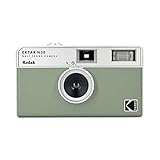
KODAK EKTAR H35 Half Frame
- Half-frame 18x24 format
- About 72 shots per 36-exposure roll
- Built-in flash
- 100 g body

Canon AE-1 With 50mm f/1.8
- TTL through-the-lens metering
- 1/1000s to 2 seconds plus Bulb
- Canon FD lens mount

Ilford Sprite 35-II
- 31mm f/9 fixed-focus lens
- Fixed 1/120s shutter
- Built-in flash
- Manual advance
Best Film Cameras for Beginners in 2026: All 12 at a Glance
Every camera below is a real 35mm film body that you can reload, not a disposable. The table is sorted roughly by how much the camera asks of you, starting with the most automatic and ending with the most manual.
| Product | Specs | Action |
|---|---|---|
| KODAK EKTAR H35 Half Frame |
|
Check Latest Price |
 RETO Ultra Wide and Slim RETO Ultra Wide and Slim |
|
Check Latest Price |
| Ilford Sprite 35-II |
|
Check Latest Price |
 1 Shot Half Frame 1 Shot Half Frame |
|
Check Latest Price |
| Canon AE-1 With 50mm f/1.8 |
|
Check Latest Price |
 RETO PANO RETO PANO |
|
Check Latest Price |
 Kodak i60 Kodak i60 |
|
Check Latest Price |
 Pentax 17 Pentax 17 |
|
Check Latest Price |
 Canon Rebel 2000 Canon Rebel 2000 |
|
Check Latest Price |
 Canon EOS Rebel G Canon EOS Rebel G |
|
Check Latest Price |
 TBC Transparent Camera TBC Transparent Camera |
|
Check Latest Price |
 Pentax K1000 With 50mm f/2 Pentax K1000 With 50mm f/2 |
|
Check Latest Price |
1. KODAK Ektar H35 – The Half-Frame Camera That Doubles Every Roll
KODAK EKTAR H35 Half Frame Film Camera, 35mm, Reusable, Focus-Free, Lightweight, Easy-to-Use (Sage) (Film & AAA Battery are not Included)
Half-frame 18x24 format
About 72 exposures per roll
Built-in flash
100 g
Pros
- Half-frame format roughly doubles the exposures per roll
- Very small and light enough to carry every day
- Built-in flash with a simple ring control
- Instructions are clear enough for a first-time film user
- Five color options
Cons
- Focus-free design gives you no control over subject distance
- Film and the AAA battery are not included
- No manual exposure control at all
The Ektar H35 is the camera I hand to people who say they want to try film but will not commit to learning f-stops. It is a 100 g plastic rectangle with a fixed focus lens, a single automatic exposure setting and a flash you switch on with a silver ring around the lens. You set nothing at all.
The half-frame trick is the real argument here. It captures 18x24mm negatives instead of 24x36mm, so one 36-exposure roll gives you roughly 72 pictures. For a beginner, that halves the cost of every practice session and shortens the gap between pressing the shutter and getting negatives back.
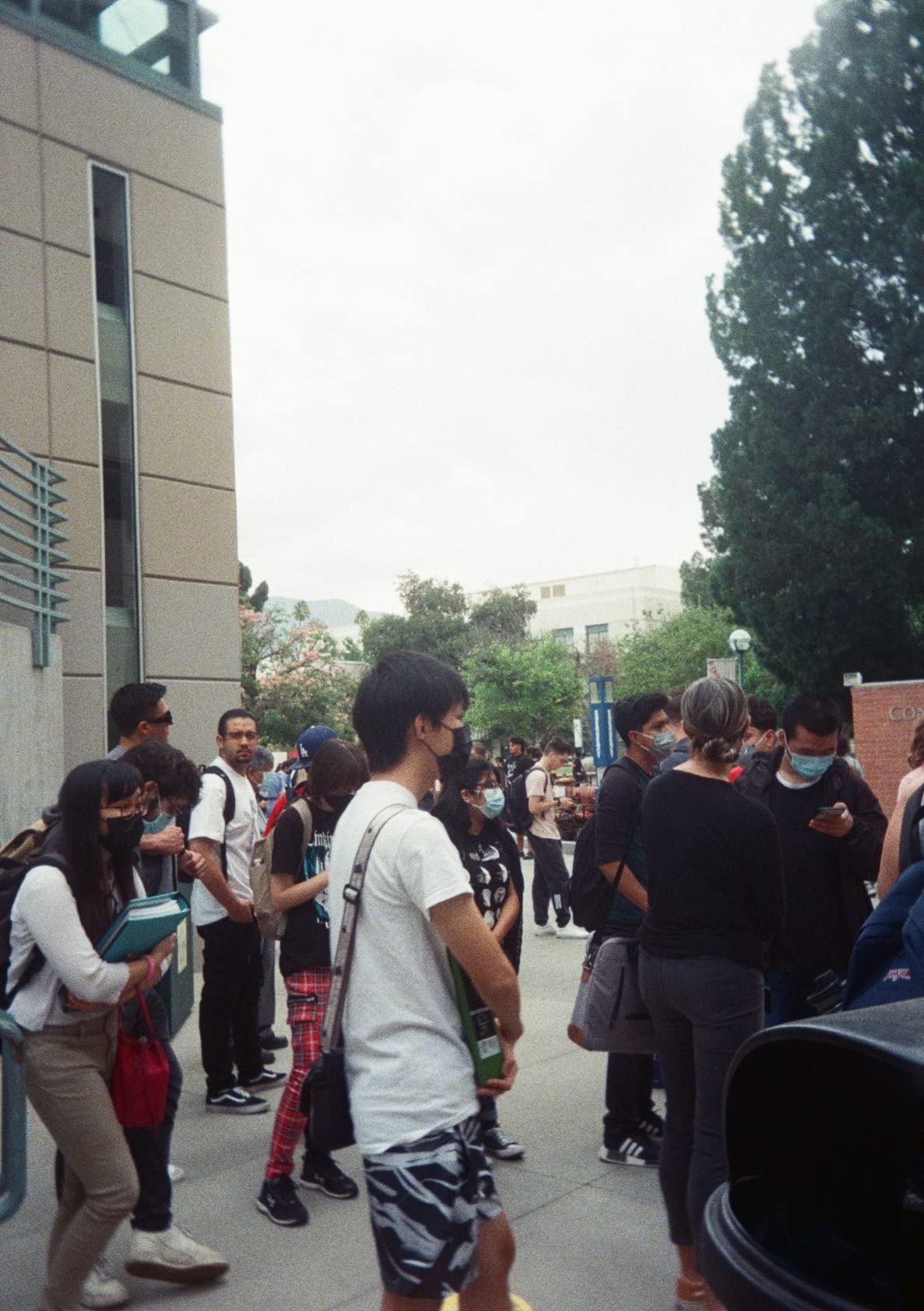
What surprised me is how little the fixed focus hurts in daylight. Because the negative is small, the depth of field is genuinely deep, and street snapshots, landscapes and casual group photos all come out acceptably sharp. Portraits at arm’s length are where you will notice the limit, because the lens will not rack focus to a face.
The details that matter: the body takes standard 35mm film, so any 35mm roll you buy works. Exposure is automatic, so film speed is the only setting-like thing involved, and DX-coded boxes set that automatically on most modern stocks. The optical viewfinder has 1.0x magnification, which is bright and easy to use.
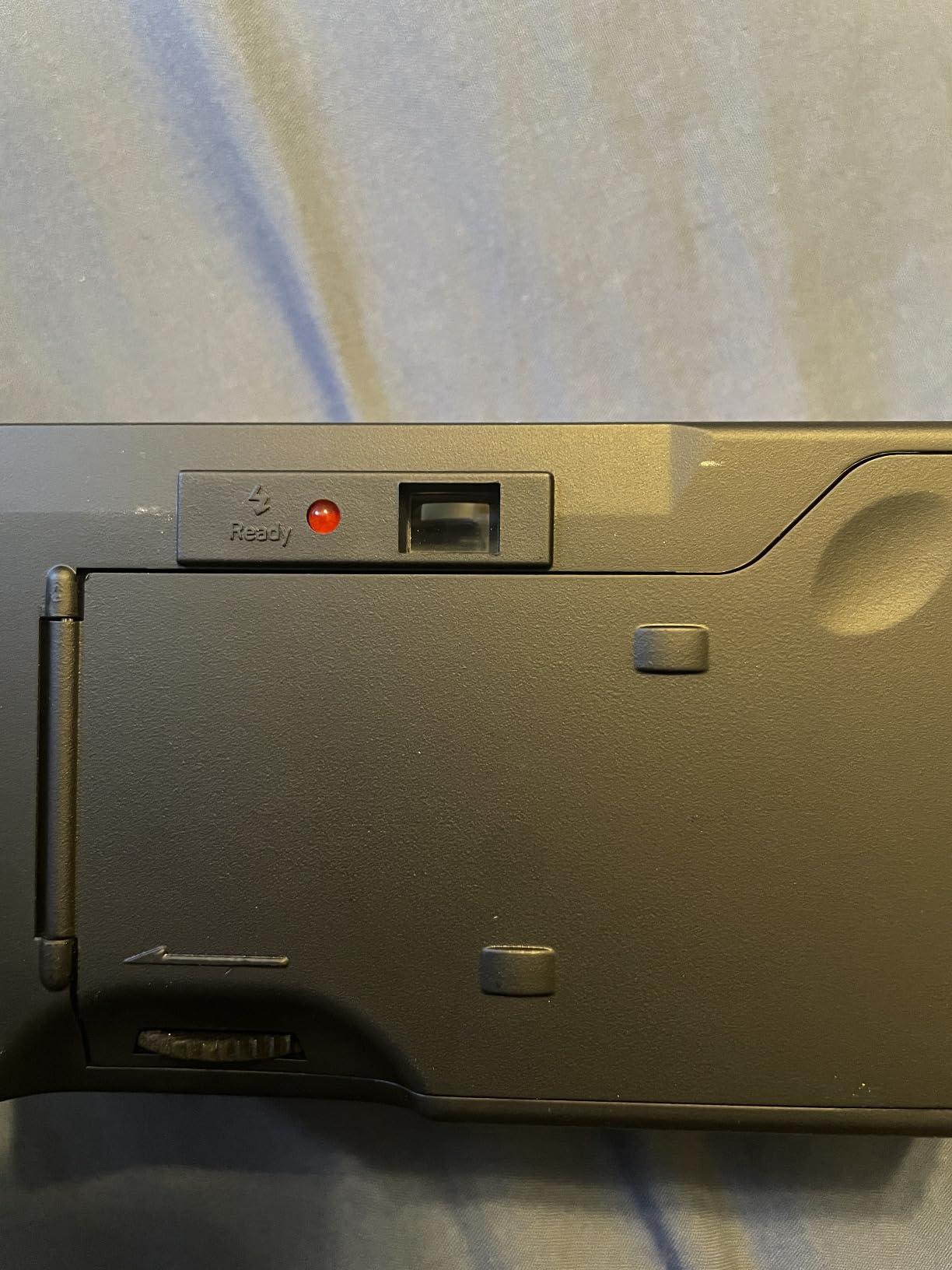
Who this camera suits
It suits anyone whose real goal is to shoot more, not to learn exposure theory. Reviews are overwhelmingly about exactly that: with close to 4,500 ratings averaging 4.2, owners consistently point to ease of use, pocketability and the doubled exposure count as the reasons they keep carrying it.
It is also the sensible first body if you mostly shoot with a phone. Reviewers report that the automatic operation and built-in flash make it easy to get usable negatives on a first outing, which keeps the habit forming.
Where it will frustrate you
There is no manual exposure control, so you cannot learn aperture or shutter speed here. If that is the skill you actually want, read on to the Canon AE-1 and the Pentax K1000 further down.
Film and the AAA battery are not included, so your first roll is a separate purchase. Reviewers also note the fixed focus simply cannot hold a close subject, which rules out small-object and food photography.
2. RETO Ultra Wide and Slim – The 22mm Pocket Companion
RETO Ultra Wide and Slim 35mm Reusable Daylight Film Camera – 22mm Wide Lens, Focus Free, Light Weight, Easy to Use (Olive)
22mm ultra wide lens
69 g body
Fixed focus
Focal plane shutter
Pros
- Extremely thin and light so it slips into a jacket pocket
- 22mm wide lens packs a lot of scene into every frame
- Loading and operation are straightforward for first-timers
- Accepts colour and black and white 35mm film
Cons
- No built-in flash so indoor work is out of its comfort zone
- Fixed focus with a single automatic exposure setting
- Widest share of one-star ratings in the compact group
It weighs 69 g, and at 1.1 inches thick it disappears into a jacket pocket. If your complaint about film cameras is that they are heavy objects you refuse to carry, this is the direct answer.
The 22mm ultra wide lens is the reason to choose it over a similar plastic compact. On a 35mm frame that is genuinely wide, so interiors, group shots and street scenes all fit in without stepping back. The design is daylight-oriented, which is honest about what it is for.
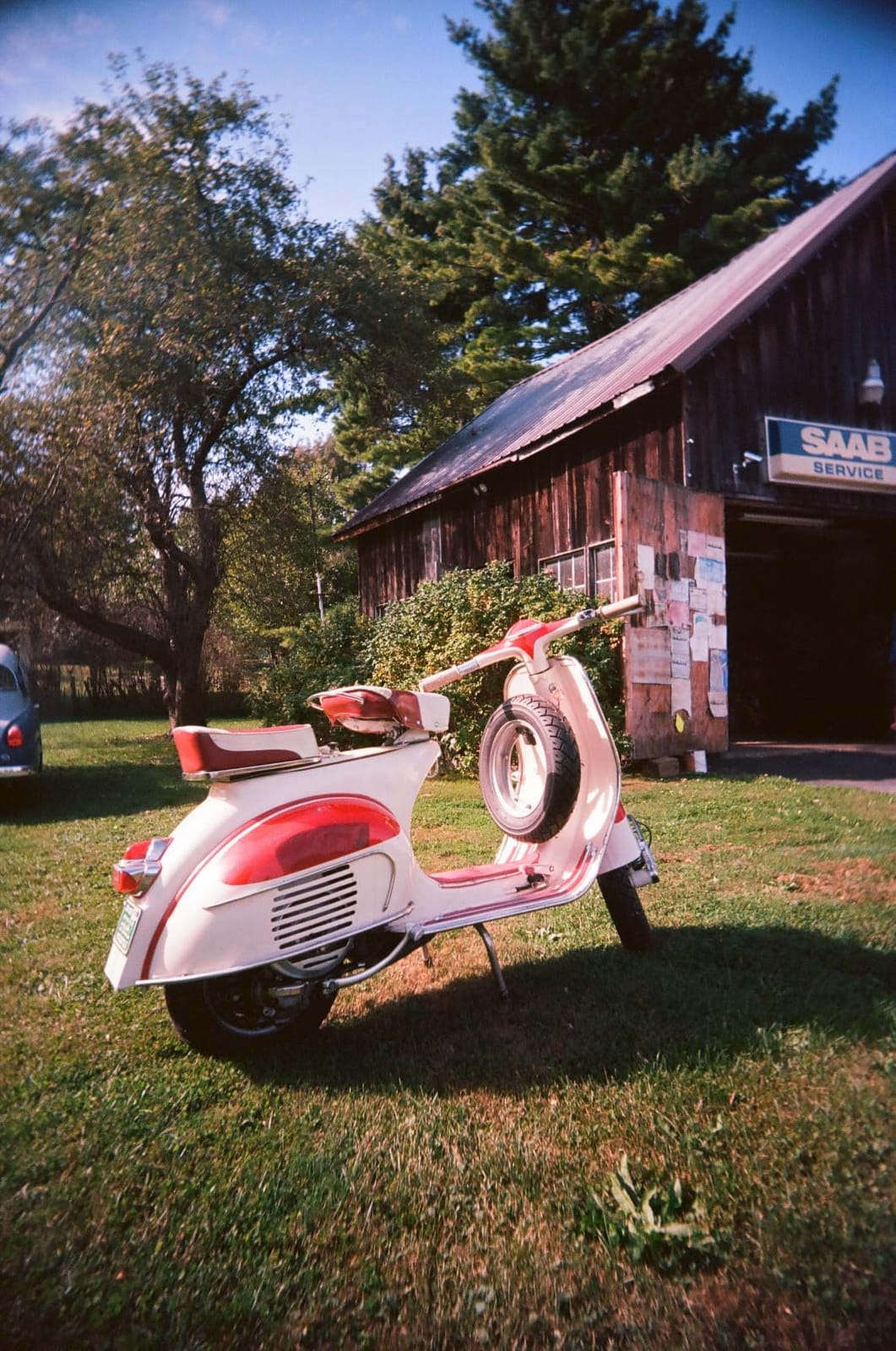
Mechanically it is a fixed-focus body with a single automatic setting and a focal plane shutter topping out at 1/125 second. The ISO range is listed as 100 to 400, so modern colour negative film works without any thinking on your part.
Reviews average 4.0 across 721 ratings, with 58% five stars. Owners like the wide framing and the simplicity; the critical minority points at plastic construction and the missing flash for low light.
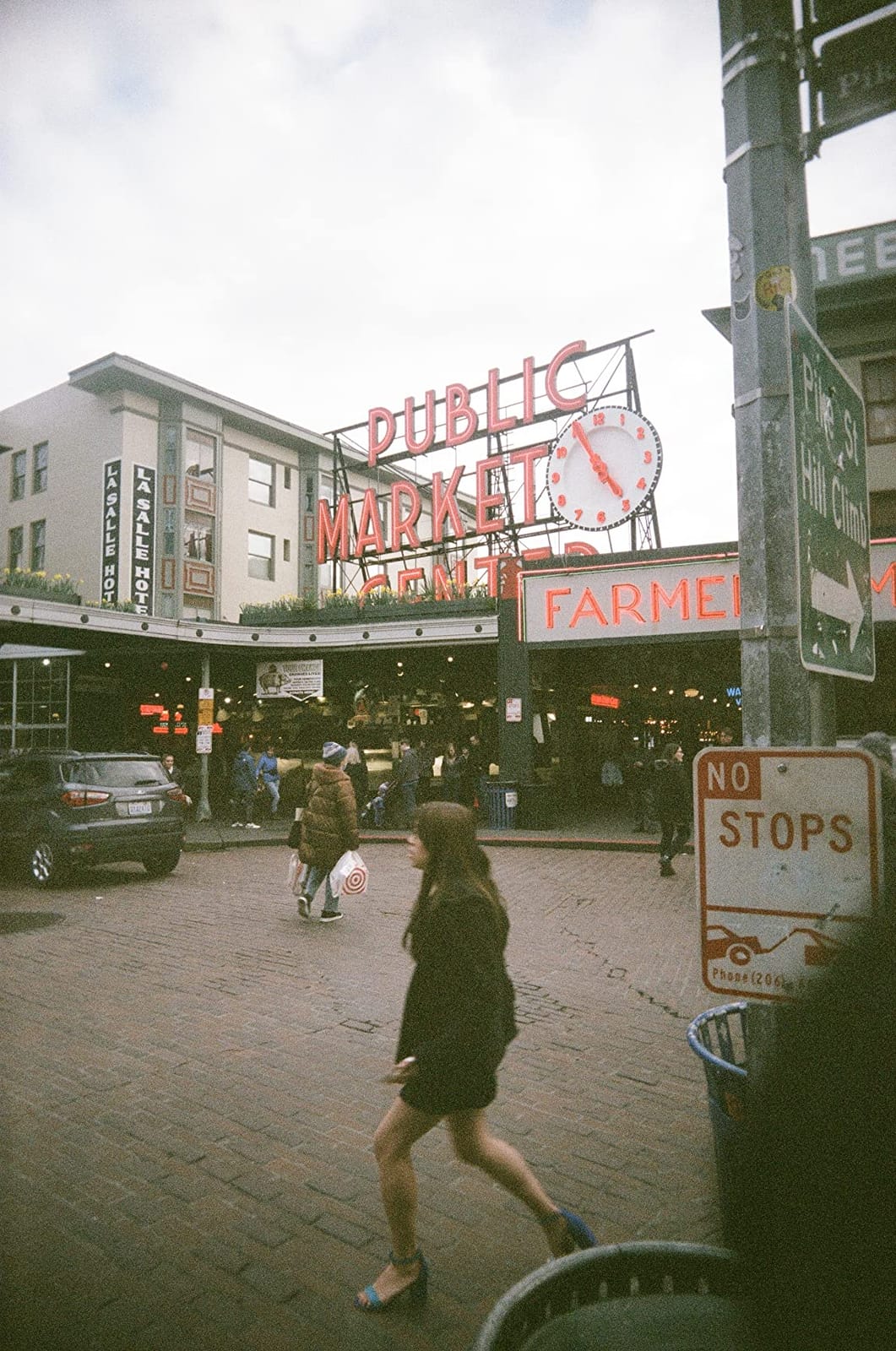
Who this camera suits
It suits travel and street shooters who want something that never leaves the bag, and anyone who wants to see what a 22mm perspective does to ordinary scenes. Reviewers report the loading process is simple enough that a first-timer can do it unaided.
Because the frame is wide and the focus is fixed, it also pairs naturally with landscapes, architecture and group photos rather than individual portraits.
Where it will frustrate you
There is no flash, so anything after sunset is a guess. Six of the seven plastic compacts here carry a built-in flash and this one does not, and that is the trade you are making for the smaller body.
Reviewers report the widest share of one-star ratings among the compact bodies here, which usually points to build inconsistency rather than a design flaw. Expect plastic, not metal.
3. Ilford Sprite 35-II – A Reusable Body From an Actual Film Company
Ilford Sprite 35-II Reusable/Reloadable 35mm Analog Film Camera
31mm f/9 fixed-focus lens
Fixed 1/120s shutter
Built-in flash
5.44 oz
Pros
- Clear step up from a disposable without the manual-focus learning curve
- Sturdier film advance wheel than most simple-use cameras
- 31mm lens gives well-focused daylight scenes
- Built-in flash can be switched off after loading
- Takes colour negative or black and white film
Cons
- Fixed 1/120s shutter and single-element lens limit creativity
- Manual wind-on and rewind need care
- Some owners report blank frames and flash faults
- Plastic construction feels disposable-like
The Ilford Sprite 35-II is the one I recommend when someone is moving up from a disposable and wants the film-handling ritual without the technical burden. It is made by a film manufacturer, which sounds like trivia until you use the advance wheel.
That wheel is the story here. Reviewers repeatedly single it out as sturdier than comparable simple-use cameras, and the film handling is a manual wind-on lever with a manual rewind. That is real film handling, just not complicated film handling.
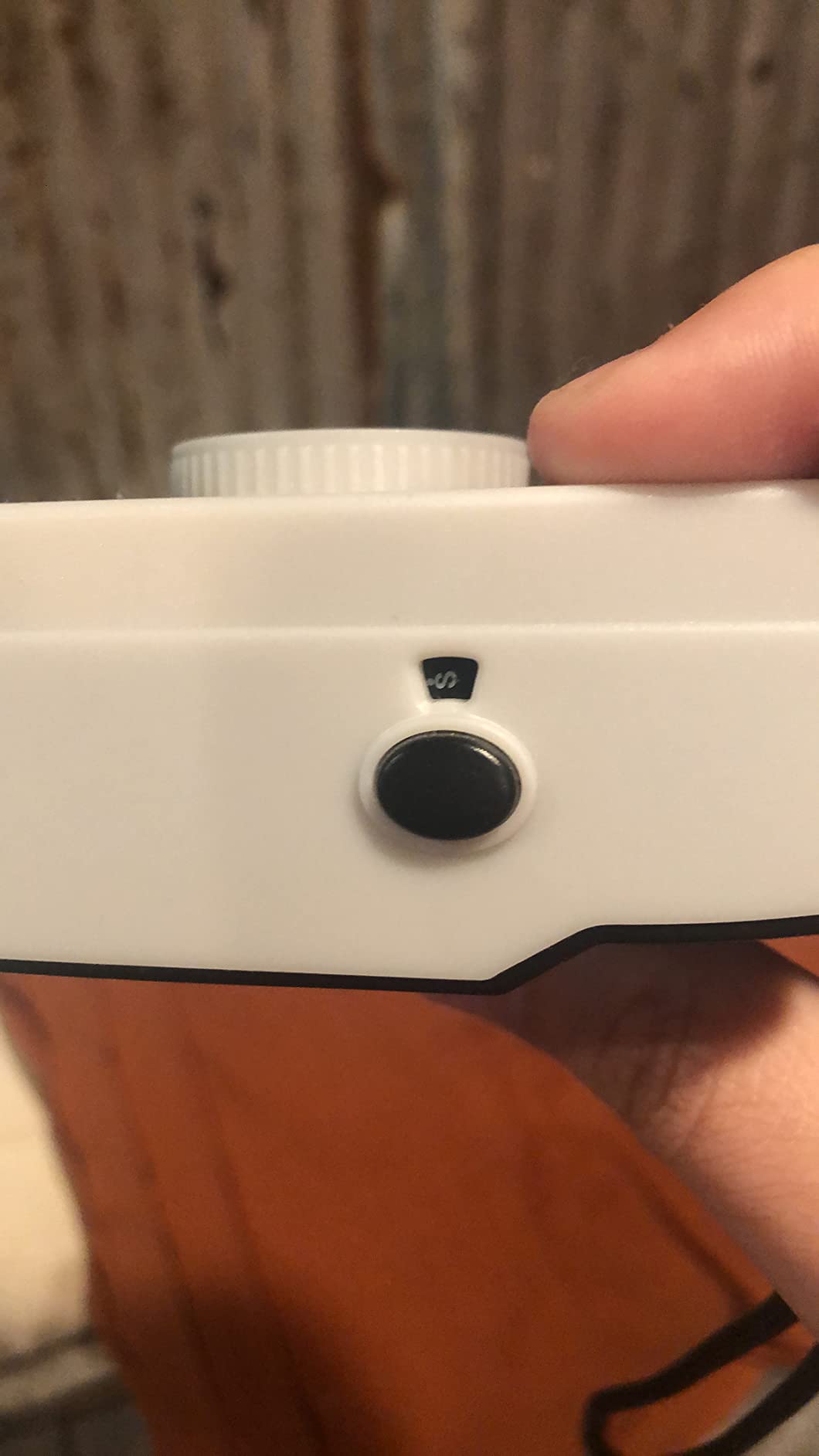
The optics are a 31mm single element at f/9, fixed focus from one metre to infinity, with a fixed 1/120 second shutter. Below that f/9 aperture you get a lot of depth of field, which is exactly why the fixed-focus design works in daylight. The built-in flash has a 15-second recycle time and can be cancelled once the film is loaded.
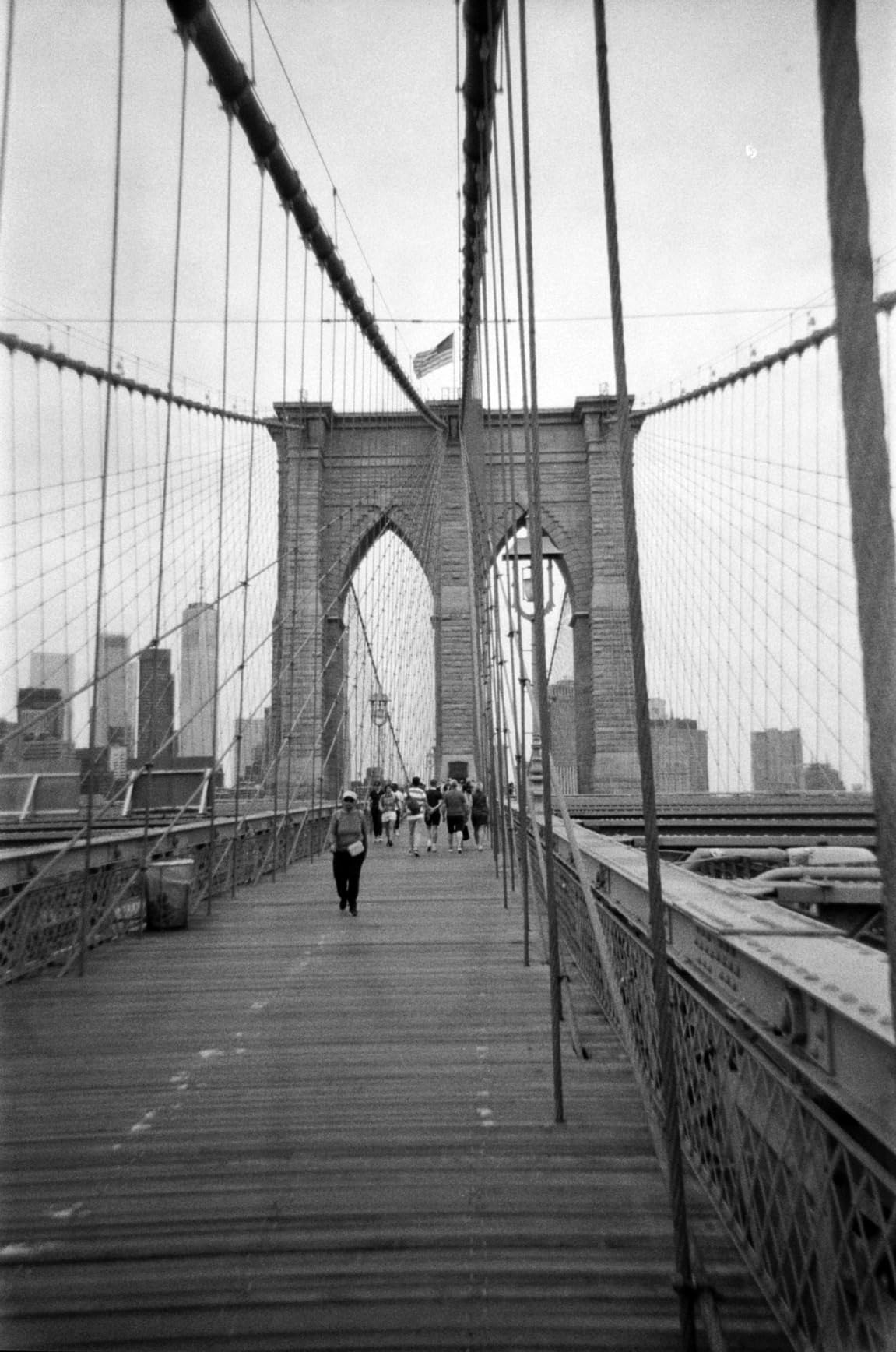
It is rated for 400 ISO film, and it accepts colour negative or black and white. That last point is unusual in this category and makes it a good first body for HP5 if you want to learn by shooting cheap black and white.
Who this camera suits
It suits a beginner who wants the mechanical ritual of an SLR without the exposure theory. Across 346 ratings averaging 4.2 with 64% five stars, owners praise the flash power, the ease of loading and the feel of the film advance.
It also suits anyone who wants a reusable body that does not look like a toy. The black finish and the Ilford badge read more like a small rangefinder than a novelty camera.
Where it will frustrate you
The fixed 1/120 second shutter is the hard limit. You cannot stop motion or shoot a night scene without flash, and the single-element lens will not give you shallow depth of field.
Reviewers report a recurring complaint thread about the advance wheel stopping mid-roll and wasting frames, plus occasional rewind difficulty. Wind gently to the end of the stroke and rewind until you feel the tension release.
4. 1 Shot Half-Frame – Point and Shoot With a Roll of Film in the Box
1 Shot Point and Shoot 35mm Film Camera, Reusable Retro Half Frame Camera, Built in Flash, Included One Roll ASA/ISO 400 Black & White Film 18 Exp., (36 Shots) Battery Not Included (Brown Color)
Half-frame 18x24 images
One ISO 400 black and white roll included
50mm f/5.6
Built-in flash
Pros
- Half-frame format doubles the shots per roll
- A roll of ISO 400 black and white film is included so you can shoot today
- One-button fully automatic operation
- Retro styling owners find genuinely fun
- Accepts colour and black and white film from ISO 100 to 400
Cons
- The 50mm lens is tight and better for landscapes than for people
- Fixed 1/120s and f/5.6 need plenty of light
- Plastic build feels close to a disposable
- Occasional rewind or loading jams
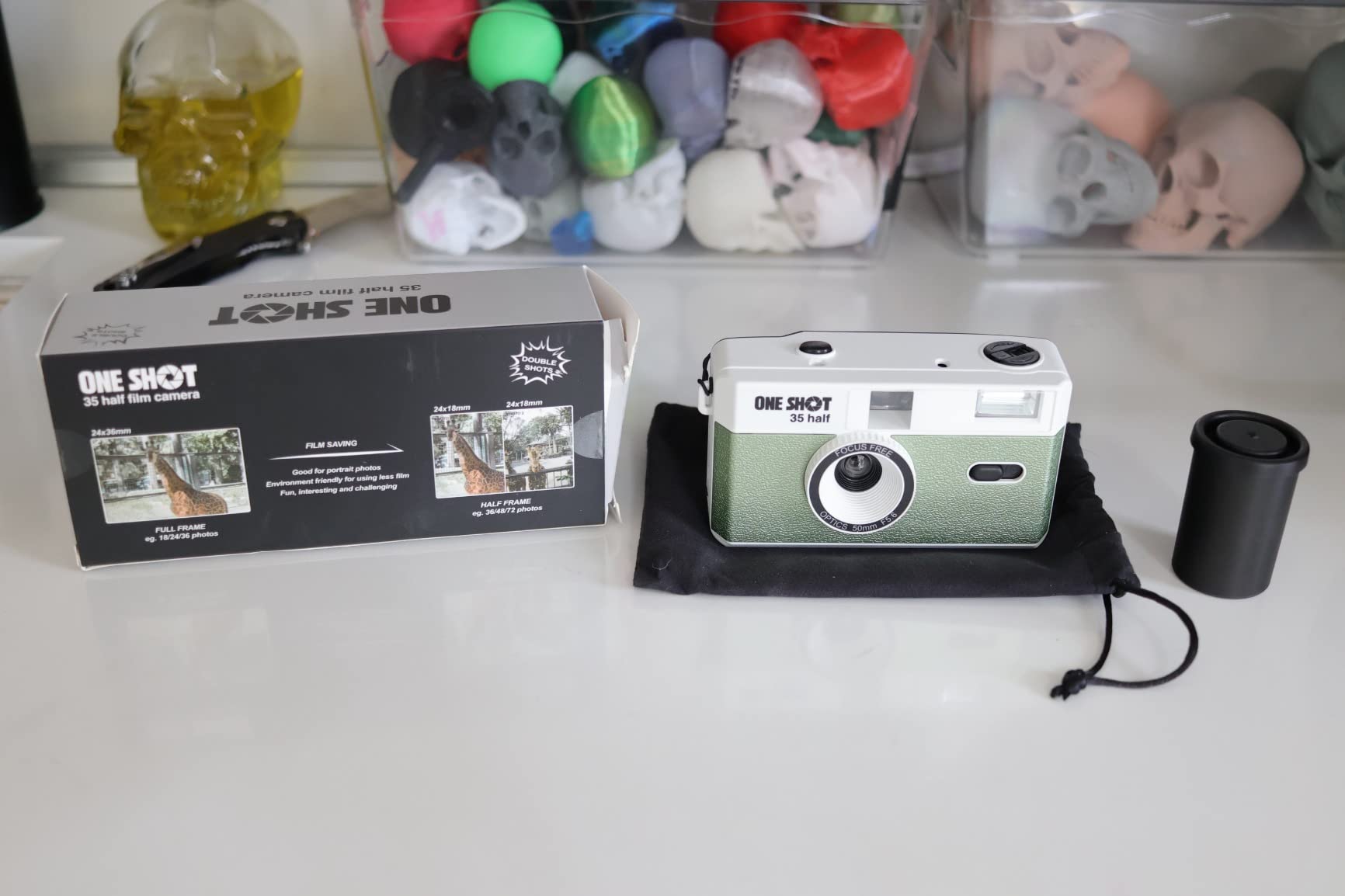
This is the fastest zero-to-first-picture path in the roundup. It ships with one 18-exposure roll of ISO 400 black and white film, so you can load it, press the button and send your first roll out on the evening you open the box.
Everything else follows from that simplicity. One-button automatic shooting, a fixed 50mm f/5.6 lens, a fixed 1/120 second shutter and a built-in flash with a 10 to 15 second recycle. The flash runs on one AAA alkaline cell, which is not included.

Like the Ektar, it shoots half-frame 18×24 negatives, so the included roll gives you 36 images rather than 18. It accepts standard 35mm film in colour or black and white at ISO 100, 200 or 400, which means you are not limited to the bundled film.
Reviews average 4.2 across 154 ratings with 67% five stars. Owners like the nostalgic toy-like look and the doubled exposure count, and the honest negatives are dark indoor results when the flash is skipped and an occasional film rewind jam.
Who this camera suits
It suits someone buying this as a gift, or buying it for themselves as a low-commitment experiment. Including a roll removes the single most common reason a first camera gets bought and then sits in a drawer unopened.
It also suits a black and white beginner specifically. The bundled stock is black and white, so your first lesson is framing and focus rather than colour balance.
Where it will frustrate you
The 50mm lens is fairly tight for the format, which means it is better for landscapes and street details than for filling a frame with a person at close range. Reviewers say this plainly.
The narrow aperture needs a lot of light, so indoors the flash is often mandatory rather than optional. And at 5.6 ounces in plastic, it will not feel like a serious instrument.
5. Canon AE-1 With 50mm f/1.8 – The Real Step Up to an SLR
Vintage Canon AE-1 35mm SLR Camera with 50mm 1:1.8 Lens (Renewed)
TTL through-the-lens metering
1/1000s to 2s plus Bulb
Canon FD mount
Supplied with 50mm f/1.8
Pros
- Through-the-lens metering gives accurate exposure in mixed light
- Shutter range from 1/1000s to 2 seconds plus Bulb
- Full interchangeable Canon FD lens system to grow into
- Robust metal body with a classic and durable feel
- Works in both automatic and fully manual exposure
Cons
- Renewed condition means wear varies between examples
- Manual film handling and FD lenses need their own ecosystem
- Heavier and bulkier than any compact here
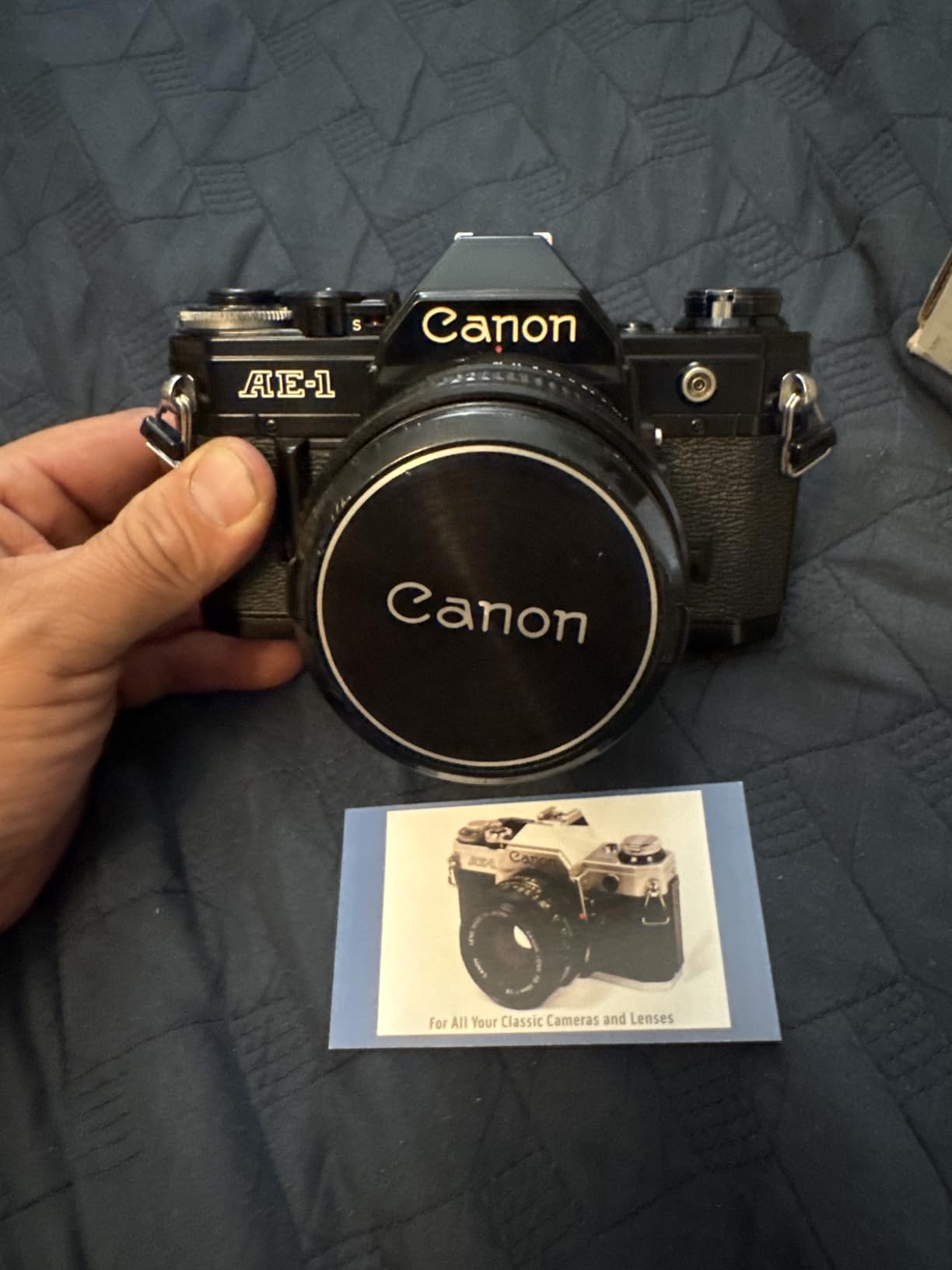
This is where film photography starts teaching you something. The AE-1 is a single-lens reflex with a through-the-lens meter, so the camera measures the light actually hitting the film rather than guessing from a separate sensor.
That meter is the reason to pick this body over a cheaper manual SLR. Shutter speeds run from 1/1000 second to 2 seconds plus a Bulb setting, and the shooting modes listed include manual and shutter-speed priority. You can let the meter guide you, then override it once you understand what it is telling you.
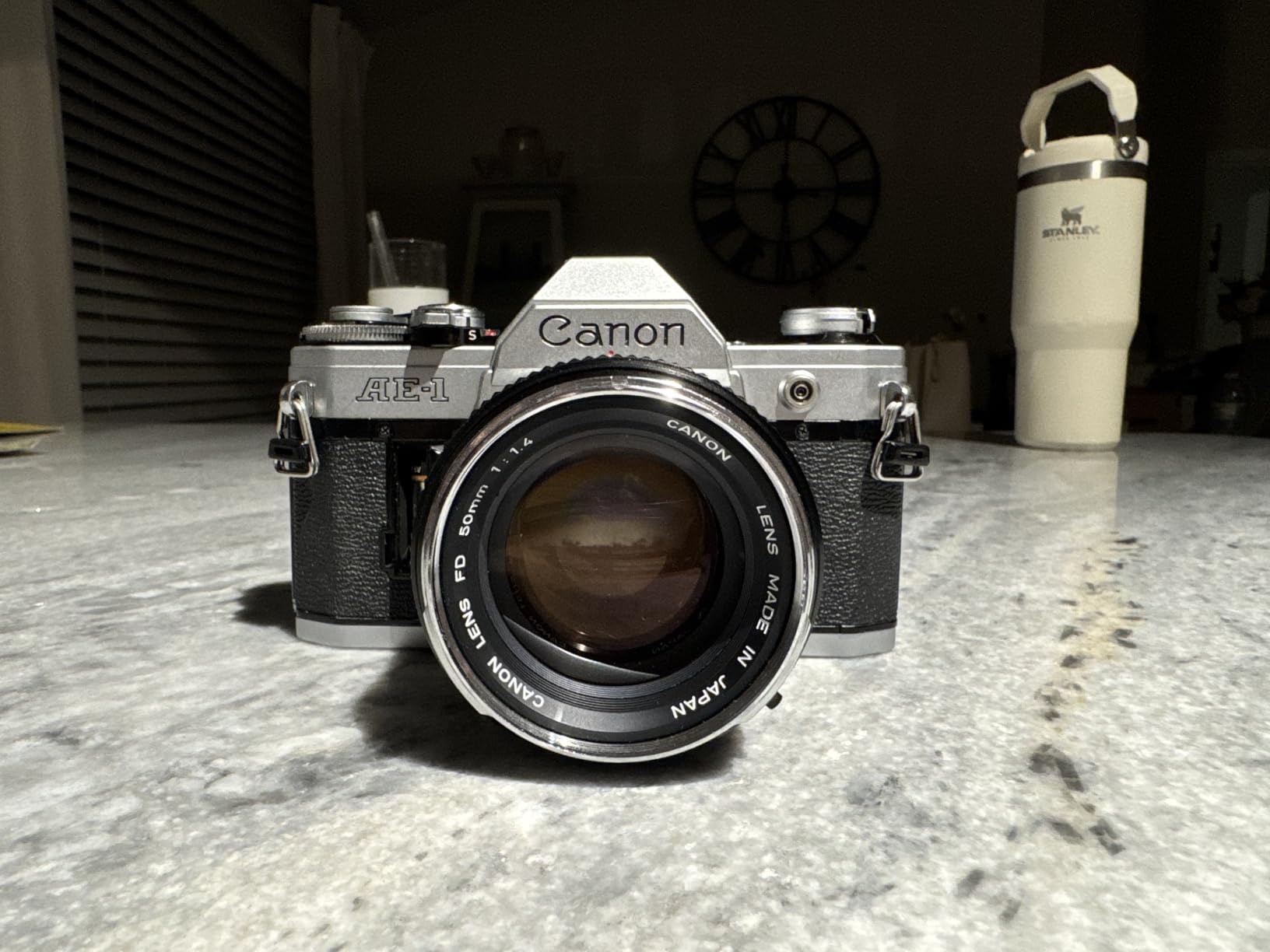
The renewed unit here ships with a 50mm 1:1.8 lens, which is a genuinely fast normal prime. At f/1.8 it gathers enough light for indoor events and dim restaurants, and it gives you the background separation that a fixed-lens compact never will.
The lens mount is Canon FD, so the body opens into one of the largest and cheapest vintage lens ecosystems you can buy into. When you outgrow the 50mm, adding a wider or longer lens later is straightforward and inexpensive.
Who this camera suits
It suits someone who has decided they want to learn film rather than sample it. Across 121 ratings averaging 4.4, with 75% five stars, owners consistently praise the AE-1 metering, the lens options and the value of getting a professional-style body at this level.
Forum consensus across photography communities repeatedly converges on the Canon AE-1 family and the Pentax K1000 as the two classic beginner SLRs, largely for this reason: real metering and durable mechanical construction. That reputation has held for decades.
Where it will frustrate you
This is a 2-pound body with manual film advance, rewind and loading. Reviewers who came from digital point-and-shoots describe the first session as heavier and slower than expected, and that adjustment is real.
It is a renewed example, so cosmetic and mechanical wear varies between examples. Read the condition notes, ask for photos of the film door interior and the mirror box, and expect a 90-day limited warranty rather than a year.
6. RETO PANO – Switchable Panorama and Standard Framing
RETO PANO 35mm Film Camera – 22mm Wide Lens, Panorama, Easy Switch, Cinematic Modes, Lens Cover, Built-in Flash, Reusable (Film & AAA Battery are not Included) (Sheer White)
22mm ultra wide lens
Switchable panorama mode
Built-in flash
Lens cover included
Pros
- Switches between standard and panoramic framing for creative shots
- 22mm wide lens captures expansive views
- Owners report it survives short drops without damage
- Built-in flash and lens cover make it grab-and-go
- Fun retro look in a light and compact body
Cons
- Flash washes out or underexposes some indoor shots
- The wide lens makes finger intrusion easy
- Some owners report film-feed and shutter faults
- Rewind control position is unintuitive
The RETO PANO is the odd one out in this list, and that is the point. It has a switch that changes the framing between a standard 35mm rectangle and a panoramic aspect ratio, so one roll gives you two completely different looks.
Underneath that it is a straightforward reusable compact: 22mm ultra wide lens, automatic exposure, built-in flash and a maximum shutter speed of 1/60 second. The listed ISO range is 100 to 6400, which is unusually generous for a plastic fixed-focus body.
It ships with a lens cover, which is a small thing that matters on a camera you carry in a bag. The body comes in five colours and weighs 0.13 kg, which puts it in the middle of this group on size.
Reviews average 4.0 across 96 ratings, with 63% five stars. Enthusiasts love the panorama mode and the value; critics report film-feed failures, dead flashes and dark results on some copies.
Who this camera suits
It suits someone who wants the aesthetic of film without wanting to learn a light meter, and who specifically enjoys wide, unusual framings. Landscapes, coastlines and architectural interiors are where the 22mm lens and the panorama mode both earn their keep.
Reviewers also report it takes short drops without damage, which makes it a reasonable companion on trips where you would not carry a metal SLR.
Where it will frustrate you
The 1/60 second top shutter speed means everything is a little soft if you are moving, and the flash is inconsistent. Reviewers report it both washing out and underexposing indoor shots depending on how close you are.
At 22mm the lens is very close to the frame edge, so fingers intrude more often than on a normal lens. This copy also carries the highest one-star share of any body here, so test the film advance immediately after delivery.
7. Kodak i60 – Press-and-Pop-Up Flash in a Retro Body
Kodak i60 Reusable 35mm Film Camera – Retro Style, Focus Free, Built in Flash, Press and Pop-up Flash (Very Peri)
Press-and-pop-up built-in flash
Fixed focus
Optical 0.7x viewfinder
144 g
Pros
- Retro styling with a clear optical viewfinder
- Press-and-pop-up flash is distinctive and easy to operate
- Lightweight and comfortable to carry
- Produces soft and nostalgic analogue colours
- Works with colour and black and white film
Cons
- Film loading is described as slow and awkward
- Some owners report a flash that does not fire
- Shutter or frame counter can stick and waste frames
- Build feels cheaper than the branding suggests
The i60 is built around its flash. Rather than a fixed bulb you have to remember, the flash pops up when you press the shutter and collapses when you release it, so the mechanism forces the correct behaviour for anyone shooting at night.
Everything else is simple by design. Fixed focus, a straightforward shooting dial, an optical viewfinder at 0.7x magnification and a listed ISO range of 100 to 800. The body is 144 g and roughly the same footprint as the Ektar H35.
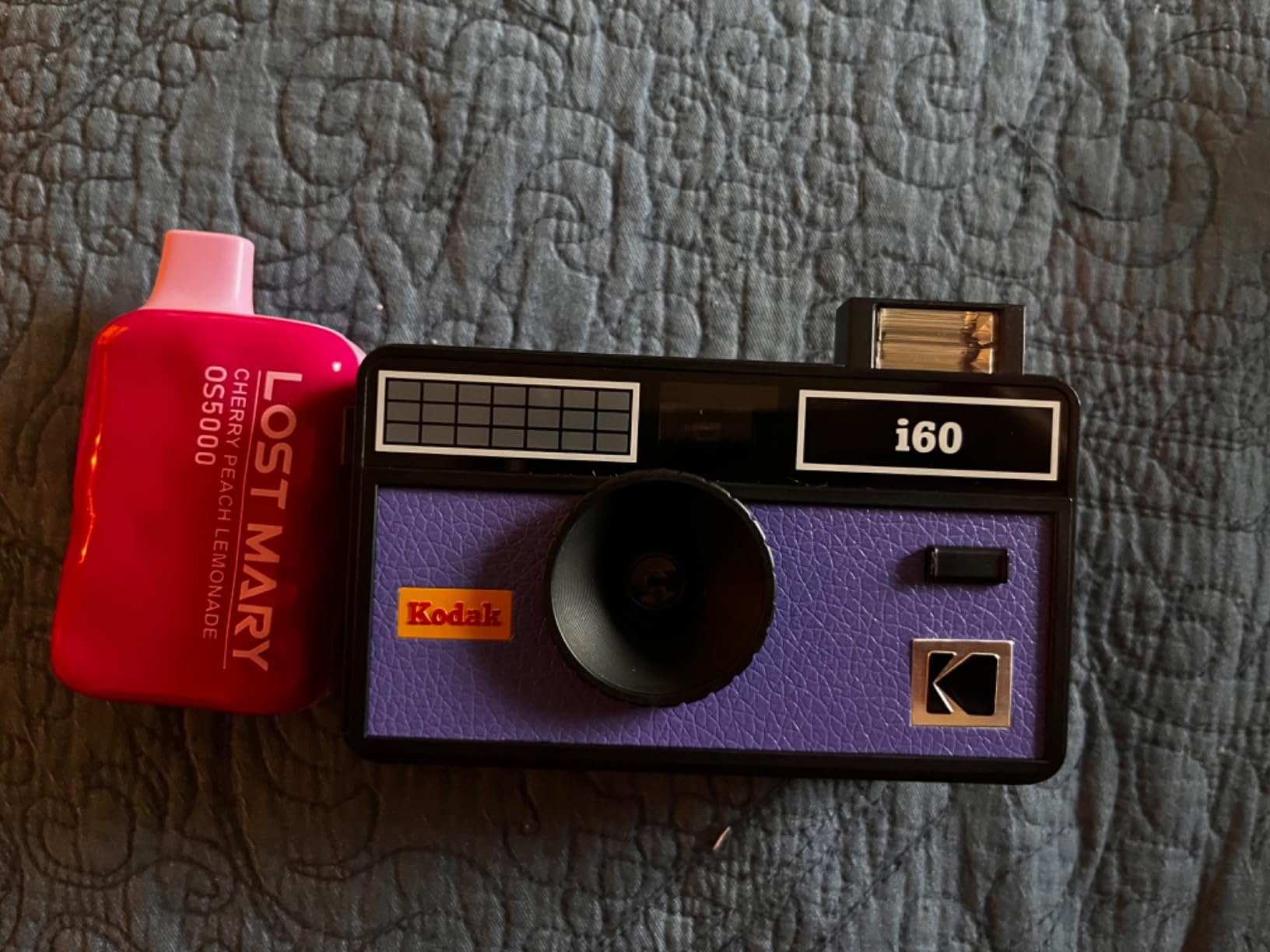
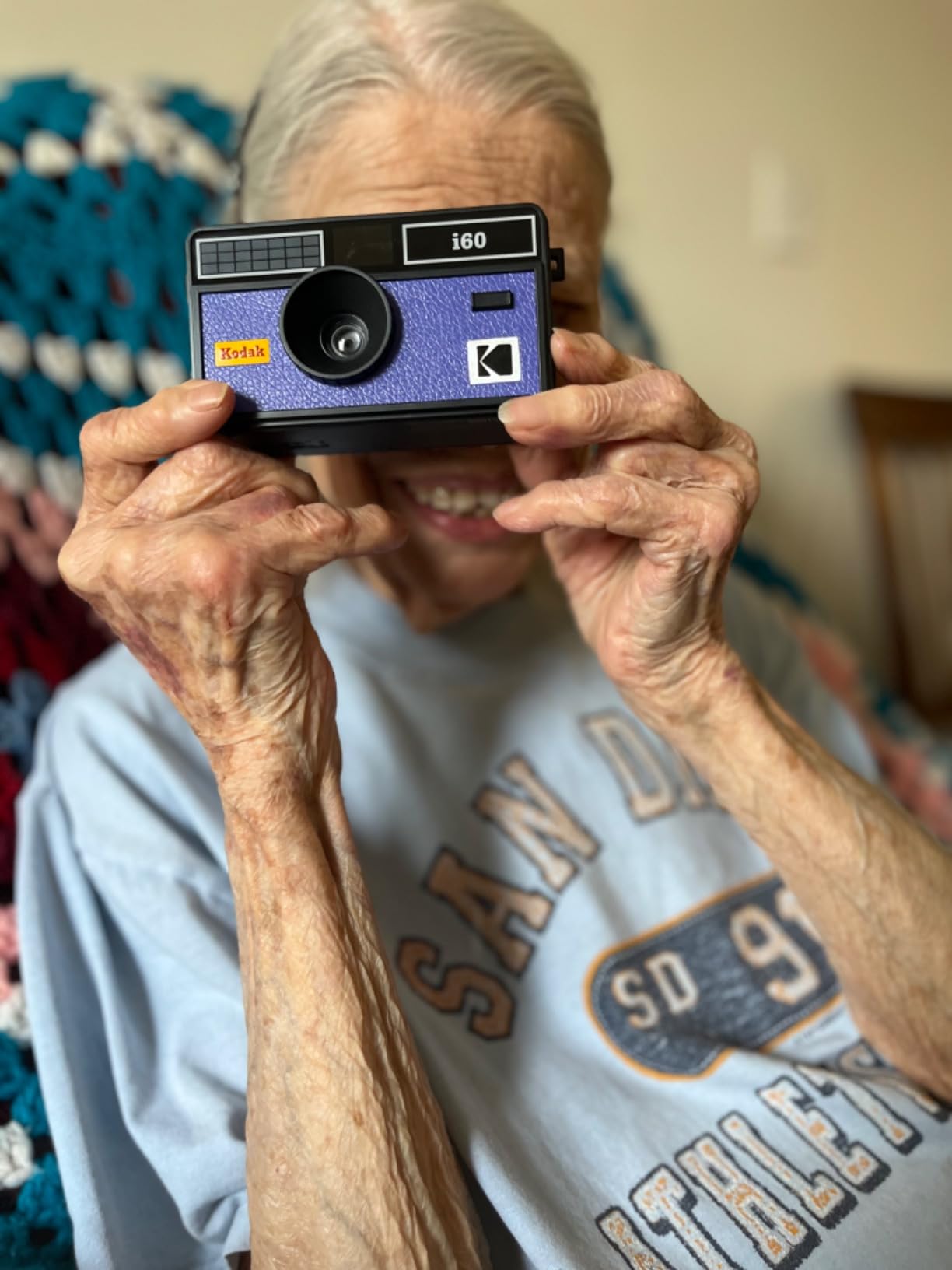
What you are buying here is a look. Reviewers talk about soft, nostalgic colours and the retro styling more than they talk about specifications, and at 4.3 across 88 ratings with 75% five stars, that impression is consistent.
It is a reusable body, not a single-use camera, and it works with both colour and black and white film. That makes it a reasonable compact to grow out of, though the frame is fixed forever.
Who this camera suits
It suits party and event shooters who want the camera to handle indoor light for them, and anyone who picked up a retro-styled body and wants the whole experience rather than just the negatives.
The optical viewfinder is brighter and larger than a frameline finder on some compacts, which makes framing groups easier than the alternatives in this list.
Where it will frustrate you
Film loading is the sticking point. Reviewers describe it as slow and awkward, and if you are new to film, the threading step is where first cameras get damaged.
Some owners report a flash that does not fire, and others a shutter or frame counter that sticks and silently wastes frames. Check the frame counter advances before you load anything expensive.
8. Pentax 17 – Half-Frame With the Sharpest Glass in the Group
PENTAX 17 35mm Film Camera, Half-Frame Format
25mm f/3.5 HD-coated lens
Six-zone focus
Up to 72 images per roll
Magnesium alloy covers
Pros
- Best-in-class optics in a half-frame compact with a sharp 25mm f/3.5 HD lens
- Magnesium alloy top and bottom covers feel durable for the size
- Six-zone focus system adds real focusing control
- Manual film advance lever gives a traditional winding feel
- ISO range of 50 to 3200 covers most film speeds
Cons
- By far the most expensive camera in this roundup
- Heaviest and bulkiest of the half-frame compacts at 1.4 pounds
- Vertical half-frame orientation only
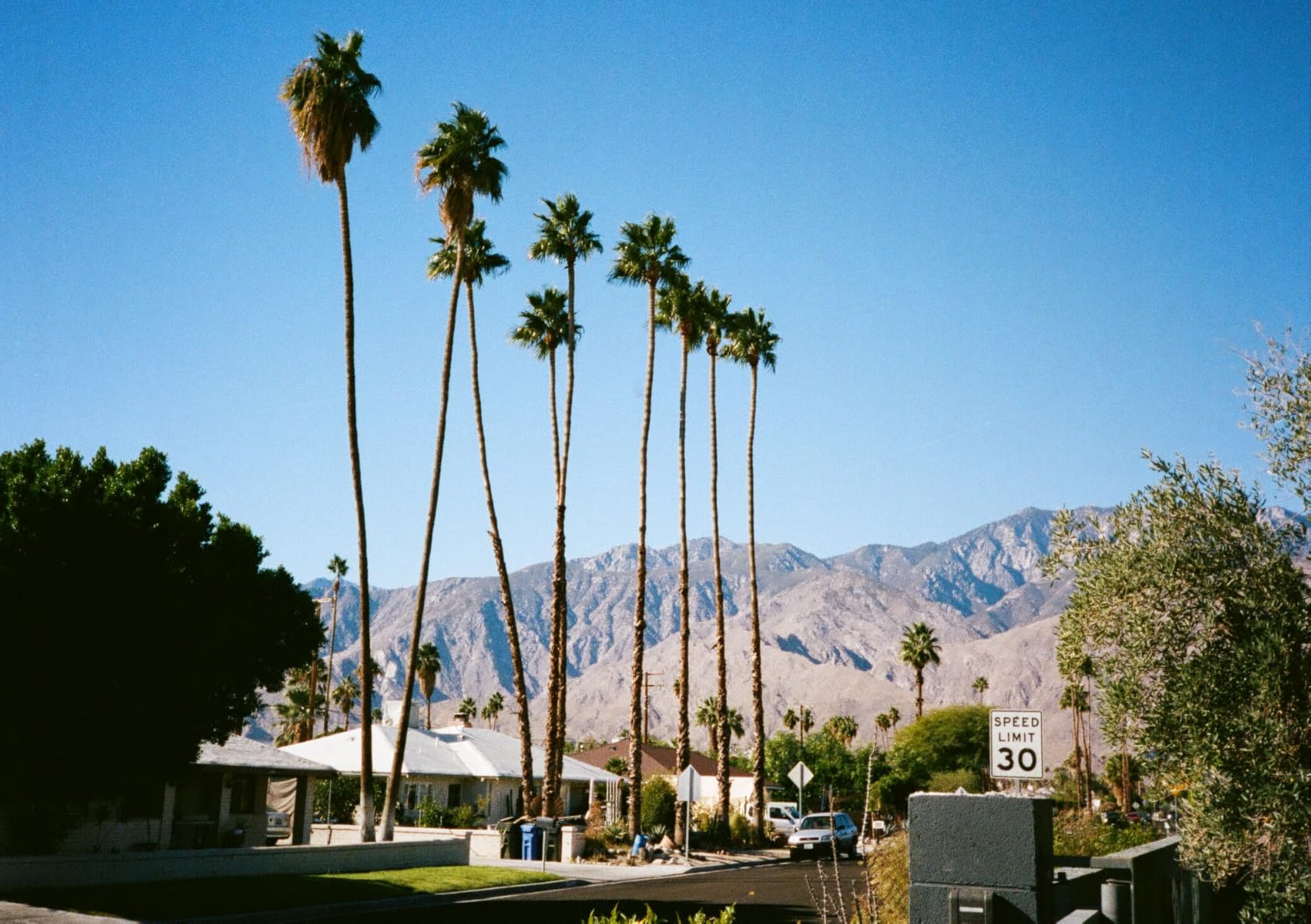
The Pentax 17 is the only body here that gives you two frames per 35mm exposure with a properly fast lens. The 25mm f/3.5 with HD coating is roughly a 37mm equivalent, so it is a normal field of view rather than the extreme wide angle most half-frame cameras use.
That lens is the reason to spend more. A single-element plastic lens at f/9 will look soft when you print it; a 25mm f/3.5 does not. It is the difference between a novelty and something you would keep shooting on purpose.
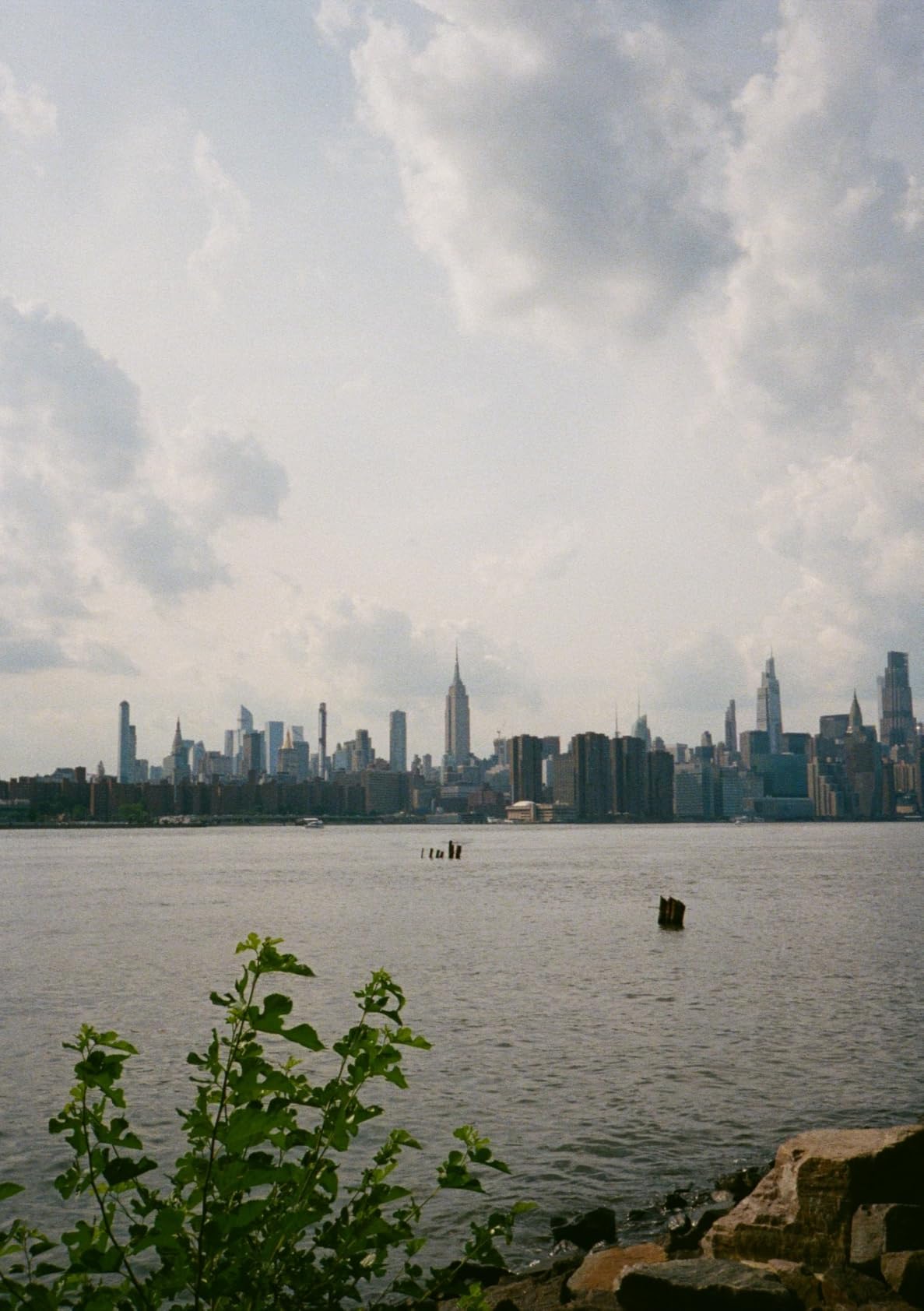
You also get real focusing control through a six-zone system running from close range to long distance. You are not manually focusing, but you are choosing a distance band, which teaches you to think about where your subject actually is.
The build is magnesium alloy on the top and bottom covers, the film advance is a manual lever, and the listed ISO range runs from 50 to 3200 with a top shutter speed of 1/2000 second. In vertical orientation a roll yields up to 72 images.
Who this camera suits
It suits someone who has already decided film is for them, and who cares about what the negative looks like more than what the body costs. Across 67 ratings averaging 4.4, with 71% five stars and only 3% one stars, this is the most even rating profile in the group.
Owners single out image quality, build materials and the zone-focus ring, which tells you the camera delivers on the part that cannot be fixed later with a better film choice.
Where it will frustrate you
It is by far the most expensive camera here, and at 1.4 pounds it is the heaviest and bulkiest of the half-frame compacts. That defeats the point of half-frame if you were choosing it to shoot more without carrying more.
The vertical half-frame orientation is the only one available, which is a real constraint if you would rather shoot standard 24×36 frames from the same body later. Plan for a second camera eventually, and our DSLR buying guide has an unrelated but useful primer on buying used optics bodies.
9. Canon Rebel 2000 – Seven-Point Autofocus and a 28-80mm Zoom
Canon Rebel 2000 SLR Film Camera with Canon 28-80mm EF Auto Focus Lens (Renewed)
7-point autofocus
28-80mm EF zoom included
Program Av Tv and Manual
Pop-up flash
Pros
- Seven-point autofocus delivers quick and accurate focus for a film body
- Automatic loading and advancing and rewinding removes the manual burden
- Pop-up flash covers low light and fill
- Full exposure mode range including program and aperture and shutter priority
- Kit zoom covers wide to short telephoto
Cons
- Renewed condition means wear and cosmetics vary
- Canon EF film SLRs accept only compatible EF lenses
- Only a 90-day limited warranty
- ISO 100-400 range is modest for push processing
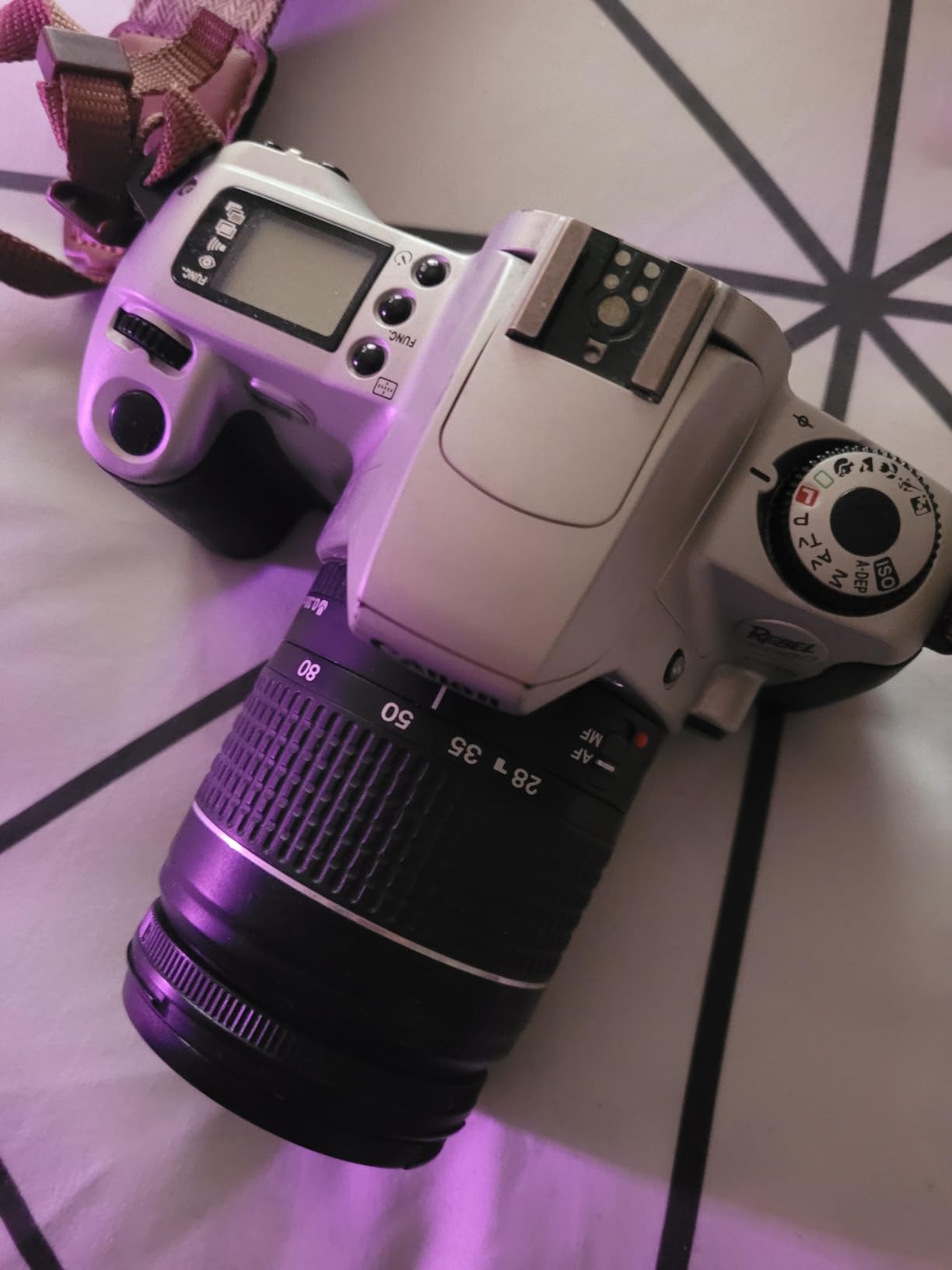
The Rebel 2000 is the transition camera. It looks and behaves like a digital SLR you already own, but it shoots film, which means a photographer moving from digital never has to relearn the interface or fight manual focus.
The seven-point autofocus system is the headline. It focuses faster and more accurately than any body in this roundup, and the pop-up flash means parties and evenings are handled without a separate flash. Film transport is fully automatic: it loads, advances and rewinds on its own.
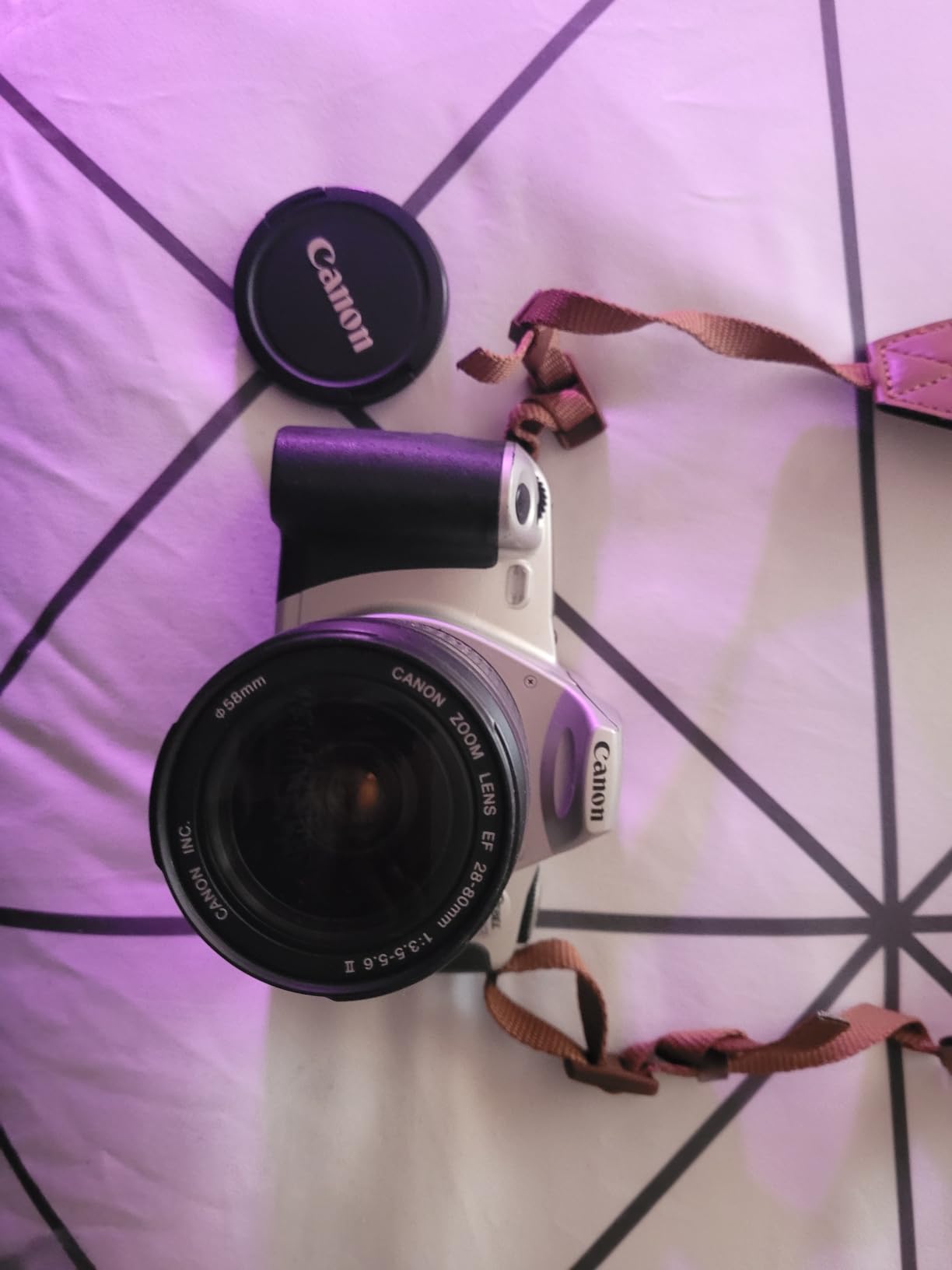
Exposure modes cover the full range, with program AE, aperture priority, shutter priority and manual. The listed shooting scene modes include Portrait, Landscape, Close-up, Sports and Night scene, so there is a sensible starting point for almost any subject.
The supplied Canon 28-80mm EF autofocus zoom covers everything from a wide angle to a short telephoto, so one lens is genuinely enough for the first year. The optical viewfinder is 0.7x magnification.
Who this camera suits
It suits digital shooters who want the film look without the learning curve. Across 60 ratings averaging 4.3 with 78% five stars, owners specifically appreciate that the automation makes this an easy transition, and that the zoom adds framing flexibility.
It also suits anyone who photographs people. Autofocus plus a zoom plus a pop-up flash is the combination that makes a body work for events, and only the other SLR here, the EOS Rebel G, pairs autofocus and a zoom with the same kind of body-level flash.
Where it will frustrate you
Nothing here teaches you exposure. With program mode doing the work, the meter is present but optional, so skip past this body if learning manual control is the point.
Canon EF film SLRs need compatible EF lenses only, and the ISO range is listed at 100 to 400, which is modest if you ever want to push film. This is also a renewed example with a 90-day limited warranty.
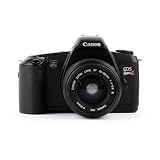
10. Canon EOS Rebel G – A Lightweight SLR With a Zoom and a Wide ISO Range
Canon EOS Rebel G 35MM SLR Film SLR Camera Kit with Auto Focusing AF Zoom Lens. Uses Canon EF Mount Lenses. (Renewed)
Canon EF autofocus zoom included
ISO 25-5000
Up to 1/2000s
13 oz body
Pros
- Light 35mm SLR body that is easy to carry and easy to learn
- Canon EF mount gives access to the full EF lens lineup
- Included autofocus zoom provides flexible focal lengths
- Both fully automatic and manual shooting modes
- Renewed examples are professionally inspected and tested
Cons
- Renewed condition and cosmetic wear vary
- Only a 90-day limited warranty
- Older film SLR autofocus is slower than a digital body
- The specific lens bundle can change between supply runs
At 13 ounces the Rebel G solves the complaint that SLRs are too heavy to carry, which is the single most common reason people buy a film camera and stop using it. The body is a 35mm SLR with a Canon EF mount and an included autofocus zoom covering 35-80mm at f/3.5-5.6.
Unlike the fixed-focus compacts in this roundup, the ISO range is listed from 25 to 5000 and the top shutter speed reaches 1/2000 second. That headroom matters more than it sounds, because it means the camera is not the limiting factor in a difficult scene.
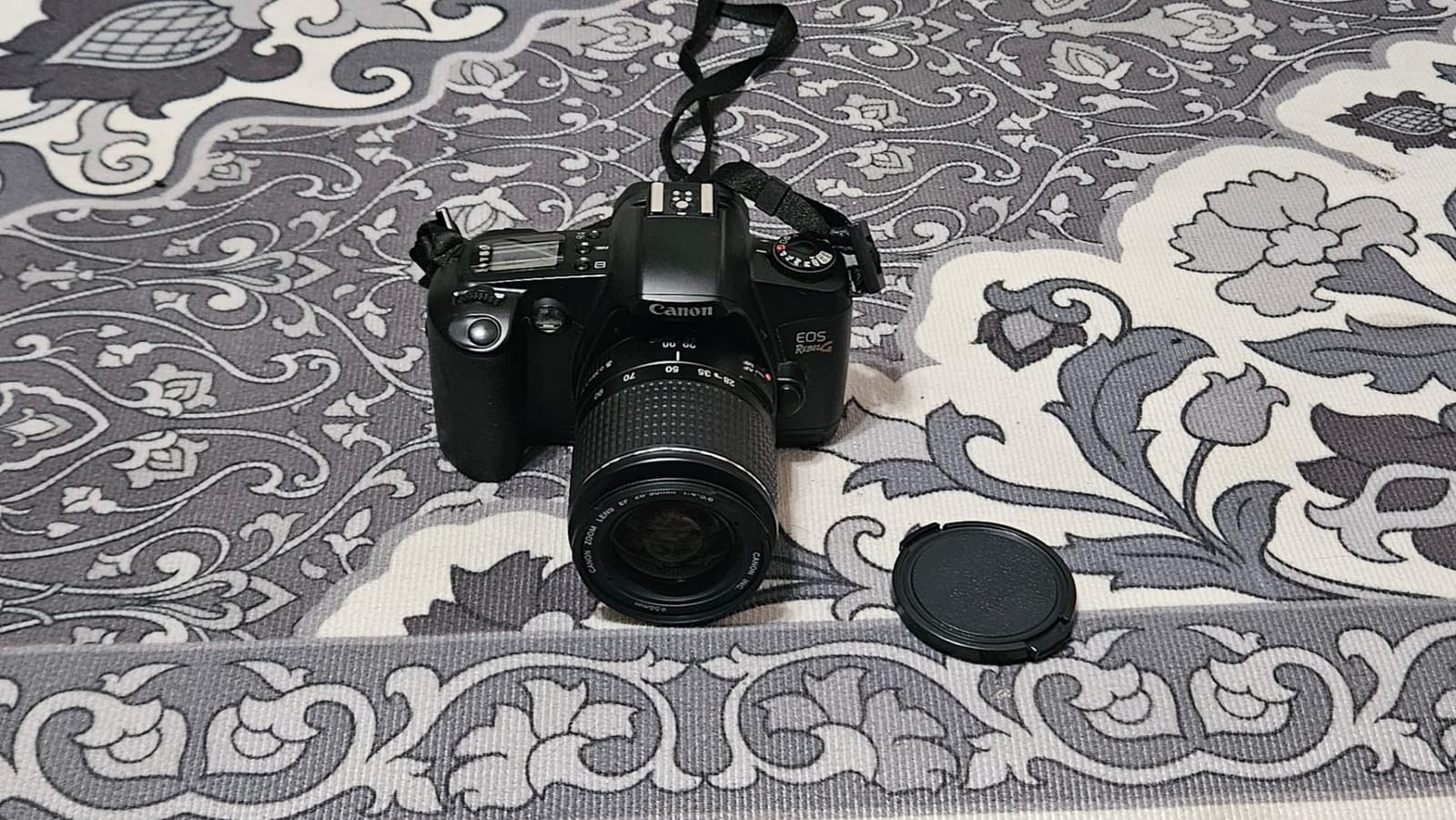
Exposure modes include aperture priority, shutter priority, program and manual, and the flash sync speed is 1/90 second. The macro focus range extends to 10-30 cm, so close subjects are within reach without a special lens.
Reviews average 4.3 across 52 ratings with 70% five stars. Reviewers treat it as an affordable, functional entry into Canon EF film SLR shooting, and note the recurring caveat is that renewed examples vary in cosmetic and mechanical condition.
Who this camera suits
It suits anyone who wants an SLR in a bag without an SLR-sized bag. Cameras like this one get carried, and getting carried is what determines whether you keep shooting.
Because it takes Canon EF lenses, it also suits someone who already owns EF glass from a digital body, since the lenses cross over between the two systems.
Where it will frustrate you
Film autofocus is inherently slower than a digital body, and this generation is older still. Expect a brief hunt before it settles, especially in low light.
Renewed examples vary in wear, the warranty is 90 days, and the specific lens bundle in the kit can change between supply runs. Verify what lens actually ships with the body before you order.
11. TBC Transparent Camera – A See-Through Body With a Carabiner
IUTD STUDIOS to Be Continued (TBC) Reusable 35mm Film Camera – Transparent Design, 28mm Wide Lens, Reloadable and Analog, Built-in Flash, Point and Shoot
Transparent body
28mm f/8 wide lens
1/120s shutter
ISO 200-1600
Pros
- Transparent body shows the inner film mechanism and is genuinely distinctive
- 28mm wide lens suits landscapes and street scenes and group shots
- 1/120s shutter keeps photos sharp for first-time users
- Included carabiner makes it easy to clip to a bag or keychain
Cons
- Thin review base of 25 ratings so long-term reliability is less proven
- Rewind release button is delicate and easy to trigger by accident
- No colour gel filters included with the flash
- Performs best on 400 or 800 speed film
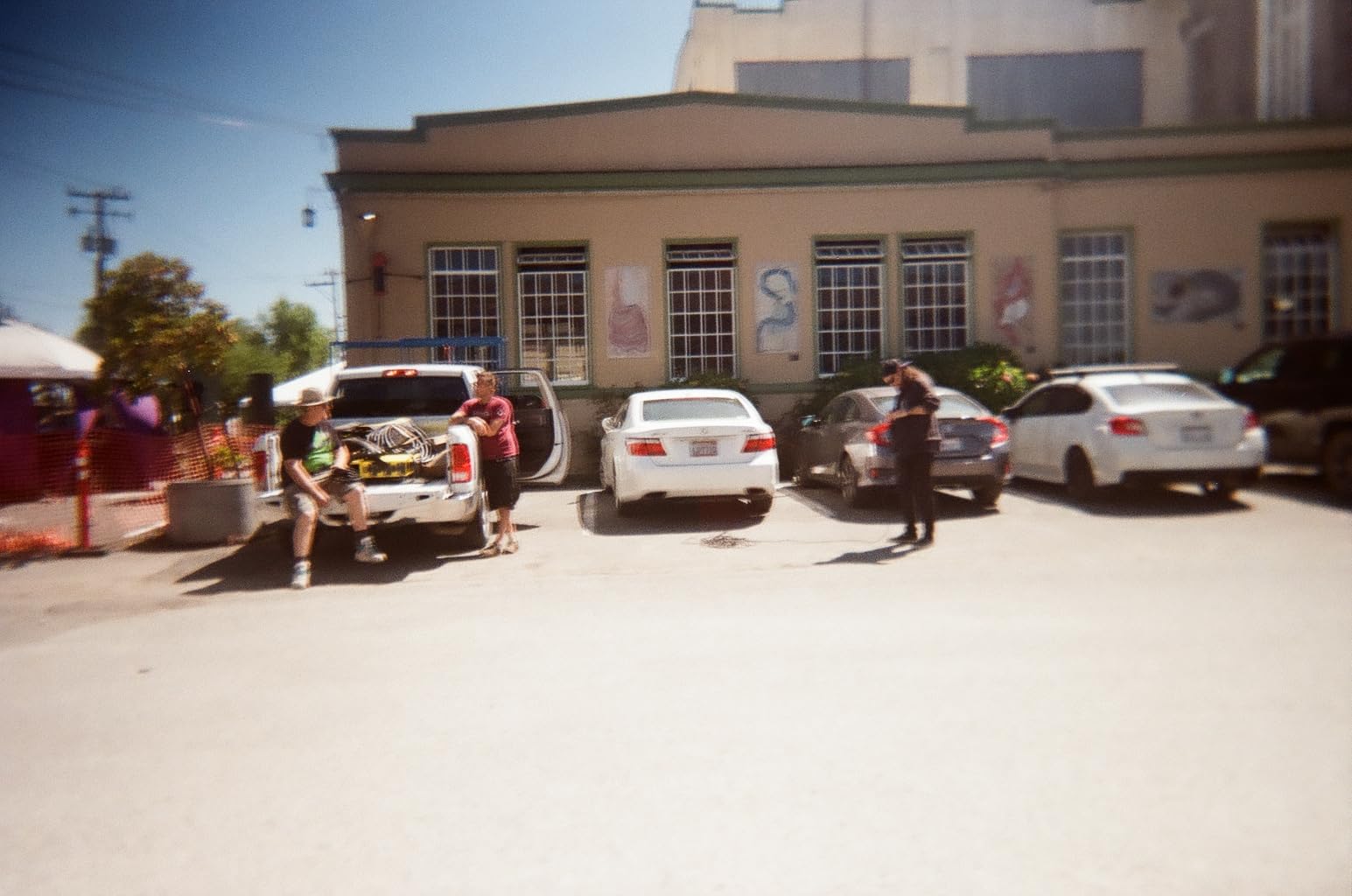
The TBC is the only camera here you can see the mechanism through. The body is transparent, so as you wind the film and fire the shutter you can watch the frame advance. For a first-time film user, that is a genuine teaching device rather than a gimmick.
Operationally it is a straightforward reusable automatic compact: 28mm f/8 wide lens, 1/120 second shutter, built-in flash and a listed ISO range of 200 to 1600. Shooting modes listed are automatic and a sports-like setting.
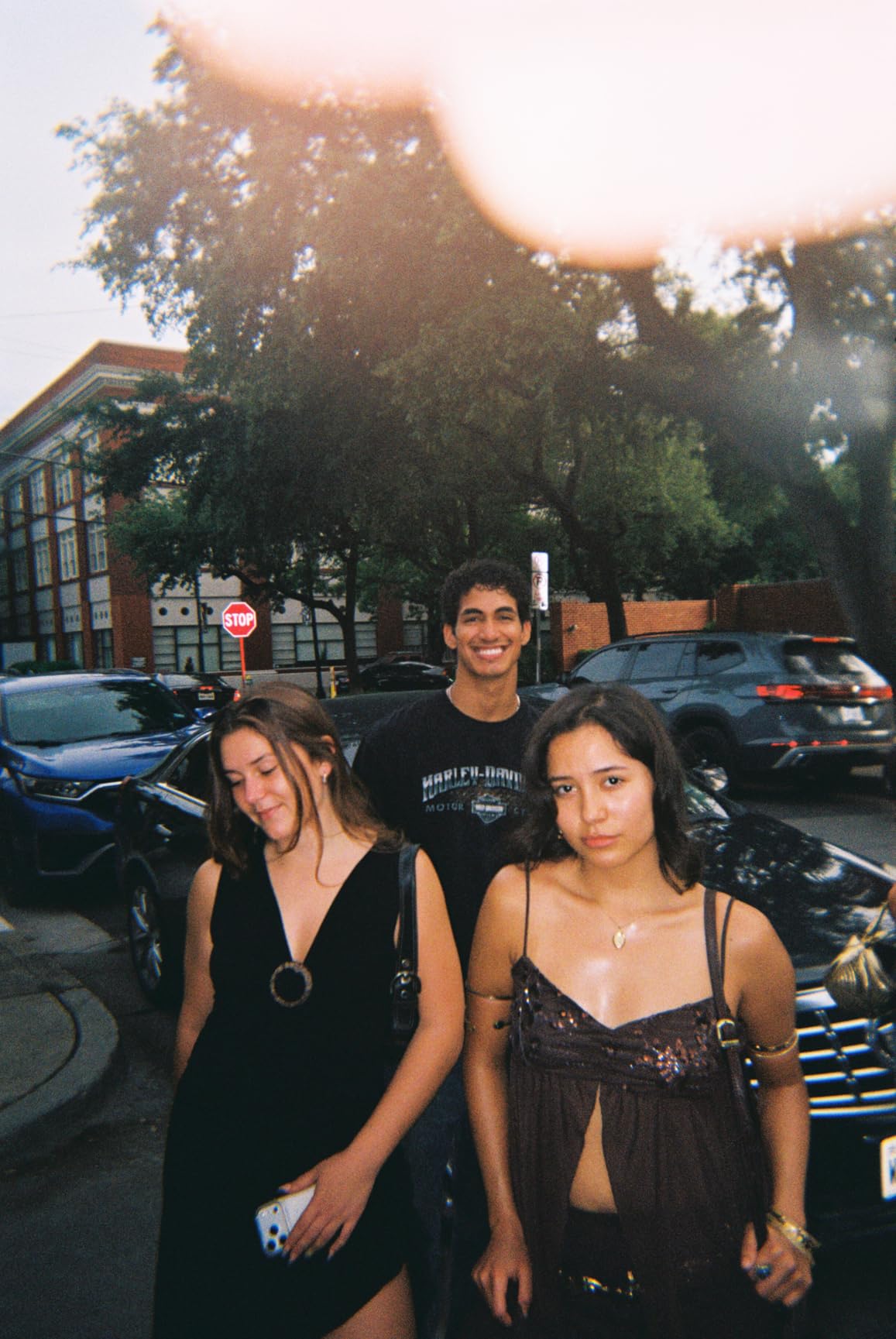
It includes a carabiner attachment for a belt, bag or keychain, and it comes in designed gift packaging. If you are buying this for someone else, those two details remove most of the friction of giving a film camera as a present.
It accepts any standard 35mm film, and the 28mm focal length gives a useful field of view for landscapes, street scenes and group photos. At 0.31 kg it is the heaviest of the plastic compacts here.
Who this camera suits
It suits a complete beginner who is curious about how film actually works, and it suits anyone buying a first film camera as a gift. Owners praise the design, the build feel and the travel convenience.
Reviewers also note the flash performs surprisingly well for a body in this class, which is worth knowing if your subjects are indoors.
Where it will frustrate you
With only 25 ratings averaging 4.1, the sample is thin, so long-term reliability is less proven than the other bodies here. That is the honest caveat on this pick.
The rewind release button is delicate and easy to trigger by accident, which can fog a finished roll. Shoot at 400 or 800 speed film for the best results; owners report weaker performance at 200.
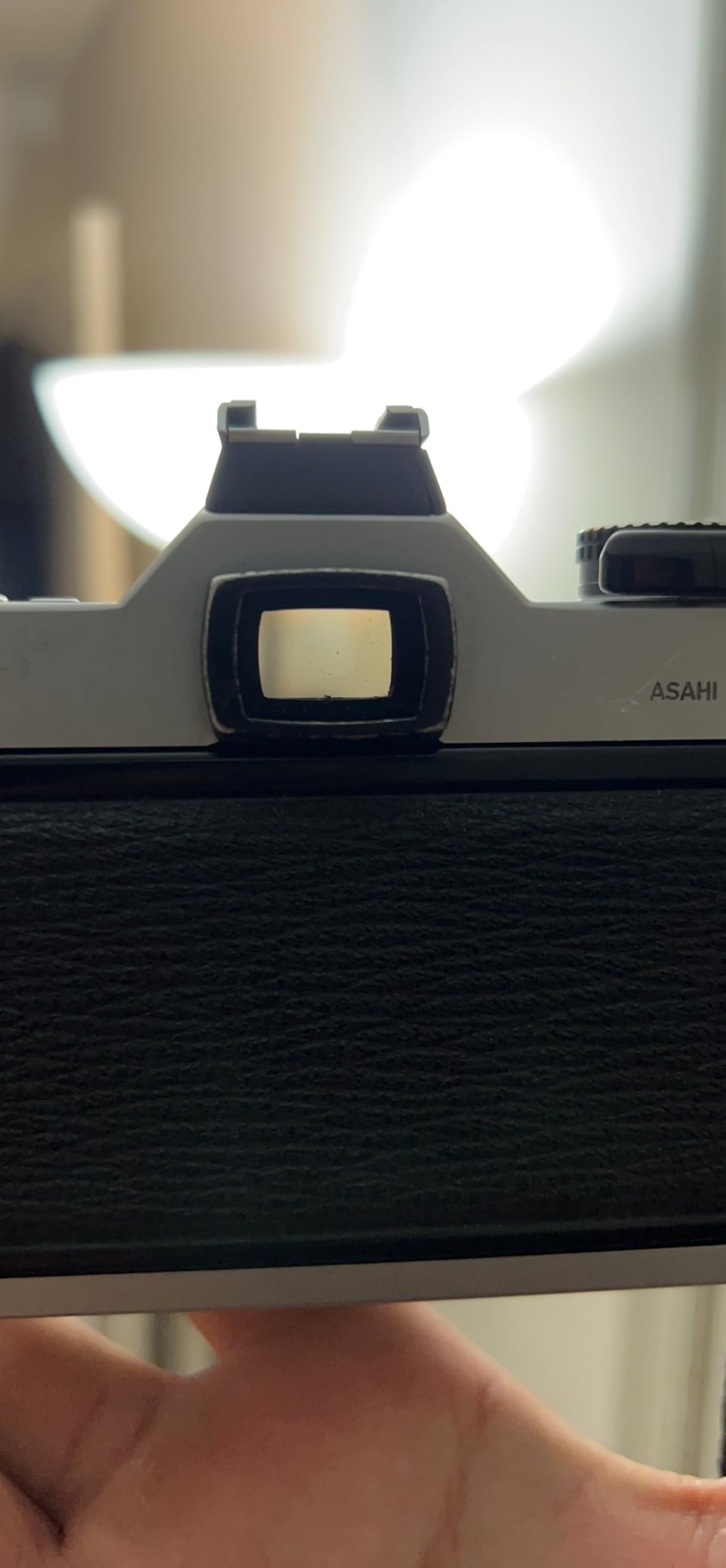
12. Pentax K1000 With 50mm f/2 – Manual Control From Frame One
Pentax K1000 Manual Focus SLR Film Camera with Pentax 50mm Lens (Renewed)
Fully manual exposure
Always-on centre-weighted light meter
50mm f/2 prime
Pentax K mount
Pros
- Fully manual and battery-free operation for learning exposure fundamentals
- Included 50mm f/2 prime is fast enough for low light and events
- Always-on centre-weighted light meter simplifies manual exposure
- Pentax K mount opens a wide range of manual-focus lenses
- Compact unisex body with timeless styling
Cons
- Manual focus only which is the steepest learning curve in the roundup
- Renewed condition varies with a 90-day limited warranty
- No built-in flash so night work needs a separate flash
- Smallest review base here at 29 ratings
The K1000 is the camera people argue about, and the argument is mostly about whether a beginner should be handed full manual control on day one. If your answer is yes, this is the body, and the 50mm f/2 prime it ships with is one of the best reasons to own it.
Exposure is entirely manual. You set the aperture, you set the shutter speed and you set the focus. The only electronic assistance is an always-on, centre-weighted light meter that runs on a single LR44 cell and tells you when your settings match the light.
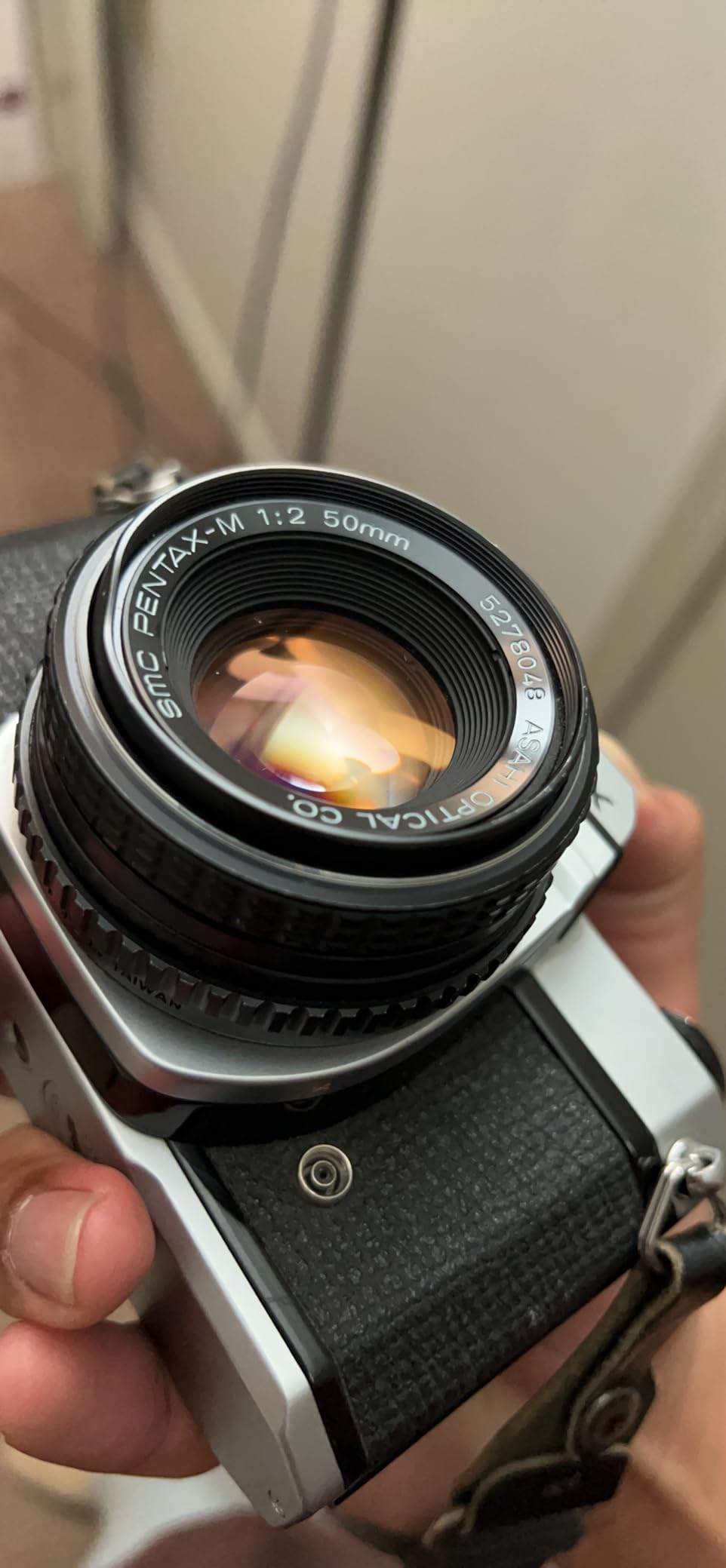
Shutter speeds run from 30 seconds down to 1/1000 second with a flash sync of 1/60 second. The construction is all-mechanical, so the shutter fires whether or not the battery works, and the skill level is listed as novice.
The 50mm f/2 prime has six elements in six groups and is genuinely fast. On a dim evening it will still produce a usable negative, which is more than any plastic compact in this list can promise.
Who this camera suits
It suits someone whose specific goal is learning how exposure works. Forum consensus across photography communities repeatedly names the Pentax K1000 as a classic first SLR, and the reasoning is consistent: nothing is hidden from you, and the Pentax K mount means a second lens is easy and cheap later.
Across 29 ratings averaging 4.1, with 71% five stars, owners who already know film rate it highly as a learning body. The reviews that are less satisfied concentrate on renewed-condition variability and the manual-focus curve.
Where it will frustrate you
Manual focus only, at 1.7 pounds, is the steepest learning curve of anything here. Expect your first two rolls to be about technique rather than photographs, and shoot in good light while you learn.
There is no built-in flash, so any evening event needs a separate flash unit. And as a renewed example with a 90-day warranty and the smallest review base in the roundup at 29 ratings, you are accepting more uncertainty than with the compacts.
Point and Shoot or SLR: Which Camera Type Fits How You Learn
The single most useful question is not which camera is best but which camera keeps you shooting. Forum advice converges on a simple principle: you learn to drive in a small car, not a supercar. Match the body to your current skill, not to your ambition.
Choose a point-and-shoot compact such as the Ektar H35, the RETO Ultra Wide and Slim, or the 1 Shot half-frame if you want zero exposure decisions, half-frame economy, and pictures that are wrong in interesting ways. You will shoot far more rolls, and more rolls is how you learn anything.
Choose an autofocus SLR such as the Rebel 2000 or the EOS Rebel G if you already shoot digital and want the film aesthetic without relearning focus. These bodies meter, focus and advance the film for you, and the zoom gives you framing freedom from day one.
Choose a manual SLR such as the Canon AE-1 or the Pentax K1000 if the point is to understand light. Both have a real meter, and both lead into a lens system where a second lens costs far less than a second body.
New Retail Film Camera or Used Mechanical SLR in 2026?
New retail reusable film cameras are plastic compacts with fixed lenses and one automatic setting. You get a known condition, a warranty, and no used-market risk, and the experience is closer to a disposable you can reload than to a camera you operate.
Used mechanical SLRs are the opposite trade. A 1970s or 1980s body gives you through-the-lens metering, interchangeable lenses and shutter speeds you control, but the condition is whatever the previous owner left behind. Light seals, corrosion and a tired shutter are the normal risks.
For most beginners the honest split is this: buy new if your budget is tight and your priority is volume, or buy used if you have a specific reason to want a real camera system. Our beginner buying guide for entry-level cameras covers the same new-versus-refurbished question in a different category.
What Film to Load in Your First Camera
Start with a 400-speed colour negative, usually Kodak Gold or an equivalent store brand. It forgives the most mistakes, develops cleanly, and the negatives are easy to scan.
Use 200-speed film such as Portra 200 in bright daylight. The grain is finer, the colour is beautiful, and the images scan extremely well, but the latitude is narrower so you need to expose accurately.
Shoot 400-speed film indoors or in overcast light, and push to 800 or 1600 when the light drops further. Shoot black and white such as Ilford HP5 when you want cheap practice: developing and scanning black and white costs less, and a mistake costs less.
For the fixed-lens compacts in this roundup, exposure control is not yours, so film speed matters mainly for the flash. The Ektar H35, the 1 Shot and the TBC all perform best on 400-speed film, and the TBC in particular looks weak at 200.
What Film Photography Really Costs Per Roll
Film is not the expensive part. A 35mm colour negative costs a modest amount per roll, but development plus scanning adds roughly as much again, and prints add more on top. Budget for the processing, not the box.
The half-frame format is where the saving becomes structural. Because an 18×24 negative uses less film per frame, a 36-exposure roll yields roughly 72 half-frame images. Load a 400-speed half-frame body and your practice cost per picture drops by about half.
Development cost also depends on format. 35mm black and white is the cheapest per roll to process, standard 35mm colour sits above that, and 120 medium format costs more because each roll yields fewer, larger frames. Scanning generally costs a flat fee per roll regardless of frame count, so half-frame is the cheapest way to get a scannable image.
Plan on a simple rule: film plus processing plus scans, per roll, is the number that decides how often you can practise. Buy the body that lets you shoot the most rolls, and the economics take care of themselves.
How to Inspect a Used Film Camera Before You Buy
Buying used online is the scariest part of starting out, and the fear is well founded. A seven-point check before payment removes most of the risk.
First, look at the battery compartment. White powder, green crust or a sticky residue means leakage has already happened, and that corrosion often spreads to the shutter and contacts. Walk away.
Second, ask for a photo of the film door open against a light source. Look for light seeping around the foam seals. Leaky light seals produce pale, hazy edges and are a common, fixable problem, but they signal a body that has sat unused for years.
Third, check the lens front and rear elements in good light for haze, separation or fungus. Internal haze is the single most common reason a cheap body is cheap.
Fourth, run the film advance to the end and watch the frame counter. For manual bodies, confirm the rewind crank turns freely and the tension releases. Sticking advance levers and jammed rewinders generate a whole roll of unusable frames.
Fifth, for an SLR, fire the shutter at several speeds and listen. A consistent mechanical sound is fine; a stutter or a drag at one specific speed points to a shutter fault worth walking away from.
Sixth, on a metered camera, test the meter. Compare the reading in bright light and in shade against a phone app. A meter that is wildly off is fixable with a cell, but an entire sensor that has failed usually is not.
Seventh, check the return policy and the warranty length before you commit. Renewed listings in this roundup carry 90-day limited warranties, which is thin, so use that window to put a test roll through the camera and confirm the frames come back.
Frequently Asked Questions
What is the best film camera for beginners?
The best film camera for a beginner is a simple, light 35mm body with a working light meter and either a fixed 35mm lens or a single 50mm prime. The KODAK Ektar H35 is the easiest starting point because it is fully automatic, and the Canon AE-1 with a 50mm f/1.8 is the best choice for someone who wants to learn exposure. Note that if you meant a filming camera for video, that is a different question answered below.
Is 200 or 400 film better for beginners?
400-speed film is the safer all-rounder: it forgives exposure mistakes, works with flash, and handles overcast light and indoor scenes. 200-speed film such as Portra 200 gives finer grain and better colour, and it is the better choice in bright daylight and for scanning, but it has less tolerance for error. Many beginners shoot both and compare the results.
Should a beginner get a manual or automatic film camera?
Start automatic if your goal is to shoot more and learn by looking at results. Choose a manual SLR such as the Canon AE-1 or Pentax K1000 if your real goal is understanding aperture, shutter speed and light. Most people get the most from a metered automatic body first and a manual body second, once the habit is established.
How much does film photography cost per roll?
The film itself is the smaller half of the cost. Add development, scanning and printing and a developed 35mm roll typically costs several times the price of the film box. Half-frame bodies cut this substantially because a 36-exposure roll yields roughly 72 images, and black and white is the cheapest format to process.
Which camera is best for filmmaking for beginners?
A film camera for video is a different category entirely, and none of the 35mm stills cameras in this roundup record motion picture footage. For motion picture film photography, a Super 8 or 16mm camera is the affordable entry point, and for video a current digital body is a far more practical beginner choice than any analogue motion picture camera.
Do film cameras need batteries?
Mechanical SLRs with manual exposure do not, because the shutter is driven by the winding mechanism rather than electronics. A camera with a light meter needs one or two cells, and the meter stops working when they die, though the shutter usually still fires. New plastic compacts need batteries for their flash and often for nothing else.
How do I know if a used film camera works?
Check the battery compartment for corrosion, look for light leaking around the film door seals, inspect the lens elements for haze or fungus, run the film advance to the end and confirm the frame counter moves, and fire the shutter at several speeds listening for a consistent sound. Buying from a seller with a return window and shooting a test roll is the final check.
The Right First Film Camera for Your Kind of Shooter
If you want the least friction and the most pictures, buy the KODAK Ektar H35. Half-frame gives you roughly 72 exposures from one roll, the body is 100 g, and the only thing you can get wrong is nothing.
If you want a proper camera system and you are willing to read a meter needle, buy the Canon AE-1 with its 50mm f/1.8. If you want to learn with no electronic help at all, the Pentax K1000 is the honest choice, and it is the one most recommended across photography forums for exactly that reason.
If you shoot digital already and just want the film look, the Canon Rebel 2000 gives you autofocus, a zoom and automatic film transport without changing how you work. Whichever one you choose, buy film and a development plan in the same week, load it, and shoot badly. That is the whole method.
These are the best film cameras for beginners in 2026 because they are the ones that get used, not the ones that sit on a shelf. Pick the camera that fits how you learn, and the rest takes care of itself.