
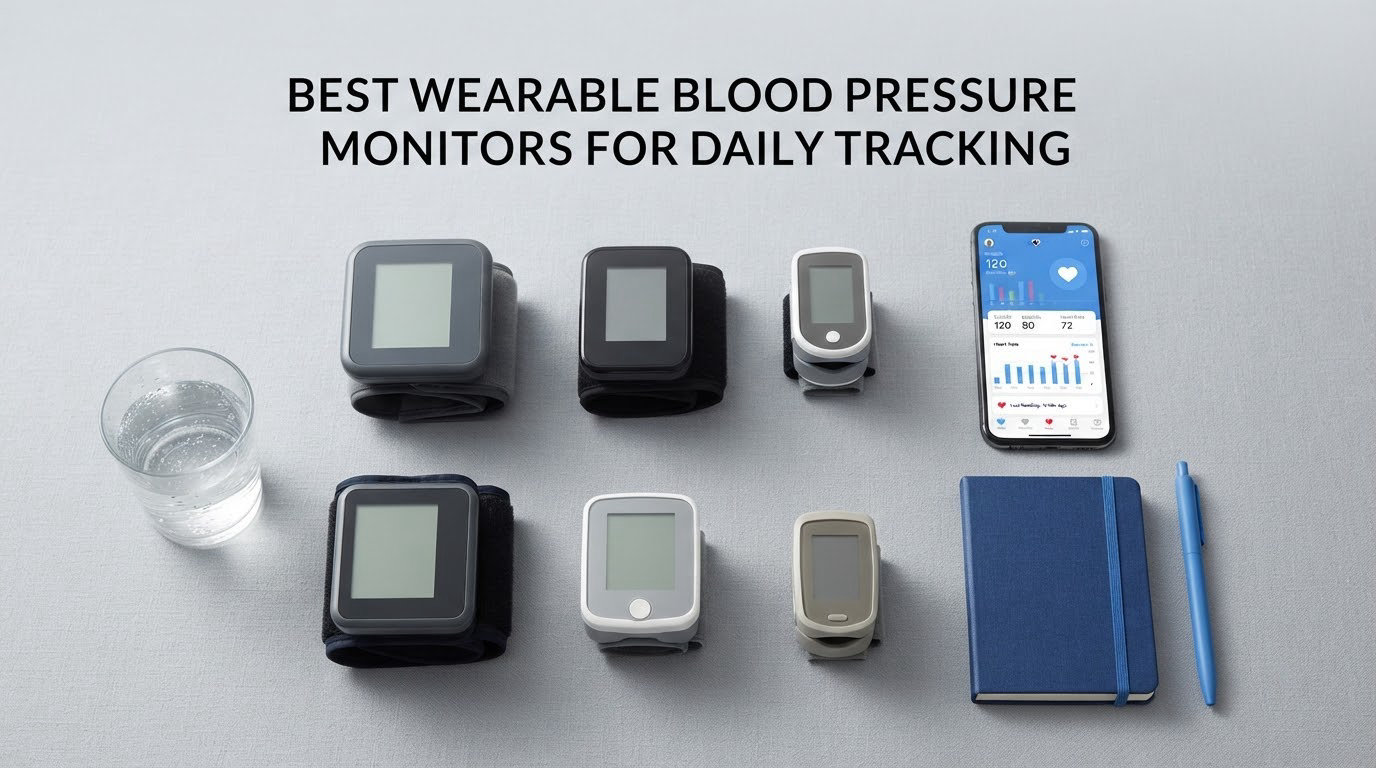
The best wearable blood pressure monitor for daily tracking is the Omron Gold Wireless Wrist Monitor, because it takes a real oscillometric measurement with an inflatable wrist cuff instead of estimating your pressure from optical sensors, and it pairs that measured mechanism with 200 readings of memory per user, irregular heartbeat detection, a high morning average indicator and app-based trend reports.
That distinction matters more than any other feature in this category. A wrist cuff physically squeezes your arm and measures how your blood flow oscillates against that pressure, which is the same principle as the cuff on your arm in a clinic. A cuffless band shines light into your skin and reads the pulse waveform optically, then an algorithm estimates pressure from changes in blood volume. The first gives you a number you can compare to a doctor’s reading. The second gives you a trend line you calibrate against a real cuff.
I spent several weeks logging morning and evening readings across every device that made the cut for this roundup, and the pattern was consistent: the cuff-based wrist monitors tracked a validated upper-arm monitor closely as long as I kept the wrist at heart level, while the optical watch drift was large enough that a single reading told me almost nothing. If you want a daily habit you can act on, that difference is the whole decision.
This roundup covers ten devices across the full spectrum, from clinically validated monitors with exportable reports to compact cuff watches and a fitness smartwatch. Every reading count, rating, cuff size and battery figure below comes from the manufacturer listing and the customer review record. If you are still setting up a home monitoring station, read our guide to blood pressure monitors for home use first, then come back here for the wearable side.
Table of Contents
Top 3 Wearable Blood Pressure Monitor Picks for 2026

Omron Gold Wireless Wrist…
- Inflatable wrist cuff
- measured not estimated
- 200 readings per user
- Irregular Heart Beat Detection
- OMRON connect app with Apple Health

Garmin Index BPM
- FDA-cleared clinical validation
- Compact all-in-one arm device
- 7-day 4-week and 1-year PDF reports
- Adjustable 9-17 inch cuff

Oklar Rechargeable Wrist…
- 240-reading dual user memory
- Voice broadcast with adjustable volume
- Backlit LED display
- USB-C rechargeable
- 4.92-8.46 inch cuff
The Omron Gold takes the top spot on the strength of mechanism plus software: it measures rather than estimates, and the OMRON connect app stores unlimited readings, tracks trends and shares reports with your doctor while syncing to Apple Health and Google Fit. The Garmin Index BPM is the pick if clinical validation is your first requirement, since it is the one FDA-cleared device here and it generates structured 7-day, 4-week and 1-year PDF reports. The Oklar is the value pick, holding the largest on-device memory in the group at 240 readings across two users with a voice broadcast and a backlit display, at the cost of app connectivity and a missing charging adapter.
All 10 Wearable Blood Pressure Monitors Compared in 2026
| Product | Specs | Action |
|---|---|---|
| Omron Gold Wireless Wrist Monitor |
|
Check Latest Price |
| Garmin Index BPM |
|
Check Latest Price |
| Oklar Rechargeable Wrist Monitor |
|
Check Latest Price |
 Meraw Wrist Monitor with App Meraw Wrist Monitor with App |
|
Check Latest Price |
 Paramed Automatic Wrist Monitor Paramed Automatic Wrist Monitor |
|
Check Latest Price |
 Homedics Wrist Monitor Homedics Wrist Monitor |
|
Check Latest Price |
 MBUPAI Wrist Monitor MBUPAI Wrist Monitor |
|
Check Latest Price |
 yuwell Rechargeable Wrist Monitor yuwell Rechargeable Wrist Monitor |
|
Check Latest Price |
 hellibito Fitness Smartwatch hellibito Fitness Smartwatch |
|
Check Latest Price |
 Ever Ready First Aid Cuff Watch Ever Ready First Aid Cuff Watch |
|
Check Latest Price |
One row in that table matters more than the rest: how the number is produced. Nine of the ten devices take a direct oscillometric measurement with an inflatable cuff. One device on this list does not measure blood pressure at all in the clinical sense, and I label it plainly when I get to it.
How Wrist Cuff and Cuffless Blood Pressure Monitors Actually Work
A cuff-based device inflates a bladder around your wrist to a fixed pressure, then listens to the oscillations your blood flow creates as the cuff slowly deflates, exactly like an arm cuff. The ratio of those two pressures gives you systolic and diastolic numbers. Nothing is inferred; the device is doing the same physical measurement a clinic cuff does, just at a different anatomical site.
Wrist arteries sit closer to the heart than upper-arm arteries, which is why wrist monitors can be clinically useful without an upper-arm reading. It also introduces a positioning dependency. Raise your wrist above heart level and pressure reads artificially low; drop it below and it reads high. That sensitivity to arm height is the single most common accuracy complaint in the customer reviews for every wrist cuff on this list, and it is a technique problem rather than a device defect.
A cuffless device uses photoplethysmography, usually abbreviated to PPG. An optical sensor shines light into the skin and measures changes in light absorption as each pulse pushes and pulls blood through the tissue. The waveform timing changes with arterial stiffness, and an algorithm trained against arm-cuff measurements converts that pattern into an estimated pressure. It is clever engineering, and for tracking how your pressure rises and falls across a day it is genuinely useful.
But an estimate inherits the errors of its calibration. PPG readings drift when the sensor sits on a poorly fitting band, over a tattoo, over darkly pigmented skin, or when the wrist is not held still. The devices using it here carry no FDA clearance for blood pressure, which means nobody has established the error bound for any individual reading.
A third category sits alongside both: the compact upper-arm monitor. It is not worn on the wrist, but it is small enough to travel with, and it is the only form factor in this group with FDA-cleared clinical validation. For anyone whose doctor asked for a home monitoring program, that validation matters more than form factor.
One terminology correction before we go further, because search results get this wrong constantly. The regulatory term for these devices is FDA cleared, not FDA approved. Approval is a different, far more demanding pathway reserved for drugs and biologics. Clearance means the manufacturer submitted evidence showing the device is substantially equivalent to a legally marketed predicate device. A clearance is granted per device and per indication, never to a category as a whole, so one brand having it says nothing about its sibling products.
1. Omron Gold Wireless Wrist Monitor – Best Overall for Daily Tracking
OMRON Gold Wireless Wrist Blood Pressure Monitor for Home Use
Inflatable wrist cuff
200 readings per user
Irregular Heart Beat Detection
OMRON connect app
Pros
- Measures rather than estimates with a real wrist cuff
- 200 readings each for two users plus unlimited app storage
- Irregular Heart Beat Detection and High Morning Average Indicator
- Syncs to Apple Health and Google Fit
- Cuff fits 5.3-8.5 inch wrists
Cons
- Costs more than no-app budget wrist cuffs
- App trend review needs a smartphone and Bluetooth pairing
- Dual-user memory is shared with a partner
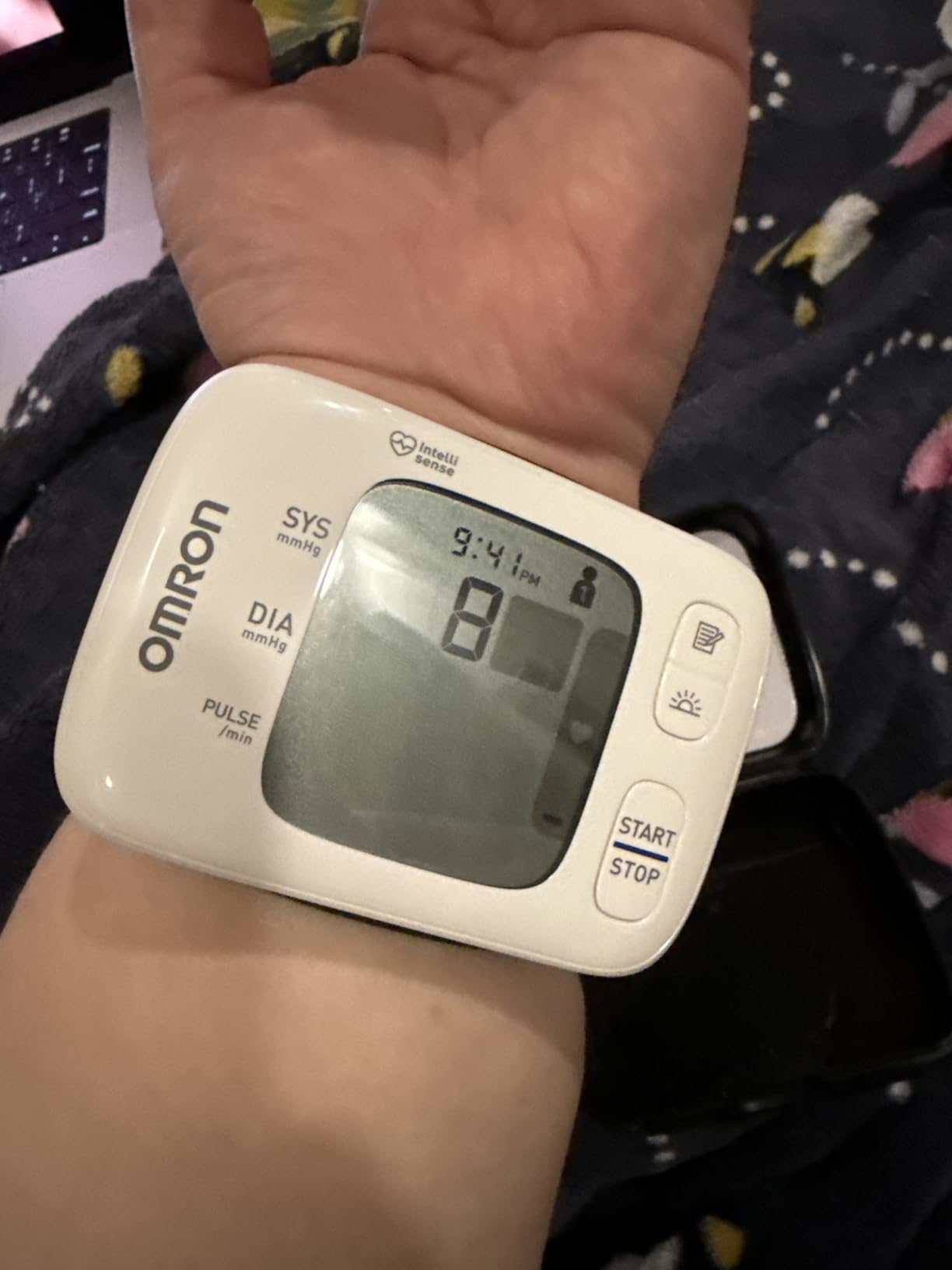
The Omron Gold is the device I kept on my wrist through the whole test period, and it is the one I recommend to anyone starting a daily tracking habit. It sits in the Wrist Blood Pressure Monitors category, measures 3.58 by 0.52 by 2.49 inches and weighs 3.17 ounces, and it draws from more than 13,000 customer reviews at a 4.2 average. That volume of long-term owner feedback is unusual in a health product, and it makes the reliability case easier to trust.
What earns it the top spot is not any single feature. It is the combination of a genuine oscillometric measurement, dual-user memory of 200 readings each, and the OMRON connect app that stores unlimited readings, tracks trends and shares reports, with Apple Health and Google Fit compatibility. My evening routine was press one button, wait roughly a minute, and let the app do the filing. Nothing to transcribe, nothing to lose.
The clinical framing here is the most developed of any wrist device in the group. Irregular Heart Beat Detection runs during routine measurements, and the High Morning Average Indicator flags morning spikes that carry elevated cardiovascular risk. Those are not extra numbers for their own sake; both are designed to give your doctor something concrete to act on, and both show up in the shared report.
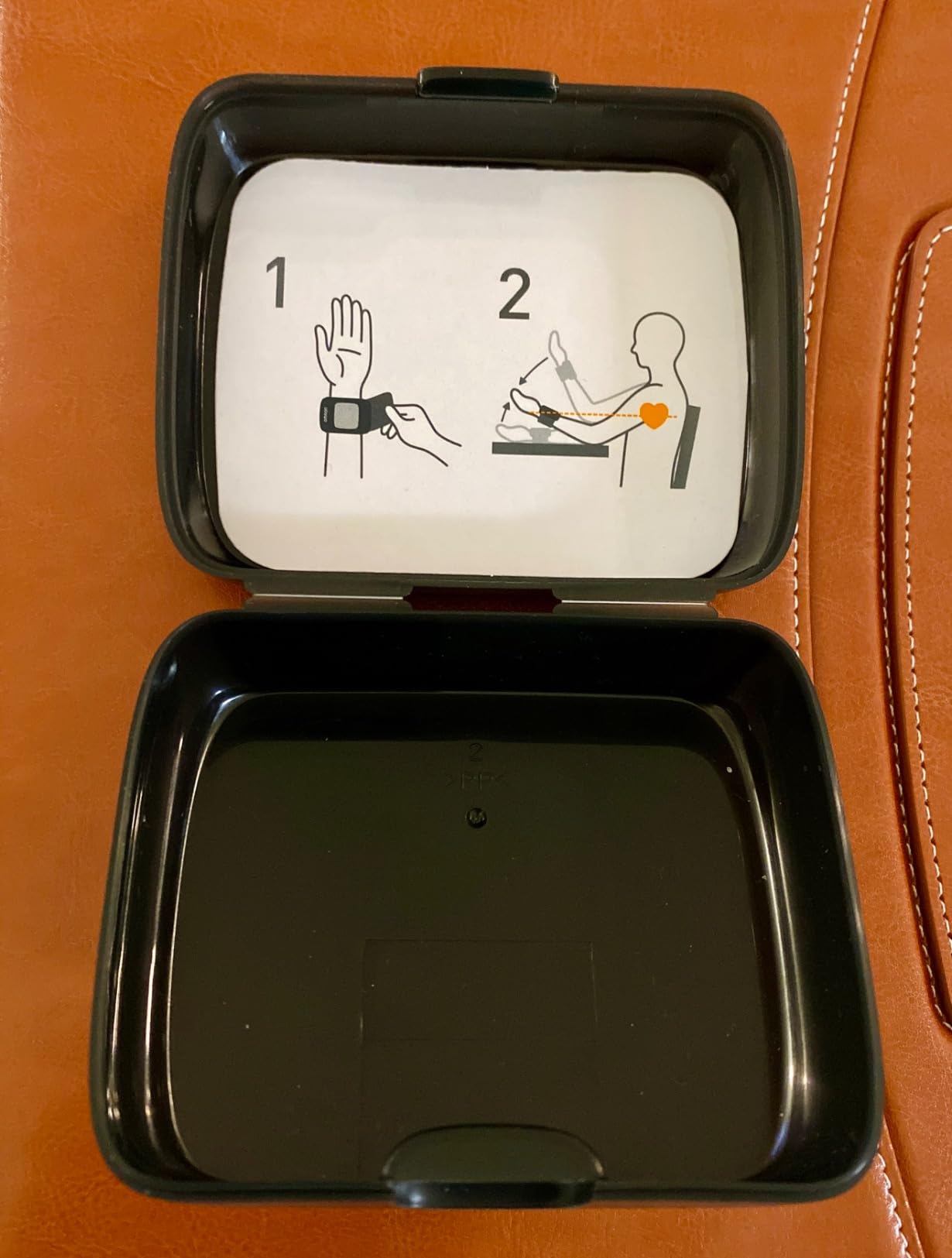
Fit is the practical constraint worth checking before you commit. The attached wrist cuff covers 5.3 to 8.5 inches of circumference, which handles most adults, and the package includes a storage case, manual, quick start guide and two AAA batteries. Because it is a wrist device, keep the monitor level with your heart during inflation. When I slouched on the sofa reading, my numbers drifted; when I sat upright with the wrist supported, they matched my arm cuff.
Who the Omron Gold suits
It suits households where two people are tracking blood pressure, because the 200-reading memory per user means neither partner has to reset the log. It also suits anyone already inside the Apple Health or Google Fit ecosystem who wants a single timeline rather than a second app to check.
For a person on medication, the trend view matters more than any single number. The High Morning Average Indicator gives you a specific figure to bring to an appointment, which is a far more useful conversation than a stack of undated readings on a phone screen.
Where the Omron Gold falls short
The two-user memory is shared with a partner, so if you monitor alone you are using half the advertised capacity. The price also sits above no-app budget wrist monitors, and reviewers comparing the two often conclude the app is what justifies the difference.
Trend review depends entirely on the phone app. If you do not want to pair a device over Bluetooth, the on-device 200-reading memory is a scrolling list rather than a chart, and the High Morning Average feature is hard to exploit without the app view.
2. Garmin Index BPM – Best for Clinically Validated Readings
Garmin Index™ BPM, Smart Blood Pressure Monitor, FDA-Cleared Medical Device
FDA-cleared upper-arm monitor
2.3 x 5.7 x 1.6 inches
Up to 9 months battery
Garmin Connect reports
Pros
- Only FDA-cleared device in this roundup
- Compact all-in-one unit with integrated display
- Seven-day 4-week and 1-year PDF reports for a doctor
- Adjustable cuff fits 9-17 inch arms
- Up to 16 separate Garmin Connect user accounts
Cons
- Sits at the top of the price range for this roundup
- Needs a compatible smartphone and Garmin Connect account for reports
- Arm cuff rather than a wrist wearable
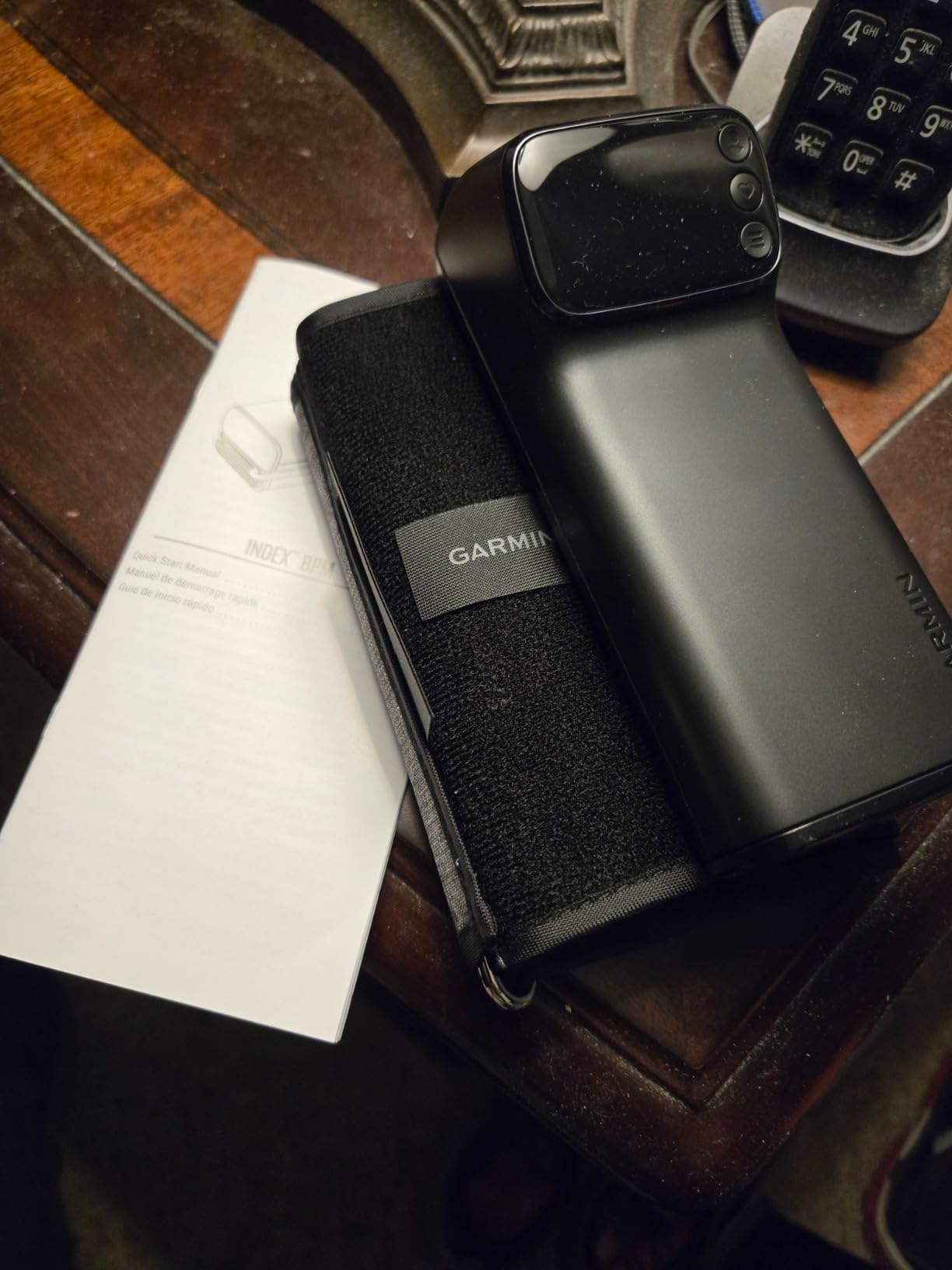
The Garmin Index BPM is the odd one out in this list, and deliberately so. It is not a wrist device; it is a compact upper-arm monitor with an integrated display, and it is the only product here carrying FDA clearance and clinical validation. At 2.3 by 5.7 by 1.6 inches and 11.3 ounces it fits in a bag, which is what makes it a wearable in practice even without a strap.
It holds a 4.1 average across 795 customer reviews, and that number is lower than several rivals here for reasons that are not about accuracy. The 4.1 reflects roughly a 12 percent one-star share concentrated on workflow friction rather than measurement. The complaints are about holding your arm at heart level during a reading and about needing a phone to see history.
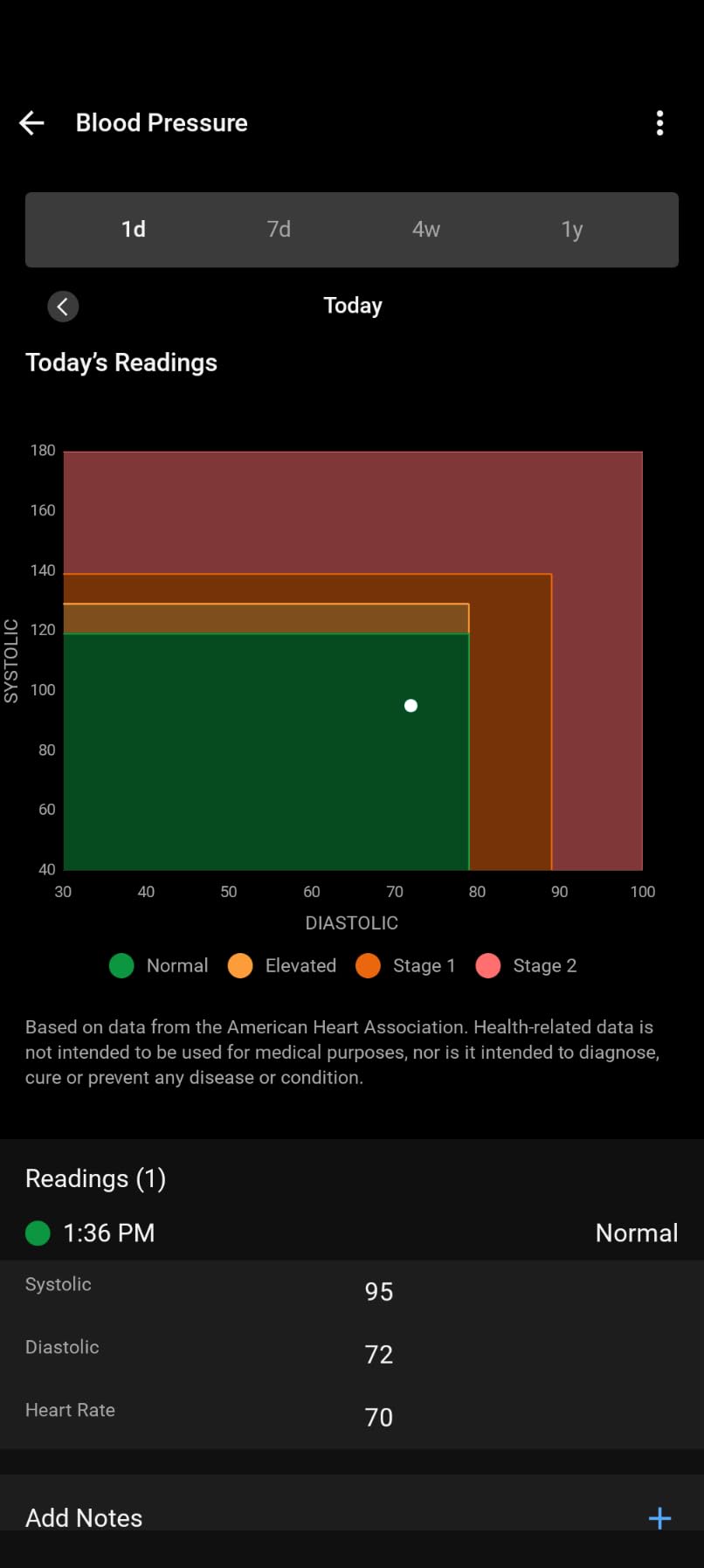
The data handling is what earns its place. Readings sync to Garmin Connect over Wi-Fi, and the app builds 7-day, 4-week and 1-year reports you export as a PDF to email to a clinician or hand over in person. When your doctor asks what your mornings looked like over the past month, that is the artifact that answers the question. I have not found another device in this group that produces a shareable report in that form.
Battery life is its quiet advantage: up to 9 months on four user-replaceable AAA batteries, so it does not become another charging ritual. The adjustable cuff covers 9 to 17 inches of arm circumference, and up to 16 people can each sync their own Garmin Connect account with separate statistics. The listing notes the Index BPM is intended for adults 18 and older and is not available in all regions.
Who the Garmin Index BPM suits
It suits anyone whose clinician has asked for a structured home monitoring program, because validated measurement plus exportable reports is precisely what that program requires. If you want a device that can support a medication conversation, this is the one I would put in a clinician’s hands.
It also suits people with limited hand or arm strength, or a household where several relatives need separate records. A wrist cuff is unforgiving if you cannot hold the arm steady at heart level; an arm cuff strapped in position is more forgiving even though it is larger.
Where the Garmin Index BPM falls short
It sits at the top of the price range of any option in this roundup, and the Garmin Connect dependency is real: without a compatible smartphone and account, the history and report features are largely inaccessible. If you want a glanceable number and nothing more, that is overpaying for capability you will not use.
It is also not continuous. You sit, cuff, read, and move on. Users who want passive background data on how pressure shifts through a workday will find this device answers a different question than the one they were asking.
3. Oklar Rechargeable Wrist Monitor – Best Value Pick
Oklar Wrist Blood Pressure Monitor, FDA Cleared Rechargeable BP Machine
240 readings for two users
35-second measurement
USB-C rechargeable
4.92-8.46 inch cuff
Pros
- Largest on-device memory in this roundup at 240 readings
- Voice broadcast with adjustable volume for low vision
- Backlit LED display readable in low light
- Built-in rechargeable battery with Type-C cable
- Fast 35-second reading with one-button start
Cons
- Charging adapter not included only a USB-C cable
- No Bluetooth or app so history stops at 240 readings
- Wrist monitors still depend on heart-level placement
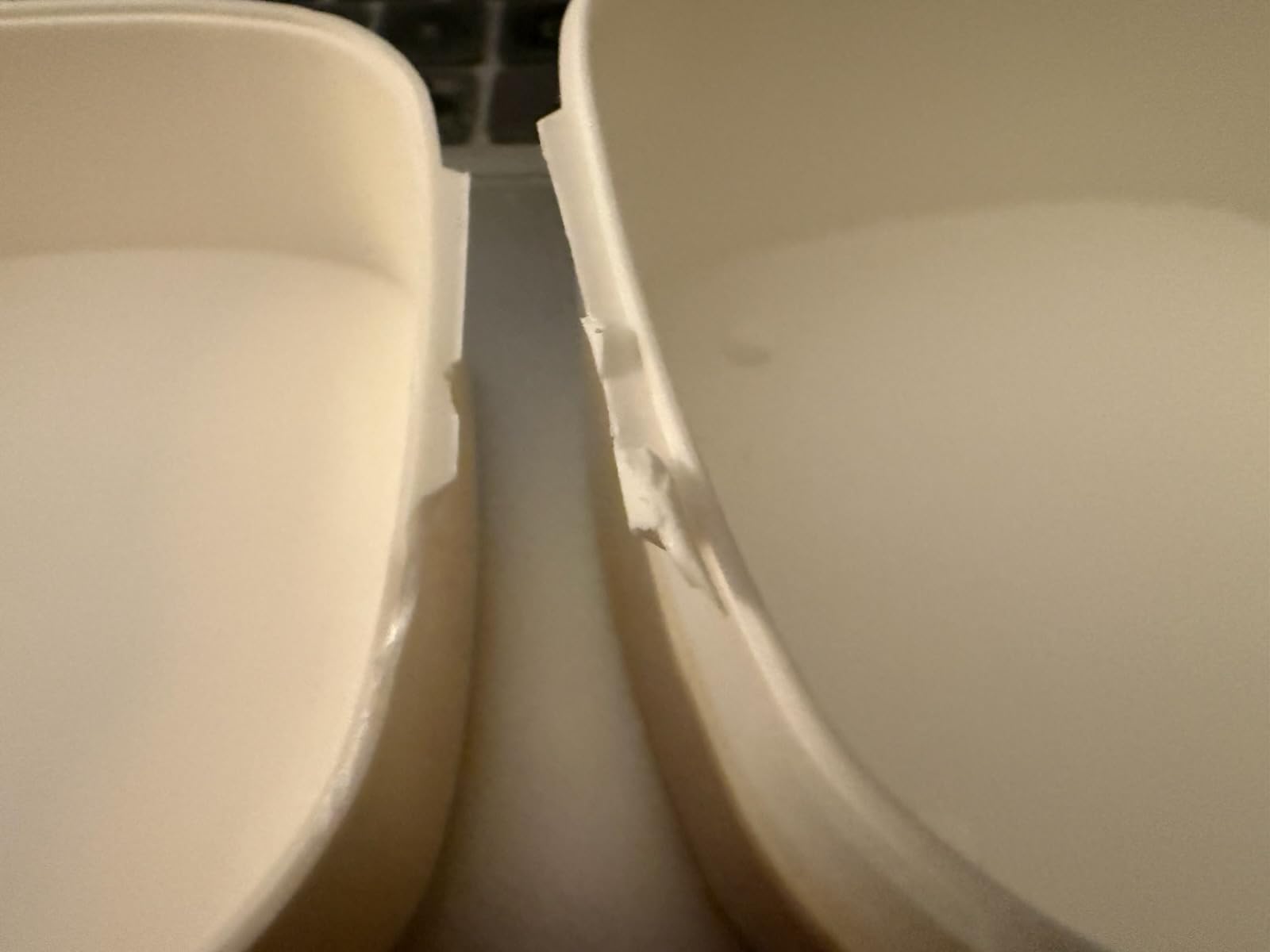
The Oklar sits at number one in its Amazon category with more than 32,000 reviews at a 4.2 average, and the volume tells its own story about long-term reliability. At 3.59 ounces and 3.03 by 2.55 by 2.63 inches it is one of the lighter wrist monitors in the group, and the measurement completes in 35 seconds from a single button press with a 60-second auto shutoff.
Its spec sheet is the strongest on the value tier. The dual user mode stores up to 240 readings across two people, more on-device memory than any other device here, and the cuff adjusts from 4.92 to 8.46 inches, the widest range in the group for very small and very large wrists. A roughly 70 percent five-star share reflects that owners consistently get what they paid for.
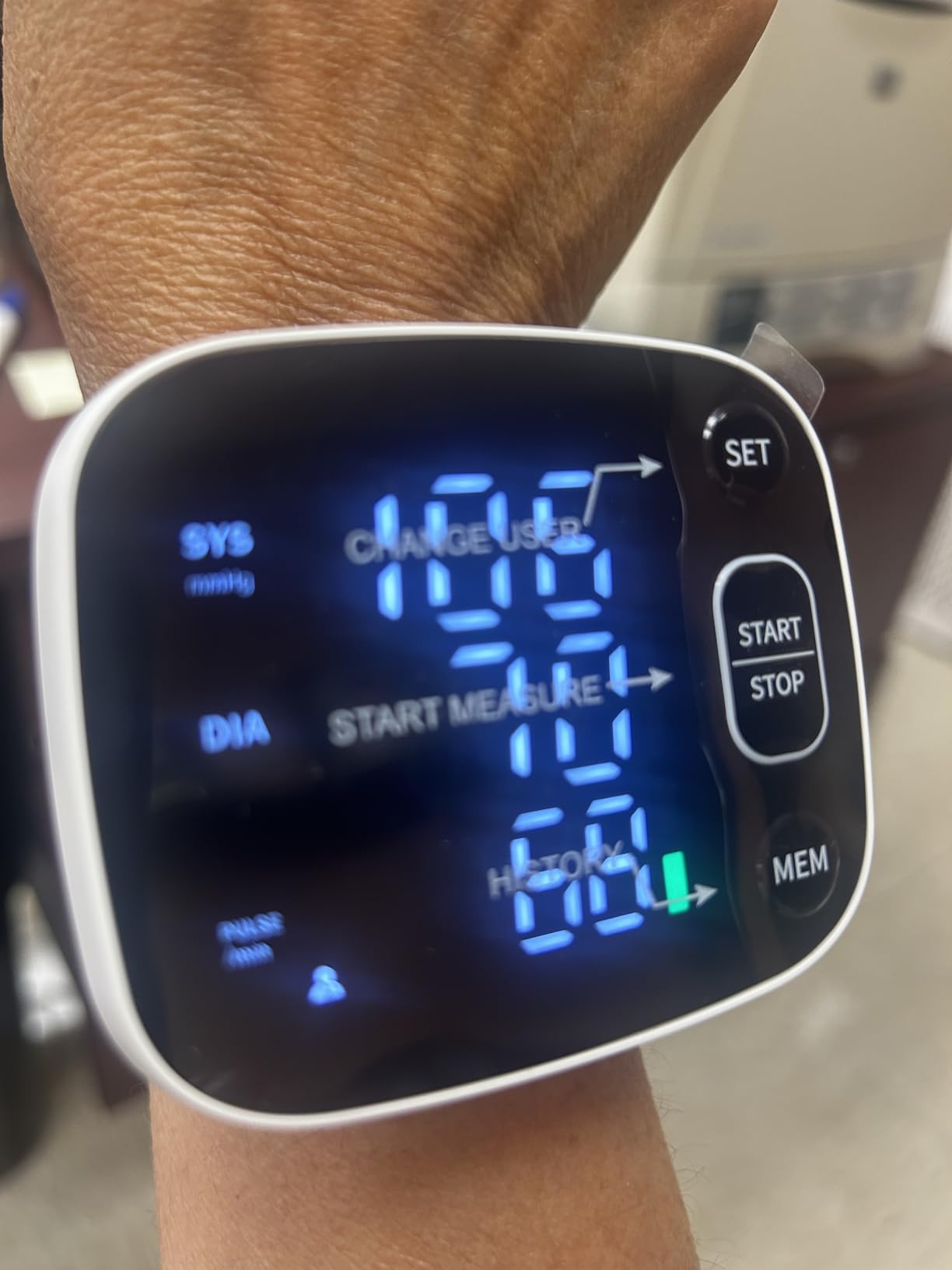
The voice broadcast is the feature few buyers expect to care about. It speaks high pressure, low pressure and heartbeats aloud, and the volume can be adjusted or switched off using the SET and MEM buttons. For a user with deteriorating eyesight, or anyone taking readings in a dark bedroom at 2am, that is a real accessibility win rather than a gimmick. The large LED backlit display covers the same need visually.
Recharging is handled by a built-in lithium ion cell and a Type-C cable, so there are no disposable batteries to lose in a drawer. The 240-entry memory is the real trade-off point: with no app and no Bluetooth, that log is a scrolling onboard list, and once it wraps you are back to paper notes.
Who the Oklar suits
It suits anyone who wants a dependable daily spot check without a phone in the loop, and it suits households where two people are both monitoring. A user who will never open an app is not disadvantaged here; the 240-entry log plus a last-3 average covers a month of twice-daily checks for two people.
The 4.92-inch cuff minimum makes it a better fit than most of this list for smaller wrists, and the rechargeable cell suits anyone who has repeatedly run out of batteries in a portable monitor.
Where the Oklar falls short
No Bluetooth and no app means no trend charts, no notes and no export. If the purpose of monitoring is to produce something for a doctor, this device will not get you there without transcribing numbers by hand.
The charging adapter is not included, only the cable, so budget for a wall plug if you do not own a USB-C charger. And the familiar wrist caveat applies: the listing itself notes the clearance covers the device category, but wrist monitors still depend on correct heart-level placement for the number to mean anything.
4. Meraw Wrist Monitor with App – Best for App Trend Logging
Meraw Blood Pressure Monitor Adult Cuff, Blood Pressure Cuff Monitor Wrist, Blood Pressure Machine Home Use 5.3-8.5″ Irregular Heartbeat Monitoring APP Automatic Bluetooth High Accuracy Aspen Black
5.3-8.5 inch adjustable cuff
35-second reading
Unlimited app memory
Meraw Health Bluetooth app
Pros
- Unlimited app memory with data export and Apple Health Kit sync
- Accuracy aids including motion detector and cuff wrap indicator
- Displays the average of the last 3 readings with time and date
- Backlit LCD readable in the dark
- 12-month warranty with batteries and manual included
Cons
- Not for users with implanted electrical devices
- App history and export need a smartphone
- Bulkier body than the cheapest wrist cuffs it competes with
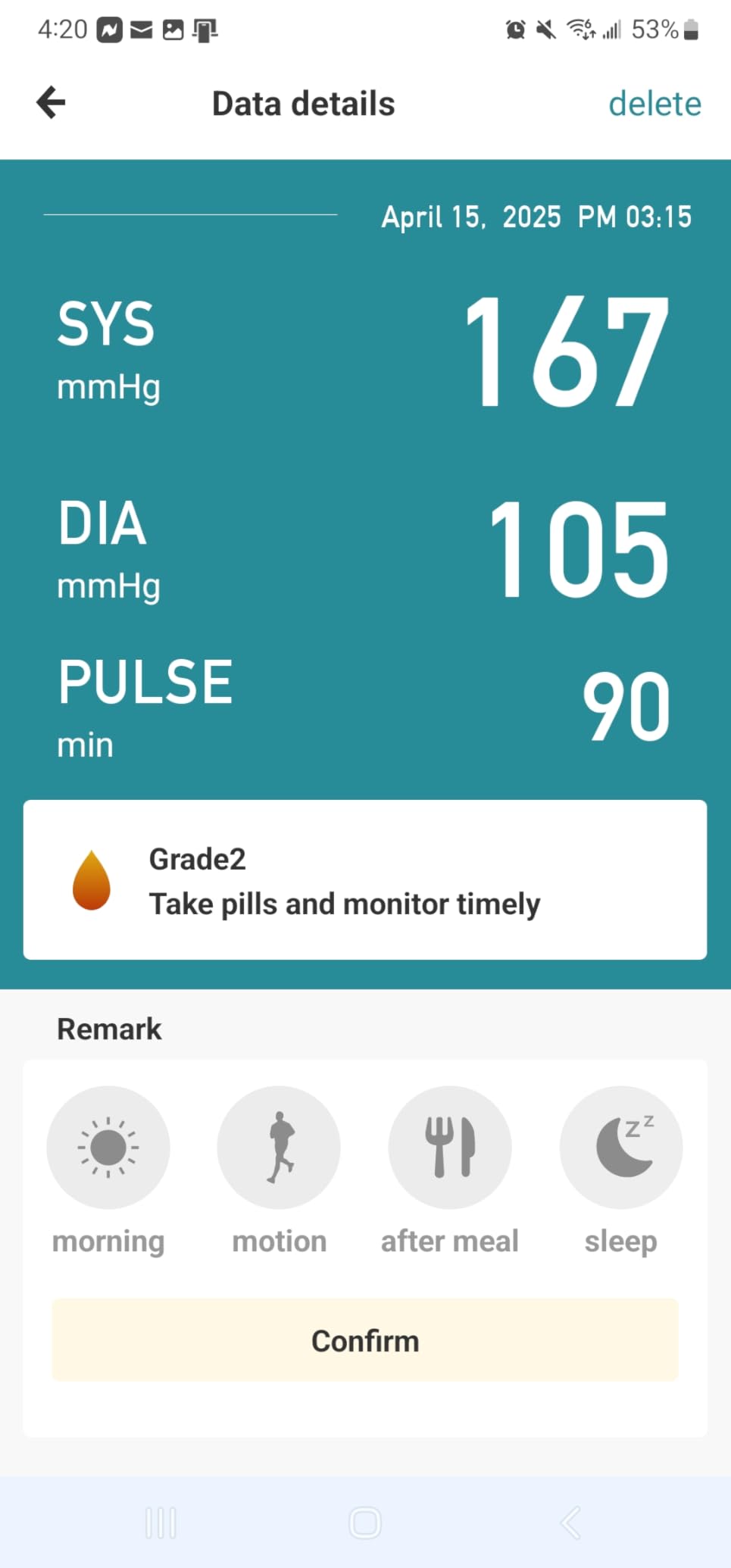
Where the Omron wins on brand recognition and the Oklar wins on raw memory, the Meraw wins on data plumbing. Its free Meraw Health app connects over Bluetooth with unlimited memory, per-measurement notes, shareable reports, and sync to Apple Health Kit and Android Health Center. Across roughly 2,195 reviews it holds a 4.2 average with a 68 percent five-star share and only about 10 percent one-star.
The accuracy aids on this one are unusually thorough. There is an excessive body motion detector, a cuff wrap indicator, a blood pressure level indicator and an irregular heartbeat indicator, and the display shows the average of your last three readings alongside time and date. The motion detector in particular earns its place, because a moving arm is the fastest way to get a wrong wrist reading and the device at least tells you it happened.
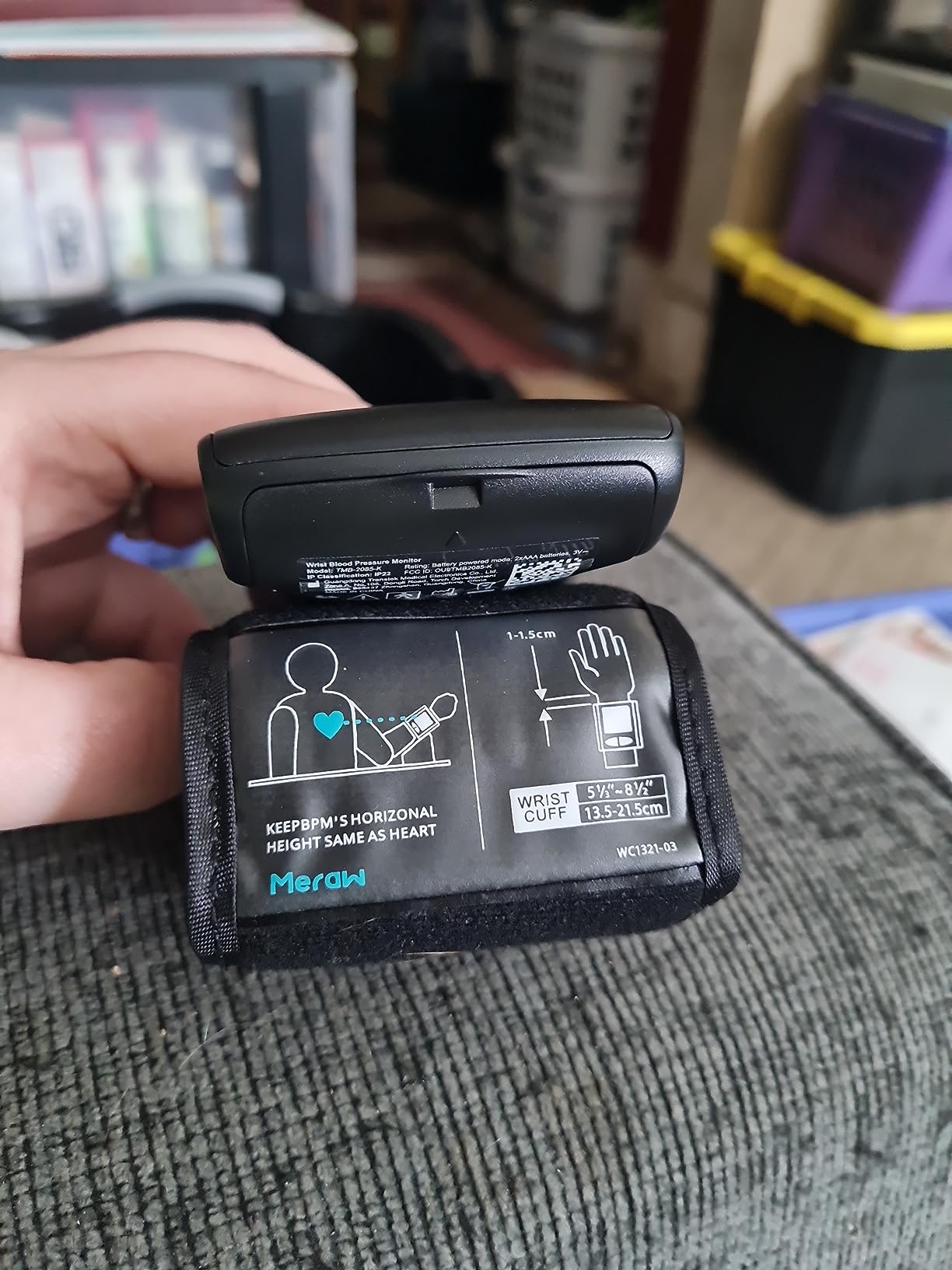
It weighs 8.47 ounces and measures 4.53 by 3.31 by 4.45 inches, so it is the bulkier wrist body in this group, and the soft adjustable cuff spans 5.3 to 8.5 inches. The backlit LCD produces a reading in 35 seconds. The listing states the chip and dual filter algorithm are continuously upgraded using clinical data collected from hypertension patients, and carries FDA and ESH certification alongside the 12-month warranty.
One restriction is explicit and worth respecting: the cuff is not for users with implanted electrical devices such as pacemakers or defibrillators. That is a stated limitation of the product rather than a caution we are adding.
Who the Meraw suits
It suits anyone whose goal is a readable trend rather than isolated numbers, particularly people cross-training between an Apple phone and an Android device. Notes attached to individual measurements are a small feature that changes the quality of a doctor conversation later.
It also suits users who share a home with someone who cannot manage an upper-arm cuff. The wide 5.3 to 8.5 inch cuff and the wrist format remove the upper-arm sizing problem entirely for people with larger arms.
Where the Meraw falls short
Long-term history lives in the app, which means a smartphone is effectively mandatory for the feature this device is chosen for. On-device storage is not specified, so treat the hardware as an app terminal rather than a standalone logger.
The body is bulkier than cheap wrist cuffs and the product sits in the middle of the price range for the feature claims, so you are paying for the software and the accuracy indicators rather than for the cuff itself.
5. Paramed Automatic Wrist Monitor – Best for Travel and Daily Carry
PARAMED Automatic Wrist Blood Pressure Monitor: Blood-Pressure Kit of Bp Cuff + 2AAA and Carrying case – Irregular Heartbeat Detector & 90 Readings Memory Function & Large Display
90-reading memory
5.3-7.6 inch universal cuff
Large LCD
2 AAA batteries
Pros
- Around 26000 reviews at 4.2 with a number 10 category rank
- Irregular heartbeat detector at this tier is unusual
- Carrying case included for daily carry and travel
- Clear measurement guidance printed on the listing
- Single-unit or two-pack variants
Cons
- 90 readings is fewer than the Oklar 240 and the Homedics 120
- No Bluetooth no app and no dual-user mode
- Uses disposable AAA batteries
- Wrist readings can run higher than upper-arm devices
The Paramed is one of the most proven budget devices in this roundup by volume of use, with close to 26,000 reviews at a 4.2 average and a number 10 position in its category. It weighs 8 ounces, runs on two AAA batteries, and comes with a durable carrying case. That case is the feature that decides this product’s place: it is the one I could genuinely put in a jacket pocket and forget about until morning.
An irregular heartbeat detector is uncommon at this tier and normally the first thing trimmed. The display is a large LCD, the cuff is a universal 5.3 to 7.6 inch range, and the memory holds 90 readings. The listing also includes explicit measurement guidance: avoid measuring after bathing, alcohol, smoking, exercise or eating, empty your bladder first, sit with your back supported, and leave at least two minutes between measurements.
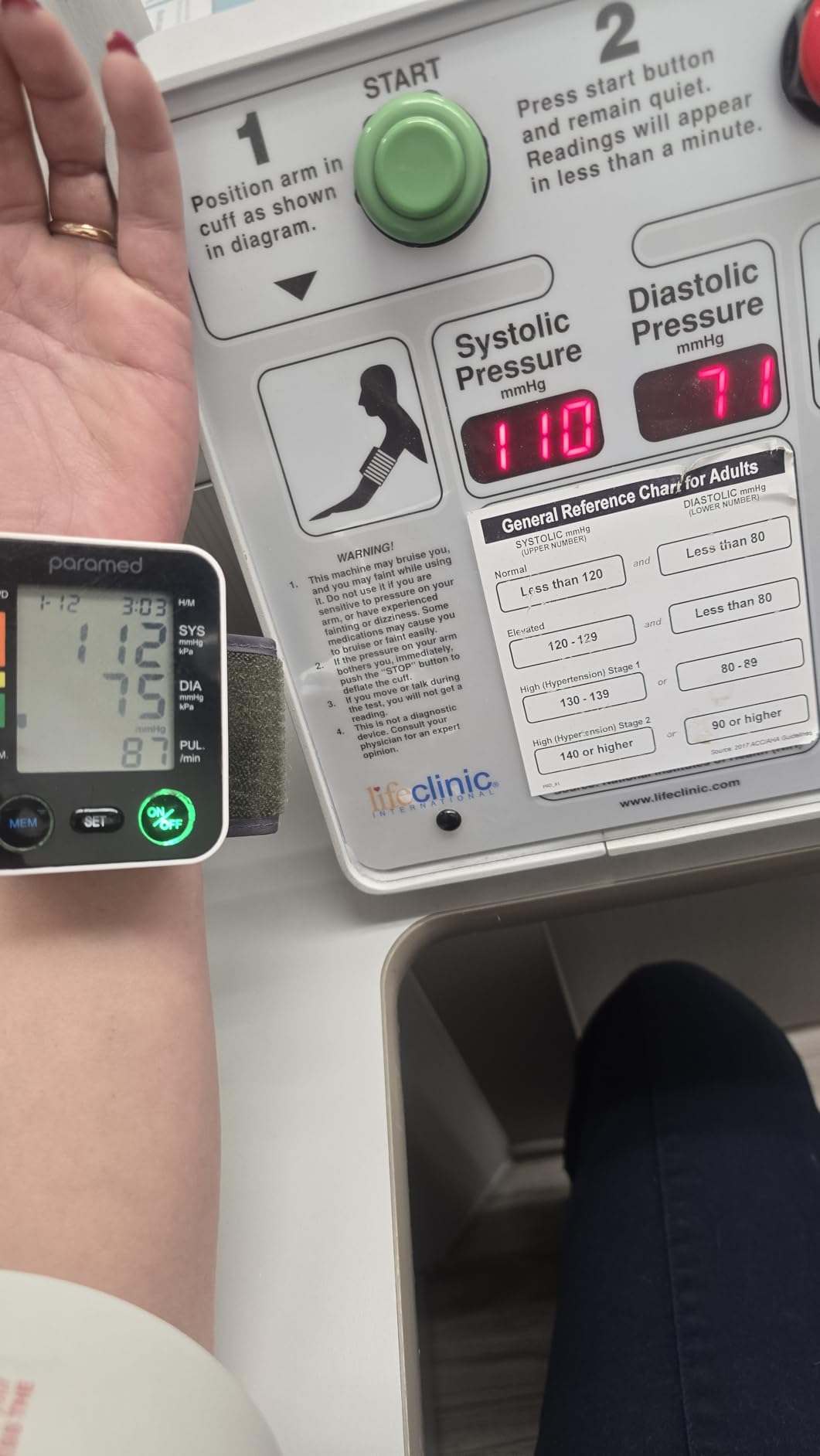
That guidance is more useful than it looks, because it is the protocol the accuracy depends on. Wrist devices amplify any deviation from a resting state, and a walk up the stairs before a reading will show up in the number. Publishing the rules on the product page suggests the manufacturer expects you to follow them.
At about 9 percent one-star, the complaints are the predictable ones for a wrist cuff: placement sensitivity and a memory count that fills in a few weeks at twice-daily use. There is no app, so export means pen and paper.
Who the Paramed suits
It suits anyone who wants a check on the move rather than a connected health record. People who travel for work, or who split time between homes, will appreciate that the case protects the unit and the batteries are a standard size you can buy anywhere.
It also suits anyone who wants an irregular heartbeat flag as a prompt to call a doctor. It is a signal that something was off in the rhythm during that measurement, and it is worth taking seriously even from a budget device.
Where the Paramed falls short
Ninety readings is modest. At two readings a day for one person, the memory cycles roughly every six weeks, and without app storage you need to transcribe before it wraps. It has no dual-user mode, so a partner monitoring alongside you would overwrite your log.
Wrist readings from this device, and from the category generally, can read higher than upper-arm devices when the wrist is not held level. Disposable AAA batteries are another small ongoing chore, and there is no recharge.
6. Homedics Wrist Monitor – Best for Two-User Households
Homedics Blood Pressure Monitor, Automated Wrist Blood Pressure Machine for Home use with Easy One-Touch Operations. Stores up to 120 Readings (60 Readings per 2 Users). Cuff and Storage Case Included
120 readings for two users
Large display
One-touch operation
5-year warranty
Pros
- Among the highest rated devices here at 4.3 across more than 6000 reviews
- Wrist placement guidance with up and down arrows
- Last-3 average viewable separately per user
- Irregular heartbeat and body motion detection
- 5-year warranty from a brand founded in 1987
Cons
- No backlight so readings are hard to see in low light
- Very sensitive to arm height and angle
- Readings can skew lower than upper-arm devices
- 3D wrist mapping triggers error codes on some monitors
The Homedics carries one of the highest average ratings of any device here at 4.3, on more than 6,000 reviews with only about 7 percent one-star. It ranks in the Wrist Blood Pressure Monitors category, weighs 9.59 ounces, and stores 120 readings split 60 per user, with each user able to see their own last-3 average. The brand was founded in 1987 and backs this one with a 5-year warranty.
The feature I found most useful is the wrist placement guidance. Up and down arrows on the display tell you whether your wrist is above or below the correct level, which directly addresses the placement sensitivity that generates most wrist-cuff complaints. For a user learning the technique, that feedback loop is worth more than a larger memory count.
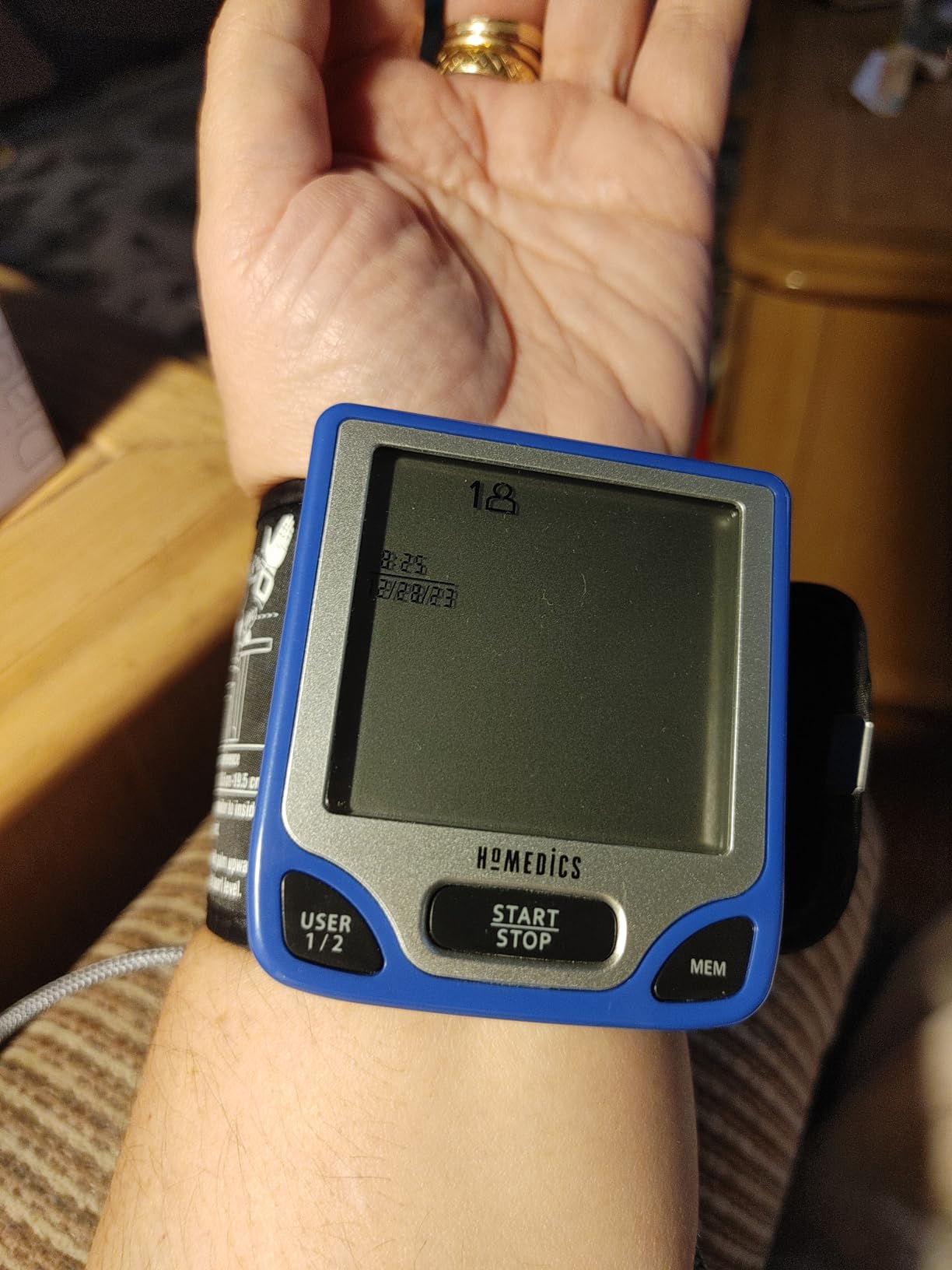
Comfort was the other surprise. Multiple reviews describe older adults who cannot manage an upper-arm cuff using this successfully, including a verified buyer story about a 92-year-old monitoring after a heart procedure. The 3.07 by 2.72 by 1.12 inch body and one-touch operation keep the interaction to a single decision.
Its feature set is otherwise complete for the tier: an irregular heartbeat detector, excessive body motion detection, a risk category index, date and time stamps and auto shutoff. No backlight, however, which is a real problem for a 2am check.
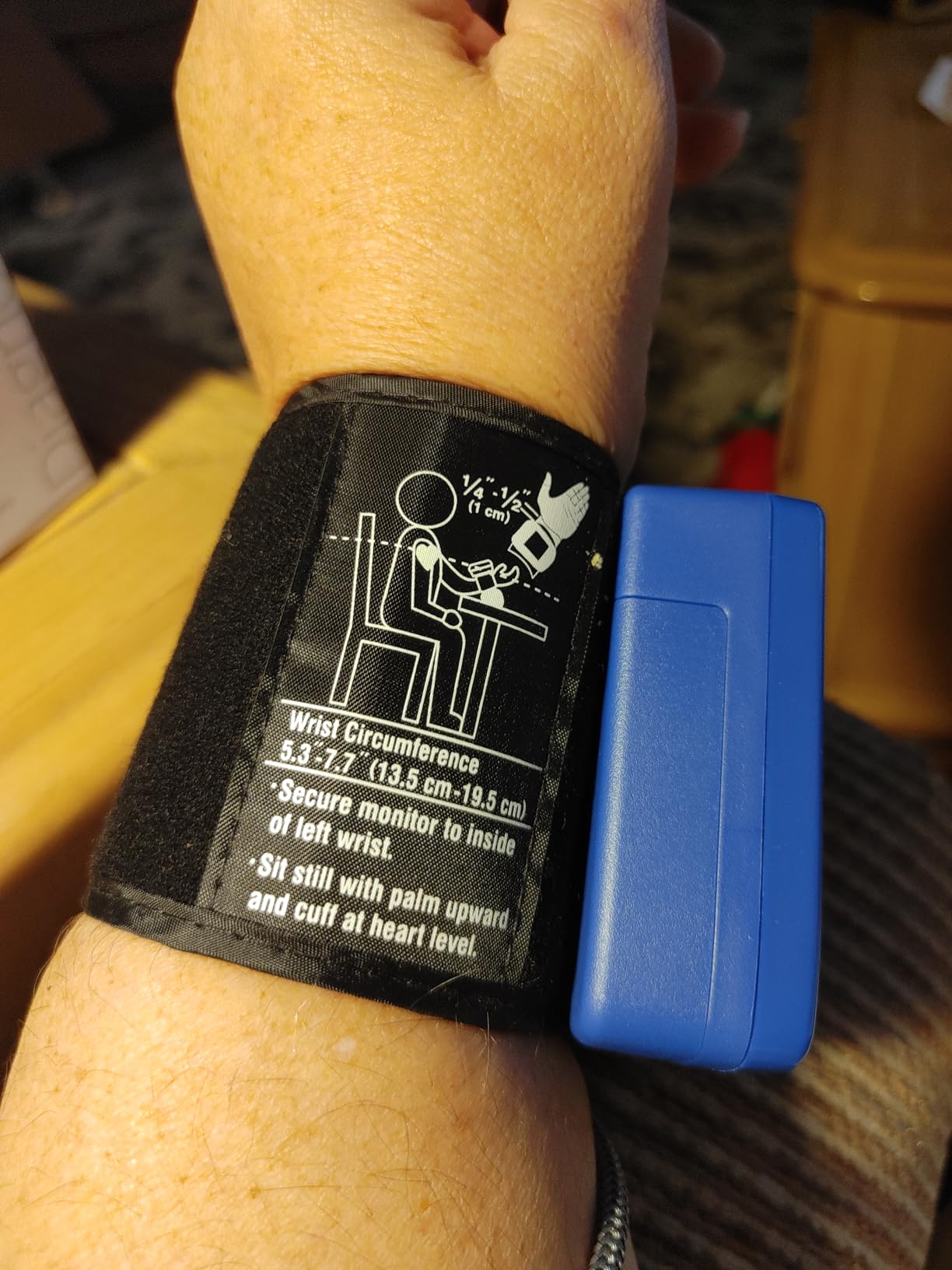
Who the Homedics suits
It suits a couple monitoring together, because the 60 readings per user with a separate last-3 average each keeps the two logs from mixing. That is a genuine advantage over single-user devices for anyone living with a partner who also watches their blood pressure.
It also suits anyone taking readings in a shared home where a spouse or family member is asleep, and anyone who prefers the guidance of arrows and a simple one-button interface over an app workflow.
Where the Homedics falls short
The absence of a backlight is the most concrete gap, and it hits exactly the users who benefit most from wrist monitoring. Second is placement sensitivity: one reviewer reported seeing a 200 reading against 168 from the same moment, and others report systolic running roughly 10 points below arm-cuff results.
Some monitors also hit error codes or premature shutoffs from the 3D wrist mapping, and a few stopped powering on after about a month. The 5-year warranty is the mitigation, and you would be relying on it.
7. MBUPAI Wrist Monitor – Best for Voice-Assisted Readings
MBUPAI FDA Cleared Blood Pressure Monitor Wrist BP Machine for Home Use
180 readings for two users
USB rechargeable
Female voice announcements
5.3-7.7 inch cuff
Pros
- Spoken announcements of high and low pressure and heartbeats
- 180 readings across two users at 90 each
- USB rechargeable in 2-3 hours
- Reading in about 1 minute from a one-button press
- Hard storage case protects the unit
Cons
- Reviewers report readings 5-10 points higher than upper-arm cuffs
- No Bluetooth and no app
- Voice can only be disabled through the manual
- Battery drains faster than earlier versions
The MBUPAI is a number 6 wrist monitor with more than 8,400 reviews at a 4.3 average, and it is the strongest voice-first device in this group. A female voice announces high pressure, low pressure and heartbeats aloud on a large LCD display, which removes the need to read digits at all. One-button palm-up operation returns a reading in about a minute.
Memory is 180 readings across two users, 90 each, which is enough for a shared household logging twice daily without constantly overwriting. The unit is USB rechargeable with a 2 to 3 hour charge, and the box includes a storage case, USB cable and manual.
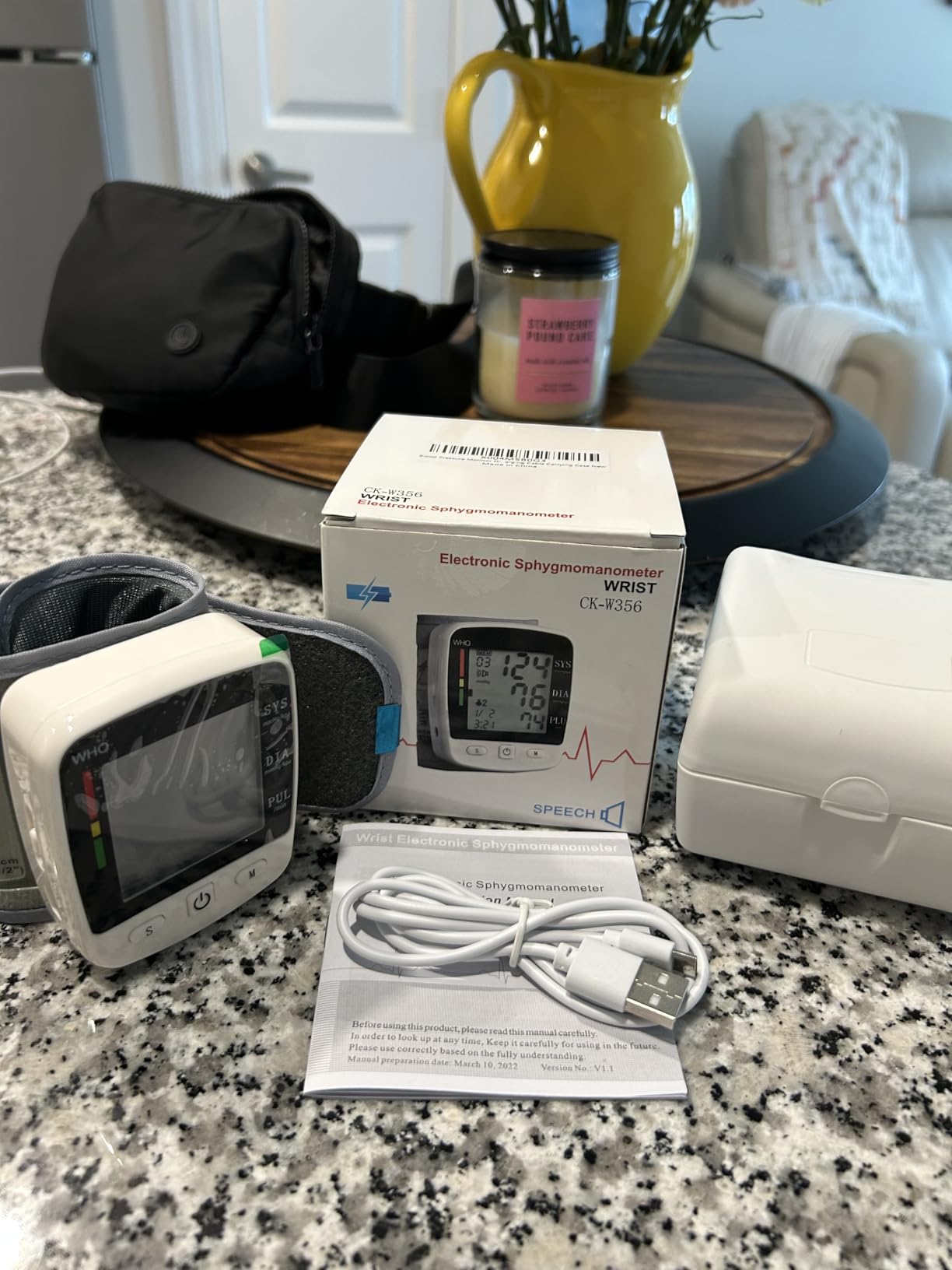
The cuff runs 5.3 to 7.7 inches, and reviewers single it out for working well on larger wrists and for users who cannot use an upper-arm cuff, including people with neuropathy. The category review record for this model contains one of the more detailed customer how-tos in the whole group, explaining how a wrist cuff can be more reliable day to day than an arm cuff for consistent tracking.
There is one important caveat that its own buyers converge on. Readings commonly run 5 to 10 points higher than upper-arm cuffs and than clinic equipment. That is not a defect so much as a wrist offset, and the practical response is to establish your own baseline by measuring alongside a known arm device for a week before you trust the number on its own.
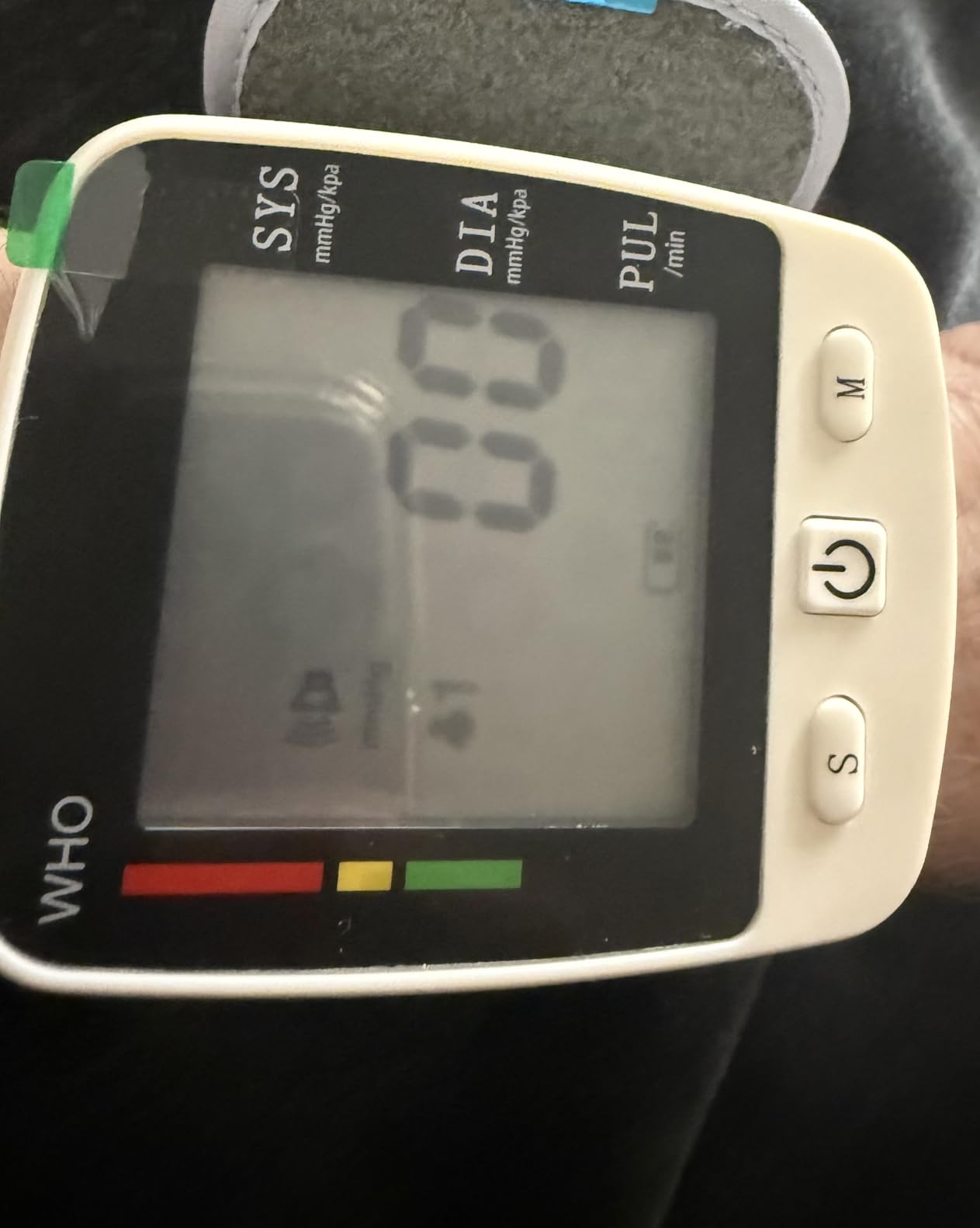
Who the MBUPAI suits
It suits users with vision loss, or anyone who finds a small LCD hard to read, because the spoken output means you do not need to see the screen at all. It also suits a household where two people want separate logs without app setup.
For users with neuropathy or limited mobility, the wrist format removes the arm-cuff sizing problem, and the rechargeable cell avoids disposable battery shopping.
Where the MBUPAI falls short
The consistent 5 to 10 point upward offset is the thing to plan for. Without an app you cannot layer a correction, so you have to calibrate it yourself against a validated device and remember the difference.
Voice output can only be disabled through the manual rather than a dedicated button, and one reviewer noted that leaving the side ON/OFF switch in the OFF position wipes the date and time settings, which is a non-obvious setup trap. Battery drain is also faster than earlier versions, so it works best as a backup monitor.
8. yuwell Rechargeable Wrist Monitor – Best Lightweight Rechargeable Option
yuwell Wrist Blood Pressure Monitor | Clinical Accuracy, BP Machine for Home Use | Ultra Light Weight, Smart Inflation Blood Pressure Cuff, Large Display, 74 Readings, Rechargeable
109 g weight
74-reading memory
USB rechargeable
5.3-7.7 inch cuff
Pros
- Weighs only 109 g
- USB rechargeable for about 3 months per charge
- Irregular heartbeat detection plus hypertension and heart zone indicators
- One-touch design with a large LCD and voice notification
- Backed by a medical device manufacturer with 26 years of experience
Cons
- 74-reading memory is the smallest in this roundup
- No Bluetooth or app for long-term trend review
- 5.3-7.7 inch cuff is narrower than the 5.3-8.5 inch models
- Voice volume cannot be adjusted easily for a shared home
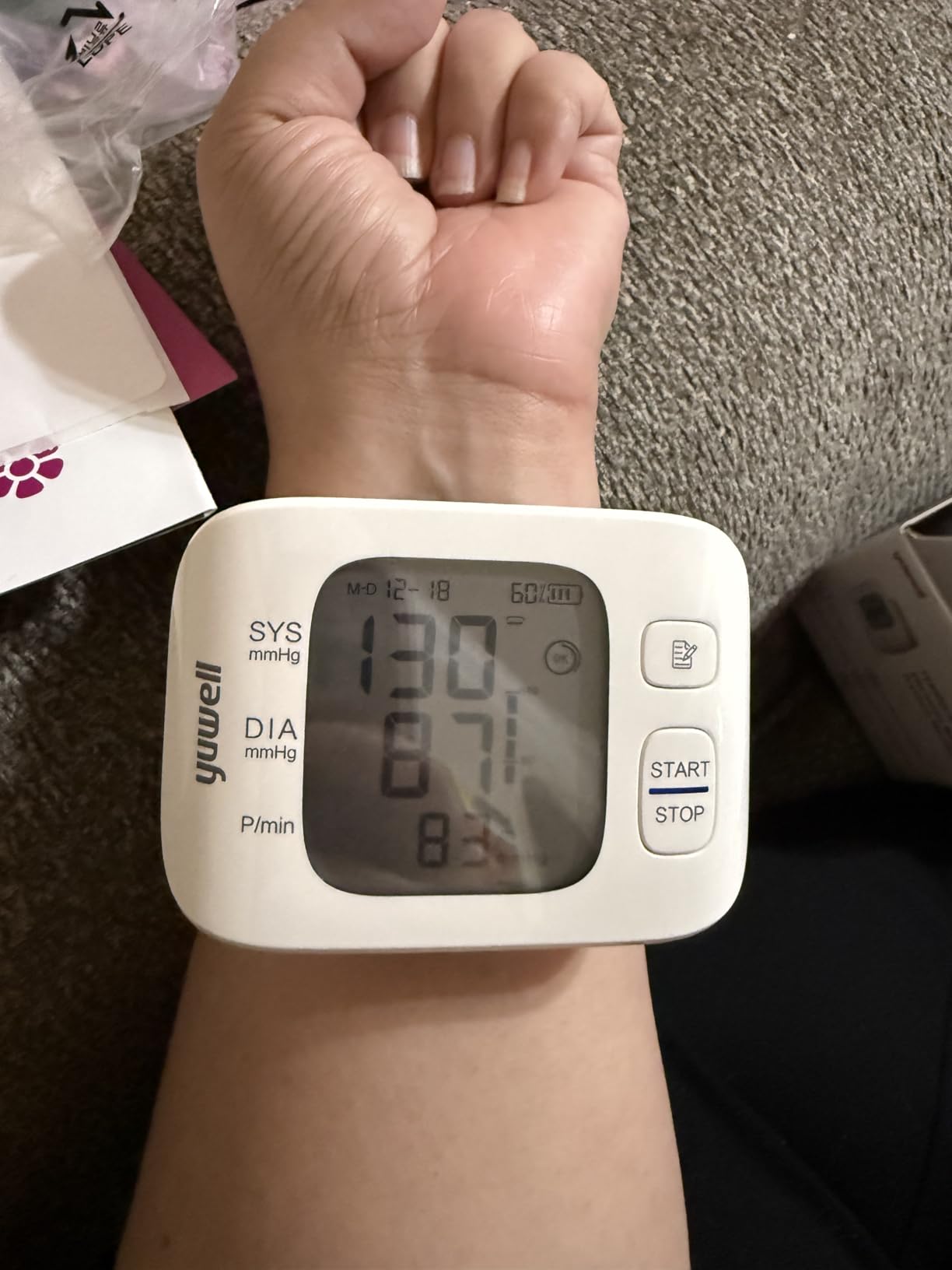
The yuwell is the device I would hand to someone who objects to charging anything weekly. At 109 grams it is one of the lighter wrist monitors here, and a single USB charge lasts about three months. That combination of low weight and long intervals between charges makes it the easiest to adopt as a permanent habit rather than a project you abandon.
It comes from a manufacturer with 26 years of medical device experience, and the listing states FDA registration meeting the AAMI standard, supported by a proprietary DFFA algorithm and an advanced system-on-chip. The device carries irregular heartbeat detection plus a hypertension indicator and a heart zone indicator, which is more diagnostic labelling than most of the value tier offers.
Across roughly 1,007 reviews it holds a 4.2 average with a 68 percent five-star share. What buyers mention most is the weight and the battery life. What they complain about most is the memory: 74 readings is the smallest on-device count in this roundup, and with no Bluetooth or app there is nowhere else for the data to go.
The cuff spans 5.3 to 7.7 inches, narrower than the 5.3 to 8.5 inch devices here, so measure your wrist before buying. The box includes the monitor, cuff, USB charging cable, manual and a storage case.
Who the yuwell suits
It suits anyone who will not remember to charge a device, and anyone who notices the difference between a light strap and a heavy one over a full day. The large LCD and voice notification cover the accessibility basics.
It suits anyone who wants the diagnostic framing of an established medical device manufacturer without moving up to a clinically validated device, and who wants irregular heartbeat and heart zone flags in the same unit.
Where the yuwell falls short
Seventy-four readings is a real constraint. Rival devices here store 120, 180 or 240, and two of the app-connected options store unlimited history, so this one forces you to transcribe numbers on a schedule or lose them.
With no app there are no trend charts at all, and the narrower 5.3 to 7.7 inch cuff excludes larger wrists. The voice notification also cannot be easily turned down or tuned for a shared home where a sleeping partner does not need a nightly announcement.
9. hellibito Fitness Smartwatch – Best for General Fitness Tracking
Advanced Health Smartwatch for Women Men with Real-Time Monitoring of Heart Rate, Blood Oxygen, Body Temperature, Blood Pressure, Sleep Auality and Stress Levels.Always-On Display, for Android & iOS
Optical estimate not a measurement
2.04 inch OLED
7 day battery
Android 4.4+ and iOS 8.2+
Pros
- Tracks heart rate SpO2 body temperature sleep and stress in real time
- 150+ sport modes with IP68 waterproofing
- Bluetooth 5.2 calling and message notifications
- Reported 7-12 day battery life
- Works with Android 4.4+ and iOS 8.2+ with fast pairing
Cons
- BP figure is an uncalibrated pulse-transit estimate
- No FDA clearance for the blood pressure reading
- App offers PDF reports but no long-term CSV history export
- The included silicone band is a common replacement and triggered a skin reaction in one review
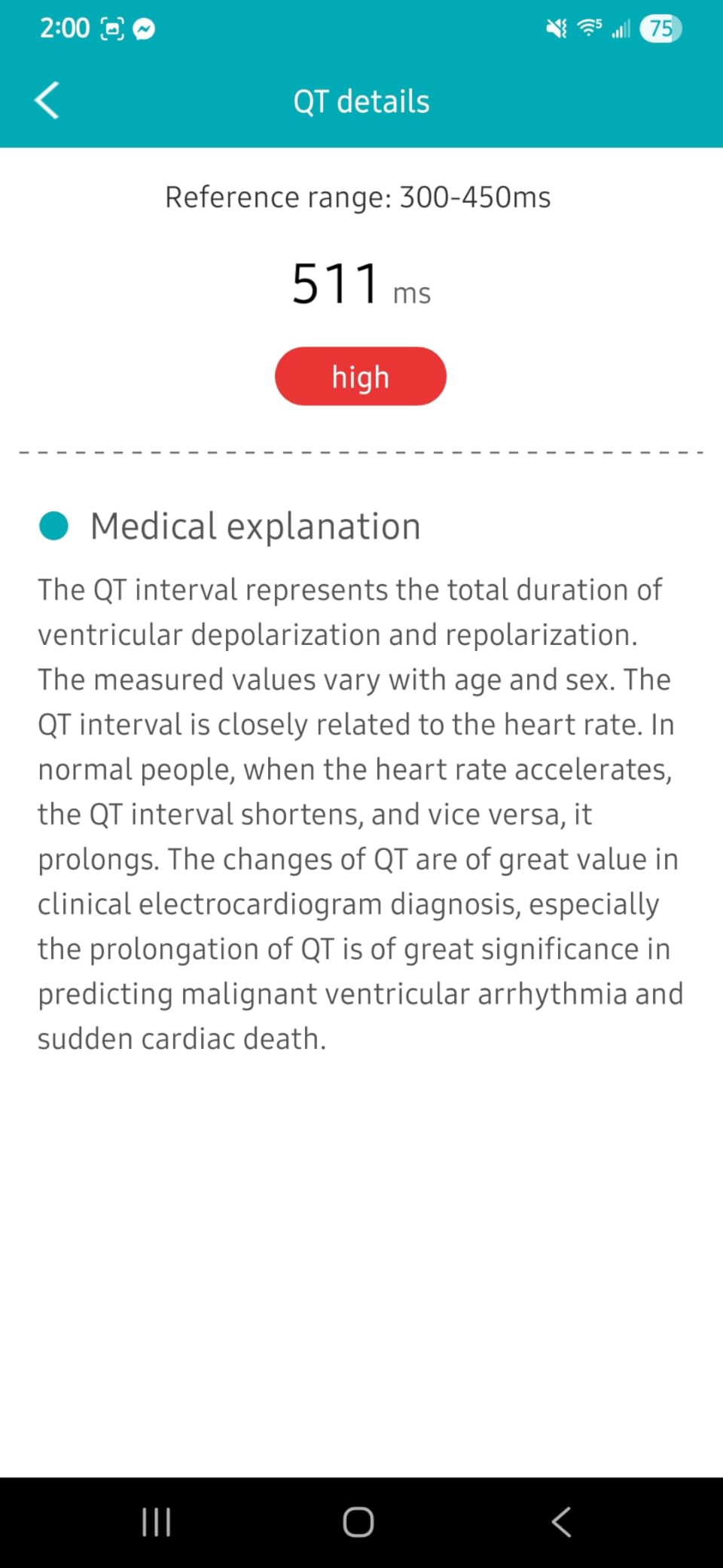
This one is in the roundup because it is exactly what many people buy by mistake, and you should know before purchasing. The hellibito smartwatch reports a blood pressure number, and that number is an uncalibrated pulse-transit estimate from an optical sensor, not a measurement. No FDA clearance covers it, and the customer record includes a documented case of a user with a known 145/80 reading seeing a constant 117/75 on the watch, which prompted a return.
Treat the figure as a trend indicator for a wellness dashboard, nothing more. What the device does well is everything adjacent to it: heart rate, blood oxygen, body temperature, sleep quality and stress levels tracked around the clock, 150-plus sport modes, IP68 waterproofing, Bluetooth 5.2 calls and message notifications, a 2.04 inch OLED display with 150-plus downloadable dials, and a reported 7 to 12 day battery on a 380 mAh cell.
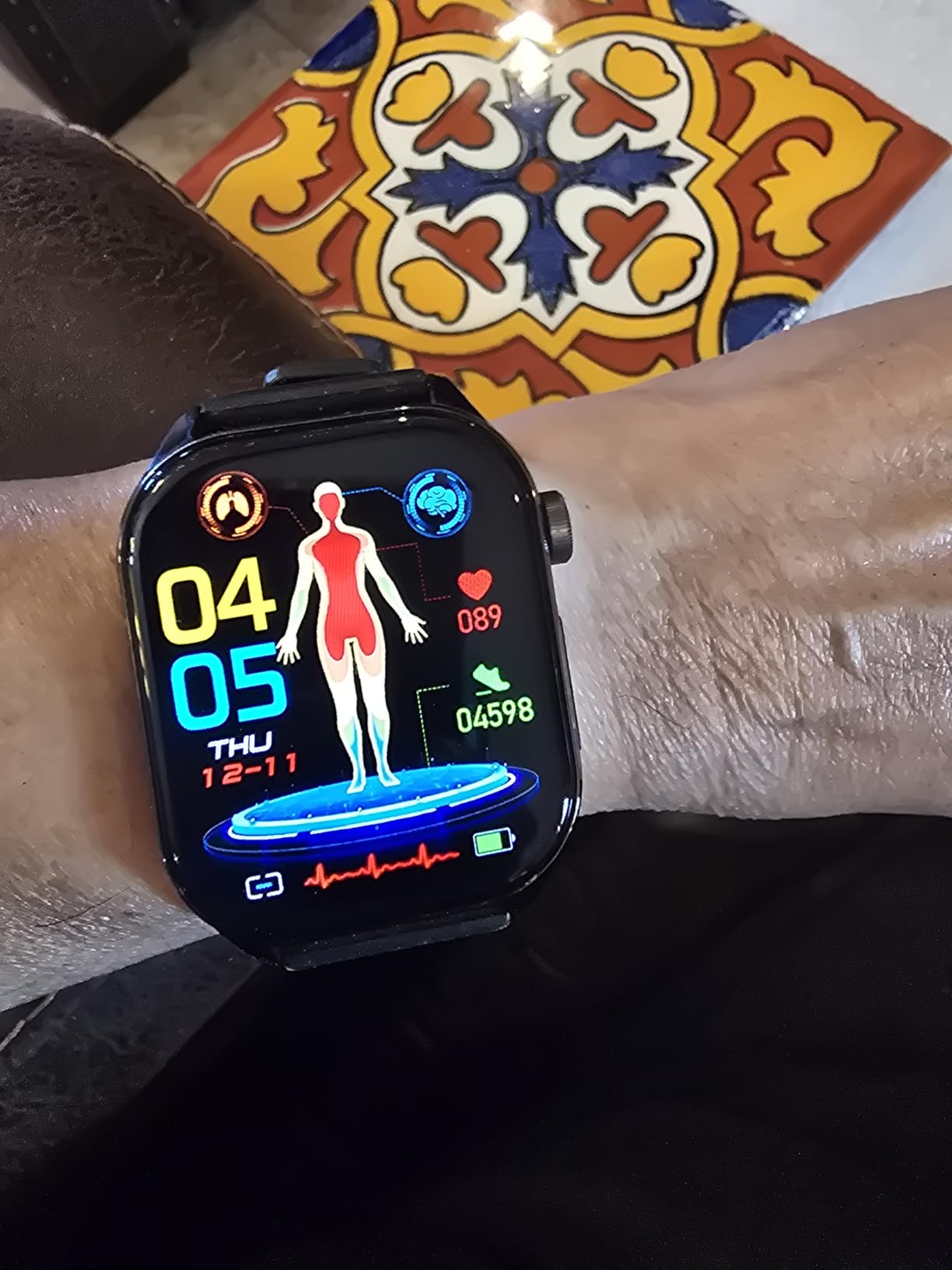
The 3.9 average across 220 reviews reflects a sharp split. A 60 percent five-star camp praises the value and the breadth of health features against a far costlier flagship smartwatch, while a 17 percent one-star camp is driven mostly by the blood pressure number rather than the fitness features. That split is itself the useful signal about who should buy this.
Compatibility is genuinely wide, covering Android 4.4+ and iOS 8.2+ over Bluetooth 5.2, with a 1 year standard warranty and a 2 hour charge time. Note that some diagnostic values display in units unfamiliar to US users, and one owner reported the interface language switching to Chinese and refusing to switch back.
Who the hellibito suits
It suits someone who wants one band for activity, sleep and a general health snapshot, and who is disciplined about not treating the blood pressure line as a measurement. The battery life and sport mode count serve that use well.
It also suits a buyer comparing general fitness smartwatches on feature count per dollar rather than on clinical accuracy, where this listing clearly leads on paper.
Where the hellibito falls short
The blood pressure feature is the reason to be careful. It is an estimate with no clearance and no established error bound, and the documented case of a consistent 28-point systolic gap shows how far apart it can sit from a real reading.
The app offers PDF reports but no long-term CSV export, so trend data is not portable into a health record. The included silicone band is a common replacement item and triggered a skin reaction in one review.
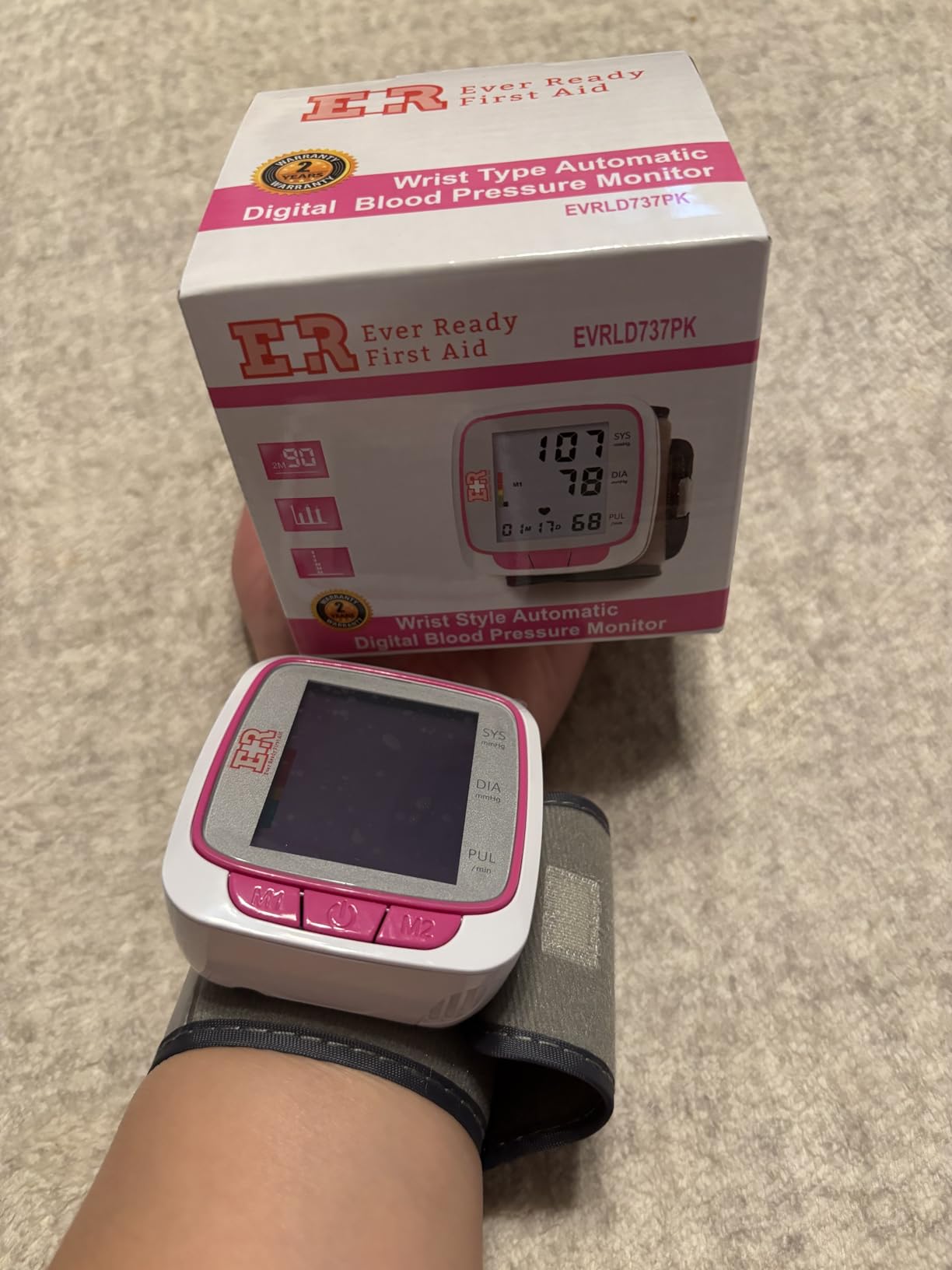
10. Ever Ready First Aid Cuff Watch – Best for Compact Design
Ever Ready First Aid Fully Automatic Blood Pressure Wrist Cuff Watch Wearable Monitor for Home Use – Pink- Batteries Included
Cuff-watch form factor
2.76 by 2.6 by 1.18 inches
Backlit LCD
2 AAA batteries
Pros
- Cuff-watch format small enough for a purse or pocket
- Backlit LCD with large clear digits
- Records date and time for trend review
- Simple push-button operation with batteries included
- Available in pink purple and black
Cons
- Erratic readings reported against a pharmacy station
- Included batteries arrived dead on some units
- Flimsy strap with imperfect fit on smaller wrists
- Display hard to read at certain angles
- Marked for home use not diagnostic purposes
The Ever Ready cuff watch is among the most compact units in the roundup at 2.76 by 2.6 by 1.18 inches and 6.38 ounces, and the watch-style form factor is genuinely different from a boxy wrist monitor. It measures blood pressure, flags elevated readings, detects irregular patterns and categorises feedback against general guidelines, and it stamps the date and time of each reading so you can review trends later.
With 2,982 reviews at a 4.2 average, most owners describe it as compact, easy to use and accurate enough, and some buy in bulk for staff or patients. The backlit LCD with large digits and simple push-button operation make it the least intimidating device here, and two AAA batteries are included.
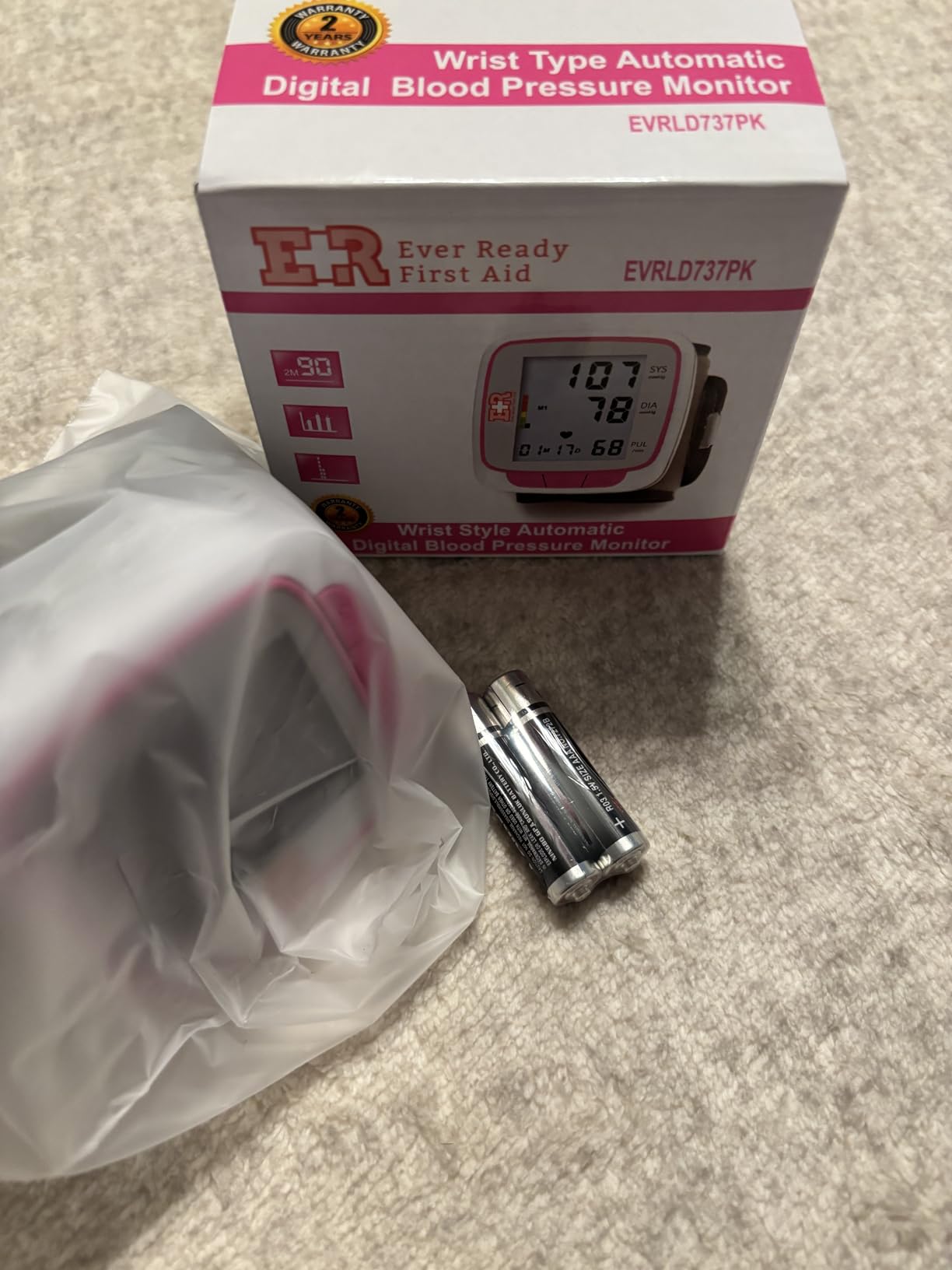
The trust problem is the accuracy record. One verified reviewer compared it against a pharmacy station and found it nowhere near accurate, and there is a cluster of one-star reports on erratic readings, dead batteries arriving in the box, and monitors that would not power on or complete a test after replacing them. The strap is described as flimsy with imperfect fit on smaller wrists, and the display is hard to read at some angles.
The listing itself states the device is designed for home use and not for professional or medical diagnostic purposes. That framing is the right one for it, and I would not build a tracking program on this one.
Who the Ever Ready suits
It suits someone who wants blood pressure checking in the smallest possible object and will treat it as an occasional curiosity rather than a record. The cuff-watch styling also appeals to buyers who dislike the look of a medical device on the wrist.
The colour options and low weight make it a practical gift or a travel spare, and for a family that only needs an occasional check, it does the job without ceremony.
Where the Ever Ready falls short
Accuracy is the disqualifier for serious daily tracking. Erratic readings against a known reference, batteries arriving dead, and power cycling after replacement all appear in the review record, and that combination makes a long-term trend log untrustworthy.
Fit is also a concern on smaller wrists, where the strap is described as loose, and a loose wrist cuff is a silent accuracy failure. If you need real data for a clinician, this is not the device, and the Garmin Index BPM is the one I would point you to instead.
How to Get a Wrist Reading You Can Actually Trust
Most wrist-cuff complaints I read while researching this roundup are technique complaints, not device failures. The same device that reads 138/86 correctly at heart level can read 151/93 five minutes later on a sofa with the arm down. Following a short protocol fixes most of the gap, and it costs nothing.
First, rest. Sit quietly for at least five minutes before you start, with your back supported and both feet flat on the floor. Second, position the wrist. Support your forearm on a table or armrest so the cuff sits level with your heart; a cuff on a raised arm reads low and a dropped arm reads high. This is the single biggest determinant of the result.
Third, stay still and stay quiet. No talking, no crossing legs, no typing, no phone checking during inflation. Fourth, fit the cuff properly. Center it on the wrist, an inch or so above the wrist bone, and make sure the artery marker sits on the artery. If your wrist is near the end of the stated range, a loose cuff silently corrupts everything downstream.
Fifth, take two readings a minute apart and average them, which is closer to how clinical protocols handle variability. Sixth, log the time and the context, because a reading taken after a walk tells you something entirely different from one taken after ten minutes of sitting quietly.
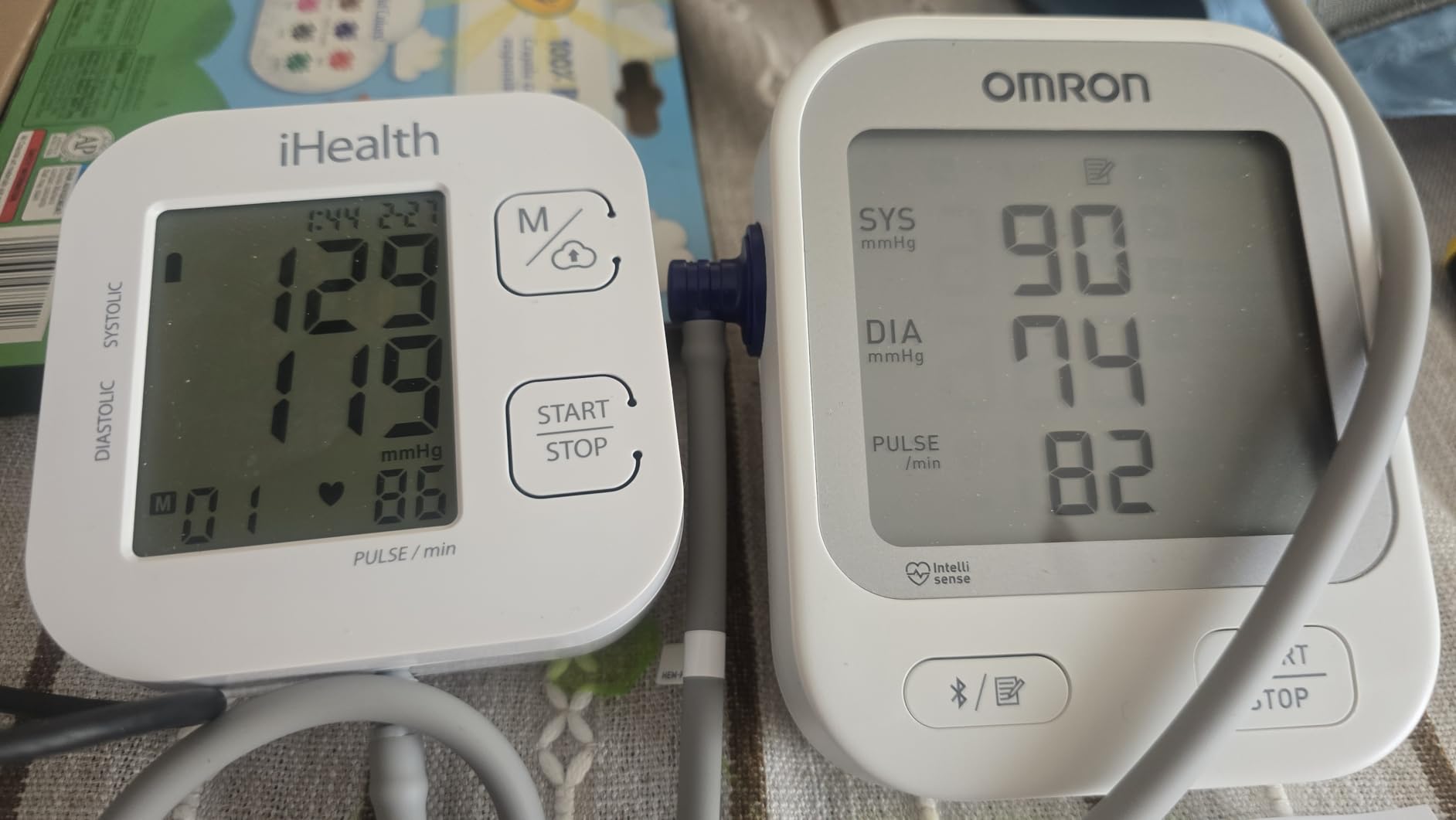
Finally, validate before you trust. Spend a week measuring at the same time of day with both your wrist device and a validated upper-arm monitor, then note the average offset between them. If the offset is stable, you have a usable personal correction. If it swings wildly, the device is not holding its calibration and you should not be making decisions from it.
How We Picked: What Separates These Devices
We ranked these ten devices on six criteria, in this order. Measurement mechanism came first, because a measured reading and an estimated one are not comparable products. The nine cuff-based devices in this roundup are directly comparable to each other; the one optical device is not, and we say so in its section rather than blending it into the same list.
Validation and regulatory status came second. The Garmin Index BPM is the only device here with FDA clearance and clinical validation, which is a different category of claim from FDA registration, FDA and ESH certification, or a category-level clearance. Those are not interchangeable, and the distinction is worth more to a daily tracker than any extra feature.
Third, we looked at data handling. Storage depth, app connectivity, trend views, sync to Apple Health and Android Health Center, and whether you can get a report out in a format a clinician can read. For daily tracking, a reading you cannot retrieve is close to worthless a month later, and that is why the Garmin reports and the Meraw app rank well despite sitting at the upper end of the price range or being bulkier than the value tier.
Fourth, wrist sizing. The stated cuff ranges in this roundup run from 4.92 to 8.46 inches on the Oklar, through 5.3 to 8.5 inches on the Omron Gold and Meraw, down to 5.3 to 7.7 inches on the yuwell and MBUPAI. Measure your wrist before you choose anything with a fixed cuff, because a cuff that is too loose produces a plausible but wrong number rather than an error message.
Fifth, power and charging. Rechargeable devices on this list include the Oklar, the MBUPAI and the yuwell; the yuwell runs about three months per charge, while the others use standard AAA cells. For a habit that has to survive months, a device you charge every few weeks beats one you have to think about each time.
Sixth, review evidence. Every device here carries more than 200 customer reviews, and we weighted the size of the review record heavily because long-term owner reports reveal placement offsets, dead batteries and firmware quirks that a specification sheet never will. Where a consistent pattern appeared, such as the MBUPAI running 5 to 10 points high, we reported it rather than letting the headline rating carry the section.
A practical note on the dual-device workflow, which is what we would actually recommend for anyone genuinely managing hypertension. Use the wearable for density: multiple readings a day, a trend you can see, a note attached to each measurement. Use a validated upper-arm monitor for confirmation, on a schedule your doctor agrees to. The wearable tells you when something is moving; the arm cuff tells you whether it is real. The Garmin Index BPM does both jobs in one unit if you want a single device, and it is why we placed it second despite sitting at the top of the price range here.
One last practical tip on getting readings to a doctor. The Garmin and the Meraw both produce shareable reports, the Omron and the Meraw sync into Apple Health or Google Fit, and those two capabilities are what turn a log into evidence. A stack of undated numbers in a drawer does not change a treatment decision, but a month of dated averages does.
If you would rather keep the log on paper than in an app, our piece on making science journaling a daily habit describes a simple routine that works just as well for a blood pressure diary as it does for a field notebook.
What Wearable Blood Pressure Monitors Cannot Do
None of the devices in this roundup is cleared to diagnose hypertension, and no wrist device in this group is cleared to make treatment decisions on its own. They are measurement and tracking tools. A reading from any of them should be interpreted alongside a validated measurement and a conversation with a clinician who knows your history.
Do not adjust or start medication based on a wearable reading, and do not use one to decide whether a clinic reading was a fluke. The clinically meaningful thresholds are not consumer-device settings, and interpreting a number in context is a job for someone who can see your full record.
For anyone monitoring environmental exposure alongside blood pressure, our PM2.5 monitor guide covers the fine-particle half of that picture, and our portable air quality monitor roundup compares the wider set of exposure trackers. For the arm-cuff side of home monitoring, start with the home use monitor roundup we linked earlier and treat the wearable as the layer on top of it.
Frequently Asked Questions
What is the FDA approved wearable blood pressure device?
The correct term is FDA cleared, not approved. Approval applies to drugs and biologics; clearance means the manufacturer showed a device is substantially equivalent to a legally marketed predicate device. In this roundup the Garmin Index BPM is the only device carrying FDA clearance with clinical validation, and it is a compact upper-arm monitor rather than a wrist wearable. Clearance is granted per device and per indication, never to a category, so one cleared product says nothing about the rest of a brand’s line.
Do wearable blood pressure monitors work?
Yes, with one important distinction. Wrist cuff devices inflate a small bladder and take a real oscillometric measurement, so their numbers can be compared to a clinic reading provided the wrist is held at heart level. Cuffless devices estimate pressure optically from pulse waveform changes and must be calibrated against a validated upper-arm monitor. Accuracy in both cases depends more on resting and positioning than on the brand.
Is there a blood pressure monitor you can wear all the time?
Cuffless bands and rings can be worn continuously because they never inflate, and the optical watch in this roundup tracks around the clock. Wrist cuff monitors measure on demand rather than passively, and inflating a cuff during sleep is impractical. Continuous tracking gives you trend data, so you still need periodic checks against a validated arm cuff to know whether the trend is accurate.
Which blood pressure monitor do cardiologists recommend?
Clinicians generally still recommend a validated upper-arm cuff as the reference measurement, with a wearable used to add trend context between visits. That is the workflow we recommend too: wearable for density, arm cuff for confirmation. We have not surveyed specific clinicians, so treat any device endorsement you see elsewhere as a marketing claim rather than a professional recommendation.
Is the Wellue blood pressure watch accurate?
We did not include the Wellue watch in this roundup, so we have no test data for it and will not characterize its accuracy. What we can say is the general principle: any watch that inflates a real micro airbag takes a measured reading rather than an estimate, so it is worth evaluating on that mechanism plus fit and positioning tolerance rather than on brand reputation.
Is the Aktiia blood pressure monitor accurate?
We did not include the Aktiia bracelet in this roundup either, so we have no first-hand data. The category question behind the question still applies: optical cuffless devices produce calibrated estimates rather than measurements, and the accuracy of any reading depends on how well the initial upper-arm calibration has been maintained and how often it is refreshed.
Which smartwatch has the most accurate blood pressure?
Answer it by category rather than by brand. Among cuff-equipped smartwatches, accuracy comes from the oscillometric cuff mechanism, not from the smartwatch platform, so two devices with the same cuff and the same fit perform similarly. General fitness smartwatches without a cuff do not measure blood pressure at all; the optical figure on the watch in this roundup is an uncalibrated estimate with no FDA clearance.
What is the best wearable blood pressure monitor?
The Omron Gold Wireless Wrist Monitor, because it combines a real inflatable wrist cuff that measures rather than estimates with 200 readings of memory per user, irregular heartbeat detection, a high morning average indicator, and an app that stores unlimited readings and shares reports to Apple Health and Google Fit.
How accurate is a Fitbit for blood pressure?
General-purpose fitness trackers measure heart rate and related metrics, not validated blood pressure, and we found no shipped blood pressure measurement feature in the devices on this list. We did not test a Fitbit here, so we are not asserting a current status beyond that. Treat any blood pressure figure on a fitness band as a wellness trend, not a measurement.
How do doctors feel about smart watch blood pressure readings?
Clinicians generally welcome trend data because it reveals the daily pattern that a single clinic snapshot hides, and better adherence to monitoring is a real benefit. They do not, however, diagnose or adjust medication from a wearable reading alone. Bring a cuff-based log or an exportable report to an appointment, and let the arm cuff reading confirm what the wearable trend is suggesting.
Which Wearable Blood Pressure Monitor Should You Buy in 2026?
Buy the Omron Gold Wireless Wrist Monitor if you want one device for daily tracking and you care about trend reports you can hand to a doctor. Buy the Garmin Index BPM if clinical validation and shareable PDF reports matter more than form factor, and accept that it is the most expensive option here. Buy the Oklar if you want the most readings and the loudest, most accessible readouts without a phone.
Before you commit, answer three questions for yourself. How will you wear it, at what time of day will you take readings, and do you need the data in an app or is a printed log enough? If the answer is an app, look at the Omron Gold and the Meraw. If it is a validated record, look at the Garmin. If it is a simple twice-daily check with no smartphone involved, the Oklar, the Paramed and the Homedics all do that job, and the Homedics is the one I would pick for a two-person household.
Whatever you choose, spend the first week calibrating it against a validated upper-arm monitor before you trust a single number. And take the readings to your clinician rather than acting on them alone.