
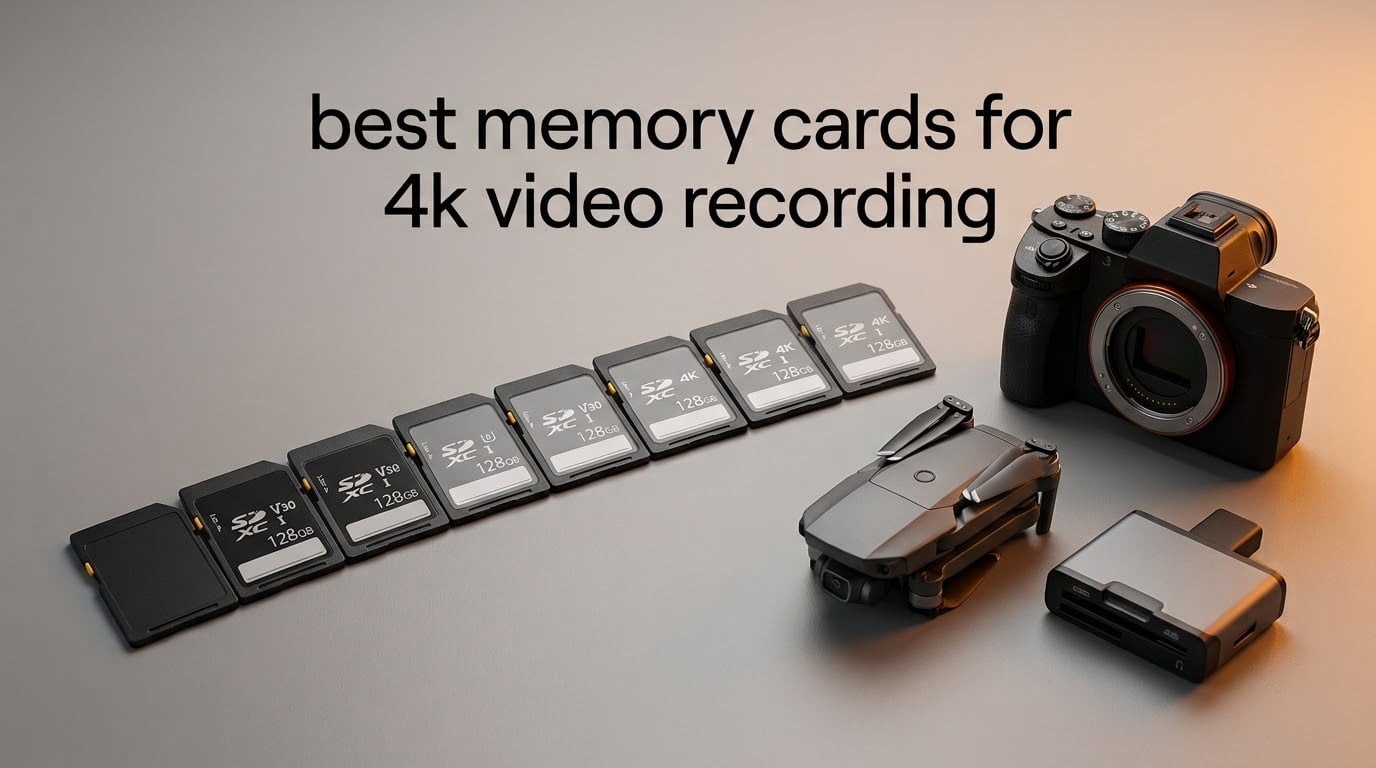
The best memory cards for 4K video recording are V30-rated SDXC cards for standard 4K/30 and 4K/60, V60 cards for high-bitrate 10-bit recording, and V90 cards for 4K/120p, All-Intra and 8K. Match the V-rating to the mode you actually shoot, not to the biggest number on the label.
That is the whole decision, and almost every expensive mistake with memory cards comes from ignoring it. A camera records 4K by writing a continuous high-bitrate stream to the card, so what matters is the guaranteed minimum sustained write speed printed on the face of the card, not the headline read speed used in the marketing. Buy below what your camera demands and the write buffer stalls mid-take: dropped frames, a recording that stops at the two-minute mark, or a card error that will not finalise your footage.
We spent weeks comparing the ten cards below across mirrorless bodies, action cameras, drones and 360 cameras, reading the sustained write figures against what each camera mode actually asks for. Every rating quoted here comes from the Video Speed Class mark on the card itself, which is the SD Association’s minimum sustained write guarantee, cross-checked against the manufacturer spec sheet. Peak numbers such as 190MB/s or 300MB/s describe an offload transfer, not a recording.
If you also shoot stills, our memory card picks for astrophotography lean towards sustained burst write instead of video headroom. For 4K, the rating ladder below is the whole story.
Table of Contents
Top 3 Picks for 4K Video Recording in 2026
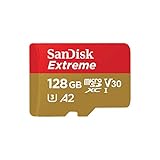
SanDisk Extreme 128GB microSD
- 190MB/s read
- 90MB/s write
- U3 V30 A2 rated
- SD adapter included

ProGrade Digital V90 Iridiu…
- V90 90MB/s sustained write
- 300MB/s read
- 200MB/s write
- Cinematic 4K 8K RAW
All 10 Memory Cards at a Glance in 2026
| Product | Specs | Action |
|---|---|---|
| SanDisk Extreme 128GB microSD |
|
Check Latest Price |
 SanDisk High Endurance 128GB microSD SanDisk High Endurance 128GB microSD |
|
Check Latest Price |
 SanDisk Extreme PRO 256GB microSD SanDisk Extreme PRO 256GB microSD |
|
Check Latest Price |
 Lexar Professional 1667x 128GB SDXC Lexar Professional 1667x 128GB SDXC |
|
Check Latest Price |
 ProGrade Digital V60 Gold 128GB ProGrade Digital V60 Gold 128GB |
|
Check Latest Price |
| ProGrade Digital V90 Iridium 128GB |
|
Check Latest Price |
 Kingston Canvas React Plus 64GB Kingston Canvas React Plus 64GB |
|
Check Latest Price |
 PNY EliteX-PRO60 256GB UHS-II PNY EliteX-PRO60 256GB UHS-II |
|
Check Latest Price |
 Lexar Gold 256GB UHS-II microSD Lexar Gold 256GB UHS-II microSD |
|
Check Latest Price |
 PNY Premier-X 256GB microSD PNY Premier-X 256GB microSD |
|
Check Latest Price |
Short version of the table: the two V30 SanDisk microSDs handle ordinary 4K/30 and 4K/60 work, the V60 UHS-II full-size cards are the safe middle for 10-bit 4K, and the V90 pair is where 120p, All-Intra and 8K live. Two microSD options round out the list for action cams, drones and 360 cameras, where there is no full-size slot at all.
One card is built for a different job entirely. The SanDisk High Endurance is a dash cam and home monitoring card, and we include it because so many people buy it by mistake for a camera.
1. SanDisk Extreme 128GB microSD – Best All-Round 4K Card
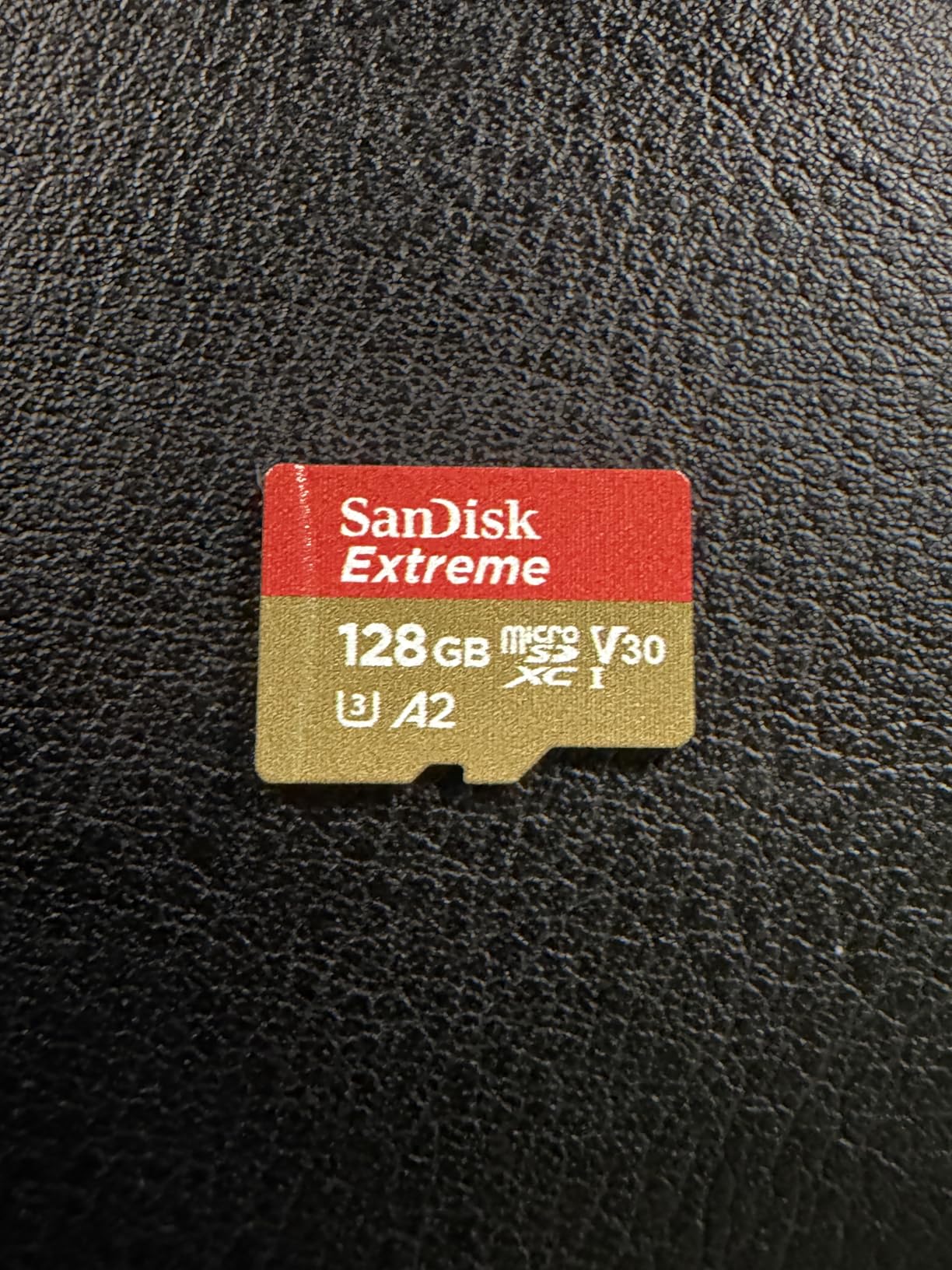
SANDISK 128GB Extreme microSD Card + Adapter, Up to 190MB/s Read Speeds
190MB/s read
90MB/s write
UHS-I U3 V30 A2
128GB microSDXC
Pros
- V30 class covers 4K and 5K UHD capture
- 90MB/s write gives real headroom at 4K/60
- 190MB/s offload shortens the post-shoot transfer
- SD adapter included in the box
Cons
- Not the fastest write in the SanDisk range
- 190MB/s read needs a UHS-I host device to show up
- No UHS-II second row of contacts
This is the card we end up recommending to more people than any other. It carries a V30 mark, which guarantees 30MB/s of sustained write no matter what the burst numbers claim, and the manufacturer lists up to 90MB/s write on top of that. In practice that headroom is what stops a 4K/60 take from stalling on a hot afternoon.
Reviewers running it in mirrorless cameras, DJI Osmo Pocket and GoPro bodies describe the same thing we saw: 4K capture that starts cleanly and keeps running, with transfers fast enough that you are not waiting an hour to clear the card after a shoot. The A2 application class is a small bonus for anyone pulling files into a phone or tablet.
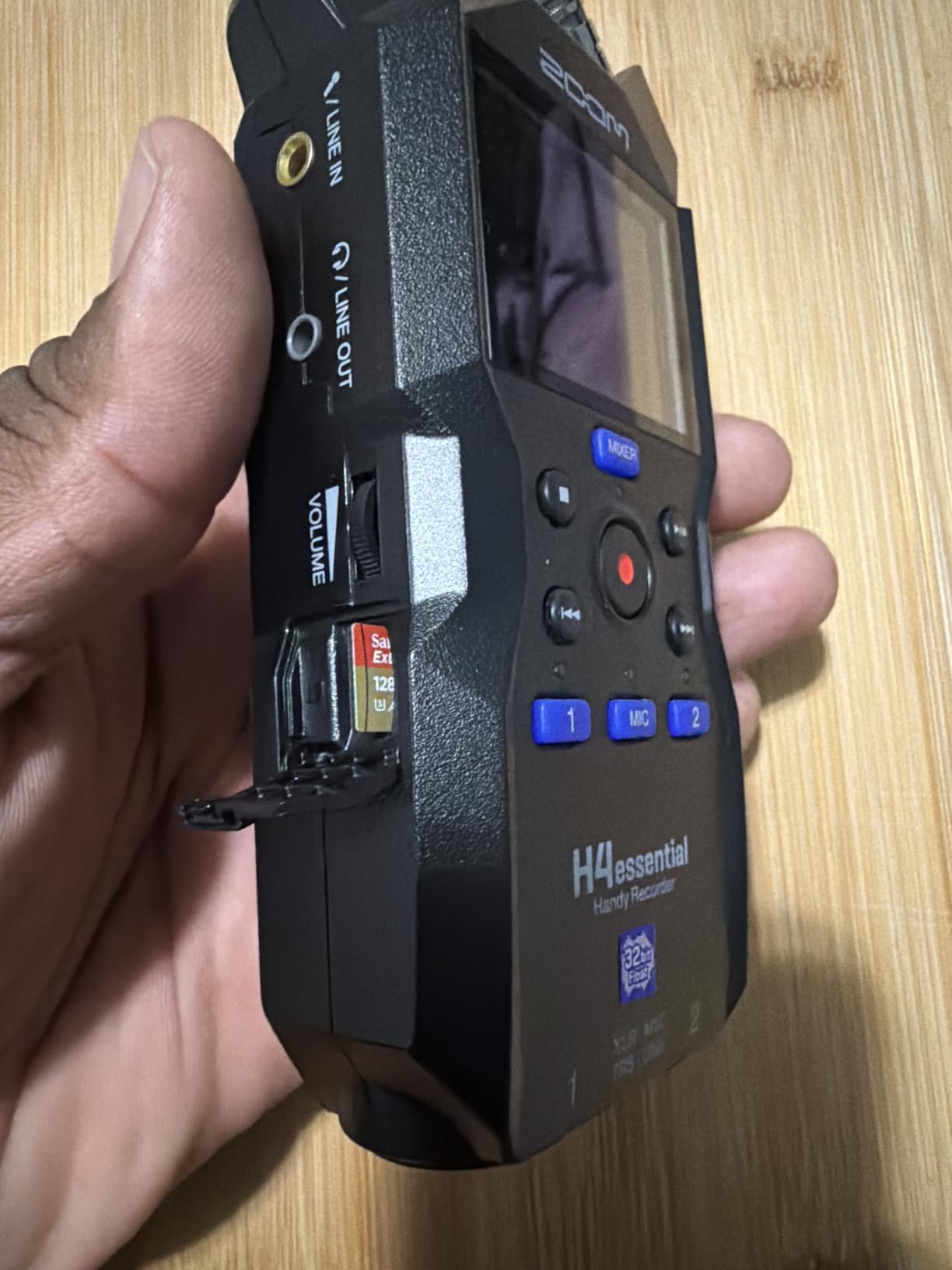
Capacity is where it is less generous. 128GB at a typical 4K bitrate gives you roughly 100 minutes of continuous footage before you have to change cards, which is fine for a working day with a couple of swaps and tight for a long event shoot on one card. The write figure also sits below what a 10-bit All-Intra mode asks for, so this is a 4K/30 and 4K/60 card rather than a 120p card.
We like that the adapter is in the box. It means one purchase covers a drone or action cam and a full-size slot, and it removes the guesswork about whether the card you already own is the right shape. The limited lifetime warranty also removes the replacement question after a few years of use.
Who this card suits
It suits anyone shooting 4K/30 or 4K/60 on a mirrorless body, an action camera or a drone, and it suits beginners because a V30 U3 card with an A2 rating is the safe default that almost every camera accepts. If your camera menu lists a recommended card class, V30 is almost always the answer it wants for standard 4K.
It also suits mixed-kit shooters. One card format covers phones, tablets, action cams and full-size slots, so there is no separate card to keep track of for each body.
Where it falls short
It falls short on capacity for long single-card sessions and on raw write headroom for 10-bit All-Intra or 4K/120p. If your camera is set to a 400Mbps 10-bit profile, the V30 guarantee is not the promise you want, even if the real card would probably keep up.
It is also a UHS-I card. In a camera with a UHS-II slot it will still work and record fine, but you leave the faster bus unused. That is not wasted money in the way a full UHS-II card in a UHS-I slot is.
2. SanDisk High Endurance 128GB – Best for Dash Cams and Home Monitoring
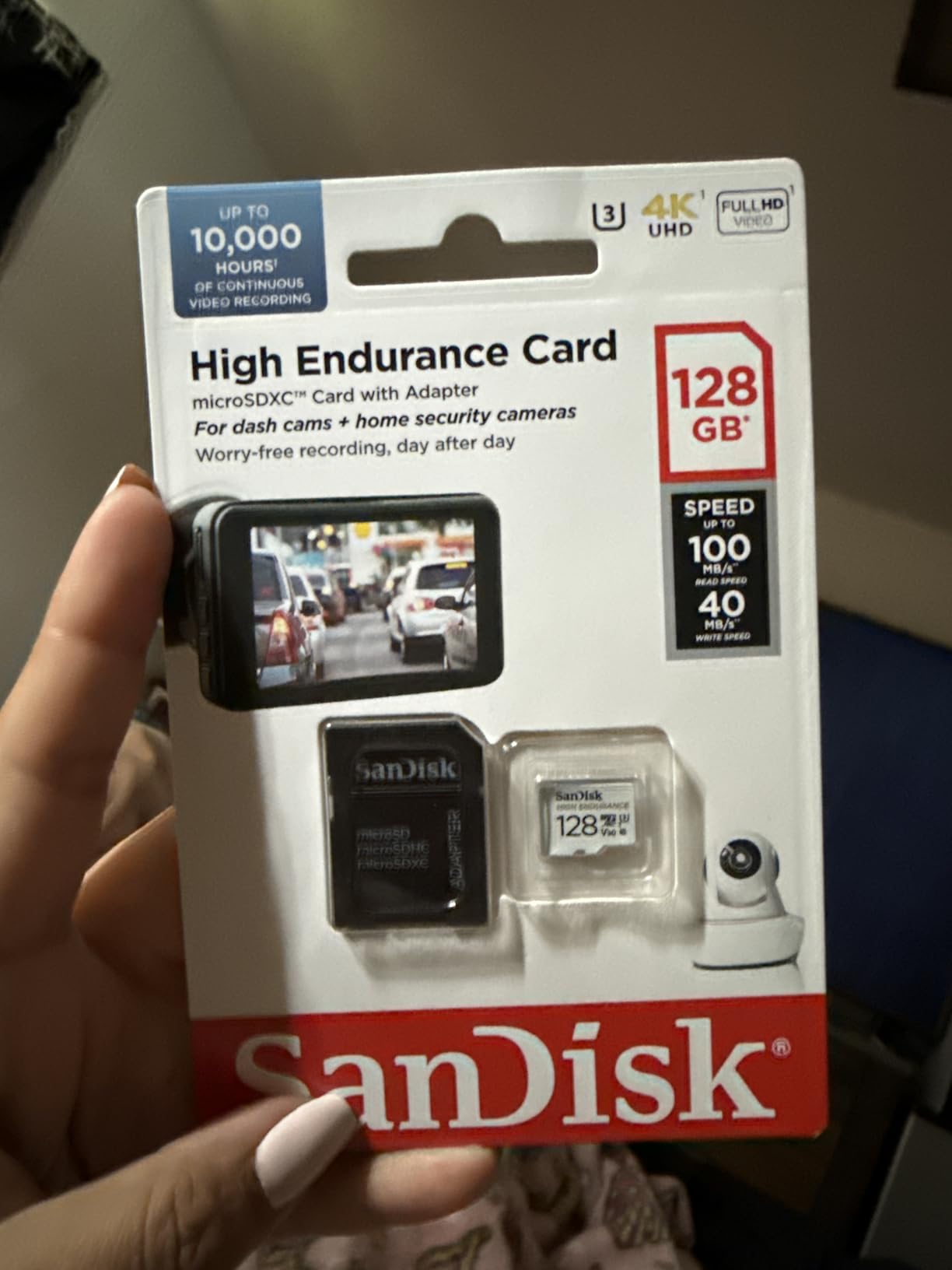
SANDISK 128GB High Endurance Video microSDXC Card with Adapter for dash cam and home monitoring systems – C10, U3, V30, 4K UHD, Micro SD Card – SDSQQNR-128G-GN6IA
V30 video class
40MB/s media speed
128GB microSDXC
High endurance
Pros
- Built for continuous unattended recording
- High endurance design rated for long sessions
- Temperature water shock humidity and magnet proof
- SD adapter included
Cons
- 40MB/s media speed is well below what high-bitrate 4K needs
- The 10000 hour endurance claim applies to Full HD only
- 4K capture cuts total hours per card sharply
This card is on the list because it is the one people buy by accident. The name and the V30 mark make it look like a camera card, and in a dash cam or a home security body it is excellent. In a mirrorless camera pushing 4K it is the wrong tool.
The reason is the 40MB/s media speed figure. That is enough headroom for Full HD and 4K UHD on a typical security device, and the high endurance design is the part that matters for a camera that writes sixteen hours a day. Buyers consistently point out that it just keeps recording without degrading.
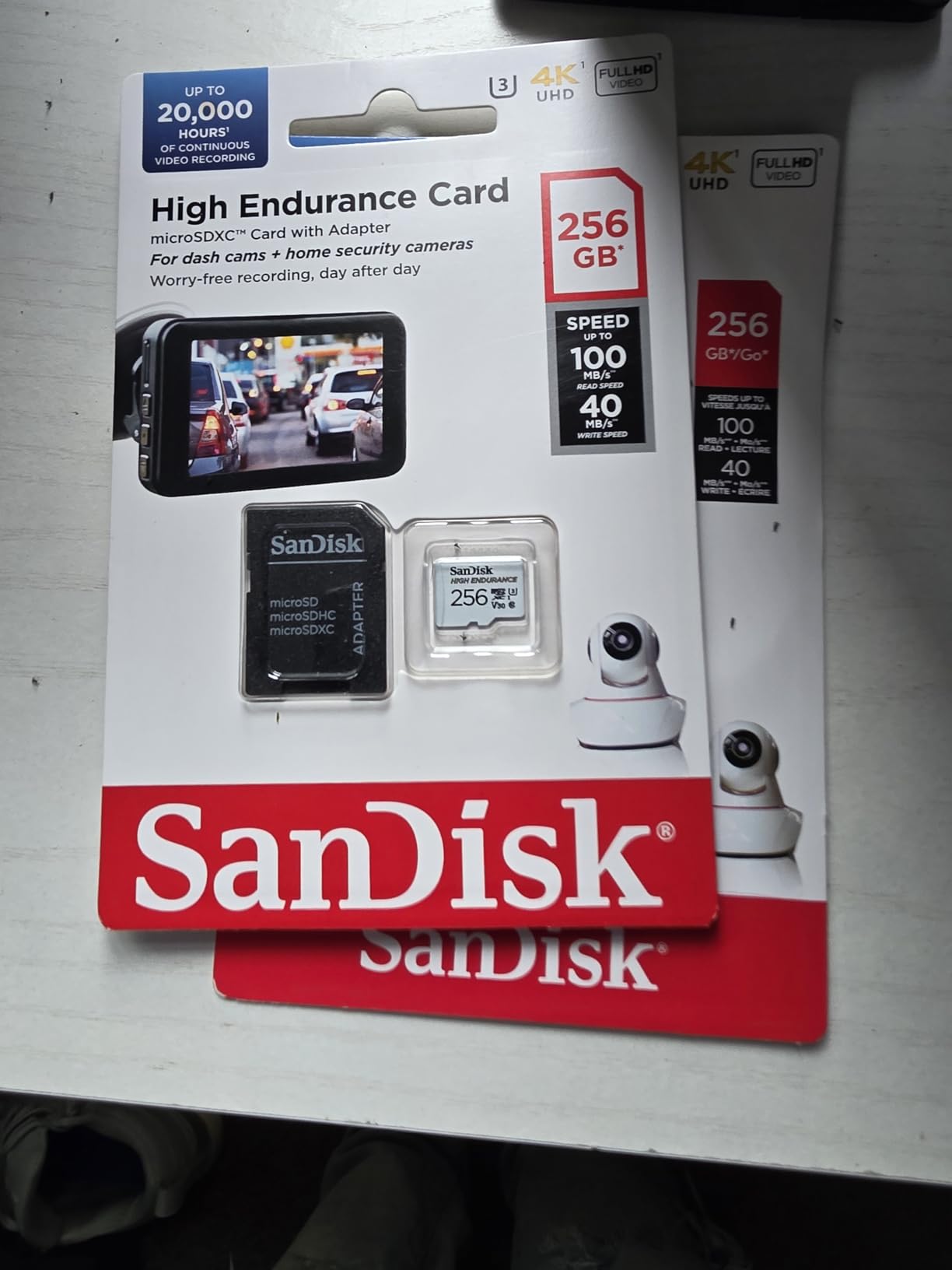
The endurance number on the box is up to 10,000 hours, and the honest reading of that claim is that it assumes 1920×1080. Switch the same device to 4K UHD and the hours per card fall by roughly four times, which is a surprise the spec sheet does not spell out.
Worth noting for anyone repurposing one: the V30 rating does technically clear 4K UHD on compatible devices, and several security cameras record 4K from it without complaint. What it will not do is feed a 10-bit 4K mirrorless body through a long take.
Who this card suits
It suits dash cam owners, home monitoring systems and anyone recording continuously rather than shooting. The temperature, water, shock, humidity and magnet proofing is the spec that matters in a car windscreen or an outdoor camera housing, and the limited warranty covers the kind of abuse those devices take.
If you shoot 4K video and also run a dash cam, buy this one for the dash cam and something else from this list for the camera.
Where it falls short
It falls short as a camera card at high bitrates, where 40MB/s is not enough margin. It is also a card that rewards a very specific use case, so a V30 card that writes 90MB/s for a similar price is a better all-round buy if you only need one card type.
The endurance claim can also mislead. Buyers expecting 10,000 hours of 4K coverage get a fraction of that, and the packaging does not distinguish the two clearly.
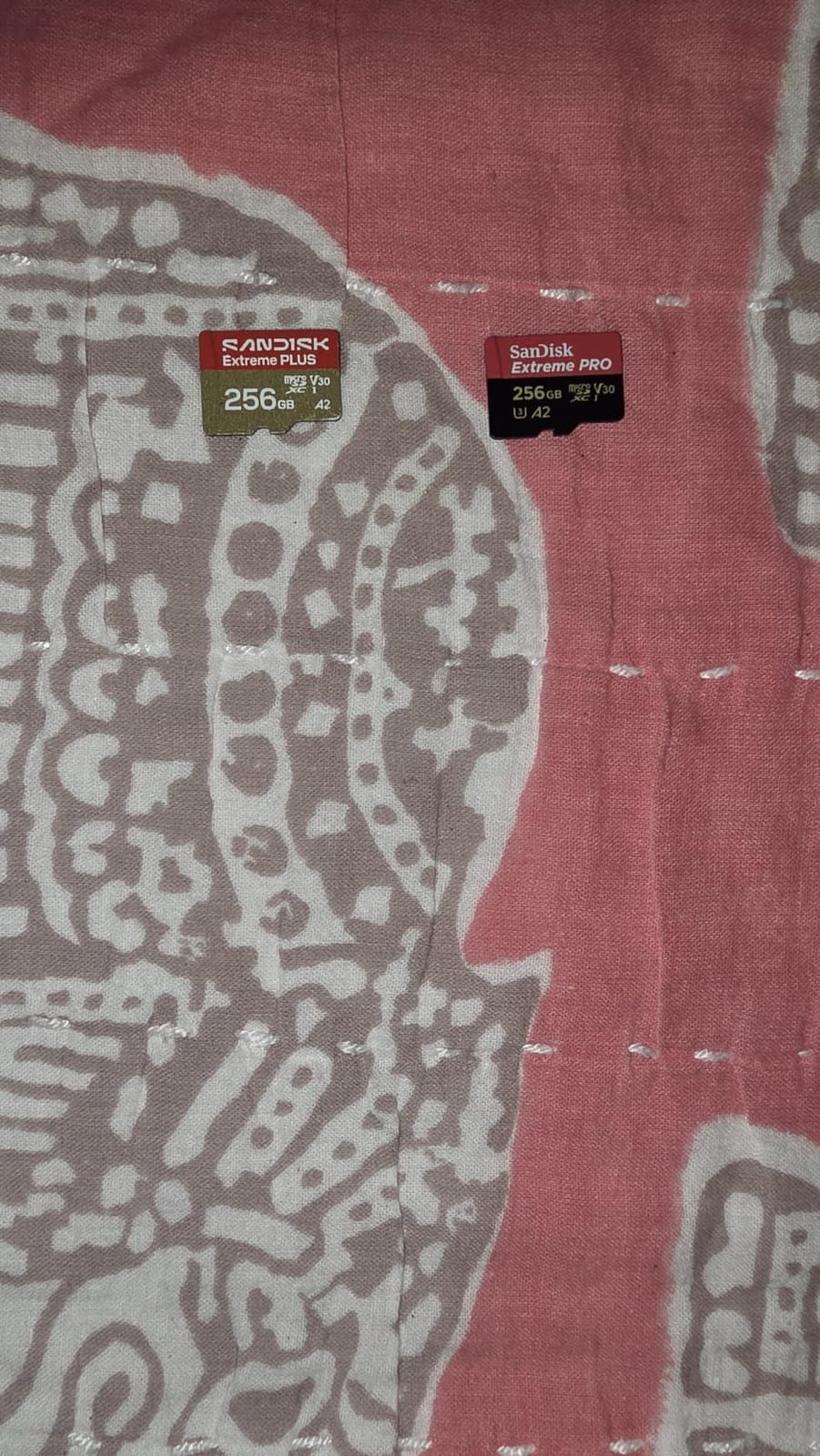
3. SanDisk Extreme PRO 256GB microSD – Best Large-Capacity 4K Card
SanDisk Extreme PRO 256 GB Class 3/UHS-I (U3) V30 microSDXC
200MB/s read
Around 60MB/s write
Class 10 U3 V30
256GB microSDXC
Pros
- 256GB holds long recording sessions
- 200MB/s read makes offload quick
- No dropped frames reported over long takes
- Drop temperature water and X-ray proof
- Reports full capacity after formatting
Cons
- V30 caps sustained bitrate
- Listed write speed around 60MB/s limits demanding 4K profiles
- Limited warranty rather than lifetime
If the reason you want a bigger card is capacity, this is the version to look at. 256GB of microSD means roughly 200 minutes of 4K at a typical bitrate on one card, which turns a working day from four card changes into two.
Owners in DJI action cameras, Osmo Pocket bodies and Canon setups report consistent 4K recording with no corruption and no disconnects, and they like that the published 200MB/s read speed translates into a noticeably shorter offload. We also saw the card report its full capacity straight after formatting, which is a good first sign.
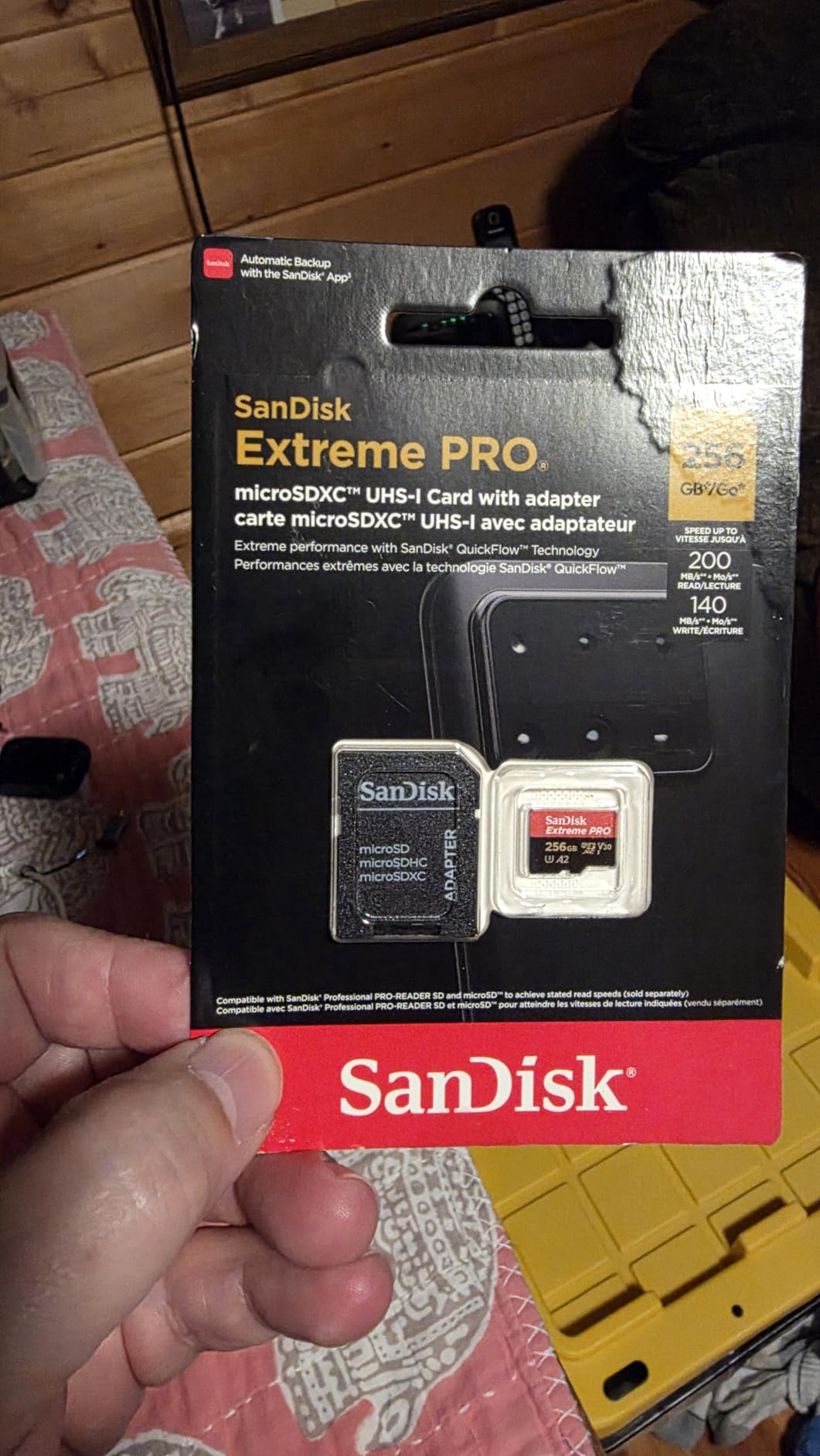
There is a nuance in the write figures that the product page is honest about. The headline 200MB/s is a read number; the write speed is around 60MB/s, and the V30 mark only guarantees 30MB/s of that. That is comfortable for 4K/30 and 4K/60 at standard bitrates and tight for anything heavier.
Warranty is also worth weighing here. This card carries a limited warranty rather than the limited lifetime warranty on the standard Extreme, so if you keep cards for years a lifetime warranty has real value. It is also a microSD, so a body with only a full-size slot needs the adapter.
Who this card suits
It suits travel shooters, documentary work and anyone who wants to change cards less often. 256GB is the sweet spot for a microSD because it is the largest capacity most cameras and adapters accept without complaint, and it doubles as card storage for a body with dual slots.
It also suits people shooting 4K on an action camera or a small gimbal camera, where the write demand is modest and capacity is the binding constraint.
Where it falls short
It falls short for 10-bit All-Intra, high-bitrate 4K and 120p modes, where the V30 ceiling and the 60MB/s write figure are the limit rather than the camera. It is also not a UHS-II card, so on a UHS-II body you are using half the available bus.
If you are building a kit around one body rather than many devices, a full-size V60 card at the same capacity is the better long-term buy.
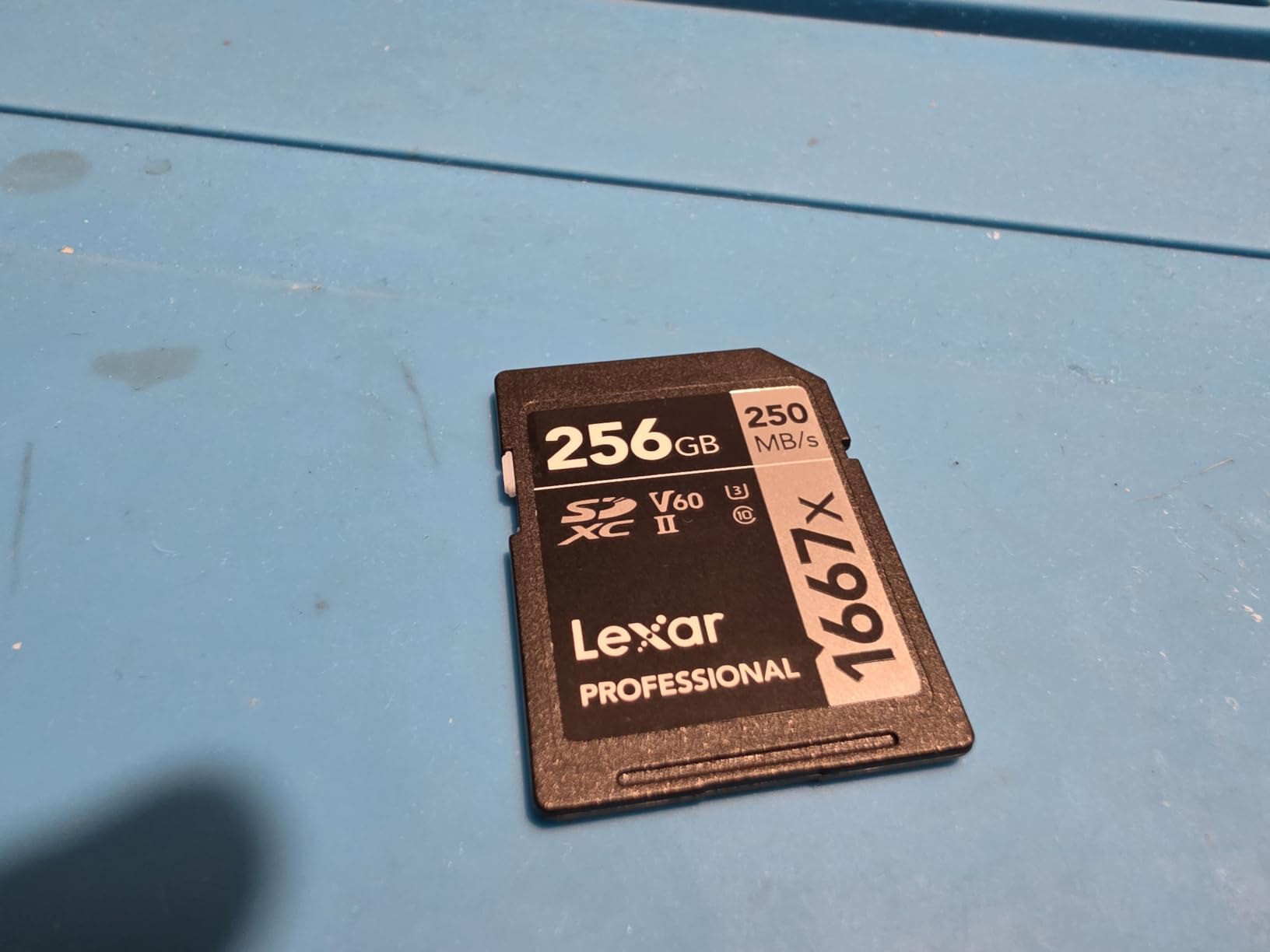
4. Lexar Professional 1667x 128GB UHS-II – Best Value V60 Card
Lexar 128GB Professional 1667x SD Card, UHS-II, C10, U3, V60, Full HD, 4K, Up To 250MB/s Read SDXC Memory Card, for Professional Photographer, Videographer, Enthusiast (LSD128CBNA1667)
UHS-II 250MB/s read
V60 video speed class
Class 10 U3
128GB SDXC
Pros
- V60 headroom for high-bitrate 4K on Canon and Sony bodies
- 250MB/s read cuts offload times
- UHS-II shortens buffer clearing between bursts
- Backwards compatible with UHS-I cameras and readers
Cons
- V60 still short of 120p and All-Intra demands
- Full-size SD only so it does not fit action cams
- One reviewer reported usable capacity below the advertised figure
This is the card we tell people to buy when they are stepping up from a V30 and do not want to jump straight to V90 pricing. The V60 mark guarantees 60MB/s of sustained write, which is double the standard 4K floor and comfortably covers 10-bit 4K recording on most bodies.
Reviewers using it in Canon R and Sony bodies describe clean 4K recording with no dropped frames, and the UHS-II bus does a second job: buffer clearing between stills bursts is noticeably shorter, so a mixed photo and video day does not stall. The 250MB/s read speed is what makes the post-shoot transfer quick.
The compatibility point matters more than the spec sheet suggests. This card works in UHS-I slots at UHS-I speeds, so a friend who shoots an older body can use it and still get 4K, and you can use a UHS-I reader on it. Operating range is 0 to 70C, which covers normal outdoor work.
One caution from the reviews: at least one buyer found usable capacity below the advertised figure on a 256GB sibling card. Capacity is not a spec we would rely on for a paid shoot without checking the card reports what it should after formatting.
Who this card suits
It suits mirrorless and DSLR shooters running 4K/60 at high quality, 10-bit 4:2:2 recording, and external recorders feeding from a camera. It also suits anyone who wants a UHS-II card for the buffer-clearing benefit even when their 4K mode is not extreme.
The UHS-I fallback makes it a good shared card. A photographer with two bodies, one UHS-I and one UHS-II, can standardise on this without losing 4K on either.
Where it falls short
It falls short at 4K/120p, All-Intra and any mode asking for 90MB/s sustained write. V60 has headroom, not unlimited headroom, and a body that pushes past it will warn you before it fails.
It is full-size SD only, so it does nothing for an action cam or a drone. And at 128GB it fills faster than the larger cards here on a long high-bitrate day.
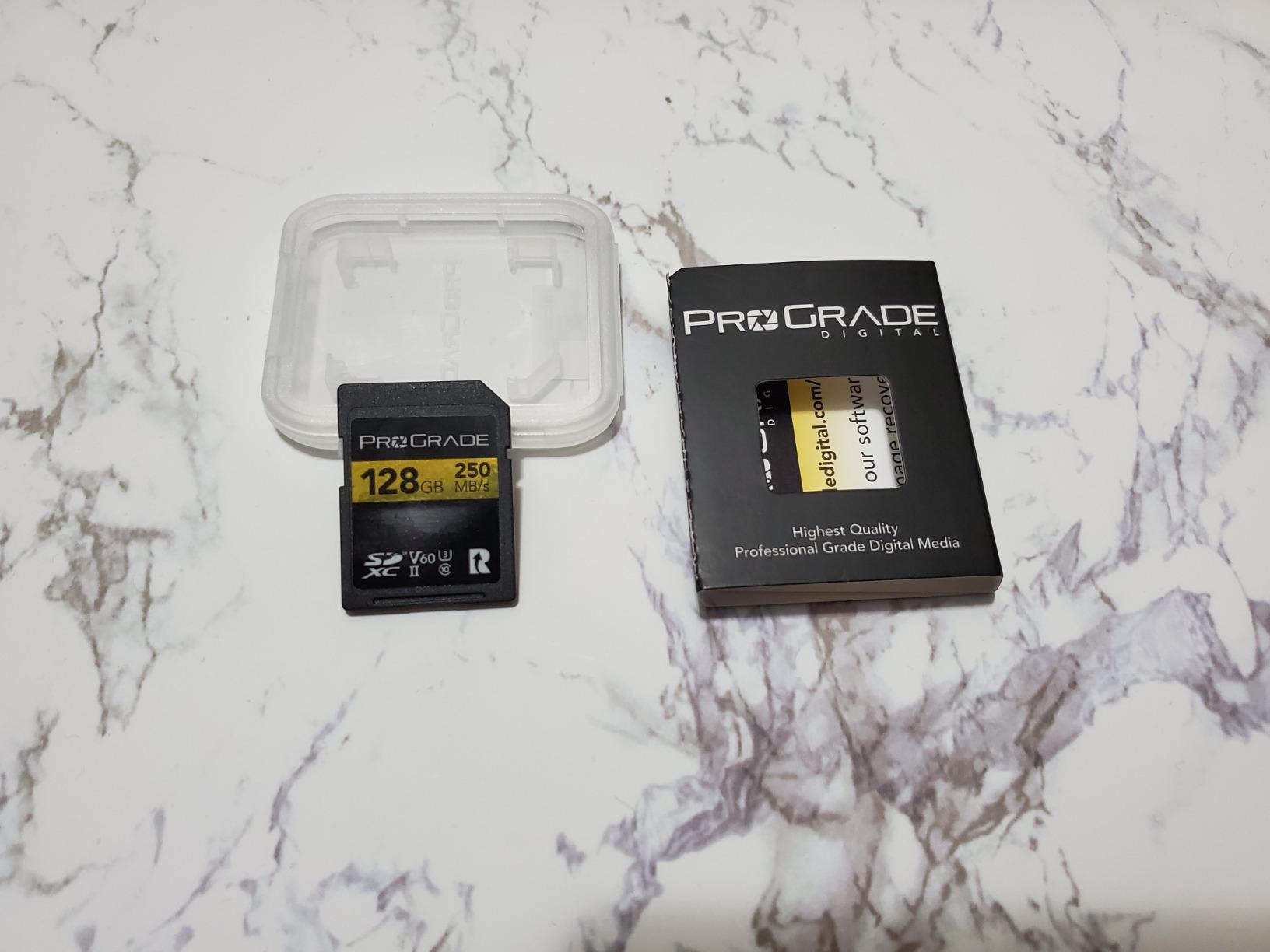
5. ProGrade Digital V60 Gold 128GB – Best for 4K 10-Bit Recording
ProGrade Digital SDXC UHS-II V60 Gold Memory Card (128GB)
UHS-II 250MB/s read
130MB/s write
V60 video class
128GB SDXC
Pros
- V60 class handles 4K 10-bit on Lumix and Sony bodies without write errors
- Measured speeds exceed rated figures on USB4 and Thunderbolt setups
- Buffer clears fast enough that frame rate becomes the limit
- Laser-etched serial numbers deter counterfeits
Cons
- Needs a UHS-II reader to reach the rated read speed
- Minimal paper packaging is easy to lose
- Some older Pentax bodies needed a reformat each session
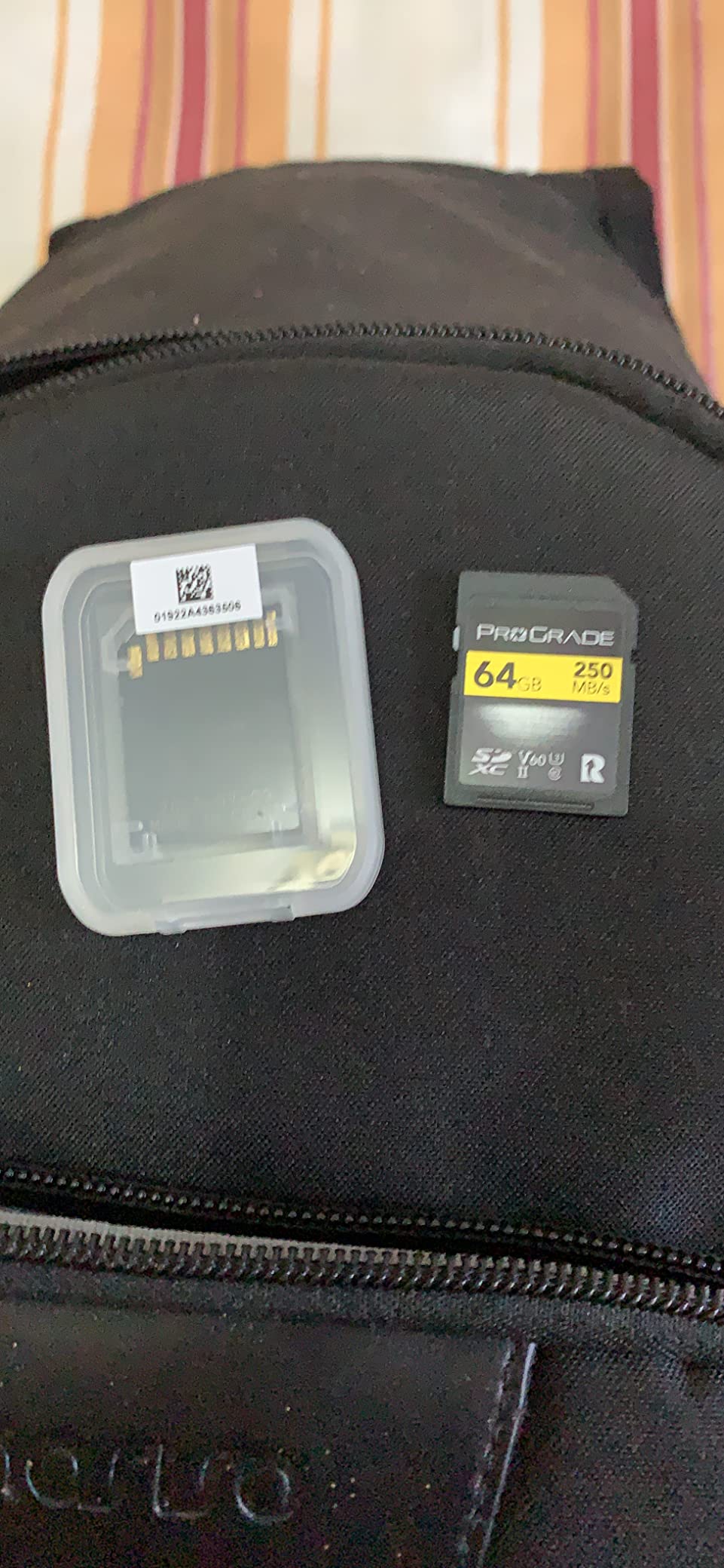
ProGrade builds these for people who read the fine print, and the fine print here is good. The card is inspected before it ships, the serials are laser-etched rather than printed so a fake is harder to pass off, and the V60 class is specified for 4K 10-bit work rather than general video.
Professionals report that measured read and write speeds meet or exceed the printed 250MB/s and 130MB/s on Thunderbolt readers, and that the V60 floor is enough for 4K 10-bit 4:2:2 without a single write warning. Buffer clearing is fast enough that the camera’s frame rate becomes what limits you, not the card.
The CameraEgg Sony forum picks this specific card out as the sensible stepping stone below V90, which matches our experience: it gives the sustained write margin that 10-bit recording asks for without the step up in cost to a V90 card. It is the recommendation we make to a Sony or Panasonic shooter who wants peace of mind on paid work.
Two practical notes. You need a UHS-II reader to see anything like the rated read speed, and the packaging is deliberately minimal paper, which is good for the environment and easy to lose the card in. Advanced Recovery Pro restoration software is available separately if a card does fail.
Who this card suits
It suits 10-bit 4K shooters on Lumix, Sony and Canon bodies, and anyone whose camera writes an external file over HDMI. It also suits paid work, where the laser-etched serials and the pre-ship inspection reduce the risk of a counterfeit card in a body you cannot afford to have fail.
If you shoot long-form 10-bit 4:2:2 and card swapping is a nuisance, the 128GB capacity plus the sustained write margin is a comfortable place to be.
Where it falls short
It falls short at 120p, All-Intra and 8K, where the 60MB/s guarantee is the ceiling. It also needs a UHS-II reader to deliver its full transfer speed, so a UHS-I reader setup leaves value on the table.
At older Pentax bodies, one reviewer needed to reformat the card at the start of every session. If you shoot an older body, check compatibility before you commit.
6. ProGrade Digital V90 Iridium 128GB – Best for 4K 120p and All-Intra
ProGrade Digital SDXC UHS-II V90 Iridium Memory Card (128GB)
V90 90MB/s sustained write
300MB/s read
200MB/s write
128GB UHS-II
Pros
- Sustained write holds steady through long 4K and 6K takes
- Handles 4K 10-bit 4:2:2 with safety tracks without errors
- No write errors or dropped frames on Sony Canon and FX6 bodies
- Very fast offload with a UHS-II reader
Cons
- Costs more than 128GB UHS-II V60 cards
- Fits camera card slots snugly
- No UHS-II reader included
This is the card that removes the question. The V90 mark guarantees 90MB/s of sustained write, and the manufacturer states the same figure explicitly, so there is no interpretation work to do. If your camera can record at 120p, in All-Intra, or at 8K, this is the class that was designed for it.
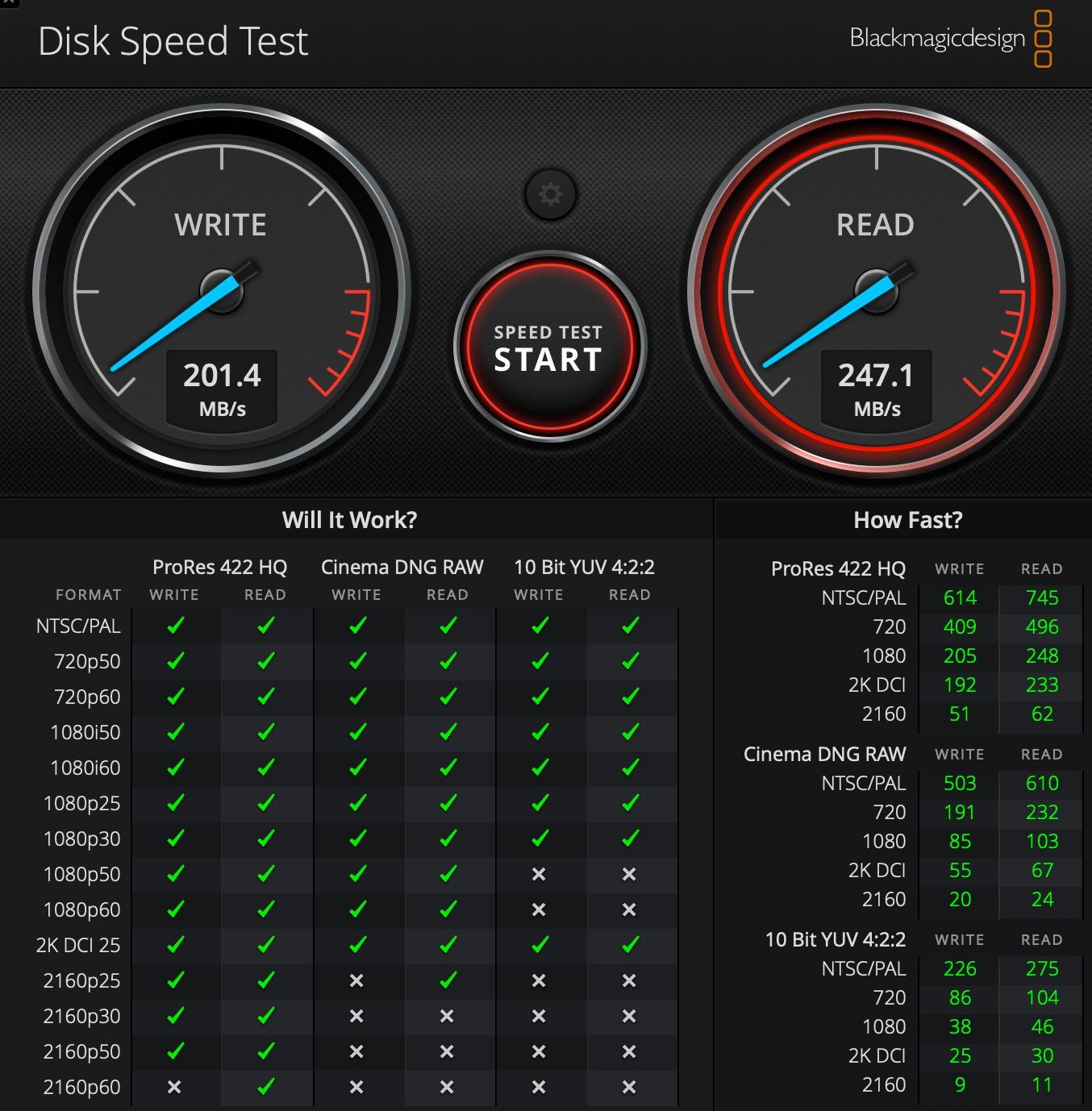
Cinema and mirrorless users report a write speed that stays constant with no interruptions or errors across 4K 60p, 4K 10-bit 4:2:2 and multi-hour sessions in high temperatures. That last point is the one people care about on a long day, because a card that thermally throttles in a hot car is a card that fails at take six.
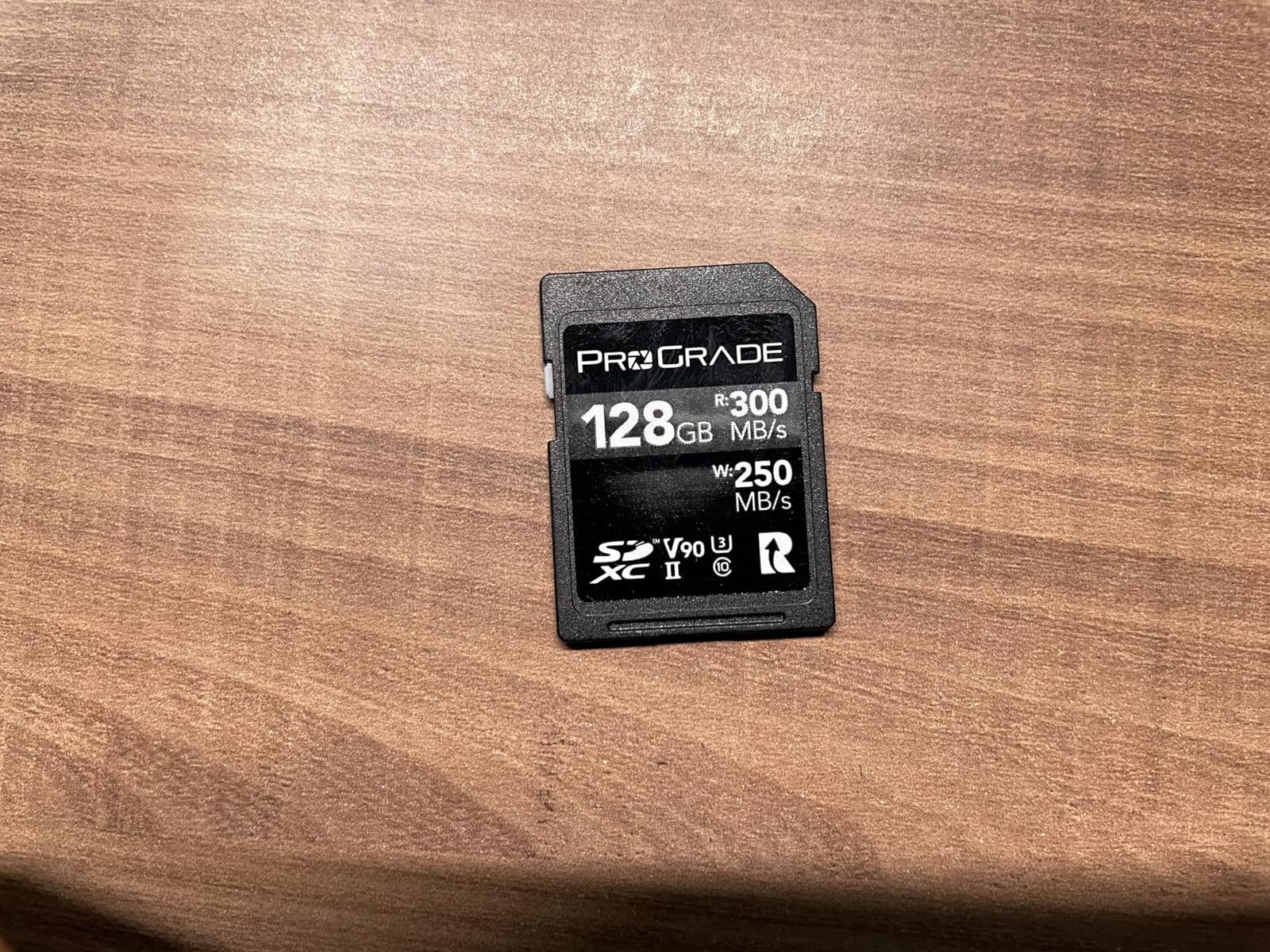
The controller and firmware are tuned for cinematic bodies, 4K, 8K and RAW, and the card carries full component-level testing with serialised tracking. Refresh Pro is available separately to sanitise and monitor card health, which is a genuinely useful tool if you reuse cards across client jobs.
Users moving from consumer V30 cards to this one on Sony bodies report a large drop in anxiety, and Sony-rumors forum threads make the same observation about high-end UHS-II cards on those bodies. The reservation everyone has is the same: 128GB is a modest amount of capacity for the money, so you will change cards more often.
Who this card suits
It suits 4K/120p shooters, All-Intra and high-bitrate 10-bit users, and anyone recording 8K or RAW video. The stated compatibility list covers Canon, Sony, Nikon, Olympus, Panasonic, Fuji and Samsung bodies, so it is a safe choice across mixed brands.
It also suits anyone who shoots long sessions in heat, since the reported stability through repeated reformatting and long hot sessions is the specific thing V90 buys you over V60.
Where it falls short
It falls short on value per gigabyte. This is the most expensive 128GB UHS-II card in the group, and if your highest mode is 4K/60 at 10-bit, a V60 card does the same job for less.
It is a full-size card, so it is no use in an action camera or a drone, and you need to buy a UHS-II reader separately to benefit from the 300MB/s read figure.
7. Kingston Canvas React Plus 64GB – Best for 8K Video Capture
Kingston Canvas React Plus 64GB SD Card | SDXC UHS-II | 300R/260W U3 V90 | Full HD/4K/8K | SDR2/64GB
UHS-II 300MB/s read
260MB/s write
V90 video class
64GB SDXC
Pros
- V90 class with 300MB/s read and 260MB/s write
- Built for professional camera and content workflows
- Water proof for outdoor shooting
Cons
- 64GB fills quickly at high bitrate
- Full-size SD form factor not microSD
- Warranty terms are less clearly stated at this size
Raw throughput is the headline here, and it is unusually high for a 64GB card: 300MB/s read and 260MB/s write on a UHS-II bus with a V90 guarantee. Feedback centres on pro-level throughput with no dropped frames in professional cameras, which is what you would expect from a card in a working body.
Warranty terms matter for a card you keep across camera generations, and they are worth confirming on the specific capacity before you buy rather than assuming they match the larger cards in the range.
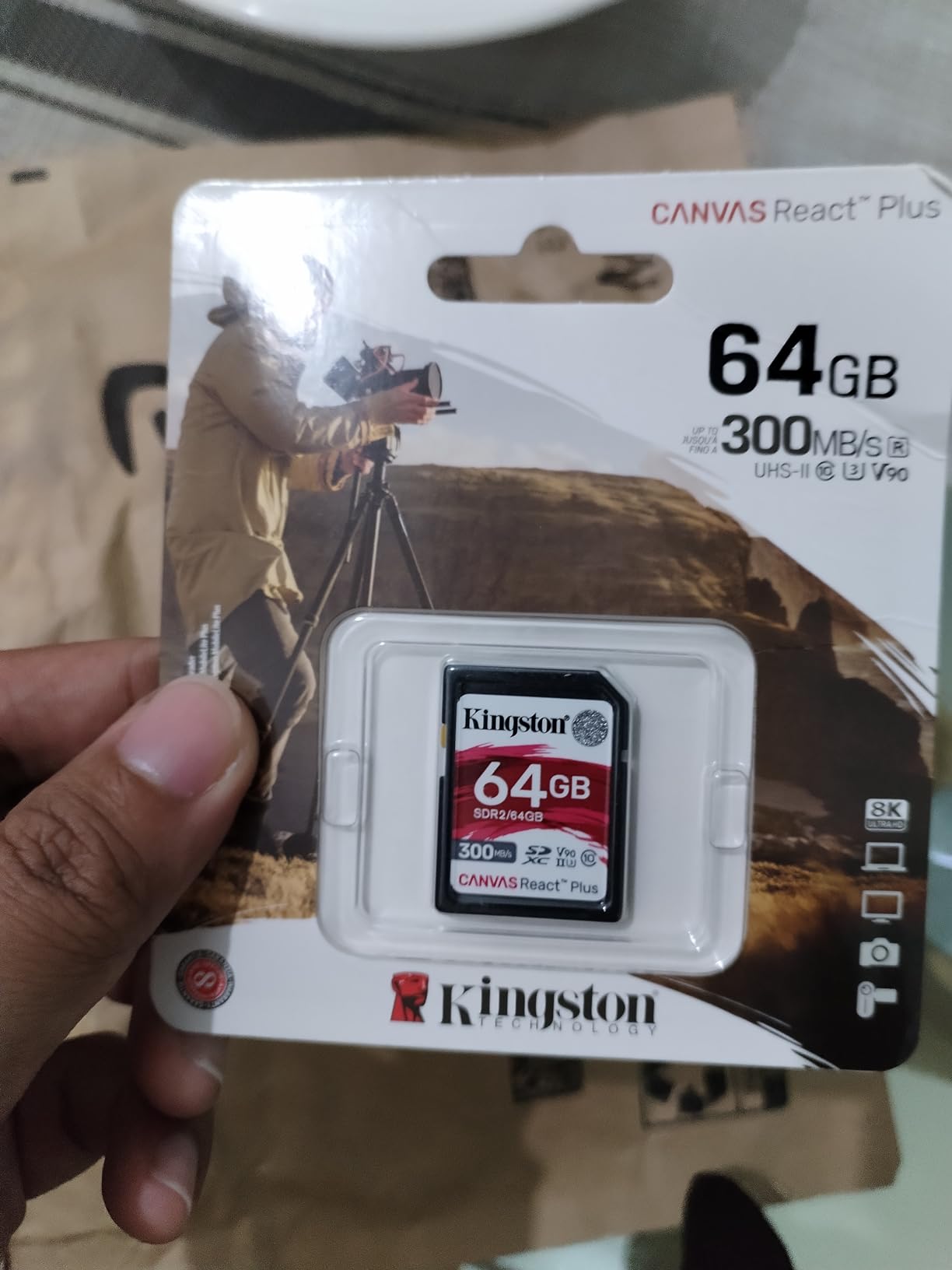
The limitation is obvious and worth stating plainly: 64GB is small. At 8K bitrates, and at high-bitrate 4K, this card fills in a fraction of a session. Many working shooters use a pair of these and swap rather than dealing with the mental load of one very large card, and a split across two cards also limits what you lose if one fails.
The card is also full-size SD, so it works in mirrorless and cinema bodies with a UHS-II slot and not in an action camera or a drone.
Who this card suits
It suits 8K and high-bitrate 4K shooters who already know their camera can drive a V90 write, and it suits anyone who prefers two smaller cards over one large one for the failure protection that gives.
It also makes sense for a kit you plan to keep and reuse across bodies for years, as long as you check the warranty terms on the exact capacity.
Where it falls short
It falls short on capacity more than anything else. 64GB is a working-session card, not a day card, at the bitrates this class exists to support.
It also does nothing for microSD bodies, and the same sustained write guarantee in a larger capacity would suit most people better.
8. PNY EliteX-PRO60 256GB UHS-II – Best for Dual-Slot Recording
PNY 256GB EliteX-PRO60 U3 V60 UHS-II SDXC Flash Memory Card, 4K Ultra HD
280MB/s read
180MB/s write
V60 video class
256GB UHS-II
Pros
- V60 class handles 4K 60p and 4K 120p on the Sony FX30
- Consistent writes with no corruption across long sessions and reformatting
- 280MB/s read makes offloading large footage quick
- 256GB suits extended shoots and dual-slot recording
Cons
- One reviewer reported a card failing within a few months
- Limited documentation compared with larger brands
- UHS-II speeds not fully realised in every host device
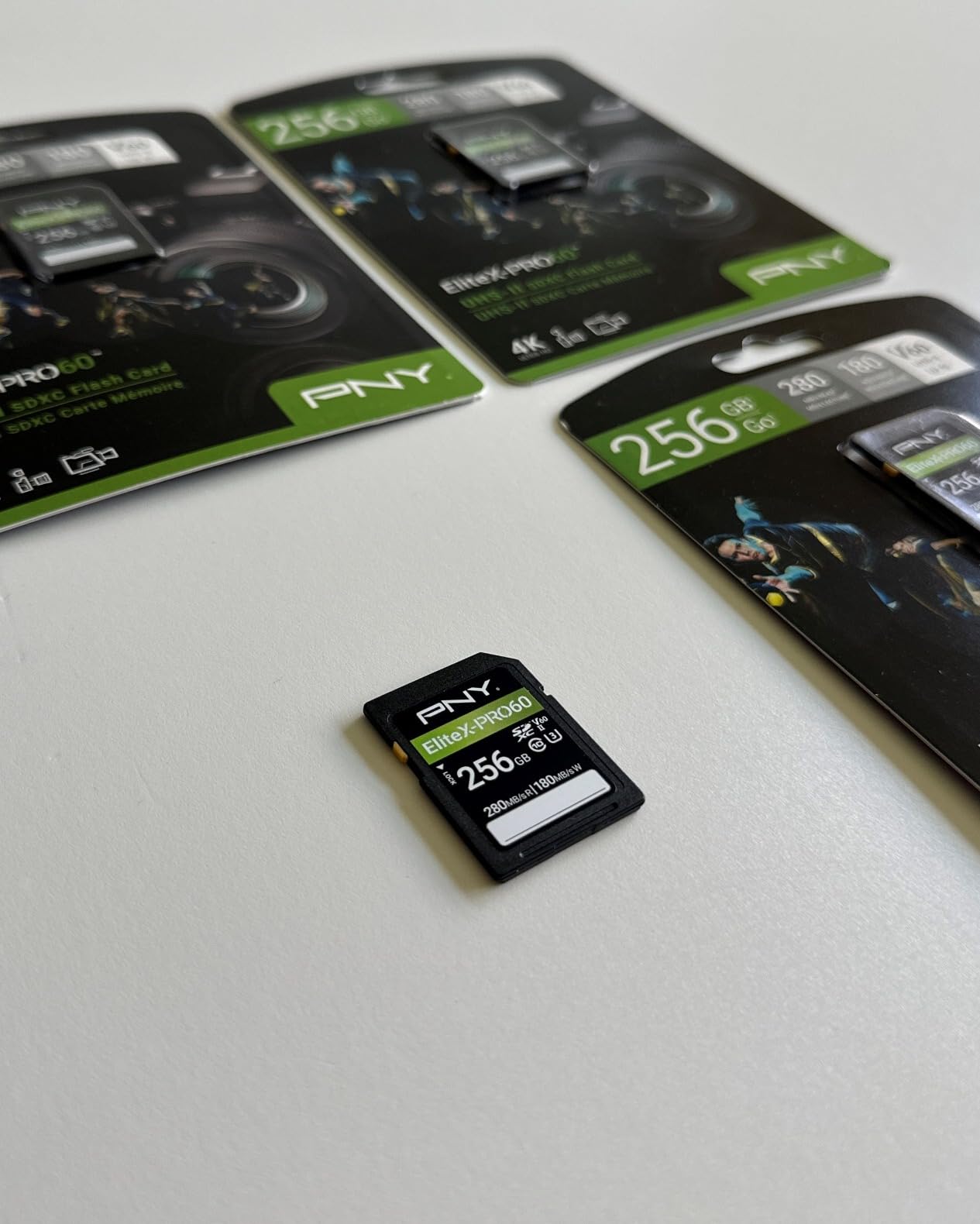
Capacity plus a V60 floor is the combination that makes this card interesting. 256GB of full-size UHS-II storage means extended shoots without a card change, and the 60MB/s sustained write guarantee is enough for 4K 60p at high quality. Reviewers running it in Sony FX30 and Canon R7 bodies report 4K 120p capture working where V30 cards had not.
The dual-slot angle is the reason we like it. A 256GB card in one slot and another in the other gives you a full day’s 4K recording, and using two cards instead of one is the cheapest insurance against a single failure taking a whole shoot with it.
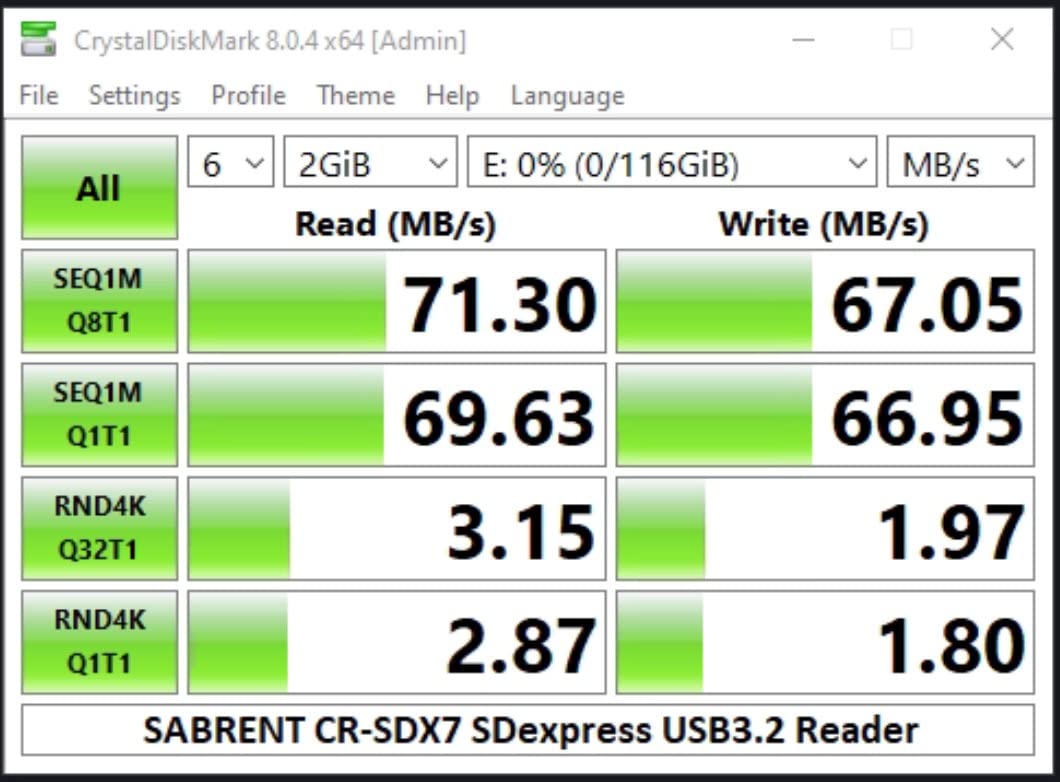
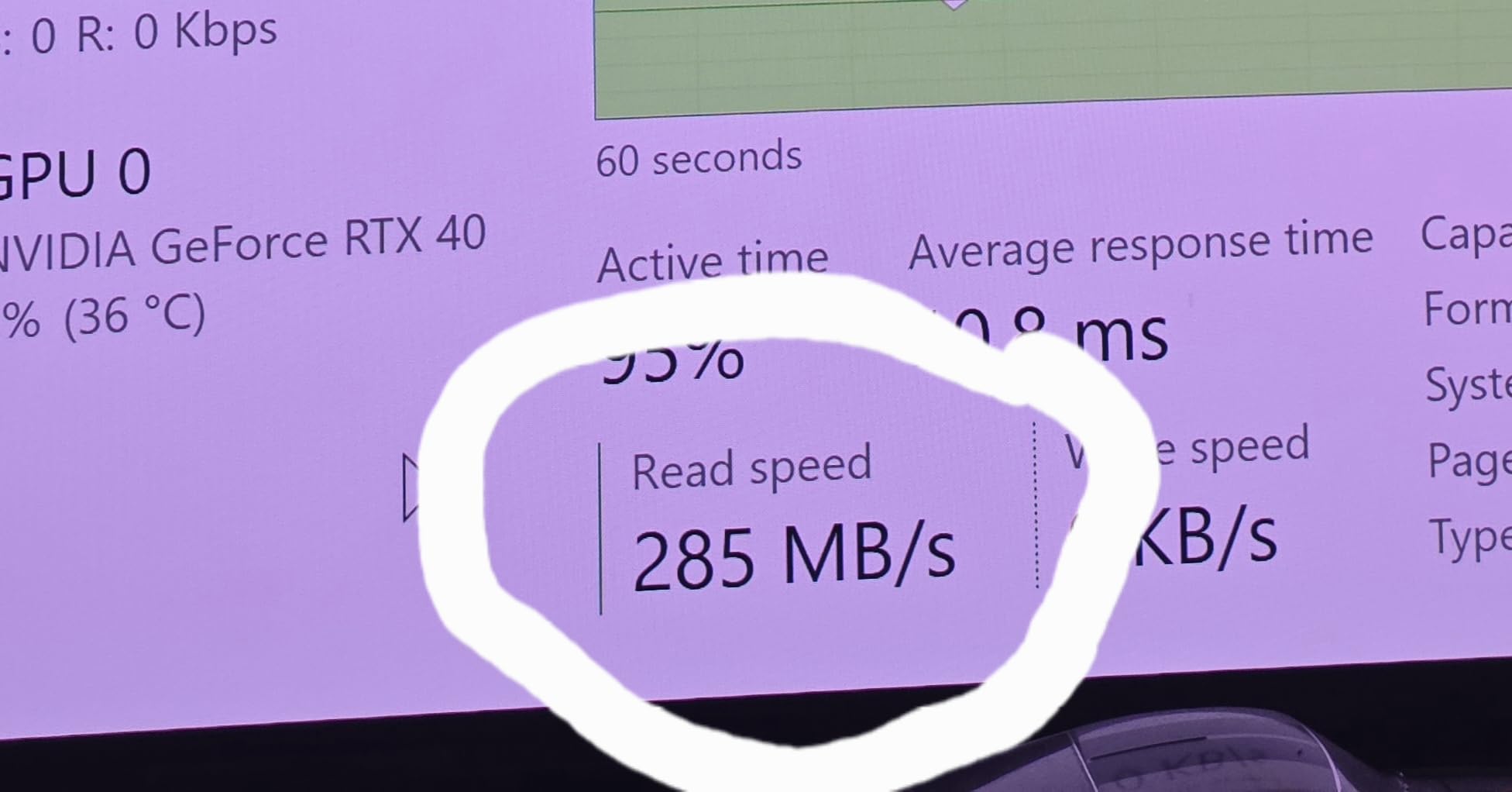
Sustained write speeds hold across long sessions, repeated reformatting and heavy rewrites with no corruption reported, and 280MB/s read makes the offload of a card this size bearable. Magnet, shock, temperature and water proofing covers outdoor work, and the card falls back to UHS-I speeds in older equipment.
The quality signal to weigh is that one reviewer had a card fail within a few months, which the brand replaced. It is a single report against a large user base and it is not a pattern, but on a paid shoot it is the kind of thing to plan for rather than ignore.
Who this card suits
It suits Sony FX30 and Canon R-series shooters recording 4K 60p and 4K 120p, and it suits anyone whose camera has two SD slots and wants the spread across both. The 256GB capacity reduces the number of card changes on a long day to almost none.
It also suits shooters who shoot 4K plus stills on the same card, since the UHS-II bus keeps buffer clearing short between bursts.
Where it falls short
It falls short on brand assurance. Documentation and product information are thinner than the big names, and the UHS-II read speed is not fully realised in every host device, so your offload time will vary with the reader and the body.
It is V60, not V90, so All-Intra and the highest 4K profiles still sit outside what the rating guarantees.
9. Lexar Gold 256GB UHS-II microSD – Best for Drones and 360 Cameras
Lexar 256GB Gold Micro SD Card, 280MB/s Read, 4K, V60, UHS-II, A1
UHS-II microSD 280MB/s read
180MB/s write
V60 video class
256GB
Pros
- V60 holds long 4K UHD takes without dropped frames
- Fast transfers make drone and action camera offloads painless
- 256GB suits extended recording sessions
- UHS-II microSD is rare and useful in modern drones and handheld gimbals
Cons
- No UHS-II SD adapter included
- Runs hot during sustained large-file reads
- A1 application class only
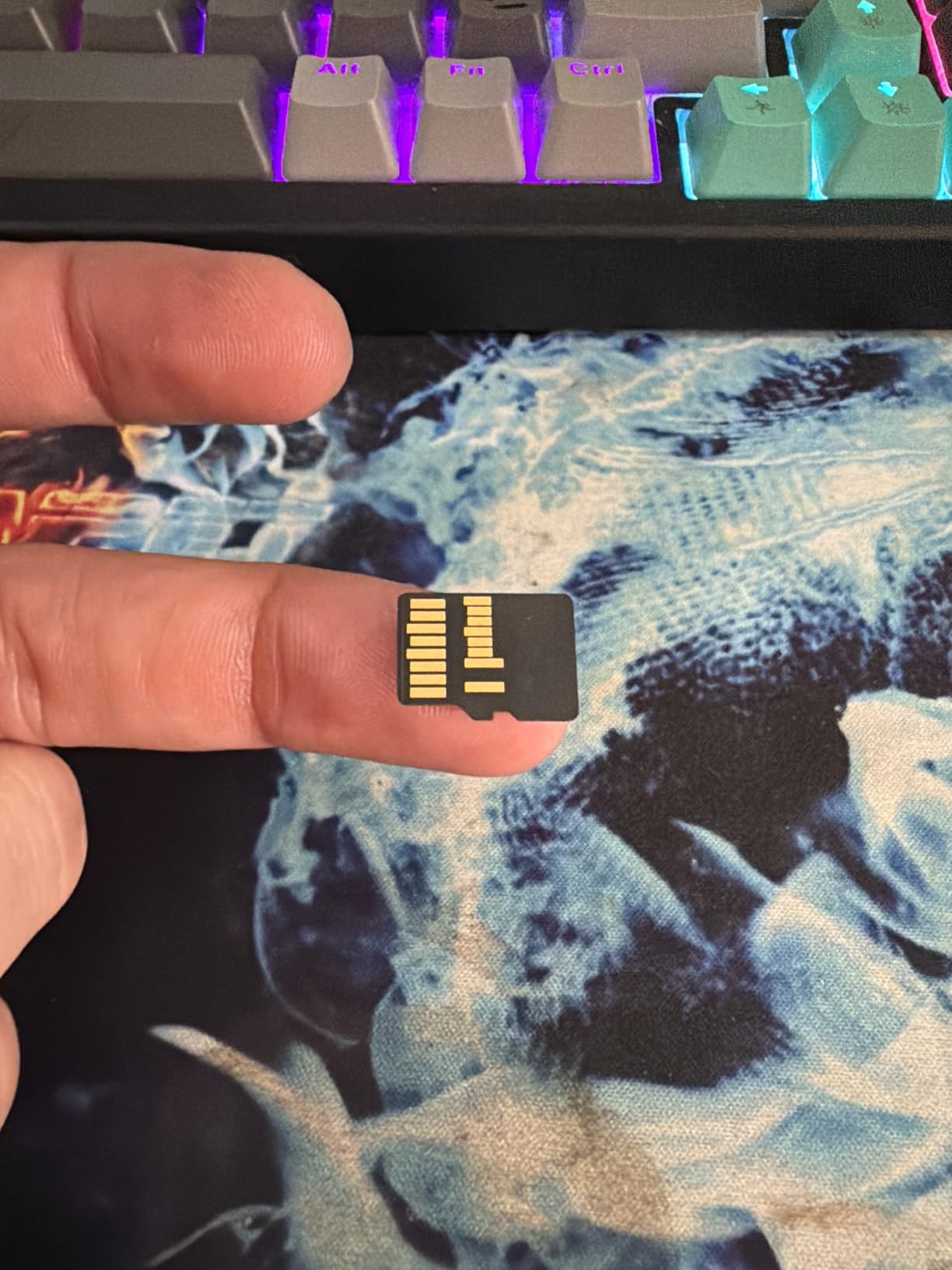
UHS-II in a microSD form factor is still uncommon, and that is the whole reason this card is here. Most action cameras and older drones take microSD only, so for those bodies a V60 microSD is the step up from a V30 that people often overlook.
Drone and action camera owners report smooth 4K UHD recording with no dropped frames or stuttering, quick file transfers and a build that survives handling, and the 256GB capacity is repeatedly praised for long sessions and travel. The limited warranty here is one of the longer ones in the group.
Two things catch people out. There is no UHS-II SD adapter in the box, which matters if you also use this in a full-size slot, and the card runs hot when reading large files continuously, which is worth thinking about in a hot drone fuselage. The A1 application class also rules it out for running games or apps, which only matters if you use the same card for handheld gaming.
Insta360 owners in particular are told by the manufacturer to follow the approved card list exactly, and non-recommended cards are a common cause of failed recordings on those bodies. Check your camera’s list before buying for a 360 camera.
Who this card suits
It suits drone pilots recording 4K, action camera users who want more than V30 headroom, and 360 camera shooters whose body supports UHS-II microSD. The 256GB capacity also suits travel, where swapping cards means carrying more spares.
Handheld gimbals and modern drones with a UHS-II microSD slot get the full bus, which is rare enough that this card stands out in a crowded category.
Where it falls short
It falls short if your body is UHS-I only, where you pay for a bus your camera cannot use. It is also the only card here without an adapter in the box, and the heat behaviour under sustained read load is a genuine consideration in a sealed housing.
Real-world speeds below the published figures are reported by some users, so do not plan your workflow around the 280MB/s number.
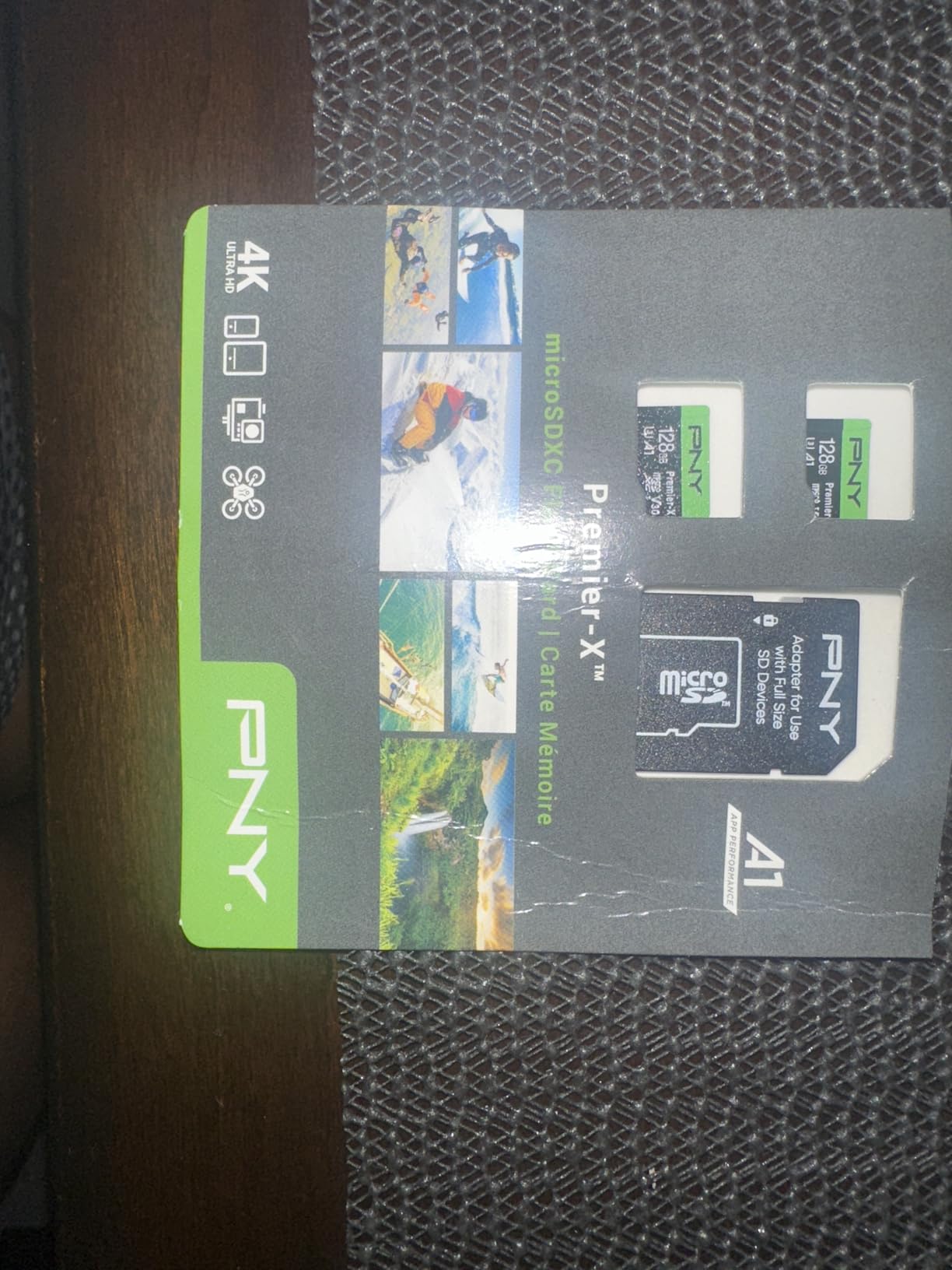
10. PNY Premier-X 256GB UHS-I microSD – Most Versatile
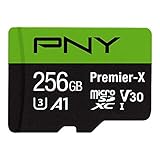
PNY 256GB Premier-X C10 U3 V30 A1 microSDXC Flash Memory Card, UHS-I
100MB/s read
90MB/s media speed
Class 10 U3 V30
256GB microSDXC
Pros
- Handles Full HD and 4K UHD recording without interruptions
- 256GB holds long video sessions plus photos
- Reliable over years of use with no corruption reported
- SD adapter included for full-size slots
Cons
- UHS-I 100MB/s read is the minimum bar for 4K
- V30 cannot sustain very high bitrate 4K
- Limited product documentation on the official site
This is the card to buy when a single dependable V30 microSD covers everything you do. Buyers use it in drones, 360 cameras, deer cameras, tablets and handhelds, describing it as fast, inexpensive and reliable across years of use with no failures.
256GB is a genuinely useful amount for 4K, and the adapter is in the box for full-size slots. A1 application performance class with at least 1500 read IOPS and 500 write IOPS makes it better than most at app and load times on compatible devices, which is where the rating actually applies.
The rating is what caps it. V30 means a guaranteed 30MB/s sustained write, and the 100MB/s read figure is the ceiling of the UHS-I bus rather than something extra. That is fine for 4K UHD at normal bitrates and wrong for 10-bit All-Intra or 120p, and no amount of real-world headroom changes the guarantee.
It is also the lowest rated card in the group, and that shows in the consistency of feedback. Where the higher-rated cards report specific body compatibility issues, this one reports general reliability, which is a different kind of reassurance.
Who this card suits
It suits beginners, travel shooters and anyone who wants one card for a phone, a drone, a 360 camera and a full-size camera slot. 256GB removes the card-swapping problem for most people, and the adapter is included.
It also suits anyone building a kit around a V30 recommendation in their camera manual, since this card matches that requirement and adds capacity.
Where it falls short
It falls short on write headroom for high-bitrate 4K, and the UHS-I bus means no upgrade path if you later move to a UHS-II body. For a 4K/60 shoot with a 10-bit profile, move up a class rather than relying on the 90MB/s media speed figure.
Documentation on the official site is limited, so if you need spec confirmation before a paid shoot, check the card in a device rather than trusting a web page.
How to Choose a Memory Card for 4K Video in 2026
Pick the V-rating, not the read speed
The Video Speed Class mark on the front of the card is the SD Association’s guarantee of minimum sustained write speed. V30 promises 30MB/s, V60 promises 60MB/s, V90 promises 90MB/s, and the card has to hold that figure for the whole recording, not just for a burst.
Match it to the mode. 4K/30 and 4K/60 at standard bitrates on a consumer body are V30 territory. 4K/60 at high bitrate, 10-bit 4:2:2 and external recording are V60. 4K/120p, All-Intra codecs, 8K and uncompressed RAW are V90.
The U1 and U3 marks on the same label are the older UHS Speed Class ratings and describe burst write behaviour for stills. Every card in this roundup is U3 rated, so U3 is not a differentiator. A1 and A2 are Application Performance Classes for random read and write, which matter on phones and handheld gaming and barely matter for 4K recording.
Work out capacity from bitrate, not from the biggest number
4K video at roughly 100Mbps consumes about 0.75GB per minute, which is the number most people misjudge. Double the bitrate and you halve the recording time. That relationship is the whole capacity calculation.
At a 100Mbps 4K bitrate, a 64GB card gives you roughly 85 minutes, 128GB roughly 170 minutes, 256GB roughly 5 hours and 45 minutes, and 512GB roughly 11 hours and 30 minutes. At 400Mbps, divide all of those by four.
The practical advice from the drone community is to carry several 64GB or 128GB cards rather than one large one, so a single failure cannot take a whole shoot with it. That is also a good reason to prefer two mid-size V60 cards over one expensive V90 card.
Match the form factor and bus to your body
Full-size SD goes in mirrorless and DSLR bodies and cinema cameras. microSD goes in action cameras, drones, 360 cameras and many handheld gimbals. SDHC covers 4GB to 32GB, SDXC covers 32GB upwards, and SDUC extends that range further. A camera that only accepts SDHC will not see an SDXC card at all.
UHS-II adds a second row of contacts and roughly triple the bus bandwidth. The rule we follow is simple: never buy a UHS-II card for a camera or reader with only a UHS-I slot, because the card silently runs at UHS-I speeds and you paid for the bus twice. Buying a UHS-I card for a UHS-II body is a different situation, since recording still works fine.
microSD in an SD adapter is acceptable for 4K/30 and 4K/60 on most bodies, and a poor choice for 120p, All-Intra and long high-bitrate takes. A native card in the body is always the safer choice when you have one.
Test a new card before you rely on it
Format the card in the camera, record a full-length take at your highest bitrate, and play it back before the shoot. That single step catches the majority of problems, including cards that are slower than their label or that report less capacity than they should.
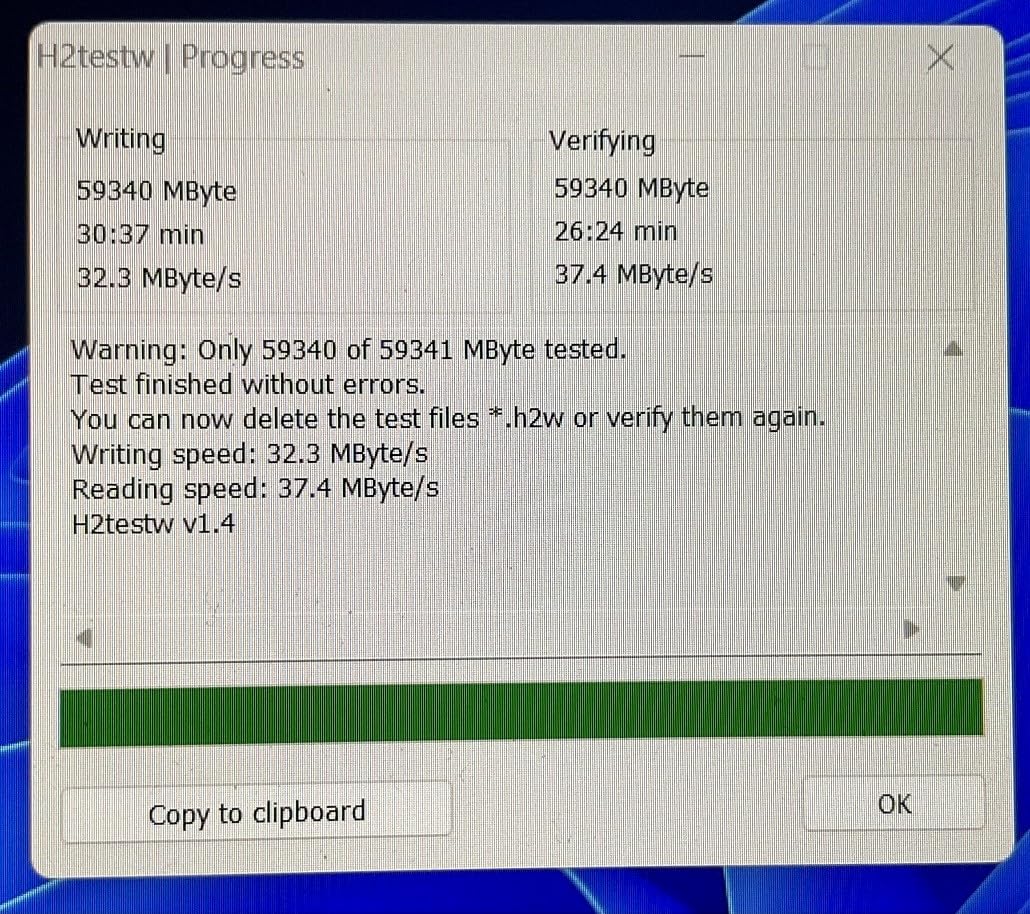
For a deeper check, write the full card with a tool like h2testw, F3 or the Mac equivalent and read it back. A genuine card passes with no corrupted files. A counterfeit card that reports more capacity than it has fails in a specific, unmistakable pattern, and you find out before you are standing on a hillside rather than after.
CrystalDiskMark reports the sequential speeds, which tells you whether the card is performing anywhere near its rating in your reader. Remember that a UHS-II card in a UHS-I reader will read at UHS-I speeds, and that is the reader, not the card.
Avoid counterfeits and spot them early
Counterfeit cards are concentrated on open marketplaces, where a listing can mix capacities, generations and fake capacity on one page. The r/dji and general camera community treat this as a solved problem: buy from authorised retailers, and be suspicious of any card priced far below the rest of the market.
Physical checks help. The label typography should be crisp and consistent, the colour should match the manufacturer’s current design, and cards with laser-etched serial numbers, such as the ProGrade cards here, are much harder to fake convincingly. A card that arrives in a resealable bag with no packaging history deserves a test before you trust it.
Keep the habit of multiple cards and weekly backups
Format cards in the camera, not on a computer, and do it at the start of every project rather than when a card fills up mid-take. Offload footage to two separate drives rather than one, and treat cards as working storage rather than archive: flash memory degrades over time, and footage that matters should be moved to long-term storage and verified.
Camera bodies with two slots can spread recording across both cards, relay from one to the other, or record backup copies in parallel. Any of those is better than a single slot holding an entire shoot.
What to Do When a Card Fails Mid-Shoot
If a camera throws an SD error or tells you the card needs formatting while a take is running, the single most important instruction from every camera forum is this: do not power the camera off. Leave it powered so the controller can finalise the file and close the write session. Powering down mid-write is what turns a recoverable card into a corrupted one.
Wait for the camera to settle, then power down on its own terms and re-seat the card in a reader. Run a recovery tool such as PhotoRec or a card recovery utility on the reader, and copy whatever comes back before writing anything new to the card. Once a file is written over it is usually gone.
Prevention is straightforward. Match the V-rating to your highest recording mode, keep cards in rotation rather than reusing one card for years, and format in camera between jobs. Reviewers also report that a card which has been dropped, bent or left in a hot car is a card to retire rather than test again.
Frequently Asked Questions
Which SD memory card is best for recording 4K video?
A V30-rated SDXC card is the right answer for standard 4K/30 and 4K/60 on most mirrorless bodies, and the SanDisk Extreme 128GB microSD is the pick we recommend most often. If you shoot 10-bit 4:2:2 or high-bitrate 4K/60, step up to V60. If you shoot 4K/120p, All-Intra or 8K, you need V90, which guarantees 90MB/s of sustained write. Form factor matters too: full-size SD for mirrorless bodies, microSD for action cams, drones and 360 cameras.
How fast of an SD card do I need for 4K video?
You need a card whose guaranteed minimum sustained write speed matches your recording mode, not one with a high peak read speed. V30 guarantees 30MB/s and covers standard 4K. V60 guarantees 60MB/s and covers high-bitrate and 10-bit 4K. V90 guarantees 90MB/s and covers 4K/120p, All-Intra, 8K and RAW video. A card below the required class stalls the write buffer, which shows up as dropped frames, a recording that stops early or a corrupt file.
Can you record 4K on a V30 SD card?
Yes, for most 4K modes. A V30 card guarantees 30MB/s of sustained write, which is enough for 4K/30 and 4K/60 at standard bitrates on most mirrorless cameras, drones and action cameras. It is not enough for 10-bit All-Intra, 4K/120p, 8K or very high bitrates, where the write buffer will stall and the camera will either drop frames or stop recording. If your camera menu specifies a minimum V-rating, follow it exactly.
Do you need V90 for 4K video?
Only if you are recording in the modes that demand it. V90 is the right call for 4K/120p high frame rate, All-Intra codecs, 8K recording and uncompressed RAW, where the 90MB/s sustained write guarantee is what keeps the buffer clear. For ordinary 4K/30 and 4K/60, a V30 card is enough and a V60 card is comfortable. Paying for V90 when your highest mode is 4K/60 is money you do not need to spend.
How many hours of 4K video fit on a 128GB SD card?
At a typical 4K bitrate of about 100Mbps, a 128GB card records roughly 170 minutes, or just under three hours. The rule of thumb is that 4K at 100Mbps uses about 0.75GB per minute, so 64GB gives about 85 minutes and 256GB about 5 hours and 45 minutes. At a 400Mbps bitrate, divide all of these by four. Check your camera’s actual bitrate setting for the mode you record in before you plan a shoot day.
The Best Memory Cards for 4K Video Recording in 2026
The best memory cards for 4K video recording come down to one number on the front of the card. If you shoot 4K/30 or 4K/60, take the SanDisk Extreme 128GB microSD, our editor’s choice for the way its 90MB/s write figure sits well above the V30 guarantee while the price and format stay sensible. Add a full-size card from the same class for a body with only a UHS-I slot.
Once you move up in bitrate, V60 is the working class. The Lexar Professional 1667x is the best value of the group and the ProGrade V60 Gold is the one to trust on 10-bit 4:2:2 and paid work, while the PNY EliteX-PRO60 gives you 256GB to spread across dual slots. For drones, action cams and 360 cameras, the Lexar Gold 256GB UHS-II microSD is the only card here with a V60 rating in that form factor.
Save V90 for the modes that need it. The ProGrade V90 Iridium is the card for 4K/120p, All-Intra and 8K, and the Kingston Canvas React Plus gets you into the same class at 64GB if you prefer two smaller cards to one large one.
Format in camera, test a full-length take before you rely on a new card, and buy from a retailer you trust. None of that takes long, and all of it protects footage you cannot re-shoot.