
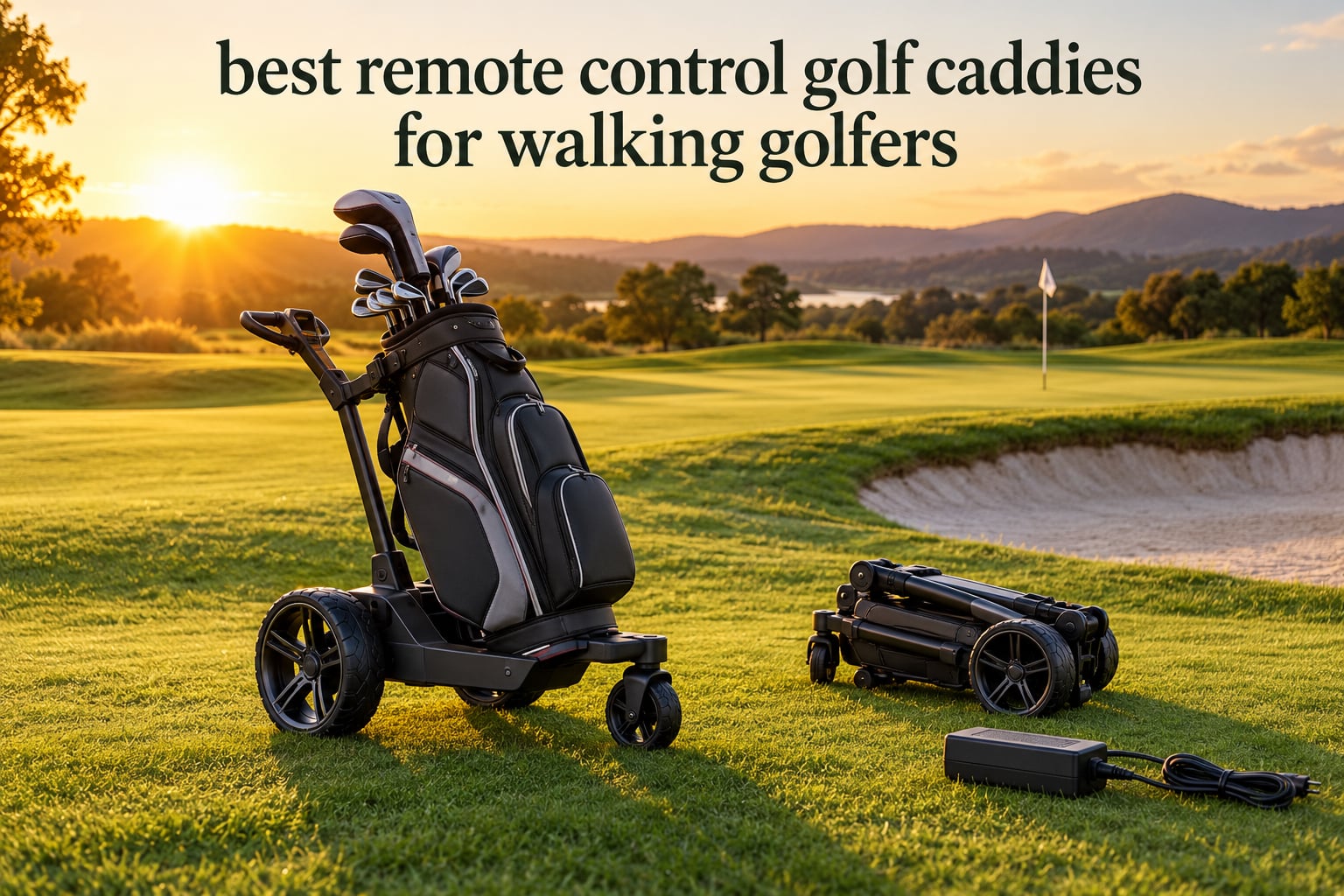
A remote control golf caddy is an electric push cart with a battery-powered motor and a handheld handset. It lets a walking golfer send the bag ahead, hold it at a set distance, or, in auto-follow models, track you hands-free using sensors clipped to your belt or bag. That last option is what pulls most buyers in, and it is also what most buyers end up switching off after a few rounds.
Every cart in this roundup was chosen with one reader in mind: someone who walks every round and wants to protect the back, shoulder and legs that a full bag slowly wears down over 18 holes. That reader asks very specific questions, and they are not the questions most roundups answer. Will this thing keep pace with me on a dogleg instead of sailing into the water? Can I still get it into the car after a twilight round? What do I do when the remote dies at the 12th? I built this list around those questions.
One note on method before we get into the picks. We did not lab-test these carts on a driving range. Instead we read every published spec sheet line by line, then read the owner reviews in full and cross-checked the complaints against the spec claims. Where owners and spec sheets disagree, we believe the owners. Where a feature is advertised but appears in almost no owner review, we say so. A word on scale: these are heavy objects, and anyone buying for back or mobility reasons should read the weights in this list carefully before anything else.
One related decision we have written about before is choosing a small computer to run your own gear rather than relying on a phone app, covered in our guide to small form factor computers. The same logic applies to a caddy: a handset that only does one job beats a phone app that does everything badly.
Table of Contents
Top 3 Remote Golf Caddies for Walking Golfers in 2026
Three carts stood out once we sorted the field by the things a walking golfer actually feels: how it behaves on a sidehill, how much it weighs when you lift it, and whether the automation can be overridden. These three earned a place on the podium; the other seven are still worth reading, because two of them solve a specific problem better than any of these.

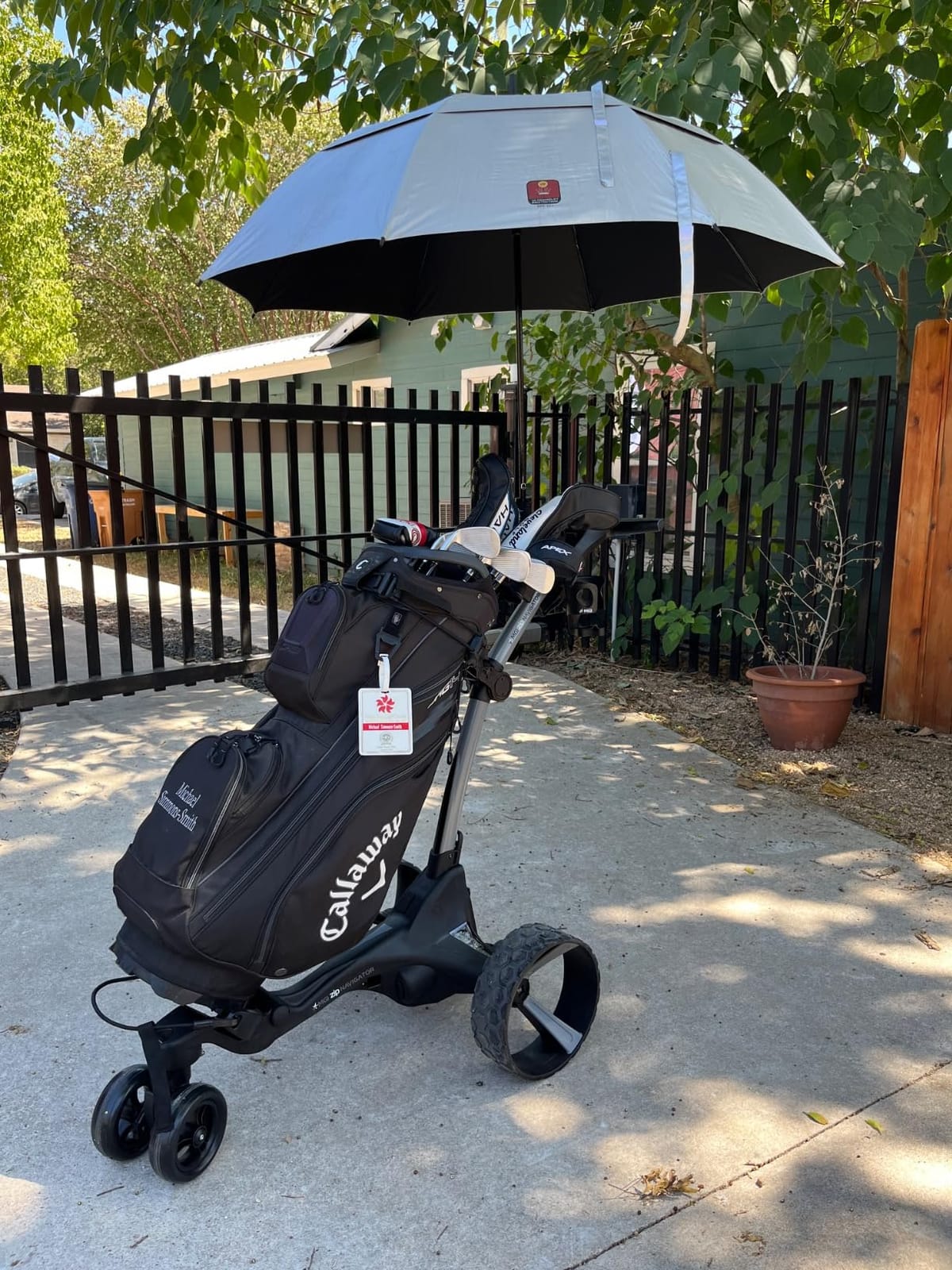
MGI Zip Navigator All Terrain
- 36-hole lithium battery
- Twin 230W motors
- Zip Fold compact frame
- Color-coded Click and Go battery


Quick Overview: 10 Remote Golf Caddies Compared in 2026
Here is the whole field on one line each. Note that two entries are deliberately different from the rest: one is a pure manual motorized trolley with no remote at all, and one is a bundle that includes wheelie bars. Both earn their place, and we explain why in their sections.
| Product | Specs | Action |
|---|---|---|
| MGI Zip Navigator All Terrain |
|
Check Latest Price |
 KVV Compact Remote Cart KVV Compact Remote Cart |
|
Check Latest Price |
 MGI Navigator Ai GPS+ MGI Navigator Ai GPS+ |
|
Check Latest Price |
 Motocaddy M7 Remote Motocaddy M7 Remote |
|
Check Latest Price |
 Wingscaddy Remote Electric Cart Wingscaddy Remote Electric Cart |
|
Check Latest Price |
 Cart-Tek Yellowstone Cart-Tek Yellowstone |
|
Check Latest Price |
| Alphard Cybercart |
|
Check Latest Price |
| tianhong G5 |
|
Check Latest Price |
 MGI Zip X5 Manual Trolley MGI Zip X5 Manual Trolley |
|
Check Latest Price |
 Alphard Omni and Club Booster Bundle Alphard Omni and Club Booster Bundle |
|
Check Latest Price |
1. MGI Zip Navigator All Terrain: Best Remote Golf Caddy Overall for Walking Golfers
MGI Zip Navigator All Terrain Electric Golf Cart – 36 Hole Lithium Battery – Remote Control – Accessories Included (Drink, Umbrella, & GPS-Phone Holder), Black
37.3 lbs with battery
Folds to 27.55 x 18.5 x 16.5 inches
Twin 230W motors
36-hole lithium
Pros
- Twin 230-watt motors are genuinely quiet
- Largest review base of any cart here
- Zip Fold frame is compact for its size
- Click and Go battery swaps in seconds
- Three year warranty including battery and charger
Cons
- Heaviest remote cart in the group at 37.3 pounds
- Dense digital display takes time to learn
The MGI Zip Navigator All Terrain is the cart I would put in front of most walking golfers, and the reason is boring and solid: it has the largest body of owner feedback in this entire list at 300 reviews, and the complaints are consistent rather than scattered. When 300 people describe the same ride, you are looking at a product’s real character instead of a launch-week impression.
Those owners describe a cart that is quiet. The twin 230-watt motors produce what reviewers call a whisper-quiet ride, and for a walking golfer walking beside a talking companion that matters more than any headline feature. The nine speed settings let you set a pace that matches a brisk walk rather than a sprint, and the distance send function means you can fire the bag toward the green, walk up yourself, and pick it up when you get there.
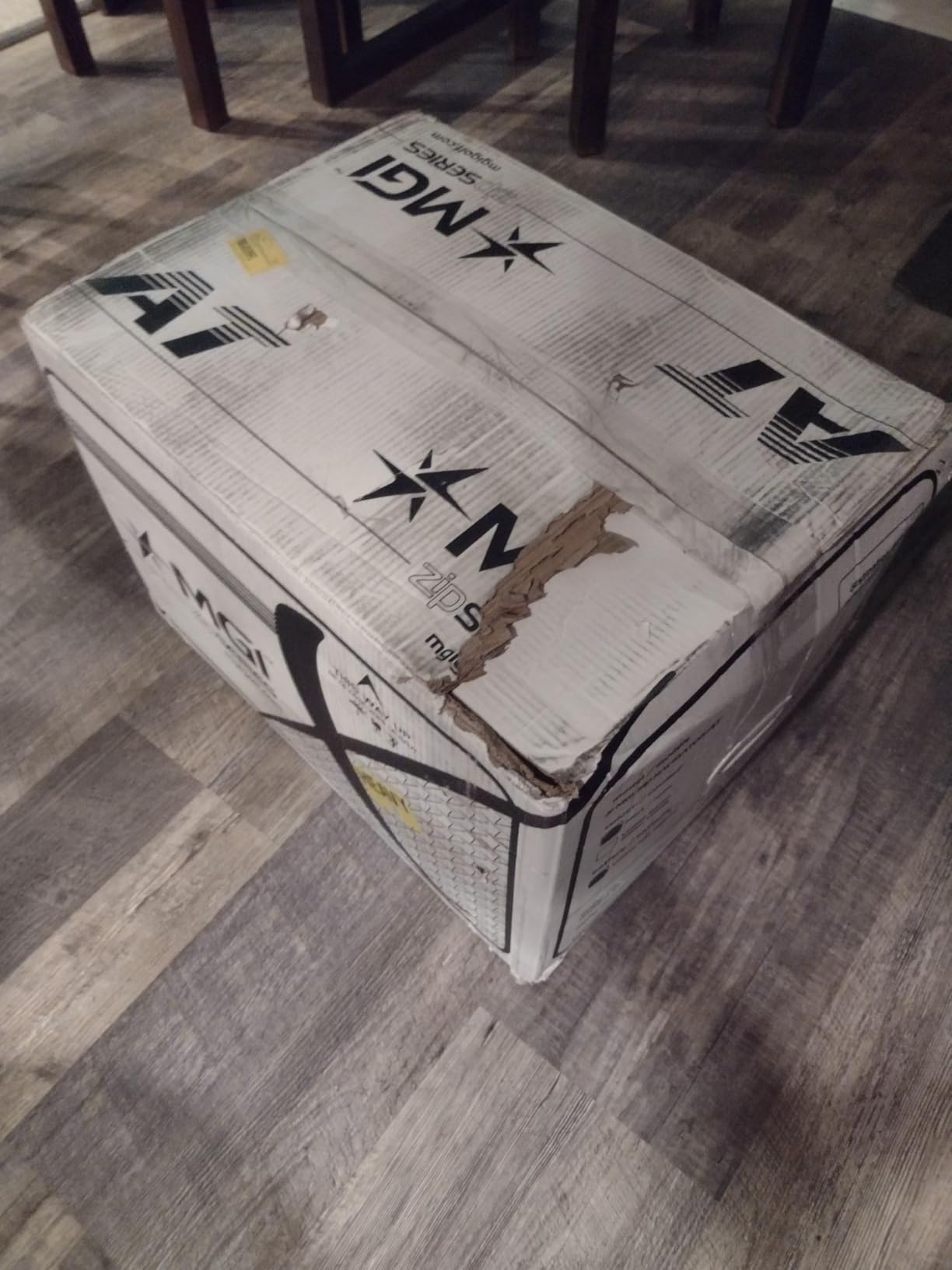
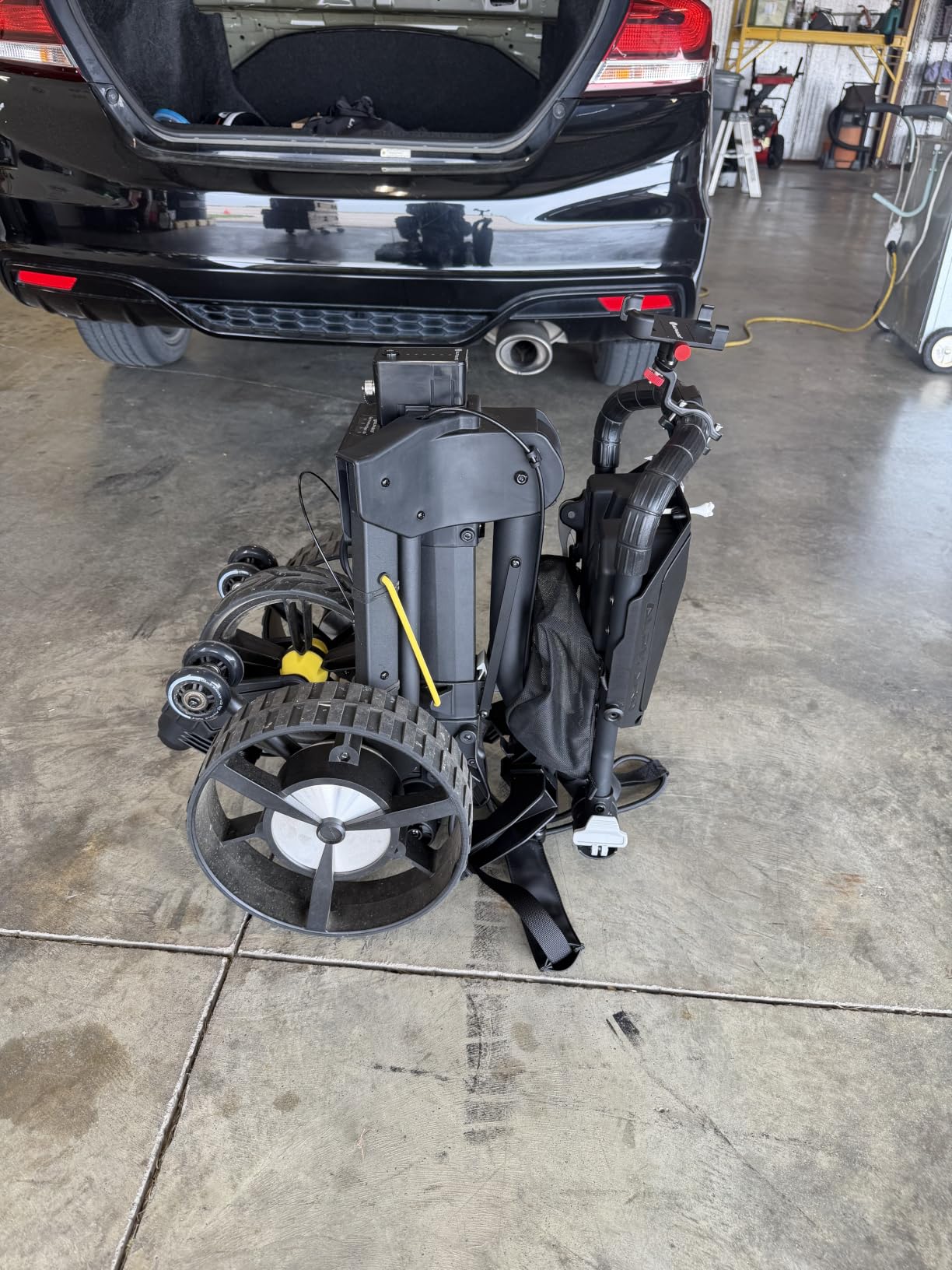
What surprised me in the reviews was how often owners mention the fold rather than the driving. The Zip Fold frame uses rear wheels that invert on the axle, collapsing the cart to 27.55 by 18.5 by 16.5 inches. Several owners describe folding it at the car in a single motion while holding a bag strap with the other hand, which is the real test of a compact frame.
The battery is a removable Click and Go lithium pack with a color-coded charge port, rated by the manufacturer at 36 holes. The color coding means you are not squinting at a dial in a car park to work out which way round the plug goes, and the pack lifts out for charging so the cart stays in the car.
Can You Realistically Lift This Into a Car?
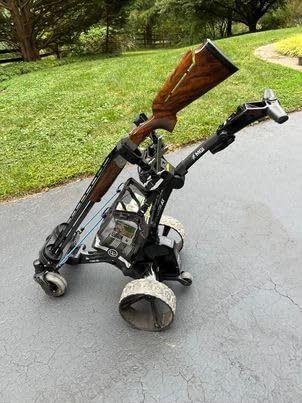
At 37.3 pounds with the battery in, this is at the heavy end of the roundup, and we will not pretend otherwise. The single most repeated reservation in the reviews is precisely this: the weight when lifting it into and out of a vehicle. For a fit 25-year-old it is a two-hand lift. For the older golfer who wants the cart to protect a bad shoulder, it can undo the benefit on the first trip of the season.
Test the lift before you commit. Many owners lift it by the T-bar handle, which is adjustable, and some have found that lowering the handle makes the frame awkward to grip. If your daily routine involves a high trunk lip or a crossover with a raised boot floor, do that lift ten times in a shop before you buy.
What Do You Give Up Compared With Smarter Carts?
There is no touchscreen, no course mapping and no follow mode. You drive this cart with a handset, full stop. For a lot of walking golfers that is a feature rather than a compromise: manual remote control cannot lose tracking, cannot drift toward a pond, and cannot be knocked out of alignment by a crowd of other golfers at the tee.
The digital console is also dense. Owners describe several indicators, an odometer, distance modes and a USB charging port under the handle, and a fair number of first-timers say the setup takes a call to the manual. Budget twenty minutes with it before your first round and it becomes second nature.
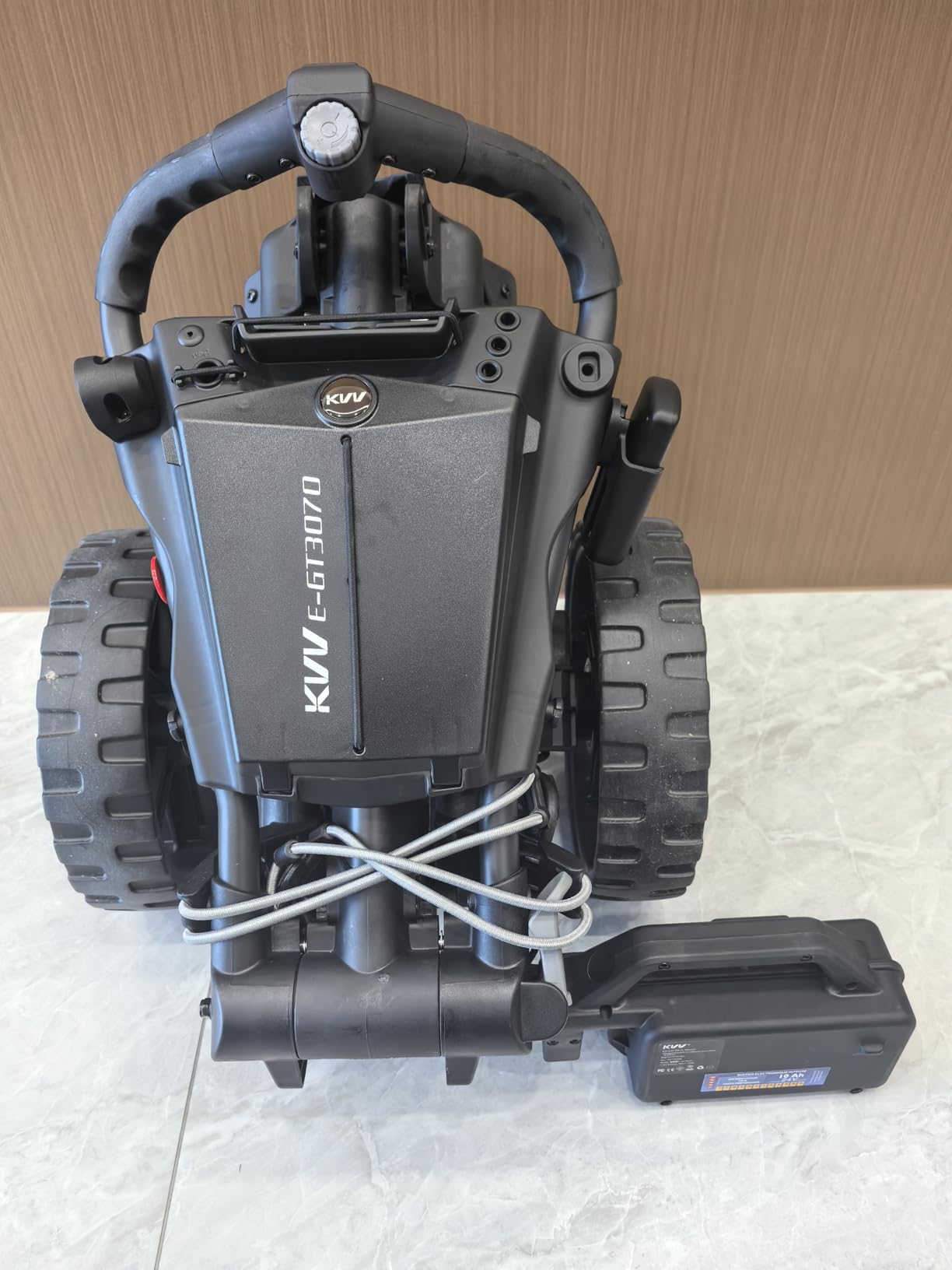
2. KVV Compact Remote Cart: Best Value Remote Caddy for Weight-Conscious Golfers
KVV Electric Golf Push Cart with Remote Control, Smallest Folding Size, Suitable for All Terrains, Lightweight and Super Compact Electric Golf Cart
27.9 lbs with battery
Folds to 17.5 x 18.7 x 22 inches
Aluminum frame
Nine speed remote
Pros
- Lightest remote cart in the roundup at 27.9 pounds
- One of the most compact folds available
- Dual mode means you can push it manually on a dead battery
- Two training wheels and a straight-line tracker
- Insulated cooler bag and carry bag included
Cons
- Roughly 18 holes per charge rather than 36
- Remote pairing can take a few attempts
- Jerky steering at the lowest speed settings
The KVV is the answer to the question we hear most from older walking golfers: can I have a remote cart that I can still lift with one arm? At 27.9 pounds it is 9.4 pounds lighter than the MGI Zip Navigator, and that difference is the whole argument for this cart. Owners describe it as the light option in the category, and the 4.4 average across 113 reviews suggests the light option is not a compromise on anything that matters most.
The frame is aluminum, not plastic or steel, and it folds to 17.5 by 18.7 by 22 inches. That compact fold means it disappears into a storage locker or the boot of a small car in a way the heavier carts simply cannot match.
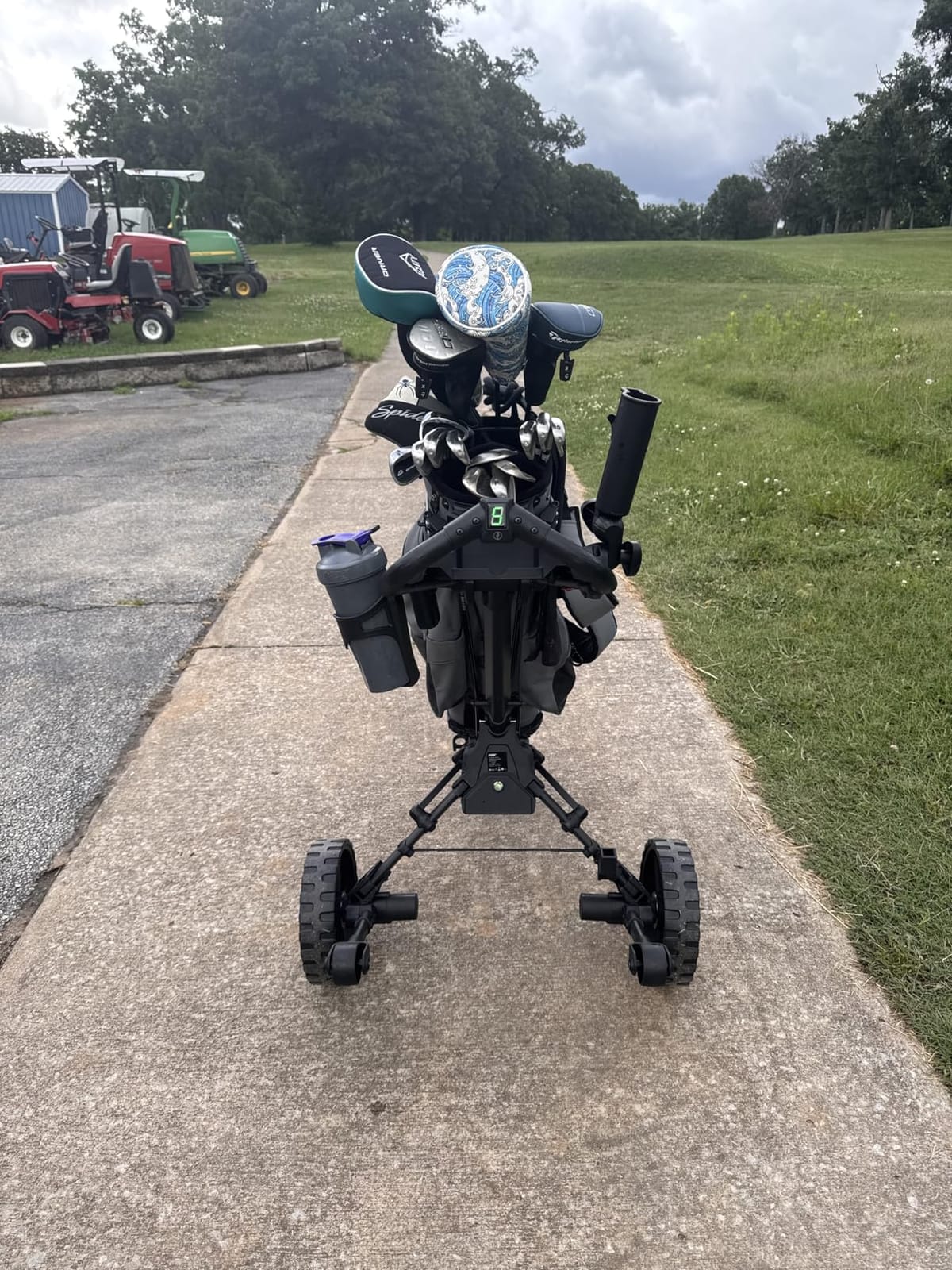
Stability is handled unusually well for a light cart. It uses a wide 30.5-inch rear wheelbase, two training wheels and a straight-line tracker, and that combination is what stops a 27.9-pound frame from getting nervous on a sidehill. The height-adjustable handle and 360-degree swiveling front wheel let you set your walking posture rather than bending to the cart.
Two things about the battery. The review consensus is roughly 18 holes per charge, not 36, so this is a one-round cart rather than a two-round cart unless you charge overnight. And the dual-mode design is a genuine safety net: if the battery dies at the 14th, you unlock both rear wheel knobs on the frame and push it home yourself.
How Fiddly Is the Remote Setup, Really?
This is the most common complaint, so deal with it up front. Owners report that pairing the remote to the cart can take a few attempts on first setup, and that some needed a support contact to walk them through it. Once paired, reviewers describe the remote as responsive with nine speed settings. The setup is a twenty-minute problem, not a permanent one, but budget the time before your first tee time rather than during it.
One more honest note on the controls. Because the mode switch is on the frame rather than the handset, changing between electric and manual means walking to the cart and turning two knobs. If you plan to run the battery flat regularly, that is mildly annoying. If you plan to fully charge every night, you will never touch it.
Is This Cart Stable on a Sidehill?
Better than its weight suggests. The wide rear wheelbase and the training wheels do the work of an anti-tip system, and there are no reports of the cart tipping on a slope, which is the failure we hear most often from owners of the heavier, narrower carts in this list. On a wet sidehill in winter you would still slow down, but this is a cart that will not embarrass you on a mild camber.
3. MGI Navigator Ai GPS+: Best Remote Cart for Golfers Who Want a GPS Screen
MGI Navigator Ai GPS+ Electric Golf Cart – 36 Hole Lithium Battery – Remote Control – Accessories Included (Drink, Umbrella, & GPS Phone Holder), Plastic material, Black
39 lbs with battery
31.5 x 23.2 x 40.9 inches
4-inch color touchscreen
20 speed settings
Pros
- Only cart here with a 4-inch full-color touchscreen GPS
- Gyroscope keeps the cart straight on sidehills
- Owners report about 90 percent charge remaining after 18 holes
- Single-action fold with removable rear wheels
- Digital scorecard and stat tracking built in
Cons
- At nearly 39 pounds this is among the heaviest carts here
- Struggles on steep hills and can tip
- The AI branding overstates what the software does
Only one cart in this roundup puts a full-color GPS touchscreen on the handle, and it is this one. The 4-inch screen gives you Hole View, Green View, a digital scorecard and stat tracking. If you are the walking golfer who has been holding a phone or a handheld unit on your bag for fifteen years, having the course map on the cart console is a real upgrade, not a novelty.
The driving side is more complicated. It uses gyroscope tracking to hold a straight line over sidehills and to hold a set speed downhill, and several owners specifically credit the gyro for keeping the cart from wandering. The problem is the chassis around that clever electronics: a 4.1 average with 14 percent one-star ratings is the lowest satisfaction score in this roundup, and the reviews make the reason plain.
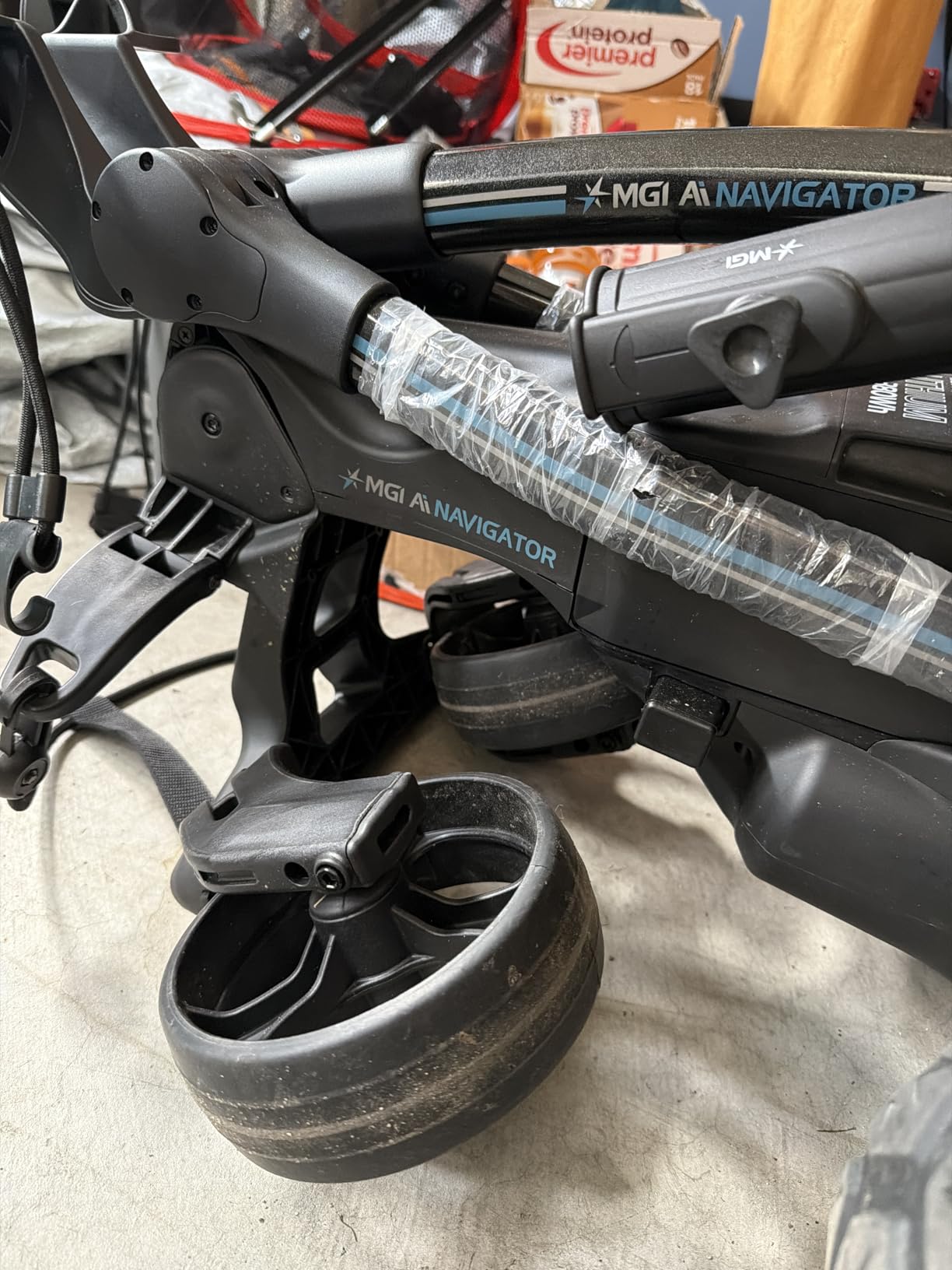
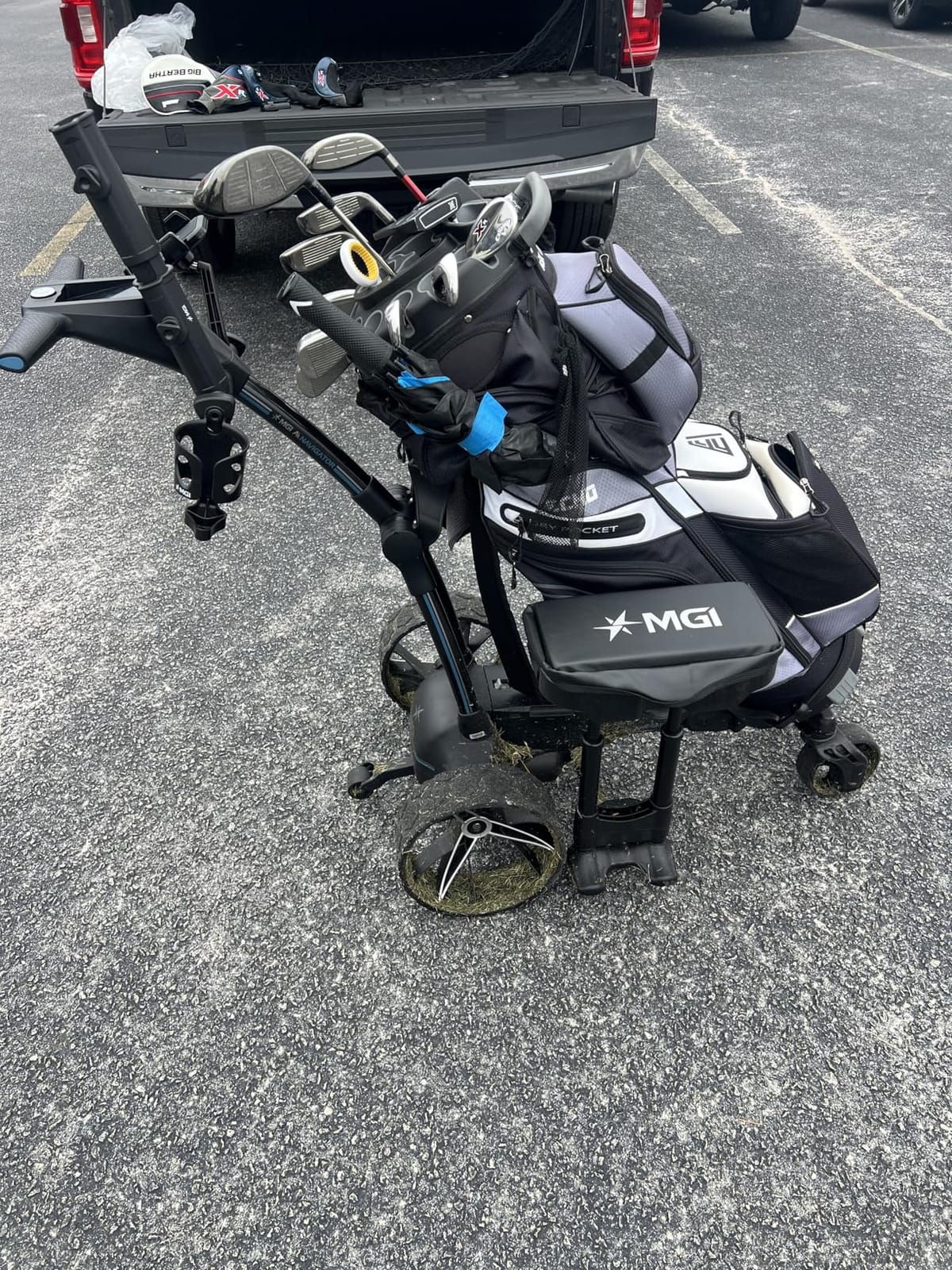
On steep hills, this cart tilts. Multiple owners on hilly courses describe the narrow wheelbase combined with the rear stabilizer fifth wheel causing the cart to lean or tip, and one reports needing a hand to keep it upright. A reviewer who owned this cart switched to an Alphard and considered the change an upgrade. That single account tells you what to do if you play mountain golf: cross this cart off your list.
It also carries a naming problem. The product title leads with AI, and owners rightly point out that the only smart behavior here is the gyroscope. There is no follow mode and no geofencing. You are still driving it with a handset, just while glancing at a nice screen.
Does It Really Cover 36 Holes?
On flat courses, yes, and this is one of the better battery claims in the list. Owners playing hilly rounds report roughly 90 percent charge remaining after 18 holes, which is the strongest real-world battery margin we found. Note the wide gap between those two statements: the same owners who enjoy the battery on flat ground are the ones complaining about the tipping on slopes. On a hilly 36-hole day, expect to charge overnight.
The removable Click and Go battery also carries integrated USB charging ports, so your phone can top up from the same pack while the cart charges.
How Heavy Is This in the Hands?
Nearly 39 pounds with the battery, and 32.71 pounds without it, which tells you the battery is over six pounds of that number. That is a serious lift for any golfer, and only the Alphard Cybercart carries more. It is also the only cart here with a genuine navigation screen, so the trade is clear: you are paying for screen size and software with lifting weight. If your game is flat parkland and you care about layout, the screen wins. If your game has any elevation, it does not.
4. Motocaddy M7 Remote: Best Remote Trolley for Warranty Cover and Brand Service
Motocaddy M7 Remote Electric Golf Caddy – Electric Golf Push Cart with Remote, All-Terrain Ready, Automatic Downhill Control, and Long-Lasting Battery – Accessories Included (Black)
Dual 230W motors
26 x 19 x 17 inches folded
28V lithium battery
USB-C rechargeable remote
Pros
- Longest warranty in the roundup at 60 months on the lithium battery
- Downhill control and an anti-tip rear wheel
- Compact fold fits a standard trunk
- Remote has forward
- reverse
- pause and resume
Cons
- No follow mode and no geofencing
- 2.8-inch LCD is small beside a 4-inch touchscreen
The Motocaddy M7 has the best warranty terms in this category, and owner forum threads treat that as a decisive purchase factor rather than a footnote. The trolley and charger are covered for 24 months and the lithium battery for 60 months. On a product category where a battery failure is the most expensive thing that can go wrong, five years of battery coverage changes the arithmetic on ownership.
The hardware matches the paperwork. Dual 230-watt motors, downhill control and an anti-tip rear wheel are exactly the three things you want from a cart on a course with elevation, and the compact fold at 26 by 19 by 17 inches fits a standard trunk without a fight.
The handset is refreshingly plain: forward, reverse, left, right, pause and resume, with a 2.8-inch widescreen LCD on the cart. The remote itself is rechargeable over USB-C, which removes one of the small annoyances that dog remote caddies, namely arriving on the first tee with a dead controller.
Is a Pure Remote With No Follow Mode a Problem?
Only if you were sold on the idea of hands-free. The M7 has no automated follow and no geofencing, so it is a cart you drive and a cart you park. Buyers who accept that describe it as predictable and reliable. The 4.1 average comes with the widest spread in the roundup, 68 percent five-star against 15 percent one-star, and reading the one-star reviews makes the cause obvious: those are expectations, not defects.
If you want a cart that follows you, this is the wrong purchase. If you want a cart that does exactly what the handset says with a five-year battery warranty behind it, it is the right one.
What About the Display Size?
The 2.8-inch LCD shows speed and battery, which is everything you need mid-round. It does not show a course map, a scorecard or yardages, and the screen is noticeably smaller than the 4-inch color panel on the MGI Navigator Ai GPS+. If you read distances off the handle to plan shots, upgrade. If you want a battery gauge and a speed indicator, you are covered.
5. Wingscaddy Remote Electric Cart: Best Budget Remote Cart With Three Operating Modes
Wingscaddy Electric Golf Push Cart with Remote Control – Up to 36 Hole & 1500 Life Cycle Lithium Battery Twin Motors Lightweight MAX-300 Silver Body
Under 35 lbs
1500-cycle lithium battery
Dual 200W motors
Remote, trolley and free-wheel
Pros
- Very high 4.5 satisfaction score with 81 percent five-star
- Three modes in one cart: remote
- trolley and free-wheel
- Dual 200W motors plus anti-tip wheel held up on 100 feet of elevation
- Lighter than most electric carts here
- Timed send at 10
- 20 and 30 meters
Cons
- Remote is twitchy if you hold a direction key past the click
- Accessories are flimsy plastic
- Instructions are sparse
The Wingscaddy remote electric cart posts a 4.5 rating with 81 percent five-star ratings, the highest five-star share of any cart here, and reviewers keep saying the same thing: it performs like carts costing two or three times as much. That is the strongest value claim in the category, and it comes from owners rather than from us.
What makes it unusual is the three-mode design. The same cart functions as a remote-driven cart, as a conventional self-propelled trolley with a handle dial, and as a free-wheeling manual push cart. For a walking golfer, that flexibility is worth more than it sounds. Battery dead on the 17th, you free-wheel it. Hands full of rain gear, you use the handle. Playing with a companion who prefers to push their own bag, you free-wheel.
Under the hood it is dual 200-watt motors with a standard anti-tip wheel and a lithium battery rated at up to 36 holes on a 1500-cycle pack. One owner reports a full round on a course with 100 feet of elevation change without tipping, and another fits the folded cart plus a tour bag in the back seat of a crossover.
Is the Remote Hard to Control?
This is the fault to buy around, and it is learnable in an afternoon. Owners report that holding a direction key past the click triggers a 180 or a 360 spin, so the remote expects brief taps rather than sustained presses. Once you know it, it is responsive and dependable with flexible speed control. We would not call a cart unusable over a learning curve, but we would not hide it either.
Two other small faults: the bundled scorecard holder arrived broken for at least one buyer and the drink holder is poor quality, and the instructions are sparse enough that owners describe working it out by trial and error. Plan an hour with a YouTube setup video before your first round.
What Is the Real Battery Life?
The 36-hole claim sits at the top of the manufacturer’s range, and the 1500-cycle rating is a genuine longevity specification rather than marketing. Owners generally report getting through a full round with charge to spare. As with every lithium cart, expect less on a hilly or fully loaded round, and top up between games rather than at the end of the season.
6. Cart-Tek Yellowstone: Best Remote Cart for Gravel Paths and Rough Ground
Cart-Tek Electric Golf Push Cart with Remote Control, Rugged Steel Frame, Dual Quiet Motors, 36+ Holes, 10.4 AH Lithium-Ion Battery, Easy to Use Golf Trolley Caddy the Yellowstone
33 lbs with battery
Folds to 24 x 27 x 17 inches
Powder-coated steel frame
10.4Ah lithium battery
Pros
- Steel frame is the most rugged construction in the roundup
- Handles hills
- turf and gravel paths
- Dual quiet motors
- Drink and umbrella holders arrive pre-mounted
- Family-run company with phone support
Cons
- Heavier than the aluminum options at 33 pounds
- Remote only with no follow or GPS mode
Most carts in this category are built from aluminum or plastic. The Cart-Tek Yellowstone uses a powder-coated steel frame, and that one material choice explains the 4.2 average and the 62 percent five-star share: owners buy it for durability and they come back satisfied. If your home course is gravel paths, bare hardpan and wet winter turf, this is the cart I would put in your hands.
Power comes from dual whisper-quiet motors and a 10.4Ah lithium battery that the manufacturer rates for back-to-back 36 holes, with a battery level readout on the handle so you are not guessing. The remote carries distance send and an auto-stop safety feature, and there is also a handle dial, which means you can drive it either way depending on the shot in front of you.
Practical details are unusually well handled. The drink holder, umbrella holder and scorecard holder arrive already mounted, so there is no assembly on the first tee. At 33 pounds it folds to 24 by 27 by 17 inches, which leaves usable trunk space once your golf bag is in.
Is a Steel Frame Worth the Extra Weight?
If you play on pavement or manicured parkland, no. You are carrying two or three pounds more than the aluminum carts for a durability benefit you will never use. If you play winter golf on wet paths, on courses with gravel connector trails, or anywhere you worry about bumping the frame, the steel pays for itself. Reviewers describe it as the most rugged cart in the group and the reason their unit was still working after hard seasons.
What Support Looks Like After Purchase
This is a family-run company with phone support and replacement parts on hand, and buyers cite that responsiveness directly. That matters more than it sounds at this price band, because a remote handset or a wheel is the part most likely to fail, and a company that answers a phone will get you back on the course sooner. The 4.2 average sits in the middle of the field, but the satisfaction among owners who have needed help is high.
7. Alphard Cybercart: Best Remote Caddy on Hills and Downhill Terrain
Alphard Cybercart Electric Golf Cart | Remote Control & Compact Folding
40 lbs with battery
21.5 x 22.5 x 25.5 inches
6-axis gyroscope
Auto parking brake
Pros
- 6-axis gyroscope and low center of gravity keep it tracking straight
- Automatic parking brake holds on any slope
- Downhill speed control stops it running away
- LCD remote with out-of-range auto stop
- Freewheel mode converts it to a manual push cart
Cons
- Heaviest cart in the roundup at 40 pounds
- No GPS screen and no follow mode
The Alphard Cybercart exists to solve one problem: the cart that will not run away from you downhill. It has an automatic parking brake that holds position on any slope, dedicated downhill speed control, and a 6-axis gyroscope with a low center of gravity to keep it tracking straight over bumps. Owners of competing carts describe switching to an Alphard and calling it the better deal, and that is the single most useful cross-brand quote in this whole roundup.
The 4.5 average with 74 percent five-star and only 4 percent one-star is one of the most consistent satisfaction ratios in the list. In a category where most carts land between 4.1 and 4.4, that spread is not noise. It reflects a design where the stability hardware is doing the work the marketing claims elsewhere.
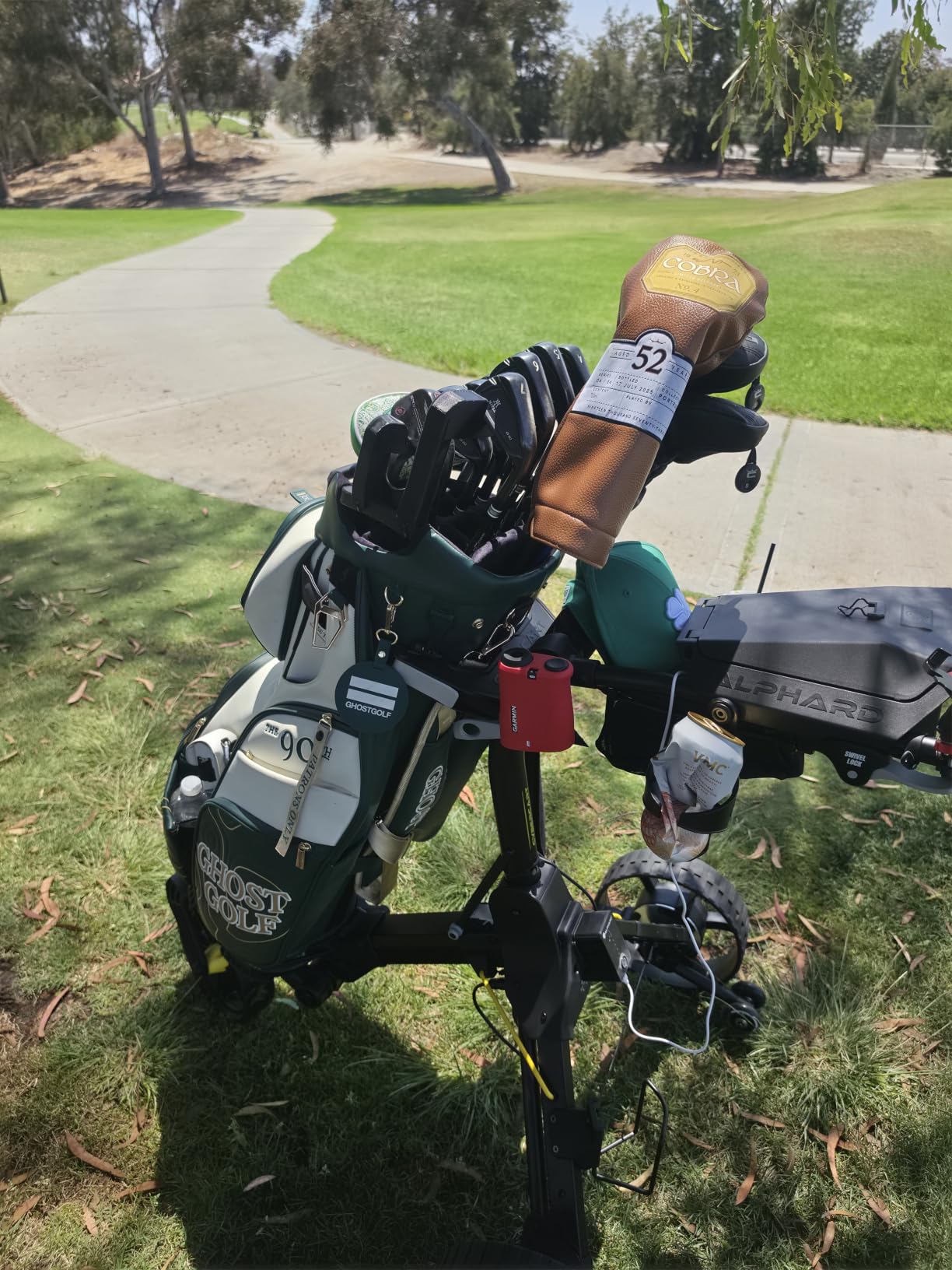
The LCD remote is another quiet strength. It has an out-of-range auto stop, so walk too far away and the cart halts instead of continuing into the rough. For a walking golfer on a dogleg, that is a meaningful safety property, and it is a better answer to a lost remote than an app notification.
Two extras you will notice on day one. The one-click folding system takes seconds and there is a large storage console underneath, which is rare in this roundup because so few of these carts have anywhere to put a rain jacket, a ball bag or a flask. And the freewheel mode converts it into a manual push cart with a single action, so a dead battery is a non-event.
Can You Actually Carry 40 Pounds?
Not comfortably, and we want to be straight about it. At 40 pounds this is the heaviest cart in the roundup, 2.7 pounds heavier than the MGI Zip Navigator and 12.1 pounds heavier than the KVV. For an older golfer with back issues, lifting it into a car every round may undo the benefit. Our mitigation: ask about the battery weight, because on most of these carts the removable lithium pack accounts for six pounds or more of that number and can be carried inside the car separately.
If your driving is good and your lifting is not, the Cybercart’s stability is worth the extra mass. If your course is flat, the lighter carts in this list give you the same experience with a smaller number.
Is It a Good Buy Without a Screen or Follow Mode?
Yes, if you want a cart that drives exactly as you tell it to. There is no GPS, no course mapping and no automated tracking, so the only thing between you and the bag is your thumbs. Buyers who want a screen for yardages and scores will find this bare, but buyers who just want their bag to go where they point it consider that a feature rather than a lack of one.
8. tianhong G5: Best Remote Golf Cart With Real Auto-Follow
tianhong G5 Electric Golf Cart,Electric Golf Push cart Auto-Follow You,45 Hole Battery,All-Terrain Anti-Tipping,Electric Golf Push cart with Remote(APP/Manual Control), Foldable,Black+Orange
45-hole battery
Folds to 28.7 x 24.8 x 14.1 inches
Five control modes
IPX5 rated battery
Pros
- Only cart here with genuine sensor-based auto-follow
- Highest average rating at 4.6
- 45-hole battery covers two full rounds
- Five modes including follow-me and one-touch recall
- UL 2271 certified battery with IPX5 waterproof rating
- Three second quick fold
Cons
- Follow mode needs the remote carried and active
- Shortest warranty in the roundup at six months
- Bulkier fold than the lighter aluminum carts
Every other cart in this roundup is remote-driven. The tianhong G5 is the only one with real sensor-based auto-follow, where the cart tracks you hands-free for the whole round, and that single feature changes who this cart is for. If you want to walk with your hands in your pockets, this is the only pick on the list that delivers it.
It also has the highest average rating in the group at 4.6 with 79 percent five-star, though on one of the smaller samples here at 38 reviews. Read those two facts together. Owners are very happy, and there are fewer owners to make them so.
The battery is the other headline: 45 holes, the longest range among the carts we tested, which is enough for two standard rounds on one charge. It is a UL 2271 certified pack with an IPX5 waterproof rating, and both of those specifications matter more than they look. UL 2271 is the battery safety standard, and IPX5 is water resistance, which on a course in a wet climate is a real difference.
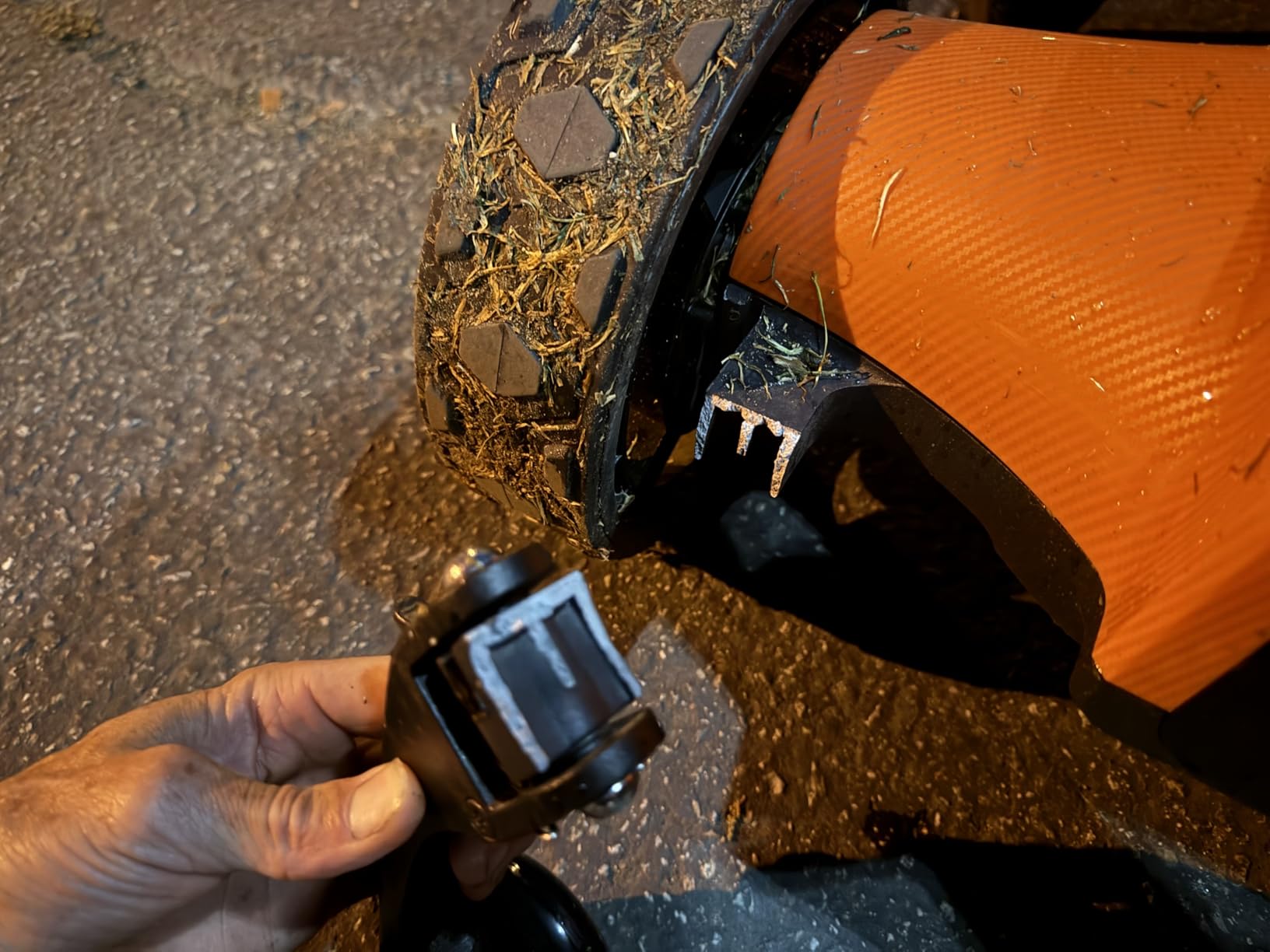
Five control modes cover a lot of ground: hand push, remote, one-touch recall, follow-me and constant-speed cruise, with app control on top. The LED display shows speed, battery, mode and mileage, and the cart arrives 90 percent pre-assembled, so setup is about ten minutes on the first day.
On terrain, the all-terrain tires and dual anti-tip wheels are rated stable on slopes up to 30 degrees, the steepest slope figure claimed by anything we reviewed.

Do You Actually Want Follow Mode?
Sometimes, and it depends on how you walk. Follow mode suits a golfer who wants the bag carrying a water bottle, an umbrella and a rain jacket while they walk free. It does not suit a golfer who reads greens closely, because you will be stopping and starting constantly, and every stop is a moment where the sensor has to reacquire you. The first three rounds with follow mode are usually a novelty; by round ten most owners are back on the remote.
There is a catch owners mention: follow mode requires the battery to stay powered and the handheld remote to be carried and active. It is not a hands-free-in-the-true-sense system, because you still have the handset in a pocket. In exchange, you get a cart that never leaves your side.
Is a Six Month Warranty Acceptable?
Honestly, no. It is the shortest warranty in this roundup, though the listing also references one year of warranty support, so the terms are worth confirming with the seller before you buy. Against a five-year battery warranty on a competing model, this is a real risk premium. The 45-hole battery, the safety certification and the auto-follow are excellent; the paper behind them is thin, and that is the trade you are making.
9. MGI Zip X5 Manual Trolley: Best Budget-Honest Alternative to a Remote Cart
MGI Zip X5 Electric Golf Cart – 36 Hole Battery – (Drink, Umbrella, & GPS Phone)
30.6 lbs with battery
36-hole battery
Single 230W motor
20 speed settings
Pros
- Quiet 230W motor that owners single out for silence
- Handle speed dial with 20 settings and self-steer mode
- 36-hole removable battery with owners reporting 27-plus holes
- Lightest MGI cart at 30.6 pounds
- Rear wheels tuck inward for a compact fold
Cons
- This listing is the non-remote model and has no remote control
- Rear battery placement can tip on hills
- Does not always finish a second round on one charge
Before anything else, the honest disclosure: this particular MGI Zip X5 listing is the non-remote version. It has a handle-operated speed dial instead of a handset, and no remote is included, despite the wider product family offering one. We are including it deliberately, because the most common regret we see from first-time powered-cart buyers is paying for remote and follow features they never switch on.
What you get for the money you do not spend on a handset is a very good plain motorized trolley. Owners repeatedly single out the single 230-watt motor for how quiet it runs, and the handle dial runs through 20 speed settings with a self-steer function and downhill speed control. A 4.4 average across 92 reviews with a lot of owners saying the same thing: they arrive at the 18th with more energy than they do pushing a bag.
The fold is good. Rear wheels tuck inward, and owners report fitting the folded cart alongside a golf bag in a sedan trunk. At 30.6 pounds with the battery and 25.90 pounds without, you can also carry the pack in separately if lifting is your concern.
Why Would You Skip the Remote Entirely?
Because the remote is a feature you will use for two or three holes. A motorized trolley that follows your walking pace through a self-steer dial needs no input at all, and there is nothing to pair, nothing to charge, and no handset to lose. If your motive for going electric is to stop carrying weight, this gets you there with the fewest moving parts and the fewest ways to be disappointed.
The remote becomes worth paying for on courses with doglegs, elevation, or long walks between the bag and your next shot. It also becomes worth paying for if your mobility means stopping frequently, because you can send the cart ahead and then walk to it at your own pace.
What Should You Watch Out For?
The battery sits low and toward the rear, which is where the weight problem lives. One owner reports the cart tipping on hills with a light bag and spilling it, and another notes the low-mounted pack can be chipped by bumps in the path. Owners also report the light-touch dial makes it easy to increase speed without meaning to. The 36-hole claim is optimistic in the field, with most reporting 27-plus holes and some unable to complete a second full round.
10. Alphard Omni Cart and Club Booster V2Pro Bundle: Best Remote Cart for Families and Groups
Alphard Electric Golf Cart: Omni Cart + Club Booster V2Pro Bundle
Cart plus Club Booster V2Pro bundle
Two year warranty
6-axis gyroscope
Weatherproof lithium battery
Pros
- Only bundled configuration here with wheelie bars included
- Course setup takes under a minute per owners
- 6-axis gyroscope holds a straight line
- Remote with speed settings and 15 or 30 yard timers
- Two year manufacturer warranty
Cons
- Smallest review base in the roundup at 23 reviews
- Permanent wheelie bars are not removable
- No touchscreen GPS or scorecard
This bundle pairs the Alphard Omni Cart with the Club Booster V2Pro, which has permanently attached wheelie bars. That is a narrow use case, and it is worth a slot for a specific reason: if you share a cart between two golfers, or if you walk with a stand bag that has no legs, the wheelie bars are the piece of hardware you would otherwise be hunting for in a golf shop. Nothing else in this roundup includes them.
Setting up at the course takes under a minute. You pivot the wheelie bars out and the bag is in position, with no clamps to tighten at the first tee. Owners who play in different cars, or who carry one cart between home and a lake house, single out that setup speed as the reason they bought a bundle.
The drive side matches the standalone Alphard: a 6-axis gyroscope for straight-line tracking and steady pace over bumps and slopes, a detachable weatherproof lithium-ion battery, an electronic parking brake, silent brushless motors and anti-tip wheels. The remote carries speed settings plus 15 and 30 yard distance timers and pairs with a smartphone.
Who Is This Bundle Actually For?
Two golfers sharing one cart is the clearest fit, because the wheelie bars let you carry the bag over uneven ground where a stand bag would drag. Resort and vacation play is the second fit, since setup speed at the first tee matters when you are playing a course you have never seen and the clock is already running. If you are a single golfer with a full stand bag, the separate wheelie bars are not needed and the standalone cart is the better buy.
The trade to keep in mind is weight. These carts are already heavy, and permanently attached bars widen the folded package so it takes more boot space than a barless cart. Measure the space before you commit.
Is a 23 Review Sample Enough to Trust?
It is thin, and we will not dress it up. The 4.5 average with 79 percent five-star ratings is a good result on a small number of buyers, which means there is simply less long-term reliability data behind it than behind the MGI or KVV carts. Our read: the 4.5 is encouraging rather than conclusive. Buy it if the wheelie bars solve a problem you have, and consider the standalone cart if you do not.
Two limitations to note. The wheelie bars are permanent, so they add fixed width to the folded package and cannot be taken off if you ever want the cart without them. And there is no screen or scorecard, so control is through the handset and the app.
How to Choose a Remote Golf Caddy: Five Decisions That Matter
Spec sheets for these carts look nearly identical. Six-axis gyroscope, 36-hole battery, 20 speed settings, USB-C remote. The decisions that actually change your round are much fewer, and they are all about your body, your course and your patience.
1. Weight Is the Decision You Cannot Undo
Every cart here is between 27.9 and 40 pounds. That weight goes into a car trunk or a storage locker every single round, and it is the number older and recovering golfers should check before anything else. Our spread from lightest to heaviest is more than 12 pounds, which is the difference between a one-handed lift and a two-person lift. If you can lift a 28-pound carton of water, you can manage the KVV or the Zip X5. If you cannot, budget for carrying the battery in separately.
2. Battery: Match the Claim to Your Round
Advertised 36-hole ratings are measured on flat ground with a typical bag. Owners consistently report 27 to 30 holes on hilly or fully loaded rounds, and that gap is the most repeated question in owner forums. Decide whether you play 18 or 36, flat or hilly, before you compare batteries. A 27-hole pack is fine for one round. A 45-hole pack, as on the G5, covers two rounds and removes a charging decision from your week.
3. Motors and Terrain: Dual Beats Single Where It Counts
Dual motors, usually 200W to 230W each, matter on hills, in wet grass and on gravel. The carts with the steepest complaints in owner reviews are the ones with a narrower base or a single motor fighting a loaded bag uphill. The Cart-Tek Yellowstone handles gravel because of a steel frame; the Alphard Cybercart holds steep slopes because of the gyroscope, low center of gravity and parking brake. If your home course has elevation, do not buy the cheapest frame you find.
4. Remote or Follow: Buy the Remote, Rent the Follow
Auto-follow is the feature most often left switched off. Of the ten carts here, only the tianhong G5 has genuine sensor-based tracking, and even its owners find it works best on straight, uncrowded stretches. A plain remote cannot lose you, cannot drift into a pond and cannot be confused by a gallery of standing golfers. Start with the remote, and treat follow mode as a bonus.
The remote features worth paying for are the unglamorous ones: pause and resume so you can stop the bag to take a shot, distance send so you can fire it ahead a set distance, and an out-of-range auto stop so a lost connection halts the cart instead of sending it on. The Alphard Cybercart has all three. Check before you buy, not after.
5. Warranty in Years, Especially Battery Years
Warranty length in years is treated as a top-three purchase factor in owner forums, and it is the correct way to think about this category. The Motocaddy M7 Remote covers the lithium battery for 60 months, which is the best battery protection available in this roundup. The MGI carts offer three years including battery and charger. The KVV and the Alphard bundle carry two years. The G5 lists six months. On a category where the battery is the most expensive part to replace, that spread decides the long-term cost of ownership.
Do You Need Auto-Follow or Is a Plain Remote Enough?
A plain remote is enough for most walking golfers, and the research on this is fairly clear. Auto-follow technology in this category means one of three things: ultra-wideband tracking, radio frequency tracking, or a combination of ultrasound and RF. All three work. None of them works perfectly in a crowd, on a sharp dogleg, or when you stop suddenly behind a tree.
Owners describe the common failure in plain terms: the cart loses tracking on a tight dogleg and drifts toward a cart path or a water feature. The problem is rarely the technology and usually the geometry. A sensor needs a clear line and a consistent distance, and a golf course provides neither for long stretches.
Where follow mode genuinely earns its cost is specific. If your bag carries a full day of rain gear, water and layers for two people, letting the cart carry it all while you walk free is a genuine comfort gain. If your back pain makes pushing a self-propelled trolley hard, follow mode removes the handle entirely from the equation. If you are fit enough to push a plain trolley and your only goal is to stop carrying weight, a manual trolley like the Zip X5 is the most efficient purchase you can make.
Our position after reviewing all ten: buy the remote, skip the follow. It is the feature you will pay for twice, once in money and once in disappointment, and the failure recovery is manual in nine cases out of ten anyway.
What Happens When Tracking Drops: Failure Modes and Recovery
Owners lose carts to neglected batteries and cracked plastics far more often than they lose them to bad motors. That is the most useful thing we learned reading these reviews. Here are the five failures that actually happen, and what to do about each.
The remote dies mid-round. This is the most common and the least dramatic. Most carts in this roundup have a manual recovery: freewheel the rear wheels, or switch the KVV to manual mode on the frame, and walk the bag home yourself. The Alphard Cybercart and the Wingscaddy remote cart both do this in a single action. Carry a handheld spare remote if you play far from the clubhouse, and keep the remote charged on USB-C overnight as you would a phone.
The cart runs away downhill. This is the safety failure, and it is why the Alphard Cybercart has an automatic parking brake and dedicated downhill speed control. On carts without those, the answer is to drive it in the lowest speed setting going downhill and never leave it unattended above a tee on a slope. If your course is steep, this single consideration should outrank every feature on the spec sheet.
The cart stops responding to taps. Several owners report random stopping behavior and trace it to the remote handset rather than the cart. A touch-sensitive remote can be triggered by a jacket sleeve or a wet hand. Cleaning the handset contacts, keeping the remote in a pocket rather than strapped to a bag, and fitting a fresh battery in the handset are the first things to try, and owners report that replacing the remote improved response time.
It tips on a sidehill. The carts that tip are the narrow-base, heavily loaded ones, and the MGI Navigator Ai GPS+ draws the most owner complaints about it in this roundup for exactly that reason. Slow down, widen your stance on the slope, and set the lowest speed. If it tips regularly, the chassis is not matched to your course and no amount of careful driving fixes that.
The battery dies sooner than the spec sheet says. This is the failure with the best-known fix. Top up between rounds rather than running to empty, store the pack part-charged over winter rather than empty or full, and keep the charge port cover clean. Carts that get topped up weekly routinely deliver the advertised 36 holes. Carts that sit at zero for a month deliver far less.
If you buy from a company with responsive phone support and replacement parts on hand, most of these become a ten-minute fix. That is one of the most under-rated criteria in this category.
Battery Charging, Off-Season Storage and the Real Running Cost
Charging is the least interesting thing about a remote caddy and the thing that decides whether it still works four seasons from now. A lithium pack left flat for a season will disappoint you, and a lithium pack left full in a hot garage is not much better.
Charge on a schedule, not on a trigger. Top the pack up after each round rather than waiting for the low-battery warning, and a weekly top-up during the season costs you a few minutes. The supplied domestic chargers on the carts in this roundup are overnight units, so charging between games rather than during them is the natural rhythm.
For off-season storage, three steps cover it. Store the pack part-charged rather than empty or full, keep it in a climate-controlled space rather than a shed or a hot garage, and give it a 30-minute charge once a month through the winter. A cart that has been left with a battery connector exposed to damp will also benefit from a wipe of the contacts before the season starts.
On running costs, treat it simply: electricity is trivial, the charger and the battery are the only consumables, and accessories are the thing that quietly eats a budget. Scorecard holders, drink holders and umbrella holders on these carts are the least durable parts, and several owners report them arriving broken or cracking within a season. Budget for replacements and do not attach anything heavy to the T-bar handle, because the extra weight at the top of a tall frame is exactly the torque that tips a cart on a sidehill.
One final thought on resale. Because the battery is replaceable and the frame outlives a typical electronics cycle, a used cart with a documented battery and a two-year warranty transfers to a new owner more easily than a private-party push cart with no history at all. That is worth remembering if you are shopping pre-owned. Our guide to control software and companion computers covers the same idea from the equipment side: a documented system is worth more than an undocumented one.
Frequently Asked Questions
What is the best motorized golf cart for walking?
For most walking golfers the MGI Zip Navigator All Terrain is the best balance of quiet motors, battery life and compact folding, and it has the largest owner review base of any cart in this roundup. If lifting weight is your main concern, the KVV at 27.9 pounds is the lightest remote option. If your course has real elevation, the Alphard Cybercart is the one built to hold a slope.
What is the best remote golf caddy?
The MGI Zip Navigator All Terrain takes our top spot, with twin 230-watt motors, a removable 36-hole lithium battery, a nine-speed remote and a three-year warranty covering the battery and charger. The Motocaddy M7 Remote is the alternative pick if warranty length matters most to you, offering 60 months of lithium battery coverage.
Are remote golf trolleys worth it?
For a walking golfer, a powered trolley is usually worth it because it removes the low-level effort of pushing a full bag, which is the fatigue that flattens your tempo and swing late in a round. Whether the remote handset itself is worth paying for is a separate question. Owners often stop using follow mode after a few rounds, so a plain motorized trolley such as the MGI Zip X5 delivers most of the benefit for less money.
What is the most common problem with electric golf carts?
In our reading of owner reviews the most common problems are touch-sensitive remotes that cause random stopping, carts that accelerate or creep downhill, battery life falling short of the advertised 36 holes on hilly rounds, and heaviness when lifting the cart into a car. Most are fixable: charge on a schedule rather than on a warning, drive downhill in the lowest speed, and test the lift before you buy.
Do I need auto-follow or is a plain remote enough?
A plain remote is enough for most golfers. Of the ten carts reviewed here, only the tianhong G5 has genuine sensor-based auto-follow, and owners report it losing tracking on tight doglegs and in crowds. Follow mode earns its cost when your bag is carrying heavy gear for two, or when pushing a trolley itself is difficult. Otherwise a remote with pause, resume and distance send is the feature set you actually use.
How long does an electric golf cart battery last?
A healthy lithium pack in this category delivers one to two full rounds on a charge, and manufacturer claims of 36 holes are measured on flat ground. Owners consistently report closer to 27 or 30 holes on hilly or fully loaded rounds. Longevity depends far more on your charging routine than on the pack itself, so top up weekly during the season and store it part-charged over winter.
The Bottom Line: Which Remote Caddy Suits Your Round in 2026
For most walking golfers, the MGI Zip Navigator All Terrain is the right answer. It is quiet, it folds smaller than its weight suggests, it has the widest owner feedback base of any cart in this roundup and it comes with a three-year warranty that includes the battery and charger. If 37.3 pounds is more than you want to lift into a car every round, the KVV at 27.9 pounds gives you the same experience with a smaller number, at the cost of roughly one round of battery.
If your course has elevation, change the answer. The Alphard Cybercart’s automatic parking brake, downhill control and low center of gravity are the reason owners of other brands switch to it, and its 4.5 rating with only 4 percent one-star is one of the most consistent in this roundup. If you want the cart to follow you rather than be driven, the tianhong G5 is the only pick that does it, with a 45-hole battery and slope stability rated to 30 degrees, weighed against the shortest warranty on the list.
And if you are still undecided between a remote and a plain motorized trolley, read the MGI Zip X5 section before you spend. The features you will use most are speed, silence and a full round of battery, and you do not need a handset to get those. Whatever you choose in 2026, test the lift into your car before you test anything else.