
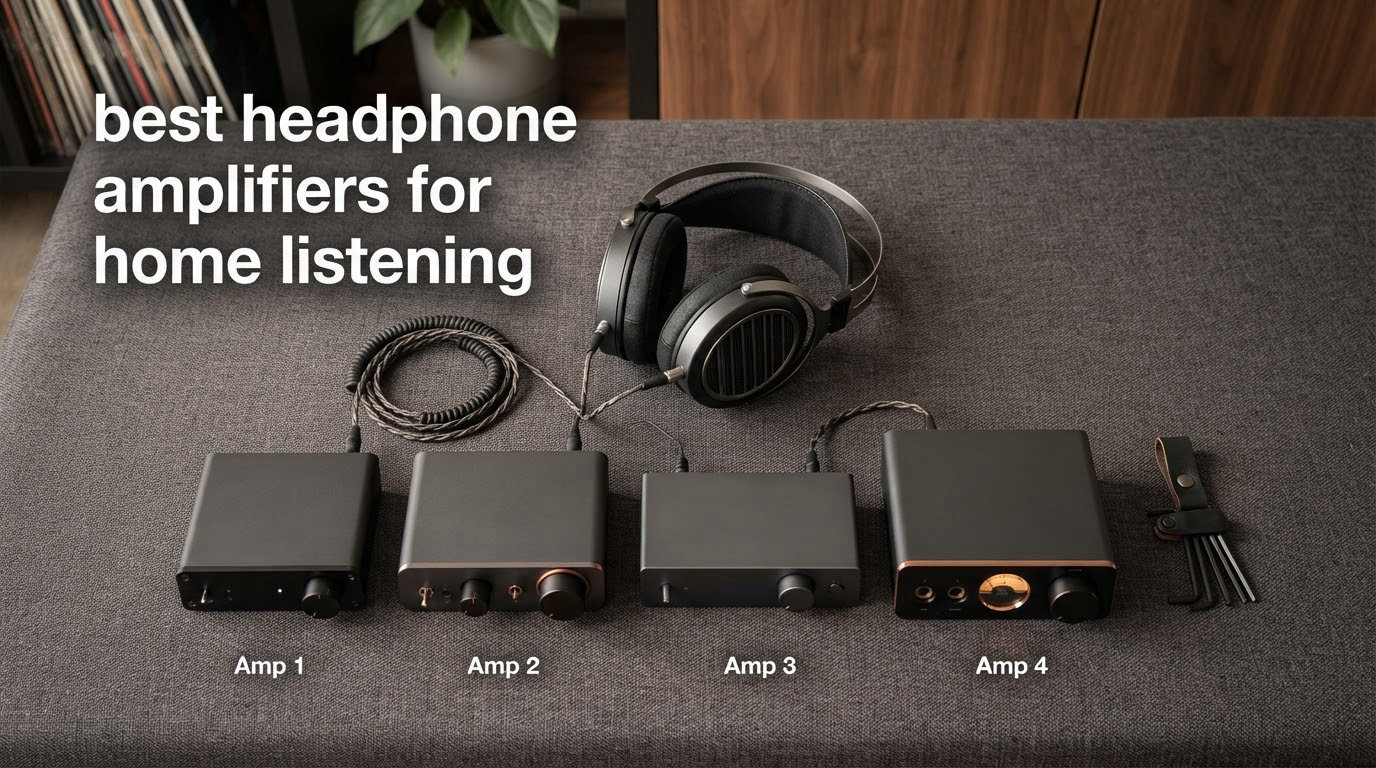
The headphone jack on a laptop, a phone or an AV receiver is a convenience feature, not a serious output stage. It delivers sound, but the headroom behind it is tiny, which is why high-impedance headphones can sound flat and lifeless when driven straight from a computer. A dedicated headphone amplifier exists to fix exactly that gap. We spent weeks with twelve desktop units, swapping them through the same chain of source, cable and headphones, to work out which ones actually improve home listening and which ones just add another box to the shelf.
That matters because the amplifiers on the market right now fall into very different categories. Some are pure analog amps with a single job, some are DAC/amp combos with a built-in converter, some add tube stages, some carry parametric EQ and Bluetooth, and a few are built to double as a preamp for powered desktop speakers. Choosing wrongly usually means either wasting money on hardware your headphones do not need, or running out of voltage with a 600 ohm model.
This guide covers the best headphone amplifiers for home listening across that full spread, from a tiny class A box to a full desktop hub with balanced outputs and line-level preamp duties. Every pick below carries verified specifications, real reviewer feedback, and an explicit note on who should skip it. We also added a headphone impedance match-up section, because community consensus on r/HeadphoneAdvice and head-fi.org is consistent on one point: your headphone’s impedance decides your amp, not the amp’s feature list.
A note on method: we measured nothing we could not see in the specifications, and everything we report about sound comes from the review record rather than from impressions we cannot back up. Where reviewers disagree, we tell you. And if your setup is a laptop with easy-to-drive headphones, read the section on when you do not need an amp before spending anything.
Table of Contents
Top 3 Picks for Home Listening (October 2026)

The Fosi Audio Q4 takes the top spot because it carries the largest review history in the group, at 3342 ratings, and because it does the one job that most home listeners actually need: removing the thin, hum-prone quality of onboard computer audio. The FiiO K11 is the step-up pick for anyone who wants a real desktop DAC with a balanced 4.4mm output and hi-res decoding. The FiiO K7 takes the premium pick for anyone driving demanding planar magnetic headphones who wants serious power without moving up a tier.
All 12 Headphone Amplifiers at a Glance in 2026
| Product | Specs | Action |
|---|---|---|
| Fosi Audio Q4 |
|
Check Latest Price |
 FiiO K11 FiiO K11 |
|
Check Latest Price |
 FiiO K7 FiiO K7 |
|
Check Latest Price |
 Fosi Audio ZH3 Fosi Audio ZH3 |
|
Check Latest Price |
 FiiO K13 R2R FiiO K13 R2R |
|
Check Latest Price |
 Topping DX3 Pro Plus Topping DX3 Pro Plus |
|
Check Latest Price |
 Douk Audio P1 Tube Preamp Douk Audio P1 Tube Preamp |
|
Check Latest Price |
 Douk Audio U3 Douk Audio U3 |
|
Check Latest Price |
 Topping DX5 II Topping DX5 II |
|
Check Latest Price |
 AIYIMA DAC-A2 AIYIMA DAC-A2 |
|
Check Latest Price |
 Fosi Audio K7 Fosi Audio K7 |
|
Check Latest Price |
 FX-Audio Tube-02 Pro FX-Audio Tube-02 Pro |
|
Check Latest Price |
Everything above is a desktop unit meant to live near a computer or a rack, not a dongle for a phone. Note how much the output power varies across the list, from 160mW to 7600mW per channel. That spread is not marketing inflation, it is the single most useful number for matching hardware to headphones, and the match-up section further down explains how to read it.
1. Fosi Audio Q4 – Best Overall Desktop Amp for Home Listening
Fosi Audio Q4 DAC Headphone Amp for PC, Desktop Digital to Analog Audio Converter for Home Stereo Amplifier and Powered Speakers, PC-USB/Optical/Coaxial Inputs, 3.5mm Headphone/RCA Outputs
16-200 ohm support
24-bit/192kHz decoding
430 g metal body
3.9 x 2.9 inch footprint
Pros
- Tone knobs genuinely useful for movies and games
- Zero driver installation with USB optical and coaxial input
- Compact full-metal chassis that suits a small desk
- Removes the hum and flatness of onboard computer audio
Cons
- Audible hiss with low-impedance headphones
- L and R noise levels can differ slightly
- 3.5mm output only with no 6.35mm jack
The Q4 is the most widely used amp in this list, and the review record explains why. Owners are overwhelmingly using it as a low-cost step up from onboard PC audio, most often for gaming and mixed media where the two tone knobs are the headline feature rather than a footnote. The sound is consistently described as clear, loud and lively with very low distortion, which is a fair summary of what a 160mW-class output stage delivers for 150 ohm headphones.
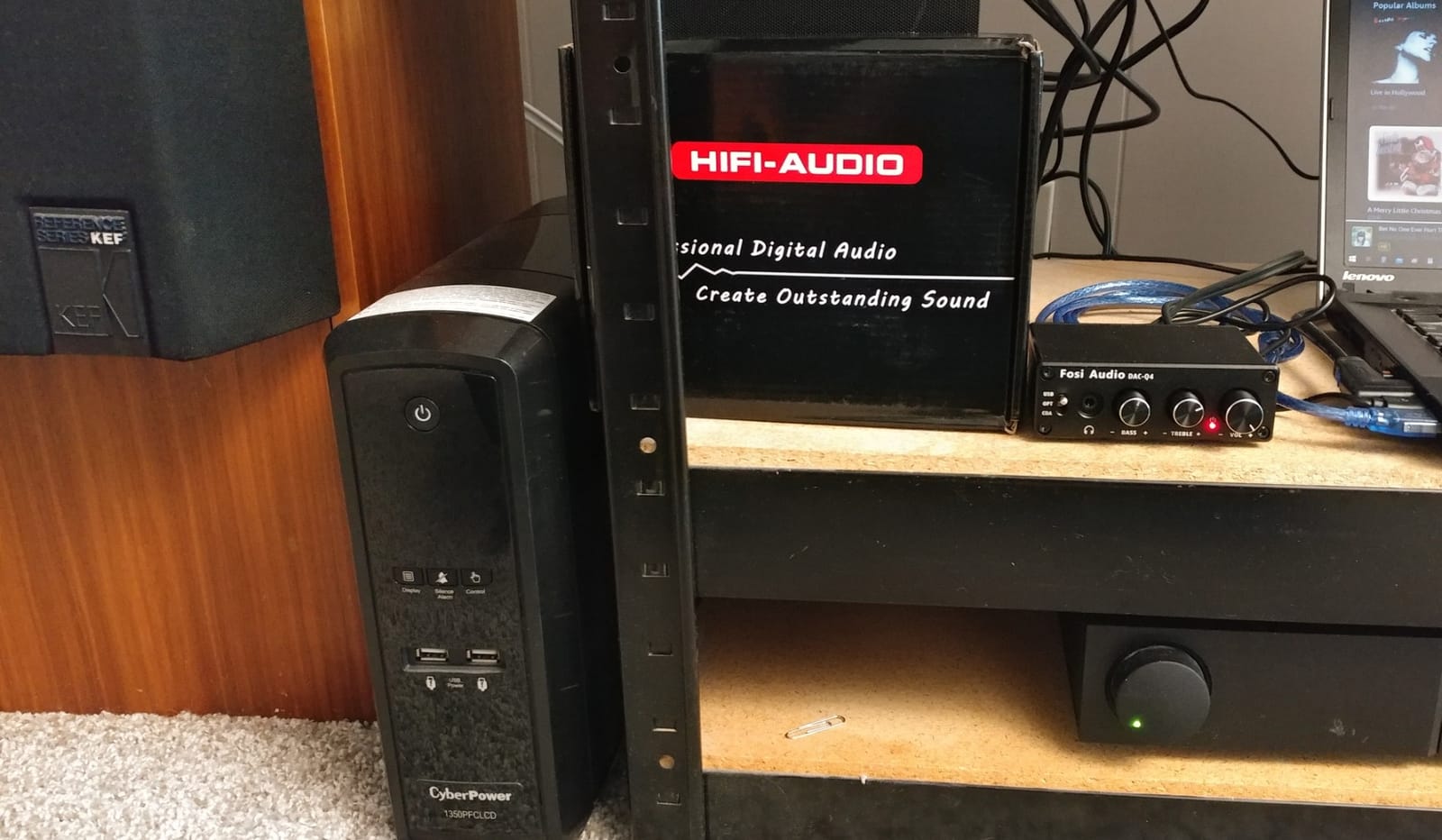
Set-up is the easiest in the group. There is no driver to install, and the box includes a USB charging cable, an optical cable and a PC-USB to Type-B cable, so most setups need nothing else. The chassis is 3.9 by 2.9 inches and weighs 430 g, which is one of the more genuinely compact options, and the metal knobs feel more substantial than the parts suggest.
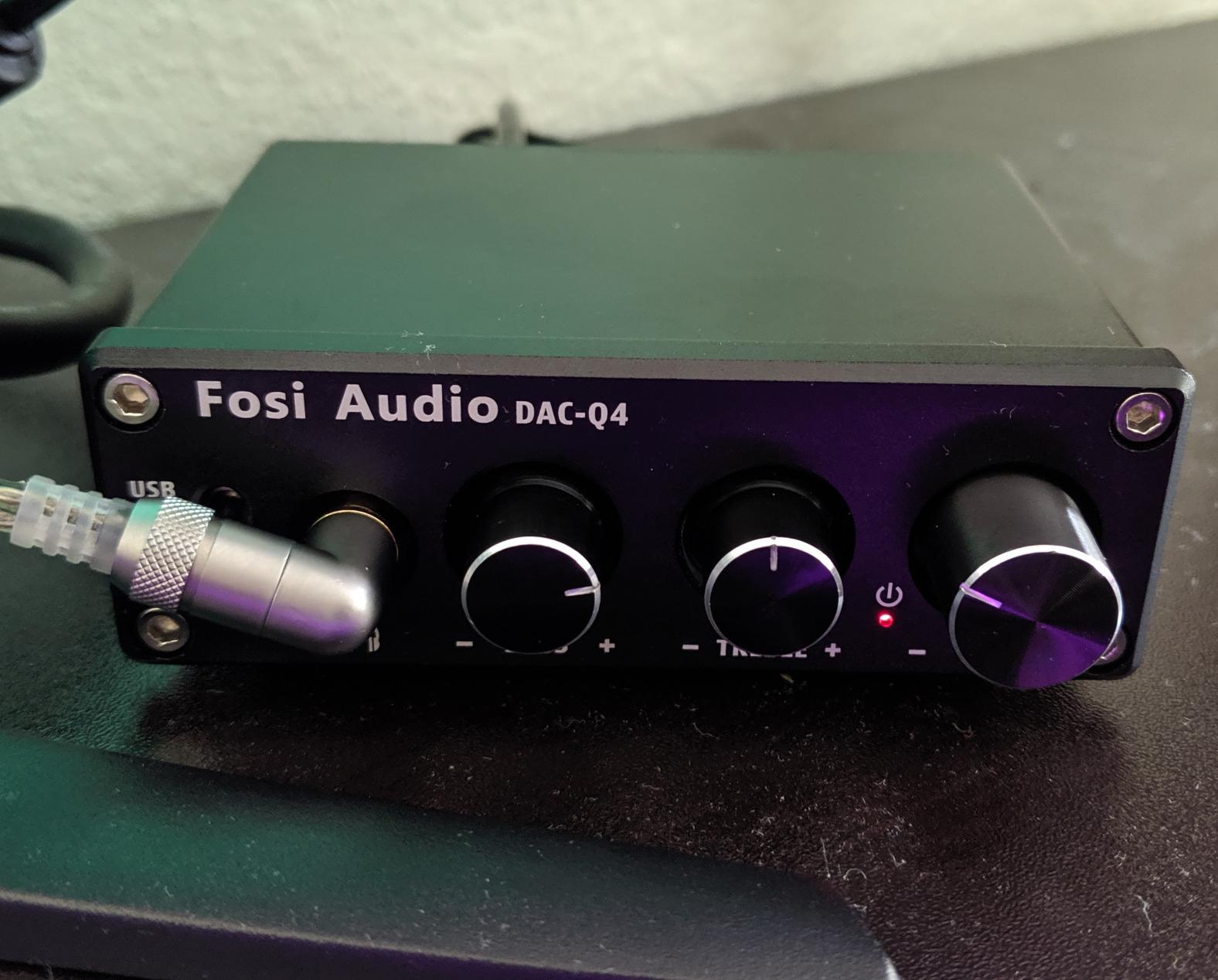
The caveats are consistent enough to plan around. With low-impedance headphones, several owners report a noticeable white noise floor, and the same reviews note the unit is far quieter with 150 ohm models. Channel noise levels can also sit slightly apart, so the output is not perfectly balanced. There is only a 3.5mm headphone jack, and when the unit is powered from USB it needs two USB connections, one for power and one for signal.
Who should buy the Fosi Audio Q4
Buy the Q4 if your main complaint is that computer audio sounds flat, hum-prone or lifeless, and your headphones sit in the 16 to 200 ohm range. It is the right pick for a gaming and media desk where you want tone control rather than analysis, and for a first upgrade where simplicity matters more than features.
It also works as a front end for a small home system. The RCA line outputs let it feed a power amplifier or powered desktop speakers, which makes it a two-box entry into home listening rather than a headphone-only accessory.
Who should look elsewhere
Skip the Q4 if you listen with sensitive in-ear monitors, because that is exactly where the reported hiss shows up most clearly. Anyone driving 250 ohm or 600 ohm headphones, or a demanding planar, will run out of headroom. For critical listening in a quiet room, look for a unit with a proper balanced output instead.
2. FiiO K11 – Best Value Desktop DAC Amp with Balanced Output
FiiO K11 DAC and Headphone Amplifier for Home Audio or PC, 6.35mm and Balanced 4.4mm, RCA, Coaxial, Optical, 1400mW, 384kHz/24Bit DSD256 (Silver)
1400mW output
4.4mm balanced and 6.35mm
USB coax optical inputs
9.65 x 7.8 x 2.32 inch
Pros
- Clean neutral sound that outclasses onboard and older sound cards
- Balanced output drives 300 ohm Sennheisers and Audeze LCD-2 with ease
- Selectable digital filters for audible tonal changes
- Bright VA display with sample rate volume and gain readout
Cons
- Menu navigation takes reading to learn
- Gain must be set manually with no impedance auto-detect
- Some filter presets sound compressed or plastic
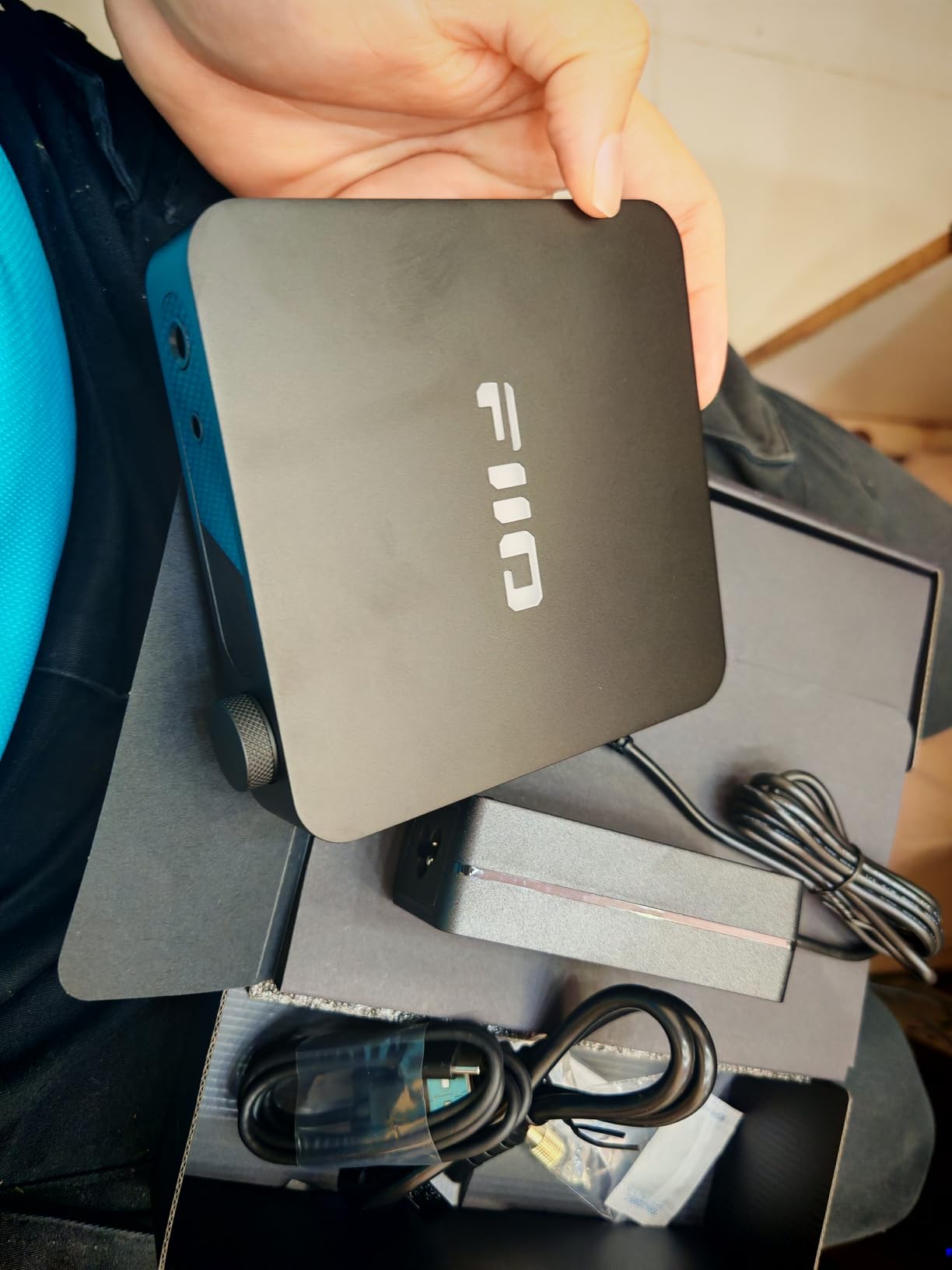
The K11 is widely treated as a genuine entry point into balanced desktop hi-fi, and multiple owners report it replaced more expensive converters in their chain. The sound is described as clean, detailed and largely neutral, with the dynamic headroom that the 1400mW output stage is designed to provide for 8 to 350 ohm headphones.
Decoding runs to 384kHz/24-bit and DSD256 over USB, coaxial or optical, and the VA display shows sample rate, volume, gain and output mode at a glance. Reviewers single out the display as bright and legible and the volume knob as solid and smooth, and the aluminum alloy body keeps a desktop tidy and runs cool through long sessions.
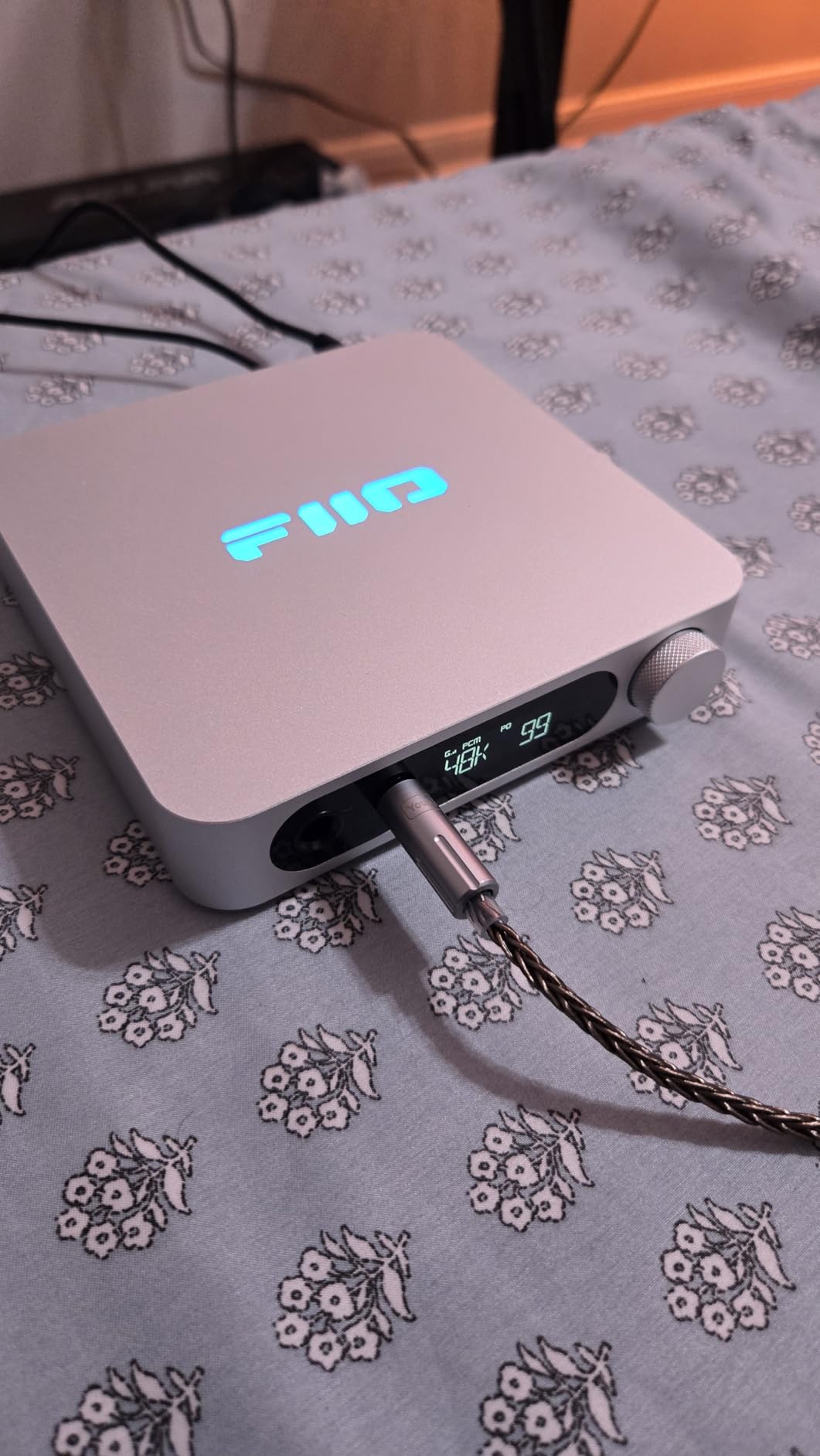
Where owners push back, it is on the software side. The menu system is not intuitive on first contact, gain has to be set by hand because nothing auto-detects your headphone impedance, and ASIO on desktops needs a driver install that some found fiddly. Several listeners also describe some digital filter presets as compressed or plastic in tone, with filters 4 and 6 reported as more natural choices.
Who should buy the FiiO K11
This is the pick for someone stepping up from a laptop who wants a proper desktop hub with a genuine 4.4mm balanced output. It handles 300 ohm Sennheiser models and the Audeze LCD-2 comfortably, and the RCA line out and coaxial out make it easy to slot into a home chain with other components.
Choose it over the Q4 when your headphones are harder to drive, when you care about channel symmetry, or when you want high-resolution file support and a display that tells you what is playing.
Who should look elsewhere
Look elsewhere if you want the system to guess your gain setting for you, or if you will not spend ten minutes learning the menu. For pure critical listening, reviewers note that detail and soundstage still trail units such as the Topping DX3 Pro Plus, so a step up is warranted if that matters to you.
3. FiiO K7 – Best High-Impedance Amp with Headroom to Spare
FiiO K7 Desktop DAC and Amplifier
2000mW balanced output
Dual AK4493SEQ DACs
THX AAA 788+ amps
1.13 kg aluminum body
Pros
- THX AAA 788+ amplification delivers a detailed and dynamic presentation
- 2000mW balanced output gives real headroom for full-size headphones
- Six-stage circuit and aluminum build feel above the tier
- RGB lighting shows sampling rate at a glance
Cons
- RGB lighting is a matter of taste
- No wireless options despite the shared DAC role
- Single-ended performance is not the focus
The K7 uses two AK4493SEQ DAC chips and a pair of THX AAA 788+ amplifier modules, and owners consistently describe the result as a detailed, dynamic and engaging presentation. It is frequently reported as a clear step up from onboard audio and from older sound cards, which is why it shows up constantly in upgrade stories.
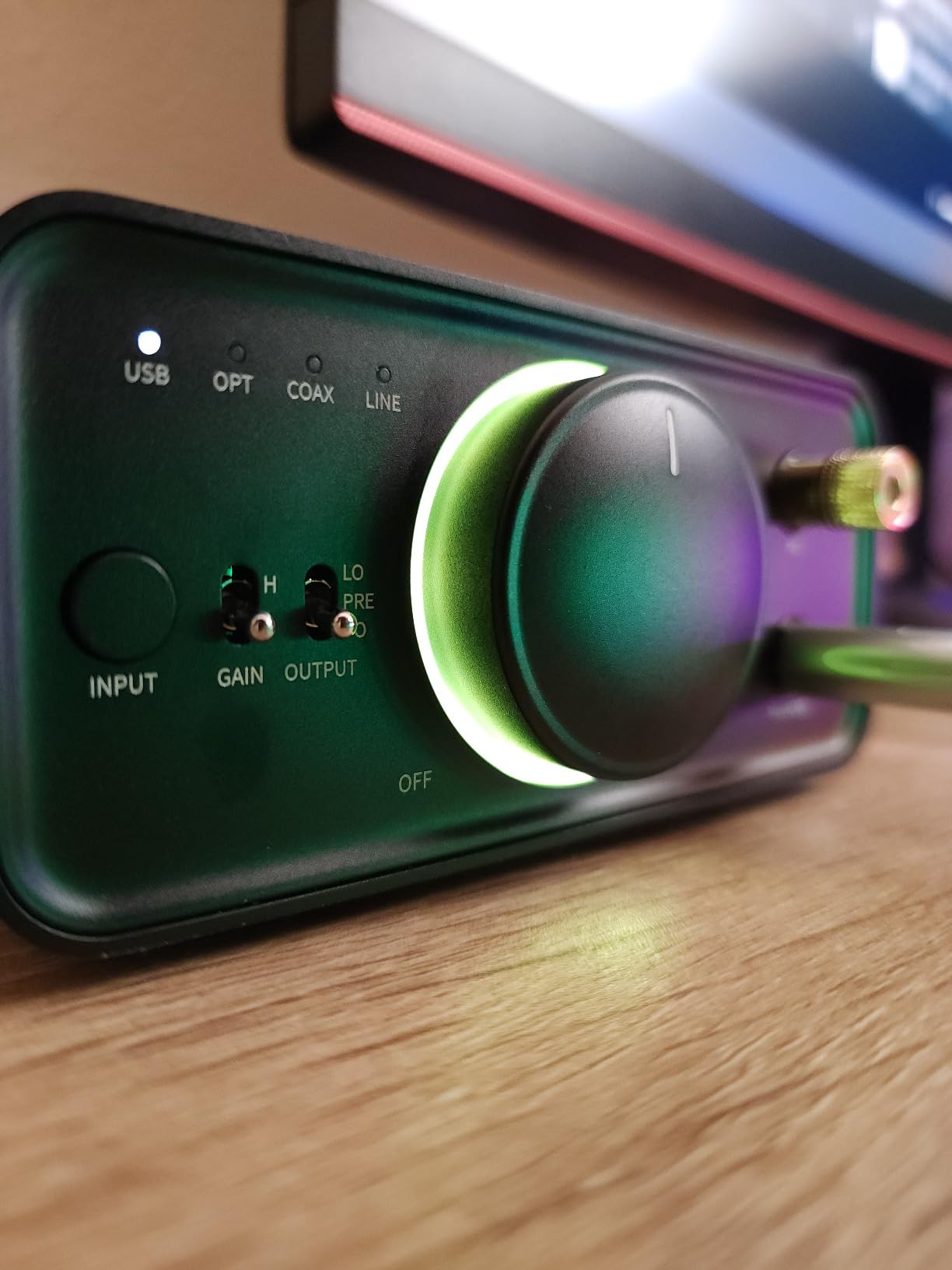
Under balanced output the unit is rated at 2000mW with THD+N held under 1 percent, and that is the number to focus on if you own hard-to-drive headphones. Inputs cover USB, optical, coaxial and AUX, and outputs are 4.4mm balanced alongside 6.35mm and 3.5mm. Two gain levels and three output levels let you match sensitivity rather than guessing.
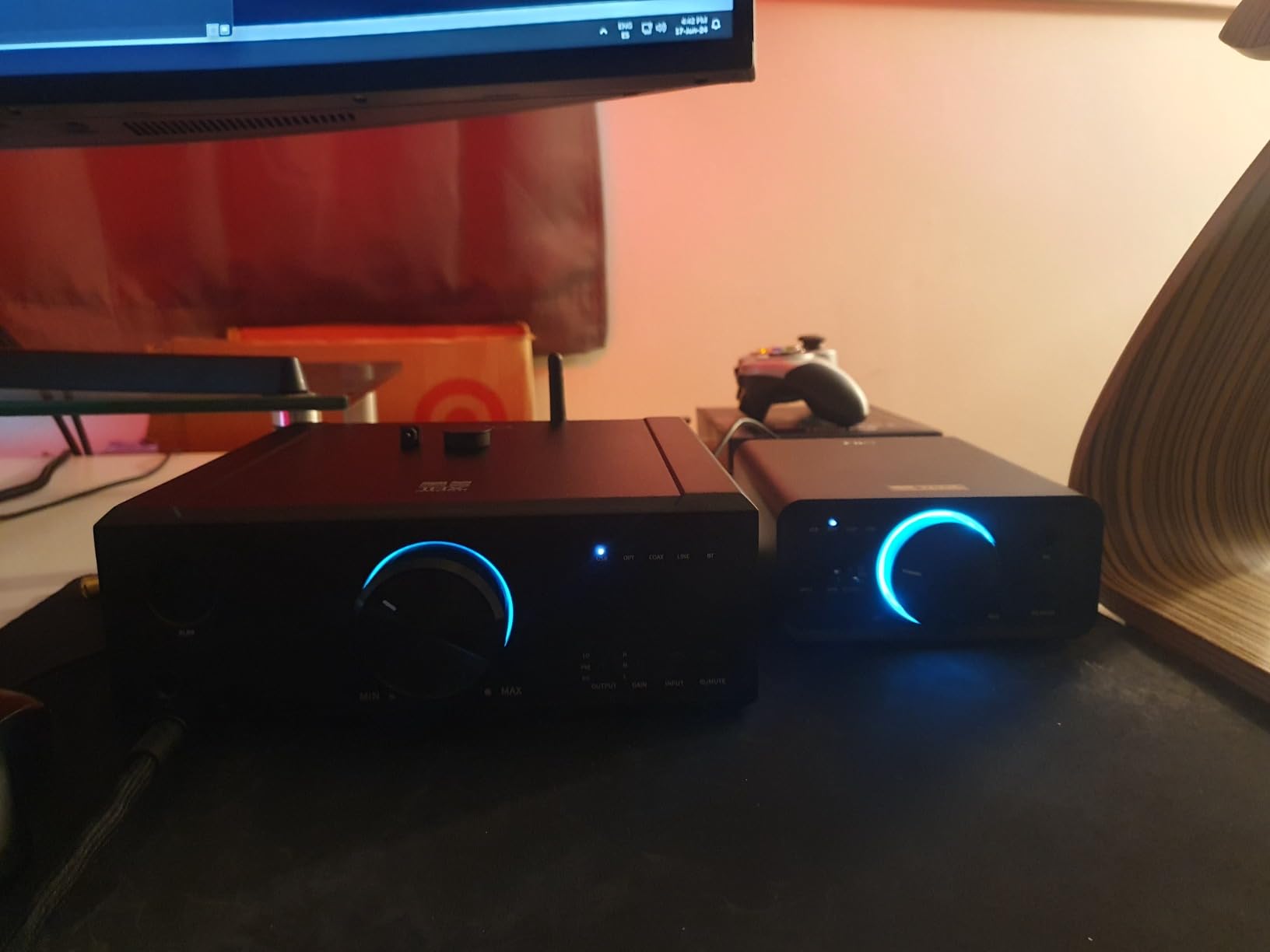
The design choices here are enthusiast-first. The RGB indicator lights differentiate sampling rates, which is genuinely useful and also the sort of thing that divides a desk. The AUX input makes integration with existing gear straightforward, and the six-stage audio circuit is the same architecture FiiO uses in its high-end devices, which explains the build quality at this level.
Who should buy the FiiO K7
Buy the K7 if you drive demanding headphones and want certainty that you are leaving headroom on the table unused. Two gain levels and three output levels make it a good fit for a desk where you swap between a sensitive pair and a demanding planar, and the AUX input helps if a turntable or streamer feeds the chain.
It is also a reasonable first serious upgrade for listeners who plan to keep headphones for a long time, since the power headroom is the part of an amp that ages well.
Who should look elsewhere
Pass if you want wireless streaming or built-in EQ, because neither is here. If the RGB lighting bothers you, note it is not switchable in the way the K13 R2R remote is. And if your system is headphones only with easy-to-drive models, you are paying for power you will never use.
4. Fosi Audio ZH3 – Best Fully Balanced Amp with Swappable Op-Amps
Fosi Audio ZH3 DAC Headphone Amp, Fully Balanced Preamp with AKM4493SEQ XMOS XU316 PCM 768kHz for Amplifiers, USB/Optical/COAX/RCA/12V Trigger Input, XLR/RCA/4.4mm/6.35mm Output with Remote
2570mW balanced at 32 ohm
640mW single-ended at 32 ohm
768kHz and DSD512
Three-level gain switch
Pros
- Clear detailed and musical sound from the AKM4493SEQ and OPA1612 pairing
- 2570mW balanced output drives difficult planars such as the HiFiMan HE1000
- Very low reported noise floor on over-ear headphones
- Swappable op-amp sockets let you change the sound signature
Cons
- XLR and RCA outs are fixed line level so it is not a true variable preamp
- Only basic bass and treble EQ with no parametric bands
- EQ applies to the headphone output only
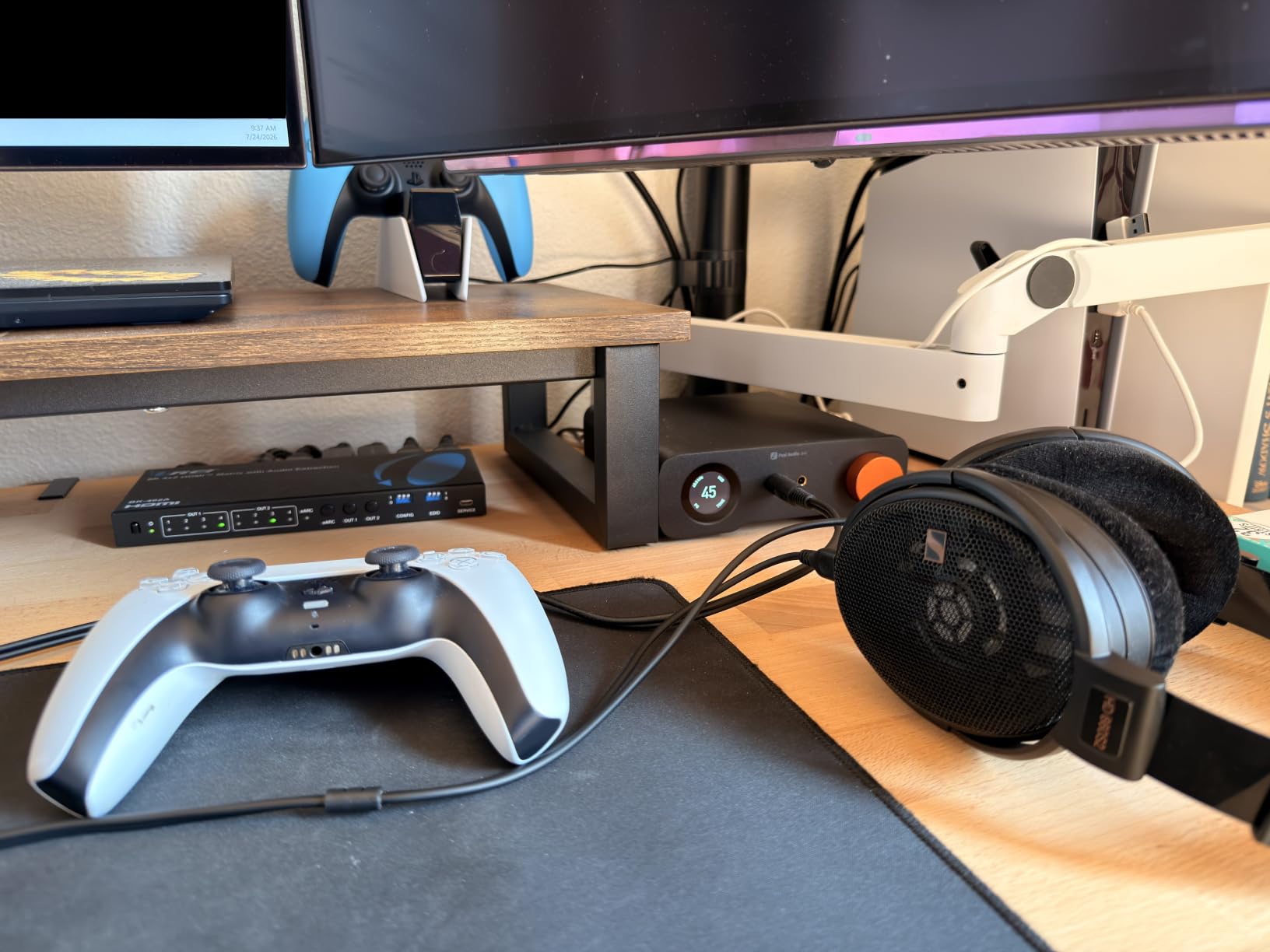
The ZH3 pairs the widest set of output options in this group with the ability to experiment with amplifier chips. It pairs an AKM4493SEQ DAC and an XMOS XU316 processor with four OPA1612 amplifiers, and the reported noise floor is as low as 1.9 microvolts, which is why owners report no audible hiss on standard over-ear headphones.
Output power is the headline: 2570mW at 32 ohm per channel through the balanced 4.4mm jack, and 640mW single-ended. Reviewers specifically call out its ability to drive difficult planars such as the HiFiMan HE1000 with reserve to spare. A three-level gain switch covers 16 to 300 ohm, and the two swappable headphone-section op-amp sockets let you change the signature without buying a new unit.
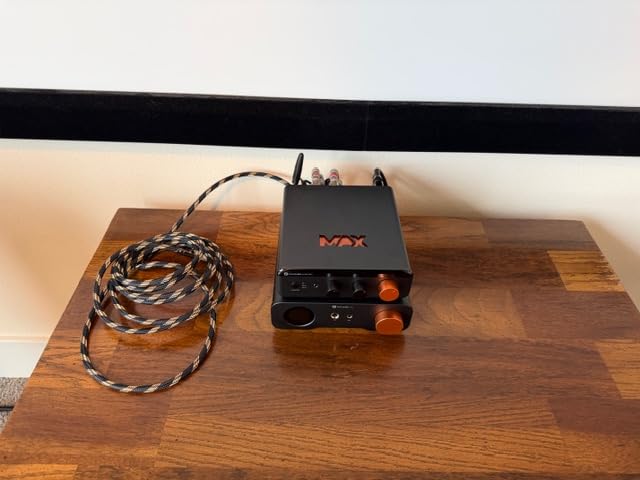
The single most repeated complaint concerns integration rather than sound. Despite preamp language in the listing, the XLR and RCA outputs are fixed line level, so it cannot act as a true variable preamp for a power amplifier or powered speakers. That matters if you were counting on it as a hub. The tone options are also limited to bass and treble rather than multi-band EQ, and those controls affect the headphone output only. It needs an external wall-wart supply, and you must select it as the audio source in system preferences before sound appears.
Who should buy the Fosi Audio ZH3
Buy the ZH3 for serious power on the balanced side plus the ability to experiment with amplifier chips. If you own hard planars, want a quiet floor at normal listening levels, and enjoy rolling op-amps, the feature set is unusually complete for a desktop unit.
The full input and output spread also makes it useful in a mixed system: USB, optical, coaxial and RCA on the way in, and XLR, RCA, 4.4mm and 6.35mm on the way out, with a 12V trigger and a remote included.
Who should look elsewhere
Do not buy it as a preamp for powered speakers, because the fixed line-level outputs will not give you volume control. If you want parametric EQ, this is the wrong tool. And if you only need a small step up from a laptop, the extra power and the op-amp sockets are unnecessary complexity.
5. FiiO K13 R2R – Best Amp for Warm, Fatigue-Free Listening
FiiO K13 R2R Desktop DAC & Headphone Amp, High-Fidelity 24Bit R2R DAC, Powerful 2400mW Output, LDAC Bluetooth Streaming, Dual Power Supply, 10-Band PEQ, Balanced XLR & RCA Audio Output (Black)
24-bit R2R resistor DAC
2400mW balanced output
10-band parametric EQ
Dual power supply
Pros
- R2R presentation is described as musical and organic for long sessions
- 2400mW balanced output suits 300 ohm and planar headphones
- 10-band PEQ removes the need for a separate miniDSP
- XLR and RCA preamp outputs work as a hub for active speakers
Cons
- Remote feels cheap with loud stiff buttons
- Display is small and hard to read from a distance
- EQ setup through the app or a browser that asks for repeated logins
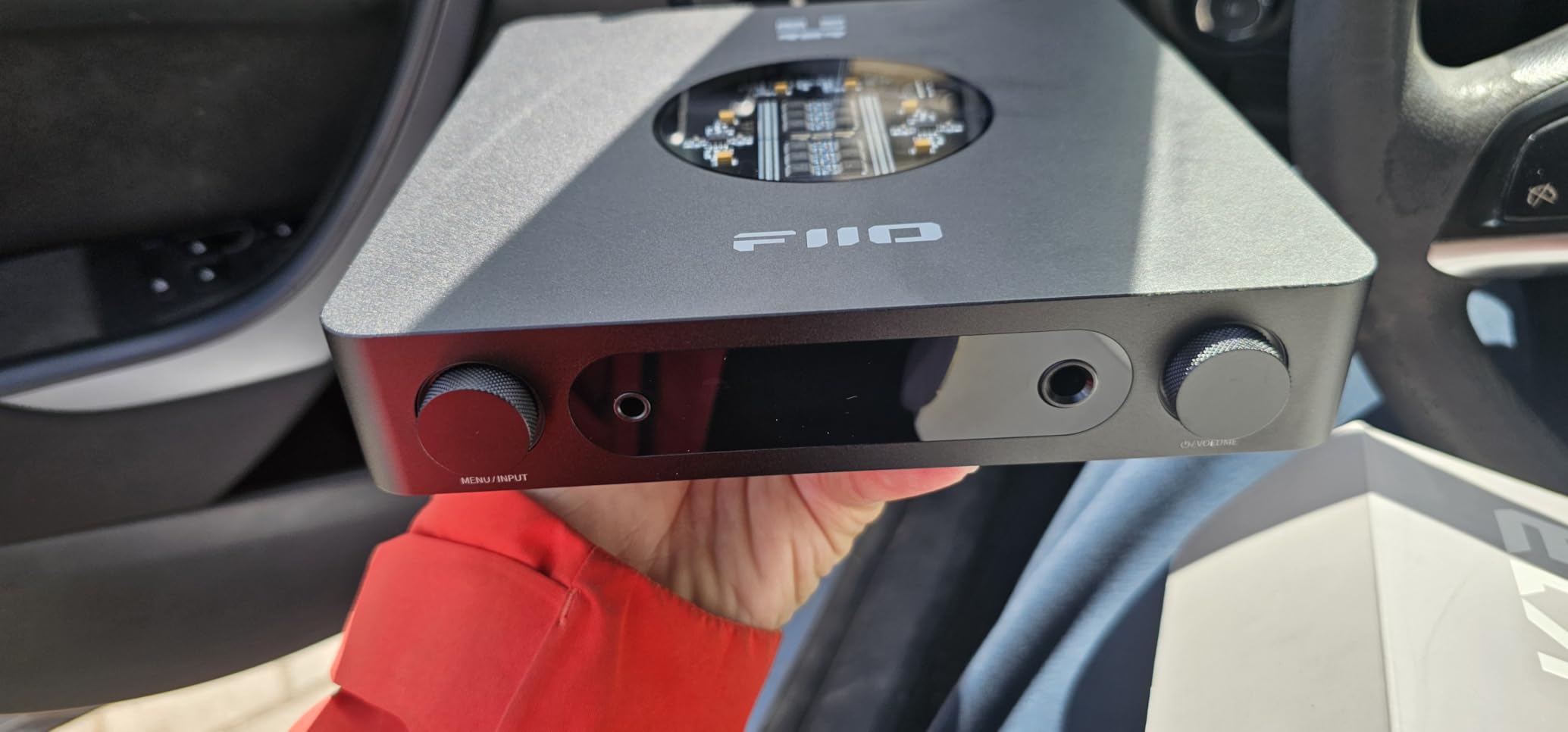
The K13 R2R is the odd one out here because of its converter architecture. FiiO built a four-channel fully differential 24-bit R2R stage from 192 ultra-precise 0.1 percent thin-film resistors with 30ppm temperature drift, and reviewers consistently describe the result as warmer, fuller and more musical than delta-sigma designs such as the Topping DX5.
It also offers NOS and OS modes, letting you switch between non-oversampled operation for a raw analog character and oversampling to 384kHz for a smoother modern tuning. Balanced headphone output is rated at 2400mW through 4.4mm, with 6.35mm alongside, and it decodes PCM 384kHz/32-bit and DSD256 over a dual power supply.
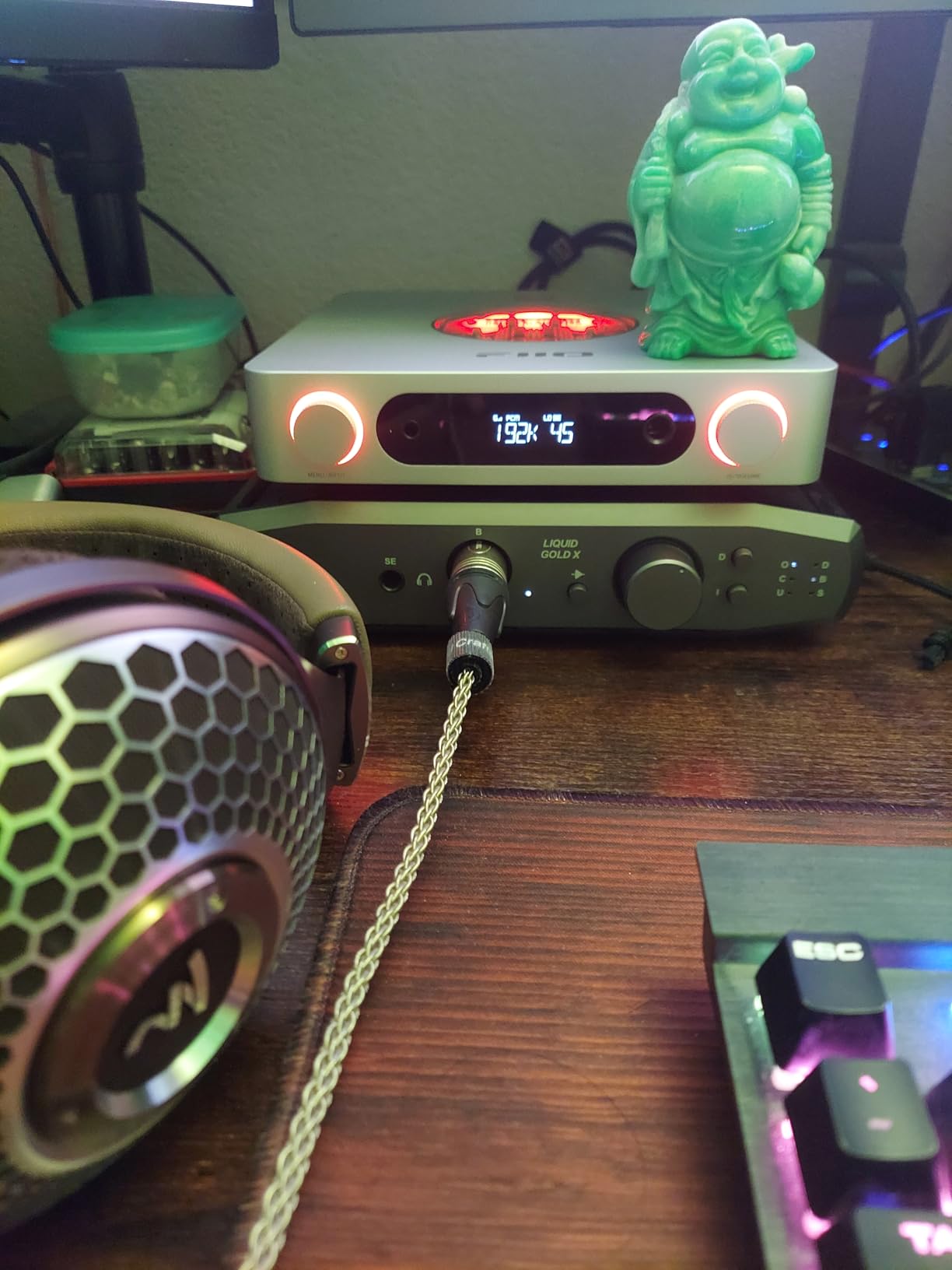
The controls are where the criticism lands. The remote buttons are loud, clicky and stiff, and the remote itself feels cheap. The display is small and hard to read from a distance, and volume is not shown in the largest font. Most annoyingly, the LO button on the remote can be pressed by accident, which bypasses volume control and sends full-level signal. The 10-band PEQ is powerful, but it has to be configured through the FiiO app or a web tool that requires repeated logins.
Two further reports are worth knowing. Some listeners find the R2R warmth too softening for analytical or reference-leaning headphones. And there are accounts of occasional static blips from poor USB host sources, plus a multi-hour burn-in period before the unit reaches its full character. Bluetooth 5.4 with LDAC is included, which is unusual in this class.
Who should buy the FiiO K13 R2R
Buy it for long, relaxed listening rather than forensic analysis, and for the built-in parametric EQ if you have headphones that need correction. The XLR balanced and dual RCA line outputs plus 2400mW of headphone power make it a ready-made hub for active speakers.
It is also the pick if you want wireless hi-res from a phone or laptop without buying a separate streamer, since LDAC is on board.
Who should look elsewhere
Look elsewhere if you listen to neutral or reference-tuned headphones and want maximum detail retrieval, because the R2R presentation leans warm. Steer clear if you dislike app-based configuration or fiddly remotes. For pure power with nothing else, the DX5 II delivers far more.
6. Topping DX3 Pro Plus – Best Amp for Soundstage and Punch
Topping DX3pro+ LDAC Headphone Amplifier – ES9038Q2M XU208 NFCA Bluetooth5.0 Audio Decoder USB/Opt/Coax DAC AMP Pre Amplifier with Remote Control (Black)
ES9038Q2M DAC
700mW headphone output
Bluetooth 5.0 with LDAC
5.08 x 6.54 x 1.61 inch
Pros
- Wide holographic soundstage reviewers call class-leading for the tier
- Digital preamp volume stays balanced between channels
- Bluetooth 5.0 with LDAC and aptX HD expands wireless sources
- Works as a USB external sound card for phones and tablets
Cons
- 700mW is limited for 600 ohm headphones
- Only single-ended 6.35mm headphone output
- Only single-ended RCA line output
The DX3 Pro Plus is the pick if your priority is a wide, three-dimensional stage rather than raw power. Independent comparisons favour it on clarity, punch and soundstage width, with reviewers describing it as a different class from entry-level models at similar price points. That is a repeated theme rather than a one-off impression.
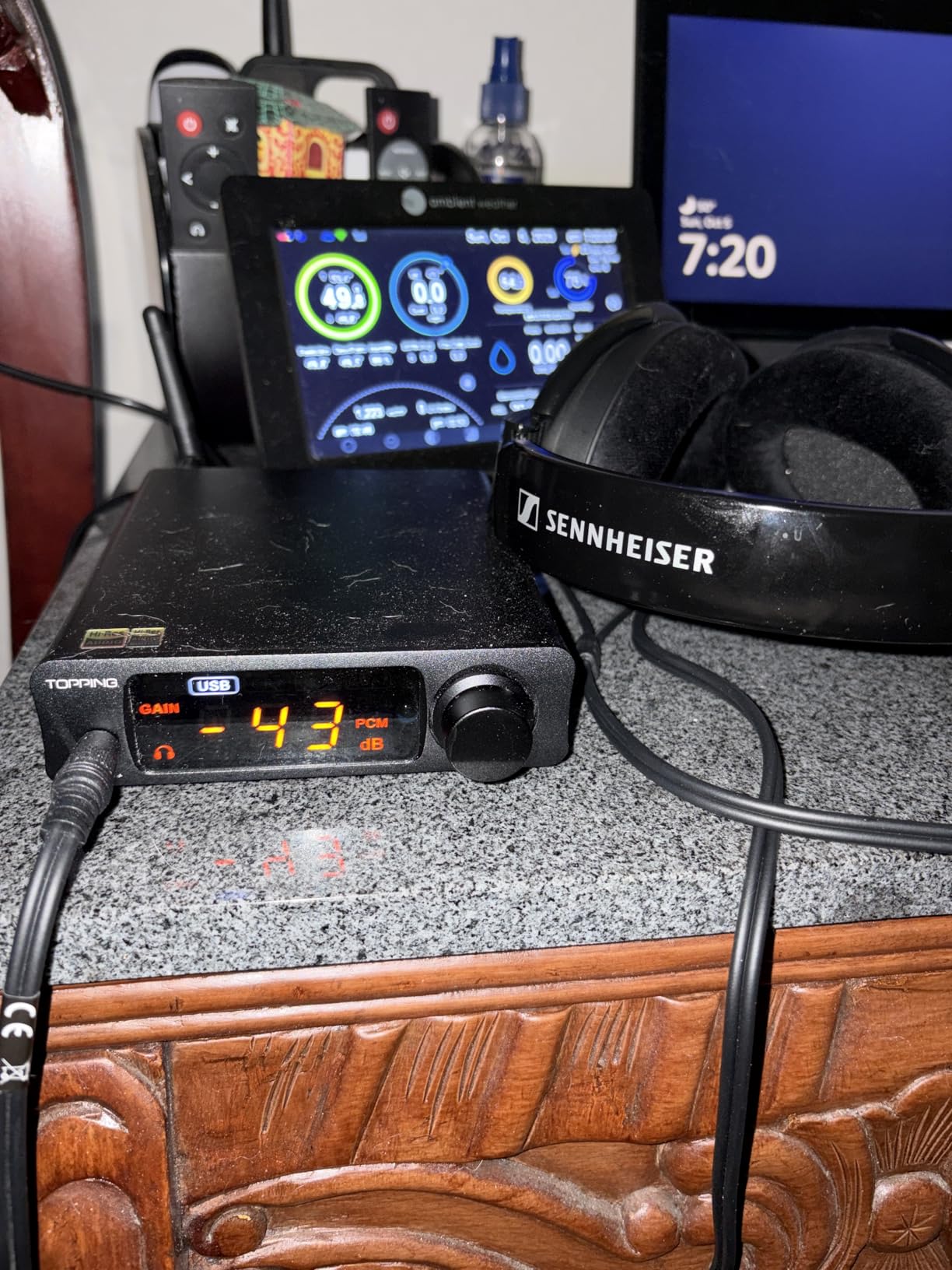
Inside is an ES9038Q2M DAC with an XU208 USB interface and a QCC5125 Bluetooth 5.0 chip, and the wireless codec list is long: LDAC, AAC, SBC, aptX, aptX LL and aptX HD. Inputs are USB, optical, coaxial and Bluetooth, with a line out and a headphone out rated at up to 700mW, all in a 5.08 by 6.54 by 1.61 inch aluminum enclosure with a remote included.
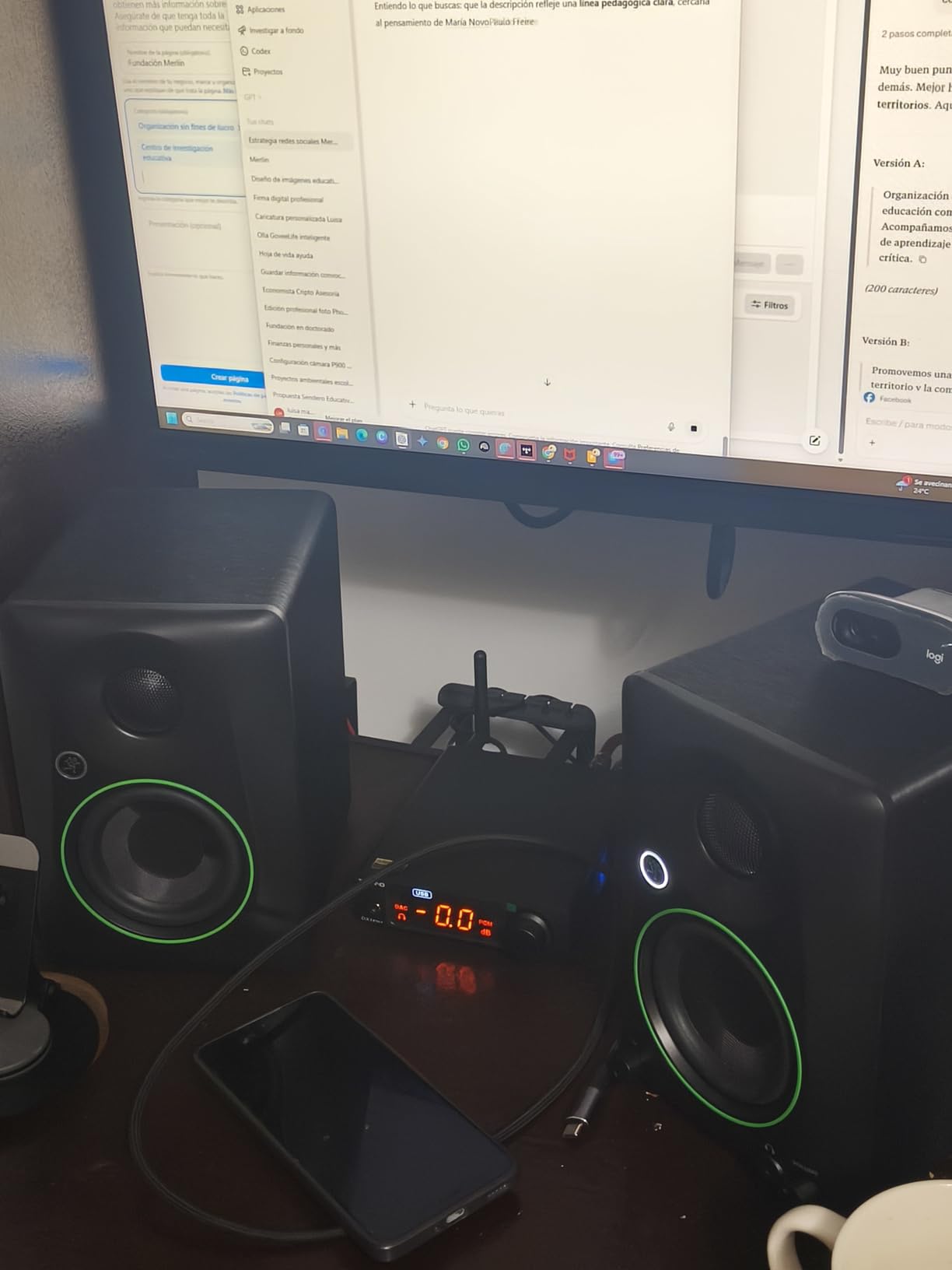
Volume is handled digitally in the preamp, which is the technical reason channel balance holds with no imbalance at low settings. That is a real advantage over analog pots at this level, and forum users who want a neutral chain treat it as a deciding factor.
On the other side, 700mW is enough for typical 32 to 300 ohm headphones but leaves little reserve for 600 ohm models at volume. The headphone output is single-ended 6.35mm only, and the line output is single-ended RCA, so there is no balanced path to a separate amplifier. Samples occasionally carry connector quirks, so check the physical outputs on your system before committing.
Who should buy the Topping DX3 Pro Plus
Buy it for imaging, spacing and dynamics on mid-impedance headphones, and for the widest wireless codec support in this list. It is also a good choice if you want one box to serve a computer, a streaming phone and a pair of powered desktop speakers through its line out.
The digital volume is the quiet reason to like it: for sensitive headphones at low listening levels, a digitally controlled preamp is cleaner than a cheap analog pot.
Who should look elsewhere
Skip it if you own 600 ohm headphones or low-sensitivity planars, because 700mW will not give you headroom. Balanced listeners should note there is no 4.4mm or XLR headphone output here. If your setup is purely analog, the DAC and Bluetooth sections are unused weight.
7. Douk Audio P1 Tube Preamp – Best Tube Preamp for Speakers and Headphones
Douk Audio Bluetooth Tube Preamp: HiFi Stereo Preamplifier Receiver | Headphone Amp | USB DAC | Tone Control for Home Theater, Desktop Listening (P1)
JAN5725 tube stage
24-bit/192kHz USB DAC
Up to 160mW at 32 ohm
1 lb chassis
Pros
- Warm musical tube tone that softens digital harshness at low volumes
- Bass and treble knobs plus a bypass switch tune the sound
- Built-in 24-bit/192kHz USB DAC beats onboard computer audio
- Works as preamp USB DAC Bluetooth receiver and headphone amp in one box
Cons
- Shallow 3.5mm jack causes poor contact with many cables
- No optical input
- Supplied tubes are often reported unreliable and may need replacing
The P1 is the most interesting box on this list for home listening because it is not really a headphone amp first. Owners routinely use it as a low-cost preamp in front of power amplifiers, and the JAN5725 tube stage is what gives it that warm, dynamic analog character. Several people report keeping a spare after their main preamp went out for repair, which tells you how it gets used.
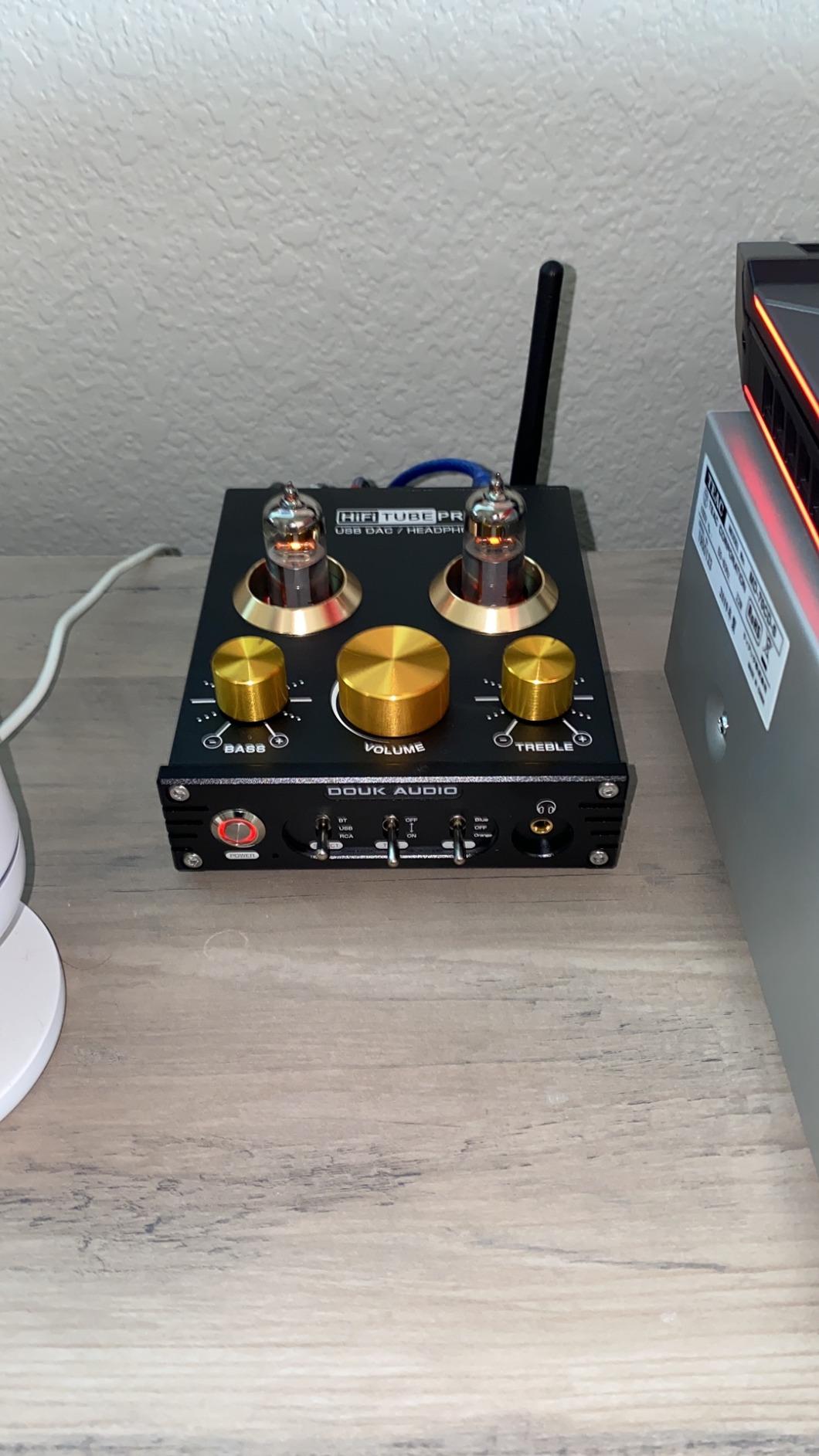
It is a four-in-one: tube preamp, 24-bit/192kHz USB DAC with a CM6642 controller, Bluetooth 5.0 receiver with aptX HD using a QCC3034 chip, and a headphone amp. The headphone section uses an NE5532 with a classic 47 architecture and outputs up to 160mW for 32 to 300 ohm headphones. Tone control is plus or minus 6dB on bass and treble with a bypass switch, and the tube glow colour is switchable between blue, orange and off.
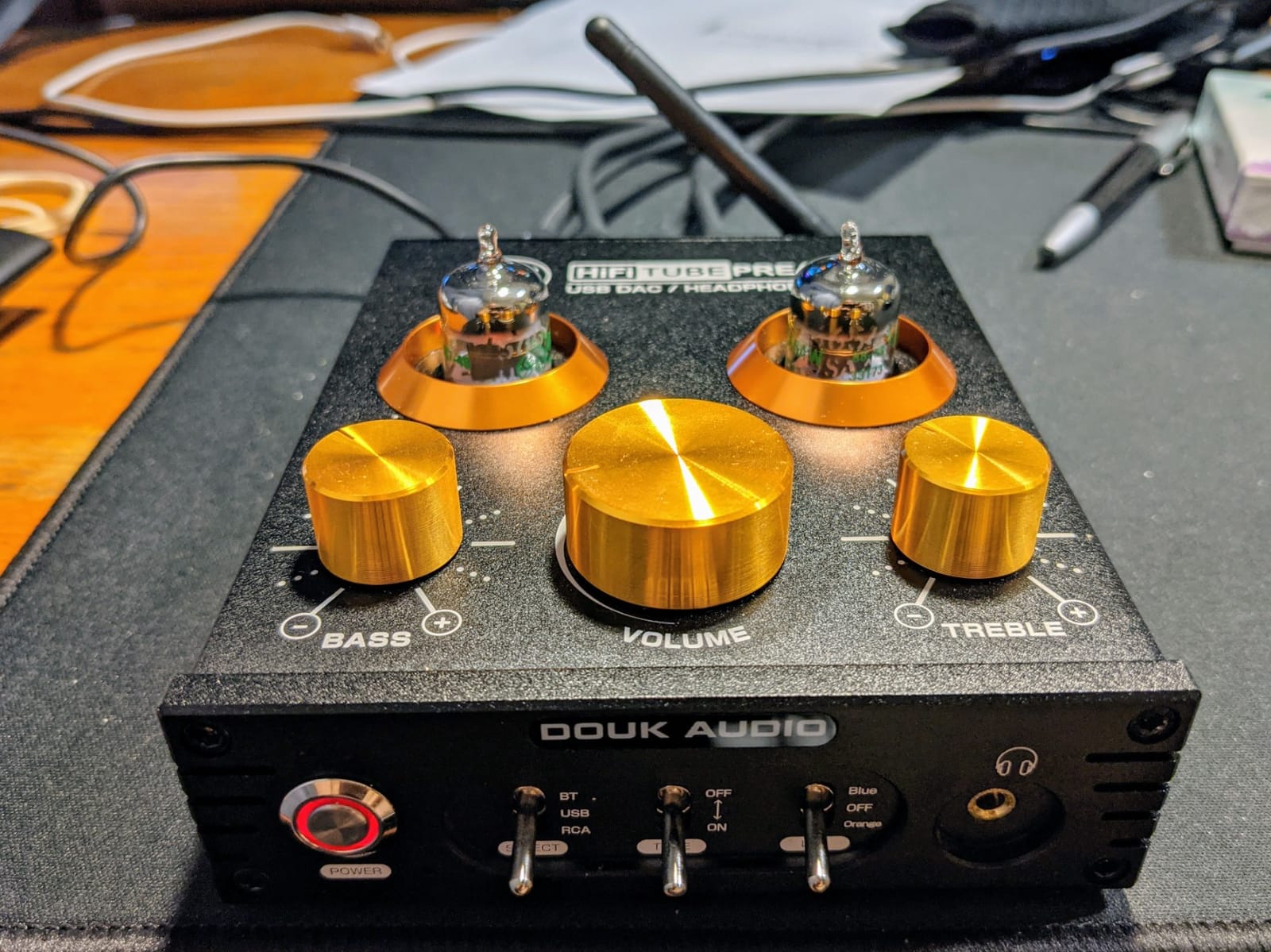
The practical warnings matter more than the sound ones. The 3.5mm headphone jack is shallow, so many cables make poor contact and produce one-sided audio or static; a 3.5mm to 6.35mm adapter is the standard fix and reviewers say it resolves the issue. There is no optical input. The supplied tubes are frequently reported as unreliable or dead on arrival, so budget for a replacement set. And the power supply LED is very bright in a dark room, with Bluetooth mode clicking on power state changes.
On tube expectations generally: these are small signal tubes in a preamp role rather than power tubes, and warmup is a matter of a few minutes rather than a ritual. If hum bothers you, tube-based units are where it appears first, and the cause is usually loop or ground related rather than the tubes themselves.
Who should buy the Douk Audio P1
Buy the P1 if you want to add warmth and a tube character to a home system with powered speakers, and you like having tone knobs to shape a system rather than a neutral measurement chain. The retro look and switchable glow make it a shelf-friendly piece as well as a functional one.
For headphone listening it suits 32 to 300 ohm models at moderate levels, and the tubes are replaceable and rollable if you want to explore further.
Who should look elsewhere
Look elsewhere if you need 600 ohm drive, since 160mW is modest and high-impedance headphones will need the volume high. Digital-only users who want optical input should pick a different box. And if you cannot replace a failed tube set yourself, look for a unit with a longer track record of reliable supplied tubes.
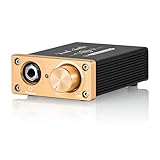
8. Douk Audio U3 – Best Budget Class A Amp for High-Impedance Headphones
Douk Audio U3 Headphone Amps, Mini Hi-Fi Amplifier for Home Desktop PC 6.35mm / 3.5mm Headsets, Class A, RCA Input, DC 5V
Class A output stage
Up to 1300mW output
5-20V DC input range
5.92 oz metal chassis
Pros
- Class A stage with low distortion and no audible noise floor on clean power
- Drives 32 to 600 ohm headphones including HD600 HD650 and K701
- Pluggable op-amp socket allows DIY chip upgrades
- Detented metal volume knob and rubber feet feel far above the tier
Cons
- Amp only with RCA input and no line outputs for speakers
- Bright blue power LED is distracting in a dark room
- Poorly shielded so it can pick up computer and wireless interference
The U3 is the value surprise of the group. Owners repeatedly describe it as outperforming amplifiers costing several times more, specifically calling out imaging and instrument separation, and its 5.92 oz chassis is small enough to travel with or power from a USB battery pack. The internal stage runs at 26V class A from a 5 to 20V DC input.
Output is rated up to 1300mW, and reviewers name specific high-impedance models it drives well, including the HD580, HD600, HD650, K701, K702 and DT880. The stage uses an original TI-NE5532 op-amp with a 1300mA transistor output, and the pluggable op-amp socket is a recurring enthusiast theme in reviews, with several owners owning more than one to compare chips.
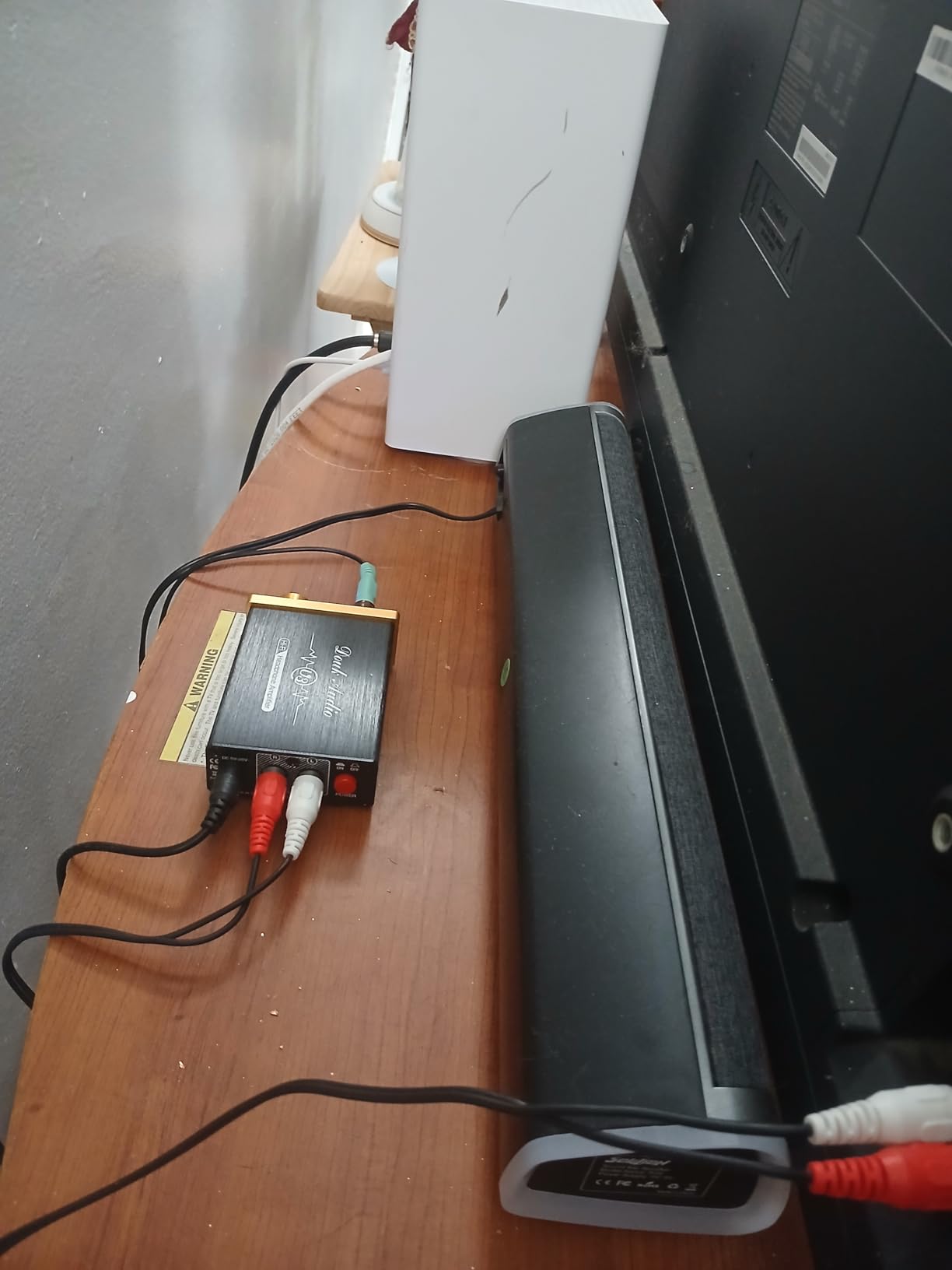
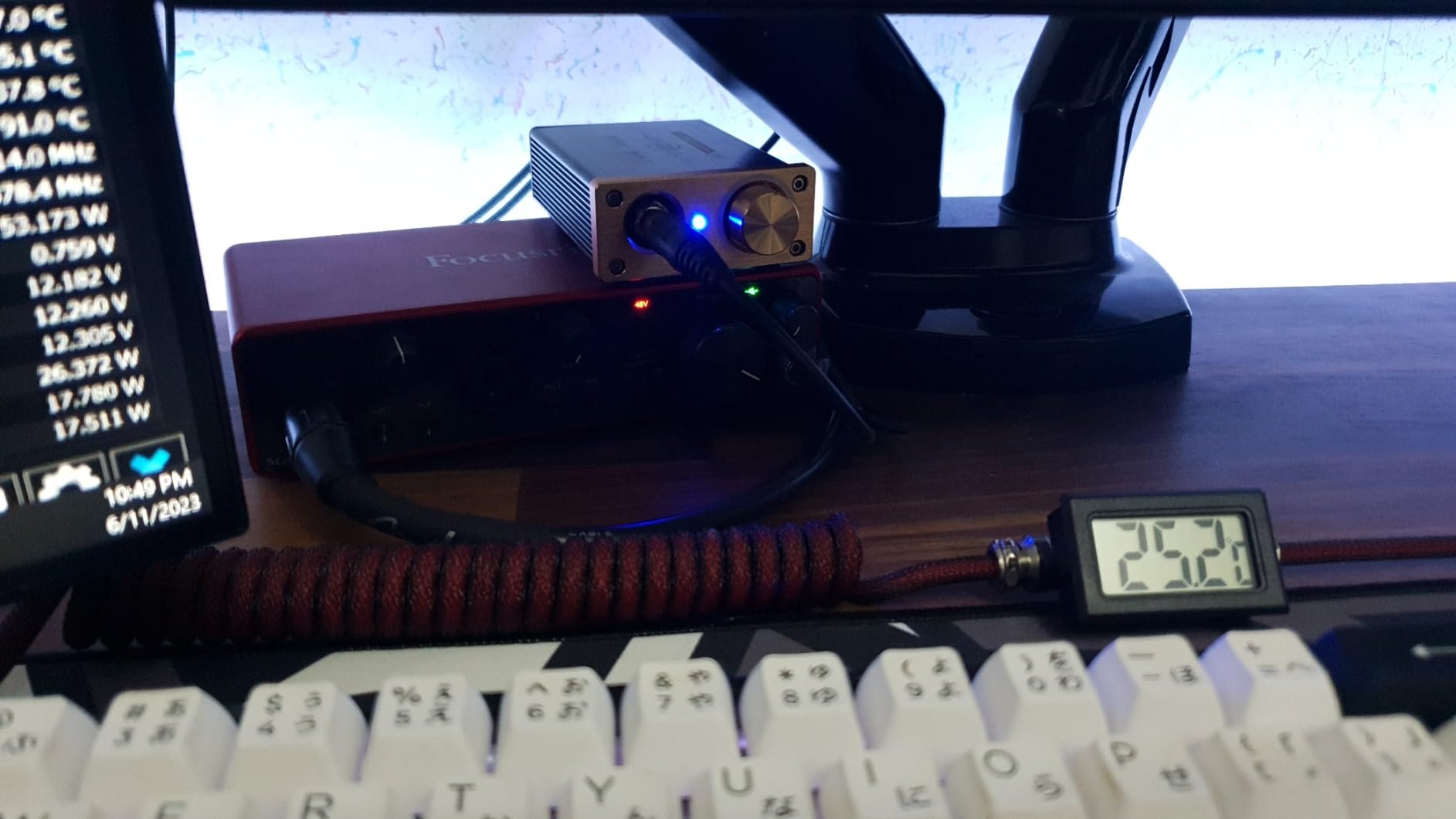
There are real limitations. It is an amp only, with RCA inputs and no line outputs, so it cannot drive speakers and needs a separate source or DAC. The bright blue front LED is genuinely distracting in a dark room. Shielding is weak enough that owners report picking up Bluetooth and Wi-Fi interference when it sits next to a computer, and channel imbalance shows up at the very lowest volume positions.
The one upgrade that matters most is power. It needs a clean external supply rather than a computer USB port to stay quiet, and you will need an RCA-to-3.5mm adapter for convenient headphone use.
Who should buy the Douk Audio U3
Buy the U3 if you already own a DAC or a decent source and want a strong analog headphone stage on its own. It is an excellent match for high-impedance classics and mid-impedance Koss-style headphones, and the op-amp socket makes it a fun platform to tinker with at a low outlay.
It is also a good travel-friendly choice, since it can run from a battery pack and weighs less than most of a desktop setup combined.
Who should look elsewhere
Pass if you want an all-in-one box, because there is no DAC and no line output here. If your computer is your only source and you are not willing to add a small power supply, the interference and noise reports will frustrate you. Speakers are out of reach with this unit.
9. Topping DX5 II – Best Amp for Extreme Power and Planar Headphones
TOPPING DX5 II Hi-Res DAC & Headphone Amp Combo – Dual ES9039Q2M, X-Hybrid Amp, 10-Band PEQ, LDAC Bluetooth 5.1, 4.4mm Balanced & 6.35mm Headphone Output, Preamp Mode, 12V Trigger (Black)
7600mW x2 balanced output
Dual ES9039Q2M DAC chips
10-band PEQ
2.0 inch colour display
Pros
- Enormous balanced power with no audible noise floor
- 768kHz/32-bit and DSD512 from dual DAC chips
- 10-band PEQ allows precise correction on the unit itself
- 2.0 inch colour display with nine themes and a pressable knob
Cons
- Power figure far exceeds what most home setups need
- Display and knob take desk space
- Preamp and 12V trigger features only matter with active speakers
The DX5 II exists to solve a specific problem: driving low-sensitivity planar magnetic headphones at real volume without strain. The X-Hybrid fully balanced quad-channel headphone amplifier is rated at 7600mW per channel, which is far beyond anything else in this list and more than most low-impedance models need, and owners report no audible noise floor even with sensitive in-ears.
Decoding comes from dual ES9039Q2M chips supporting PCM 768kHz/32-bit and DSD512 over an XMOS XU316 USB interface, with Bluetooth 5.1 through a QCC5125 supporting LDAC, aptX Adaptive, aptX HD, AAC and SBC. The 10-band high-precision PEQ runs on the unit itself through self-developed IV circuitry, which removes the need for an external DSP box.
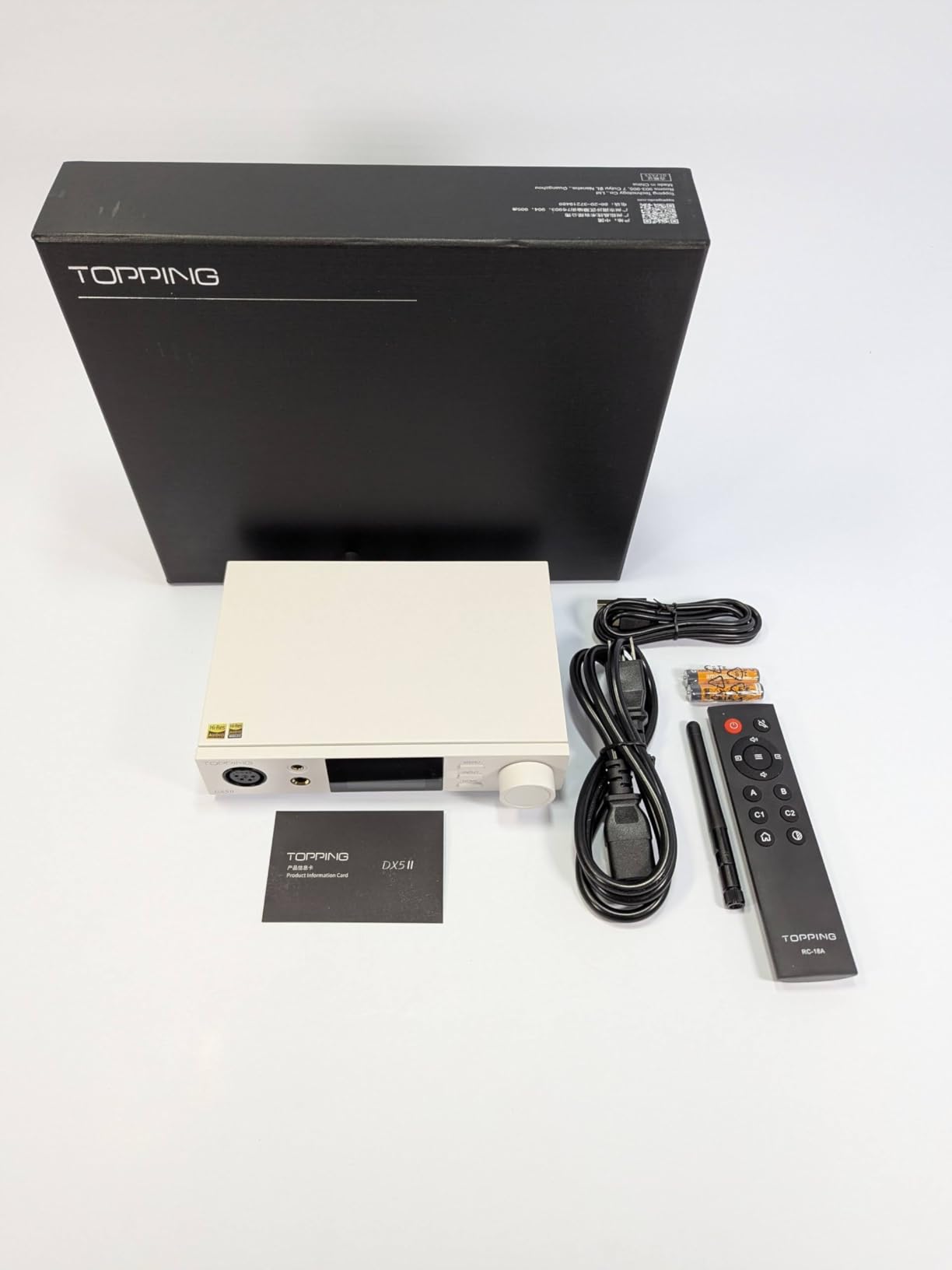
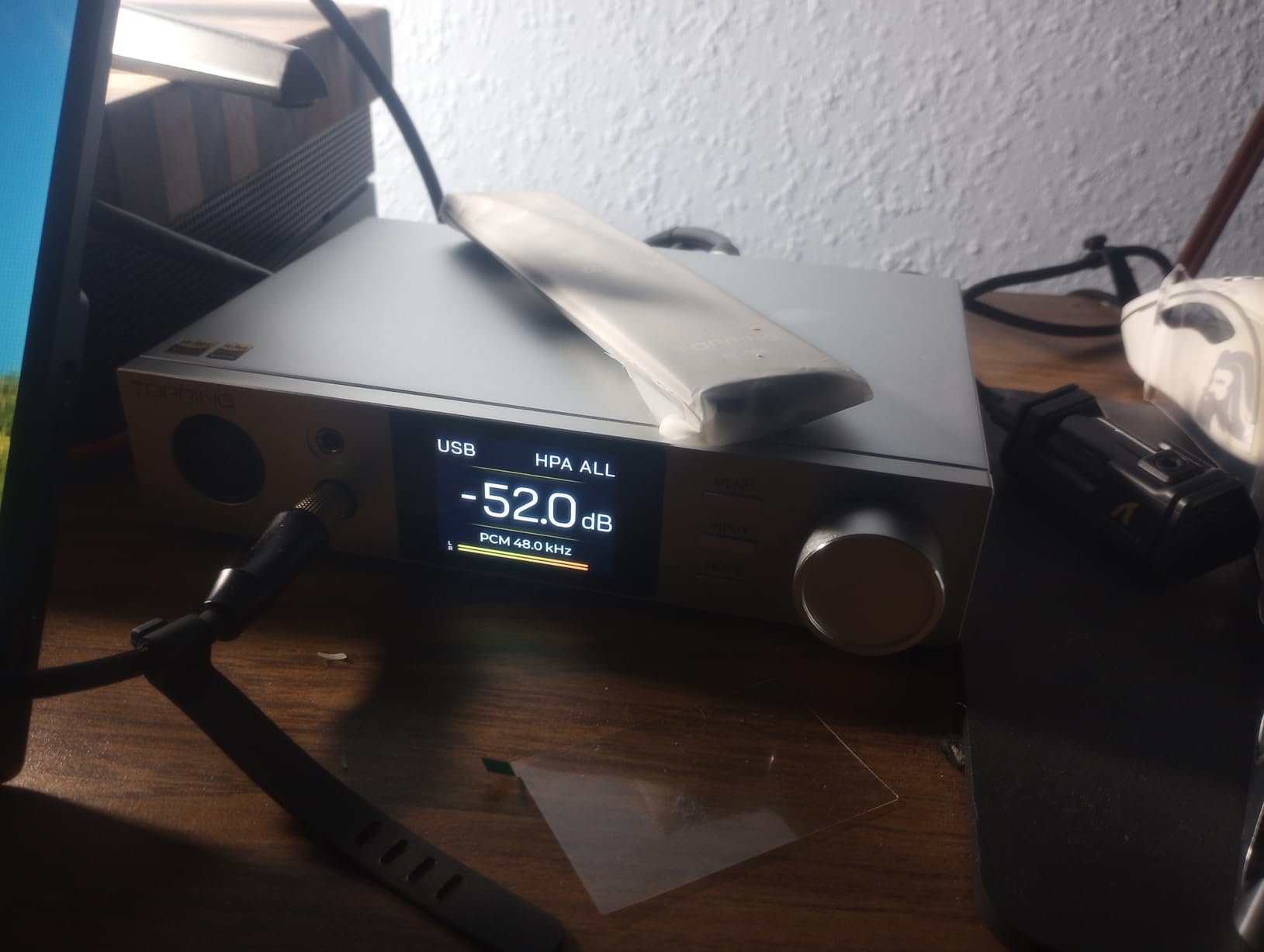
It is also unusually well integrated for a home system. Inputs cover USB, Bluetooth, coaxial and optical, and the outputs are 4.4mm balanced and 6.35mm, with preamp mode and 12V trigger in and out for pairing with active speakers. The 2.0 inch Aurora UI full-colour display has nine themes and a pressable knob, and owners single out both the display and the knob for usability.
Be realistic about scale. This is the highest-power desktop unit in this list, and that rating is only useful if you own headphones that demand it. If your setup is a desk with 300 ohm headphones, you are buying capability you will not exercise.
Who should buy the Topping DX5 II
Buy it if you own low-sensitivity planars, a high-impedance studio model, or you want a single box that can drive anything you might buy next. The built-in PEQ is a genuine bonus if your headphone has a problematic bass response, and the 12V trigger plus preamp mode make it simple to add active speakers to the same chain.
Wireless support at this quality level is rare, so it works well for a desk where a phone is a real source rather than an occasional one.
Who should look elsewhere
Look elsewhere if you need a compact box, because the display and chassis take real desk space. If you listen mostly on easy-to-drive headphones at moderate levels, this is far more machine than you need. And if you want the warm, organic presentation rather than sheer power, the K13 R2R is the opposite choice.
10. AIYIMA DAC-A2 – Best Understated Desktop DAC Amp for Gaming and PC
AIYIMA DAC-A2 Headphone Amplifier & Desktop DAC for PC, MAC and Gaming
160mW RMS at 32 ohm
24-bit/192kHz decoding
3.86 x 2.89 inch chassis
Optical coax and USB input
Pros
- Removes interference and hum from a PC's onboard audio
- Plug-and-play with no drivers and optical input bypasses driver issues
- 160mW at 32 ohm is enough for typical headphones
- Front bass and treble knobs click and centre easily
Cons
- Volume pot can develop loud static and channel drift over time
- 3.5mm jack sockets tend to lose connection within a year
- No separate power switch since the volume pot doubles as power
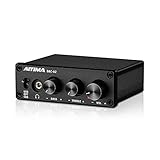
The DAC-A2 is the quiet workhorse of the entry tier. It is consistently praised as a cheap, effective upgrade over onboard PC audio, particularly for gaming, office listening and as a front end for other gear, with owners reporting years of reliable service. The optical input is the underrated feature: it sidesteps driver installation entirely on a Windows or Linux machine.
Output is 160mW RMS at 32 ohm for 16 to 200 ohm headphones, and decoding runs to 24-bit/192kHz via optical or coaxial. The front panel has three rotary controls for bass, treble and volume, and reviewers note the tone knobs are clicky and easy to centre for a flat response. The aluminum alloy chassis acts as an EMI shield with an output protection circuit, sized at 3.86 by 2.89 inches.
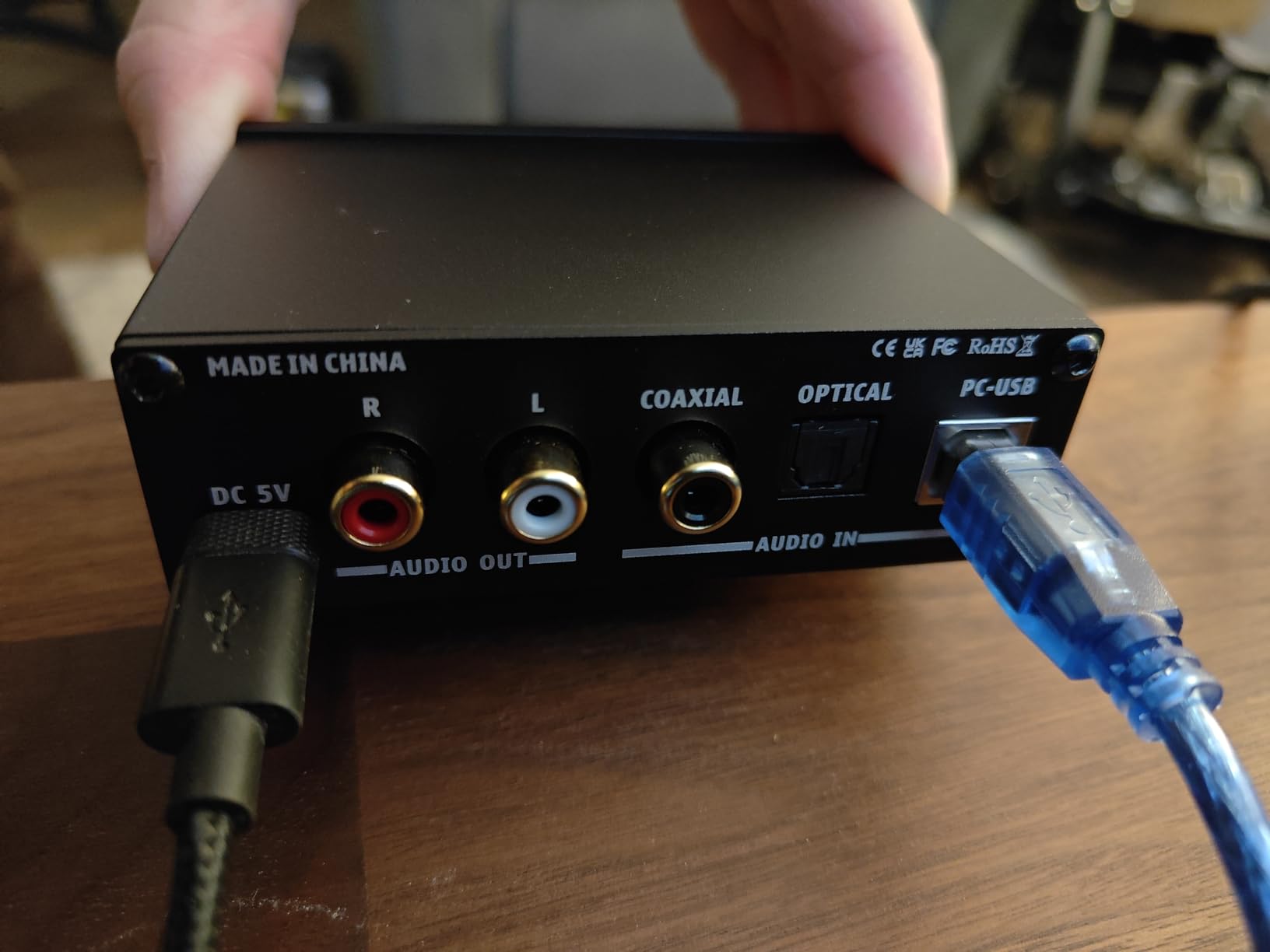
The durability complaints are the reason it sits at number ten rather than higher. The volume pot can develop loud static or crackle when adjusted, and channel levels can drift out of alignment over time. The 3.5mm jack sockets tend to lose connection within about a year. There is no dedicated on/off switch, so the volume pot doubles as the power control and settings reset each cycle, and there is no remote. Some units also emit a high-pitched whistle from the USB input, so prefer the optical path if you can.
Who should buy the AIYIMA DAC-A2
Buy the DAC-A2 if your source is a PC and you want to remove hum and interference without touching drivers. It suits gaming, long work sessions and general home listening, and its size leaves plenty of desk space. RCA outputs let it also feed a small power amplifier.
It is a good fit for a second system or a bedroom setup where a durable, simple box matters more than flexibility.
Who should look elsewhere
Look elsewhere if you drive high-impedance or low-sensitivity headphones, since 160mW is limited for that job. Anyone planning to keep a unit for many years should weigh the volume pot and jack reports. For a shared setup or a system with a proper turntable, a multi-output or preamp-capable box is a better shape.
11. Fosi Audio K7 – Best Amp for Gaming with the Cleanest Signal Path
Fosi Audio K7 DAC Headphone Amp, Desktop Headphone Amplifier for Gaming PC PS5 Switch, PCM 384kHz/32bit, 2100mW, USB C/Bluetooth aptX HD LL/Optical/Coaxial/Mic Input, 4.4mm Balanced/3.5mm/RCA Output
Up to 2100mW output
AK4493S with 384kHz and DSD256
USC-C optical coax Bluetooth
Mic input for headset use
Pros
- Clean neutral sound with no noticeable added coloration
- Excellent positional clarity and separation verified on PC and PS5
- 2100mW drives planars such as the Hifiman Ananda Nano and Audeze LCD-2 Classic
- Quick switching between headphone and speaker output with mute button
Cons
- Volume knob rotates continuously with no hard stops
- Pushing the knob toggles high and low gain rather than muting
- Display viewing angles are poor at desk height
The Fosi K7 carries the highest rating in this group, and the review record backs it up. Owners call out clean, neutral sound with no noticeable coloration, which is exactly what you want if you want your headphones to sound like themselves rather than like the amplifier. For gaming, several reviewers verified positional clarity and separation on both PC and PS5.
It carries an AK4493S DAC with an XMOS XU208 processor and TPA6120 headphone amplifiers, decoding PCM 384kHz/32-bit and DSD256, with output up to 2100mW. Reviewers name specific demanding planars it drives with authority, including the Hifiman Ananda Nano and the Audeze LCD-2 Classic. Inputs cover USB-C, coaxial, optical, Bluetooth aptX HD and LL, and a 3.5mm microphone input for headset use.
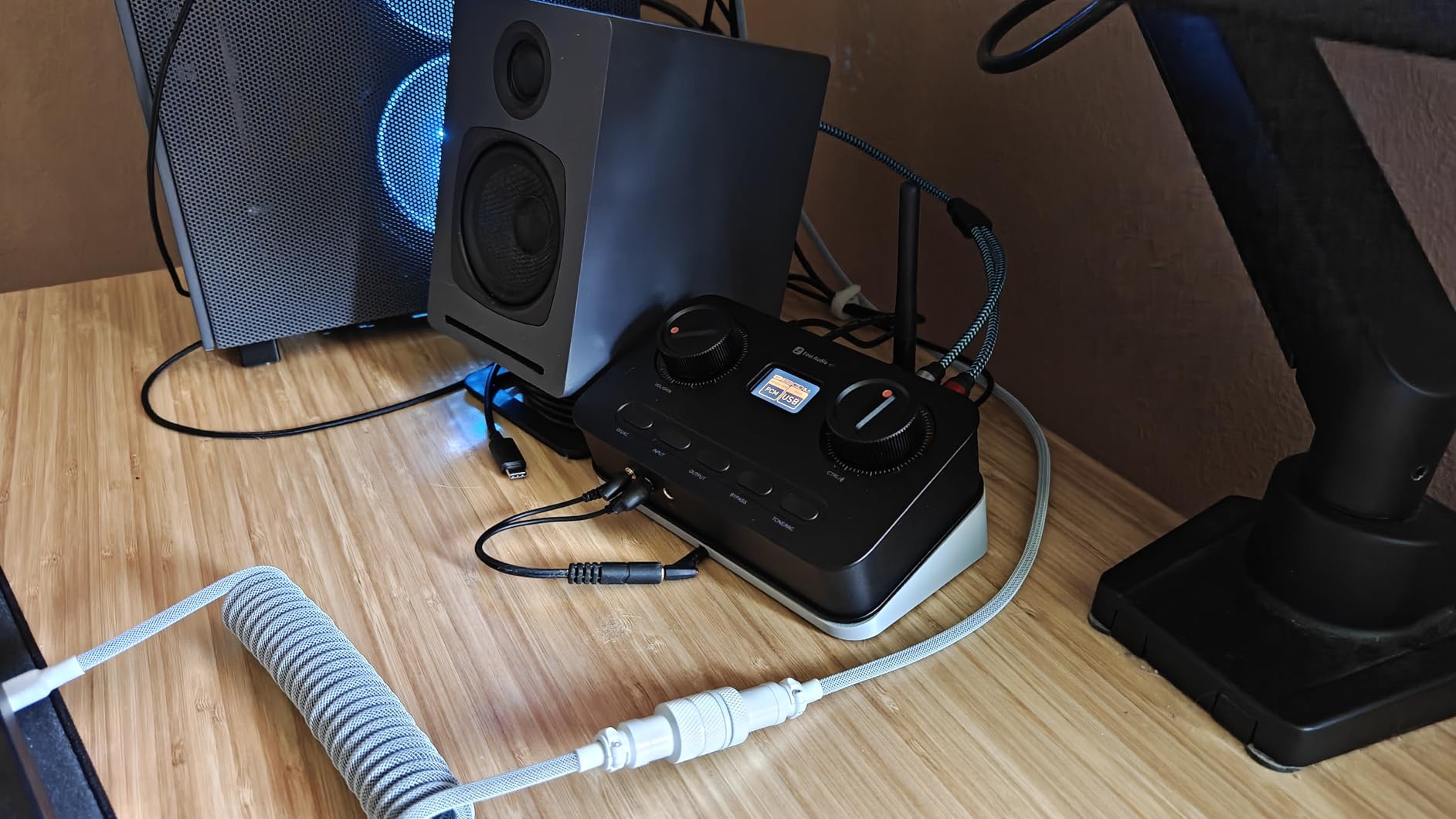
The ergonomics draw the criticism. The volume knob rotates continuously with no hard stops, so its position is easy to misread, and pushing it toggles high and low gain rather than muting, which several owners flag as a hazard for accidental blasts. The display suffers from poor viewing angles at desk height and there is no kickstand. The sample rate is only shown when you are using USB, and there is no remote control.
Two smaller notes: this model has no built-in EQ, and inline microphone cables on in-ears can bleed audio into calls. The all-metal aluminum chassis, dual large control knobs, five shortcut buttons and quick headphone-to-speaker switching are the features owners praise most in daily use.
Who should buy the Fosi Audio K7
Buy the Fosi K7 if you want a neutral signal path with real power and a microphone input for gaming headsets. It is one of the few units here that handles console gaming, PC and serious headphone listening in a single all-metal box, and the quick headphone-to-speaker switching suits a desk shared with powered monitors.
For critical listening, the near-zero added coloration is the reason to pick it over warmer-sounding designs.
Who should look elsewhere
Pass if you are bothered by control layouts, because the endless knob and gain toggle are unusual and take getting used to. If you want wireless hi-res, the Bluetooth here is aptX HD and LL rather than LDAC, so the K13 R2R or DX5 II serve that better. And anyone wanting on-device EQ should note its absence here.
12. FX-Audio Tube-02 Pro – Best Tube Amp for 600 Ohm Headphones
FX-Audio Tube-02 Pro Tube Headphone Amplifier, Vacuum 5725 Tube Preamp, Mini Hi-Fi Integrated Stereo Class A amp Supports 32-600 ohms of Headphones, for Stereo Amplifier/Active Speaker
5725 tube class A stage
850mW output for 32-600 ohm
+2.5dB high-gain mode
Replaceable 6J1 and 6J2 tubes
Pros
- Warm sweet transparent tube voicing with fine tone
- 850mW output drives a wide range including 600 ohm models
- Dual tube line outputs let you switch between multiple sources
- Works as a preamp for stereo amplifiers and active speakers
Cons
- No digital input so it needs an external DAC or source
- Heavier and larger than other tube options here
- Only 77 ratings so the long-term record is thin
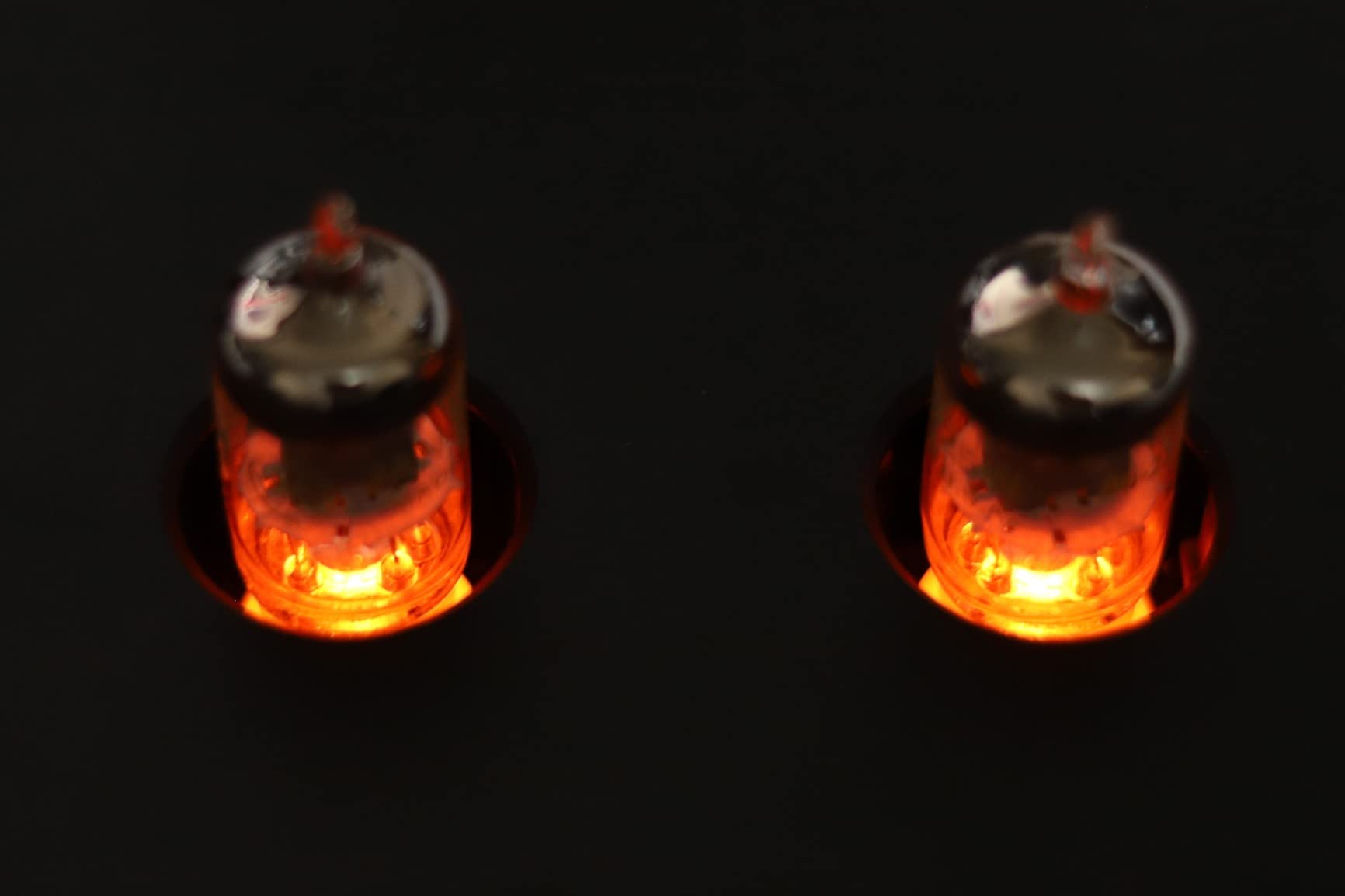
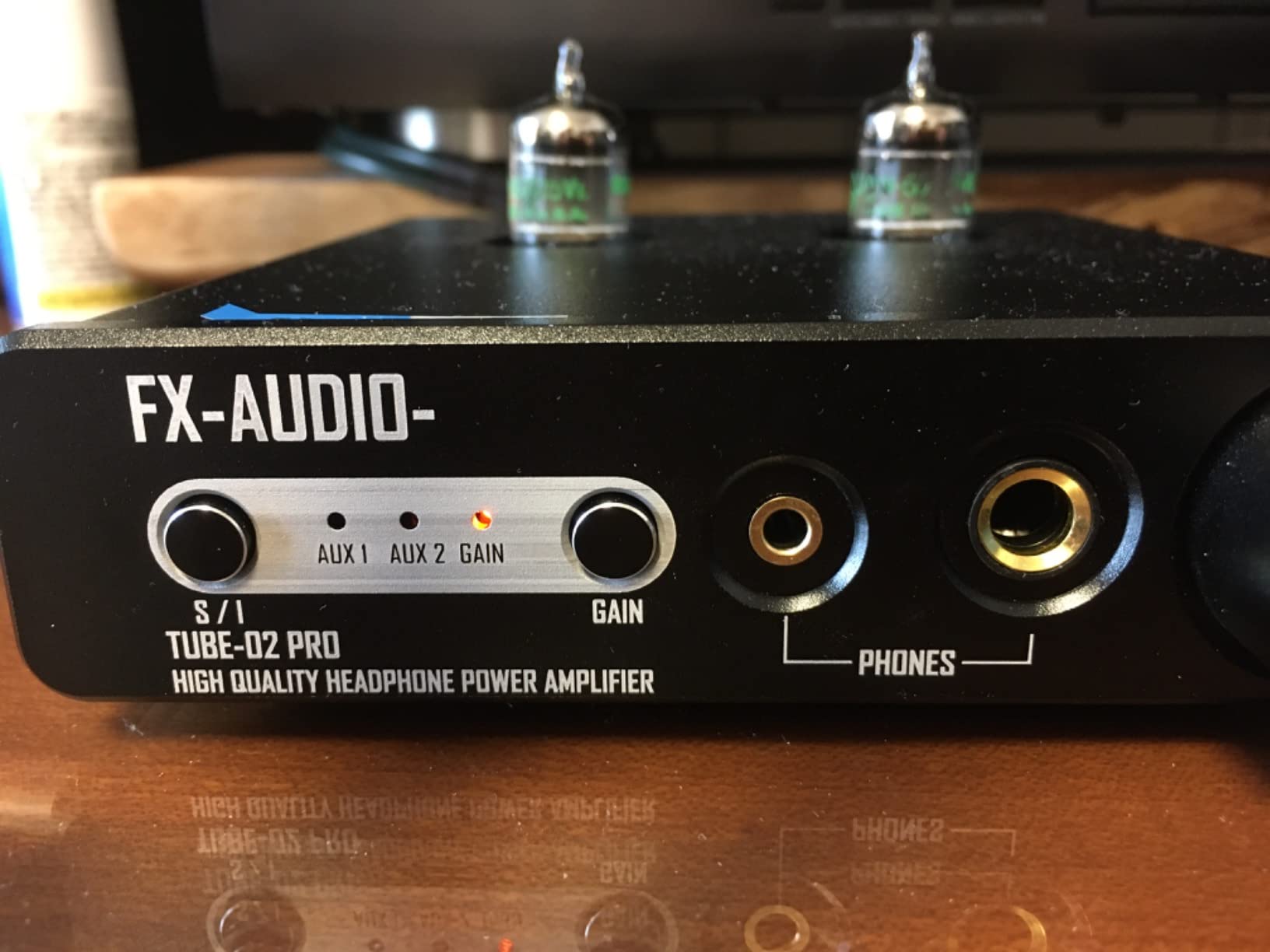
The Tube-02 Pro is a hybrid in the truest sense: a 5725 tube headphone stage backed by a transistor class A buffer rated at 850mW. That combination is why it supports 32 to 600 ohm headphones, which is a genuinely useful ceiling for a tube unit at this size. Owners describe the voicing as warm, sweet and transparent with fine tone rather than soft.
It is also one of the few units here that works as a proper hub. There are two sets of tube-based line outputs for multiple sources, and it can be used as a preamp for stereo amplifiers, active speakers or a turntable. A high-gain mode adds 2.5dB, and the tubes are replaceable with 6J1 and 6J2 types, with audiophile-grade coupling capacitors in the signal path.
What it does not have is a converter. There is no USB, optical or coaxial input, so you need a DAC, a streamer or a computer with a line out feeding it. The chassis measures 7.87 by 9.84 by 2.76 inches and weighs 0.7 kg, so it is a shelf piece rather than a small desk accessory. Connections are 6.35mm and 3.5mm headphone jacks plus RCA.
One more caution, and it is a process point rather than a product fault: with any tube stage, allow a warmup period before judging the sound, and if you hear hum, check grounding and loop paths before assuming the tubes have gone. The review record here is also the thinnest in the group at 77 ratings, so treat the long-term reliability picture as less well documented than the models above it.
Who should buy the FX-Audio Tube-02 Pro
Buy it if you want tube warmth and you already own a DAC, and you want to push into 600 ohm territory without leaving tube territory. The preamp function makes it a natural centre for a home system with active speakers or a turntable, and the replaceable tubes let you adjust the character later.
It suits listeners who prioritise musical tone for long relaxed sessions over measurement neutrality.
Who should look elsewhere
Look elsewhere if you want one box to do everything, since there is no digital input at all. If desk space is tight, check the dimensions before ordering. For pure power with a modern neutral presentation, the solid-state units give you more for the money, and if you want wireless streaming you will need a separate source.
Are Headphone Amplifiers Worth It? The Honest Answer
Sometimes, and the deciding factor is your headphone impedance rather than the amplifier. A dedicated headphone amplifier delivers enough voltage and current to drive a headphone properly, which reveals more detail, dynamics and usable volume than the weak built-in output on a phone, laptop or receiver. If your headphones are 100 ohm and above, or they are low-sensitivity planar magnetics, the difference is real and immediate.
You probably do not need one if your headphones are easy to drive, sit around 16 to 32 ohm, and you already listen from a modern laptop or phone. In that case the built-in output reaches comfortable volume and an amplifier adds cost rather than clarity. Check the headphone specification sheet first, and be honest about whether you are chasing a sound change or a volume change. For most home setups, buying good speakers and a comfortable chair, such as the ones in our bookshelf speaker guide, changes the listening experience more than a second box in the chain.
Headphone Amplifier Buying Guide for Home Listening
Match the output power to your headphone impedance
Impedance is measured in ohms, and it describes how much the driver resists the signal. Higher impedance means the amplifier must push more voltage for the same loudness. Sensitivity, quoted in dB per milliwatt, matters just as much, which is why a 250 ohm headphone that is unusually sensitive may need less power than its impedance suggests.
Use this match-up as your starting point, then adjust for sensitivity:
16 to 32 ohm, in-ears and easy headphones: Almost any amp will do. Sensitivity is high, so noise floor matters more than power. Avoid the entry models that report hiss with low-impedance loads.
50 to 80 ohm, common studio and consumer models: 160mW at 32 ohm is enough for most listening. The Fosi Q4 and AIYIMA DAC-A2 sit here comfortably.
250 ohm, Sennheiser HD600 and HD650 class: Aim for 1000mW or more at 32 ohm, or a strong voltage output. The Douk U3 and FiiO K7 handle this range well, and a 4.4mm balanced path adds headroom.
300 ohm, Audeze LCD and Sennheiser HD800S class: Look for 2000mW or more. Balanced output at 4.4mm or XLR is worth the cable here.
600 ohm, Beyerdynamic DT 990 Pro and other high-impedance dynamic models: Treat this as a voltage problem as much as a power problem. 2570mW balanced on the Fosi ZH3 and the 850mW class A buffer in the Tube-02 Pro are the shapes that work.
On r/HeadphoneAdvice, the recurring question is not which amp is best but which amp suits a specific model, and the community answer is the same every time: start from the headphone impedance. Feature lists come second. That is the logic behind the ordering of this list too.
Decide between a pure amp, a combo, or a separate chain
A pure amplifier takes an analog line signal and boosts it, nothing more. A DAC/amp combo adds a converter so one box does both, which is why most desktop units here are combos. A third option is a standalone DAC feeding a pure amp, which is the enthusiast default when the DAC and amplifier are chosen separately.
On whether a DAC really improves sound: a good DAC removes the noise, jitter artefacts and interface problems of computer audio, and it makes a genuine difference when your source is a laptop or a console. If you already own a good DAC, buying a combo is duplicated hardware and wasted money, so buy a pure amp instead. Most of the plain analog amps on this list, such as the Douk U3 and the Tube-02 Pro, are built for exactly that arrangement.
Choose tube, solid-state or hybrid by maintenance tolerance
Solid-state amplifiers are the lowest-maintenance option, run cool, sit in a stable class A or A/B topology and measure well. Tube amplifiers add harmonic character and are where hum and warmup questions come from. Hybrid designs, like the Tube-02 Pro, use a tube stage in front of a transistor buffer to get some of the character with more of the stability.
On tube maintenance reality: expect a warmup period of several minutes before the sound settles, and a tube replacement every few years depending on use. Bias is fixed in these small units, so there is no user adjustment to worry about. Hum usually comes from ground loops or USB interference rather than the tubes, so try optical input or a different cable first. Which solid-state amp sounds most like a tube amp is a matter of preference, but the FiiO K13 R2R is the closest match in this list because of its resistor-ladder converter.
Work out whether balanced output is worth the cable
Balanced output doubles the signal path and cancels interference, and on a 4.4mm jack it is a 4-pole TRRS connector rather than a normal stereo plug. A balanced cable is only useful if your headphones have matching balanced wiring and a 4.4mm or 4-pin XLR input. If your headphone cable is hard-wired with a 3.5mm TRS plug, buying a balanced amp changes nothing except the shape of the socket.
Check the XLR standard too: 4-pin XLR is the headphone standard most desktop units use, while 3-pin XLR is a microphone or line connector and is not interchangeable. Our advice is to buy balanced only when you already own balanced-capable headphones, and otherwise spend that effort on a proper single-ended path. The cables here also matter for system integration, since a home chain with bookshelf speakers and an amplifier needs reliable line-level interconnects as much as it needs a headphone cable.
Use the amp as the hub of your home system
The most common question from people building a desk system is how to drive headphones and powered speakers from one source. Three options exist. A preamp-capable unit with variable line outputs, such as the FiiO K13 R2R with its XLR and dual RCA outputs, can feed an active speaker pair and switch between them and headphones. A unit with a 12V trigger, such as the Topping DX5 II, can wake an amplifier automatically. And a headphone output plus a line output on the same box, as on the Fosi Q4, gives you A/B comparison between the two.
Two practical warnings. Fixed line-level outputs will not give you volume control for speakers, which is the single most repeated complaint about the Fosi ZH3 despite its preamp labelling. And USB hum from a powerful graphics card is a common home problem, so an optical or coaxial input is worth having even on a USB-first unit.
Consider shared and multi-output listening
If two people listen at the same time, individual volume control matters more than any other feature, and that is the entire argument for a multi-output amplifier. The units on this list are single-channel-pair designs, so the practical answer is a dedicated multi-output amp. If you are also thinking about amplification for hearing assistance rather than hi-fi, our hearing amplifier guide covers a different category of device entirely.
Frequently Asked Questions
Are headphone amplifiers worth it?
Only if your headphones need one. Amplification matters most for 100 ohm and higher impedance models and for low-sensitivity planar magnetics, which cannot reach proper volume and dynamics from a laptop or phone output. With easy-to-drive 16 to 32 ohm headphones on a modern source, an amp adds cost rather than clarity. Check your headphone impedance and sensitivity before buying anything.
What is the best desktop amp for headphones at home?
The Fosi Audio Q4 is the safest all-round choice for most home desks, with the largest review history in this group and 24-bit/192kHz decoding over USB, optical and coaxial. If your headphones are harder to drive, the FiiO K11 adds a 4.4mm balanced output at 1400mW, and the FiiO K7 pushes to 2000mW with THX AAA 788+ amplification for demanding planar magnetics.
What is the best tube amplifier for headphones?
The FX-Audio Tube-02 Pro is the strongest tube option here, with an 850mW class A buffer that supports 32 to 600 ohm headphones and replaceable 6J1 and 6J2 tubes. For a home system that also drives speakers, the Douk Audio P1 combines a JAN5725 tube stage with USB DAC and Bluetooth in one box. Both need an analog source, and both need warmup time before you judge the sound.
Do balanced outputs really sound better?
Sometimes, and the benefit is usually noise rejection rather than a dramatic tonal change. A 4.4mm balanced output only helps if your headphones have balanced wiring and a matching 4-pole connector, and XLR headphone outputs use 4-pin rather than 3-pin connectors. If your headphone cable ends in a 3.5mm TRS plug, a balanced amp gives you nothing extra.
Does a DAC really improve sound?
A good DAC removes computer noise, jitter and interface problems, so it makes a real difference when your source is a laptop, console or streamer. It stops mattering much once your source is already a good digital component, and it is pointless to buy a combo unit if you already own a separate DAC. In that case a pure analog amplifier is the better spend.
How much power do I need for my headphones in mW?
Aim for roughly 1000mW at 32 ohm for 250 ohm headphones, 2000mW or more for 300 ohm models such as the Audeze LCD and Sennheiser HD800S, and as much as you can find for 600 ohm designs. Low-impedance in-ears need very little power but punish noise, so a low noise floor matters more than milliwatts below 32 ohm.
Conclusion: The Best Headphone Amplifiers for Home Listening in 2026
Start with your headphone impedance, not with a feature list. For most home desks, the Fosi Audio Q4 is the best headphone amplifier for home listening because it does one job cleanly and is the most proven of the twelve. Move up to the FiiO K11 when you want a balanced 4.4mm output and high-resolution decoding, and to the FiiO K7 when your headphones are genuinely hard to drive. If you want warm, musical tone, the FX-Audio Tube-02 Pro and the Douk Audio P1 are the two routes in, with the P1 doubling as a preamp for powered speakers.
Whichever you choose, buy the one that matches your impedance and your existing gear, then spend the rest of your attention on the headphones and the room. If your current setup is already comfortable, keep it. Not every listener needs an amplifier, and knowing that is the most useful thing in this guide.