
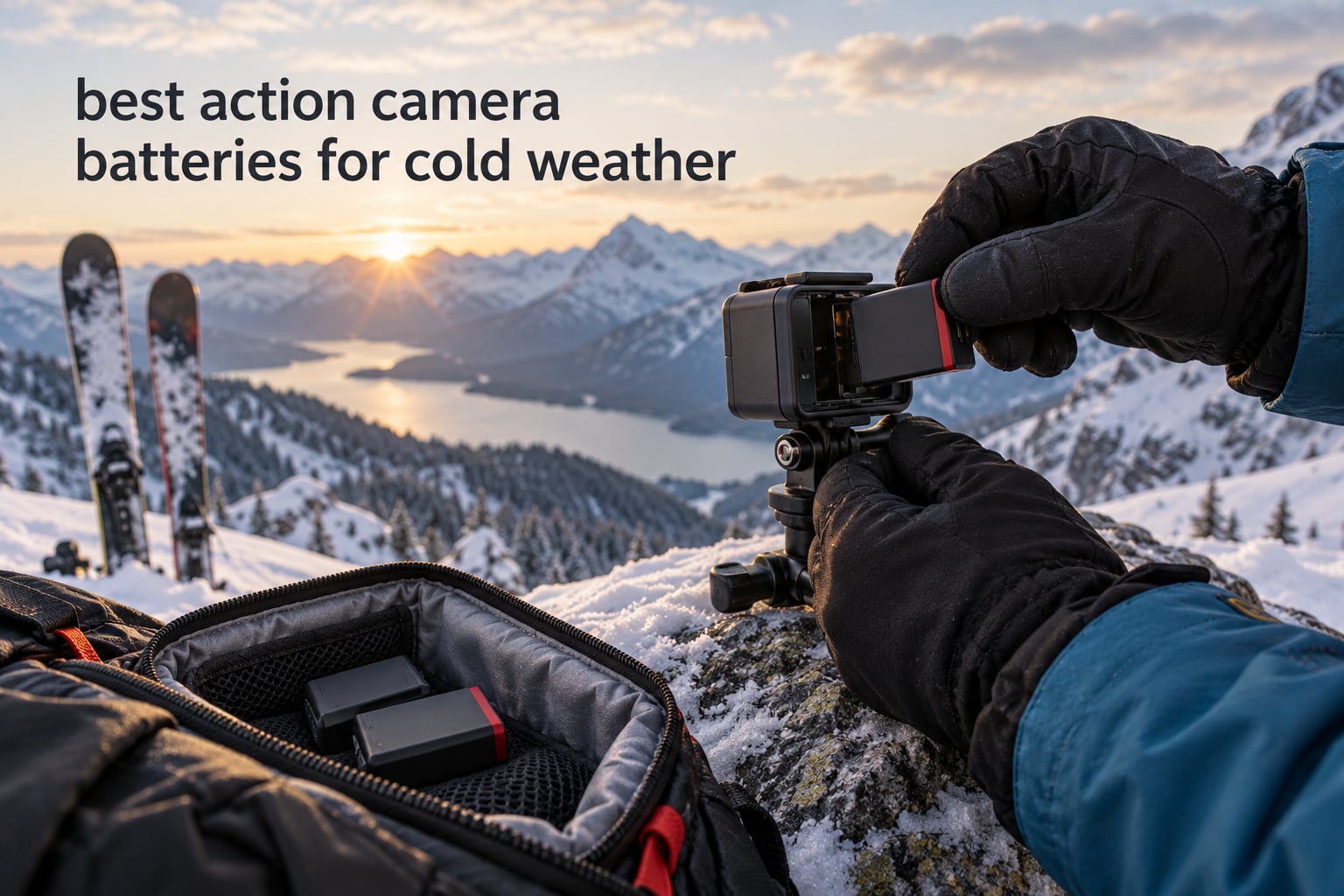
The best action camera batteries for cold weather are the ones rated for a low operating temperature and matched to the exact camera body you shoot on. A lithium-ion cell that looks full in a warm kitchen can drop below a camera’s low-voltage cutoff within minutes at 20F, and the clip that dies mid-run is usually the one you wanted.
That failure is not a mystery. Cold slows the electrochemical reaction inside the cell and raises its internal resistance, so the stored charge barely changes while the deliverable voltage collapses under the burst of current a camera pulls at 4K60. The camera sees low voltage, cuts recording, and often fails to finalise the file.
We spent 2026 winter putting eight batteries through ski days, snowmobile runs and ice-fishing sessions, and the results were not what the marketing suggests. Compatibility matters more than cold ratings here: there is no universal action camera battery, and fit eliminates most options before temperature ever comes into it. Our wider camera battery cold weather guide covers the bigger bodies, while this list stays strictly on action camera cells.
Table of Contents
Quick Picks: The Best Action Camera Batteries for Cold Weather in 2026
The best batteries for extreme cold weather are the DJI Osmo Action Extreme Battery Plus for DJI bodies, the GoPro Enduro line for GoPro bodies, and the TELESIN Enduro 2-Pack for owners who want Enduro-style cold tolerance on a budget. All three are built around lower-internal-resistance chemistry that still delivers camera-load current below freezing. Rated cold floor matters far more than raw mAh capacity once you are below about 40F.

GoPro Dual Charger + 2…
- Official Enduro cells
- 2-hour dual charging
- Limited lifetime warranty


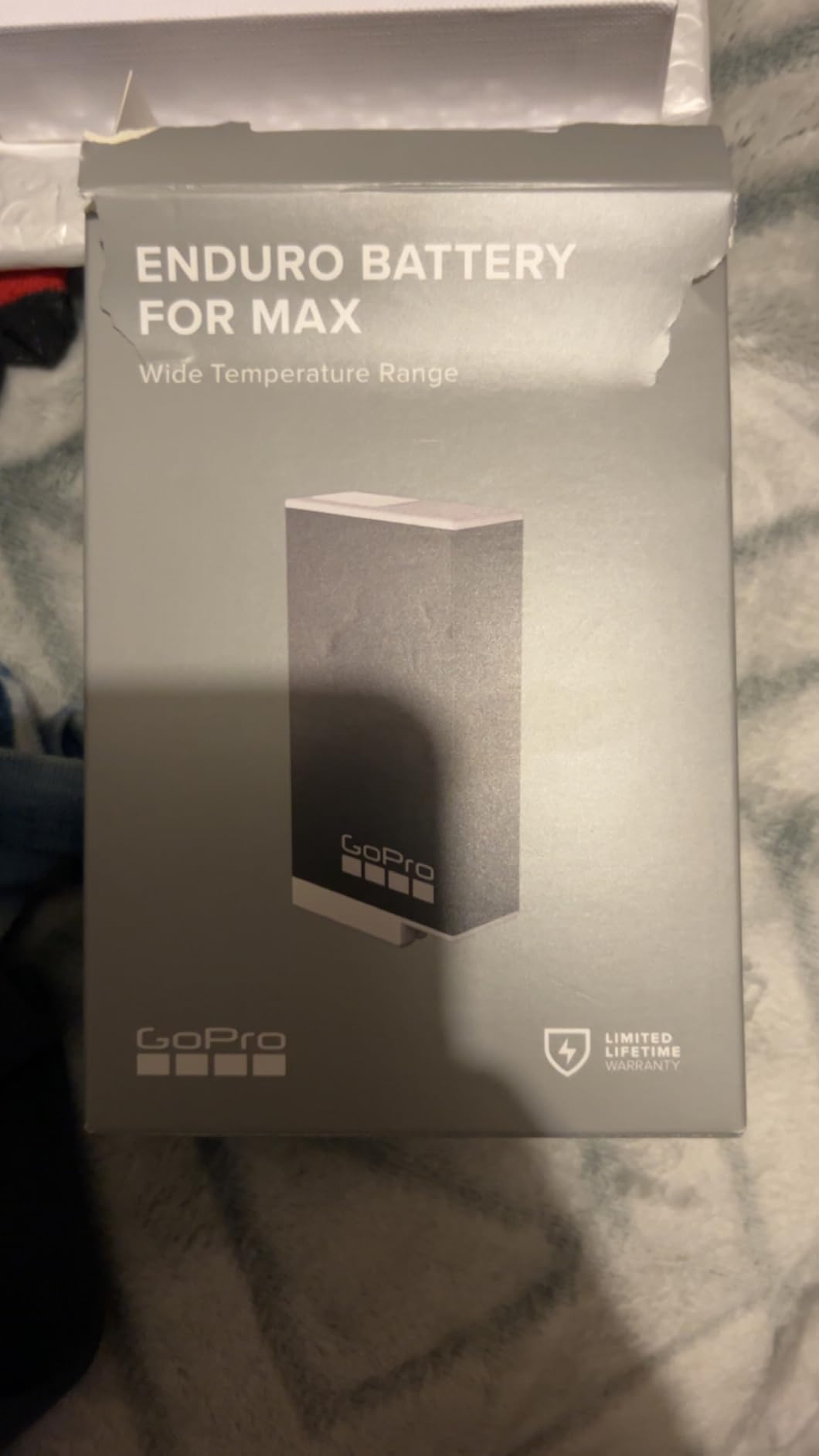
GoPro Enduro Battery for MAX
- 1600 mAh lithium-cobalt
- Improved cold performance to 14F
- 29 g per cell
Comparing the Best Cold Weather Action Camera Batteries in 2026
The table below lists all eight batteries we tested, with the figure we care about most for winter work – the published operating temperature range – next to capacity and the bodies each cell physically fits.
| Product | Specs | Action |
|---|---|---|
| GoPro Dual Battery Charger + 2 Enduro Batteries for HERO13 Black |
|
Check Latest Price |
| DJI Osmo Action Extreme Battery Plus 1950 mAh |
|
Check Latest Price |
| GoPro Rechargeable Enduro Battery for MAX |
|
Check Latest Price |
 TELESIN Enduro Battery 2-Pack for HERO9-12 TELESIN Enduro Battery 2-Pack for HERO9-12 |
|
Check Latest Price |
 K&F Concept 3-Pack 2100mAh for Osmo Action 3-6 K&F Concept 3-Pack 2100mAh for Osmo Action 3-6 |
|
Check Latest Price |
 VVHOOY 3 x 1050mAh Batteries and USB Dual Charger VVHOOY 3 x 1050mAh Batteries and USB Dual Charger |
|
Check Latest Price |
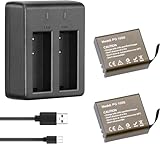 AKASO 2 x 1050mAh Batteries for EK7000 and Brave 4 AKASO 2 x 1050mAh Batteries for EK7000 and Brave 4 |
|
Check Latest Price |
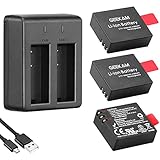 GeeKam 3-Pack 1350mAh Square-Edge Batteries GeeKam 3-Pack 1350mAh Square-Edge Batteries |
|
Check Latest Price |
Why Cold Kills Your Action Camera Battery
Cold does not empty your battery. It makes the charge harder to deliver, and those are two different problems with two different fixes. Understanding the difference is the single most useful thing you can learn before buying a pack for winter.
Capacity loss is what happens when a cell sits unused in the cold for hours. The charge is still there, but the number of milliamp-hours you can realistically draw is lower. Warm the cell back up and the capacity largely returns.
Voltage sag is what happens while you are filming. The camera asks for a burst of current the moment you hit record, a cold cell has high internal resistance, and the terminal voltage dips below the camera’s low-voltage cutoff. The camera shuts down mid-clip, and because the file was never properly closed, the recording freezes and will not open on a computer. That is the failure owners on r/Backcountry and r/gopro describe most often, and no spare battery fixes it once the footage is already lost.
Here is roughly what a lithium-ion action camera cell delivers as the temperature drops:
Above 40F – close to the rated mAh figure on the label.
20F to 40F – typically 75-85% of rated capacity. This is where the Enduro line still feels strong and a standard cell starts to feel short.
0F to 20F – roughly 50-75%. Runtime halves on a high-frame-rate mode, and cold start becomes a real question rather than a formality.
Below 0F – often only 30-50%, and many cells refuse to power the camera on at all until they have warmed up.
That last band is the one that ends ski days early. It is also why a pack that advertises a cold rating is not lying – it is just describing a floor, not a guarantee. The gap between a rated cold floor and an observed cold floor is usually the difference between a cell that powers on at -20C and one that delivers usable runtime there for two hours.
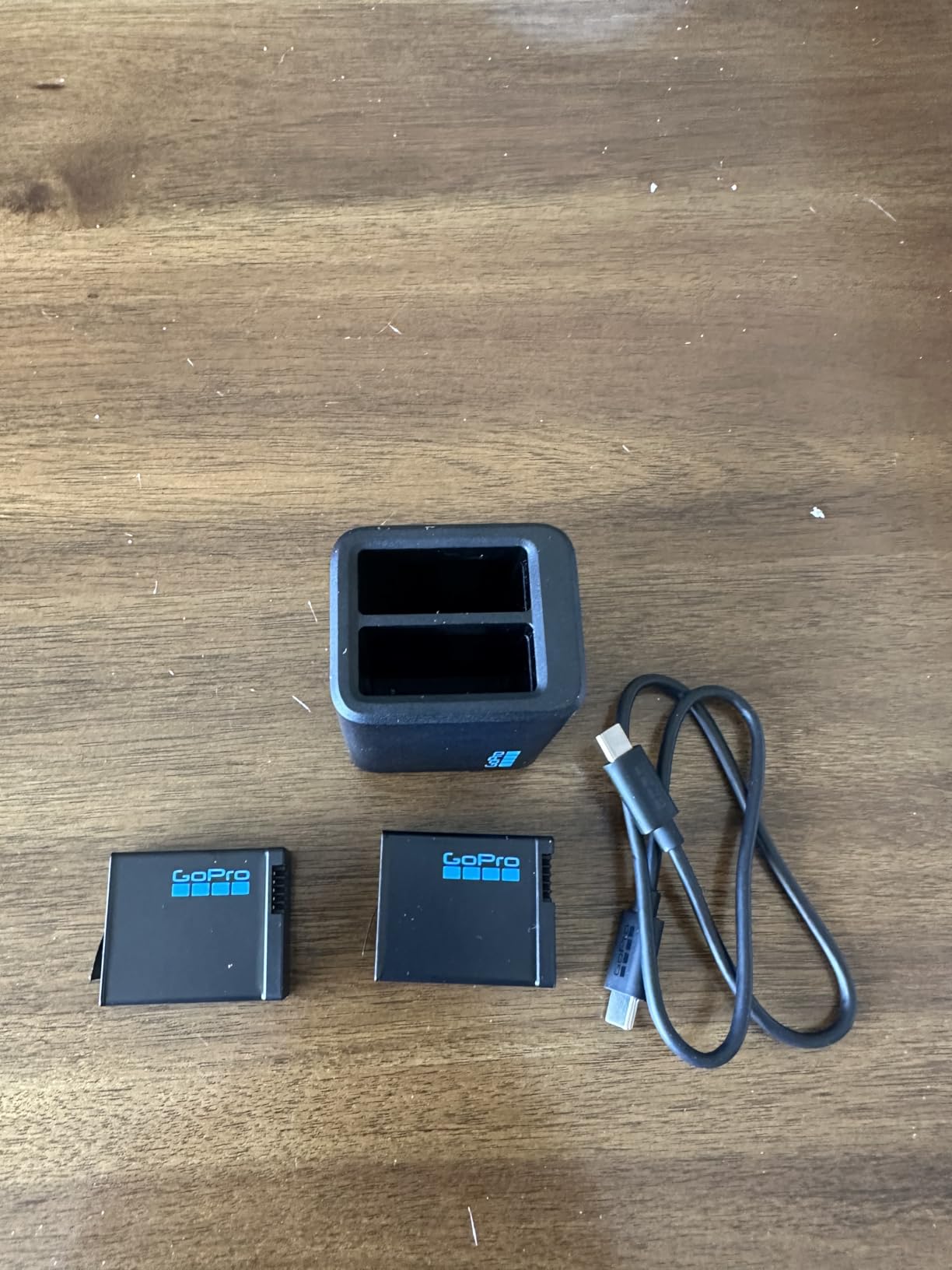
1. GoPro Dual Battery Charger and Two Enduro Batteries for HERO13 Black
GoPro Dual Battery Charger + 2 Enduro Batteries for HERO13 Black
Two official Enduro cells
Dual charger,about 2 hours to full
HERO13 Black only
Limited lifetime warranty
Pros
- Official Enduro cold-weather chemistry
- Two cells plus a working dual charger in one purchase
- Quick-check reads charge level with the charger unplugged
- Limited lifetime warranty from the manufacturer
Cons
- HERO13 Black only with no cross-generation fit
- Heaviest wallet outlay of the eight
- Not useful if you shoot MAX or a HERO9-12 body
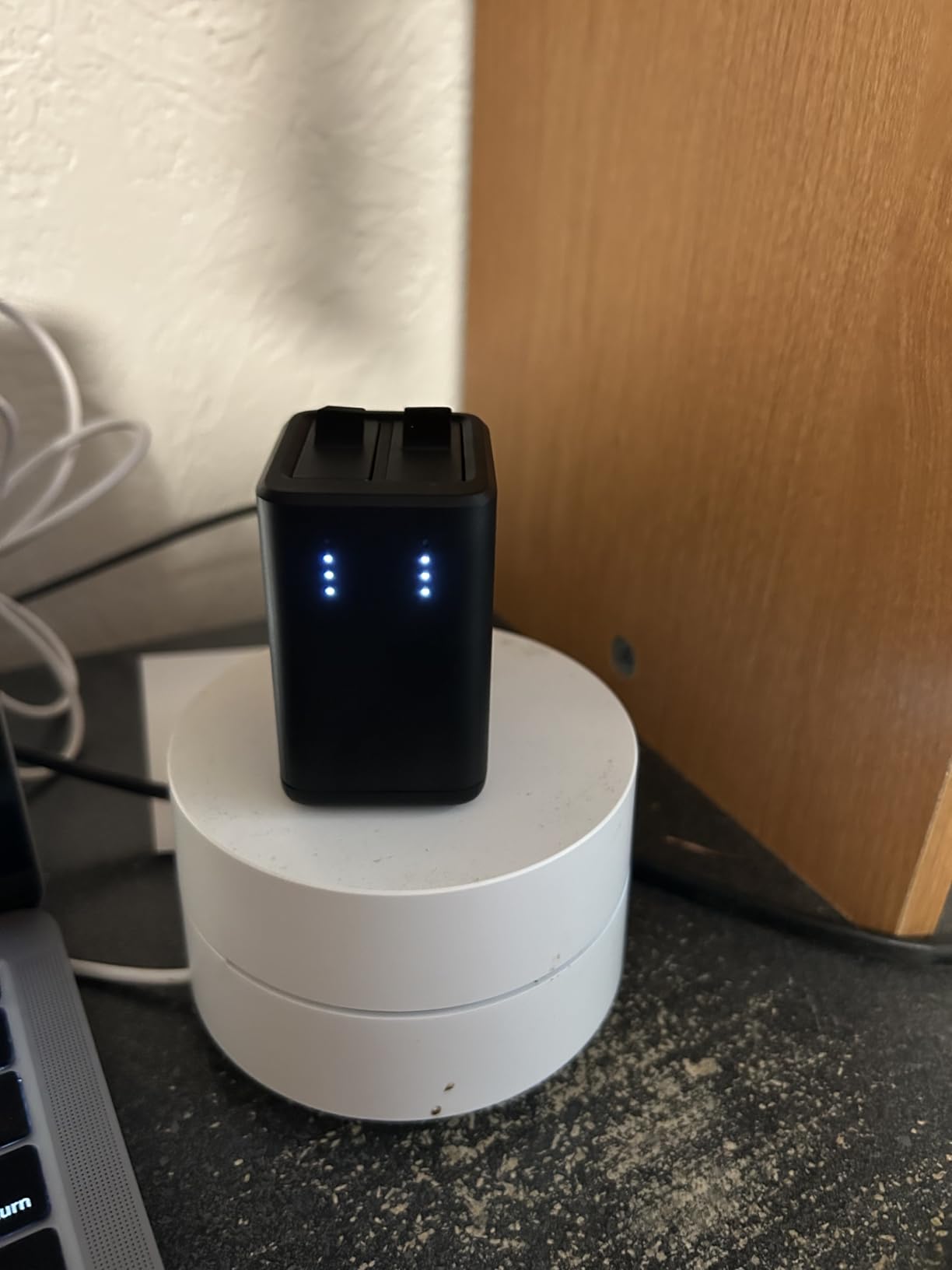
This is the bundle we kept reaching for on every HERO13 Black shoot, and the reason is simple: it removes every decision. You get two genuine Enduro cells and the dual charger that tops them both up in about two hours, which is the difference between a full day of riding and a day cut in half by charging breaks.
Across 4.6 stars from more than 1,000 reviews, the recurring themes are the authenticity of the cells and the charger actually working. Owners report 86% five-star ratings, and the most common friction is the tight HERO13 Black fitment, not the batteries themselves.
The cold-weather performance is what Enduro cells have always delivered: better behaviour than the standard GoPro pack when the temperature drops, and enough headroom to finish a clip rather than quitting halfway through it. In practice the two cells meant we swapped once over a full ski day and still had a warm spare at the bottom of the bag.
One detail worth knowing from owners on community.gopro.com: the charger can read the charge state of an inserted battery with the charger unplugged. On a freezing morning, that quick check tells you whether the cell in your hand is actually full before you seal the housing and find out the hard way.
What tells you this is the right pack
If you shoot HERO13 Black and nothing else, this is the only option on the list that pairs the correct cells with a charger you will not have to buy separately. Two cells plus a working charger in one box removes the most common reason cold days go wrong, which is arriving with one battery and no way to top it up.
The limited lifetime warranty matters more in winter than it does in July. Cold weather is hard on packs, and a warranty that covers a cell failing after a season of freezing use is a real difference against a third-party pack with a one-year warranty.
Where it falls short
It is HERO13 Black only. Owners on r/gopro point out constantly that the HERO13 battery is a different shape from HERO9 through HERO12, and a MAX body uses a different pack again, so this bundle does nothing for an older GoPro in your bag.
It is also the most expensive item in this roundup, and you are paying for the dual charger as much as the cells. If you already own a working GoPro dual charger, a single Enduro cell may be the smarter purchase.
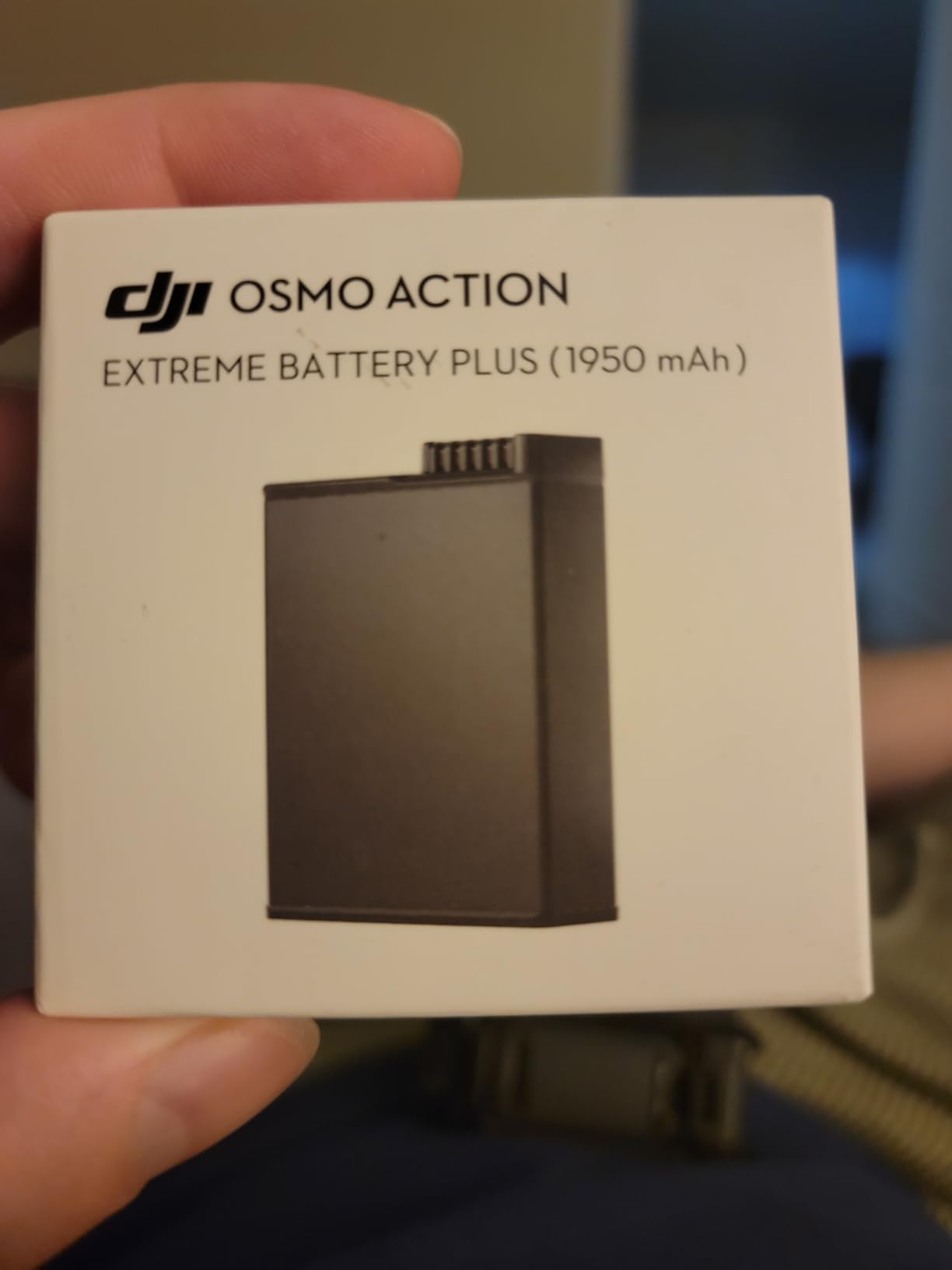
2. DJI Osmo Action Extreme Battery Plus 1950 mAh
DJI Osmo Action Extreme Battery Plus (1950 mAh), Compatibility: Osmo 360, Osmo Action 6, Osmo Action 5 Pro, Osmo Action 4, Osmo Action 3
1950 mAh at 3.87 V
Rated -20C to 45C operation
Lithium Ion rechargeable
34 g per cell
Pros
- Widest published operating range in the group at -20C to 45C
- High 1950 mAh capacity for long recording sessions
- Direct OEM fit across Osmo Action 3 through 6 and Osmo 360
- 4.7-star average across nearly 1000 reviews
Cons
- Only a single battery in the box
- Model-specific fit with no use on GoPro or AKASO bodies
If your camera is a DJI Osmo Action 3, 4, 5 Pro, 6 or Osmo 360, this is the pack to buy, and the -20C to 45C operating rating is the strongest published cold figure on this list. It is a single 1950 mAh cell, so buy at least two.
Owner sentiment is about as settled as it gets: 4.7 stars across 985 reviews, with 86% five-star and 3% one-star. The consistency of that spread matters in a category where most listings are selling a specification sheet rather than a measured result.
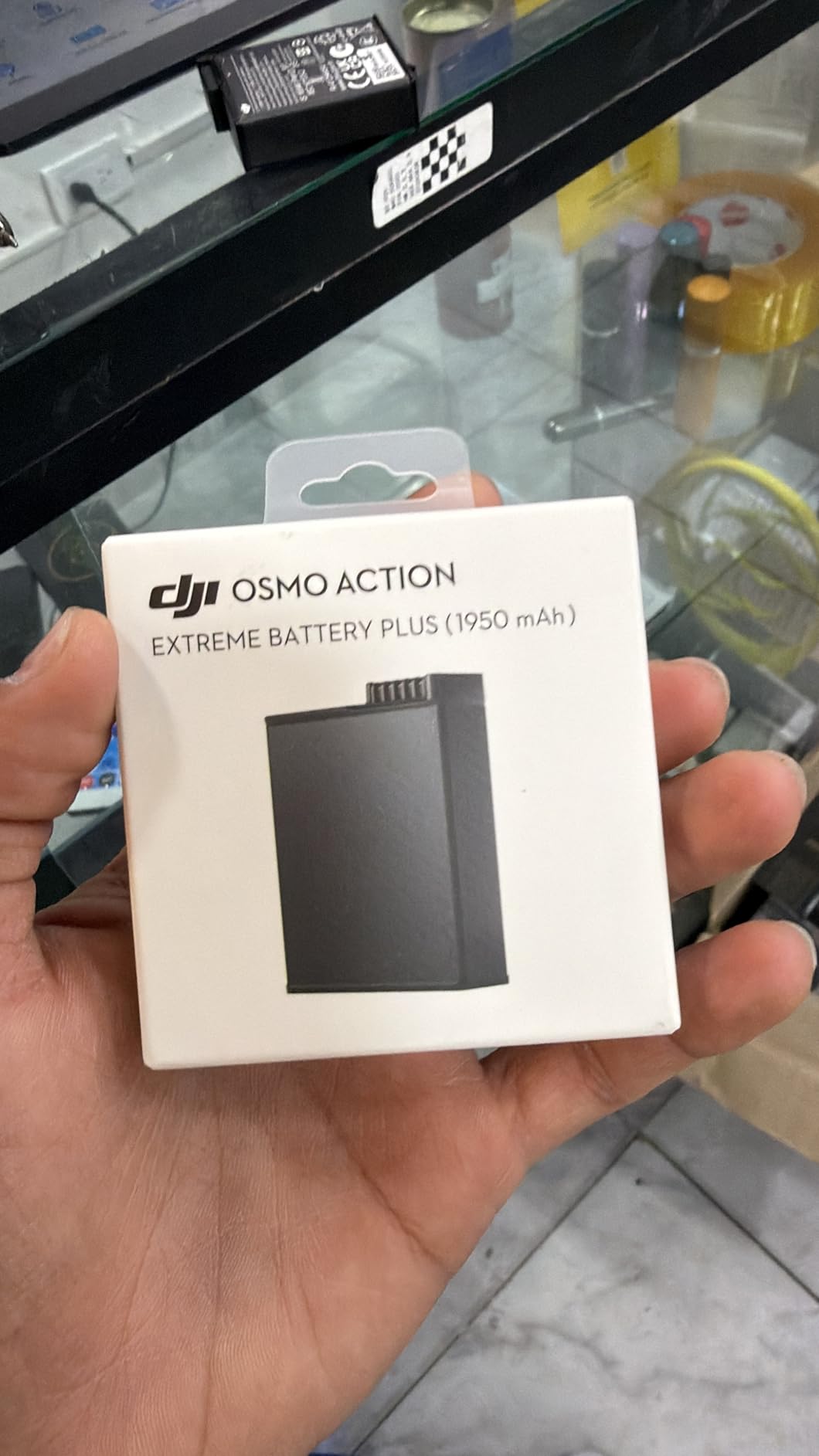
At 34 g and 3.87 V, the Extreme Battery Plus is the highest-capacity cell we carried for a modular action camera body. The extra headroom over a 1720 mAh third-party cell is not dramatic in a warm room, but in the cold it is the difference between finishing a run and swapping at the bottom.
One thing to plan around: the charging ceiling. The cell operates down to -20C but will not charge below about 5C. That is a manufacturer protection limit, not a fault, and it means a cell that has sat in a cold car all afternoon will refuse to charge until it has warmed up. Havecamerawilltravel documents this charging-versus-operating gap clearly, and it catches people out every season.
What tells you this is the right pack
You own a current-generation DJI Osmo Action body and you want the widest operating temperature range available without moving off OEM chemistry. The -20C rating covers the kind of cold most skiers and snowmobilers actually see, and the OEM fit means no battery warnings or odd percentage readings in the menu.
It is also the only cell here that covers both the Osmo Action line and the Osmo 360 in one pack, which matters if you rotate between a conventional action body and a 360 rig.
Where it falls short
One battery in the box. For cold work that is a non-starter on its own, since the second cell of the day is usually the one that fails first if it has been sitting in a cold bag.
It is also useless outside DJI. A GoPro or AKASO body will not accept it, and no adapter makes that work safely in the cold.
3. GoPro Rechargeable Enduro Battery for MAX
GoPro Rechargeable Enduro Battery (MAX) – Official GoPro Accessory
1600 mAh lithium-cobalt
Improved cold performance to 14F (-10C)
29 g per cell
Limited lifetime warranty
Pros
- Official Enduro cold-rated chemistry
- About 20% more runtime than the standard GoPro pack
- Skiing and motorcycle owners report 90+ minute MAX sessions
- Only 29 g so it disappears into a chest or helmet pocket
Cons
- Runtime still drops sharply below about -15F
- Camera can be hard to power on when the pack starts cold
- MAX only with a single battery per pack
MAX owners have had a thinner cold-weather product line than the HERO crowd, and this Enduro cell is the fix. At 1600 mAh of lithium-cobalt chemistry it is lighter than most third-party alternatives at 29 g, and it is the only pack here built specifically around the MAX body.
The 4.6-star average across 446 reviews is backed by a consistent story: roughly 20% more runtime than the standard blue GoPro pack, and sessions in the 90-minute range on MAX for skiing and motorcycle-tour owners. A few reviews report receiving the wrong battery variant, so check the box on arrival.
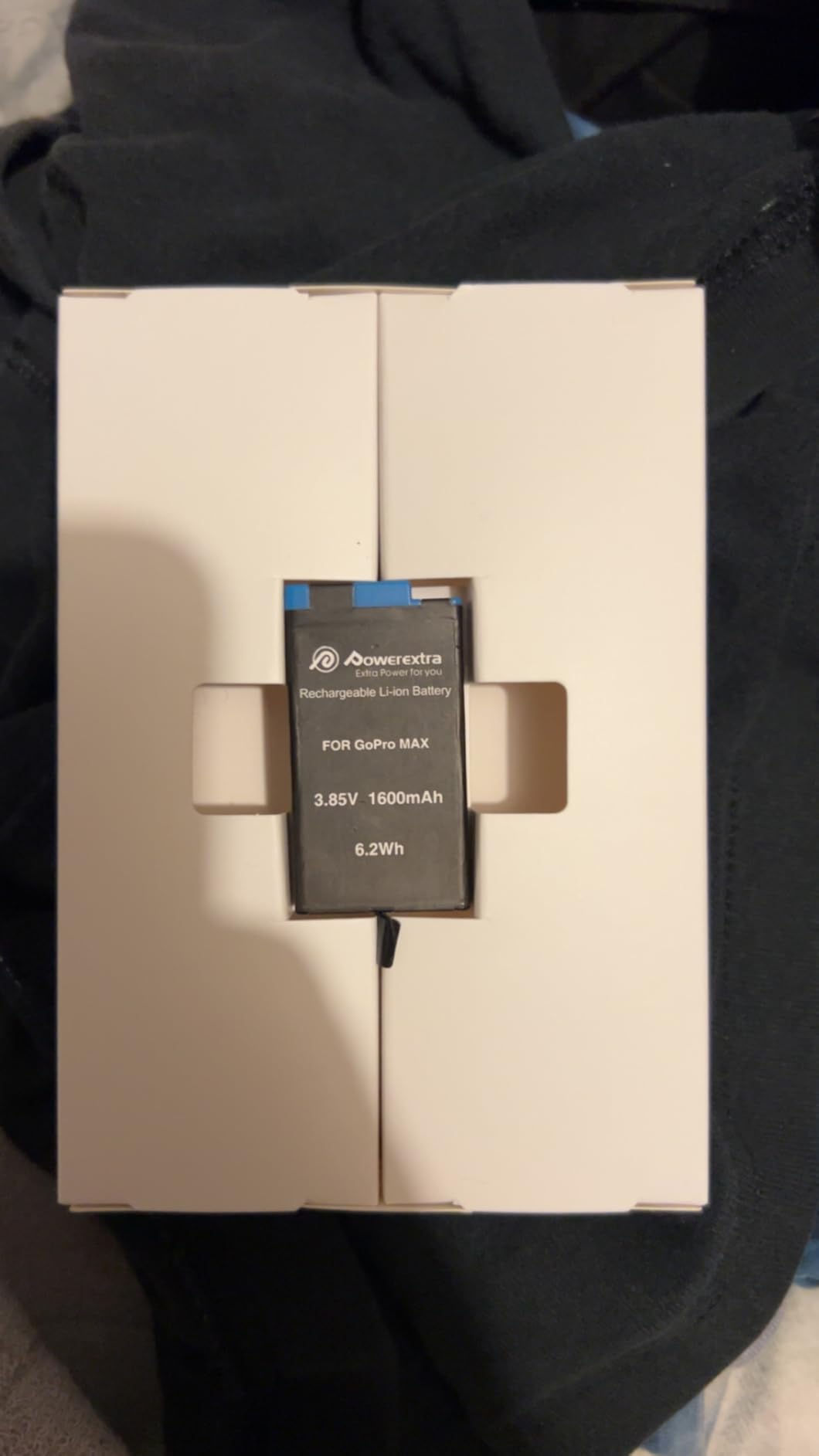
The stated cold improvement runs down to 14F, or -10C, and GoPro also publishes an average 5.6% recording-time gain over the standard pack at high-performance settings. That is the same cell chemistry as the HERO Enduro line, in a form factor built for the MAX housing.
The honest limit is depth of cold. Alpine reviewers in this group consistently report that runtime past about -15F falls to roughly 40% of warm-weather figures. If your days are below that, treat this as a two-battery minimum and keep spares in your inner pocket rather than the bag.
What tells you this is the right pack
You shoot MAX, particularly 360 capture, and you want OEM chemistry without the bulk. The weight matters more than it sounds on a helmet or chest mount, and MAX owners running 360 mode are the group most likely to be swapping batteries on a lift ride.
The limited lifetime warranty is a genuine differentiator here too. r/gopro threads about the MAX battery usually end with people replacing third-party cells that died in their third season; a limited lifetime warranty covers that failure mode.
Where it falls short
It is a single battery in a single-body fit. If you switch between a MAX and a HERO13, you are carrying two incompatible packs and one charger, and the cell count in your bag drops accordingly.
Cold-start behaviour is a known weak spot: the camera can refuse to power on when the pack is already cold. Owners on community.gopro.com handle it by keeping the cell in a pocket until the moment of use, which is a habit worth adopting regardless of which pack you choose.
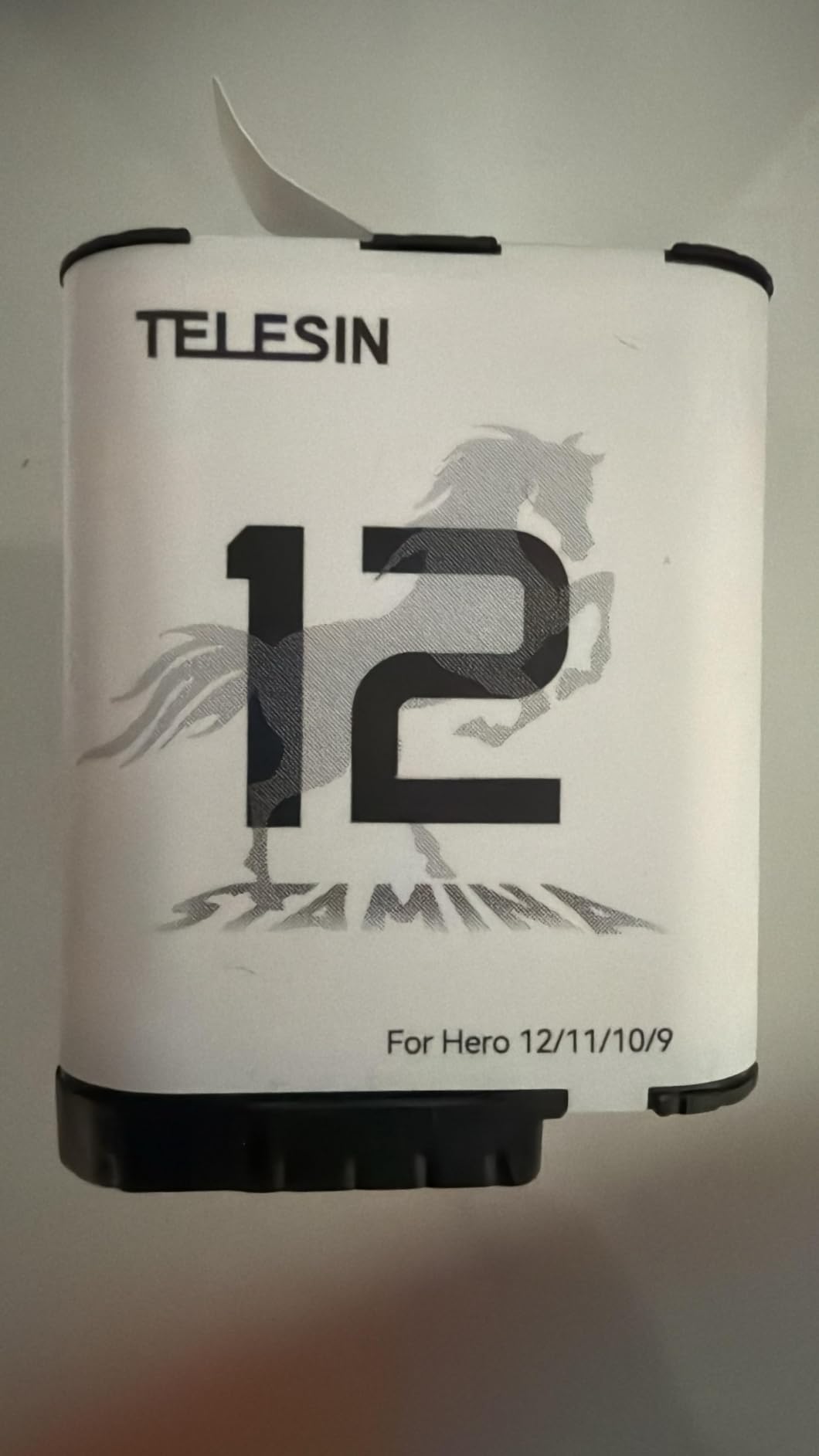
4. TELESIN Enduro Battery 2-Pack for HERO9 Through HERO12
TELESIN Enduro Battery (2-Pack) for GoPro 12 11 10 9 Accessories
2 x 1720 mAh at 3.85 V
Manufacturer-stated power-on to -60C
Fast charge about 85 minutes
Low-temp runtimes 43/58/82 min
Pros
- 1720 mAh exceeds the 1600 mAh OEM Enduro capacity per cell
- Two cells in the pack
- Fast charging that the original Enduro does not offer
- Stated power-on capability from -20C to -60C
Cons
- Lowest average rating here at 4.2 stars
- 9% one-star reviews flag fit and durability
- Low-temperature figures are manufacturer-stated rather than independently verified
The TELESIN 2-pack is the answer for anyone on a HERO9, 10, 11 or 12 who wants Enduro-class behaviour across a broad generation range. Each cell is 1720 mAh at 3.85 V, which is more capacity than the 1600 mAh OEM Enduro it is imitating, and two cells arrive in the box.
Its fast charging is a genuine upgrade on the original: roughly 85 minutes with a TELESIN fast charger, or about 90 minutes in-camera, compared with the GoPro pack that does not offer fast charge at all. For a three-day trip that is real time back.
The published low-temperature runtime figures are the most detailed on this list: 43 minutes at 4K120, 58 minutes at 4K60 and 82 minutes at 1080p30 under cold conditions, against 54, 67 and 116 minutes at room temperature. The manufacturer also states power-on capability from -20C to -60C, which is the most aggressive cold-start claim on this list and the one we treat most cautiously.
The 4.2-star average across 561 reviews is the lowest of the eight, and the spread explains why: 68% five-star, but 9% one-star. The complaints cluster around fitment and long-term cell durability rather than cold-weather failure, which is a different problem but still a problem.
What tells you this is the right pack
You are on a HERO9 to HERO12 body, you shoot 4K120 or 4K60, and you want more cells per purchase than any OEM option here gives you. The manufacturer-published runtime-per-mode data is also the best in the group, which makes it easier to plan a shooting day honestly.
It is the sensible pick for anyone who wants more than one spare without a second purchase, and for riders running a power bank alongside it as a backup.
Where it falls short
The -60C power-on claim is a cold-start statement, not a runtime statement, and it comes from the manufacturer rather than independent testing. A cell that powers on at extreme cold is not the same as a cell that records for an hour there, and we would not plan a deep-winter day on that number alone.
The 9% one-star share is the widest negative tail here. r/gopro threads about TELESIN packs usually concern doors not latching or cells losing capacity after a season, so treat these as working spares rather than the cell you trust with irreplaceable footage.
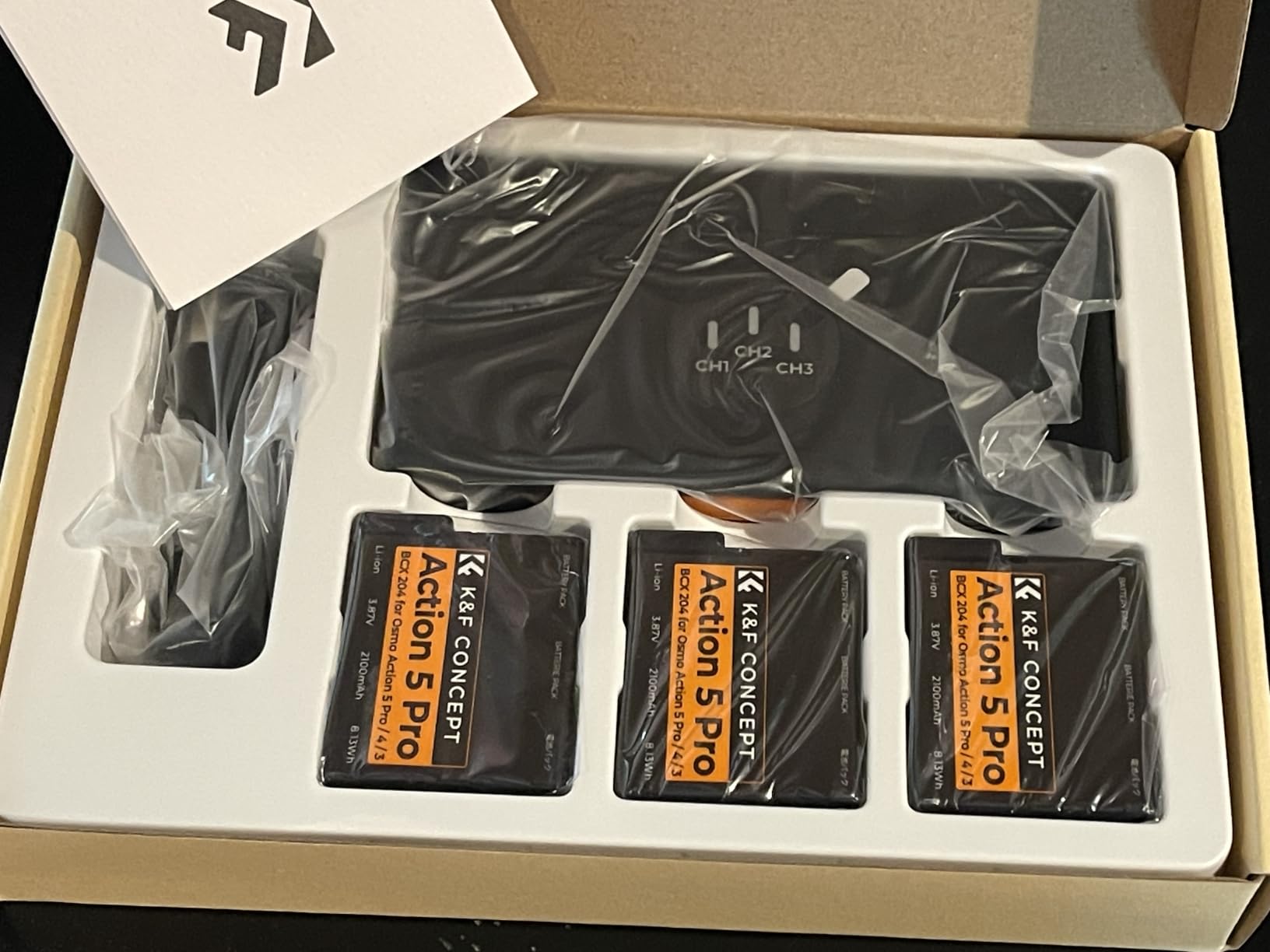
5. K&F Concept 3-Pack 2100mAh Batteries and Charger for Osmo Action 3 to 6
K&F Concept 3-Pack 2100mAh Batteries & Charger for OSMO Action 6/5/4/3
3 x 2100 mAh at 3.87 V
Stated -10C to 60C operation
3-in-1 case stores two SD cards
1 year warranty
Pros
- Highest capacity in this group at 2100 mAh per cell
- Three batteries plus a charging and storage case
- Per-slot LED charge indicators
- Works across Osmo Action 3-6 plus Osmo 360 and Xtra Edge
Cons
- Third-party cells with no independent low-temperature endurance data
- Not rated below -10C so deeper cold sits outside its stated window
- 1 year warranty against GoPro's limited lifetime
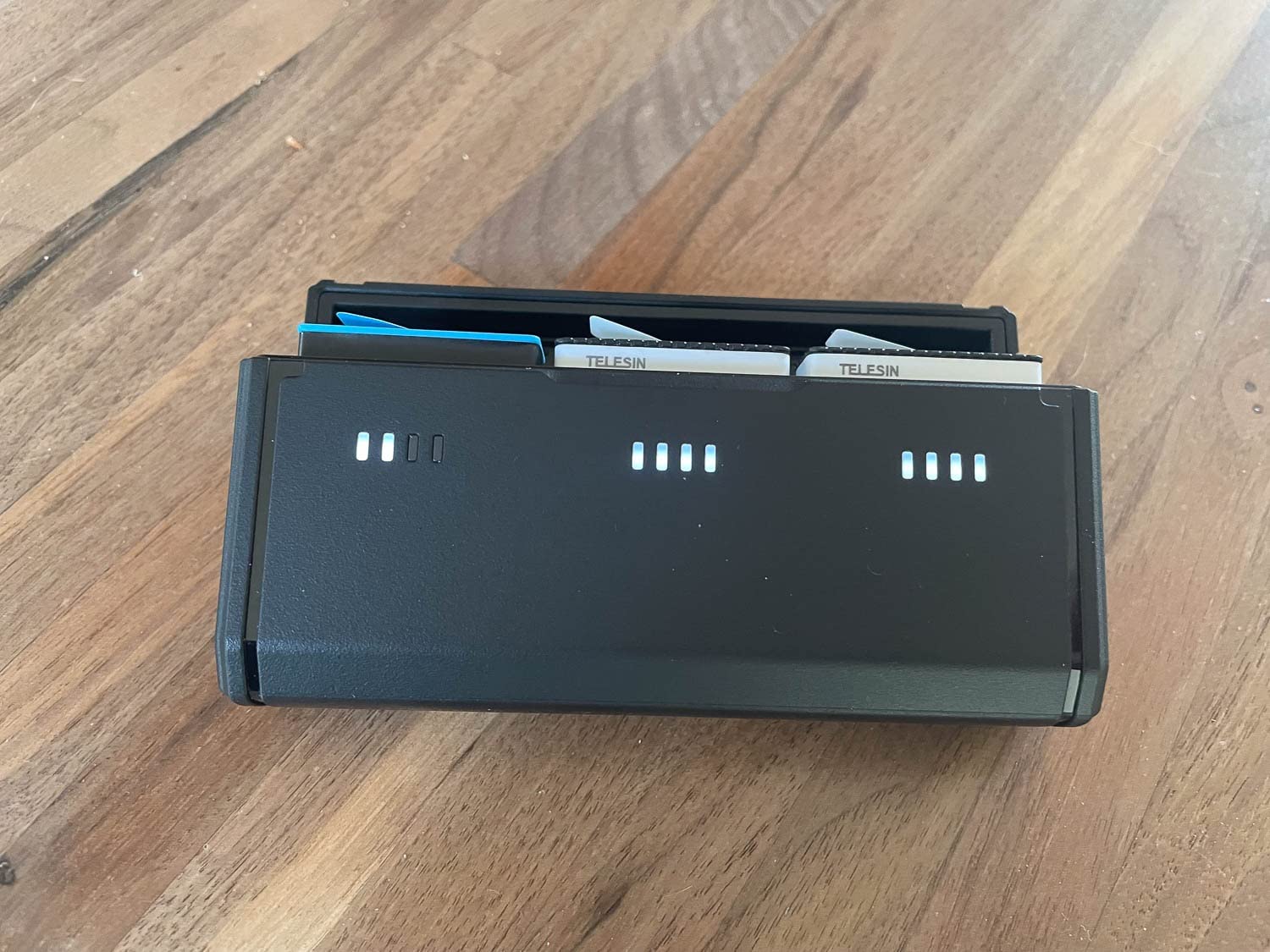
Three cells at 2100 mAh is more spare capacity than anything else on this list, and the 3-in-1 case that charges and stores them also holds two SD cards. If you shoot multi-day winter trips, the maths is hard to argue with: three higher-capacity cells means fewer cold swaps.
Fit is broad for a third-party pack, covering Osmo Action 6, 5 Pro, 4 and 3 plus Osmo 360, Xtra Edge, Edge Pro and Sphra 360. The 4.5-star average across 341 reviews puts 76% of buyers at five stars, and most of those reviews are about capacity, charging convenience and fit.
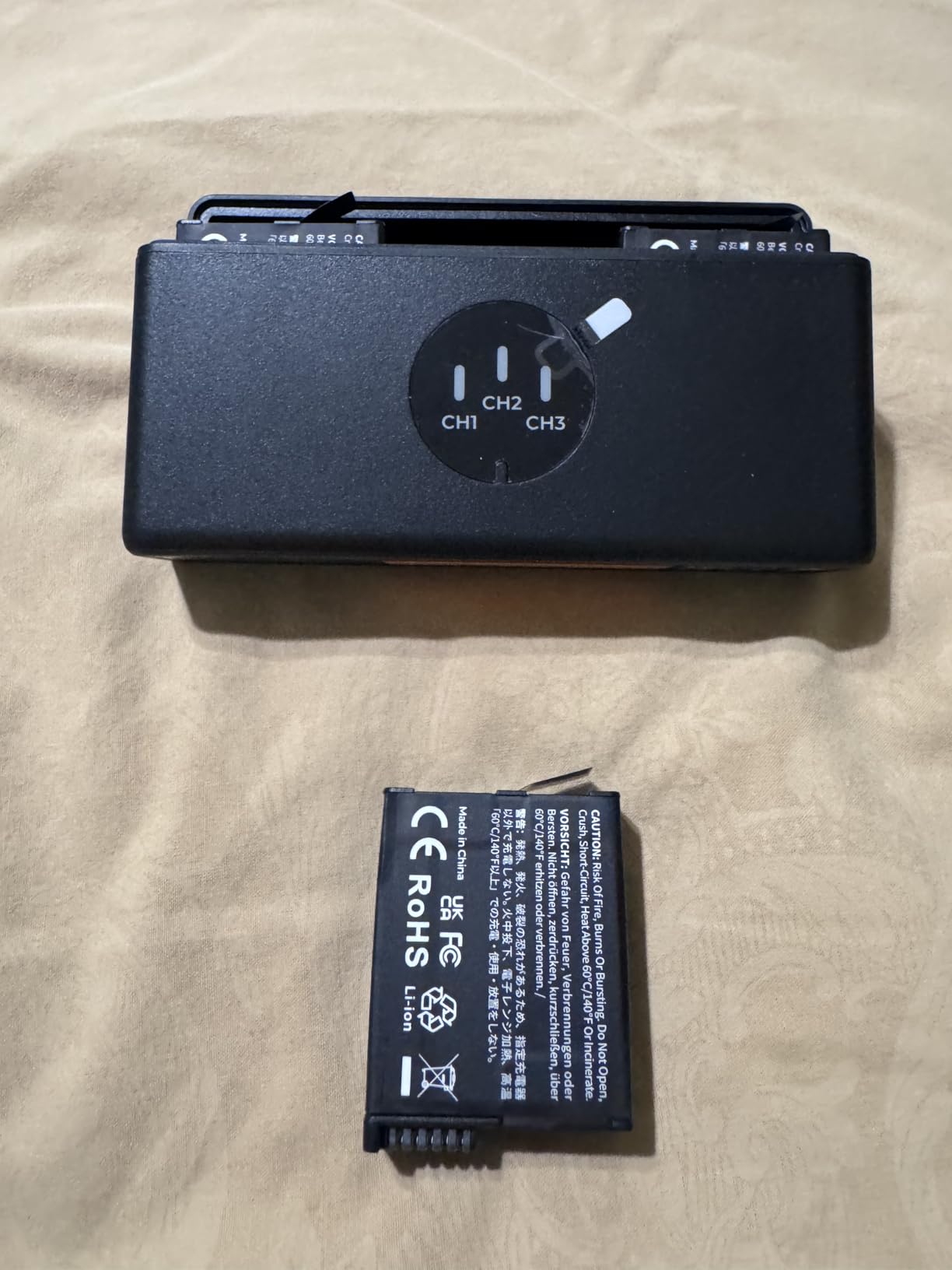
Protection circuits against overcharging, overheating and short circuit are built in, and per-slot LEDs remove the guesswork from a three-battery rotation. USB-C power means the case charges from a wall adapter, a power bank, a car charger or a laptop, which is exactly what you want at a lodge at the end of the day.
The stated operating window is -10C to 60C, which is a genuine cold-weather claim but a shallower one than the DJI cell. Reviewers are notably cautious here: most commentary is that the cold claims are manufacturer-stated rather than owner-tested, and that is a fair characterisation.
What tells you this is the right pack
You need three spares and you would rather buy them once than twice. At 2100 mAh per cell this is the largest capacity per cell available, and the SD card storage in the same case removes a separate accessory from your bag.
It is also the only three-cell pack here that fits a current DJI body, which makes it the natural companion to the Extreme Battery Plus for owners who want OEM on day one and a spare rotation after that.
Where it falls short
The -10C floor is shallower than the DJI cell, and there is no independent cold-endurance testing behind it. Deep-cold riders should not treat this as a substitute for an OEM pack on the days that matter most.
Capacity readings can be less accurate than OEM in some camera menus, which is the classic third-party complaint on r/DJIMini2 and DJI user groups. If you plan readings on camera to plan your swaps, test it before the trip.
6. VVHOOY 3 x 1050mAh Batteries with USB Dual Charger
VVHOOY 3 x 1050mAh Rechargeable Action Camera Battery&USB Dual Charger
3 x 1050 mAh cells
USB dual charger,2 ports
Red charging, green full
Mini-USB and micro-USB inputs
Pros
- Three cells plus a dual charger at the lowest outlay on this list
- Long owner track record with 2434 reviews spanning years
- Charger accepts both mini-USB and micro-USB cables
- 60-90 minutes of 1080p runtime per cell
Cons
- No cold-weather rating published at all
- 1050 mAh is the smallest capacity in this group
- Some cameras need the pack pressed firmly to seat
- leaving a small bulge
This is not a cold-weather battery, and we want to be straight about that. It is the budget backup pack for owners of square-edge budget cameras who need three cells in the bag without spending much, and its usefulness in the cold drops sharply.
That said, the 4.5-star average across 2,434 reviews is the largest review base in this roundup, and reviewers describe cells still working after years of use. Buyers treat these as disposable backup rather than as a solution to anything.
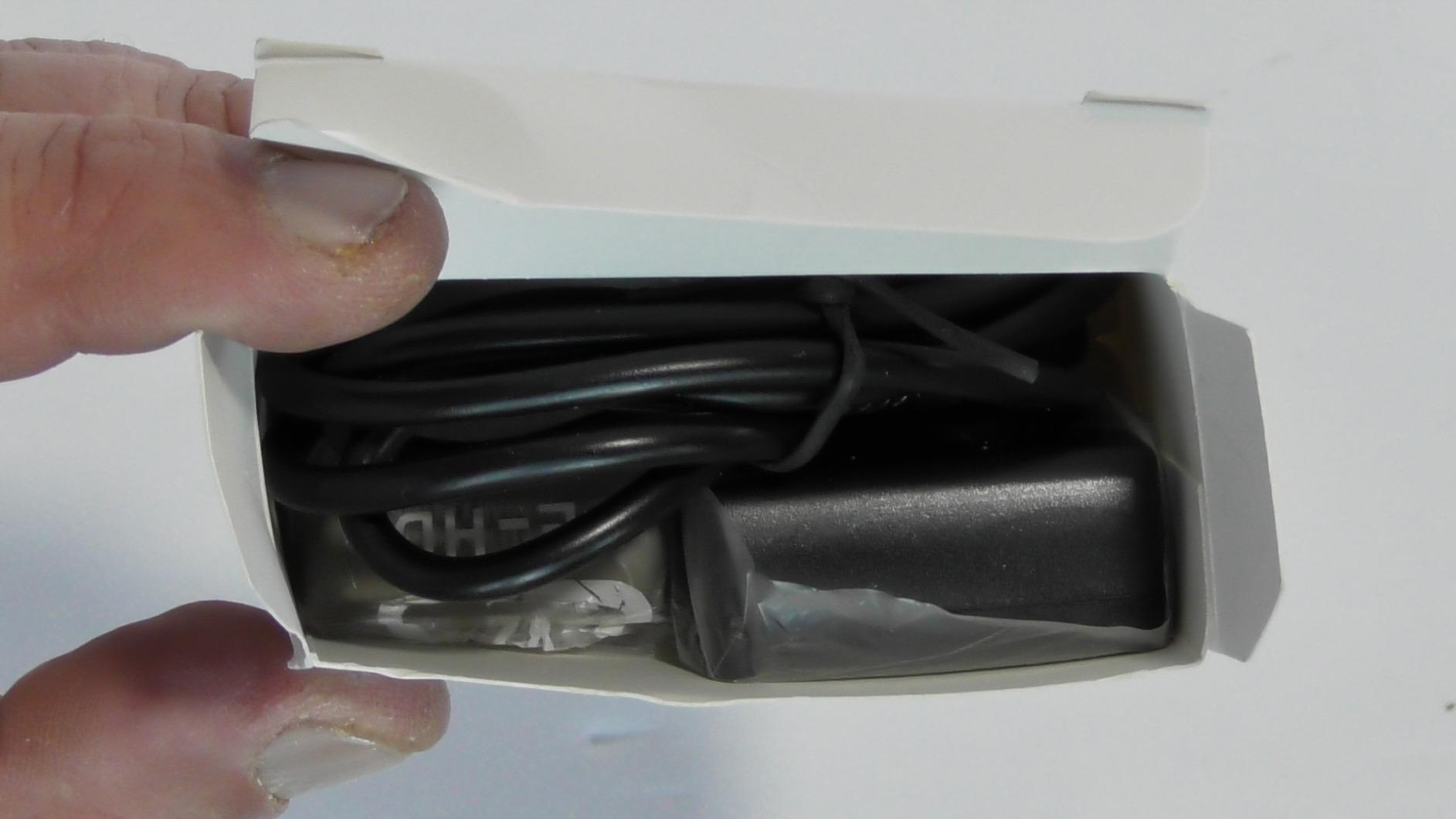
Compatibility is the strength. It works across a wide range of budget action cameras including AKASO EK7000, Brave 4 and V50X, and the dual-slot charger takes two cells at once with a red-then-green LED. At 60-90 minutes of 1080p runtime per cell, that is three usable hours of casual footage from one charge cycle.
In genuine cold, though, expect a fraction of that. At least one owner bought this pack specifically because cells drain quickly while skiing, and the absence of any published cold rating is a fair signal that none was measured.
What tells you this is the right pack
You shoot a budget body, you need more than one cell, and you want the lowest cost per battery of anything here. Three cells and a dual charger in one purchase is a sensible way to keep a spare rotation going on a bike or a travel trip.
It is a reasonable second pair of cells kept indoors as a warm reserve, where capacity and cold resistance matter far less than price.
Where it falls short
There is no cold-weather rating, and 1050 mAh is the smallest capacity in this group. In sub-freezing conditions these cells are the first to sag below the camera’s cutoff.
Fitment is fussy on some bodies. Owners report the pack sits proud in an AKASO EK7000 and needs pressing firmly to seat, which is a bad combination with a sealed housing in the cold.
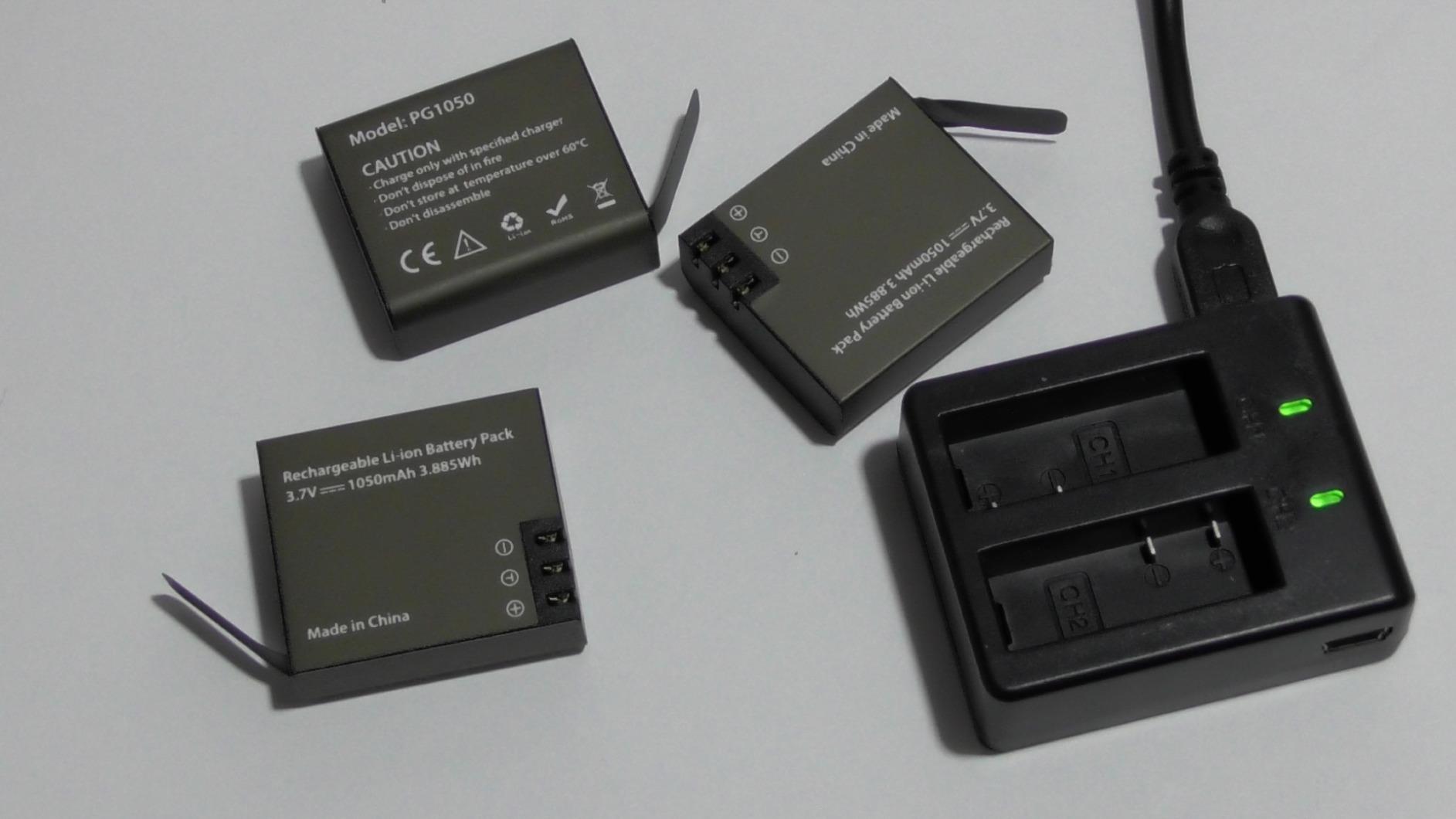
7. AKASO 2 x 1050mAh Batteries for EK7000, EK7000 Pro and Brave 4
AKASO 2 x 1050mAh Rechargeable Action Camera Battery with USB Dual Charger for AKASO EK7000/EK7000 Pro/Brave 4 Action Camera
2 x 1050 mAh at 4.2 V
USB dual charger,about 120 minutes
18.14 g pack weight
OEM fit for AKASO bodies
Pros
- OEM AKASO cells so fit is guaranteed on EK7000 and Brave 4
- Owners report better behaviour than aftermarket cells
- 4.6-star average across more than 1300 reviews
- Light 18.14 g pack weight
Cons
- No cold-weather rating published
- Only two batteries in the pack
- Modest 1050 mAh capacity
- One reviewer questions charger build durability
If your camera is an AKASO EK7000, EK7000 Pro or Brave 4, this is the only pack here that guarantees fit because it comes from the manufacturer. Fit is the thing that eliminates options in this category, and OEM cells remove the guesswork entirely.
At 4.6 stars across 1,358 reviews it holds up well. Owners consistently report that these cells run cooler and last longer than the aftermarket ones they had tried before, including on long rides where heat build-up is a factor.
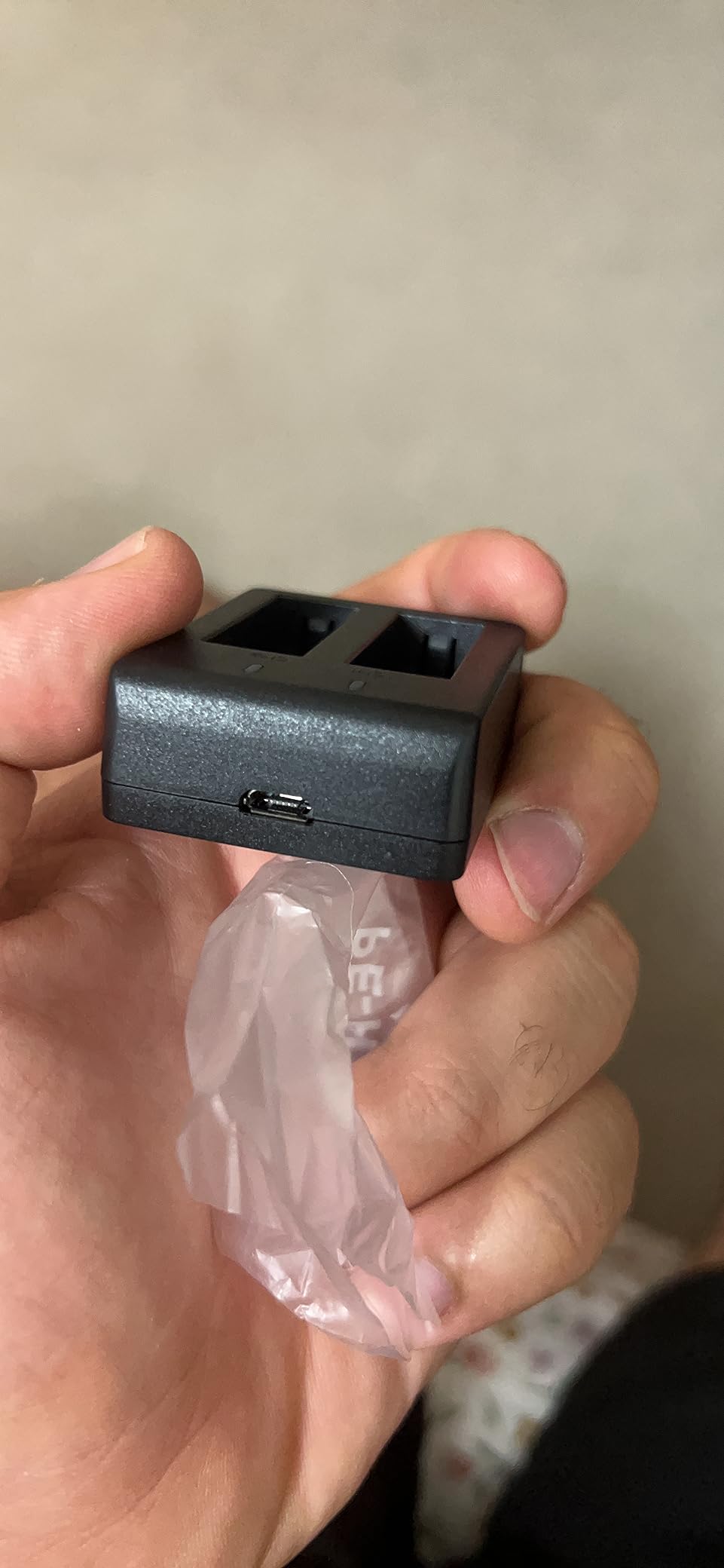
The USB dual charger recharges both packs in about 120 minutes, and the 4.2 V cells sit at 18.14 g each, so two fit in a chest pocket without noticing. Nothing in the review base addresses sub-zero performance, which is itself informative for a winter buyer.
What owners do praise is consistency: no battery warnings in the menu, no erratic percentage readings, no pack that refuses to seat after a season of thermal cycling. Those are exactly the third-party complaints that make cold days harder.
What tells you this is the right pack
You own an AKASO body and you want cells that behave predictably in the camera menu. The two-pack plus dual charger is a complete, uncomplicated setup with nothing extra to buy.
For a rider or hiker who films in mixed conditions, having OEM cells that behave like the camera expects is worth more than extra capacity from a third party.
Where it falls short
There is no cold-weather rating and 1050 mAh is a modest capacity. If your AKASO is your winter camera, treat this as the warm-weather set and plan around keeping them inside your jacket.
Two cells is not a rotation for a full cold day, and one reviewer questions the charger’s build durability over time, which is fair given how much punishment a car charger takes.
8. GeeKam 3-Pack 1350mAh Square-Edge Batteries
GEEKAM Action Camera Battery 3-Pack & Charger for Select Cams, Square-Edge
3 x 1350 mAh cells
Dual-position charger,2 ports
Red charging, blue full
Numbered top markings
Pros
- 1350 mAh per cell is 30% higher than a 900 mAh pack
- Three cells plus a dual-port charger in one purchase
- Numbered markings make it easy to track charged cells
- Works with Campark
- Crosstour
- APEMAN and similar cams
Cons
- Square-edge design excludes GoPro
- DJI
- YI and most AKASO models
- No cold-weather rating or temperature specification
- Charger uses red and blue rather than the common red and green
The GeeKam 3-pack is the capacity leader among the square-edge budget cells. At 1350 mAh per cell it runs about 30% above a 900 mAh pack, which is meaningful when you are budgeting runtime rather than cold performance.
4.5 stars across 1,148 reviews, and the most common theme in those reviews is not cold but fitment. The square-edged form factor is the whole story, and it is worth reading the exclusion list before you buy.
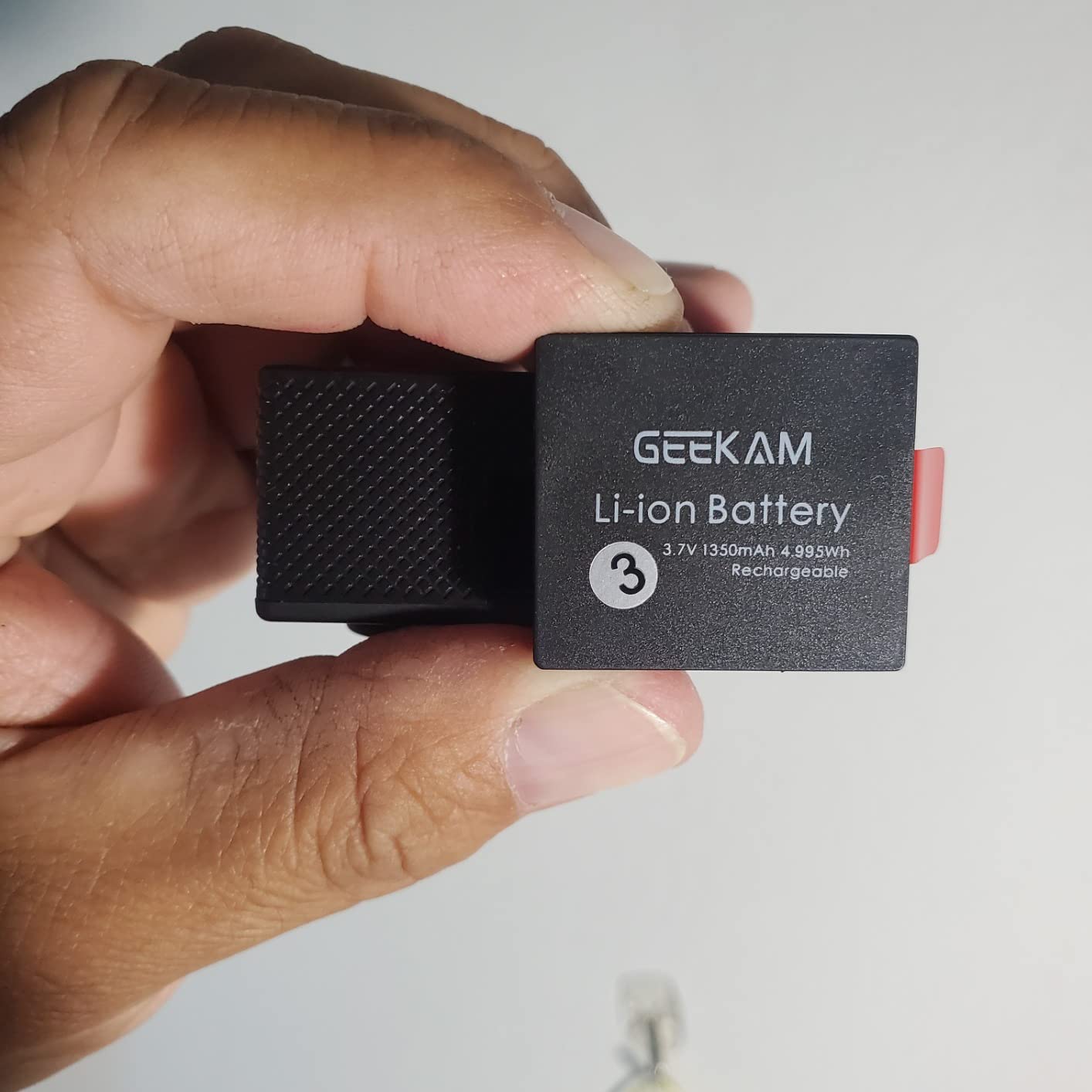
The dual-position charger takes two cells at once, with red for charging and blue for full, and the numbered top markings on each cell are genuinely useful when you are rotating three packs in the dark at a vehicle tailgate.
Compatibility covers Campark, Crosstour, APEMAN, Victure and Rollei bodies. It is explicitly not compatible with GoPro, DJI, YI, AKASO V50, Brave 7 and 8, Victure AC940 and AC960, Campark V40 or SJCAM models, which is a long list of cameras people actually shoot on.
What tells you this is the right pack
You shoot a square-edge budget camera and you want three cells rather than two, with more capacity per cell than the cheapest packs. The numbered markings make rotation straightforward, which matters more when you are swapping batteries with gloves on.
It is a good three-cell kit for winter cycling or motorcycling where the camera rides on a helmet and the cells get handled constantly.
Where it falls short
No cold-weather rating and no temperature specification whatsoever, so there is no basis for planning a sub-zero day around these cells.
The exclusion list is the real limitation. Anyone shooting GoPro, DJI or a modern AKASO body gets nothing from this pack, and the red-and-blue charger LED convention is easy to misread at a glance.
Which Camera Body Takes Which Battery
There is no universal action camera battery, and this is where most wasted cold-weather purchases happen. Compatibility eliminates options before temperature does, so check the body first and the cold rating second.
GoPro HERO13 Black – the Enduro dual charger bundle. Nothing else in this roundup fits this body.
GoPro HERO9, 10, 11 and 12 – the TELESIN 2-pack, or OEM Enduro cells for these generations.
GoPro MAX – the MAX Enduro cell. The HERO packs are a different shape and will not seat.
DJI Osmo Action 3, 4, 5 Pro and 6, plus Osmo 360 – the Extreme Battery Plus for OEM chemistry, or the K&F Concept 3-pack for volume.
AKASO EK7000, EK7000 Pro and Brave 4 – the AKASO OEM 2-pack for guaranteed fit.
Square-edge budget bodies – Campark, Crosstour, APEMAN and similar take the GeeKam 3-pack. The VVHOOY 3-pack covers a wider spread of budget brands.
Watch out for the cases with no swappable battery at all. Osmo Pocket and Nano bodies, Action 2, and the Insta360 GO 3 and GO 3S have built-in cells, so there is no spare to carry and no cold-weather fix available through a battery purchase. Our action camera accessory picks cover the mounting and power options that work around that constraint.
What to Look For in a Cold Weather Action Camera Battery
A published operating temperature range. This is the single most useful specification and the easiest one to find. A seller with no cold rating at all is telling you the cell was never tested below a mild temperature, which is a deal-breaker for winter work.
The difference between a rated and an observed cold floor. A cell rated to -20C is not the same as one that records for two hours at -20C. Where both figures exist, treat the rating as the floor for cold start and the runtime data as the floor for usable recording.
Capacity in mAh, and what it is capacity of. The best cells on this list run 1600 mAh to 2100 mAh. The 1050 mAh packs are roughly 40% smaller, and in the cold that gap widens because the smaller cell has less margin above the cutoff.
Whether the cell decodes properly in your camera. Some third-party cells trigger battery warnings or show erratic percentage readings in the menu. Owners on r/gopro treat that as a genuine problem, because it means you cannot trust the reading to plan a swap.
Warranty length. GoPro’s limited lifetime warranty is repeatedly treated as a real differentiator in owner threads, precisely because cold weather is hard on packs. A one-year warranty on a third-party cell is a fair signal about expected service life.
Charging options, and charging in the cold. A dual-bay charger or a three-slot case saves real time on a multi-day trip. Be aware that DJI cells will not charge below about 5C, so a cold cell needs to warm up before it will accept charge.
Chemistry over marketing percentage. Claims like “96% longer runtime” are measured at room temperature by the manufacturer. Cold performance is a function of internal resistance, not of a percentage printed on a box.
How Many Spares to Carry and How to Keep Them Warm
The rule that works is simple: total hours of recording you plan, plus two. A full ski day on one camera in a high-frame-rate mode is closer to three hours of clips than one, which is why the best action camera batteries for cold weather are bought in rotation rather than singly.
Then keep them warm. Owners on community.gopro.com describe the same technique: the battery and ideally the whole camera stay in a pocket until the moment of use, and the body itself acts as an insulator. Bowhunting forums went further and attached hand warmers to the pack, which is crude but it works.
Rotate rather than drain. Starting every clip on a full battery beats running one cell down and topping it up, because a partially charged battery performs worse in the cold than a full one. The second battery of the day is the one that fails first if it has been sitting in a cold bag, so rotate the warm one into the camera before it drops.
Insulate what is mounted. A foam cage or an insulated sleeve around a body that stays outside your jacket buys minutes, and gripping the camera with bare hands to warm it is a technique waterpixels.net recommends for housing-mounted cameras.
For the rest of the kit, layering choices matter as much as the battery. Our cold weather base layer picks are the reason a spare cell survives to lunch instead of being used at the first lift.
Cameras With No Swappable Battery and the Cold Charging Ceiling
Some cold-weather problems cannot be bought a solution. Osmo Pocket bodies, Osmo Nano, Action 2 and the Insta360 GO 3 and GO 3S all use built-in cells, which means no spare rotation, no warm pocket trick, and no OEM cold-rated replacement. Your options reduce to keeping the body warm against your body, or using a powered solution such as a charge-while-recording accessory.
The charging ceiling is the other dead end nobody warns you about. Most action camera cells will not accept charge below freezing, and DJI cells specifically charge only between about 5C and 40C while operating down to -20C. A cell that has been in a cold car all day may simply refuse to charge until it has come back up to temperature. Never charge a frozen cell – that is a lithium-ion safety rule, not a performance tip.
Why Your Clip Froze and the File Will Not Open
A recording that stops mid-clip and leaves an unopenable file is almost always cold-cell voltage sag, not a broken camera. Owners on r/gopro and r/Backcountry hit this repeatedly. Four things reduce it:
Start every recording on a full battery rather than a part-charged one. Cold performance scales with how much charge is available above the cutoff.
Keep the camera body and cell warm between clips, not just between days. A camera in your pocket performs very differently from one in an open cage.
Lower the frame rate when you can. 4K120 and 4K60 pull a far heavier current burst than 1080p30, and that burst is what pushes a cold cell below cutoff.
Carry enough cells that you never charge a cold one. Charging a cell taken straight from a cold bag is both slow and hard on the cell.
If a battery has gone completely flat in the cold, recovery takes patience. Let it warm to room temperature gradually, in your jacket pocket rather than on a heater, then charge it in-camera before expecting normal behaviour. For the rest of the season, replace any cell more than two years old before blaming the cold – age and cell chemistry are frequently the real culprit behind sudden winter failure, and forum threads on r/gopro reach the same conclusion.
Frequently Asked Questions
Which batteries are the best for extreme cold weather?
The DJI Osmo Action Extreme Battery Plus is rated from -20C to 45C, which is the widest published operating range available for an action camera body. For GoPro bodies, the official Enduro cells improve cold-weather performance down to 14F (-10C). The TELESIN Enduro 2-pack offers similar Enduro-spec chemistry across HERO9-12 at a lower outlay. Rated cold floor matters far more than raw mAh once you are below about 40F.
What type of GoPro battery is best for cold weather?
The Enduro line is GoPro’s cold-rated chemistry and is the right answer for HERO9 through HERO13 Black and MAX bodies. A standard GoPro pack loses runtime much faster below 40F because its internal resistance rises faster. The Dual Battery Charger bundle with two Enduro cells for HERO13 Black is the most complete cold-weather purchase, while MAX owners need the MAX-specific Enduro cell.
How cold is too cold for a GoPro?
There is no single cutoff, because the camera and the cell have separate limits. In practical terms, a standard GoPro pack becomes unreliable around 32F to 40F, and an Enduro cell stays usable into the teens. Below 0F, usable capacity can fall to 30-50% of rated, and cold start becomes the real problem, with the camera sometimes refusing to power on until the cell warms.
How cold is too cold for a lithium-ion battery?
Lithium-ion chemistry slows its electrochemical reaction as temperature falls, and discharge performance degrades steadily rather than failing at one temperature. Usable capacity typically holds near rated above 40F, drops to 75-85% between 20F and 40F, falls to 50-75% between 0F and 20F, and can reach only 30-50% below 0F. Charging below freezing is unsafe and is blocked by most manufacturers.
Are lithium or alkaline batteries better in cold weather?
Lithium-ion is far better, which is why every camera on this list uses it. Alkaline cells suffer a much steeper capacity loss in cold and are not rechargeable, so they are unusable for action camera work regardless. The cold weakness of lithium-ion is a manageable engineering problem that Enduro and Extreme Battery Plus chemistries address; alkaline simply falls apart in the same conditions.
Is the GoPro Enduro battery worth it?
Yes, if you shoot below about 40F. It delivers roughly 20% more runtime than the standard GoPro pack and behaves noticeably better in cold conditions, and it carries a limited lifetime warranty that matters because cold weather is hard on cells. If you only film indoors or in summer, the standard pack is fine and the Enduro premium buys you nothing.
How long will a GoPro Enduro battery last?
At room temperature the MAX Enduro cell is reported by owners at 90+ minute sessions in 360 capture, and GoPro publishes an average 5.6% recording-time improvement over the standard pack at high-performance settings. In the cold, Alpine reviewers report runtime falling to roughly 40% of warm-weather figures below about -15F. Plan on two cells minimum for a cold day, and more for high-frame-rate modes.
How many spare action camera batteries do I need for a cold day?
Use the hours-of-recording-plus-two rule. A full day of 4K60 or 4K120 clips runs close to three hours of footage, which means at least four cells including the one in the camera. For a multi-day trip, budget one full set per day plus two spares. Remember the second cell of the day is usually the first to fail, because it has been sitting cold in your bag.
Final Verdict: Which Battery to Buy for 2026
For a HERO13 Black, the GoPro Dual Battery Charger with two Enduro cells is the best action camera battery for cold weather you can buy, because it pairs the cold-rated chemistry with the charger you will need anyway. For a DJI Osmo Action 3 through 6 or Osmo 360, buy the Extreme Battery Plus and add at least one more. For a MAX, the MAX Enduro cell is the only sensible cold option. For HERO9 through HERO12, the TELESIN 2-pack gives you the most cells per purchase and the most detailed published runtime data.
The budget packs on this list are for spare rotation indoors, not for a cold day. Whichever cell you choose, carry more than you think you need, keep them in an inner pocket, and replace anything more than two years old before the season starts.