
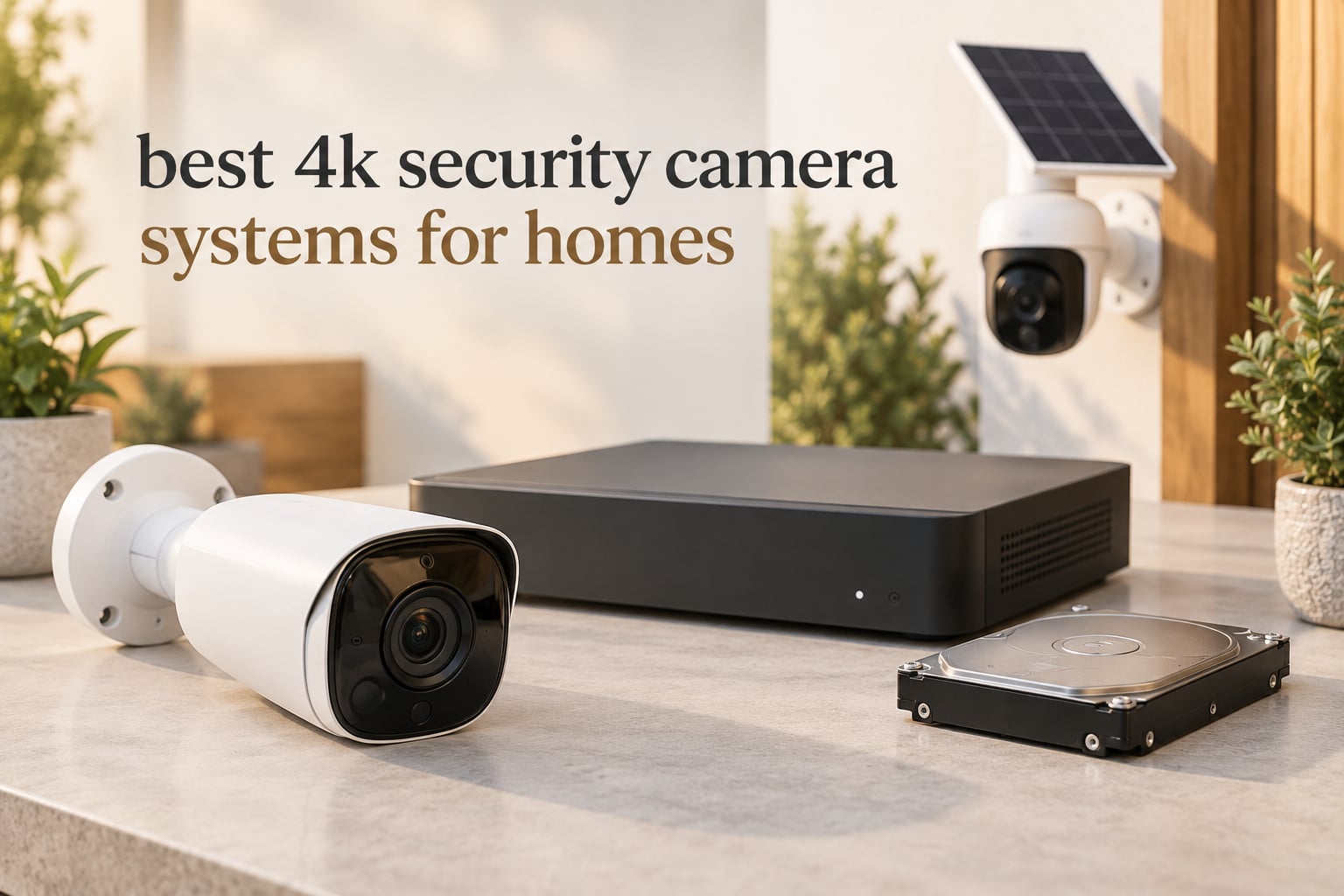
Choosing among the best 4K security camera systems for homes is harder than the spec sheets suggest. Almost every kit on the market now says 4K, and most of them record onto a local recorder with no monthly fee, so the differences that matter live in the details: whether the sensor is a real 8MP, how far the night vision actually reaches, and how much hard drive you need before the footage overwrites itself.
We went through twelve of the highest-rated systems available now, checked the resolution of the cameras against the recorders they ship with, and sorted out which ones are genuinely wired, which are solar, and which quietly downgrade what they promise. What follows covers the kits we would actually put on a house, with the honest limitation on each one stated plainly.
If you are still narrowing the field, our guide to the best home security camera systems for property covers the wider category, and our NVR security system picks goes deeper on the recorder side.
Table of Contents
What Is a 4K Security Camera System?
A 4K security camera system is a bundle of cameras that capture at 3840 x 2160 pixels, which is 8 megapixels per frame, plus a network video recorder that stores footage on a local hard drive. In most kits, each camera sends power and video down a single Ethernet cable, and you view everything from one app on your phone.
Why that resolution matters comes down to one number: a 4K frame carries roughly four times the pixel data of a 1080p frame. That extra detail is what lets you crop into a wide driveway shot and still have enough pixels on a face or a license plate to be useful evidence, rather than a block of blur.
One catch to know before you read the picks: 4K in the box name does not always mean 4K at the camera. Some kits pair a 4K-capable recorder with 4MP or 5MP cameras. We flag every one of those below.
Is 4K Worth It for Security Cameras?
Yes, for most homes, but only where you need to identify detail rather than just see movement. 4K earns its keep on a front door, a driveway, a back gate and a street-facing side yard, where you may need to read a face or a plate from footage recorded at night.
For an indoor camera watching a hallway, or a camera covering a wall you never approach, 2K is genuinely enough. The resolution you do not use still costs you hard drive space every single day, and 24/7 recording at 4K fills a large drive faster than most buyers expect.
Top 3 Picks for 4K Security Camera Systems in 2026
The three below cover the most common needs: a full wired build for a large house, a solar kit for anyone who cannot run cable, and a camera that is trying hard to identify license plates and deter people outright.


eufyCam S330 4-Cam Kit
- 4K Starlight color night vision
- Integrated solar panel
- HomeBase 3 local storage

eufy SoloCam E42 4-Cam Kit
- 4K with license plate recognition
- 360 pan and tilt
- Siren and strobe deterrent
All 12 Systems Side by Side in 2026
Every kit below records locally with no monthly cloud fee. The column that matters most for image quality is the camera resolution, not the recorder.
| Product | Specs | Action |
|---|---|---|
| REOLINK RLK16-800B8 16-Channel 4K System |
|
Check Latest Price |
| eufyCam S330 4-Cam 4K Solar Kit |
|
Check Latest Price |
| eufy SoloCam E42 4-Cam 4K Solar Kit |
|
Check Latest Price |
 REOLINK RLK8-800D4 8-Channel 4K System REOLINK RLK8-800D4 8-Channel 4K System |
|
Check Latest Price |
 aosu D1 Max 4-Cam 4K Solar Kit aosu D1 Max 4-Cam 4K Solar Kit |
|
Check Latest Price |
 eufy eufyCam S4 4-Cam 3-Lens Solar Kit eufy eufyCam S4 4-Cam 3-Lens Solar Kit |
|
Check Latest Price |
 Hiseeu 8-Cam PoE PTZ System Hiseeu 8-Cam PoE PTZ System |
|
Check Latest Price |
 Hiseeu 8-Cam 8MP DVR System Hiseeu 8-Cam 8MP DVR System |
|
Check Latest Price |
 Hiseeu 4-Cam Wireless 4K Kit Hiseeu 4-Cam Wireless 4K Kit |
|
Check Latest Price |
 ANNKE 8-Cam Solar NVR System ANNKE 8-Cam Solar NVR System |
|
Check Latest Price |
 BOTSLAB W510 4-Cam 4K Solar Kit BOTSLAB W510 4-Cam 4K Solar Kit |
|
Check Latest Price |
 Fociey DC1 4-Cam 4K Solar Kit Fociey DC1 4-Cam 4K Solar Kit |
|
Check Latest Price |
1. REOLINK RLK16-800B8 – Best 16-Channel Wired Build
REOLINK 16CH 4K Security Bullet Camera System with 4TB HDD RLK16-800B8
8x 8MP PoE bullets
16 NVR channels
4TB HDD included
330ft PoE runs
Pros
- Genuine 8MP sensors on every camera
- No cloud subscription with local NVR recording
- Single-cable PoE install
- Expandable to larger drives and more cameras
Cons
- NVR-first setup needs a monitor and mouse
- Basic motion detection needs sensitivity tuning
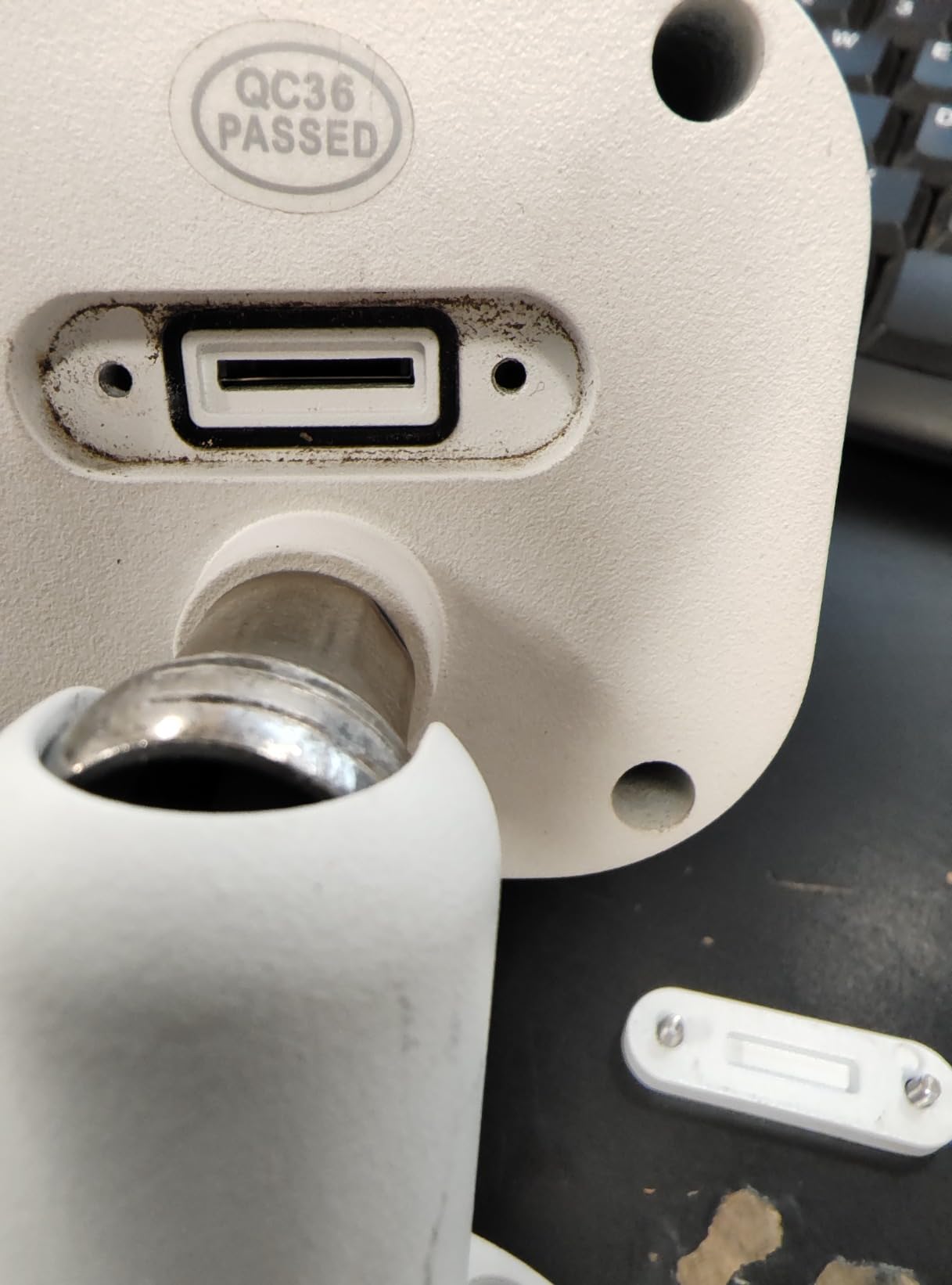
- Weak mounting screws for outdoor use
This is the build we keep coming back to for a real house. You get eight PoE bullet cameras, a 16-channel recorder and a 4TB drive already installed, and the cameras are genuine 8MP units rather than upscaled panels with a 4K label. Each one runs power and video on one cable out to 330ft.
The picture quality is the strongest argument. Owners consistently describe near-photographic stills in daylight, and the 87-degree view on each bullet is wide enough to cover a driveway or a back corner from a single mounting point.
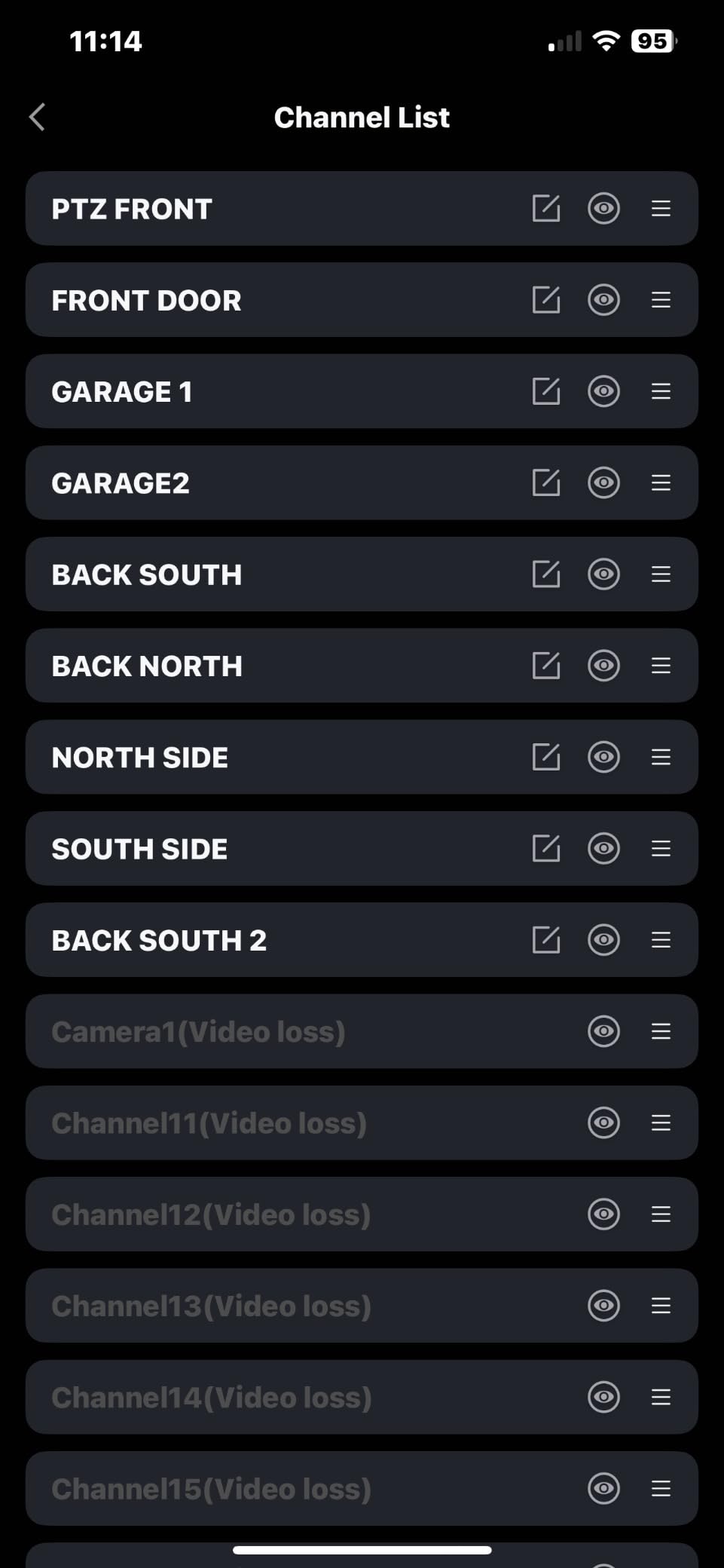
Setup is the part people underestimate. The recorder expects a monitor and a mouse before the phone app behaves properly, and the camera order can look shuffled until you label things yourself. Budget an evening for it rather than an afternoon.
Motion detection is the second thing to tune. Out of the box it triggers on any movement, so spend ten minutes setting sensitivity and masking the tree line before you decide the system is noisy.
What to check before you buy
Confirm the NVR sits somewhere with ventilation and a monitor nearby for first-time setup, because you will want a screen for the initial configuration. If you plan to go past eight cameras later, the 16-channel headroom here matters more than the drive size does.
Also confirm you are comfortable with an ecosystem lock. These cameras work with Reolink PoE recorders, not with Wi-Fi cameras or most smart-home platforms, which is a fair trade for the local storage and zero fee.
Who should skip it
If you rent, cannot drill, or want cameras on three separate buildings with long cable runs, this is the wrong shape of system. The 330ft run limit is per camera and per continuous cable path, and going past it needs a switch, not an extension.
Night footage is another consideration. The listed range is 100ft, but reviewers who own it report usable infrared well short of that in real yards, so plan lighting or accept softer faces at distance.
2. eufyCam S330 4-Cam Kit – Best 4K Solar Value
eufy Security eufyCam S330 (eufyCam 3), 4-Cam Kit, 4K Solar
4K Starlight sensor
Integrated solar panel
HomeBase 3 local storage
8x optical zoom
Pros
- Usable color video at night
- Integrated solar keeps the battery topped up
- Local encrypted storage with no monthly fee
- Face recognition for familiar versus stranger alerts
Cons
- 2.4GHz only
- which limits connection stability
- App live view can be slow to connect
- HomeBase drive bay takes 2.5-inch drives
Four cameras, a HomeBase 3 hub and a solar panel built into each unit. The S330 is the kit we recommend when someone wants 4K at a front door, a driveway and a back gate without running a single cable through a wall.
The Starlight sensor is the reason to pick it over cheaper solar kits. It records in colour at low light rather than dropping straight to black-and-white infrared, which is exactly the window where you need to see a face. The 135-degree field of view is wide, and the 8x zoom helps on a fixed lens.

Installation is the smoothest part. Mount, aim, and the camera holds charge on roughly two hours of direct sun. Buyers describe the whole job as a weekend afternoon with no tools beyond a drill for the bracket.
The complaints are software, not hardware. Live view on a crowded 2.4GHz network can take a while to open, and a handful of owners have had cameras arrive with a faulty infrared mode. Eufy’s support draws repeat mention for replacing those.

What to check before you buy
Look at your 2.4GHz congestion before you order. In a dense neighbourhood or a home with many devices, these cameras are the weak point, and a mesh upgrade may cost you more time than a wired kit would have.
Check the drive bay too. The HomeBase 3 takes 2.5-inch drives, not the 3.5-inch desktop drives many people already own, and it starts with 16GB built in that is expandable to 16TB.
Who should skip it
Skip it if you need a long-range lens or a wide property. Four cameras with 2.4GHz-only radios is a compact-home answer, not a whole-farm answer, and the fixed lens means every zoom is digital.
Also think twice if you plan to add a display and stream constantly, because owners report that heavy live streaming drains the battery faster than the solar panel can put it back.
3. eufy SoloCam E42 4-Cam Kit – Best for License Plates and Deterrence
eufy Security SoloCam E42, 4-Cam Kit, 4K Solar Security Camera
4K UHD with plate recognition
360 pan and tilt
Siren and strobe light
SolarPlus 2.0
Pros
- License plate recognition out to 33ft
- Active deterrence with siren and strobe
- Records through a network outage
- No monthly fee
Cons
- 2.4GHz Wi-Fi only
- App connection can be slow
- HomeBase needs a 2.5-inch drive
The SoloCam E42 is the one in this group built around deterrence. When its motion detection fires, it can sound a siren and flash a strobe at the same time, which changes the behaviour of a person testing your front door in a way a passive camera does not.
It also has the most useful night feature we found at this tier: license plate recognition rated to about 33ft. That is a short distance, so aim it at a gate or a parking spot rather than the street, and it becomes genuinely useful evidence rather than a smear of light.
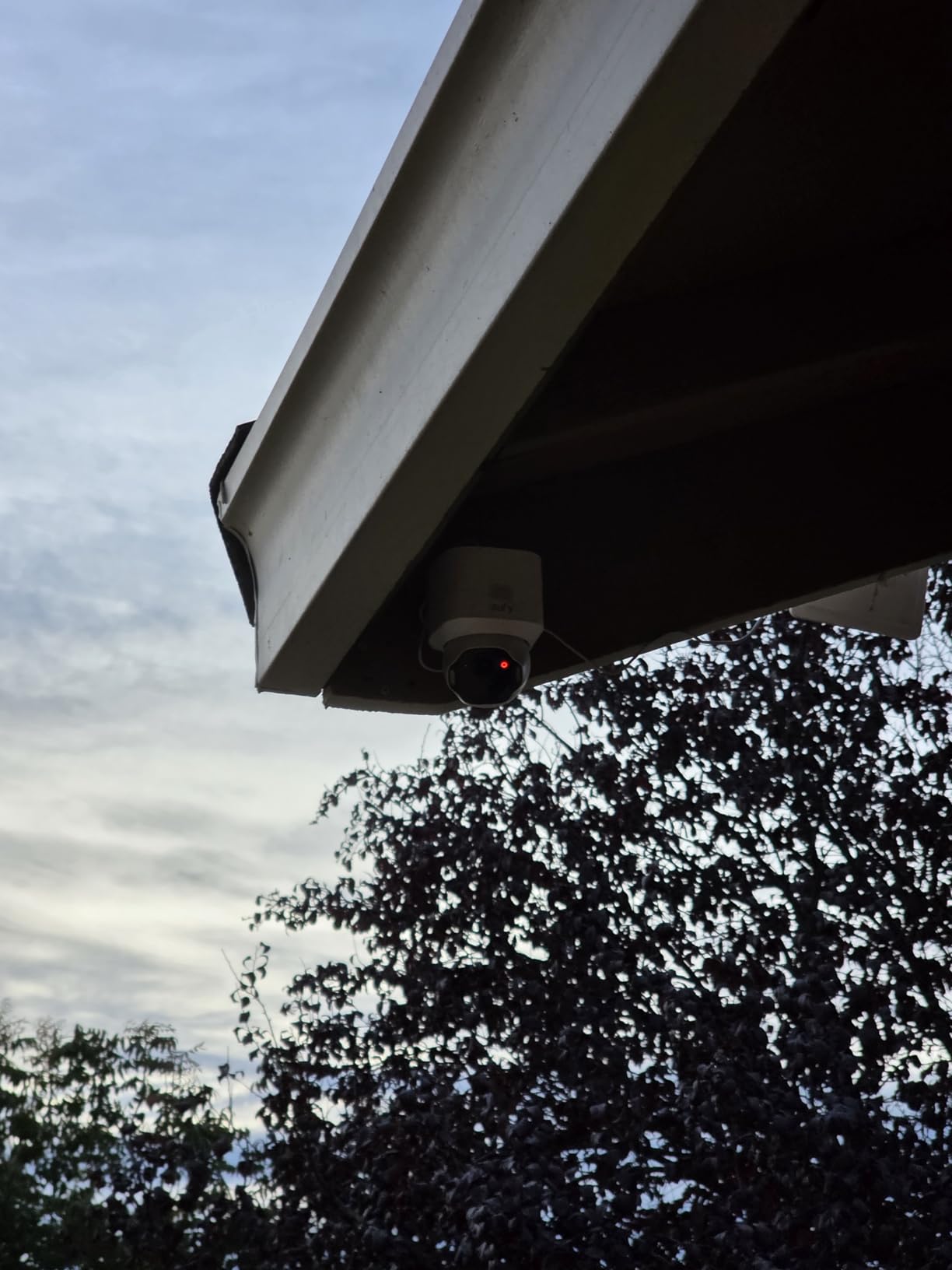
The HomeBase 3 keeps recording when your internet drops, which is the failure mode that matters most during an actual incident. Footage sits on the local drive and you can pull it afterwards.
Storage is 16GB out of the box with room to add a 2.5-inch drive or up to 128GB of microSD. Several owners added a larger drive for retention, which is the single change that most improves this kit day to day.
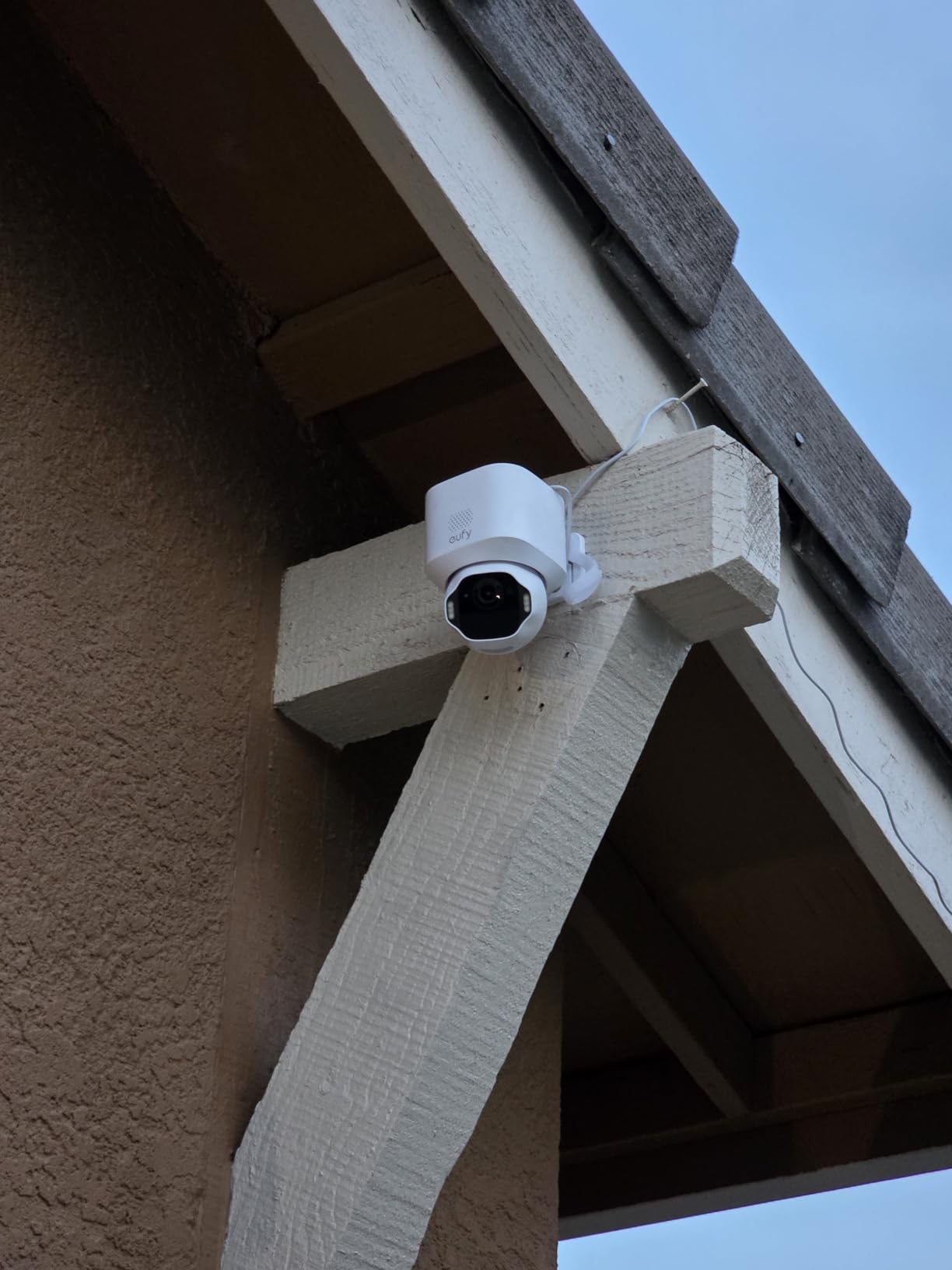
What to check before you buy
Test your 2.4GHz signal where the cameras will go before ordering four of them. A phone on that band at the mounting point is a five-minute test that avoids the most common disappointment with this kit.
Check the drive bay size again, and plan your camera positions around the 33ft plate-recognition range rather than the wide field of view, because the two are rarely the same angle.
Who should skip it
Skip it if a neighbour or a passer-by will trigger the siren regularly. A spotlight and a strobe on a shared walkway turns neighbours into enemies fast, and the AI still throws some false alerts from foliage.
It is also the wrong pick for anyone with a crowded wireless environment, since the same 2.4GHz limit applies here as on the S330.
4. REOLINK RLK8-800D4 – Best All-Wired Four-Camera Starter
REOLINK 8CH 4K/8MP Home Security Camera System with 2TB HDD RLK8-800D4
4x 8MP PoE domes
8 NVR channels
2TB HDD included
330ft PoE runs
Pros
- Genuine 4K recording
- PoE ports built into the recorder
- No cloud subscription
- Expandable to 8 cameras and 16TB
Cons
- Live and app streams are downscaled
- Setup needs a monitor and mouse
- Some users report app disconnects
This is the smaller sibling of our top pick, and for a four-camera house it is the more sensible buy. You get four genuine 8MP PoE dome cameras, an 8-channel recorder with the PoE ports built in, and a 2TB drive already fitted.
Dome bodies disappear under an eave far better than bullets do, which matters if aesthetics matter to you. Owners who have lived with it rate the night vision as good for the class and the wired reliability as the deciding factor over anything wireless.
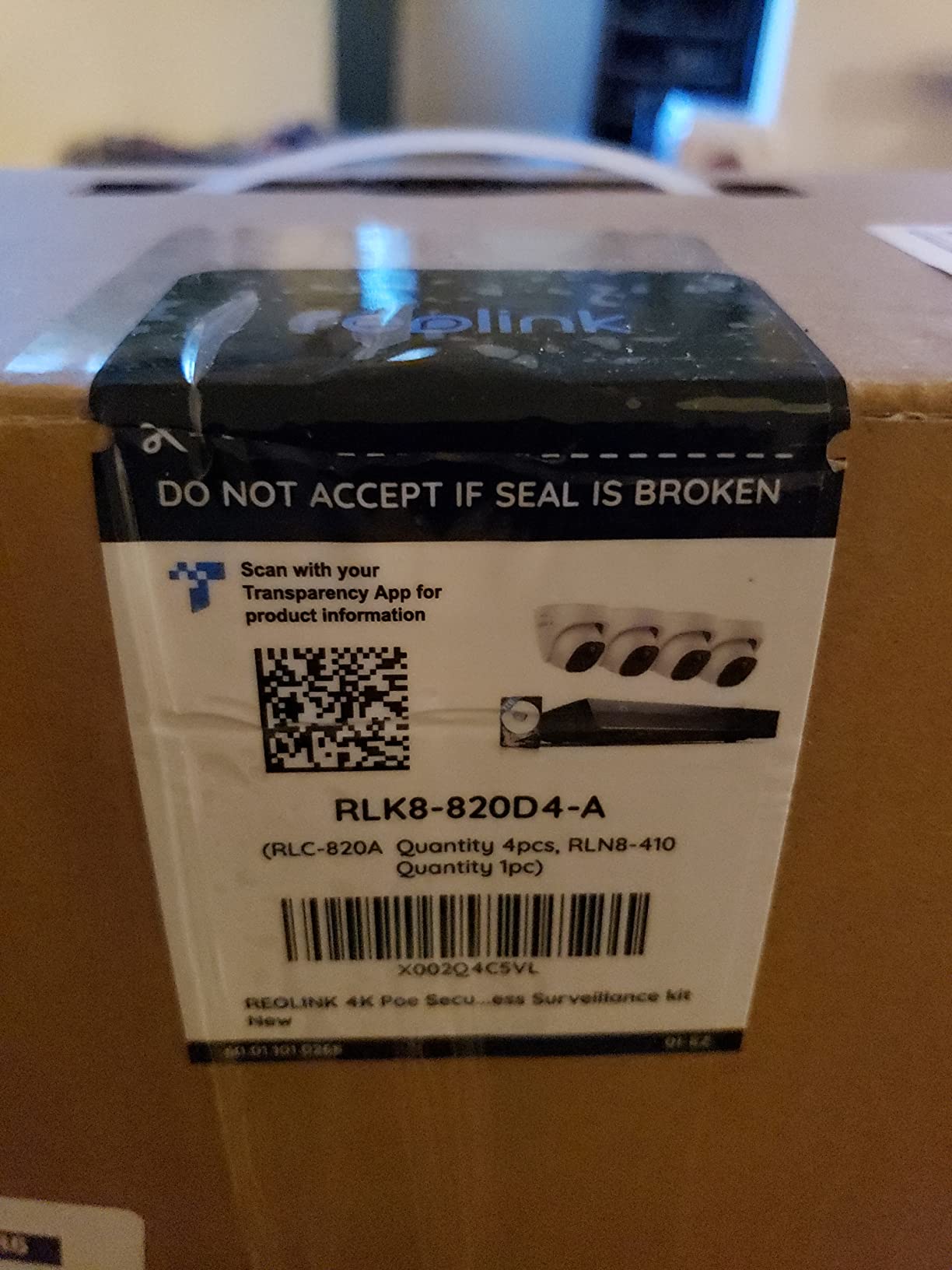
There is one real catch and it catches people constantly. Live view and the app stream are downscaled, so if you want the full 4K frame you have to download the file to a capable device. On a laptop that is fine; on a phone it is not.
4K files are also large enough that editing them needs a reasonably modern machine. Budget for storage growth as you add cameras, since the 2TB fills faster than the box implies at this resolution.
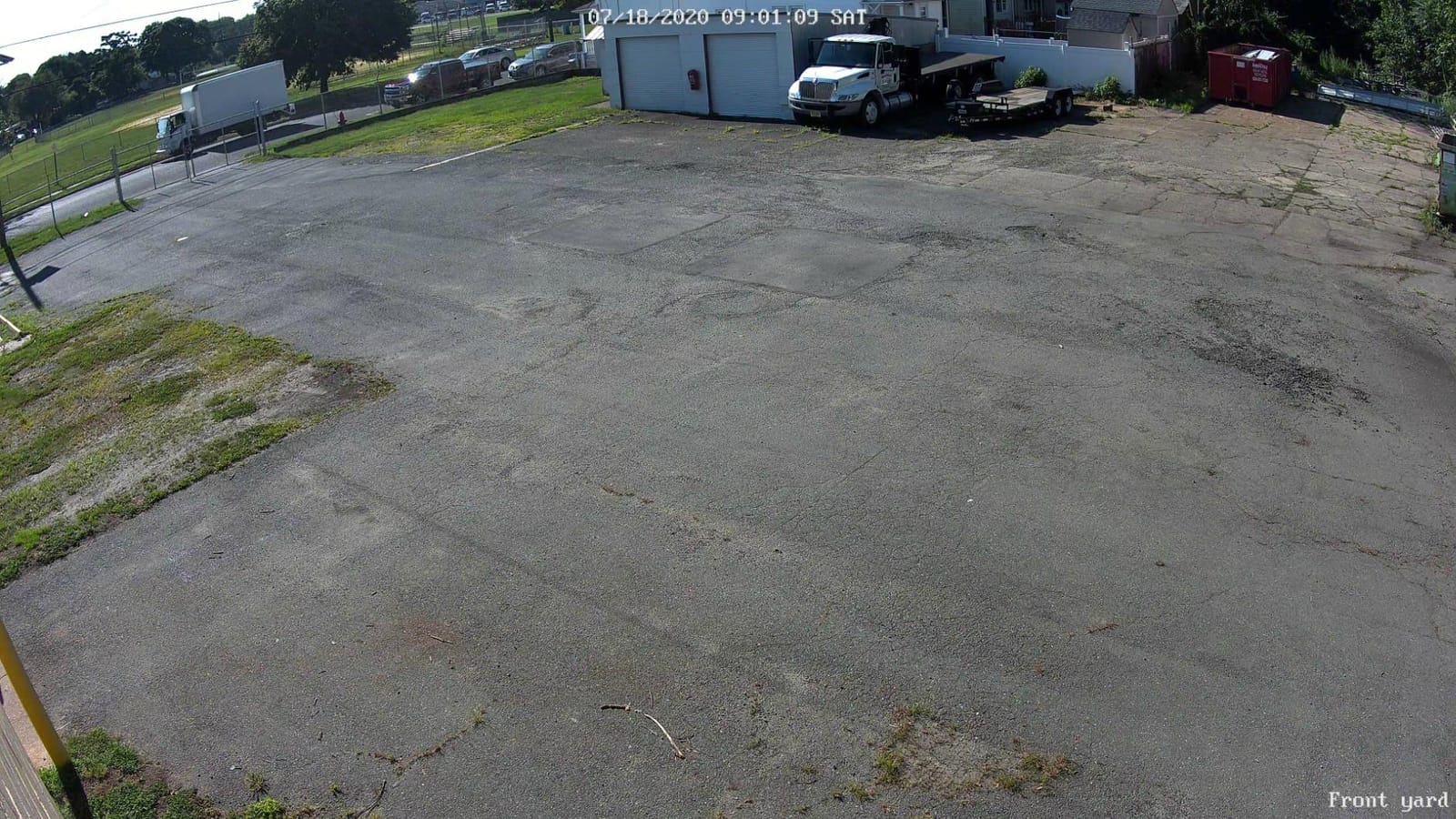
What to check before you buy
Count your planned camera positions before settling on an 8-channel recorder. Going to nine or ten cameras later means a new recorder, and the 16-channel model in pick number one costs you less than the upgrade plus reinstallation will.
Check where the recorder will live. A closed cupboard works but generates heat, and you want a network drop nearby plus a monitor for first-time configuration.
Who should skip it
If you cannot run Ethernet, none of this applies. There is no battery fallback on these cameras, so a camera disconnected from the cable is simply a dead camera.
Skip it if you want to watch a live view constantly on your phone, because the downscaled stream is the compromise, not the recording.
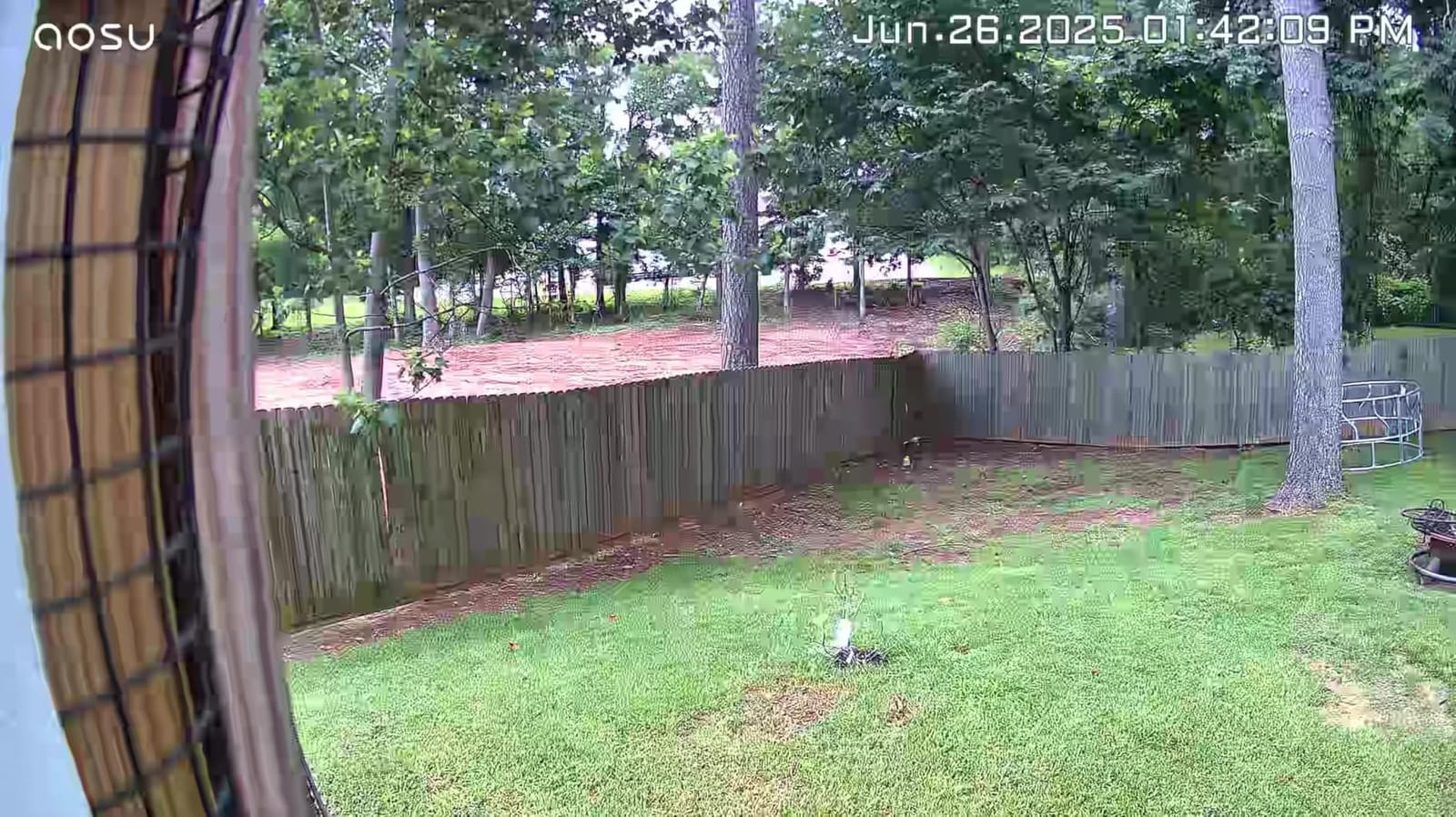
5. aosu D1 Max – Best 360-Degree Solar Coverage
aosu D1 Max, 4-Cam Kit, 4K Solar Security Cameras System Wireless Outdoor
4K with 8MP stills
360-degree PTZ with tracking
Color night to 33ft
32GB local storage
Pros
- Full color night vision from a built-in spotlight
- 360 tracking that hands off between cameras
- No subscription with 32GB included
- Detached solar panels allow flexible placement
Cons
- 15fps frame rate is low
- Water resistant rather than fully weatherproof
- Storage caps at 1TB
A 360-degree camera solves a problem fixed lenses create: a corner with no good mounting angle. The D1 Max sits in the middle of a yard or under an eave and covers every direction, with on-device person and vehicle detection to decide what matters.
The cross-camera timeline is the feature that quietly makes it useful. When one camera picks up a subject, the others follow, and you get a single view of the whole movement rather than hunting through four channels.
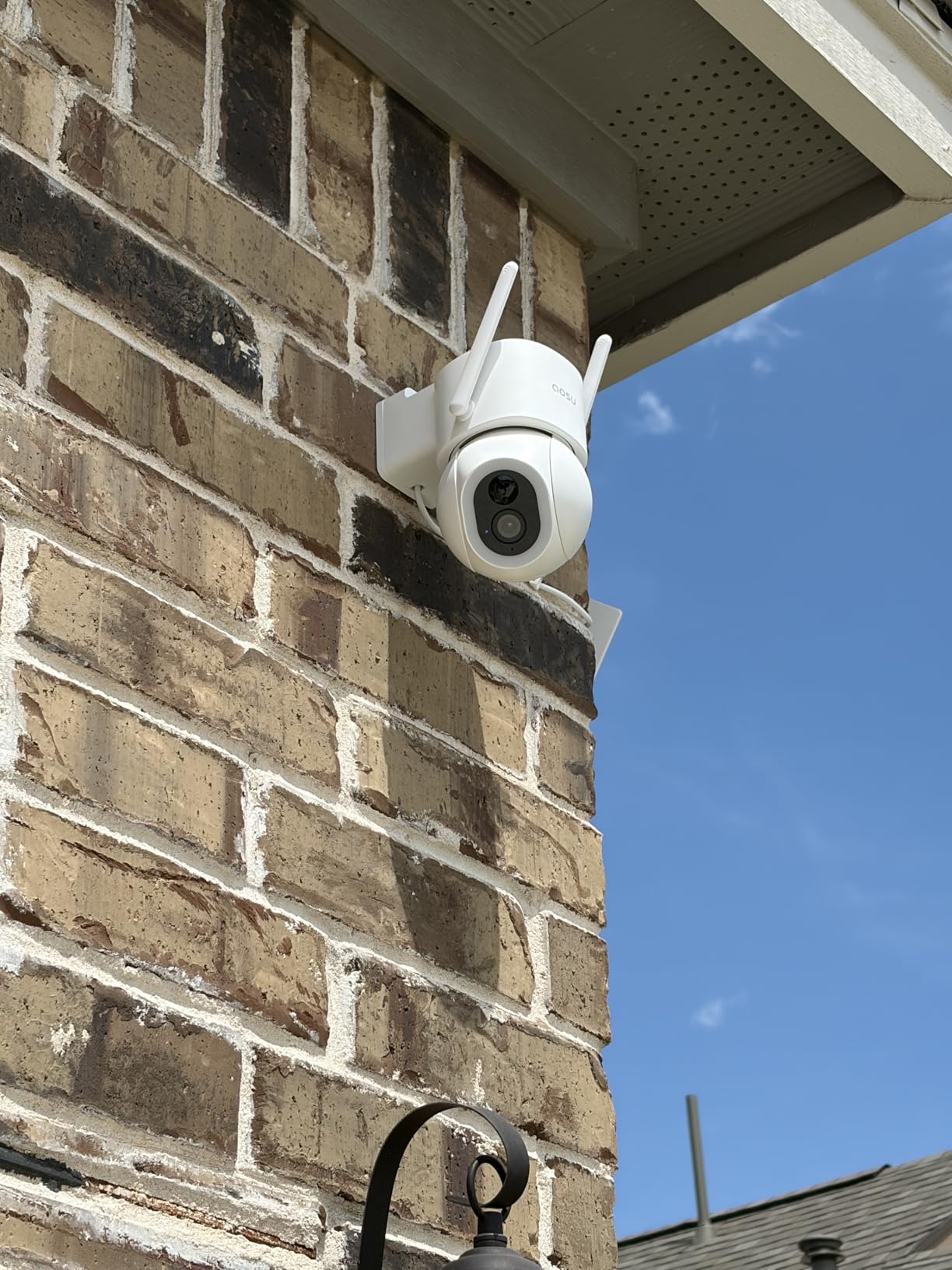
Expect mixed results on motion. The 15fps frame rate is the lowest in this group, and it shows on anything fast, so a person running across the frame will look slightly stepped rather than smooth.
Water resistance is another limit. Reviewers treat it as fine for a covered eave or a soffit and less certain in exposed, driving rain, so think about where you mount before you commit to four of them.
What to check before you buy
The 1TB storage ceiling is the number to weigh. If you want long retention across four cameras, a larger base is a better long-term purchase than a cheaper kit with a hard cap, and 32GB is included.
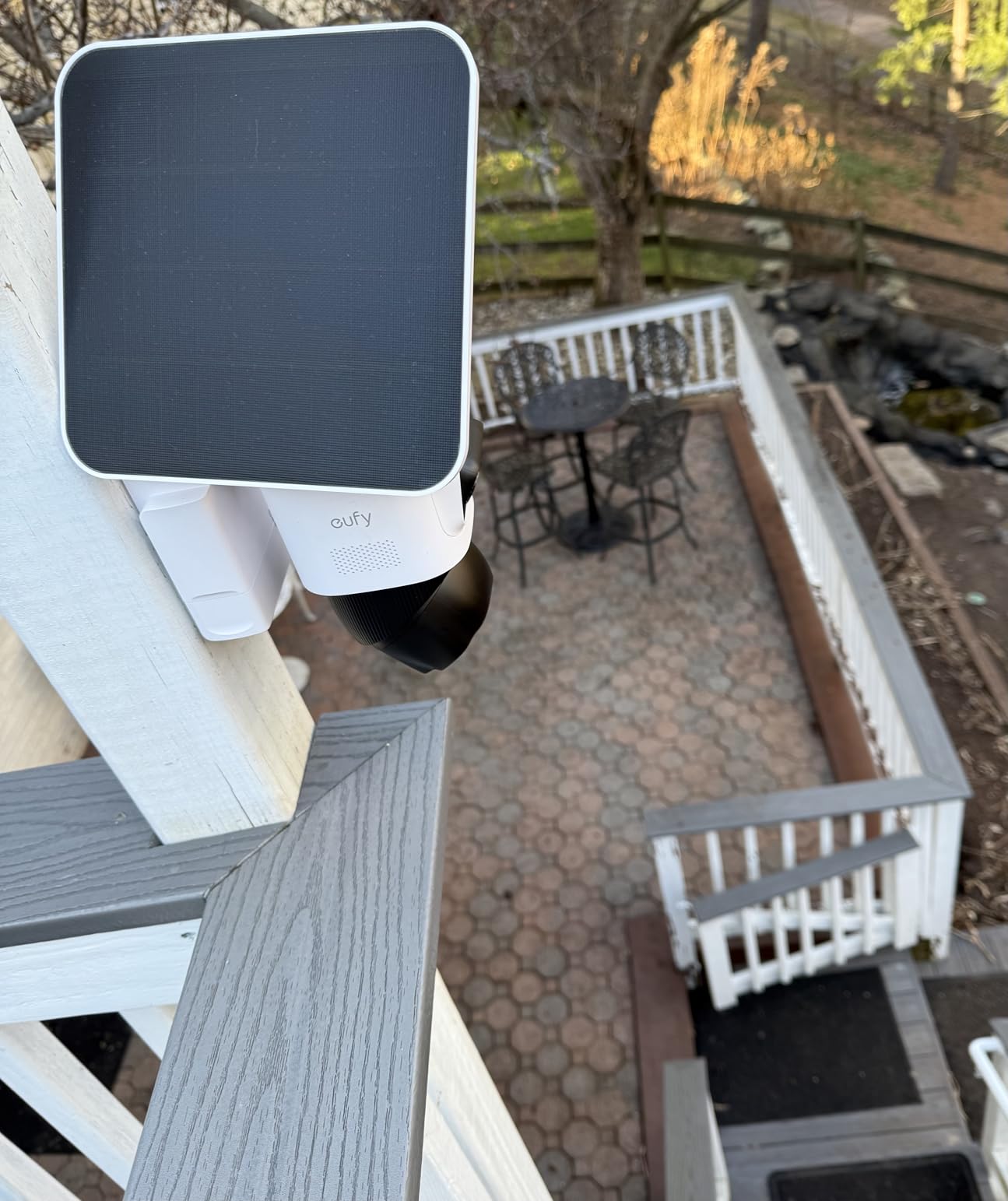
Check sun exposure at each position. The panels are detachable and can be mounted apart from the camera, which helps a lot when the best viewing angle is shaded.
Who should skip it
Skip it if you need to identify a face at distance, because a 6x digital zoom on a 15fps stream produces a soft result. This camera is built for coverage and awareness, not for identification.
It is also a poor fit for a property with no shaded mounting point and heavy seasonal weather, given the water-resistance rating and the fixed solar dependency.
6. eufy eufyCam S4 – Best for Tracking Moving Subjects
eufy Security eufyCam S4, 4-Cam Kit, 4K Solar, 3-Lens PTZ
4K wide plus 2K tracking PTZ lens
Tracking to 164ft
Cross-camera tracking
5.5W solar panels
Pros
- Two lenses in one housing give a scene view and a tracking view
- Cross-camera tracking joins footage into one video
- Large solar panel holds charge on about an hour of sun
- No subscription
Cons
- Live view can lag on 2.4GHz networks
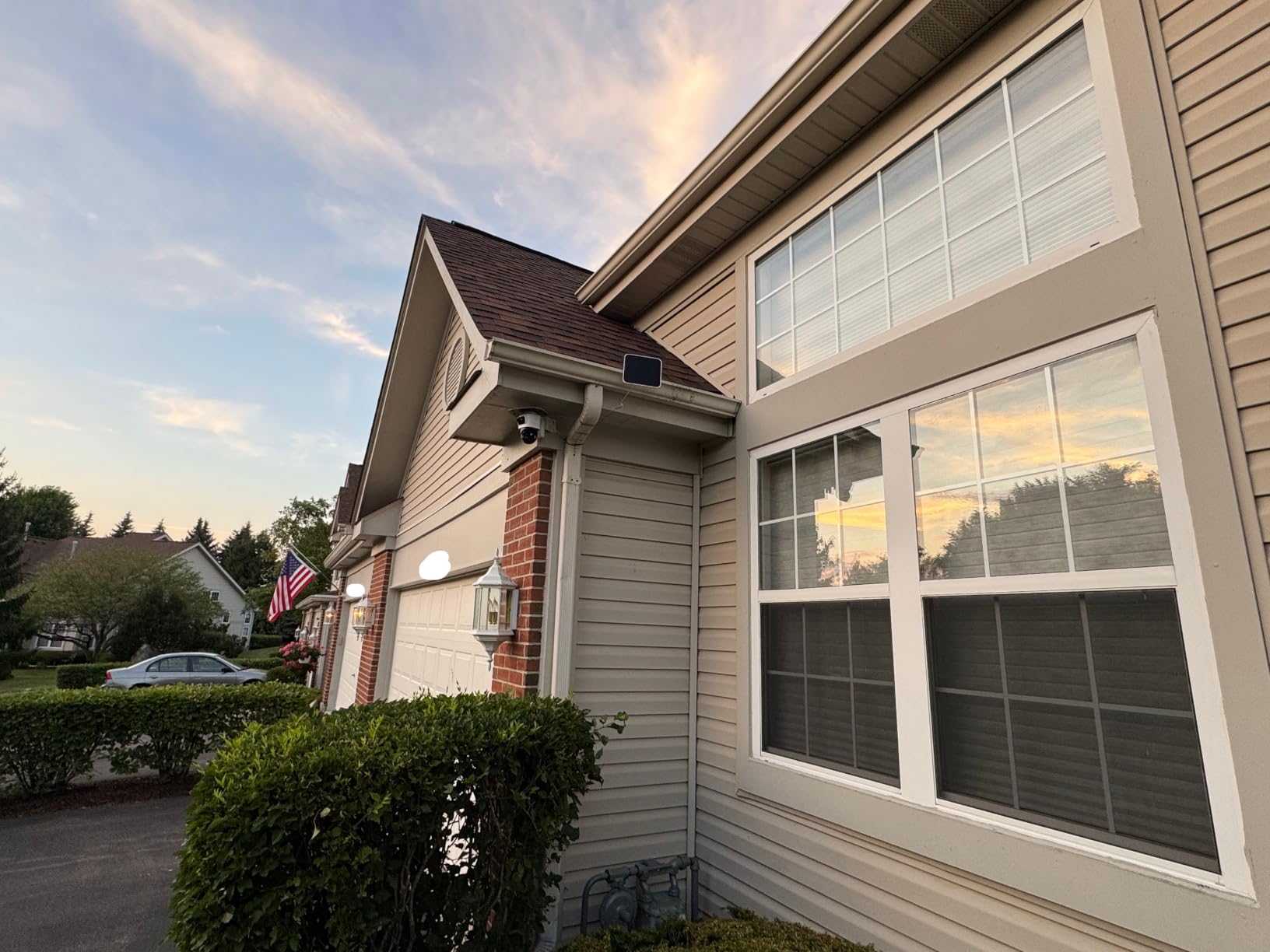
- Bulky bodies are hard to mount discreetly
- Reported lens condensation in cold weather
The S4 solves a problem the other solar cameras here do not: how do you watch something move? A 4K wide lens holds the whole scene while a second 2K PTZ lens zooms and follows, so you end up with a wide view of where something happened and a tight view of what it was.
Combined with cross-camera tracking, the S380 base stitches four cameras into one continuous follow. In practice that is the difference between watching an intruder and reading a sequence of disconnected clips from four corners of a yard.
Radar plus PIR detection with a 105dB siren and warning lights gives you a deterrent layer as well as a recording layer. Owners consistently report that the tracking behaviour works well in daylight and at close range.
The bulk is real though. These are the largest cameras in the roundup, and reviewers flag them as hard to hide on a visible wall. Lens condensation shows up on some units in cold weather, and Eufy has been responsive about replacements.
What to check before you buy
Check your wireless environment first. Several reviewers traced their drops to their own congested routers rather than the cameras, and this is a multi-camera kit that will move a lot of data on one band.
Note the 15fps rate and the 32.8ft colour night range. If you need a long-range colour view at night, this is not the kit, and the fixed-lens systems above serve that job better.
Who should skip it
Skip it if you want subtle cameras. The body and the 5.5W panel are conspicuous, and anyone who has dealt with a homeowners association or a nosy neighbour will understand the problem.
Vehicle detection also needs overlapping camera positions to work well, according to owners, so a single-camera-per-corner layout will not get the accuracy the marketing implies.
7. Hiseeu 8-Camera PoE PTZ System – Best for Large Properties
Hiseeu 4K PoE Security Camera System with 8pcs 5MP PoE PTZ Cameras
8x 5MP PTZ cameras
16-channel 4K-capable NVR
3TB HDD included
8 built-in PoE ports
Pros
- Eight PTZ cameras at a low per-camera cost
- 300-degree pan and 90-degree tilt
- Standard PoE needs no extra adapters
- 3TB drive included for 24/7 recording
Cons
- Cameras are 5MP rather than the 4K the listing implies
- Software interface is dated
- Some units reported dead cameras after months
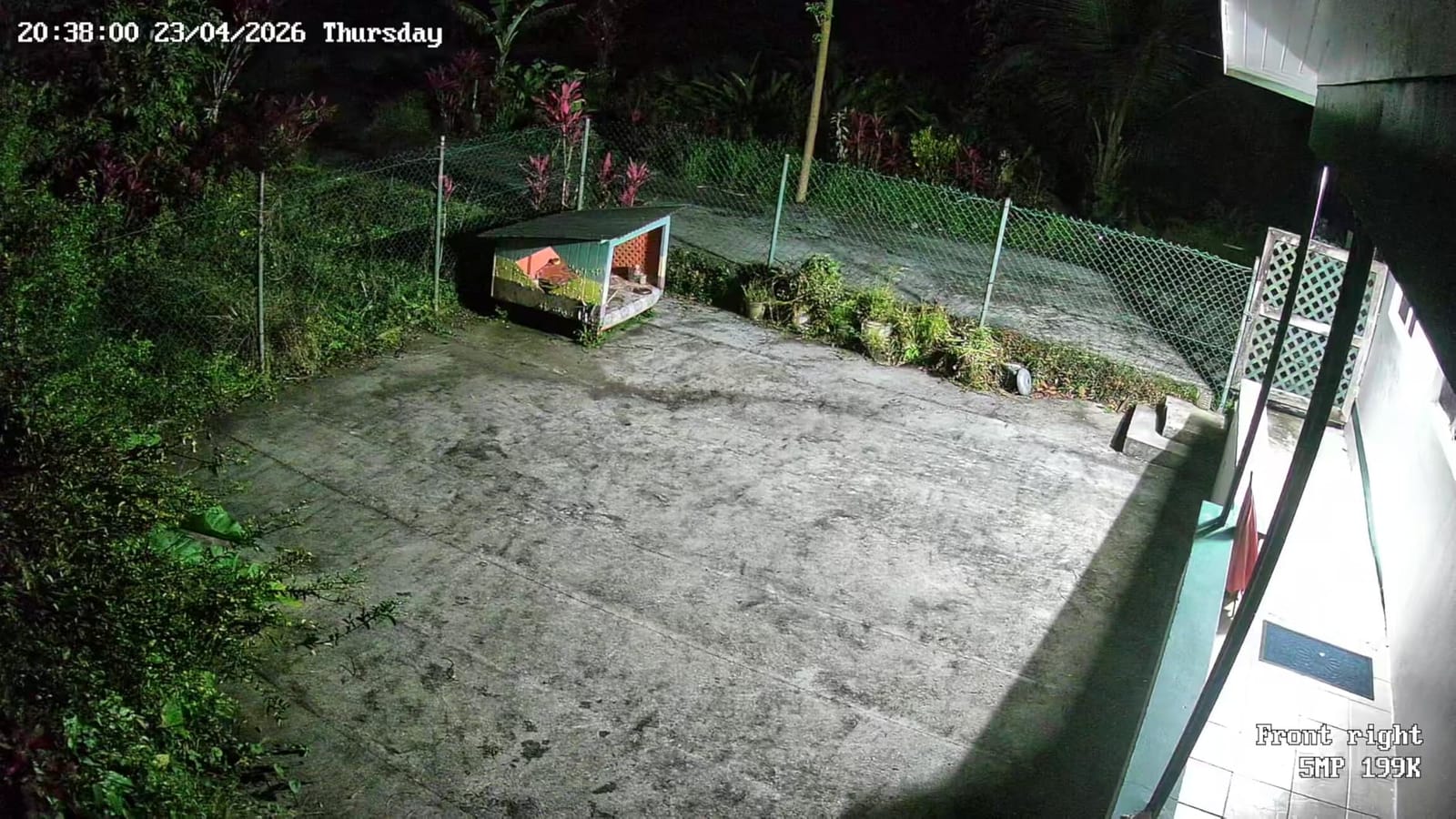
When one camera per zone is not enough coverage, this is the shape of system that works. Eight PTZ cameras with 300-degree pan and 90-degree tilt, a 16-channel recorder with eight PoE ports built in, and a 3TB drive for continuous recording.
Human auto-tracking lets one camera follow a subject and hand off to the next, so a walk along a long property produces a sequence rather than a gap. Colour night vision plus person and vehicle detection cut the alert volume that makes people switch systems off.

Here is the honesty flag. The recorder is 4K-capable, but the eight cameras are 5MP, not 8MP. You are buying channel count and PTZ reach, not true 4K detail, and the listing headline does not make that distinction.
Owners also describe the software as dated and slow to learn, and a few have had individual cameras fail after about a year. Hiseeu’s support draws positive mentions for replacing hardware when that happens.
What to check before you buy
Do the math on 5MP versus 8MP for your actual problem. If you need to read a face at the end of a long driveway, this is the wrong kit. If you want to know where someone went across a large property, it is the right one.
Also confirm the PoE power budget covers eight cameras. Port count is not wattage, and a recorder that lists eight ports can still be undersized for eight PTZ motors running at full tilt.
Who should skip it
Skip it if the software matters to you, or if a friend will be maintaining this system for you. The interface is the weakest part of the package and the most likely to frustrate a non-technical user.
And skip it if you are upgrading from an older analog install, because this is a PoE IP system and the existing coax will not carry it.
8. Hiseeu 8-Camera 8MP DVR System – Best for Existing Coax Wiring
Hiseeu 4K PTZ Wired Security Camera System with 8 x 8MP CCTV Cameras
8x 8MP PTZ cameras
8-channel DVR
2TB surveillance HDD
IP67 rated
Pros
- Eight genuine 8MP PTZ cameras
- Reuses existing coax cabling
- Wired power means no batteries
- Works fully offline on a local monitor
Cons
- Analog TVI cabling rather than modern PoE
- Color night and AI filtering capped at 4 cameras
- 15fps at 4K can look choppy
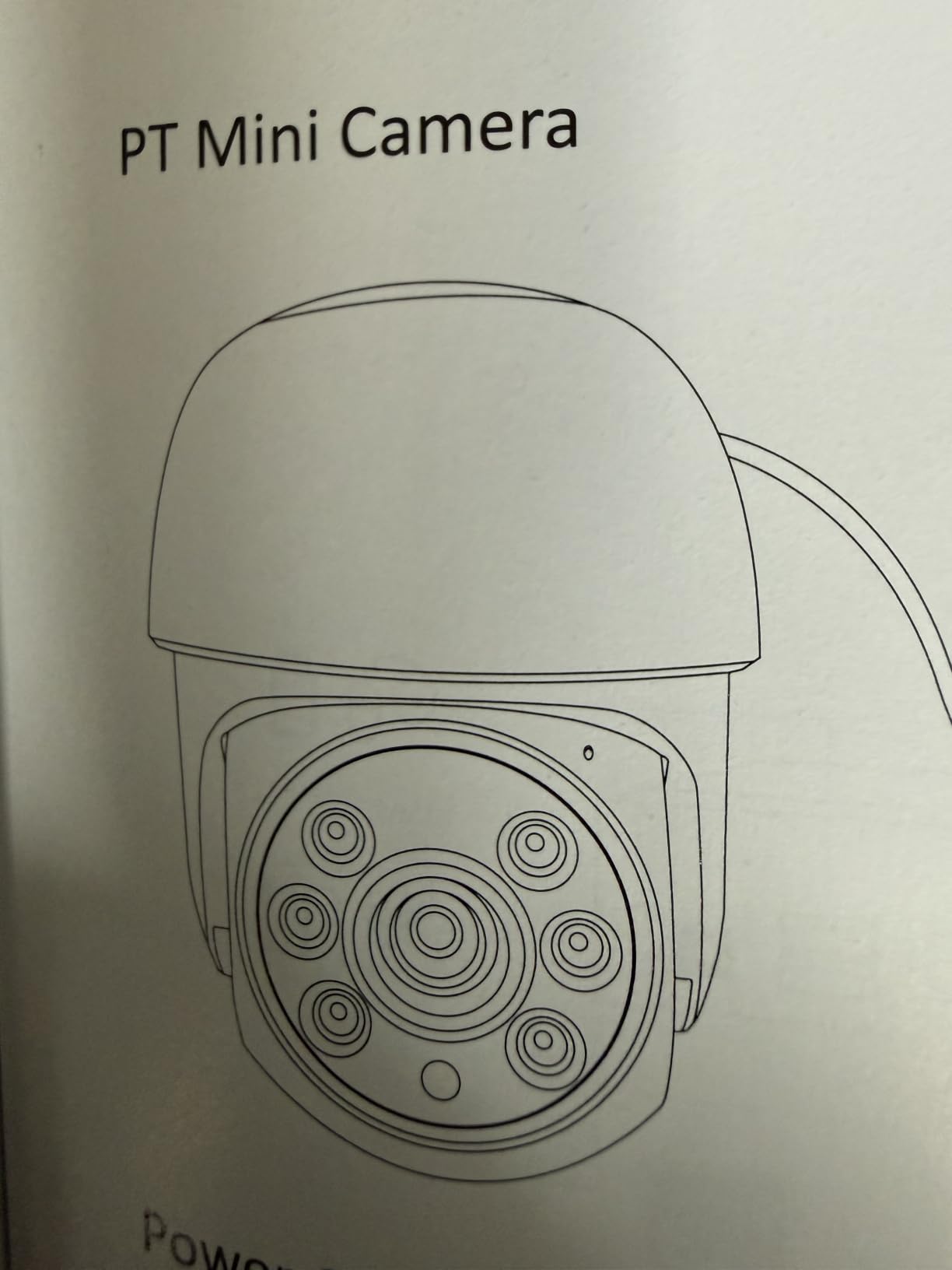
If your house already has coax run through the walls from an old install, this kit will save you the single most expensive part of a camera project. Eight 8MP PTZ cameras, an 8-channel DVR and a 2TB pre-installed surveillance drive, all on the wiring you already have.
The eight cameras are genuine 8MP, which is more than the headline 4K on the neighbouring PoE kit above can claim at the camera level. The 355-degree pan and 90-degree tilt cover a lot of ground from one mount.
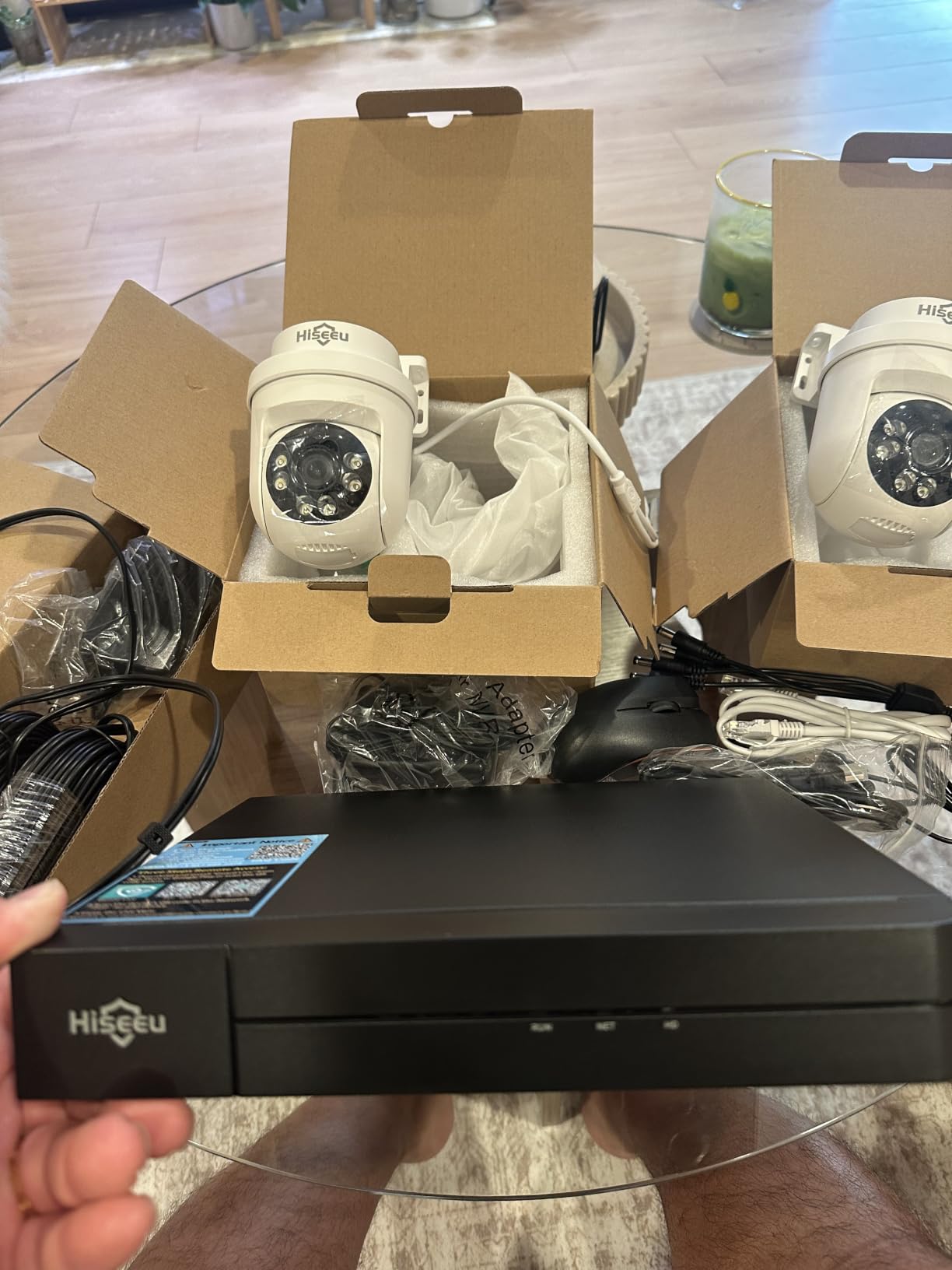
It also works with no internet at all, viewing directly on a local monitor. For anyone who wants recordings they fully control, that is a genuine privacy advantage over an app-dependent system.
Two limitations to weigh. The colour night mode and human and vehicle filtering are capped at four cameras, so half the system runs on basic infrared. And 15fps at 4K looks choppy on anything moving quickly.
What to check before you buy
Confirm the cable lengths in the box match your runs. The kit includes four 96ft and four 58ft BNC cables, and buying extra runs is easy to overlook in a project this size.
Check the IP67 rating against your climate. The cameras are rated from -40F to 140F, which is genuinely wide, and that is worth more than a slightly better sensor in most installs.
Who should skip it
Skip it if you are starting from scratch. Analog coax is a legacy standard, it is harder to extend than Ethernet, and you give up the flexibility that IP systems give you for adding a camera later.
Skip it if you need person and vehicle filtering on every camera, because that feature stops at four channels on this model.
9. Hiseeu 4-Cam Wireless 4K Kit – Best for Renters
Hiseeu 4K Security Cameras Wireless Outdoor, 8MP 4-Cam Kit, 1T HDD
4K UHD 3840 x 2160
Dual-band 2.4GHz and 5GHz
1TB HDD included
75-degree varifocal view
Pros
- True 3840 x 2160 sensor with an IR-cut filter
- Dual-band Wi-Fi is more stable than 2.4GHz-only kits
- 1TB included with no monthly fee
- Up to four users can view at once
Cons
- Narrower 75-degree view than PTZ rivals
- Night vision limited to about 65ft
- Cameras still need power cables
This is the most honest 4K claim in the group: a true 3840 x 2160 sensor with an IR-cut filter for clean switching between day and night, plus dual-band Wi-Fi on both 2.4GHz and 5GHz, which is the fix for most wireless reliability complaints.
It comes with a 1TB drive in the recorder, so there is no subscription and no upload bandwidth to worry about. Four users can view at the same time, which is useful in a shared house or a small rental.
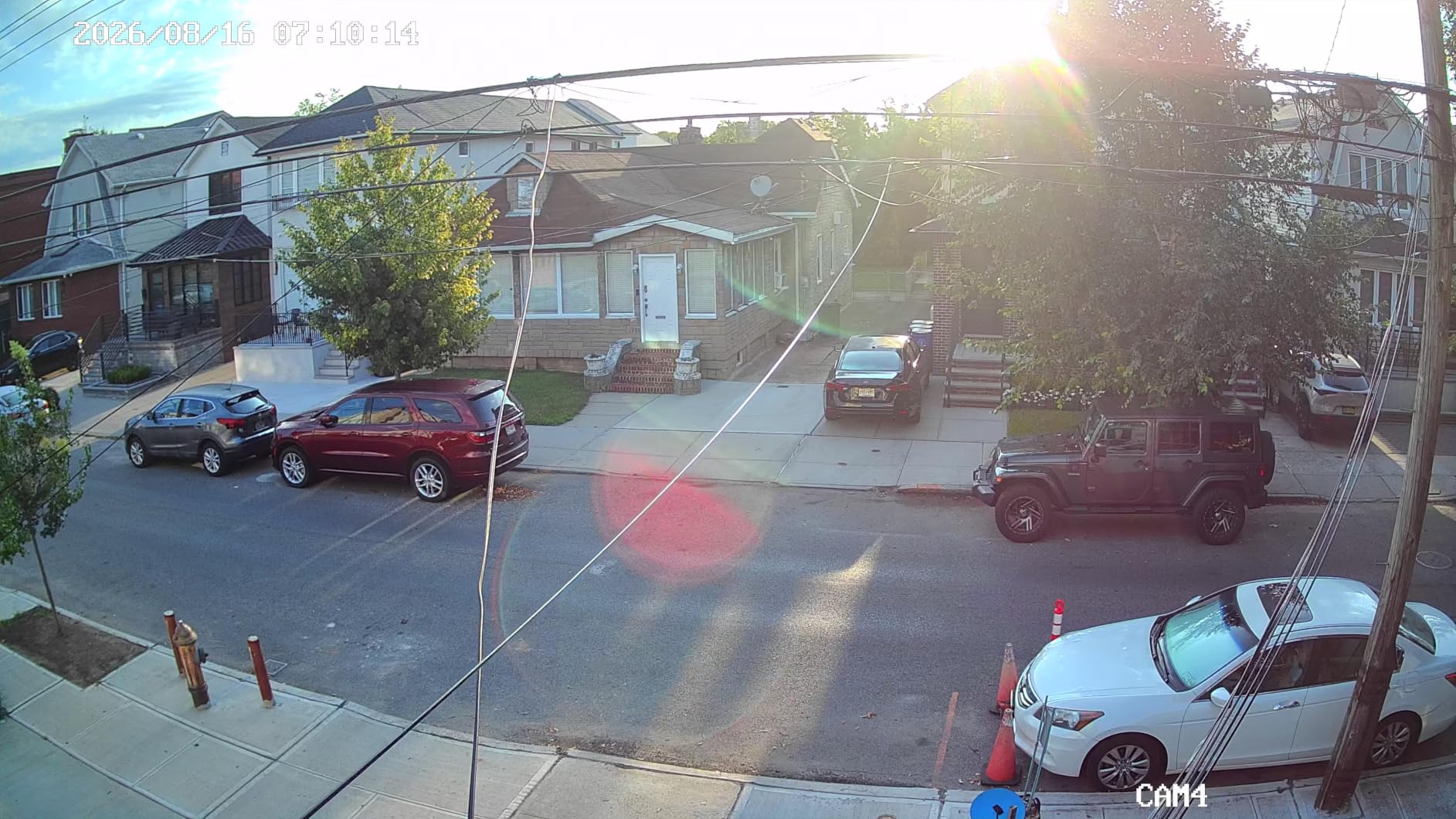
The 355-degree pan with intelligent human tracking covers a yard well, and the 75-degree lens is the trade you make for that. Owners note it is narrower than PTZ kits costing more, so plan the mounting distance carefully.
Two things to be honest about. It is not truly wire-free, since each camera still needs a power cable, and night vision reach is around 65ft rather than the 100ft on some wired models here.
What to check before you buy
Check for a 5GHz network at each mounting point, because that band is the whole reason this kit behaves better than 2.4GHz-only competitors. A modern router or mesh node in range is the difference between solid video and constant buffering.
Confirm the recorder expands to the camera count you need. It is listed as a 16-channel unit with four cameras, so there is room to grow without replacing the hub.
Who should skip it
Skip it if you need a genuinely wireless, drill-free install, because the power cable rules that out. For a rental where you can reach a socket but cannot cut into walls, it is a reasonable middle ground.
It is also a weaker choice for wide outdoor areas, given the 75-degree lens and the shorter night range against the wired options in this roundup.
10. ANNKE 8-Camera Solar System – Best Solar Starter
ANNKE Solar Wireless Outdoor Security Cameras, 4K NVR, 8-Cam Kit, 1TB HDD
8 solar cameras
10-channel 4K NVR
1TB HDD, expandable to 8TB
Dual-band 2.4GHz and 5.8GHz
Pros
- Eight self-charging solar cameras
- 1TB local recording with no subscription
- PIR plus AI cuts alerts from moving branches
- Two-way audio for warning off visitors
Cons
- Cameras are 4MP rather than true 4K despite the 4K NVR
- 270-degree pan leaves a blind spot
- Recording is motion-triggered rather than continuous
Eight solar cameras on a single 10-channel recorder is coverage-per-box that almost nothing else in this roundup matches. For a property with a barn, a side yard and a long driveway, the number of positions you can cover in a day is the argument here.
Recording is entirely local on the included 1TB drive, expandable to 8TB, and nothing uploads to a cloud. Dual-band 2.4GHz and 5.8GHz means you can favour range or speed per camera, and PIR plus AI human verification filters the wind-blown branch alerts that kill most wireless systems.
The honest flag: the NVR is 4K-capable and the cameras are 4MP, which is 2.5K. If true 4K detail at a specific location is the goal, this kit does not deliver it despite the box name.
The 270-degree pan also leaves a blind spot that a 360-degree dome does not, so placement needs a thought. And on this listing the recording mode is motion-triggered, which means nothing is captured between events.
What to check before you buy
Check sun exposure across all eight positions, because solar cameras in shade become night cameras by day two. The panels keep the units running through all-night standby, which is a real benefit in areas with frequent power interruptions.
Count your actual coverage zones before ordering. If you need eight cameras to cover one small yard, a 4-camera kit with better optics will serve you better.
Who should skip it
Skip it if you need to read a face or a plate from a distance. At 4MP the detail simply is not there, and no amount of digital zoom recovers it.
It is also the wrong choice for anyone who needs continuous 24/7 recording on this configuration, since motion-triggered capture leaves gaps at exactly the quiet moments that later matter.
11. BOTSLAB W510 – Best for AI Search Through Old Footage
BOTSLAB 4K Security Camera Wireless Outdoor, 4 Cam-Kit, 32GB Local Storage
4K with 8MP stills
360-degree PTZ
32GB base station, expandable to 16TB
IP66 rated
Pros
- Cross-camera tracking stitches a subject's whole path
- AI search finds people and vehicles quickly
- 32GB base holds about two months
- IP66 rated for outdoor use
Cons
- App live view is slow on weak Wi-Fi
- Cameras are bulky and need placement planning
- 2.4GHz-only Wi-Fi
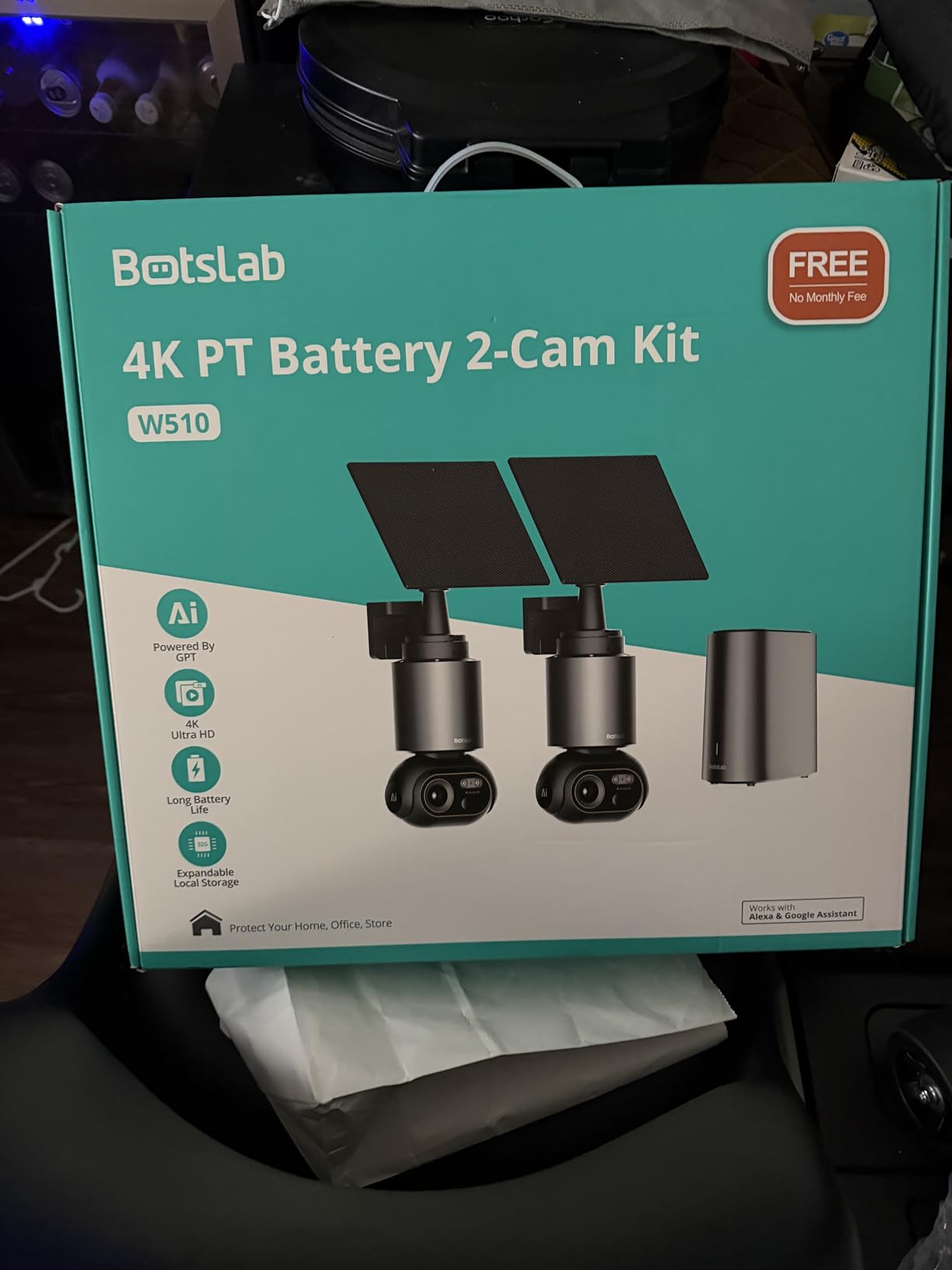
The W510 is a solar 360-degree kit whose distinguishing feature is what happens after the recording. Its AI search lets you ask the system for people or vehicles across past footage rather than scrolling through channels, and reviewers across several countries single that out as the reason they keep it.
Cross-camera tracking stitches a subject’s entire path into one sequence through the H200 base station. With 10000mAh batteries and 5W solar panels needing roughly two hours of sun, the power capacity on offer is substantial.
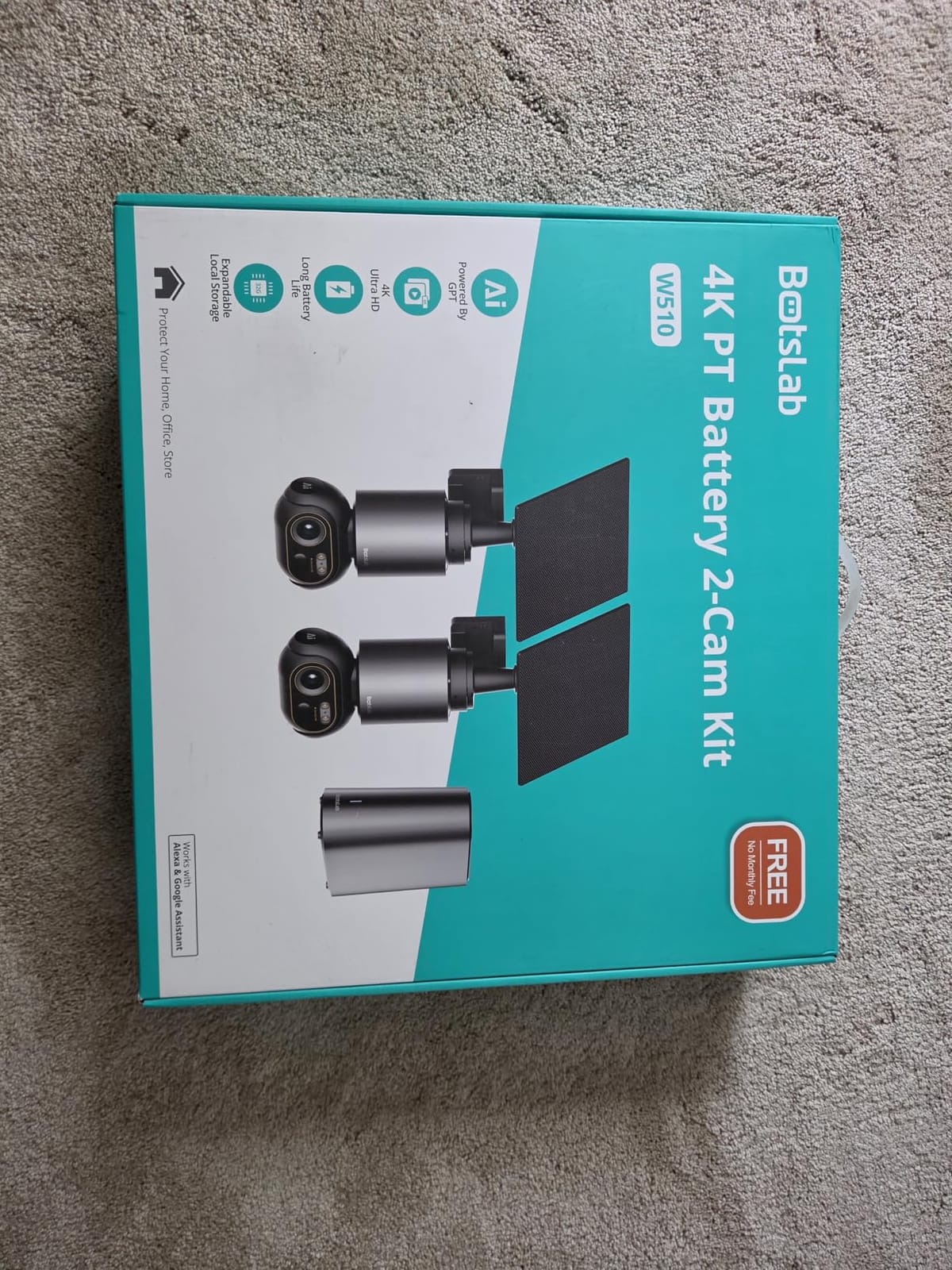
Storage starts at 32GB, which buyers say holds around two months for a modest camera count, and it expands to 16TB. That starting point is small, so plan the upgrade early rather than discovering the limit later.
The weak point is the app, again. Live view loads slowly on a weak signal, and the absence of a preset patrol pattern means the 360-degree rotation is manual unless you set one up yourself. Colour night reach is 30ft.
What to check before you buy
Measure before you mount. These camera bodies are larger than expected, and owners who rushed the placement ended up moving them, which on a solar install means re-aiming the panel as well.
Check the 2.4GHz signal where each camera will go, since this kit has no 5GHz option and shares the congestion problem described earlier.
Who should skip it
Skip it if your main need is long-range identification. Eight times digital zoom on a fixed lens at 30ft of night range gives you coverage, not evidence quality.
It is also a less safe bet than the picks above if you want a large support organisation behind the product, because the review base is small and the brand is newer.
12. Fociey DC1 4-Cam Kit – Best Pre-Paired Solar Setup
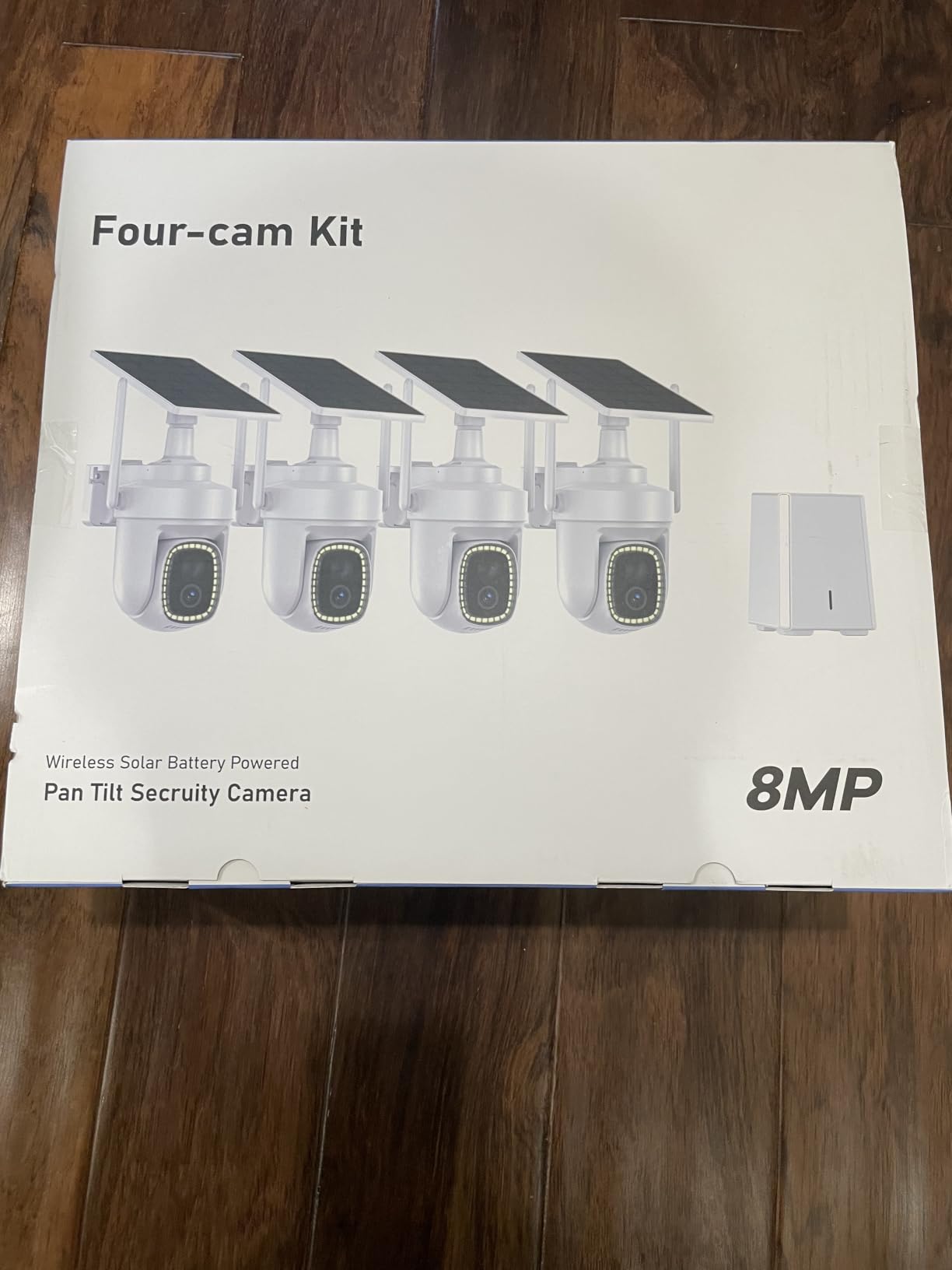
Fociey 4K Solar Security Cameras Wireless Outdoor with Local Storage Base
4K with 8MP stills
360-degree auto-tracking
32GB local base
Dual-band 2.4GHz and 5GHz via base
Pros
- Pre-paired out of the box for a fast setup
- 8MP live view with tap-to-zoom
- 360 tracking that follows between cameras
- Local encrypted recording with no monthly fee
Cons
- Cameras record only on motion
- Storage expands only to 128GB
- Small brand with a limited support presence
The Fociey DC1 is the kit we would hand to someone who has never installed a camera and does not want to spend an evening on it. The cameras arrive paired to the local base, so the job is mounting, aiming and plugging the base into a router.
You get 4K with 8MP stills, tap-to-zoom for distant detail, and 360-degree auto-tracking that hands a subject between cameras. The base handles dual-band 2.4GHz and 5GHz, which is a better wireless foundation than most kits at this level provide.
Solar is straightforward too, with a detachable panel needing around three hours of sun a day. Recording is encrypted and local, and smart detection filters wind, shadows and small animals before they reach you.
Two honest limits. The cameras record on motion only, so there is no continuous background footage, and storage tops out at 128GB via microSD, which is the smallest ceiling in this roundup.
What to check before you buy
Decide whether motion-only recording is acceptable for your use. If you want to know someone walked past at 3am rather than just that something moved near the bin store, this is the wrong design.
Check the 33ft night range against the size of your space. It is a comfortable figure for a small yard and short for a driveway at the end of a long property.
Who should skip it
Skip it if you want long retention. With a 128GB ceiling, footage turns over quickly, and there is no larger base unit to grow into as there is with the eufy HomeBase options above.
It is also worth approaching with realistic expectations on support and firmware longevity, given how small the review base and brand presence are compared with the established brands in this list.
How to Choose a 4K Security Camera System for Your Home
NVR vs DVR and What 4K Actually Changes
An NVR records IP cameras that send digital video over Ethernet, while a DVR records older analog cameras over coax. NVRs are the current standard and give you better compression, audio and AI detection. A DVR only makes sense when you are reusing existing coax cable, which is exactly pick number eight.
What 4K changes on the recorder is straightforward: the box has to decode and store 8MP streams, which is why a 4K-capable NVR is a genuine upgrade. What it does not change is the picture, which comes entirely from the sensor in the camera. That is the trap the 5MP and 4MP kits above fall into.
One more thing a 4K recorder does help with: mixing cameras. A modern 4K NVR will usually accept 2K and 4MP cameras on other channels, so you can start with four and add cheaper units later without replacing the hub. Confirm the brand supports mixed resolution before you plan around it.
Wired PoE vs Wireless vs Solar
PoE is the right answer whenever you can run cable. Power and video share one Ethernet run out to 330ft, there is no battery to degrade or replace, and the video does not depend on your Wi-Fi. For eight or more cameras, a recorder with built-in PoE ports saves a switch.
Wireless suits rentals and finished walls where drilling is not an option, with the caveat that the 2.4GHz-only kits in this roundup are the most common source of connection complaints. Dual-band models like picks nine and twelve handle crowded networks considerably better.
Solar is for off-grid positions: a gate, a barn, a long driveway, anywhere without power. The trade is that a solar camera records in short bursts, and one mounted in partial shade will quietly stop covering the spot it was bought for.
How Much Storage You Need for 24-7 4K Recording
Here is the calculation nobody puts on the page. A 4MP camera at a typical 4 Mbps bitrate uses roughly 43GB per day. An 8MP camera at 8 Mbps uses roughly 86GB per day, and that doubles for continuous rather than motion recording.
Worked example, four 4K cameras recording continuously: about 345GB per day, so a 2TB drive holds close to six days and a 4TB drive about twelve. Drop those same four cameras to motion-only recording on a low-activity street and the same 2TB holds several months.
H.265 or HEVC encoding changes the math substantially, roughly halving storage at the same quality, and most current NVRs support it. If you need long retention, check that H.265 is available before you size the drive. Our NVR system guide covers recorders in more detail.
Night Vision, Zoom and Getting a Usable Face
Two specs tell you more than the rest: the real sensor resolution and whether the camera has optical zoom. Listed night vision ranges are measured in ideal conditions and typically overstate what you get in a real yard, so treat a 100ft figure as something closer to 60ft in practice.
For a face, a fixed lens with digital zoom is honest about its limits: it crops existing pixels. Only an optical or varifocal lens adds real detail at distance, which is why the varifocal and PTZ models here serve identification tasks that the solar dome cameras cannot.
Colour night vision depends on ambient light or a spotlight. In a genuinely dark driveway, a colour sensor with no light source still falls back to infrared, so position spotlights where they light the approach rather than where they look best.
Camera Placement and the Wiring Rules
For a typical two-storey home, plan six positions: the front door covering the approach, the driveway for vehicles, the garage, the back door, and both side yards. That is the coverage that answers the question people actually ask, which is how many cameras a house needs.
Keep every Ethernet run under 100 metres, which is the structured cabling standard limit, and use solid bare copper rather than CCA cable, which fails at exactly the distances you care about. A cable tester is the cheapest tool you can buy and the one that prevents the most expensive visits.
Finally, check the PoE power budget rather than the port count. A recorder with eight ports can still deliver less total wattage than eight PTZ cameras draw at full tilt, and an underpowered run shows up as a camera that reboots every few hours. Small business and outbuilding coverage raises the same question at twice the scale, and our small business camera guide covers the commercial side.
Frequently Asked Questions
What is the best 4K camera for home security?
The best 4K camera for home security is usually part of a system rather than a single unit. A wired PoE NVR with genuine 8MP cameras gives the most reliable footage and no monthly fee, and front door, driveway and back gate are the three positions worth covering first. Single 4K cameras are cheaper to install but leave you managing several brands and apps.
Is 4K worth it for security cameras?
Yes, where you need to identify detail rather than just detect movement. 4K carries about four times the pixels of 1080p, which lets you crop into a wide driveway view and still get usable footage of a face or license plate. For an indoor hallway camera, 2K is enough, and remember that 24/7 4K recording fills a hard drive considerably faster.
What are the best 4K security cameras for outdoor use?
For outdoor use, look for an IP65 or IP67 weather rating, a night range you can verify, and a power source that suits the position. Wired PoE models such as the Reolink RLK8-800D4 handle the most zones reliably, while solar kits such as the eufyCam S330 suit gates and driveways where no power is available. Colour night vision is worth paying for if you need faces at night.
What is the best 4K wired security camera system?
The best 4K wired system depends on how many cameras you need. A 16-channel PoE NVR with eight genuine 8MP bullets gives the most headroom for a large house and costs less to expand than starting small. Verify the camera sensor is truly 8MP, since several kits ship 4K-capable recorders with 5MP cameras.
What is the difference between a standard NVR and a 4K NVR?
A standard NVR may support 1080p or 4MP streams, while a 4K NVR decodes and stores 8MP footage. The recorder does not create the resolution; the camera sensor does. A 4K NVR mainly affects how many 4K streams you can run, how well they compress, and whether mixed-resolution cameras are supported.
The Best 4K Security Camera Systems for Homes in 2026
The REOLINK RLK16-800B8 takes the top spot among the best 4K security camera systems for homes because it is the only kit here that pairs eight genuine 8MP cameras with 16-channel headroom and a 4TB drive, all recording locally with no monthly fee. For a four-camera house, the RLK8-800D4 is the more proportionate version of the same idea.
If you cannot run cable, the eufyCam S330 4-Cam Kit is our pick for genuine 4K with colour night vision and solar power, while the SoloCam E42 adds license plate recognition and active deterrence for a driveway. For coverage across a large property, the Hiseeu 8-camera system covers the most zones, with the caveat that its cameras are 5MP rather than 4K.
Whatever you choose, verify the camera resolution rather than the recorder label, size your drive before you install, and check that the app still works on the day you actually need the footage. For more on individual camera formats and mounting, our 4K camera roundup goes deeper on the hardware side.