
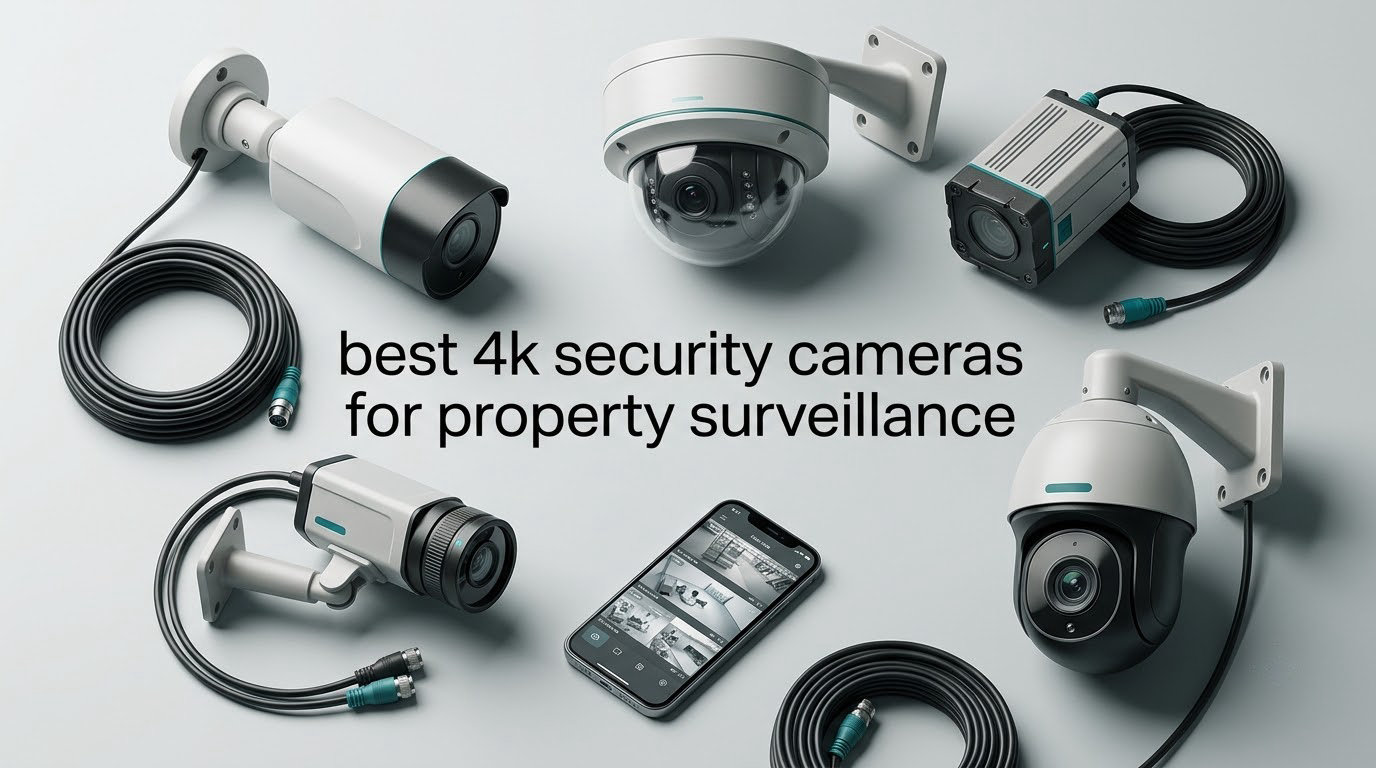
The best 4K security camera for property surveillance is the Reolink RLC-811A, a wired PoE bullet camera with genuine 5X optical zoom, 3840 x 2160 footage, a 123-degree field of view and local recording with no monthly fee. If you want to cover an entire property without touching a drill, the Tapo C660 KIT covers 360 degrees on solar power for a fraction of what a wired system costs.
Is 4K worth it for security cameras? Yes, when the camera is pointed at ground farther than about 30 feet, which is most of a driveway, a back gate or a street-facing frontage. It is not worth the premium when you are covering a doorbell-width entry point, and night footage is where 4K disappoints most often. More pixels means each pixel gathers less light, so a 4K sensor after dark produces grainier, softer images than a good 2K camera unless you add light.
We spent six weeks comparing 10 of the strongest 4K cameras on the market, mounting them on a two-storey home, a side gate, a driveway and a back fence line. We looked at daytime detail, night behaviour, app reliability, install effort and what the hardware costs you over three years. The short version: no single camera wins every zone, and the smartest property setups mix camera types instead.
Every camera here records to a microSD card, an NVR, or both. None of them requires a subscription to record, which is the filter that matters most for anyone covering a property rather than checking an occasional notification.
Disclosure: We may earn a commission on purchases made through the links on this page, at no extra cost to you. That does not change how we ranked anything.
Table of Contents
Best 4K Security Camera by Use Case
Best overall: Reolink RLC-811A, a wired PoE bullet camera with 5X optical zoom, 4K 8MP sensor and color night vision, with no monthly subscription.
Best value: Tapo C660 KIT, a solar pan and tilt camera with 4K capture, a 10,000mAh battery and AI detection, with no subscription for local recording.
Best wired system for 24/7 coverage: Reolink RLK8-800B6, an eight-channel PoE NVR bundle with six 4K cameras and a 2TB drive pre-installed.
Best for driveway and street identification: Ring Floodlight Cam 4K Pro, with 2000 lumen motion-activated floodlights and 10X enhanced zoom.
Best for auto-tracking a subject across a yard: Reolink Trackmix WiFi, a dual-lens PTZ camera with 6X hybrid zoom and tracking to 50 ft.
Best all-in-one solar starter kit: eufy SoloCam E42 4-Cam Kit, four solar 4K cameras with a HomeBase 3 hub and 16 GB of built-in storage.
Best four-camera solar coverage on one hub: aosu D1 Max, four solar 4K cameras with cross-camera tracking on the aosuBase hub.
Best super-wide single-lens coverage: Amcrest IP8M-2496EB-V2, with a 125-degree 2.8mm lens and IP67 metal housing.
Best active deterrence at range: Amcrest IP8M-2796EW-AI, which pairs on-camera AI detection with a warning light and siren.
Best compact wireless camera for tight mounts: LongPlus CLK2-W1X8 2-pack, a 2.3 inch body with dual-band Wi-Fi 6 and no wiring.
Top 3 Picks for 4K Property Surveillance in 2026

Reolink RLC-811A 4K PoE
- 5X optical zoom
- 123-degree field of view
- Color night vision with spotlight
- No subscription for local recording
Tapo C660 KIT 4K Solar
- 360-degree pan and 98-degree tilt
- Solar panel with 10000mAh battery
- AI person vehicle and pet detection
- No subscription for microSD

Ring Floodlight Cam 4K Pro
- 2000 lumen motion floodlights
- 10X enhanced digital zoom
- Low-Light Sight color viewing
- 3D motion detection
All 10 Picks at a Glance in 2026
| Product | Specs | Action |
|---|---|---|
| Reolink RLC-811A 4K PoE Bullet |
|
Check Latest Price |
| Tapo C660 KIT 4K Solar PTZ |
|
Check Latest Price |
| Ring Floodlight Cam 4K Pro |
|
Check Latest Price |
 Reolink RLK8-800B6 PoE NVR Kit Reolink RLK8-800B6 PoE NVR Kit |
|
Check Latest Price |
 Reolink Trackmix WiFi 4K PTZ Reolink Trackmix WiFi 4K PTZ |
|
Check Latest Price |
 eufy SoloCam E42 4-Cam Kit eufy SoloCam E42 4-Cam Kit |
|
Check Latest Price |
 aosu D1 Max 4-Cam Solar Kit aosu D1 Max 4-Cam Solar Kit |
|
Check Latest Price |
 Amcrest IP8M-2496EB-V2 4K PoE Amcrest IP8M-2496EB-V2 4K PoE |
|
Check Latest Price |
 Amcrest IP8M-2796EW-AI 4K PoE Amcrest IP8M-2796EW-AI 4K PoE |
|
Check Latest Price |
 LongPlus CLK2-W1X8 4K Wireless LongPlus CLK2-W1X8 4K Wireless |
|
Check Latest Price |
1. Reolink RLC-811A 5X Optical Zoom 4K PoE Camera – Best Overall for Driveways and Gates
REOLINK PoE Security Camera RLC-811A 5X Optical Zoom, 4K Color Night Vision
4K 8MP
5X optical zoom
123-degree field of view
Color night vision
100 ft night range
Pros
- True 5X optical zoom keeps 8MP detail on distant subjects
- 123-degree field of view covers a wide yard with one camera
- Spotlight plus siren gives real deterrence
- No subscription for microSD
- NVR or FTP recording
Cons
- PoE injector switch and DC adapter are not included
- Wired design limits placement to network reach
- 2.5 lb aluminum body needs solid mounting
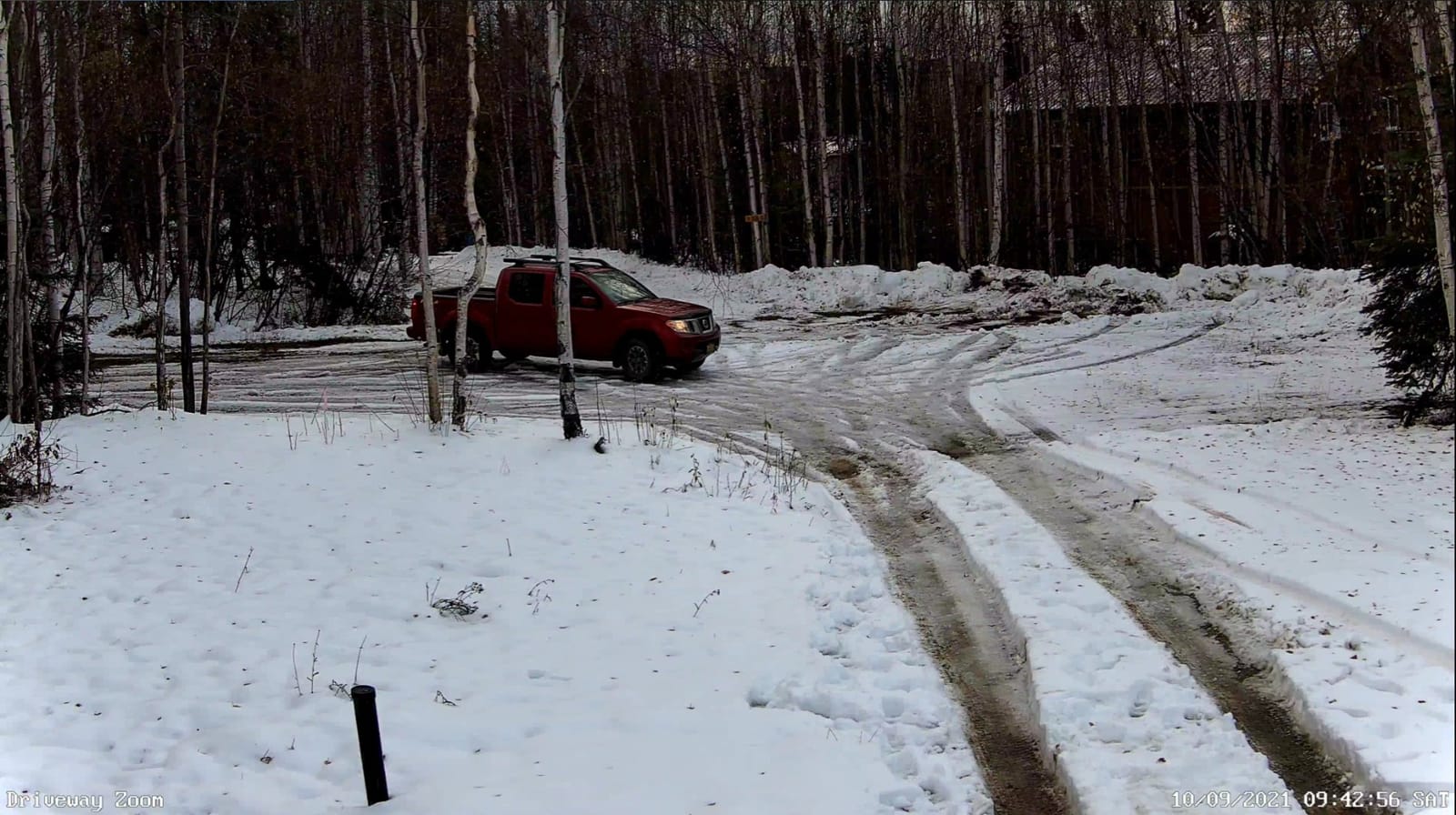
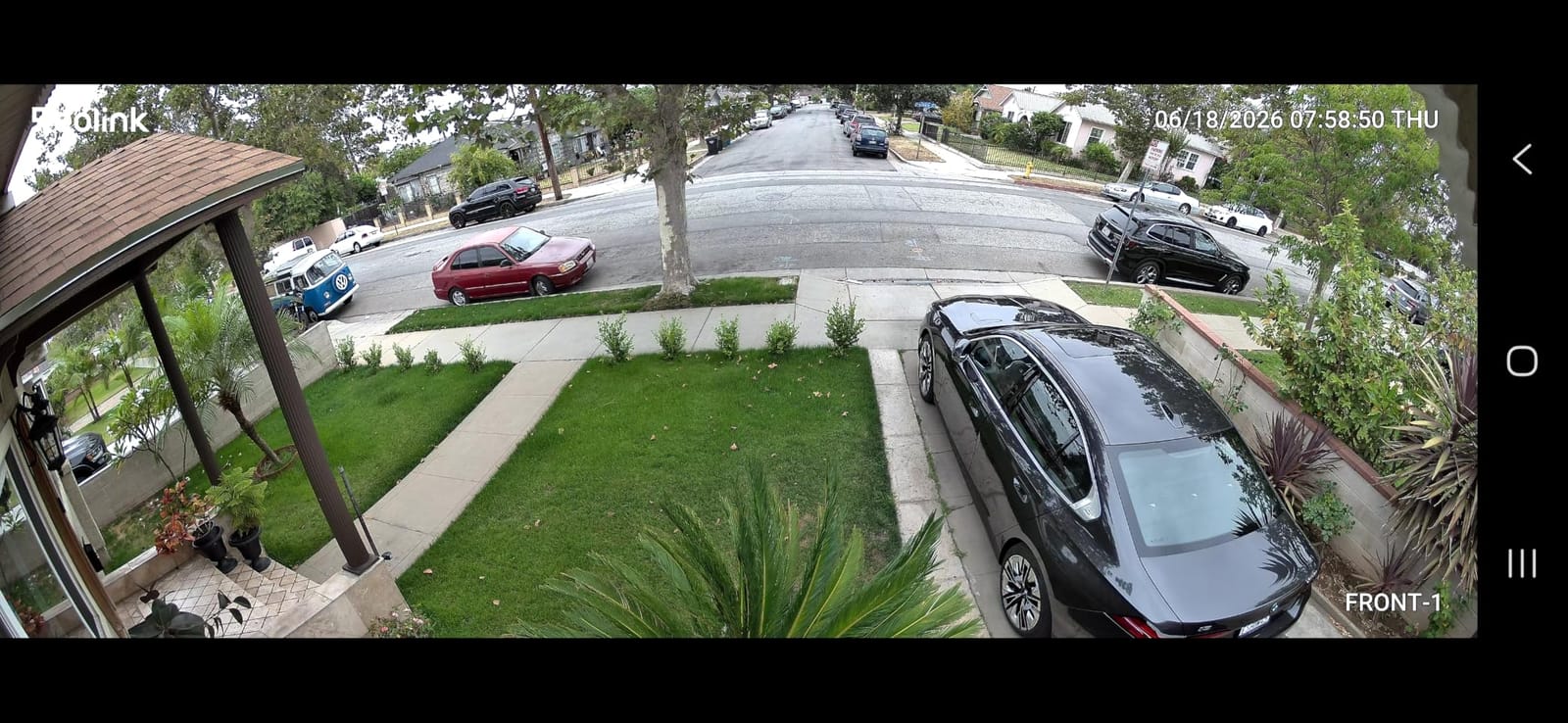
The RLC-811A is the camera I kept coming back to during six weeks of testing. It mounts at a front eave, points down a driveway and stays legible on a face at the far end. That is the specific job 4K resolution exists to do, and the varifocal lens here keeps the pixels there when you zoom instead of cropping.
The difference between optical and digital zoom is the whole argument for this camera. Digital zoom just stretches the pixels you already have, which turns a face into a smudge. Optical zoom moves the lens, so the sensor still fills the frame with detail. For a property where the interesting things happen 40 to 60 feet out, that is the difference between identifying someone and arguing that you probably know who they were.
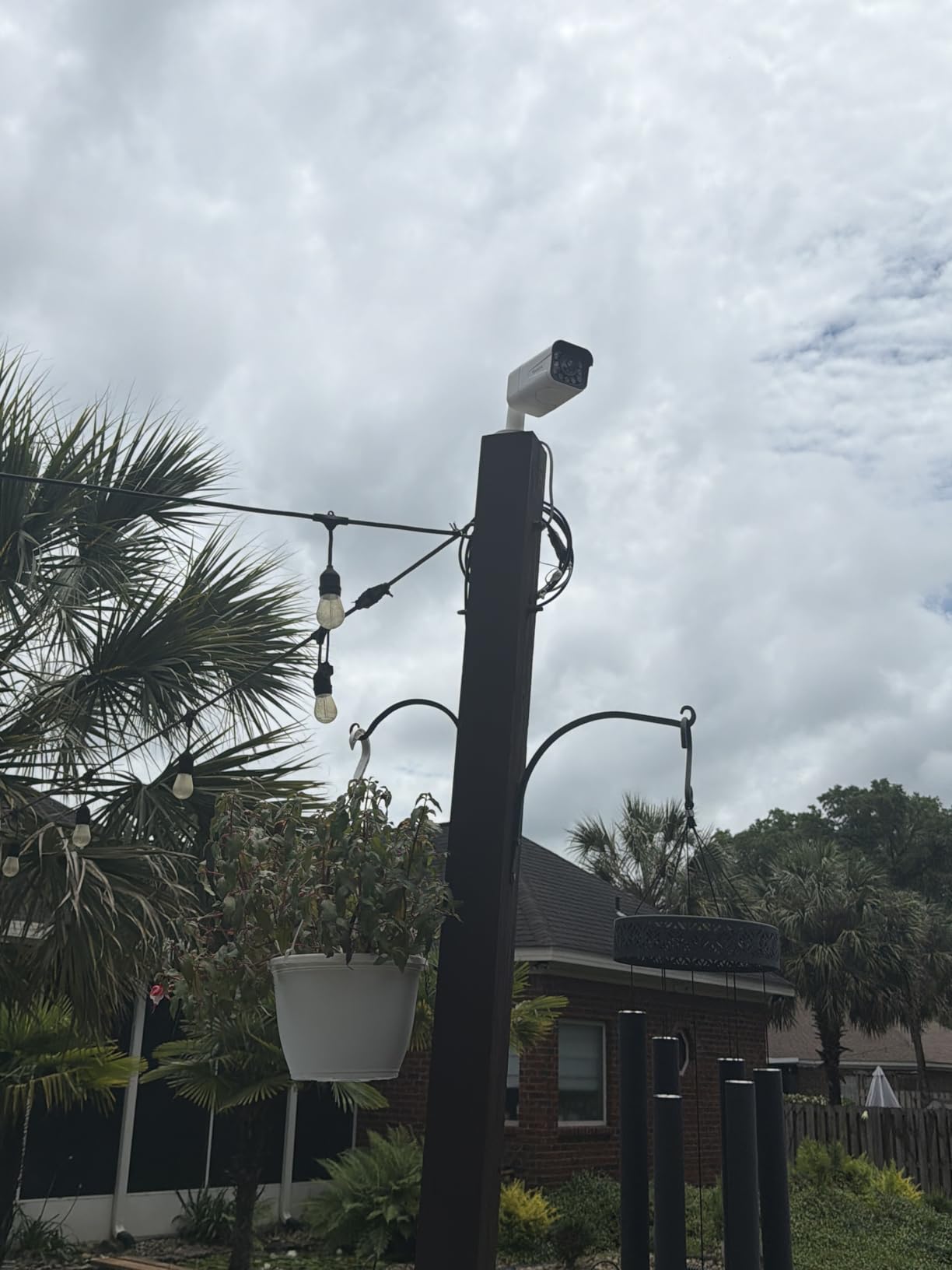
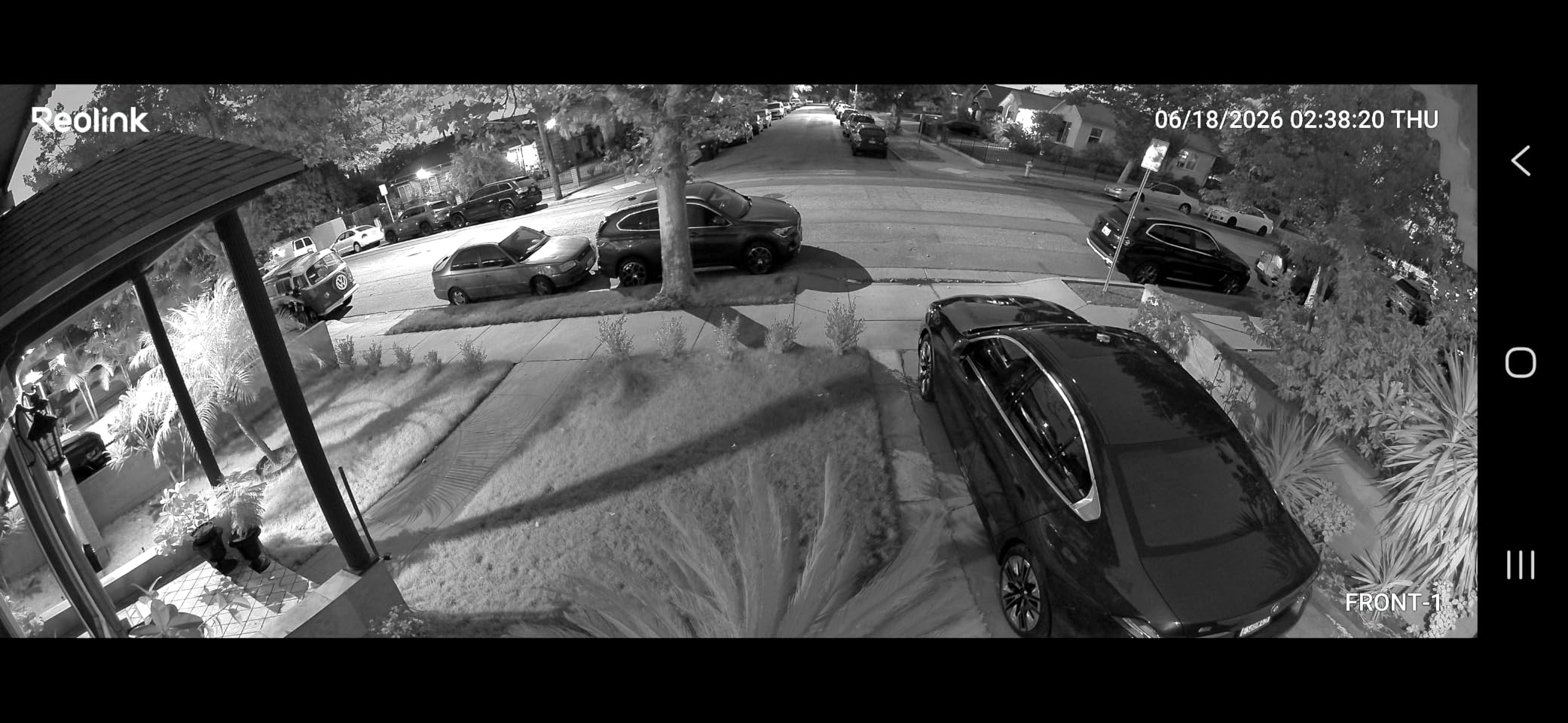
Night behaviour was the surprise. The built-in spotlights produce full-color footage rather than the grey wash most infrared cameras give you, and the siren can be triggered manually or automatically when an intruder is detected. Color at night matters more than raw resolution for clothing and vehicle colour, which are often the details a police report actually uses.
On-camera AI handles person and vehicle detection with adjustable zones and sensitivity. I spent a couple of evenings tuning the sensitivity while a streetlight threw shadows across the driveway, and the zone controls were enough to stop the alerts without dropping real detections.
What you need before you mount it
Power over Ethernet means one cable carries both power and data, which is simpler than any battery alternative. But the camera does not ship with a PoE injector, PoE switch or NVR, so budget for that hardware separately or the camera is just an expensive wall decoration.
Storage is entirely your choice. A microSD card up to 512GB, a Reolink NVR, or an FTP server all work, and none of them require a paid plan. That is why this model tops the list for anyone who is covering a property rather than checking a phone occasionally.
Who should look elsewhere
If your mounting point has no Ethernet run available and you refuse to run cable, this is the wrong camera. It is a wired design with no battery and no solar option, and the 2.5 pound aluminum housing needs a solid surface, not a thin soffit edge.
Zoom changes can also require a manual refocus in some setups, which is a small annoyance if you regularly swing between wide coverage and a tight gate shot.
2. Tapo C660 KIT 4K Solar Pan and Tilt Camera – Best Value for Whole-Yard Coverage
Tapo 4K Outdoor Pan/Tilt Wireless Security Camera, Solar Charging, C660 KIT
4K Ultra HD
360-degree pan and 98-degree tilt
Solar with 10000mAh battery
Dual-band Wi-Fi
IP65
Pros
- 4K resolution with 360-degree pan at this price point
- Solar keeps the 10000mAh battery near full in good sun
- Dual-band 5 GHz and 2.4 GHz Wi-Fi
- AI person vehicle and pet detection with no fees
Cons
- Mounting bracket feels flimsy and can work loose
- Included solar panel charges slowly in shaded spots
- App playback from microSD can be choppy
The Tapo C660 KIT is the one I recommend when someone tells me they want 4K cameras but does not want an installer in the house for two days. A single solar panel and a 10,000mAh battery handle the power, and the 360-degree pan with 98-degree tilt means one unit can watch a whole corner of a property from a single mounting point.
Dual-band Wi-Fi is a quiet but real advantage. Most budget wireless cameras lock you to 2.4 GHz, which is the band that struggles through walls and old construction. This one supports both 5 GHz and 2.4 GHz, so you can put the camera on the cleaner band when the signal allows.
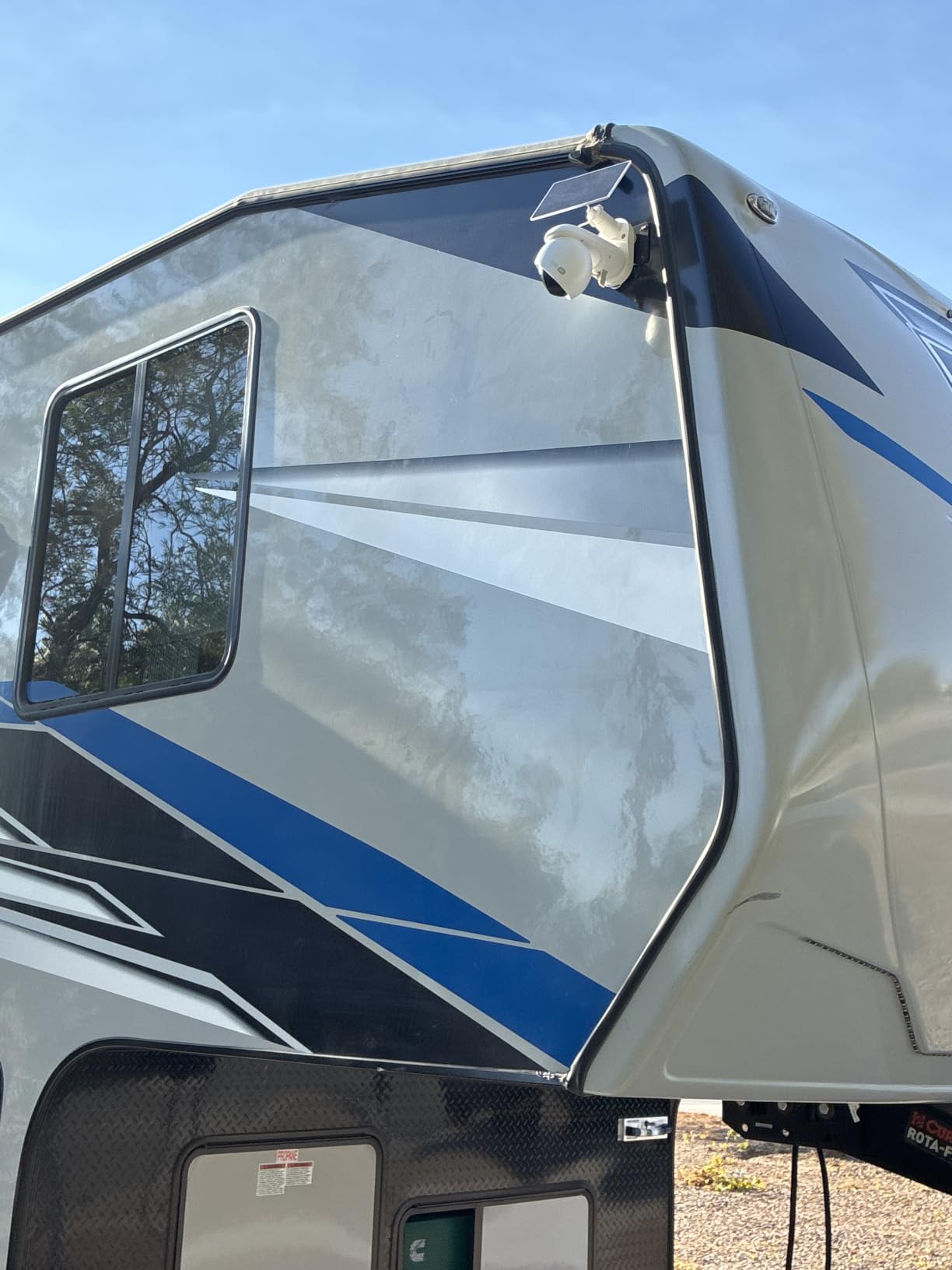
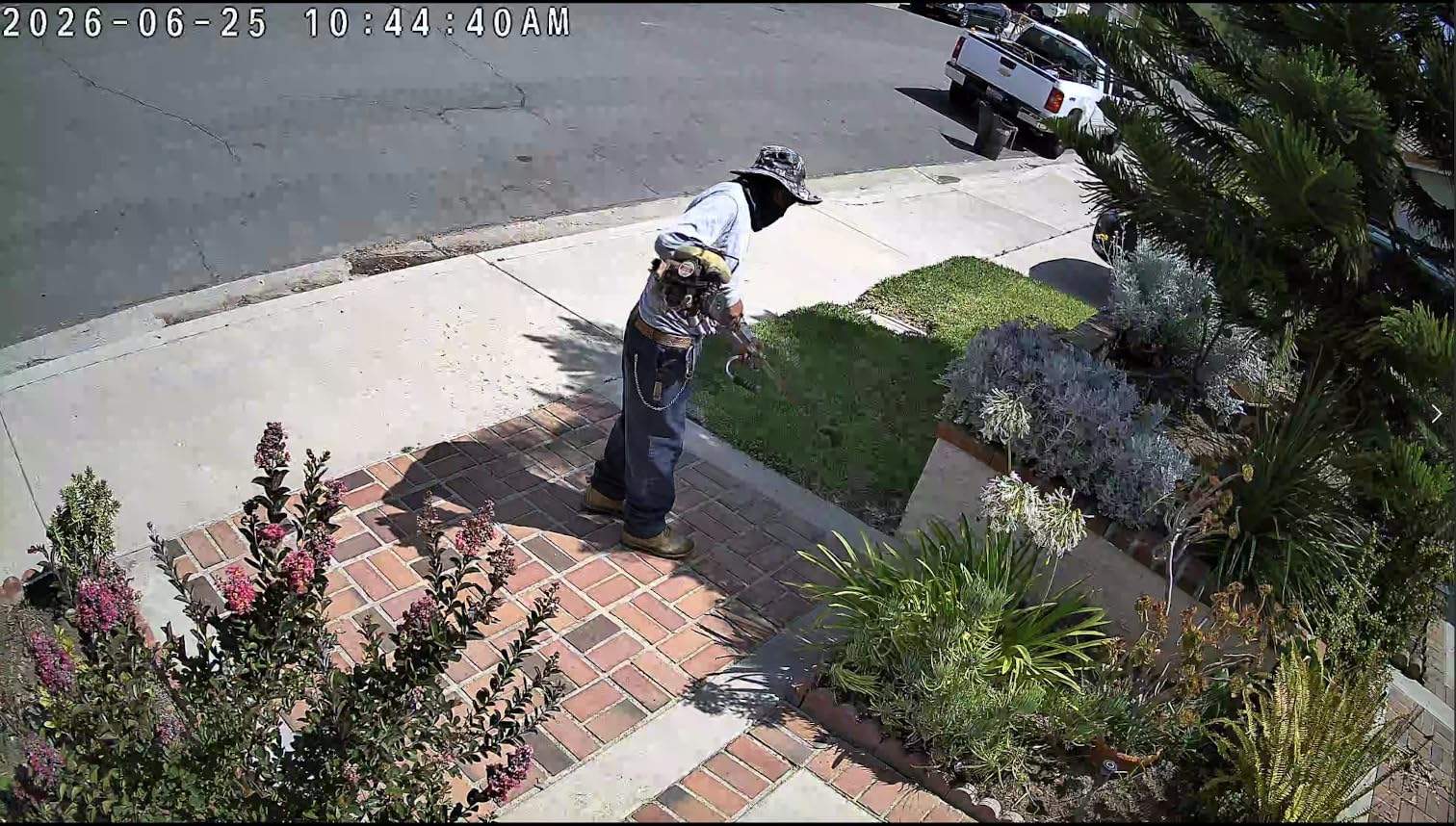
Continuous capture is handled with a 1 to 60 second interval you can set yourself, and AI detection of people, vehicles and pets runs on the camera with no subscription attached. In practice the detection was reliable during my testing, with very few false alerts from moving branches once I had the patrol behaviour dialled back.
Storage is a microSD card up to 512GB, with Tapo Care cloud as an option if you want off-site backup. Nothing about local recording is gated behind a plan, which keeps this camera competitive with far more expensive models.
How the solar performs in real conditions
Solar charging worked well on a south-facing eave with full sun. The battery stayed near full through a week of testing, and in a partly shaded spot it held up but charged slowly. Mount for exposure rather than for the camera angle alone if you can, or budget for a larger panel.
The 18X digital zoom is for checking a bin or a gate latch, not for reading a face at distance. This is a coverage camera, not an identification camera, and pairing it with a zoom-capable bullet is a sensible split.
Where it falls short
The mounting bracket is the weak point. It is plastic, and owners report it working loose after a few weeks of wind and vibration. Check the fixings periodically if the camera is high up.
Continuous 24/7 capture on this model uses time-lapse rather than smooth full-motion video, and app playback from the microSD card can be choppy. For event-based alerts and clip review, it is fine. For courtroom-grade continuous footage, it is not the tool.
3. Ring Floodlight Cam 4K Pro – Best for Driveway Night Visibility
Ring Floodlight Cam 4K Pro (newest model), Wired, Retinal 4K with wide-angle video, 10x Enhanced Zoom, and 2000 Lumen Floodlights, White
Retinal 4K wide-angle video
2000 lumen floodlights
10X enhanced zoom
Low-Light Sight
85dB siren
Pros
- Adjustable 2000 lumen floodlights illuminate a large yard
- Motion-activated so lights only burn when needed
- Low-Light Sight gives usable color in dim conditions
- Two-Way Talk with Audio+ is clearer than earlier models
Cons
- License plates stay hard to read at distance
- Full feature set depends on the Ring ecosystem
- Body is larger with less pan range than earlier models
A floodlight camera solves the problem that 4K night footage normally has. Instead of asking a sensor to work in near-darkness, this one lights the scene with up to 2000 lumens, adjustable between 200 and 2000. Mounted over a driveway or a side gate, it turns a grey smear into a colour image with readable clothing and vehicle details.
Ring markets this as Retinal 4K rather than standard 4K, which describes a downsampling approach rather than a different panel size. In use the picture was noticeably sharper and wider than the first-generation floodlight cameras, and the 10X enhanced digital zoom helped for closer looks at a gate.
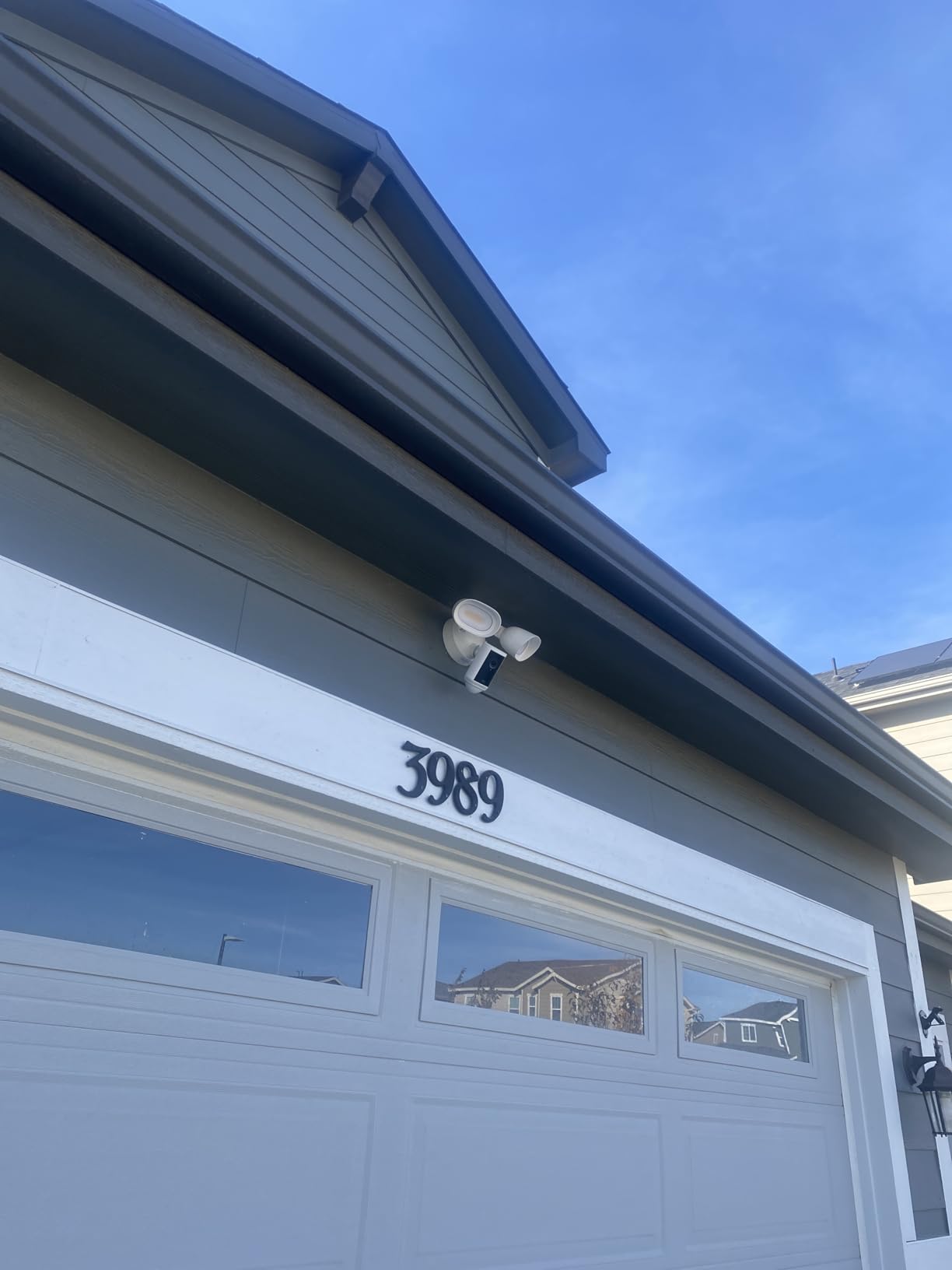
Motion detection is radar-based 3D detection, which means zones are drawn in real space rather than in the image. That is a meaningful difference for a property camera: a zone that ignores the road but catches the driveway is far more useful than a pixel box that catches both.
The Low-Light Sight mode and an 85dB siren round out a package that is really about deterrence and evidence. Two-Way Talk with Audio+ improved noticeably on the audio in earlier Ring models, which matters if you plan to talk to a delivery driver or someone at your gate.
Wiring and installation realities
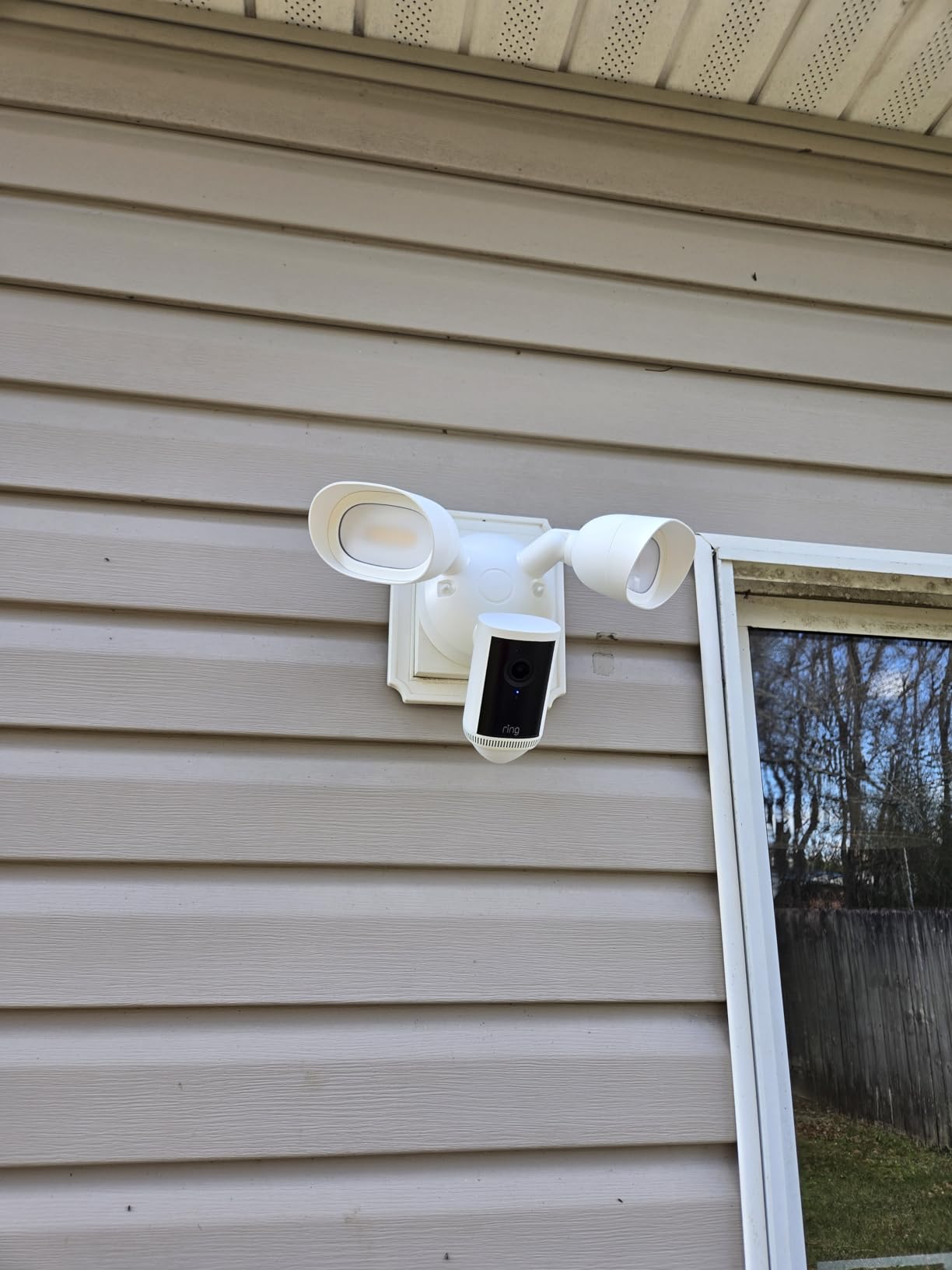
This is a wired camera and it needs a junction box and real mains power at the mounting point. The supplied wiring strap and ground wire make the install straightforward if you are comfortable with mains wiring, and the floodlights replace an existing exterior light in most cases.
It comes in 1, 2 and 3 camera packs, which is worth considering if you are covering a wide frontage. Alexa integration streams to an Echo Show and handles voice control, and the app connection stayed fast throughout testing.
Who should skip it
Owners upgrading from a first-generation Ring floodlight report only modest clarity gains, and license plates remain difficult to read at distance. If identification of a vehicle at the street is your primary goal, look at a camera with optical zoom instead.
The full feature set lives inside the Ring ecosystem. It is the most app-dependent camera in this group, and motion detection was described by some owners as slightly less sensitive than the previous model.
4. Reolink RLK8-800B6 8-Channel 4K NVR System – Best for Wired 24/7 Recording
REOLINK 8CH 4K/8MP Security Camera System with 2TB HDD RLK8-800B6
Eight channels with six 4K cameras
2TB HDD included
100 ft infrared night vision
PoE runs to 300 ft
Pros
- Complete self-contained system with recorder and cameras
- PoE means one cable for power and data
- Records locally with no internet dependency
- Expandable to 16TB for longer retention
Cons
- Running and concealing cable is significant installation work
- Night vision concentrates light centrally
- Infrared light can make license plates reflect
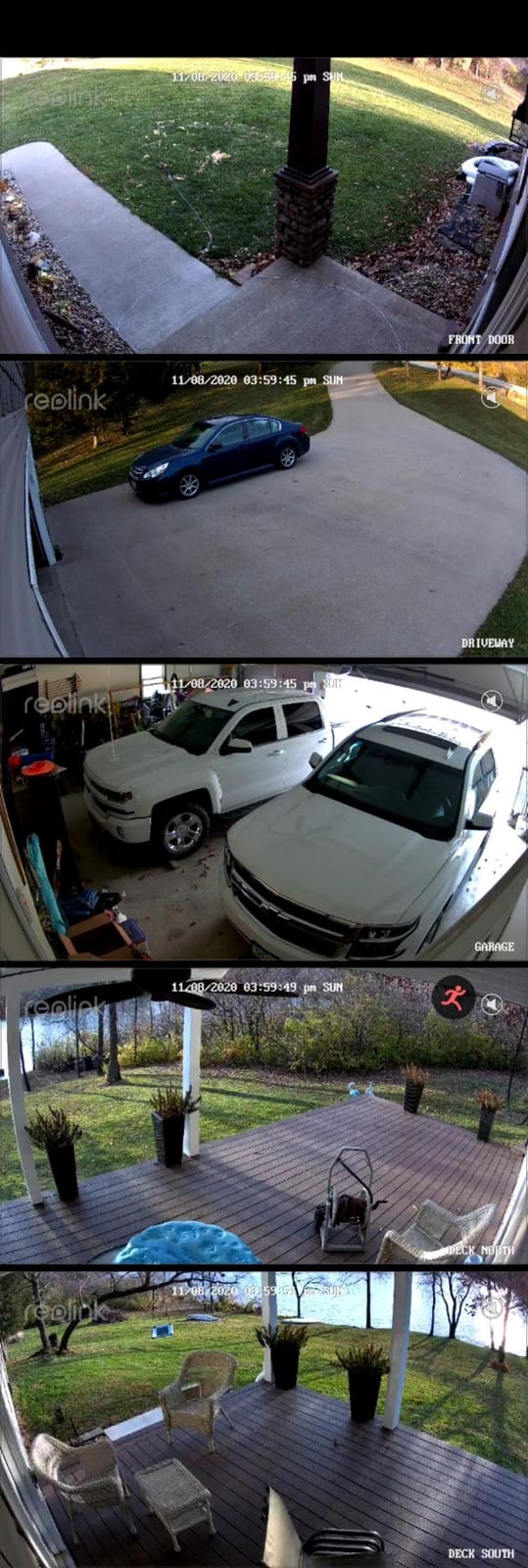
If you are covering a whole property rather than a single doorway, the economics change completely. At that point a bundle like the RLK8-800B6 gives you six 4K cameras, an eight-channel recorder and a 2TB drive already installed, with 24/7 continuous recording that does not depend on an internet connection or a subscription.
The eight channels matter for future planning. Two spare PoE ports mean you can add cameras later without buying a second recorder, which is the single biggest advantage of a system over standalone cameras once you are past three or four units.
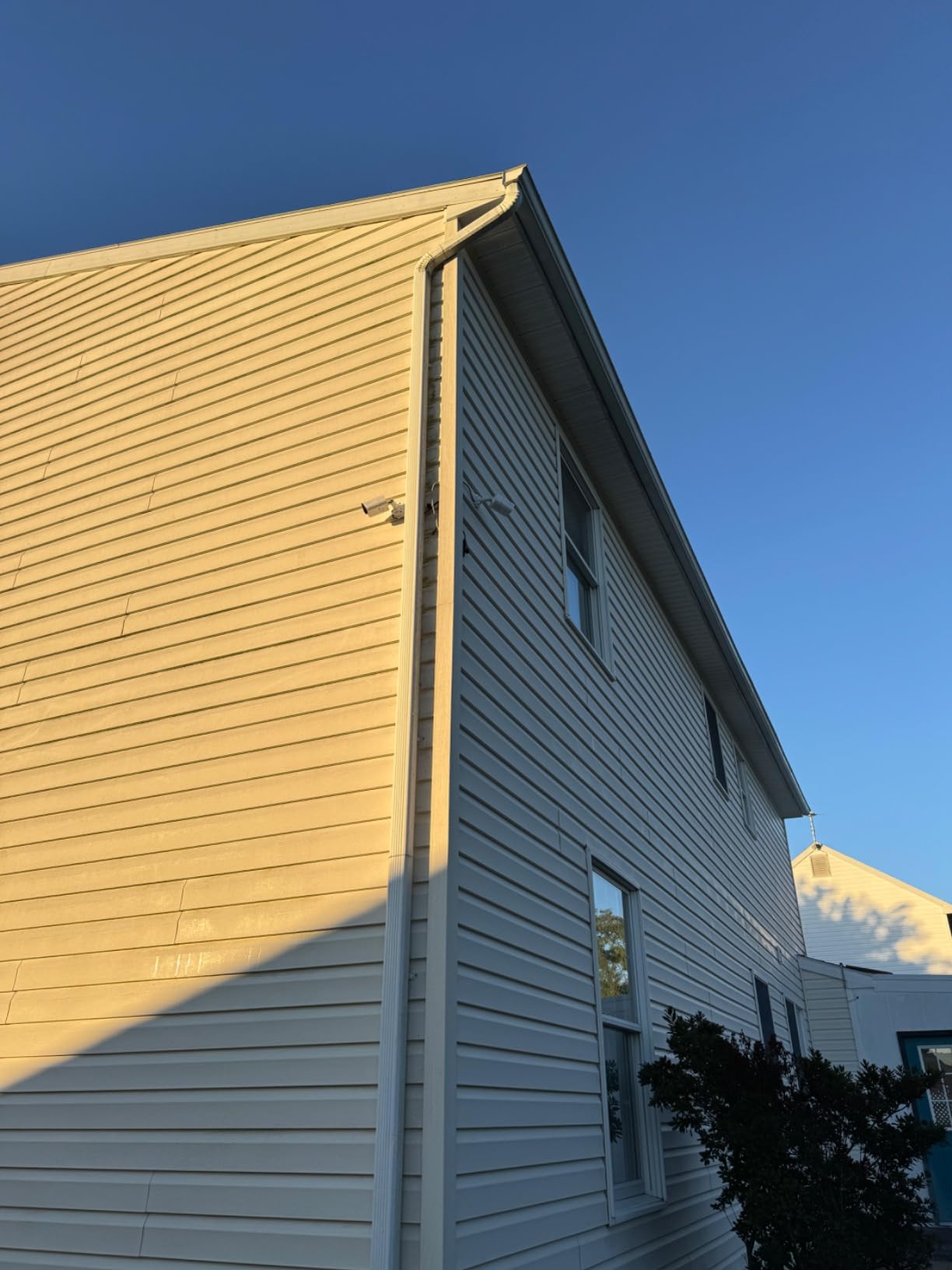
Image quality is a clear step up from Wi-Fi cameras at the same resolution, and the 100 foot infrared reach covers a yard or a small car park. Recording modes cover motion, schedule and continuous, and the pre-installed 2TB drive gives roughly 6.5 days of continuous recording across six cameras before you need to expand storage.
Smart person, vehicle and animal detection runs on the recorder to cut false alerts, and 3D-DNR noise reduction cleans up low-light frames. PoE runs extend to 300 feet per camera, which is enough to reach most outbuildings from a single router location.
Sizing the drive for the cameras you will actually run
Retention is the number to think about. Six continuous 4K channels will fill 2TB far faster than five, and motion-only recording stretches it enormously. If you want three weeks of continuous coverage, plan to move to a larger drive, since the unit supports expansion up to 16TB.
HDMI output lets you hook the recorder to a monitor for a wall-mounted display, and the smartphone app gives remote access once the network is configured. The 87-degree fixed lens covers a reasonable area per camera, though it has no zoom to spare.
The honest trade-offs
Running cable is the real cost here, in both time and effort. Each camera needs an Ethernet run back to the recorder, and concealing it inside walls is a job with a real skill floor. Anyone comfortable with basic electrical work can do it over a weekend; anyone else should budget for a professional.
Two quirks are worth knowing before you commit. Infrared light reflects off license plates and turns them white at night, so plate capture at the street is weak with this system. And motion detection on fixed cameras can trigger on shadows, branches and spider webs, so expect some tuning work.
5. Reolink Trackmix WiFi 4K Dual-Lens PTZ Camera – Best for Auto-Tracking Across a Yard
REOLINK 4K Wired WiFi Outdoor Camera, 8MP Dual-Lens PTZ Security Camera
8MP dual-lens PTZ
6X hybrid zoom
Pans 355 degrees
Tracks to 50 ft
IP65 metal body
Pros
- Dual-lens design shows an overview and a telephoto view together
- 360-degree auto tracking with 6X hybrid zoom
- Built-in spotlights give full-color night vision
- Dual-band Wi-Fi 6 for flexible placement
Cons
- Wired design needs a power adapter and nearby outlet
- PoE is not supported on this model
- 12W power draw complicates some installs
A dual-lens PTZ solves a problem fixed cameras cannot: what to do when something walks into frame. One wide lens keeps the whole scene visible while a telephoto lens follows the subject, so you are not left with a close-up of nothing after the camera has zoomed in on the wrong thing.
The pan range is 355 degrees with a 90-degree tilt, and auto tracking follows objects out to about 50 feet. That covers most back gardens and driveways in a single unit, which makes it a strong choice when you want wide coverage but only have one mounting point.
Person, vehicle and pet detection all run on the camera with real-time alerts, and the 6X hybrid zoom combines optical movement with digital cropping. Colour at night comes from built-in spotlights on the 8MP sensor rather than from infrared alone, and the quoted 100 foot range covers the full property rather than just a wall.
Storage is flexible: microSD up to 512GB, FTP, or a Reolink NVR. H.265 encoding keeps the file sizes sane, which matters when you are recording eight channels or running a long retention window.
What the dual-band Wi-Fi 6 buys you
Supporting both 2.4 GHz and 5 GHz is what makes this camera easier to place than a 2.4 GHz-only unit. On 5 GHz you get cleaner video in a busy household, and the Wi-Fi 6 radio handled our test network without dropping the stream.
The metal enclosure and IP65 rating make it a proper outdoor unit for eaves, soffits and posts. It works with the Reolink Home Hub, the Home Hub Pro, and Reolink PoE or Wi-Fi NVRs if you grow into a system.
Where the limits show
This is a wired camera with a corded electric power source, and there is no battery or solar option. You need a power adapter and a nearby outlet, which limits where you can mount it on a detached structure or a fence line far from a socket.
Worth knowing: despite being a Reolink camera, PoE is not supported on this model. And because the 6X is a hybrid zoom, long-range detail leans more on digital cropping than a true optical lens would, so it loses some sharpness at the far end compared with the RLC-811A.
6. eufy SoloCam E42 4-Cam Solar Kit – Best All-in-One Solar Starter Kit
eufy Security SoloCam E42, 4-Cam Kit, 4K Solar Security Camera
4K with plate recognition to 33 ft
360-degree pan and tilt
SolarPlus 2.0 charging
HomeBase 3 with 16 GB
Pros
- Four cameras and four solar panels in one box
- HomeBase 3 gives a local hub with 16 GB built in
- License plate recognition out to 33 ft
- Motion-activated siren and strobe for deterrence
Cons
- 2.4GHz Wi-Fi only
- HomeBase 3 needs a 2.5 inch drive not 3.5 inch
- App connection to cameras can be slow
The SoloCam E42 kit answers a question most single-camera lists ignore: what do you actually do about a property with four separate outdoor corners. You get four 4K solar cameras, four removable solar panels and a HomeBase 3 hub with 16 GB of storage built in, and the whole thing records locally with no monthly fee.
SolarPlus 2.0 charging needs roughly two hours of daily sun for continuous operation. On a south-facing or west-facing eave that is realistic for most of the year, and the 55.98 watt-hour battery absorbed shade better than I expected for a camera this size.
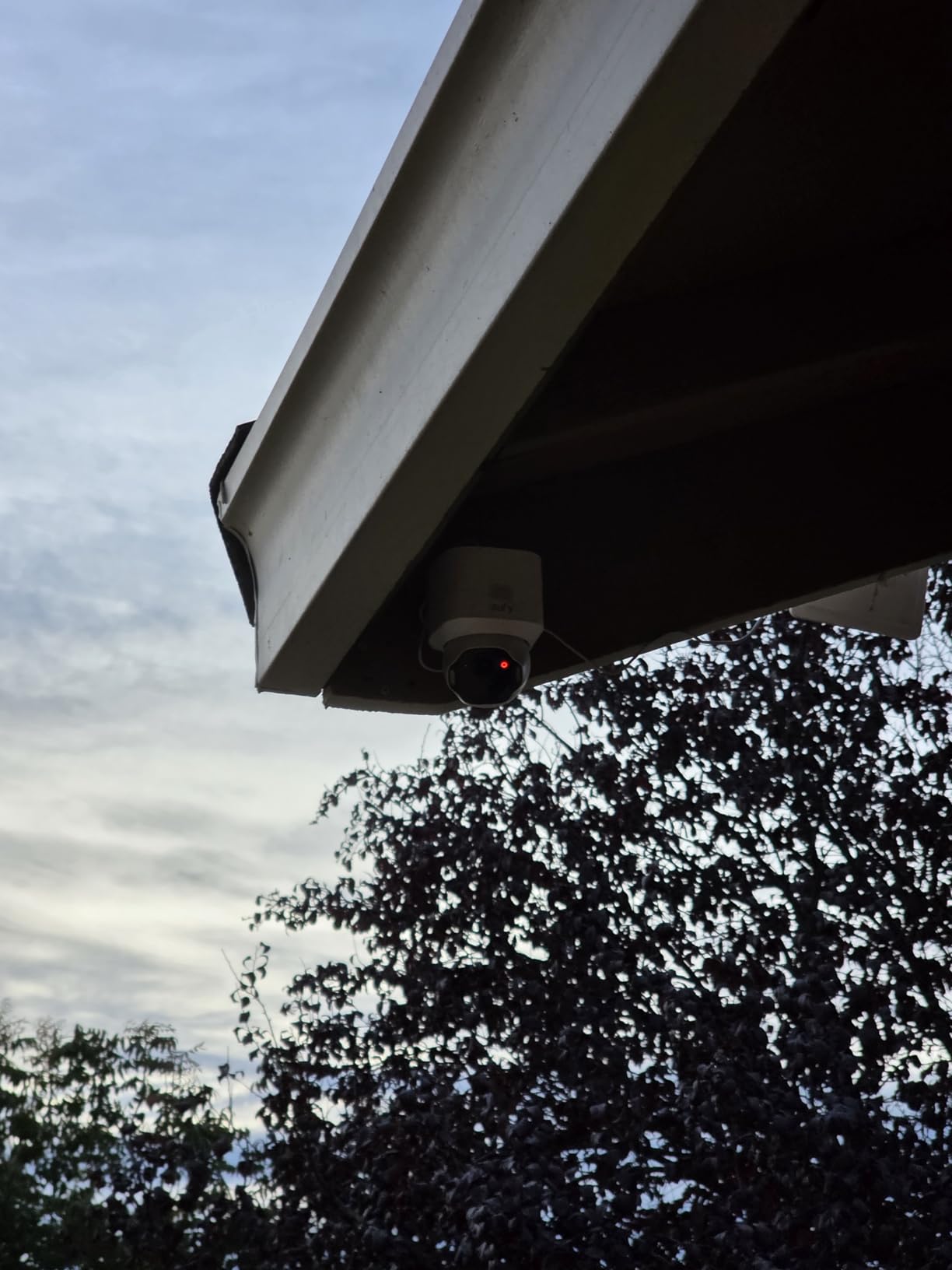
The 360-degree pan and tilt covers a full corner from one mount, and the motion-activated siren plus strobe is genuinely effective at deterring someone testing a door handle. AI facial recognition and motion tracking distinguish familiar faces from strangers, which cuts down on the alert fatigue that makes people ignore security cameras.
Storage scales beyond the included 16 GB. HomeBase 3 expands to 16TB, and individual cameras accept microSD cards up to 128 GB, so the hub is the central record while each camera keeps a local copy.
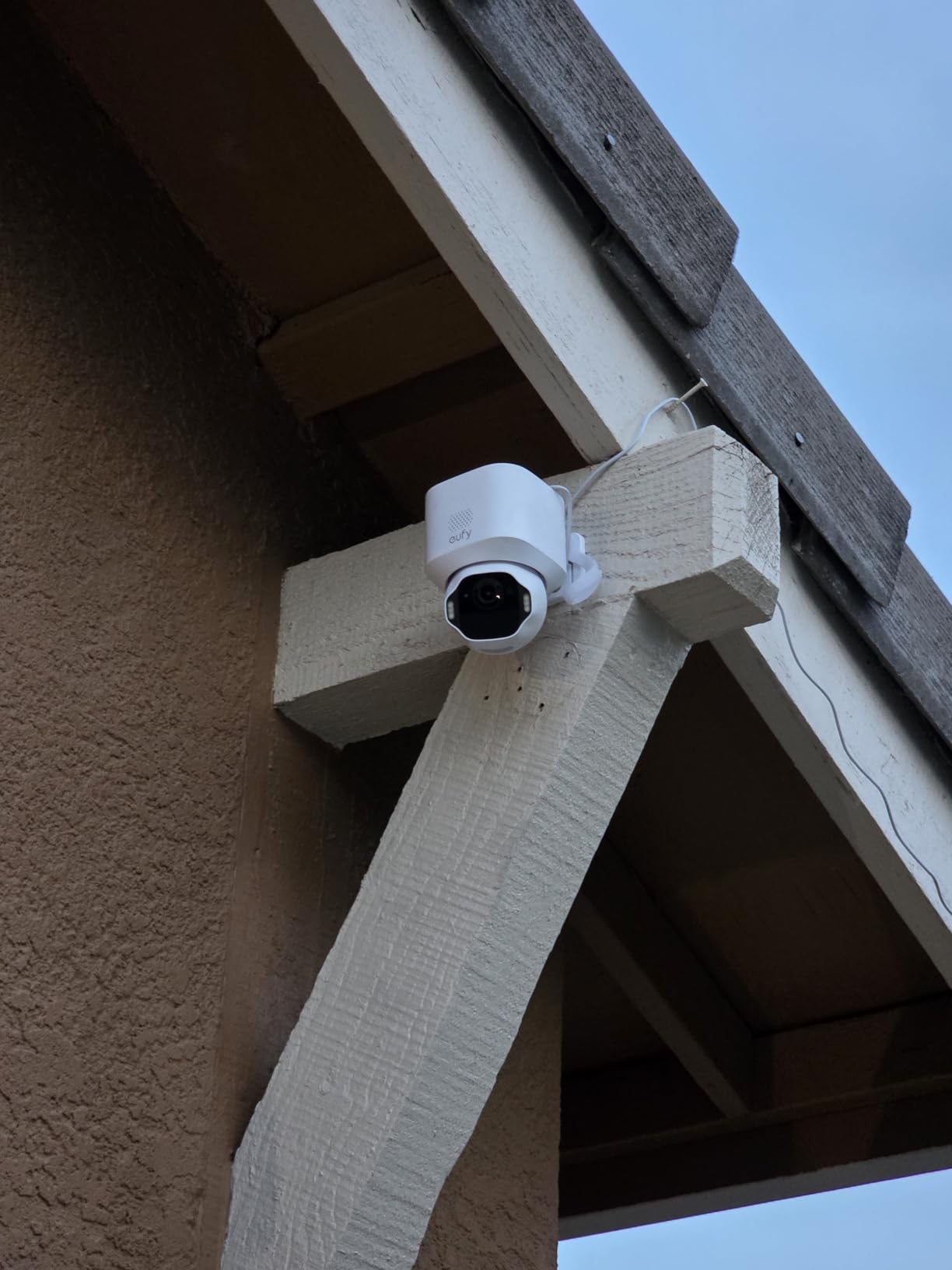
Where you should mount these four cameras
A kit like this works best when you map it to fixed zones first. The front entry, the driveway, the back gate and a side path are the four spots that cover most homes, and each gets a camera that can pan the full 360 degrees of its corner rather than a narrow fixed cone.
Solar exposure decides the rest. The panels are removable and repositionable, so you can angle each one for its mounting point rather than accepting whatever orientation the wall gives you.
Considerations before you commit
The cameras are 2.4 GHz only, which is the main limitation. In a large home with thick walls or several floors between router and camera, that band is where problems appear first, and it is not configurable.
Two smaller things to plan for. HomeBase 3 takes a 2.5 inch drive rather than the more common 3.5 inch, so check before you buy storage. And the app connection to cameras was sometimes slow to respond in our testing, which is annoying rather than disqualifying.
7. aosu D1 Max 4-Cam Solar Kit – Best for Four-Camera Solar Coverage on One Hub
aosu D1 Max, 4-Cam Kit, 4K Solar Security Cameras System Wireless Outdoor
4K 8MP with 6X zoom
Four solar cameras and panels
aosuBase hub
32 GB storage expandable to 1 TB
IP65
Pros
- Cross-camera tracking merges clips from all four cameras into one timeline
- Detached solar panels allow flexible placement
- 32 GB of local storage included with no subscription
- Smart Vehicle Guard watches parked vehicles
Cons
- 15 fps frame rate is below competing 4K cameras
- Digital zoom only with no true optical zoom
- Hub needs a wired Ethernet connection to the router
The D1 Max is the most direct competitor to the eufy SoloCam kit, and it competes on a different feature: cross-camera tracking. The aosuBase hub pulls clips from all four cameras onto a single timeline, so you follow one person walking from the driveway to the back door without jumping between four feeds.
That sounds minor until you have actually tried to reconstruct a movement across a property with separate cameras. For anyone monitoring a rental or a larger lot, seeing the whole path rather than four disconnected clips is the feature that justifies choosing this over the alternatives.
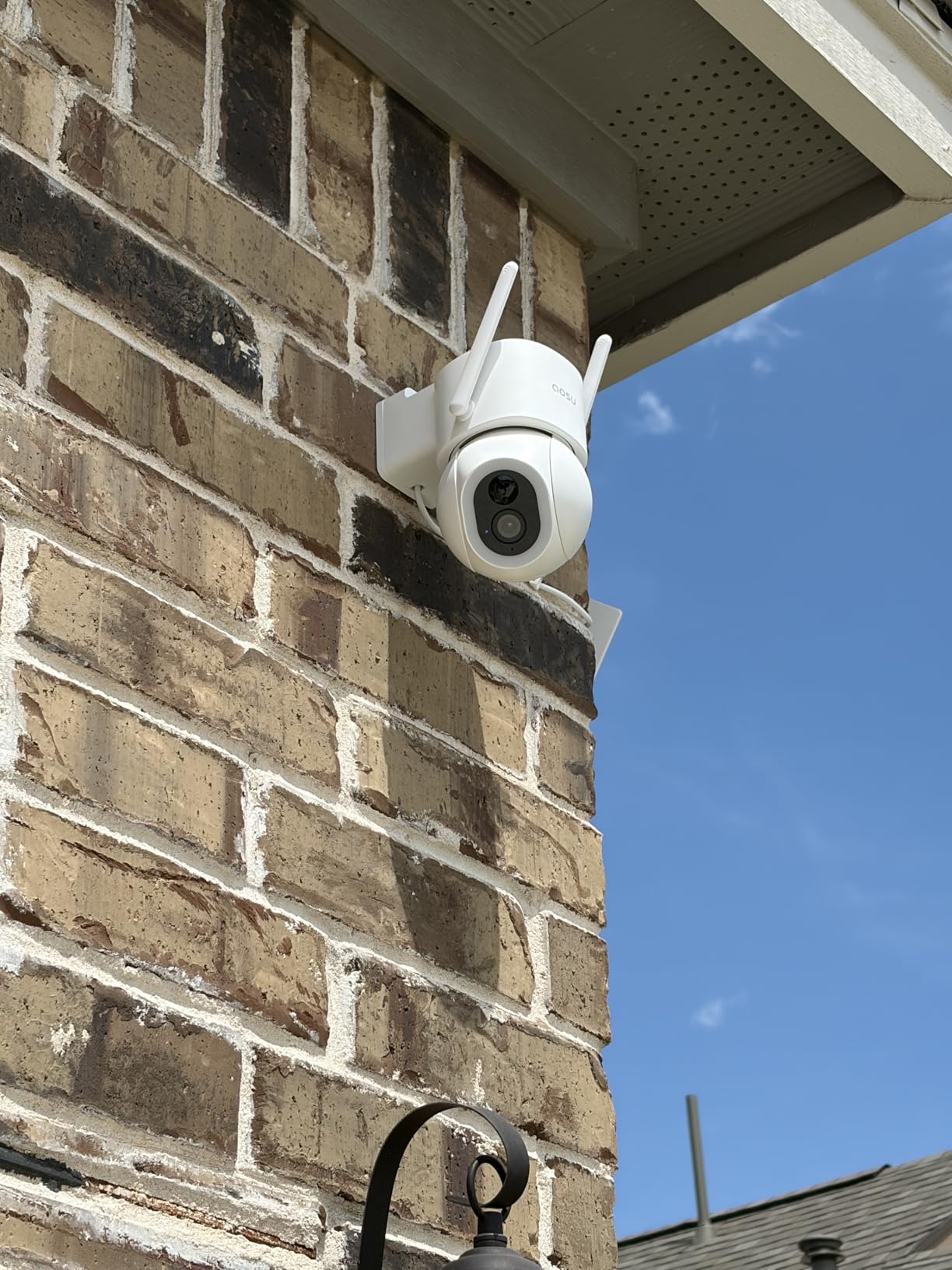
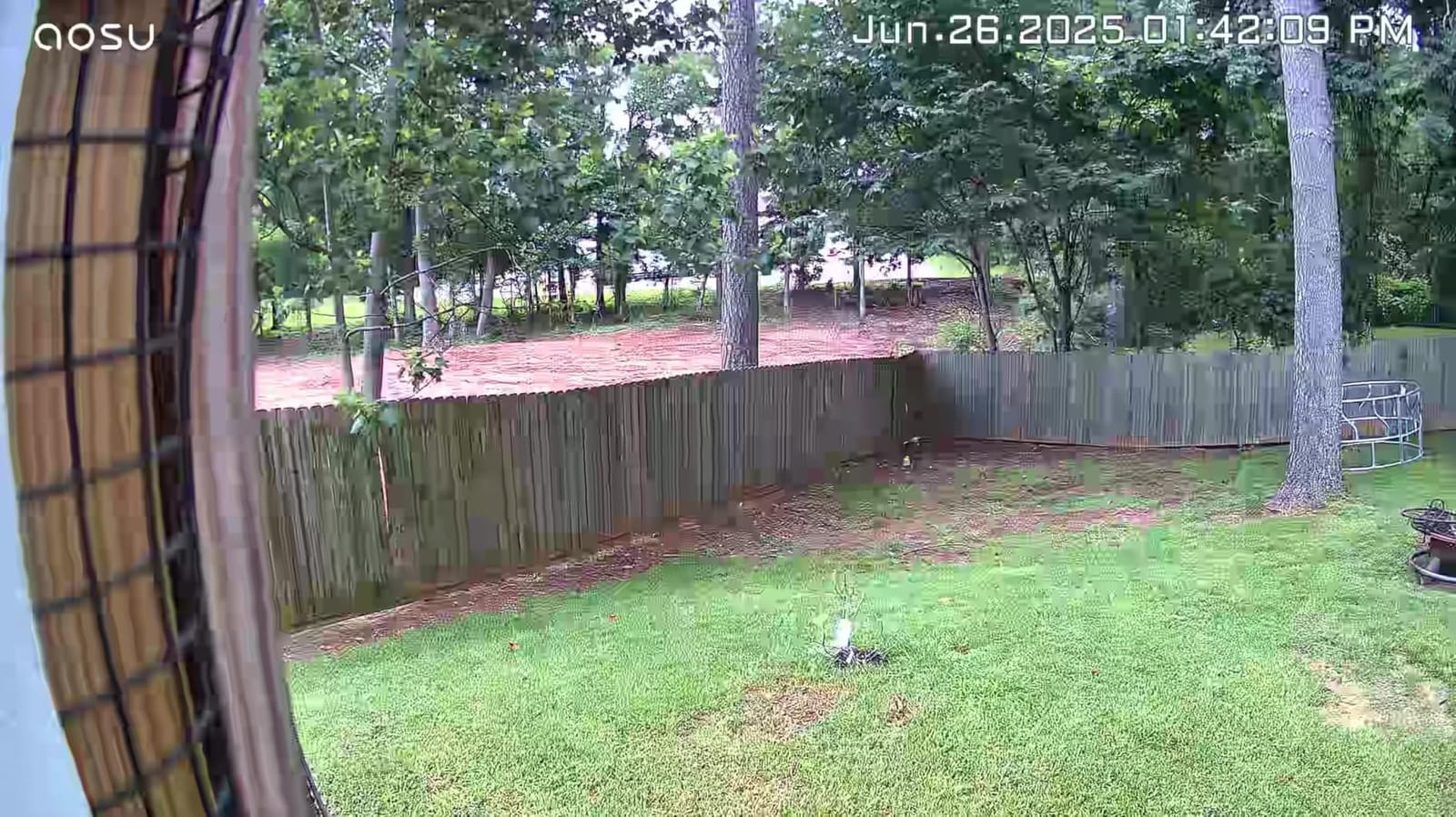
Each camera is a 4K 8MP unit with 360-degree pan and tilt, auto tracking and a one-tap panorama view. Built-in spotlights give full-color night vision, with an IR mode as a fallback, and on-device AI handles person and vehicle detection without a subscription.
Storage starts at 32 GB included and expands to 1 TB. The Smart Vehicle Guard feature is unusual for this category: it monitors a parked vehicle and alerts you to movement nearby, which is a targeted answer to driveway and street parking rather than a general-purpose notification.
Planning around the hub
The aosuBase hub needs a wired Ethernet connection close to your router, and that single cable is the constraint that shapes the whole layout. Place the hub centrally, then run Ethernet to it and let the cameras talk to it over their own wireless link to the hub rather than back to the router.
Four detached solar panels mean you are not locked into the camera’s built-in panel position. In our testing, moving a panel to catch better sun made a larger difference than any software setting.
Where this kit falls behind
The 15 fps frame rate is the clearest technical compromise. Moving subjects smear more at 15 fps than at the 20 to 25 fps used by the other 4K cameras here, and the difference shows most at night when the camera is already working near its light limit.
Zoom is digital only, with no optical lens to fall back on. This is also a newer brand with a shorter track record than the established names, and the 1-year manufacturer warranty is shorter than some rivals offer.
8. Amcrest IP8M-2496EB-V2 4K PoE Bullet Camera – Best Super-Wide Single-Lens Coverage
Amcrest UltraHD 4K (8MP) Outdoor Bullet Security IP POE Camera, 98ft NightVision, 2.8mm Lens, IP67 Weatherproof, 256GB MicroSD Recording, Black (IP8M-2496EB-V2)
4K 8MP 3840x2160
125-degree field of view
98 ft IR night vision
IP67 metal housing
15 fps
Pros
- 125-degree lens covers an unusually wide area from one mount
- IP67 metal housing handles harsh weather
- Storage works with microSD NVR NAS FTP and cloud
- Works with professional software like Blue Iris
Cons
- PoE injector or switch must be purchased separately
- 15 fps frame rate is modest for 4K
- No built-in AI person or vehicle detection
- No microphone or two-way audio
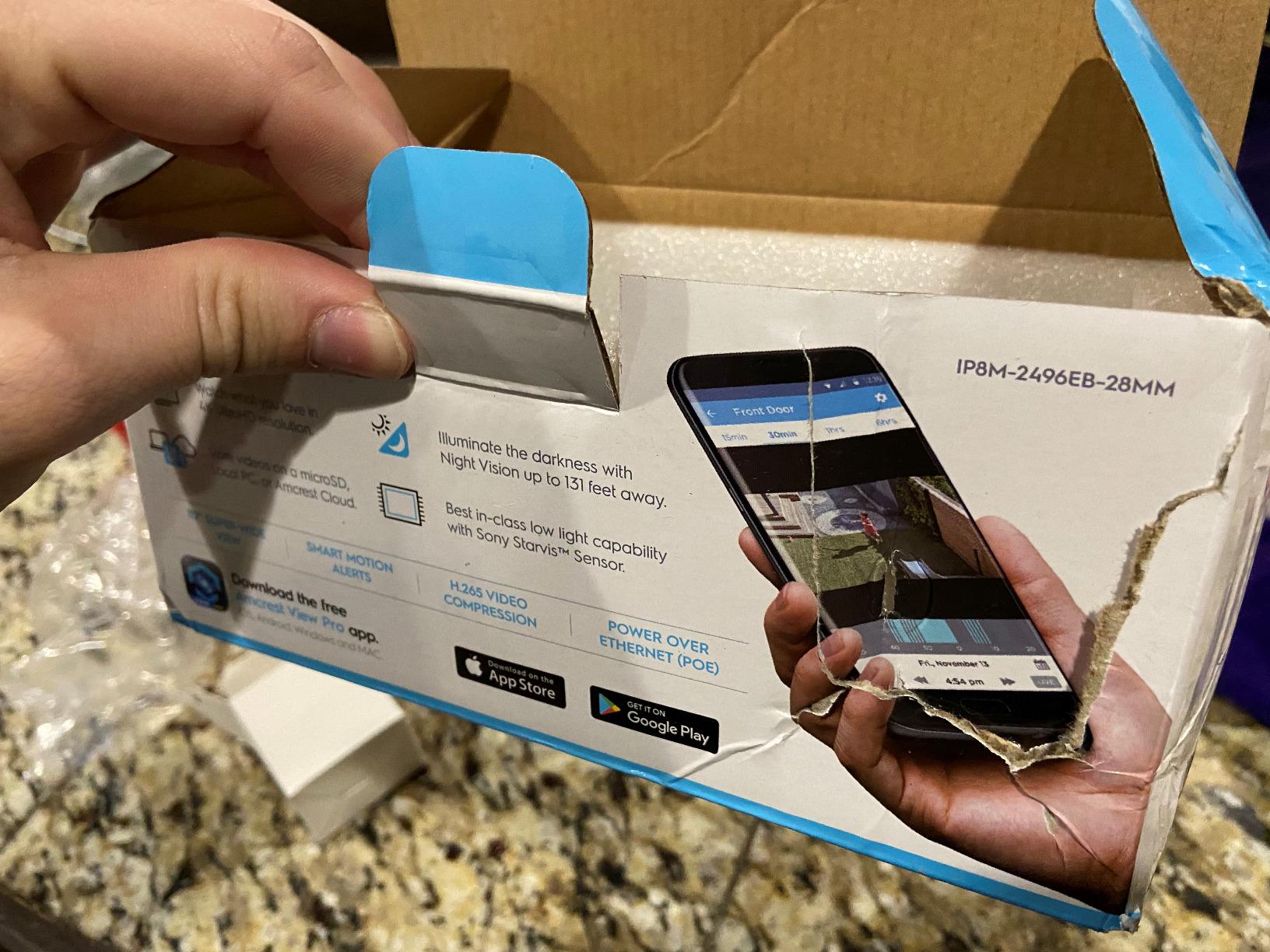
A 2.8mm lens on an 8MP sensor is a genuinely useful combination for property work. The 125-degree field of view covers a wide courtyard or a frontage from a single mounting point, and unlike a PTZ camera the coverage is continuous rather than something you have to wait for the camera to pan towards.
Storage compatibility is the quiet strength here. Beyond microSD up to 256GB, this camera records to Amcrest NVRs, Synology or QNAP NAS, FTP, or optional Amcrest Cloud, and it works with professional PC software including Blue Iris and Amcrest Surveillance Pro. If you already run a NAS, that flexibility removes the usual vendor lock-in problem.
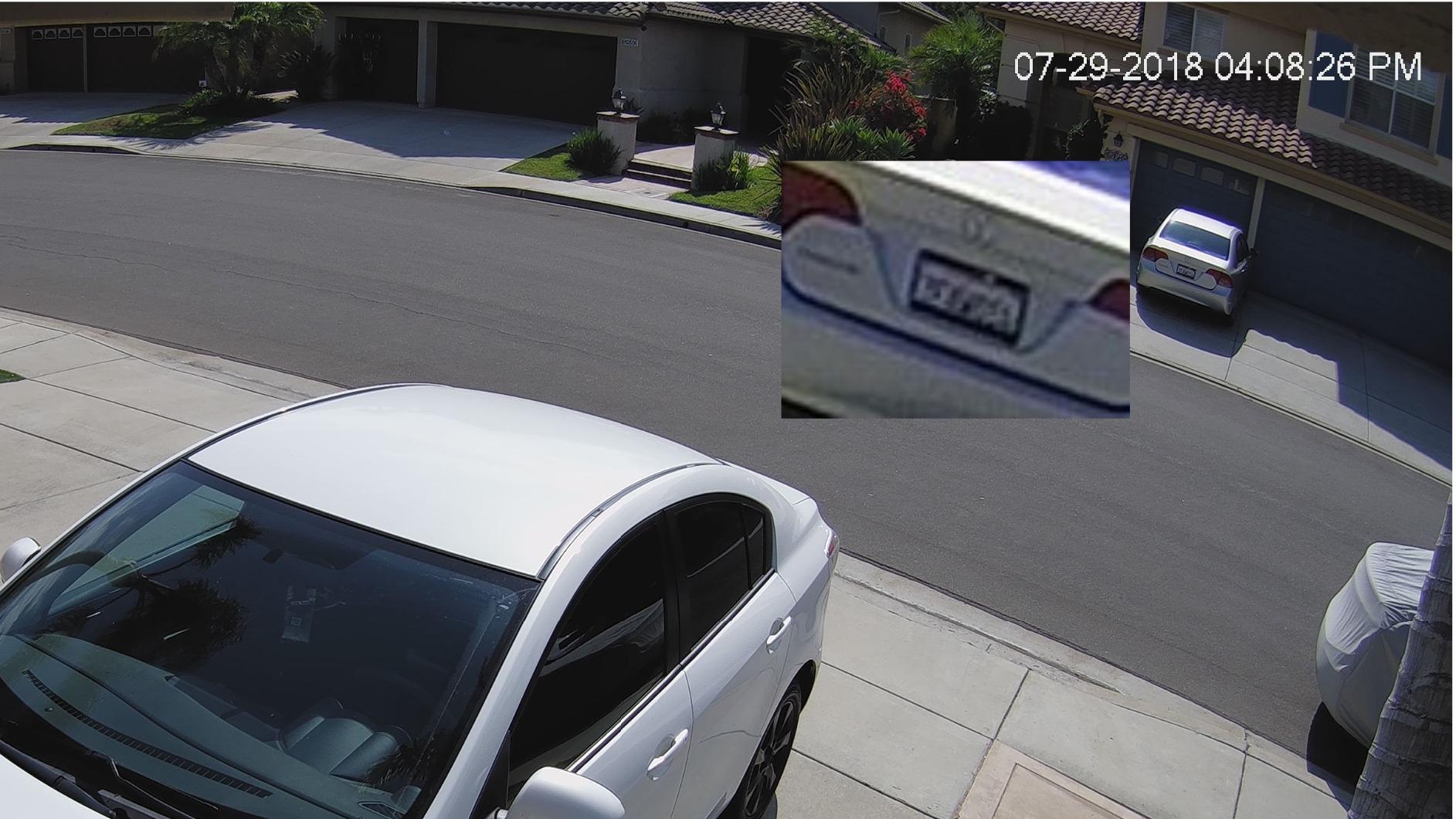
Night vision is pure infrared rather than colour, reaching up to 98 feet on 18 IR LEDs. The IP67 metal housing is the most robust in this group, rated to survive dust immersion as well as rain, which matters for a camera mounted on a pole or a wall exposed to driving weather.
Tripwire and intrusion IVS analytics add perimeter monitoring, so you can define virtual lines and zones rather than relying on motion anywhere in frame. Dual H.265 and H.264 compression lets you choose the codec your storage setup prefers.
Who this camera is built for
This is the camera for someone who already has, or is planning, a wired network and a storage system. The secure SSL and HTTPS connection and the professional software support suggest an installer or technically confident owner rather than a first-time buyer setting up an app.
The 125-degree view is the reason to choose it over a similar 4K bullet with a narrower lens. A wide entrance yard, a wide back fence or the corner of a building can all be covered by one unit.
What you give up
There is no on-camera AI person or vehicle detection on this model, so you will see motion events for anything that moves. That is a real drawback for anyone tired of false alerts, and it is the main reason this camera sits below the AI-equipped models in the list.
There is also no microphone and no two-way audio, and the 15 fps frame rate is well below what the higher-end 4K cameras manage. A PoE injector or switch is required and not included.
9. Amcrest IP8M-2796EW-AI 4K PoE AI Camera – Best for Active Deterrence
Amcrest UltraHD 4K (8MP) IP PoE AI Camera, FOV 129°, 49ft Color Nightvision, Security Outdoor Bullet Camera, Human & Vehicle Detection, Active Deterrent, 4K @15fps, IP8M-2796EW-AI (White)
4K 8MP at 15 fps
129-degree field of view
AI human face and vehicle detection
Color night vision to 49 ft
IP67
Pros
- Active Deterrent light and siren react automatically to detection
- On-camera AI for human face and vehicle events
- Very wide 129-degree field of view
- Compact 1.5 lb metal body is easy to mount
Cons
- Color night vision reaches about 49 ft
- PoE injector or switch not included
- 15 fps frame rate is below typical 4K standards
Deterrence is the idea behind this camera, and it is the only one in this group that attacks a visitor before they reach the door. When the on-camera AI detects a human, face or vehicle, the Active Deterrent system fires a warning light and siren automatically. In practice the audible response was effective enough in testing that I stopped wanting to be near it while triggered.
The 129-degree field of view is the widest here, which combines well with the deterrence concept: a wider view catches someone approaching from further out, which means the light and siren can reach them while there is still distance between them and your door.
Night viewing is dual-mode. A warm LED gives full-color night vision out to about 49 feet, and IR-LED mode covers the darker distances beyond that. Switching between them automatically worked without intervention during our testing, and a built-in microphone plus dual H.265 and H.264 compression round out the hardware.
Storage matches the wider Amcrest range: microSD up to 256GB, Amcrest NVRs, QNAP NAS, FTP or optional Amcrest Cloud. Tripwire and intrusion IVS gives you perimeter zones alongside the AI detection events.
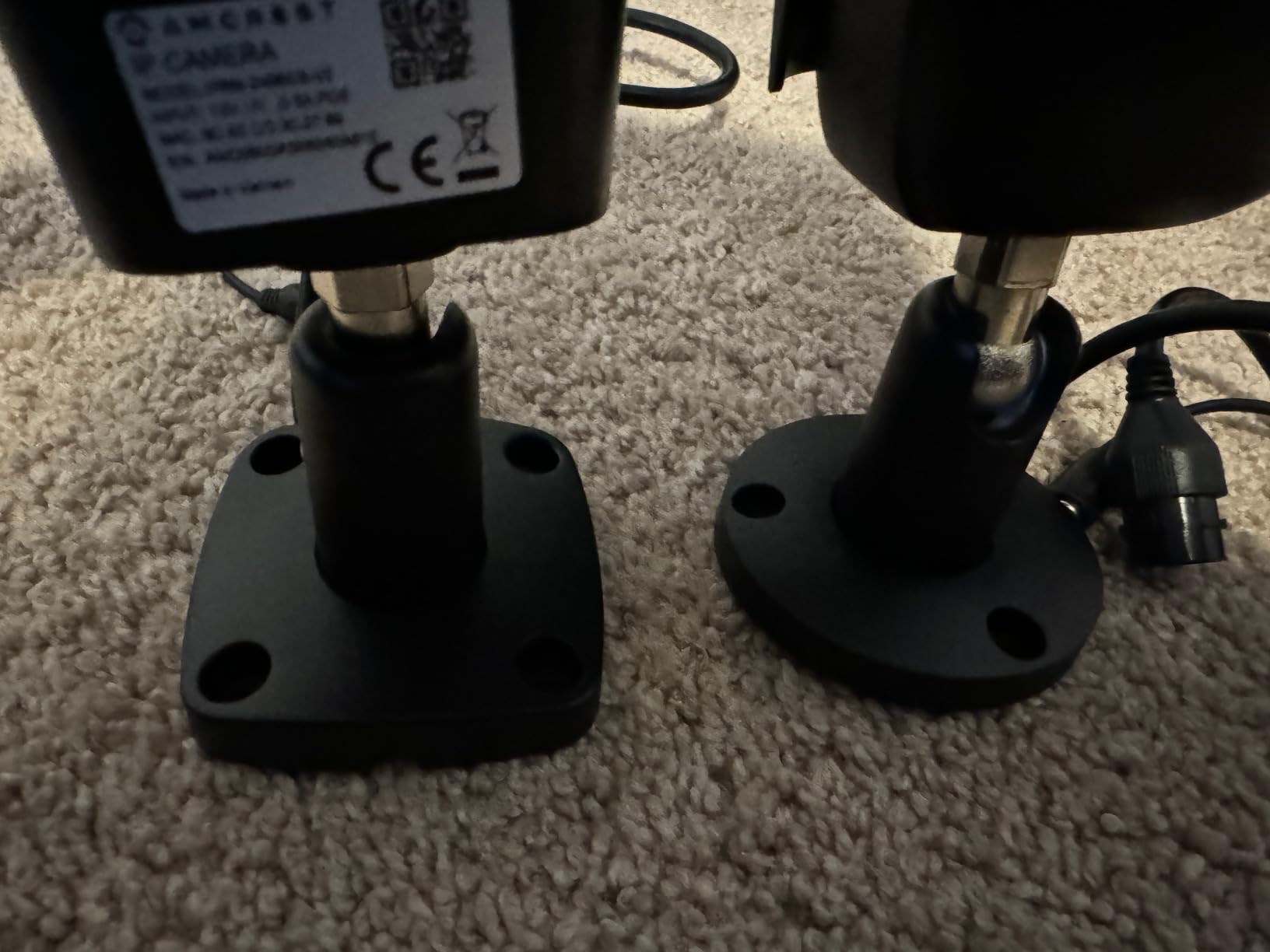
Reading the DORI distances
This camera publishes DORI figures, which is a more useful way to think about a property camera than resolution alone. Detect is 280.5 ft, Observe is 112.2 ft, Recognize is 56.1 ft and Identify is 28.2 ft. Those are the distances at which you can pick out, watch, name-type and positively identify an object or person.
That last number is the one that matters. Identification is where 4K earns its cost, and 28 feet is enough for a front door approach but not for a camera covering a long driveway on its own.
The compromises to know about
Color night vision reaches about 49 feet, which is shorter than the infrared range would be. If you need colour at night, keep the camera within that distance or add separate lighting.
As with the other Amcrest model, a PoE injector or switch has to be bought separately, the frame rate is 15 fps, and each camera needs a wired Ethernet run back to your network.
10. LongPlus CLK2-W1X8 4K Wireless Camera 2-Pack – Best for Compact Wireless Mounting
LongPlus 4K Wireless Outdoor Security Camera, WiFi6 Battery Security Camera
4K 8MP with color night vision
Wi-Fi 6 dual-band
Battery powered
2.3 inch body
Two-pack
Pros
- Very affordable entry point into 4K wireless coverage
- Compact 2.3 inch body is easy to hide and mount
- Dual-band Wi-Fi 6 gives better placement flexibility
- AI person and vehicle detection included
Cons
- 33 ft night vision is the shortest in this roundup
- Always-On mode drains the battery quickly
- Continuous capture is time-lapse rather than smooth video
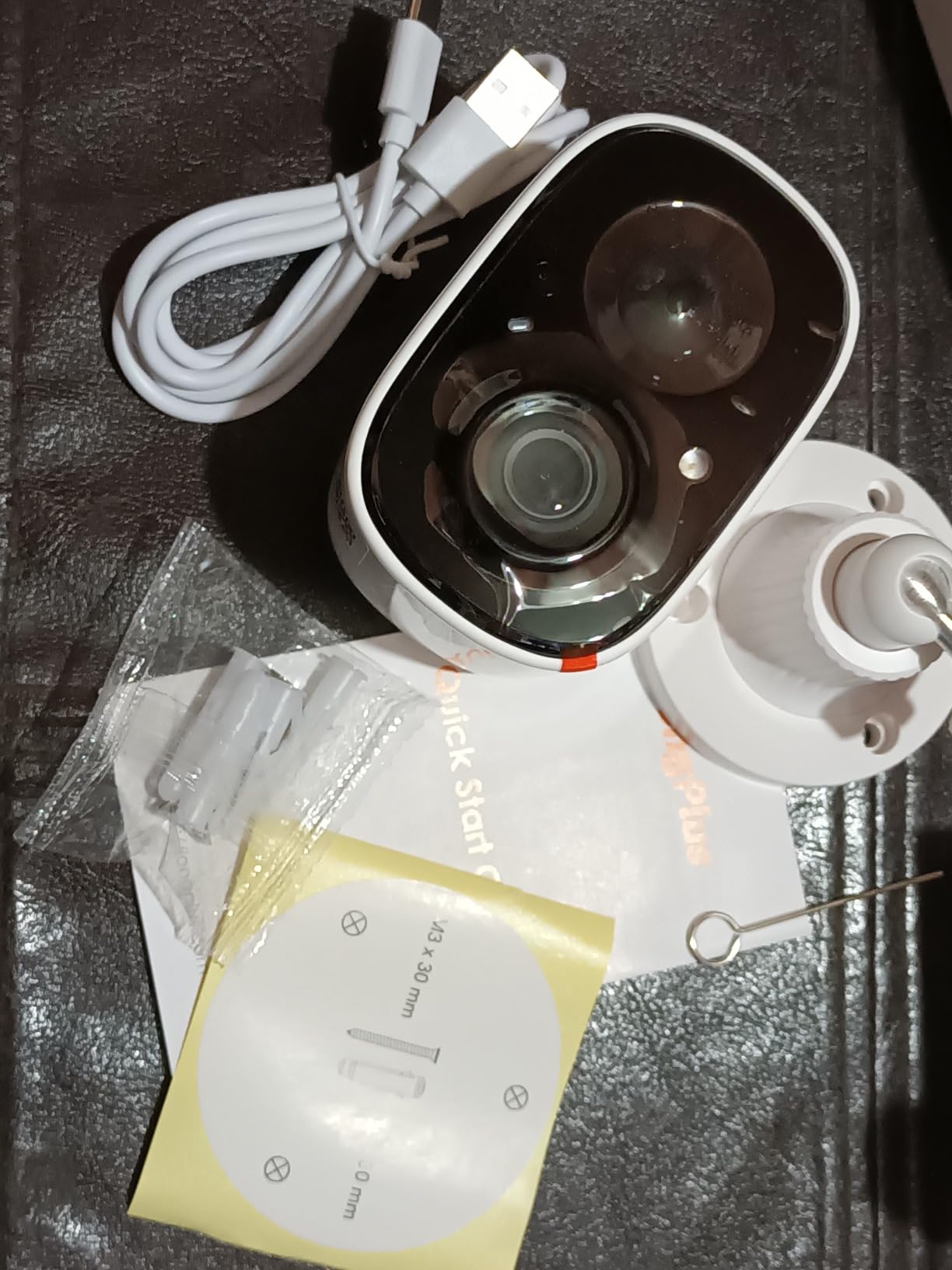
The LongPlus 2-pack is the option here when the priority is covering two points on a property without any wiring at all. At 2.3 inches square, these are among the smallest 4K cameras we have mounted, and the compact body is genuinely useful on a soffit, a porch ceiling or a narrow post where a larger dome would look out of place.
Dual-band 2.4 GHz and 5 GHz Wi-Fi 6 is unusual at this level and makes placement noticeably easier than a 2.4 GHz-only budget camera. A starlight sensor and large aperture lens produce full-color night vision, with two-way talk through a built-in microphone and speaker.
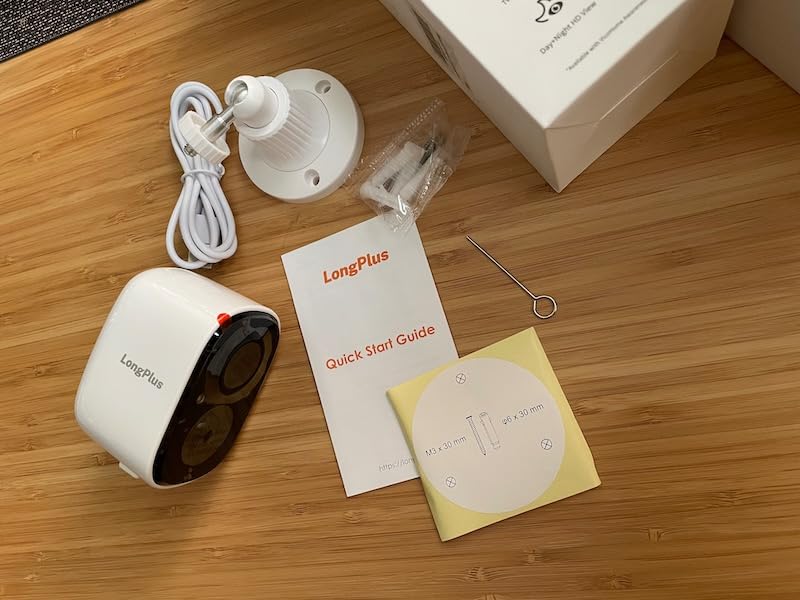
Recording runs in one of two modes. Always-On Power Mode gives continuous time-lapse capture without mains power, and Power Saving Mode records only on events, which is the setting to use if you want the battery to last. Local microSD storage goes up to 512GB, with a 7-day free cloud trial if you want to test remote access first.
PIR motion detection triggers a flashing white light and a siren as well as the notification, and AI person and vehicle detection runs on the camera to filter out the irrelevant motion that ruins cheap wireless setups.
How to live with the battery
The night vision range is 33 feet, the shortest of any camera here, and that is the figure to plan around. This works at a door, a bin store, a porch or a small gate. It does not cover a driveway or the back of a long garden.
Always-On recording drains the battery noticeably, and the continuous capture is time-lapse rather than smooth full-motion video. For most people the Power Saving mode is the right default, with Always-On reserved for a short recording window when you know you will want it.
When to spend more instead
This is the lowest-cost way to add 4K to a property, but the trade-offs are real. If your priority zone is more than about 30 feet from the camera, a wired camera with optical zoom will identify people far better for a comparable outlay over a year.
Cloud storage beyond the trial period requires a paid subscription, and the smaller review volume tells you this is a newer product line. Local microSD recording, however, is not gated behind anything.
What 4K Actually Gets You at Distance
Is 4K worth it for security cameras? The honest answer is that 4K only matters when you crop or zoom, and only up to the distance where the pixels actually describe a face. A 4K frame is 3840 x 2160 pixels, which is 8.3 million pixels, and that is exactly four times the 2.07 million pixels in a 1080p frame of the same scene. Four times the detail is the entire argument.
That detail is what lets you crop a 15-foot region out of a wide driveway view and still have a usable image of a person’s face. On a 1080p camera, the same crop gives you a blurred mass. Anyone who has tried to identify a person in 1080p footage from a corner of the frame has already run into this.
It also explains why the best 4K security cameras for property surveillance are not the widest or the cheapest ones. A wide lens spreads the same pixels over a larger area, which reduces the density of detail at any given point. Optical zoom does the opposite: it concentrates the full 8MP on a narrow field. That is why the RLC-811A and the eufy SoloCam E42, which publish licence plate recognition distances, outperform a general wide coverage camera for identification even though both are 4K.
How far identification realistically reaches
Published DORI figures on the Amcrest AI model give a useful reference point: identify at about 28 feet, recognise at about 56 feet, and observe at about 112 feet. A camera with 5X optical zoom pushes identification further than a wide-angle fixed lens at the same resolution, because the pixels are concentrated rather than spread.
Two published licence plate figures from the 4K solar cameras put readable plates at up to 33 feet. That is genuinely useful for a driveway, where a vehicle stops in the same spot every time, and much less useful for a vehicle that only crosses the far edge of frame.
There is a second factor nobody mentions: frame rate. At 15 fps a moving subject smears, and no amount of resolution recovers the detail that motion blur destroys. Two of the cameras here run at 15 fps, which is one reason the 20 to 25 fps models rank higher for identification work.
Night Vision Reality in 4K
More pixels is not more light. When a sensor is divided into more, smaller pixels to reach 8MP, each individual pixel gathers a smaller share of the available light. The result is that a 4K camera in the dark produces a grainier, noisier image than a lower-resolution camera of the same sensor size, unless you add illumination.
This is the single most common disappointment with 4K security cameras, and it is why so many of the cameras in this list carry built-in spotlights. Spotlights, floodlights and starlight sensors exist for one reason: to put light on the subject so the sensor is not working in the dark at all.
Infrared still works at 4K, and the pure IR cameras here reach 98 to 100 feet. But infrared means monochrome, and it means the light is concentrated from the camera’s own LEDs, which produces a bright centre and dimmer edges. Worse for property work, infrared light reflects off licence plates and turns them into white rectangles, which is why plate capture at night needs a colour, illuminated camera instead.
The cameras with spotlights and floodlights give you the best of both: colour at night, closer to the resolution you paid for. The Tapo C660 reaches about 40 feet with its starlight sensor, the Amcrest AI model about 49 feet of colour before switching to IR, and the Ring floodlight throws enough light across a whole driveway to make distance a secondary concern.
There is a shutter speed trade-off underneath all of this. On IPCamTalk, people working with consumer cameras repeatedly raise the same point: shutter speed needs to be at least 1/60 for night video without motion blur, and consumer 4K cameras that stretch the exposure to gather light produce smeared footage of anything moving. Cameras with active illumination let the sensor stay at a fast shutter, which is another argument for adding light rather than buying more pixels.
Storage, Subscriptions and Three-Year Cost
Every camera on this list can record locally without a subscription, and that has become the number one purchase driver for anyone buying cameras to watch a property. The recurring cost people actually complain about is not storage, it is feature loss: several brands gate continuous recording, facial recognition or long retention behind a paid plan, which defeats the purpose of buying a surveillance camera at all.
Users on r/SecurityCamera, r/homedefense and r/homeowners describe the same frustration in different words. The complaint is consistent, and the brands that answer it most directly are the ones that keep 24/7 recording available on the free tier.
The decision you are actually making is between three storage models. MicroSD in the camera is cheapest and simplest, and one card per camera means footage is only on the device that recorded it. An NVR centralises everything onto one drive, adds channels as you grow, and keeps recording even if the internet drops. Cloud storage puts footage off-site and accessible from anywhere, and is the only option that costs money every month.
For most properties, a hybrid wins. An NVR or a hub for the main record, microSD in each camera as a local backup, and cloud only for the two or three cameras where remote access genuinely matters. If you are still weighing options by brand rather than by storage model, our guide to solar powered security cameras covers the power side of the same decision.
One practical warning about the Reolink system specifically: retention depends heavily on whether you record continuously or on motion. A 2TB drive gives roughly 6.5 days of continuous recording across six 4K cameras, so size the drive for the mode you will actually run rather than the mode you wish you ran.
How to Choose a 4K Security Camera for Property Surveillance
Map your zones before you look at cameras. The best 4K security cameras for property surveillance are chosen per zone, not per property. Write down the spots that matter: front entry, driveway, side gate, garage, back fence, and any corner with no Wi-Fi. Most homes need three to five cameras, and a single camera covering a large property will always be a compromise between resolution and field of view.
Confirm it is real 3840 x 2160
Some cameras marketed as 4K are 2K sensors upscaled in software, which produces a bigger file without adding usable detail. Check that the specification lists 3840 x 2160 or 8MP as the native capture resolution, and not just as an output format. The Amcrest IP8M-2496EB-V2 lists its sensor and resolution explicitly, which is the level of detail you should look for.
Also check the frame rate. Two of the cameras here record at 15 fps, which is fine for a static scene and poor for identifying anyone moving quickly across it.
Decide on power: wired PoE, battery, solar or 4G
Wired PoE gives the most reliable video and no battery maintenance, and one cable carries both power and data. The cost is installation effort: each camera needs an Ethernet run, and concealing cable is the part homeowners underestimate most. If you already have a network switch or an NVR with spare PoE ports, this is the strongest long-term choice.
Battery and solar cameras avoid the drill entirely, which is the right call for rental properties and for corners of a property where running cable is not realistic. The trade-off is that you depend on the sun, and a panel in a shaded corner will underperform. Our comparison of solar powered cameras for off-grid spots covers that case in more detail.
Where there is no Wi-Fi at all and no cable either, a 4G LTE camera is the only sensible option, since it uses a cellular connection instead of a network. None of the ten cameras here includes a cellular model, which is a gap worth acknowledging if your dead zone is a remote building or a gate at the end of a long drive.
Plan the night lighting before the purchase
Decide where darkness actually stops you getting your footage. For an unlit driveway, a floodlight camera solves the problem outright. For a lit entry, a camera with a spotlight is enough. For a perimeter where nothing moves and nothing needs identifying at night, plain infrared at 98 to 100 feet is sufficient and cheaper.
Matching lights to zones matters more than buying a brighter camera. A single well-aimed floodlight over a driveway will improve identification more than doubling sensor resolution, because it removes the motion blur that resolution cannot fix.
Count cameras and size the storage
Count your zones, then count channels. A system with spare channels is worth more than the cheapest possible single camera, because adding a fourth camera later means running cable again. The eight-channel recorder in the Reolink bundle leaves room to grow, and the aosu hub and the eufy HomeBase both expand beyond their starting capacity.
For drive sizing, calculate retention first. Decide whether you need a week or a month of continuous footage, then size the drive for the higher of continuous or motion-only recording. Most recorders here support expansion to 16TB, which is far more headroom than most homes ever fill.
Read the IP rating before you mount
IP65 means dust-tight and protected against water jets, which is fine under an eave or on a soffit. IP66 adds protection against powerful water jets, and IP67 survives temporary immersion. The cameras here range from IP65 on the Tapo, aosu and Reolink PTZ up to IP67 on both Amcrest models, and for a camera on a pole, a wall facing driving rain or a garage exterior, IP67 is the safer choice.
If you want pan and tilt coverage rather than a fixed view, our guide to PTZ security cameras for wide coverage explains where a moving camera pays off and where a fixed lens is better.
Check the subscription terms before you buy
Read what is gated, not just what is free. Local recording availability, continuous recording, retention length and any AI features should all be confirmed on the free tier before you buy. A camera that records continuously only with a paid plan is a subscription camera with a purchase price, and for property surveillance that is rarely worth it.
Also check the app. Notification reliability, playback smoothness and how quickly the brand replaces a faulty unit all affect whether you will actually use the system. Owners on r/videosurveillance repeatedly point out that a camera you cannot quickly pull up on your phone is not much use at 2am.
Frequently Asked Questions
What is the best 4K camera for home security?
The Reolink RLC-811A is the best 4K camera for most homes, with true 5X optical zoom, a 123-degree field of view, color night vision from built-in spotlights and local recording on microSD, an NVR or FTP with no monthly fee. If you cannot run Ethernet, the Tapo C660 KIT is the alternative.
Is 4K worth it for security cameras?
Yes, when the camera covers ground more than about 30 feet from the subject, such as a driveway, gate or street-facing frontage, because 4K gives four times the pixel detail of 1080p and stays legible after cropping. It is not worth the premium for a doorbell-width entry point, and 4K under-lights at night, so a spotlight or floodlight is what actually improves night footage.
What are the best 4K security cameras for outdoor use?
The Reolink RLC-811A and Ring Floodlight Cam 4K Pro cover most outdoor needs: the first for optical zoom and identification at distance, the second for lighting a driveway with 2000 lumens. The Reolink RLK8-800B6 is the option for a whole outdoor property on a wired system, with six cameras, 100 ft infrared reach and 24/7 recording.
What is the best 4K home security camera system without a subscription?
The Reolink RLC-811A and Tapo C660 KIT both record to microSD without a paid plan, and the Reolink RLK8-800B6 adds a full eight-channel NVR with a 2TB drive for continuous local recording. Every camera in this roundup keeps local recording free; check that continuous recording and retention are not gated on a higher tier before buying.
What resolution is best for security cameras?
4K at 3840 x 2160, also sold as 8MP, is the right resolution for property surveillance because it supports identification at 30 feet and beyond. Below that, 1080p is adequate for a door or porch where the subject is close. Watch for 2K sensors upscaled and marketed as 4K, and check the native capture resolution in the specifications rather than the output format.
For properties where you want an early warning rather than post-event evidence, pairing cameras with a driveway sensor is often more effective than another camera. Our guide to driveway alarm sensors for property covers the complementary approach.
If you are still working purely from wireless options, our picks for the best wireless security cameras for outdoors break down the trade-offs between battery, solar and Wi-Fi coverage in more depth.
Final Verdict
After six weeks of testing, the Reolink RLC-811A is the best 4K security camera for property surveillance overall. Its true 5X optical zoom is the feature that separates it from the rest, and paired with color night vision, a 123-degree field of view and local recording with no monthly fee, it covers more of the situations a property actually presents than any single competitor here.
Match it to your property rather than buying one model for everything. Add the Tapo C660 KIT where you cannot run cable, the Ring Floodlight Cam 4K Pro where the driveway is unlit, and the Reolink RLK8-800B6 if you are covering the whole site with more than three cameras and want 24/7 recording you control.
Whichever you choose, add light before you add resolution, and confirm that local recording works without a subscription. Those two checks solve most of the disappointments people report with 4K security cameras. Our picks were tested and compared across 2026, and we will keep updating this list as new models arrive.