
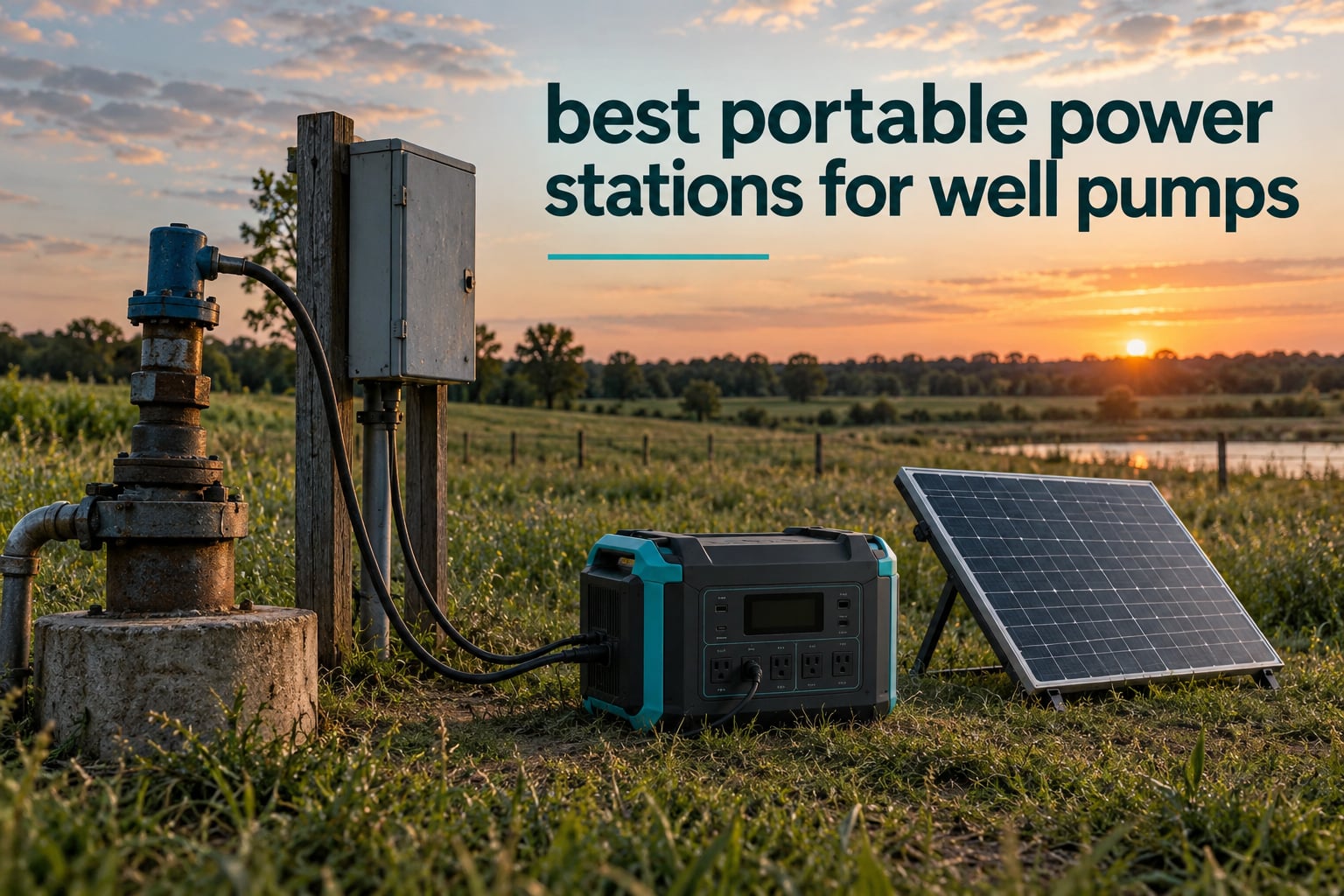
Most portable power stations cannot run a residential well pump, and the reason is almost never wattage. It is voltage. The majority of consumer power stations put out 120V only, while the majority of residential submersible and jet pumps are wired for 240V, so a station can have plenty of power and still never start your motor. Read the nameplate on your pump before you read a single spec sheet, then work through the station reviews below to match your voltage, your surge headroom and your battery size.
This roundup of the best portable power stations for well pumps was built around that compatibility gate. We compared the published continuous output, surge peak, battery chemistry, expansion options, idle draw and standby transfer time of ten stations against real well pump demand, from a 1/3 HP shallow jet pump to a 1 HP deep well submersible and a 3 HP irrigation pump. Our picks are based on published specifications and a stated sizing method, not on a single lab test, and we say so plainly wherever that distinction matters.
One more thing before the list. A well pump is a motor, and motors are hard on inverters. A station needs roughly three to five times the pump’s running watts in peak surge for the first two or three seconds of start, and a 120V output cannot be made into 240V by adding wattage. Everything below is ordered by that logic: the honest disqualifications first, then the stations that clear the bar at each pump size.
Table of Contents
Top 3 Picks for Well Pump Backup in 2026
If you want the short answer, these three cover almost every private well owner reading this page.

Quick Comparison of All 10 Stations in 2026
All ten stations in the same place, with the three numbers that actually decide whether a pump will start.
| Product | Specs | Action |
|---|---|---|
 Jackery Explorer 1000 v2 Jackery Explorer 1000 v2 |
|
Check Latest Price |
| EcoFlow DELTA Pro 3 |
|
Check Latest Price |
 Anker SOLIX C2000 Gen 2 Anker SOLIX C2000 Gen 2 |
|
Check Latest Price |
 EcoFlow DELTA Pro EcoFlow DELTA Pro |
|
Check Latest Price |
 EcoFlow DELTA 3 Max EcoFlow DELTA 3 Max |
|
Check Latest Price |
 Anker SOLIX C1000 Gen 2 Anker SOLIX C1000 Gen 2 |
|
Check Latest Price |
 Anker SOLIX F3000 Anker SOLIX F3000 |
|
Check Latest Price |
 Anker SOLIX S2000 Anker SOLIX S2000 |
|
Check Latest Price |
 Jackery HomePower 3000 Jackery HomePower 3000 |
|
Check Latest Price |
 EBL 2400W Power Station EBL 2400W Power Station |
|
Check Latest Price |
How Many Watts Do You Need to Run a Well Pump?
A 1/3 HP shallow well pump needs about 600 to 750 running watts and roughly 2,000 to 2,300 watts to start, so a 1,500W continuous station with at least 3,000W of surge is the practical minimum. A 1 HP submersible pump can draw close to 2,400 running watts and lock rotor surges above 7,000 watts, which rules out most consumer stations no matter how many watt-hours they hold. Here are the ranges we used for every station in this roundup.
1/3 HP shallow jet pump: 600 to 750 running watts, about 2,000 to 2,300 surge watts, typically 120V or dual voltage.
1/2 HP residential submersible: 900 to 1,000 running watts, about 2,700 to 3,000 surge watts, commonly 230V or 240V.
3/4 HP deep well pump: 1,300 to 1,500 running watts, about 3,900 to 4,500 surge watts, almost always 240V.
1 HP deep well submersible: 1,800 to 2,400 running watts, roughly 5,400 to 7,200 surge watts, 240V.
3 HP agricultural or irrigation pump: 5,400 to 6,000 running watts with surge above 18,000 watts, usually 230V three phase or 460V. No consumer station in this roundup covers this tier.
Those surge figures come from locked rotor amps, which are printed on the motor nameplate as LRA. Multiply LRA by 240 to get the surge watts a 240V motor demands at the instant of start. For a 1/3 HP pump drawing roughly 8 LRA at 230V, that is about 1,840 watts of inrush, and it drops to steady running draw within two or three seconds.
One forum detail worth knowing: in a r/preppers thread that ranks near the top of this search, an owner had a pump pulling about 1,400W and 11.5A and a station rated 1,000W continuous with 2,000W surge. The pump never started, and the lesson was that surge, not running watts, is the binding constraint. Use that as the mental model for every pick below.
Before You Buy: Read the Pump Nameplate
The single most useful number on a well pump is not the horsepower, it is the volts. Most residential submersible pumps older than about fifteen years are 230V or 240V single phase, and no amount of extra wattage from a 120V inverter will change that. Newer shallow well and small submersible models are more often dual voltage, which is the only reason a smaller station can be enough.
Find the motor or pump nameplate. On a submersible pump it is usually on the motor housing; on a jet pump it is on the motor terminal box.
Write down volts, running amps and LRA. All three, not just the first.
Calculate running watts as volts multiplied by running amps.
Calculate starting watts as volts multiplied by LRA.
Add roughly 25 percent headroom to both figures before you compare stations.
Then check the station’s output voltage, not its wattage. A 2,000W 120V station and a 2,000W 240V station are not comparable machines when your pump is 240V. Our brand-by-brand power station comparison covers the output differences between the major families if you want the background before you buy.
Two more nameplate checks while you are there. If your pump sits on a pressure tank with a cycle stop and start control, add a margin for any control panel and any well pressure switch chatter. And if the pump is a 3 HP irrigation unit, stop reading this roundup and talk to an electrician, because no portable power station on the consumer market is the right tool.
What to Skip: 120V-Only Stations and the 240V Problem
Only one station in this roundup puts out true split-phase 240V from a single box. The EcoFlow DELTA Pro 3 lists 120V and 240V split-phase output, which makes it the only straightforward match for a 240V pump without extra hardware. Every other unit here is 120V only, so treat them as shallow-pump and small-submersible tools rather than whole-well answers.
That is not a flaw in the hardware, it is a category boundary. Consumer stations are built for fridges, lights, power tools and CPAP machines, all of which are 120V. A 240V single-phase pump with a 7,000W locked rotor simply sits outside that design envelope. If your nameplate says 240V and you buy a 120V-only box, the unit will not fault politely. It will click, hesitate, and trip its inverter.
There are exactly three ways around it. Buy a station with native split-phase output, pair two 120V stations that support parallel operation into a 240V output, or fit an inrush limiting soft-start device. All three are covered below, with the trade-offs stated.
10 Station Reviews for Well Pump Duty
1. Jackery Explorer 1000 v2: Best Overall for 1/3 HP Shallow Pumps
Jackery Explorer 1000 v2 Portable Power Station,1070Wh,1500W
1500W continuous / 3000W surge
1070Wh LFP battery
120V output
23.8 lbs
Pros
- LFP battery rated 4000+ cycles
- Full recharge in about an hour on AC
- Pure sine wave AC outlets
- Lightest capable unit in this roundup at 23.8 lbs
- Three AC outlets plus 100W USB-C
Cons
- Solar panel not included
- One hour fast charge must be re-enabled in the app each session
- Jackery solar input restricted to Jackery panels
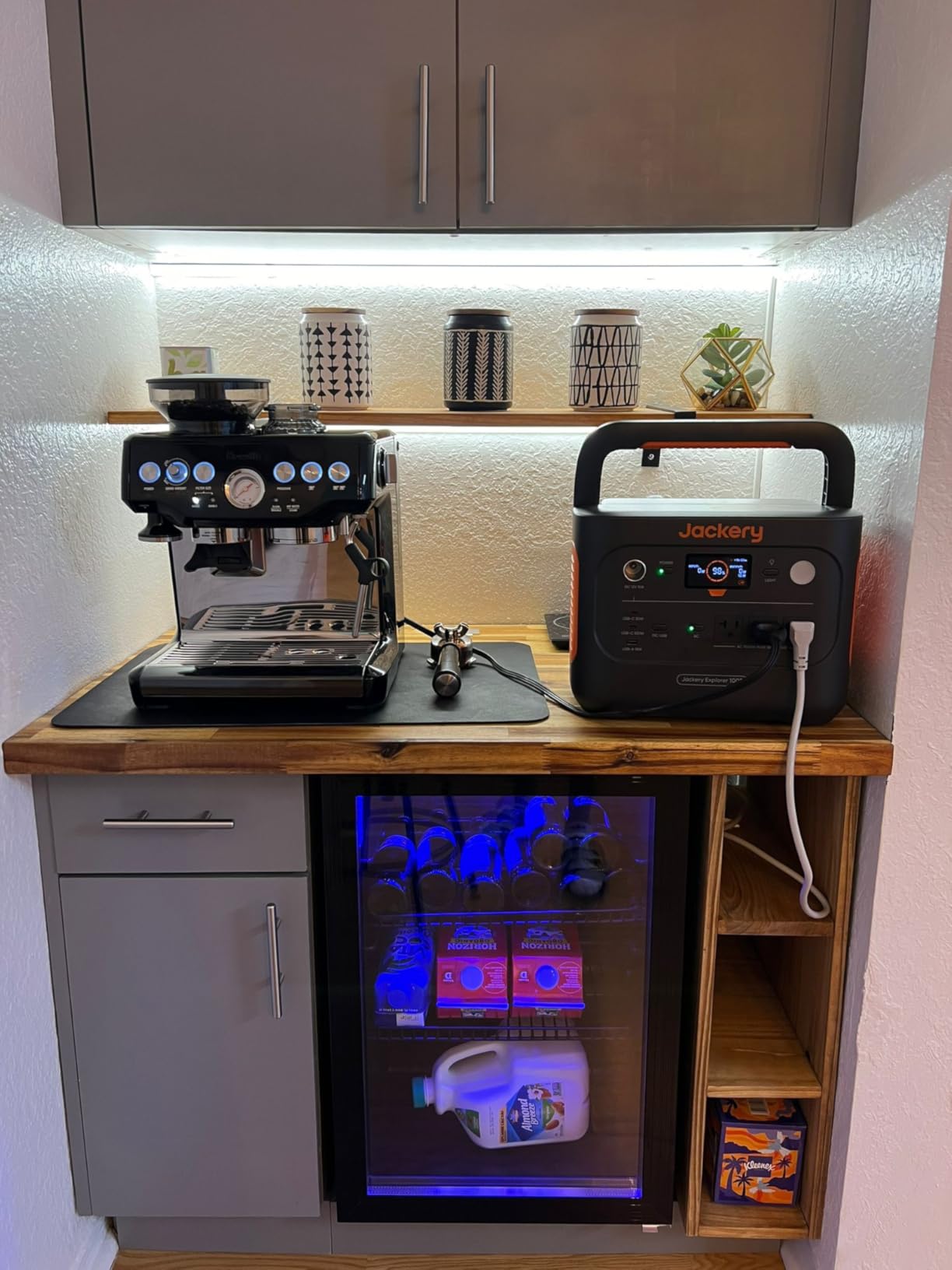
This is the station I keep coming back to for small wells, and the reason is the surge-to-size ratio rather than the headline wattage. At 1,070 watt-hours it is the smallest battery here, and at 1,500W continuous with 3,000W of surge it is exactly enough to start a 1/3 HP shallow jet pump with a small starting margin to spare. The LFP cell is rated at more than 4,000 cycles, which matters enormously for a backup unit that sits untouched for eleven months and then has to perform.
For a typical 700W shallow pump, usable capacity after inverter losses is roughly 910 watt-hours, which works out to about 78 minutes of run time on a full charge. That is not a multi-day answer, but it covers drinking, cooking and a sink of water for a family of four, and an hour of AC recharge brings it straight back.
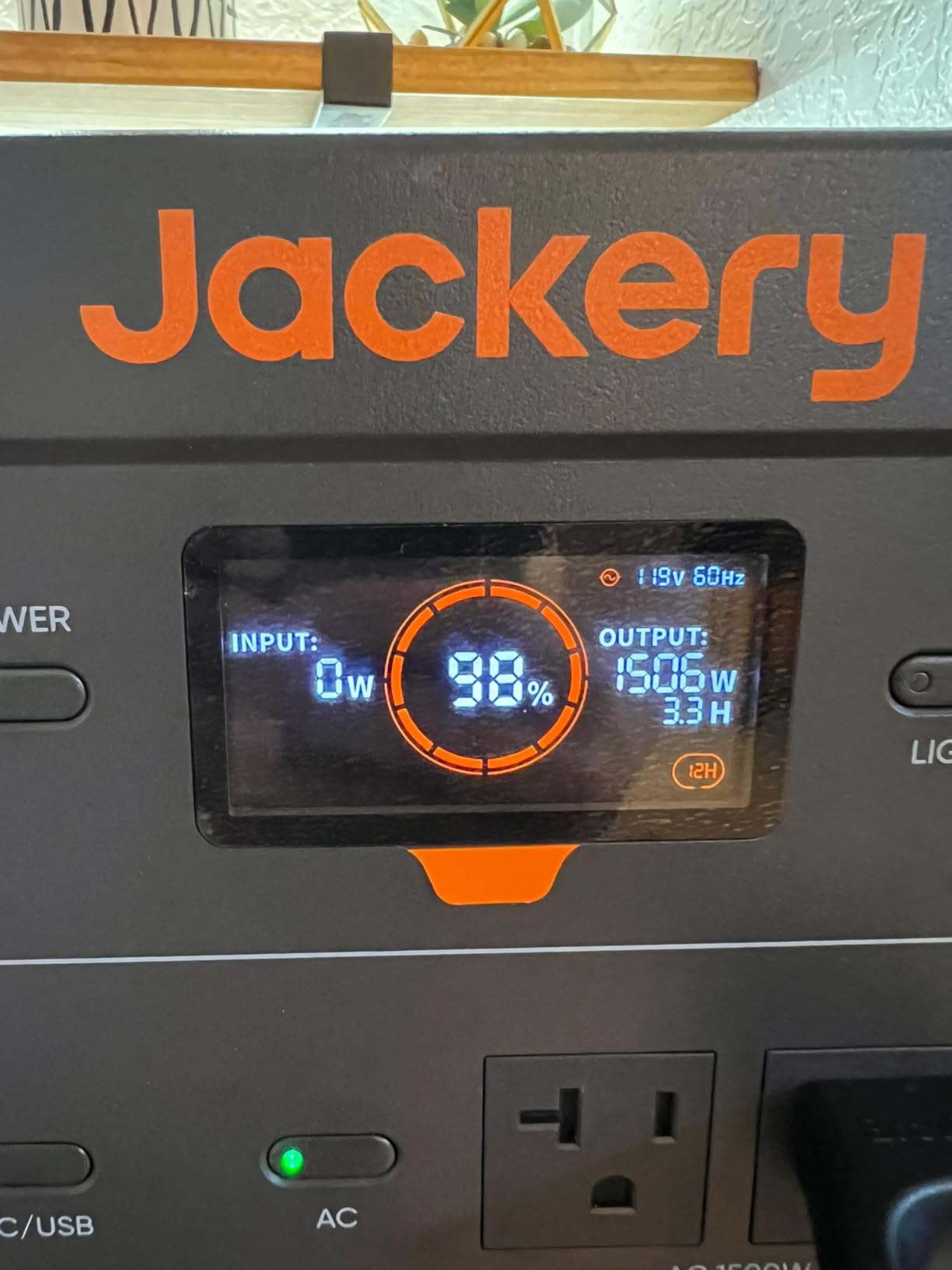
The three AC outlets are pure sine wave, which is the right waveform for a motor rather than a modified one. The 100W USB-C port is not relevant to a pump but is genuinely useful for phones and medical devices during the same outage, which is often the real reason people buy a station this size.
At 23.8 pounds it is the easiest unit here to move to a wellhead, carry down a basement stair, or load into a truck bed. The three-year-plus cycle rating and the foldable handle matter when the same box has to answer a storm in October and an ice event in January.
Which pumps it actually starts
Comfortable on 1/3 HP shallow jet pumps drawing up to 750 running watts and about 2,300 surge watts. Workable on some 1/2 HP models that start under 3,000 watts, though that leaves almost no margin.
It will not start a 3/4 HP deep well pump, and it cannot run a 240V pump at all. If your nameplate shows 230V or 240V, this is the wrong box and no setting in the app changes that.
Where the compromises show up
The 1-hour AC recharge is genuinely fast, but reviewers report it has to be switched on in the app each time rather than staying enabled, which is an annoying detail at 2 a.m.
Solar input is limited to Jackery panels, and no panel is included. Budget for that separately if you plan to recharge in the field, and note the more general entry-level power station roundup covers what panel pairing usually costs.
2. EcoFlow DELTA Pro 3: The Only Native 240V Option Here
EF ECOFLOW DELTA Pro 3 Portable Power Station, 4096Wh, 4000W AC Output
4000W continuous / 6000W X-Boost
4096Wh LFP
120V and 240V split-phase
115 lbs
Pros
- 120V and 240V split-phase output from one unit
- 4096Wh expandable all the way to 48kWh
- 10ms UPS switchover for sensitive loads
- Dual MPPT solar input up to 2600W
- 5-year warranty
Cons
- Very heavy at 115 pounds
- Large floor footprint
- No 12V car socket without a dongle
If your pump is 240V, this is the station in the roundup that does not need a workaround. EcoFlow lists 120V and 240V split-phase output on a single 4,096 watt-hour LFP battery with 4,000W continuous, 6,000W with X-Boost enabled, and the ability to scale to 12,000W by pairing stations. That is the combination most 240V well owners actually need, and it is the reason the leading competitor page warns about split-phase pumps and then recommends 120V-only boxes anyway.
The 4096Wh base battery works out to roughly 3,480 usable watt-hours after inverter losses. Against a 2,400W 1 HP load that is about 87 minutes of run time, and against a 1,400W 3/4 HP pump about 155 minutes. Expansion to 48kWh turns that from an afternoon of water into a multi-day plan.
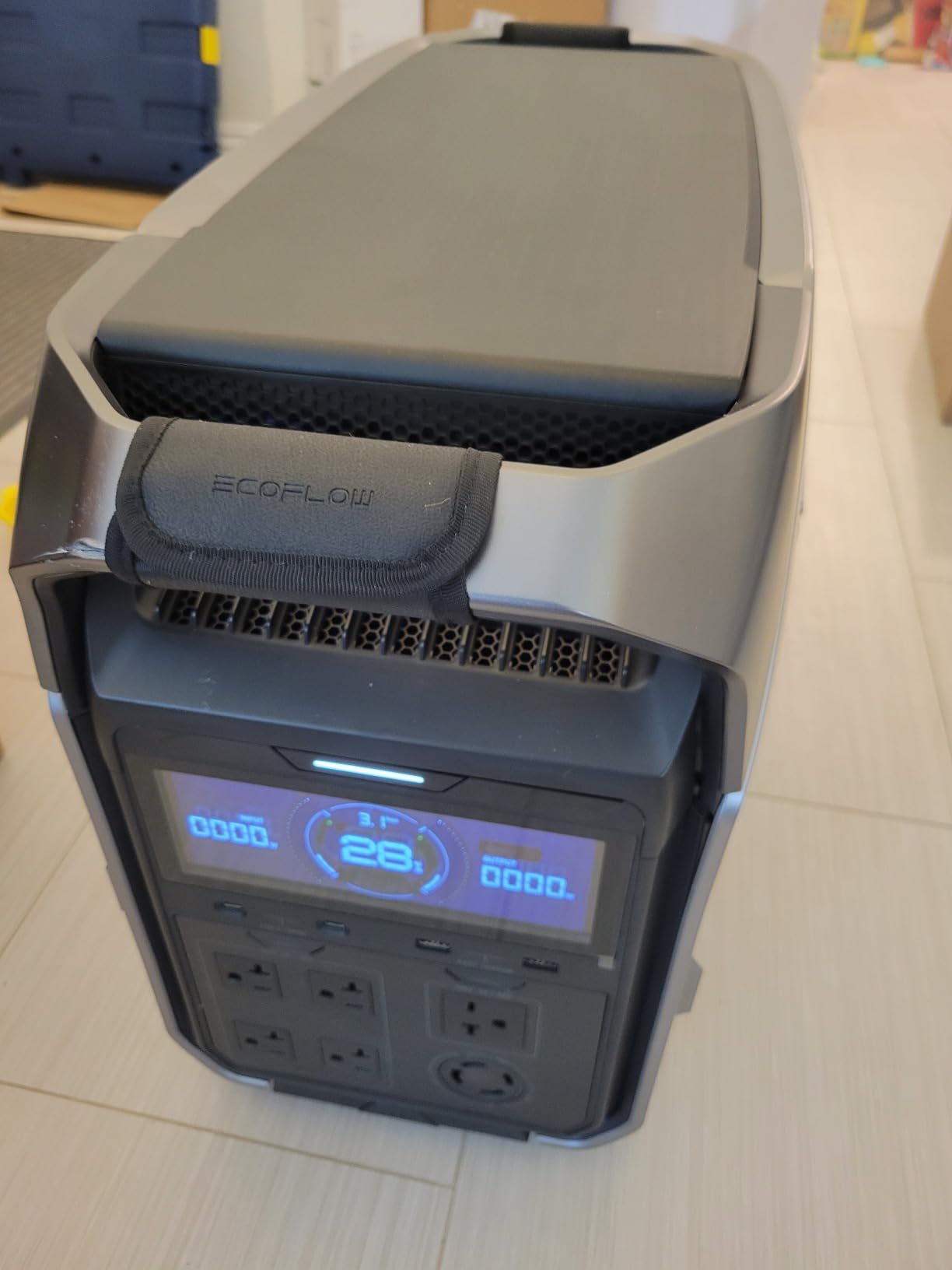
Two details make this one feel built for a pump house rather than a campsite. The neutral-ground bonding toggle lets an electrician wire it correctly, and the 10ms UPS switchover means a fridge and a pump can run at the same time without the electronics rebooting every time the motor kicks in. The IP65-rated battery pack also handles the dampness that a well room collects.
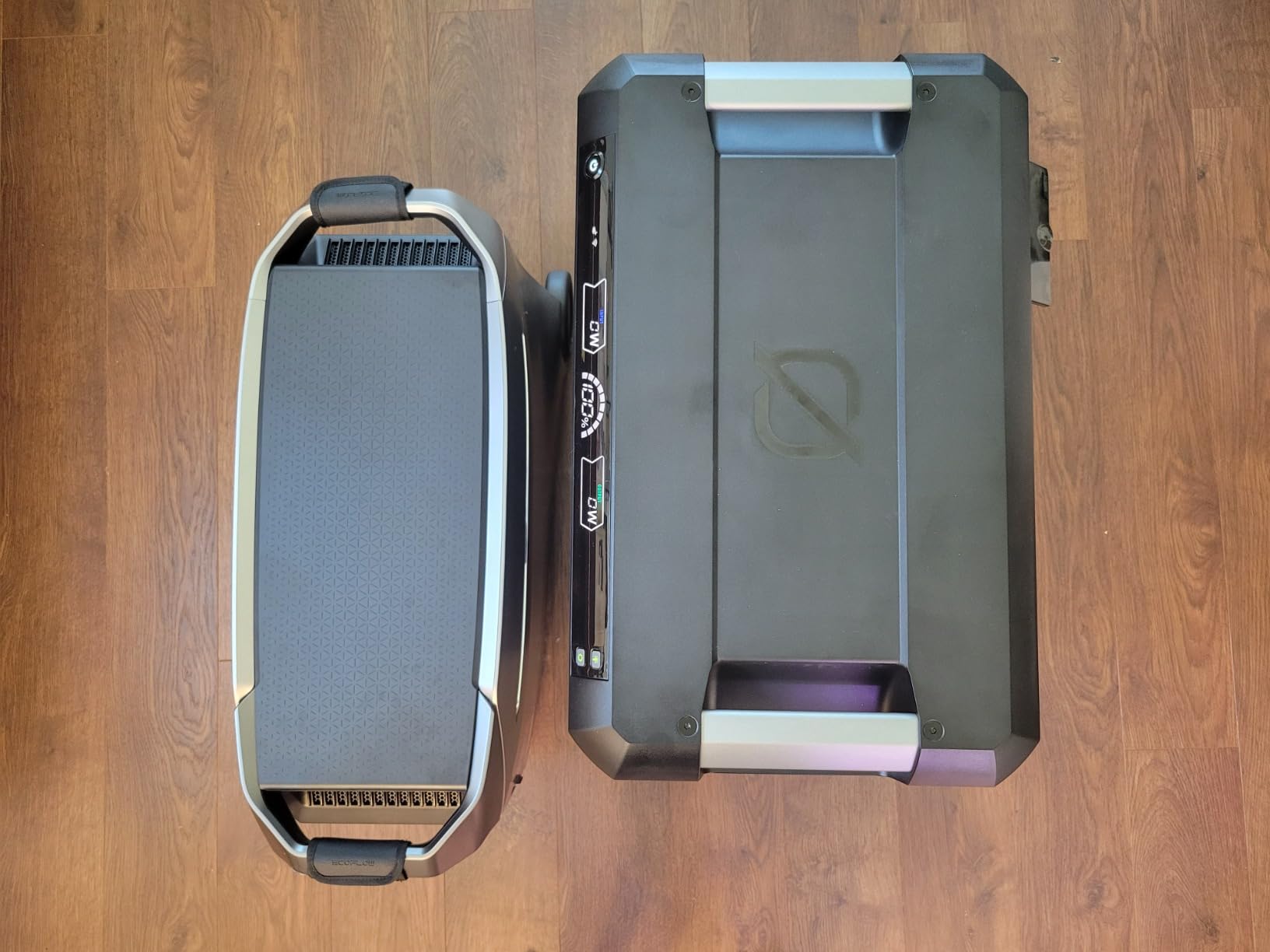
The 30 dB X-Quiet mode is worth noting too. A station next to your head at night while you run water is a different experience from one you can hear across the house, and at 115 pounds it is going to be sitting in one place permanently.
What makes it the 240V answer
Split-phase output means a single-unit 240V circuit for a 240V single-phase pump, with no paired box and no step-up transformer. For a 1 HP submersible this is the cleanest fit in the roundup.
The 6,000W X-Boost figure is a power lifting mode that briefly overdrives resistive and motor loads, so treat it as a starting assist rather than continuous capacity. Plan on 4,000W sustained and use the boost for the start.
Where it frustrates people
At 115 pounds with a 16.16 by 13.43 by 27.38 inch footprint, this is a two-person move with a dolly, not a one-person carry. Plan the floor space before the purchase, not after.
It also has the lowest average rating in the roundup at 4.2, and reviewers report friction that is a support experience issue, not a performance one.
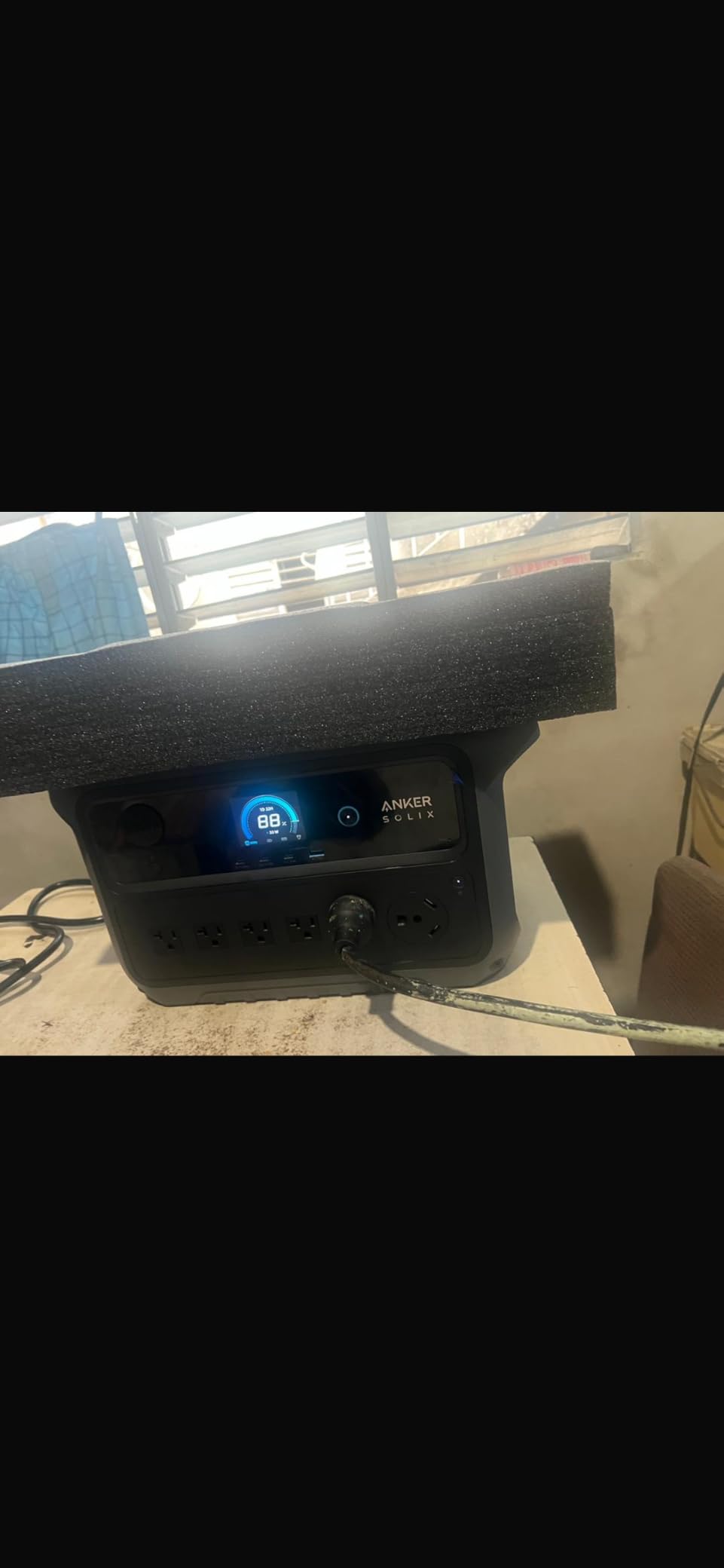
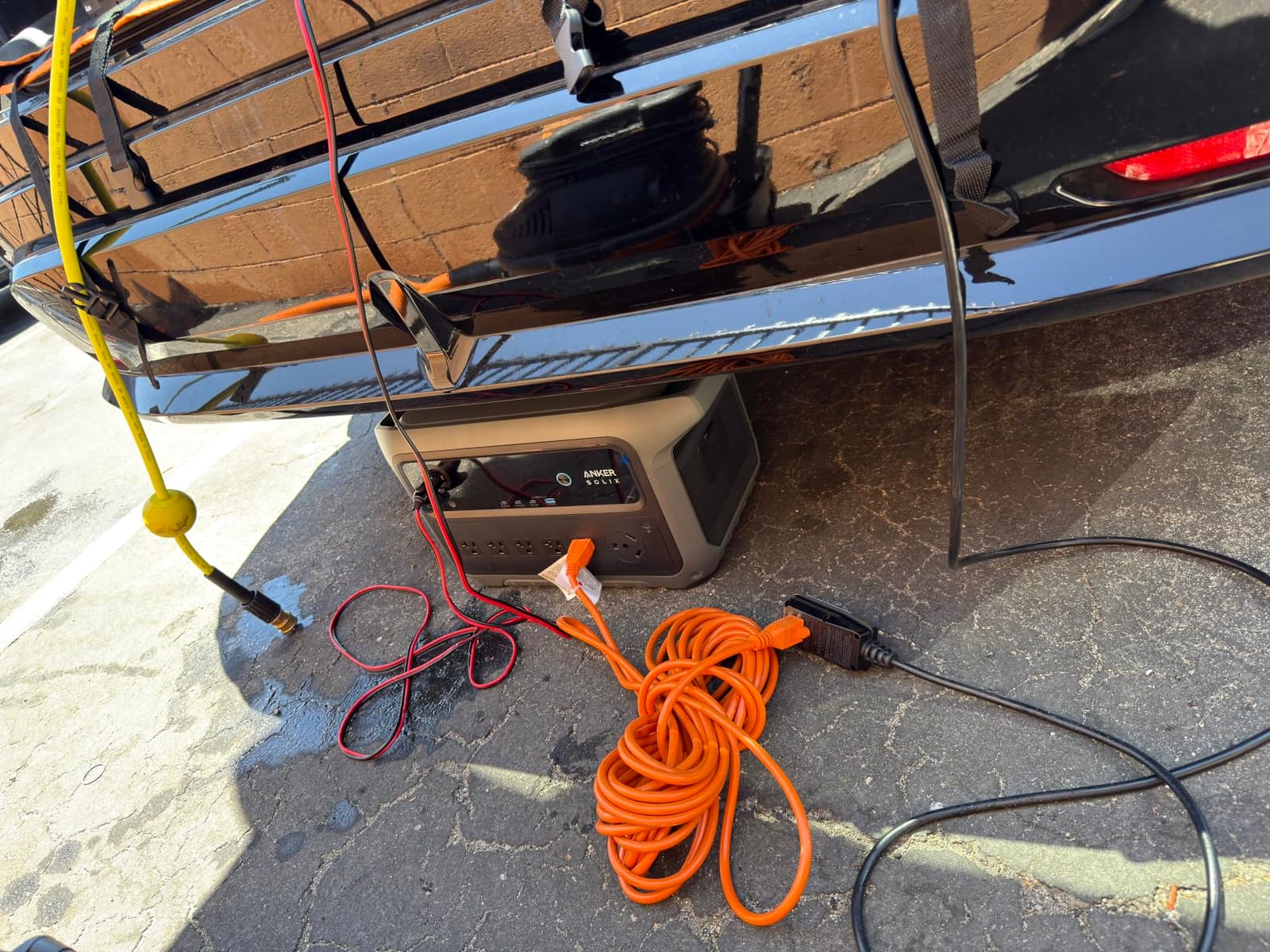
3. Anker SOLIX C2000 Gen 2: Best Match for 1/2 HP Pumps
Anker SOLIX C2000 Gen 2 Portable Power Station, 2,048Wh, 2,400W, Camping
2400W continuous / 4000W peak
2048Wh LiFePO4
120V output
41.7 lbs
Pros
- 2400W continuous and 4000W peak clears 1/2 HP surge demand
- Full AC recharge in 58 minutes
- Only 9W standby draw
- Expandable to 4kWh with an extra battery
- 5-year warranty
Cons
- Only one AC outlet
- Solar panels sold separately
This is the unit we recommend to most households running a 120V or dual-voltage pump, because 4,000 watts of peak output sits comfortably above the roughly 3,000 watt surge a 1/2 HP submersible demands. There is margin in the start, which is exactly what the r/preppers owner in question 1 above did not have.
At 2,048 watt-hours it delivers roughly 1,740 usable watt-hours. That is about 110 minutes on a 950W pump, or 74 minutes on a 1,400W 3/4 HP unit, and the 9 watt standby draw means it can sit switched on in a pump room for weeks without quietly eating itself. The 58-minute full AC recharge is the fastest here and matters when a storm is still overhead.
Two features are aimed squarely at an outage rather than a campsite. The 800W alternator charging path lets you refill it from a running vehicle, which is often faster than wall charging when the grid is down. And the single AC outlet, normally a complaint, is a non-issue for one pump on one circuit.
The 5-year warranty and 41.7 pound weight split the difference between a garage unit and a portable one. Most owners will park it in a utility room and forget it, which is the correct behaviour for a standby battery.
Where the sizing math works out
Covers 1/2 HP residential submersibles up to about 1,000 running watts with a full 3,000 watt surge event, and 3/4 HP pumps only if the motor starts under 3,400 watts. Expansion to 4kWh roughly doubles the run time per outage.
It is 120V only, so a 240V nameplate rules it out immediately. Verify the volts before anything else when you consider this class of station.
What to plan around
One AC outlet means the pump takes the socket. Plan for a power distribution box if you also want to run a fridge or lights off the same unit during the outage.
No solar panel is included, and the listed expansion battery adds cost. If you are counting on solar to extend the outage, price both before you commit.
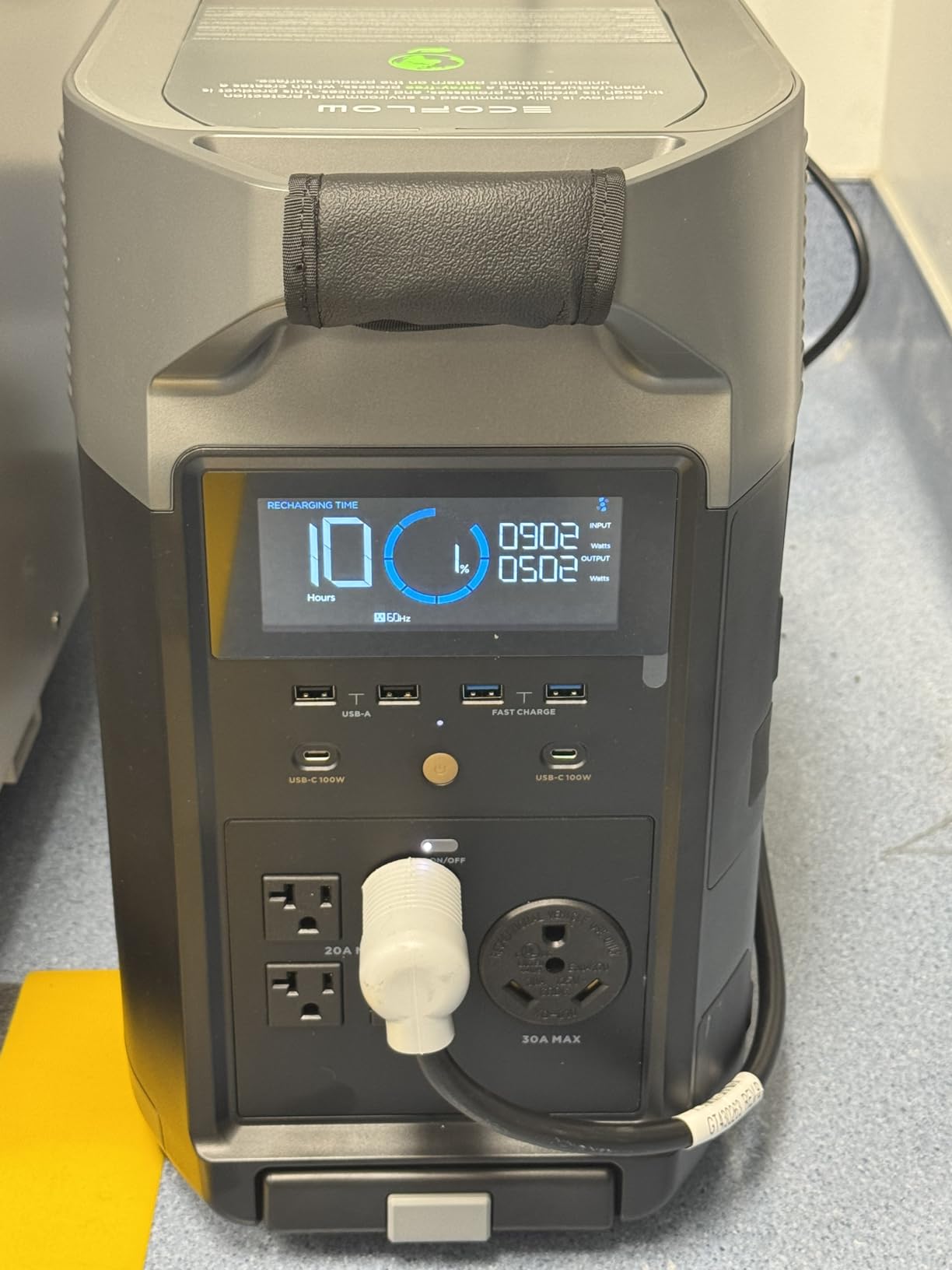
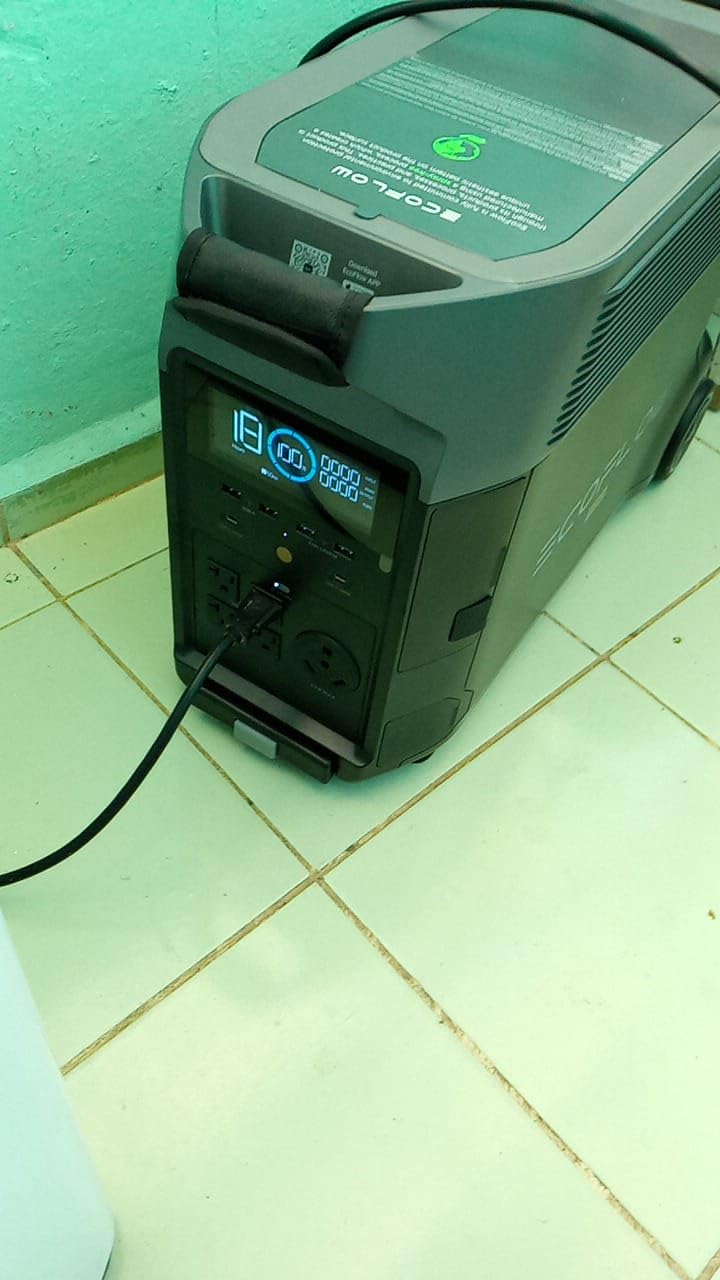
4. EcoFlow DELTA Pro: Best for 3/4 HP Deep Well Pumps
EF ECOFLOW Portable Power Station 3600Wh DELTA Pro, 120V 3600W AC Output
3600W continuous / 7200W surge
3600Wh LFP expandable to 25kWh
120V output
99 lbs
Pros
- 7200W surge covers most 3/4 HP and many 1 HP motors
- Fifteen output ports including five AC outlets
- Expandable to 25kWh for multi-day outages
- 1.8 hour full charge on a 240V wall
- 5-year warranty
Cons
- Very heavy at 99 pounds
- Solar input capped at 15 amps
- Reports of tripping standard breakers while charging
The surge number is the reason this one is here. At 3,600 watts continuous and 7,200 watts surge, it is the only station in the roundup besides the DELTA Pro 3 with genuine headroom over a 3/4 HP deep well motor, whose locked rotor can demand 4,500 watts or more. Fifteen output ports also mean the pump, a fridge, lights and a phone charger all run from one box without a distribution panel.
3,600 watt-hours gives about 3,060 usable watt-hours. That is roughly 131 minutes against a 1,400W pump, and the expansion path to 25kWh is what converts this from an afternoon solution into a genuine multi-day one. The 1.8 hour full charge on a 240V circuit is fast enough to refill overnight and start again by morning.
Its weakness is voltage, and it is the same weakness as most of this roundup. The listed output is 120V, so a 240V deep well pump is out of reach no matter how much surge you have. That limits it to dual-voltage and 120V submersibles and shallow jet pumps in the 3/4 HP class.
Reviewers also note the 15 amp solar input ceiling and reports that charging can trip a standard branch breaker. Charge it on a dedicated circuit and plan panel capacity before the storm season rather than during it.
Why it beats smaller units on a deep well
The 7,200 watt surge figure is roughly double what a 1/2 HP motor needs, so you get a starting margin rather than a marginal start. On 120V pumps this is the strongest combination in the roundup for 3/4 HP duty.
Expansion to 25kWh means a single household can cover a three-day outage with a fridge running and water twice a day, which smaller units cannot do without daily charging.
Where it gets in the way
At 99 pounds it is permanently installed equipment, not a carryable one. Budget for a floor location and a way to get it there.
The 120V-only output is the decisive limitation for anyone with a 240V nameplate. If that is your situation, look at the DELTA Pro 3 instead.
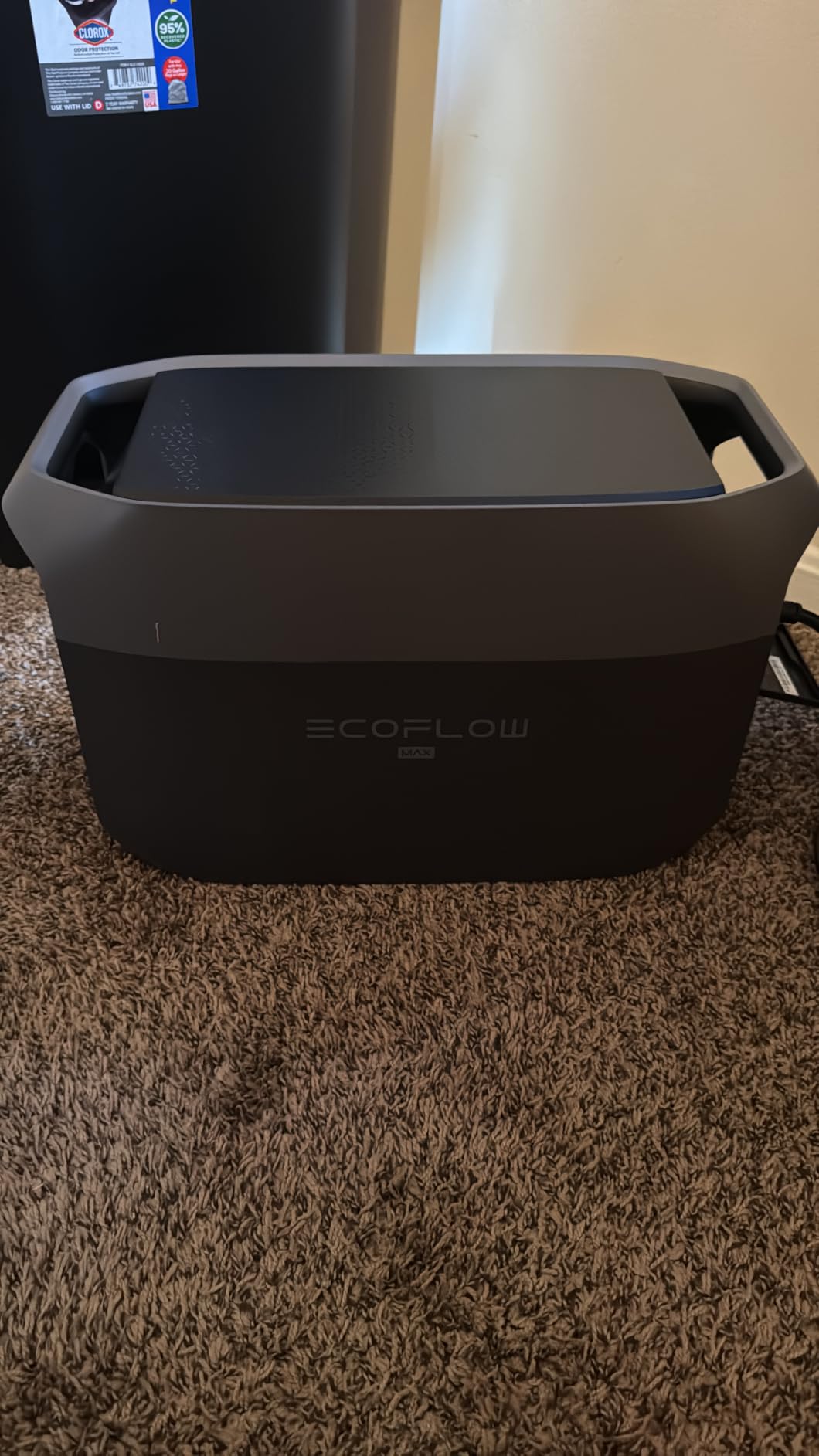
5. EcoFlow DELTA 3 Max: Best for Fast Refill Between Pump Cycles
EF ECOFLOW DELTA 3 Max Portable Power Station, 2048Wh LFP Battery, 2400W
2400W continuous / 3400W X-Boost
2048Wh LFP
120V output
Pros
- 0 to 80 percent charge in 1.13 hours
- 3400W X-Boost output for motor starting
- Under 10ms UPS switchover
- 5-year service coverage
- Compact 9.4 by 12 by 19.44 inch footprint
Cons
- Only three AC outlets
- Solar panel sold separately
- Roughly 10 hours runtime at full load
The reason to like this unit is the recharge curve. Eighty percent of capacity in 1.13 hours means a station that is empty at breakfast can be pumping water again before you leave for work, which is the difference between a power outage and a water outage for most households.
With 2,400 watts continuous and 3,400 watts of X-Boost output, it sits in the same class as the C2000 Gen 2 for 1/2 HP duty. At 2,048 watt-hours, usable capacity is about 1,740 watt-hours, or roughly 110 minutes on a 950W pump. The under-10ms UPS transfer keeps electronics from rebooting every time the pump starts.
Silent operation during backup is a real feature in a pump room, and EcoFlow rates this one for it. The app handles energy cost tracking and scheduling, which is more than you need for a well but useful if you also run household loads from the same battery.
As with most of this roundup, the output is 120V, and the listed starting wattage equals the 3,400 watt X-Boost figure rather than exceeding it. Size for the boost number, not for a surge figure the manual does not claim.
Best fit for daily cycling
Suits 1/2 HP pumps up to about 1,000 running watts with a 3,400 watt starting assist. Pairs well with solar because a short top-up window means fewer full days of panel exposure to refill it.
Good choice when the pump runs several short cycles a day rather than one long draw, since the 1.13 hour window covers several cycles before anyone notices.
What holds it back
Three AC outlets is restrictive if the pump shares the box with a fridge, a coffee maker and lights during a long outage. Plan a distribution box.
Roughly 10 hours of runtime at full load is the shortest figure in the roundup, and there is no expansion path listed for this model. Treat it as a day-one station, not a multi-day one.
6. Anker SOLIX C1000 Gen 2: Best Portable Option for Light Wells
Anker SOLIX C1000 Gen 2 Portable Power Station
2000W continuous / 3000W peak
1024Wh LiFePO4
120V output
24.9 lbs
Pros
- 10000 cycle LFP battery per InfiniPower rating
- 49 minute full recharge at 1600W
- Ten output ports
- Under 10ms UPS switchover
- 24.9 pounds
- 5-year warranty
Cons
- No expansion capability in this generation
- Reported sine wave distortion on microwave loads
- About 5 percent self-discharge per month when unplugged
This is the station to buy if you have to carry your backup power to the pump rather than install it. At 24.9 pounds with 2,000 watts continuous and 3,000 watts of peak output, it is the lightest thing in the roundup that can clear a 1/2 HP start, and the 1,024 watt-hour LFP cell is rated for 10,000 cycles.
Usable capacity is roughly 870 watt-hours, which is about 74 minutes on a 700W shallow pump or 55 minutes on a 950W 1/2 HP unit. The 49 minute full recharge at 1,600W means it can be topped up between cycles almost as fast as the DELTA 3 Max.
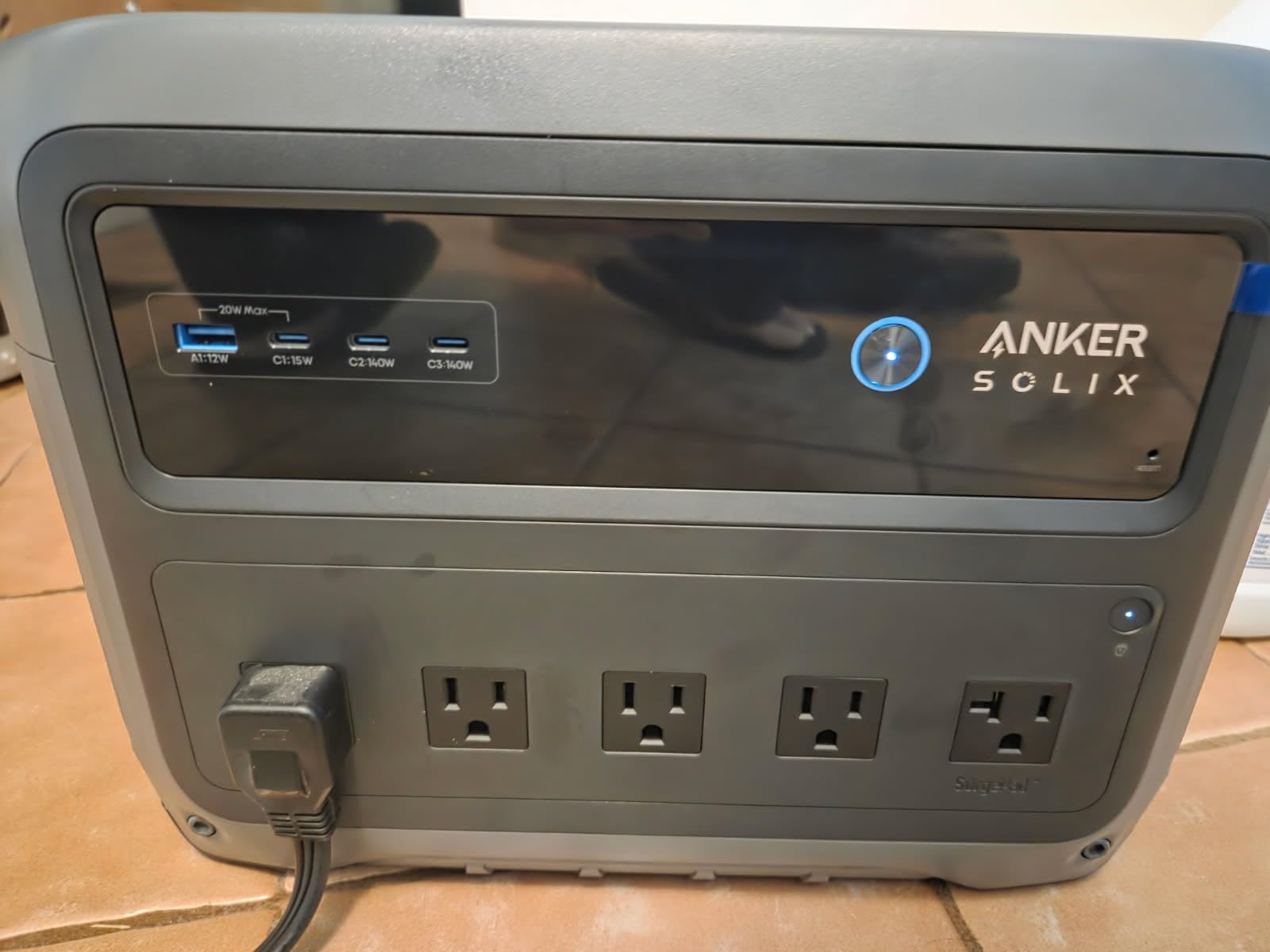
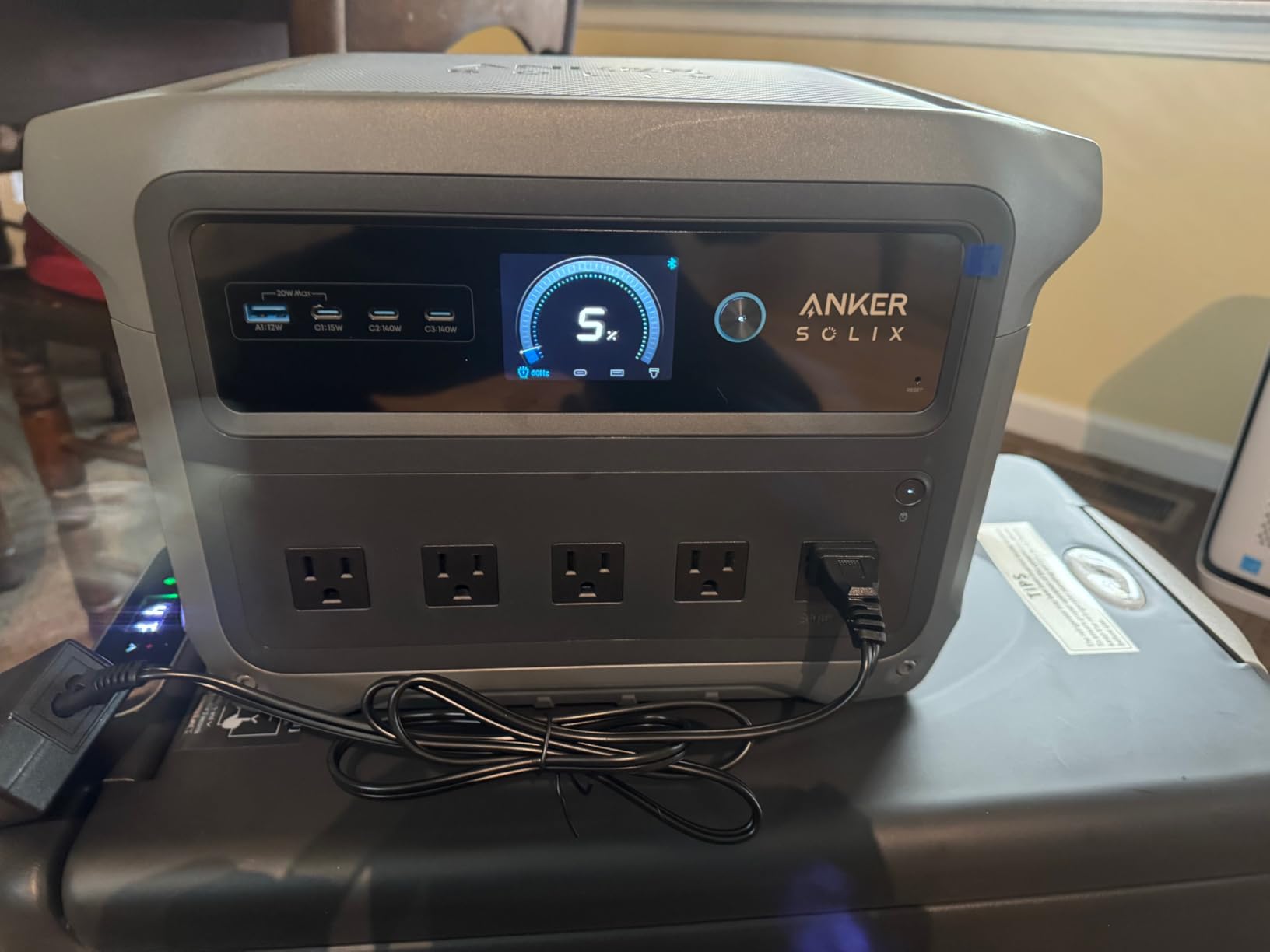
Ten output ports is generous for a unit this small, and the under-10ms UPS transfer makes it the sort of box people also keep on hand for CPAP machines and oxygen concentrators during the same outage. Anker’s replacement service draws repeated praise in reviews, which matters for a device you buy once and expect to work in year six.
One caution for pump duty specifically: reviewers report some sine wave distortion under inductive loads. Motors are inductive. If your pump is at the top of the surge range, test the start a few times before you depend on it in a real outage.
What one person can manage
Covers 1/3 HP pumps with comfortable margin and 1/2 HP pumps that start under about 2,800 surge watts. A 24.9 pound unit is something a single person can move from a garage to a pump house without planning the move.
Ten ports mean a pump, lights, a radio and a phone can all run from one box, which makes it the most useful single unit for a household outage.
Where it stops
This generation removed the expansion battery port, so capacity is fixed at about 1,024 watt-hours. If you want multi-day water, you need two of them or a different station.
At 3,000 watts of peak it will not start most 3/4 HP or 1 HP motors, and the 120V output rules out 240V pumps entirely.
7. Anker SOLIX F3000: Best for Multi-Day Outages
Anker SOLIX F3000 Portable Power Station, 3,072Wh, 6,000W, Solar Generators
3600W continuous
3072Wh LFP expandable to 24kWh
120V single, 240V when paired
91.5 lbs
Pros
- 125 hour AC idle standby draw
- Expandable to 24kWh
- 2400W dual MPPT solar input for field recharging
- 3600W pass-through charging
- Built-in wheels for a 91.5 pound unit
- Five year warranty
Cons
- No native 240V
- requires pairing two stations
- Listed starting wattage matches continuous output
- Reported Wi-Fi connectivity issues
This is the endurance pick. The 125 hour AC idle standby figure means you can leave it plugged in and switched on for months waiting for an outage, which is the behaviour a rarely-used backup battery needs. At 3,072 watt-hours it delivers roughly 2,610 usable watt-hours, or about 112 minutes against a 1,400W pump before any expansion is added.
The expansion path to 24kWh is the real story here. A 3/4 HP pump drawing 1,400 watts for twenty minutes twice a day, plus a fridge, is comfortably inside what 24kWh covers across a week without a single solar panel.
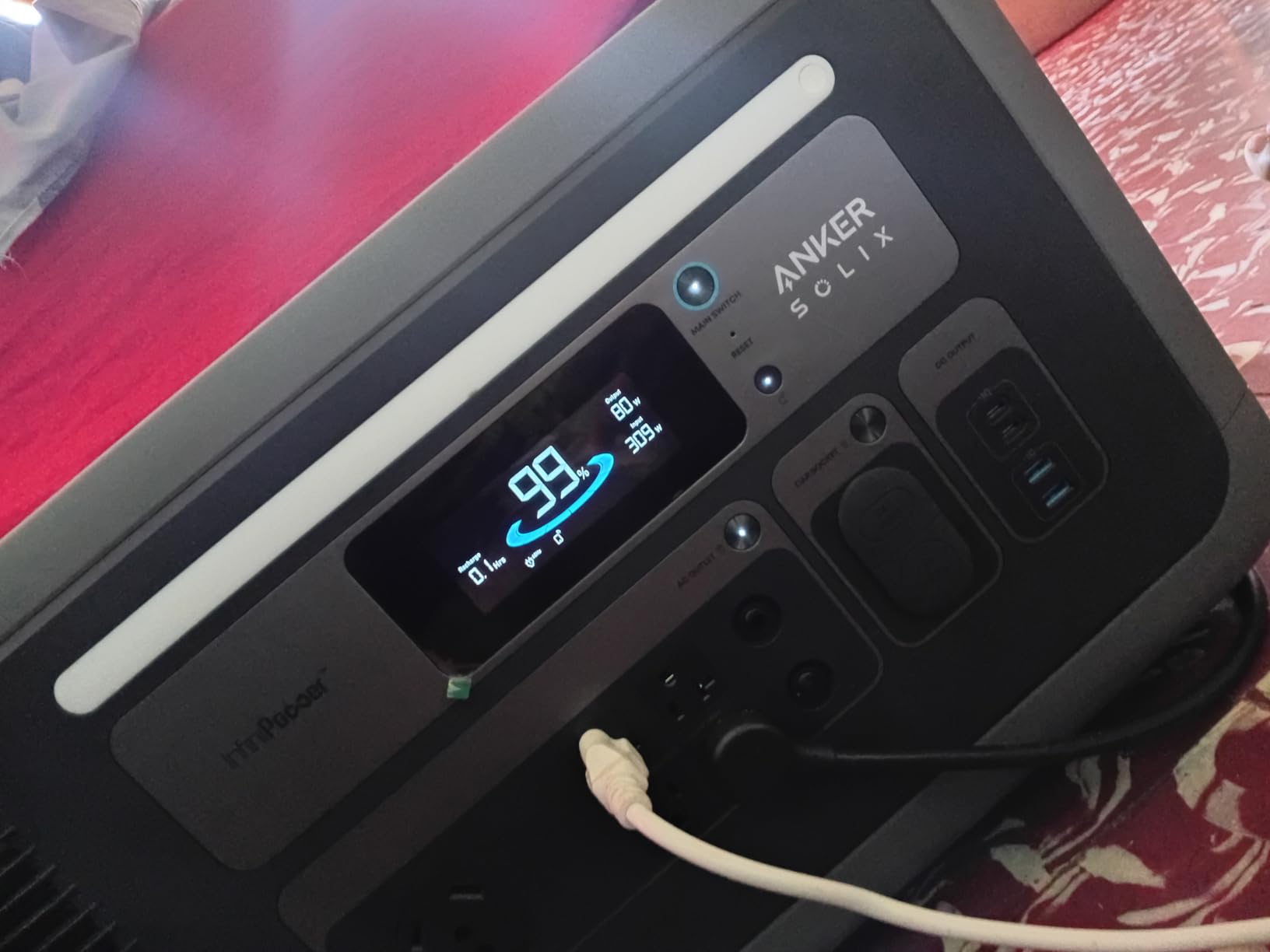
Two features are unusual and useful here. Pass-through charging lets the unit charge from a generator and solar at the same time, which is a sensible outage strategy. And the dual high-voltage MPPT inputs pull 2,400 watts from panels, fast enough to matter if the unit is living in a field rather than a garage.
The wheels are a genuine quality-of-life feature on a 91.5 pound box, and the TT-30 RV port is worth noting for anyone running this off a truck or trailer rather than a fixed install.
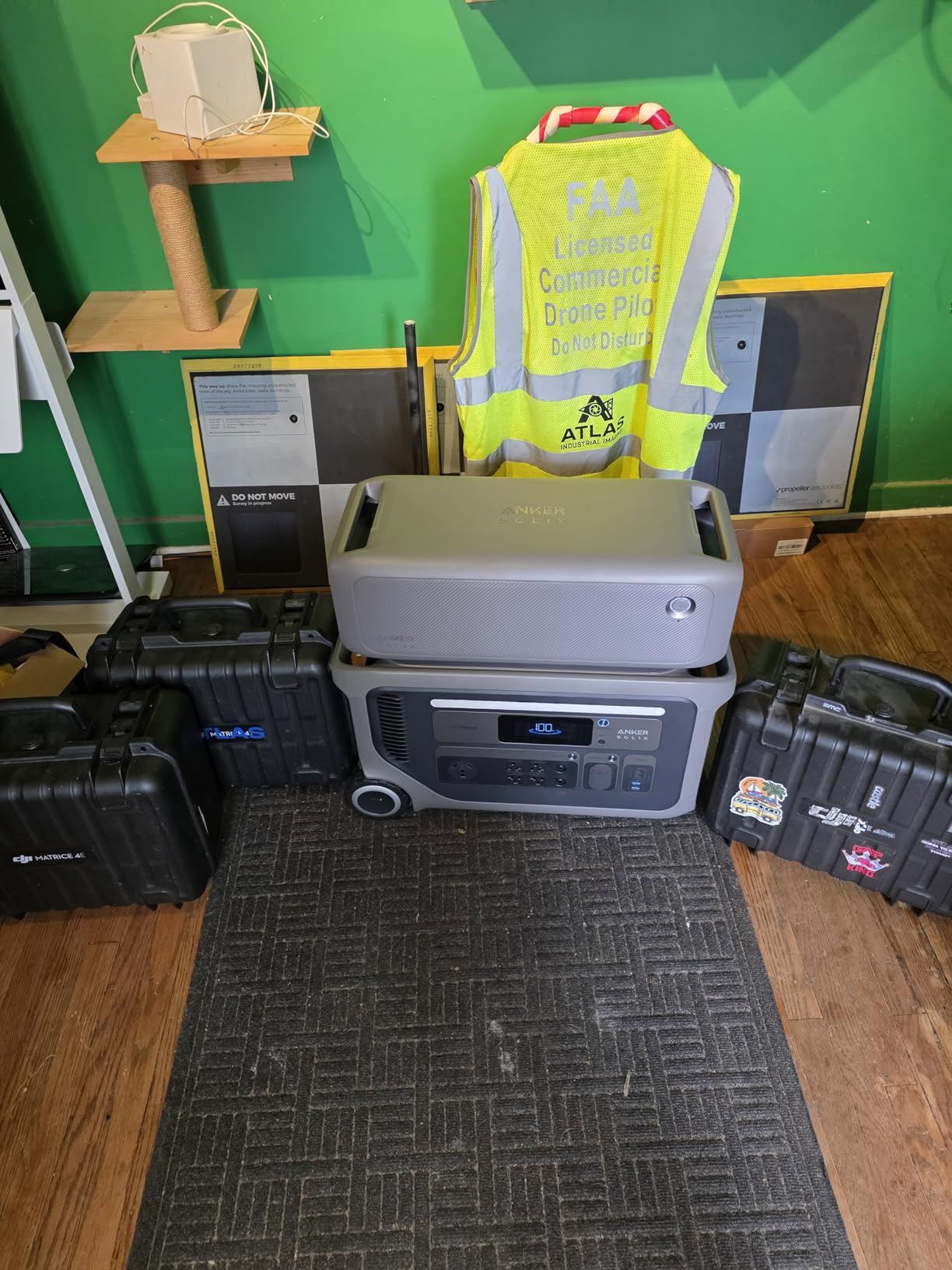
Built for a week, not an afternoon
Suits 1/2 HP and 3/4 HP 120V or dual-voltage pumps with room to spare, and the 24kWh expansion is what makes a week-long outage realistic. 42 hours on a 190W fridge load is the manufacturer’s own endurance figure.
Pairing two stations produces 240V output, which is the sanctioned route to a 240V pump if the budget stretches to two cabinets and the room to hold them.
What to verify before buying
The published starting wattage matches the 3,600 watt continuous figure. Do not assume a surge peak above that, and confirm the motor start with a load test before an emergency.
Wi-Fi connectivity problems are reported by some owners, and a station you cannot monitor from the app during a storm is a station you will check in person.
8. Anker SOLIX S2000: Best Battery Lifespan and Lowest Idle Draw
Anker SOLIX S2000 Portable Power Station, 2,010Wh, 1,500W
1500W continuous / 3000W peak
2010Wh LFP with 10,000 cycles
120V output
35.7 lbs
Pros
- 10000 cycle LFP battery rated for a 15 year equivalent life
- Six watt idle draw and three watts in UPS mode
- 35 hour fridge runtime confirmed by owners
- Dual sided outlets
- 400W solar input
- Five year warranty
Cons
- No 240V capability
- No built-in carry handle
- Reported fan noise while charging
- No 12V DC port
For a backup unit that will be used maybe ten hours a year, battery lifespan matters more than peak wattage. The 2010 watt-hour LFP pack is rated at 10,000 cycles, described as a 15 year equivalent, which is roughly two and a half times the cycle rating of most units in this roundup. Six watts of idle draw, dropping to three in UPS mode, means leaving it plugged in costs almost nothing.
On pump duty, 1,500 watts continuous with 3,000 watts of peak output covers a 1/3 HP shallow pump well and stretches to a 1/2 HP model that starts below 2,900 watts. Usable capacity is about 1,709 watt-hours, roughly 108 minutes on a 950W pump.
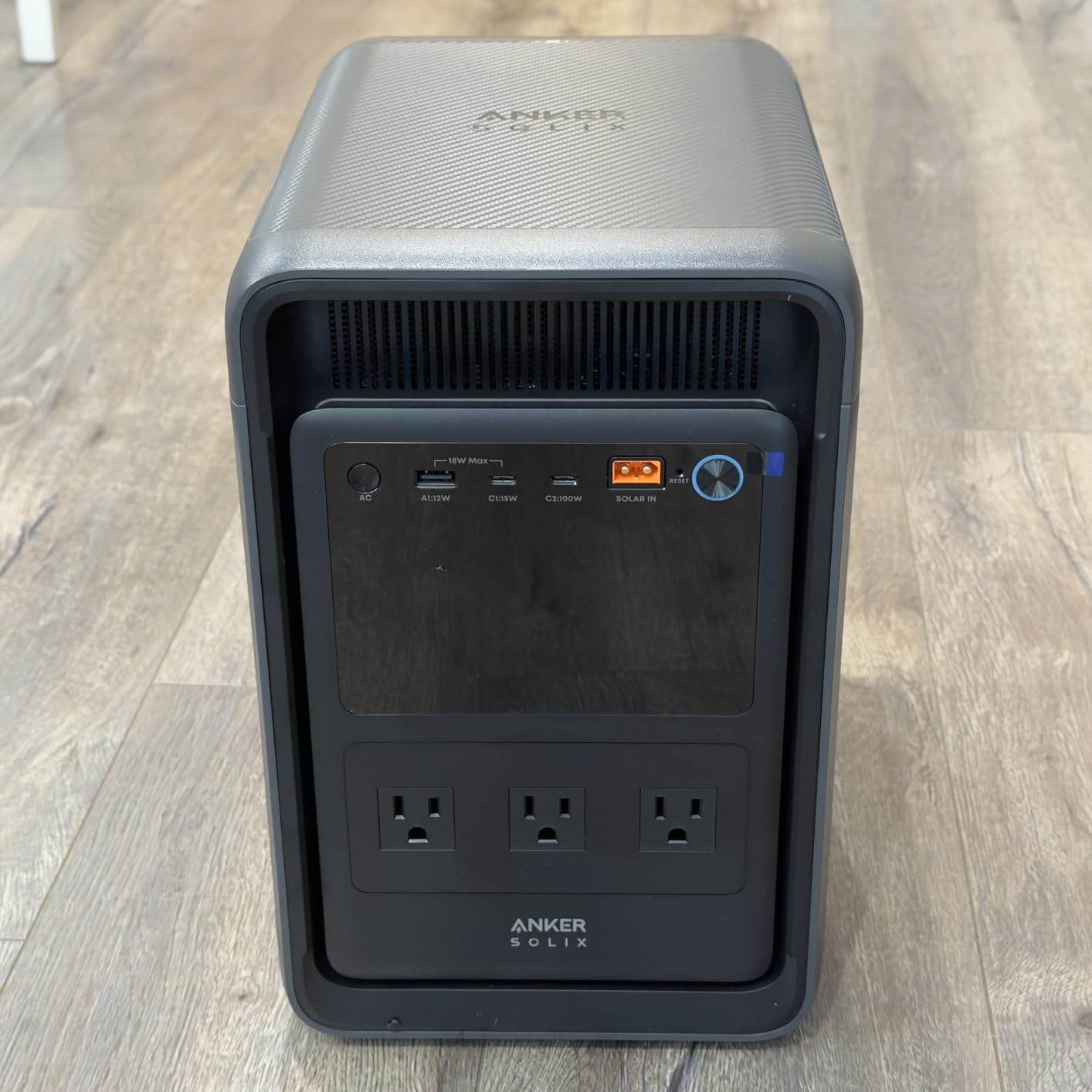
The dual-sided outlet layout is a small thing that pays off in a pump room, where cables and conduit already compete for space. The 400 watt solar input is modest next to the big units, but paired with the very low idle draw it makes this an easy box to maintain on trickle panels for a whole season.
Owners confirm the 35 hour fridge figure in real use, and the 5-year warranty is longer than the shorter terms some value brands offer on comparable capacity.
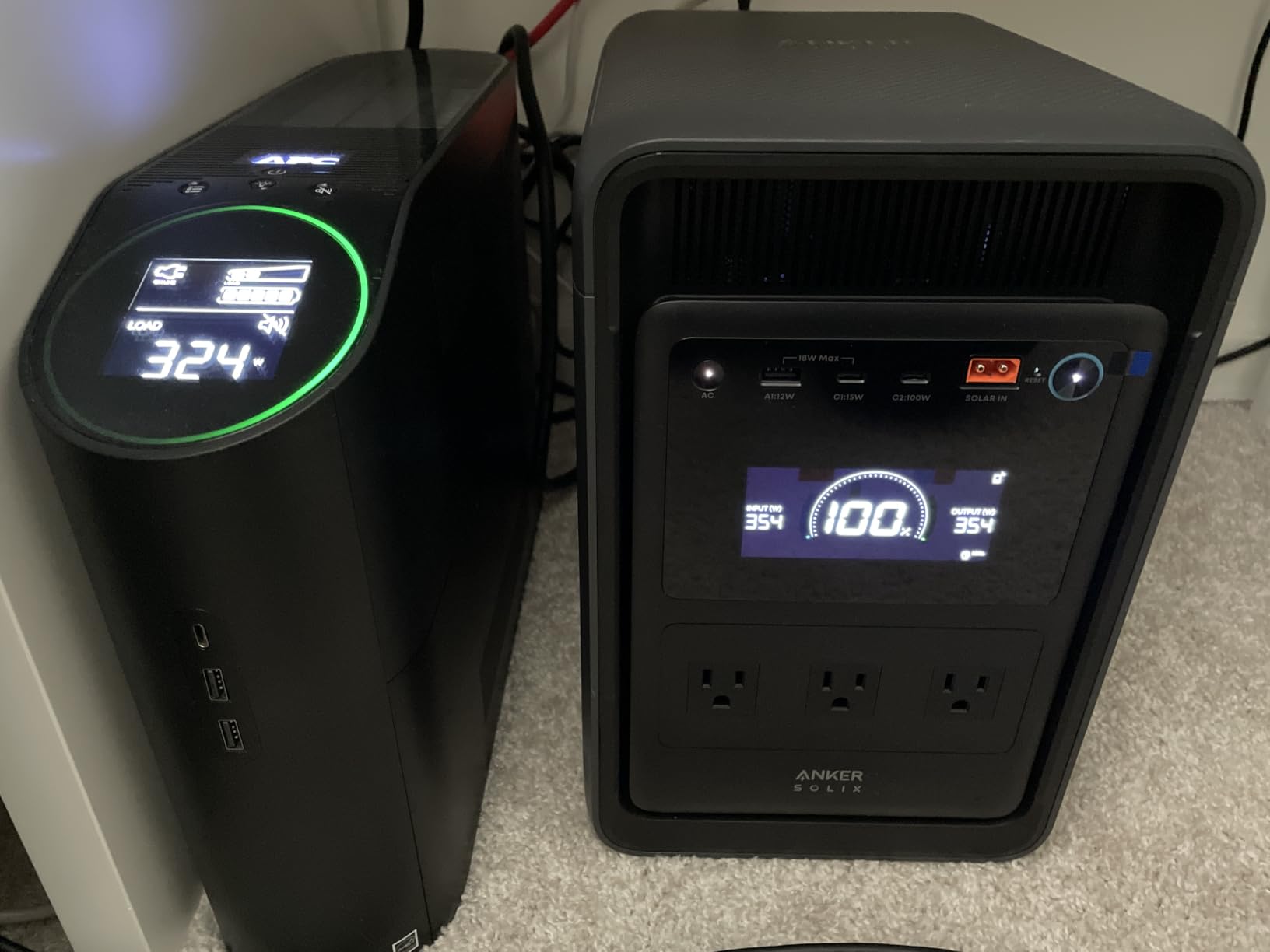
Best for infrequent use
Suits 1/3 HP pumps and smaller 1/2 HP models. The 10,000 cycle rating means a decade of occasional storm duty without the capacity loss that shows up in a 3,000 cycle cell.
The three watt UPS idle draw is the figure that decides it for a standby unit. Over a year of sitting connected that is a rounding error in your energy bill.
Where it falls short
No 240V output at all, and no option to add it. A 240V nameplate ends the conversation here.
There is no built-in carry handle, only edge grips, and reviewers mention a droning fan sound while charging. At 35.7 pounds that combination makes it a two-hand move from a closet, not a shelf-friendly one.
9. Jackery HomePower 3000: Best for RV, Off-Grid and 1 HP Starts
Jackery HomePower 3000 Portable Power Station, 3072Wh, 3600W AC Output
3600W continuous / 7200W surge
3072Wh LFP with 4,000 cycles
120V output
59.5 lbs
Pros
- 7200W surge for 1 HP motor starting
- UL-certified 20ms UPS switchover
- TT-30 RV port for plug and play use
- CTB design is 47 percent smaller and 43 percent lighter than comparable units
- 1.7 hour hybrid AC and DC recharge
- 4000 cycles at 70 percent capacity retention
Cons
- Only four AC outlets
- Solar panels sold separately
- 59.5 pounds is still a two-person lift for some
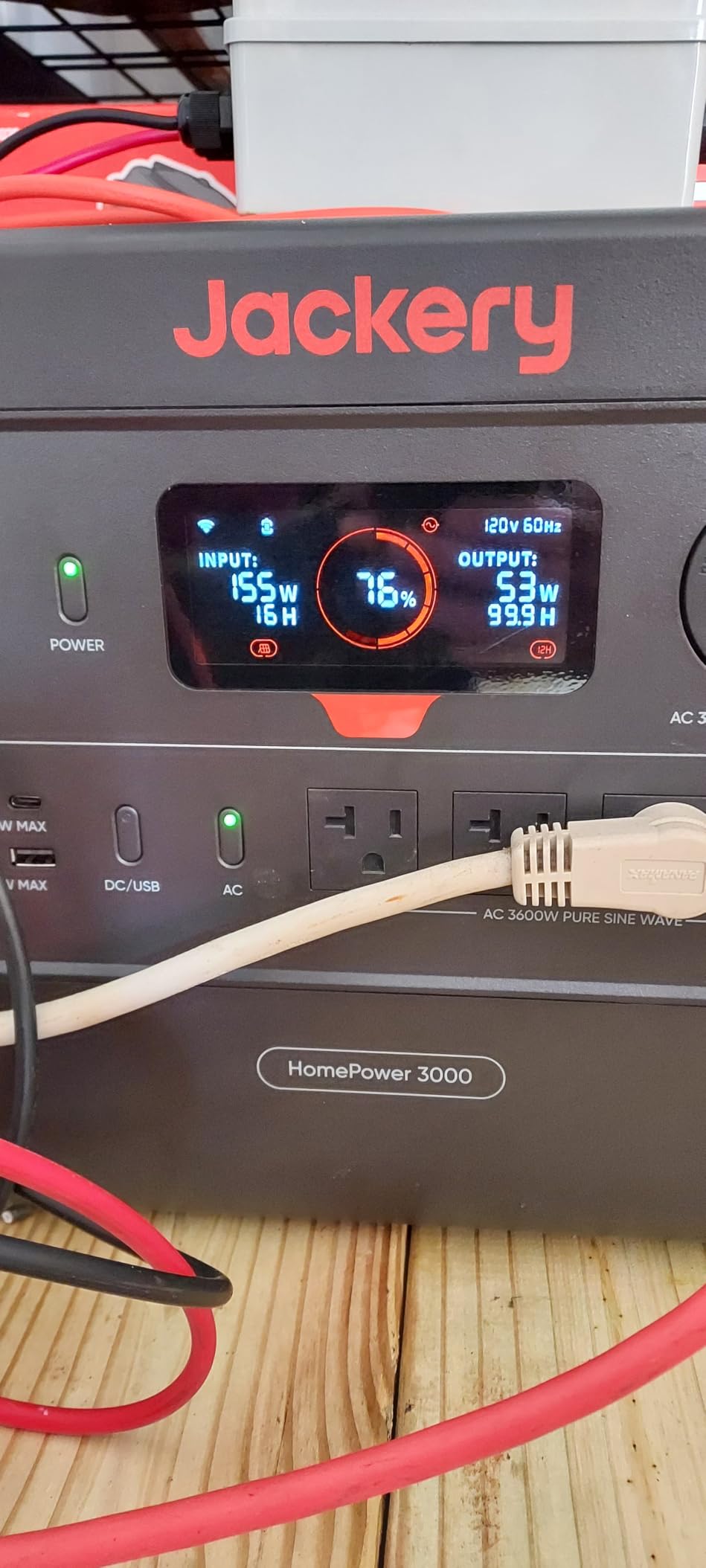
The surge figure is the headline. At 3,600 watts continuous and 7,200 watts surge, this is one of only two units in the roundup with genuine 1 HP starting headroom, and the CTB cell-to-body design means it does it in a smaller box than most competitors. 3,072 watt-hours gives roughly 2,610 usable watt-hours, about 112 minutes on a 1,400W pump.
The UL-certified 20ms UPS switchover is the detail that matters if you run a fridge or a medical device alongside the pump. Anything less and those appliances restart every time the motor comes online, which wears out compressors and food.
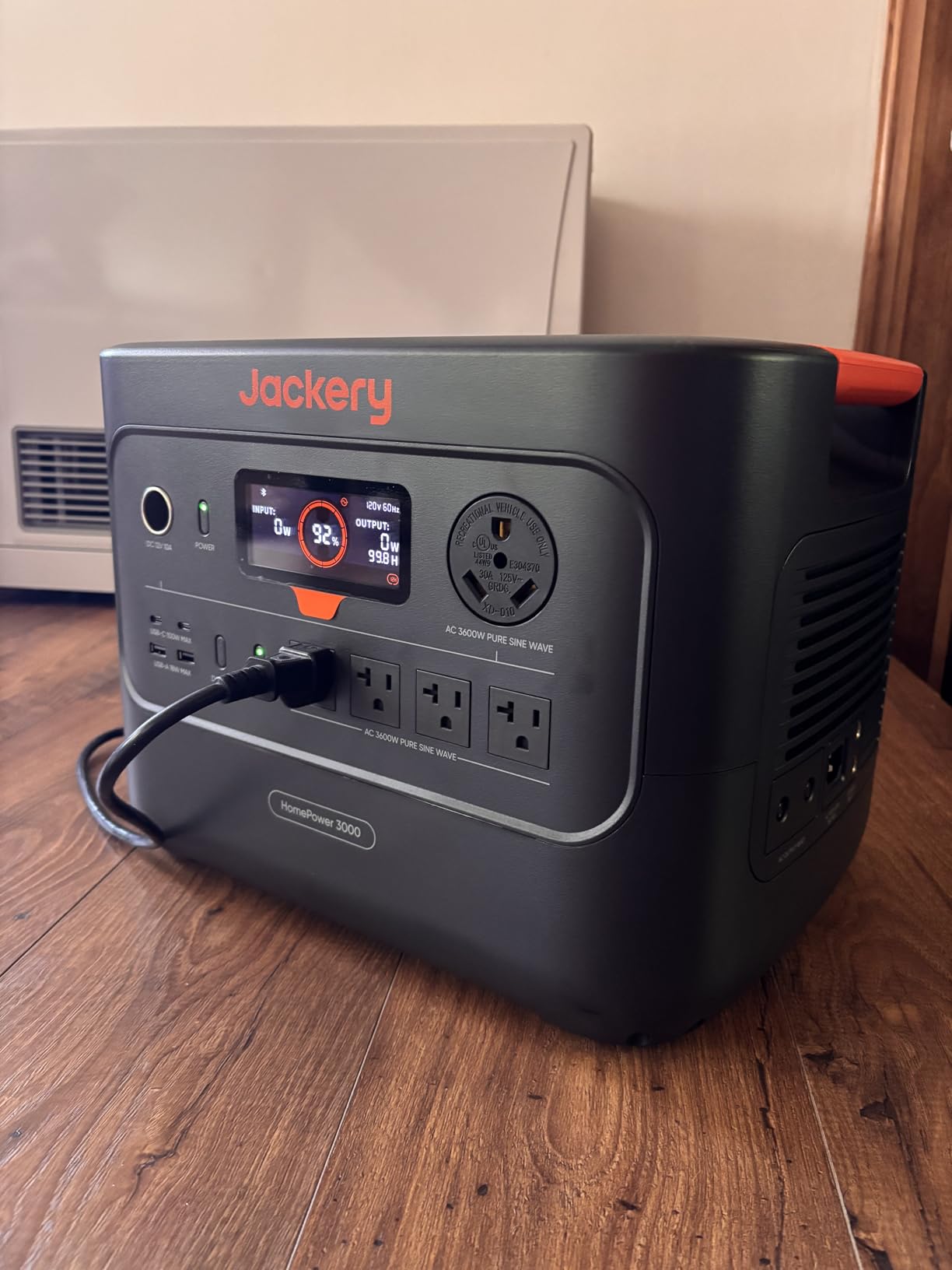
For off-grid and RV use, the TT-30 port and the built-in cables remove the two most common friction points on day one. Eighty percent solar charge in nine hours from a pair of 200 watt panels is a realistic field refill, and the 1.7 hour hybrid AC and DC recharge is fast for a 3kWh battery.
The 4,000 cycle rating at 70 percent capacity retention is a more honest number than most competitors publish, which tells you what to expect after a decade of partial discharges.
Where the 7200W surge pays off
Handles 1/2 HP and 3/4 HP pumps easily, and reaches into 1 HP territory when the motor locked rotor sits under 7,000 watts. That is the deepest well pump any 120V unit in this roundup can realistically attempt.
The TT-30 port means a camper or a mobile pump skid plugs in directly, which is where this unit earns its keep for anyone off grid.
What you accept for it
Output is 120V only, so a 240V submersible is out of reach. The 7,200 watts of surge does not change the voltage.
Four AC outlets and a 59.5 pound weight are the trade-offs for the compact enclosure. Plan a permanent spot and a two-person lift path.
10. EBL 2400W: Most Versatile for 120V Pumps
EBL 2400W Portable Power Station LiFePO4 Battery for Home Use
2400W continuous
1843.2Wh LiFePO4
120V output
54 lbs
Pros
- 2400W continuous output in a mid tier price bracket
- 0.1 second emergency power switchover
- 3500 plus cycles for a 10 year plus service life
- Full port suite including wireless charging
- Four mode LED emergency light
- Dual side handles
Cons
- Only a 2 year warranty
- No published surge figure
- No wheels at 54 pounds
- Less established support network
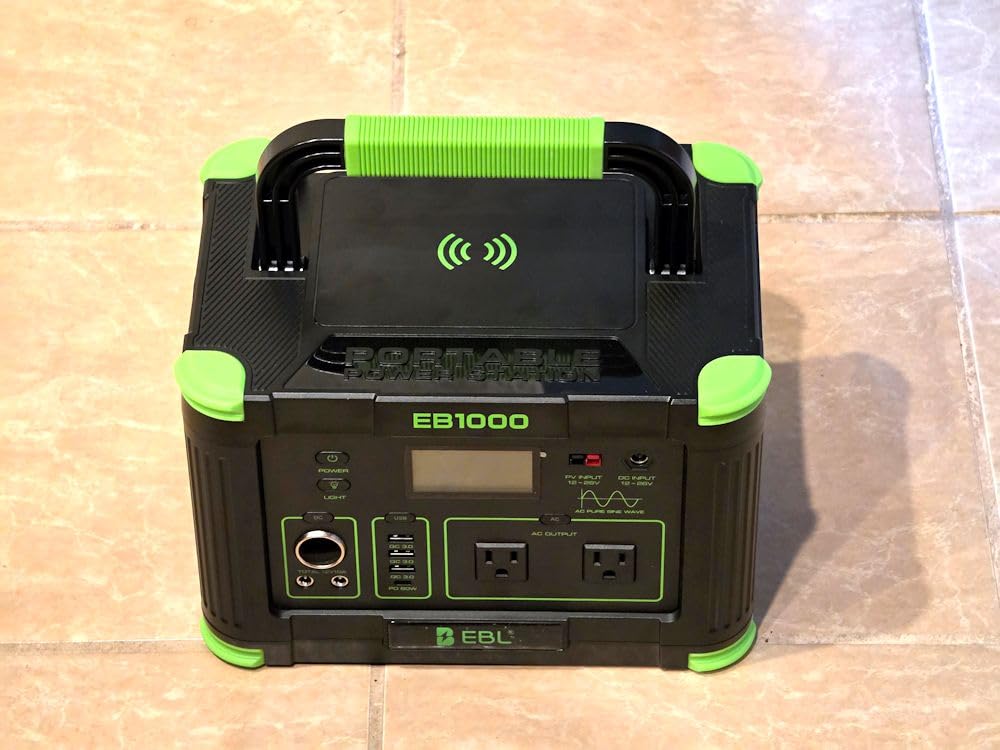
This one covers 1/2 HP 120V pump duty on continuous wattage, with 1,843 watt-hours of LFP capacity and a 0.1 second switchover that is fast enough for sensitive electronics. At roughly 1,567 usable watt-hours you get about 99 minutes on a 950W pump, which is a workable outage reserve for a small household.
What makes it interesting for a pump room is the port count and the emergency light. Twelve simultaneous device connections means the pump, a fridge, lights and a radio all come off one box, and the four-mode LED is genuinely useful in a dark basement or during a night outage.
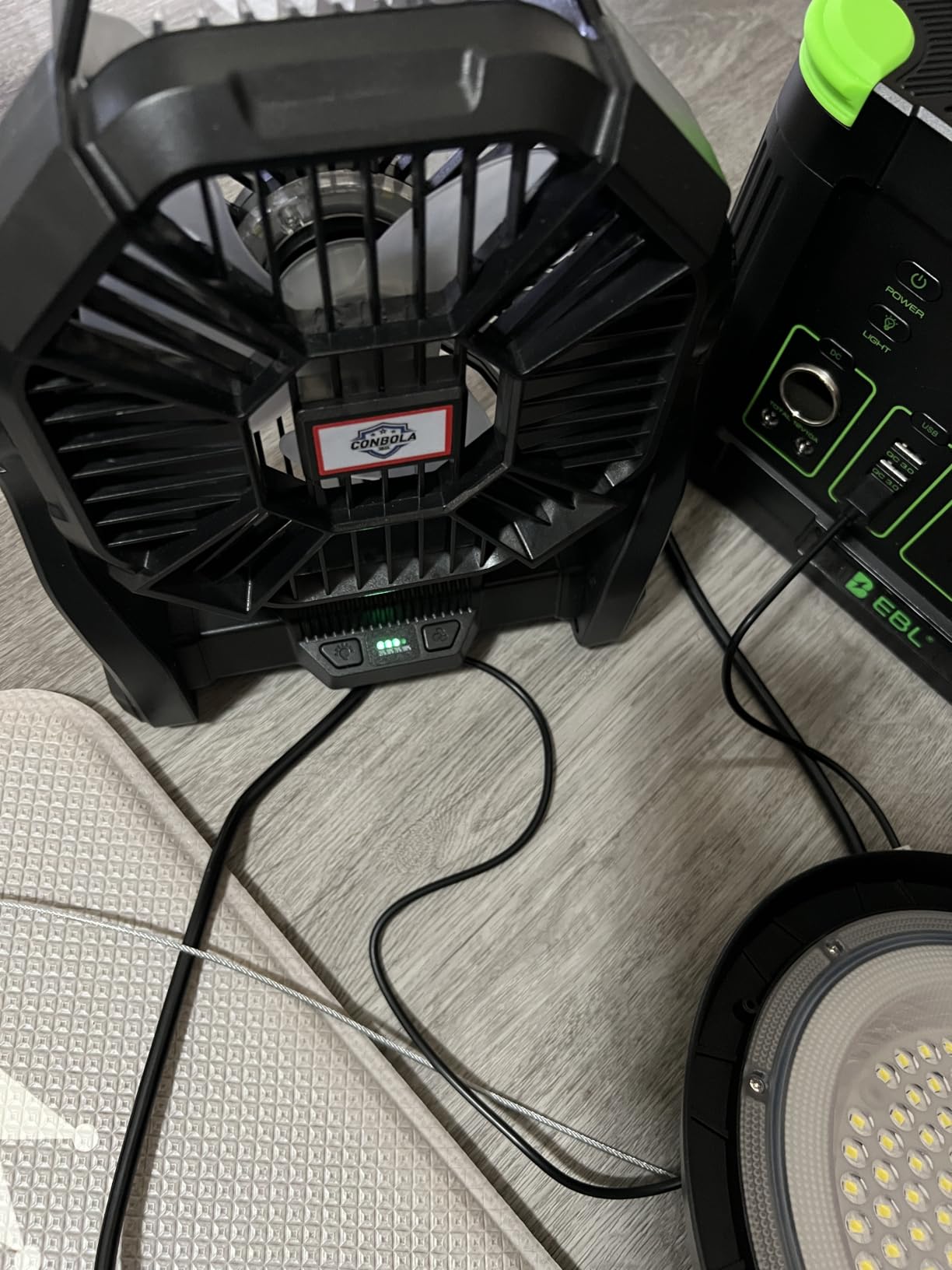
The 3,500 plus cycle rating works out to a 10 year plus service life, which is reasonable for a unit you cycle infrequently. Built-in protection covers overcharge, over-discharge, short circuit and thermal events, and the shell is described as shock resistant and flame retardant.
Two things to weigh before settling on it. The warranty is 2 years against 5 years on most of the roundup, which matters for a device whose whole job is to work once every few years. And the manufacturer is listed as Huizhou Intelligent Energy rather than EBL directly, so confirm who handles a service claim in your region.
What it covers
1/2 HP 120V and dual-voltage pumps up to about 1,000 running watts. Enough for drinking, cooking and a shower per person per day on roughly 100 minutes of run time.
Port variety means it can double as a general outage box for a small home, not just a pump starter, which no other budget option here does quite as well.
Where it is second best
No surge figure is published, so you are guessing at starting headroom. If your pump is 3/4 HP or larger, do not buy on the continuous number alone.
At 54 pounds with no wheels and a 2-year warranty, the total cost of ownership over a decade is less attractive than the entry sticker suggests.
How to Size Your Power Station for a Well Pump
Run these five steps and you will never be caught short. We use a 1,400 watt 3/4 HP submersible as the worked example, since that is a common residential pump size.
Step 1: read the nameplate. Our example reads 230V, 6.1A running, 27 LRA. Write all three down before you look at any station.
Step 2: running watts. 230V multiplied by 6.1A is 1,403W. Round up and call it 1,400W steady load. The pump will draw this for the entire time it runs.
Step 3: starting watts. 230V multiplied by 27 LRA is 6,210W. This is the number that decides which stations survive contact with your motor.
Step 4: apply a safety margin. Multiply both figures by 1.25. You now need a station rated for at least 1,750W continuous and 7,800W of starting capability, which in practice means the 1 HP tier and up.
Step 5: size the battery for cycles, not watts. Decide how long the pump runs per cycle and how many cycles you need. At 1,400W for twenty minutes, one cycle is roughly 467 watt-hours. Apply a 0.85 inverter derate, so a 3,000 watt-hour battery gives you about four cycles, and a 2,000 watt-hour battery gives about three.
Do the same arithmetic for a 1/3 HP pump at 700W for fifteen minutes and you need about 175 watt-hours per cycle, so the 1,070 watt-hour Jackery covers several cycles an afternoon easily. This is the calculation our medical device backup guide uses in reverse, and the same logic applies.
A rule of thumb worth keeping: a household of four drinking, cooking and washing needs roughly 300 gallons a day. At typical pump output that is five to ten short cycles, not one long run, which is why cycle count is a better buying metric than total watt-hours.
Soft-Start Devices vs a Natively 240V Station
A soft-start or inrush limiting device ramps the voltage up over a second or two instead of slamming full power into a stopped motor. It reduces peak current, which means a smaller station can start a pump it otherwise could not. One forum account describes fitting a soft starter to a heat pump and seeing it go from a hard start to 30A to start while running on 12A.
The maths is straightforward. If soft start cuts 27 LRA down to roughly 12 LRA, our example pump starts at about 2,760 watts instead of 6,210, and a 3,600W continuous station handles it with margin. That is a real path to fitting a 3/4 HP pump to a mid tier unit.
Two cautions. A soft starter does not change voltage, so it cannot help a 240V pump on a 120V station. And it adds a component to a circuit you are depending on during an emergency, which means one more thing that can fail. Where the budget allows, native 240V output is the cleaner answer.
Running a Pump Safely: Transfer Switch and EPS Backup
How you connect the station matters as much as which one you buy. The simplest and safest method is a dedicated outlet on a properly installed branch circuit, feeding the pump controller directly. No panel work, no backfeed, nothing to interlock.
If you want the whole house on backup, the route is an inlet box with a mechanical transfer switch or an interlock kit. One detailed community test documented connecting an Anker SOLIX F3800 to a main panel through an inlet box with an interlocked breaker, then testing a 240V well pump, a water heater and a heat pump on it. That is the closest thing to a real-world reference for this setup.
Never connect a portable power station directly to a panel through a male plug or a backfeed cord. That is how utility crews get electrocuted. Stations with a UPS or EPS mode under 20ms are appropriate for keeping electronics alive through a switch, but they are not a substitute for a listed transfer device.
When in doubt, have a licensed electrician size the branch circuit and install the disconnect. The pump circuit is exactly the kind of load where cutting corners gets expensive.
Solar Recharging and Water Rationing for Multi-Day Outages
Solar turns a day-one station into a week-long one, provided the panel is sized to the refill window you actually have. The F3000 accepts 2,400 watts across dual high-voltage MPPT inputs, the DELTA Pro 3 accepts 2,600 watts, and smaller units sit between 400 and 600 watts. A 400 watt panel on a 1kWh unit restores roughly a quarter of capacity in a full day of good sun.
Pair solar with a rationing plan and the maths gets comfortable. A family of four on 300 gallons a day uses roughly 75 gallons per person, most of which does not need to come from the well. Washing, dishes and laundry carry the discretionary load.
Running the pump in short scheduled bursts rather than continuously is the single biggest efficiency gain available, and it lets a smaller battery do the work of a larger one. Our van life power station guide covers the off-grid charging setups in more detail if you are building a field-rechargeable system.
When a Portable Power Station Is the Wrong Answer
A portable power station is the wrong tool in three situations. If you need to run the pump continuously for days, a stationary whole-home battery with a proper transfer switch is cheaper per usable watt-hour and has no cycle limits to worry about.
For a 3 HP irrigation pump, nothing in this roundup or on the consumer market is appropriate. Running watts near 6,000 and surge above 18,000 put it firmly in the generator or utility territory.
And if you rent, or your pump is inside a wall cavity with no dedicated circuit, the electrical work may cost more than the station. In that case a small generator that stays outside, with proper extension routing, is often the more honest answer.
Frequently Asked Questions
How many watts do you need to run a well pump?
A 1/3 HP shallow pump needs roughly 600 to 750 running watts and about 2,000 to 2,300 surge watts. A 1/2 HP submersible needs about 900 to 1,000 running watts with roughly 3,000 surge watts. A 3/4 HP deep well pump needs 1,300 to 1,500 running watts and up to 4,500 surge watts. A 1 HP submersible can draw 2,400 running watts and surge above 7,000. Always add 25 percent margin and verify against your pump nameplate.
Can you run a well pump off a battery?
Yes, a portable power station will run a well pump as long as two things line up. The station output voltage must match the pump nameplate voltage, and its surge peak must exceed the pump starting demand. A 120V station works with 120V or dual-voltage pumps. A 240V pump needs split-phase output, two paired units, or a different power source entirely.
Will a 240V well pump run on 120V power?
No. Voltage cannot be converted by adding wattage. A 240V single-phase motor fed from 120V will not start, and a step-up transformer is generally not recommended because the motor is designed for the higher voltage and the added conversion losses can prevent a start entirely. Use a station with 120V and 240V split-phase output, pair two stations, or run a generator.
How many amps does a 240V well pump pull?
Running amps and starting amps are two different numbers, both printed on the motor nameplate. A typical residential 3/4 HP 240V submersible runs around 6A and has locked rotor amps near 27, which is about 6,200 starting watts. A 1 HP model can run 10A or more with locked rotor amps in the low thirties. Multiply both by 240V to size your station.
How can I run my well pump during a power outage?
The simplest method is a dedicated branch circuit from the power station to the pump controller, installed by an electrician. For whole-home backup, use a listed transfer switch or an interlock kit with an inlet box. Never backfeed a panel through a male plug or extension cord. Stations with a UPS mode under 20ms keep electronics running through the switch.
Can a portable generator run a well pump?
Yes, and for 3 HP irrigation pumps or continuous multi-day water it is usually the better tool. A generator sized to your pump surge requirement will start it easily and run for as long as you have fuel. A portable power station is quieter, needs no fuel logistics, and sits indoors, but its watt-hours limit how long it can run.
Final Verdict: The Best Portable Power Stations for Well Pumps in 2026
Start with the voltage on your pump nameplate, because it eliminates most of this list before you spend an hour on it. If it reads 240V, the EcoFlow DELTA Pro 3 is the only single-unit answer in the roundup, and everything else requires pairing, a soft starter or a different approach entirely.
If it reads 120V or dual voltage, match the pump size. Our top pick, the Jackery Explorer 1000 v2, handles 1/3 HP shallow pumps with margin and the lightest carry weight. The Anker SOLIX C2000 Gen 2 is the balance pick for 1/2 HP duty, and the EcoFlow DELTA Pro reaches 3/4 HP on 120V pumps with real surge headroom. For a well that has to run for a week, the Anker SOLIX F3000 with expansion is the endurance answer.
Whichever you choose, run the five-step sizing calculation with your own nameplate numbers before you buy, and test a real start in daylight long before you need one in the dark.