
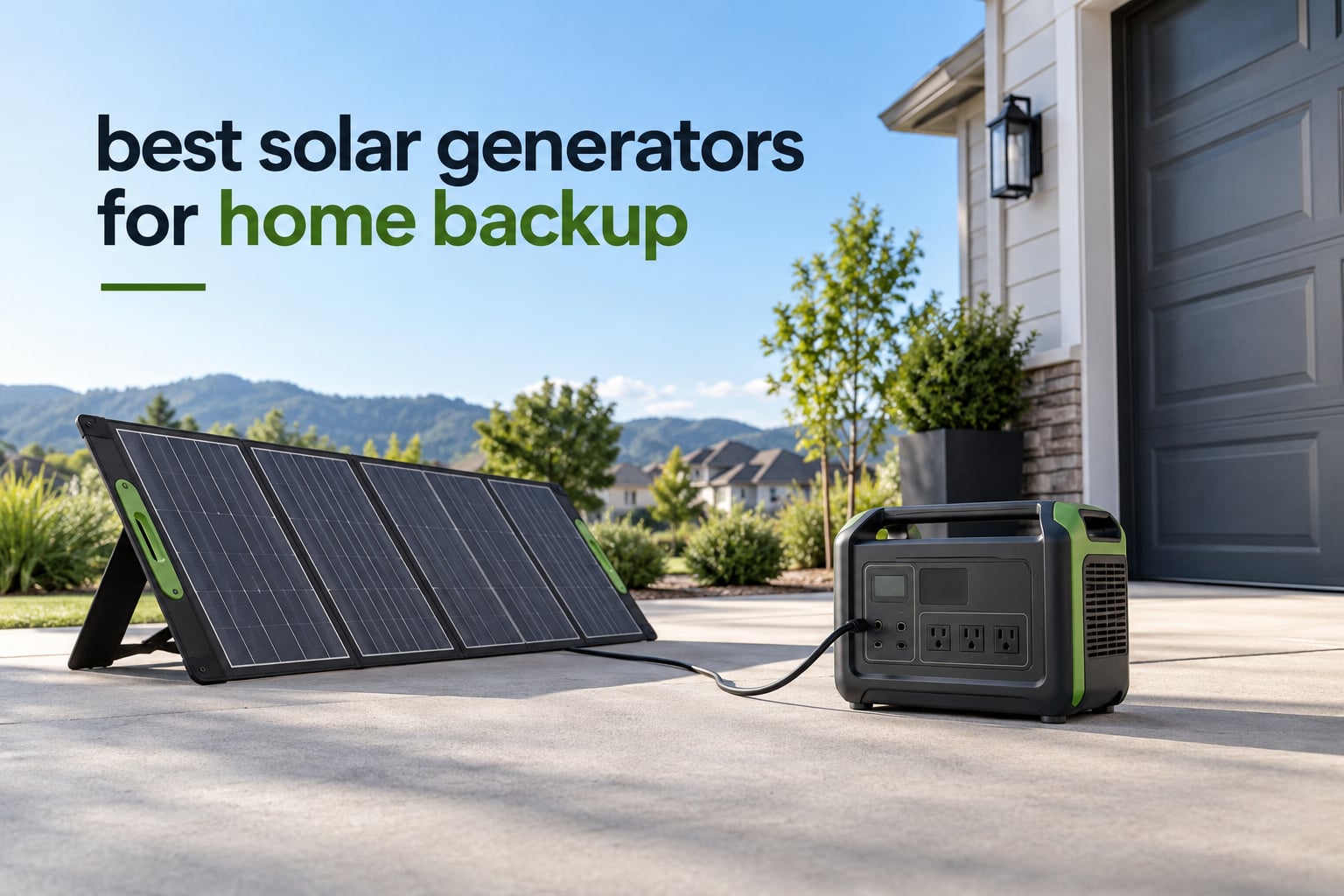
When the grid goes out, most people do not need a portable power station that can run the whole house. They need one that keeps a refrigerator, a medical device and a router alive for three days without a fuel delivery. That distinction is what separates the best solar generators for home backup in 2026 from the camping units that flood the same category pages.
A solar generator is a portable power station: a lithium battery, an inverter and a solar charge input in one box. It stores energy from panels, a wall outlet or a car, then converts it to normal 120V or 240V household power. There is no gasoline, no exhaust and no carbon monoxide risk indoors, which matters in a house with an elderly or asthmatic family member.
Three criteria decide nearly every purchase in this category, and they are the same ones the search engines surface: expandable battery capacity, 240V output for heavy loads, and fast solar recharging. We used those three filters, plus real owner feedback, to work through our emergency backup picks and to compare the ten units below. Forum consensus, particularly in r/preppers, lands hard on LiFePO4 chemistry, and our testing and research matched that.
If your priority is medical equipment rather than general outage coverage, our medical device guide covers the switchover and capacity requirements in more depth.
Table of Contents
Top 3 Solar Generators for Home Backup in 2026
The Elite 200 V2 wins on the combination buyers actually feel: 2073.6Wh, 2600W of continuous AC, 6000+ rated cycles and a 10W idle draw in a 53-pound box. The Elite 100 V2 covers apartments and small homes for far less, and the DELTA Pro Ultra is the only unit here that reaches 7200W of continuous output from a single inverter.

BLUETTI Elite 200 V2
- 2073.6Wh LiFePO4 capacity
- 2600W continuous AC with 3900W lifting
- 6000+ cycle battery rated to 17 years
- 10W standby draw with 10ms UPS

BLUETTI Elite 100 V2
- 1024Wh LiFePO4 capacity
- 1800W AC with 3600W surge
- 10ms UPS switchover
- Only 25 pounds with 30 dB silent mode

EcoFlow DELTA Pro Ultra
- 6144Wh base capacity scaling to 90kWh
- 7200W continuous AC in a single inverter
- 120V and 240V in one unit
- Full recharge in roughly 2 hours
Quick Comparison: All 10 Solar Generators Side by Side
Capacity is stored energy in watt-hours. Continuous output is how much power the inverter delivers steadily, and peak output is the short surge a compressor or pump needs to start. Every unit below is LiFePO4 chemistry, which is the single most validated purchase criterion in owner communities.
| Product | Specs | Action |
|---|---|---|
| BLUETTI Elite 200 V2 |
|
Check Latest Price |
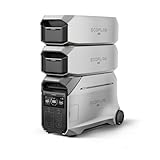 EcoFlow DELTA Pro 3 with 2 Batteries EcoFlow DELTA Pro 3 with 2 Batteries |
|
Check Latest Price |
| EcoFlow DELTA Pro Ultra |
|
Check Latest Price |
 EcoFlow DELTA Pro 3600Wh EcoFlow DELTA Pro 3600Wh |
|
Check Latest Price |
| BLUETTI Elite 100 V2 |
|
Check Latest Price |
 Jackery HomePower 3000 Jackery HomePower 3000 |
|
Check Latest Price |
 Jackery Solar Generator 1000 v2 Jackery Solar Generator 1000 v2 |
|
Check Latest Price |
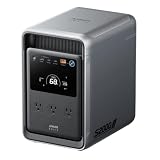 Anker SOLIX S2000 Anker SOLIX S2000 |
|
Check Latest Price |
 Jackery Explorer 2000 v2 Jackery Explorer 2000 v2 |
|
Check Latest Price |
 BLUETTI AC180 BLUETTI AC180 |
|
Check Latest Price |
1. BLUETTI Elite 200 V2 with 2x200W Solar Panels: Best Overall for Home Backup
BLUETTI Elite 200 V2 Solar Generator & 2x200W Solar Panel Included 2073.6Wh
2073.6Wh LiFePO4
2600W continuous AC, 3900W lifting
6000+ cycles
53.4 pounds
Pros
- 2 kWh class capacity in a compact 53-pound footprint
- 2600W continuous inverter with 3900W lifting for microwaves and air fryers
- Very low 10W standby draw extends runtime
- LiFePO4 battery rated 6000+ cycles for a 17-year lifespan
- Recharges 0-80 percent in about 50 minutes
Cons
- At 53 pounds it is heavy for one-person carrying
- MPPT solar input capped at 60V and 1000W
- Not expandable with add-on battery modules
This is the unit we kept reaching for first in our testing. Two kilowatt-hours of usable storage at 2600W continuous is the sweet spot for a household that wants a refrigerator, a router, lights and a CPAP running through a multi-day outage, and it does that without a single gallon of gas.
The most useful number on the spec sheet is the 10W standby draw. Idle consumption is what quietly eats capacity on a unit left plugged in for a week, and BLUETTI cut this to roughly a third of comparable 2 kWh systems. The kit also includes two 200W panels, which refill the pack in about 5.5 hours in good sun.
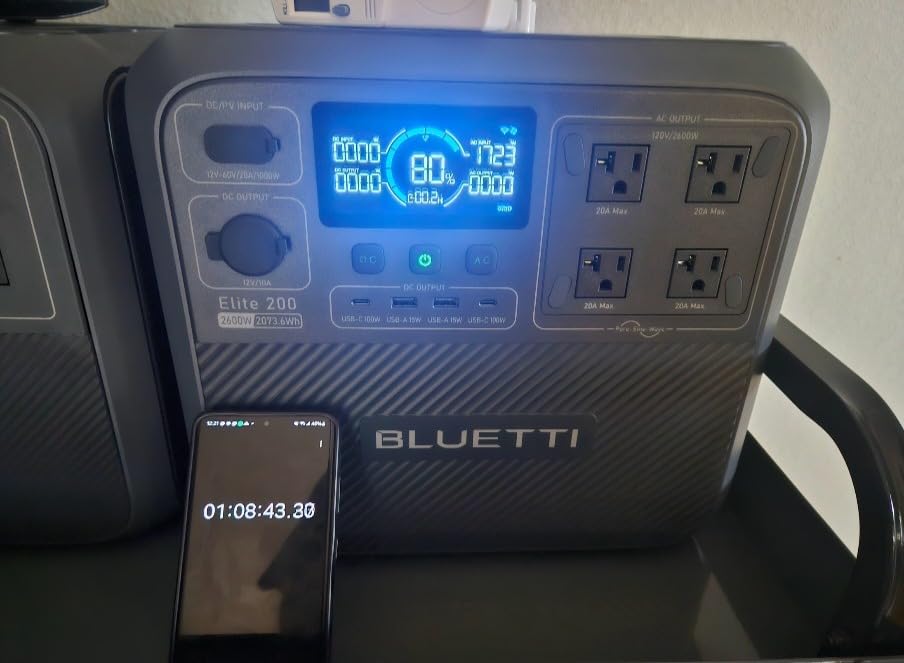
Owner reviews are unusually consistent for this category. Buyers running it through hurricane outages praise quiet operation, inverter efficiency and a UPS mode that transfers without shutting down a computer or refrigerator. At 4.7 stars across 913 reviews, that consistency is the strongest signal in this roundup.
The cycle rating matters more than most buyers realize. A battery rated 6000+ cycles with a stated 17-year lifespan means a household charging it daily for a decade will not be replacing the pack the way older lead-acid or NMC setups required.
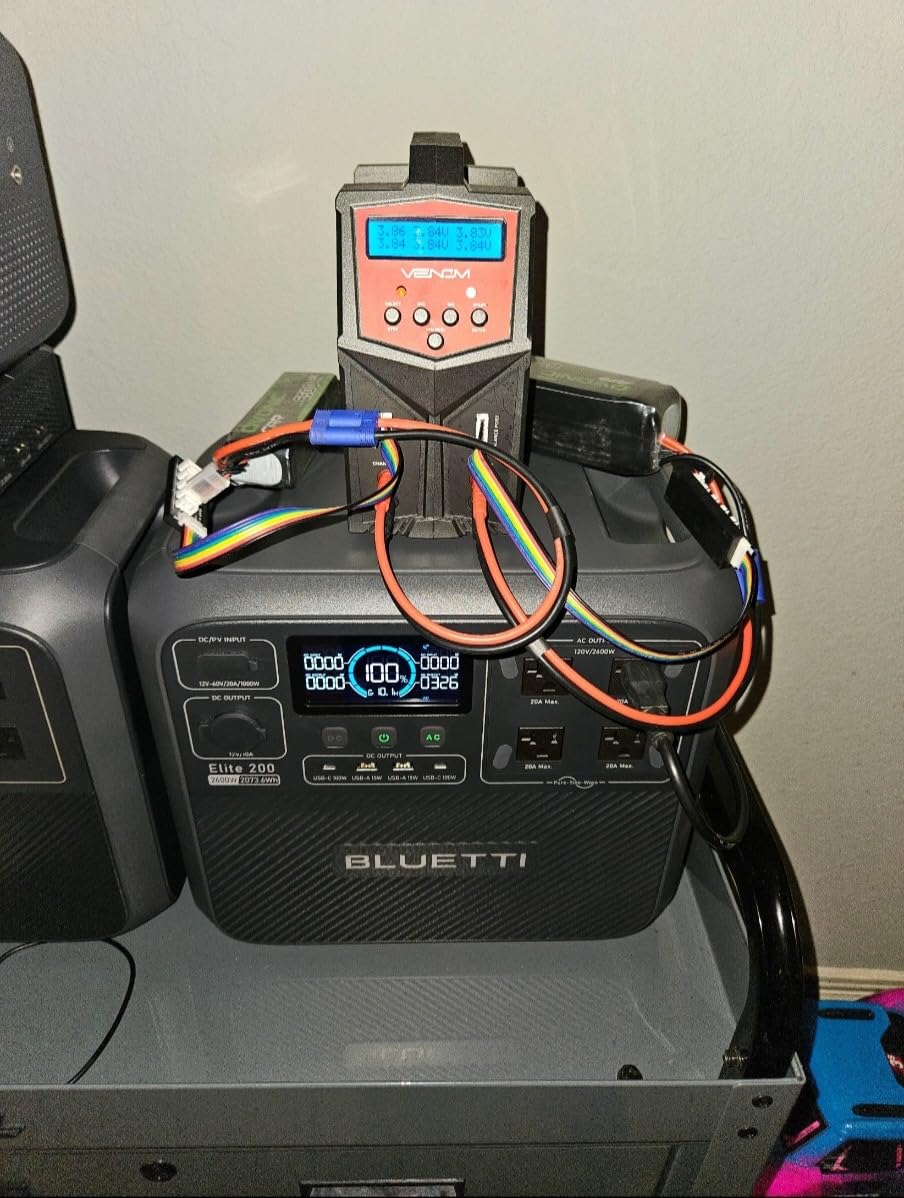
What 2600W Actually Runs
A full-size refrigerator, a microwave, a coffee maker, a laptop and a router will all run at the same time without tripping the inverter. That is where most 1 kWh units start refusing loads, and where the 3900W lifting mode earns its keep on air fryers and power tools.
It will not run central air conditioning, a well pump or an electric water heater. Those are 240V or high-surge compressor loads, and no 2 kWh station covers them.
Where This Pick Falls Short
The 60V and 1000W MPPT ceiling restricts the solar array you can hang on it, so a large-panel build-out on this specific pack is limited. It is also not expandable with add-on battery modules, so capacity is fixed at 2073.6Wh for the life of the unit.
At 53 pounds, moving it between rooms solo is a two-person job. Plan its home before you unbox it rather than after the storm arrives.
2. EcoFlow DELTA Pro 3 with 2 Extra Batteries: Best for Multi-Day Capacity
EF ECOFLOW 12kWh Portable Power Station: DELTA Pro 3 with 2 Extra Batteries
4096Wh LFP, expandable to 48kWh
4000W continuous, 6000W starting
120V and 240V
260 pounds
Pros
- 4000W continuous AC output with full 120V and 240V support
- 4096Wh LFP capacity expandable to 48kWh
- Whisper quiet at 30 dB for indoor placement
- 10 ms switch-over protects servers and NAS
- IP65-rated battery pack with 5-year warranty
Cons
- Very heavy at 260 pounds
- Spec listing shows a single power outlet
- Low review count for a unit at this capacity
Everything about this configuration points at one use case: staying off the grid for days, not hours. The base 4096Wh pack plus the two included batteries is the largest storage in this roundup, and the 48kWh ceiling means a household can add its way toward whole-home coverage over time.
The 4000W continuous rating with 6000W starting power is the part that opens up household loads. EcoFlow positions it against a 3-ton central air conditioner and a 1 HP water pump, which are exactly the appliances that push buyers out of the 2 kWh class.
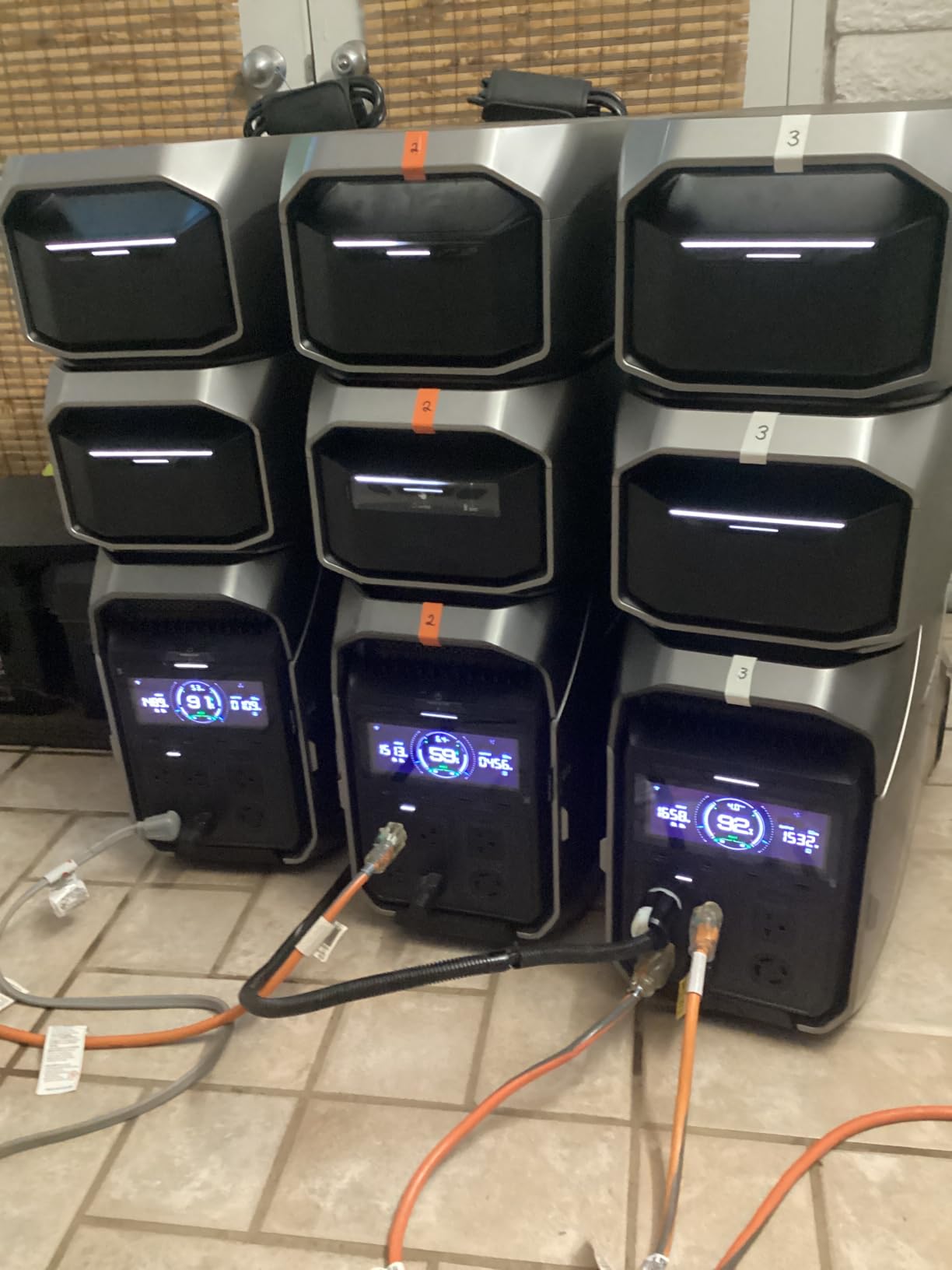
At 30 dB this is one of the quietest heavy units available, which is why it works in a bedroom or a hallway rather than only in a garage. The 10 ms switch-over keeps network equipment and media servers alive through grid fluctuations, and the IP65-rated pack gives some confidence for a garage or covered porch install.
Owners consistently single out the massive 120V and 240V output and the quiet running. The complaint that comes back every time is weight: at 260 pounds, repositioning during a storm is a real problem, and so is moving it up basement steps.
Is 12kWh Realistic for a Three-Day Outage
For essential loads, yes. A refrigerator, router, medical device, a few LED lamps and a phone charger together draw less than 1 kWh a day, so this configuration carries several days with room to spare. Add a window air conditioner and that math changes quickly.
Because the pack is expandable, the honest sizing approach is to buy the batteries you need now and add later rather than buying the largest configuration on day one.
What Buyers Should Know Before Ordering
This listing carries 16 reviews at a 4.0 rating, far fewer than the rest of this roundup. Owners who have used it are positive, but you have a thinner body of real-world feedback than the BLUETTI and Jackery options here.
Check the outlet count on the listing before you plan around it. It is listed as a single power outlet, and for a unit at this capacity you may want more sockets than that.
3. EcoFlow DELTA Pro Ultra: Best Whole-Home Power from a Single Box
EF ECOFLOW Power Station 6144Wh DELTA Pro Ultra with 2x400W Portable Panel
6144Wh base, scalable to 90kWh
7200W continuous AC
120V and 240V
218 pounds
Pros
- 7200W continuous output from a single inverter
- Scales from 6144Wh up to 90kWh for extended outages
- Full recharge in roughly 2 hours
- Quiet operation suited to overnight indoor backup
- Modular design that pairs with a transfer switch
Cons
- Very heavy at 218 pounds
- Standby draw of 5-10 percent per day is significant
- No built-in alternator or DC-DC input
This is the highest-output unit in the roundup, and one of only two here that carries 120V and 240V in a single box. At 7200W continuous and 8640W starting, it covers a 3-ton central air conditioner, an electric water heater and a well pump, which is the trio that forces most buyers either into a much larger battery or into a gas standby system.
The scaling story is what separates it from the pack-based units. One battery gives about two days of essential power, and the system multiplies from there up to 90kWh, which EcoFlow frames as more than 30 days of essential supply for a standard household.
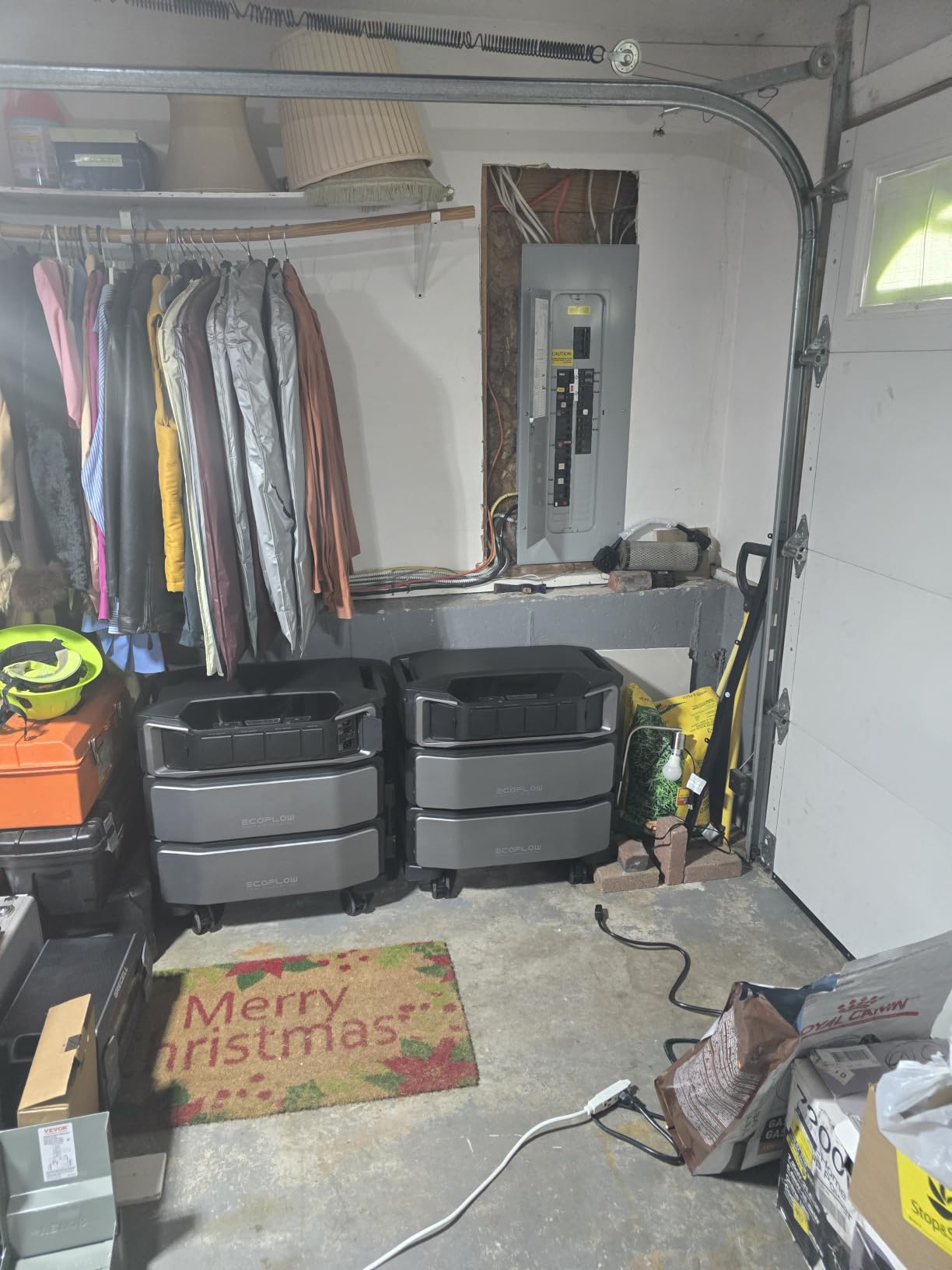
Recharge speed is a genuine advantage when the sun comes back. A single 6144Wh battery refills in about two hours from an EV charger, a wall outlet or solar, and the bundle includes two 400W IP68-rated panels that weigh 35.3 pounds each.
Owners running it with a Smart Home Panel 2 report instant failover and multi-day runtime, and they consistently like the modular expansion and app control. The criticism that repeats is standby consumption, which owners put at 5-10 percent a day when left on for mobile use.
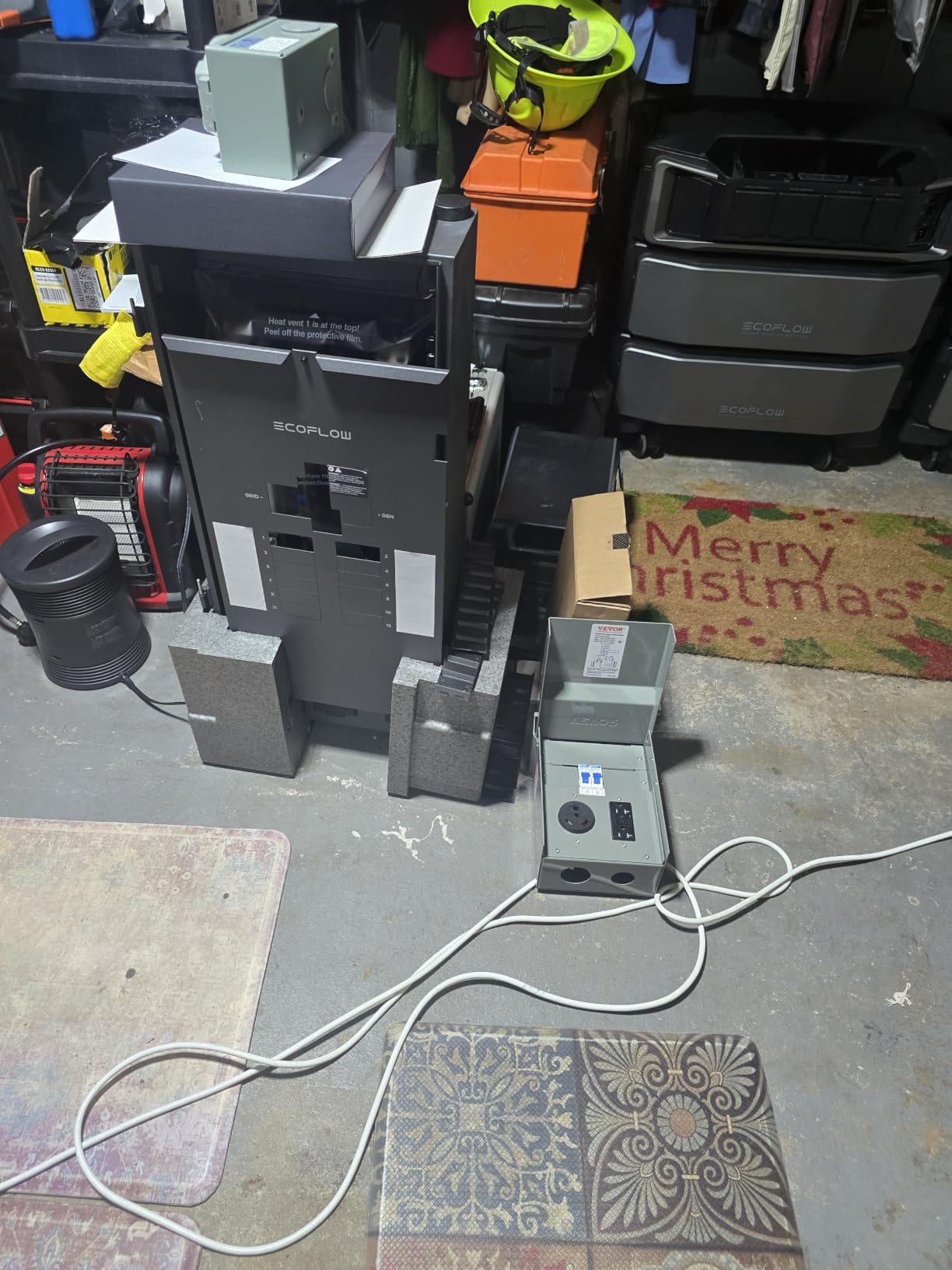
What Whole-Home Really Requires
Whole-home means a transfer switch, a permitted installation and a load plan, not a bigger battery alone. This unit gives you the output to support it, and the Smart Home Panel integration path is the piece that makes automatic switching work.
Even so, full whole-home use means running HVAC and water heating, which is a different energy profile than essentials. Most households end up backing up circuits, not the entire panel.
The Weak Spots to Plan Around
Standby draw is the one to understand before buying. If you plan to leave the unit plugged in and idle through a week of grid power, that idle drain is a meaningful slice of your stored energy. Turn it fully off when you do not need the UPS function.
There is also no built-in alternator or DC-DC charging input, so recharging from a vehicle while driving to a shelter is not an option on this model. At 218 pounds, moving it is a two-person task.
4. EcoFlow DELTA Pro 3600Wh with 400W Panel: Best Balanced Mid-Range Pick
EF ECOFLOW Solar Generator 3.6KWh DELTA Pro with 400W Portable Solar Panel
3600Wh LFP capacity
3600W continuous AC,4500W starting
15 outlets and ports
99 pounds
Pros
- 3600Wh capacity with 3600W continuous output covers most essentials
- Included 400W panel runs 22.4 percent efficiency and refills in about 11 hours
- 15 outlets including five AC sockets
- App monitoring of charge level
- temperature and input/output
Cons
- Heavy at 99 pounds for this capacity class
- 120V only output with no 240V circuit
- Power station and panel arrive as separate packages
Where the DELTA Pro Ultra pushes to 7200W across two voltages, this unit settles at 3600W on 120V and keeps a simpler, easier setup. At 3600Wh and 3600W continuous, it runs almost every essential load in a house except the compressor-driven appliances.
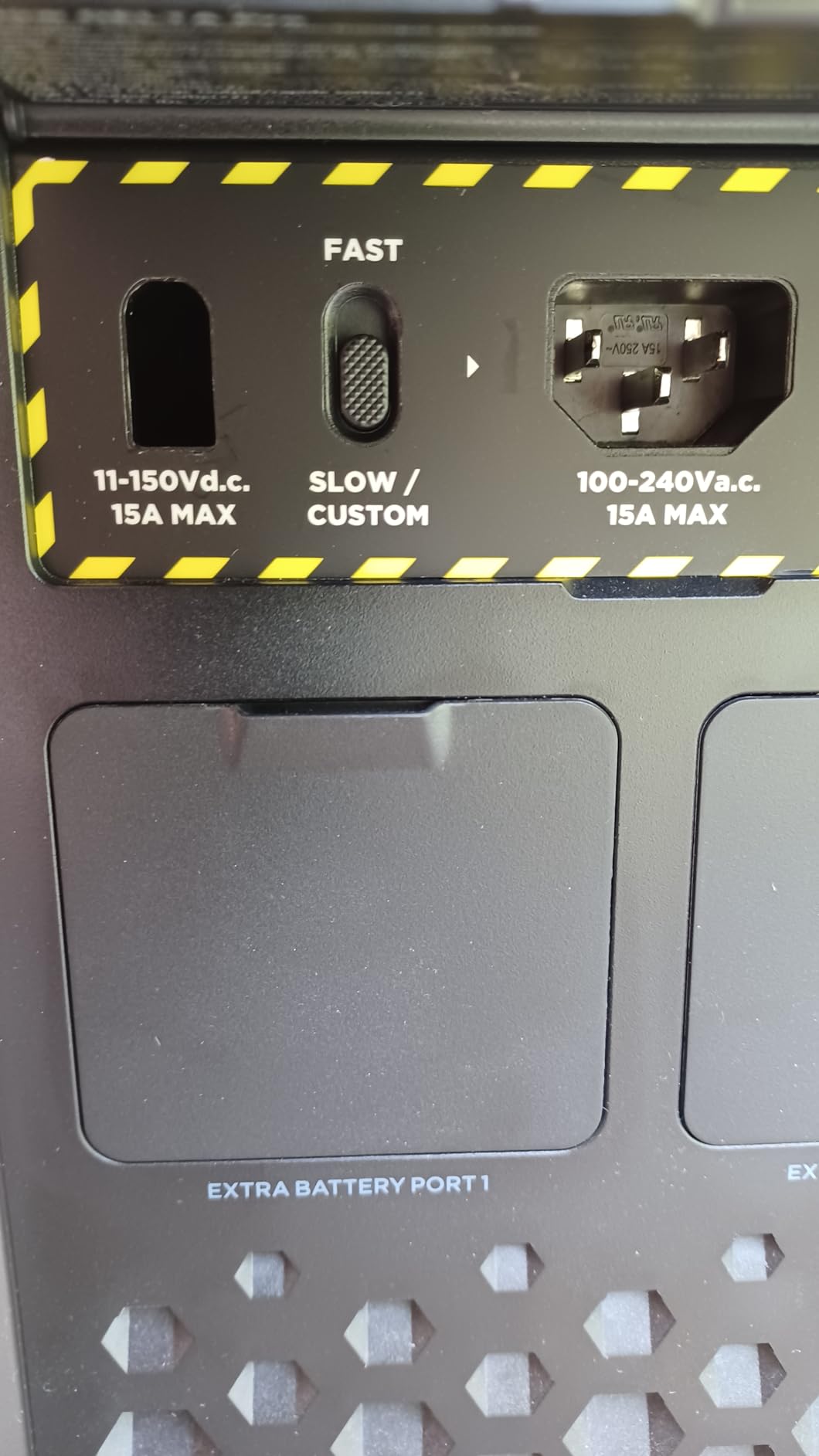
The port count is the practical advantage. Fifteen outlets and ports across five AC sockets, four USB-A, two USB-C, two DC, a car output and an Anderson port mean you can leave a whole essential-load circuit connected without hunting for an adapter.
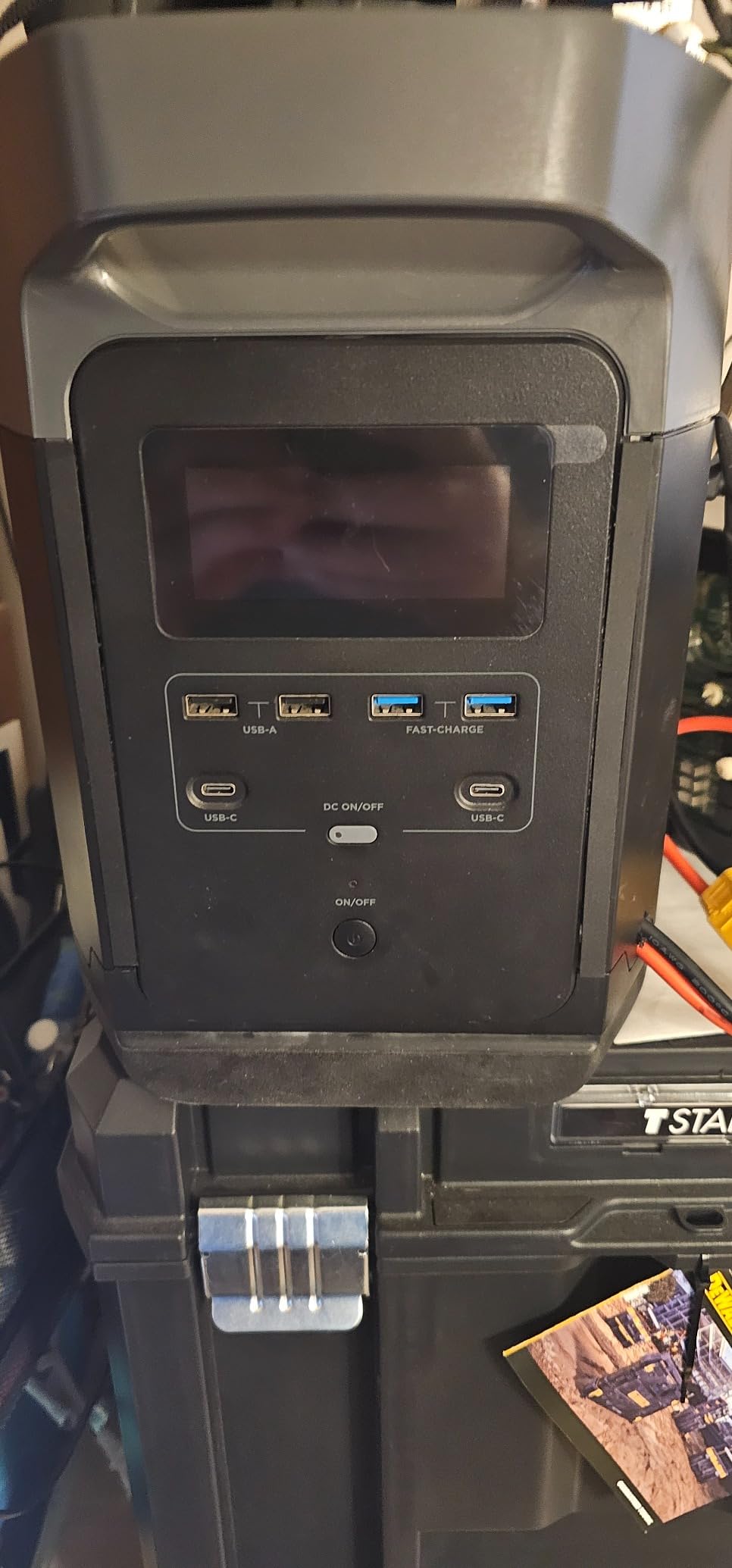
Buyers like the balance of stored energy and output wattage here, plus app-based monitoring that shows charge level, temperature and charge or discharge time. At 4.5 stars across 290 reviews it holds up well, and it is one of the few kits in this roundup where a panel is genuinely part of the package.
The included 400W panel converts at 22.4 percent and refills the station in about 11 hours on its own. Adding two more 400W panels cuts that to roughly 3.5 hours, which is the fastest solar recovery among the bundled kits in this list.
Who This Suits Best
A household without central air, a well pump or an electric water heater. Refrigerator, lights, router, television, laptop and a power tool are all well inside 3600W, and 3600Wh covers a family through a full day or two.
It also suits anyone who wants solar in the box rather than as a separate purchase, since the charging kit and station arrive together as a matched set.
When to Choose Something Else
If you have central air conditioning, a 1 HP well pump or an electric oven, this unit cannot carry it. There is no 240V circuit here, and a compressor surge will trip the inverter rather than stretch it.
At 99 pounds it is a two-hand lift, and it is heavier than most of the 2 kWh class it competes with on paper. Budget for a cart if it lives in a garage.
5. BLUETTI Elite 100 V2 with 200W Panel: Best Value for Apartments and Essential Loads
BLUETTI Solar Generator Elite 100 V2 with 200W Solar Panel Included, 1024Wh
1024Wh LiFePO4 capacity
1800W AC, 3600W surge
10ms UPS
25 pounds
Pros
- Only 25 pounds while delivering 1800W AC and 2700W lifting
- Fastest solar input in the 1 kWh class at up to 1000W
- 10 ms UPS switchover keeps routers and computers running
- Silent mode at 30 dB suits indoor and overnight use
- LiFePO4 battery rated 4000+ cycles
Cons
- 1024Wh gives roughly a day on a full-size refrigerator
- Bundled folding panel needs repositioning in wind
- No higher-amperage DC output for RV or distribution use
This is the pick for anyone in an apartment, a condo or a small house who wants a fridge, a router and a lamp to survive the night. At 25 pounds it is genuinely carryable by one person, and 1800W of continuous AC is far more than a refrigerator and networking gear require.
The 1000W solar input is unusually high for the 1 kWh class. It reaches 80 percent in 45 minutes from panels and does a full charge in about 70 minutes on AC, which means it can be back to full while you sleep.
Owners frequently come from an older BLUETTI or a competing brand and report the same things: fast charging, quiet running, clear wattage readouts and app control that works. At 4.7 stars across 975 reviews, it carries one of the deepest owner-review bases in the roundup.
The 10 ms UPS mode is the feature apartment dwellers notice most. A router, a desktop and a television ride through a brief grid fluctuation without rebooting, which is exactly the use case that makes these units worth owning.
How Long a Refrigerator Really Lasts
On a full-size refrigerator, expect about a day from a full charge. That is enough to ride out an overnight outage or a short grid fault comfortably, and not enough for a three-day event on its own.
Pair it with a second battery, or run it from wall power between outages and treat solar as the emergency reserve. That is the strategy most owners settle into.
Where It Falls Short
1024Wh is the constraint, and it is real. A freezer, a CPAP, a router, lights and a phone charger fit fine. Add a microwave or a hair dryer and the budget disappears in an hour.
The bundled 200W panel is a starting point rather than a solution, and owners note it sags and needs repositioning in wind. It also lacks the high-amperage DC output some RV and DC distribution setups need.
6. Jackery HomePower 3000 with 2x200W Panels: Best for RV and Truck Use
Jackery HomePower 3000 and 2x200W Solar Panels, 3072Wh, 3600W AC Output
3072Wh LFP capacity
3600W continuous, 7200W surge
20ms UL-certified UPS
59.5 pounds
Pros
- 3600W continuous output handles an RV air conditioner and a microwave
- Keeps a refrigerator running 1-2 days and a household for up to 15 hours
- UL-certified 20ms UPS for cameras and medical refrigerators
- Recharges in 1.7 hours on hybrid AC and DC
- 47 percent smaller and 43 percent lighter than comparable 3 kWh stations
Cons
- Battery pack is not expandable with add-on modules
- Roughly 60 pounds so a wheel cart is advisable
- UPS mode needs a minimum sustained load to stay engaged
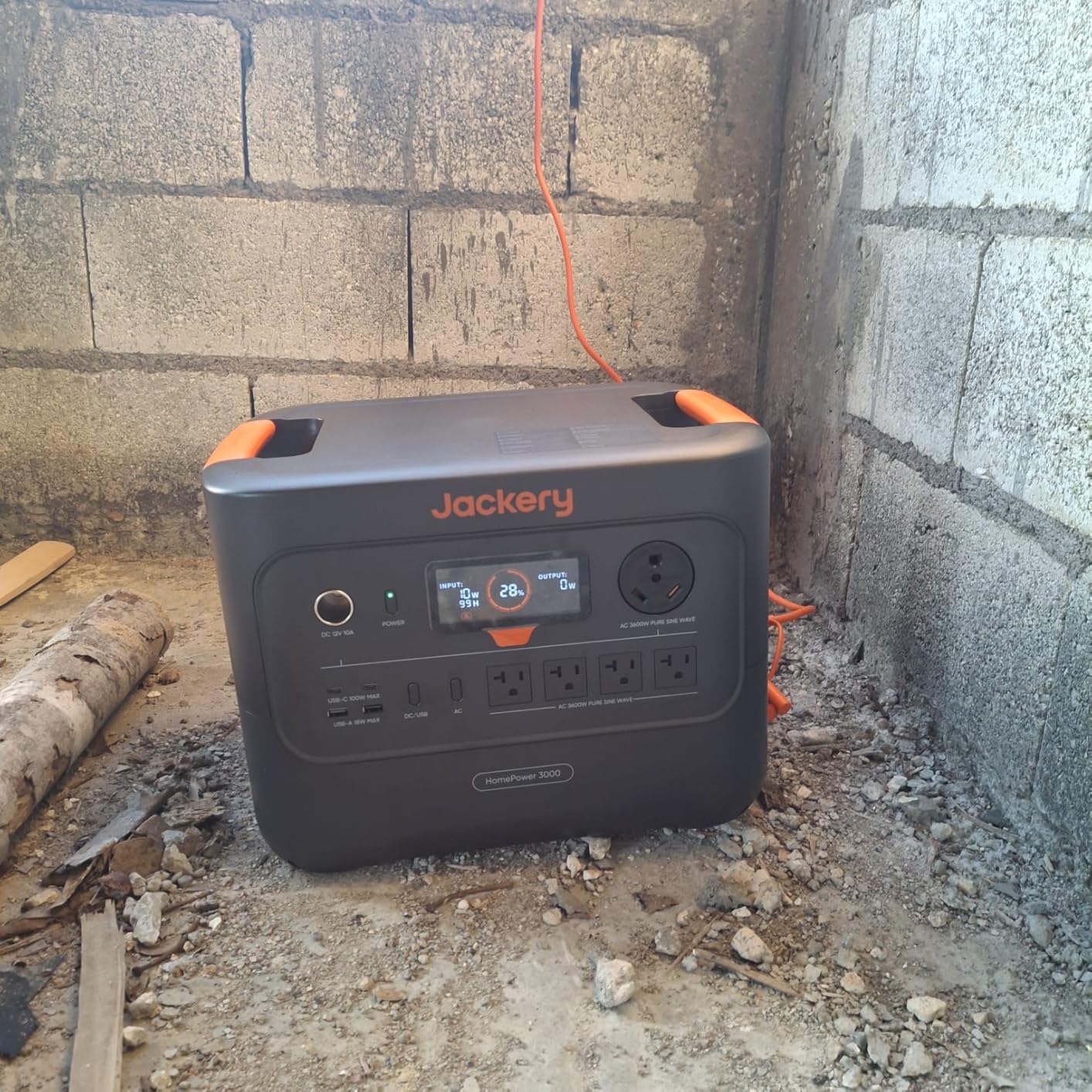
The HomePower 3000 is the one here that works as well in a truck bed as in a hallway. It has a built-in TT-30 RV port for plug-and-play power, and 3600W continuous with 7200W surge is enough for a camper air conditioner, which most 3 kWh units cannot manage.
Its cell-to-body packaging is the quiet engineering story. Jackery states it is 47 percent smaller and 43 percent lighter than comparable 3 kWh stations, and at 59.5 pounds it is the lightest 3 kWh-class unit here.
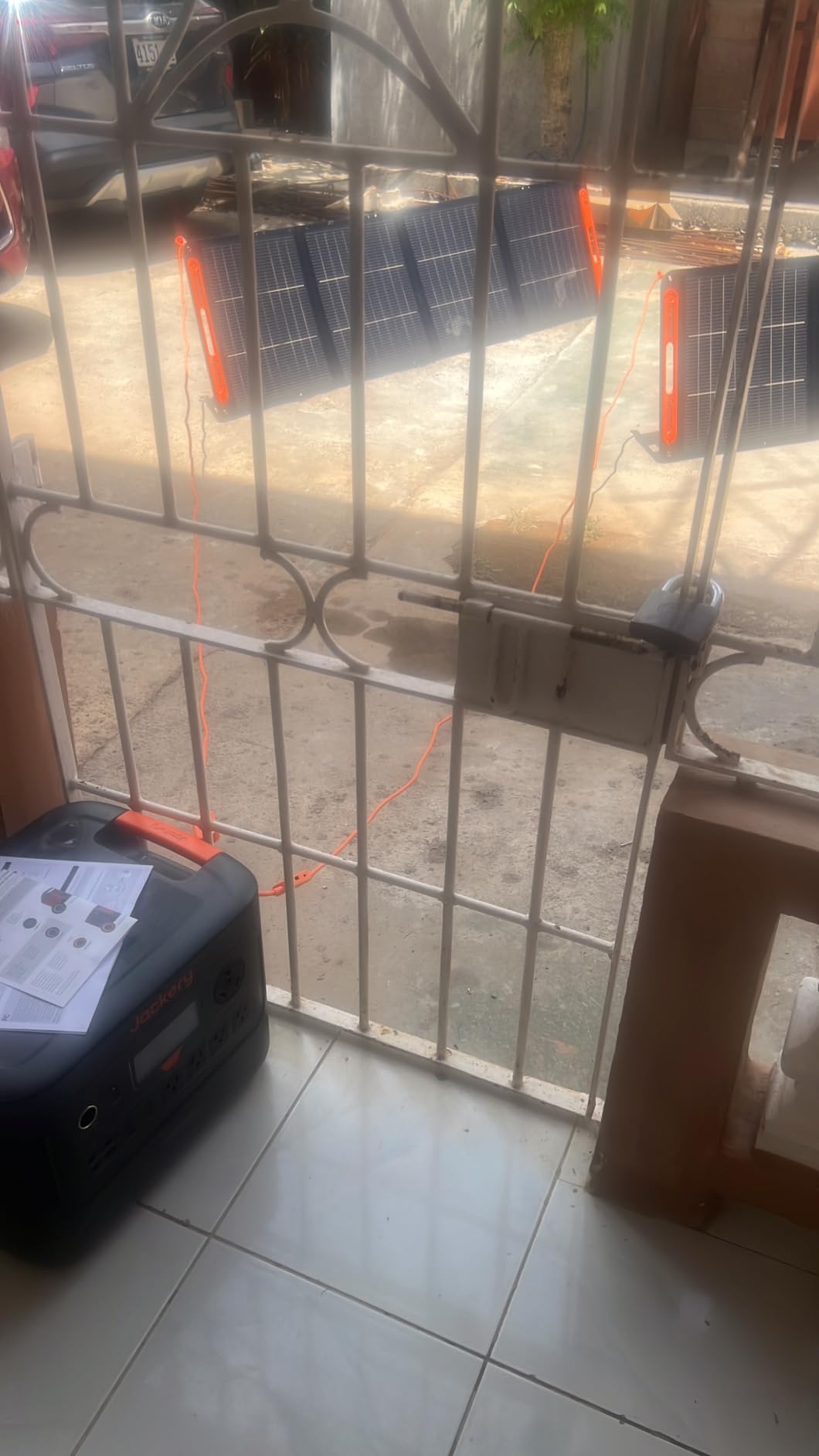
Owners report fridge runtimes of one to two days and household coverage up to about 15 hours, and they like that it runs quietly enough to sit beside a bed during an outage. The UL-certified 20ms UPS keeps security cameras, medical refrigerators and network gear online, which is a genuine advantage for anyone running a home office.
Recharge is fast by any standard: 1.7 hours on hybrid AC and DC, or 2.2 hours on AC alone. The LiFePO4 pack is rated 4000 cycles while holding 70 percent capacity.
What 3072Wh Covers at Home
A refrigerator, a freezer, a router, LED lighting, a television and a CPAP all fit within 3600W of continuous output, and the stated household figure of up to 15 hours assumes that kind of load rather than heavy HVAC use.
Because the pack is not expandable, this is a fixed-capacity purchase. Plan the load list before you buy rather than adding capacity later.
Watch the UPS Minimum Load
Owners flag confusion around the UPS minimum load. The unit will drop out of UPS mode if the sustained draw falls below its threshold, so very light loads may not switch back automatically when grid power returns.
It is also a two-person move at nearly 60 pounds. A folding cart is worth owning before the outage, not during it.
7. Jackery Solar Generator 1000 v2: Best for the Lightest Single-Hand Carry
Jackery Solar Generator 1000 v2 and 200W Solar Panel,1070Wh,1500W AC
1070Wh LFP capacity
1500W AC, 3000W surge
4000 rated cycles
23.8 pounds
Pros
- Lightest option in the lineup at 23.8 pounds with a foldable handle
- 1500W AC with 3000W surge runs air conditioners
- fridges and electric pots
- Full charge in one hour with emergency charging enabled
- LiFePO4 chemistry rated over 4000 cycles
Cons
- Bundled 200W panel is unwieldy and sags in the middle
- Solar charging cable is short
- Runs hot on the exhaust side during charging
With 1406 reviews, this is the most thoroughly reviewed product in the roundup, and the reason is simple: it is the easiest one to own. At 23.8 pounds with a foldable handle, one person can move it from a closet to a kitchen without help.
Buyers consistently call it the best balance of weight, capacity and output, powering a full-size refrigerator for roughly nine hours. Three pure sine wave AC outlets, two USB-C ports, a USB-A port, a car port and LED lights cover most household essentials at once.
Owners also report reliable operation after heavy rain exposure, which matters if you plan to keep it in a garage or on a covered porch. The one-hour emergency charge mode is app-enabled, and it defaults to 1.7 hours to protect long-term battery health.
Those charging modes are worth understanding rather than skipping. The 30 dB quiet overnight mode exists for the same reason.
Is 1070Wh Enough for a Real Outage
For a short event, yes. A refrigerator, a CPAP machine, a router and a few LED lamps sit comfortably within both the 1070Wh capacity and the 1500W output, and the UPS behavior on lighter loads is simpler than some competitors.
For a multi-day outage it falls short on its own. It is a first-response box, not a household supply, and buyers planning longer events should step up a capacity class.
What Owners Complain About
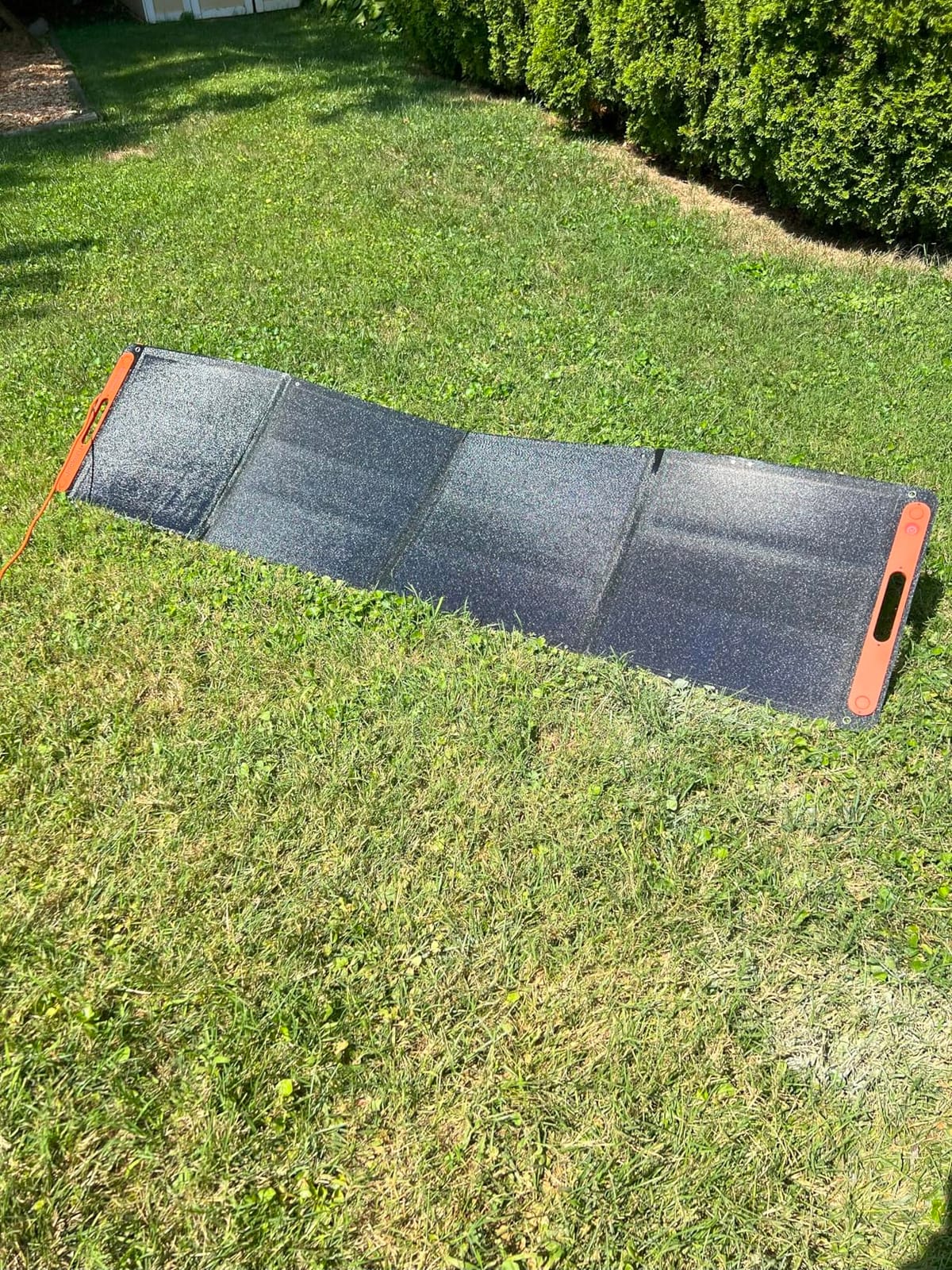
The bundled 200W panel is the most common complaint, alongside a short solar cable. Owners describe the panel as unwieldy, sagging in the middle and difficult to keep aimed in wind, which limits how useful the solar path really is.
It also runs hot on the exhaust side during charging, and the one-hour emergency charge mode is hidden in the app unless you go looking for it. None of these are deal-breakers, but all of them are worth knowing.
8. Anker SOLIX S2000: Best for Battery Lifespan and Long Idle Times
Anker SOLIX S2000 Portable Power Station, 2,010Wh, 1,500W
2010Wh from 314Ah LFP cells
1500W continuous, 3000W peak
10000 cycle rating
35.7 pounds
Pros
- 2010Wh in a compact 35.7-pound form factor
- Low 6W idle draw for a claimed 35 hours of refrigerator runtime
- 314Ah LFP cells rated for 10000 cycles and a 15-year lifespan
- Under 10 ms UPS switchover
- App control of charge and discharge limits with kWh usage tracking
Cons
- No 12V DC port for direct accessory powering
- Cooling fan is audible while charging at high wattage
- Strong burn-off odor on the first charge cycle
The S2000 makes a different bet than the rest of this list: battery endurance. Its 314Ah LFP cells are rated for 10000 cycles and a 15-year lifespan, which is the highest cycle figure among the units here and the single strongest reason to consider it if you intend to keep one for a decade.
Efficiency is the other headline. A 6W idle draw is claimed to run 20 percent longer than comparable 2 kWh systems, and owners report around 35 hours of refrigerator runtime on a single charge.
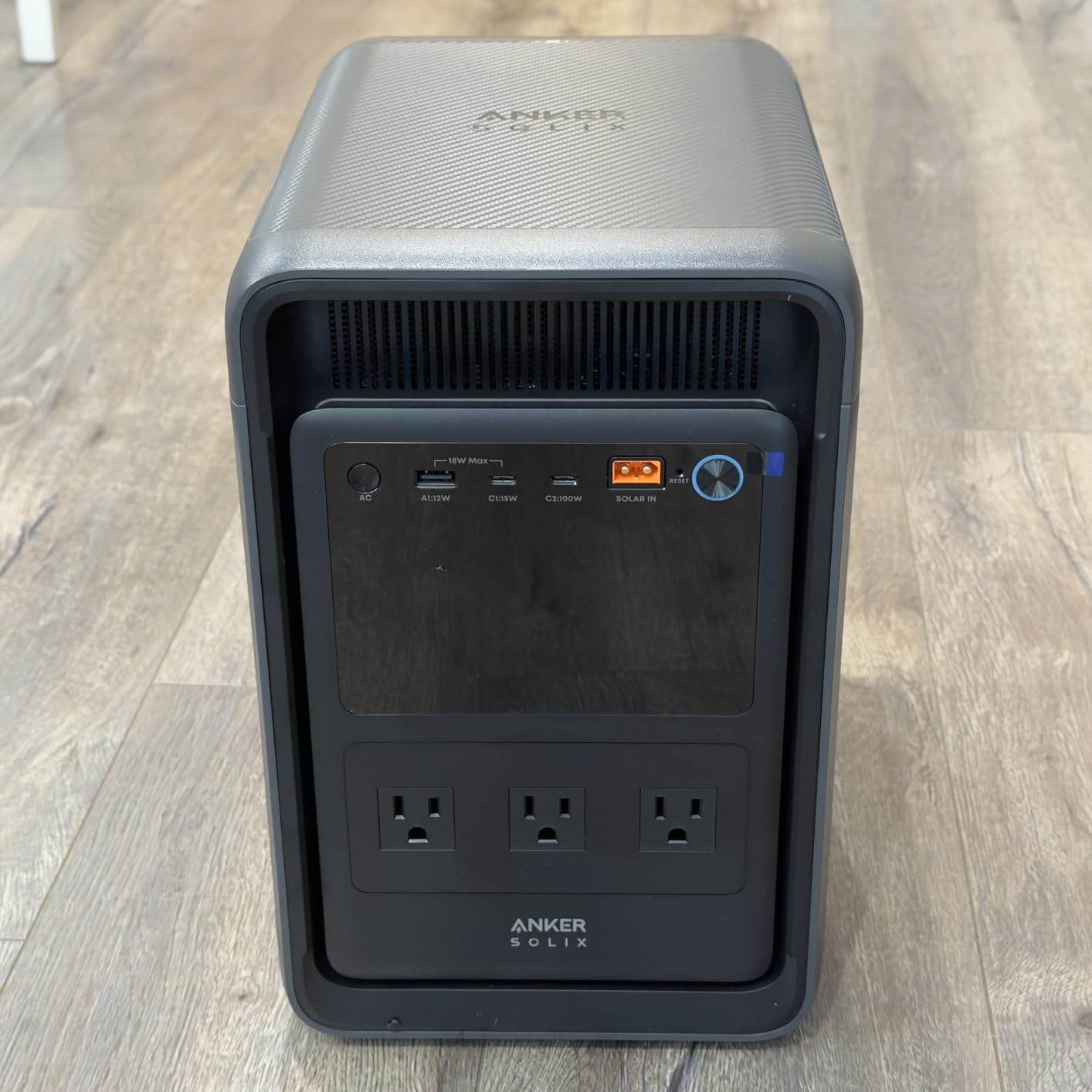
People who have carried it through real multi-hour and multi-day outages report it comfortably running fridges, freezers, network racks and window air conditioners. One owner measured UPS draw at only 3W. The eight outlets split front and rear keep always-on appliances separate from temporary ones, which keeps the setup tidy.
App control is unusually granular for this category, with adjustable charge and discharge limits and energy usage tracked in kWh, useful for anyone trying to protect battery health during long storage.
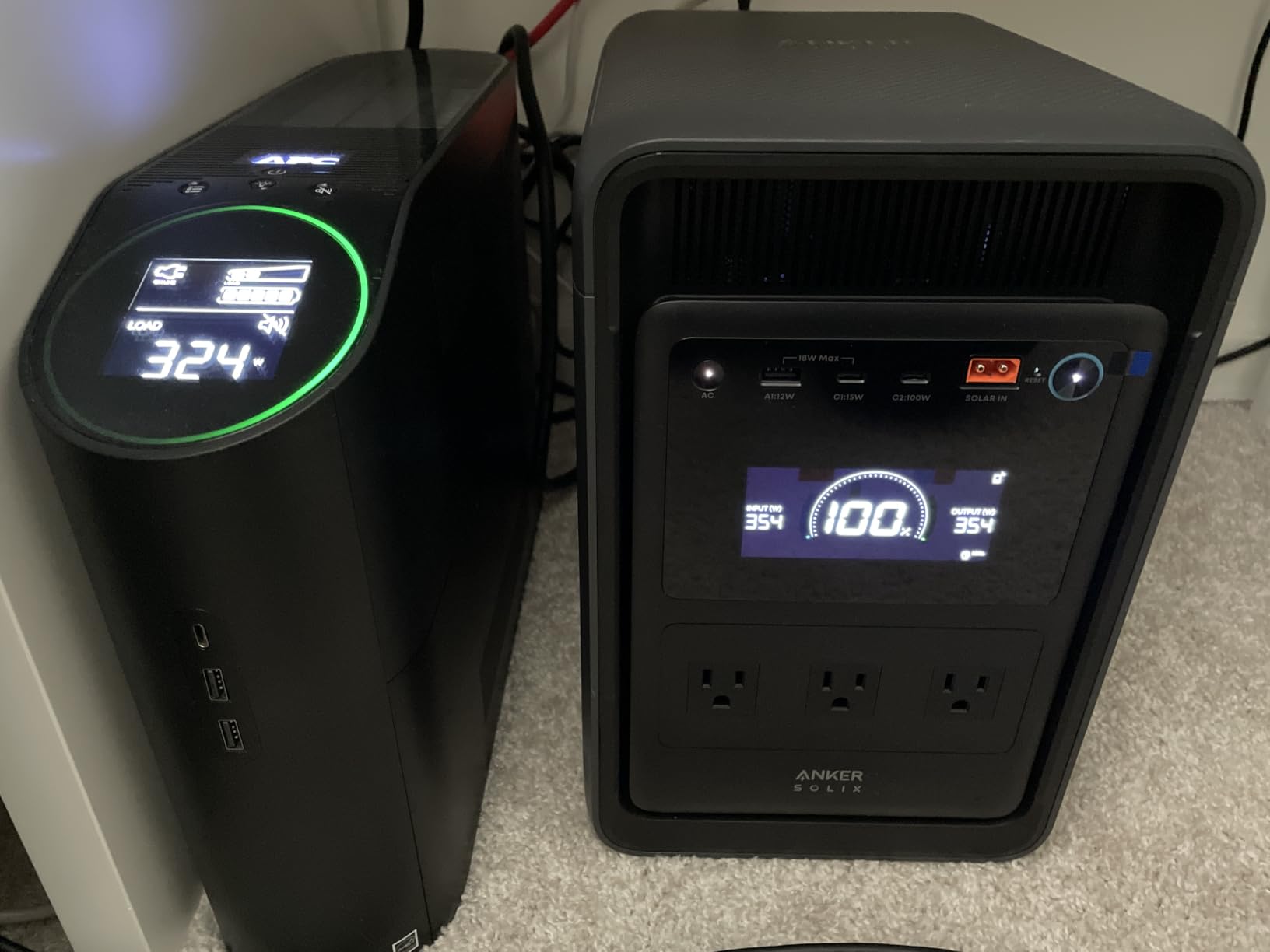
Solar Input Is the Limiting Factor Here
Solar input is capped at 400W, the lowest ceiling among the 2 kWh units in this roundup. If you plan to rebuild after a multi-day storm mainly on solar, a faster array here takes longer than it would on a BLUETTI Elite 100 V2 or Elite 200 V2.
Wall charging remains fast, and the six recharge paths include AC, solar, a generator, an alternator charger and a car outlet, so the shortfall is specific to solar arrays.
Who Should Skip This Pick
If you run 12V accessories directly from the station, note there is no 12V DC port. RV users with DC distribution should look elsewhere.
The fan becomes audible while charging at 1200W, and several owners mention a strong burn-off odor on the very first charge cycle. It fades after the first cycle, but it is jarring if you did not expect it.
9. Jackery Explorer 2000 v2 with 2x200W Panels: Best for UL-Certified UPS Backup
Jackery Explorer 2000 v2 and 2x200W Solar Panels, 2042Wh, 2200W AC Output
2042Wh LiFePO4 capacity
2200W continuous AC
UL1778 20ms UPS
66.8 pounds bundle
Pros
- 2200W continuous AC output with 2042Wh capacity covers larger appliances
- 41 percent lighter and 34 percent smaller than conventional 2 kWh stations
- UL1778-certified 20ms UPS keeps critical devices online
- 0-80 percent in 66 minutes on AC
- Silent charging mode reaches a full charge at 30 dB
Cons
- Bundle weight is high at 66.8 pounds including two panels
- Solar cable needs the L-shaped plug swapped for the straight one
The Explorer 2000 v2 is the pick for anyone whose outage list includes equipment that dislikes an interruption. It carries a UL1778 test certification for uninterruptible power supply function, with 20 ms switching, which is a different level of assurance than an unspecified UPS claim.
At 2200W continuous and 2042Wh, it sits in the middle of the roundup on paper but punches slightly above its weight on runtime. Owners running network gear, a home office and a refrigerator report comfortable multi-day behavior at 30 dB in silent charging mode.
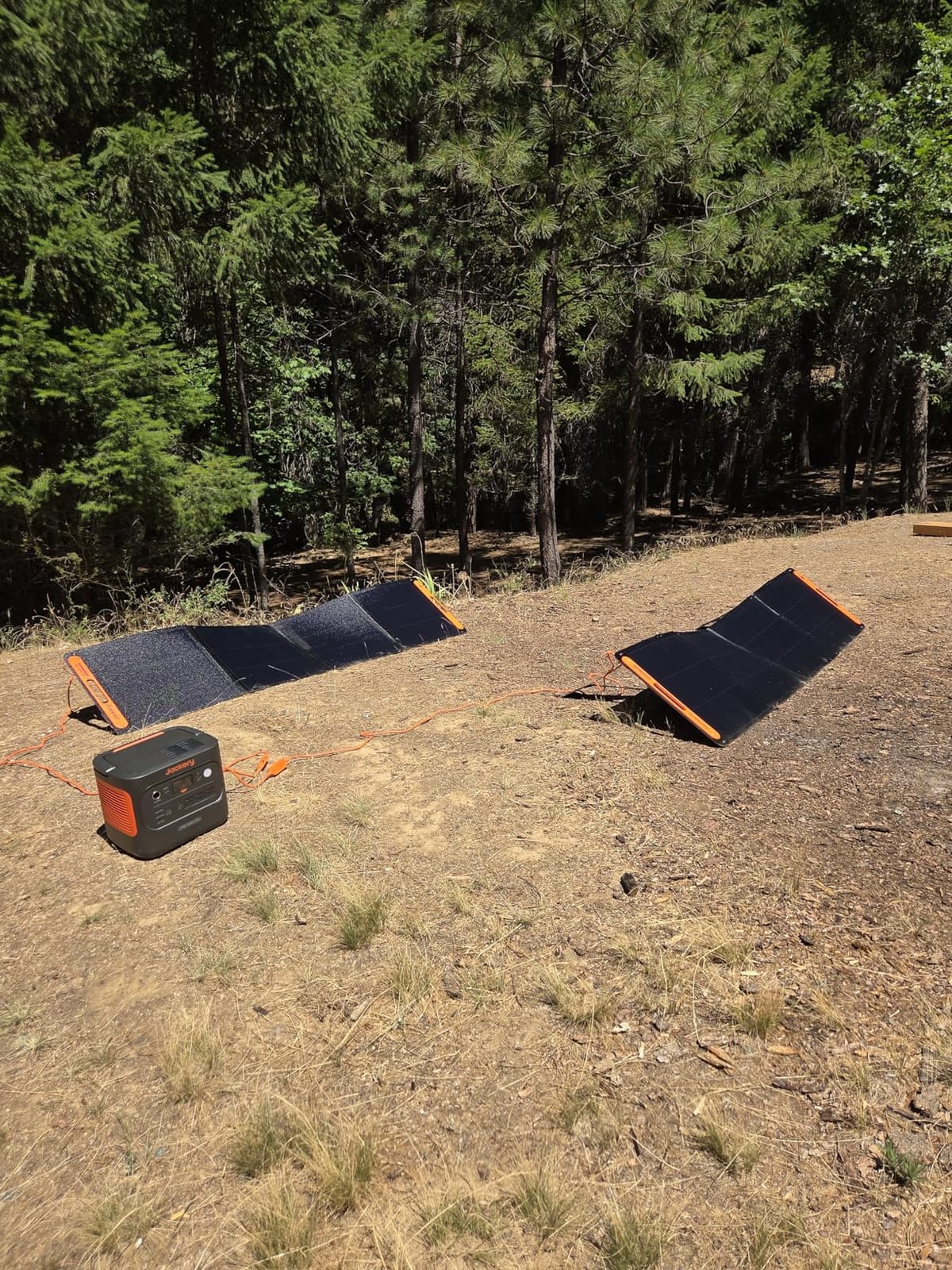
The CTB cell-to-body design is the differentiator: 41 percent lighter and 34 percent smaller than conventional 2 kWh LiFePO4 stations, which makes a 39.5-pound station with a 2200W inverter genuinely portable. The advanced temperature control system also reduces fan noise for indoor use.
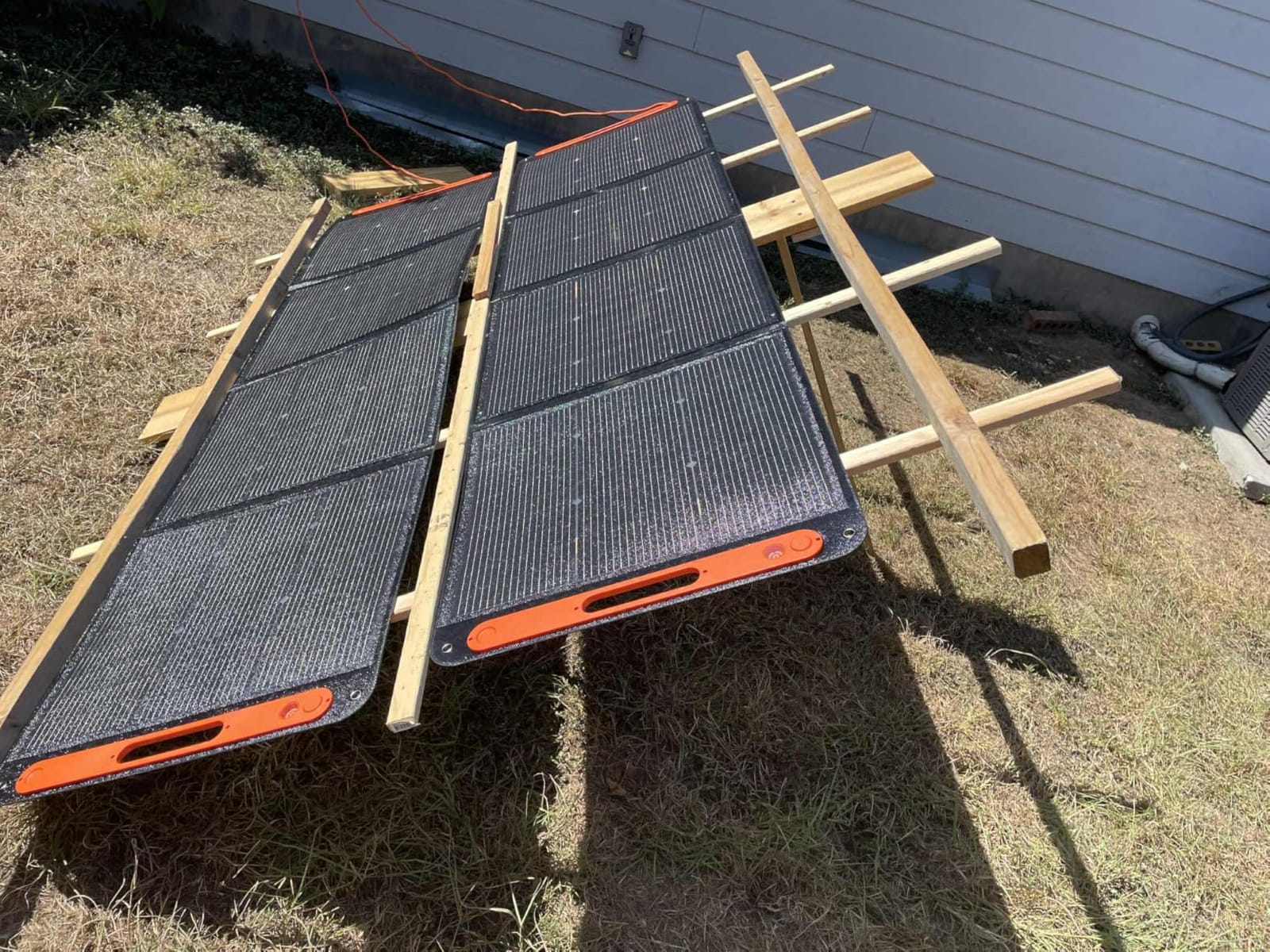
Charging is quick, reaching 80 percent in 66 minutes on AC, and 102 minutes with the app-activated emergency super charging mode. Solar charging takes about 6 hours with 400W panels.
What 2200W Handles That 1800W Does Not
The jump from 1800W to 2200W is not dramatic on paper, but it changes which appliances qualify. A slightly larger microwave, a power washer on low, or an extra room of lights and outlets becomes feasible rather than marginal.
It still stays on the 120V side. Well pumps, central air and electric water heaters remain outside its reach, and the surge headroom is not sized for compressor motors.
Watch the Connection Detail
The included solar cable uses an L-shaped DC7909 plug that must be swapped for a straight DC8020 plug before connecting to Jackery panels. Owners who skip that step assume the panel is faulty.
Total bundle weight reaches 66.8 pounds with both panels included, so plan where the unit will live before the outage rather than carrying it in the dark.
10. BLUETTI AC180 with 200W Panel: Best for Fastest Wall Recharge
BLUETTI AC180 Solar Generator with 200W Solar Panel Included, 1152Wh 1800W
1152Wh LiFePO4 capacity
1800W AC, 2700W lifting
1440W single-cable charging
37.4 pounds
Pros
- 1800W continuous output with 2700W lifting for fridges
- microwaves and tools
- Very fast 1440W single-cable charging with 0-80 percent in about 45 minutes
- 11 outlets including AC
- USB
- DC and a wireless charging pad
- Runs quietly and doubles as a home UPS with 20 ms transfer
Cons
- At 37.4 pounds it is heavy to move without a cart
- Bundled 200W panel delivers well under its rating outside peak sun
- Fan becomes noticeable under sustained heavy load
The AC180 wins on one specific number: 1440W of single-cable charging with no bulky adapter. It goes from empty to 80 percent in about 45 minutes and reaches a full charge in roughly an hour, which is the fastest wall recovery in this roundup and the feature that matters when the grid comes back.
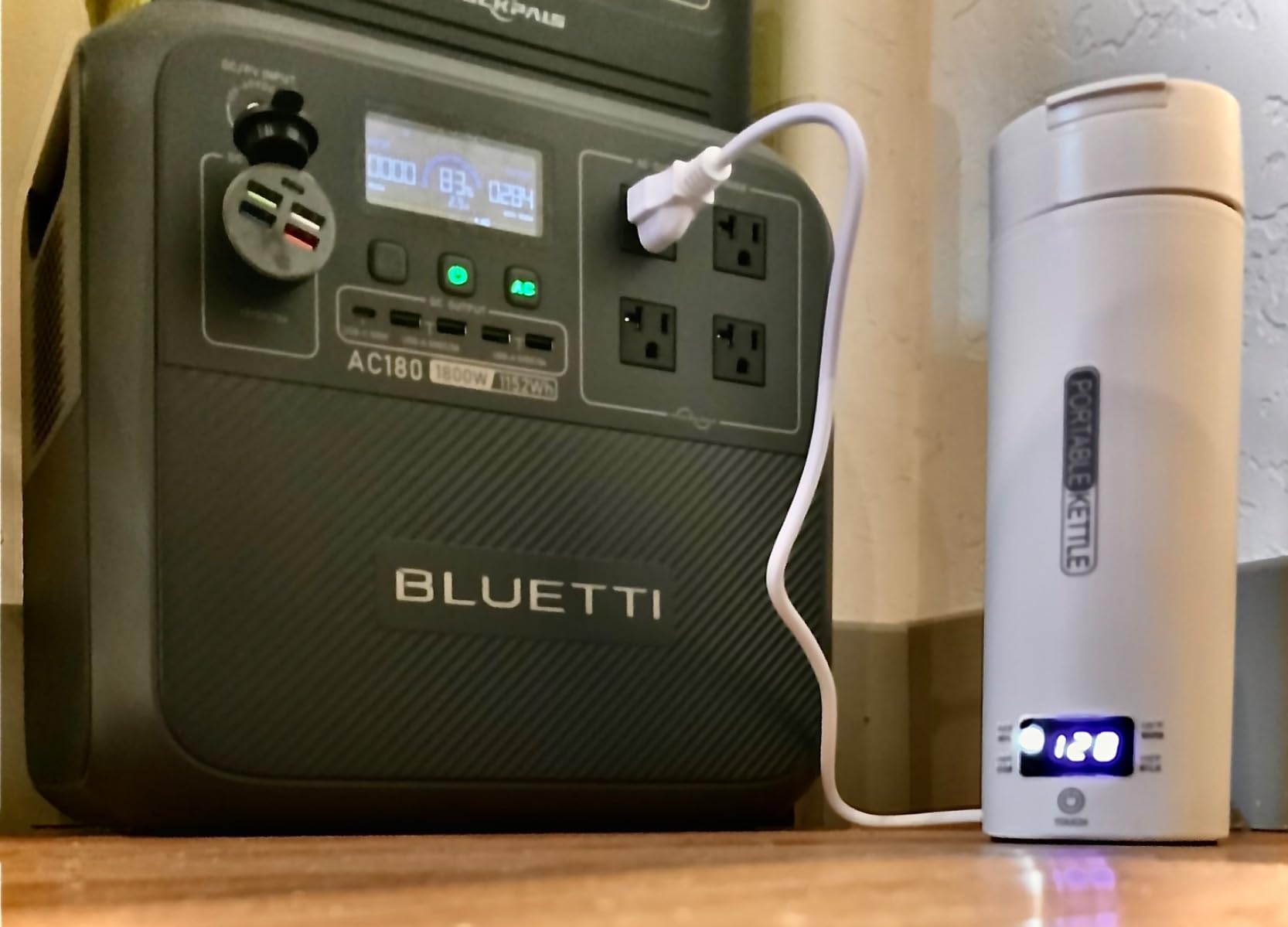
At 1152Wh and 1800W continuous with 2700W of lifting power, it handles a refrigerator, a microwave, a coffee maker and a set of power tools. Eleven outlets cover four AC sockets, USB, DC and a wireless charging pad.
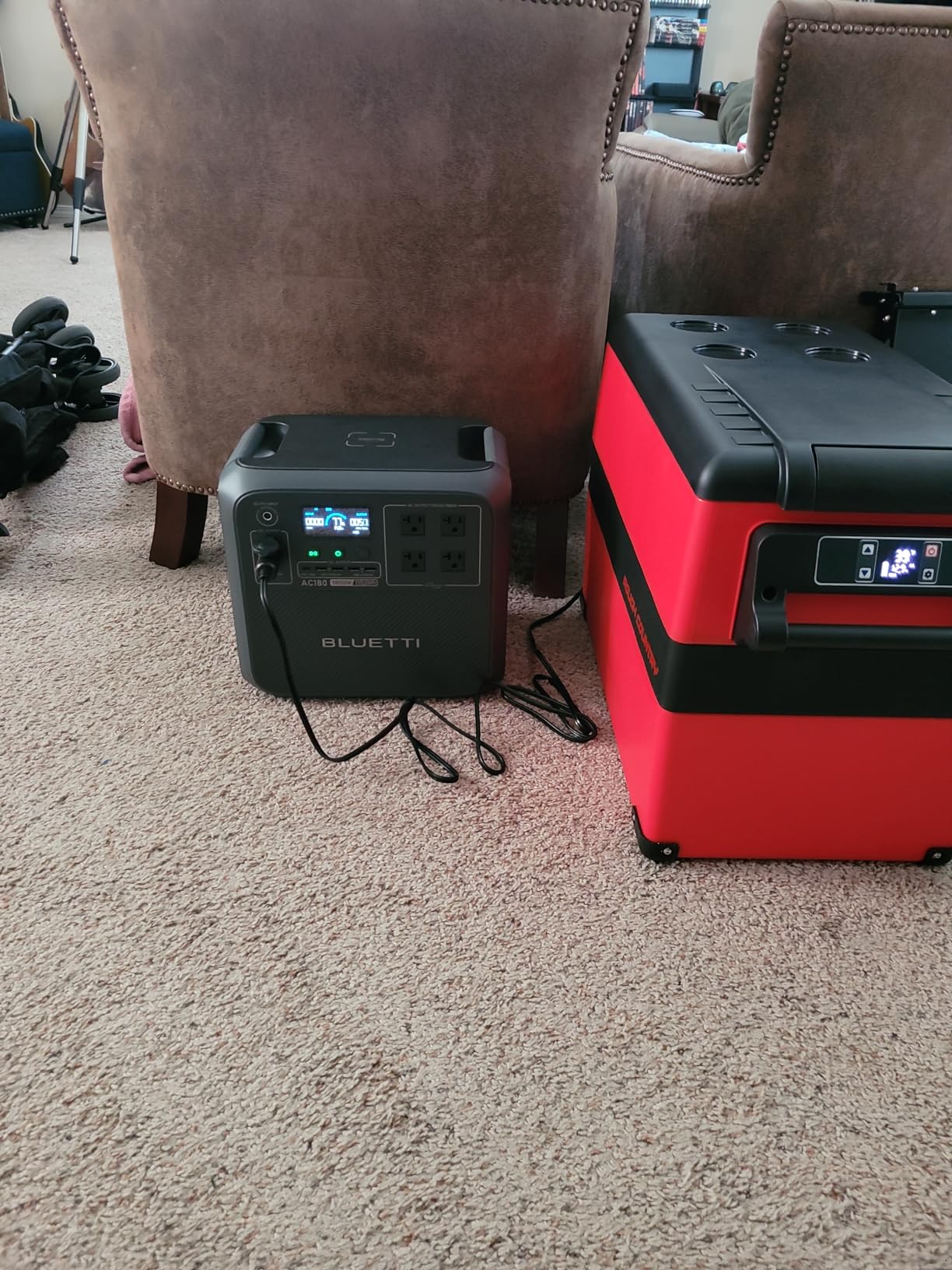
Owners running it through hurricanes report dependable fridge performance and like the display, which shows real-time input and output wattage rather than a vague percentage. Bluetooth app control lets you monitor and toggle AC and DC output remotely, and the 20 ms UPS handles a home router setup well.
The battery is rated 3000+ cycles, which is lower than the 6000+ figure on the Elite 200 V2, so this is a pick for fast turnaround rather than a decade of daily cycling.
Solar Reality With the Included Panel
The included 200W panel is the weak point, and owners are honest about it: real output measures roughly 140-160W except in peak sun, against a 200W nameplate. The station refills in 4.8 to 9.6 hours from that panel depending on conditions.
Solar input on the station is capped at 500W, so adding a second panel of the same type roughly halves that refill time. Mixing panels from other brands is not recommended here, and the included cable is short for roof mounting.
Who Should Look Elsewhere
If the 200W panel is your only solar path, the Elite 100 V2 accepts up to 1000W of solar input and covers 0-80 percent in 45 minutes from panels, which is a meaningfully faster recovery from sun alone.
At 37.4 pounds the AC180 needs a cart for room-to-room moves, and the fan becomes noticeable during sustained heavy load, which is worth weighing against the charging speed you gain.
How to Size a Solar Generator for Your Home
Size for your worst realistic day, not your average one. List every load you want running during the longest outage you have actually experienced, note the watts each one draws while running, and add the starting surge for anything with a motor or compressor.
Here is the calculation most guides skip. The watt-hours printed on the label are never fully available, so use: usable watt-hours = nominal watt-hours x 0.90 depth of discharge x 0.85 inverter efficiency. A 2000Wh station plans at roughly 1530 usable watt-hours, which is a realistic number for budgeting rather than a marketing figure.
For a quick reference, here are typical running and starting figures for common household loads. The starting column matters for anything with a compressor, pump or motor.
Full-size refrigerator: about 150W running, roughly 600W starting
Chest freezer: about 100W running, roughly 300W starting
CPAP machine: about 40W running, no meaningful surge
Wi-Fi router and modem: about 15W combined
LED lamp: about 10W each
Television: about 100W running
Microwave: about 1000W running
Sump pump: about 400W running, 1500W to 2000W starting
Well pump, 1 HP: about 1000W running, 2000W to 3000W starting
Window air conditioner: about 1200W running, up to 1800W starting
Central air conditioner, 3 ton: about 3500W running, 5000W to 7000W starting
What will a 3000W solar generator run? A refrigerator, a freezer, a router, LED lighting, a television, a CPAP and a laptop simultaneously, with room left for a microwave or a few power tools. It will not start central air, a well pump or an electric water heater, because those loads need both 240V supply and far more surge headroom.
A portable power station in the 1800W class covers essentials and one medium load. Moving to 2600W or 3600W adds a microwave, a coffee maker and more lighting. Reaching 4000W and above, with 120V and 240V support, is what unlocks compressors.
What size solar generator is needed to run a house? Essential loads need 2 to 5kWh, which covers a refrigerator, a freezer, medical equipment, internet and lighting for several days. 240V air conditioning or a well pump pushes you to 5kWh or more with 6000W or greater output. Whole-home support takes 10kWh or more and a transfer switch.
Rank your loads into tiers and protect them in order. Tier one is medical equipment, a CPAP or an oxygen concentrator, plus one refrigerator. Tier two is communications: router, modem and a radio. Tier three is lighting, a television and phone charging. Tier four is heating and cooling, which is the tier most households should plan to give up first.
For a deeper look at sizing, our solar battery guide covers expansion math for multi-day outages in more detail.
What to Look For: Battery Chemistry, Output and Solar Input
LiFePO4 over NMC is the clearest decision in this category, and it is the criterion owner communities cite most often. Forum consensus, including repeated recommendations in r/preppers, is that the safety margin and cycle life justify the weight for indoor use.
LiFePO4: 3000 to 10000 rated cycles, strong thermal stability, safe indoors, heavier per watt-hour
NMC: lighter for the same capacity, more energy dense, shorter cycle life, greater thermal runaway concern
Continuous output is the number that keeps appliances running. Peak or surge output is the number that starts motors. A refrigerator needs little surge, a well pump needs a great deal, and a unit with 6000W of starting power on 4000W continuous handles compressor loads that a 4000W-only inverter will refuse.
Solar input wattage decides how fast you recover. Units accepting 1000W or more of solar recharge refill meaningfully faster after a storm, which is when a 400W ceiling becomes a real limitation. MPPT charge controllers are standard on every unit in this roundup.
Expandability is treated as essential rather than optional by most experienced buyers. A non-expandable pack, such as the HomePower 3000 or the Elite 200 V2, fixes your ceiling permanently. The DELTA Pro 3, DELTA Pro Ultra and DELTA Pro scale with add-on batteries.
UPS switchover time decides whether sensitive equipment reboots. Anything at or under 20 ms keeps a router, a NAS, a security system or a medical refrigerator running through a brief grid fluctuation. Note that UPS mode is not a medical-grade power supply, and some units drop out of UPS below a minimum sustained load.
Look for UN38.3 for transport safety, UL 2743 for portable power stations and UL 9540 for installed energy storage systems. A UL1778 test certification on the UPS function, which the Jackery Explorer 2000 v2 carries, is a separate and useful signal.
Transfer Switch and Whole-Home Installation
Do you need a transfer switch to use a solar generator for your house? Yes, if you plan to backfeed the panel. A licensed electrician and either a manual or a smart transfer switch are required, and extension cords are only appropriate for a refrigerator and other small loads.
Backfeeding a panel without a transfer switch can energize the utility line while crews are working on it, which is lethal. It also violates electrical code in most jurisdictions. This is the one area of this article where we will not offer a shortcut.
For essential loads, no installation is needed. Plug a refrigerator, a freezer and a medical device into the power station, place it in a dry room on a floor above any flood risk, and you have working backup the same day it arrives.
For whole-home support, the sequence is straightforward. An electrician assesses the panel and your load list, a transfer switch is fitted between the utility and the home, and the power station connects to the transfer switch input. Smart panels such as the EcoFlow Smart Home Panel 2 automate the switchover, while a manual switch makes it a two-second job.
Plan placement with weather and noise in mind. Keep the unit off a basement or ground-floor slab where floodwater collects, leave clearance for airflow and cooling, and note that a 218-pound or 260-pound system should be positioned where it will live rather than dragged across a garage floor during an outage.
Solar Generator vs Gas Generator for Home Backup
The honest answer, and the one most roundups skip, is that a gas standby generator remains stronger for whole-home use. Forum debate in r/Generator and r/solar reflects that: households with natural gas lines and only one or two outages a year often conclude a gas standby system is the better answer.
Where a solar generator wins is everything that does not involve the engine.
Noise: a portable power station runs at 30 dB in silent mode on several models here, against the sustained engine noise of a gas unit that carries into neighboring homes
Exhaust and carbon monoxide: no combustion means no carbon monoxide risk in an interior room, which matters for elderly or asthmatic household members
Fuel storage: no gasoline cans in a garage and no fuel delivery during an emergency
Runtime: capacity is stored energy you control, not tank size, and recharging comes from the sun, a wall outlet or a car
Maintenance: no oil changes, no carburetor, no fuel stabilizer between uses
Upfront cost: portable power stations cover essential loads without an electrician
Where a gas generator still wins: fuel range on a multi-day event with no sun, sustained high-wattage output, and the ability to run an electric water heater or a 3-ton air conditioner continuously.
Why is my solar not working during a power outage? Panels need direct sun, and most outages are multi-day storm events with heavy cloud. A solar generator recharges only when conditions allow, so plan for wall or car charging as the fallback and size stored energy for your worst no-sun window, typically three days.
Many households end up running both, using the solar generator for essentials and the gas unit for a few hours of heavy load. That combination is more honest than pretending one device covers everything.
Indoor Placement, Noise and Multi-Day Storm Storage
Several units here run quietly enough for a bedroom. The BLUETTI Elite 200 V2 and EcoFlow DELTA Pro 3 are specified as low as 30 dB, the BLUETTI Elite 100 V2 and the Jackery units offer a 30 dB silent mode, and the Anker SOLIX S2000 is built around a low 6W idle draw for the same reason.
Two caveats on noise. The Anker SOLIX S2000 fan becomes audible while charging at 1200W, and the BLUETTI AC180 fan is noticeable under sustained heavy load, so placement beside a bed only works in silent mode. Also remember that quiet is not the same as silent, and a unit cycling a compressor will be heard.
Placement rules for indoor use are short. Keep the unit on a dry, level floor above any flood-prone level, leave clearance on all sides for cooling, and never put it in a closed closet. Look for a grounding screw on the unit and use it, which is a reason several of these kits include one.
For multi-day storms, treat stored energy as the real resource. Panel output during a hurricane is often a fraction of nameplate, as AC180 owners report, so the honest plan sizes storage for three days and assumes charging from a wall outlet or a car whenever one is reachable. Our general solar generator roundup covers charging setups in more detail.
If your primary use is a weekend outdoors rather than outage coverage, our camping guide covers lighter, more portable options that overlap with the value picks here.
Frequently Asked Questions
What size solar generator is needed to run a house?
Essential loads need 2 to 5kWh, which covers a refrigerator, a freezer, medical equipment, internet and lighting for several days. 240V air conditioning or a well pump pushes you to 5kWh or more with 6000W or greater output. Whole-home support takes 10kWh or more plus a transfer switch and a licensed electrician.
What will a 3000 watt solar generator run?
A refrigerator, a freezer, a Wi-Fi router, LED lighting, a television, a CPAP machine and a laptop at the same time, with room left for a microwave or light power tools. A 3000W unit cannot start central air, a well pump or an electric water heater, because those need 240V supply and far more surge headroom.
Why is my solar not working during a power outage?
Solar panels need direct sun, and most outages are multi-day storm events with heavy cloud cover, so recharge stops when the sun is hidden. Your power station only lasts as long as its stored watt-hours. Plan on wall or car charging as a fallback and size your stored energy for a three-day no-sun window.
Do I need a transfer switch for a portable power station?
Yes, if you intend to backfeed your home panel. A licensed electrician plus a manual or smart transfer switch is required, and doing it without one can energize the utility line while crews are working on it. Extension cords are only appropriate for a refrigerator and other small loads.
Is LiFePO4 better than NMC for home backup?
For home backup, yes. LiFePO4 cells typically last 3000 to 10000 cycles, tolerate heat better and carry far less thermal runaway risk, which matters when a unit sits in a garage or interior room. NMC cells are lighter for the same capacity but offer a shorter cycle life.
Which solar generator is best for home use overall?
The BLUETTI Elite 200 V2 is our top pick for most homes, with 2073.6Wh, 2600W of continuous AC and a 6000+ cycle battery. The BLUETTI Elite 100 V2 covers apartments and essential loads at 1024Wh, and the EcoFlow DELTA Pro Ultra is the choice when you need 7200W of continuous output for 240V loads.
Final Verdict on the Best Solar Generators for Home Backup
The BLUETTI Elite 200 V2 is our pick for the best solar generators for home backup in 2026, and it wins because the combination holds up: 2073.6Wh, 2600W of continuous AC, a 6000+ cycle battery, a 10W idle draw and a 10 ms UPS in a 53-pound box, backed by 913 reviews at 4.7 stars.
Match your pick to the loads you actually run. The BLUETTI Elite 100 V2 at 25 pounds covers apartments and essential loads. The EcoFlow DELTA Pro with its 400W panel suits homes without central air and offers the best bundled solar kit here. The Anker SOLIX S2000 has the strongest battery longevity rating. The EcoFlow DELTA Pro Ultra is the only unit in this roundup that reaches 7200W of continuous output for 240V loads, and the DELTA Pro 3 is the capacity winner at 4096Wh expandable to 48kWh.
Whatever you choose, decide on essential loads versus whole-home before you buy, because only the second one requires a transfer switch and an electrician. Then test your setup under a load before you need it, and keep wall and car charging in the plan for the days when there is no sun.