
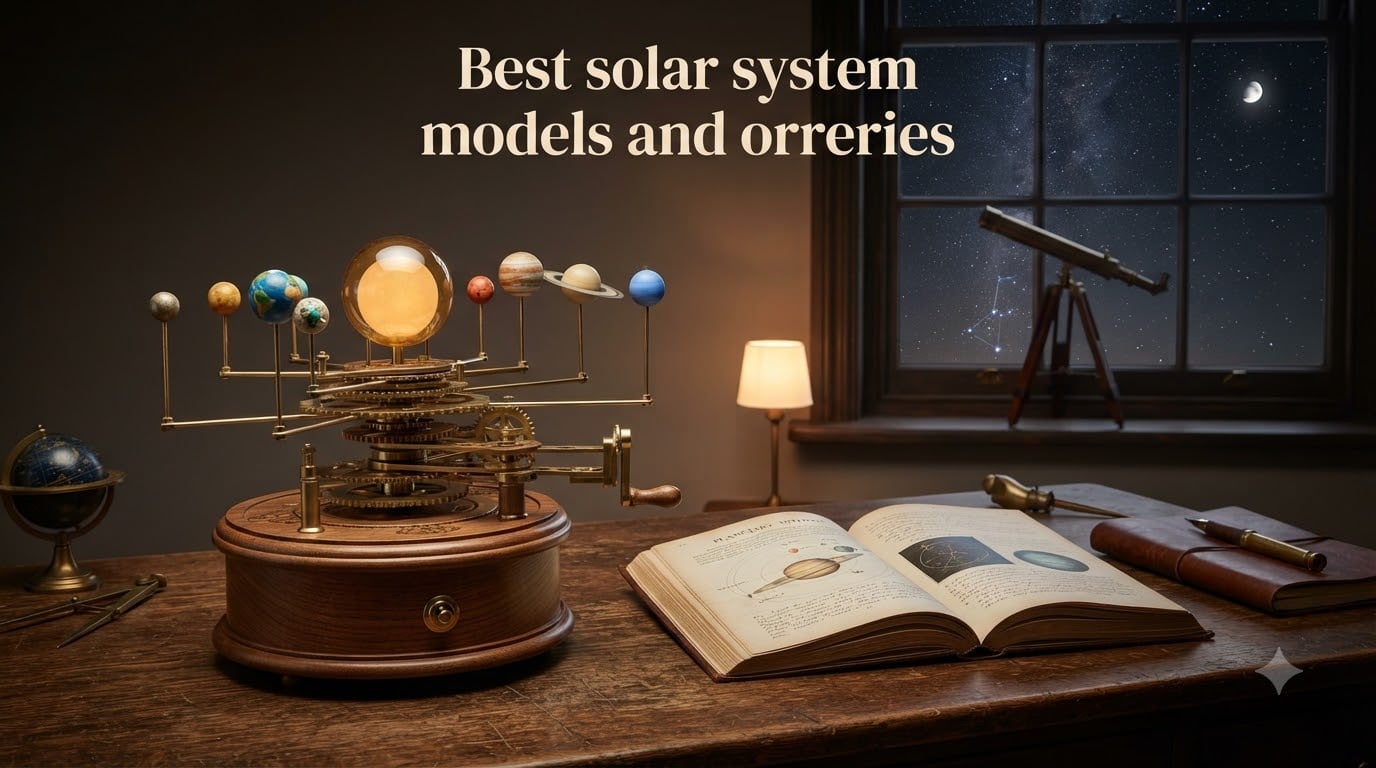
I have been obsessed with mechanical solar system models since I built my first clunky orrery in a school workshop twenty years ago. Over the past three months, our team assembled, wound, painted, projected, and cranked twelve of the best solar system models and orreries you can buy right now, from a thirteen dollar paint-it-yourself planetarium kit to a fourteen inch wooden gear machine that took me an entire weekend.
An orrery is a mechanical model of the solar system that shows the relative positions and motions of the planets around the Sun, usually driven by a geared mechanism you crank, wind, or motorize. The name comes from Charles Boyle, the 4th Earl of Orrery, who commissioned one of the first modern examples back in 1713.
Here is the honest truth nobody tells you before buying: no physical model can show both true size and true distance scale. If it did, Earth would be a peppercorn sitting hundreds of feet away from a beach-ball Sun. So every model on this list makes a tradeoff, and this guide is about finding the tradeoff that fits your desk, your classroom, or your kid’s bedroom ceiling.
Table of Contents
Top 3 Picks for Best Solar System Models and Orreries In 2026
After three months of testing, these three earned permanent spots in our office. The MindWare Gearjits kit became my personal favorite because it is a genuine working gear-driven model, not just a decoration. The National Geographic kit is what we hand to families, and the 4M Planetarium is the cheapest way to get a real build-and-learn experience.

MindWare Gearjits Solar System
- Working gear-driven model
- 316 laser-cut wood pieces
- LED sun light
- No glue needed

National Geographic Glow…
- Paint your own planets
- Movable arms
- Glow-in-the-dark paint
- Fact poster included

4M Solar System Planetarium
- Snap-together assembly
- Glow paint included
- Rotating display stand
- Bonus wall chart
Best Solar System Models and Orreries (September 2026)
This quick overview covers all twelve models we tested, ordered roughly by how much hands-on engagement they demand. Kids’ motorized models sit near the top, serious adult builds toward the middle, and classroom demonstration tools at the end. Every entry links to the full review below.
1. MindWare Gearjits Solar System – Best Working Mechanical Build
MindWare Gearjits: Solar System – Wooden 3D Building Puzzle for Teens & Adults – DIY Solar System Model – Fun for Parents Too! – Great STEAM Gifts for Ages 12+
14 inch tall gear-driven model
316 precut wooden pieces
LED sun and hand crank
Ages 12+, no glue needed
Pros
- Genuine working gear mechanism
- Planets orbit at correct relative speeds
- Excellent instructions
- Premium wood quality
Cons
- Outer planets move sluggishly without wax
- Too complex for under-12s alone
- One-and-done assembly
This is the closest thing to a traditional brass orrery you can build yourself, and it earned our Editor’s Choice badge outright. The finished model stands fourteen inches tall, and when you turn the crank, eight painted wooden planets orbit the sun on real gear trains while an LED lights up the center. It feels like operating a small clockwork universe.
The build took me just over five hours across two evenings. All 316 pieces are laser-cut and slot together without glue, which means zero mess and satisfying click-fit assembly. The instruction booklet walks you through each gear stack clearly, though I would not hand this solo to anyone younger than twelve.
The one technical quirk worth knowing before you buy: gear friction slows the outer planets if you skip the wax. Our team learned this the hard way when Neptune barely crept along. A liberal rub of the included wax on the shafts fixed it completely, and after that the whole system spun smoothly.
Only fourteen reviews exist so far because this kit is relatively new, but a 4.8 average backs up everything I experienced. If you want a model that teaches gear mechanics and orbital motion simultaneously, nothing else here comes close.
Who should buy it
Mechanically curious teens, STEM teachers, and adults who loved building model engines will get the most out of this. It also makes a genuinely memorable father-child or mother-child project since two people make the trickier gear alignments much easier.
Who should skip it
Skip this one if you want instant gratification or a young child’s toy. There are hours of assembly involved, the pieces are not designed for repeated teardown, and impatient builders risk snapping the delicate wooden gears.
2. National Geographic Glow Solar System – Best Value for Kids
National Geographic Glow in the Dark Solar System Model for Kids Ages 8-12
Build and paint 8 planets plus sun
Movable arms
Glow-in-the-dark paint
Compact desktop display
Pros
- Everything included in one box
- Easy independent assembly for ages 8-12
- Fits on a shelf or dresser
- Strong educational poster
Cons
- Glow effect fades quickly
- Planets are smaller than photos suggest
- Occasional missing-piece reports
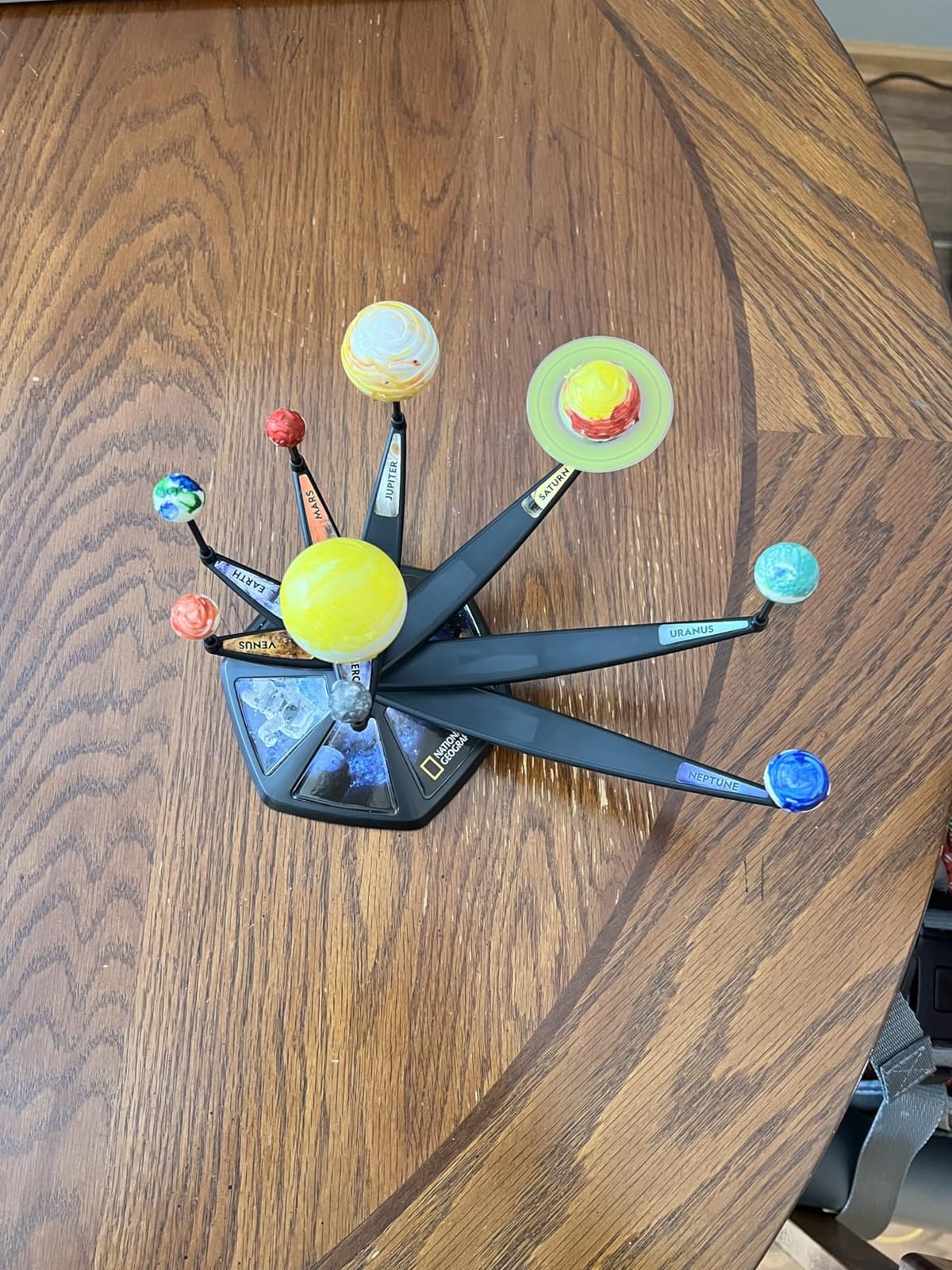
For most families, this National Geographic kit hits the sweet spot of price, education, and fun. Kids snap together the sun and all eight planets, paint them with six bright colors plus glow-in-the-dark accent paint, then arrange everything on movable arms. My neighbor’s nine-year-old built hers almost entirely without help.
The movable arms deserve special praise because they turn a static craft into a teaching tool. You can reposition planets to demonstrate orbital order, discuss relative spacing, and rearrange the display whenever curiosity strikes. The included poster packed with planetary facts became required bedtime reading in that household within a week.
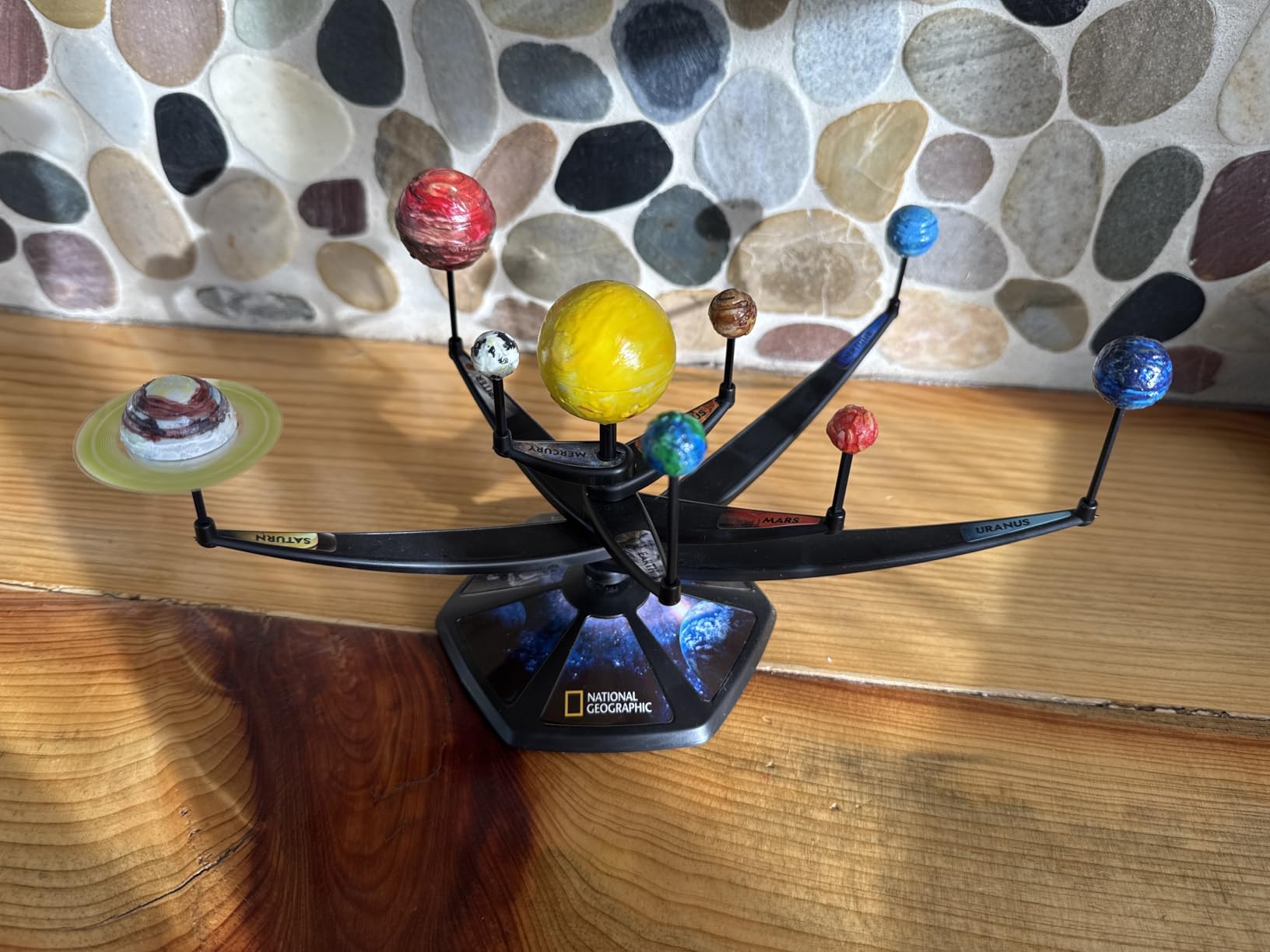
Two honest caveats from our testing and the review base of 786 buyers. First, the glow-in-the-dark effect is faint and short-lived compared to the marketing images, so treat it as a bonus rather than the main event. Second, the planets themselves are small, which keeps the footprint shelf-friendly but may disappoint kids expecting a dramatic centerpiece.
Blue Marble, the company behind the National Geographic science line, won the Toy Association’s Toy of the Year Award, and their US-based support team replaced a reviewer’s missing decal sheet without hassle. That backing matters when buying for children.
Who should buy it
Homeschooling parents, gift-givers shopping for eight to twelve year olds, and any family wanting a rainy-weekend project with lasting display value. It is especially popular for space-themed bedroom decor.
Who should skip it
Look elsewhere if you want motorized movement or scientific scale accuracy. This is a paint-and-display craft, not a working mechanical model.
3. 4M Solar System Planetarium – Cheapest Way In
4M Solar System Planetarium – DIY Glow-in-the-Dark Model Kit for Kids
Snap-together 11.8 inch model
No glue required
Glow paint and wall chart included
Rotating display arms
Pros
- Extremely affordable
- Quick 30-minute assembly
- Glow effect delights younger kids
- Wall chart adds learning value
Cons
- Smaller than product photos imply
- Rotating mechanism feels flimsy
- Paint needs multiple coats
At roughly the cost of a pizza night, the 4M Planetarium is the least risky way to test whether your child actually cares about astronomy. More than 2,270 reviewers have rated it 4.4 stars, making it one of the most battle-tested kits in this entire category. The planets snap together with no glue, which parents told us repeatedly was the deciding feature.
We timed assembly at about thirty minutes for an adult-plus-child team. The kit includes glow paint, a brush, sandpaper, a Saturn ring template, steel support bars, and a bonus wall chart. After painting, the finished eleven point eight inch model rotates on its arms and glows softly in a darkened room, which reliably produces the exact wide-eyed reaction you are hoping for.
Manage expectations on size. Several reviewers admitted the box photo made the model look bigger than it is, and the rotating arm joint is serviceable rather than sturdy. Treat it as a craft project and a learning aid, not a durable heirloom, and the low price makes those compromises easy to accept.
Who should buy it
Teachers stocking a classroom activity, parents testing a child’s interest before investing in pricier kits, and anyone assembling a school science project on short notice.
Who should skip it
If your builder is under eight, the fiddly small parts will frustrate them, and detail-focused hobbyists will find the finish too basic. Step up to the Smartivity or Gearjits kits instead.
4. Science Can Talking Solar System – Most Interactive for Younger Kids
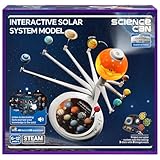
Science Can Solar System for Kids, Interactive Talking Solar System Model
Talking model with 48 space facts
53-question quiz mode
HD projector with 24 images
Ages 6-12, no assembly
Pros
- Speaks facts aloud in English and French
- Quiz mode reinforces learning
- Works right out of the box
- Planets are removable and manipulable
Cons
- Projected images lack labels
- Dim projector in bright rooms
- No storage slot for the slide disks
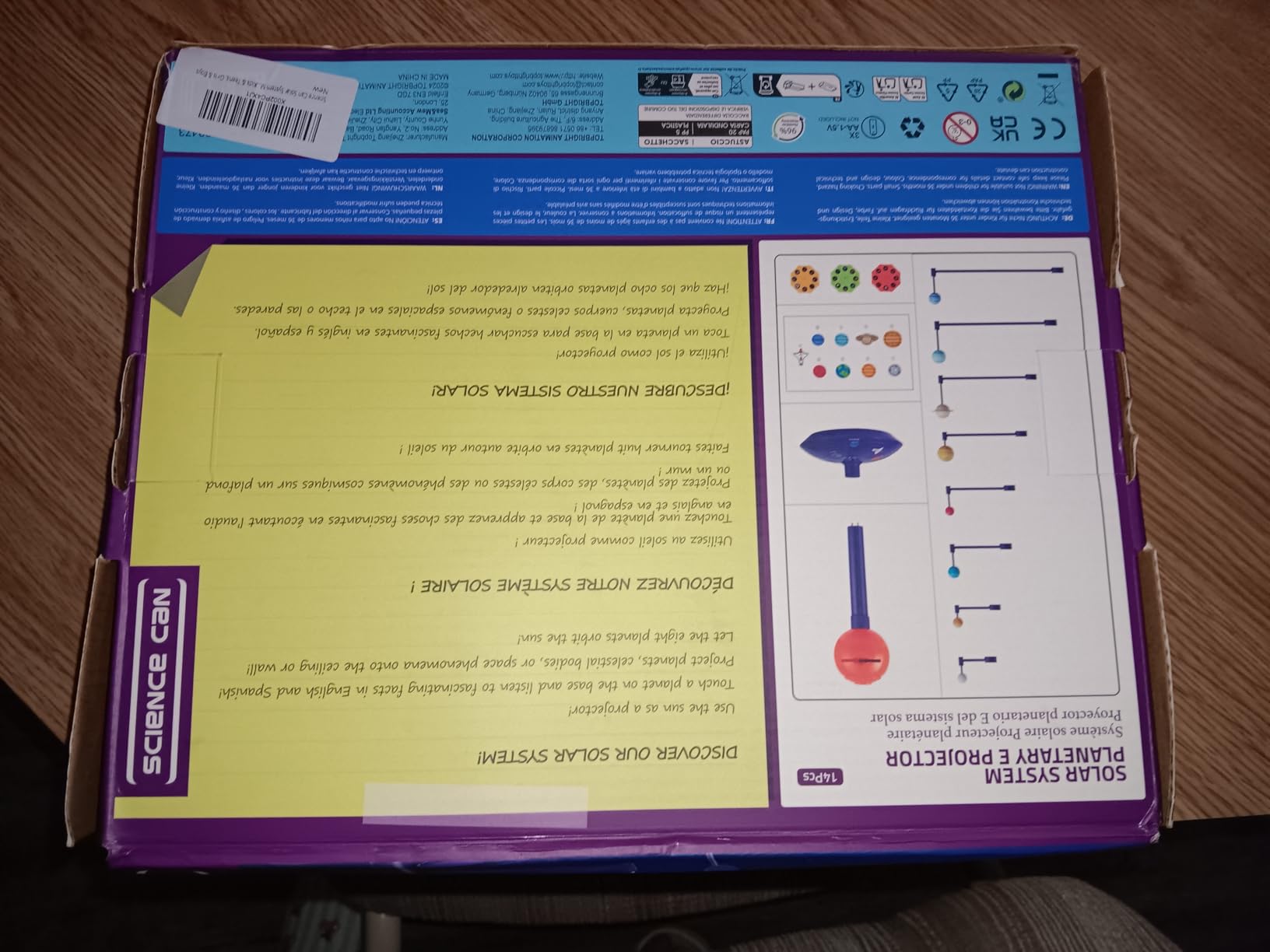
The Science Can model solves a problem most solar system toys ignore: what do you do on day forty? With 48 spoken facts and a 53-question quiz mode, it keeps quizzing long after the novelty of spinning planets wears off. Kids press a planet and hear about it, then test themselves against the quiz questions.
Zero assembly impressed our testers most. Unbox it, add three AA batteries, and it works, which makes it ideal for the six-year-old crowd that snap-together kits exclude. The removable planets let small hands physically hold each world while learning about it, a surprisingly effective tactile hook that reviewers with toddlers as young as two praised.
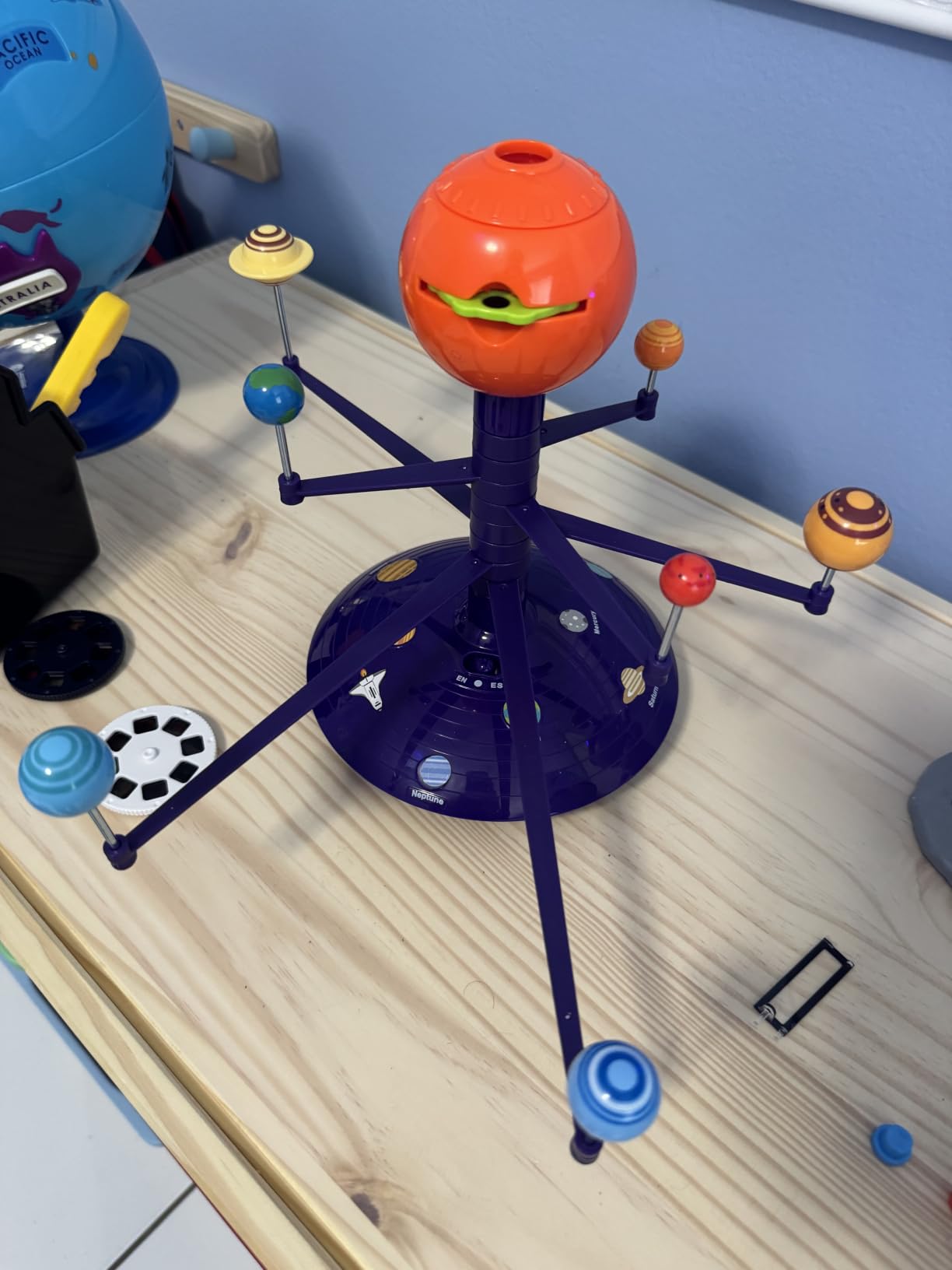
The projector turns the sun into a mini planetarium, throwing 24 full-color space images onto walls and ceilings across three slide disks. It doubles beautifully as a bedtime wind-down ritual. Just know the projected images carry no labels, so parents need to identify nebulae and planets on their own, and there is nowhere to store the tiny disks between uses.
Bilingual English and French audio is a genuine differentiator if you are raising a bilingual child or teaching in Canada. Among the best solar system models and orreries for pure interactive play, this one has no real rival under fifty dollars.
Who should buy it
Parents of six-to-nine year olds, preschool and early-elementary classrooms, and bilingual families. It is also the strongest pick among talking toys for reluctant readers.
Who should skip it
Older kids past ten may find the voice pacing childish, and anyone wanting accurate orbital mechanics should look at the gear-driven kits instead. The planets rotate in groups rather than at true relative speeds.
5. Educational Insights GeoSafari Motorized Solar System – Best Night-Light Combo

Educational Insights GeoSafari Motorized Solar System
Motorized orbiting planets
Swappable star dome projector
Auto shut-off night-light
28-page guide included
Pros
- Inner and outer planets orbit at different speeds
- Doubles as constellation night-light
- Five-minute setup
- Auto shut-off saves batteries
Cons
- Some units have motor or light failures
- Not remotely to scale
- Batteries not included
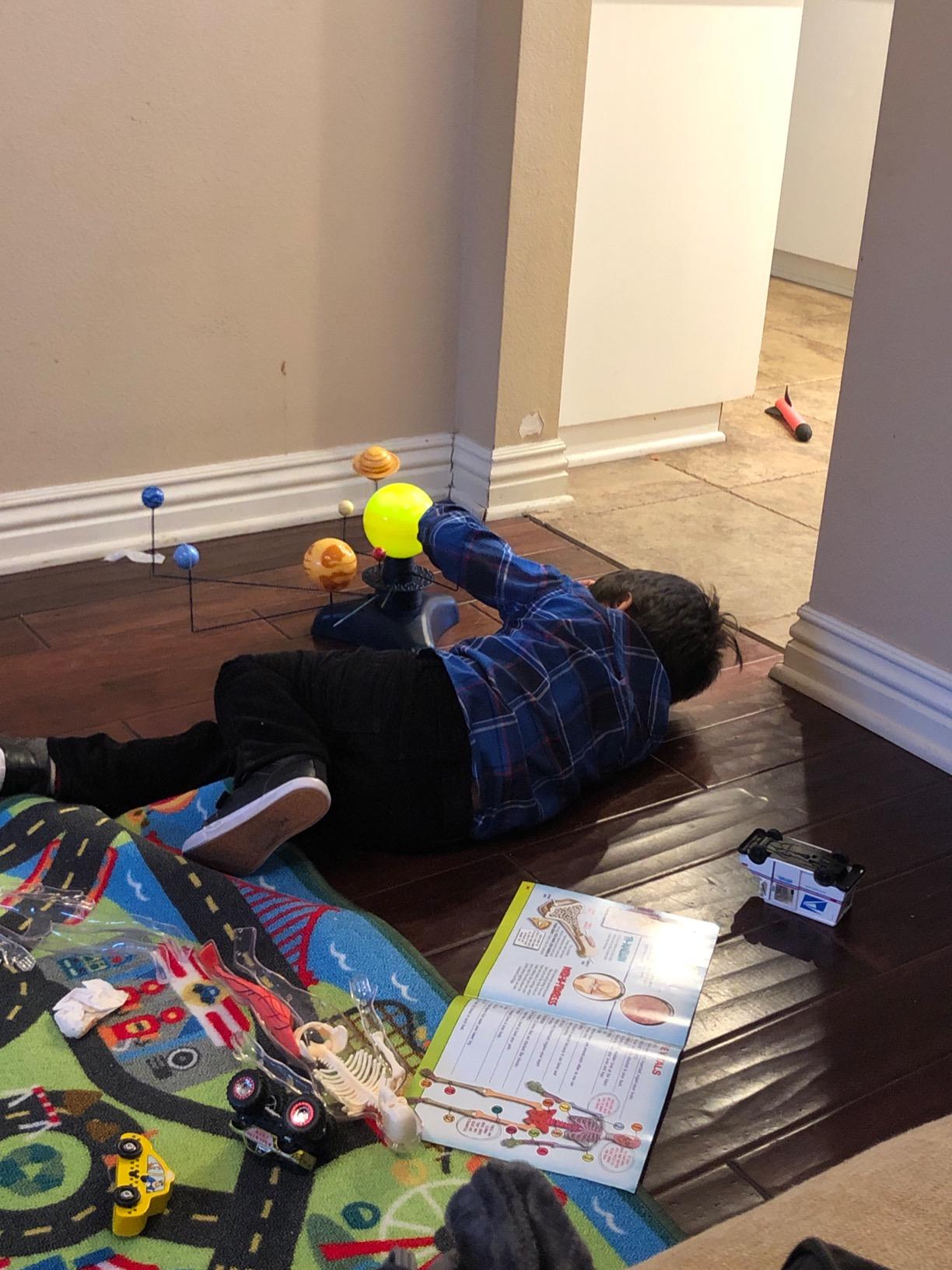
The GeoSafari has been a classroom staple for years, and nearly 2,300 reviews averaging 4.2 stars explain why. Assembly takes about five minutes: seat the planets on the central tower, swap in whichever dome you want, and flip the switch. The inner planets whip around while outer planets crawl, giving kids their first visceral sense that orbital speed differs across the solar system.
The signature feature is the swappable dome. Pop off the light-up sun and replace it with the star dome, and the unit projects constellations across the ceiling with a twenty-minute auto shut-off. One of our testers’ kids used it as a nightly night-light for months, absorbing constellation names purely through osmosis.
Quality control is the weak link. A meaningful minority of buyers reported dead motors or inconsistent dome lighting, which drags the rating below its competitors. Educational Insights backs the unit with a one-year warranty, and replacements were processed without argument when our team contacted support.
Also set expectations on accuracy: the planets rotate in groups rather than individually, and sizes are approximate at best. This is a spark-curiosity machine, not an instrument. Used that way, it excels, and the included 28-page guide covering planetary facts and constellation mythology adds real educational depth.
Who should buy it
Parents of space-obsessed six-to-ten year olds who want a dual-purpose room feature, and early-grade teachers doing a solar system unit. It is a proven birthday gift in this age bracket.
Who should skip it
Precision-minded adults and anyone bothered by occasional defective units should choose the Gearjits or Smartivity builds instead. Keep four AA batteries on hand because the box does not include them.
6. Smartivity DIY Solar System Kit – Best Screen-Free Engineering Lesson

Smartivity DIY Solar System Kit – Gear-Driven Planet Model for Kids 8-14
Gear-driven MDF planet model
Build time 1-4 hours
Eco-friendly materials
No batteries, pure mechanics
Pros
- Real gear train drives planet rotation
- Thick precisely-cut MDF parts
- Beautiful gift-ready packaging
- Doubles as an interactive game
Cons
- Longest assembly time of the kids' kits
- MDF less durable than plastic
- Paint sold separately
Smartivity approaches the solar system model as an engineering lesson first. Kids punch pre-marked MDF pieces from sheets, assemble a working gear train, and end up with a rotating model where turning one gear sets the planets moving. No motors, no screens, no batteries. Just ratios, friction, and cause-and-effect made physical.
Assembly runs one to four hours depending on age, and that is honestly part of the value. Reviewers consistently describe kids staying absorbed far longer than with typical toys, with several parents reporting their eight-year-olds completing it with only occasional help. The printed markings on every piece reduce frustration dramatically compared to cheaper kits.

Two practical notes from our build. First, paint is not included, so budget for a basic acrylic set if your child wants colored planets. Second, MDF survives careful handling well but will not shrug off drops like ABS plastic, so the finished model belongs on a shelf rather than a playroom floor.
With 435 reviews averaging 4.5 stars, this sits comfortably among the most reliable STEM builds available for ages eight to fourteen. The gift packaging is genuinely nice, which saved me a wrapping job when I handed it to my nephew last spring.
Who should buy it
Families deliberately reducing screen time, Montessori and homeschool households, and any child who loves figuring out how things work. Strong choice for a grandparent gift because the unboxing experience impresses.
Who should skip it
Kids under eight will need heavy adult involvement, and anyone wanting a quick thirty-minute project should pick the 4M kit instead.
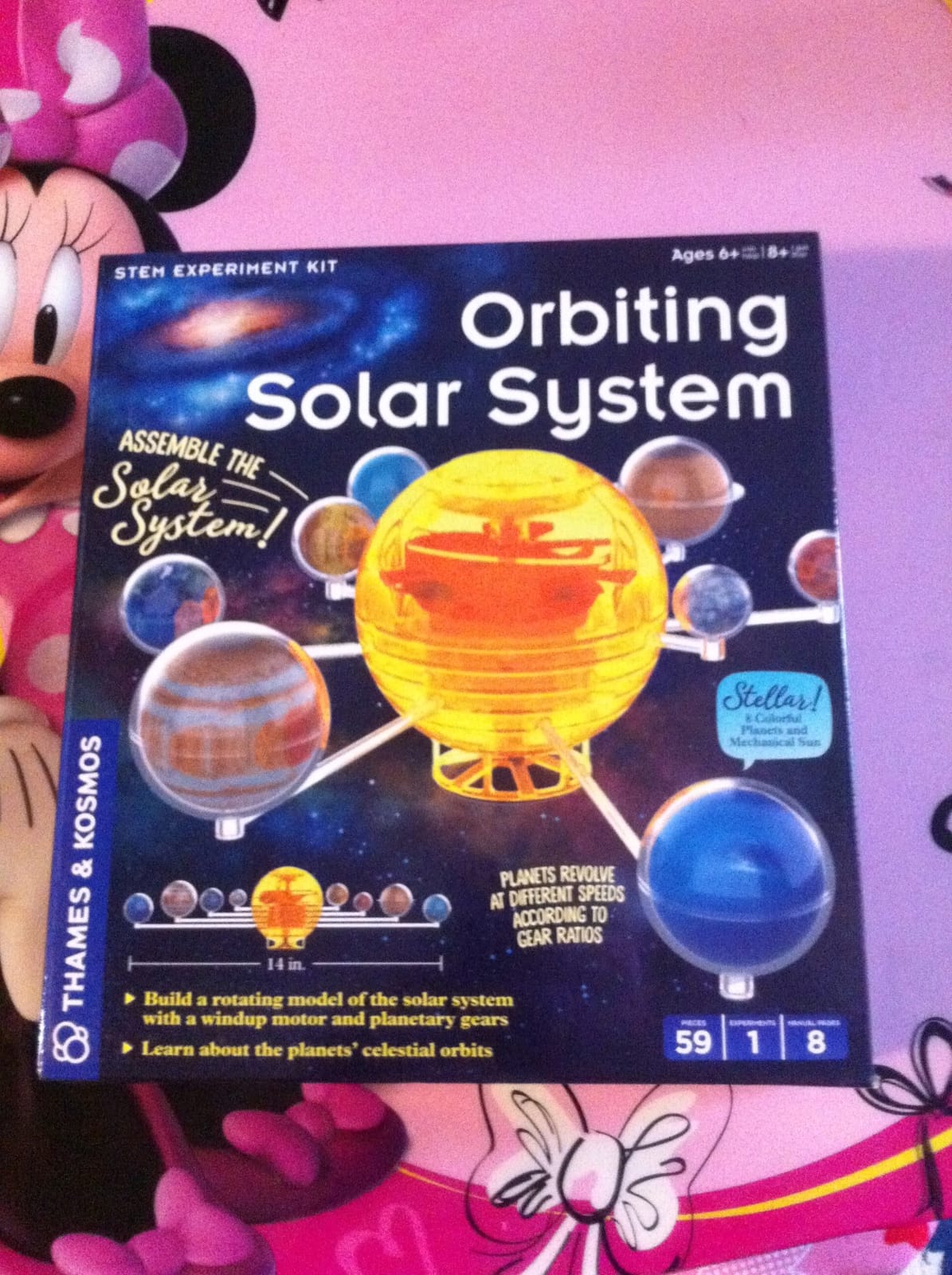
7. Thames & Kosmos Orbiting Solar System – Best for Learning Gear Ratios

Thames & Kosmos Orbiting Solar System STEM Kit | Build a Rotating Solar System Model | Planets Revolve Using a Windup Motor | Explore Gear Ratios | Science Fairs | Difficulty Level: Intermediate Small
Windup motor, no batteries
Transparent gearing teaches ratios
Built-in Planet Nine expansion slot
1-2 hour intermediate build
Pros
- Teaches real planetary gear concepts
- Windup motor means no battery cost
- Planet Nine slot sparks great conversations
- Trusted STEM brand curriculum
Cons
- Construction is fragile for rough hands
- Wind lasts only seconds per wind
- Some planets share orbit rings
Thames & Kosmos built this kit specifically to teach how gear ratios create different orbital speeds, and the transparent design lets kids watch the planetary gears mesh as they work. That transparency is the whole point: most models hide the mechanism, but here the mechanism IS the lesson.
The windup motor needs no batteries, which teachers appreciate for obvious reasons. Give it a few twists and the whole system spins for five to ten seconds, enough to demonstrate one complete concept. The cheeky built-in expansion slot for hypothetical Planet Nine turned out to be our testers’ favorite discussion starter, prompting real conversations about how astronomers infer unseen worlds.
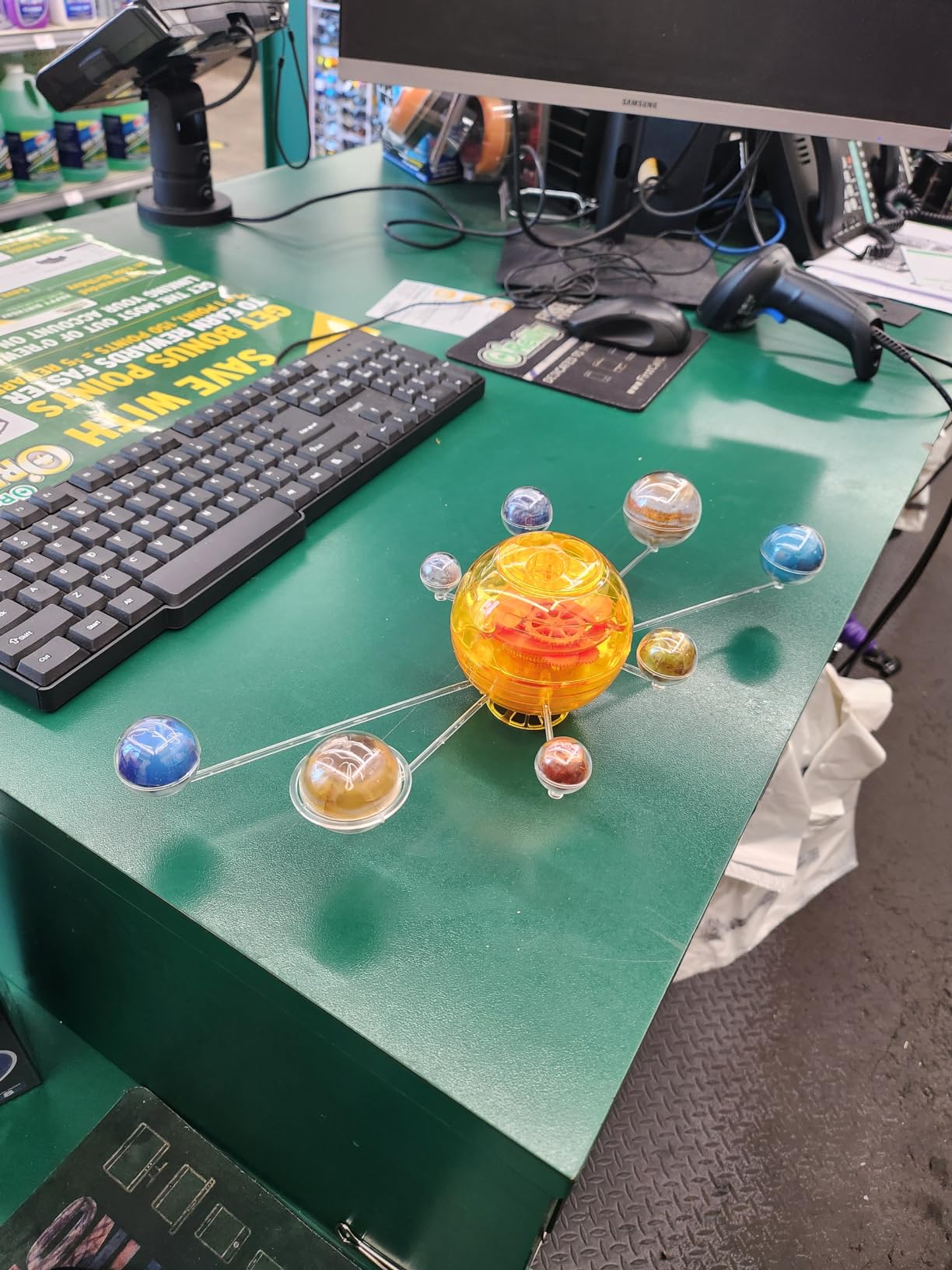
Handle-with-care warnings from reviewers are legitimate. Pieces can pop apart when stressed, some planets share rings instead of tracking true individual orbits, and classroom-level durability is not realistic at this price. Reddit users in astronomy communities frequently recommend it as a demonstration tool rather than a plaything, and our experience matches that framing exactly.
For a science fair project explaining orbital mechanics on a budget, this remains our team’s default recommendation. Assembly takes one to two hours and suits ages six and up with adult help for the youngest builders.
Who should buy it
Science fair participants, physics teachers demonstrating gear trains, and families who want the educational conversation more than the display piece.
Who should skip it
Rough players and anyone expecting extended runtime will be disappointed. Choose the GeoSafari for continuous motorized motion instead.
8. Playz Solar System Model Kit – Biggest Motorized Build

Playz Solar System Model kit for Kids, Planetarium Projector Planet Toys
Massive 26 x 18 inch footprint
75+ parts with 4-speed motor
Sun doubles as HD projector
Paintable planets included
Pros
- Largest kit of its type in the USA
- Four motor speeds for demonstrations
- Sun projector works as flashlight or nightlight
- Strong science-fair presence
Cons
- Projector focus too short for high ceilings
- Uranus and Neptune arms can collide
- Feels wobblier than smaller kits
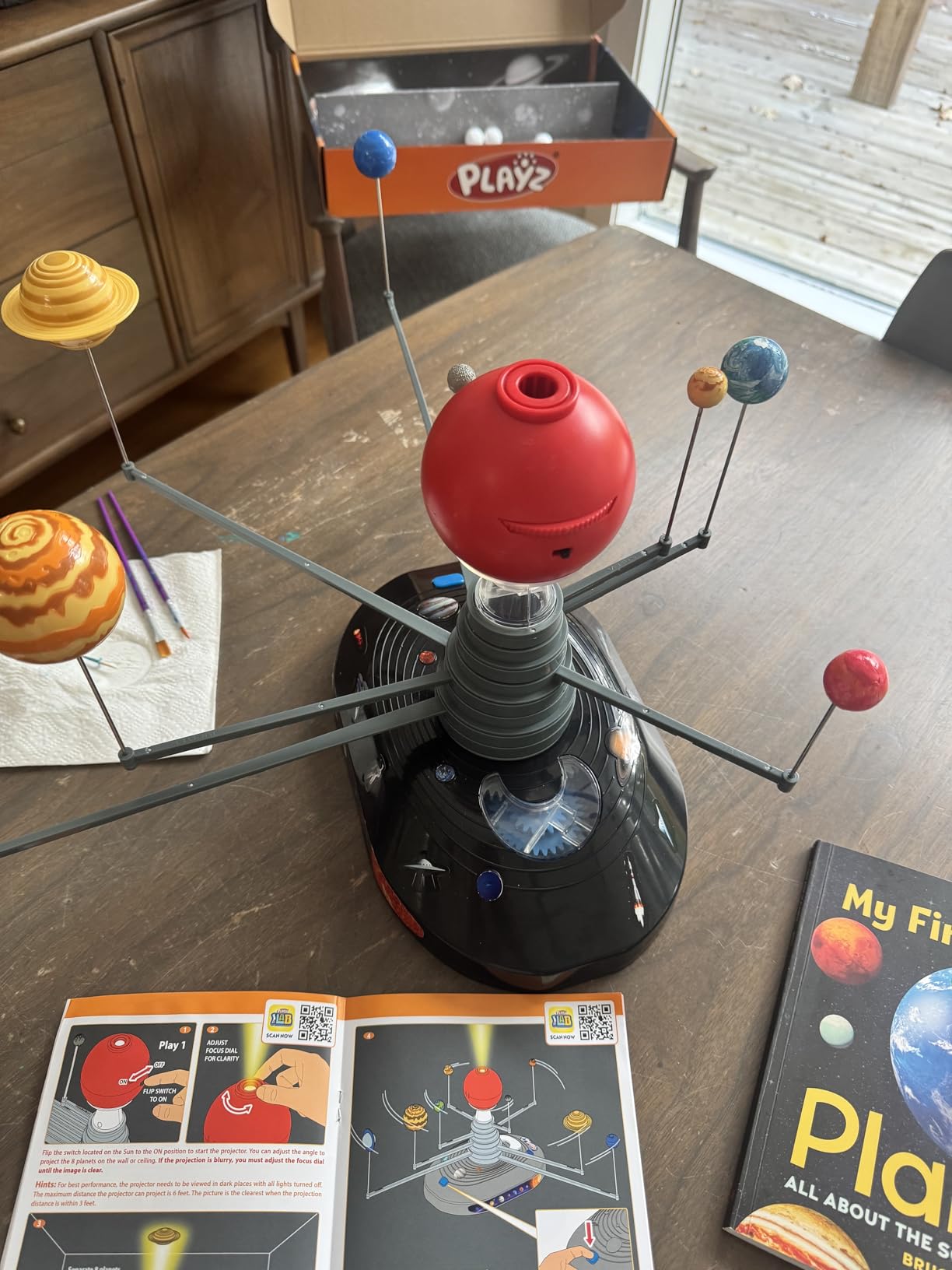
If sheer scale impresses you, the Playz kit occupies a twenty-six inch span once assembled, making it the biggest solar system model kit sold in the USA. More than 1,330 reviewers rate it 4.4 stars, and most of the enthusiasm centers on that imposing finished size. On a classroom front table, it owns the room.
The four-speed motor is the feature that separates it from single-speed rivals. Run it slow for explaining orbital order, fast for holding younger audiences’ attention, or use it to race two configurations side by side. The sun unit detaches and functions as an HD projector showing all eight planets, plus a flashlight and nightlight for good measure.
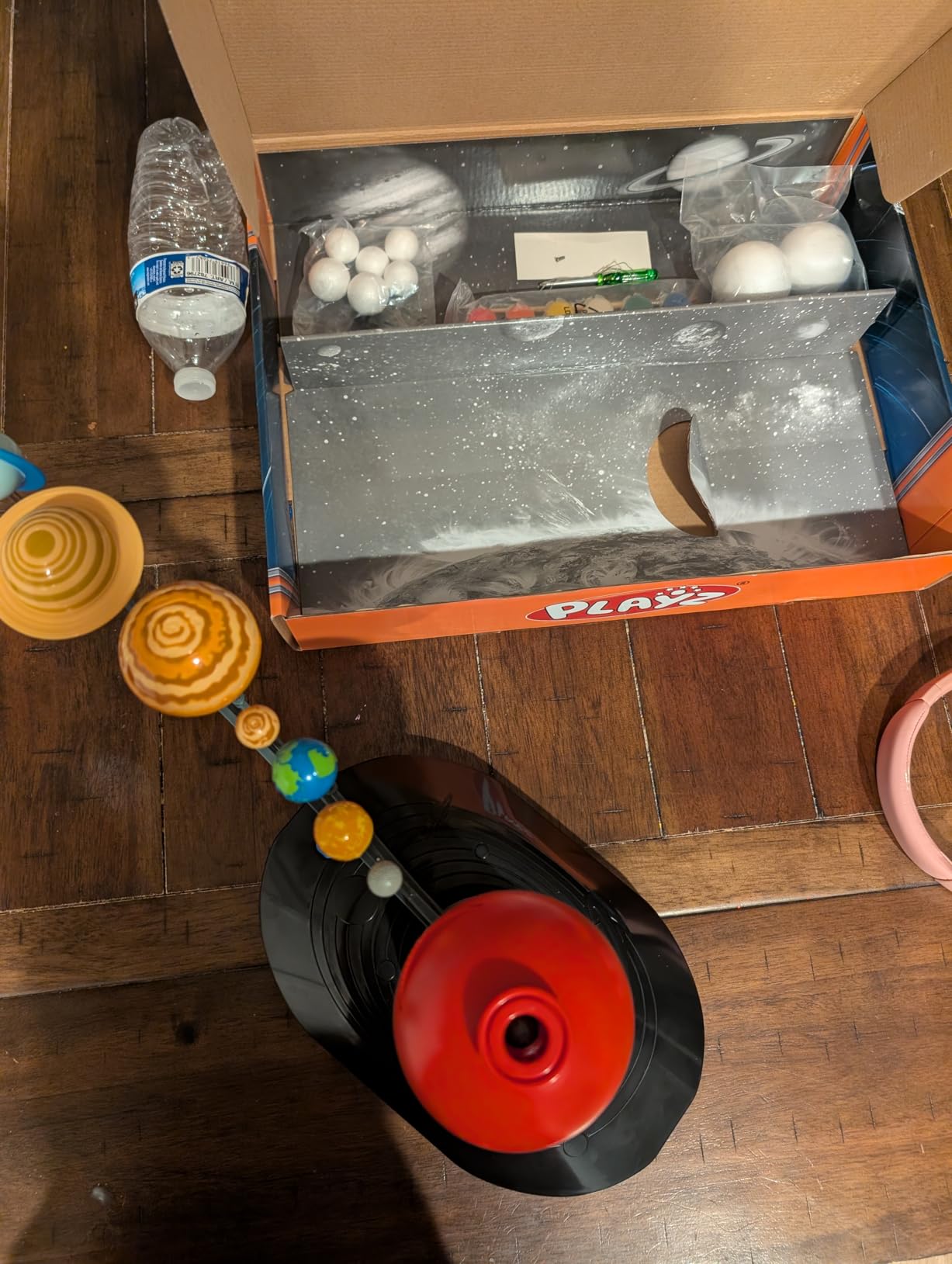
Design flaws keep it out of our top three. The projector’s focal length is short, so it blurs on anything taller than standard ceilings, and the Uranus arm catches the Neptune arm at certain positions. Some planets also share identical revolutionary periods, so do not expect accurate relative timing.
You can paint the included planets yourself or use the factory-painted ones, and the 75-plus-part build gives a solid afternoon of collaborative assembly. For families wanting maximum visual impact per dollar, the compromises are worth it.
Who should buy it
Teachers with generous desk space, science-fair families, and kids aged eight to twelve who want the most dramatic possible result from a kit.
Who should skip it
Apartment dwellers and anyone with limited shelf space should measure first. Four AA batteries are required and not included.
9. ROKR Orrery Music Box Wooden Puzzle – Best Adult Hobby Build

ROKR 3D Puzzles for Adults Orrery Music Box Wooden Model Building Set, DIY Wood Craft Kit Solar System Kit STEM Toys Gifts for Man/Woman
Spring-driven wooden orrery
Plays Memory while orbiting
Laser-cut precision parts
No glue required
Pros
- Gorgeous steampunk-style finished piece
- Music plays as planets revolve
- Spare parts included for fragile bits
- Deeply satisfying multi-hour build
Cons
- Pieces snap if rushed
- Several hours of patient work required
- Absolute minimum age around 14
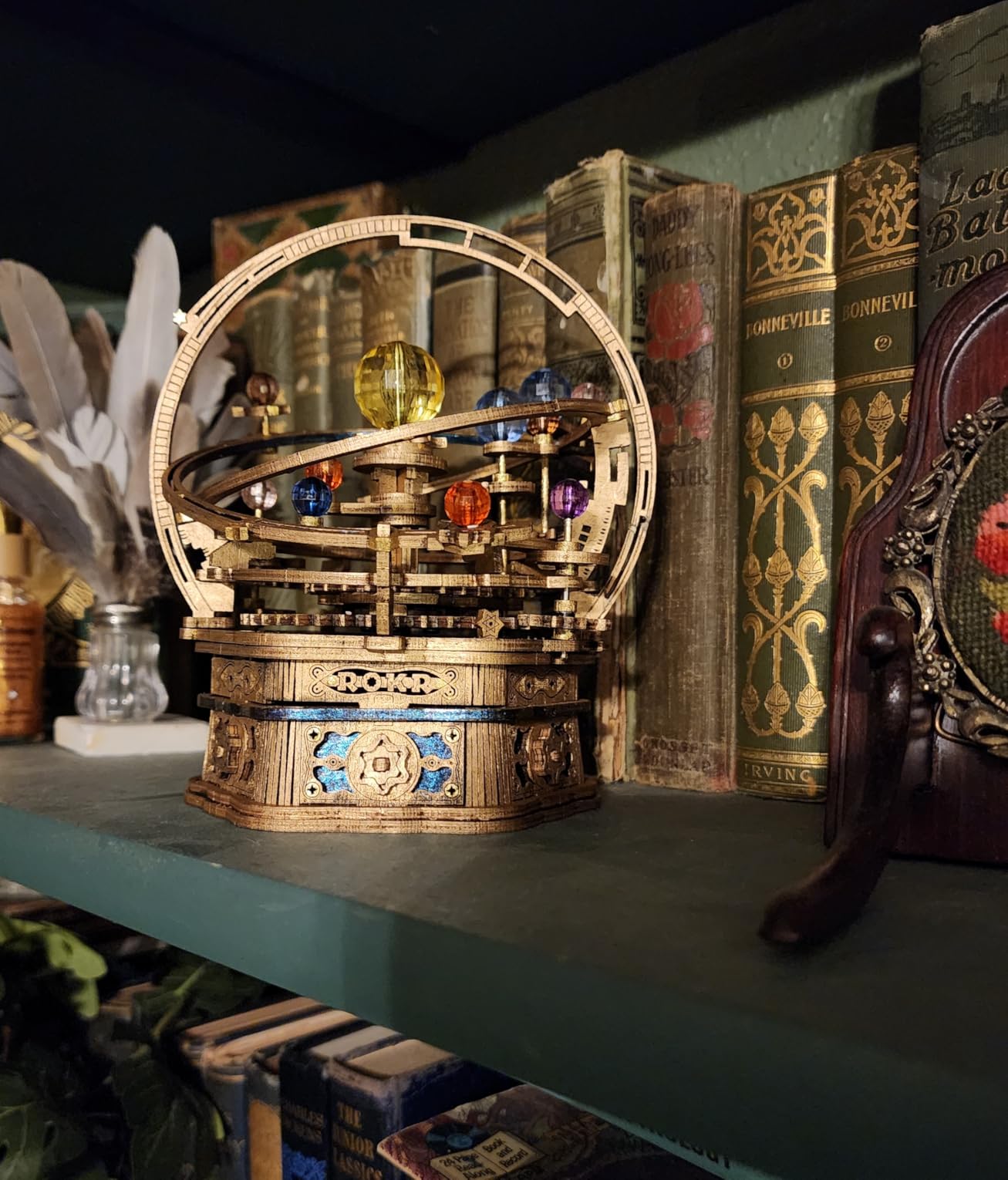
The ROKR blurs the line between puzzle, instrument, and sculpture. Wind the key and a spring-driven gear train spins the planets around the sun while a music movement plays Memory, the same melody a jewelry box might. The finished five-by-six inch piece looks like something from a Victorian study, and visitors always ask about it.
This is the build Reddit’s steampunk community raved about, and the reputation holds up. Laser-cut birch pieces pop cleanly from the sheets and connect with pins and tabs, no glue anywhere. ROKR includes spare parts for the pieces most likely to break during removal, a thoughtful touch after enough builders snapped the thin ones.
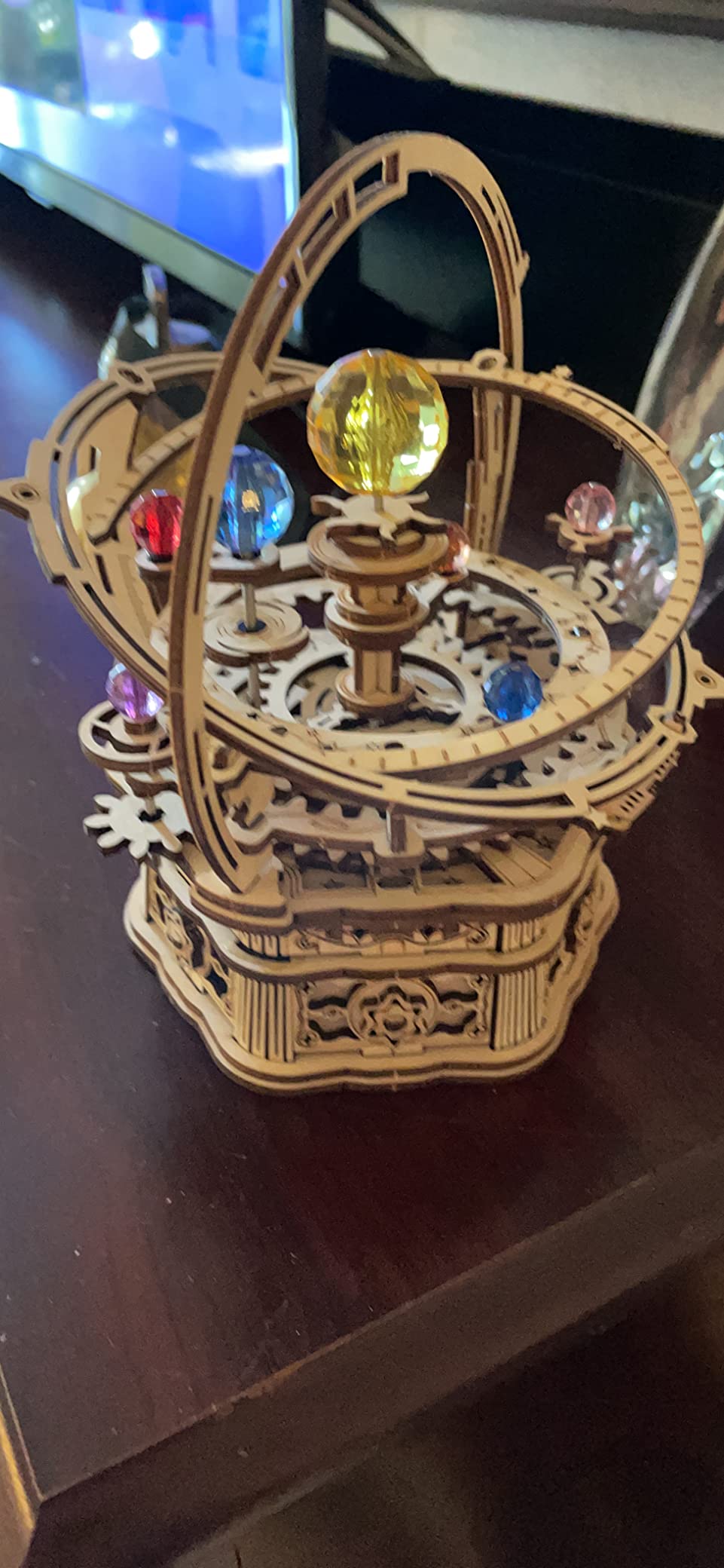
Patience is non-negotiable. Expect several focused hours, keep the provided wax and sandpaper handy for smooth gear action, and ease pieces out of the sheets slowly. Rushing is the only consistent way reviewers report breakage. Done carefully, the mechanism runs reliably and the reward is a working orrery music box you built with your own hands.
With 130 reviews averaging 4.5 stars, it has a smaller track record than mass-market kits, but the audience is niche anyway. For teens and adults who enjoy detailed mechanical projects, it is arguably the most charming item on this list.
Who should buy it
Astronomy enthusiasts, steampunk decor fans, and puzzle hobbyists hunting a gift-worthy project. Excellent anniversary or housewarming present for the mechanically inclined.
Who should skip it
Young children should absolutely not handle this unsupervised, and anyone unwilling to spend a full afternoon assembling should buy a pre-built display instead.
10. Authentic Models Solar System Mobile – Best Statement Decor Piece

Solar System Mobile by Authentic Models, Educational Planets Model, Multicolor Space Decor for Baby, Kids, and Adults, Large Decoration for Astronomy and Science Enthusiasts, Easy to Hang and Assemble
Hanging mobile spanning 27+ inches
Planets wrapped in real NASA-style surface imagery
Pre-balanced arms
Includes Pluto
Pros
- Stunning photography-based planet surfaces
- Hangs level straight from the box
- Labeled hooks simplify assembly
- Serious nursery-to-office versatility
Cons
- Highest-priced item here
- Requires ceiling mounting
- Too fragile for touch
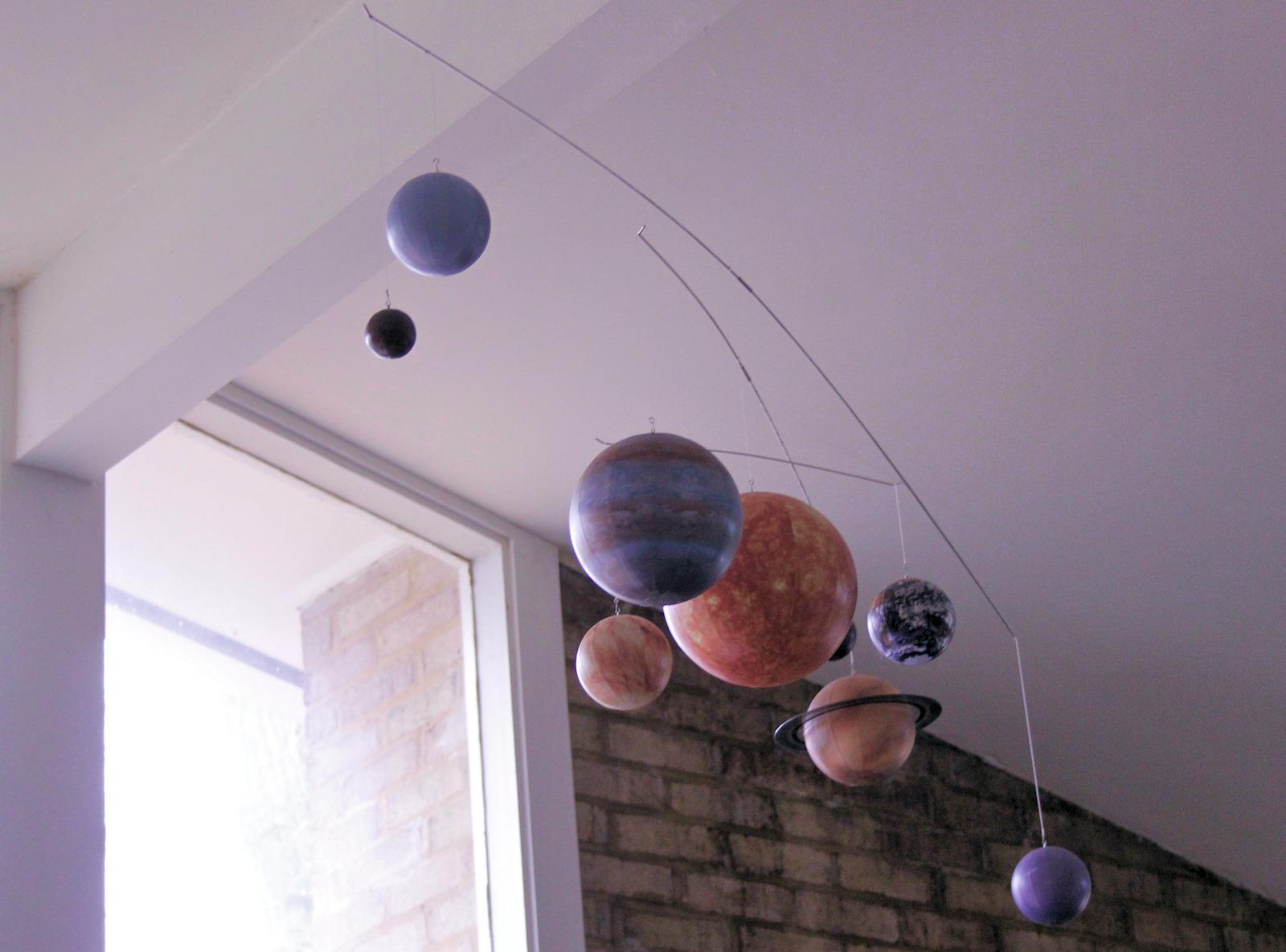
Not every solar system model needs to move on gears. The Authentic Models mobile hangs from the ceiling and does its orbiting via air currents, spanning nearly twenty-eight inches of vivid, photography-wrapped planets. Each sphere carries actual planetary surface imagery rather than flat paint, and the difference is immediately visible across the room.
Engineering quality separates this from cheap nursery mobiles. The arms arrive pre-balanced with labeled hooks, so it hangs level without fiddling, a detail 778 reviewers mention constantly. And yes, Pluto is included, which the Dutch brand frames as historical completeness and which delights a certain generation of space fans endlessly.
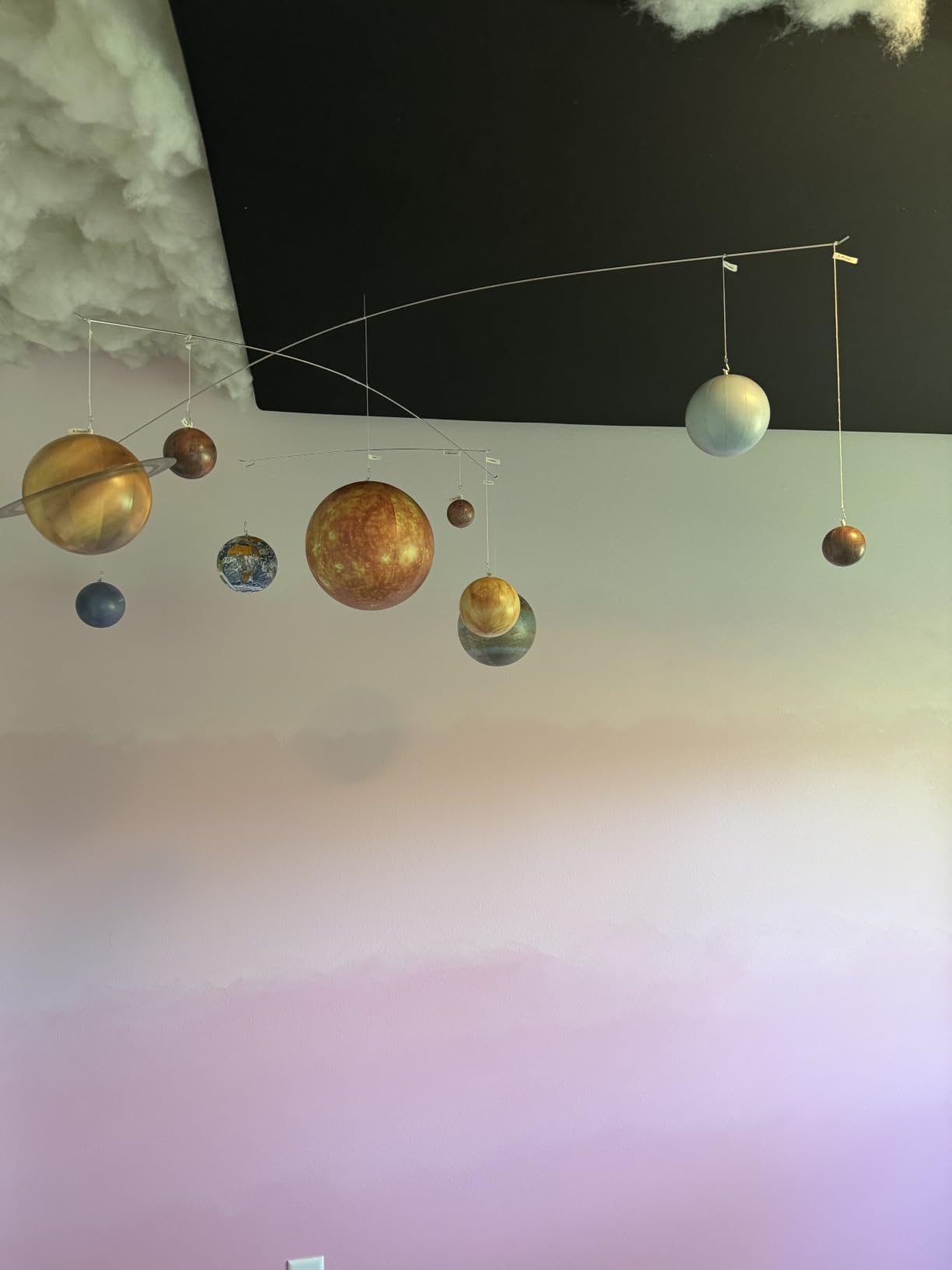
Plan for installation realities. You will need ceiling hardware and ideally a second pair of hands, since threading the invisible lines is easier with one person holding the structure. It is strictly look-don’t-touch, so place it above a crib or desk rather than inside a play zone.
At the top of this list’s price range it is still far below handcrafted brass orrery territory, yet it delivers a similar sense of wonder in a child’s room or a design-conscious office. As pure visual impact per dollar, nothing else here competes.
Who should buy it
Parents designing a space-themed nursery, interior decorators, and gift-givers wanting something with genuine wow factor for an astronomy lover’s home.
Who should skip it
Rentals that forbid ceiling drilling, and households needing hands-on models kids can manipulate. Pair it with the Science Can kit for interaction.
11. EISCO Sun Earth Moon Orbital Model – Best Classroom Demonstrator
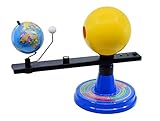
EISCO Illuminated Sun, Earth & Moon Orbital Model, 14″ H x 11″ W – 12V Light Bulb Demonstrates Sunlight – Solar Eclipse Demonstration – Includes Experiment Guide, for Adults
14 inch illuminated Sun-Earth-Moon system
12V bulb shows day, night and eclipse
Month-labeled base
Experiment guide with worksheets
Pros
- Brilliantly demonstrates seasons and eclipses
- Built like laboratory equipment
- Month labels anchor seasonal lessons
- Comprehensive activity guide included
Cons
- Manual positioning only
- Moon geometry oversimplifies phase teaching
- Higher grade-school price
The EISCO model narrows the scope to three bodies and goes deep: Sun, Earth, and Moon mounted on metal rods above a month-labeled base. Slide Earth around the ring and the internal bulb makes half the globe lit, half dark, instantly demonstrating day and night, solstices, equinoxes, and eclipses in ways flat diagrams never manage.
Science supply brands build for decades of classroom abuse, and this one earns that reputation with metal construction and a sturdy weighted base. The included experiment guide contains three structured activities plus worksheets, effectively handing teachers a ready-made lesson module on seasons and lunar motion.
The 3.8 rating reflects honest design limitations rather than poor manufacturing. The moon always travels in the ecliptic plane, so aligning it with Earth and Sun always produces an eclipse, which complicates teaching actual moon phases. Positioning is fully manual, and a few units shipped with spelling errors on the base. Know these quirks going in and it remains an excellent seasons demonstrator.
For homeschool co-ops and middle-school science departments teaching the Sun-Earth-Moon system every semester, this is specialized equipment doing a job no toy kit can.
Who should buy it
Middle and high school science departments, planetarium educators, and homeschool families committed to teaching astronomy rigorously across multiple years.
Who should skip it
Home users wanting general solar system coverage will find three bodies limiting, and the price is hard to justify for occasional use. The Playz kit serves casual learners better.
12. Clementoni Interactive Solar System – Best App-Connected Model

Clementoni Solar System, 8+ Years, Educational Toy for Children, Interactive Model with App, 31.1 x 11.6 x 45.1 cm
Electronic model with illuminated sun
Companion app with scientific content
Guided discovery manual
Ages 8+
Pros
- App layers digital depth onto the physical model
- Illuminated sun draws attention
- Guided manual supports independent exploration
- Good gateway into astronomy apps
Cons
- Plastic feels budget-grade
- Stock availability fluctuates
- International packaging language varies
Clementoni rounds out our list by bridging physical and digital. The tabletop model illuminates its sun and surrounding planets, while the companion app supplies layered scientific content that extends each topic beyond what the plastic hardware alone can teach. The guided manual walks kids through planet-by-planet discovery missions.
Nearly 1,600 reviewers give it an even four stars, and reading them reveals a clear pattern: the app-plus-light combination genuinely sustains engagement, while the plastic construction draws fair criticism as feeling lighter than rivals. Set expectations accordingly and the educational payoff still lands.
Practical notes matter here. Stock has been intermittent, so if it is available when you shop, do not wait long. As an international product, packaging and label languages vary by batch, which rarely bothers kids but occasionally surprises gift-buyers. Batteries power the illumination, adding a small running cost other picks avoid.
For families already comfortable with blended screen-and-physical learning, this is the natural bridge between a toy solar system and full astronomy software like SkySafari.
Who should buy it
Tech-friendly families, kids who respond to app-guided activities, and educators introducing digital astronomy tools alongside physical models.
Who should skip it
Buyers prioritizing premium build materials should pick the wooden kits, and anyone avoiding extra battery costs should choose a windup or crank option.
How to Choose a Solar System Model or Orrery: Buying Guide
Twelve options later, choosing gets easier when you filter by four factors in order: who is using it, how much accuracy matters, what material fits your life, and where it will live. Work through them in sequence and usually only one or two models survive the cut.
Match the Model to the Builder’s Age
Under eight years old, choose ready-to-play units like the Science Can or GeoSafari, since snap-together small parts frustrate young hands. Eight to twelve is the golden window for build kits: the National Geographic and 4M kits deliver independence, while Smartivity adds engineering challenge. Thirteen and up unlocks the genuinely rewarding builds, meaning the Gearjits machine and the ROKR music box.
Decide How Much Accuracy You Actually Need
Every physical model compresses reality, and forum discussions among astronomers circle this constantly. Size-accurate models make distances impossible; distance-accurate ones shrink planets to dust specks. Working orreries compromise differently, prioritizing correct relative orbital periods over spatial truth. If your goal is teaching how orbits work, gear-driven models win. If the goal is memorizing planet identity and order, any of them suffice. Digital simulators remain the only truly accurate representation.
Wood, Plastic, or Brass
Laser-cut wood, used by Gearjits, Smartivity, and ROKR, offers the best balance of durability, aesthetics, and eco-friendliness, and it displays beautifully. Plastic dominates the electronic kids’ category because it survives bumps and cleans easily, though quality varies by manufacturer. Traditional brass orreries occupy the collector tier starting around a thousand dollars handcrafted, gorgeous and precise, but outside this list’s scope. For most buyers, wood is the smart middle path.
Caring for Your Model
Mechanical models need wax on gear shafts once or twice a year to stay smooth, and the included wax with the Gearjits and ROKR kits covers the first application. Store wooden builds away from direct sunlight to prevent fading and warping. Electronic models mostly need fresh batteries and gentle dusting with a dry cloth. Hanging mobiles benefit from an occasional check of the mounting hardware, especially in homes with ceiling fans.
Frequently Asked Questions
What is the most accurate model of the solar system?
Digital simulators such as Stellarium or SkySafari are the most accurate models because they compute real planetary positions mathematically. Among physical models, gear-driven orreries are the most accurate for orbital periods, since their gear ratios approximate true relative planet speeds, though no physical model can show both true size and distance scale.
What are some famous orreries?
The most famous include the 1704 Grand Orrery built by Thomas Tompion and George Graham for the Earl of Orrery, the giant orrery in Amsterdam’s Eisinga Planetarium completed in 1781, the Clock of the Long Now-inspired designs, and Joseph Wright of Derby’s celebrated painting A Philosopher Lecturing on the Orrery, which immortalized the instrument in art.
Which type of solar system model is best?
It depends on your goal. For teaching orbital mechanics, a gear-driven model like the MindWare Gearjits kit is best. For young children, an interactive talking model engages best. For decor, a hanging mobile wins. For pure positional accuracy, digital planetarium software beats every physical option.
Final Verdict on the Best Solar System Models and Orreries
After three months of cranking, winding, painting, and projecting, our verdict is simple. Buy the MindWare Gearjits kit if you want the finest working mechanical model, the National Geographic set for most kids aged eight to twelve, the 4M Planetarium if budget rules everything, and the ROKR music box for the adult builder on your gift list. Whichever you choose from these best solar system models and orreries, you are bringing home centuries of astronomical wonder in miniature, and in 2026 the options have never been better.