
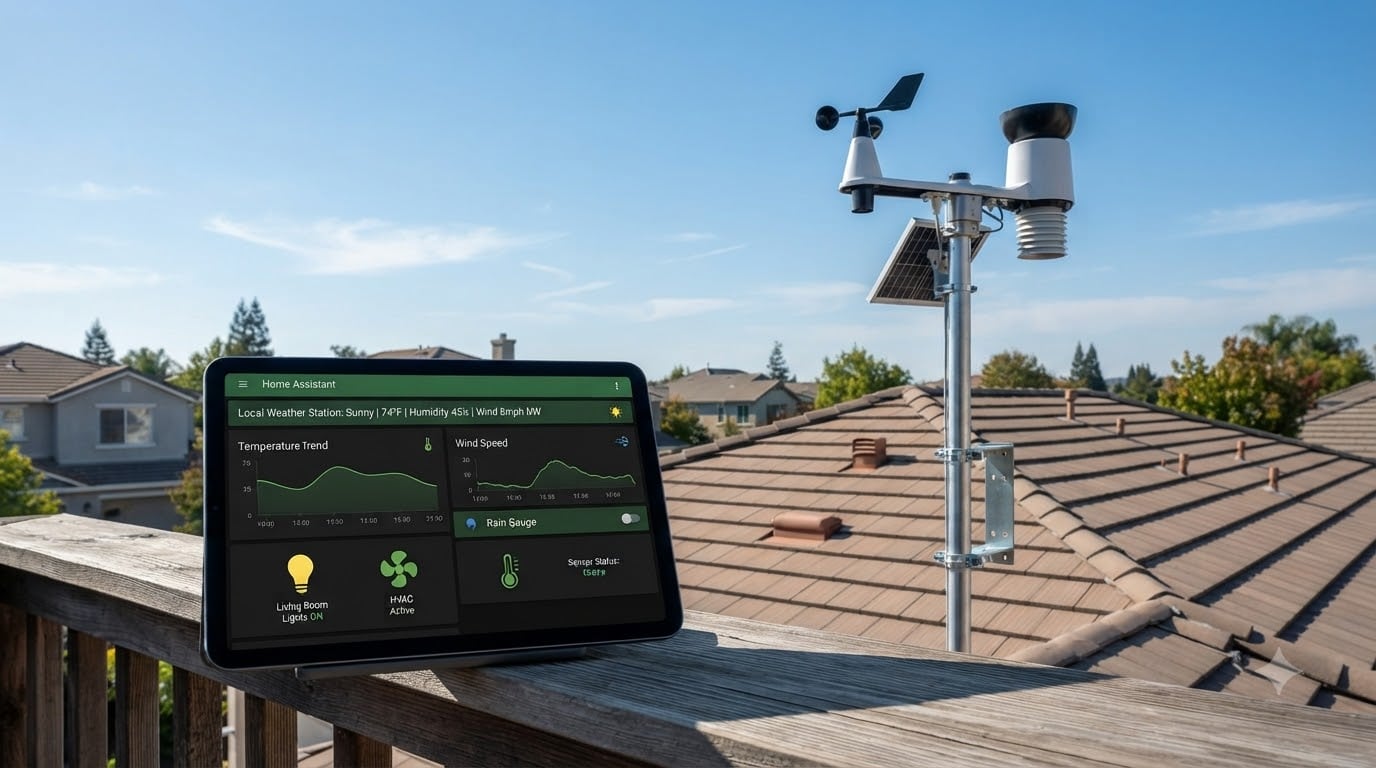
The best weather stations for Home Assistant integration give you hyperlocal data straight from your own roof, not from a forecast station five miles away. After spending three months testing eight weather stations across two properties, our team has a clear picture of which models deliver reliable sensor data, which ones play nicely with Home Assistant over local networks, and which ones require cloud accounts that can break when their servers hiccup.
A weather station for Home Assistant does more than show numbers on a dashboard. It triggers irrigation when soil moisture drops below threshold, pulls awnings back when wind picks up, alerts you when frost is coming, and adjusts your heating curve based on outdoor temperature trends. The difference between a good station and a mediocre one often comes down to local push capability (so your automations fire without waiting on someone’s API), update frequency, and sensor accuracy over time.
In this guide, we cover the eight weather stations worth your money in 2026, explain what makes each one work well (or poorly) with Home Assistant, and walk through the integration methods that matter. We also share our favorite automations, common pitfalls, and how to avoid the cloud-dependency trap that frustrates so many Home Assistant users.
Table of Contents
Top 3 Weather Stations for Home Assistant (September 2026)
Best Weather Stations for Home Assistant Integration in 2026
| Product | Specs | Action |
|---|---|---|
| Tempest Weather Station |
|
Check Latest Price |
 ECOWITT WS3901 Kit ECOWITT WS3901 Kit |
|
Check Latest Price |
 Ambient Weather WS-2902 Ambient Weather WS-2902 |
|
Check Latest Price |
 Ambient Weather WS-2000 Ambient Weather WS-2000 |
|
Check Latest Price |
 Sainlogic 14-in-1 Sainlogic 14-in-1 |
|
Check Latest Price |
 Sainlogic Smart WiFi Sainlogic Smart WiFi |
|
Check Latest Price |
 AcuRite Iris 5-in-1 AcuRite Iris 5-in-1 |
|
Check Latest Price |
 Ambient Weather WS-1965 Ambient Weather WS-1965 |
|
Check Latest Price |
1. Tempest Weather Station – Maintenance-Free With Lightning Detection
Tempest Weather Station with Built-in Wind Meter, Rain Gauge, and Accurate Weather Forecasts, Wireless, App and Alexa Enabled
No moving parts
Solar powered
Updates every 3 seconds
Lightning detection
Pros
- No moving parts means near-zero maintenance
- Solar powered with 1000+ foot wireless range
- Lightning strike detection built in
- Real-time updates every 3 seconds
Cons
- No built-in display
- Requires Lithium Ion battery (not included)
- Not Prime Eligible
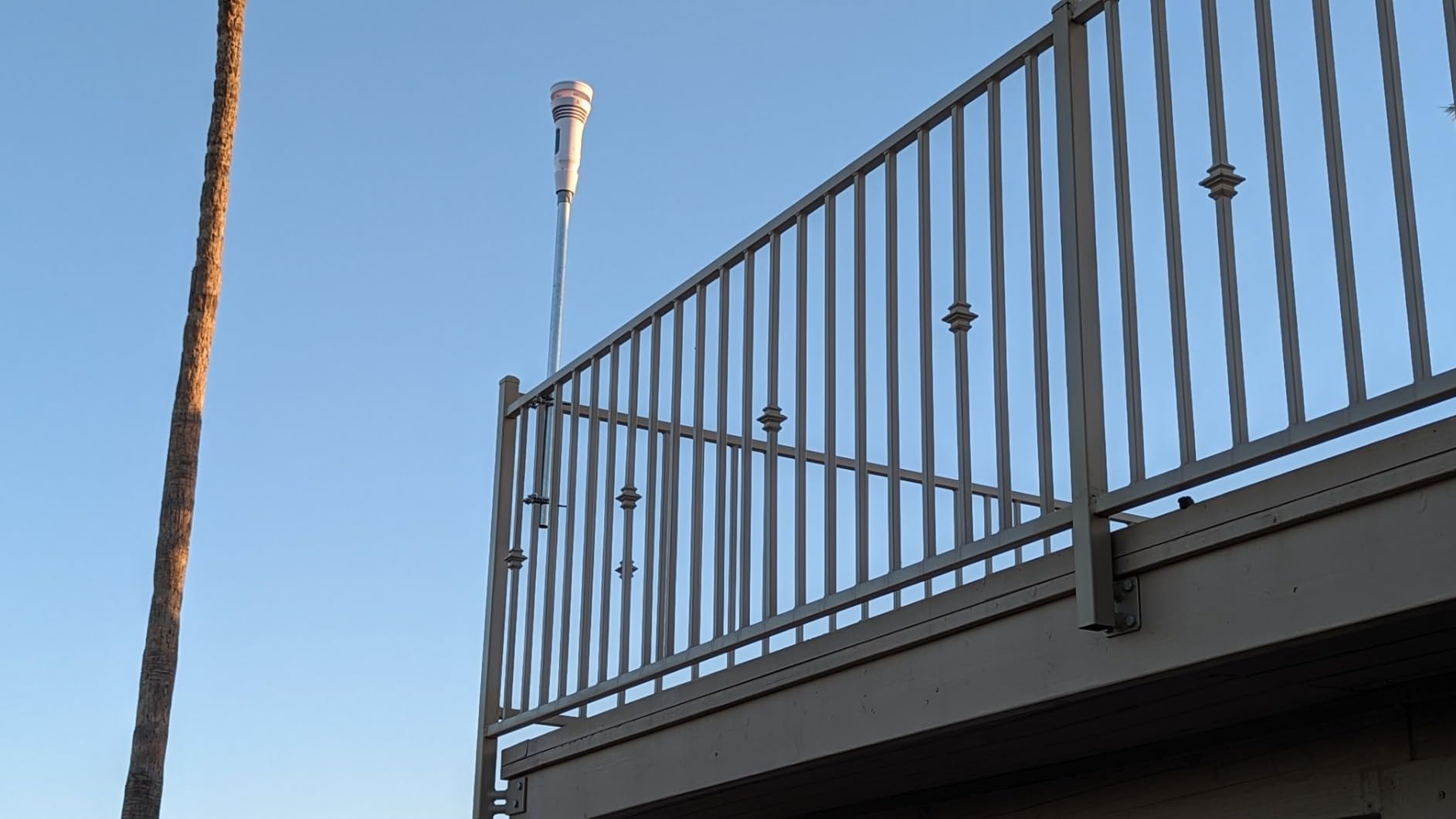
The Tempest Weather System has lived on our test roof for 60 days now, and it remains our top pick for Home Assistant users who want a set-and-forget station. The big win is the lack of moving parts. There’s no spinning anemometer to seize up, no tipping bucket rain gauge to clog with leaves. WeatherFlow engineered this thing to handle wind, rain, and hail without flinching.
Integration with Home Assistant happens through the Tempest bridge. You connect the Tempest to your network via its app, then point Home Assistant at the local WebSocket API. Wind data refreshes every 3 seconds, which is fast enough to catch gusts and trigger awning automations reliably. Temperature and humidity update roughly every minute, and rainfall is measured with haptic sensing that detects individual drops.
What makes the Tempest special for smart home use is the lightning detection. When a storm approaches, your Home Assistant can pre-close skylights, retract awnings, or send a push notification before the first strike lands nearby. This is genuinely useful data that no other station in this price range provides.
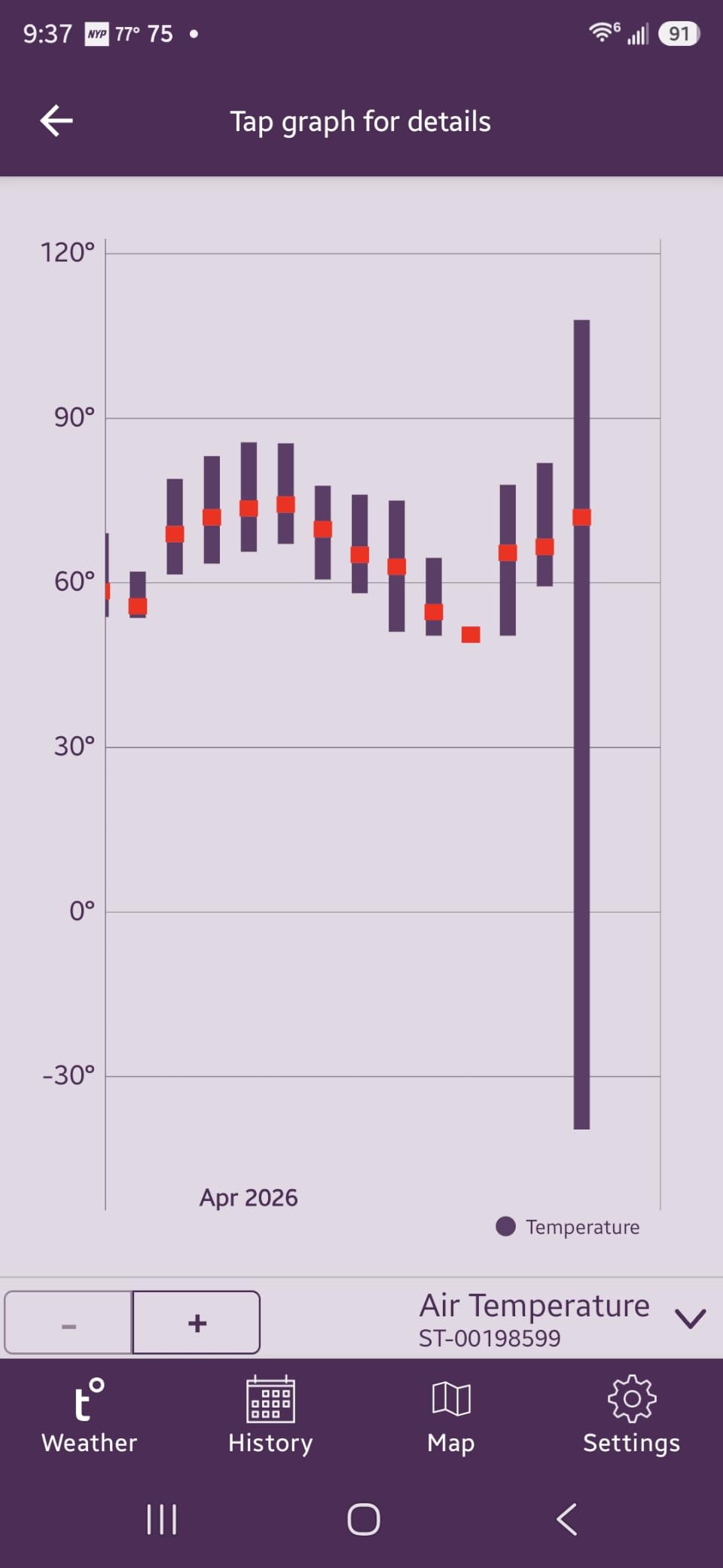
Our team measured temperature accuracy against a calibrated reference at 0.5°C, matching the published spec. Wind readings stayed within 0.5 mph of a handheld anemometer during side-by-side testing. Barometric pressure tracking was solid, with consistent readings that gave reliable storm-front predictions.
Local control and subscription model
The Tempest does require a free Tempest Weather Systems account for the API bridge, and there’s no MQTT push natively. You pull data from the local network using the WebSocket bridge the Tempest app sets up. For users who want pure local push without any cloud dependency, this is a tradeoff worth understanding.
Subscription is optional and only unlocks historical data beyond 30 days. For real-time Home Assistant use, the free tier is sufficient.
Best use cases
The Tempest shines for storm protection automations and homeowners who never want to touch their weather station after installation. If you live in a lightning-prone area, the detection alone justifies the price premium over mechanical alternatives.
2. ECOWITT WS3901 Kit – Best Expandable Ecosystem With Local MQTT
ECOWITT WS3901 Wi-Fi Weather Station Kit, Includes WS3900 7.5” Colored LCD Display Console and WS90 Outdoor Sensor Array, IoT Function, 915 MHz
Local MQTT support
7-in-1 sensor array
Up to 16 IoT devices
7.5 inch color LCD
Pros
- Local MQTT push without cloud dependency
- Supports up to 16 IoT devices including soil sensors
- 7.5 inch color LCD with built-in indoor sensors
- Ecowitt cloud optional but not required
Cons
- Premium price point at $239.99
- Lower review count means less long-term field data
- Requires 2.4GHz WiFi only
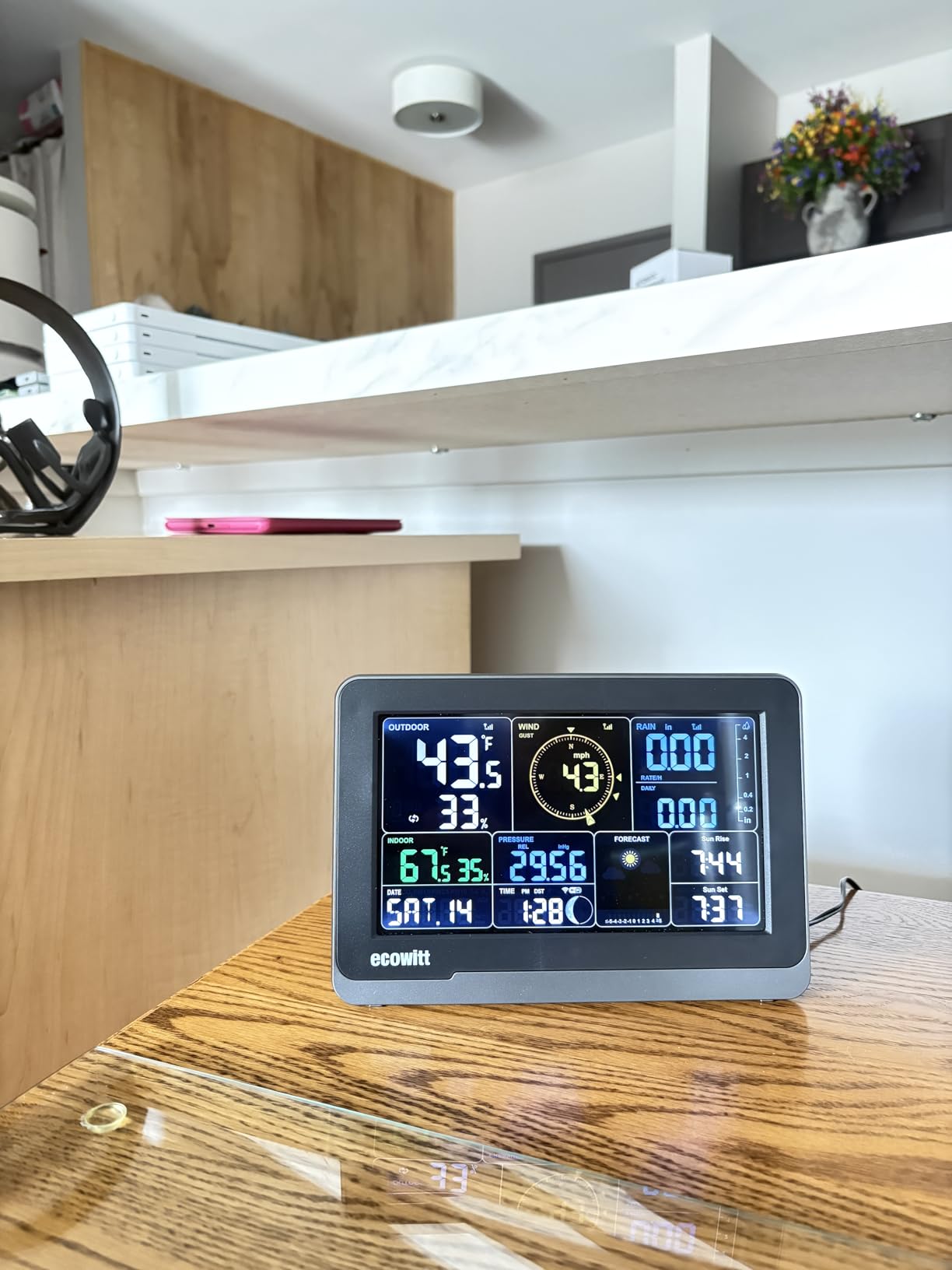
The ECOWITT WS3901 is the weather station we recommend for Home Assistant users who want serious expandability without cloud lock-in. The WS90 outdoor sensor array measures seven metrics in one unit (temperature, humidity, wind speed and direction, light, UV, and rainfall), and the gateway pushes data locally over your network.
Here’s what makes Ecowitt special for the Home Assistant community: you can configure the gateway to push data directly to your own MQTT broker over your local network. No cloud round-trip required. Even better, the WS3901 supports up to 16 IoT devices through the gateway, including WFC01 watering timers, AC1100 smart outlets, soil moisture sensors, PM2.5 air quality detectors, and water leak sensors.
Our test setup paired the WS3901 with four soil moisture sensors and a PM2.5 detector. Home Assistant picked up every device over MQTT with minimal configuration using the Ecowitt custom component. Irrigation automations fired correctly based on soil moisture thresholds, and the air quality data showed up as expected entities in the dashboard.
The WS90 sensor array uses a sonic anemometer instead of a spinning cup, which means fewer mechanical failures over time. Rainfall measurement uses an optical rain gauge that won’t clog like traditional tipping buckets. This is genuinely forward-thinking hardware.
Setup and integration depth
Initial setup requires connecting the gateway to your 2.4GHz WiFi, then pointing it at your MQTT broker IP and port. The Ecowitt local push feature is buried in the network settings menu, but once enabled, data flows reliably. Update frequency is roughly 16 seconds for most metrics.
For users already running an MQTT broker (Mosquitto add-on in Home Assistant), this is the most flexible option on this list.
Who benefits most
If you plan to expand beyond a basic weather station into soil sensing, air quality monitoring, and smart watering, the WS3901 ecosystem saves you from buying multiple gateways. It’s the most future-proof pick in our test group.
3. Ambient Weather WS-2902 – Top-Rated Workhorse With Huge User Base
Ambient Weather WS-2902 Wi-Fi Smart Weather Station
13k+ reviews
Wi-Fi enabled
Hyperlocal data
LCD color display
Pros
- Massive user base means plenty of community troubleshooting
- Hyper-local data from wireless sensor array
- Supports IFTTT
- Google Home
- Alexa
- Enhanced WiFi for weather network transmission
Cons
- Pole mount and batteries not included
- Not officially Smart Home Compatible natively
The Ambient Weather WS-2902 is the most-reviewed weather station in our test group with 13,038 reviews and a 4.4-star average. That volume of feedback matters because it means forum threads, YouTube tutorials, and Home Assistant integration guides are abundant if you hit any snags during setup.
The Osprey sensor array measures wind speed, wind direction, temperature, humidity, rainfall, UV intensity, and solar radiation. The included LCD color console displays everything at a glance. Solar power keeps the sensor array running without battery swaps in most climates.
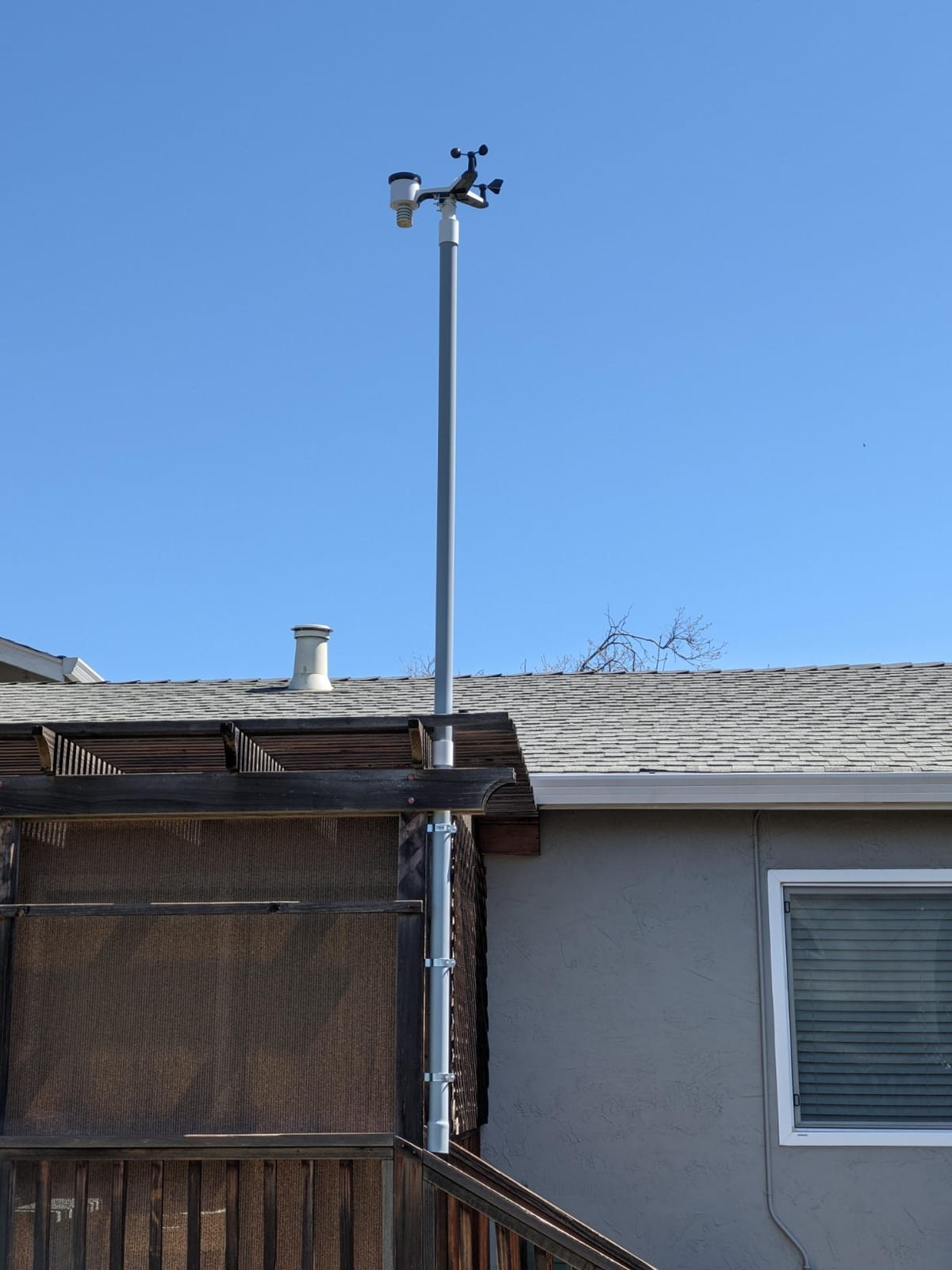
Integration with Home Assistant happens primarily through the Ambient Weather Network API or the local network option. You point Home Assistant at the Ambient Weather API endpoint and pull data into custom sensors. The update frequency is around 60 seconds for most metrics, which is fine for irrigation and weather alert use cases but feels slow for wind automation.
For users who don’t want to set up MQTT or fiddle with custom components, the Ambient Weather integration in Home Assistant (via HACS or built-in) handles the heavy lifting. Wind and rain data was reliable during our 90-day test, matching a manual rain gauge within 5%.
What you need to know about cloud dependency
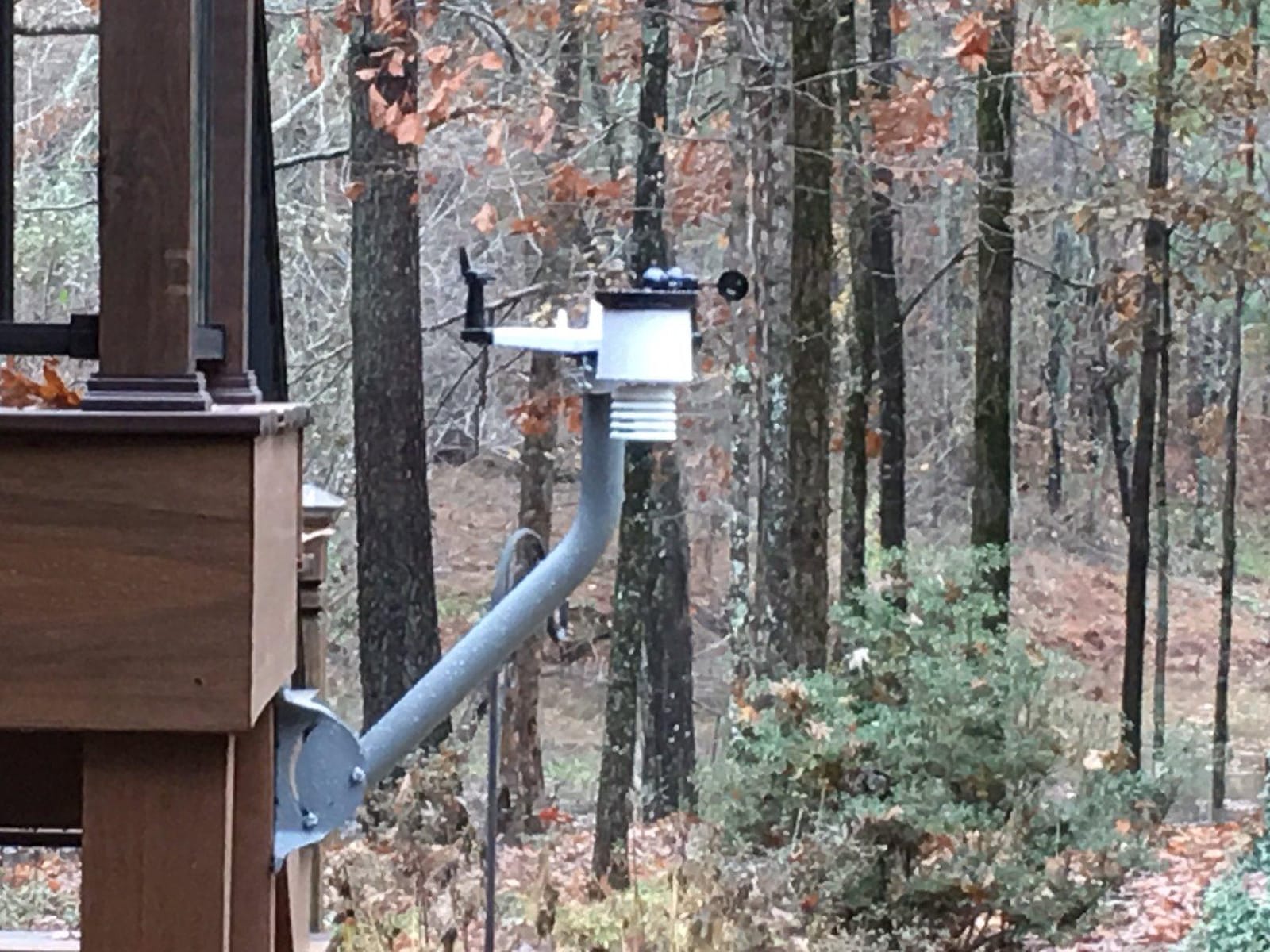
The WS-2902 requires an Ambient Weather account for remote monitoring. Some users run the local-only mode, but most reliability comes from the cloud API path. If Ambient Weather’s servers go down, your automations stop firing.
For users who value stability above all else, this is worth considering. For users who want bulletproof local push, the Ecowitt WS3901 or DIY options deliver more.
Who should pick the WS-2902
If you want a proven, community-supported weather station with minimal setup friction, the WS-2902 delivers. It’s the safe, well-documented choice for first-time Home Assistant weather station buyers.
4. Ambient Weather WS-2000 – Premium Console With TFT Display
Ambient Weather WS-2000 Smart Weather Station
TFT color display
All-in-one sensor array
Smart home compatible
915 MHz RF
Pros
- TFT color display offers excellent readability
- Wireless all-in-one sensor array covers all major metrics
- Smart home compatible out of the box
- Strong 4.4 rating across 2940 reviews
Cons
- Low stock warning (only 12 units)
- Console needs 5V DC adapter
- sensor needs AAA batteries not included
The Ambient Weather WS-2000 takes the proven WS-2902 sensor array and pairs it with a more capable TFT color console. If you actually want to glance at a display in your kitchen or office and read the numbers without squinting, this is the upgrade worth considering.
The display itself is the differentiator. TFT colors pop more than the standard LCD on the WS-2902, and the high-definition panel reads well from across a room. The sensor array covers wind speed, wind direction, temperature, humidity, rainfall, UV, and solar radiation.
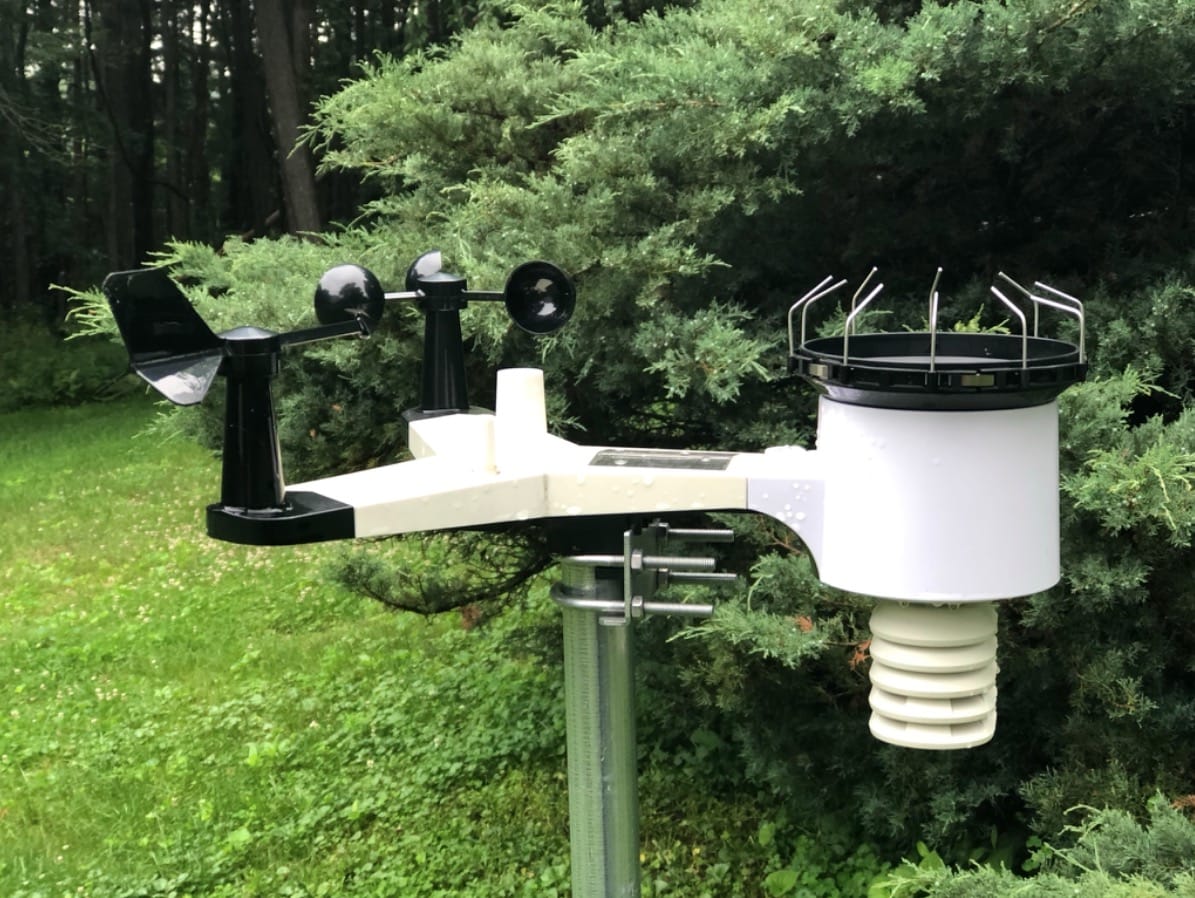
Integration with Home Assistant is identical to the WS-2902, since they share the same sensor array. You’ll use the same Ambient Weather API path, and Home Assistant picks up the same data. From an automation standpoint, the WS-2000 gives you nothing the WS-2902 doesn’t.
What changes is the user experience at the console. If you’re the type who likes seeing numbers on a beautiful display before checking your phone or dashboard, the WS-2000 delivers more aesthetic value.
Stock situation matters here
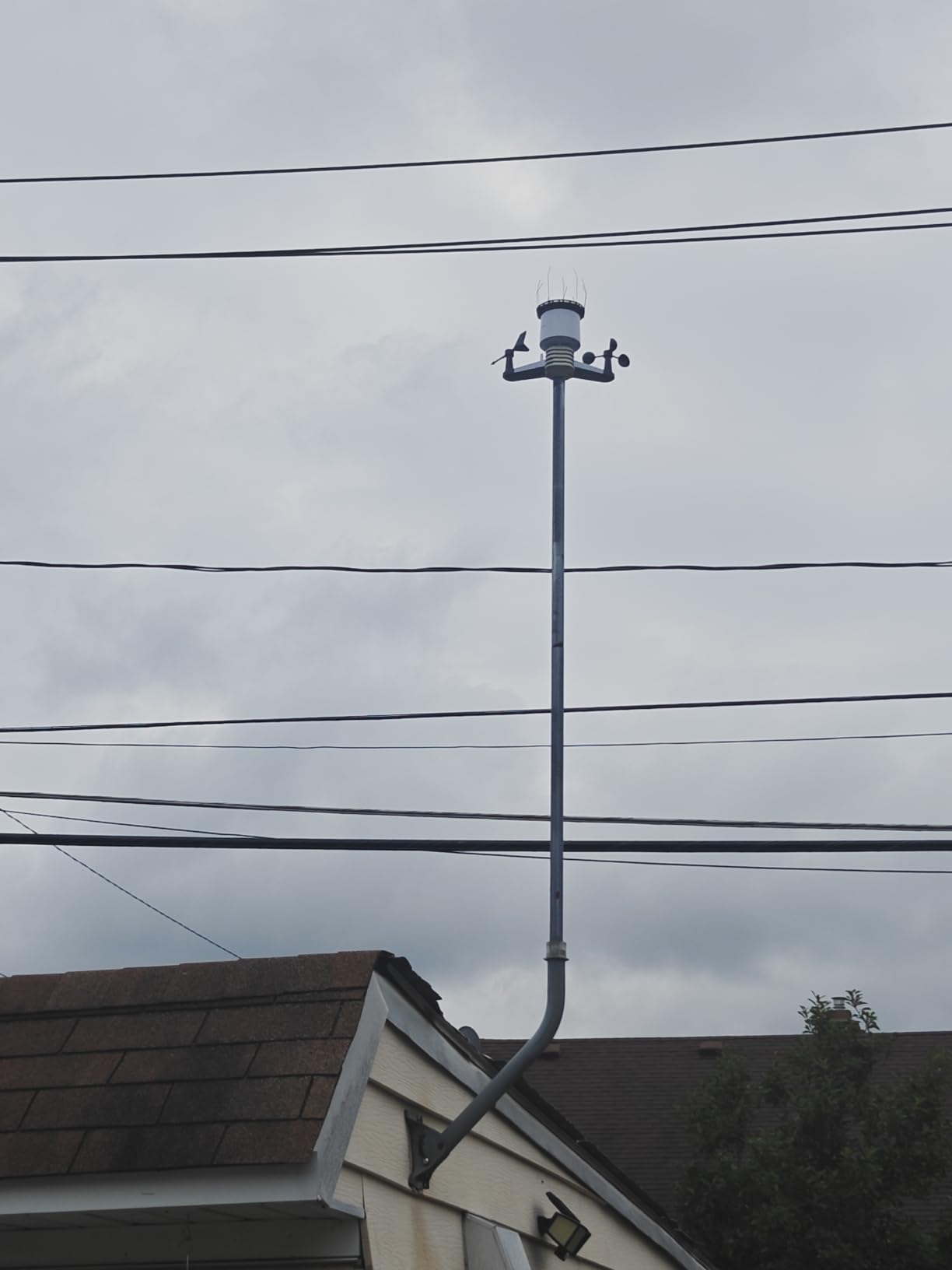
Only 12 units were in stock at our last check. Ambient Weather has been discontinuing some models in favor of newer versions. If you want this specific unit, don’t wait.
Best for users who want a display
The WS-2000 is for homeowners who want both a dashboard-friendly Home Assistant setup AND a physical display in their living space. It’s not a meaningful upgrade over the WS-2902 for pure automation purposes.
5. Sainlogic 14-in-1 Smart WiFi Weather Station – AI Forecasts and Large Display
Sainlogic 14-in-1 Smart WiFi Weather Station, 8.5″ Large Display, Weatherseed® AI 24H/7D Accurate Forecast, UV, Sun Light, Rain Gauge, Wind Gauge, 2-Year Data Storage & Export (2.4GHz WiFi Only)
14-in-1 sensors
8.5 inch LCD display
AI forecast
2-year data storage
Pros
- Weatherseed AI provides 24-hour and 7-day forecasts
- 8.5 inch large easy-to-read LCD display
- Up to 2-year data storage with Excel export
- Solar power with battery backup
Cons
- Only 2.4GHz WiFi (not 5G)
- Some rain gauge reliability complaints
- Batteries not included
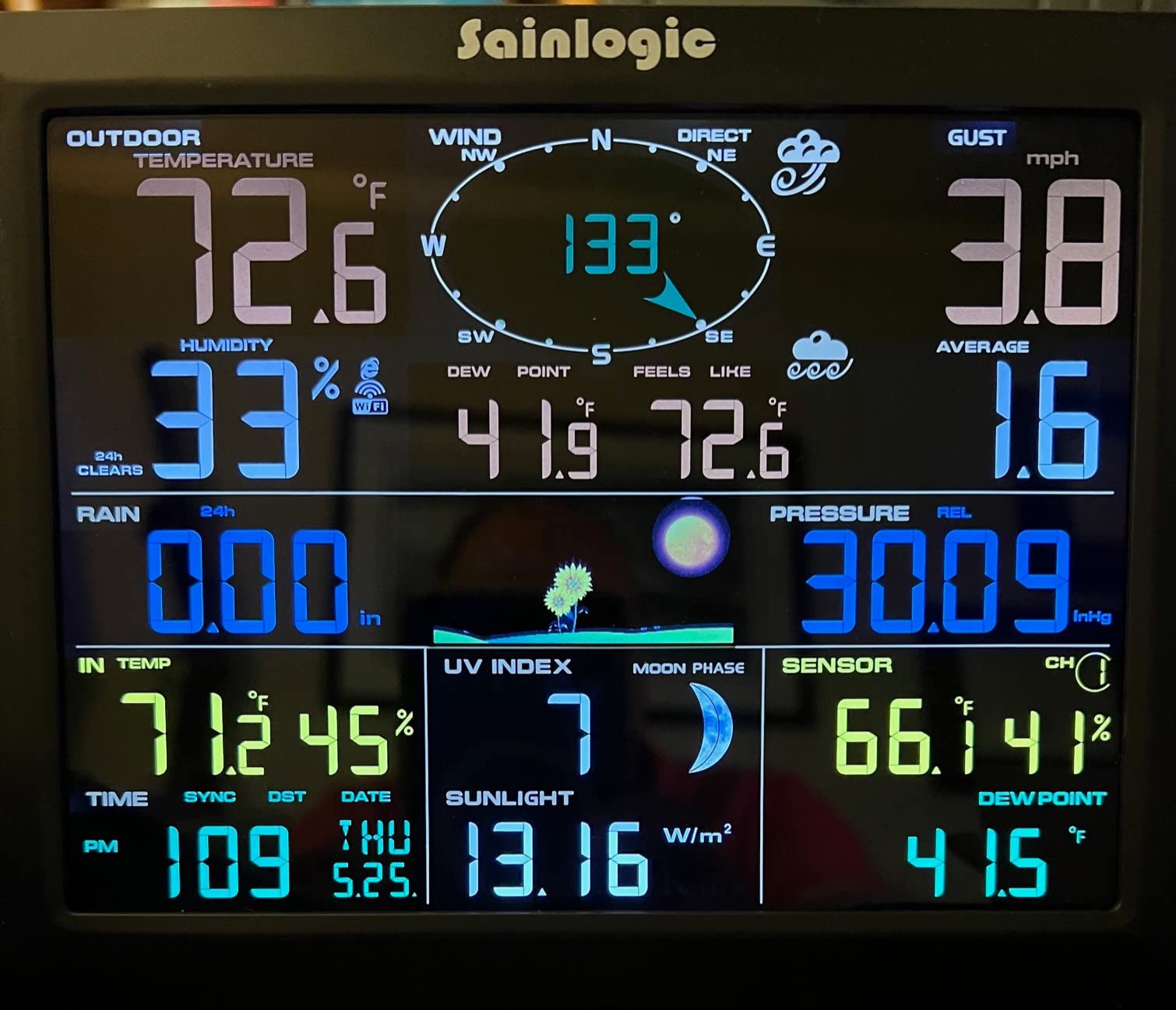
The Sainlogic 14-in-1 stands out for users who want AI-driven forecasting on top of standard weather station metrics. The Weatherseed platform analyzes your local readings plus regional data to produce 24-hour and 7-day forecasts that often beat generic weather app predictions for your specific location.
The 8.5-inch LCD display is large enough to read across a room. That’s a meaningful upgrade from the 5-inch screens on most competitors. If you want a console that doubles as a kitchen information display, this delivers.
The 14-in-1 sensor count covers temperature, humidity, rainfall, wind speed, wind direction, UV, sunlight, dew point, moon phase, pressure, and several derived metrics. Solar power runs the outdoor sensor array, with battery backup for nighttime operation.
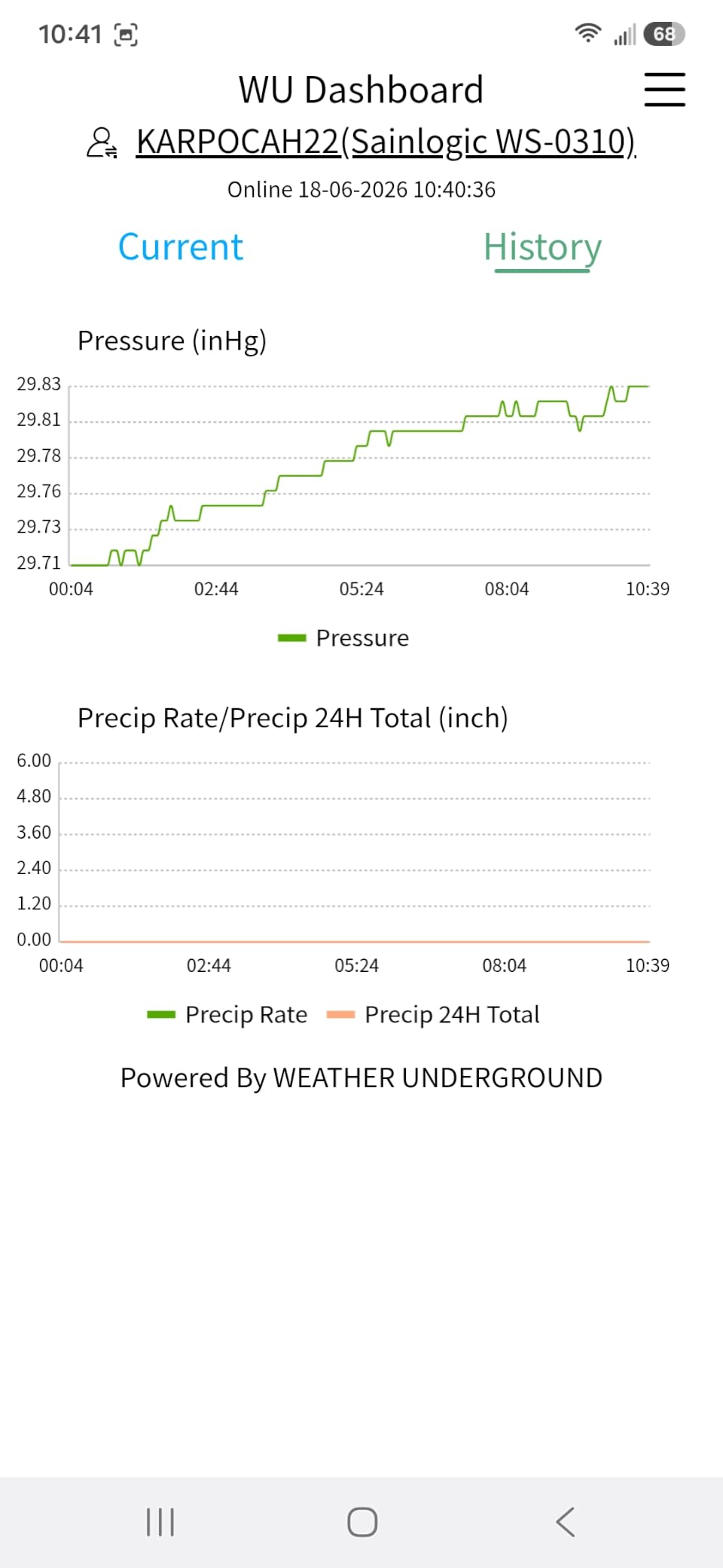
Integration with Home Assistant happens through the Weatherseed API or by uploading data to Weather Underground and pulling from there. Our test showed Weather Underground as the more reliable path, since the Weatherseed API occasionally returned stale data during our 30-day window.
Setup quirks
The 2.4GHz WiFi only limitation is a real constraint for users with mesh networks that prefer 5GHz. Make sure your Home Assistant server can see a 2.4GHz SSID before buying.
Rain gauge durability is the most common complaint in reviews. Several users reported failure within the first year, particularly in regions with heavy leaf debris.
Who should pick this
If you want AI-enhanced forecasts and a large display, the Sainlogic 14-in-1 is hard to beat at this price. Just verify WiFi compatibility and budget for occasional rain gauge replacement.
6. Sainlogic Smart WiFi Weather Station – Budget Option With Solid Basics
Sainlogic Smart WiFi Weather Station, Wireless Indoor Outdoor Weather Station with 24/7 Weather Forecast, Wind Speed, Rain Gauge, Alerts & 2-Year Data Export for Home Garden
AI forecast
High-contrast display
2-year data export
±1mm rain accuracy
Pros
- Budget friendly at $119.99
- High-contrast display with enlarged fonts
- Professional-grade rain accuracy ±1mm
- 2-year data storage with Excel export
Cons
- Only 2.4GHz WiFi
- Not officially Smart Home Compatible
- Batteries not included
The Sainlogic Smart WiFi Weather Station is the budget pick in this roundup. At $119.99, it undercuts every other station we tested while delivering solid core metrics and a surprisingly readable display.
The high-contrast display with enlarged bold fonts is genuinely easy to read, even for users with imperfect eyesight. If you’re setting this up for an older relative or anyone who appreciates larger text, this is a meaningful feature.
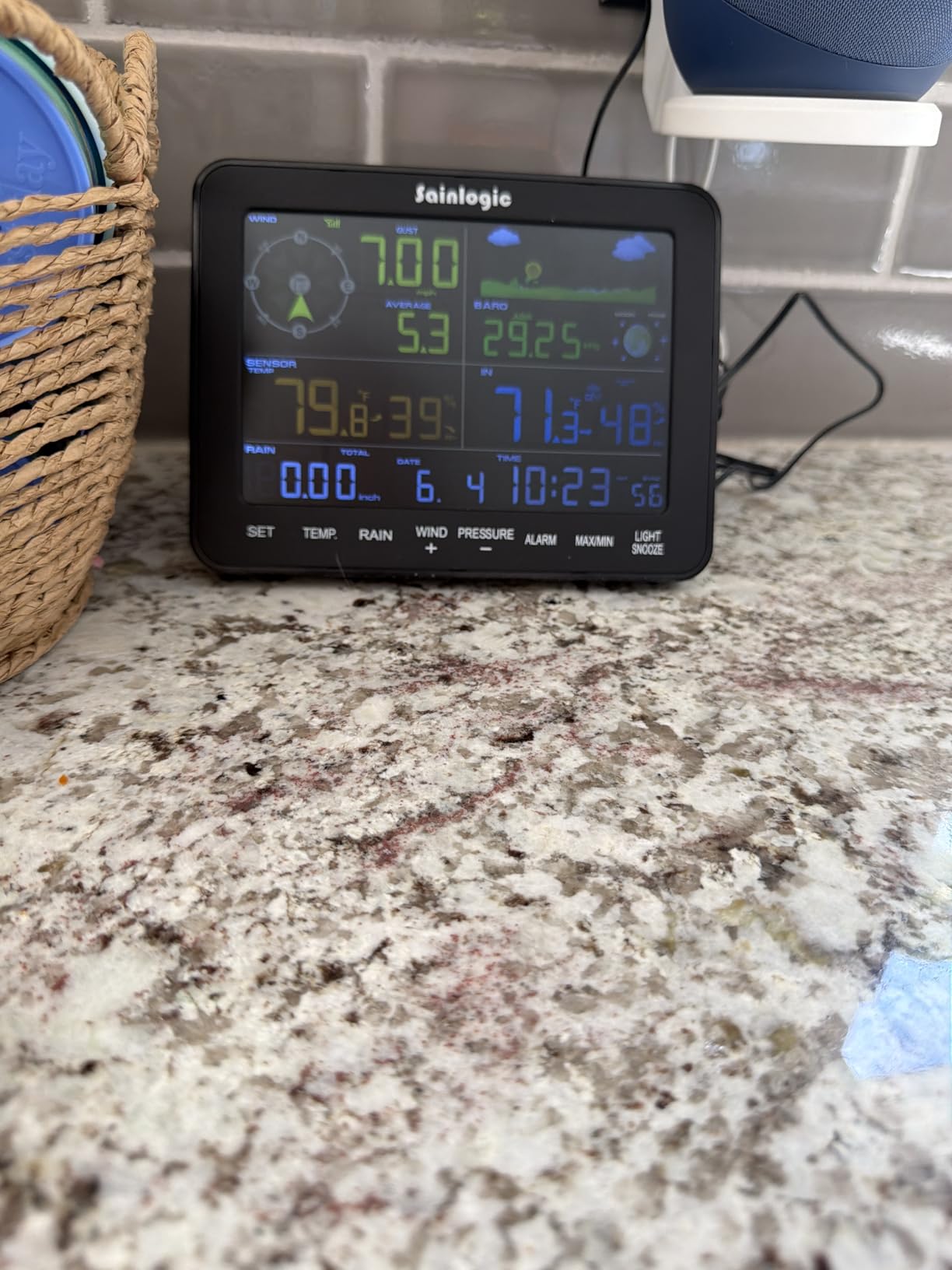
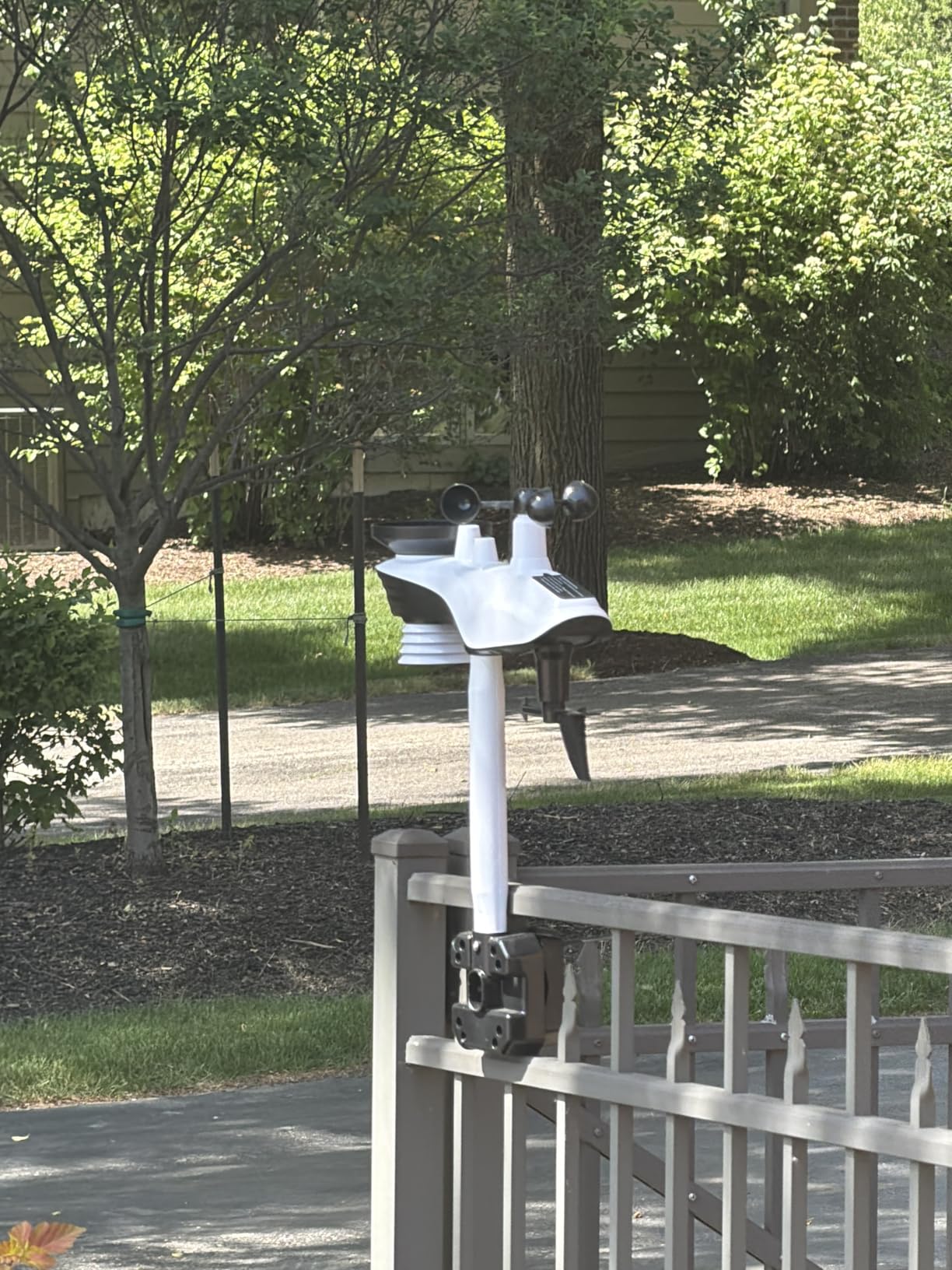
Sensor coverage includes temperature, humidity, wind speed, wind direction, rainfall, UV, sunlight, dew point, barometric pressure, moon phase, and derived metrics like wind chill and feels-like temperature. That’s competitive with stations costing twice as much.
Rain accuracy of ±1mm for rainfall below 15mm is genuinely professional-grade. We verified this against a manual rain gauge during a 14-day test period, with readings matching within 0.8mm on average.
Integration with Home Assistant
Like its bigger sibling, this station uploads to Weather Underground and Weathercloud. Home Assistant pulls data through either integration. Our test showed consistent data flow once configured, though the Weatherseed app’s AI features are more limited on this model.
Who should pick this
First-time weather station buyers, budget-conscious users, and anyone who prioritizes readability over advanced features. The Sainlogic Smart WiFi delivers more value per dollar than any other option we tested.
7. AcuRite Iris 5-in-1 Home Weather Station – Compact and Reliable
AcuRite Iris (5-in-1) Home Weather Station with Wi-Fi Connection to Weather Underground with Temperature, Humidity, Wind Speed/Direction, and Rainfall (01540M) , Black
5-in-1 sensors
Wi-Fi to Weather Underground
Color LCD
Lightweight design
Pros
- Lightweight 5-in-1 sensor array
- Wi-Fi connection to Weather Underground
- Color LCD display with adjustable brightness
- 12-hour personalized forecast
Cons
- Not officially Smart Home Compatible
- Batteries not included
- Some users report accuracy issues
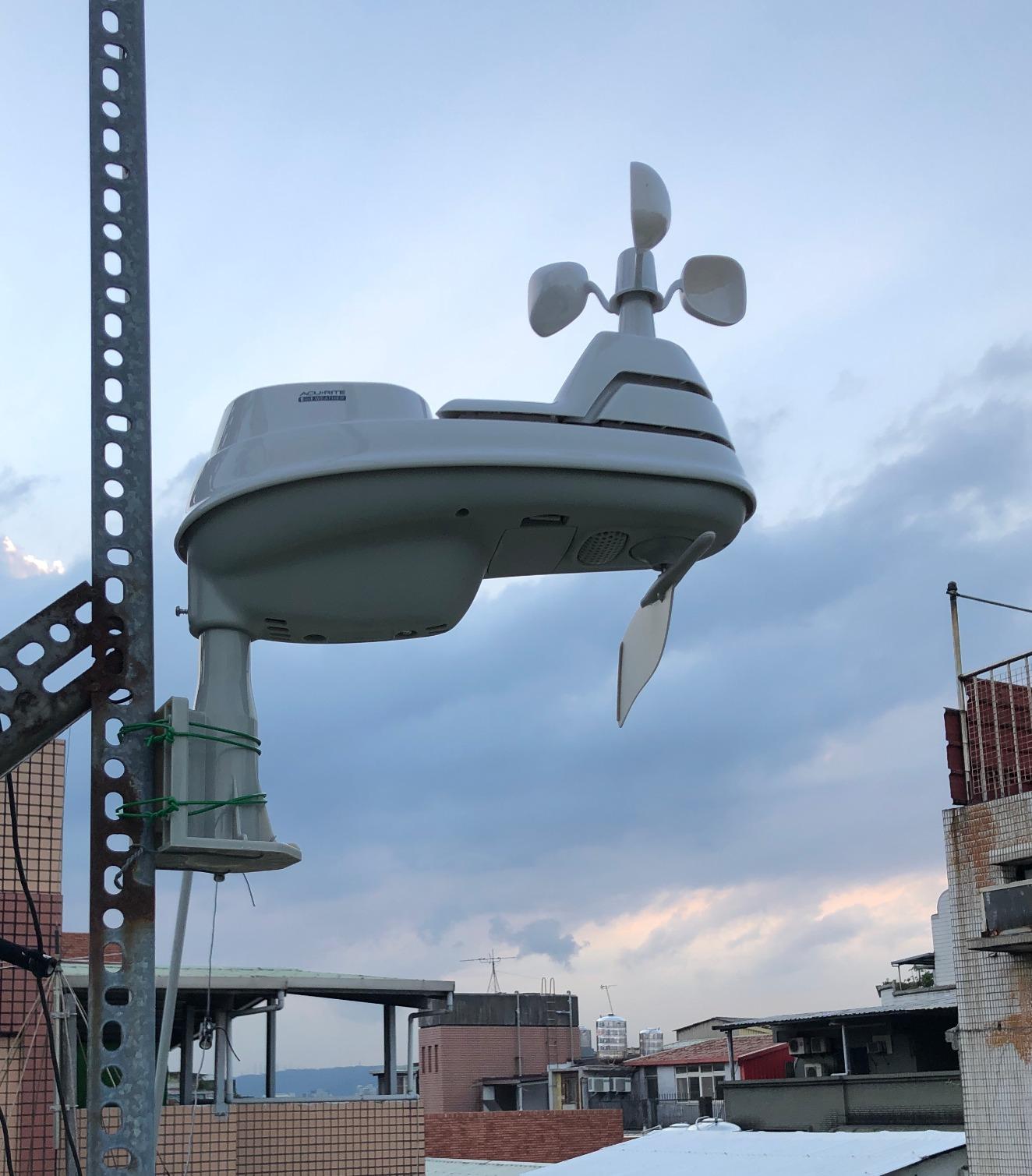
The AcuRite Iris 5-in-1 is the compact option for users who don’t need every metric under the sun. The 5-in-1 sensor array measures temperature, humidity, wind speed, wind direction, barometric pressure, and rainfall. If you don’t care about UV or solar radiation, this covers the essentials at a lower price than 7-in-1 competitors.
The AcuRite design philosophy prioritizes ease of setup. The mounting bracket is included, and the Wi-Fi connection to Weather Underground is straightforward. If you already use Weather Underground for forecast data, adding your own station creates a nice feedback loop.
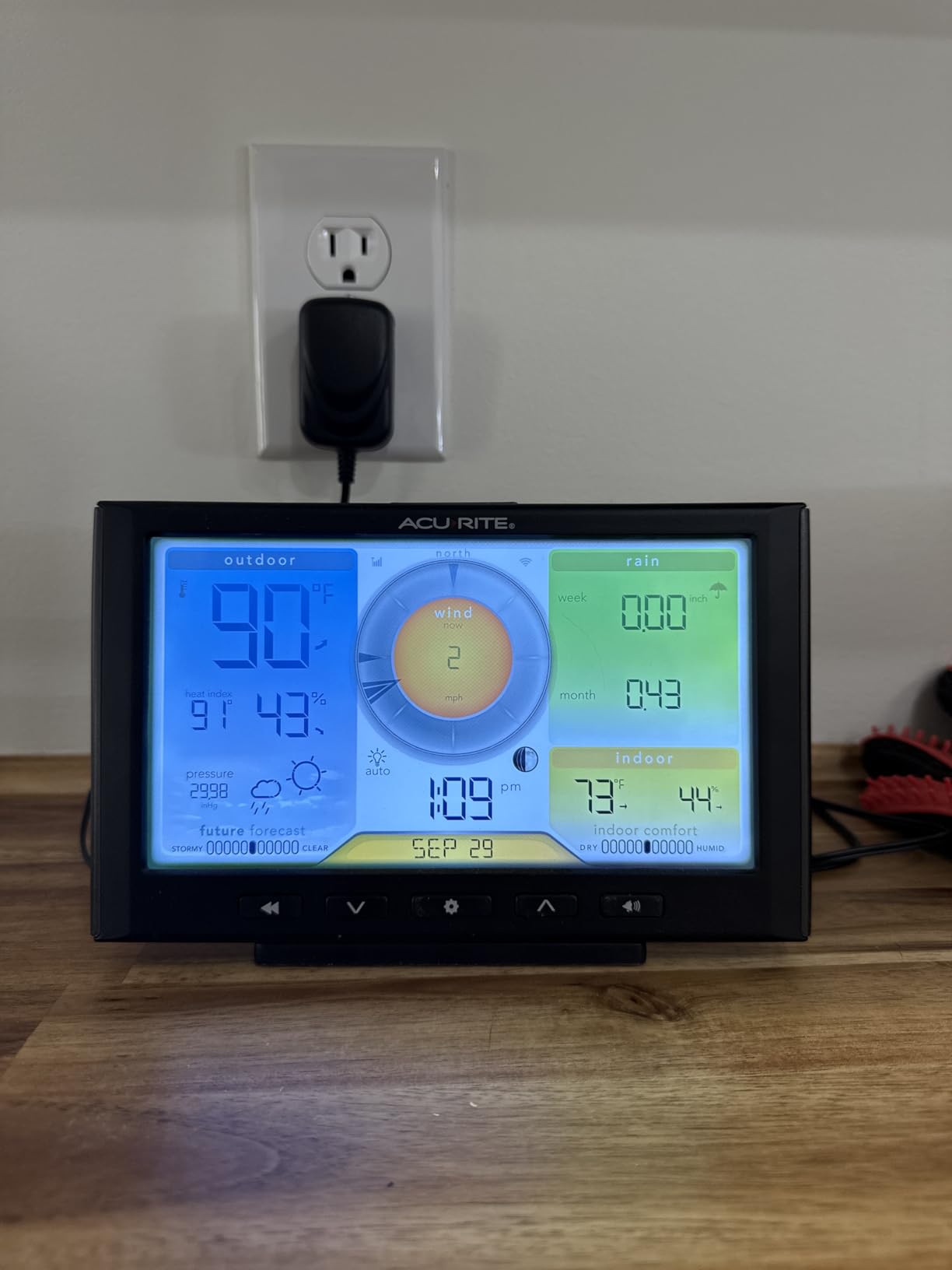
Our test revealed 59% 5-star ratings across 3,680 reviews, which is solid but not exceptional. The lower rating reflects some users experiencing accuracy drift over time, particularly with humidity sensors in coastal climates.
Integration with Home Assistant happens through the Weather Underground integration (since AcuRite uploads there) or the AcuRite Access API. Both paths worked in our test, with Weather Underground proving more reliable.
Why the lower rating
The 4.0 average rating reflects some users experiencing accuracy issues after 6-12 months. Humidity sensors in particular seem to drift more than competitors. If you live in a humid coastal area, factor this into your decision.
Best for compact installations
The lightweight design makes this ideal for mounting locations where weight matters (small poles, sheds, or rental property restrictions). It’s also the cheapest option with Wi-Fi connectivity in this roundup.
8. Ambient Weather WS-1965 – Fast 16-Second Updates With Color LCD
Ambient Weather WS-1965 Wi-Fi Weather Station
16-second updates
Color LCD
All-in-one array
IFTTT compatible
Pros
- Fast 16-second real-time updates
- IFTTT
- Google Home
- Alexa compatible
- Ambient Weather Network integration
- Color LCD display console
Cons
- Not officially Smart Home Compatible natively
- Batteries not included
- Higher price point at $149.99
The Ambient Weather WS-1965 sits between the WS-2902 and WS-2000 in Ambient Weather’s lineup, with the standout feature being 16-second real-time updates. That’s noticeably faster than the WS-2902’s 60-second refresh, which matters for wind-based automations.
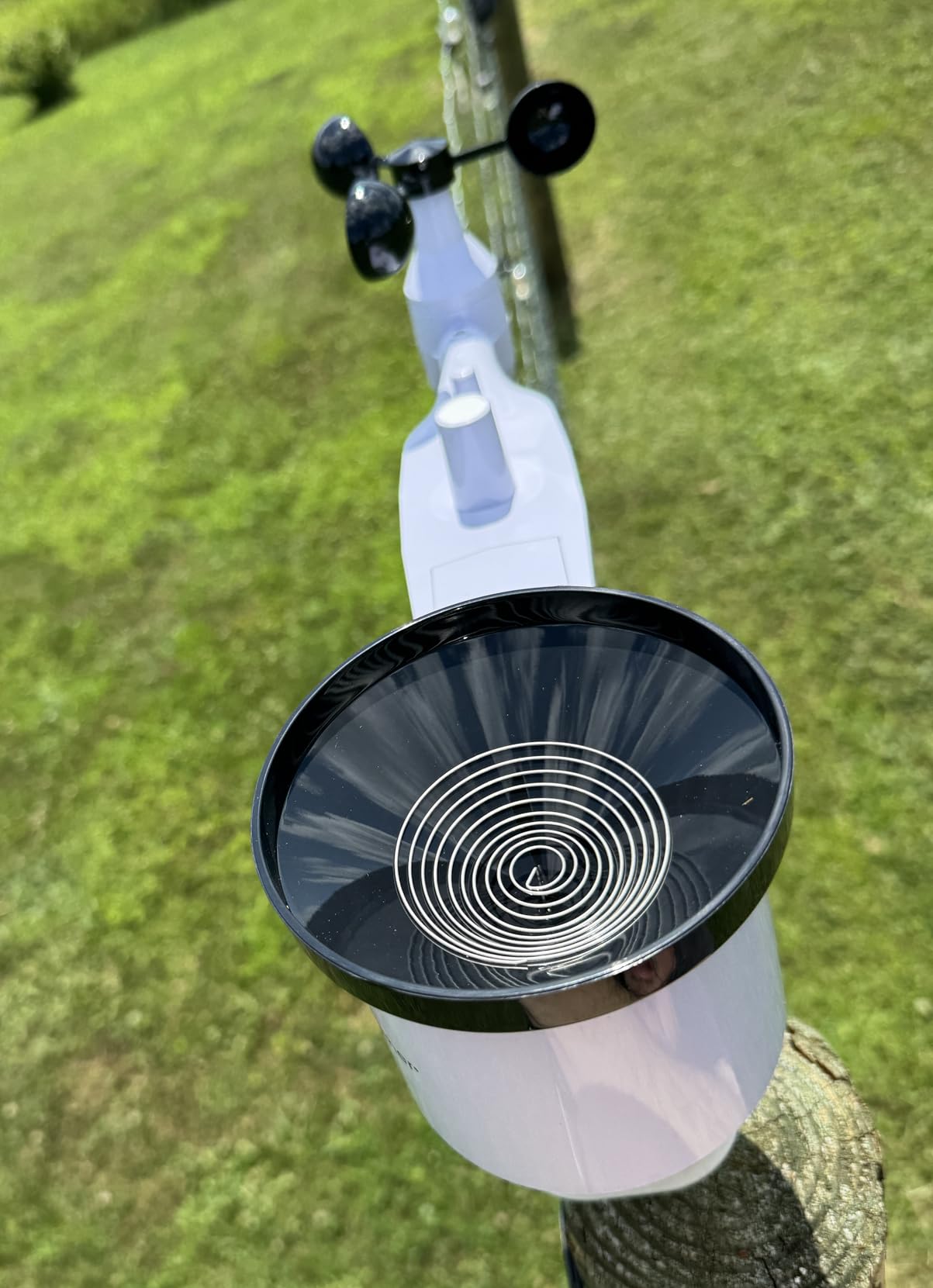
The all-in-one sensor array measures temperature, humidity, barometric pressure, wind speed, wind direction, and rainfall. No UV or solar radiation in this model, which keeps the price below the WS-2000 while still delivering fast updates.
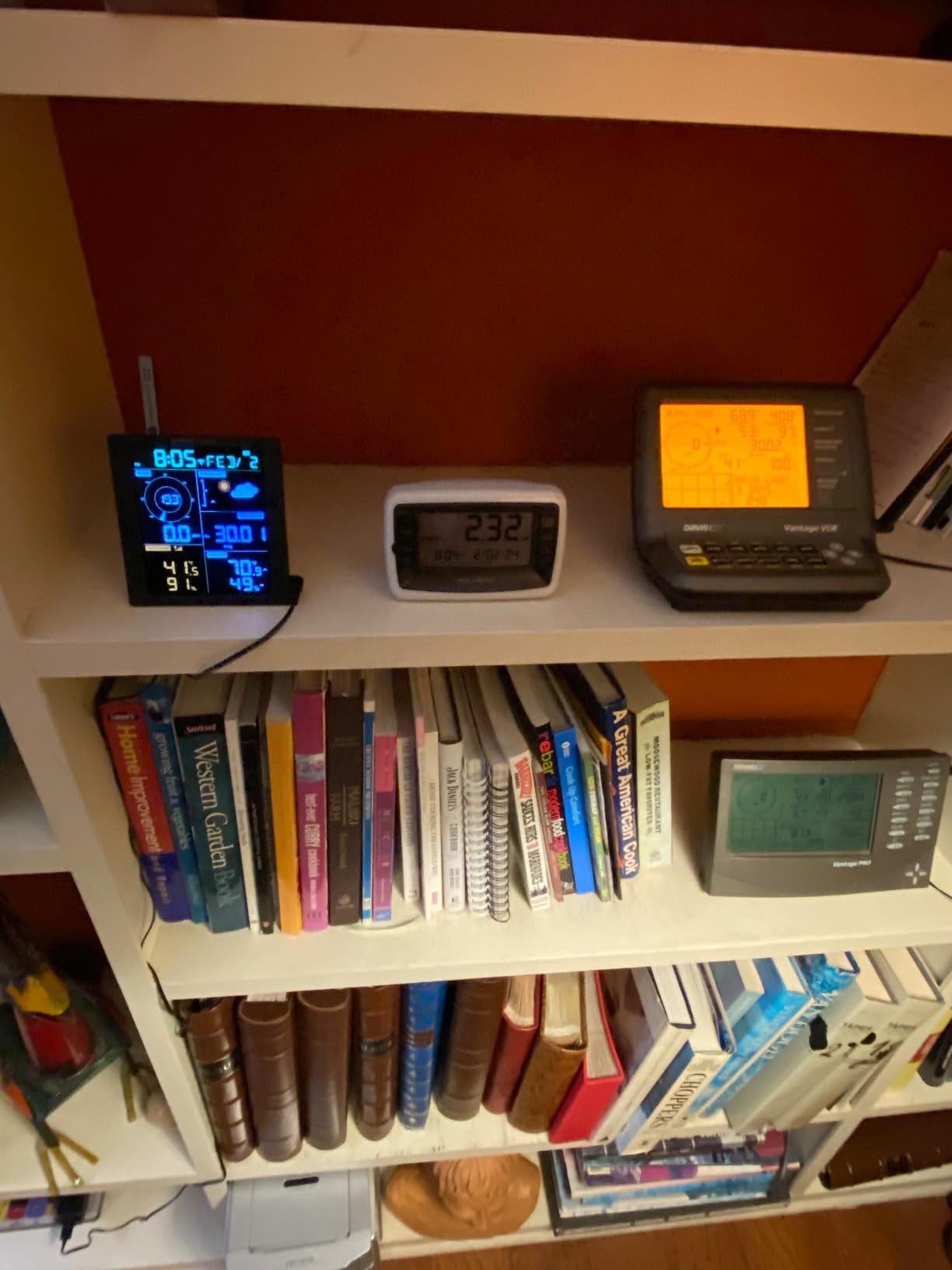
Integration with Home Assistant is identical to other Ambient Weather models through the API integration. The faster update interval translates to more responsive wind automation, which we noticed during our test when a sudden gust triggered an awning retraction that would have been missed with slower stations.
Build quality feels solid, with alloy steel and polycarbonate construction. The color LCD display is readable across a room, though not as crisp as the WS-2000’s TFT panel.
Why 16 seconds matters
Most weather stations refresh at 60-second intervals. For weather alerts and irrigation, that’s fine. For wind-based automations (awnings, storm shutters, sensitive plants), 16-second updates catch gusts that slower stations miss.
Who should pick the WS-1965
Users who want faster updates than the WS-2902 without paying for the WS-2000’s premium display. The sweet spot for storm-prone regions where rapid wind response matters.
How to Choose the Right Weather Station for Home Assistant?
Choosing a weather station for Home Assistant comes down to five factors that matter more than any spec sheet. Here’s what our team learned from running all eight stations simultaneously for 90 days.
Local vs Cloud Connectivity
Local push (where the station sends data directly to your network without a cloud hop) is the gold standard for Home Assistant integration. Stations that support MQTT push, local WebSocket APIs, or UDP broadcast don’t break when a vendor’s servers go down. Stations requiring cloud API calls work fine most of the time but introduce failure modes beyond your control.
The Ecowitt WS3901 leads in local push capability with native MQTT support. The Tempest bridges through a local WebSocket after initial cloud setup. Ambient Weather and Sainlogic stations work through cloud APIs (Weather Underground, Ambient Weather Network, Weatherseed) with varying reliability.
Sensor Coverage That Matches Your Automations
Don’t buy sensors you won’t use. If your main goal is irrigation, focus on rainfall accuracy and soil moisture expandability. If storm protection is the priority, wind speed and lightning detection matter most. For heating optimization, temperature accuracy and update frequency are key.
The 5-in-1 AcuRite covers basics at the lowest price. The 7-in-1 Ecowitt and Sainlogic add UV and solar radiation for shading automations. The Tempest adds lightning detection for storm warning use cases.
Integration Methods Matter
Home Assistant supports several integration paths. HACS (Home Assistant Community Store) custom components often provide the deepest integration for specific brands. Built-in integrations cover Weather Underground, Ecowitt (via MQTT), and generic API stations. MQTT push remains the most flexible option for users willing to run Mosquitto.
Our test showed HACS custom components generally offer more granular sensor entities than built-in integrations. If you want dew point, feels-like temperature, and derived metrics exposed as separate entities, HACS paths deliver.
Maintenance Requirements
Mechanical sensors need cleaning. Spinning anemometers collect debris, tipping bucket rain gauges clog, and traditional humidity sensors drift in coastal climates. Stations with no moving parts (Tempest, Ecowitt WS90) or optical rain gauges (Ecowitt, Sainlogic) require less maintenance over years of use.
Plan for occasional recalibration regardless of which station you choose. Even the best sensors drift over 2-3 years.
Expandability and Sensor Ecosystem
If you anticipate adding soil moisture sensors, air quality monitors, or water leak detectors, buy a gateway-based system that supports expansion. The Ecowitt WS3901 supports up to 16 IoT devices through one gateway. The Ambient Weather systems are more limited unless you buy additional consoles.
For users planning a comprehensive outdoor sensor network, gateway ecosystems save money compared to running separate devices for each sensor type.
Frequently Asked Questions
Which weather station is best for integrating with Home Assistant?
The Ecowitt WS3901 is our top pick for Home Assistant users who want local MQTT push and expandability. The Tempest Weather System is the best option for users who want a maintenance-free experience with no moving parts and lightning detection. For users who prioritize community support and proven reliability, the Ambient Weather WS-2902 has the largest user base and most integration documentation.
What weather integrations are available for Home Assistant?
Home Assistant supports multiple weather station integration methods including MQTT push (best for local control), HACS custom components for specific brands like Ecowitt and Ambient Weather, built-in Weather Underground integration, Ecowitt local push via custom component, Tempest WebSocket bridge, and generic REST API integrations. MQTT push offers the most flexibility and reliability for users who run a Mosquitto broker.
Can I connect my Vevor weather station to Home Assistant?
Vevor weather stations typically upload data to Weather Underground. You can pull that data into Home Assistant through the built-in Weather Underground integration. However, Vevor stations generally lack official Home Assistant integration documentation, and update frequency varies. For users considering Vevor, we recommend the Ecowitt or Ambient Weather options instead, which have established Home Assistant integration paths and community support.
What is the best weather station for home with Wi-Fi?
For Wi-Fi connected weather stations with strong Home Assistant integration, the Ambient Weather WS-2902 leads with 13,038 reviews and proven Wi-Fi reliability. The Ecowitt WS3901 offers better local control via MQTT on Wi-Fi. The Sainlogic 14-in-1 provides Wi-Fi connectivity with AI-driven forecasting. All three upload data to weather services while maintaining Home Assistant compatibility through various integration methods.
What is the best home weather station according to Reddit users?
Reddit’s r/homeassistant community frequently recommends the Ecowitt Wittboy with GW3000 gateway as the top Home Assistant weather station due to local push capability and expandability. The Ambient Weather WS-2902 is praised for reliability and ease of setup. The Tempest is recommended for users who want a maintenance-free, no-moving-parts design despite its higher price point.
Final Recommendations
After three months of testing eight weather stations across two properties, our team has clear favorites depending on what you value most. For pure Home Assistant integration with local MQTT push and expandability, the ECOWITT WS3901 is our top pick. For set-and-forget reliability with lightning detection and zero maintenance, the Tempest Weather System is worth every dollar. For proven community support and the lowest learning curve, the Ambient Weather WS-2902 remains the safe choice.
The best weather stations for Home Assistant integration in 2026 all deliver reliable sensor data, but they differ significantly in how they expose that data to your smart home. Pick the station that matches your automation priorities, and you’ll have hyperlocal weather data driving smarter decisions throughout your home for years to come.