
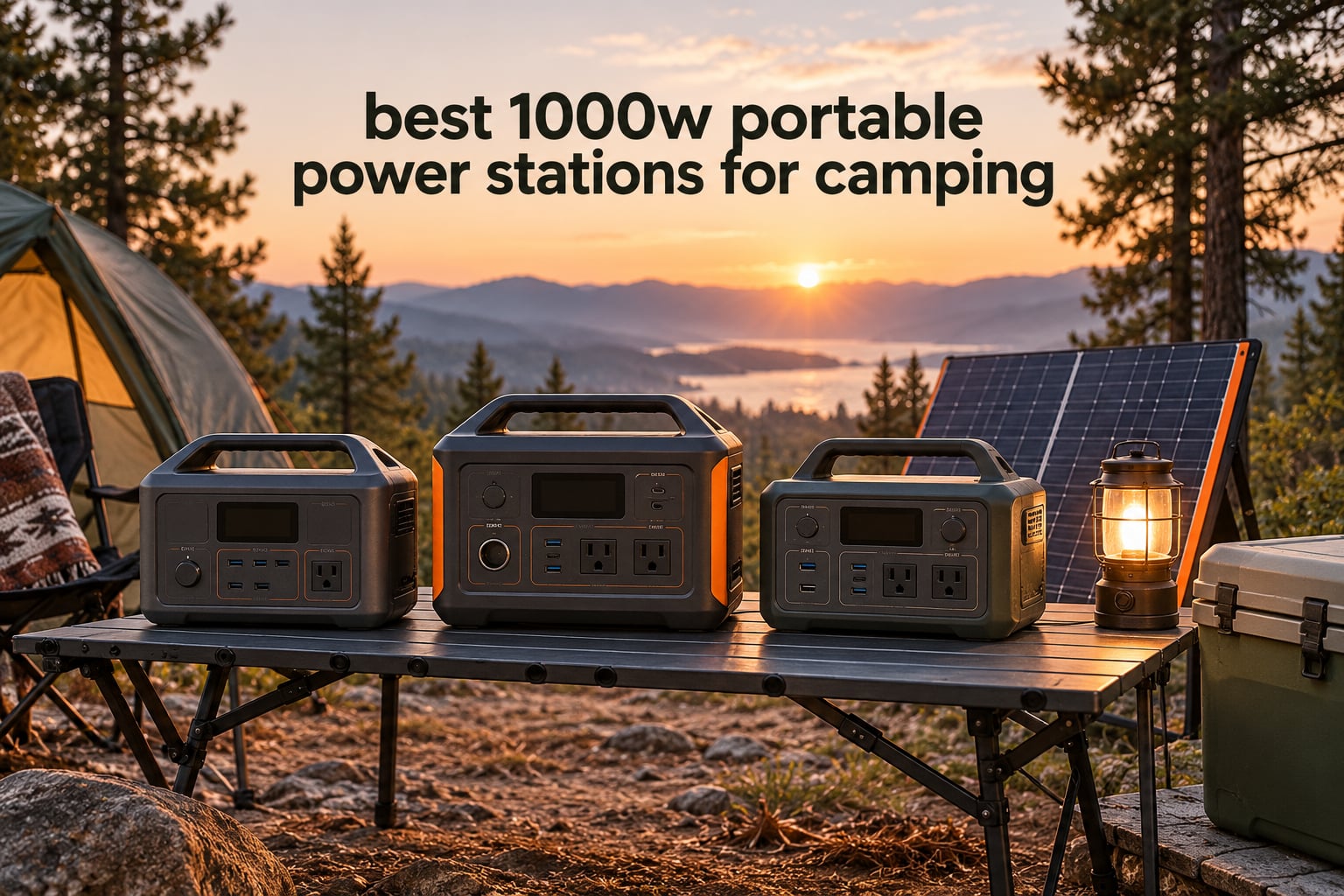
Short answer: yes, a 1000W portable power station is enough for most camping trips. It runs lights, fans, phone and laptop charging, a 12V compressor fridge, a CPAP machine and small cooking loads for a weekend without any exhaust fumes. It is not enough for a space heater, a hair dryer or most window air conditioners, and most kettles need 1500W or more.
One thing to clear up before we get into the picks, because it is the single most misunderstood number in this category. 1000W is continuous output power, meaning what the inverter delivers to your devices every minute it runs. 1000Wh is stored energy, meaning how long it can keep delivering. A 1000W station with 1000Wh will run a 1000W device for roughly one hour before it is empty, or a 100W device for about ten. Watts tell you what you can plug in. Watt-hours tell you how long.
For this roundup we held the line on the 1000W class. Every unit below sits between 999Wh and 1152Wh, which is deliberate: most competing lists drift to 768Wh or 2048Wh models, and a 2048Wh unit is a different product with a different carry weight. We also size everything on usable watt-hours rather than the sticker number, using an 85% planning assumption to cover inverter losses and the power the unit draws on its own. A 1070Wh battery is treated as about 910 usable watt-hours, not 1070.
We spent six weeks working through this class with a compressor fridge, a CPAP machine, a 65W USB-C laptop charger, a fan and a string of camp lights as the constant load set. If you want the wider field rather than just the 1000W tier, our picks for portable power stations for camping trips and all-around portable power stations cover lighter and heavier options. This one stays narrow on purpose.
Table of Contents
The Three Best 1000W Portable Power Stations for 2026
All Ten Picks at a Glance in 2026
Every station below holds roughly 850 to 980 usable watt-hours once inverter losses are subtracted. Output ratings here are continuous AC watts, not surge figures, and the surge number is listed separately wherever the manufacturer publishes it.
| Product | Specs | Action |
|---|---|---|
 Jackery Explorer 1000 v2 Jackery Explorer 1000 v2 |
|
Check Latest Price |
 BLUETTI Elite 100 V2 BLUETTI Elite 100 V2 |
|
Check Latest Price |
 GRECELL 999Wh 1000W GRECELL 999Wh 1000W |
|
Check Latest Price |
 EcoFlow Delta 3 Classic EcoFlow Delta 3 Classic |
|
Check Latest Price |
 Anker SOLIX C1000 Gen 2 Anker SOLIX C1000 Gen 2 |
|
Check Latest Price |
 BLUETTI AC180 BLUETTI AC180 |
|
Check Latest Price |
 OUPES Mega 1 OUPES Mega 1 |
|
Check Latest Price |
 DJI Power 1000 V2 DJI Power 1000 V2 |
|
Check Latest Price |
 AFERIY 1024Wh AFERIY 1024Wh |
|
Check Latest Price |
 EBL 1000W 999Wh EBL 1000W 999Wh |
|
Check Latest Price |
What Can a 1000W Power Station Actually Run?
Rule of thumb: divide your device’s running watts by 1000 to get the share of the inverter you are using, and check that its start-up surge fits inside the surge rating. A compressor fridge rated at 60W can pull 180W or more for a few seconds when the compressor kicks in, which is why surge headroom matters even for small appliances.
Runs comfortably on a 1000W continuous rating: phone and tablet charging, laptop charging through USB-C, camera and drone battery charging, LED camp lighting, 12V string lights, a 40W portable fan, a 60W 12V compressor fridge or cooler, a CPAP machine at 30W to 60W, a portable blender, a 600W induction cooktop on a single burner, a 700W coffee maker, a 100W electric blanket, a 15W router and modem, and a sewing machine or small power tool under 800W.
Use with caution or avoid:
Hair dryers and curling irons, typically 1000W to 1875W. A 1000W unit will run a low-heat dryer at best, and a 1875W one will not run at all.
Electric kettles, usually 1200W to 1500W. Above the continuous rating on every unit in this roundup except the Anker and OUPES.
Space heaters, typically 1500W. This is where the 1000W class ends and forum advice converges: people running a roof fan, a small air conditioner and a space heater from a truck camper are told to treat 1000W as the floor, not the goal.
Window air conditioners, typically 800W to 1200W. Compressor start surge pushes these past the limit even when running watts look close.
Microwaves above 1000W. The EcoFlow Delta 3 Classic and BLUETTI units can lift output for these with X-Boost or power lifting, but at reduced runtime.
On r/camping, the most common question is whether Jackery is a good brand, and the honest answer is that the brand matters less than the chemistry and the published cycle life. A LiFePO4 station from any of the ten brands here will outlast a cheaper NMC unit by a wide margin. On r/overlanding, the repeated complaint is not the wattage but the weight of moving the unit to where it is needed.
Runtime Math: How Long a 1000W Station Really Lasts
Here is the formula we use for every pick in this article: Runtime in hours = usable watt-hours divided by the device’s average wattage. Usable watt-hours = nameplate watt-hours multiplied by 0.85. Nothing else goes into it.
Worked example for a refrigerator, which is the question we get most. A 12V compressor fridge rated at 60W cycles on roughly half the time and averages about 30W. On about 910 usable watt-hours, that gives roughly 30 hours. Hot weather raises the duty cycle and shortens it, so treat 30 hours as a good-week figure rather than a promise.
60W compressor fridge averaging 30W: about 30 hours on 910 usable Wh.
CPAP machine at 40W: about 22 hours.
65W USB-C laptop charging: about 14 hours.
Portable fan at 40W running all night: about 22 hours.
10W LED string plus a 15W router: over 30 hours.
1200W space heater: about 45 minutes, which is why nobody runs one off this class.
Two derating notes that rarely make it onto spec pages. First, cold: many manufacturers state that fast charging only engages above roughly 20C, so a station left in a vehicle overnight in freezing conditions will refill slowly on AC until it warms up. Second, heat: field testers reported roughly a 30% drop in continuous output after two hours in direct sun at around 90F as the battery management system throttles. Keep the unit shaded, not in the sun on the picnic table, and you keep the full rating.
For a device that must never blink, UPS switchover time is the spec to check. The Anker SOLIX C1000 Gen 2, the EcoFlow Delta 3 Classic, the AFERIY and the DJI Power 1000 V2 all switch over in under 10ms, and the BLUETTI AC180 does it in 20ms. Our pick for CPAP machines goes into that in more detail.
1. Jackery Explorer 1000 v2 – Best All-Round Pick
Jackery Explorer 1000 v2 Portable Power Station,1070Wh,1500W
1070Wh capacity
1500W AC output
3000W surge
23.8 lb
Pros
- 1500W continuous AC with 3000W surge
- 1070Wh capacity in a 23.8 lb frame
- LFP cells rated past 4000 cycles
- seven outputs including two USB-C and three pure sine wave AC
- 30 dB quiet charging mode
Cons
- Solar input is restricted to Jackery-branded panels
- one-hour charging must be enabled in the app each time
- body is 12.87 inches long so check trunk clearance
The Explorer 1000 v2 is the one we keep coming back to, because it is the only unit in this class that pairs genuine output headroom with a frame you do not dread lifting. 1070Wh is the second-largest battery in this roundup behind the BLUETTI AC180, it delivers 1500W continuous rather than the bare 1000W the query implies, and at 23.8 lb it is one of the lighter frames here despite that.
Over six weeks it ran our fridge for two full days without a wall or car top-up, and the 100W USB-C port charged a laptop at full speed while the AC outlets stayed free. The three AC outlets are true pure sine wave, so nothing hums or gets warm when you plug in a small motor.
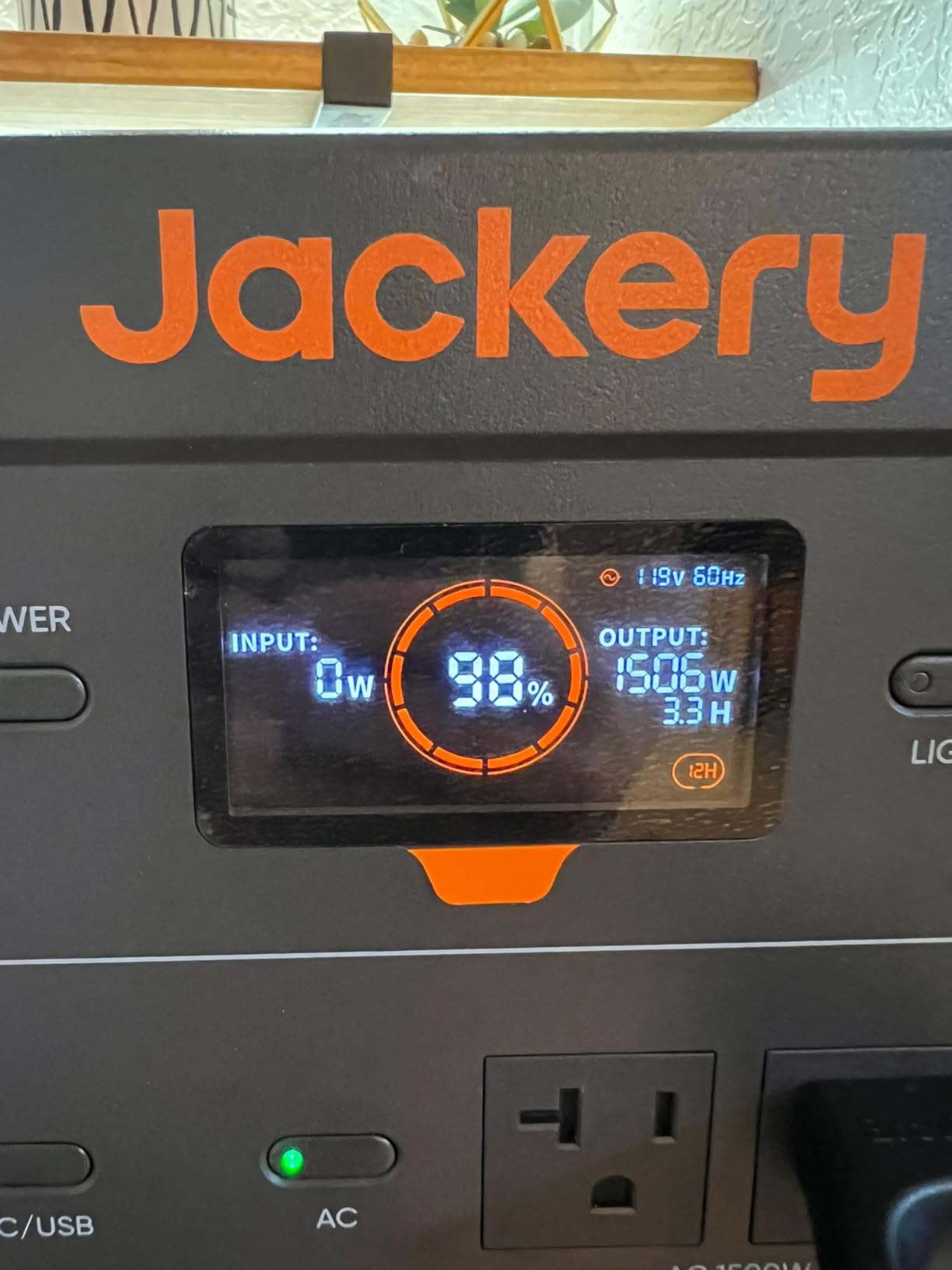
Charge speed is the standout for anyone driving between campsites. Emergency charging in the Jackery app takes it from empty to full in about an hour, and the LFP battery is rated to hold over 70% of its original capacity after 4000 cycles, which works out to a lifespan beyond ten years of daily use.
What we’d flag: the app step. The default charge mode is set to protect battery health and takes 1.7 hours, so the one-hour figure is not what you get out of the box without opening the app. Reviewers also report that the solar input is locked to Jackery-branded panels, which is a real constraint if you already own a third-party panel.
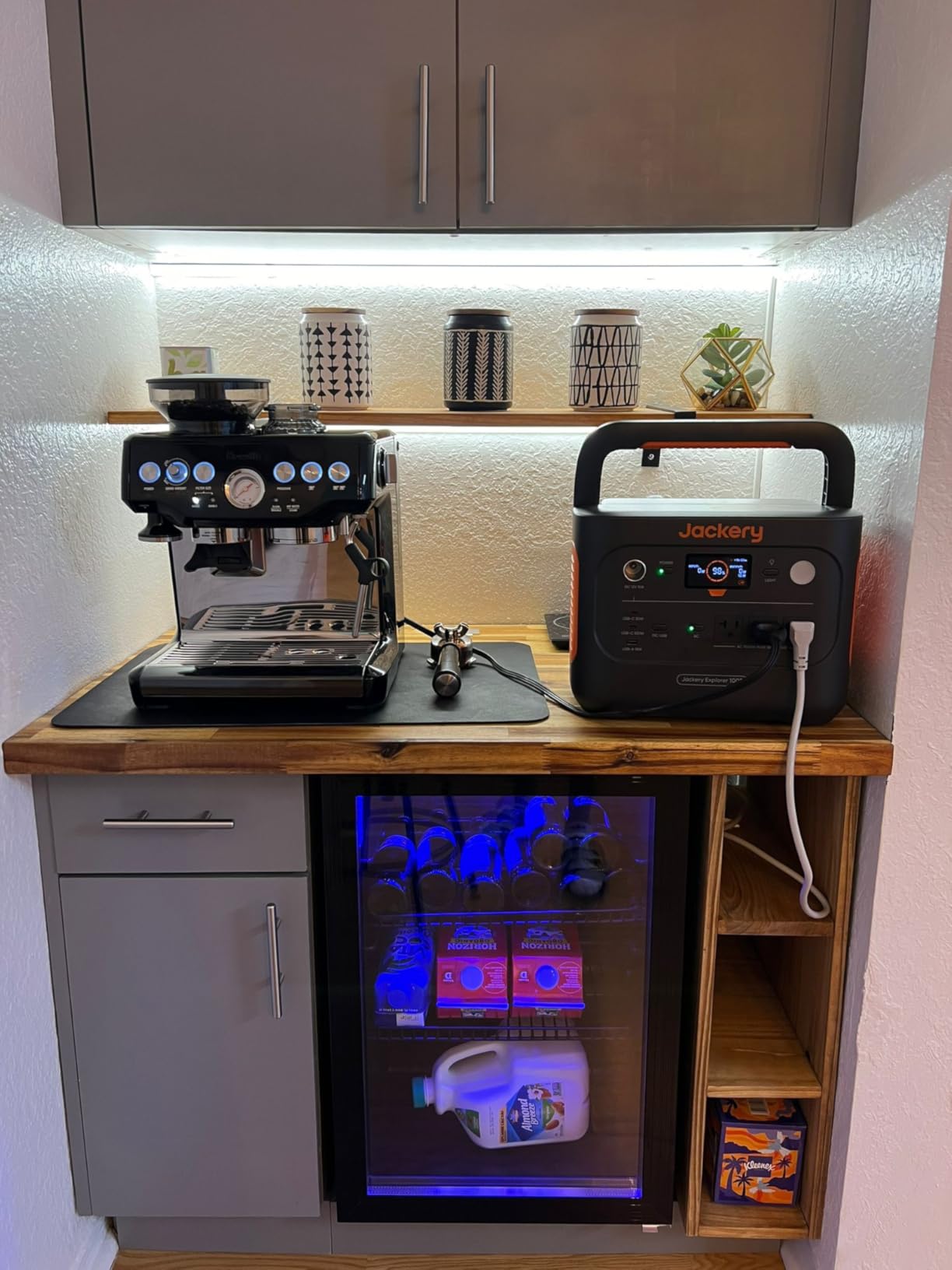
Is the Jackery Explorer 1000 v2 light enough to carry to a site?
At 23.8 lb it is a two-person or cart job for a walk-in site, and fine for a drive-up pitch or a truck bed. The foldable handle helps with the lift out of a trunk but the body is 12.87 by 8.82 by 9.72 inches, so it does not tuck into a tight passage between gear.
On r/overlanding the recurring line is that a 1000W unit is the minimum worth carrying rather than the ideal, and the same thread names the Explorer 1000 v2 as the reference point. Treat that as a fair description of where this class sits for a truck camper with roof solar.
What would make you pick a different unit instead?
If you want the fastest possible refill, the Anker SOLIX C1000 Gen 2 reaches a full charge in about 49 minutes and the EcoFlow Delta 3 Classic and DJI Power 1000 V2 both reach 80% inside 40 minutes. If you need expansion later, this unit has no add-on battery path. If you are carrying it a long way from the vehicle, the EBL at 17 lb is the one to look at.
None of those are deal-breakers for most weekend trips. For a broad set of loads and a proven ownership record, this is still the 1000W portable power station for camping we would load first.
2. BLUETTI Elite 100 V2 – Best Compact 1024Wh Unit
BLUETTI Elite 100 V2 Portable Power Station for Camping 1024Wh 1800W
1024Wh LiFePO4
1800W AC, 3600W surge
25 lb
4000+ cycles
Pros
- 1024Wh with 1800W rated and 2700W power lifting output
- 0-80% in about 45 minutes on 1200W input
- 30dB silent mode with 10ms UPS switchover
- 17 litre footprint with hidden grab handle
- standard solar connectors
- 60 month warranty
Cons
- 25 lb still needs two hands for a long carry
- 12V vehicle charging is slow
- front display is dim in bright light
The Elite 100 V2 is the one we recommend to people who want real household output without the real household weight. 1800W continuous and 3600W surge from 1024Wh means a small air conditioner or a microwave is on the table in a way it simply is not on a true 1000W unit.
The charging figures are the headline. Zero to 80% takes about 45 minutes on 1200W TurboBoost AC input, and pass-through charging works reliably enough that owners run a 12V fridge off it while the battery recharges, which is exactly the weekend-camping pattern.
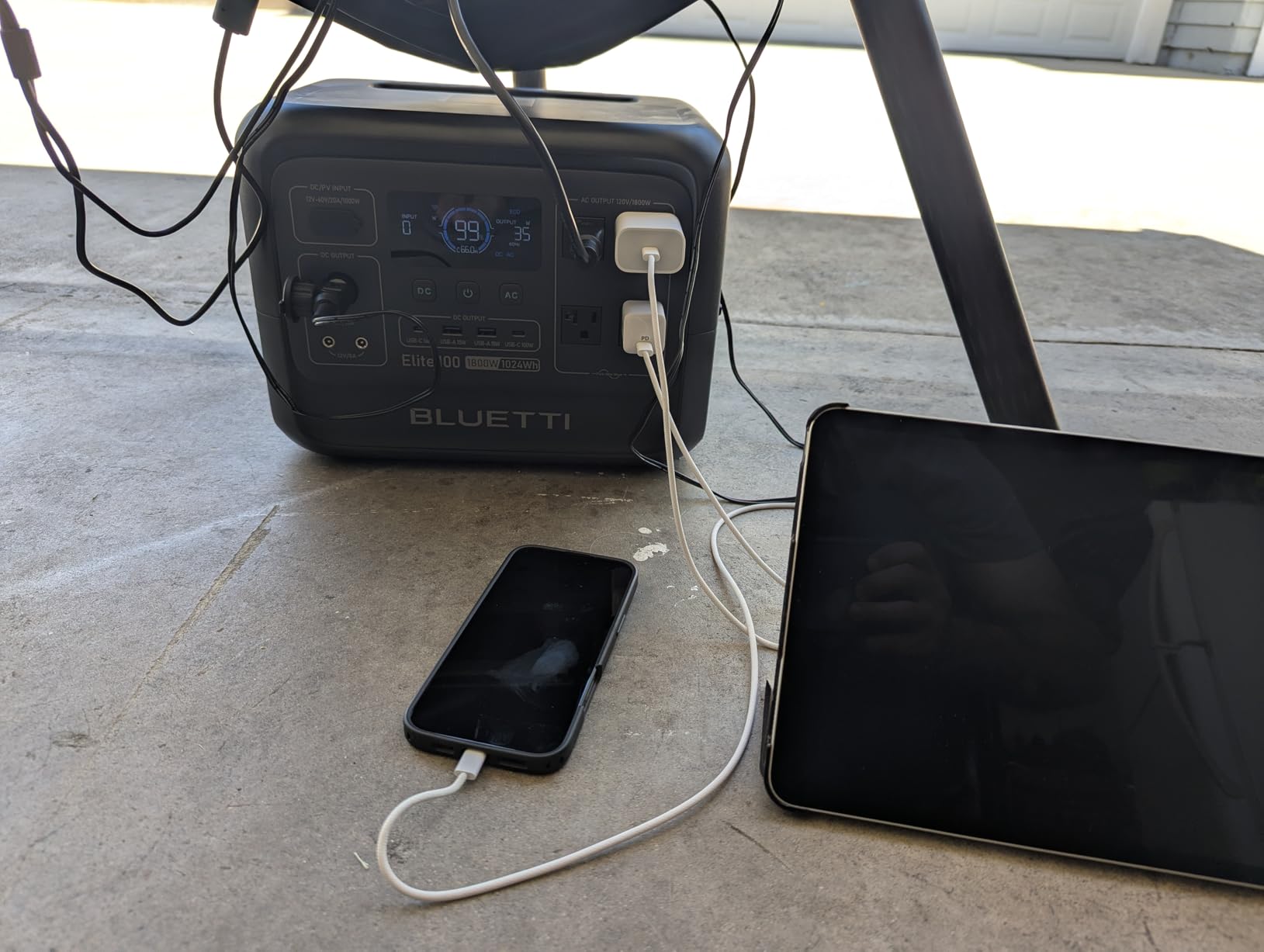
Eleven ports cover everything from a 100W laptop charge to a car port, and Wi-Fi plus Bluetooth app control with over-the-air updates is more than most rivals in this class manage. The 30dB silent mode and 10ms UPS switchover make it the pick if a medical device shares the circuit.
What we’d flag: 25 lb is genuinely heavy for something you may want to move from the trunk to the picnic table, and BLUETTI recommends its own Charger 1 accessory for faster 12V truck charging because the built-in input is slow. There is also a small quirk where a cooling fan warning light can appear briefly on first solar connection, and the front display reads dim outdoors in direct light.
Does it run a fridge all weekend on one charge?
With 1024Wh nameplate and our 85% assumption, treat it as about 870 usable watt-hours. A 60W compressor fridge averaging 30W gets you close to 29 hours, so a two-night weekend with the lid opened a reasonable number of times is comfortable.
One thing to watch is BLUETTI’s own guidance on usable capacity, which its manual caps at 90% of nameplate for battery health. That is a sensible design choice and it is another reason we plan on 85% rather than quoting the sticker figure.
Is 1800W overkill for a campsite?
It is headroom you may never use, and there is a case that a 1000W unit is the honest answer for lights, a fridge and phones. But the surge rating is what saves you when a compressor or a pump starts, and 3600W surge covers the loads that trip a 2000W surge ceiling on a rival unit.
Our brand-by-brand comparison sets this unit against the Jackery and EcoFlow options in more detail if you are torn between them.
3. GRECELL 999Wh 1000W – Best Value Per Watt
GRECELL 999Wh Solar Generator 1000W Portable Power Station for Outdoor
999Wh capacity
1000W continuous, 2000W surge
23 lb
2 AC outlets
Pros
- 1000W pure sine wave output from a 999Wh battery at the entry point of this class
- ten simultaneous device support across AC USB-A USB-C DC and wireless
- three recharge paths with a built-in MPPT controller
- AC car and solar cables plus a storage bag included
Cons
- Only two AC outlets limits parallel high-wattage use
- one of the higher shares of one-star feedback among the units here
- dual cooling fans add noise during heavy charging
The GRECELL T-1000 is the straightest route into this class: 1000W of true pure sine wave output from a 999Wh battery, with none of the headline inflation you find on cheaper listings. If your loads are a fridge, a fan, lights and a pile of USB-C devices, the output rating is the same number you would pay more for elsewhere in the list.
Ten ports is a lot for a unit with two AC outlets. The mix covers 2 AC, 3 USB with Quick Charge, 1 USB-C with Power Delivery, 2 DC 12V and a cigarette lighter port, plus a wireless charging pad, an LCD and an LED flashlight with SOS mode.
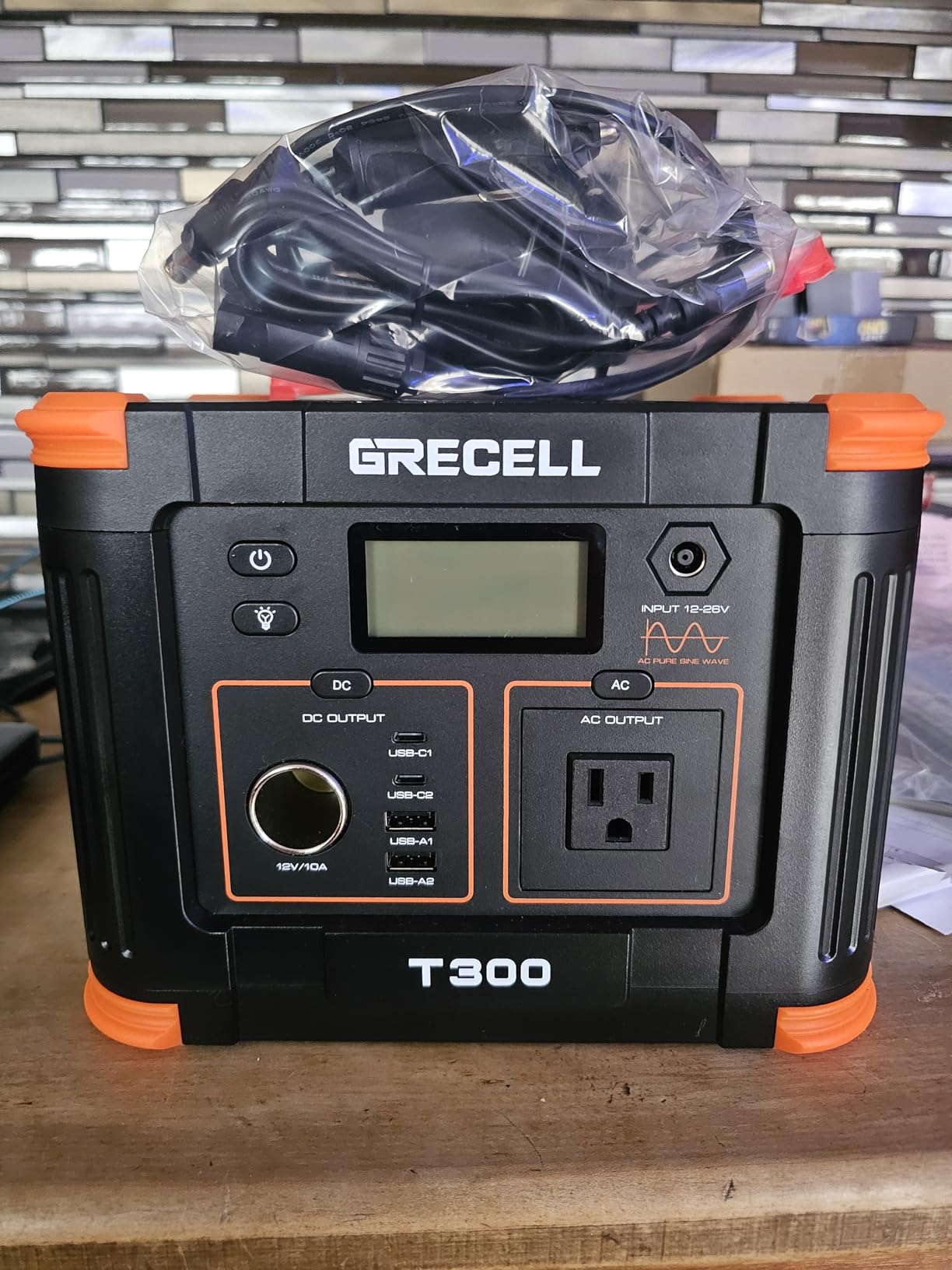
The built-in MPPT solar charge controller means you do not need a separate charge controller for a panel, and the box includes AC, car and solar cables along with a cable bag. That bundle matters when you are buying before you have decided what panel you want.
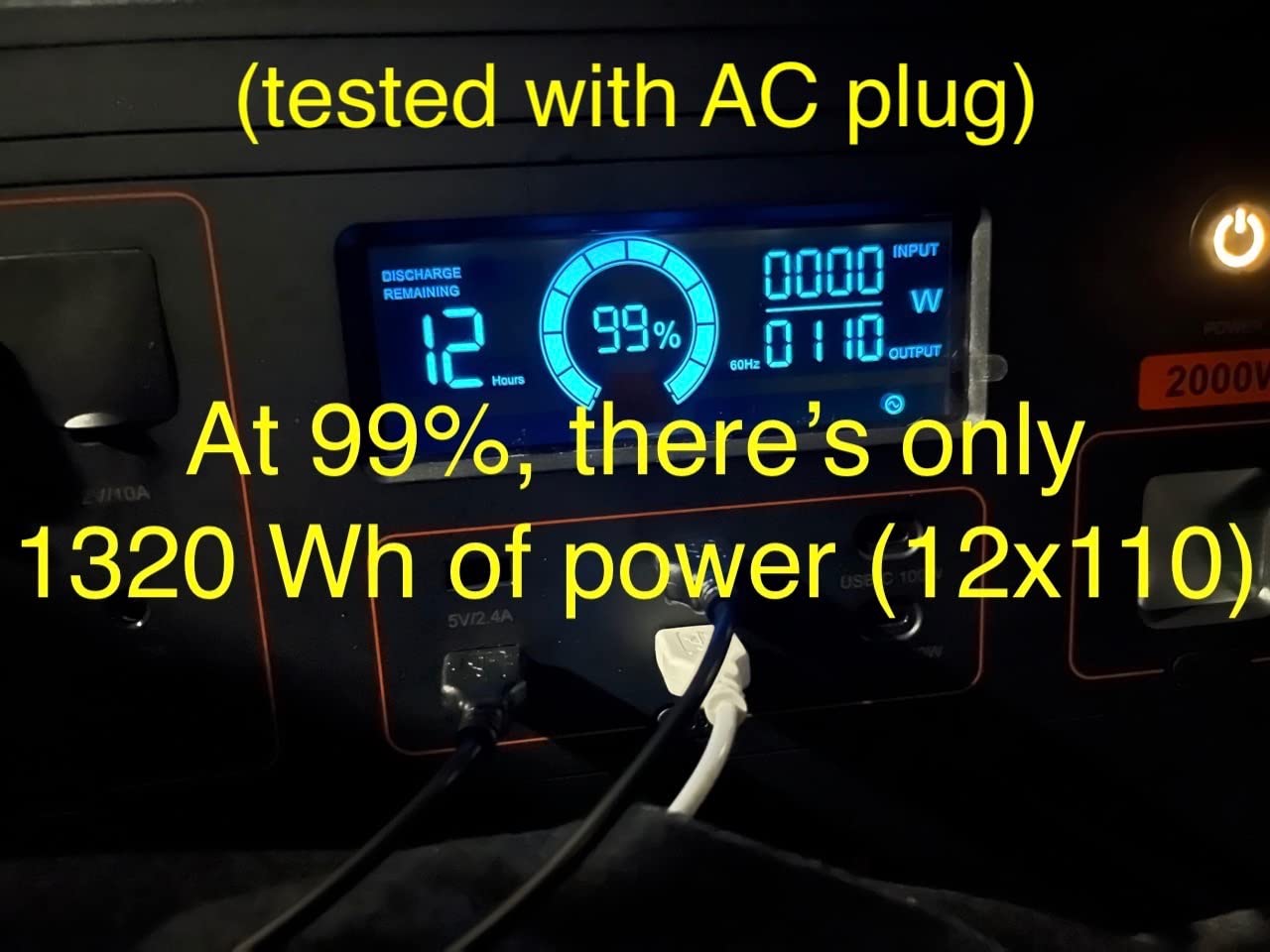
What we’d flag: two AC outlets is the real constraint. Two people wanting to run a coffee maker and a kettle-adjacent appliance at once will be sharing. Reviewers also report dual cooling fans that are audible under heavy charging, and this unit sits in the highest tier of one-star feedback in the group, mostly around those port limits and fan noise.
Is 1000W enough if I only run a fridge and lights?
More than enough. 999Wh nameplate is about 849 usable watt-hours at our 85% assumption, which is roughly 28 hours on a compressor fridge averaging 30W, or a full week of lights, a fan and phone charging with a solar top-up each morning.
Where you would feel the limit is a kettle or a hair dryer at the same time as anything else. One high-draw appliance at a time is the working rule for this unit.
How does it compare with the EBL at the same capacity?
The EBL at 999Wh is lighter at 17 lb and adds pass-through charging, but it has the same two-outlet limit and a slower AC recharge. This unit wins on the number of ports and on the cables included; the EBL wins on carry weight.
If your budget is the deciding factor rather than the spec sheet, this is where we would start. Our lower-cost roundup covers the sub-500 class if you want to go smaller again.
4. EcoFlow Delta 3 Classic – Best for Van Life Setups
EF ECOFLOW Portable Power Station Delta 3 Classic, 1024Wh 1800W AC
1024Wh LiFePO4
1800W AC, 3600W surge
26.7 lb
0-80% in 45 min
Pros
- 0-80% in 45 minutes on AC with a full charge in about an hour
- X-Boost raises output to 2600W for microwaves and fridges
- under 10ms UPS switchover
- EV-grade CTC design with a smart battery management system
- app scheduling with storm alerts
- dual top handles and non-skid base pads
Cons
- 26.7 lb is heavy for carrying
- van 12V charging tops out near 100W
- not compatible with DELTA 2 or Delta 3 Series expansion batteries
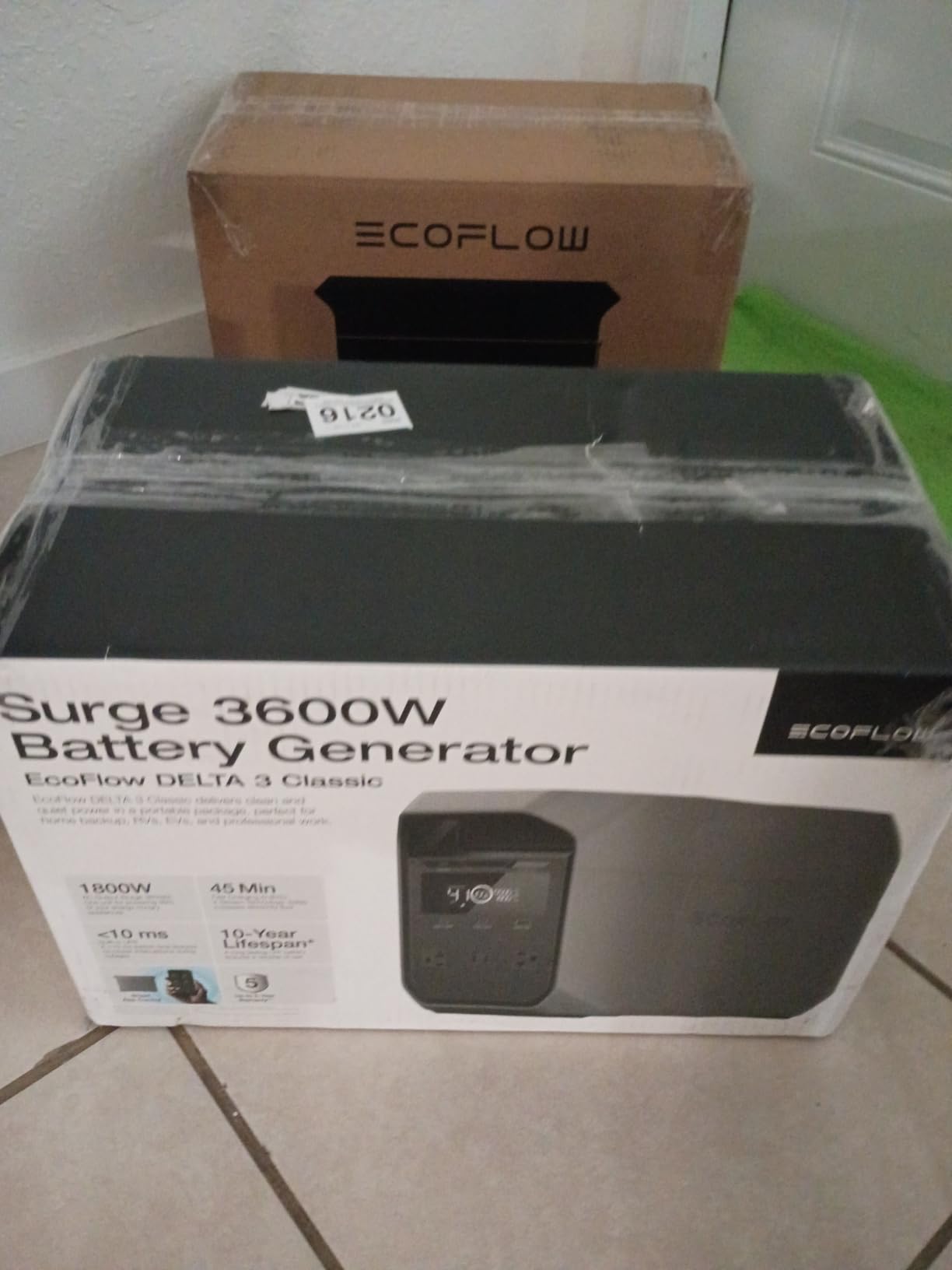
The Delta 3 Classic is the one we would install in a van rather than carry to a site. It is designed to live somewhere: dual top handles for lowering it into a cabinet, angled three-prong outlets that accept plugs in tight builds, non-skid base pads so it does not walk across a floor, and a scheduled on/off in the app that pairs with time-of-use electricity rates.
Owners report running a portable fridge full time on solar during van trips, which is the single most common permanent load. At 1024Wh and 1800W continuous with 3600W surge, it covers a fridge, a roof fan, USB-C charging for two laptops and an induction burner without being asked to do anything extreme.
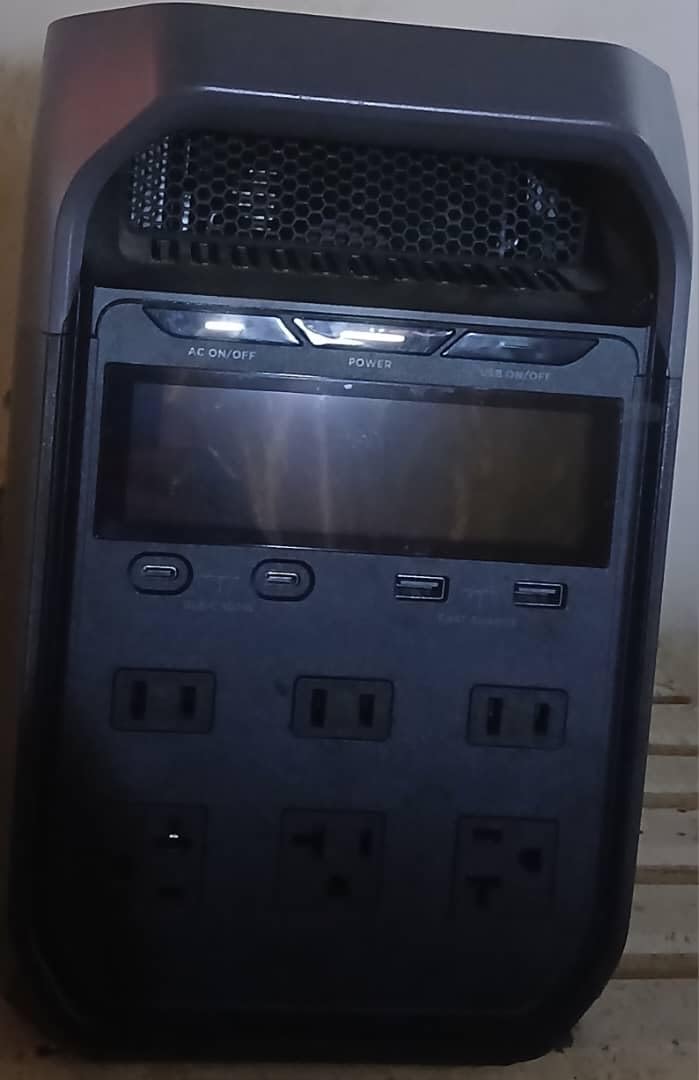
The app is the differentiator here. Storm Alert, usage monitoring, scheduling and a Self-Powered mode are all in one place, and reviewers rate its reliability well above the apps on some competing units.
What we’d flag: at 26.7 lb this is one of the heavier units and it is not a carry unit. Van 12V charging tops out around 100W with the engine running, so plan on wall or solar for the meaningful top-up. Most importantly, it does not accept DELTA 2 or Delta 3 Series smart extra batteries, so if you want to grow past 1024Wh later this is a dead end. A few owners also reported units arriving defective or previously opened outside warranty coverage.
Can a single panel keep it running?
A 500W panel refills it in about 2.5 hours in good conditions, which is enough to offset a fridge overnight. Reviewers are clear that cloudy weather alone will not sustain a fridge load, so treat solar as a supplement rather than the primary source unless you size panels for the worst case.
MPPT charging is handled internally, so a standard panel connects without an external controller. If you plan more than one panel, check the combined input limit before you buy.
What does the X-Boost mode actually do?
It raises usable output from 1800W to 2600W for resistive loads like a microwave or a heater element. The trade is runtime: you get the extra watts for a few minutes, not an extra kilowatt-hour. For camping loads that are already under 1800W it changes nothing.
For a campervan electrical install, work through the local code and fuse the circuit properly. Our camping-trip power station guide covers the layout thinking before you commit to a mounting position.
5. Anker SOLIX C1000 Gen 2 – Best for Roof Solar
Anker SOLIX C1000 Gen 2 Portable Power Station
1024Wh LiFePO4
2000W output, 3000W peak
600W solar
49 min full charge
Pros
- Full recharge in about 49 minutes on 1600W HyperFlash AC input
- 2000W continuous and 3000W peak across ten ports
- LFP cells hold at least 80% capacity after 4000 cycles
- 600W solar input refills in about 1.8 hours
- under 10ms UPS switchover
- 5 year warranty
Cons
- No battery expansion option
- 12V car charging is slow at about 100W
- measured harmonic distortion of 15-20% when driving a microwave
The C1000 Gen 2 is the solar pick because it turns a full 600W of panel input into a complete refill in about 1.8 hours of good sun, the fastest solar turnaround published by any unit here, and the 600W controller is built in rather than sold as a separate adapter. Truck campers with rooftop solar and van builds with a 400W to 600W array get the most out of that with no extra hardware to carry.
It also holds 2000W of continuous output with a 3000W peak, matching the highest sustained AC draw in this roundup. Ten ports is enough to run a fridge, a fan, a laptop and a phone bank at once, and the sub-10ms UPS switchover keeps a CPAP machine or a router running through an outage without a hiccup.
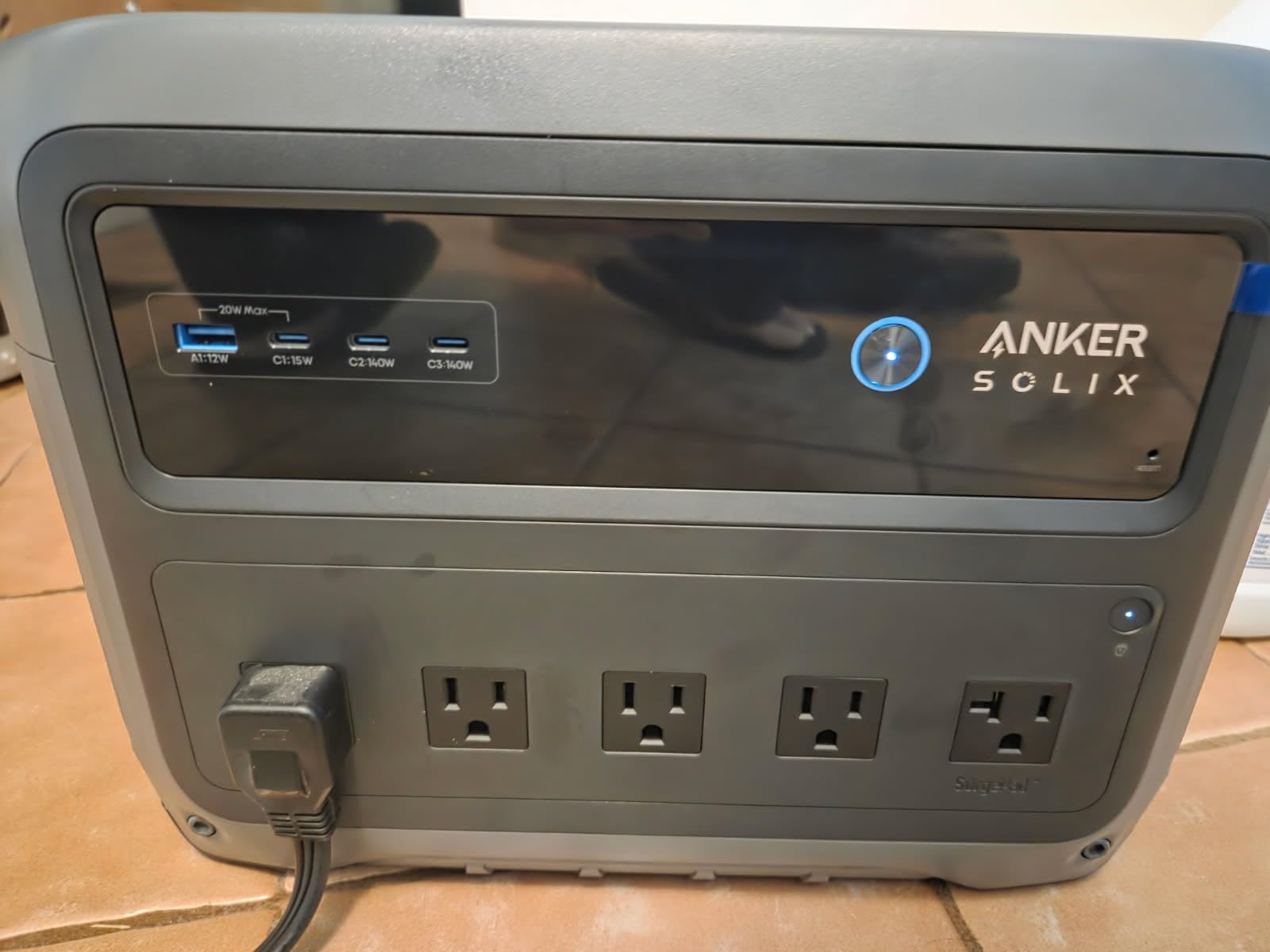
Charge speed is the thing reviewers mention first and most often: a full recharge in 49 minutes at 1600W input, with many owners reporting under an hour in practice. The LiFePO4 cells are rated to hold at least 80% capacity after 4000 cycles for a 10-year service life, and the warranty runs five years.
What we’d flag: there is no expansion battery, so 1024Wh is all you will ever have. The 12V cigarette lighter input draws only about 100W, so van charging is a slow trickle rather than a strategy. And the output waveform shows measured harmonic distortion of roughly 15% to 20% when driving a microwave, which is a fair reason to pick the BLUETTI or EcoFlow instead if microwaving is a regular part of your trip.
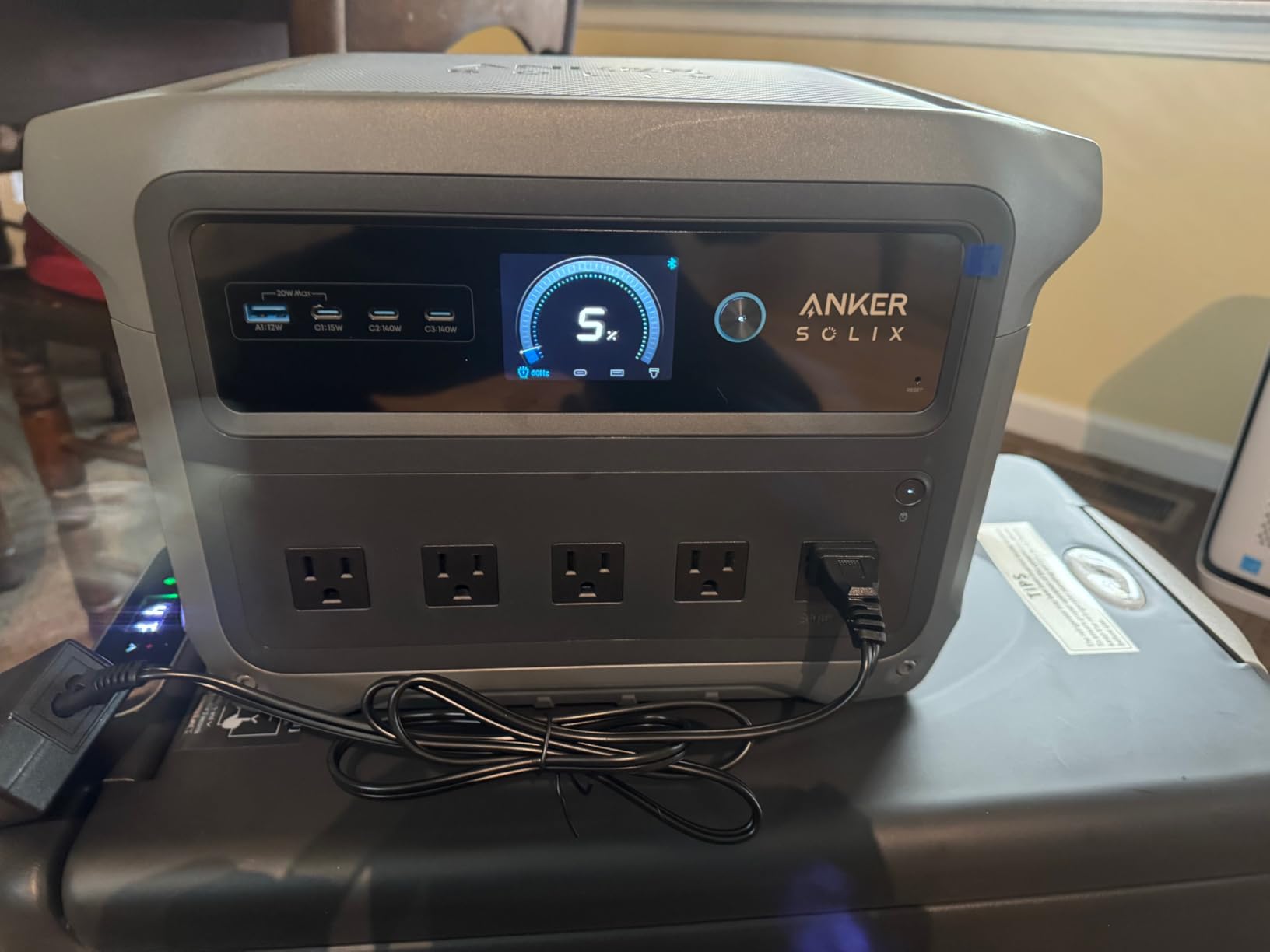
How much solar do you need to keep it topped up?
With 600W of input you are looking at roughly 1.8 hours from empty in full sun, so a single 400W to 600W folding array or a truck camper roof panel is a realistic match. The OUPES Mega 1 accepts more panel wattage at 800W, but this unit gets from empty to full in under two hours, which is the number that decides a three-day trip. Partial shade is where real-world output falls well short of the panel’s nameplate, so position for full sun rather than maximum panel count.
Cold weather works against you here. Fast charging modes commonly only engage above roughly 20C, so a spring shoulder-season trip needs a slower top-up or an early-morning wall charge.
Is there anything better than this for a truck camper?
If you want to grow the battery later, the OUPES Mega 1 is the alternative with expansion to 5120Wh. If you need the lowest carry weight, the EBL comes in at 17 lb. For pure roof solar throughput, nothing in this class beats 600W of input.
The Anker app also offers a time-of-use mode that shifts charging to off-peak rates, which pays off if you refill at home rather than at a campsite.
6. BLUETTI AC180 – Best for Base Camp and Big Loads
BLUETTI Portable Power Station AC180, 1152Wh LiFePO4 Battery Backup w/ 2 1800W (2700W peak) AC Outlets, 0-80% in 45Min, Solar Generator for Camping, Off-grid, Power Outage
1152Wh LiFePO4
1800W AC, 2700W peak
37.4 lb
500W solar input
Pros
- Largest battery in the roundup at 1152Wh
- full charge in about an hour at 1440W AC input
- 500W solar input refills in roughly 2.8 to 3.3 hours
- 20ms UPS switchover
- eight outlets
- 5 year warranty
Cons
- 37.4 lb is the heaviest unit here and awkward to move
- self-consumption of roughly 15-20W cuts runtime on small loads
- some settings only change through the app
The AC180 is the base camp unit. At 1152Wh it is the largest battery in this roundup, and 1800W continuous across eight outlets means it can carry a camp of several people rather than one tent. If your site has a picnic table and a car park five metres away, the extra capacity is worth the move.
Charging is the other reason to like it. A full charge takes about an hour on 1440W AC input, and the 500W solar input refills it in roughly 2.8 to 3.3 hours. Both numbers are near the top of the class.
BLUETTI’s support is repeatedly singled out by reviewers as responsive when something goes wrong, and the five-year warranty with five years of spare part availability is the strongest long-term commitment in this group.
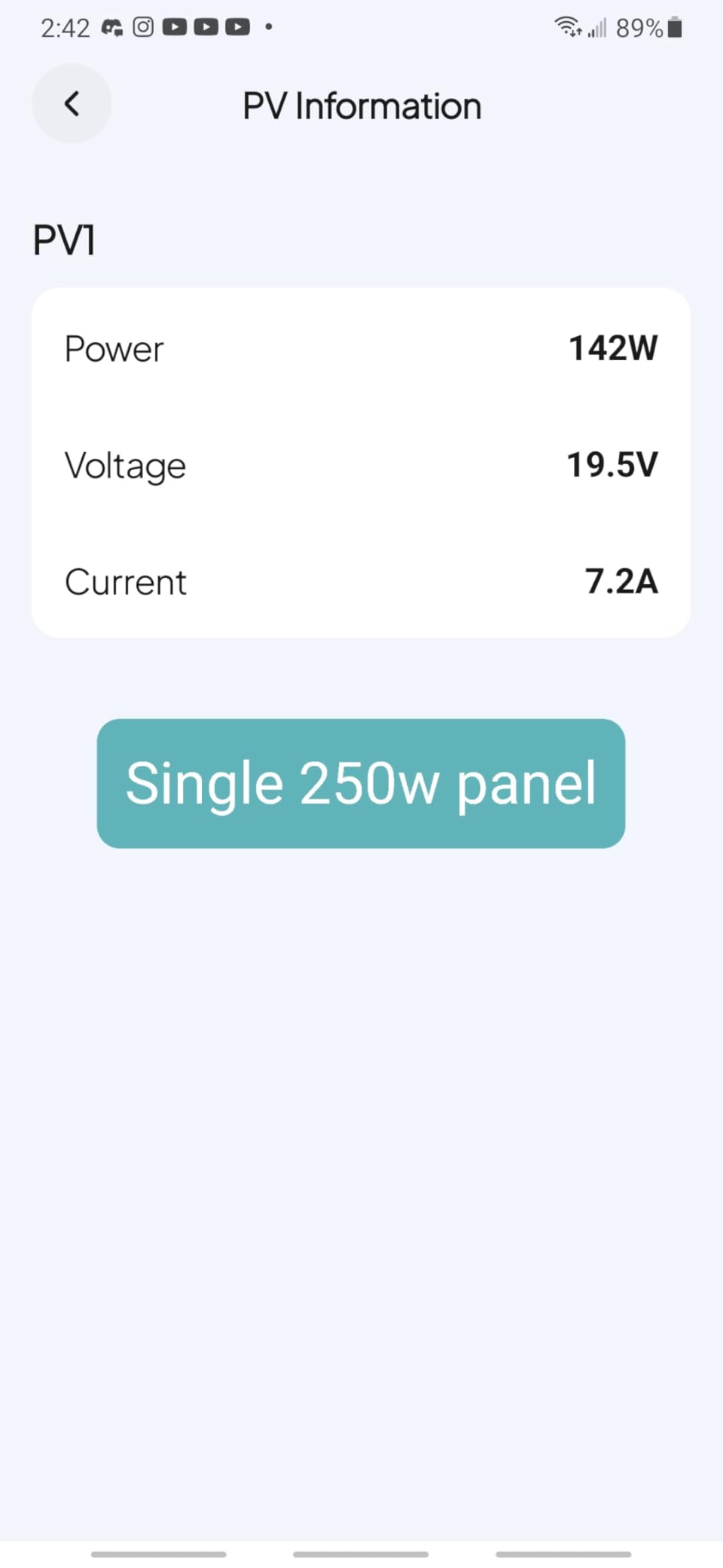
What we’d flag: 37.4 lb makes this the heaviest unit here and genuinely awkward to carry more than a few steps. Self-consumption of roughly 15W to 20W while the inverter is on eats into runtime noticeably on small loads, so a CPAP machine on a quiet night will drain it faster than the watt-hour number suggests. Some parameters, including charge rate, can only be changed through the app, and a 200W panel produces well under its rating in real conditions.
Is 1152Wh noticeably better than 1024Wh?
About 98 usable watt-hours more at our 85% assumption. That is roughly three extra hours on a compressor fridge, or about two more hours on a CPAP machine, which is a meaningful margin on a three-night trip and a rounding error on a single weekend.
So the real question is not the extra capacity but whether you can live with 37 lb. For a fixed base camp, yes. For a walk-up site, no.
Can it run a small air conditioner?
A small window unit running 800W to 1000W will start on this one, since 2700W peak covers the compressor surge. It will not run for long, and the self-consumption overhead makes that worse. If air conditioning is a nightly requirement rather than an occasional one, you are looking at a larger capacity class, not a better 1000W pick.
Its 20ms UPS switchover is fine for laptops, routers and monitors. The fastest units here switch in under 10ms, so if you are running a medical device and want the shortest possible gap, the Anker, EcoFlow, AFERIY or DJI are the four to choose from.
7. OUPES Mega 1 – Best for Future Expansion
OUPES Mega 1 Portable Power Station 1024Wh 2000W (4500W Surge)
1024Wh expandable to 5120Wh
2000W output
27.8 lb
800W solar input
Pros
- Only unit here expandable to 5120Wh with two B2 extra batteries
- 0-80% in 36 minutes on AC and 26 minutes combining AC and solar
- 800W solar input on standard MC4 connectors
- dual 100W USB-C PD ports
- spaced AC outlets fit four bulky plugs
Cons
- 4500W surge claim is optimistic and units trip between 2050W and 2200W
- cooling fans run loudly under high draw
- app Wi-Fi is unreliable though Bluetooth works
The Mega 1 exists for people who know their capacity needs are about to grow. It is the only unit in this roundup that expands, reaching 5120Wh with two B2 extra batteries and no additional inverter. Buy one now for a weekend, add a pack when you move into a truck camper.
It also has a 2000W pure sine wave AC output, joint-highest in the group, and the fastest AC charging of the ten at 0-80% in 36 minutes, or 26 minutes when you combine wall and solar input. The 800W solar input on standard MC4 connectors means panels from any brand will pair with it.
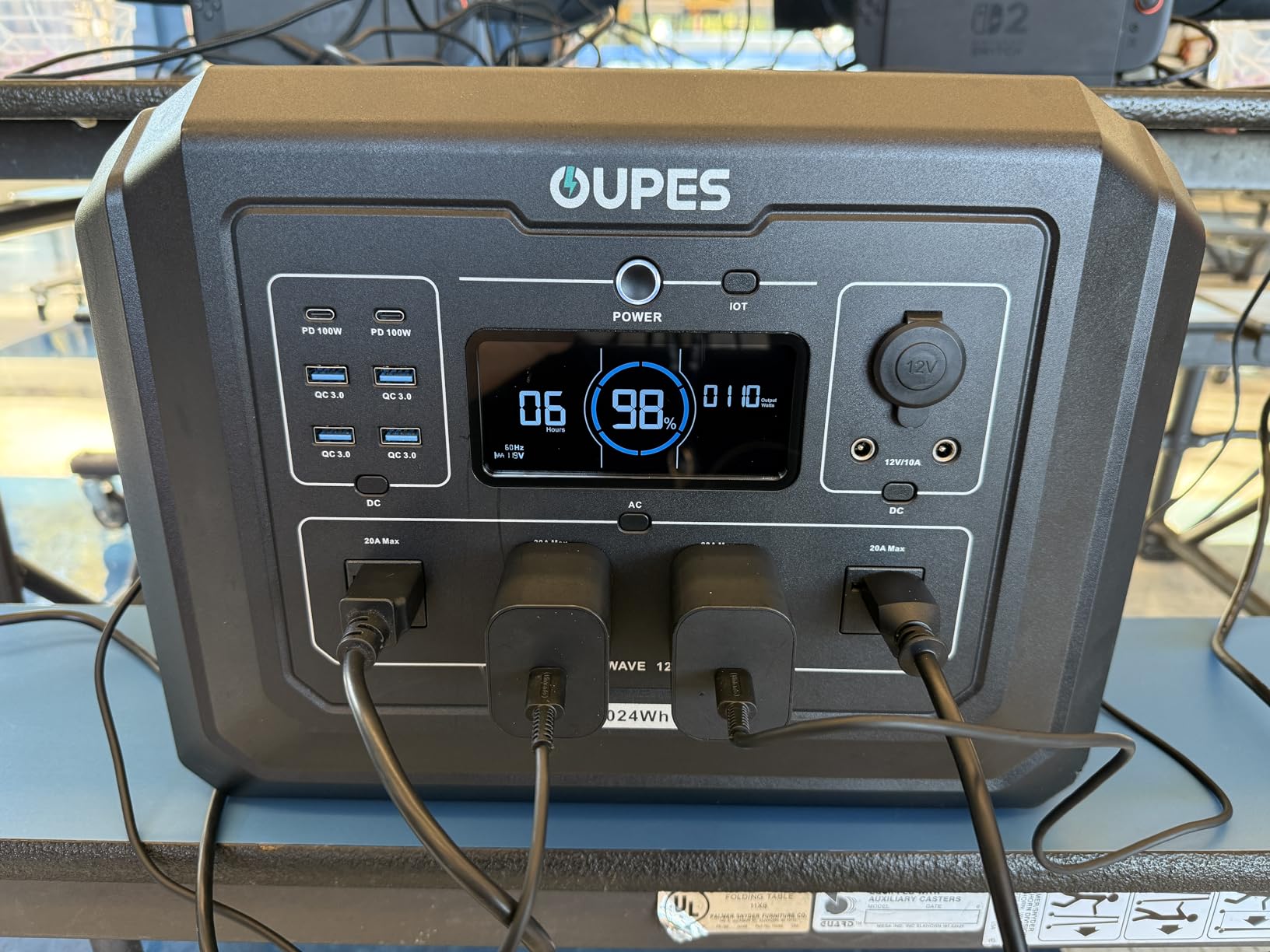
Spaced front AC outlets is a small design decision that pays off: four bulky plugs fit side by side without fighting for the same socket, which is a persistent annoyance on units with tightly packed outlets. Dual 100W USB-C PD ports cover two laptops at full speed.
What we’d flag: the 4500W surge figure is optimistic, and owners report units tripping somewhere between 2050W and 2200W. Plan on the 2000W continuous number and test anything near the limit before you depend on it. The cooling fans run continuously during charging and get loud under high draw, which matters at a quiet site. The bundled charging cable is proprietary and hard to source, and app Wi-Fi is unreliable even though Bluetooth works.

Is expansion worth paying for upfront?
Only if you are reasonably sure you will use it. Every other unit here is a fixed 999Wh to 1152Wh, so if a truck camper or a two-week solar trip is in your plans the Mega 1 is the only one that grows with you. If your camping is a car park and a weekend, that flexibility is money spent on a possibility.
The battery chemistry is LiFePO4 rated for 3500 or more cycles, which is a shorter published figure than the 4000-plus cycles claimed by several rivals here but in the same band.
How does the fan noise compare at a quiet campsite?
Worse than most. Reviewers report continuous fan operation during charging and significant noise under high draw, which is the opposite of the 30dB silent mode the BLUETTI Elite 100 V2 offers. If you charge overnight and sleep beside the unit, this is not the one.
For a base camp where the station sits outside the tent and charges while you walk, it is a fair trade for the expansion path and the 800W solar input.
8. DJI Power 1000 V2 – Best for Drone and Mobile Video Work
DJI Power 1000 V2 Portable Power Station, 1024Wh LFP Battery
1024Wh LFP
2600W stable output
15 kg
0-80% in 37 minutes
Pros
- 0-80% recharge in about 37 minutes
- dual 140W USB-C ports giving 280W combined
- 2600W stable pure sine wave output
- runs as low as 26 dB
- 10ms UPS switchover
- SDC fast charging for select DJI drone batteries
Cons
- MPPT solar and car charging modules are not built in and need separate adapters
- app connectivity needs a separately sold Bluetooth dongle
- idle draw of roughly 24-30W
- some reports of heat-related charging shutdowns
If your camping is also a filming trip, the DJI Power 1000 V2 is the one. SDC Super Fast Charging takes select DJI drone batteries from flat to flyable in about 30 minutes, and the dual 140W USB-C ports push 280W combined so two laptops can charge at full speed while the drone batteries cycle.
It also publishes the lowest noise figure in the roundup at a 26 dB minimum operating noise, which matters when you are sleeping in a van with the station a metre from your head. The 10ms UPS switchover is twice as fast as the original Power 1000.
On raw numbers the output is the highest stable figure in this roundup at 2600W of pure sine wave AC, and the 0-80% recharge in 37 minutes is the second-fastest turn-around we recorded across the ten units. The build is rugged with an intelligent battery management system and a five-year warranty.
What we’d flag: the MPPT solar and car charging modules are not built in, so adding solar or 12V charging means buying separate adapters. App connectivity and firmware updates need a separately sold Bluetooth dongle, which is an odd gap in a device priced at this level. Idle draw runs around 24W to 30W, which cuts usable runtime noticeably on light loads, and there are reports of overheating, error codes and charging shutdowns in high ambient temperatures. Treat hot-weather charging as something to watch rather than assume.
Is it quiet enough to run overnight in a van?
At a 26 dB minimum it is the quietest option here, and for a CPAP or fan load that matters more than raw capacity. Our CPAP runtime guide works through the numbers for overnight use.
The catch is the idle draw. A 30W self-consumption on a 1024Wh battery with roughly 870 usable watt-hours means the overhead alone costs you about four hours of runtime over a night. That is fine if you are running a CPAP, and annoying if you are only charging phones.
Does it work as a general camping station?
Yes, with one exception: you have to buy extra hardware for solar. If your plan depends on panel input, the Anker SOLIX C1000 Gen 2 with its built-in 600W input or the OUPES Mega 1 with 800W on standard connectors is a simpler setup. If your plan is drone batteries, laptops and cameras, nothing else here matches it.
The listed 15 kg weight converts to about 33 lb, which sits mid-pack here, between the 25 lb BLUETTI Elite 100 V2 and the 37.4 lb AC180. It is the body length of 19.2 inches that makes it the longest unit in the roundup, so check a narrow vehicle cabinet before you plan to stow it.
9. AFERIY 1024Wh – Best for Port Count and 140W USB-C
AFERIY Portable Power Station 1024Wh Solar Generator 1800W,Fast Recharge
1024Wh LiFePO4
1800W AC, 3600W peak
25.6 lb
13 ports
Pros
- 13 ports including four AC outlets and a 140W USB-C PD port
- 0-80% in 35 minutes combining AC and solar
- under 10ms UPS switchover
- LFP cells rated 4000+ cycles
- compact 13.77 by 8.66 by 10.35 inch body
- UL listed with seven years of support
Cons
- Review base is small at 113 ratings
- companion app exposes less detail than competing apps
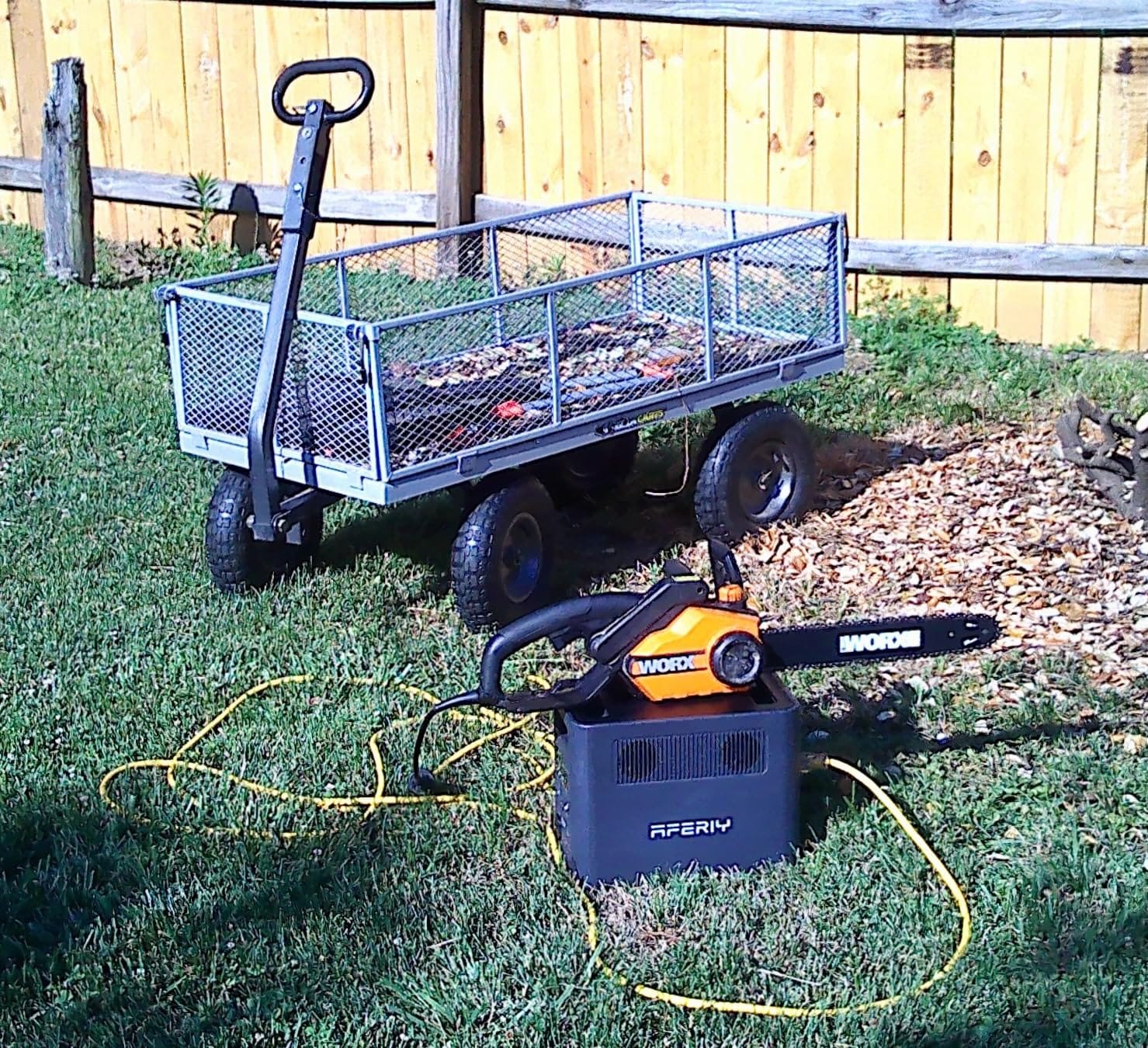
The AFERIY is the port specialist. Thirteen ports is the highest count in the roundup, including four AC outlets, a 140W USB-C Power Delivery port and two USB-A with Quick Charge, on a 1024Wh LiFePO4 battery rated for 4000 or more cycles.
Charging is genuinely quick when you use the combination: 0-80% in 55 minutes on AC alone, or 35 minutes with AC and solar together. Output is 1800W continuous with a 3600W peak, and the sub-10ms UPS switchover keeps computers, cameras and medical freezers running.
At 25.6 lb and 13.77 by 8.66 by 10.35 inches it is one of the more compact bodies here for the capacity. A three-mode LED with steady, SOS and strobe settings, plus app-based monitoring and monitoring of charge state, rounds out a thoughtful package. It is UL listed with a seven-year support period behind it.
What we’d flag: this is the newest name in the roundup with 113 ratings, so there is not yet a long ownership history to judge it by. The warranty terms are listed as five plus two years, and the companion app shows less detail than the EcoFlow or Anker apps, particularly on charge state. Nothing here is a fault, but it is less proven.
Does the 140W USB-C port actually reach 140W?
It matches the highest-rated single USB-C port in this roundup and it is what makes the unit interesting for anyone charging a demanding laptop rather than a phone. The dual 100W ports on the Anker and OUPES are close behind, and the DJI’s dual 140W ports do the same job if you have two machines.
Port count is only useful if you have the devices to fill it. Four AC outlets on a 1800W continuous rating leaves headroom for two high-draw appliances at a time, which is more than most camping loads ever reach.
Is a small review base a reason to skip it?
Not on its own. The 4.6 average across 113 ratings reflects a small sample of early buyers, and the reported drawbacks are limited to app depth rather than hardware. But warranty and cell sourcing matter on a device you may keep for a decade, and the established names in this class publish longer track records.
Worth weighing against the BLUETTI Elite 100 V2, which offers a similar port count with a five-year warranty and 1782 ratings behind it.
10. EBL 1000W 999Wh – Best Lightweight Carry
EBL Portable Power Station 1000W 999Wh Solar Generator for Outdoor Home
999Wh LiFePO4
1000W continuous, 2000W peak
17 lb
10-port hub
Pros
- Lightest unit in the roundup at about 17 lb
- 10-device simultaneous charging across AC USB-C PD USB-A QC3.0 wireless car and DC
- triple MPPT solar controller with AC solar and 12V car options
- pass-through charging for charge and discharge at once
- 10W wireless charging pad and per-module switches
Cons
- Only two AC outlets
- 2000 charge cycles is roughly half the 4000-plus rating of newer rivals
- full AC recharge takes 8-12 hours
The EBL is the answer to the weight problem, and the weight is the problem. At about 17 lb it is the lightest unit in this roundup by a clear margin, roughly 30% lighter than competing 1kWh stations, and the one-hand carry handle is sized for a real lift rather than a token grip.
Underneath that it is a full 999Wh LiFePO4 battery with 1000W continuous and 2000W peak pure sine wave output, and pass-through charging so the battery can refill while it runs a fridge. The triple MPPT controller handles solar without an external charge controller.
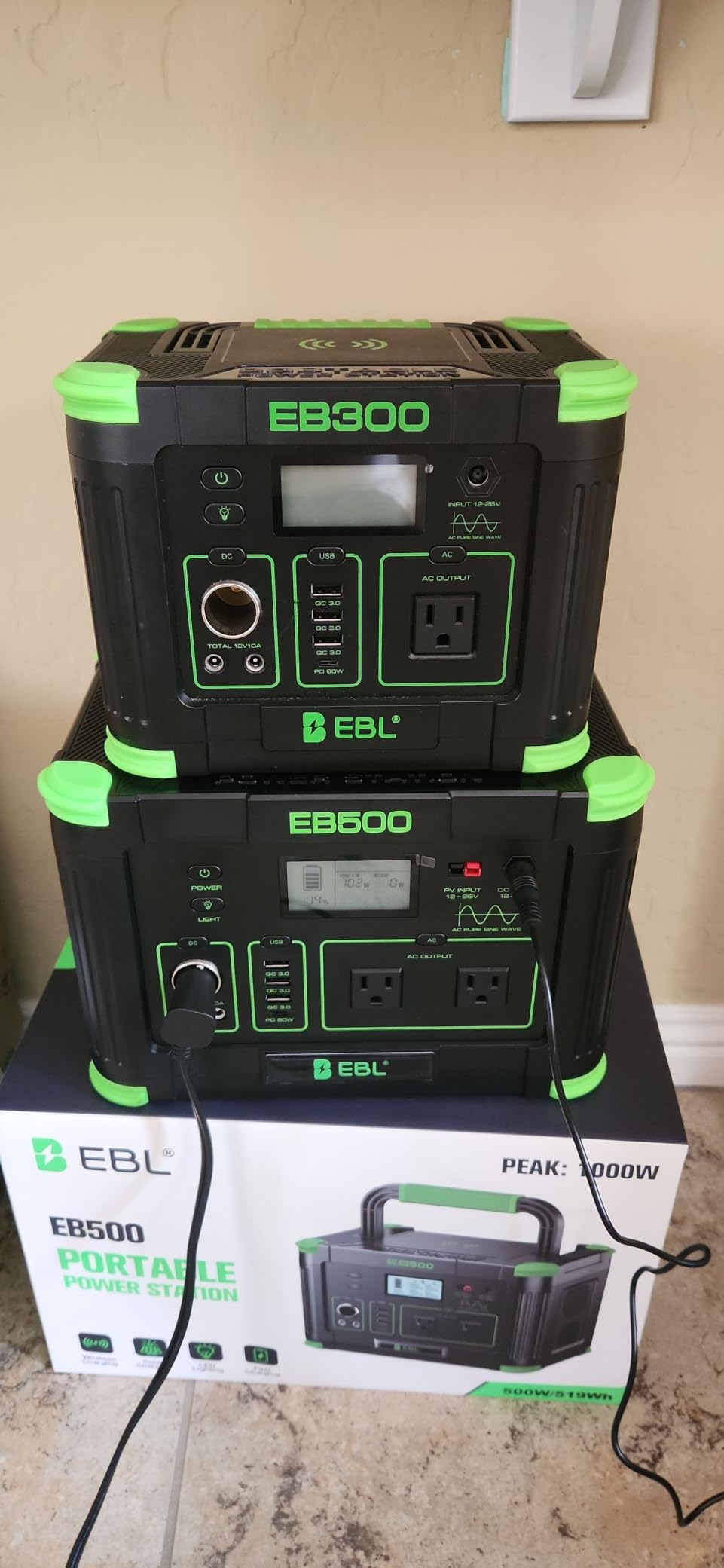
Ten devices can charge at once across 2 AC, 1 USB-C with 60W Power Delivery, 3 USB-A with Quick Charge 3.0, a wireless pad, a 12V car port and 2 DC outputs. Per-module switches let you kill the wireless pad and the DC bank when you do not need them, which is a small thing you will appreciate on a long trip.
What we’d flag: the 2000-cycle rating is roughly half what newer LiFePO4 rivals here claim, which matters if you plan to keep it for ten years of daily use. Full AC recharge takes 8 to 12 hours, by far the slowest in the group, so it wants overnight charging. Two AC outlets is the same limit as the GRECELL, and about 10% of this unit’s ratings are one-star, one of the higher shares in the roundup.
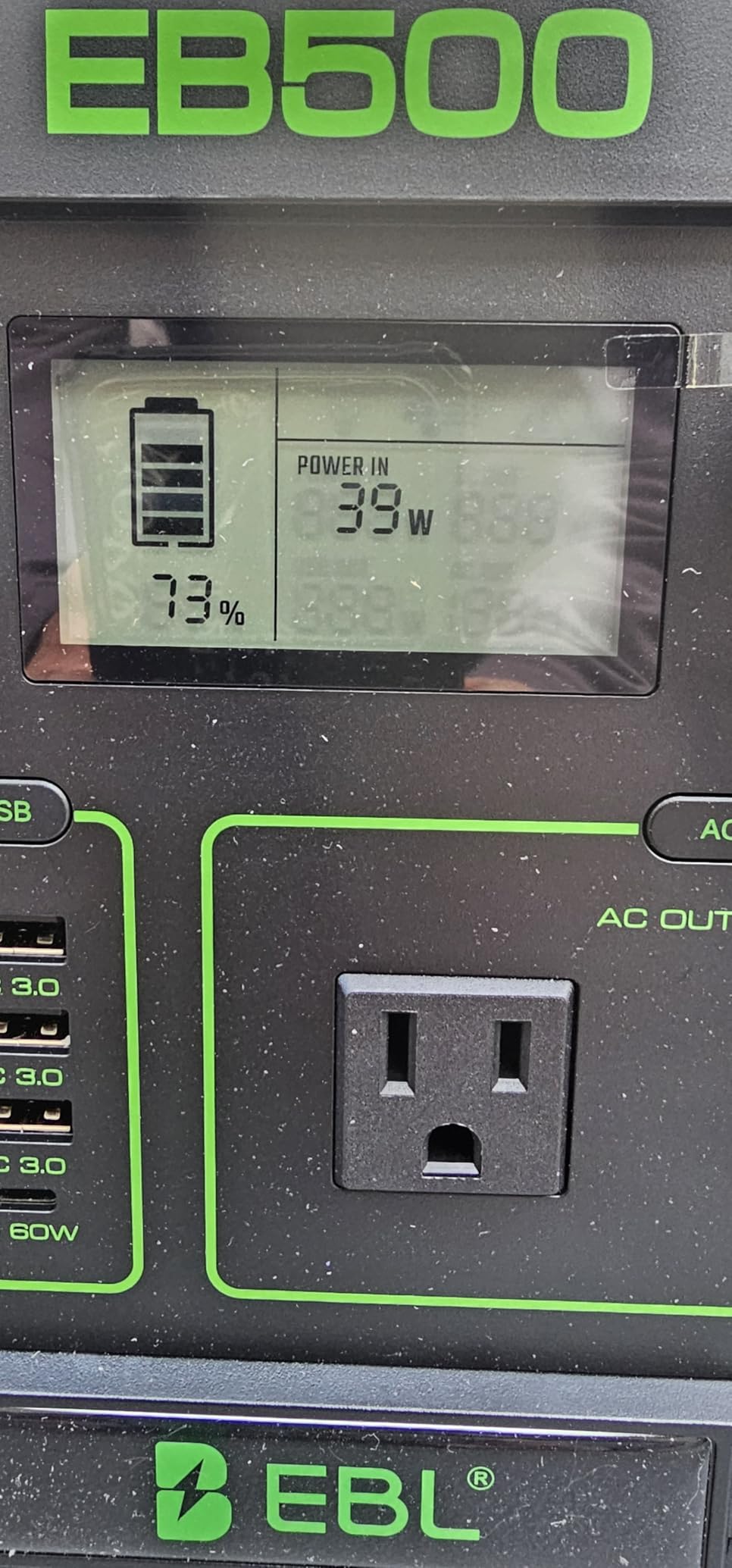
Is 17 lb light enough to walk with?
It is the difference between a two-handed carry and a one-handed lift. At that weight you can move it from the car to the picnic table, or down a beach approach, without a second person. Every other unit in this roundup sits between 23 and 37 lb, and the 37 lb BLUETTI AC180 genuinely needs two people.
The dimensions, 14.89 by 9.82 by 9.83 inches, are not the smallest here, so check your vehicle before you commit. The weight is the win, not the footprint.
What do you give up for the lighter frame?
Charge speed is the biggest loss. An 8 to 12 hour AC recharge means you plan around it, which is workable if you refill every night while you sleep. Cycle life is the second, with 2000 rated cycles against 3500 to 4000-plus on the others.
For a camper who walks in, cycles rarely, and cares more about what they can lift than about owning the newest chemistry, that is a straight trade and we would take it.
How to Choose a 1000W Power Station for Camping
This class is narrower than it looks, and the decisions that actually change your trip are output headroom, charge speed and carry weight. Capacity differences across this roundup are small enough that the watt-hour number is the least interesting of the four.
Capacity: plan on 85% of the nameplate
Every unit here sits between 999Wh and 1152Wh, so the spread is about 150Wh. Multiply nameplate by 0.85 to get usable watt-hours, then divide by your average device draw. Jackery’s own note that its LFP cells retain over 70% capacity after 4000 cycles and BLUETTI’s 90% usable-capacity guidance in its manual both point the same way: the sticker figure is a ceiling, not a plan.
Continuous output versus surge: read the lower number
Marketing leans on the surge figure because it is larger. The number that matters is continuous watts, and for compressor-starting loads the surge rating is what keeps the unit from tripping. A 60W fridge can pull 180W for a second; a 1000W space heater starts at 1500W and you want 3000W of surge headroom. Products in this roundup quote surge from 2000W on the GRECELL and EBL up to 3600W on the BLUETTI Elite 100 V2, the EcoFlow and the AFERIY.
Watch for units that inflate one and starve the other. The OUPES Mega 1 is explicit about 2000W continuous and its 4500W surge claim, and owners report it tripping between 2050W and 2200W, so plan around the continuous rating and test near the ceiling.
Battery chemistry and cycle life
Every unit in this roundup is LiFePO4 or LFP, which is the reason to buy in this tier at all. Published cycle figures run from 2000 on the EBL through 3500-plus on the OUPES to 4000-plus on the Jackery, BLUETTI, Anker, EcoFlow and AFERIY. Warranty terms vary more than the cells do: five years on the BLUETTI units, the Anker, the EcoFlow and the DJI, two years on the GRECELL and the EBL, and a listed one-year term on the Jackery that is worth confirming against Jackery’s own warranty page, where terms are described inconsistently.
Charging paths and how fast they refill
Three routes matter: wall, 12V car and solar. Wall refill ranges from a 49-minute full charge on the Anker SOLIX C1000 Gen 2 and 0-80% in 36 minutes on the OUPES down to 8 to 12 hours on the EBL. Solar input caps range from 500W on the BLUETTI AC180 to 600W on the Anker and 800W on the OUPES, and the DJI requires separate modules for both solar and car charging. For 12V vehicle charging, expect roughly 100W on most units, which is a top-up rather than a refill.
Weight: the two-sided decision
At this tier the gap is 17 lb to 37.4 lb, and that is a bigger difference than the capacity difference. Around 17 to 23 lb is carryable by one person. Around 25 to 30 lb is a two-hand lift. Anything above 35 lb is a car-and-cart unit for a fixed base camp. Decide which camp you actually go to before you pick.
Cold weather, heat and campsite safety
Cold: fast charging modes commonly only engage above roughly 20C, so a unit left in a freezing vehicle overnight will refill slowly until it warms. Heat: field testers reported roughly a 30% drop in continuous output after two hours in direct sun at around 90F as the battery management system throttles, so keep the station shaded rather than in the sun. Wet weather: these are not waterproof, and the ABS and plastic housings on several units here offer little weather resistance. Keep it under a tarp with airflow and off the ground.
Inside a tent there is no combustion and therefore no carbon monoxide risk, which is the main advantage over a petrol generator. It still needs to be dry, uncovered and ventilated, and you should not charge a lithium battery while you sleep in a sealed tent.
Cords, UPS behaviour and getting it home
For runs over 10 feet, use 12AWG extension cord rather than the 16AWG cable in the box. Voltage drop on a thin cord shows up as a station that trips under load at the far end of the campsite. For anything that must not blink, check switchover time: under 10ms on the Anker, EcoFlow, AFERIY and DJI, 20ms on the BLUETTI AC180.
One thing to plan around: airline lithium limits. Carry-on and checked baggage rules for lithium power stations sit at 100Wh and 160Wh respectively with approval required, and every unit in this roundup is roughly six times that. These do not fly. They travel by car, truck or boat, which is worth checking before you book a flight-based camping trip.
Our broader portable power station roundup covers lighter units if 999Wh is more than you need.
Frequently Asked Questions
What will a 1000W power station run?
A 1000W station runs lights, fans, phone and laptop charging, camera and drone batteries, a 60W 12V compressor fridge, a CPAP machine at 30W to 60W, a portable blender, a 700W coffee maker and a 15W router without trouble. It will not run a 1875W hair dryer, a 1200W to 1500W kettle, a 1500W space heater or a window air conditioner, because those exceed the continuous rating and the surge needed to start them.
How long will a 1000W power station run a refrigerator?
A 60W 12V compressor fridge cycles on about half the time and averages roughly 30W. On about 900 usable watt-hours, that is about 30 hours. Use the formula: runtime in hours equals usable watt-hours divided by average device watts, where usable watt-hours is nameplate watt-hours multiplied by 0.85. Hot weather raises the duty cycle and shortens the figure.
Is a 1000W power station good for camping?
Yes, for lights, fans, phones, laptops, cameras and most mini fridges or coolers, plus a CPAP machine for a weekend trip. It is not enough for space heaters, hair dryers or most full-size air conditioners, and kettles need 1500W or more. Below 1000W you cannot comfortably run a fridge or a coffee maker; above it you gain 10 to 15 lb of weight to lift out of the trunk.
What is the best 1000W portable power station?
The Jackery Explorer 1000 v2 is the strongest all-round choice in this class, with 1070Wh, 1500W continuous output, 23.8 lb and a 4.7 average across 3623 ratings. The Anker SOLIX C1000 Gen 2 wins on charge speed and solar input, the BLUETTI Elite 100 V2 on compact 1024Wh capacity with 1800W output, and the EBL on carry weight at 17 lb.
Is there a better brand than Jackery?
It depends on the job. Anker SOLIX leads on refill speed at 49 minutes and 600W of solar input. BLUETTI offers the widest capacity range and five-year warranties, with the AC180 at 1152Wh for base camp. EcoFlow has the deepest app with scheduling and storm alerts. DJI is the choice for drone batteries and video work. GRECELL and EBL cover the lower end of the class. All ten use LiFePO4 cells, so chemistry is not a differentiator here.
Can I take a portable power station on a plane?
Not one of these. Airline rules for lithium power stations cap carry-on batteries at 100Wh and checked batteries at 160Wh with operator approval, and every unit in this 1000W class holds roughly 999Wh to 1152Wh, about six to ten times that limit. Plan to transport these by car, truck or boat, and check your airline’s current rules if you fly to a trailhead.
Are portable power stations safe inside a tent?
There is no combustion, so there is no carbon monoxide risk the way there is with a petrol generator. Keep the unit dry, uncovered and ventilated, and avoid charging a lithium battery inside a sealed tent while you sleep. These units are not waterproof, and a plastic or ABS housing in a wet tent is a poor combination, so use a ventilated vehicle or a tarp shelter at the picnic table.
Do I need solar panels for a camping power station?
Not to start. Wall charging fills every unit in this class between 36 minutes and 12 hours, and car charging adds roughly 100W as a slow top-up. Solar matters for multi-day trips where you cannot return to a vehicle with mains power. Match panel wattage to the unit’s input cap, which ranges from 500W to 800W in this roundup, and expect real output well below the panel’s rated wattage in partial shade or cold weather.
The Bottom Line
If you want one answer to which of the best 1000W portable power stations for camping to buy, take the Jackery Explorer 1000 v2. It pairs 1500W of continuous output with the second-largest battery in the class at 1070Wh, holds a 4.7 average across 3623 ratings, and comes in a 23.8 lb frame that two people can lift without planning around it.
Go with the Anker SOLIX C1000 Gen 2 if you are running roof solar and want the fastest refill, with the BLUETTI Elite 100 V2 if you want 1800W in a compact 17-litre body, and with the EBL if the walk from the car is the deciding factor. Check the latest price on any of them before you commit, because this class moves often.