
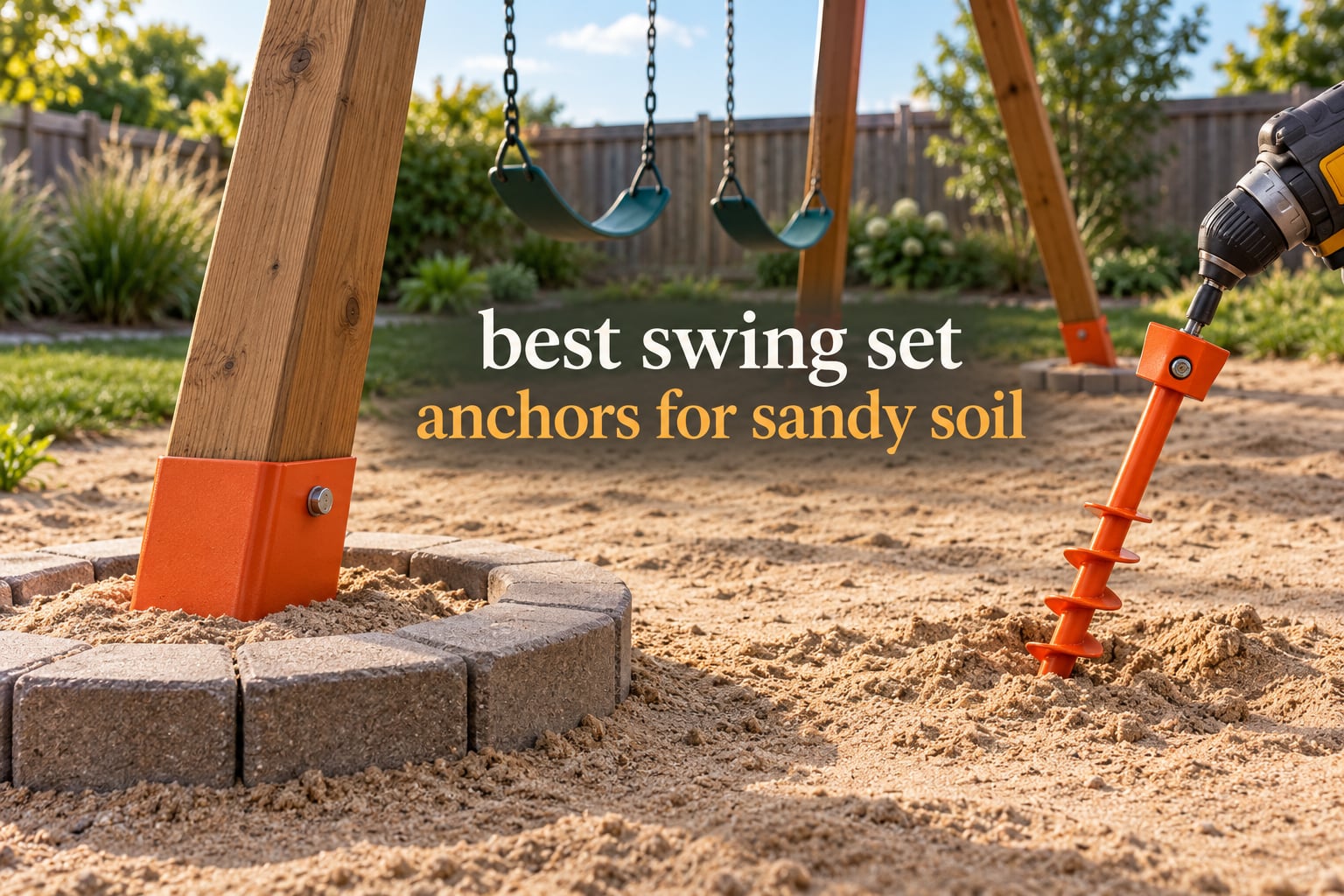
Sandy soil breaks more swing sets than any other ground condition, and it does it quietly. The legs do not snap and the frame does not collapse; the frame just rocks a little further every month until the bolt holes oval out and the A-frame leans. When you search for the best swing set anchors for sandy soil, the listings all say the same thing, heavy duty. That word tells you nothing. What decides whether an anchor holds is embedment depth and helix geometry, because granular soil has almost no shear strength for a stake to grip.
Our short version: a fully welded spiral auger at 18 inches or longer, leaned back roughly 45 degrees toward the frame so the pull loads the shank rather than the blade, paired with stabilizer bars on the A-frame legs. Go deeper than 18 inches when your yard is pure fill or beach sand. Concrete is the honest answer in a narrow set of cases we spell out below.
We compared ten anchor kits across four architectures, read through several thousand customer reviews, and sorted them by how they behave in loose sand rather than by star rating. The kit with the highest rating here is not the one we would put in a sandy yard, and we explain why. If you want to know what you are standing on before you buy anything, start with the jar test below, then read the soil test kits we trust for a fuller picture of your ground.
Table of Contents
Top 3 Swing Set Anchors for Sandy Soil (October 2026)

Fabulas 18 Inch Ground Anchors
- 18 inch length
- 2.76 inch welded spiral blade
- Includes nut driver and T-handle wrench

VASGOR 24 Inch Anchors
- 24 inch length
- 1000 lb pull tested per anchor
- Bracket and drill adapter included

TECH2EACH 18 Inch Dual Spiral
- 30 mm and 68 mm auger sections
- Removable ring eye hooks
- Hex socket and long T-wrench
The 10 Swing Set Anchors for Sandy Soil Compared
| Product | Specs | Action |
|---|---|---|
| Fabulas 18 Inch Ground Anchors |
|
Check Latest Price |
| VASGOR 24 Inch Mobile Home Anchors |
|
Check Latest Price |
| TECH2EACH 18 Inch Dual Spiral |
|
Check Latest Price |
 LIFEBED 18 Inch Six Pack LIFEBED 18 Inch Six Pack |
|
Check Latest Price |
 Qimshemi 18 Inch Anchor Kit Qimshemi 18 Inch Anchor Kit |
|
Check Latest Price |
 XDP Recreation 12.75 Inch Auger Anchors XDP Recreation 12.75 Inch Auger Anchors |
|
Check Latest Price |
 Phopich 15 Inch Spiral Anchors Phopich 15 Inch Spiral Anchors |
|
Check Latest Price |
 PAMAZY 15 Inch Ground Anchors PAMAZY 15 Inch Ground Anchors |
|
Check Latest Price |
 FEED GARDEN 15 Inch Orange Anchors FEED GARDEN 15 Inch Orange Anchors |
|
Check Latest Price |
 Pamofuper 14 Inch Ground Stakes Pamofuper 14 Inch Ground Stakes |
|
Check Latest Price |
Do You Even Have Sandy Soil? The Five-Minute Jar Test
Before you spend anything, dig a 12 inch hole and fill it with water. Let it drain overnight, then refill it. If the water drains in under 30 minutes, you have coarse sand or loose gravel, and you are in the hardest anchoring category. If it takes a couple of hours, you have a sand-loam blend that most 18 inch anchors handle well.
The second test is simpler. Squeeze a handful of damp soil. If it crumbles into loose grains the moment you open your hand and leaves no ribbon between your fingers, it is granular. Granular soil is the reason this whole article exists. Our soil drainage walkthrough covers the rest of the field tests, and a soil moisture meter helps you check whether the sand is already saturated before you pack around a leg.
If your ground holds a firm ribbon or rolls into a ball, you do not have sandy soil and you can stop reading. Clay and loam are cooperative ground, and almost any anchor on this list will hold there.
Why Sandy Soil Defies Most Swing Set Anchors
Granular soil is a pile of separate grains. Each grain slides past its neighbours instead of gripping them, so there is no shear strength to hold a stake the way clay grips one. Pull-out resistance in sand is purely mechanical: the helix has to displace sand and bear against a stable envelope of soil, and the resistance scales with how much blade surface is buried and how deep that blade sits.
That is why the failure mode in sand is so specific. A thin stake slides through the grain boundary with almost nothing to resist it. The r/DIY thread on anchoring playsets has repeated the same complaint, that screw-in anchors advertised as heavy duty pulled straight out once children actually swung with momentum. The r/HomeImprovement version is even more instructive: twisting an auger into loose sand destabilises the sand around it, so the installation itself softens the ground the anchor depends on.
Three numbers decide the outcome. Length sets how much of the anchor sits below the sand layer into firmer subsoil. Helix diameter sets how much sand the blade has to displace. Helix count sets how many bearing surfaces engage. Steel thickness matters far less, and the heavy duty label on a package means nothing at all.
For comparison, if you are working near water on a different kind of project, our picks for boat anchors for freshwater run into the same physics from a different direction, and the parallel is worth reading.
1. Fabulas 18 Inch Ground Anchors – Best Spiral for Loose Sand
Fabulas Ground Anchors Heavy Duty, Swing Set Anchor Kit 18 Inch 4 Pack Screw in Earth Anchors Trampoline Stakes High Wind Metal Auger Anchor for Shed Tent Carports Securing Animals Camping Mobile Home
18 inch length
2.76 inch spiral blade
360 degree welded spiral
4 pack with tools
Pros
- 18 inch length gives more engagement than 14 and 15 inch kits
- 2.76 inch spiral blades drive into sand and lawn cleanly
- Detachable eyelets make strap attachment quick
- Includes a nut driver and T-handle wrench
Cons
- Can back out in loose sandy soil if not set deep or angled
- Black paint finish needs care to avoid surface rust
- Effectively requires a power tool to install
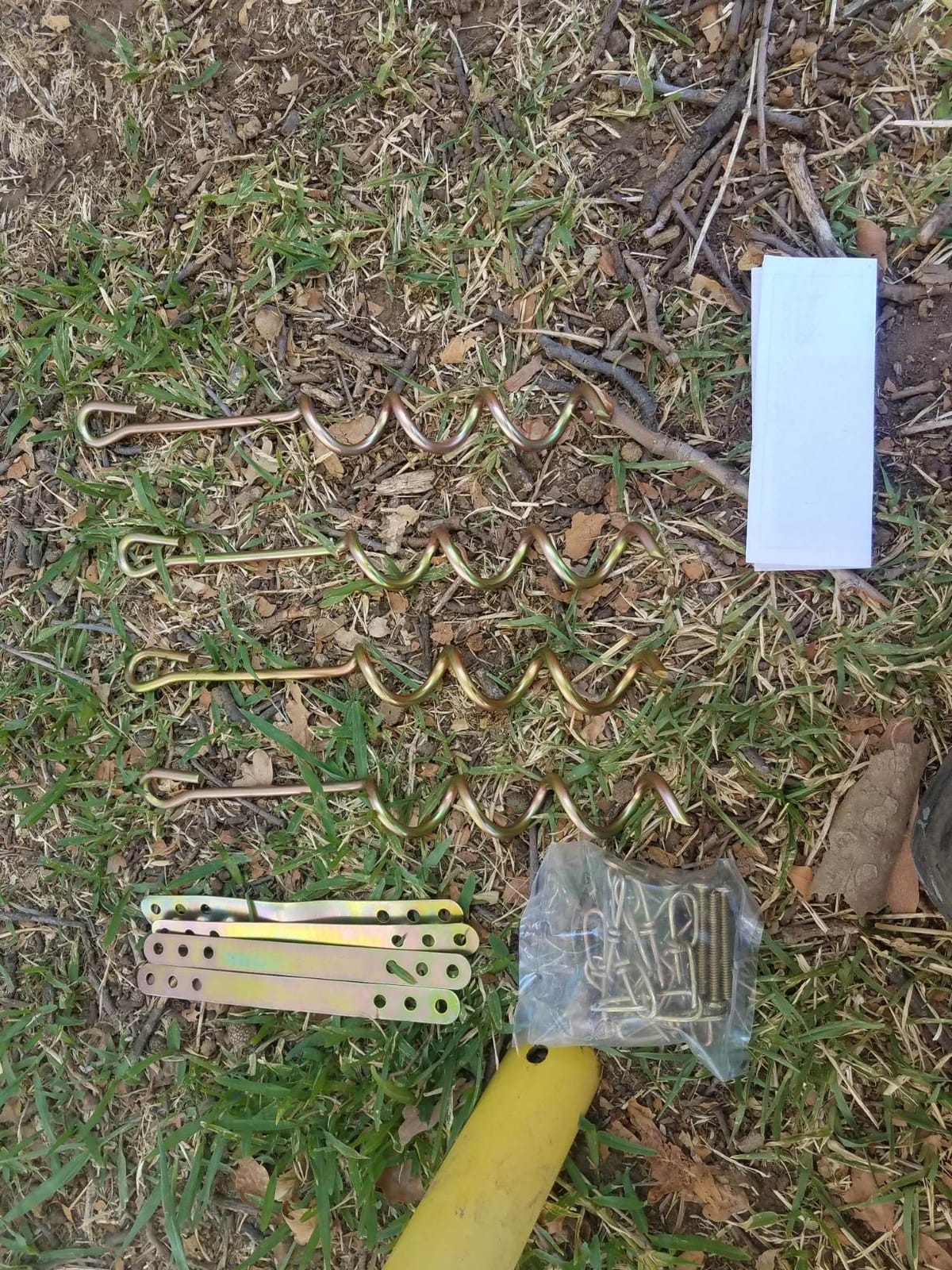
This is the kit we ended up recommending to friends with ordinary sandy yards, and the reason is unglamorous: the numbers are right. An 18 inch shank with a 2.76 inch spiral blade welded 360 degrees to a solid cast shaft gives you a bearing surface that genuinely resists the low, outward pull a swinging load produces.
Owners in the reviews describe the blades chewing through hard clay and shale with a half inch impact gun, which tells you the weld quality is real. Several also report the kit is overbuilt for a swing set and better suited to canopies and carports. We think that is a compliment to the steel gauge.
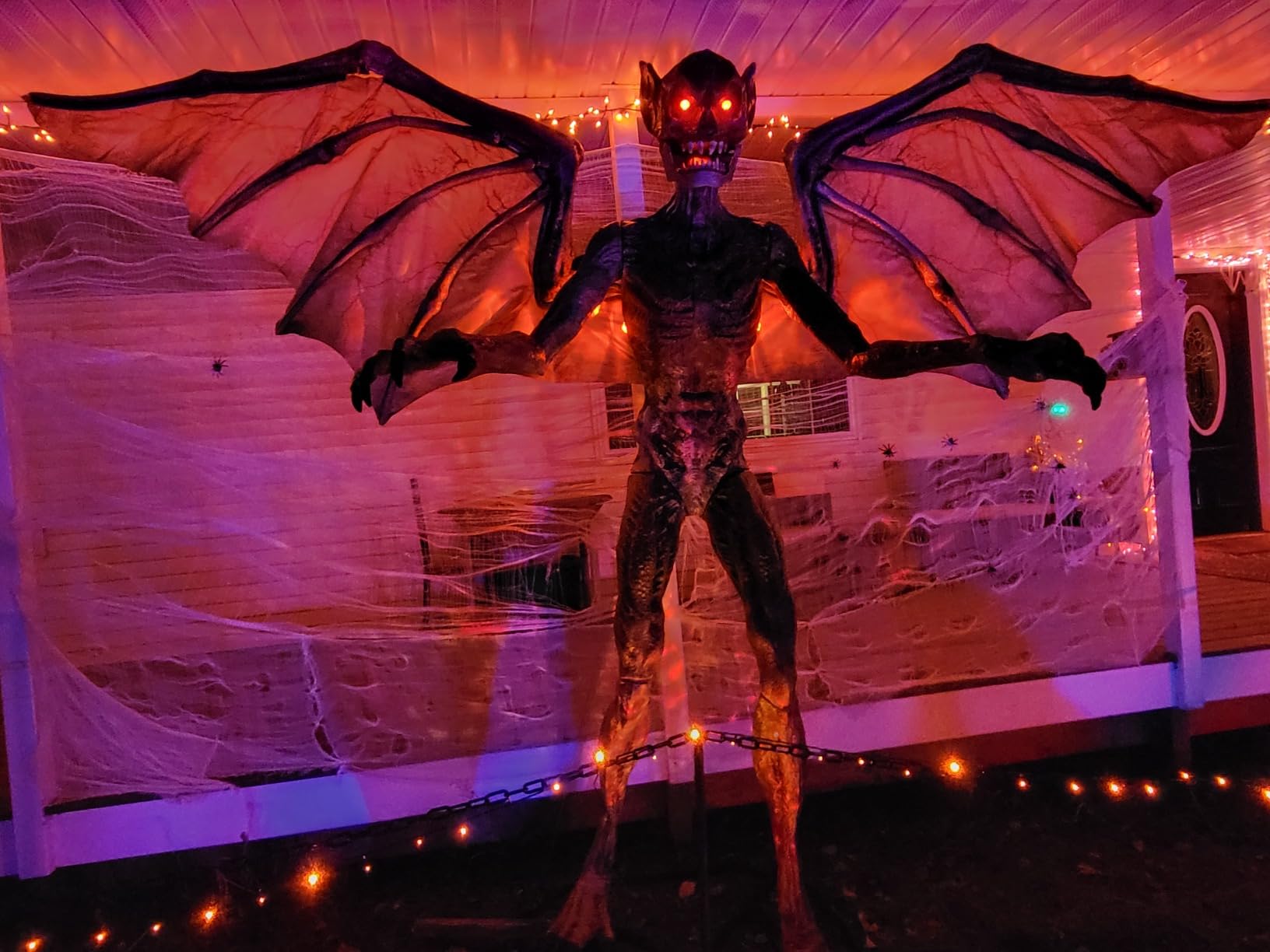
The honest weakness is sandy soil itself. Reviewers in Florida sandy ground report stakes backing out after heavy rain unless set deeper or angled away from the frame. That is a technique problem, not a product problem, and we cover the fix in the installation steps.
Check the helix before you drive it
Look at the blade from the side before installing. A full 360 degree weld with roughly one and a half turns of helix gives you more bearing surface than a cheap stake with a single flat blade stamped into the shank. If you can see daylight through the joint where the spiral meets the shaft, walk away.
Also check that the included T-handle wrench actually seats on the shank. On a sandy site the whole installation is drill-driven, so the wrench matters mainly as a backup, but a wrench that slips is a sign of a soft shank.
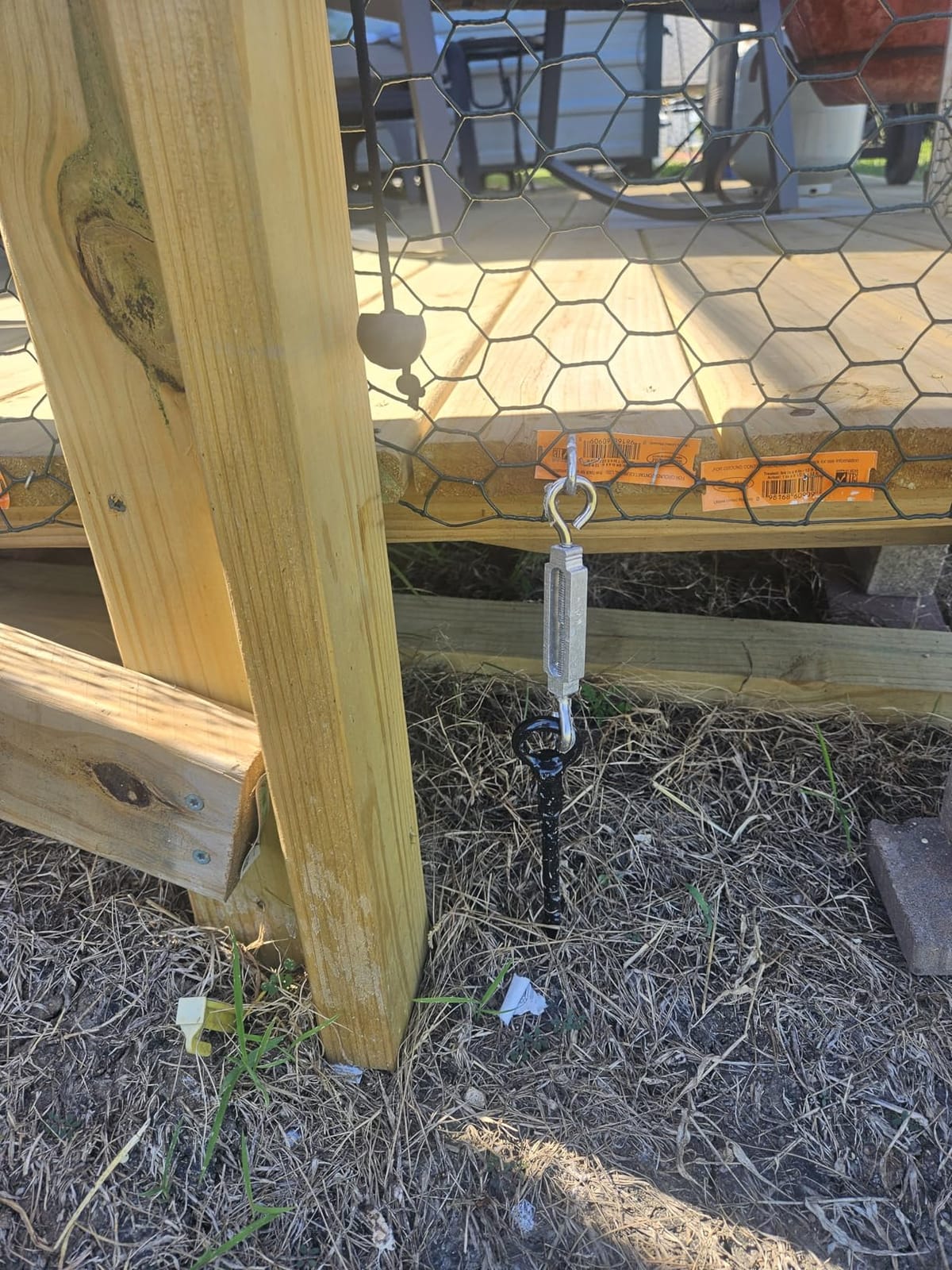
Where it struggles
Hard rock and heavy root systems are outside this kit’s design envelope, and reviewers note that forcing it into either can damage the stake or overload a small drill. If your yard is full of roots, read the hard ground pick further down instead.
Installation is described as drill-only. Hand-installing an 18 inch anchor with this much blade is a two-person job with a leverage bar, so plan on a cordless drill or impact driver rather than counting on the included wrench.
2. VASGOR 24 Inch Mobile Home Anchors – Best for Deep Sandy Ground
VASGOR 24” Mobile Home Anchors – Set of 8 Ground Anchor Screw in with Brackets and Adapter for Drill – Earth Anchors – Storage Shed and Swing Anchor Kits
24 inch length
Tested to 1000 lbs pull per anchor
Bracket adapter and screws included
4 or 8 piece kits
Pros
- Deepest anchor in the group for pure sand and fill
- Includes bracket and drill adapter so no extra hardware shopping
- Thick powder-coated steel resists rust over years
- Highest rated kit we reviewed
Cons
- Most expensive kit in the group by a wide margin
- 8 pack is overkill for a single backyard set
- Needs a capable drill or impact driver
- Specification listing is thinner than competitors
At 24 inches this is the deepest anchor we evaluated, and depth is the single variable that decides everything in a deep sandy lot. If your sand layer runs more than a foot down before it hits something firmer, an 18 inch anchor may still be floating entirely within the loose zone.
The manufacturer states these were tested to 1000 pounds of pull per drilled anchor. Treat that as a marketing claim rather than a certified figure, because no test standard is cited, but the 24 inch length and heavy gauge are the right direction for this problem.
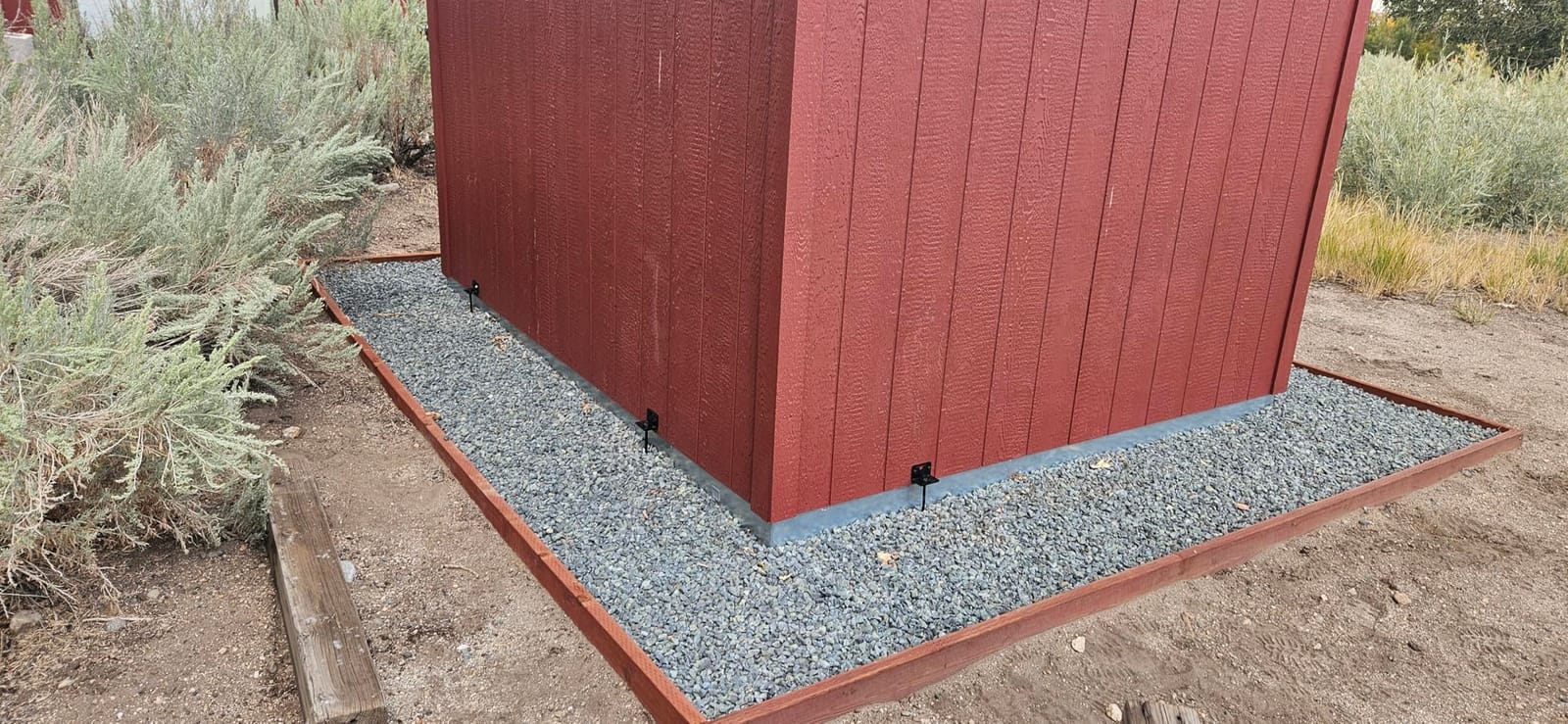
The kit arrives with brackets, a drill adapter and screws, which solves the most common complaint about cheaper kits where you end up sourcing your own attachment hardware. A one year warranty is included, shorter than some competing kits offer.
Why the length matters more than the rating
Reviewers consistently point at deep penetration as the main draw, and buyers of this kit are anchoring mobile homes and sheds, structures that face the same sand problem a playset does. Anything rated in the sand department earns its keep in a sand box too.
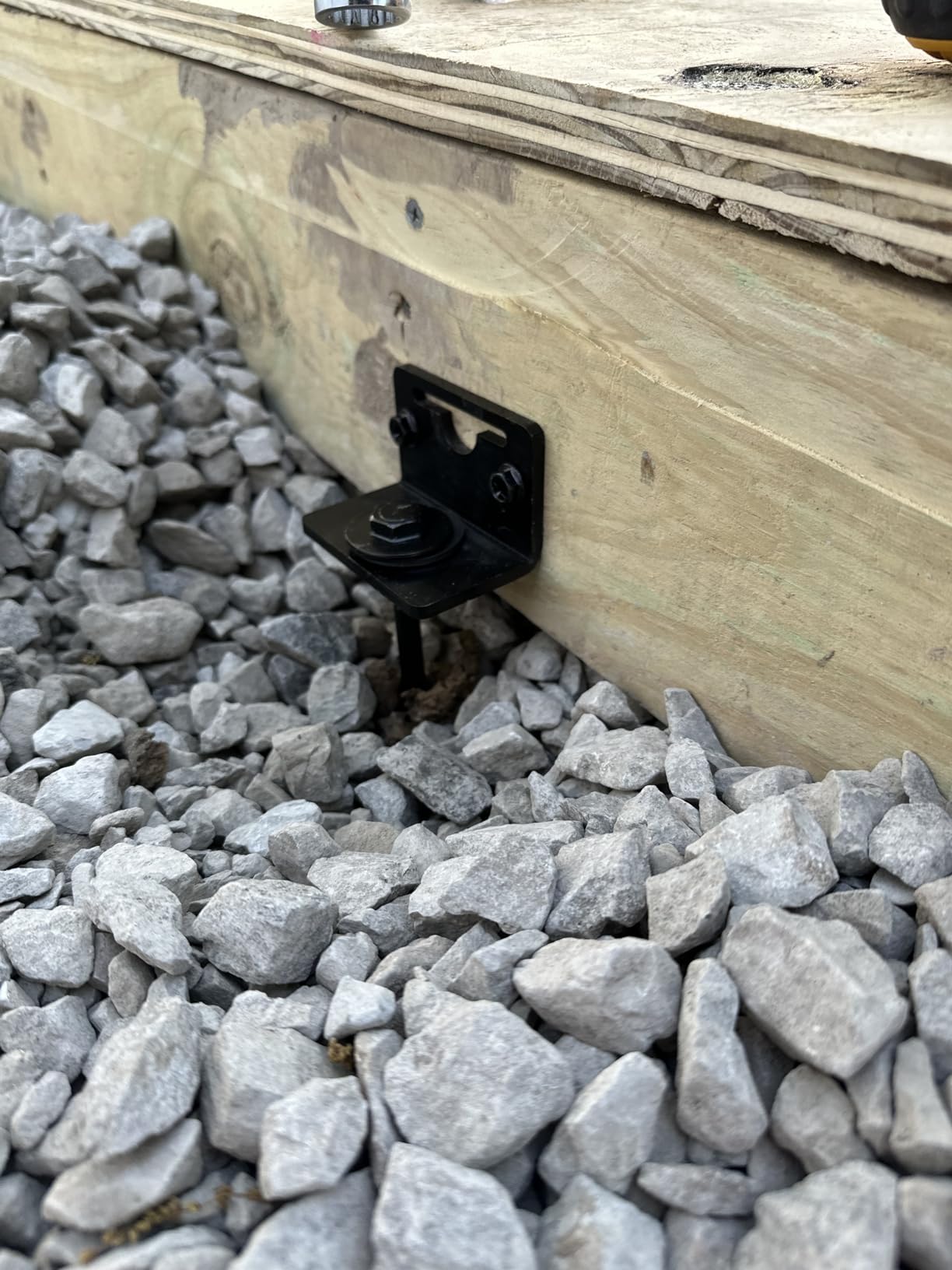
The bracket system is the detail worth studying. Instead of a simple eyelet, the leg bolts to a bracket that ties into the anchor shaft, which spreads load instead of concentrating it on a single hole that can oval out in service.
Where it struggles
Cost is the reservation buyers voice most, and it is fair. For a single backyard swing set you will not need eight anchors, and a 4 piece variant of the same 24 inch design is the version to look at.
Installation demands a capable drill or impact driver. In deep dry sand the going is easy, but the sheer length means you should check the whole depth is free of buried rock and irrigation line before you start.
3. TECH2EACH 18 Inch Dual Spiral Anchors – Best Multi-Size Helix
Ground Anchor Heavy Duty 18 inch – Earth Anchor Screw in Kit 4 Pack – Tie Down Swing Set Anchors – Auger Spiral Trampoline Stakes High Wind – Camping Carport Canopy Tent Stakes for Tree Shed Dog Sand
18 inch length
Dual 30 mm and 68 mm auger sections
Removable ring eye hooks
4.6 pound kit
Pros
- Two spiral sizes cut deeper with less turning effort
- Owners confirm reliable holding in sandy soil and high wind
- Many installers completed the job with no drill at all
- Removable ring hooks make rope and cable attachment fast
Cons
- Heavy 4.6 pound kit is awkward to carry to the far corner
- Not the least expensive 18 inch option
- Hand installation in tough soil may need a longer drive bar
- Only four fixed colour variants
This is the only kit here with two different helix diameters on one shank, a 30 mm section and a 68 mm section. That design matters more in sand than it does in clay. The smaller leading auger starts the hole and self-centres without shoving a wide blade sideways, and the larger trailing auger supplies the holding surface once the anchor is buried.
The reviews that matter most for this topic come from owners in sandy soil with high wind, and they describe the anchors as reliable in both. Several also note that they screwed these in by hand with the included drive bar and no drill at all, which is unusual at this blade diameter.
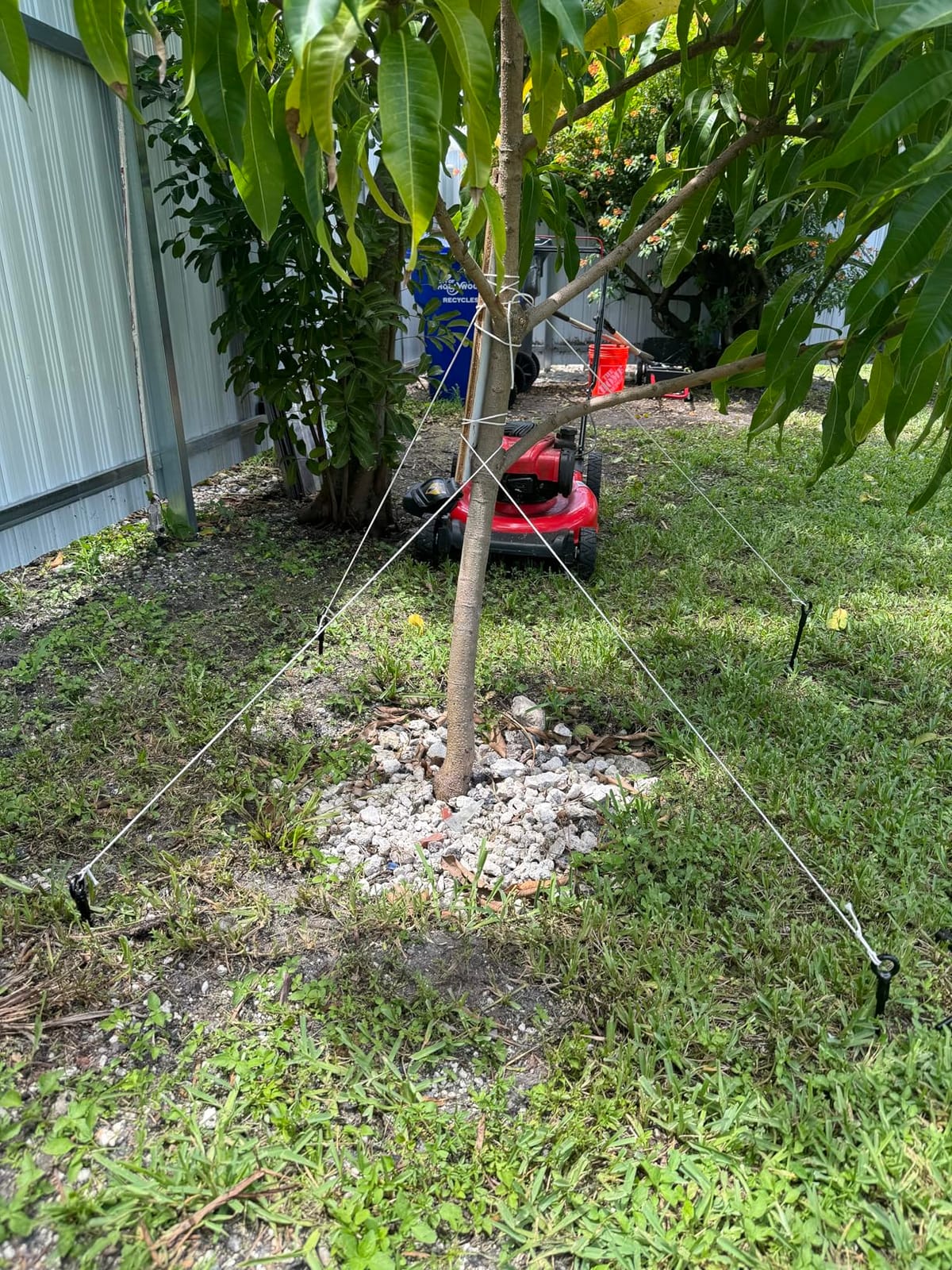
Removable round ring eye hooks come as standard, and owners like that attachment is a quick clip rather than a fixed eyelet you have to thread. The orange variant is worth considering if the play area is also a mowing area.
Why two auger sizes beat one
A single wide spiral pushed into loose sand tends to bulldoze the grain ahead of it and slip sideways. A stepped profile converts that sideways push into downward progress, which is exactly the behaviour you want in a granular soil.
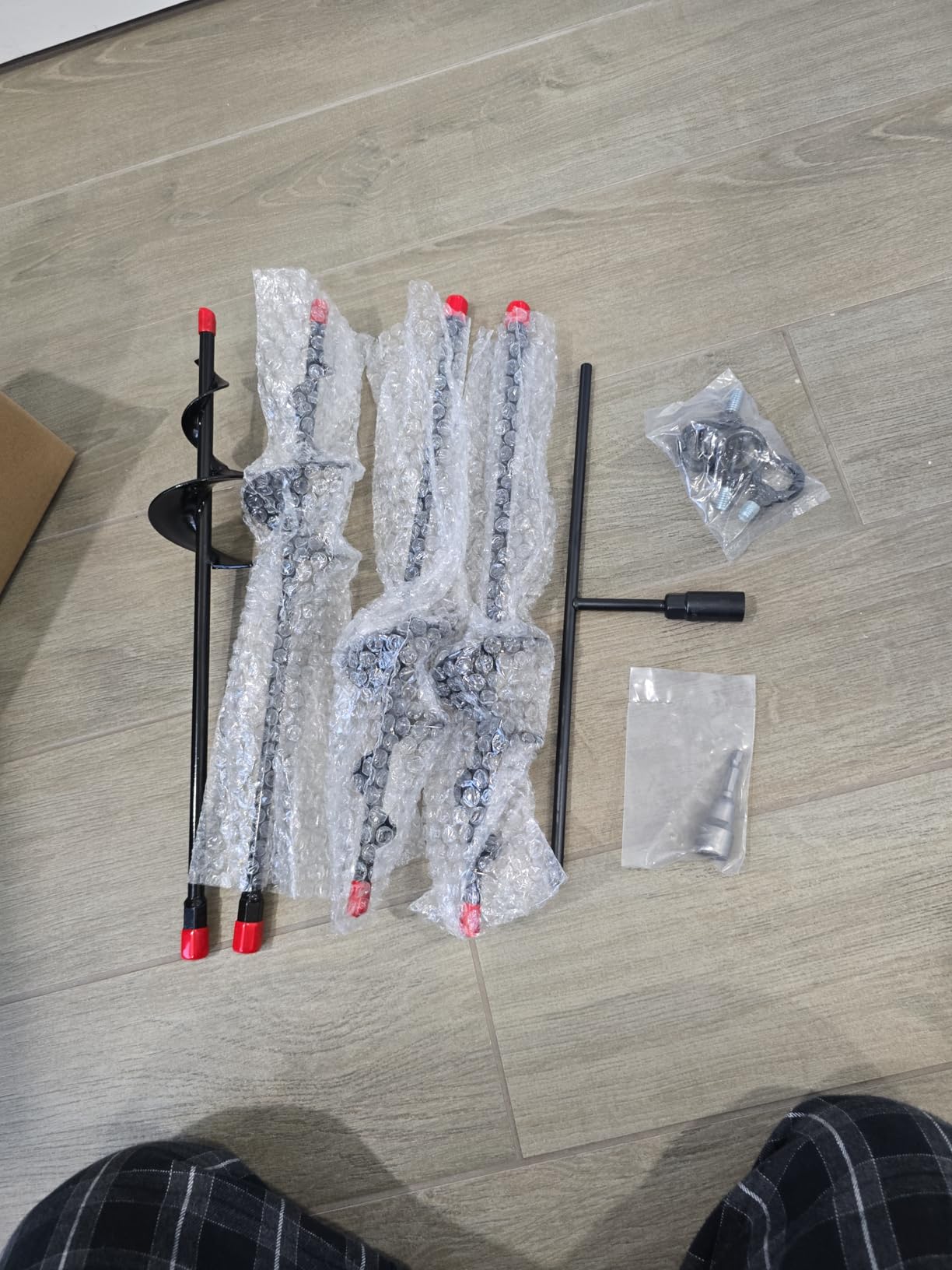
The included hex socket drill bit and long-handle T-wrench cover both installation routes. If your sand is firm enough to grip, hand driving with the long bar is genuinely quieter and lets you feel when you hit something hard.
Where it struggles
At 4.6 pounds for four anchors, this is one of the heavier kits to carry from the driveway to a back corner of the yard. It is a real consideration on a large lot with a set far from the house.
Some buyers who tried hand installation in tough soil ended up needing a longer drive bar for leverage. In loose sand that is a non-issue, but in a hard-packed coastal lot it changes the tooling plan.
4. LIFEBED 18 Inch Six Pack – Best Coverage for a Full Playset
LIFEBED 18 inch Ground Anchors Srew in Heavy Duty, Earth Shed Anchor Kit, Trampoline Stake Hook for Dirt, Swing Sets, Playset, Tent, Canopy, Carport, Mobile Home Tie Down, 6 Pack
18 inch length
3/8 inch solid steel shaft
2.76 inch helixes
6 pack
Pros
- Six anchors cover a full playset with spares
- 3/8 inch shaft resists bending on the drive
- 360 degree welds between helix and shaft
- Held two sheds through a severe windstorm
Cons
- Reviewers report poor results in loose sandy soil without concrete
- Helix is only about 1.5 turns
- Top loop can snap when driven into very hard clay
- Limited warranty and packaging detail
Six anchors is the right count for most playsets, because four legs plus spares beats discovering mid-install that you are one short. The 3/8 inch solid steel shaft is thicker than most kits in this group, and the 2.76 inch helixes match the widest blades we saw.
One owner reports holding two sheds in place through a severe windstorm, and the shaft thickness is the likely reason. Thin-gauge stakes flex under this load; a solid 3/8 inch shaft keeps the blade geometry square in the ground.
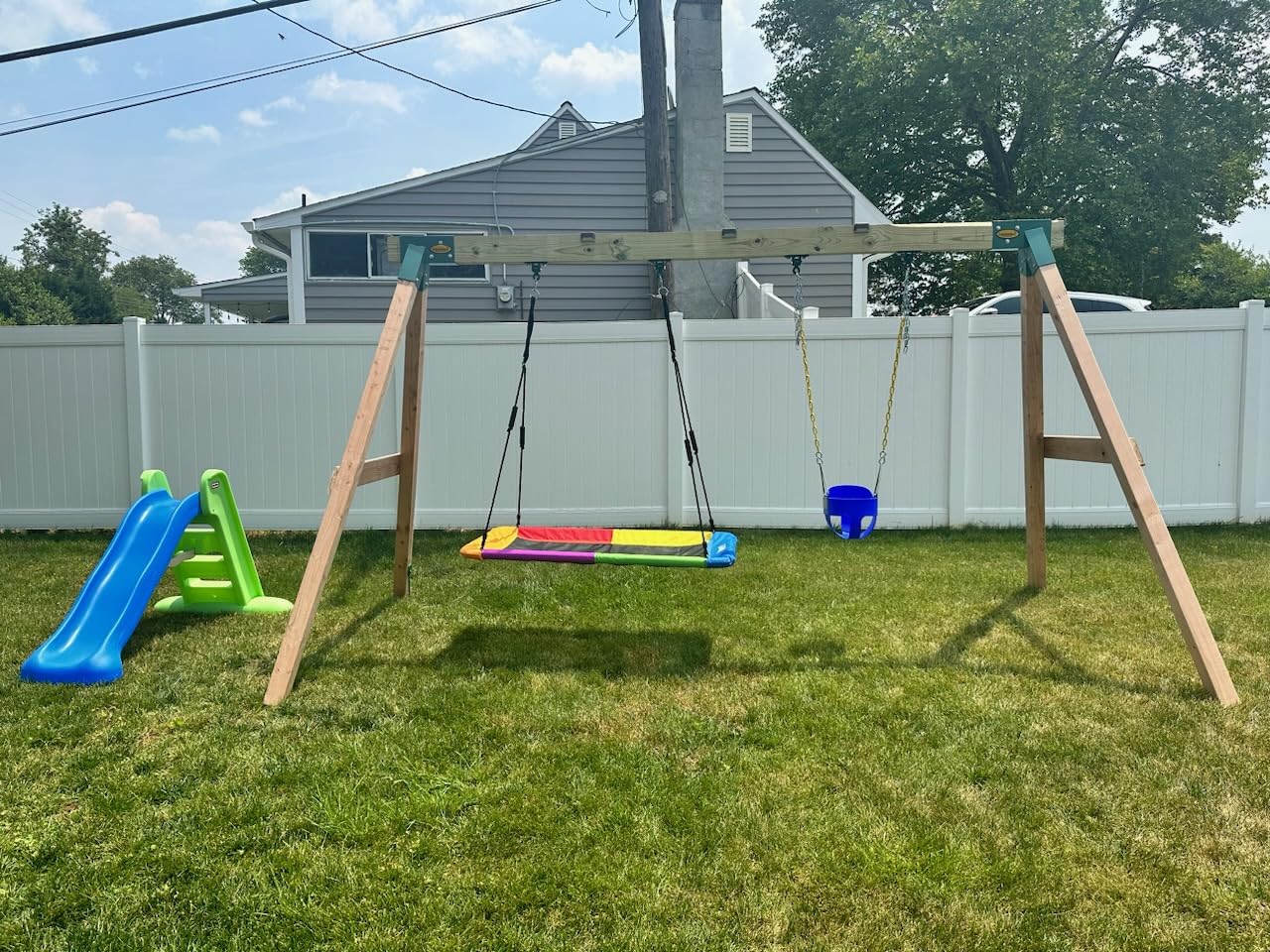
The 360 degree welds and black anti-rust coating are sensible for outdoor life. Reviewers also use these for greenhouses and chicken runs, so the corrosion finish is being tested outside the swing set niche.
Why the shaft thickness is not a marketing number
Helix geometry only performs if the blade stays in plane. A thin shank twists under a drill or a drive bar, so the blade ends up ploughing at an angle and the anchor ends up shallower than you think it is. Thicker shank, more predictable depth.
Check the finished depth with a tape measure after driving, not by counting turns. In sand the answer you need is inches below grade, and only measurement confirms it.
Where it struggles
The most common criticism across reviews is sandy ground specifically, where some owners had to backfill with concrete to get satisfactory performance. That is exactly the condition this article is about, so read it as a caution rather than a footnote.
The helix runs about one and a half turns, which is less bearing surface than some rivals at the same length. Reviewers also report the top loop snapping when driving into very compact clay with a drill, so keep the impact setting low.
5. Qimshemi 18 Inch Anchor Kit – Best With Straps Included
Qimshemi 18-Inch Ground Anchors Screw In Heavy Duty, 4 Pack Trampoline Anchors & Stakes High Wind With Wrenches And Straps, Earth Anchors Kit For Swing Sets, Sheds, Camping Tent, Canopies, Mobile Home
18 inch length
2.5 inch spiral blade
Straps and socket wrench in box
4 pack
Pros
- Straps ship in the box so nothing else needs sourcing
- 18 inch engagement handles loose ground better than shorter kits
- Precision-welded blade for stability in sand and snow
- Owners report holding trampolines through storms that downed trees
Cons
- Included cloth straps snapped in a windstorm
- Included drill bit did little in hard wet clay
- No instructions in the box
- Lowest five-star share of the kits we reviewed
Almost every competing kit includes only anchors and a wrench and leaves the tie-down to you. This one also has straps, which removes the single most common reason people finish a job with anchors installed but nothing actually connected to the frame.
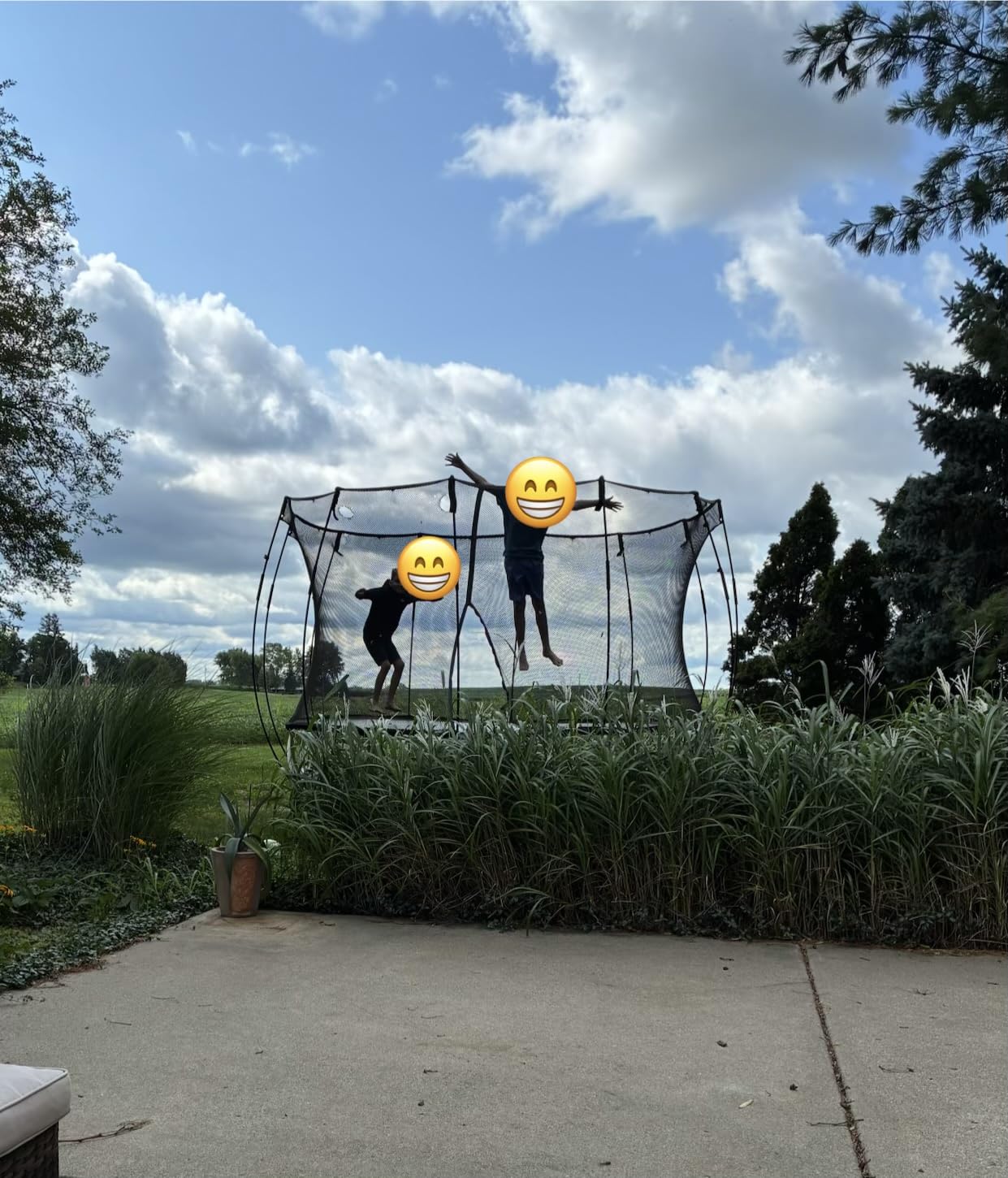
The anchor itself is a solid steel screw-in design with a 2.5 inch spiral blade at 18 inches, which places it squarely in the range that works in sand. Reviews report holding trampolines and greenhouses through storms that took down larger trees.
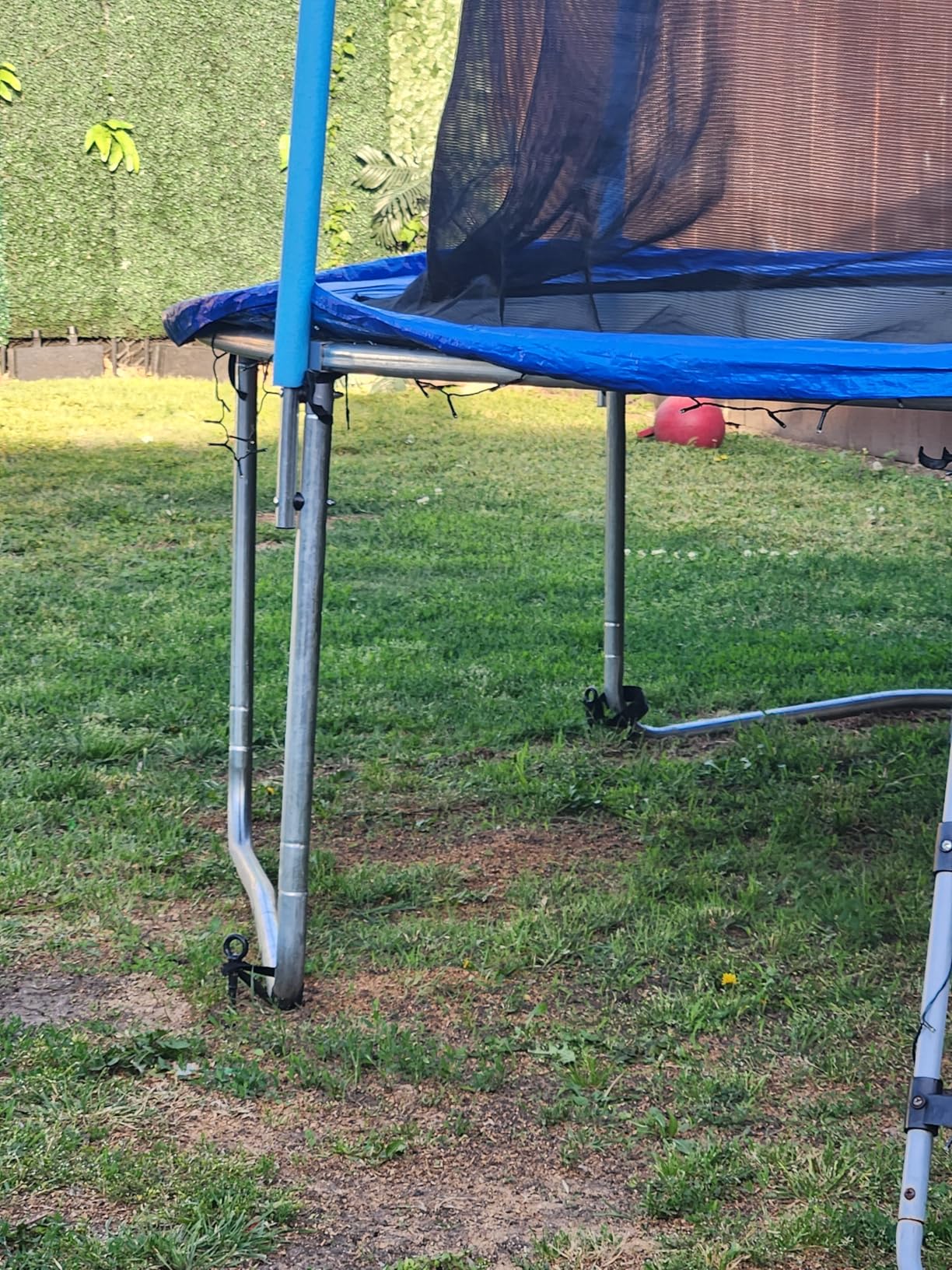
Removable rings plus straps make the connection quick, and the 4.3 pound weight is typical for an 18 inch steel kit. The alloy steel construction is listed as the material, with a six month manufacturer warranty.
What the straps are and are not for
Straps tie the anchor to the leg and prevent the vertical lift component of a swinging load. They are not a substitute for a stabilizer bar, which resists the lateral sway of the whole frame. Many owners find they need both.
Treat cloth straps as the consumable part of the system. Inspect them at the start of each season and replace any that have frayed or stretched, because a strap that snaps under load takes the anchor with it.
Where it struggles
This kit carries the lowest satisfaction mix of the ten we reviewed, with a lower share of five-star ratings and a higher one-star share than the others. The complaints cluster around the accessories rather than the anchors.
Specifically, the included drill bit reportedly did nothing in hard waterlogged clay, and the included cloth straps snapped in a windstorm. If you own an impact driver, ignore the supplied bit. If you rely on cloth straps in a windy site, buy steel wire rope instead.
6. XDP Recreation 12.75 Inch Auger Anchors – Most Reviewed Kit on Our List
Swing Set Ground Anchors – 4pcs Metal Auger-Style 12 3/4″ ea. Easy Assembly
12.75 inch length
1/4 inch spiral steel
4 pack with hardware
1.9 pound kit
Pros
- Most reviewed anchor kit we evaluated by a wide margin
- Proven through hurricanes and severe wind events
- Multiple attachment holes fit various set types
- Works with XDP sets and 2 inch diameter tubing
Cons
- 12.75 inch length is short for deep loose sand
- Thin gauge steel can bend in hard clay or rock
- Included straps can wear under sustained storm loading
- Limited attachment instructions
With well over seven thousand reviews, this is the most proven kit in the category, and plenty of owners report it held through hurricanes and severe wind. Multiple attachment holes let you use the same anchor across different set brands and across outdoor furniture and trellises.
Here is the problem for sandy yards. At 12.75 inches with a quarter inch spiral, it is the shortest and thinnest anchor on this list, and the reviews themselves flag that the steel can bend or twist during installation, especially in hard soil.
That is why we ranked it sixth rather than first. On a firm sandy lot with a shallow loose layer it will do its job. On a beach lot with deep fill, you want a longer, wider blade and a thicker shank. The listed maximum weight recommendation is 250 pounds.
The bronze powder coated finish and a 180 day limited warranty are both modest, and the instruction sheet is thin on how to attach the strap to the leg.
When this short anchor is still the right call
If your sand layer is under about 8 inches deep, you gain very little from a longer anchor and you lose hand tool options. Many of the reviews describing successful installs are exactly this scenario, shallow sand over firm ground.
The 1.9 pound weight is the lightest here, which matters if you have a small set, a short A-frame, or you expect to move it. That portability is a genuine reason to pick it.
Where it struggles
Hard clay and rock are the documented failure zone. Reviewers repeatedly advise pre-soaking the hole and advancing slowly, and several report bending the shaft rather than advancing it.
For deep sand it is simply the wrong geometry. If your ground is loose more than a foot down, spend the extra money on a longer anchor rather than hoping this one reaches subsoil.
7. Phopich 15 Inch Spiral Anchors – Best for Firm Sand Near the Water
Ground Anchor Screw in, 4 Pack Spiral Trampoline Anchors with Nut and Tool Swing Set Anchors Tent Stakes High Wind Heavy Duty for Sheds, Carports, Mobile Home Black
15 inch length
40 mm wide blade
2.21 mm blade thickness
Folding ring top
Pros
- Full spiral blade drives in about 10 seconds with a drill
- Folding ring sits nearly flush so you can mow over it
- Bright variants are easy to spot while mowing
- Carries the drill bit T-handle wrench and a carry bag
Cons
- Dry loose sand without compaction gives less holding resistance
- Larger rocks can stop or deflect installation
- No straps or tie-down hardware included
- Heavier price than comparable kits
The best scenario for this kit is firm or damp sand near a waterline, where the grains are held together by moisture and the blade gets something to bite against. Reviewers note beach use works best where the sand is firm or close to the water.
The blade measures 2.21 mm thick and 40 mm wide over a 15 inch length, and the top ring design is the feature reviewers credit for pull-out resistance. That ring adds a bearing surface at the collar rather than relying on the blade alone.
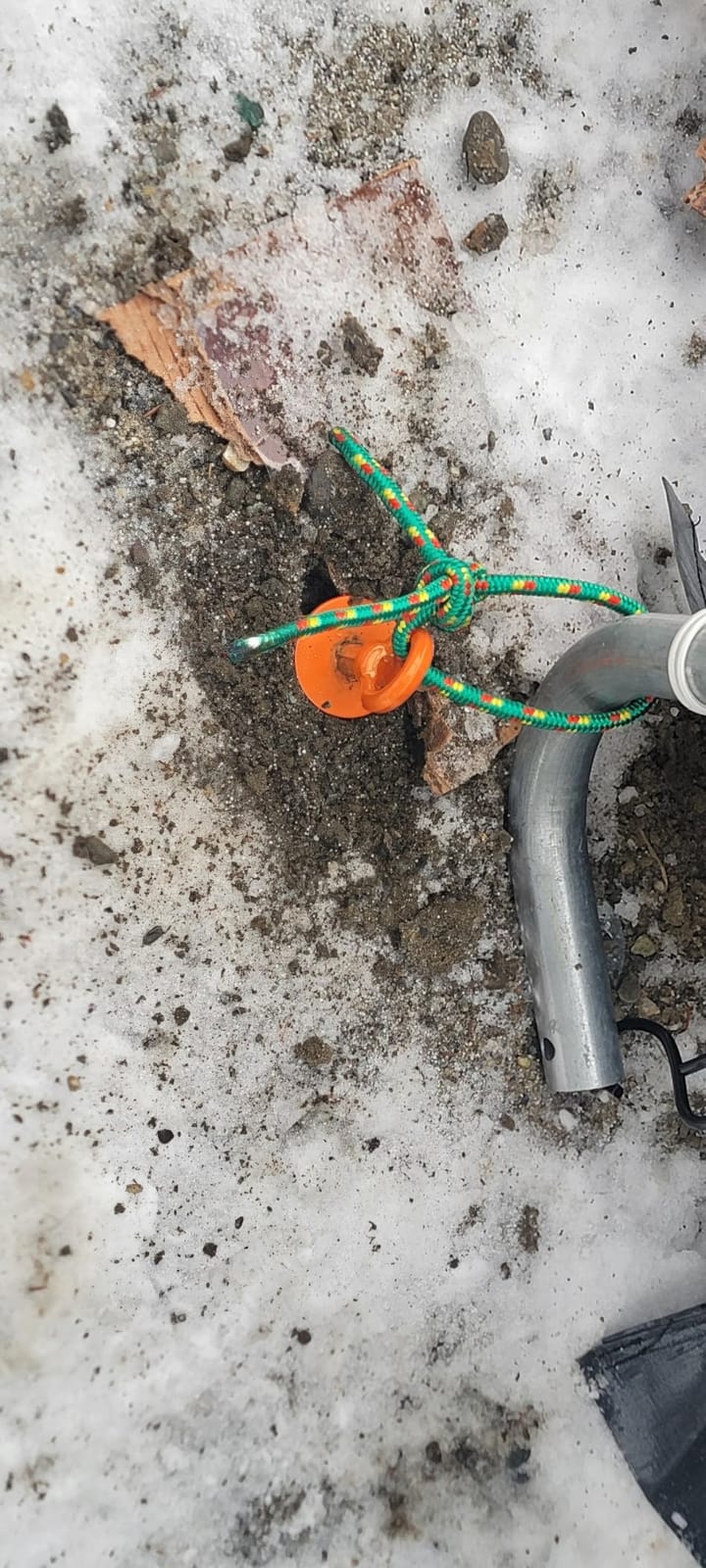
Installation with the included nut driver takes roughly ten seconds per anchor, which is the fastest here, and the carry bag is a small touch that matters when you are walking them across a yard. Orange variants are available if visibility matters.
Why a folding ring matters in sand
A raised eyelet catches sand and becomes an anchor point for a crabgrass tuft within a season. A ring that folds flat sits at grade, so the collar stays free of debris and the anchor can be mown over without snagging.
In a play area this also reduces a trip and cut hazard, which is worth remembering because loose-fill surfacing is usually installed after anchoring.
Where it struggles
Dry loose sand with no compaction is the weak case, and that is exactly what a playground under play-area sand often looks like after a season. If that describes your yard, go longer or stabilise the surrounding soil.
Rocks also stop or deflect the blade during installation, and no tie-down hardware is included, so you will need your own straps or wire rope to connect anchor to leg.
8. PAMAZY 15 Inch Ground Anchors – Best for Hard Clay and Rock
[Premium] 4PCS Ground Anchors Screw in & Power Nut Driver, Swing Set Anchor
15 inch length
2.16 mm spiral blade
Domed top cap
4 pack with tip caps
Pros
- Thick spiral blades let soil and rock pack into the coils
- Domed top cap adds pull-out resistance
- Installs in about 10 seconds per stake even in hard clay
- Powder coated solid steel resists rust and warping
Cons
- Not reliable in sandy soil without pre-digging or concrete
- Can loosen in waterlogged ground over a season
- Included bit is thin for very hard or rocky soil
- Costs more than generic kits of the same length
This is the kit we would pick if your sandy yard is underlain by hard clay or rock, because the thickened spiral and the domed top cap are built to resist exactly the conditions that stop other anchors. Reviewers report a rigid hold with no give in hard and dry rocky ground.
Beach tests in compact sand performed well too, which is the relevant data point. The failure reports are specific: sandy and waterlogged yards where the anchors pulled loose over a season.
![[Premium] 4PCS Ground Anchors Screw in & Power Nut Driver, Swing Set Anchor customer photo 1](https://marchforsciencesv.com/wp-content/uploads/2026/10/B0CJY5SCCR_customer_1.jpg)
Detachable eyelets and protective tip covers are both practical touches. The tip covers matter more than they sound, because a 15 inch steel point left exposed in a play area is a genuine hazard to bare feet and to dogs.
Where the domed cap earns its place
When an anchor starts to back out, failure happens at the collar where the shank meets the surface. A domed cap creates a wider bearing shoulder at that exact point, so the sand has to be displaced upward and outward rather than simply released.
This is a cap trick, not a depth trick. It buys you a season on marginal ground, not a permanent fix, so pair it with real depth and stabilised backfill.
![[Premium] 4PCS Ground Anchors Screw in & Power Nut Driver, Swing Set Anchor customer photo 2](https://marchforsciencesv.com/wp-content/uploads/2026/10/B0CJY5SCCR_customer_2.jpg)
Where it struggles
Owners in sandy soil report needing extra measures such as pre-digging and setting in concrete. If avoiding concrete is your priority, this is not the kit, and we would not pretend otherwise.
The included nut driver bit is thin for very hard or rocky soil, and some installers switch to a 14 mm socket instead. Waterlogged ground is the other documented weakness, with anchors loosening over a season.
9. FEED GARDEN 15 Inch Orange Anchors – Best for Visibility Around a Mowing Area
FEED GARDEN Ground Anchors Screw in Heavy Duty, 4 Pack 15 Inch Spiral Earth Anchors for Trampoline Anchors High Wind, Swing Set Anchors, Tent Stakes, Dog Tie Out & Canopy Stability, Orange
15 inch length
2.2 mm blade at 1.6 inch wide
Folding ring
Orange 4 pack
Pros
- Large spiral blade grips loose soil where thin stakes pull out
- Folding ring flattens for mowing or tucks under mulch
- High visibility orange is easy to spot and avoid
- Includes both a 14 mm nut driver and a T-handle wrench
Cons
- Stops at 15 inches so it is shallow for very soft deep sand
- Performance drops in rocky or waterlogged soil
- One anchor broke on a buried hard object
- Dry cracked hard clay can need pre-wetting
The reviews here single out loose backyard soil as the place this kit wins, with owners noting it holds where cheaper screw-in stakes pulled straight out. The blade is 2.2 mm thick and 1.6 inch wide over a 15 inch length, a solid combination for granular ground.
The orange colour is not cosmetic for this product. If your play area doubles as a mowing strip, a bright anchor head is the difference between spotting it and discovering it with a mower deck.
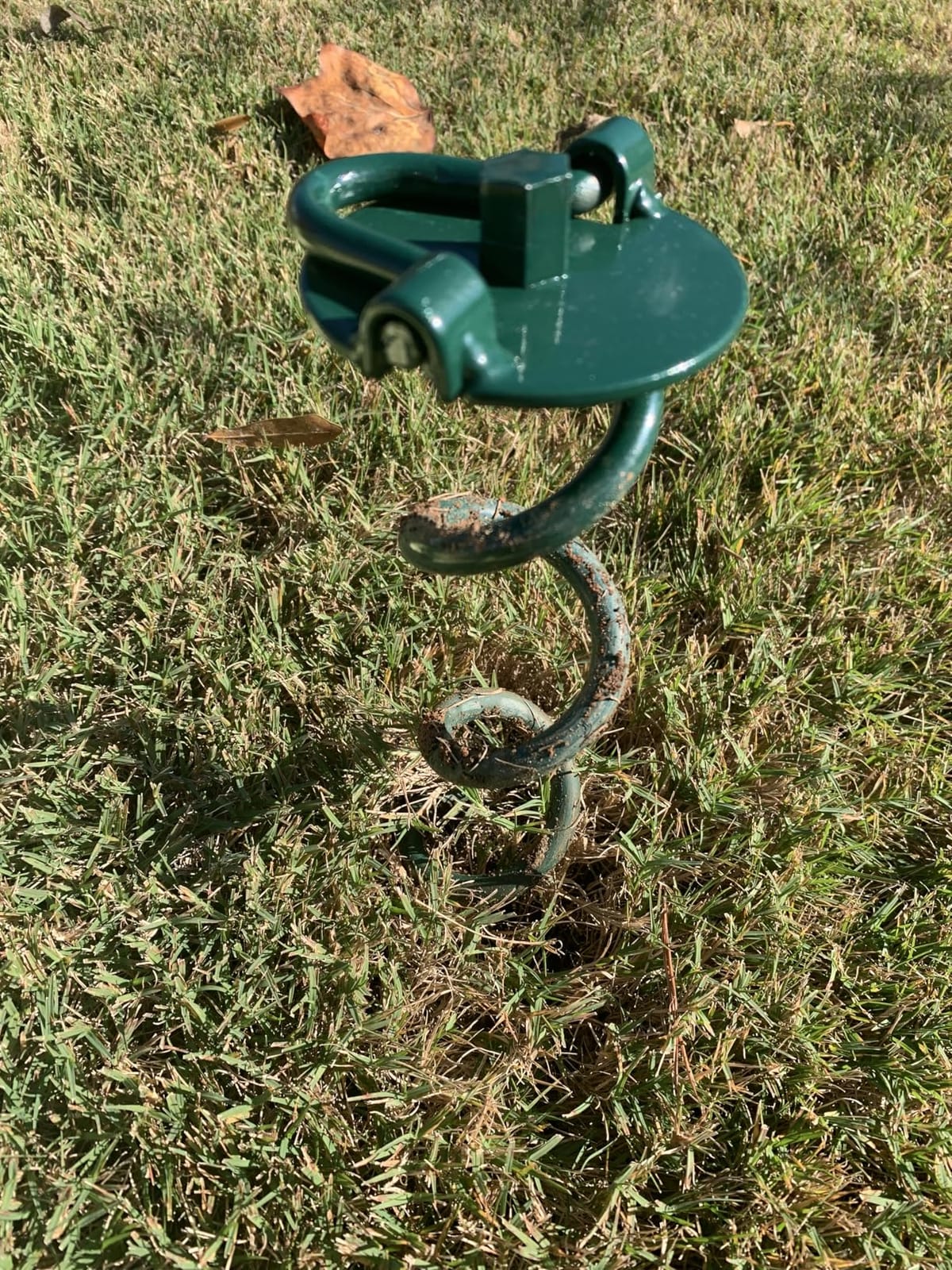
One owner reports the anchors held a trampoline steady through a windstorm that uprooted trees and blew down fences. Both the nut driver and the T-handle wrench are in the box, which removes the usual tooling decision.
Read the folding ring detail carefully
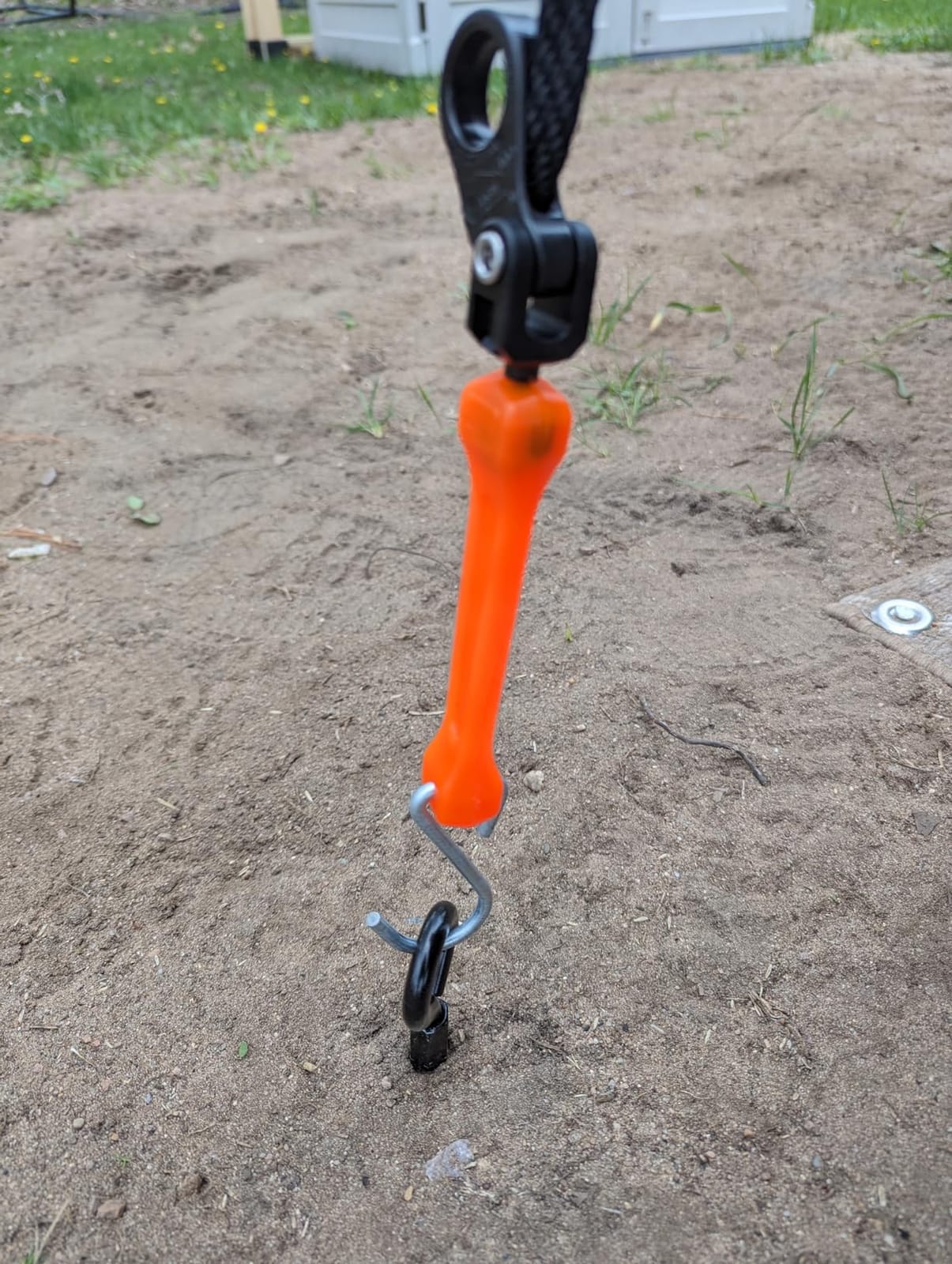
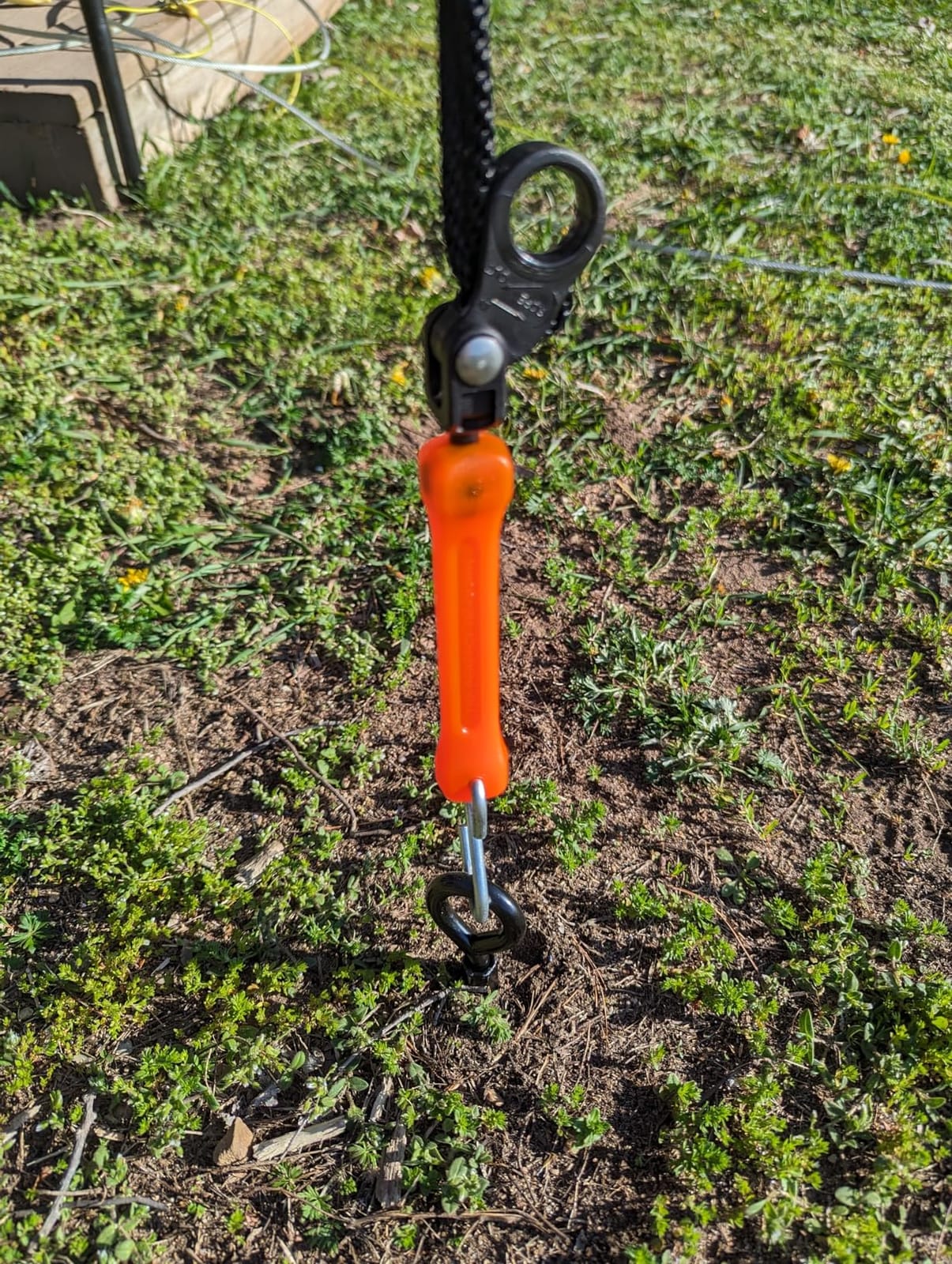
The ring folds flat so it can be mown over or hidden under soil and mulch, and it also stops cable tangling. On a loop of cable around a trampoline or set leg, tangling is a recurring complaint with fixed eyelets.
Fold the ring before you backfill rather than after. Once the collar is packed with sand or covered with play sand, the ring is much harder to fold and you will leave it standing proud.
Where it struggles
At 15 inches it stops shallow compared with the 18 inch kits, which makes it a poorer choice for very soft or deep loose sand. This is the honest limit of the design, not a defect.
The manufacturer notes reduced performance in extremely rocky or waterlogged ground, one reviewer broke an anchor on a buried hard object, and dry cracked hard clay can need pre-wetting before the blade will advance.
10. Pamofuper 14 Inch Ground Stakes – Most Versatile for Compact Ground
Ground Anchors Screw in Trampoline Anchors Heavy Duty Ground Stakes
14.2 inch length
Detachable ring buckle
14 mm drill socket included
Anti-rust coated steel
Pros
- Spiral blades punch into hard rocky frozen and gravel ground
- Drives in quickly with the supplied 14 mm socket
- Detachable ring buckle resists strong pull and wind loads
- Anti-rust coating extends outdoor service life
Cons
- 14 inch length is short for loose or deep sandy soil
- Listing shows a single count so verify the quantity
- No straps included
- Overweight for a light duty swing set
This is the budget entry, and its strength is hard ground rather than sand. Reviewers describe spiral blades that punch through rocky and hard soil with a drill and produce a very rigid hold with no give, which is why the kit is popular for tar tents, canopies and sports equipment.
At 14.2 inches with a detachable ring buckle, it is the shortest anchor here and the least suited to a genuinely sandy lot. The buckle attachment is well reviewed, with users preferring it over fixed eyelets for ease of threading rope.
Be aware that the listing describes the pack as a single count in places, so confirm the quantity before ordering. You will need at least four for a standard playset.
When the short length genuinely does not matter
If your sand layer is thin and you have firm subsoil within about 8 inches, the extra 4 inches an 18 inch anchor buys you are not worth an extra purchase. The rigid hold this stake provides in firm ground is real.
For a small toddler swing on a level, sheltered patch with firm ground underneath, this kit does the job at the lowest outlay of the ten we reviewed.
Where it struggles
The 14 inch length is the core problem in sand. Reviewers list short length for loose or deep sandy soil as a direct weakness, and that matches our own read of the geometry.
No straps are included, so you will source your own tie-downs, and some users find the weight more than a light duty set needs. Check quantity carefully before you order, because that listing ambiguity causes real problems.
How to Install Swing Set Anchors in Sandy Soil
The installation is the part that decides whether a good anchor holds. Ten anchors of decent geometry will still fail in sand if you drive them straight down, at the wrong depth, into ground you disturbed while installing.
Mark the leg positions and clear the collar. Remove loose fill, play sand and mulch from a ring around each leg down to about 6 inches below grade. You want the anchor collar working against native soil, not against 8 inches of play sand.
Pre-wet or pre-compact the hole area. Lightly dampen the sand or tamp the collar with a 4 by 4 post. This is the fix for the twisting problem described on
r/HomeImprovement: you stop destabilising the grains before you drive the blade.Check for obstructions below the full depth. Before you drive, probe with a long rod or an iron bar. Buried irrigation line and drainage are common in new construction lots and sandy coastal yards.
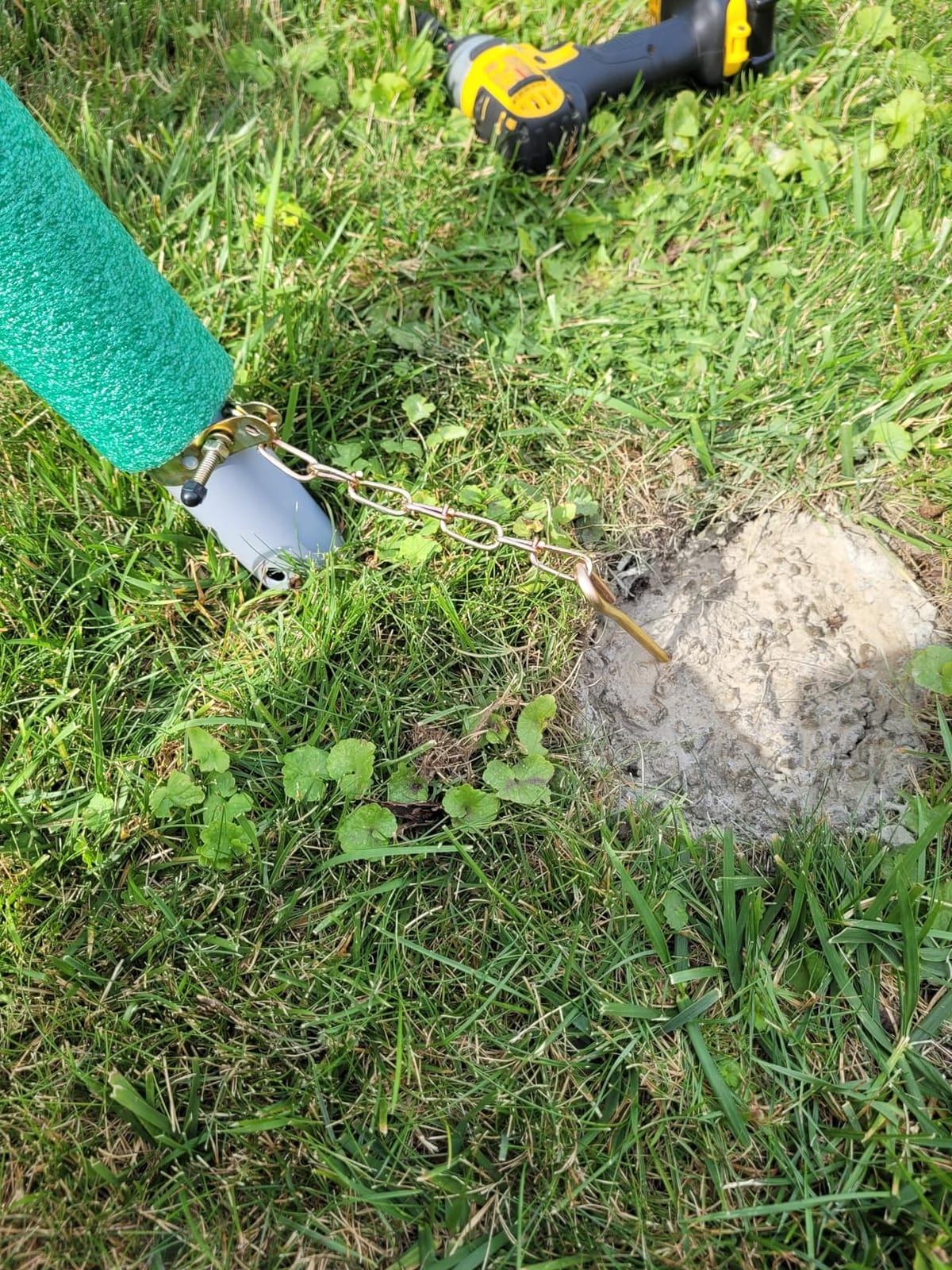
Drive the anchor at roughly a 45 degree lean toward the frame. The blade bites in the firm layer while the collar sits against the leg, and any pull force loads the shank rather than levering the anchor straight up and out.
Confirm depth with a tape measure. You want the top collar at grade and the uppermost helix buried at least 12 inches, with more margin if the sand layer is deep. Count turns only as a rough guide, never as a substitute.
Pack and stabilise the collar. Backfill with the excavated material, then tamp it. A short collar of tamped clay or a paver base collar around each leg makes an ordinary auger behave considerably better in sand.
Attach with steel where possible, then fit stabilizer bars. Bolt or strap the leg to the anchor collar, add A-frame stabilizer bars or sway braces, and check the whole frame for movement before anyone swings.
Two extra steps matter in exposed or coastal sites. Anchor the top beam as well as the legs, because a set pivoting at the A-frame is the failure mode that overturns an otherwise well anchored frame. And if you sit loose-fill surfacing over the area afterwards, keep a consistent depth across the whole fall zone so the surfacing itself performs as designed.
Swing Set Anchor Buying Guide: What Actually Matters in Sand
Anchor architectures compared
Five anchor types exist in the residential market. Spiral augers dominate, because they are cheap, fast and available in a genuine range of lengths. Duckbill earth anchors are the theoretical answer for loose sand. Concrete piers are the permanent answer. Stabilizer bars are not an anchor but they change the load path. Plain stakes are for shade cloth, not for swing sets.
A spiral auger converts torque into downward travel, so a fully welded spiral with at least one and a half turns and a blade at least 1.6 inches wide is the baseline. Anything narrower is a tent stake. A duckbill anchor gives the highest pull-out resistance of any non-concrete option because its flared blade is driven down once and then locks on a straight pull, but it needs a drive rod and a pilot hole, which is why you rarely see one sold as a swing set kit.
Length is the first number
For loose sand, 18 inches is the practical floor for a residential set and 24 inches is better where the sand layer is deep. A 14 inch anchor is a compromise you can only accept when firm subsoil sits close to the surface. Most premature failures trace back to an anchor that never reached subsoil.
Two secondary numbers matter. Helix diameter of 1.6 inches or wider gives more bearing surface in loose grain, and shank thickness around three-eighths of an inch stops the blade twisting out of plane during installation.
What included hardware tells you
A kit with a drill nut driver, a T-handle wrench and straps or a carry bag signals a manufacturer who has actually installed the product. Kits that ship only an anchor and nothing else are usually built down to cost. The box contents are a decent proxy for how the product performs in the field.
On windy sites the relevant standard is the ASTM F1148 reference in the CPSC Public Playground Safety Handbook, which treats secure and stable footing as a baseline requirement rather than an upgrade. Coastal yards deserve attention too: check whether the finish is powder coated or hot-dip galvanized, since corrosion ends more anchors in sand than pull-out does.
Duckbill earth anchors, and why no kit ships them
A duckbill is a tapered shank with a flared blade that folds flat for driving and locks open once buried. Once the blade opens, it can only pull in line with its own axis, which is why it has the highest pull-out resistance of any non-concrete anchor in loose granular soil. Theory clearly favours it for sand.
The practical reason it never appears in a swing set kit is installation. You need a drive rod, a pilot hole, and a hammer, plus a predrill in hard ground. For a homeowner with four legs to secure and an afternoon, a screw-in auger is the better trade, and that is why every kit we reviewed is an auger.
Stabilizer bars and sway braces
A stabilizer bar is an A-frame brace that ties the two legs of a swing set together and widens the footprint. It does not touch the ground, so it is not an anchor, but it converts lateral sway into a load the anchors can actually resist. On sandy ground the cheap add-on frequently beats a better anchor, because it removes the movement that walks anchors loose in the first place.
When Concrete Is the Right Answer in Sand
Most guides tell you concrete is for hard ground and anchors are for sand. That is backwards for two specific cases, and pretending otherwise is how people end up with sets that drift across the yard.
Concrete wins when your sand layer is deep new-construction fill with no reachable subsoil, and when the water table is high enough that the lower soil is saturated and cannot be compacted around an anchor. It also wins when the set sits under loose-fill surfacing that you will not dig up, or when you want a pier you can build a deck beam onto later.
For everything else, a properly installed auger is easier, removable, and plenty strong. If you do pour, use a fast-setting anchoring concrete rather than a standard mix so the leg is plumb and level within the working time.
Coastal Yards: Corrosion Ends More Sand Anchors Than Pull-Out
On a beachfront or lakeside property, salt spray does more damage than load. Powder coated finishes hold up well for a few seasons. Chrome plated steel fails sooner. If you see bare steel at a weld or a cut end, that is where the section will start, regardless of how it was driven.
Rinse anchors with fresh water a couple of times a year, inspect the collar where the shank meets the surface, and replace any anchor that shows section loss at the exposed length. This is cheap maintenance and it is the difference between a ten year anchor and a three year one.
Frequently Asked Questions
What are the best anchors for sand?
For sandy soil, the best anchors are fully welded spiral augers at 18 inches or longer, ideally 24 inches in deep fill, installed leaning back about 45 degrees toward the frame so the pull loads the shank instead of levering the anchor out. Look for a helix blade at least 1.6 inches wide and roughly 1.5 turns, a shank near three-eighths of an inch, and stabilizer bars on the A-frame legs. Concrete is the better answer only when the sand layer is deep fill with no reachable subsoil or the water table is high.
Which anchor is best for anchoring in sand?
A 24 inch spiral screw anchor with a deep helix is the best single answer for anchoring in sand, because embedment depth is what determines pull-out resistance in granular soil. Sand has almost no shear strength, so the anchor resists load mechanically by bearing against a stable envelope of soil. Install it leaning back around 45 degrees toward the frame, confirm 12 inches of upper helix is buried, and pack the collar with tamped material. Add stabilizer bars so the frame does not sway and walk the anchors loose.
Do duckbill anchors work in sand?
Yes. A duckbill earth anchor is the theoretically best anchor for loose sand of any screw-in type, because its flared blade locks open once buried and can only pull in line with its own axis, which removes the upward levering that defeats spiral augers. The catch is installation: duckbills need a pilot hole, a drive rod and a hammer, so you rarely find them sold as a swing set kit. They are the right answer for a contractor and the wrong answer for a weekend homeowner with four legs to secure.
How deep should swing set anchors go in sand?
Drive the anchor so the collar sits at grade and at least 12 inches of the upper helix is buried, then add margin if your sand layer is deep. For a residential set, 18 inches is the practical floor and 24 inches is better where fill runs more than a foot down before firm subsoil. Measure the finished depth with a tape rather than counting drill revolutions, because blade pitch varies. If you cannot reach firm material by 24 inches, concrete piers are the more honest answer.
Are screw-in anchors strong enough for a swing set?
Yes, provided the length and helix are right for your soil. Screw-in anchors fail in sand for two reasons: they are too short to reach subsoil, or they were driven straight down rather than leaning back so the pull loads the shank. A fully welded spiral auger at 18 inches or longer with a 1.6 inch or wider blade is structurally adequate for a residential swing set. Also anchor the top beam, not only the legs, because a frame that pivots can overturn legs that are individually well anchored.
Do swing sets need to be anchored?
Treat anchoring as mandatory if the set is over about 8 feet tall, holds more than one child at a time, or sits in an exposed or sandy yard, and as prudent for anything else. The CPSC Public Playground Safety Handbook and the ASTM F1148 reference treat secure, stable footing as a baseline requirement for residential play equipment rather than an upgrade. A small single toddler swing on level firm ground is the case where skipping anchors is reasonably safe. An unanchored set rocks, walks across the yard, and progressively elongates bolt holes.
Conclusion
If you are choosing among the best swing set anchors for sandy soil in 2026, the Fabulas 18 inch kit is the one we would buy for a typical sandy lot, because the 18 inch length and 2.76 inch welded blade give the right geometry at a sane cost. On a deep fill or beach property, step up to the 24 inch VASGOR anchors and accept the extra outlay.
Whichever kit you pick, the technique decides the outcome more than the badge on the box. Pre-compact the collar, lean the anchor back toward the frame, measure the buried depth, and add stabilizer bars. Check the set for movement and re-tighten at the start of each season, because sand shifts over winter and hardware loosens with every hard swing.