
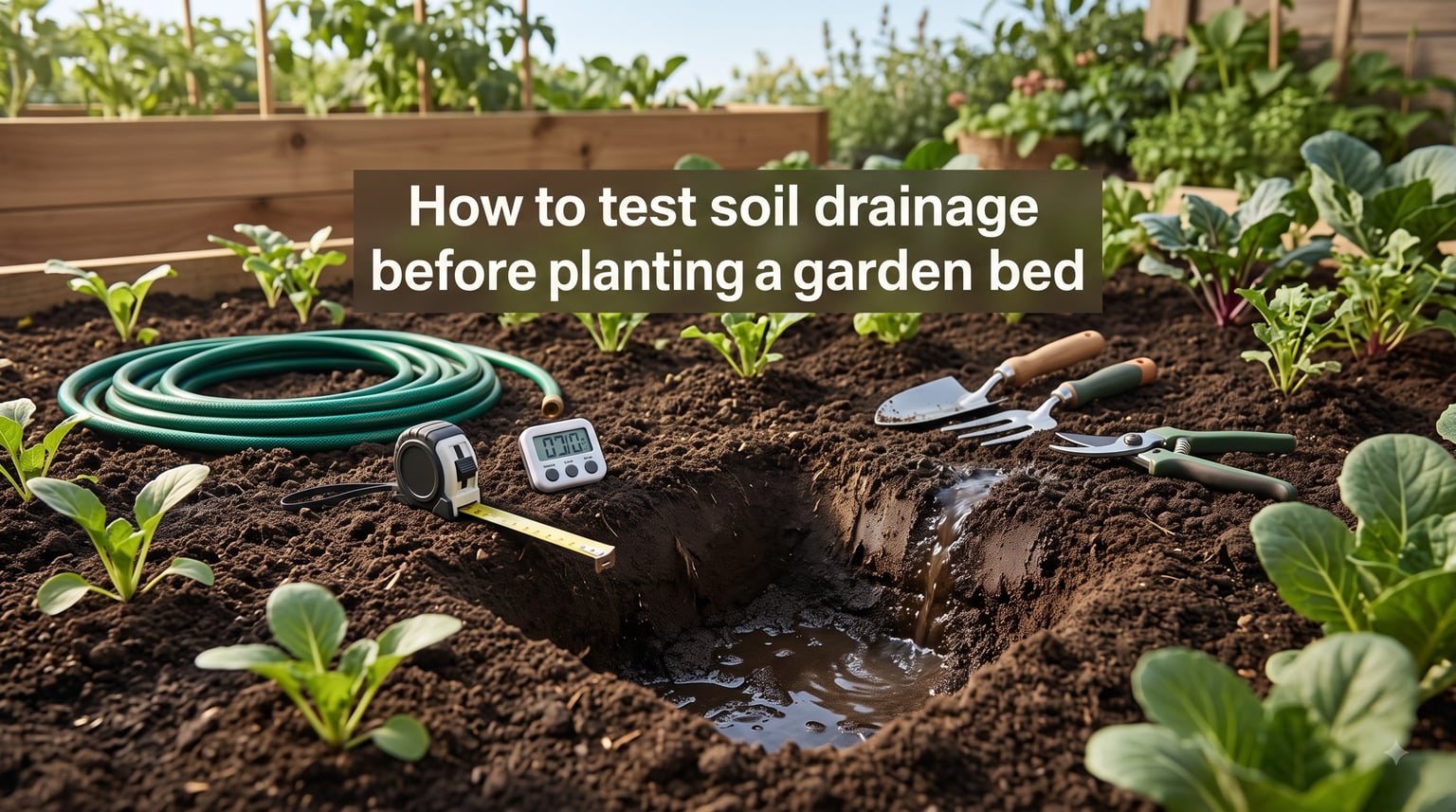
Last spring I lost an entire row of tomato plants to root rot because I skipped a 30-minute soil drainage test. If you want to know how to test soil drainage before planting a garden bed, here is the short version: dig a 12-inch hole, fill it with water, let it drain, then fill it a second time and time how long it takes. Healthy soil drains the refill within 4 to 8 hours. That single afternoon of work saves an entire season of guessing.
I have tested drainage in everything from pure clay to sandy loam, and the results change every garden plan I make. In this guide I will walk you through the exact percolation test I use on my own beds, how to read the numbers, and what to do when your soil fails. You will also learn the difference between testing a raised bed versus an in-ground bed, because the procedure is not identical.
By the end, you will know whether your soil is ready to plant, what amendments to add, and when to build a raised bed instead of fighting what is already there.
Table of Contents
Why Soil Drainage Matters Before You Plant?
Roots need oxygen almost as much as they need water. When soil stays saturated for too long, the air pockets between soil particles fill with water and roots effectively suffocate. This is the silent killer behind most failed garden beds, and it shows up before you ever see yellow leaves.
Poor drainage causes three big problems. First, root rot sets in when fungi like Pythium and Phytophthora thrive in waterlogged conditions. Second, beneficial soil microbes die off in anaerobic (oxygen-free) soil, which shuts down nutrient cycling. Third, your plants cannot pull calcium, nitrogen, and other key nutrients from soil that is constantly saturated.
Here is what poor drainage looks like in your yard before you even plant:
Standing water or puddles that linger more than 24 hours after rain
Soil that feels greasy or slick when you squeeze a handful
A grayish, mottled appearance just below the surface (a sign of alternating wet and anaerobic conditions)
Earthworm absence, since worms leave when soil stays wet
Sedges, rushes, or moss thriving in the area
One of my neighbors ignored these signs and planted a brand-new shade garden in a low spot. Within six weeks every hosta had blackened roots. A simple percolation test the month before would have shown him the spot held water for nearly two days.
How to Test Soil Drainage Before Planting: Step-by-Step Percolation Test
This is the same percolation test that university extension services recommend. I have run it more than 40 times on different plots, and it consistently tells me what I need to know before I plant a single seed.
What You Need
A shovel or post-hole digger
A tape measure
A garden hose or several gallons of water
A stopwatch or phone timer
A stick or ruler to mark water depth
Pick the wettest time you can. If you test in bone-dry summer soil, water will race through cracks and give you a falsely fast reading. I prefer to test in early spring or late fall, or 24 hours after a good soaking rain.
Step 1: Dig the Test Hole
Dig a hole 12 inches deep and roughly 12 inches wide. Make the sides straight, not tapered like a bowl. A post-hole digger works great here because it leaves clean walls. The 12-inch depth matters because most vegetable roots grow in the top foot of soil, and that is the zone you are evaluating.
Step 2: Roughen the Sides
Scratch the sides of the hole with your shovel or a stick. This removes any glazing from your shovel blade and lets water penetrate the soil naturally instead of running down a smooth wall.
Step 3: Fill the Hole and Let It Drain
Fill the hole to the top with water. Now walk away. Let it drain completely. This first fill wets the surrounding soil so the second test is accurate.
Step 4: Fill It Again and Time the Drain
Refill the hole to the top. This time, note the time. Check every 30 minutes for the first hour, then every hour after. Record the total time it takes for the water to disappear.
Step 5: Measure and Record
Use your stick or ruler to measure the water depth at each check. The drop in inches per hour gives you the percolation rate. For example, if 6 inches drains in 1 hour, your rate is 6 inches per hour.
Step 6: Test Multiple Spots
Drainage can vary widely across a single yard. I always test at least three spots in a new garden area, especially the lowest point and the highest point. A Reddit user in r/vegetablegardening learned this the hard way: one corner of his plot drained in 3 hours while another took 72 hours because of an underground clay layer.
Raised Bed vs In-Ground Testing Differences
This is the gap I see in most articles. Testing a raised bed is different from testing an in-ground bed.
For in-ground beds, dig directly into the native soil and test as described above. The 12-inch hole tells you how your native soil performs.
For raised beds, you have two choices. If the bed is empty, fill it to a depth of 12 inches with your planned mix and test the drainage of the mix itself. If the bed is already filled, dig down through the mix until you hit native soil, then continue the hole another 6 to 12 inches into the native ground. The native soil under a raised bed can become a perched water table if it drains poorly, drowning your plants from below.
One warning: never assume your raised bed mix drains well just because the bag says “premium.” Some bagged mixes contain too much fine peat and hold water like a sponge. Test before you plant.
How to Interpret Your Soil Drainage Results
Now that you have numbers, here is what they mean. The table below is the same chart I share with new gardeners on our team.
| Drainage Rate | Soil Type | What It Means | Planting Recommendation |
|---|---|---|---|
| Faster than 4 inches/hour | Sandy or gravelly soil | Drains too fast, may dry out quickly | Add compost and organic matter to improve moisture retention |
| 1 to 4 inches/hour | Loam or sandy loam | Ideal for most garden plants | Plant as planned, minimal amendments needed |
| 0.5 to 1 inch/hour | Silty or clay-loam soil | Acceptable for many plants, marginal for vegetables | Add organic matter, monitor moisture closely |
| Slower than 0.5 inches/hour | Heavy clay or compacted soil | Too slow for most garden plants | Build raised beds or install drainage improvements |
| Water still present after 24 hours | Severe clay, hardpan, or high water table | Unworkable in-ground | Raise the bed at least 12 inches or call a professional |
Most vegetables, flowers, and landscape plants want a drainage rate between 1 and 4 inches per hour. If your refill drains in 4 to 8 hours, you are in the sweet spot. If it is still full after 24 hours, you have a problem that needs more than a quick fix.
When to Test Again
If your test takes longer than expected, run it a second time in the same hole before you panic. Sometimes the first fill loosened compacted soil and the second run is faster. If both runs are slow, you have a real drainage problem.
When to Call a Professional
Call in a landscape pro or soil engineer if water sits in the hole for more than 48 hours, you see a high water table, or your yard has standing water after normal rain. At that point you may need a French drain, regrading, or a subsurface drainage tile system.
How to Fix Poor Soil Drainage
Once you know what you are working with, here is how to fix it. I have used all of these methods on different properties, and the right choice depends on how bad your drainage is and how much you want to spend.
1. Add Organic Matter
This is the cheapest and most universal fix. Spread 2 to 4 inches of compost, aged manure, or leaf mold over the bed and work it into the top 8 to 12 inches. Organic matter opens up clay soils and helps sandy soils hold moisture. Do this every year and your drainage improves steadily.
2. Use Gypsum for Clay Soil
Gypsum (calcium sulfate) helps break up heavy clay by displacing sodium and binding clay particles into larger aggregates. Apply about 20 to 30 pounds per 1,000 square feet and work it in. It is not a magic fix, but combined with organic matter it makes a real difference over a season or two.
3. Build Raised Beds
If your native soil is too far gone, raise the bed. A 12-inch raised bed on top of poor native soil usually outperforms an in-ground bed in clay. Fill it with a mix of 60 percent topsoil, 30 percent compost, and 10 percent coarse sand or perlite.
4. Install a French Drain or Grading
For severe problems, install a French drain (a perforated pipe in a gravel-filled trench) to move water away from the garden. Regrading the surrounding soil so it slopes at least 2 percent away from the bed also helps. These are bigger projects but solve problems that amendments cannot.
5. Plant Cover Crops and Deep-Rooted Plants
Daikon radish, alfalfa, and other deep-rooted cover crops break up compacted soil naturally. Their taproots drill channels that water follows. I plant a fall cover crop every year, and over three seasons my clay test hole went from 36-hour drainage to under 10 hours.
If you are on a budget, start with organic matter and cover crops. They cost almost nothing and compound over time. Save gypsum, raised beds, and French drains for the tougher cases.
Frequently Asked Questions
How to test garden soil for drainage?
Dig a hole 12 inches deep and 12 inches wide in your planned bed. Fill it with water, let it drain completely, then fill it again and time how long the water takes to disappear. Healthy soil drains the second fill in 4 to 8 hours, giving you a percolation rate of 1 to 4 inches per hour.
What are the signs of poor soil drainage?
Standing water that lingers more than 24 hours after rain, soil that feels greasy or slick when squeezed, a grayish mottled color below the surface, no earthworms, and thriving sedges, rushes, or moss all indicate poor drainage. Plants in poorly drained beds often show yellow leaves, stunted growth, or root rot.
Should a raised garden bed have drainage?
Yes, raised beds must drain well or they will waterlog from the bottom. Test your raised bed mix by filling a 12-inch hole with the mix and timing the drainage. If the native soil under the bed is clay, water can back up like a perched water table, so test both the mix and the native soil separately.
How long should a soil drainage test take?
The full test takes most of a day. The first fill usually drains in 1 to 4 hours, then you refill and time the second fill. Most healthy soils drain the second fill in 4 to 8 hours. If water is still in the hole after 24 hours, you have a serious drainage problem that needs amendments or a raised bed.
Test First, Plant With Confidence
Learning how to test soil drainage before planting a garden bed takes one afternoon and saves an entire growing season. Run the percolation test on every new bed, interpret your rate using the chart above, and match your amendments to what you find.
If your soil drains fast, add compost. If it drains slow, add organic matter and gypsum or build a raised bed. If it does not drain at all, bring in a professional. Either way, you will plant with confidence because you know exactly what is under your feet.