
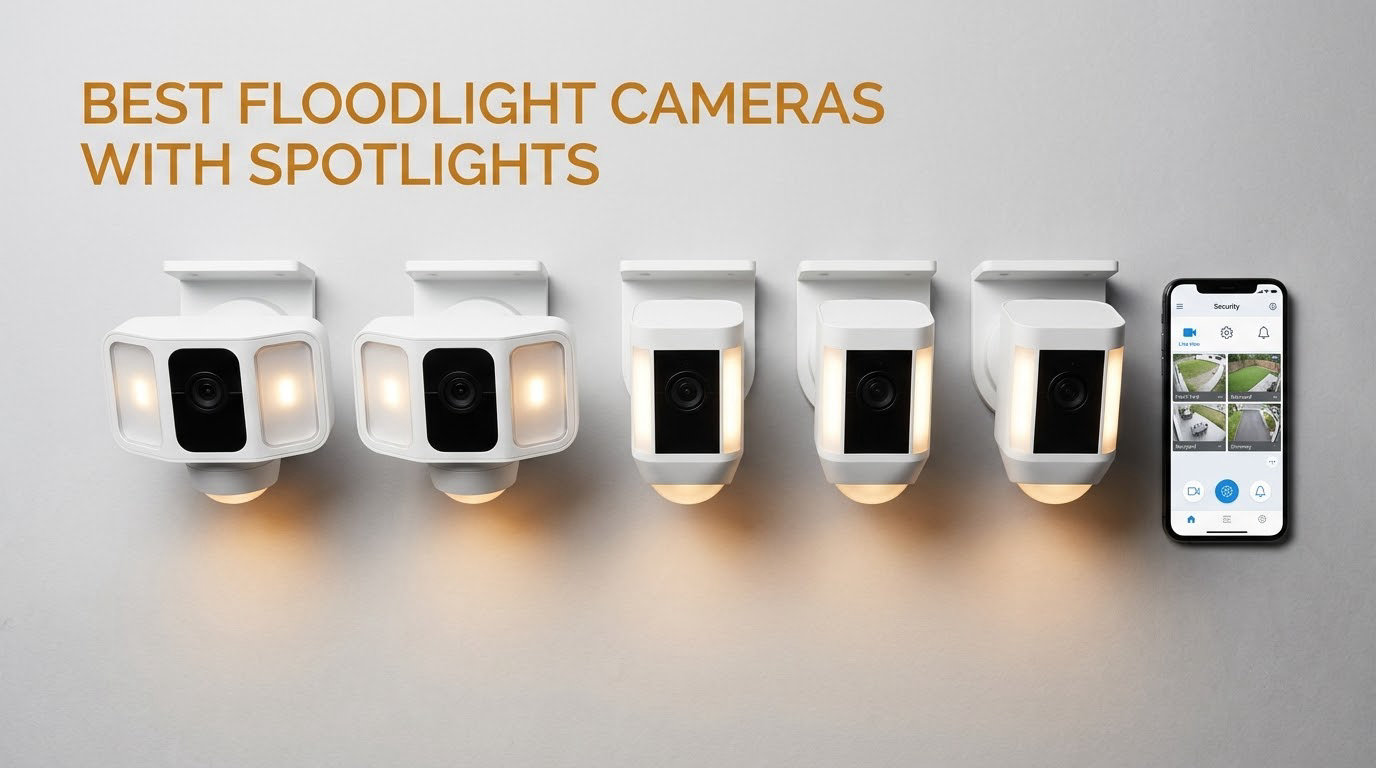
At night, illumination matters more than resolution. A 1080p camera sitting under roughly 2000 lumens of motion-activated white light produces usable color footage, while a higher-resolution sensor relying on infrared gives you a sharp grey shape you cannot identify. The useful residential range for a floodlight camera is about 1500 to 2800 lumens, and that is the standard we applied when ranking the best floodlight cameras with spotlights for 2026.
We spent weeks reading owner reviews, comparing published specs and sorting out which models charge you monthly for the privilege of saving a video. The short version: the category splits cleanly into wired units that deliver real light output and battery or solar units that ration it, and that single distinction explains most of the price gap and most of the disappointment.
If you are still deciding between categories, our infrared camera guide covers the all-night, no-light approach, and our backyard floodlight camera picks go deeper on wide-yard coverage.
Table of Contents
Spotlight vs. Floodlight: Which Beam Do You Actually Need?
A spotlight camera throws a narrow, focused beam at a fixed target, like a driveway gate or a back door. A floodlight camera spreads light across a wide arc, so a single unit can wash an entire front yard or a two-car driveway. Most of the best floodlight cameras with spotlights here do both, because the light heads tilt independently of the camera body.
The practical difference is aim. A wide floodlight with a 160-degree field of view, such as the Wyze Floodlight Camera v2, picks up anything that moves inside a broad arc and needs careful zoning so the sidewalk is not lit all night. A narrow beam, by contrast, is easier to keep pointed at one spot and wastes less light on the street. If you want to know more about the sensor side of this, read how we compare low-light sensors in our infrared camera breakdown.
Top 3 Picks for 2026
The Ring Floodlight Cam Wired Plus earned the top slot on the strength of the deepest review base in the category and a light output that comfortably clears the useful band. The Wyze Floodlight Camera v2 is the value pick, pairing very bright light with local recording that costs nothing extra. The Tapo C615F is the budget and no-wiring option for anyone who cannot run a cable to the mounting point.

Ring Floodlight Cam Wired Plus
- 2000-lumen motion-activated floodlights
- 1080p HD video
- 105dB siren
- Hardwired installation

Wyze Floodlight Camera v2
- 2800-lumen dimmable lights
- 160-degree wide view
- 24/7 microSD recording
- 105dB siren

Tapo 2K Outdoor Pan/Tilt…
- 800-lumen dimmable floodlight
- Solar and battery powered
- 360-degree pan and tilt
- Local microSD up to 512GB
All 8 Floodlight Cameras at a Glance in 2026
This table lists every camera in the roundup with the specs that actually change a purchase decision. Light output, power source and the storage model are the three columns worth reading twice.
| Product | Specs | Action |
|---|---|---|
| Ring Floodlight Cam Wired Plus |
|
Check Latest Price |
 Google Nest Cam with Floodlight Google Nest Cam with Floodlight |
|
Check Latest Price |
| Tapo 2K Outdoor Pan/Tilt Floodlight C615F |
|
Check Latest Price |
 eufy Floodlight Camera E30 eufy Floodlight Camera E30 |
|
Check Latest Price |
 Blink Wired Floodlight Camera Blink Wired Floodlight Camera |
|
Check Latest Price |
| Wyze Floodlight Camera v2 |
|
Check Latest Price |
 Arlo Pro 3 Wireless Floodlight 2K HDR Arlo Pro 3 Wireless Floodlight 2K HDR |
|
Check Latest Price |
 eufy Floodlight Camera E340 eufy Floodlight Camera E340 |
|
Check Latest Price |
How We Ranked These Cameras
We ranked on four things: verified owner review depth, published light output in lumens, whether recorded video costs extra money, and how much installation the camera demands. We did not rank by sponsorship, and no brand paid for placement in this guide.
Review depth mattered more than headline ratings. A model averaging 4.7 across a few hundred reviews tells you less than one averaging 4.2 across several thousand, because the larger set surfaces failure modes that early owners never hit. We also weighed the subscription math across a realistic ownership window rather than at purchase.
Where owner feedback was thin, we said so instead of guessing. If you want the reasoning behind the rankings in more detail, the sections below state the case for and against every pick.
1. Ring Floodlight Cam Wired Plus: Best Overall for Most Homes
Ring Floodlight Cam Wired Plus, Outdoor Home or Business Security with Motion-Activated 1080p HD Video and Floodlights, White
1080p HD video
2000 lumen motion lights
Hardwired to a junction box
105dB siren and two-way talk
Pros
- 44107 owner reviews backing the rating
- 2000 lumens clears the useful band
- Straightforward DIY wiring with included hardware
- Customizable motion zones and reliable detection
Cons
- Fixed view with no pan or tilt
- Light is on or off with no dimmable ambient mode
- Video history and AI features sit behind a Ring Protect plan
Of all eight cameras in this roundup, this is the one we would put on most driveways. The 2000-lumen motion-activated heads are bright enough to pull usable color out of a 1080p sensor at night, which is exactly the trade we want. Installation is genuinely a weekend job for anyone who has replaced a light fixture before, and the box includes the screws, wire nuts and a multi-tool.
The evidence base is the strongest argument. With 44k+ owner reviews averaging 4.7, this is not a camera we are extrapolating from a launch-week sample. Owners consistently describe clear day and night video, accurate motion detection and a light that fills a driveway, and the criticism that comes up most is about what it does not do rather than what it does badly.
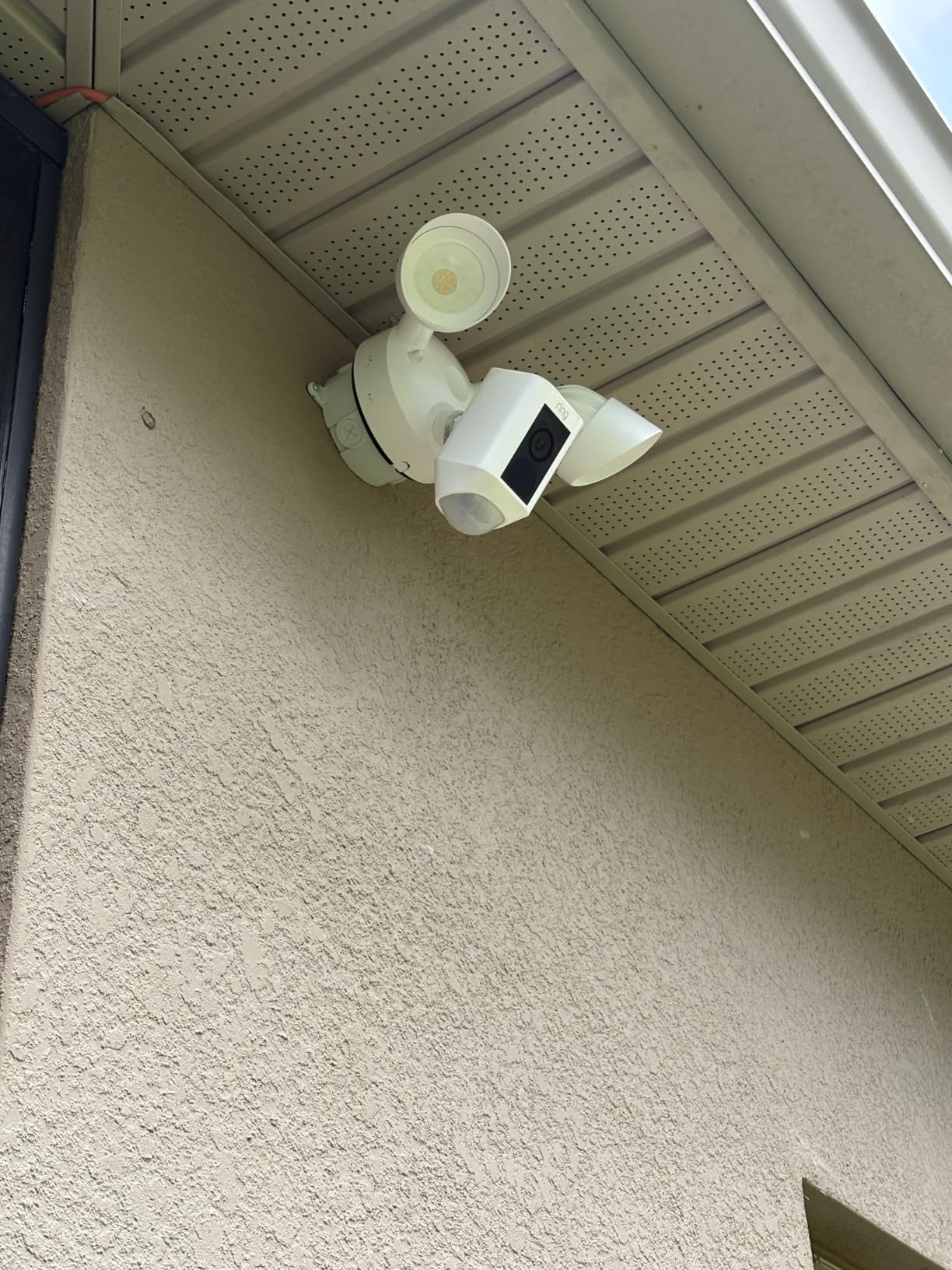
Two things will make you pause. The first is that the camera body is fixed, so once you set the angle you are done with it, and if a tree or a parked van later blocks that view you will need a ladder. The second is the light behavior: it switches fully on or fully off, with no dimmable ambient mode to leave a low glow at dusk.
On subscriptions, this is the honest weak spot. Core recording features need a Ring Protect plan, and the advanced AI detection and video history are the parts most people actually want. Live view works without paying, so if your plan is to check in occasionally rather than to store clips, that is a workable arrangement.
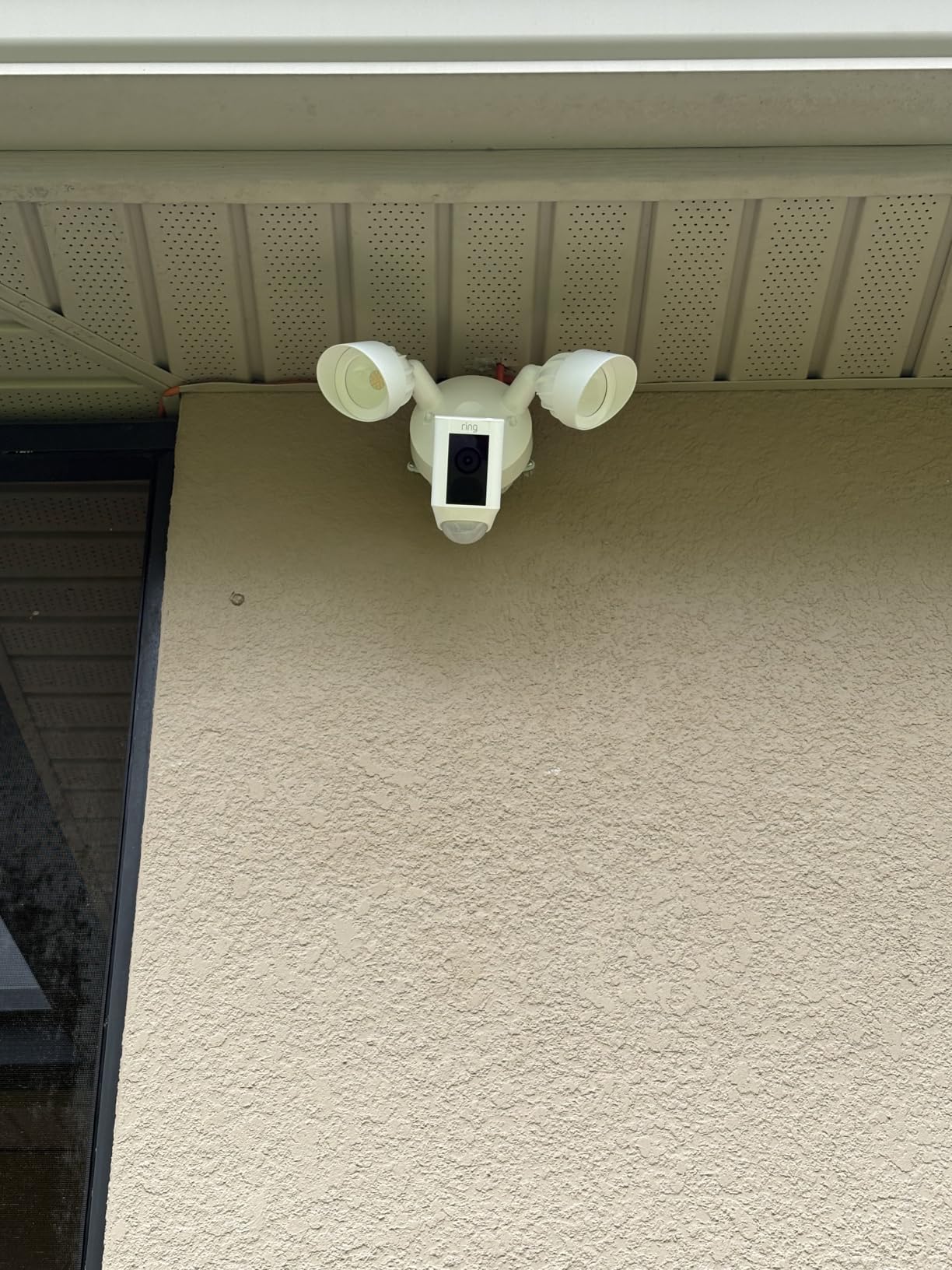
Who the Ring Floodlight Cam Wired Plus suits
This is the pick for a driveway, a garage approach or a side gate where you already have a junction box and power at the mounting point. It suits people who want one dependable camera that covers a defined area and want a well-established support ecosystem.
It also suits anyone who values Alexa integration, since the camera is tightly woven into the Ring app and responds to voice commands for live view. If your household already runs Ring doorbells or indoor cams, adding this keeps everything in one place with one set of habits to learn.
Where it falls short
Skip it if you need to cover a wide yard where a fixed frame would leave blind spots, because you would be better served by a pan-and-tilt model. It is also the wrong choice if you refuse to pay a subscription and need stored footage, since there is no local storage option here.
If the light bothers neighbors, note that you cannot dim it. You would be relying on zoning and sensitivity settings alone to control when the heads fire, and there is no dusk-to-dawn ambient fallback to soften the transition.
2. Google Nest Cam with Floodlight: Best for Google Home Households
Google Nest Cam with Floodlight – Outdoor Camera – Floodlight Security Camera, White, 1 Count (Pack of 1)
1080p HDR with night color
130-degree field of view
Battery powered, IP65
2.6 pounds, 6.5 by 12.4 inches
Pros
- Person
- animal and vehicle detection on device with no subscription
- Three hours of free event history
- Stores up to an hour of events during an outage
- Works with Google Home
- Alexa and Google Assistant
Cons
- Familiar-face detection and continuous recording need Nest Aware Plus
- Emergency calling from the app needs a Nest Aware plan
- Fixed field of view with no pan or tilt
This is the most interesting pick in the group for a specific reason: the core detection runs on the device. Person, animal and vehicle recognition happens locally, so you get meaningful alerts and three hours of event history without handing over a monthly payment. That is a different starting position from most of the field.
The hardware is unremarkable in the best way. It is 1080p HDR with a 130-degree field of view, IP65 rated, and the floodlight switches on automatically when the camera decides something important is happening. The two-way talk through the built-in speaker and mic is clear, and the whole unit weighs 2.6 pounds, which makes handling it on a ladder less awkward than the heavier hardwired models.
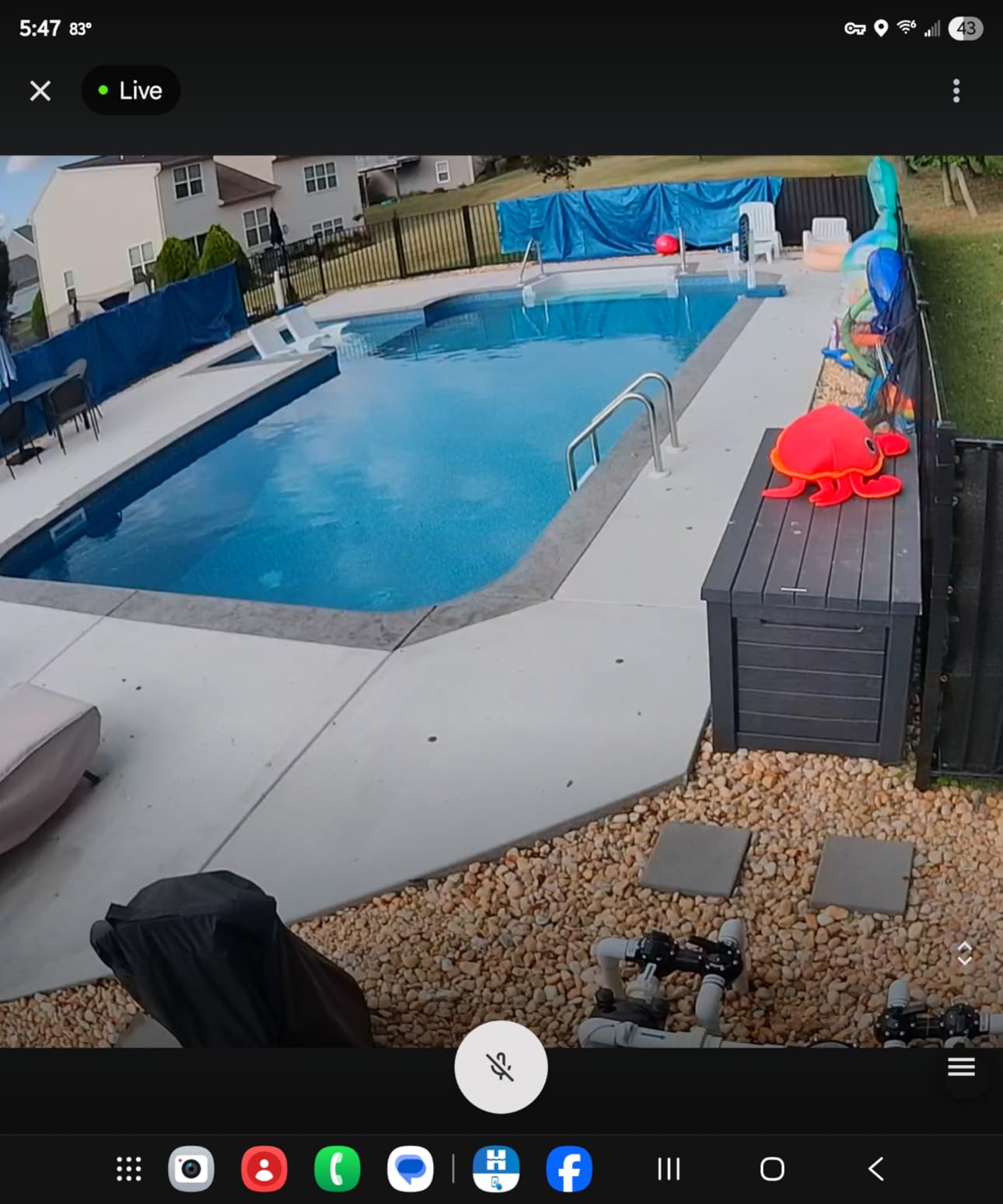
The outage behavior deserves attention. Owners highlight that the camera stores up to an hour of recorded events during a Wi-Fi or power interruption, which means a brief outage does not leave you with a gap. For anyone who has lost footage to a dropped connection before, that is a real practical advantage rather than a spec-sheet line.
Warranty is a one-year manufacturer term, which is standard for the category. The power draw is listed at 24 watt-hours, and the camera runs at 30 fps with automatic focus, so motion in the frame stays reasonably smooth.
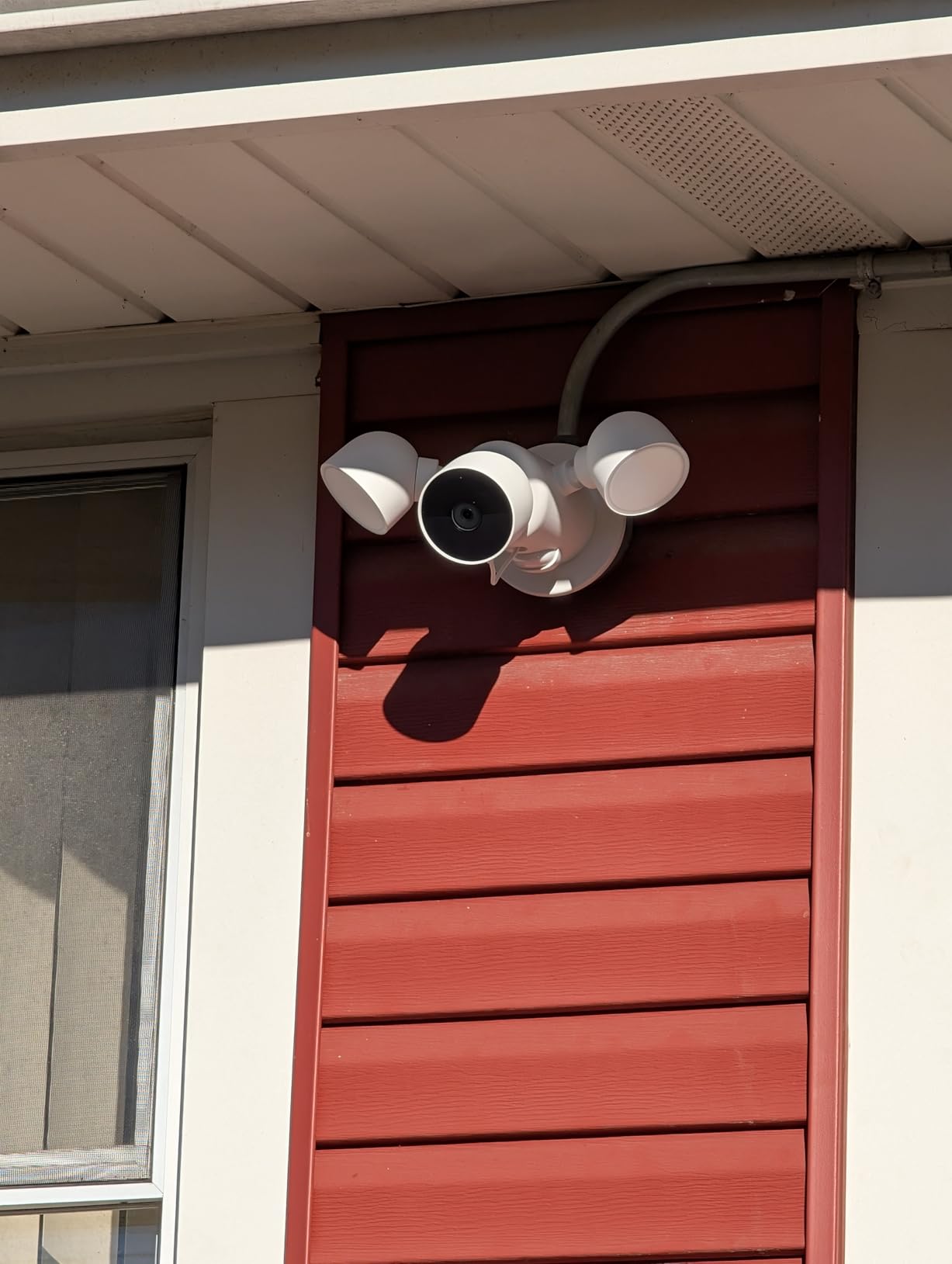
Who the Google Nest Cam with Floodlight suits
This is the pick for a household already inside the Google Home ecosystem, particularly one with existing Nest or Chromecast hardware. On-device detection with no subscription makes it a good starting point in the roundup for people who want smart alerts but refuse a recurring fee.
It also fits renters and anyone without a suitable junction box, since it is battery powered and the box includes a charging cable, mounting plate, power adapter and floodlight module. Screw-in wall mounting means you are not opening a junction box to get started.
Where it falls short
The subscription reappears as soon as you want more. Continuous 24/7 recording, familiar-face detection and emergency service calling all sit behind Nest Aware tiers, so the free tier is genuinely useful but not complete.
The fixed 130-degree view is narrower than the 160-degree frames offered by the Wyze and Arlo cameras here, so on a very wide driveway you may end up with wasted space on the sides. The field of view cannot be steered after mounting.
3. Tapo 2K Outdoor Pan/Tilt Floodlight C615F: Best Budget Pick for Homes Without Wiring
Tapo 2K Outdoor Pan/Tilt Wireless Floodlight Security Camera, C615F KIT
2K 3MP with night color
800-lumen dimmable floodlight
10400mAh battery with solar panel
IP65, 1.4 pounds
Pros
- Solar and battery power removes the wiring problem
- 360-degree AI tracking pans and tilts to follow subjects
- Subscription-free detection for people
- pets and vehicles
- Local microSD up to 512GB with no monthly cost
Cons
- 800 lumens is dimmer than any wired model here
- 2.4GHz Wi-Fi only
- so no 5GHz network
- Solar charging needs temperatures above 32F
- Continuous capture needs the separately sold H500 hub
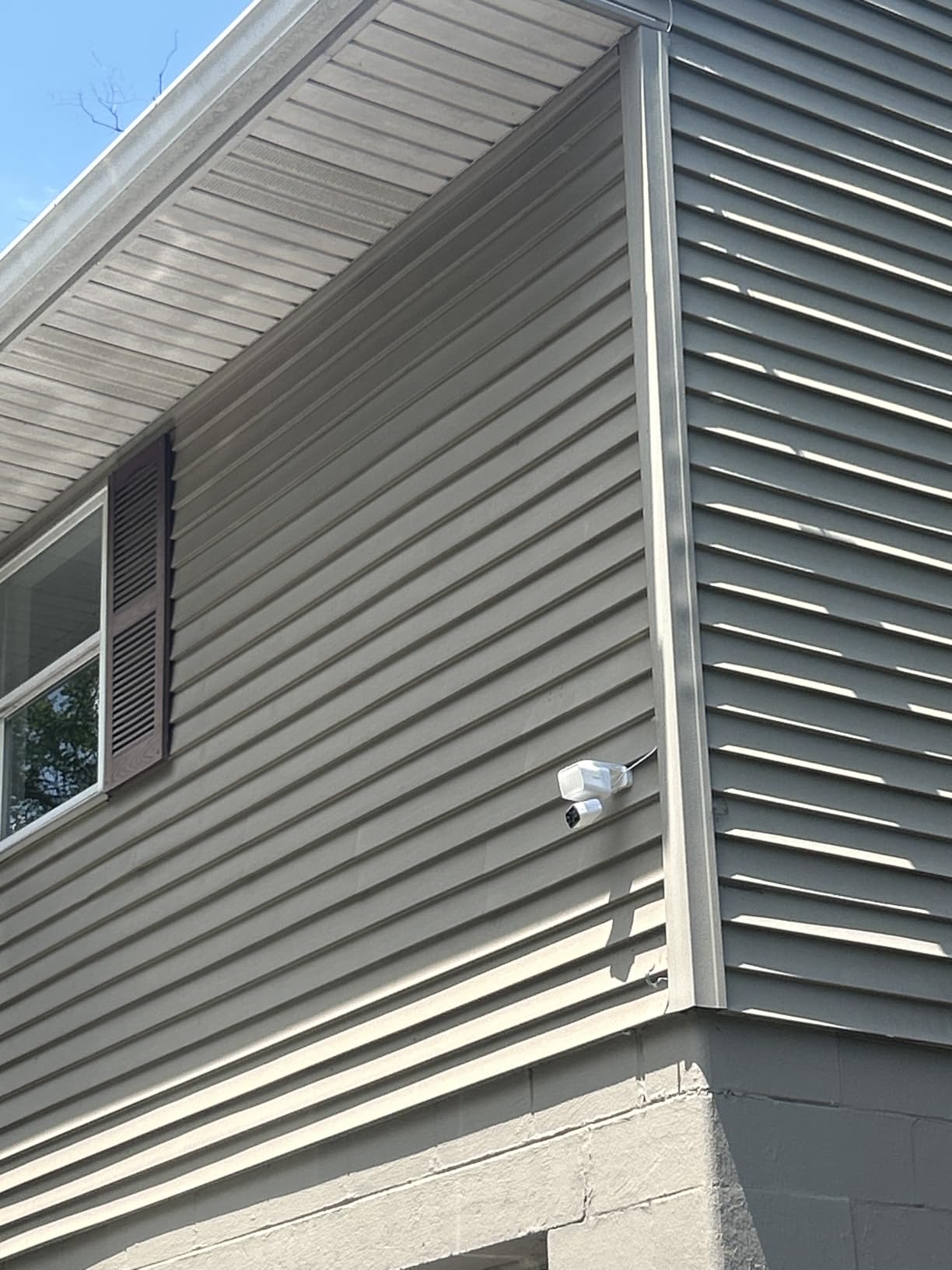
This is the model to look at if there is no power at the spot you want to cover. The carton includes the camera, a solar panel, a panel bracket, a base cover, a USB charging cable, a solar extension cable and mounting hardware, so a full no-wiring install is possible straight out of the packaging.
The tracking is the feature that separates it from a plain battery camera. It pans 360 degrees horizontally and tilts 130 degrees vertically, and the AI motion tracking follows a subject through the frame. At 2K 3MP with a night vision range of 32.8 feet, the video holds up well in daylight and acceptably at night close in.
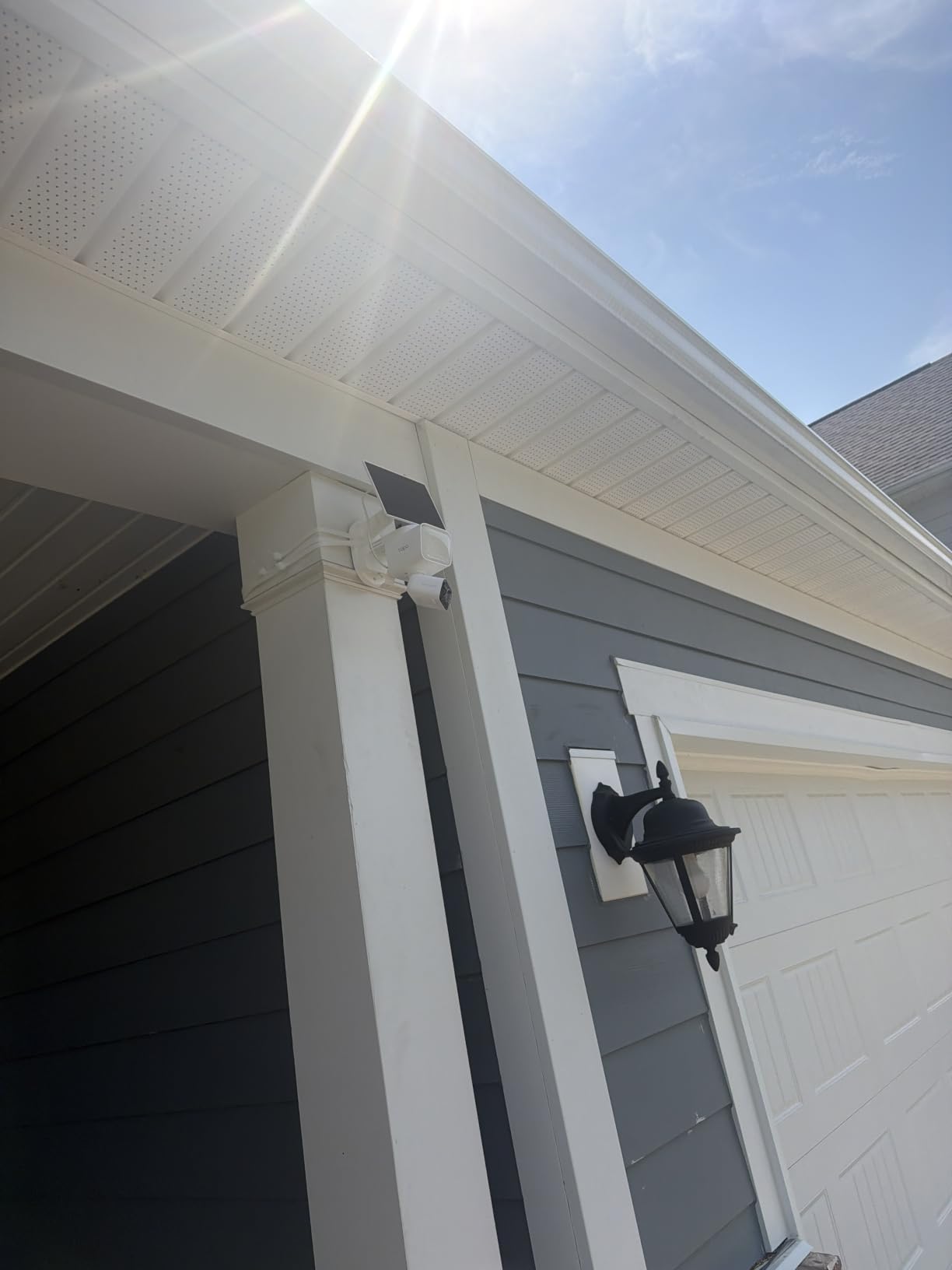
The battery numbers are worth understanding precisely. Owners report that roughly 45 minutes of direct sunlight powers a full day, and the 10400mAh battery can run up to 140 days on cloudy stretches. That figure assumes the floodlight is not firing all night, so a location with heavy traffic will drain considerably faster than the headline suggests.
The light is the compromise. At 800 lumens this is the dimmest floodlight in the roundup, and reviewers consistently note that it is dimmer than the wired alternatives. It works as a marker and a close-range illuminator rather than as something that will flood a two-car driveway.
Who the Tapo C615F suits
It suits renters, apartments, and any side of a house where running a cable means opening a wall. The subscription-free AI detection and local microSD storage up to 512GB mean you can run it indefinitely with no recurring cost.
It also suits anyone who wants a wide yard covered by one device, since the 360-degree pan and tilt reaches much further than a fixed frame from a single mount. If you already run Tapo hardware, the detection logic and app experience will feel familiar.
Where it falls short
Buy it for coverage, not for brightness. If your real goal is lighting a driveway at 2000 lumens or better, this is the wrong camera and the gap is not marginal.
Two practical limits. It will only join a 2.4GHz network, which is a common snag in newer homes, and solar charging requires temperatures above 32F, so the panel does very little in a long northern winter. If you want continuous 24/7 capture rather than event clips, that needs the separately sold H500 CentralHub.
4. eufy Floodlight Camera E30: Best for Pan and Tilt With No Monthly Fee
eufy Security Floodlight Camera E30, 2K, AI Detection & Tracking, Outdoor
2K video at 20fps
2000-lumen motion floodlights
Corded electric, IP65
10.94 by 7.4 by 6.57 inches
Pros
- 2000 lumens with 2K clarity and full-color night views
- 360-degree pan and tilt with scheduled auto-patrol
- No monthly fee for core recording
- Power Amplifier improves 2.4GHz signal through walls
Cons
- 2.4GHz Wi-Fi only with no 5GHz support
- 20fps frame rate trails most competing cameras
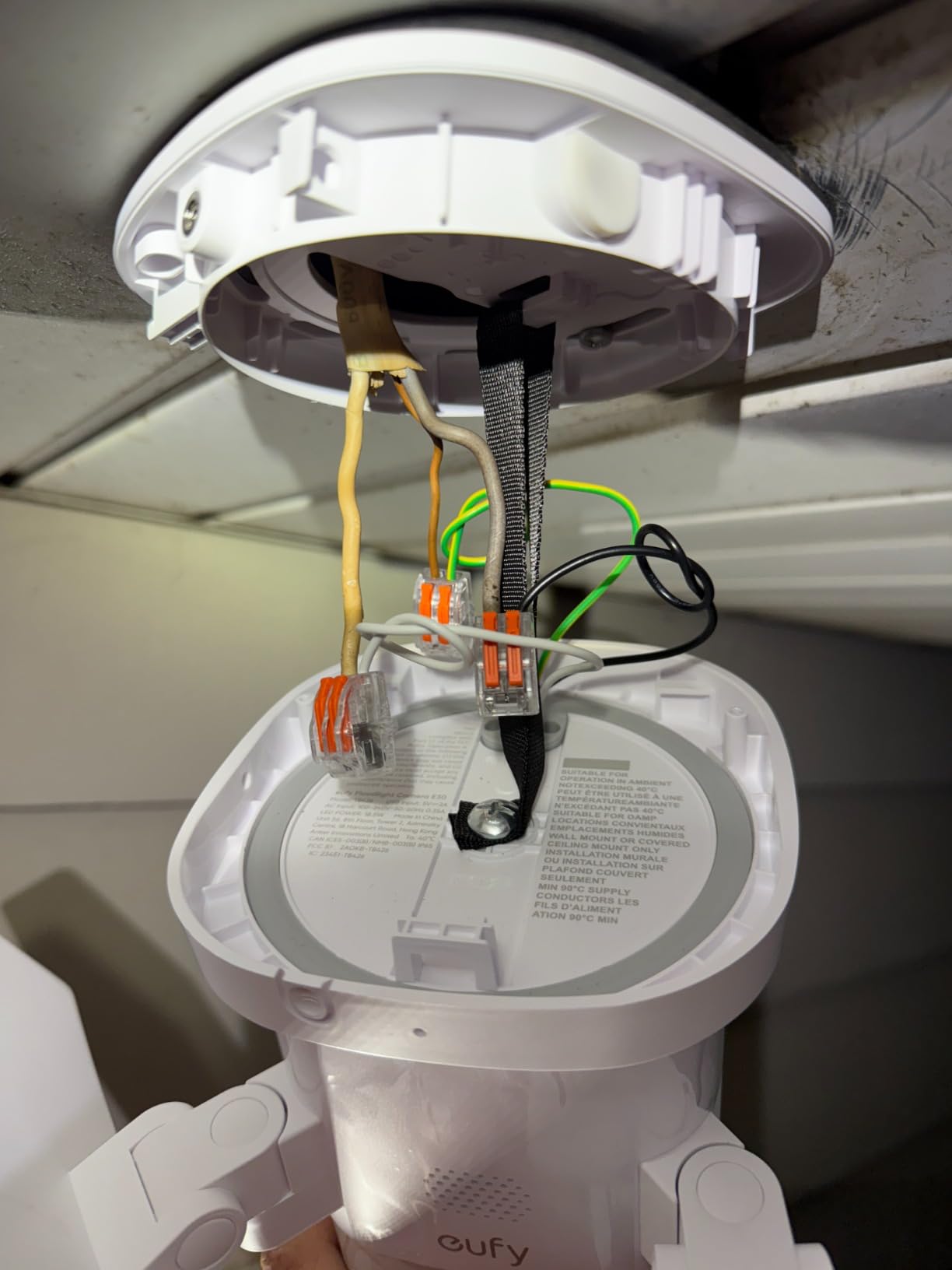
- Hardwiring to a junction box is required
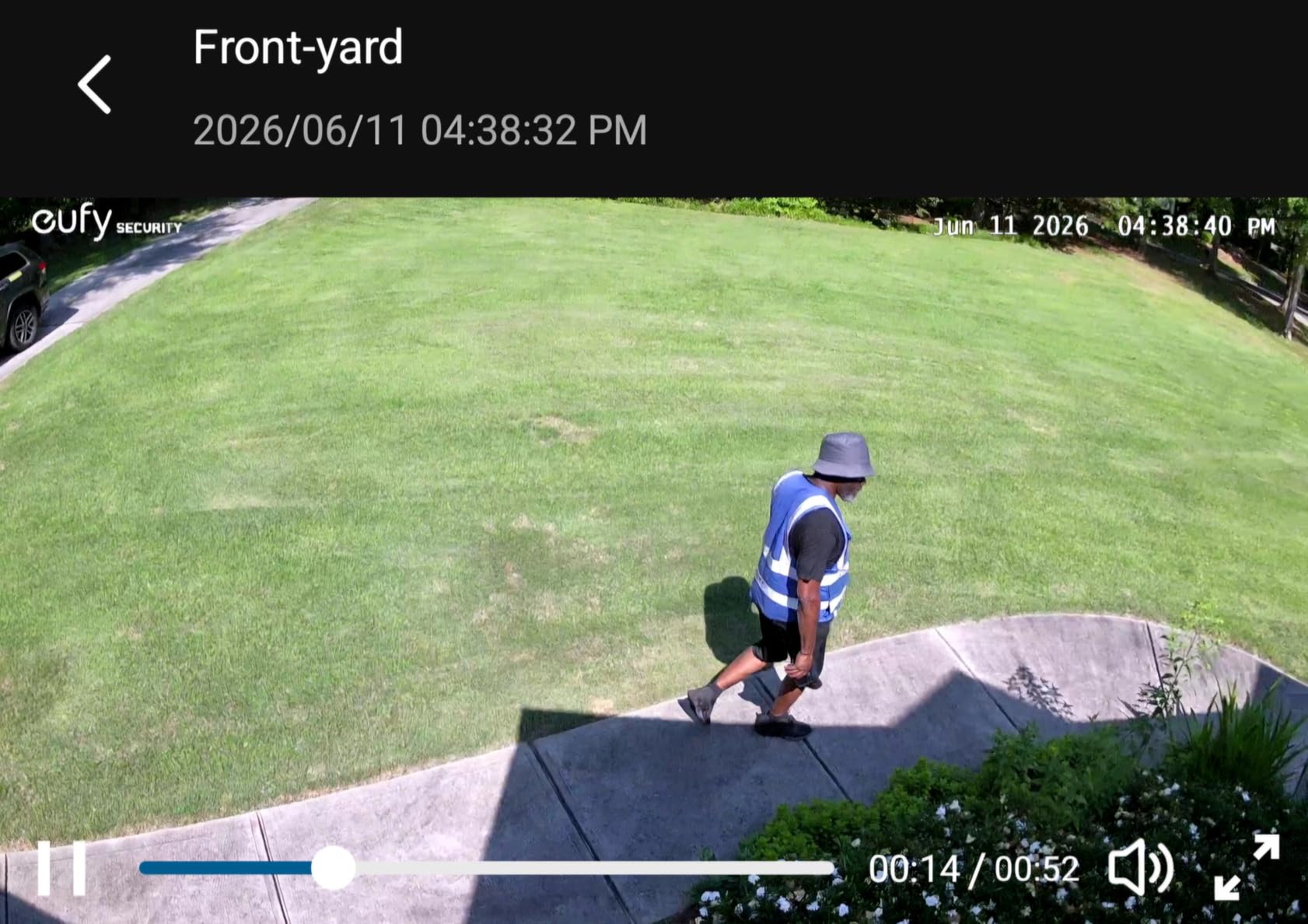
The E30 is the compromise pick for someone who wants moving coverage and a serious light without a subscription. It puts out 2000 lumens, records 24/7 with no monthly fee for core features, and the pan-and-tilt head can run a scheduled auto-patrol or be steered manually from the app.
AI detection handles people and vehicles and auto-tracks them as they cross the frame. It weighs 4 pounds and mounts on a wall, and because it is corded electric you never think about battery level again once it is wired in.
The Power Amplifier is a small detail that matters more than it sounds. It boosts the 2.4GHz signal for a reported 50 percent increase in range and better wall penetration, which is the difference between a camera that connects and one that drops off every few nights when the signal has to pass through masonry.
Storage without a subscription is the headline feature. There is a built-in siren, and you can set custom voice and light alerts, which gives you a way to respond to a detected event without reaching for your phone.
Who the eufy E30 suits
It suits people covering a back yard, a wide driveway or a side gate who want a full 360-degree view from a single mounting point. Hardwired power with 24/7 recording suits anyone who would rather set the camera once than service a battery.
It is also a good pick for anyone who has decided against a subscription. Local recording with no monthly fee for core features means the total cost of ownership stops at the hardware, which we cover in more detail in the buying guide.
Where it falls short
The 20 fps frame rate is the spec most likely to disappoint. Several competing cameras here run at 30 fps, and on fast motion a lower frame rate can produce footage that looks stuttery rather than smooth.
It connects on 2.4GHz only, and it requires hardwiring to a junction box. If either of those is a problem, look at the Tapo C615F for a wireless alternative or consider whether your existing network placement will hold up before you buy.
5. Blink Wired Floodlight Camera: Best for Alexa and Existing Light Fittings
Blink Wired Floodlight Camera, Smart security camera, 2600 lumens, HD live view, enhanced motion detection, built-in siren, Works with Alexa, 1 camera (White)
2600 lumens of LED output
1080p HD color night view
Wired to an existing outdoor fitting
Built-in siren and dual-zone detection
Pros
- 2600 lumens out-lights the Ring and eufy wired models here
- 1080p color night view with crisp two-way audio
- Dual-zone customizable motion detection
- Works with Alexa for Echo Show streaming
Cons
- Person detection needs an optional Blink subscription
- Cloud playback needs a paid plan after the trial
- Local storage needs a separately sold Sync Module
- Fixed view with no pan or tilt
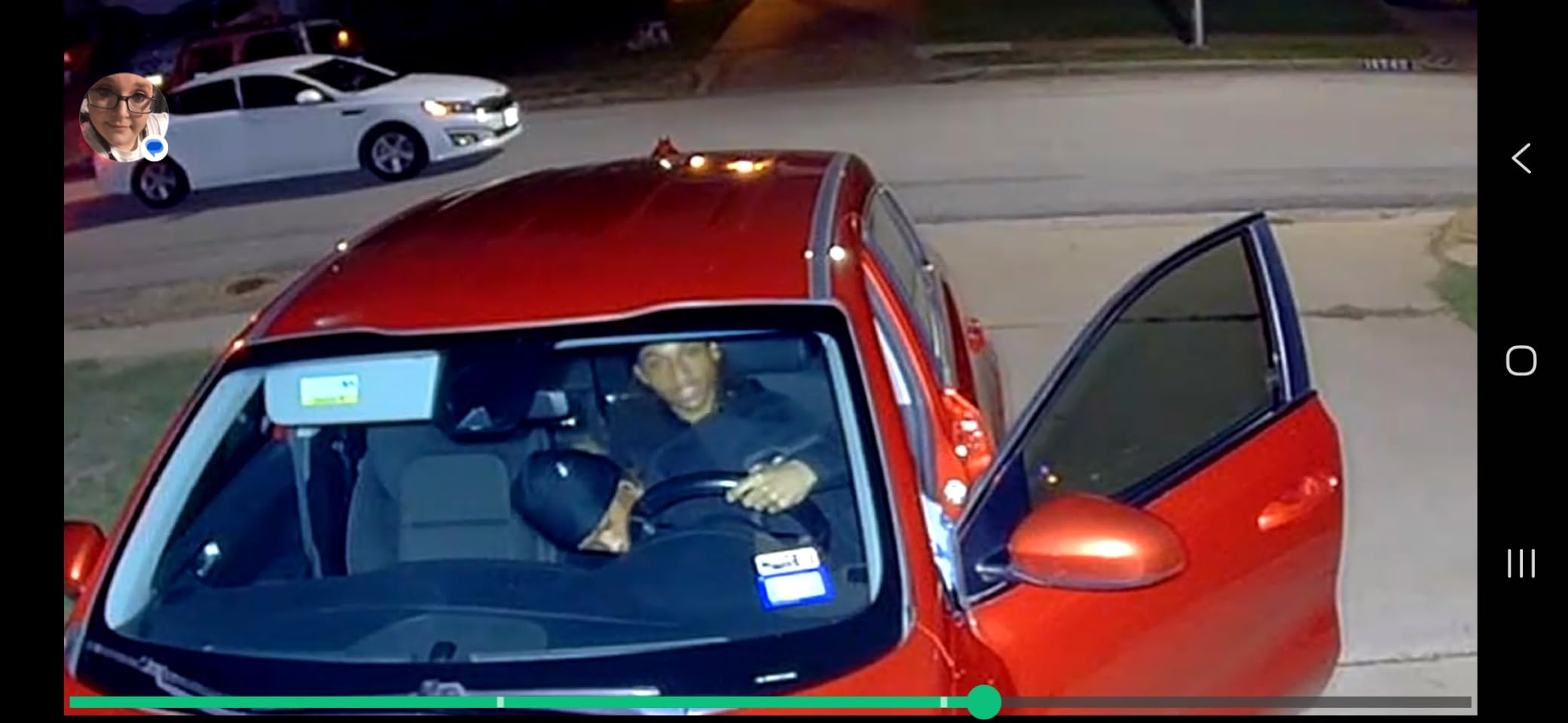
The Blink Wired Floodlight is the pick when you are replacing an existing outdoor light fitting and want brightness. At 2600 lumens it out-lights the Ring and both eufy wired models here, and because it connects to existing outdoor wiring it is a straightforward swap for a fixture already on mains power.
Motion detection is configurable across two zones, which helps with the narrow-aiming problem. You can carve out the sidewalk and set sensitivity independently for the driveway, and the built-in siren gives you an active deterrent without extra hardware. It streams to Echo Show and responds to Alexa voice commands.
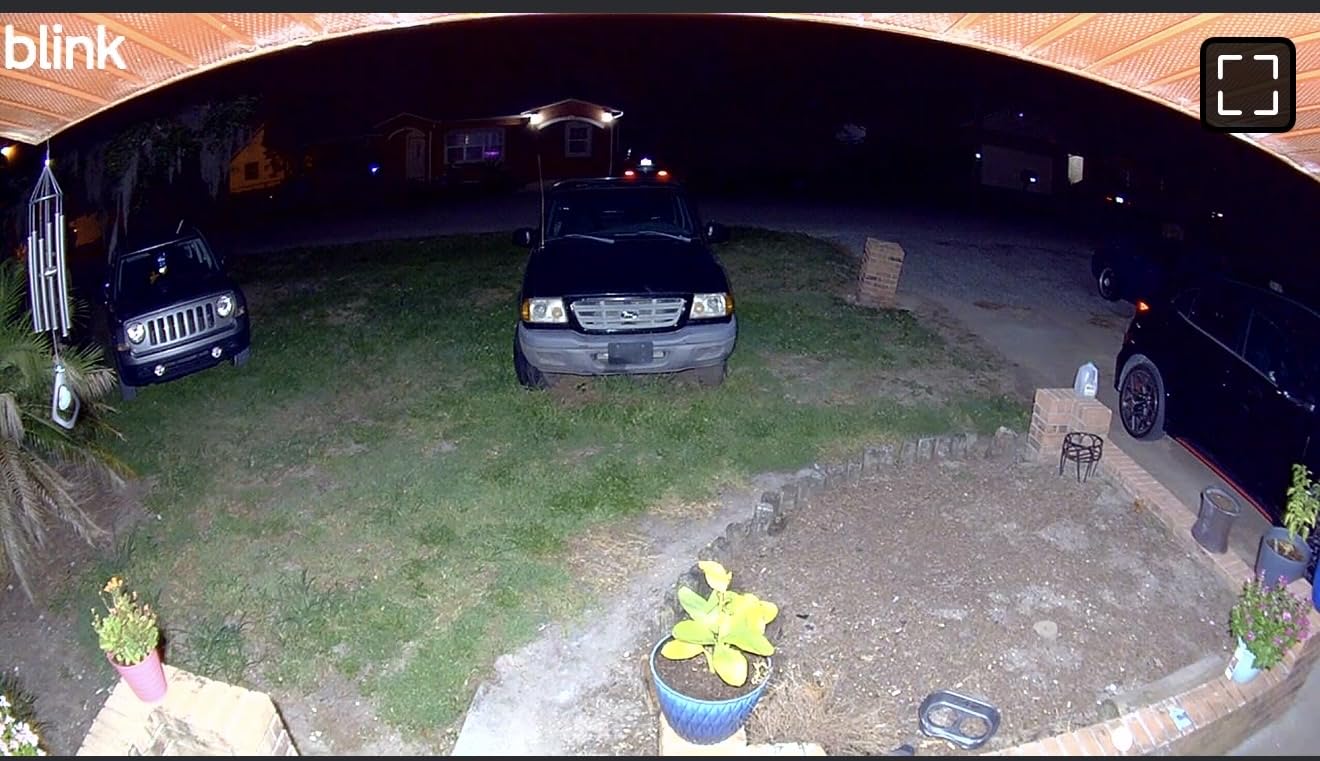
With 13k+ owner reviews averaging 4.2, this is a well-worn product rather than a new release, and the volume of feedback is itself useful. Owners consistently describe bright light, simple wiring into an existing fitting and dependable motion detection across the two zones.
What the reviews also surface is the storage question. Cloud playback past the free trial requires a paid Blink plan, and if you would rather not pay, local backup means adding a Sync Module 2 with a USB drive or a Sync Module XR with a microSD card.
Who the Blink Wired Floodlight suits
It suits homeowners replacing an existing porch, garage or yard light who want a single device that is both the fixture and the camera. The 2600-lumen output is the right call for a driveway where you want to identify a person by clothing and color, not just see a shape.
Alexa households get a smooth experience, since Echo Show streaming is built in. Anyone with several properties or a large outdoor area will appreciate the zone control, because it lets you light a wide arc without pointing the camera at the street.
Where it falls short
Person detection is the sticking point. It is part of an optional subscription rather than a standard feature, and cloud playback past the trial is also paid, so the free experience is thinner here than on the eufy or Wyze models.
The view is fixed with no pan or tilt, and local storage is not included. If you have no existing fitting to reuse, this becomes a wiring project rather than a swap, which changes the effort involved considerably.
6. Wyze Floodlight Camera v2: Best Value for Brightness and Free Local Recording
WYZE Floodlight Camera v2, 2K HD Outdoor Security Camera with 2800 Lumens
2K HD with color night vision
2800-lumen dimmable LED lights
160-degree view, 270-degree PIR
IP65, 27 watts on 110 volts
Pros
- 2800 lumens with dimmable ambient mode and dusk-to-dawn operation
- 160-degree view with 270-degree PIR cuts blind spots
- 24/7 local microSD recording up to 30 days
- 105dB siren and two-way talk
Cons
- Without a microSD card
- event recording saves snapshots only
- 2.4GHz Wi-Fi only and not 5GHz compatible
- Limited fixed tilt that cannot aim fully to either side
- Some owners report random Wi-Fi drop-offs needing a reset
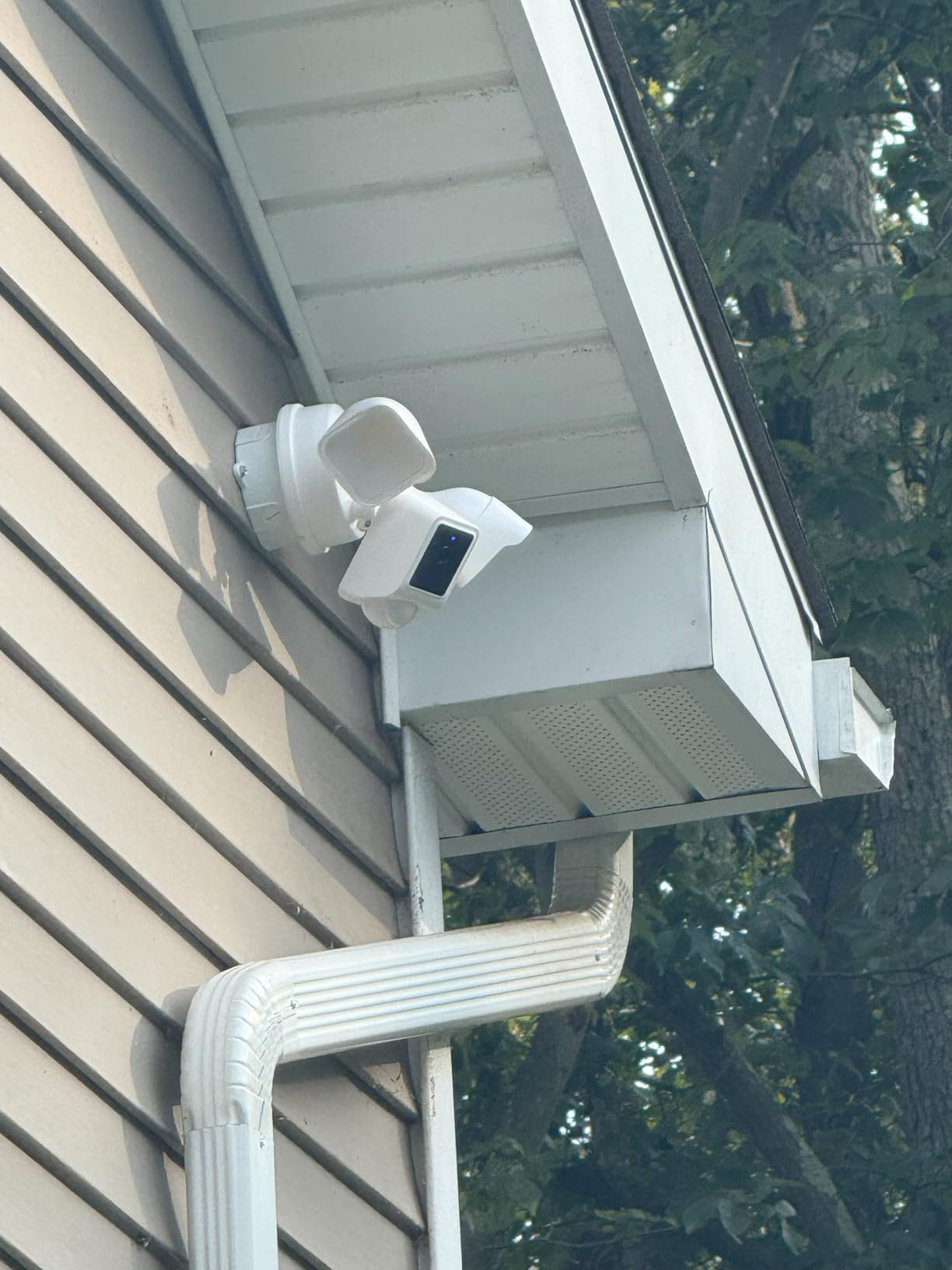
On paper this is a well-equipped spec sheet, and in daylight use it delivers. The 2800 lumens of dimmable LED light are among the brightest outputs here, the 160-degree viewing angle covers more ground than most other models we reviewed, and the 270-degree PIR detection zone picks up movement from well outside the frame edges.
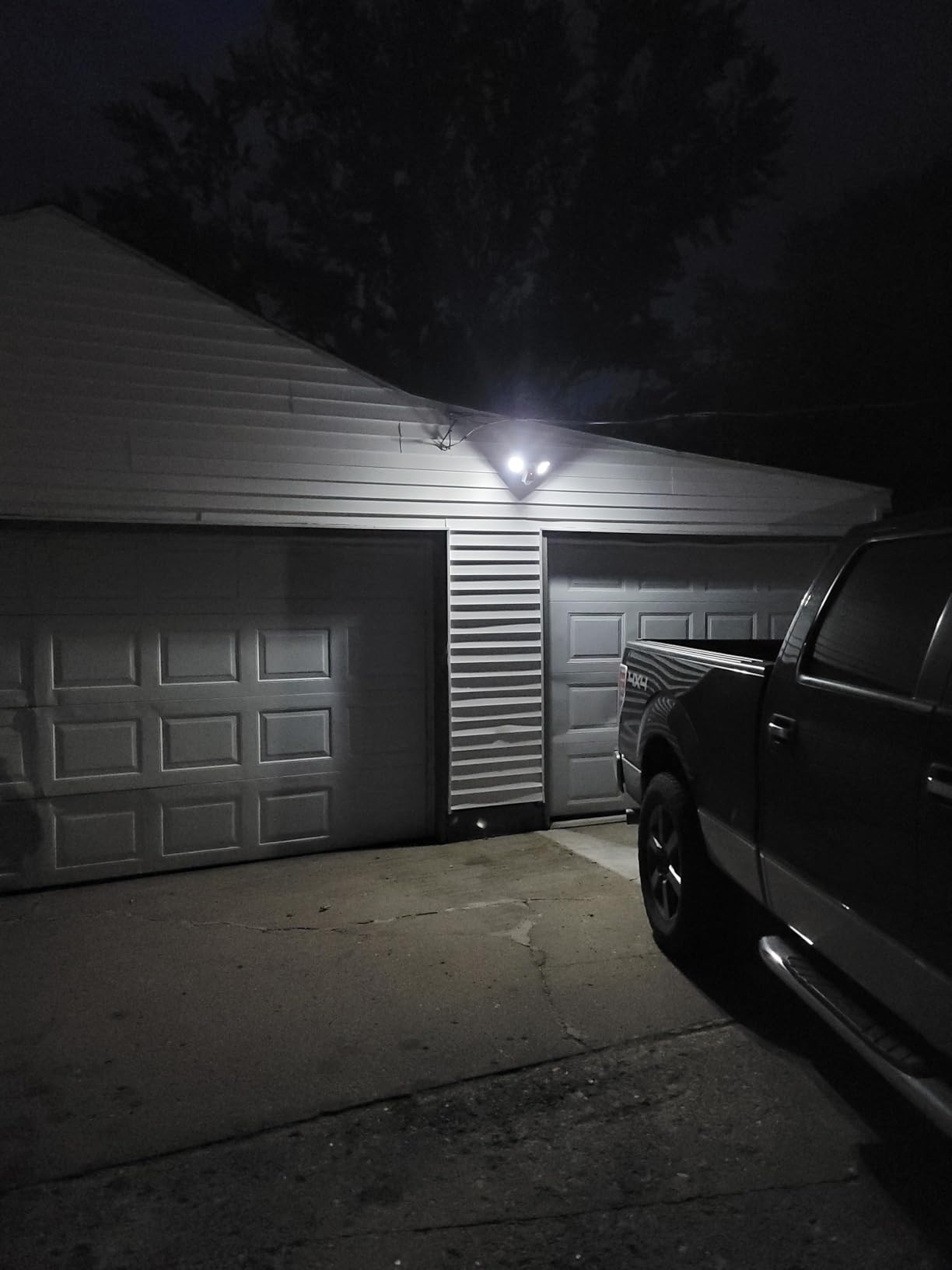
The ambient light mode is the feature we did not expect to care about and now think changes daily use most. Instead of a hard on-or-off switch, the heads can sit at a low glow and only jump to full brightness on motion, with automatic dusk-to-dawn operation driven by a real light sensor. On a house facing a neighbor, that is the difference between a camera people tolerate and one they ask you to turn down.
Recording is where this one earns its value ranking. With a microSD card inserted, it records 24/7 locally and stores up to 30 days of footage with no subscription. Motion zones are customizable in the Wyze app, and two-way talk plus a 105dB siren cover the deterrence angle. It works with Alexa, Google Assistant and IFTTT.
Setup is designed around the ladder problem. Rather than asking you to scan a QR code at height, the 2.4GHz connection can be configured from a phone at ground level, which is a small courtesy that tells you someone thought about installation.
Who the Wyze Floodlight Camera v2 suits
It suits anyone who wants a very bright light and a very wide view from one device, and for a broad front yard or a wide driveway the 160-degree angle leaves little uncovered. It also suits people who want stored footage without a recurring fee, since 30 days of local recording covers most households entirely.
Homeowners bothered by a harsh security light get a lot out of it, because the dimmable heads and ambient mode are among the better neighbor compromises in this group. Warranty is a one-year manufacturer term and the unit draws 27 watts on standard 110-volt supply.
Where it falls short
Understand the microSD dependency before you buy. Without a card, event recording captures snapshots only, and video history requires a subscription. That is a sharp edge for anyone who assumes the camera saves clips out of the box.
The tilt is limited, so once mounted the camera cannot aim fully to either side, which matters on a corner wall. It is 2.4GHz only, and a small but persistent group of owners report random Wi-Fi drop-offs that need a reset to clear.
7. Arlo Pro 3 Wireless Floodlight 2K HDR: Most Versatile for Very High Light Output
Arlo Wireless Floodlight Security Camera 2K HDR – 1-Cam
2K HDR at 30fps with 160-degree view
Up to 3000 lumens, dimmable from the app
Rechargeable 13000mAh battery
IP65, 8.6 by 7.5 by 3.07 inches
Pros
- Up to 3000 lumens
- the highest output in this roundup
- 2K HDR with 12x digital zoom and color night vision
- Wireless install with a rechargeable battery included
- Works with Alexa
- Apple Home
- Google Home
- SmartThings and IFTTT
Cons
- 60-day history
- AI detection and emergency response need Arlo Secure after the trial
- Proprietary charging cable means no junction box wiring
- Some owners report repeated offline behaviour and fast battery drain
The Arlo Pro 3 Wireless Floodlight is the one to consider when very high light output is the priority. It goes up to 3000 lumens, more than any other model in this roundup, and you can dim it from the app so you have the flexibility to turn it down when a neighbor knocks.
Video quality is strong. It records 2K HDR at 30 fps across a 160-degree field of view with a 25-foot night vision range in color, and the 12x digital zoom on a repositionable ball mount lets you check a face or a number plate after the event. The 13000mAh rechargeable battery means no wiring at all.
It is also among the most open ecosystems in the group. Alongside Alexa and Google Assistant it works with Apple Home and Samsung SmartThings, plus IFTTT, and the app combines floodlight control, a remote siren and two-way audio in a single place. The one-year limited warranty is standard.
Arlo adds features few others in this list do. AI-generated event captions and keyword search let you search your footage for a word rather than a date, and the built-in emergency response can contact police, fire or medical services directly from an event.
Who the Arlo Pro 3 Wireless Floodlight suits
It suits people who want a genuinely powerful light with no wiring and no battery anxiety on day one, since the rechargeable battery is included. Apple Home users get one of the few floodlight options here that plays properly in that ecosystem.
It also suits anyone who plans to zoom into an event after it happens, and anyone who values the emergency response feature enough to pay for a plan. The 32 GB of built-in memory is a nice buffer for short-term review.
Where it falls short
The subscription is unavoidable for the headline features. After the trial, 60-day video history, AI detection and emergency response all require the Arlo Secure paid plan, and that is where the value of the emergency response feature lives.
The charging cable is proprietary, which means you cannot wire this to a standard junction box even if you later want to. Some owners report cameras going offline repeatedly and batteries draining fast, including 20 to 25 percent drops in the first few days, and recharging high up can mean a ladder.
8. eufy Floodlight Camera E340: Best for Detail at Range with Dual Lenses
eufy Security Floodlight Camera E340, Dual-Lens, 360° Coverage, 8X Zoom
3K wide lens plus 2K telephoto
2000-lumen defence light, 95dB alarm
24/7 microSD up to 128GB
IP65 weather sealed
Pros
- Dual-lens system with 8x hybrid zoom and a telephoto reaching 50 ft
- 360-degree pan and tilt with near-silent AI tracking
- 24/7 local recording to microSD or HomeBase with no subscription
- Dual-band 2.4GHz and 5GHz Wi-Fi 6 support
Cons
- Resolution drops to 2K when AI Tracking or Dual Views are active
- Requires an existing junction box and hardwiring
- Some users report late motion triggers and short recordings
- HomeBase S380 sold separately and does not expose cameras to Apple HomeKit
The E340 is the most fully equipped camera here on paper, and the dual-lens design is the reason. It pairs a 3K wide-angle lens with a 2K telephoto that resolves detail out to 50 feet, plus 8x hybrid zoom, so you get a wide scene and a usable close read without two separate devices on the same wall.
The light is a 2000-lumen smart defence light with adjustable brightness, an ambient lighting mode and a 95dB alarm.
Connectivity is a strong point, with dual-band 2.4GHz and 5GHz Wi-Fi 6 support, which removes the network compatibility problem that limits four other cameras here.
Recording is 24/7 and continuous, stored to a microSD card up to 128 GB or to a eufy HomeBase S380, with no subscription fee. The auto-patrol can run on a schedule, and the pan-and-tilt motor is near-silent while tracking, which matters if the camera sits near a bedroom window.
For installation, push-in wire connectors simplify hardwiring to an existing box, and the pre-installed mounting bracket with a positioning sticker makes getting the angle right on a first attempt far more likely. The unit weighs 1380 grams and measures 12.6 by 8.5 by 7.3 inches.
Who the eufy E340 suits
It suits people covering a long driveway or a gate where you need to identify detail at distance, which is exactly what the telephoto lens adds over a single wide sensor. It also suits anyone on a modern dual-band network, since 5GHz support is rare in this category.
Buyers who want 24/7 continuous local recording without a subscription will find the microSD route straightforward. Existing eufy users can add a HomeBase S380 for a more integrated setup, and Alexa and Google Assistant are both supported.
Where it falls short
Turning on AI Tracking or Dual Views drops the maximum resolution to 2K, so you trade away the headline 3K figure for tracking. Some users also report motion detection triggering late and recordings ending while motion is still in frame, which is the most common complaint in owner feedback.
It needs an existing junction box and hardwiring, so it is not a renter option. The HomeBase S380 is sold separately and does not expose attached cameras to Apple HomeKit, and event review is less intuitive than the Ring app.
How to Choose a Floodlight Camera in 2026
1. Start with lumens, not megapixels
Light output is the single most important number in this category. Below 800 lumens you have a marker light that shows someone was there, not enough to identify them. Between 1500 and 2800 lumens is the useful residential band, and everything in this roundup sits in or around it except the Tapo C615F, which trades brightness for solar power.
Resolution matters less than buyers expect at night. A 1080p sensor under good white light is more useful than a 4K sensor under infrared, because the first gives you color and detail and the second gives you a grey outline. Buy resolution for daytime detail, not for the night shift.
2. Decide between wired, battery and solar before anything else
Wired models deliver full light output and never need charging. Battery and solar models are the only realistic option when there is no power at the mounting point, and they ration brightness to protect runtime. Decide which problem you have first, because it eliminates half the list immediately.
Among the battery options here, the Tapo C615F trades brightness for runtime: it includes a solar panel and holds up to 140 days on a charge, while the Arlo Pro 3 puts out far more light but needs regular recharging. If you are still narrowing down outdoor coverage, our backyard camera guide breaks this down by yard size.
3. Choose pan and tilt or fixed deliberately
Pan and tilt models such as the eufy E30 and E340, and the Tapo C615F, cover far more ground from one mounting point. Fixed models such as the Ring Floodlight Cam Wired Plus and the Blink unit are simpler and often more reliable, because there is no motor to fail.
One caveat worth remembering: a camera that has swung to follow someone is not watching its home position. Auto-tracking is a convenience, not a substitute for a second camera if you need continuous coverage of a wide area.
4. Run the subscription math before you buy
Three of these cameras record locally with no monthly cost: the eufy E30, the eufy E340 and the Wyze Floodlight Camera v2, the last provided you insert a microSD card. The Ring, Blink and Arlo models place video history behind a paid plan, and the Google Nest Cam keeps core detection free but gates continuous recording and familiar-face detection.
Over a five-year window, a subscription-free camera simply stops generating costs while a paid plan does not. Buyers who plan to keep a camera for more than two or three years should weigh the local-storage models seriously, even if the hardware is a little more expensive up front.
5. Plan for neighbors and false triggers
Insects, moths and passing vehicles are the most common complaint across owner reviews of this category. Three settings fix most of it: tighten the motion zones so the sidewalk is excluded, lower the trigger sensitivity, and use a dimmable ambient mode if the camera has one so the light is less of an event.
Aim the heads downward rather than outward. A floodlight pointed at a neighbor’s window will generate complaints that eventually turn into a problem for you, and no amount of sensitivity tuning compensates for a badly aimed fixture.
6. Check the network and storage details
Several of the cameras here are 2.4GHz only, including the eufy E30, the Wyze Floodlight Camera v2, the Tapo C615F, the Blink Wired Floodlight and the Google Nest Cam. Only the eufy E340 offers dual-band Wi-Fi 6, so check your router before ordering if you have a modern mesh network.
Also note that LED light heads are generally not user-replaceable. A failed head is a warranty matter rather than a part you swap, so the warranty term and the manufacturer’s support responsiveness are worth more than most buyers assume at purchase.
Who Should Skip This Category
There are four situations where a floodlight camera is the wrong purchase, and buying one anyway is the most common source of regret in this category.
If there is no power at the mounting point and you cannot open a wall, a wired model is a project rather than a product. A battery or solar model such as the Tapo C615F is the honest alternative, and pretending a 2000-lumen wired camera can be installed without power sets up a return.
If the area is already well lit, a floodlight camera is mostly paying twice for illumination you already have. A conventional outdoor camera in that spot gives you better daytime coverage for less, and the light would only serve to wash out the image.
If you share a wall, balcony or side of a building, think carefully before installing. A 2800-lumen head that fires on every passing car is a neighbor conversation you may lose. A wide-angle camera without lights is usually the more diplomatic choice on shared walls.
Finally, if you need facial identification at 40 feet or more, check the lens before you buy. A single wide sensor will not get you there no matter how many lumens it has, which is why the eufy E340 with a dedicated telephoto lens exists.
Frequently Asked Questions
What is the best floodlight camera on the market?
For most homes with existing outdoor power, the Ring Floodlight Cam Wired Plus is the strongest all-round choice, pairing 2000 motion-activated lumens with 1080p video and the deepest owner review base in the category. The Wyze Floodlight Camera v2 is the alternative to pick if you want brighter light, a wider 160-degree view and 24/7 local recording without a subscription.
What is the difference between a spotlight camera and a floodlight camera?
A spotlight camera throws a narrow, concentrated beam at a fixed target such as a gate or back door, while a floodlight camera spreads light across a wide arc to cover a whole yard or driveway. Most floodlight cameras in this roundup have independently tilting light heads, so you can aim the broad output downward to keep it off the street while still lighting the whole area.
Can I use a Ring Floodlight camera without a subscription?
Yes, with limits. Live view, motion alerts and the floodlight and siren controls all work without paying, but video history and the advanced AI detection features sit behind a Ring Protect plan. If stored footage is the point of the purchase, compare it with a camera that records locally to a microSD card, such as the Wyze Floodlight Camera v2 or the eufy E30.
How many lumens does a floodlight camera need?
Around 1500 to 2800 lumens is the useful residential range. Below about 800 lumens the light acts as a marker rather than an illuminator, and you will get a shape rather than a face at night. The Ring Floodlight Cam Wired Plus puts out 2000 lumens, the Blink Wired Floodlight 2600, the Wyze Floodlight Camera v2 2800, and the Tapo C615F 800.
Will a floodlight camera annoy my neighbors?
It can, and the fix is aiming rather than brightness. Point the light heads down and slightly inward instead of across the property line, exclude the sidewalk from your motion zones, and set a short light duration. If you want a softer approach, the Wyze Floodlight Camera v2 and the eufy E340 both have dimmable ambient modes that keep a low glow at dusk instead of firing at full brightness on every passing car.
Why does my floodlight camera keep triggering on insects and moths?
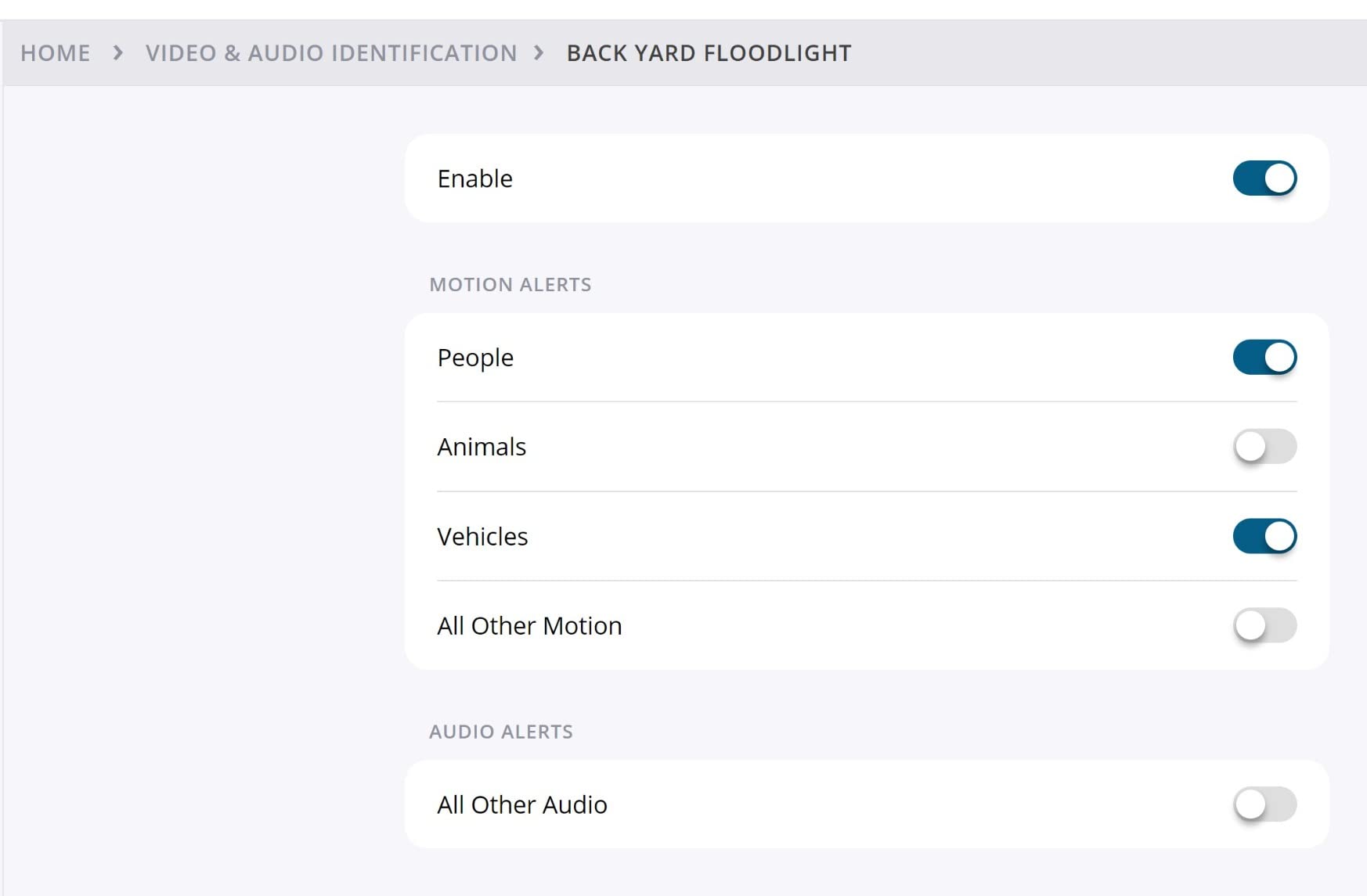
Bright white light attracts insects, and a motion sensor cannot tell a moth from a person. Most of the resulting alerts are the camera reacting to something a few inches from the lens. Tighten the motion zones to cover the area you actually care about, lower the trigger sensitivity, and if the camera has a detection mode for people and vehicles, turn it on so it filters the rest.
Do floodlight cameras need to be hardwired?
Most do, and the wired models deliver the strongest light output because they are not rationing brightness to protect a battery. If there is no power at the mounting point, battery and solar models are the only practical option, with the trade-off that they run dimmer. The Tapo C615F pairs a solar panel with a 10400mAh battery, and the Arlo Pro 3 Wireless Floodlight uses a rechargeable battery with no wiring at all.
Which floodlight camera works without a subscription and still saves video?
The eufy E30, the eufy E340 and the Wyze Floodlight Camera v2 all record locally with no monthly fee. The eufy E30 supports 24/7 hardwired recording with core features at no cost, the eufy E340 records continuously to a microSD card up to 128 GB or a HomeBase, and the Wyze stores up to 30 days on a microSD card. Without a card, the Wyze saves snapshots only.
Where to Start
Start with the Ring Floodlight Cam Wired Plus if you have power at the mounting point and want the most proven option. Its 2000 lumens and 44k+ owner reviews make it the safest choice among the best floodlight cameras with spotlights for 2026, and the installation is a fixture swap for anyone comfortable with basic wiring.
If light output and stored footage matter more to you than ecosystem polish, the Wyze Floodlight Camera v2 is the value pick. It is dimmable and records 30 days locally with no subscription. For a wide yard with no wiring, the Tapo C615F is the one to order, accepting the 800-lumen limit as the price of solar power.
Whichever you choose, install the microSD card before you mount the camera if the model supports local storage, aim the light heads downward, and tighten the motion zones on the first evening. Those three steps prevent most of the complaints we read across thousands of owner reviews.