
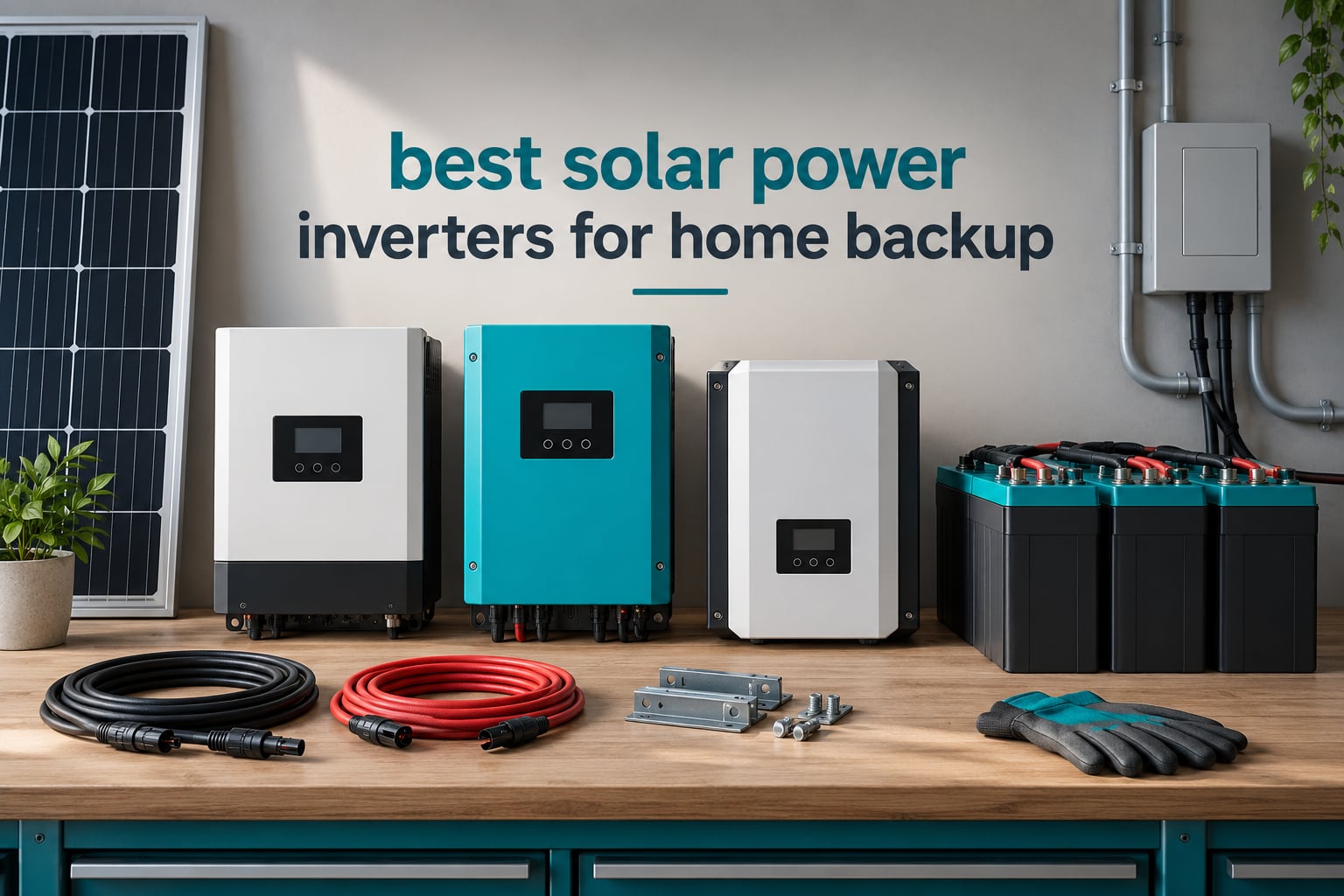
The best solar power inverters for home backup are hybrid inverter-chargers that convert your panels’ DC into AC for your home and then switch to battery power the instant the grid drops. A standard grid-tie inverter cannot do that. It shuts down the moment utility power fails, no matter how many panels you have on the roof. We went through 12 inverter-changers, weighing continuous output, surge headroom, built-in transfer switching, battery compatibility and warranty length to find the ones that actually keep the lights on.
That distinction matters more than any other spec on this list. On r/SolarDIY, the most common question new backup builders ask is whether they can get seamless whole-house battery backup without a critical loads panel, and the answer the community keeps giving is that you need an inverter-charger with the transfer switch built in. If you skip that piece, a blackout is just a blackout.
We built this list around that requirement. Every unit below has either a built-in automatic transfer switch, a battery-backed transfer path, or the wiring provisions to sit inline with grid and generator input. We also kept the honest drawbacks in plain view, because a one-year warranty or a fan that wakes you at 2am matters when the storm is still going.
Worth noting that most of these units are single-phase 120V or 120/240V devices aimed at a house, a cabin, an RV or a workshop. For a full-panel grid-tie system with utility interconnection and no outage goal, a different category of inverter fits better. We explain the split in the buying guide below.
If you are still assembling the rest of the system, our guides to power inverters and solar batteries for home backup cover the rest of the chain.
Table of Contents
Top 3 Inverter Picks for Home Backup in 2026
Three picks stand out for different reasons. The SRGFTS 4000W hybrid leads because it runs with or without a battery and carries a large touchscreen. Renogy’s 3000W is the most proven unit here by owner volume. BELTTT delivers the most output per dollar of anything in the group.
SRGFTS 4000W Hybrid Inverter
- 4000W rated with 8000W peak
- Built-in 140A MPPT to 350VDC
- Pure sine wave 120V output
- Runs with or without a battery

Renogy 3000W Pure Sine Inverter
- 3000W continuous with 6000W surge
- Above 90% conversion efficiency
- UL 458 and CSA certified
- Very quiet with a 16.4ft wired remote

BELTTT 3000W Pure Sine Inverter
- 3000W continuous with 6000W peak
- Above 93% conversion efficiency
- Bright LCD with adjustable voltage
- Generous accessory kit included
All 12 Inverter Picks Compared in 2026
Every model below, with the continuous output, surge figure and backup feature that matters most when the grid goes away.
| Product | Specs | Action |
|---|---|---|
| SRGFTS 4000W Hybrid Inverter |
|
Check Latest Price |
 SUNGOLDPOWER 5000W 48V Inverter Charger SUNGOLDPOWER 5000W 48V Inverter Charger |
|
Check Latest Price |
 VEVOR 3000W 24V Hybrid Inverter VEVOR 3000W 24V Hybrid Inverter |
|
Check Latest Price |
 SUNGOLDPOWER 3000W 24V Inverter Charger SUNGOLDPOWER 3000W 24V Inverter Charger |
|
Check Latest Price |
 AIMS 3000W 12V Inverter Charger AIMS 3000W 12V Inverter Charger |
|
Check Latest Price |
| Renogy 3000W Pure Sine Wave Inverter |
|
Check Latest Price |
| BELTTT 3000W Pure Sine Wave Inverter |
|
Check Latest Price |
 LANDERPOW 2000W Pure Sine Inverter LANDERPOW 2000W Pure Sine Inverter |
|
Check Latest Price |
 ZETAWALE 2000W Pure Sine Inverter ZETAWALE 2000W Pure Sine Inverter |
|
Check Latest Price |
 Jlouneo 4000W Pure Sine Inverter Jlouneo 4000W Pure Sine Inverter |
|
Check Latest Price |
 OLTEANP 1500W Inverter With Transfer Switch OLTEANP 1500W Inverter With Transfer Switch |
|
Check Latest Price |
 SUNGOLDPOWER 10000W 48V Split Phase Inverter SUNGOLDPOWER 10000W 48V Split Phase Inverter |
|
Check Latest Price |
1. SRGFTS 4000W Hybrid Inverter: Our Top Pick for Battery-Free Operation
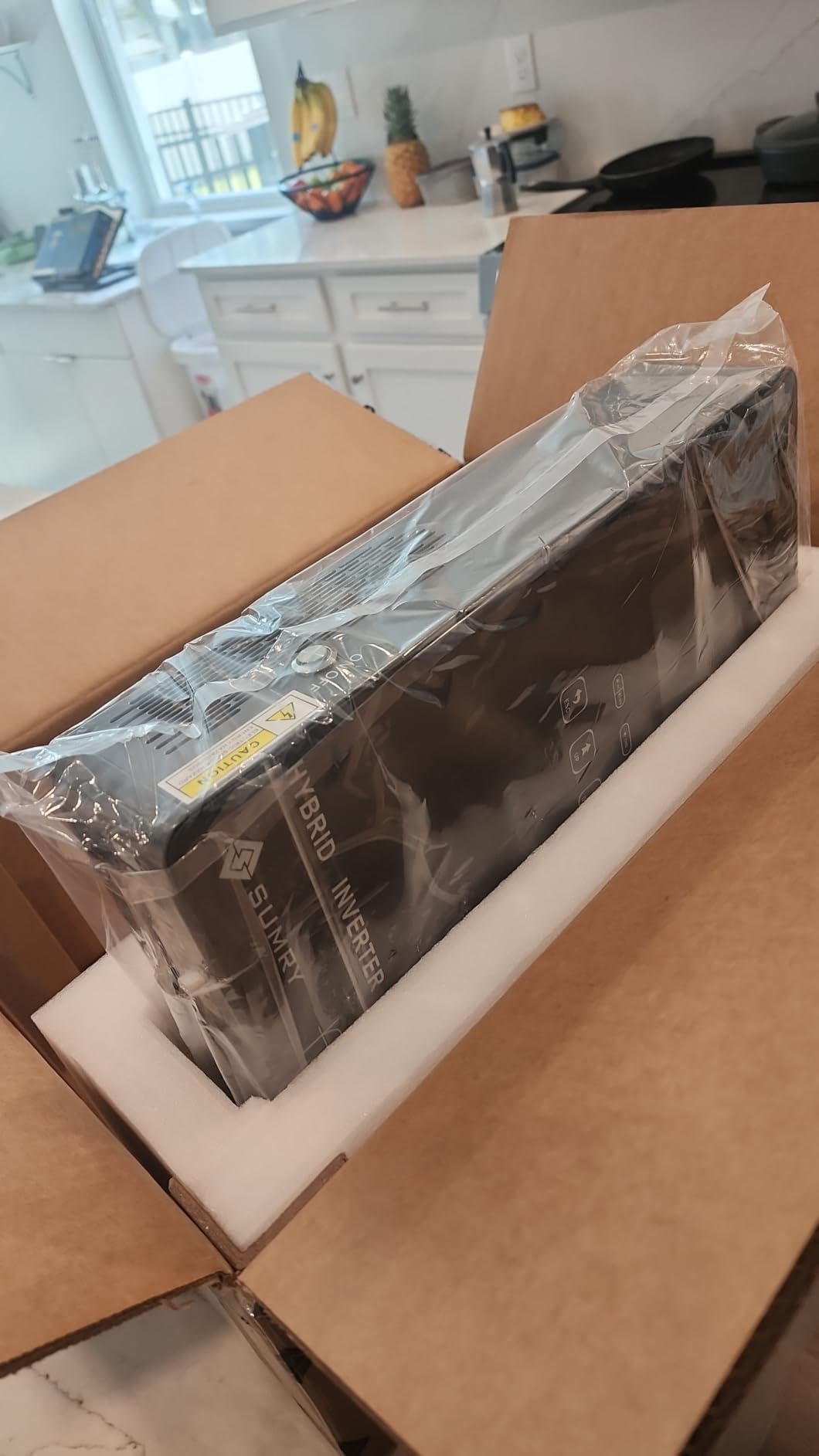
SUMRY Hybrid Solar Inverter, 4000W DC24V to AC120V Pure Sine Wave Power
4000W continuous / 8000W peak
140A MPPT to 350VDC
24V DC to 120V pure sine
LCD touch display
1 year warranty
Pros
- Runs solar loads with no battery connected during daylight
- 140A MPPT with up to 98% conversion efficiency
- Large 6.25 inch LCD touchscreen reads input and output data clearly
- Accepts AGM gel lead-acid lithium and LiFePO4 banks
- One-key default restore plus overload overheat and short circuit protection
Cons
- Three cooling fans are louder than smaller MPPT units
- 120V single-phase output only with no 240V leg
- Electronic manual is thin on PV charging troubleshooting
This is the unit I keep coming back to for backup duty because it removes the single most common reason backup systems disappoint people. You can wire panels in, let them run the house through the inverter, and skip the battery entirely until the outage arrives. When daylight is doing the work, you are not burning stored charge to run a load.
On paper the numbers are the strongest in this group. You get 4000W rated with an 8000W peak, and the built-in 140A MPPT accepts up to 350VDC across a 5600W PV array with conversion efficiency up to 98 percent. That MPPT headroom is unusually generous for a 24V unit and gives you real flexibility on string length.
The interface is the part I did not expect. A 6.25-inch LCD under a tempered glass cover with touchable buttons shows real-time input, output and battery status, which makes commissioning far less painful than scrolling through a two-line LED panel in a dark garage.
Output is 120V single-phase pure sine wave, which covers the vast majority of household circuits. If your backup plan includes a 240V well pump, a heat pump or a clothes dryer, this is the wrong unit no matter how good the rest of it is. The 24V battery bus also caps how much storage you can hang on it compared with a 48V system.
The fans are the trade-off. Three of them run the chassis, and owners living in small spaces mention the noise is louder than they expected, particularly under sustained load. The warranty is one year, which is the shortest term you will see among the better-known brands here.
What to check before you commit
Confirm your planned loads are all 120V. Anything on the 240V bus rules this unit out entirely, and no amount of extra solar changes that.
Also check your panel string voltage against the 350VDC MPPT ceiling. Running a string near its limit with hot weather derating is how units get damaged, and one field report in a solar group described a unit stressed by 550V VOC input.
Who should look elsewhere
Skip this if you need 240V split-phase output, if your battery bank will exceed what a 24V architecture can hold, or if fan noise in an interior space is a dealbreaker for you.
For a comparable 24V build with simpler controls and less cooling noise, the VEVOR option later in this list is the quieter alternative.
2. SUNGOLDPOWER 5000W 48V Inverter Charger: Best for Large Battery Banks
5000W DC 48V UL1741 Pure Sine Wave Solar Inverter,100A MPPT Solar Charger and 40A AC Battery Charger, 120V AC Output Solar Inverter Charger Manufactured by SunGoldPowerCo.,Ltd (Support Parallel)
5000W continuous on 48V
100A MPPT plus 40A AC charger
Stacks to 30kW across six
UL1741 listed
2 year warranty
Pros
- Inverter MPPT and AC charger in one enclosure
- Stacks with other units for split phase and three phase output
- Four charging modes and four output modes
- RS485 port for BMS communication
- Works with AGM gel flooded and lithium banks
Cons
- Heavy 28-pound chassis with a deep enclosure
- WiFi and GPRS monitoring needs an extra module
- Dense feature set makes on-device setup less approachable
Moving up to a 48V bus changes what you can build. Battery cable losses drop by roughly three quarters at the same current, you can carry far more storage on a single inverter, and the class of 120V loads you can support grows with it. This is the unit on the list I would pair with a serious bank.
It packs three functions into one box: a 5000W pure sine inverter, a 100A MPPT solar charger and a 40A AC battery charger, with the PV side accepting up to 5500W at 500VDC. Four charging modes cover AC priority, solar priority, solar only and a mains plus solar hybrid, and four output modes control which source feeds the loads first.
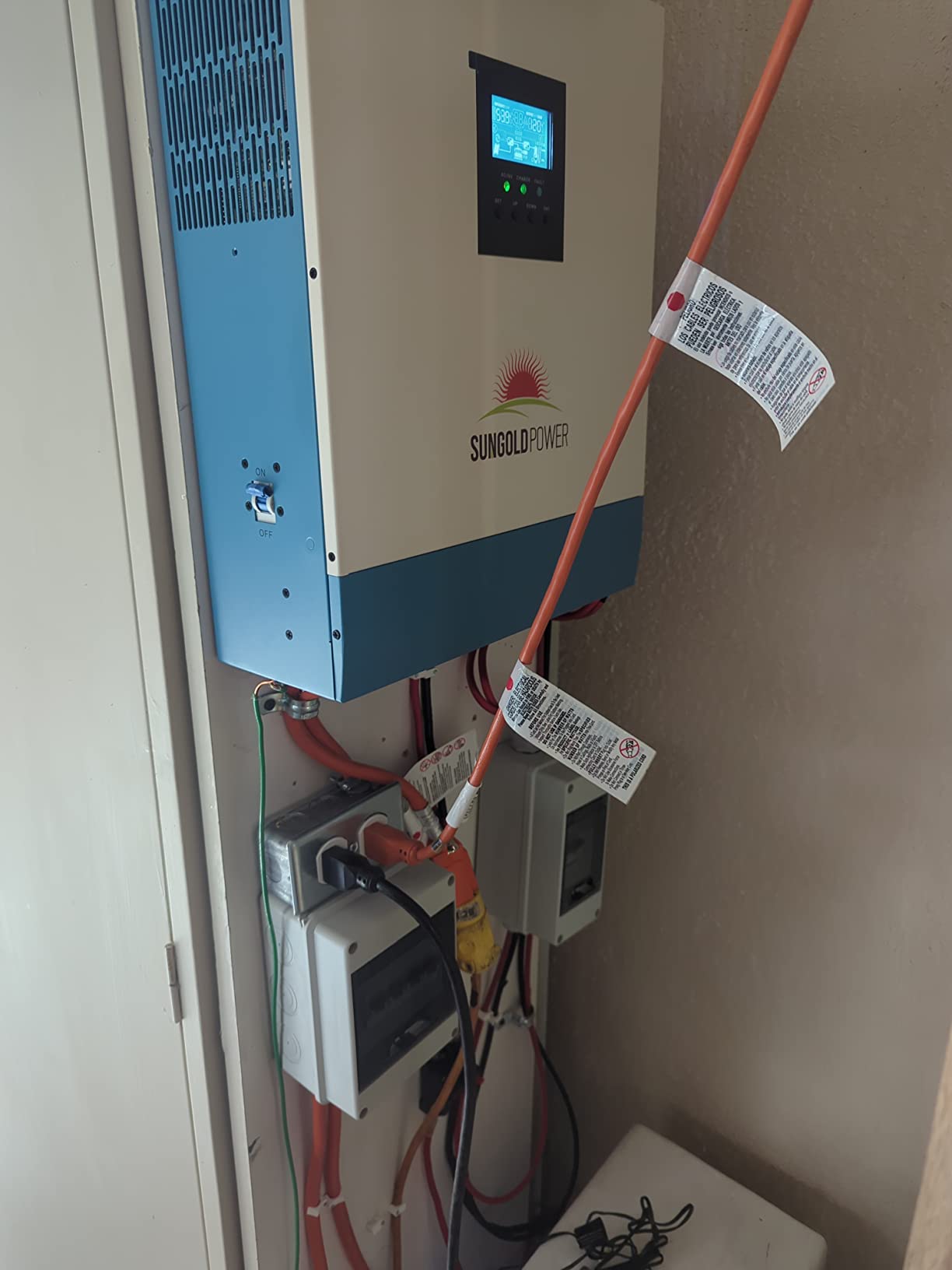
The stacking path is what separates it from the standalone units. Up to six can run in parallel for 30kW total, and that configuration is how you get 120/240V split phase or 208V three phase from this hardware. If your backup target is the whole house rather than a handful of circuits, that flexibility is the reason to look here.
The RS485 port is a real plus for anyone pairing a lithium bank, since it lets the battery management system talk to the charger instead of leaving you guessing at state of charge. Compatibility covers AGM, sealed, gel, flooded and lithium chemistries with a user mode for anything else.
What to check before you commit
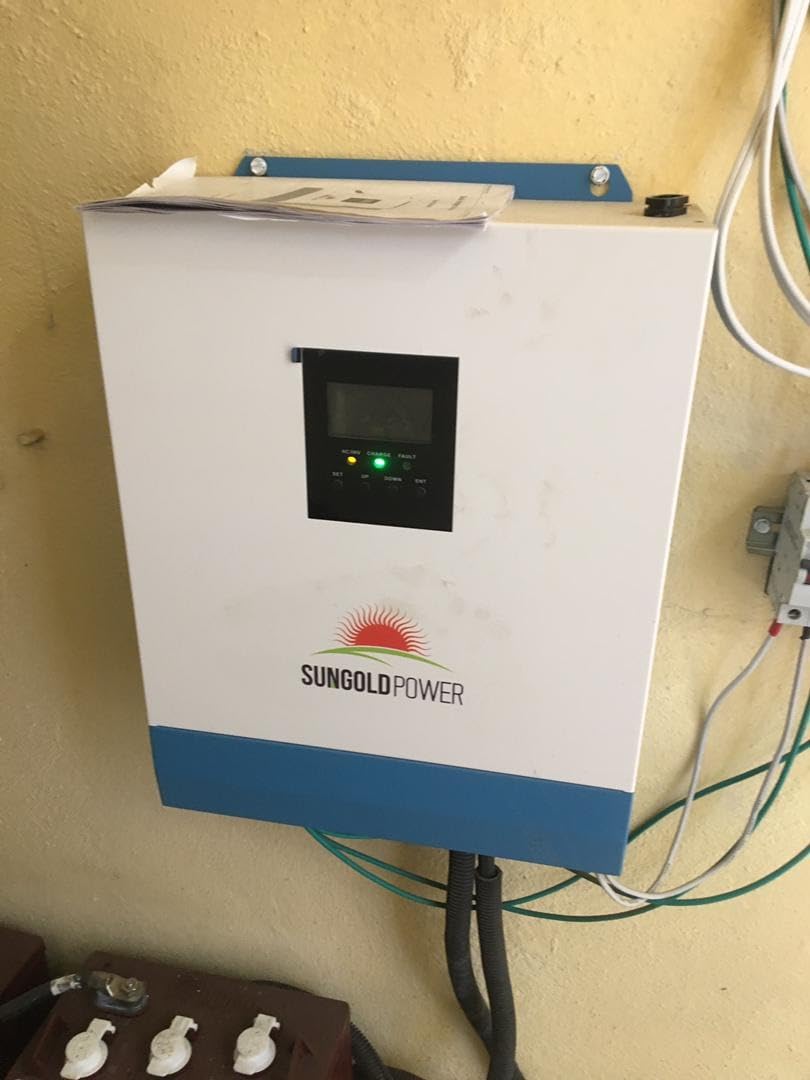
Measure the wall space first. At 28 pounds and a deep enclosure, this needs a real mounting location with service clearance on all sides, not a shelf above a workbench.
Decide about remote monitoring early. WiFi and GPRS are add-on modules rather than built in, so if you want to see battery state from your phone during an outage, budget for the extra hardware before you order.
Who should look elsewhere
Skip this if you want a single-box install that just works without commissioning patience. The number of modes and configuration options rewards an installer who will sit down with the manual.
It is also overkill for an RV or a weekend cabin where a 3000W unit covers the whole load list.
3. VEVOR 3000W 24V Hybrid Inverter: Best for Quiet 24V Camp and Cabin Builds
VEVOR Hybrid Solar Inverter, 3000W, Single Phase Pure Sine Wave Power Inverter, 24V DC to 110/120V AC, with Built-in 100A MPPT Solar Charge Controller, for Off-Grid System Lead Acid Lithium Battery
3000W continuous / 4000W peak
100A MPPT over 60V-500V
Battery-free operation
Built-in WiFi module
15.2 pounds
Pros
- Inverter and MPPT controller combined in one 2-in-1 box
- 100A MPPT with up to 4000W PV array across a wide voltage window
- Built-in WiFi module for phone monitoring
- Selectable charging and output modes via device buttons
- Optimized for 24V lithium banks with an activation function
Cons
- App polls data about every five minutes instead of live
- Warranty terms are not stated on the listing
- Buyers question long-term durability versus established brands
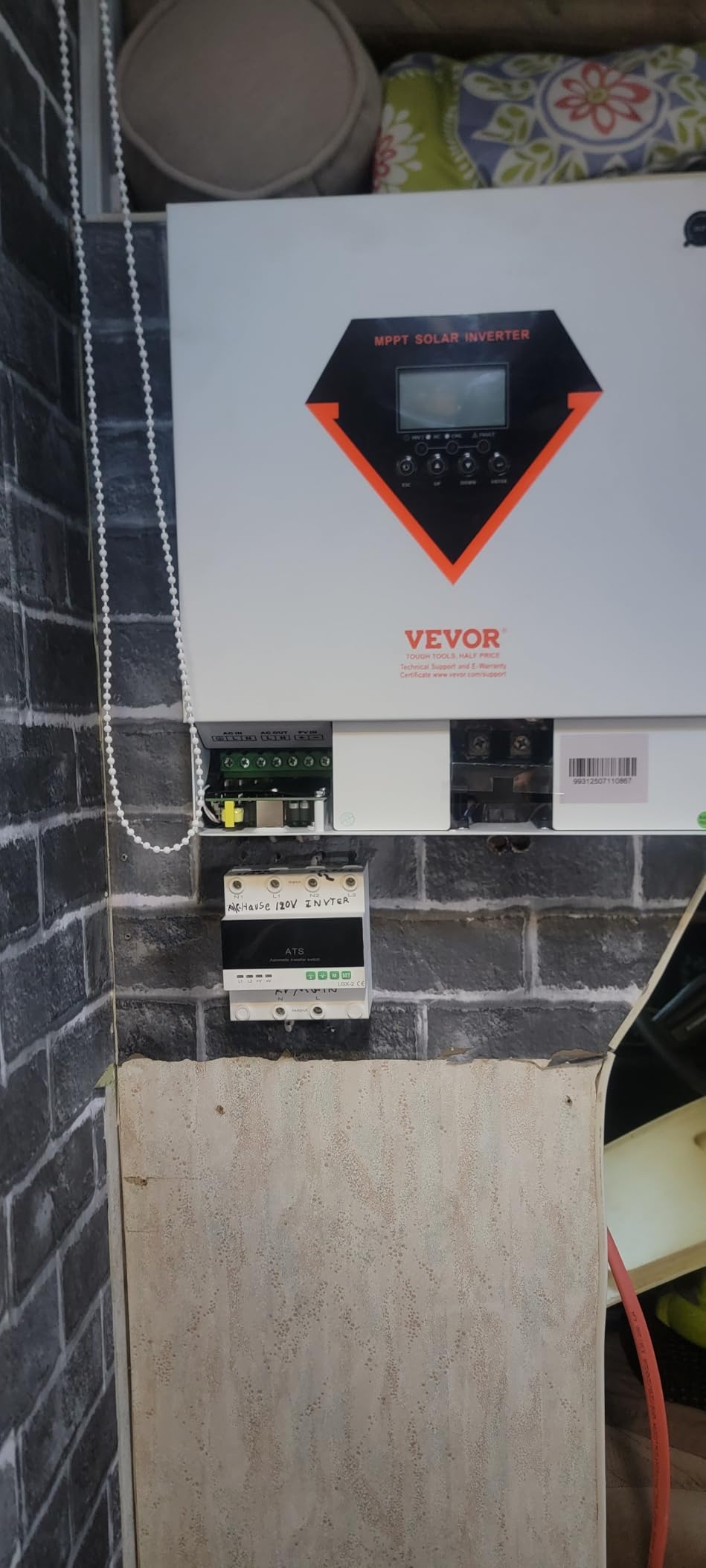
This is the 24V workhorse for off-grid and RV use. It delivers 3000W of pure sine output from a 24V bank with a 4000W peak, and the MPPT handles up to 100A of charging across a 60V to 500V DC window. That lower bound of 60V is the useful part, since it accepts shorter strings than the 120V minimum some competitors impose.
Wireless monitoring is built in rather than sold as an add-on, which is unusual at this level. In practice the app refreshes roughly every five minutes, so treat it as a status check rather than a live monitor. That is fine for checking battery state before you leave the house, and useless for watching a fault develop in real time.
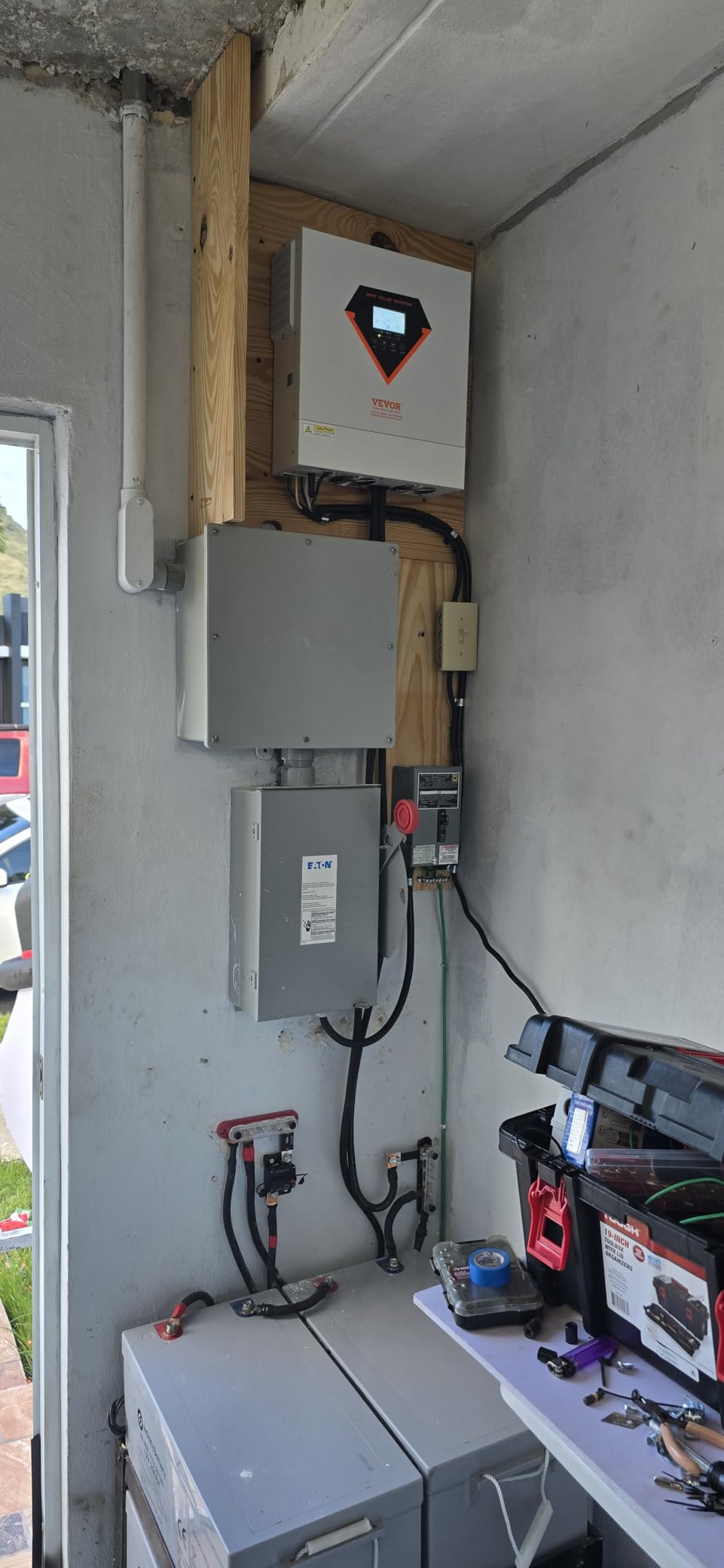
Charging modes cover solar only, mains only and a hybrid setting, and output modes give you UTL, SOL, SBU and SUB. The lithium activation function is designed to wake a battery bank that has dropped below its cutoff, which saves a reset after a deep discharge or a cold night.
The listed upper temperature rating of 50 degrees Celsius is worth noting for anyone in a hot climate. As with every inverter here, enclosure ventilation matters more in summer heat than in winter cold.
What to check before you commit
Ask the seller for written warranty terms. The listing does not state coverage clearly, and an unstated warranty is harder to enforce than a short one you can see.
Confirm your panel array fits the 4000W maximum PV input before ordering, because going over that figure means the controller cannot use all of your production.
Who should look elsewhere
Skip this if you need real-time monitoring for safety-critical equipment, or if a longer documented warranty matters to you. The 3000W output also caps how many large appliances you can start at once.
For a larger display and a longer warranty term, the BELTTT and Renogy units both sit higher in this list.
4. SUNGOLDPOWER 3000W 24V Inverter Charger: Best for Sub-10ms Transfer
3000W DC 24V Pure Sine Wave Inverter with 80A MPPT Solar Charger (MPPT Voltage Range 120V-400Vdc), 40A AC Battery Charger, Solar Inverter Charger Manufactured by SunGoldPowerCo.,Ltd (Upgraded)
3000W continuous pure sine output
80A MPPT over 120V-400V
Under 10ms transfer to battery
24 month warranty
Pros
- Under 10ms transfer keeps electronics running when the grid fails
- Inverter MPPT and 40A AC charger combined in one unit
- Four charging modes with LCD and LED status display
- Compatible with AGM gel flooded lithium and custom battery types
- Two year warranty with lifetime technical support
Cons
- MPPT window requires a 120V-400VDC array
- Listing output voltage field reads 24V DC and confuses buyers
- Remote monitoring costs extra
- Highest share of one-star feedback in this group
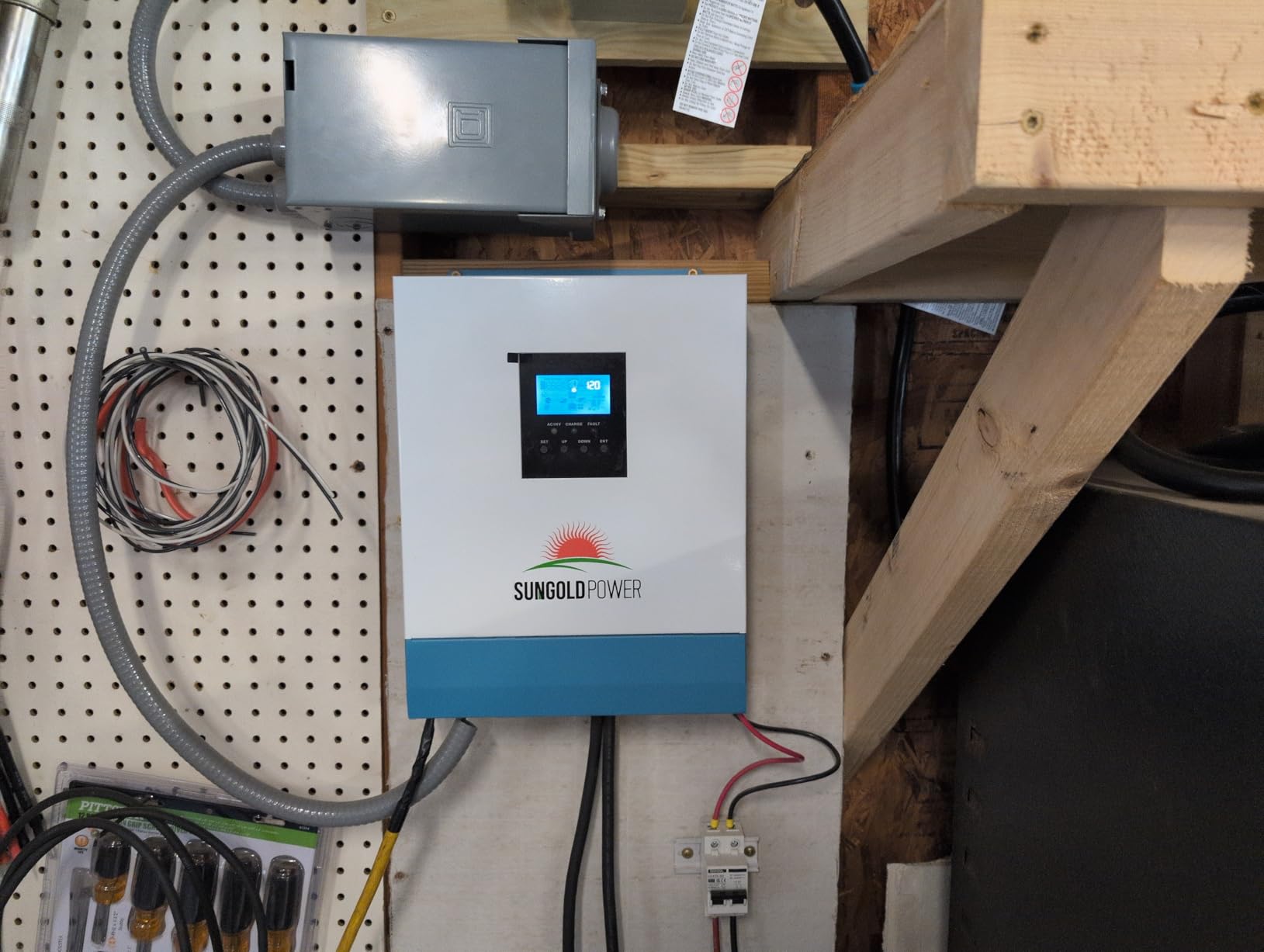
The reason this unit exists on a backup list is the transfer time. Under 10 milliseconds from mains loss to battery is close to what a desktop UPS gives you, and it means a desktop, a NAS or a medical device will ride through the switch without rebooting. For anything that cares about a clean handover, that number is the headline feature.
It combines a 3000W pure sine inverter, an 80A MPPT solar charger and a 40A AC battery charger in a single 24V unit, with four charging modes covering AC priority, solar priority, solar only and a hybrid of mains plus solar. Surge headroom is not clearly documented on the listing, so confirm it with the manufacturer before sizing motor loads against this unit.
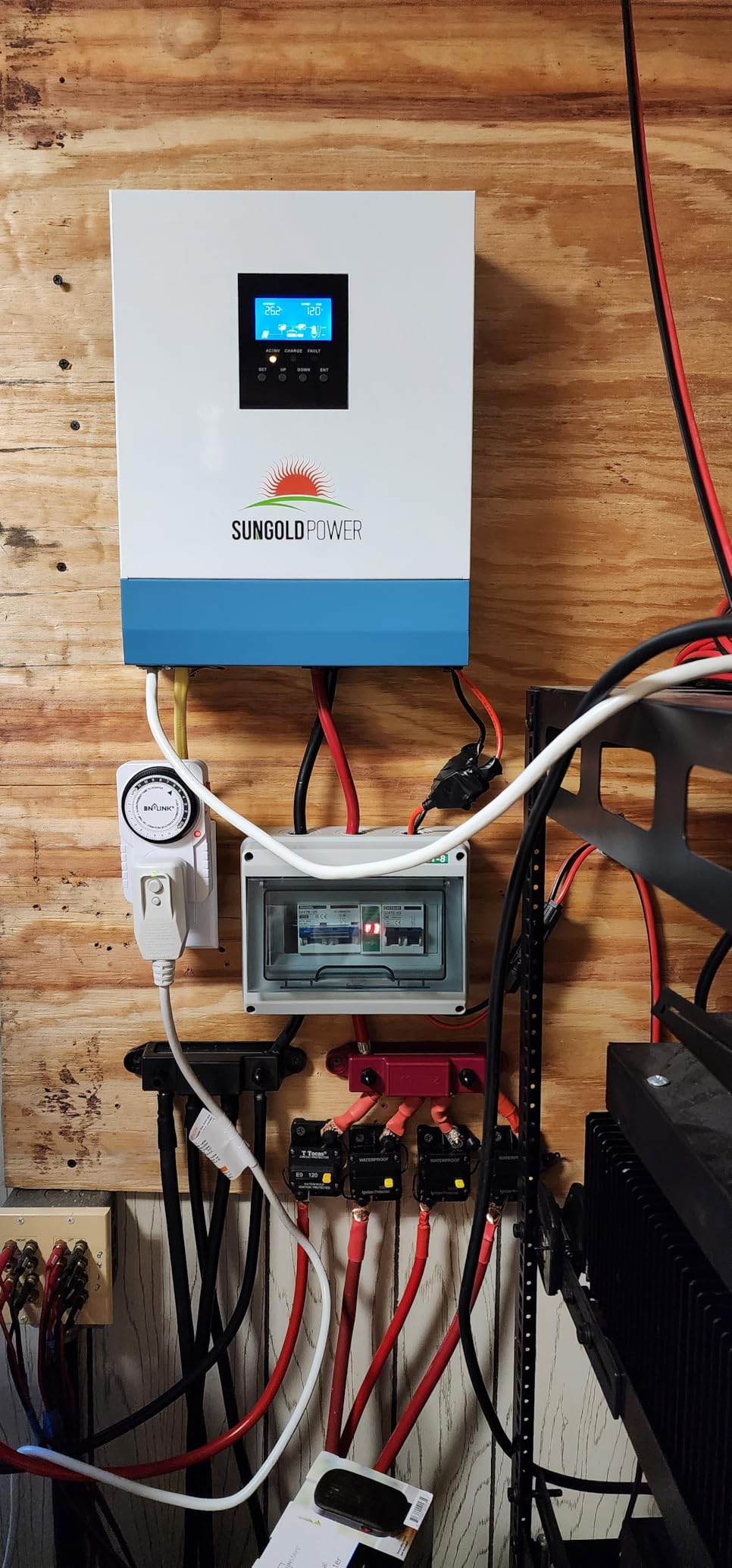
The catch is the MPPT window. It requires a 120V to 400VDC array, which rules out the low-voltage panel strings that work perfectly well with a 60V-capable controller. If you already own 200W-class panels wired in a short series string, this is the wrong unit and you will be rewiring.
Reviewers also flag a confusing listing detail: the output voltage field reads 24V DC even though the output is 120V AC. It is a cataloging error rather than a hardware fault, but it costs people time. The one-star share here runs higher than on the other units in this roundup.
What to check before you commit
Measure your string voltage at the coldest morning you expect to see. Cold panels push open-circuit voltage up, and this unit has less headroom than the 60V-minimum alternatives.
If fast transfer is not important to you, the same manufacturer offers a 48V version later in this list with a wider window and the same fast handover.
Who should look elsewhere
Skip this if your existing array sits below 120VDC, or if you want the highest owner satisfaction score in the group. The 3000W continuous rating also leaves little room for simultaneous motor loads.
It is a poor fit for anyone who wants remote monitoring without ordering a separate module.
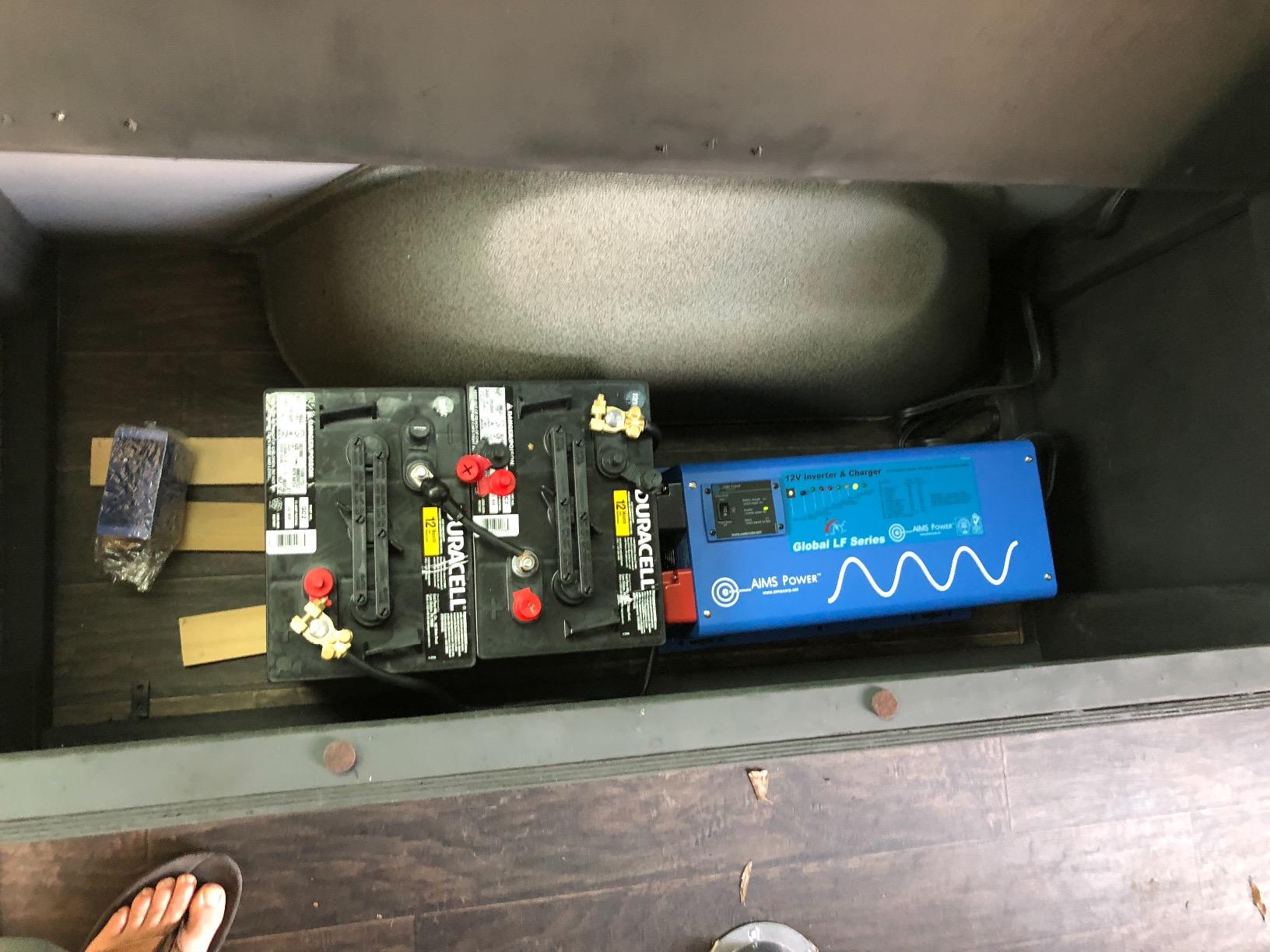
5. AIMS 3000W 12V Inverter Charger: Best for Motor and Compressor Surge
AIMS 3000W 12V Pure Sine Inverter Charger w/Transfer Switch 120V Backup
3000W continuous / 9000W surge
Inverter plus 100A charger plus transfer switch
12V battery input
Lithium wake-up function
3 year warranty
Pros
- Up to 9000W surge for 20 seconds to start motors and compressors
- Automatic transfer switch built into the same chassis
- Seven charging profiles covering gel AGM lead acid and LiFePO4
- Lithium wake-up revives over-discharged banks
- Long service history with multi-year owner reports
Cons
- High no-load draw drains a bank noticeably overnight
- Battery type selected with a small potentiometer dial
- Some dial settings never reach float stage
- Warranty only applies through authorized sellers
Surge capacity is the reason this one earns a place. Up to 9000W for 20 seconds will start a refrigerator compressor, a shop vac or a small motor without the whole inverter browning out. Most 3000W units on this list surge to 6000W, so you get a 50 percent larger headroom number for starting loads.
It is also one of the few units here with a genuine automatic transfer switch built in, alongside a 100A multi-stage battery charger. That combination means the inverter, charger and grid changeover live in one chassis instead of three, which simplifies the wiring diagram considerably for a van, a cabin or a small off-grid shed.
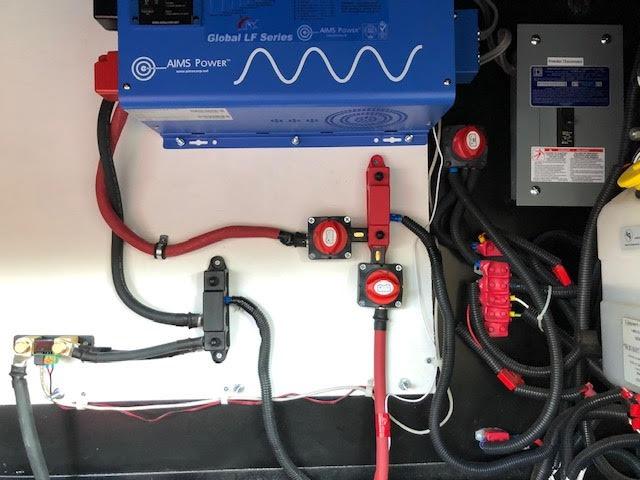
Seven selectable charging profiles cover gel, AGM, lead acid and LiFePO4, and a wake-up function brings banks back online after a deep discharge. It runs on a 12V bus, so your battery bank carries more cable loss over distance than a 48V system would, and the 49-pound weight is substantial for a 12V device.
The honest drawback is quiescent current. Owners report a noticeably high idle draw that can drain a bank overnight, which in practice means a larger bank or an occasional generator top-up during a long outage. The battery-type selector is also a small potentiometer dial with no position feedback, so the profile you picked is hard to confirm from the front panel.
What to check before you commit
Read up on the no-load draw before you size your bank. If you plan multi-day outages, multiply the idle draw by the hours you expect the inverter to sit idle and treat that as a fixed budget reduction on your usable capacity.
Verify you are buying through an authorized seller. The three-year warranty is conditioned on that, which means a marketplace purchase can leave you paying out of pocket for a failure.
Who should look elsewhere
Skip this if idle power draw matters, since that is the price you pay for the surge capability. It is also a poor match for anyone who needs remote monitoring or a display.
For a lighter chassis and a modern remote panel, the Renogy unit later in this list covers most of the same ground without the transfer switch.
6. Renogy 3000W Pure Sine Wave Inverter: Best Proven Performer
Renogy Inverter P2 3000W Pure Sine Wave Inverter 12V DC to 120V AC Converter for Home, RV, Truck, Camping, Trailer, with Wired Remote Controller, Support Li, AGM, SLD, Gel, FLD Batteries
3000W continuous / 6000W surge
12V DC to 120V AC pure sine
Above 90% efficiency
UL 458 and CSA certified
1 year warranty
Pros
- Over 4700 owner reviews give the most proven track record here
- Very quiet with fans staying off except under heavy load
- UL 458 and CSA C22.2 No. 107.1 certified
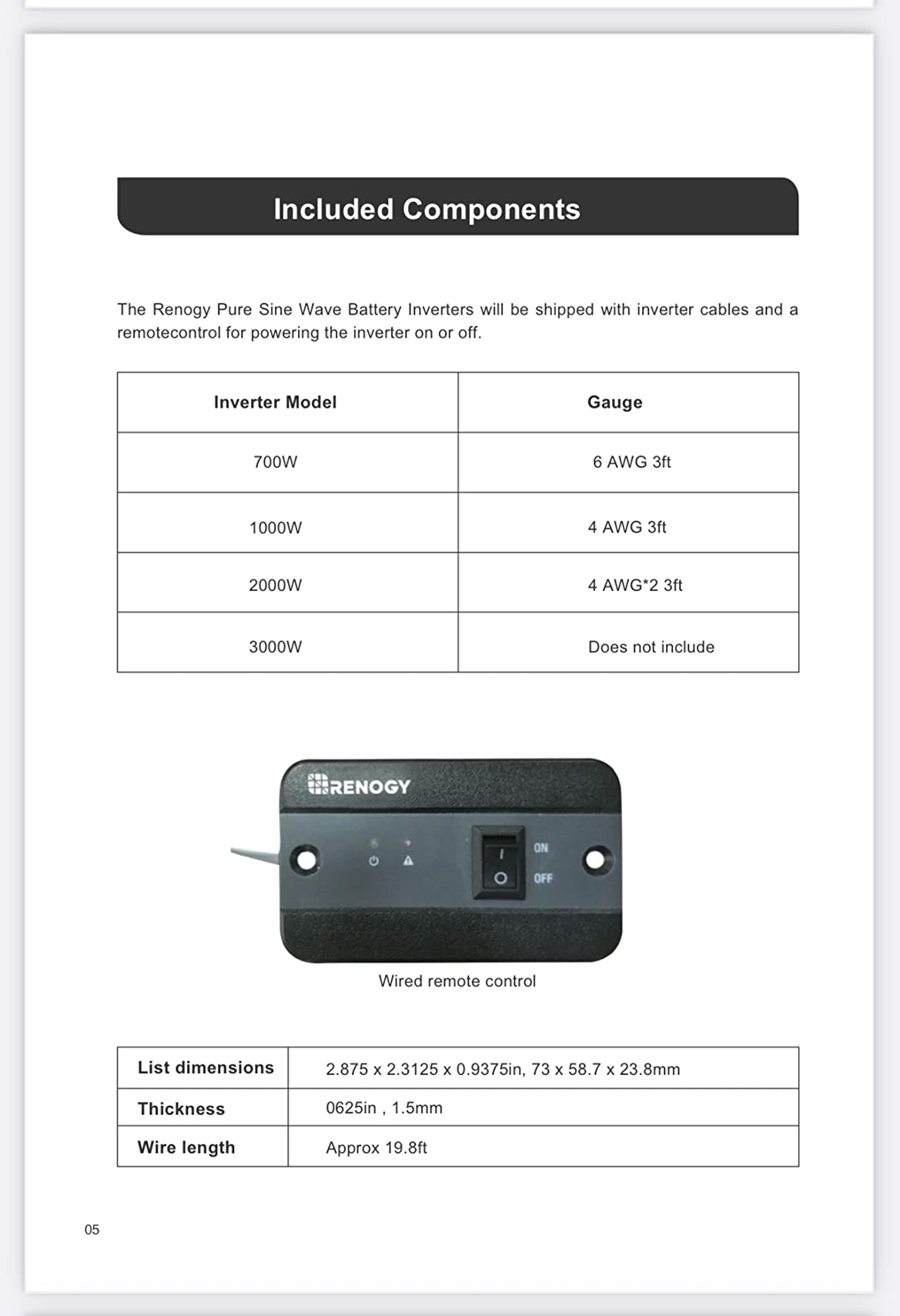
- Three AC outlets plus a terminal block and a 16.4ft wired remote
- Clean sine output runs sensitive electronics without humming
Cons
- GFCI can trip after extended use on some setups
- Included battery cables are about 3 feet and often too short
- Small tucked-in mounting ears make tight installs awkward
- Occasional fulfillment problems through resale channels
When you want the safest bet rather than the cleverest box, this is the one. With more than 4700 reviews at a 4.3 average, it has an order of magnitude more field history than anything else in this roundup, and that history matters when your backup plan depends on the unit working on the third night of a storm.
Output is 3000W continuous with 6000W surge at above 90 percent conversion efficiency, in pure sine wave that matches utility quality closely enough to run pellet stoves, televisions and laptops without audible hum. Certification covers UL 458 and CSA C22.2 No. 107.1, which is a meaningful line in a market where many listings claim vague compliance.
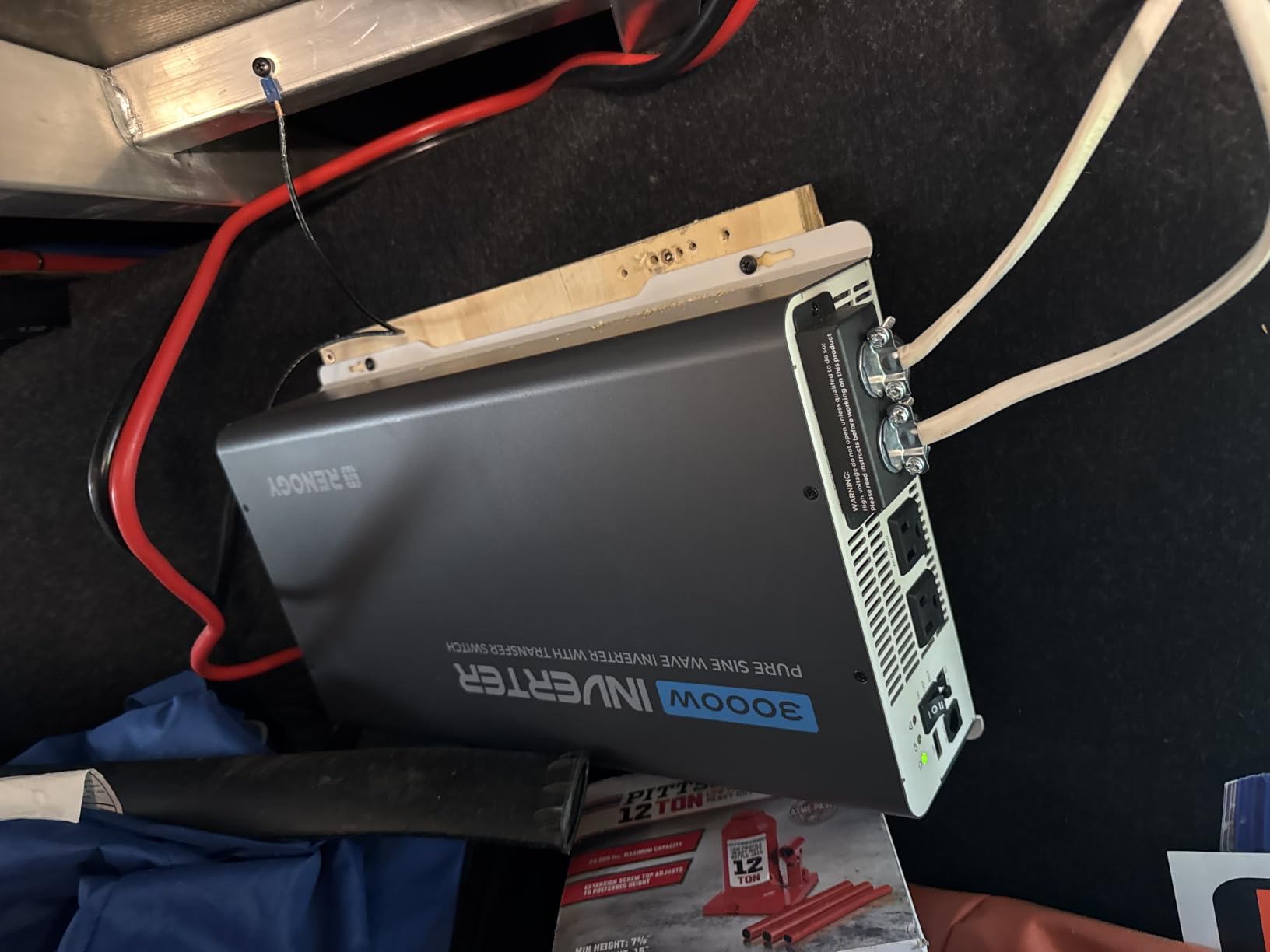
It is also the quietest large unit here. Owners across RV, marine, truck and off-grid builds report the fans essentially never spin unless you are pushing close to full output, which makes it the one we would put inside a living space rather than a garage.
The GFCI is the recurring complaint. On some installations it will trip after extended runtime, and resolving it usually means heavier grounding and properly gauged cabling. The included battery cables run about 3 feet, which is rarely long enough for a real installation, so plan to buy your own.
What to check before you commit
This is a standalone inverter, not an inverter-charger. There is no built-in MPPT and no automatic transfer switch, so backup means pairing it with a battery and either an external transfer relay or a critical loads panel wired to a separate circuit.
It also runs on a 12V bus. For a stationary whole-home system with substantial storage, moving up to 48V cuts cable losses substantially.
Who should look elsewhere
Skip this if you want a single box that handles grid changeover and solar charging on its own, or if you need 240V output.
The one-year warranty is short by the standards of the larger manufacturers, so treat it as a component in a system with a longer-warranty backup plan.
7. BELTTT 3000W Pure Sine Wave Inverter: Best Value per Watt
BELTTT 3000W Pure Sine Wave Inverter 12V DC to 120V AC, 6000W Peak
3000W continuous / 6000W peak
12V DC to 110V AC pure sine
Above 93% efficiency
Bright LCD display
1 year warranty
Pros
- Strong output-to-cost ratio with 3000W continuous and 6000W peak
- Above 93 percent conversion efficiency with low no-load loss
- Bright LCD shows input output voltage battery and load status
- Output voltage and screen brightness are adjustable
- Accessory kit includes 1/0AWG cables nine fuses and a 23ft remote
Cons
- Included battery cables are only 3 feet long
- One-year warranty is the shortest in this group
- Less brand history than the established inverter makers
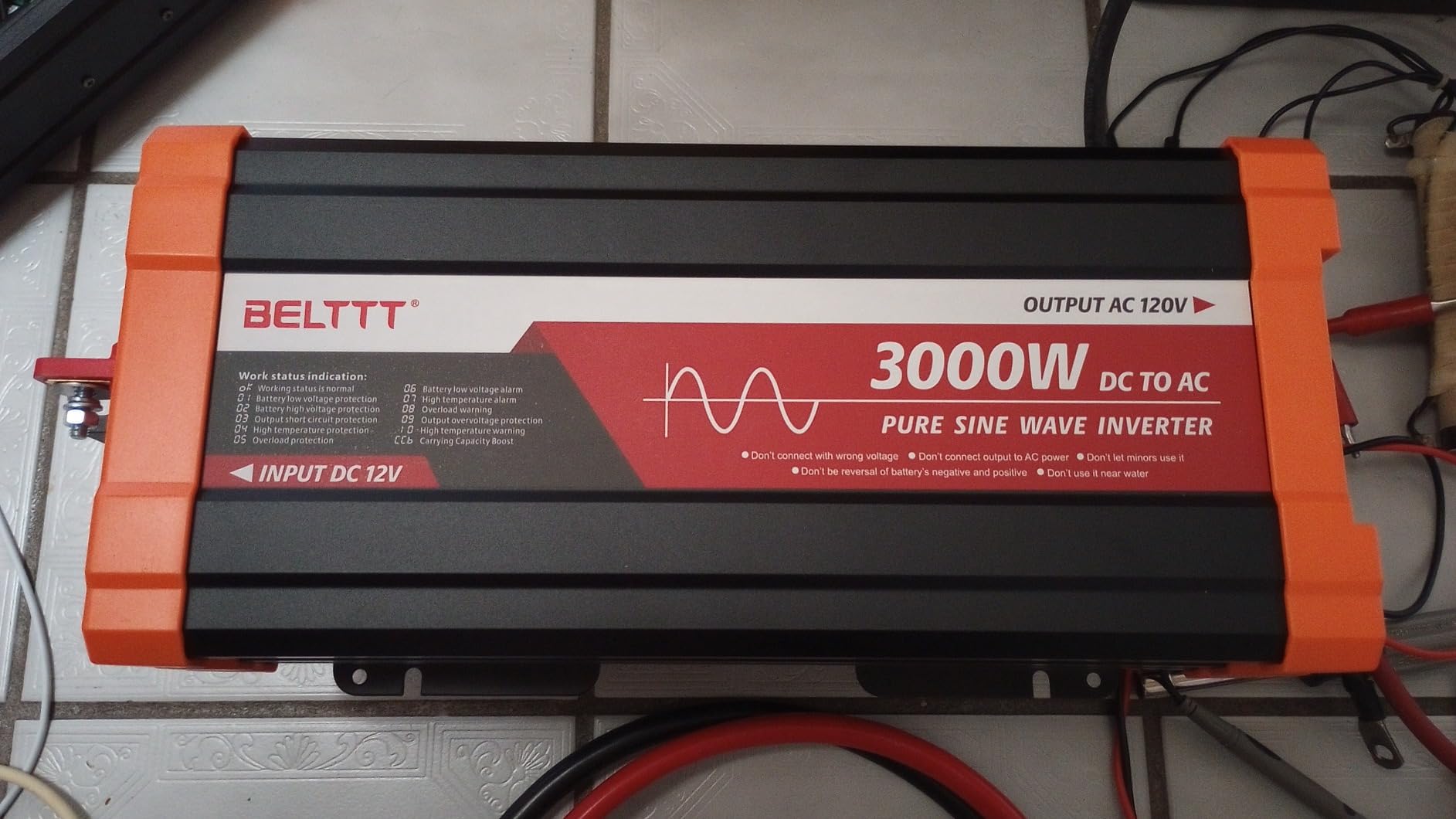
The efficiency figure is what surprised us. Above 93 percent conversion efficiency with low no-load losses is better than most 3000W units in this roundup, including ones from brands with far longer histories. For a standby unit that spends hours idling, low self-consumption matters as much as peak conversion.
The display is genuinely useful. A high-brightness LCD reports input voltage, output voltage, battery state and load status, and both the output voltage and the screen brightness are adjustable within a small range. That last detail matters more than it sounds when the unit is mounted where you cannot reach it easily.
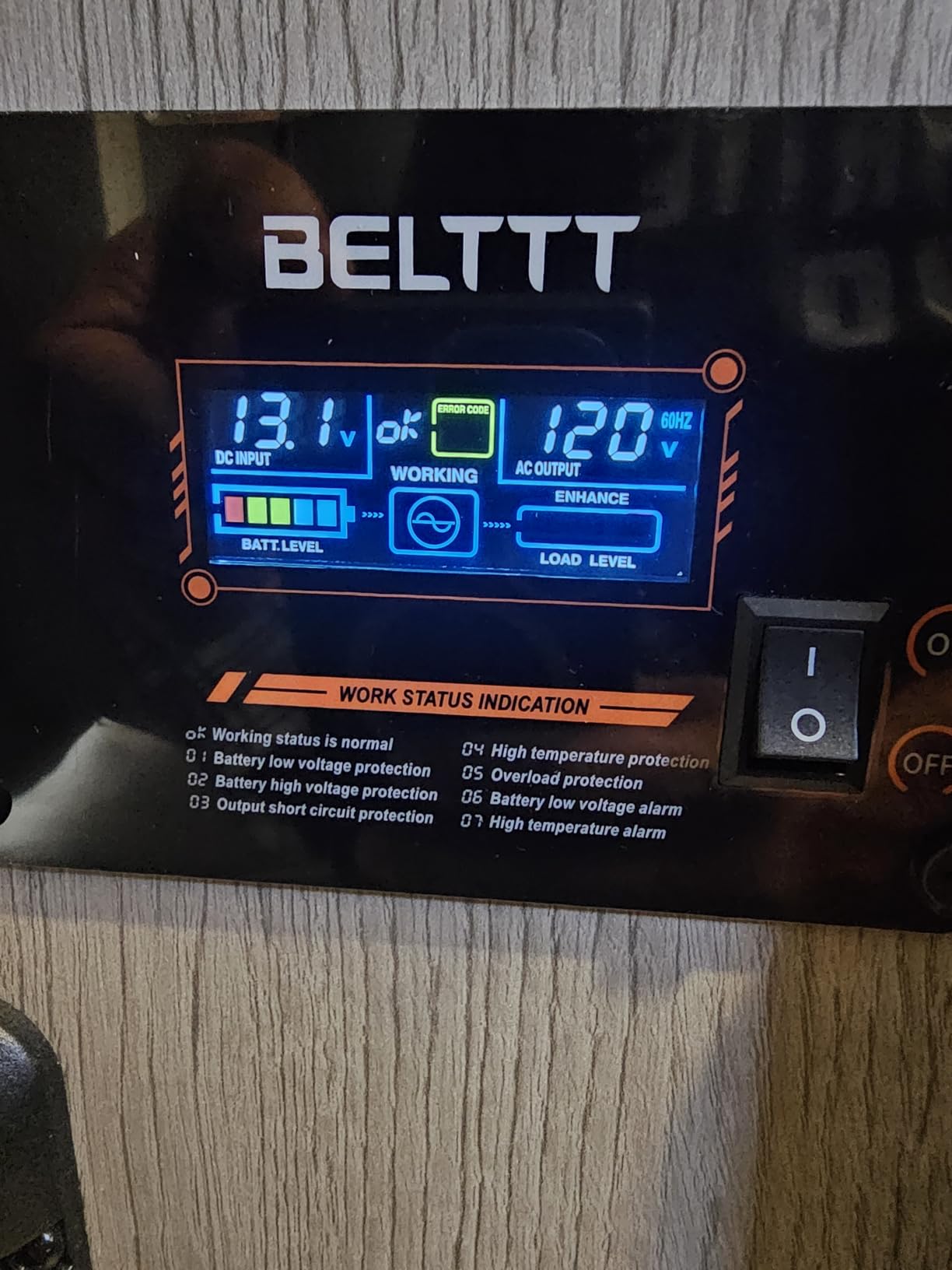
The accessory kit is unusually generous. You get 1/0AWG battery cables, nine 45A fuses, a thimble spanner and a 23-foot remote controller with a cable long enough to run the panel somewhere you can actually read it. Output hardware covers a dual AC socket, a 20A outlet, a USB port and a hardwire port.
Two cautions. The included cables are only about 3 feet, so on a real installation you will almost certainly replace them with proper length and gauge. And the one-year warranty is the shortest on this list, which for a unit this popular is a deliberate cost decision rather than a quality signal.
What to check before you commit
Confirm 110V nominal output suits your loads. It sits at the low end of the normal range for North American equipment, though the adjustable output voltage gives you some latitude.
Plan your cable run and buy the cable in the same order. The supplied length is a bench-test length, not an installation length, and undersized or overlong battery cables are the leading cause of voltage drop complaints.
Who should look elsewhere
Skip this if warranty length is a deciding factor, or if you want grid changeover handling built into the unit. This is a standalone inverter with no transfer switch and no MPPT.
If your priority is a large and quiet unit for a living space, the Renogy pick above handles noise better.
8. LANDERPOW 2000W Pure Sine Inverter: Best Budget Pick
LANDERPOW 2000 Watt Inverter, 12V DC to 120V AC Pure Sine Wave 4000W Surge
2000W continuous / 4000W surge
12V DC to 120V AC pure sine
Above 91% efficiency
6.3 pounds
3 year coverage
Pros
- Lowest cost entry to clean pure sine output
- 2000W continuous with 4000W surge and above 91 percent efficiency
- Three AC outlets plus hardwired terminal and 30W USB-C
- 15ft wired remote with LED screen showing battery and error codes
- Includes 2AWG battery cables and a ground cable
Cons
- Fan noise under heavier loads
- Hardwired AC terminal is awkward to reach when wall mounted
This is where most home backup planning actually starts, because 2000W covers the loads people think of when they first consider the idea. Lights, a refrigerator, a router, a couple of rooms and some charging, all on clean pure sine output at above 91 percent efficiency.
The warranty story is the best in this roundup and deserves attention. Coverage runs three years total, structured as a one-year no-hassle replacement plus two years of extended support, which is a meaningfully stronger position than the single-year terms attached to several competing units.
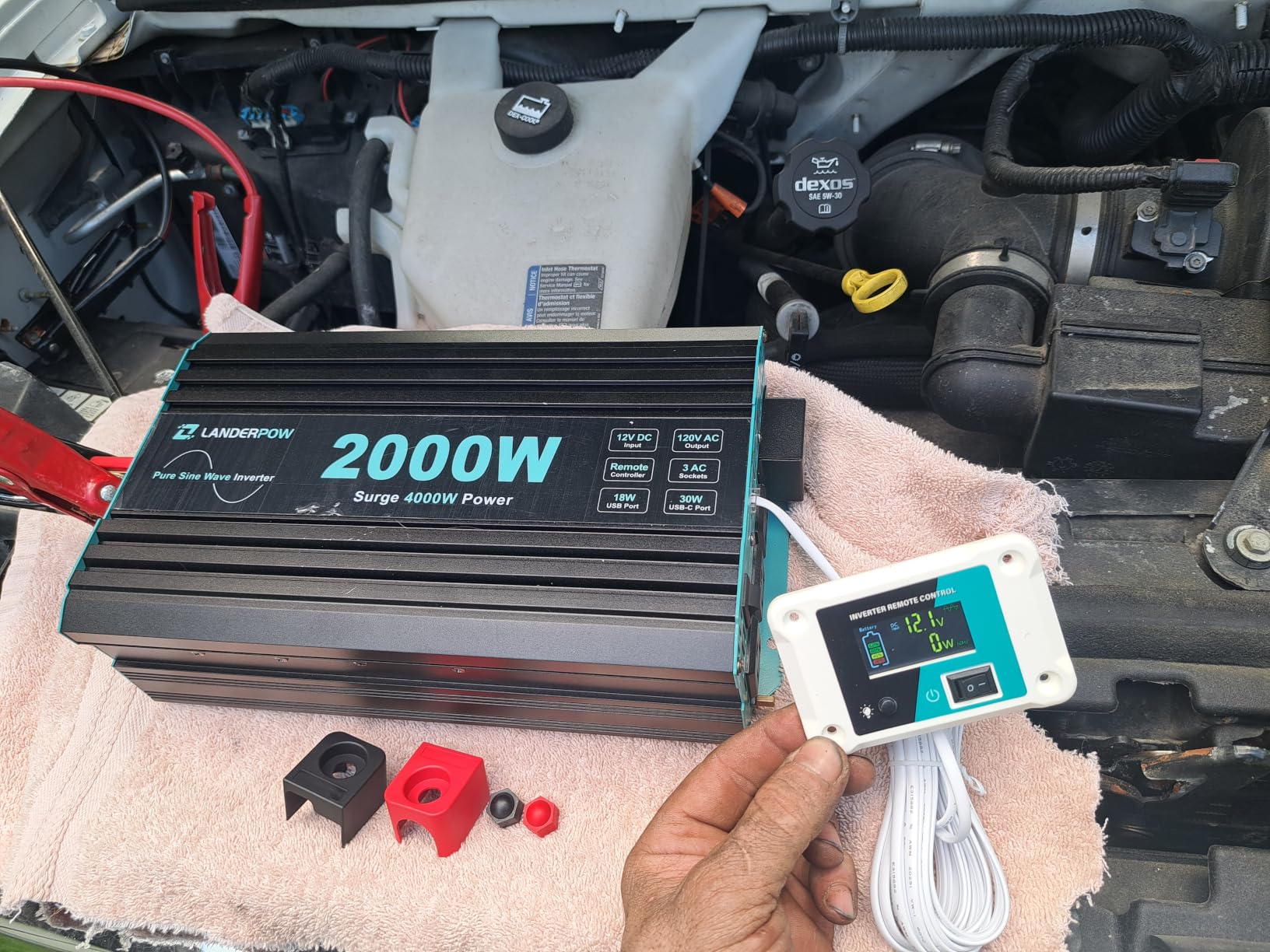
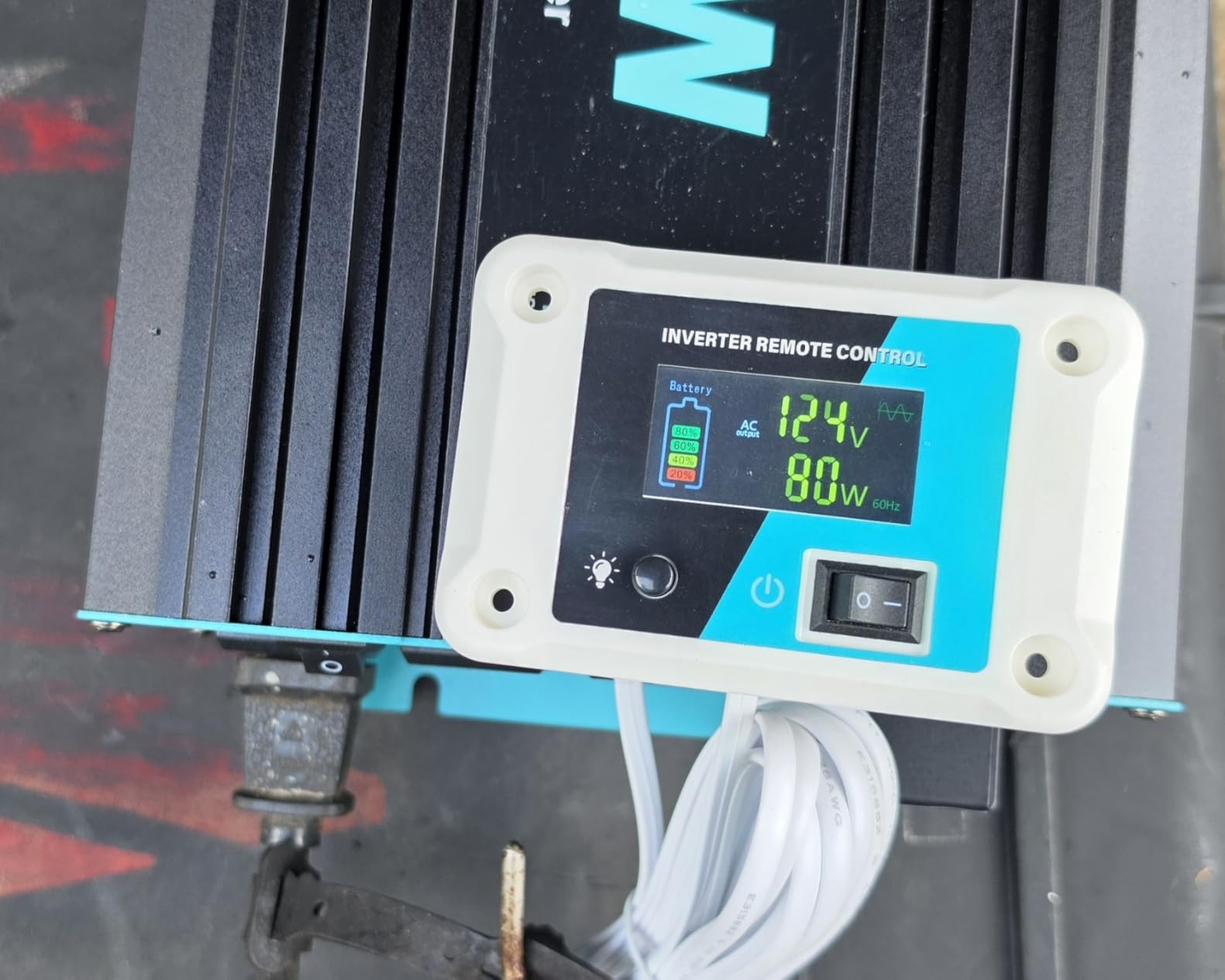
Output options are generous for the class: three AC outlets, one hardwired terminal, 5V/3.1A USB and 30W USB-C power delivery. The 15-foot wired remote carries an LED screen showing battery level, output status and error codes, with one-touch shutdown and restart, so you do not have to reach behind furniture to shut the unit down.
At 6.3 pounds it is also the easiest to move between a truck and a cabin. The drawbacks are modest but real: fans become audible under heavier loads, and the hardwired AC terminal is difficult to access when the unit is mounted flush against a wall.
What to check before you commit
Add up your running watts honestly. Owners who assumed 2000W would cover a household routinely discover that a well pump, a microwave and a refrigerator together exceed it. Start with a load list rather than a square footage estimate.
Plan for expansion. If you might need more later, buy the enclosure size and wiring space now and add a second unit later rather than replacing this one.
Who should look elsewhere
Skip this if you plan to run a 240V load, a power tool cluster or anything with a large motor start. Four thousand watts of surge will not carry a shop full of equipment.
It is also a standalone inverter with no MPPT and no transfer switch, so grid changeover needs separate hardware.
9. ZETAWALE 2000W Pure Sine Inverter: Best Readable Remote Display
2000W Pure Sine Wave Inverter 12V DC to 120V AC Converter with LCD Remote
2000W continuous / 4000W peak
12V DC to 120V AC pure sine
14.76ft LCD remote
Four AC outlets
12 month warranty
Pros
- Oscilloscope-verified clean waveform under 3000W load
- 14.76ft LCD remote readable in daylight and at night
- Four AC outlets plus USB and Type-C fast charging
- Dual intelligent cooling fans extend service life
- Works with lithium AGM deep cycle and lead acid banks
Cons
- Supplied battery cables too short and light for higher loads
- Cooling fan is noisy with only two speed settings
- Battery gauge is not calibrated for LiFePO4
- Some RF interference reported with WiFi and phones
The reason this one gets its own section is the remote. A 14.76-foot LCD panel that stays readable both in daylight and at night, showing live battery voltage, AC output and load wattage, changes how you interact with the unit. Most competitors at this price ship a simple LED remote or none at all.
Waveform quality holds up under load. Owners comparing it against portable generators on an oscilloscope report clean, steady 120V output that they find competitive with far more expensive hardware, which is the specification that matters most for sensitive electronics.
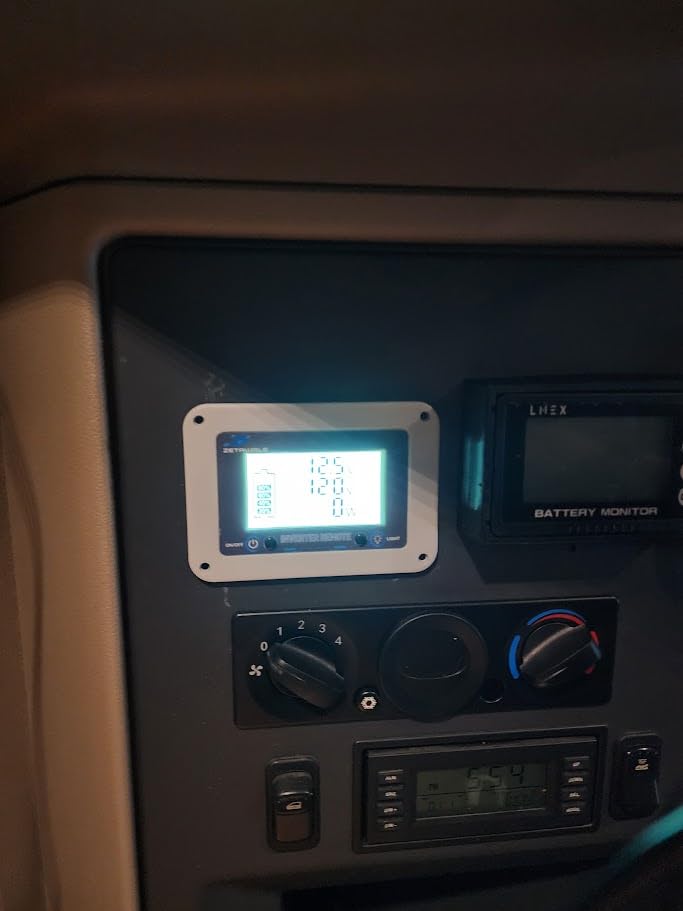
Output hardware covers four AC outlets, a USB port, Type-C fast charging and heavy-duty AC terminal blocks for hardwired runs. Protection spans overload, over-voltage, under-voltage, over-temperature and short circuit, backed by two cooling fans.
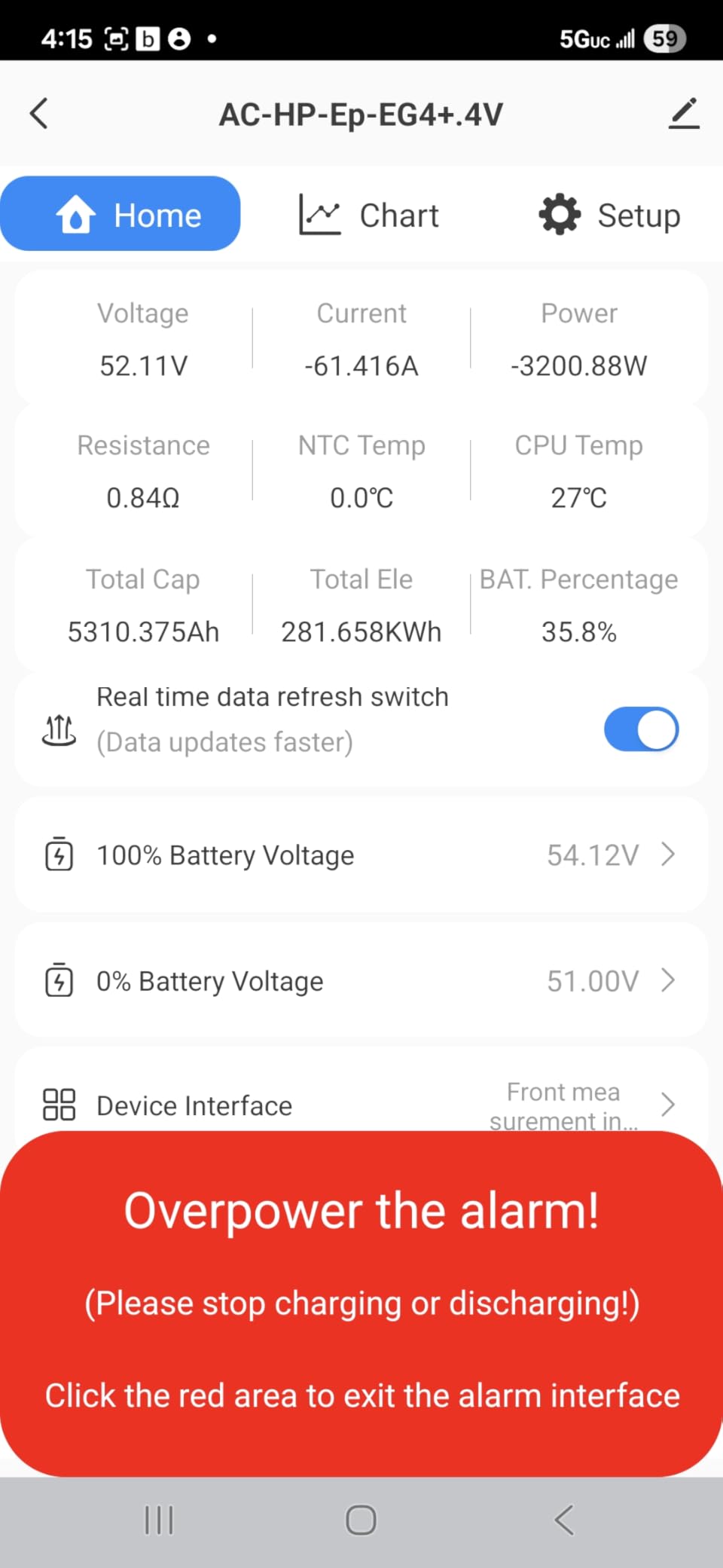
Two limitations deserve a flag. The battery percentage readout follows a lead-acid discharge profile and is not calibrated for LiFePO4, so a lithium bank will show a number that does not match reality. Owners also report fan noise and, in a minority of cases, radio frequency interference affecting nearby WiFi and phones.
What to check before you commit
Replace the included DC cables before first power-up. Users consistently describe them as too short and too thin for anything beyond a bench test, and cable sizing is the single most common cause of inverter complaints.
If you plan to run lithium, find a firmware or display behavior note first, because the state-of-charge readout will otherwise mislead you during exactly the outage scenario this unit is for.
Who should look elsewhere
Skip this if you need silent operation at night or a warranty longer than twelve months. The included warranty is a 12-month term with customer service support.
If RF cleanliness around sensitive radio equipment matters, look for a unit with documented filtering instead.
10. Jlouneo 4000W Pure Sine Inverter: Best for Dual Display Monitoring
Jlouneo 4000 Watt Inverter, 12V DC to 110V/120V AC Pure Sine Wave Inverters
4000W continuous / 8000W peak
12V DC to 120V AC pure sine
Dual LCD displays
0.6A standby draw
1 year warranty
Pros
- 4000W continuous and 8000W peak for higher draw appliances
- Dual LCD shows input output voltage load level and fan status
- Four AC outlets plus 5V/3.1A USB and 30W USB-C
- Includes heavy duty 1AWG pure copper battery cables
- Audible alarms and auto shut-off on overload and short circuit
Cons
- Small review base relative to competitors
- Aluminum body is heavier than smaller 2000W units
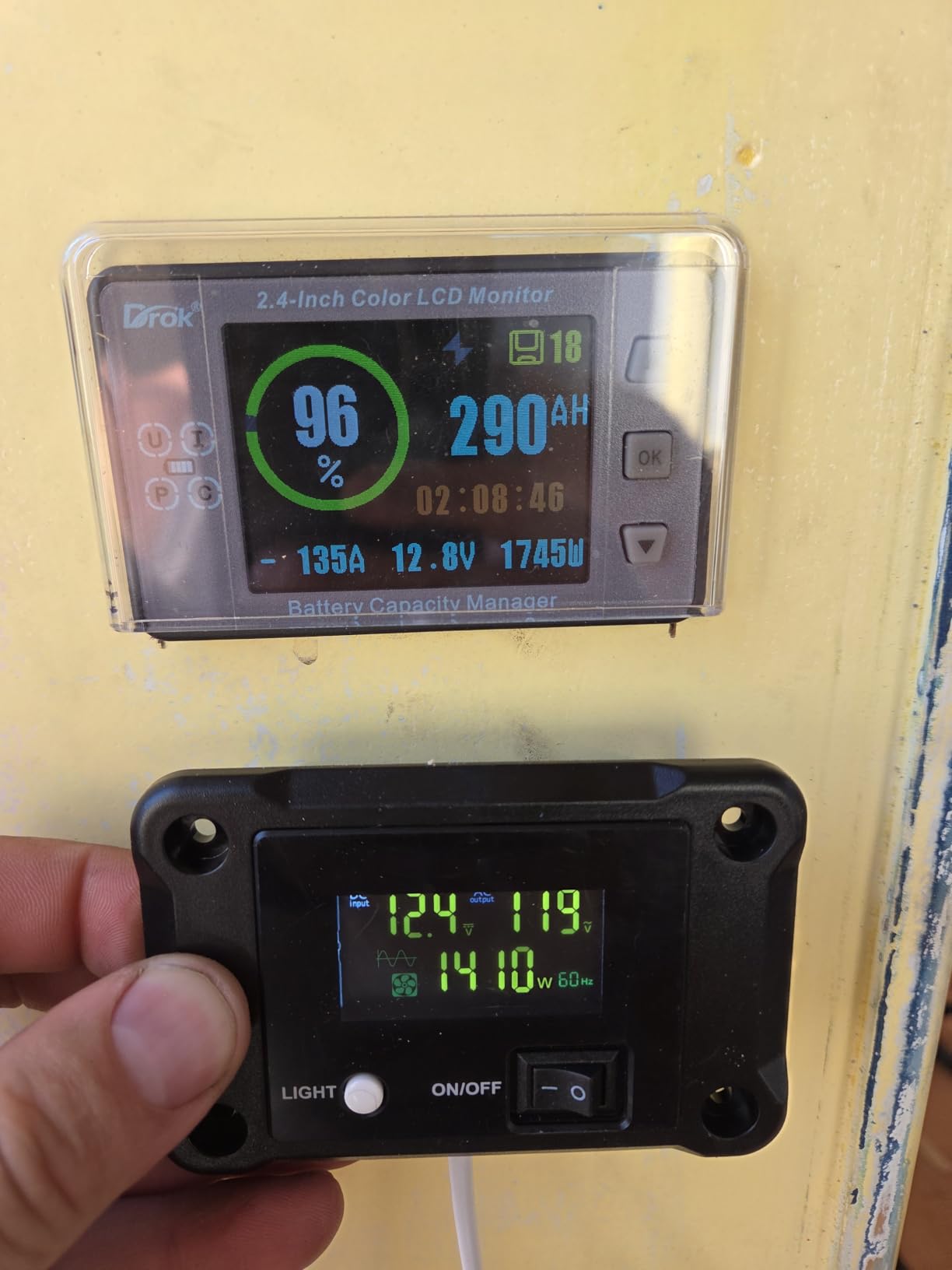
Two displays is the differentiator. One sits on the inverter and one on the wired remote, and both show input and output voltage, load level and fan status. When something behaves oddly during an outage, that redundancy is what lets you diagnose it without pulling the unit out of its mounting position.
Output is 4000W continuous with an 8000W peak from a 12V bank, which puts it in the same class as the SRGFTS unit at the top of this list while using a different battery bus. It carries four AC outlets, 5V/3.1A USB, 30W USB-C fast charging and a hardwire terminal.
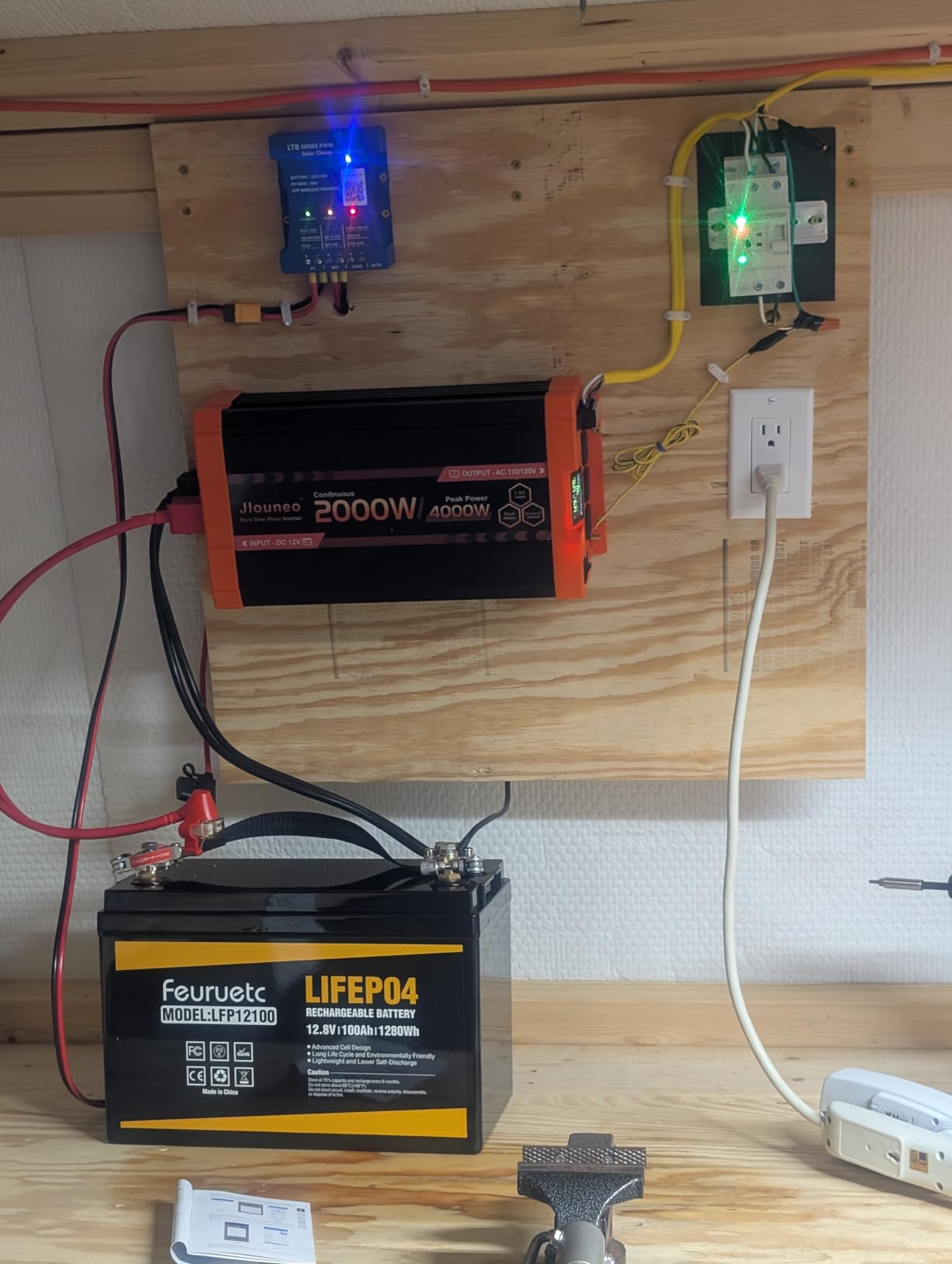
Low standby draw is the quietly valuable spec. At 0.6A plus or minus 0.3A, a bank left connected through a long outage loses far less to idle consumption than a unit that draws heavily at rest, and that difference compounds across every night you are running on stored power.
Compatibility covers 12V AGM, gel and LiFePO4 systems. The included 1AWG pure copper battery cables are better than the norm, although you will still want proper length for a real installation.
What to check before you commit
Understand that 125 reviews is a light history. The 4.5 average is encouraging but drawn from a much smaller sample than the proven performers above, so treat long-term reliability as less documented.
Confirm your battery bank can support 4000W of continuous draw. A 12V bank asked for that output needs serious capacity and short, heavy cabling, and cable loss becomes the limiting factor long before the inverter does.
Who should look elsewhere
Skip this if you need 240V split-phase output or a documented multi-year warranty. The listed term is one year of technical and quality support.
For a comparable 4000W class unit with a much larger review base and more structured documentation, the SRGFTS hybrid at number one is the safer purchase.
11. OLTEANP 1500W Inverter With Transfer Switch: Best for RV and Van Installs
1500W Pure Sine Wave Power Inverter with Transfer Switch for RV, 3000W Peak
1500W continuous / 3000W peak
12V DC to 120V AC pure sine
Built-in 12ms transfer switch
AC bypass mode
12 month warranty
Pros
- Built-in 12ms automatic transfer switch removes the need for a separate ATS
- Automatically passes shore power through to outlets to avoid battery drain
- Compact enough for existing RV cabinetry
- Quiet with the fan engaging around 300-400W
- 15ft wired LCD remote shows voltage load and fault alerts
Cons
- Battery monitor follows a lead-acid profile and is not LiFePO4 aware
- Manual lacks guidance on the neutral-ground bonding switch
- One report of the transfer switch failing on repeated outages
- Included cables are short and need a heavier gauge
This is the only unit on the list with the transfer switch treated as the primary feature rather than an accessory, and that design choice is aimed squarely at RV and van installs. A 12ms automatic transfer switch means you can mount the inverter inline with shore power, eliminating a separate automatic transfer switch, its enclosure and a chunk of the install labor.
Power passes straight through to the outlets when shore power is present, so the battery is not being cycled just to run a microwave off the campsite pedestal. That behavior is the difference between a converter-charger that extends camping and one that quietly drains your bank.
Output is 1500W continuous with 3000W peak, which is modest for a house but generous for an RV. It is compact enough to fit into existing cabinetry, and the fan stays off until roughly 300 to 400W of load, so it stays quiet in normal evening use.
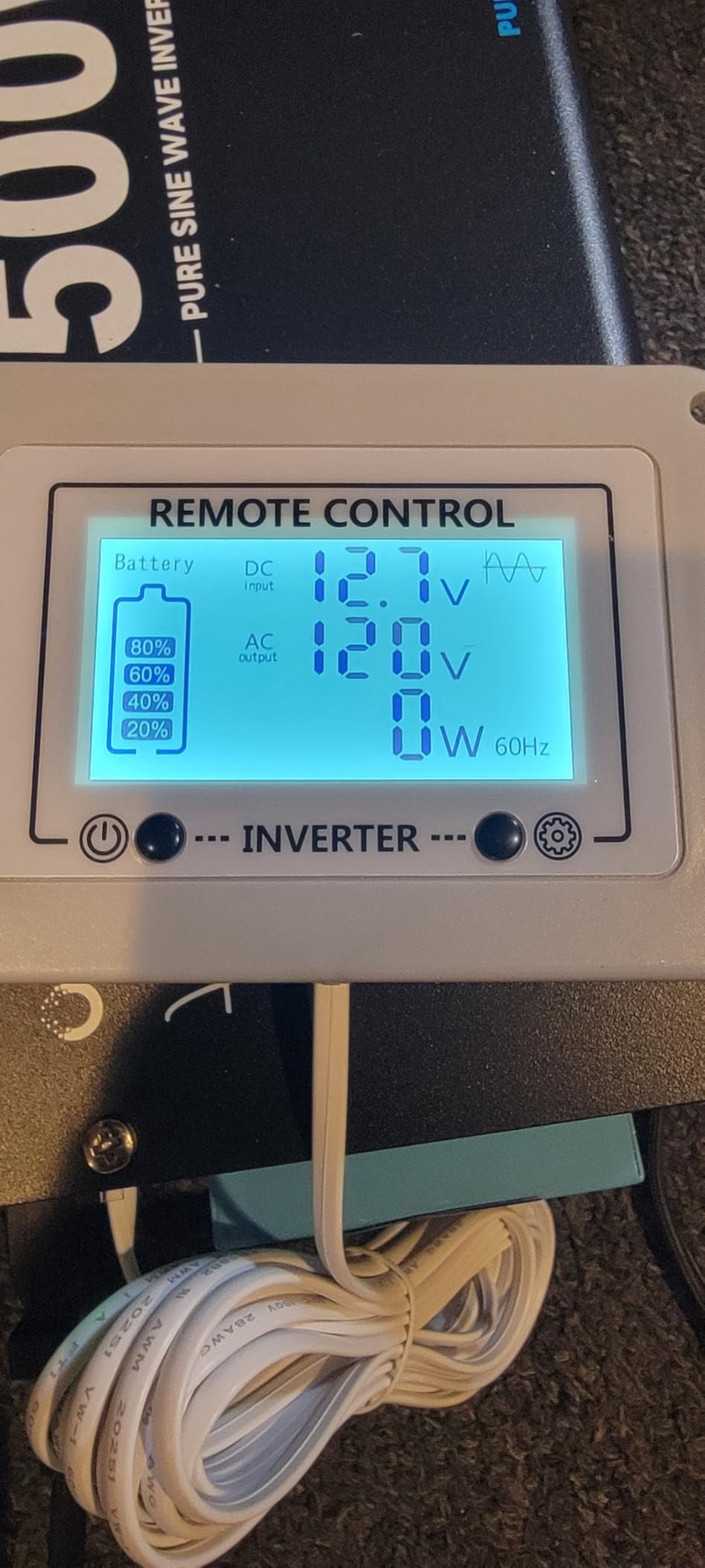
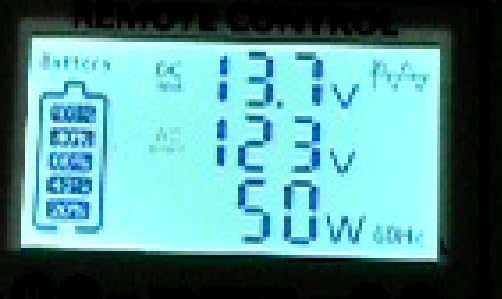
The 15-foot LCD remote reports DC input voltage, AC output status, power usage and fault alerts. Two cautions: the battery monitor follows a lead-acid discharge curve rather than a LiFePO4 one, and one reviewer reported a transfer switch that stopped switching after repeated outages, which is exactly the failure you cannot afford in the unit’s main selling point.
What to check before you commit
Read up on neutral-ground bonding in your installation. This is the step where improper bonding creates real shock risk, and the manual for this unit does not walk through it clearly enough to rely on alone.
Check whether the included 16 mm2 cables, roughly 5 AWG and 60 centimeters long, suit your cable run. For any distance from the battery bank, heavier gauge is the correct choice.
Who should look elsewhere
Skip this if you need more than 1500W of continuous output. That covers the essentials of a small travel trailer and falls well short of a household load.
It is a 12V-only device with no MPPT, so a solar-charged install means adding a separate charge controller.
12. SUNGOLDPOWER 10000W 48V Split Phase Inverter: Best for 240V Whole-Home Backup
SUNGOLDPOWER 10000W 48V Solar Inverter, Built-in 2 MPPTs, Max 200A Battery Charging, Split Phase AC Input/Output 120V/240V(settable),Pure Sine Wave (BMS COMM) UL1741 SPH10048P
10000W rated / 20000W peak
48V DC
Settable 120/240V split phase
Two MPPTs to 500VDC
200A charging
UL 1741
Pros
- Split phase 120/240V output runs a welder and larger household loads
- Inverter 200A charger and dual MPPTs combined in one design
- Four charging modes plus four output modes
- Time-slot scheduling for peak and off-peak tariff pricing
- CAN USB and RS485 communication including BMS protocols
Cons
- Settings are complex and one reviewer needed support to fix charging current
- Needs a jumper between L1 and L2 for single phase grid input
- Manual lacks BMS troubleshooting guidance
- Battery cables not included
This is the only unit here that reaches 240V, which makes it the correct answer to the most common objection about home backup: you cannot run a heat pump or an electric range. Settable split-phase 120/240V input and output means the inverter can sit between a normal residential panel and a split-phase battery-backed distribution system.
Scale is the other story. 10000W rated with a 20000W peak and a 6HP loaded motor rating, two built-in MPPTs accepting up to 500VDC open-circuit voltage, and up to 200A of battery charging across AGM, sealed, gel, flooded and lithium chemistries. It even supports battery-free start, so the unit can come up before a bank is connected.
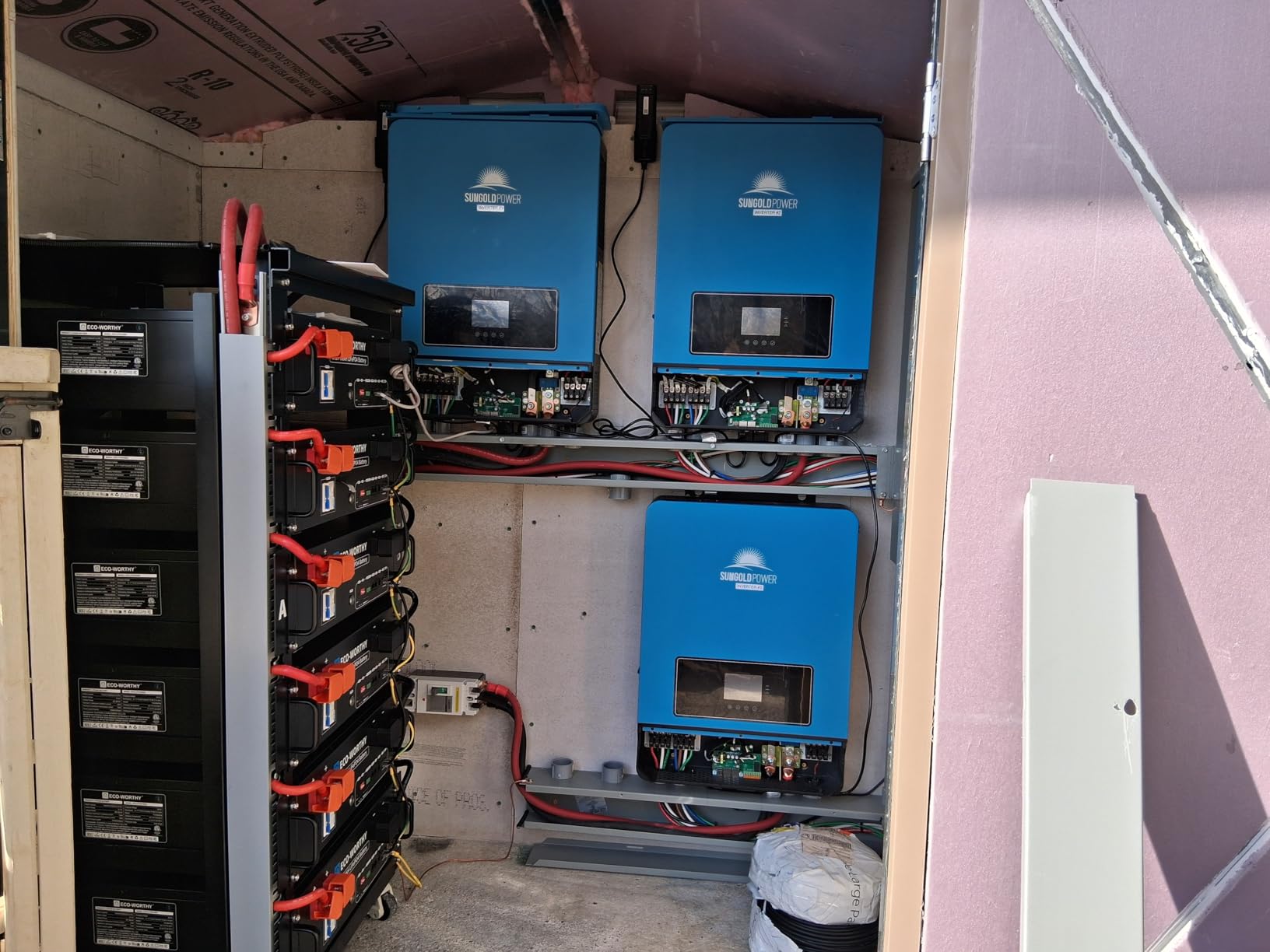
Communication is handled properly. CAN, USB and RS485 cover BMS protocols, and time-slot charging and discharging scheduling lets you shift consumption to cheaper tariff windows. Up to six units can be paralleled when a single box is not enough.
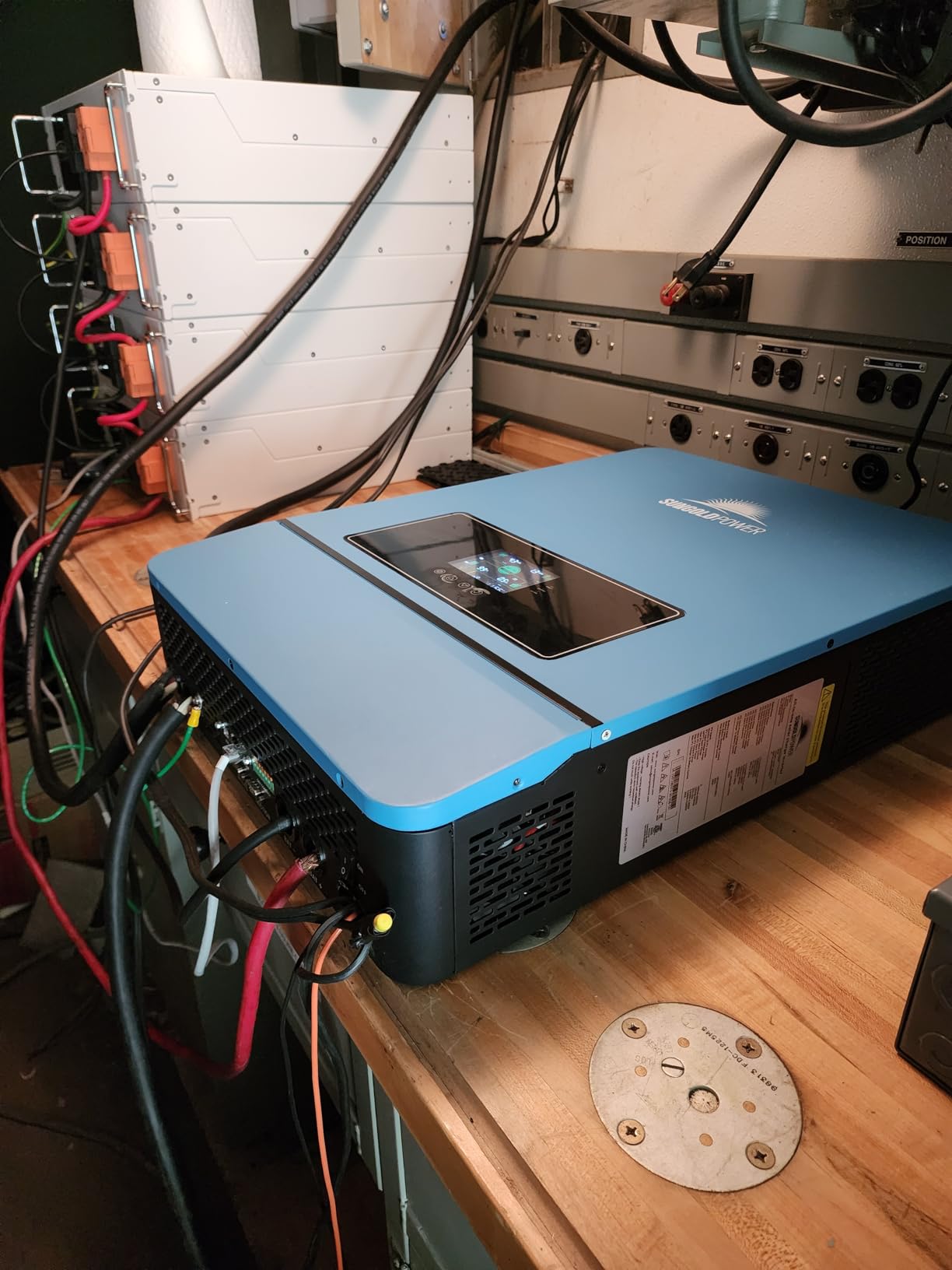
It is also a 54-pound enclosure at 26 by 17.9 by 4.9 inches, and configuration is not casual. Owners report that BMS communication can override a user-set charging current down to 1A, which required a support call to resolve, and single-phase grid input needs a jumper between L1 and L2 that the manual does not flag clearly. Battery cables are not included.
What to check before you commit
Confirm your panel actually splits phase. If your service is single-phase, this unit’s headline advantage disappears and you are carrying a much larger and more complex device than you need.
Plan for professional commissioning. At this level, the jumper requirement, the BMS override behavior and the L1/L2 configuration all point toward an electrician who has configured this hardware before.
Who should look elsewhere
Skip this if you only need to carry a refrigerator and some lights. A 3000W single-phase unit covers that use case for a fraction of the mechanical and financial commitment.
It is also the wrong choice for a DIY first build, where the density of settings creates more failure points than a simpler standalone inverter.
How to Choose a Backup Inverter That Fits Your Home
Choosing well comes down to four questions, in this order: does the unit stay on when the grid fails, can it start the loads you care about, does it produce the voltage your house actually uses, and can your battery bank talk to it. Everything else is preference.
Match the inverter type to the backup you actually want
A grid-tie-only inverter is designed to shut down during an outage. That behavior is anti-islanding protection and it is required by safety rules. If you own one, your panels go dark the moment utility power drops.
A hybrid inverter adds a battery charger and a backup output path. It stays grid-connected most of the time, then isolates and runs your home from the battery. This is the category most of this roundup covers.
An off-grid inverter is grid-forming by default. It starts the grid itself, which is what you want for a cabin or a tiny home with no utility connection at all.
Size for surge, not just running watts
Continuous rating is what the inverter can hold steadily. Surge is what it can deliver briefly to start a motor. A refrigerator compressor or a well pump can draw several times its running wattage for a second or two at startup, and undersizing surge is the most common reason new backup systems brown out at the worst possible moment.
Add your running watts for everything you intend to keep on, then add the largest single motor load you plan to start. A rule of thumb many installers use is 30 to 50 percent headroom above that total, which is why a 2000W unit rarely satisfies a household that also owns a pump.
If you want the math for a specific home, our guide to whole-home backup power stations walks through capacity and runtime in more detail.
Critical loads panel or whole-home transfer switch
These are the two ways to route backup power through a house, and they represent the largest cost decision in the whole project.
A critical loads panel is a small secondary panel holding the circuits you want covered: fridge, lights, outlets, internet. The inverter feeds only that panel. It is cheaper, it simplifies permitting in many jurisdictions, and it avoids the complexity of isolating your main panel.
A whole-home transfer switch backs up every circuit. You get an uninterrupted experience where the house behaves normally, which is the configuration r/SolarDIY buyers keep asking about. The trade-off is more installation complexity and, in many areas, a more involved permitting path.
For people who want seamless whole-home behavior without committing to the full transfer switch, our comparison of solar generators for home emergency backup covers the parallel option of a small genset covering the gap.
LFP battery pairing and compatibility rules
Not every lithium battery works with every inverter, and this is the most common integration headache on DIY builds. A BMS that does not speak the inverter’s protocol can prevent the charger from reaching the current you configured.
Match the nominal battery voltage to the inverter bus first: 12V, 24V or 48V. Then confirm the communication protocol, whether that is RS485, CAN or a proprietary link, and check whether the manufacturer requires a branded battery before it will talk to anything else.
Some manufacturers keep that list closed, which protects them but locks you into one ecosystem for the life of the system. Brands with documented third-party compatibility give you more freedom at renewal time, and that freedom is worth real money across a ten-year ownership period.
What actually damages an inverter
Exceeding the PV input voltage is the most common self-inflicted failure, and it happens when a string looks fine in mild weather and crosses the ceiling on a cold morning. Check open-circuit voltage against the documented maximum rather than the recommended operating range.
Running a battery bank deeply below its cutoff, leaving ventilation blocked in a hot enclosure, and powering motor loads beyond the surge rating all cause damage too. Grounding faults and loose DC terminations produce heat over time, which is why torque and connection quality matter more than any setting on the display.
A firmware mismatch between inverter and battery can also cause erratic behavior. Keep both updated, and check the manufacturer’s release notes before assuming a hardware fault.
How We Picked and Ranked These Inverters
We started from the backup requirement rather than from popularity. Every candidate had to either include an automatic transfer switch, provide a battery-backed transfer path, or support wiring that places it inline with grid and generator input. That filter removed a lot of hardware that looks identical in a listing but dies with the grid.
From there we weighed continuous output against realistic household loads, surge headroom for motor starting, output voltage and phase capability, battery bus voltage, MPPT voltage window against typical panel strings, whether monitoring is built in or sold as an add-on, warranty length, and the volume and consistency of owner feedback.
We ranked the EDITOR’S CHOICE on the combination of rating and review volume rather than price, which is why the Renogy unit with several times the owner history sits in the top three but not at the top. Where a unit has a meaningful weakness, we said so rather than hedging. We earn a commission from qualifying purchases, and it does not affect the ranking.
Frequently Asked Questions
Can I use a grid-tie inverter for backup power?
No. A standard grid-tie inverter shuts down during an outage because anti-islanding protection requires it, which prevents the inverter from energizing a line that crews believe is de-energized. If you want your panels to run your home when the grid fails, you need a hybrid inverter with a battery charger and backup output, or an off-grid inverter paired with a separate battery and transfer switch.
Which brand of solar inverter is best for home use?
It depends on the backup target. For pure sine output at 120V with the most proven owner history, Renogy leads on review volume. For a hybrid unit that includes solar charging and works without a battery, the SRGFTS 4000W is the strongest all-round pick here. For 240V whole-home backup with split phase, the SUNGOLDPOWER 10000W is the only option in this roundup that reaches it.
What size inverter would I need to run my house?
Add the running watts of every circuit you want to back up, then add the startup surge of the largest motor or compressor load, then add 30 to 50 percent headroom. A typical essential-loads target of lights, refrigerator, internet and a few outlets lands around 2000W to 3000W continuous. Backing up a heat pump, well pump or electric range pushes you toward 5000W or above, and 240V loads need split-phase capability.
What is the best solar battery backup system for my home?
The system matters more than any single box. You need a hybrid inverter, an LFP battery bank sized for your overnight load, a transfer path that isolates you from the grid, and a correctly gauged DC run. A good rule is roughly one kilowatt-hour of storage for each kilowatt of continuous inverter capacity you intend to carry through a night.
What is the best inverter for long backup in a home?
Longer outages are decided by battery capacity, not inverter size, but 48V systems hold more energy per inverter and cut cable losses substantially. Among these picks the SUNGOLDPOWER 5000W 48V and the 10000W 48V split-phase unit both run on a 48V bus, and the 10000W model stacks with up to six units. Plan for generator auto-start or periodic recharging regardless of how large the bank is.
What should you not plug into an inverter?
Avoid high-inrush motor loads beyond your surge rating, medical equipment that requires a medical-grade transfer switch, and any device whose startup current you have not measured. Also avoid plugging a large inverter into a household extension cord or a power strip, and do not back up an electric water heater or resistive heating element, which will consume an entire small battery bank in minutes.
What damages inverters?
Exceeding the maximum PV open-circuit voltage is the most common cause, particularly when a string looks safe in mild weather and crosses the ceiling on a cold morning. Other common causes include deep battery discharge below cutoff, blocked ventilation in a hot enclosure, loose DC terminations that generate heat over time, and grounding faults. Firmware mismatches between inverter and battery can also produce erratic behavior.
What are the common problems with sine wave inverters?
Sine wave inverters are generally the reliable choice, since their output matches utility quality closely. The common problems are operational rather than electrical: undersized battery cables that cause voltage drop, battery gauges calibrated for lead-acid that misreport lithium state of charge, cooling fans that become audible under sustained load, and high no-load draw that drains a bank while the inverter sits idle. Pure sine wave remains clearly preferable to modified sine wave for sensitive electronics.
Do I need an inverter for battery backup?
Yes, every battery backup system needs an inverter, because batteries store DC and your appliances need AC. The question is whether you need a dedicated inverter or a hybrid inverter that also charges the battery from panels and manages grid changeover. A grid-tie inverter alone cannot do this job, no matter how many batteries or panels you own.
The Bottom Line on Solar Inverters for Home Backup in 2026
The SRGFTS 4000W hybrid is the best solar power inverter for home backup in 2026 for most households, because it runs without a battery, carries the largest MPPT in its class and has the highest average rating here. If you need 240V or a much larger system, the SUNGOLDPOWER 10000W split-phase unit is the only pick that gets you there, and if your loads are modest the Renogy 3000W remains the most proven box money can buy.
Whatever you choose, confirm the backup path before you buy. Grid changeover, battery compatibility and PV input headroom decide whether the system works during a multi-day outage, and those three details are where most disappointing installations go wrong. If you want the storage side covered too, start with our EcoFlow power station picks for home backup or our full battery guide.