
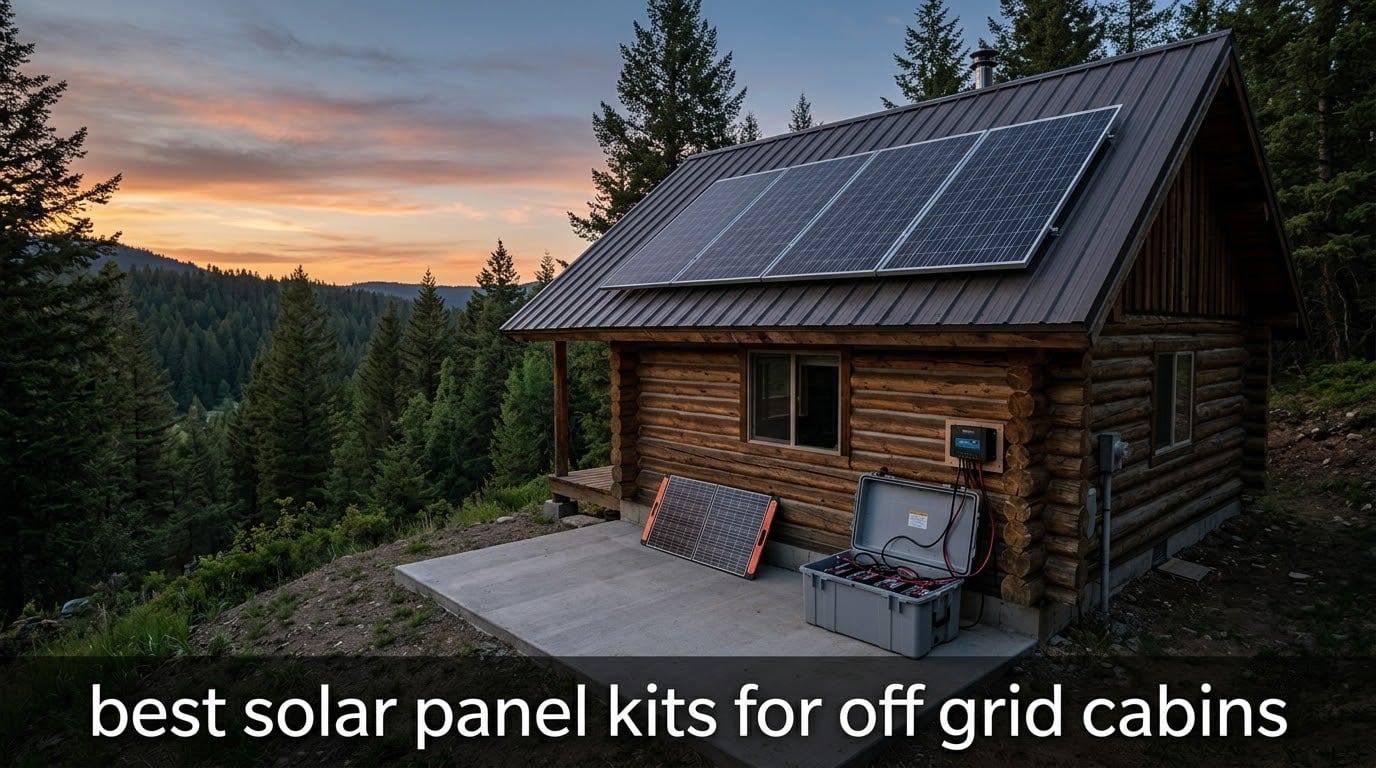
Most weekend and full-time cabins need between 400W and 800W of panel capacity, paired with 2kWh to 5kWh of battery storage, if the only loads are LED lights, a refrigerator, a router and phone charging. Add a well pump, a freezer or a wood stove fan and you jump to 1.5kW of panels and 10kWh or more. The fastest way to know where you fall is to audit your real daily load before you buy anything.
An off-grid solar panel kit is a pre-bundled set of solar panels, a charge controller, a battery bank and an inverter that generates, stores and delivers electricity to a cabin with no grid connection. It is everything needed to run lights, a refrigerator, electronics and a water pump independently of utility power. Some bundles stop at the panel-and-controller stage, so read the contents carefully before assuming a battery is included.
We spent several weeks working through the twelve kits below, comparing the numbers that actually decide whether a cabin system survives a winter: usable battery capacity, real inverter output, cold-weather behaviour, solar input ceilings and how many devices you can run at once. Every rating and review count here comes straight from buyer feedback, and we flagged the friction points owners repeat most often. If you are still working out the fundamentals, our beginner guide to off-grid solar kits covers the component basics, and our small solar kit roundup covers tighter builds.
One thing worth saying early: most of these products are portable power stations paired with folding panels, not permanently wired systems. That is a genuine advantage at a cabin, because you can move the whole thing indoors when you leave and bring it back in spring. It also means a well pump on a 240V breaker is out of reach for nearly every kit here unless you size up dramatically. We note that on each review.
Table of Contents
Top 3 Off-Grid Cabin Solar Kit Picks in 2026
Anker SOLIX C1000 Gen 2
- 1024Wh LiFePO4
- 2000W continuous output
- Recharges in 49 minutes
- 4000 rated cycles

ECO-WORTHY 200W Kit
- Two 100W mono panels
- 30A PWM controller
- 5400Pa snow load
- Rigid panels with mounting hardware
The Anker SOLIX C1000 Gen 2 takes our top slot because it ties for the highest rating and carries the largest review base in the group, and because a 49-minute wall recharge lets a cabin battery refill between trips. The BLUETTI Elite 200 V2 wins on battery longevity and inverter efficiency, with a 6,000-cycle rating and one of the lowest standby draws in the group. The ECO-WORTHY 200W kit is the only bundle here built around rigid panels with mounting hardware included, which suits a permanent roof or ground mount.
All 12 Kits Side by Side in 2026
| Product | Specs | Action |
|---|---|---|
| Anker SOLIX C1000 Gen 2 with 200W Panel |
|
Check Latest Price |
 BLUETTI AC200PL with 200W Solar Panel BLUETTI AC200PL with 200W Solar Panel |
|
Check Latest Price |
 Jackery Solar Generator 1000 v2 with 200W Panel Jackery Solar Generator 1000 v2 with 200W Panel |
|
Check Latest Price |
| ECO-WORTHY 200W 12V and 24V Solar Panel Kit |
|
Check Latest Price |
| BLUETTI Elite 200 V2 with Two 200W Panels |
|
Check Latest Price |
 EF ECOFLOW DELTA 2 Max with 400W Solar Panel EF ECOFLOW DELTA 2 Max with 400W Solar Panel |
|
Check Latest Price |
 Jackery HomePower 3000 with Two 200W Panels Jackery HomePower 3000 with Two 200W Panels |
|
Check Latest Price |
 Jackery Explorer 2000 v2 with Two 200W Panels Jackery Explorer 2000 v2 with Two 200W Panels |
|
Check Latest Price |
 BLUETTI Elite 300 with Two 200W Panels BLUETTI Elite 300 with Two 200W Panels |
|
Check Latest Price |
 ALLWEI 2400W with 200W Solar Panel ALLWEI 2400W with 200W Solar Panel |
|
Check Latest Price |
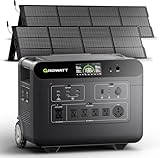 GROWATT HELIOS 3600 with 400W Solar Panel GROWATT HELIOS 3600 with 400W Solar Panel |
|
Check Latest Price |
 Anker SOLIX S2000 with 400W Solar Panel Anker SOLIX S2000 with 400W Solar Panel |
|
Check Latest Price |
Two patterns jump out of that table. First, every power station here is a 1kWh-to-3.6kWh single unit, which tells you where the ceiling sits: a cabin running a well pump and a freezer simultaneously needs more than any one of these can deliver alone. Second, solar input limits are the real constraint. Several units cap panel input at 60V, so you cannot simply string more panels together to recharge faster in winter.
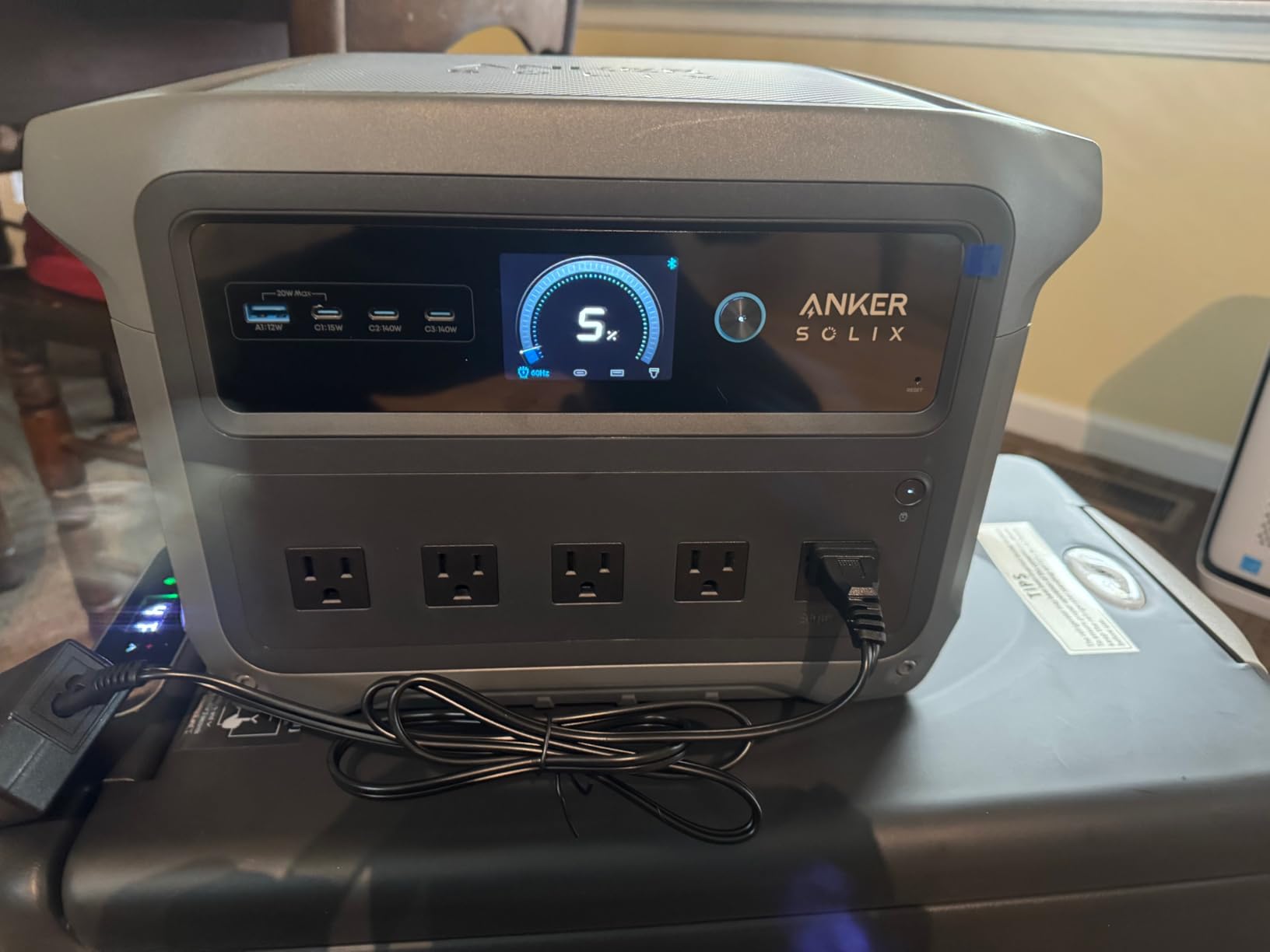
1. Anker SOLIX C1000 Gen 2 with 200W Panel – Fastest Recharge for a Weekend Cabin
Anker SOLIX C1000 Gen 2 Portable Power Station with 200W Solar Panel
1024Wh LiFePO4
2000W continuous
600W solar input
4000 cycles
Pros
- 1024Wh with a 4000-cycle rated life
- Full recharge in 49 minutes on a wall outlet
- 9 ports and 2000W output cover a CPAP machine and a mini fridge at once
- App scheduling with time-of-use mode
Cons
- Gen 2 removed the battery expansion option from Gen 1
- Measured 15-20 percent harmonic distortion on a microwave run
- No protective storage case included
This is the unit I keep coming back to for a weekend cabin. At 1,024Wh it is not the biggest battery here, but the 49-minute wall recharge changes how you use it. You drive up Friday with a full tank, run lights, a router and a small fridge all weekend, and top it back up overnight before leaving. That flexibility is what a fixed lead-acid bank does not give you.
The bundle arrives as two packages: the power station and a PS200 bifacial 200W panel. With 600W of panel into the unit, a full solar recharge takes about 1.8 hours in good conditions, which is realistic for a clear spring day at a south-facing mount.
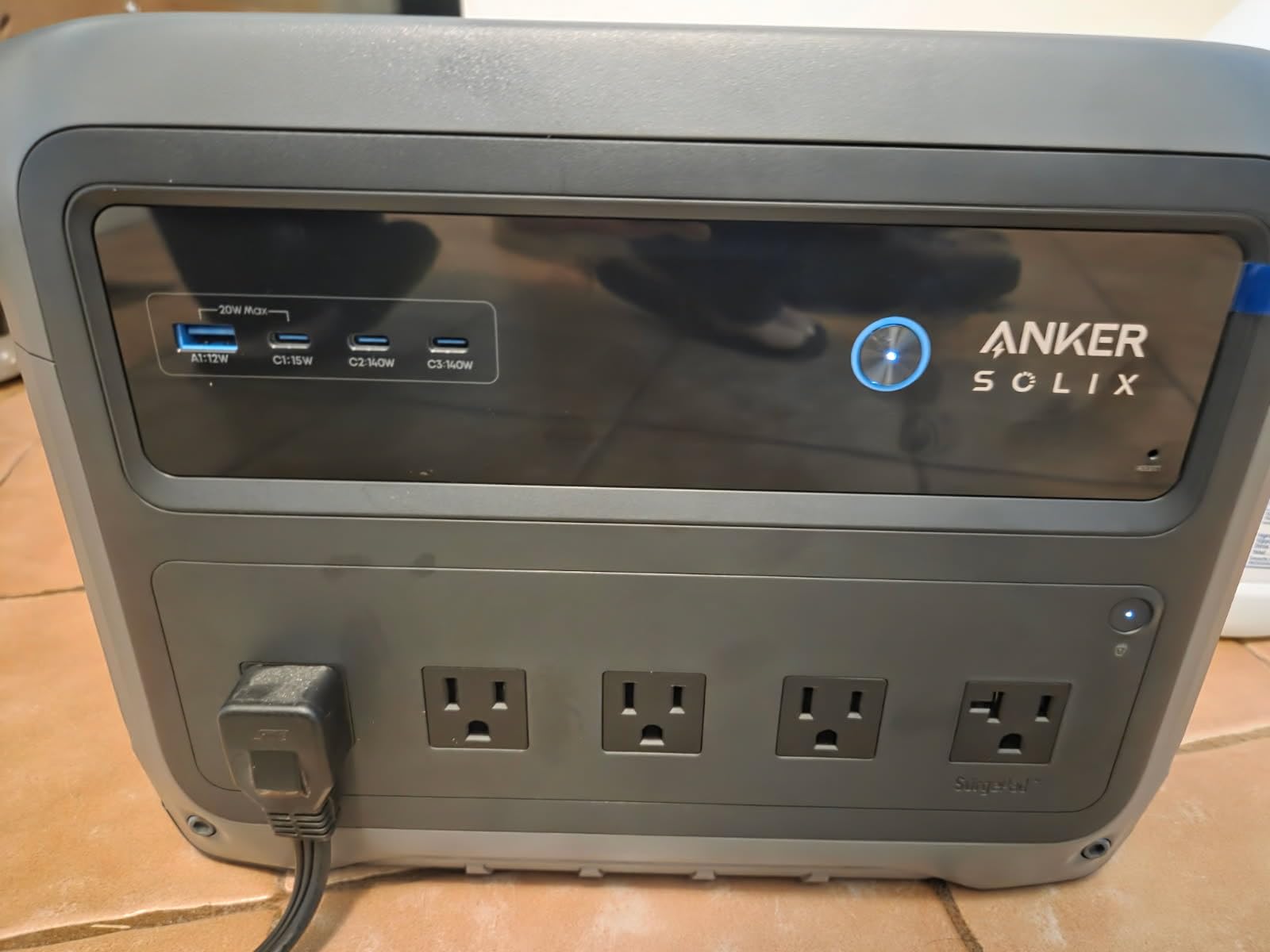
Owner feedback is the strongest in this group: 4.7 stars across more than 1,600 ratings, with 86 percent five-star. Buyers repeatedly describe carrying a fridge for 6 to 12 hours during outages and running a CPAP machine for several nights on solar, which maps directly onto a cabin use case. Battery-based charging also means no fumes indoors.
There are two real compromises. The Gen 2 design dropped the battery expansion path that the first generation had, so 1,024Wh is a hard ceiling for the life of the unit. And one buyer measured 15 to 20 percent harmonic distortion while running a microwave, which is worth knowing if you plan to power sensitive electronics from an AC outlet rather than a pure sine wave DC rail.
How it handles a two-season weekend load
Two or three LED lights, a router, a laptop and phone charging add up to roughly 700Wh a day. This unit covers that from a single sunny day with room to spare, and the fast recharge means a mid-week top-up is a 50-minute job rather than an afternoon project.
The 2,000W continuous output is the real sleeper feature at a cabin, because it lets you run a small fridge and a coffee maker at the same time without the inverter complaining.
Where it falls short
If your cabin has a well pump or a freezer that both draw surge current, 1,024Wh runs out faster than you expect and you cannot add a second battery. Owners on off-grid forums consistently warn against sizing on nameplate watts instead of a real load audit, and this is the unit where that warning bites hardest.
Also note the removed expansion option. If you think your load will grow in year two, skip this one and start with a unit that accepts add-on batteries.
2. BLUETTI AC200PL with 200W Solar Panel – Growable Storage for Bigger Cabins
BLUETTI AC200PL Solar Generator & 200W Solar Panel Included 2304Wh LiFePO4
2304Wh LiFePO4
2400W AC output
Expandable to 8448Wh
72 pounds
Pros
- 2304Wh capacity with a 3000 plus cycle rating
- Fast recharge from 0 to 80 percent in about an hour on AC
- 11 ports including four 2400W AC outlets
- Expands to 8448Wh with additional battery modules
Cons
- At 72 pounds it needs a two-person move or a dolly
- That weight limits where you can realistically place it
- You cannot reposition it between visits without help
The AC200PL is the pick if you know your cabin load is going to grow. It expands to 8,448Wh with add-on modules, and at 2,304Wh base capacity it starts in a useful place. That means you can buy the expansion pack in year two instead of replacing the whole system, which is the staged-build approach experienced owners on off-grid forums recommend more than any other.
Output is 2,400W AC with 3,600W of lifting power, and there are 11 ports including a 30A TT-30 RV output, DC, car and USB-C PD. A full solar charge with the included 200W panel runs 9.2 to 18.4 hours depending on conditions, which tells you this bundle is storage-first rather than array-first.
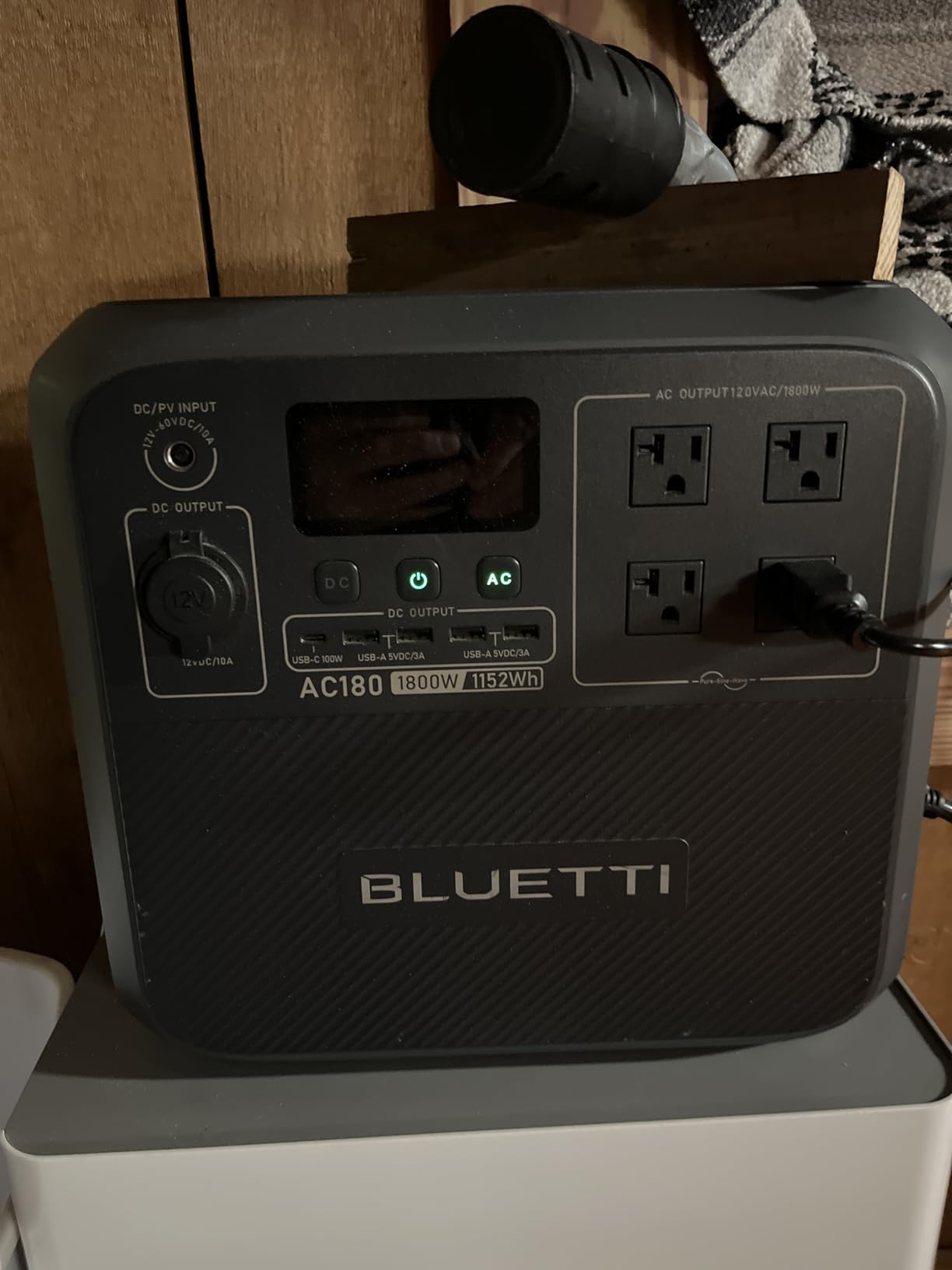
Ratings land at 4.6 across 774 reviews, with 80 percent five-star. The most common praise is recharge speed and port selection, particularly the TT-30 outlet for hooking up a camper fridge without an adapter. Measured 0 to 80 percent on AC takes about 60 minutes, and TurboBoost fast charging shortens that further.
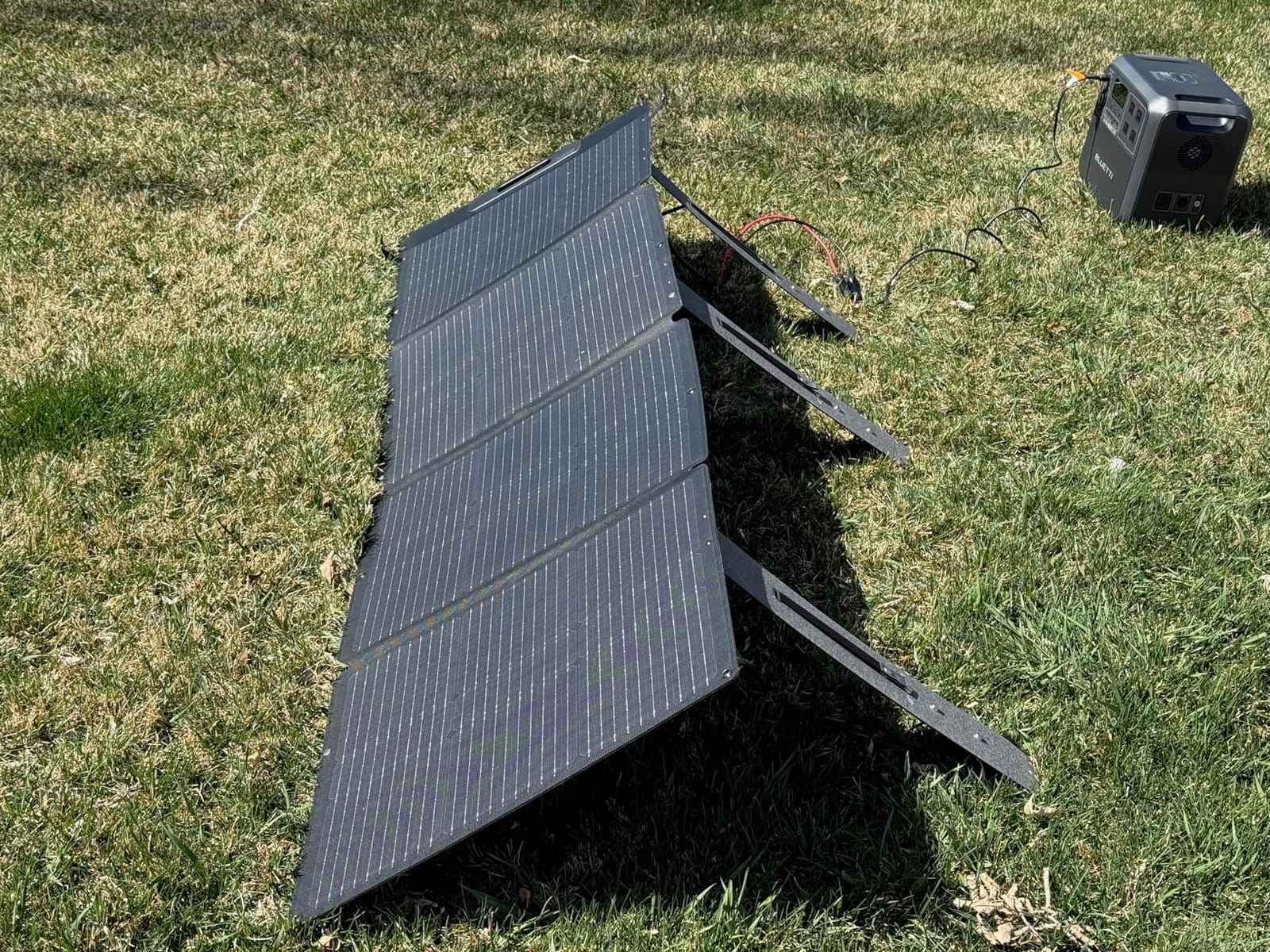
The weight is the honest drawback, and owners say it plainly. At 72 pounds this is a two-person move, and for a cabin where the battery lives in a shed or a truck bed, that becomes a real logistics problem with only one person on site.
Why expansion matters more than raw capacity at a cabin
Almost every sizing mistake we read about came from buying a fixed system too small rather than too large. With an expandable unit, you can start at 2,304Wh, run a fridge and lights through your first winter, and add modules once you see real consumption data from your own cabin.
The full-scale BMS protection on board is also relevant for a building that sits unheated, since it guards against overcharging and short circuits when the unit is stored through shoulder season.
Where it falls short
Two things to weigh. Solar input tops out at 1200W, so the included 200W panel is a token rather than a serious array, and you would need to buy several more panels to make use of that ceiling.
The second is the 72-pound weight. If your battery room is on a slope or down a set of cabin steps, plan the move before you buy, not after.
3. Jackery Solar Generator 1000 v2 with 200W Panel – The One You Can Carry Alone
Jackery Solar Generator 1000 v2 and 200W Solar Panel,1070Wh,1500W AC
1070Wh LiFePO4
1500W continuous,3000W surge
23.8 pounds
Pros
- Lightest unit here at 23.8 pounds with a foldable handle
- 1070Wh rated past 4000 cycles
- Runs a full-size side-by-side fridge for roughly nine hours overnight
- Can charge and output at the same time
Cons
- The bundled 200W panel sags in the middle and needs propping
- Short included panel cable makes shading the unit awkward
- The folding panel has no dedicated carry case
This is the practical choice when the cabin is a hundred yards from the truck and you are not installing a pad or a shed. At 23.8 pounds with a foldable handle, one person can move it. That portability is the entire reason to buy it, and no other kit in this roundup does it as cleanly.
Output is 1,500W continuous with 3,000W surge across three pure sine wave AC outlets, plus USB-C PD and car ports. The quiet charging mode runs at 30 dB, which matters when the unit is sleeping in the same room as you.
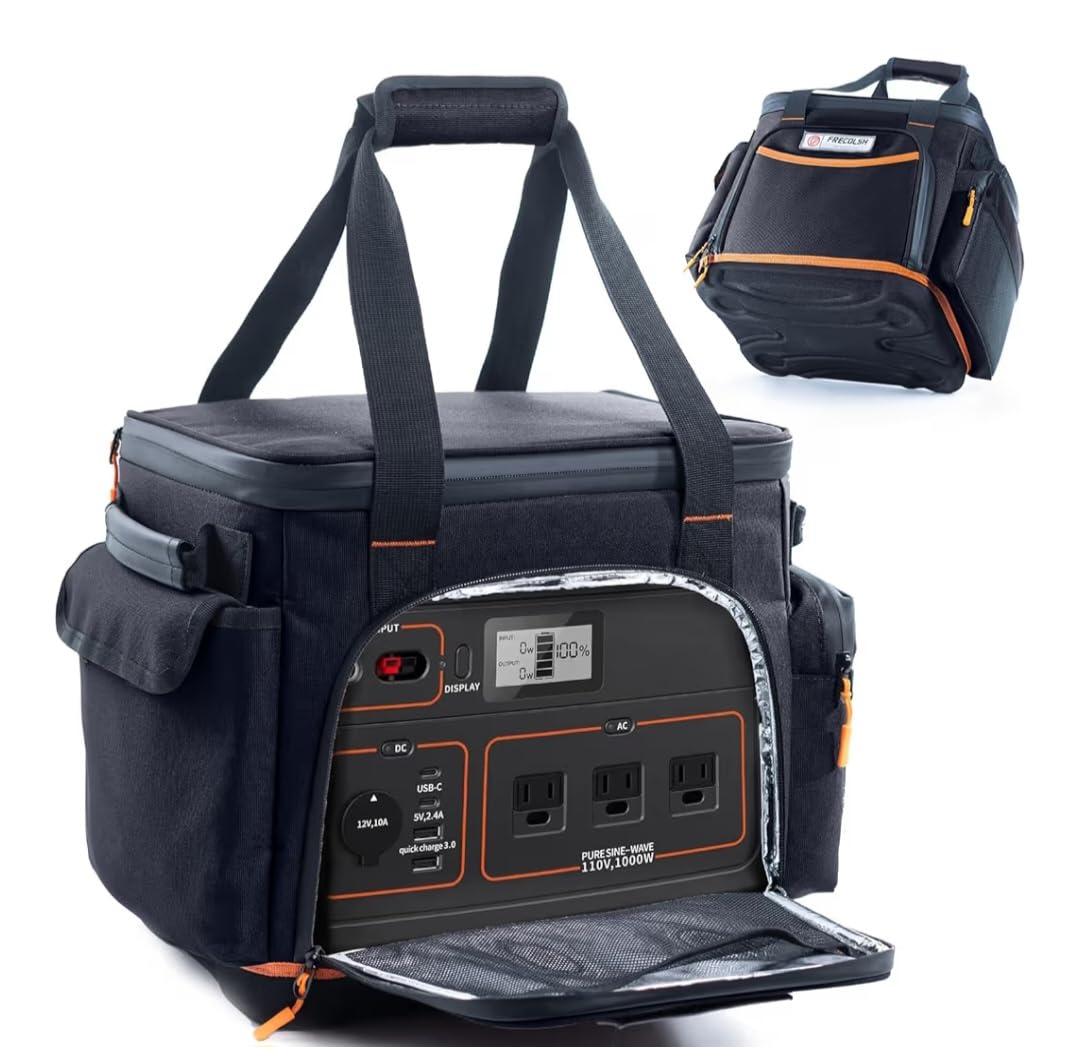
It holds 4.5 stars across 1,406 ratings, with 78 percent five-star. The pattern is consistent: the power station itself is praised for build quality and fridge runtime, running a full-size side-by-side for about nine hours overnight, while the included folding panel draws most of the criticism for floppiness and the short cable.
That split matters when you are shopping. If you intend to leave the panel deployed on a cabin roof or ground mount, the panel is not the part that matters and the station carries the load. If you plan to keep the panel folded, the sag and short lead become daily annoyances.
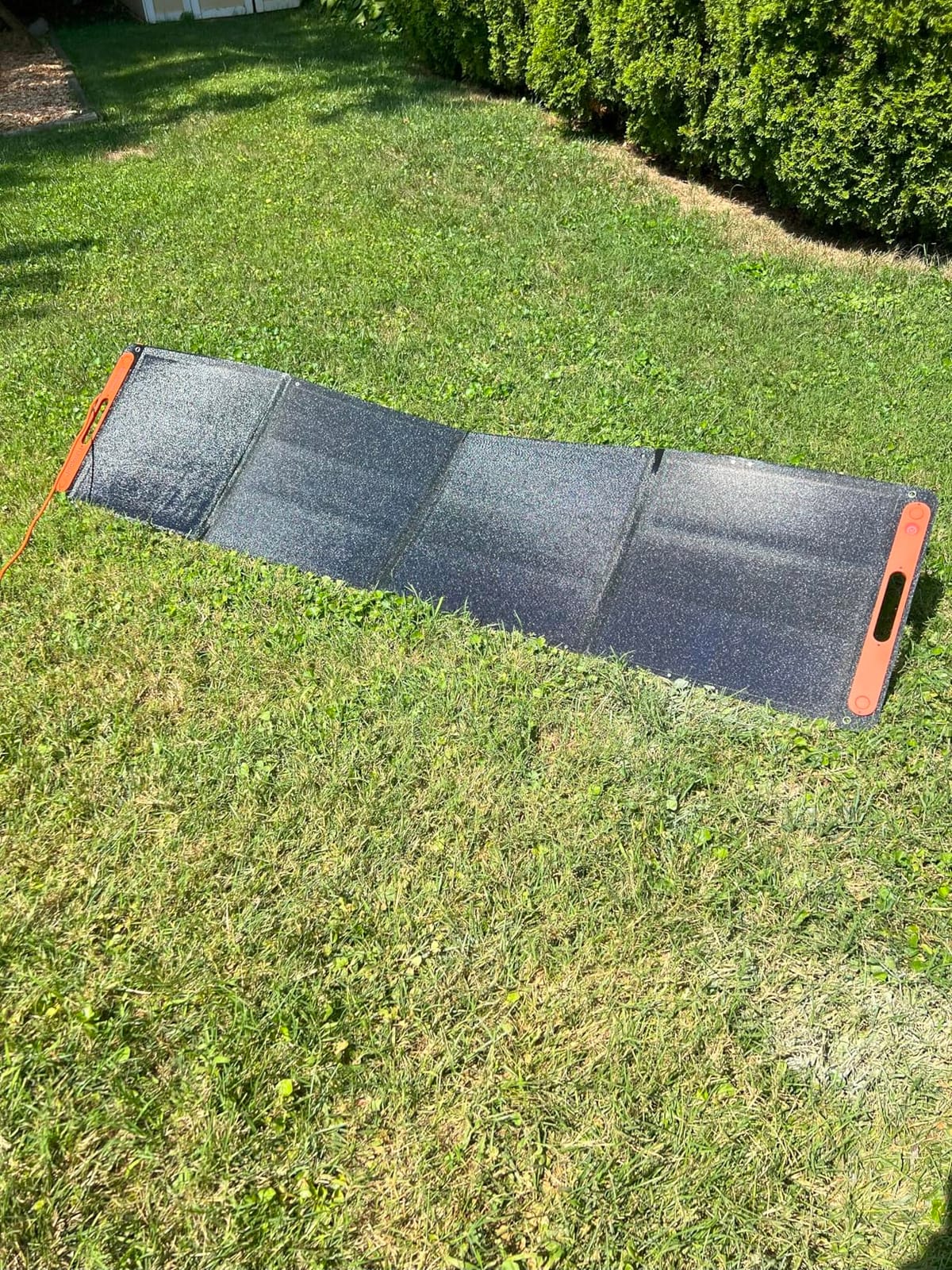
What nine hours of fridge runtime actually looks like
A compressor fridge cycling 40 percent of the time pulls roughly 50 to 70W, so a 1,070Wh bank is about nine hours of real runtime rather than a marketing number. For a three-night weekend trip, you either recharge from the wall each evening or cut to a camping fridge.
The emergency charge mode reaches 0 to 100 percent in about an hour, but it is app-gated and defaults to a slower 1.7-hour cycle, which is worth knowing before you rely on it.
Where it falls short
1,070Wh and 1,500W will not run a well pump, a freezer and lights at the same time. If your cabin has running water from a pump, this is a lights-and-fridge solution, not a whole-cabin solution.
The bundled panel is also the piece owners criticise most in their reviews. Buyers who already own a decent 200W panel can skip it and put that money toward a second battery instead.
4. ECO-WORTHY 200W 12V and 24V Solar Panel Kit – Best Value Fixed Array Foundation
ECO-WORTHY 200 Watts 12 Volt/24 Volt Solar Panel Kit with High Efficiency Monocrystalline Solar Panel and 30A PWM Charge Controller for RV, Camper, Vehicle, Caravan and Other Off Grid Applications
200W total from two 100W mono panels
30A PWM controller
5400Pa snow load
Series or parallel wiring
Pros
- Panels
- controller and all mounting hardware in one bundle
- Two rigid 100W monocrystalline panels wire in series for 24V or parallel for 12V
- Pre-drilled plug-and-play cables with MC4 connectors
- Aluminum alloy frames rated for long outdoor service
Cons
- PWM rather than MPPT controller costs you energy harvest
- Rigid panels are not foldable and take far more space
- No battery or inverter is included so it charges DC systems only
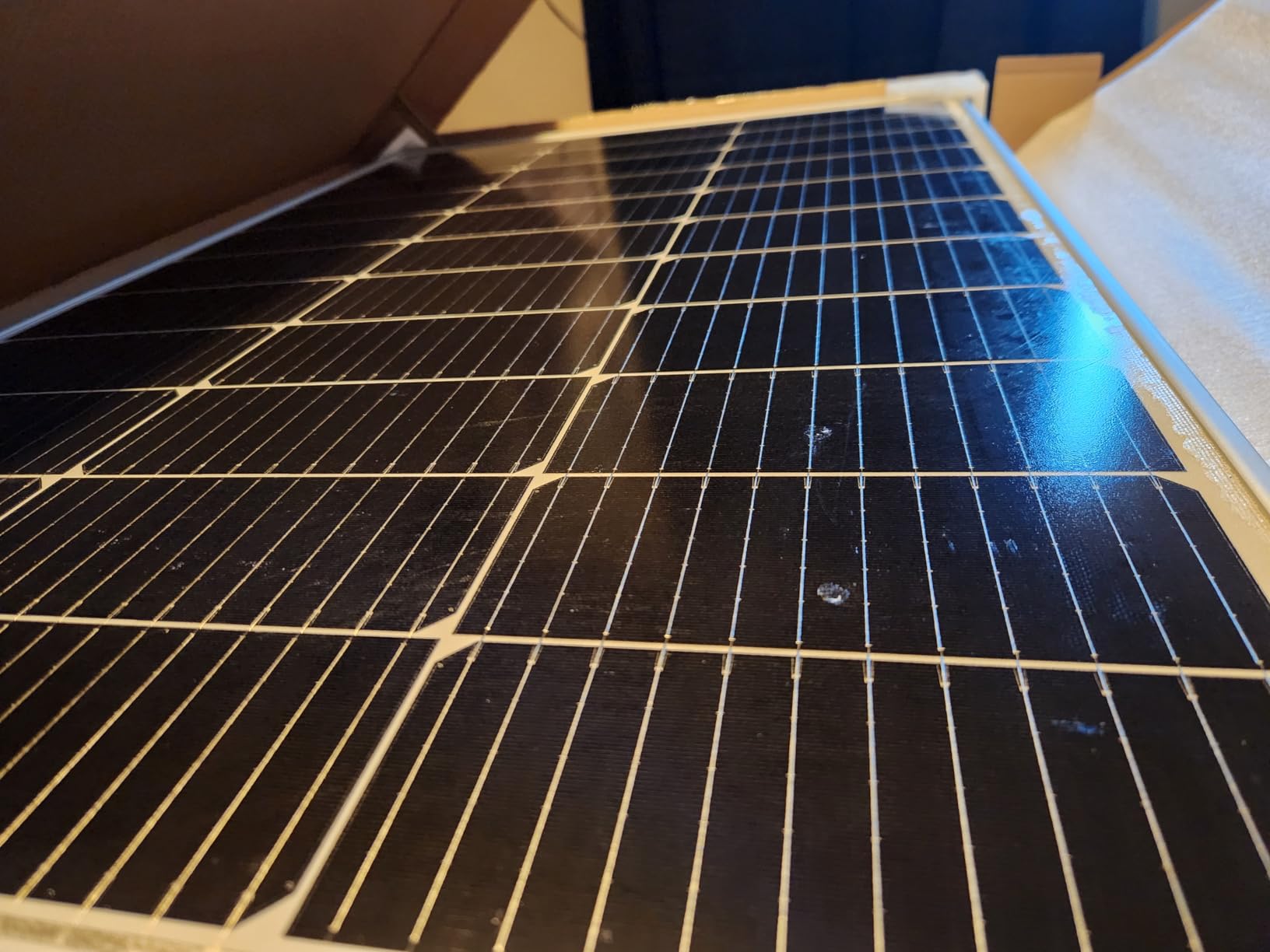
This is the odd one out in the list, and the odd one out is why it is here. Every other kit is a portable power station with a folding panel. This is two rigid 100W monocrystalline panels, a 30A PWM charge controller, mounting brackets and cabling, which makes it the foundation for a permanent roof or ground array rather than a carry-in system.
Daily output is quoted at 800Wh per day under four hours of full sunshine, and the panels carry a 5,400Pa snow load rating with a 2,400Pa wind rating and an IP65 junction box. Those ratings matter more in northern cabin country than almost any other spec on this page.
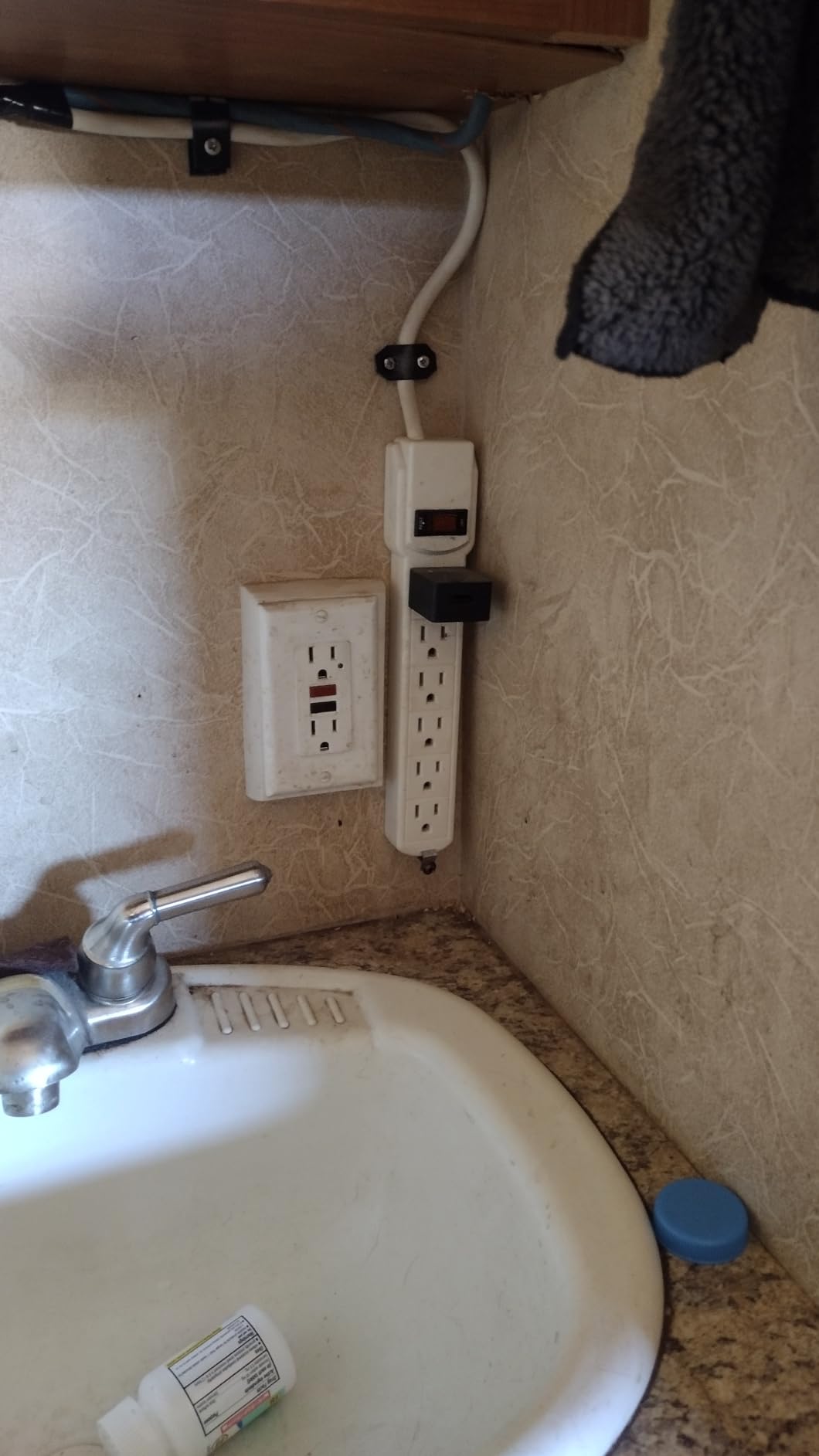
It holds 4.6 stars across 1,166 ratings with 79 percent five-star. Owners building out RV, camper and cabin systems praise the panel build quality and the completeness of the included hardware, treating it as a building block rather than a finished system.
Two things to plan around. There is no battery and no inverter in the box, so you are still sourcing a bank and an inverter separately, and the 30A PWM controller is less efficient than an MPPT unit, which forum owners regularly note can cost 20 to 30 percent of the harvest.
When a fixed array beats a portable station
If your cabin has a south-facing roof section that gets full sun, rigid panels produce better long-run value than a foldable because nothing is lost to crating and uncrating. Over a season of use, the higher daily yield and the snow load rating justify the bulk.
A good pairing is this panel set with a separate MPPT controller and a modest LiFePO4 bank, which is a configuration experienced owners on off-grid forums describe as the more durable long-term path for a permanent build.
Where it falls short
It produces no AC power at all. Until you add an inverter, this kit only charges a 12V or 24V DC system, so it cannot power a cabin outlet on its own.
Also check the controller type before you commit. An MPPT variant of the same 200W panel set exists, and for a cabin that will sit through real weather, the extra harvest usually pays back quickly.
5. BLUETTI Elite 200 V2 with Two 200W Panels – Longest-Lived Battery in the Lineup
BLUETTI Elite 200 V2 Solar Generator & 2x200W Solar Panel Included 2073.6Wh
2073.6Wh LiFePO4
2600W continuous,3900W lifting
6000 plus cycles
10W standby draw
Pros
- Best inverter efficiency in the group at 95 percent plus on AC circuitry
- Standby draw of roughly 10W
- 6000-cycle battery rated for a 17-year projected life
- One owner ran a 29 cubic foot freezer for over 24 hours on a charge
Cons
- Not expandable with add-on battery modules
- MPPT controller caps input at 60V so the 1000W ceiling is hard to reach
- App lacks custom charge rates and temperature monitoring
If you think in ten-year horizons rather than two, this is the battery to look at. The 6,000-plus cycle rating translates to a 17-year projected life, and reviewers put its AC inverter efficiency at 95 percent or better, the highest figure reported in this group. For a cabin that runs year-round, efficiency compounds.
You get 2,073.6Wh, 2,600W continuous output, 3,900W of power lifting and four AC outlets plus USB-C, USB-A and a 12V car adapter. The bundle includes two 200W panels, which take the unit to a full charge in about 5.5 hours.
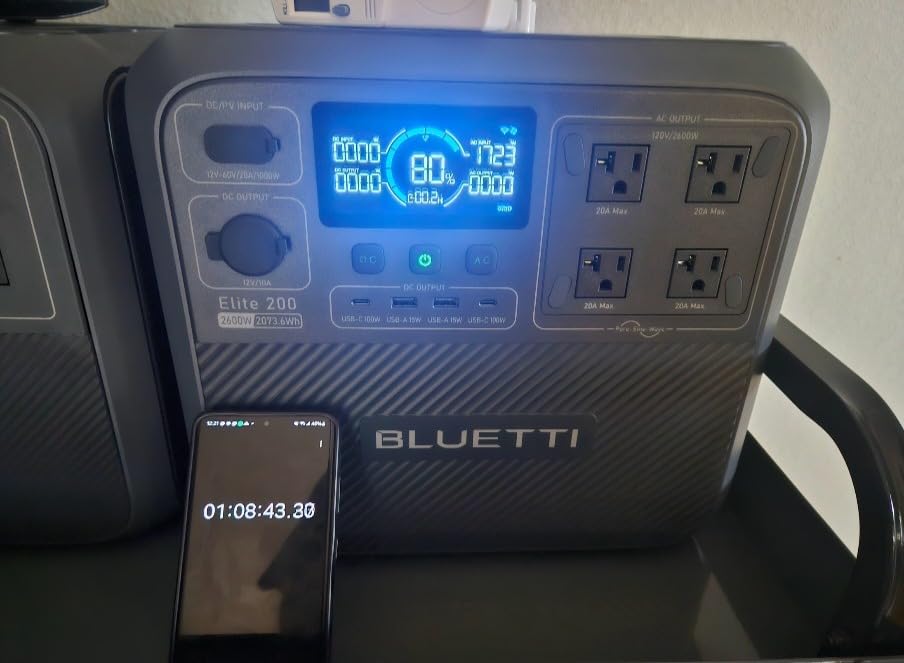
Ratings are 4.7 across 913 reviews, with 86 percent five-star. Reviewers draw a clear line between the hardware, which they rate as top tier, and the companion app, which several describe as thin next to the hardware quality. The fridge result is the standout: a 29 cubic foot refrigerator and freezer ran more than 24 hours on one charge in a reported test.
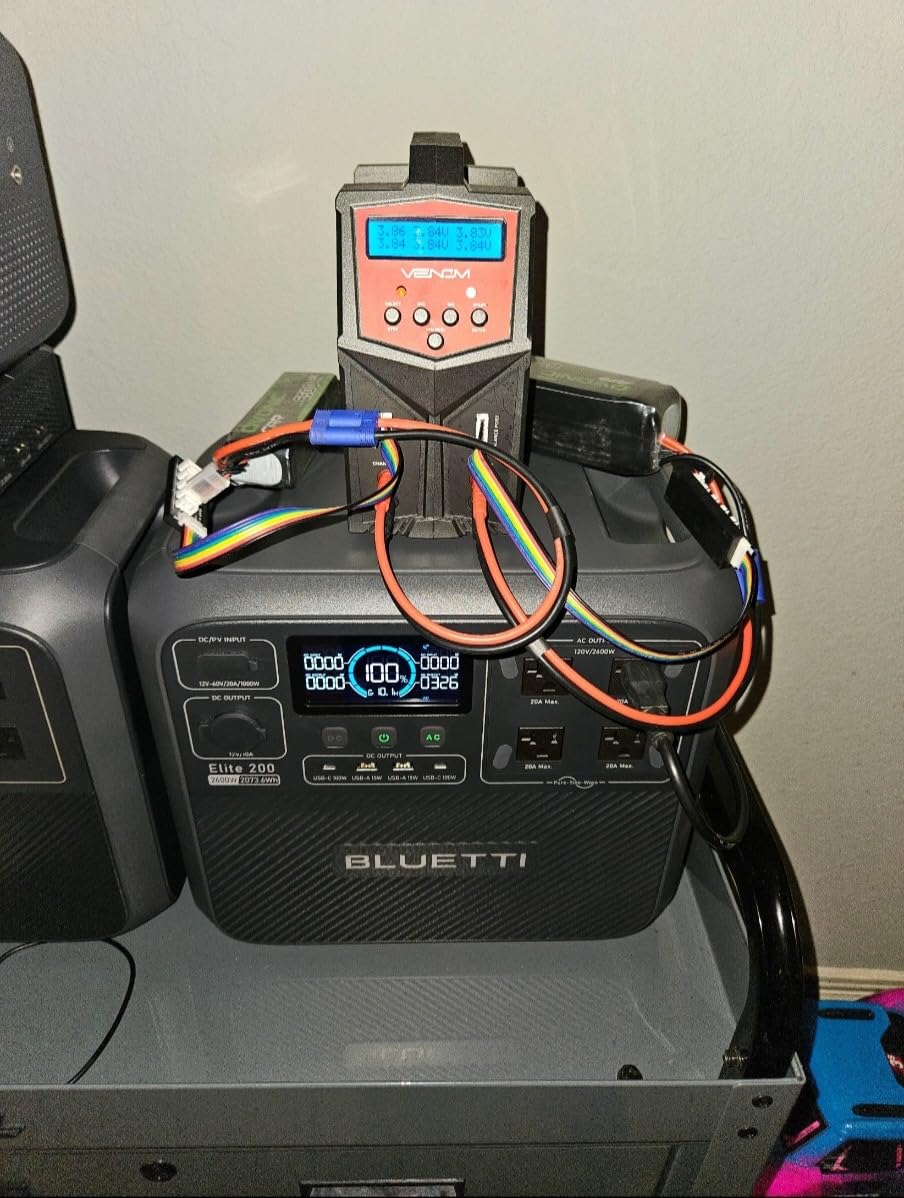
Standby draw of about 10W is roughly a third of comparable units, and for a cabin that draws a trickle all winter waiting for the next visit, that difference decides how much capacity is still there in April.
What a 60V solar input ceiling means for a cabin
The controller accepts 12V to 60V at 20A, so the advertised 1,000W solar ceiling is difficult to reach in practice with a single string. In a snowy cabin location where you want maximum harvest per panel, that limit is a genuine constraint and worth confirming against your mounting plan.
Two 200W panels in series sit close to that window, so the bundle is sensibly matched even though the headline number overstates it.
Where it falls short
There is no expansion path. 2,073.6Wh is fixed for the life of the unit, which is a real problem if a well pump or a freezer appears in year two.
The app is also the weak point. No custom charge rates, no temperature monitoring and no charge limits, which are exactly the controls a careful off-grid owner wants. Plan on driving the unit from its own panel and buttons.
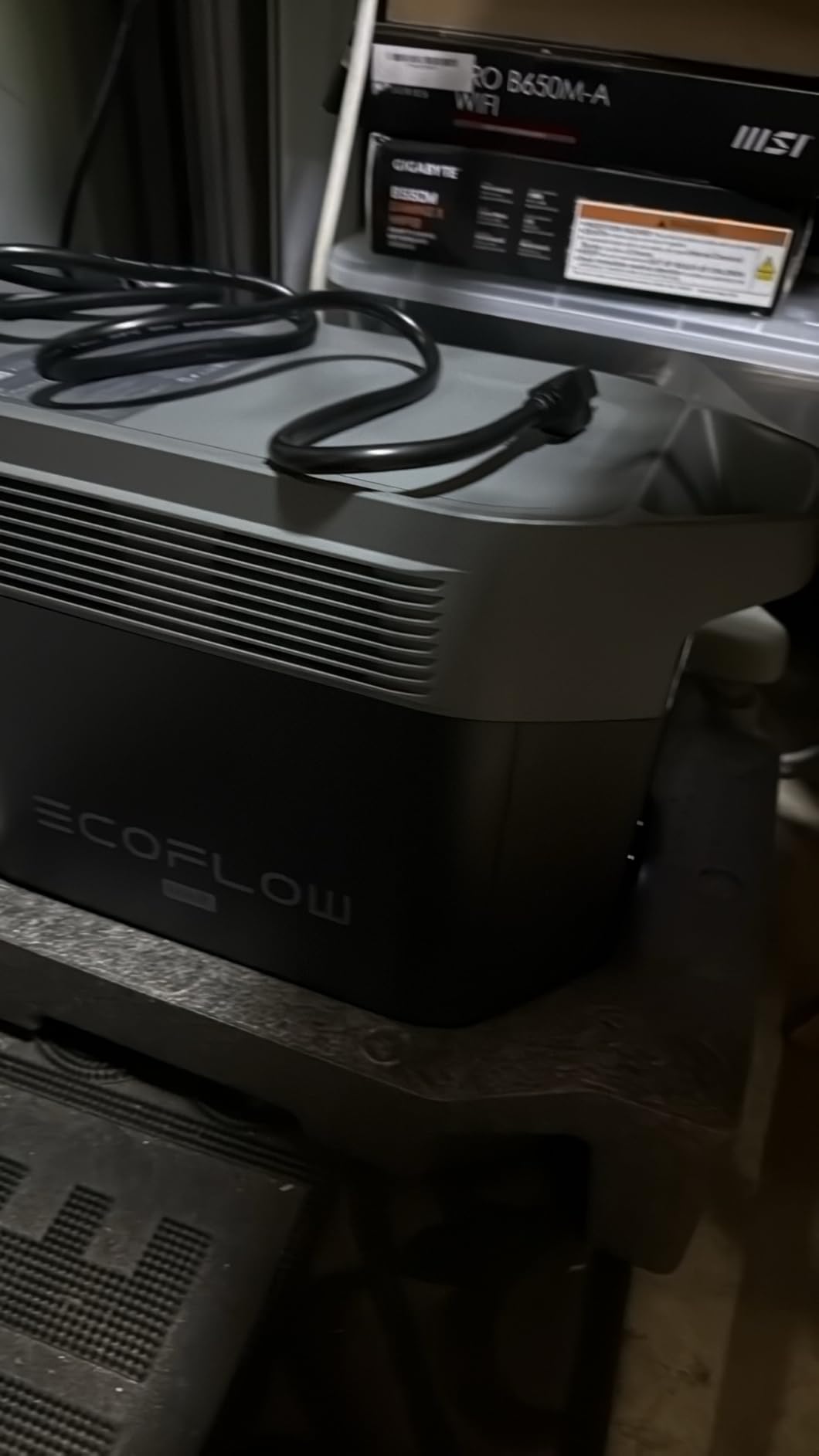
6. EF ECOFLOW DELTA 2 Max with 400W Solar Panel – Most Connections of Any Kit Here
EF ECOFLOW DELTA 2 Max Solar Generator 2048Wh With 400W Solar Panel
2048Wh LiFePO4
2400W continuous,3400W X-Boost
15 outlets
Expandable to 6kWh
Pros
- Fifteen outlets
- more than any other kit here
- 0 to 80 percent in 43 minutes on combined solar and AC
- Expandable to 6kWh with additional battery units
- IP68 400W panel that is weatherproof and light to reposition
Cons
- Requires extra MC4 to XT60i Y-cables or extensions to connect panels
- Solar input capped at 1000W with a practical ceiling near 880W
- Cannot run 240V electric clothes dryers
Outlet count is the story here. Fifteen outlets means you are not constantly swapping cables, which sounds trivial until you are running a router, a lamp, a laptop and a fridge in a cabin with two wall outlets. At 2,048Wh and 2,400W continuous, with X-Boost lifting output to 3,400W for high-draw appliances, it handles more simultaneous loads than anything else at this size.
The included 400W panel is among the largest single panels in this roundup, IP68 rated and 23 percent conversion efficient at only 35.3 pounds. It folds into its own case, so the array is still portable.
It sits at 4.6 stars from 368 ratings, with 84 percent five-star. Reviewers prize the outlet count and the fast charging, and several publish detailed wiring math explaining the cable and wattage limits that are not obvious from the listing. A smaller number describe warranty friction and transit damage on arrival.
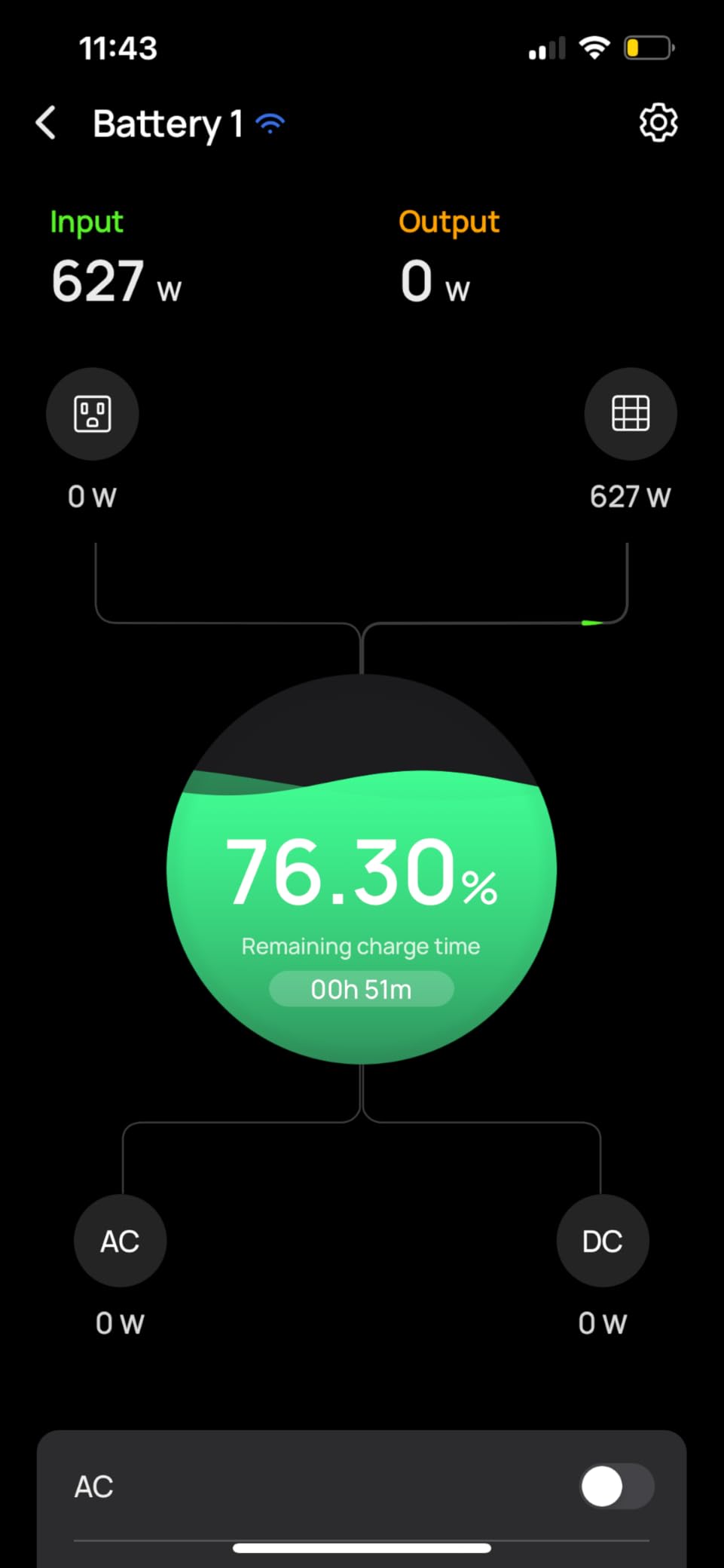
Recharge is genuinely fast: 0 to 80 percent in 43 minutes on combined AC and solar, and a full cycle on the included 400W panel in about 5.1 hours. The battery is rated for 3,000 full cycles to 80 percent capacity with a 5-year warranty.
Why 15 outlets matters more than it sounds
Cabin loads are small and numerous rather than large and few. A router, a monitor, a lamp, a phone charger, a fan and a coffee maker are six draws, and most 2kWh units run out of sockets long before they run out of power. Fifteen outlets removes the adapter clutter entirely.
The app also supports scheduling, so you can set working windows to prioritise solar over grid draw during a trip home, and it pushes low-battery notifications before a weekend visit begins.
Where it falls short
The solar input ceiling is 1,000W nominal with a practical limit closer to 880W using EcoFlow panels, and connecting third-party panels needs extra Y-cables or extensions that are not in the box.
At roughly 51 pounds for the station, this is not a carry-in unit. And it cannot run a 240V clothes dryer, which matters if you were hoping to cover cabin laundry.
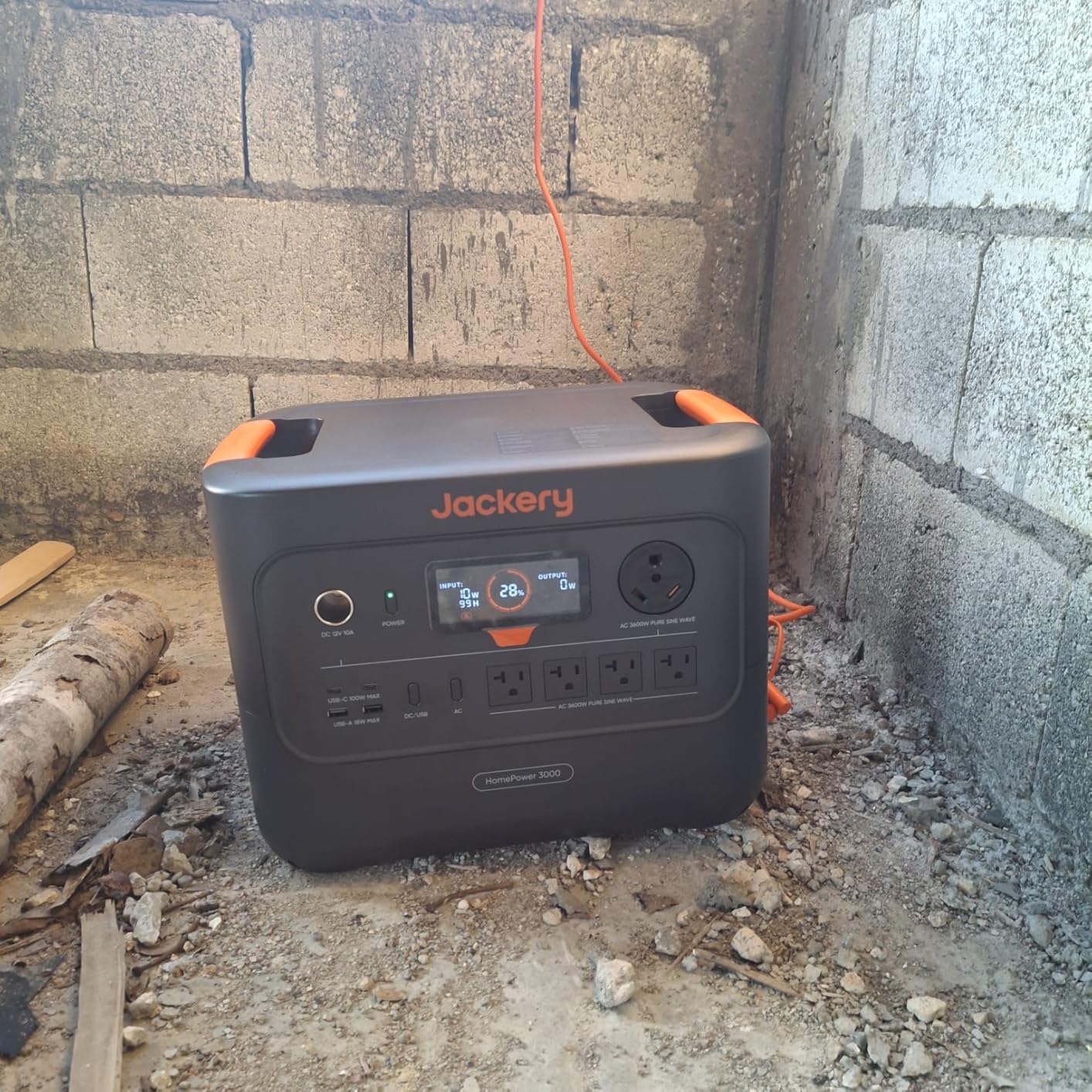
7. Jackery HomePower 3000 with Two 200W Panels – Highest Surge for Motor and Pump Loads
Jackery HomePower 3000 and 2x200W Solar Panels, 3072Wh, 3600W AC Output
3072Wh LiFePO4
3600W continuous,7200W surge
20ms UL UPS
Two 200W panels
Pros
- 3600W output with 7200W surge for a camper air conditioner and a microwave together
- Quiet operation suited to sleeping beside off grid
- Two 200W panels reach 80 percent in about 9 hours of good sun
Cons
- Battery cannot be expanded with additional packs
- Very heavy at 59.5 pounds so a wheel kit is worth adding
- The included panel cables need matching end connectors or charging never starts
Surge capacity is what separates this from the rest, and it is exactly the spec that decides whether a pump starts. The HomePower 3000 delivers 3,600W continuous with 7,200W of surge, which is enough headroom for compressor loads and motors that trip a smaller inverter. Among the kits here, it is the one most likely to start a well pump without stalling.
Storage is 3,072Wh of LiFePO4 rated for 4,000 cycles at 70 percent retention. You get four AC outlets, dual 100W USB-C PD, USB-A, DC and a TT-30 RV port, and the two 200W panels reach 80 percent in about nine hours of solid sun.
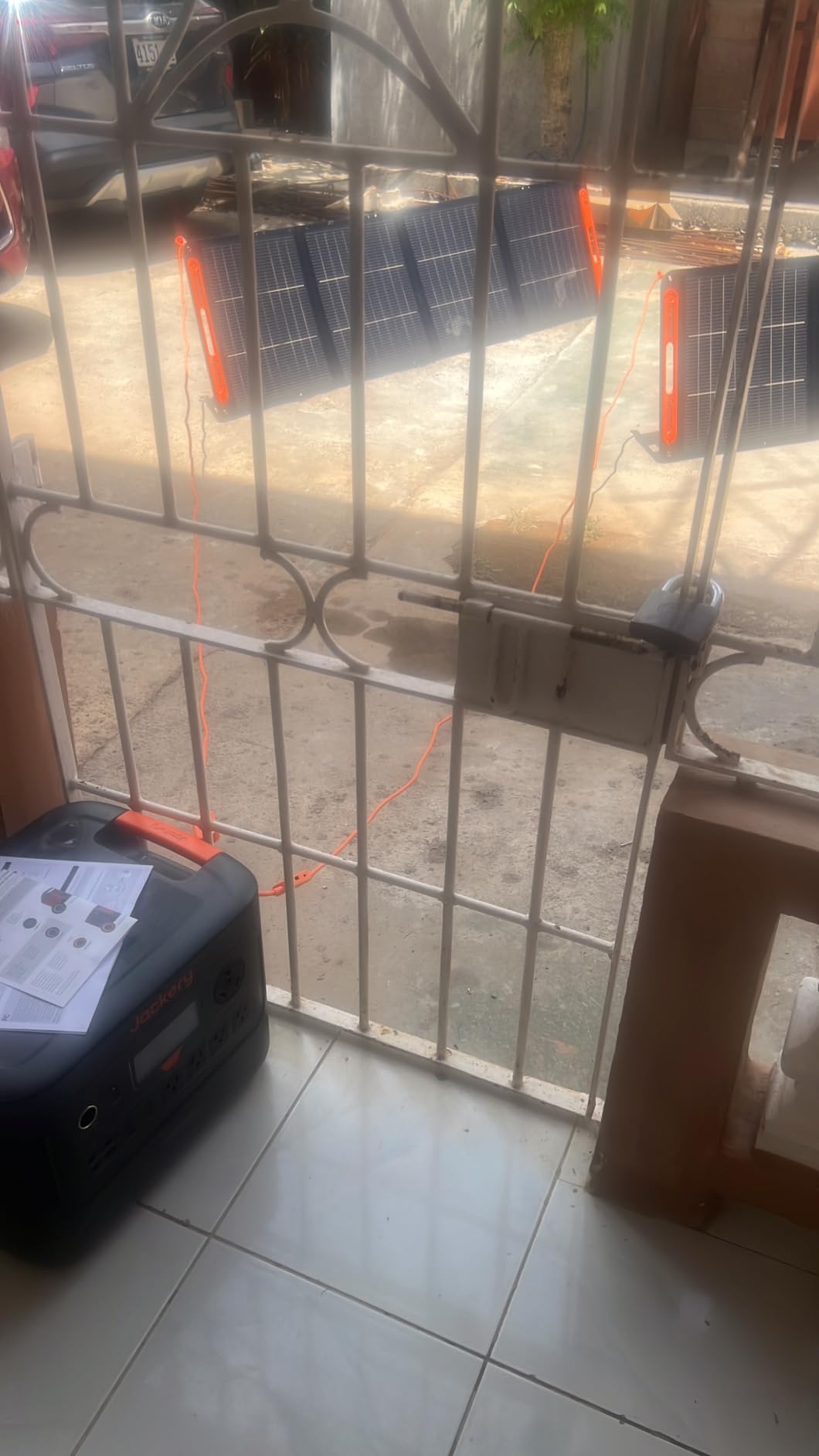
Ratings are 4.5 from 298 reviews with 77 percent five-star. Owners describe a strong, quiet unit that successfully replaces a gas generator for RV use, and several report running a fridge for two full days on a single charge. Jackery states the unit can power a household for up to 15 hours.
The 20ms UL-certified UPS is a genuine differentiator if you plan to keep a router, a security camera or a medical device running through an outage without a visible blink.
Matching inverter headroom to a pump
A 1/2 hp well pump typically draws around 5 amps running and three to five times that at start. On a 120V circuit that surge is real, and it is the reason smaller 1,500W to 2,000W units stall when the pump kicks on while a fridge is also running.
The 7,200W surge figure on this unit leaves comfortable margin for that start, which is why it is worth matching inverter surge to motor loads rather than to average consumption.
Where it falls short
No expansion. The 3,072Wh is a ceiling, and 59.5 pounds is a two-person move without a wheel kit. Reported friction also includes smart-home integration that does not function as advertised and support that some buyers describe as hard to reach.
Check your panel cable pairing on arrival, because the two-ended connectors can be mismatched and stop charging entirely with no obvious cause.
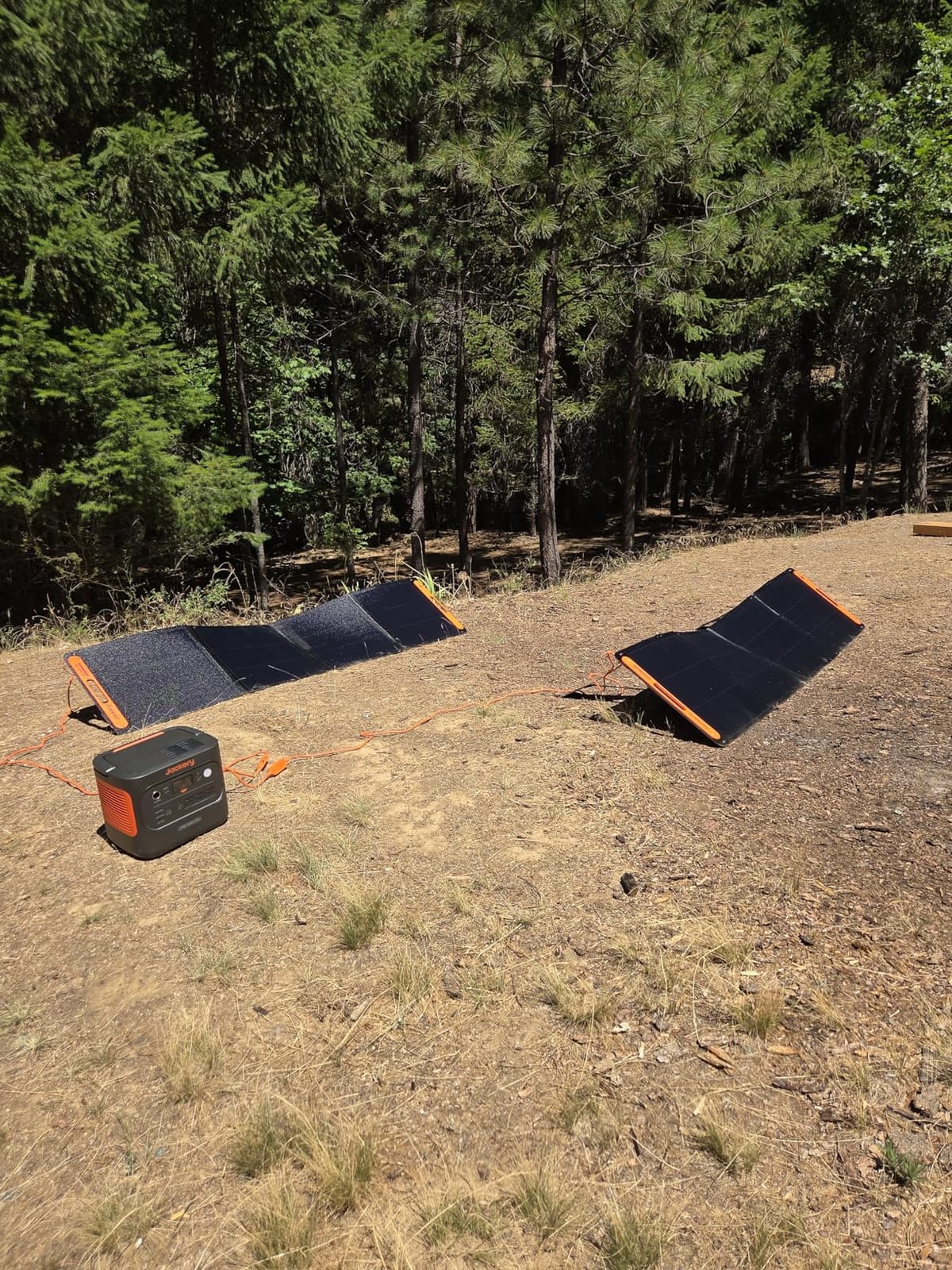
8. Jackery Explorer 2000 v2 with Two 200W Panels – Silent Full Charge Indoors
Jackery Explorer 2000 v2 and 2x200W Solar Panels, 2042Wh, 2200W AC Output
2042Wh LiFePO4
2200W continuous
20ms UL1778 UPS
30 dB silent charge
Pros
- Cell-to-Body construction is 41 percent lighter and 34 percent smaller than conventional 2kWh units
- Silent 30 dB mode allows a full charge while you sleep
- Runs cool and fume-free indoors which suits a cabin living space
- 20ms UL1778-certified UPS keeps critical devices running
Cons
- Listed 66.8 pound weight includes the panels
- Panel connection needs a non-obvious plug swap
- Only 3 AC outlets at this capacity
The Explorer 2000 v2 is the one to consider if the battery sleeps in the cabin with you. Its silent 30 dB charging mode brings the unit to a full charge in about five hours without a fan roar, and an advanced temperature control system cuts fan noise further. Since there are no combustion fumes and it runs cool, indoor placement is realistic.
Output is 2,200W continuous across three AC ports plus a 100W USB-C PD port. The two 200W panels give a full charge in about six hours, or five in silent mode. UPS backup is 20ms and UL1778 test certified.
It holds 4.6 stars from 268 ratings, with 84 percent five-star. The most repeated theme is the size and weight improvement from Cell-to-Body packaging, which is real progress against older 2kWh units. Owners also value charging silently indoors, which matters in a small cabin where a fan at 3 a.m. is not acceptable.
The AC recharge is unusually quick for the class: 80 percent in 66 minutes, and a full charge in 102 minutes in the app-activated emergency super charging mode.
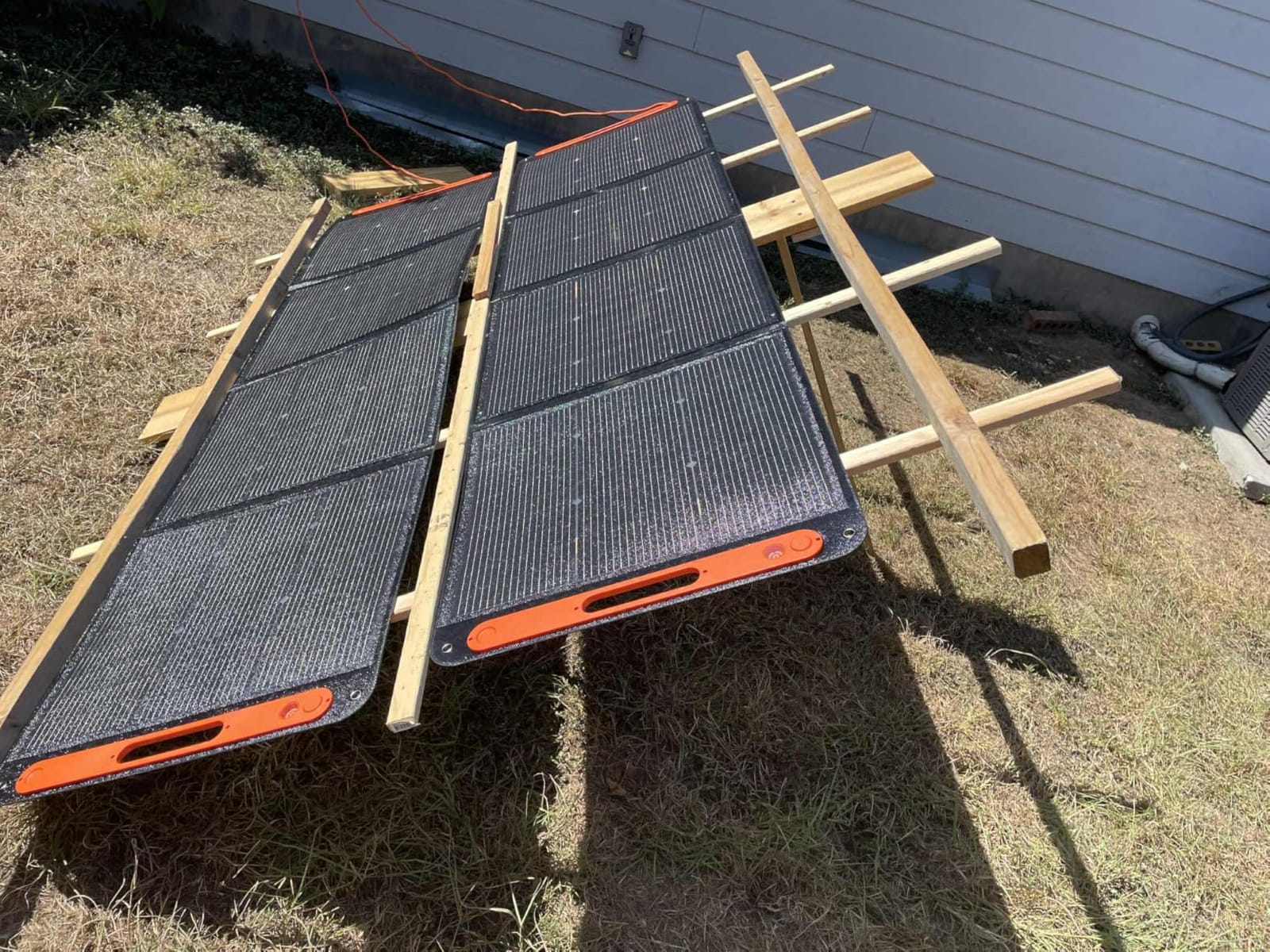
Indoor placement and the fumes question
A gas generator cannot run inside a cabin. These battery units can, which is the quiet advantage that does not show up on a spec sheet. If your cabin has no separate battery room, an indoor-capable unit with a genuinely silent charge mode removes a real constraint.
Just keep airflow around the vents during charging, and remember that a cabin in winter means a battery kept near room temperature rather than in a freezing shed.
Where it falls short
The listed 66.8 pounds covers the whole package including panels, which makes the delivery-and-unpack moment harder than it should be. And the panel connection uses a plug configuration where you must remove one plug and fit another, a step most buyers miss until charging simply does not start.
Three AC outlets is fewer than most rivals at this capacity, so plan your load layout before arriving.
9. BLUETTI Elite 300 with Two 200W Panels – 3kWh in a Small Footprint
BLUETTI Solar Generator Elite 300 & 2x200W Solar Panel 3014.4Wh LFP Battery
3014.4Wh LiFePO4
2400W continuous,4800W surge
6000 plus cycles
True 20A NEMA outlets
Pros
- 3kWh capacity in a footprint smaller than two ammo cases
- True 20A NEMA outlets that accept standard 20A plugs
- 30A 12V DC output on an Anderson connector which is rare at this size
- XT60-F solar input avoids the fragile coaxial connectors used by competitors
Cons
- Not expandable so 3kWh is the ceiling
- Solar input voltage capped at 60V
- several features need a phone app rather than onboard controls
Power density is the headline here. The Elite 300 packs 3,014.4Wh into a 14.4 by 12 by 11.7 inch shell and weighs 58 pounds, which reviewers repeatedly note is smaller than two ammo cans. For a cabin battery room that is really a closet, that footprint difference decides the install.
It delivers 2,400W continuous with 4,800W surge, and the port selection is unusually honest for a portable unit: true 20A NEMA outlets that accept standard 20A plugs, plus a TT-30 RV outlet and a 30A 12V DC port on an Anderson connector.
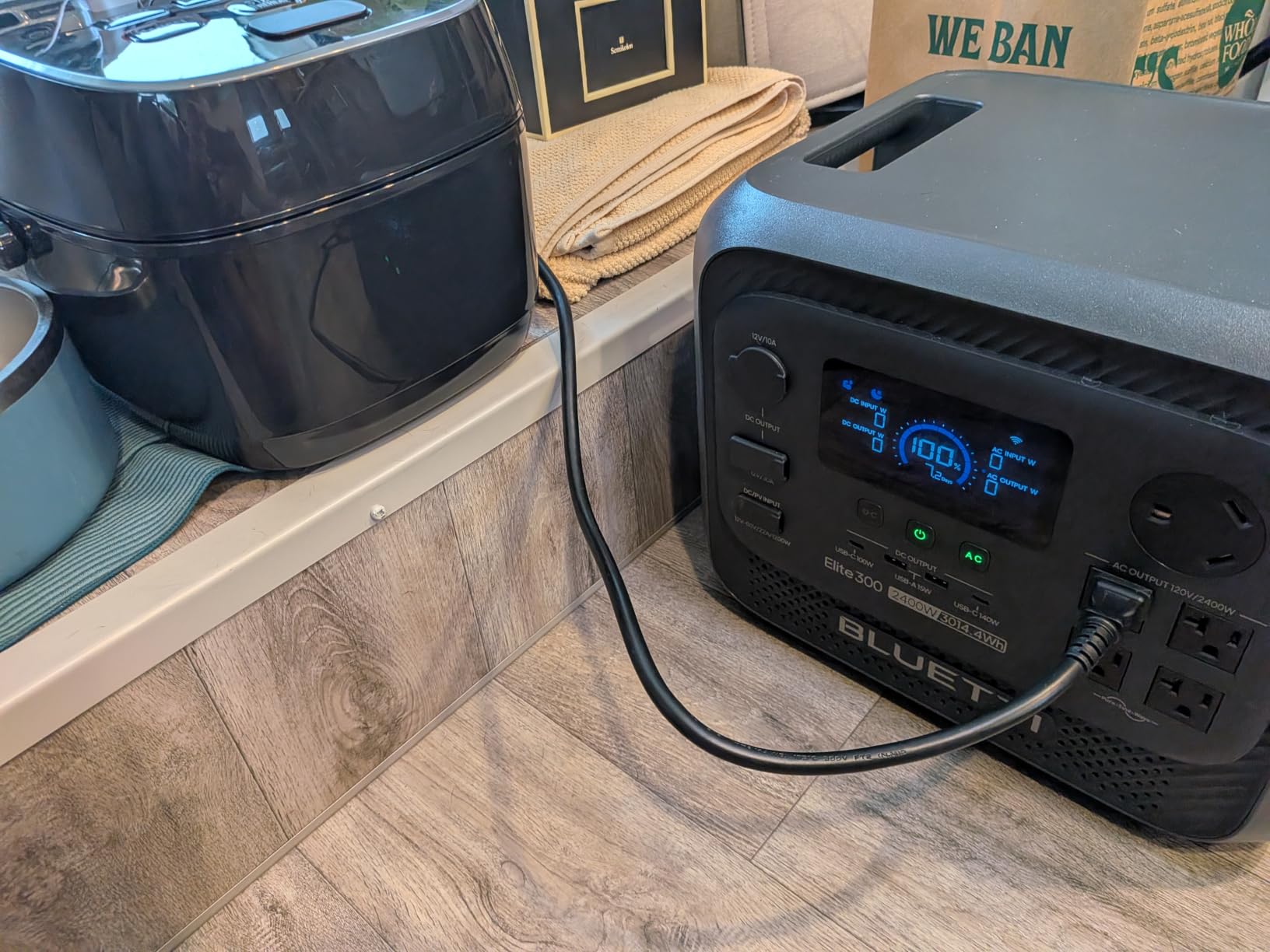
Ratings are 4.7 from 240 reviews, 83 percent five-star. Detailed reviewer testing backs the compactness claim with measured data, including a verified 77.2 percent round-trip throughput efficiency in an independent test. RV owners report powering a coach from it using a neutral grounding bonding plug for shore-power style hookups.
It also reaches 80 percent from a wall outlet in 78 minutes, and 24/7 human customer support is a genuine plus when the nearest technician is hours away.
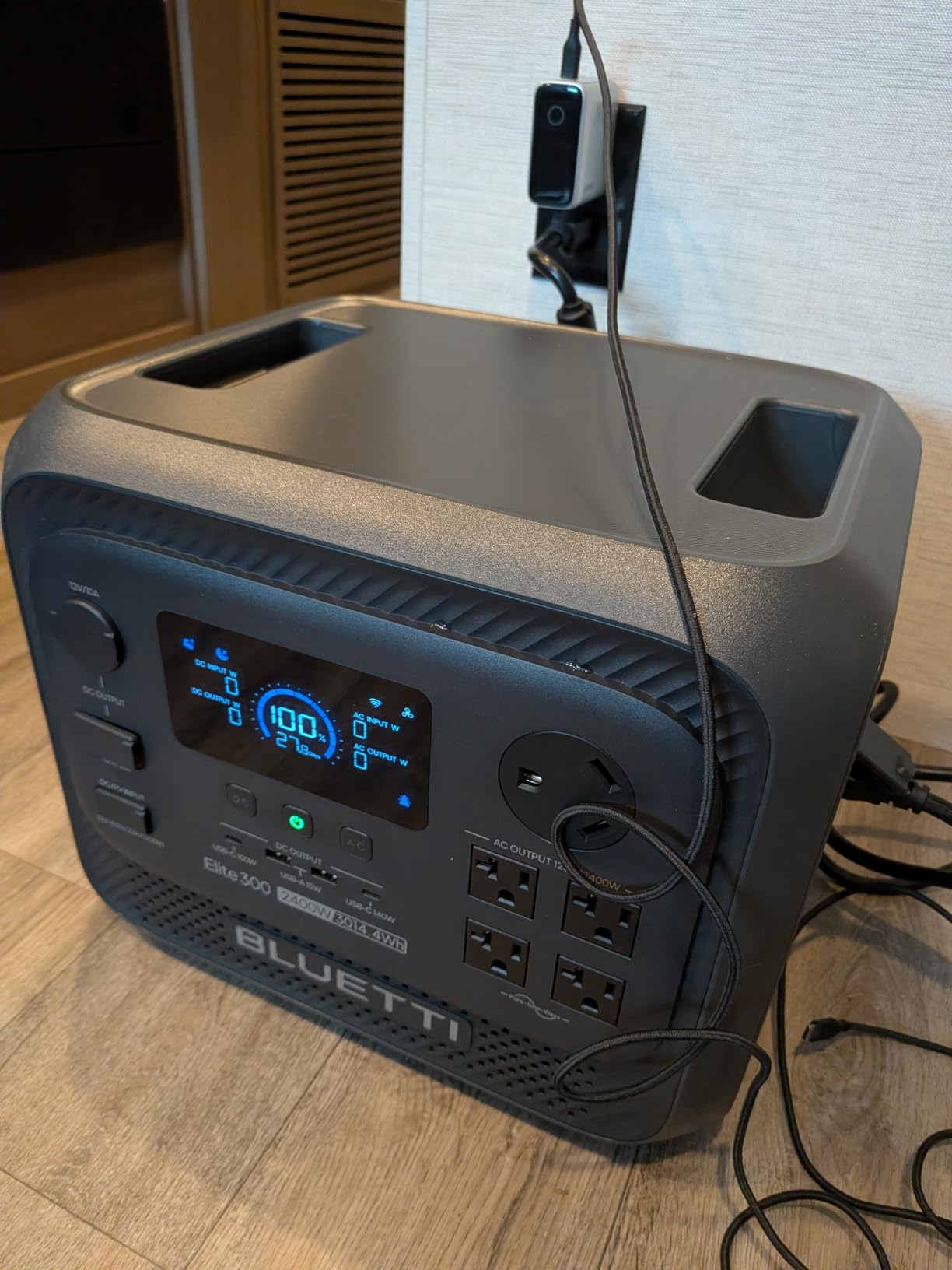
Why connector type is a cabin decision
The XT60-F solar input is worth more than it looks. Some competing units use coaxial DC connectors that deform and cause intermittent charging failures, and a failure that only shows up in an empty cabin in March is exactly the scenario owners on off-grid forums warn each other about.
The true 20A NEMA outlets matter for the same reason: a cabin full of standard extension cords and power tools plugs straight in without adapters.
Where it falls short
No expansion, so 3kWh is the hard limit. Solar input is capped at 60V, lower than larger BLUETTI models, which constrains how much array you can hang on a cabin roof in winter.
The soft-start voltage ramp also failed to start a 500W dehumidifier compressor in one reported test, and several useful functions live in the app rather than on the unit itself.
10. ALLWEI 2400W with 200W Solar Panel – Highest Expansion Ceiling
ALLWEI Solar Generator 2400W with 1x 200W Solar Panel LiFePO4 Power Station
2048Wh LFP
2400W continuous,4800W surge
Expandable to 10240Wh
10 ms UPS
Pros
- Panels
- controller and all mounting hardware in one package
- Expandable to 10240Wh
- the highest capacity ceiling of any unit here
- 10 ms UPS transfer keeps routers and modems alive
- Full charge on AC in about 1.5 hours
Cons
- Included 200W panel measures closer to 180W in practice
- Unit self-shuts at 80 percent charge and the display reading is not accurate
- Seller reportedly asks buyers to cover return shipping on warranty claims
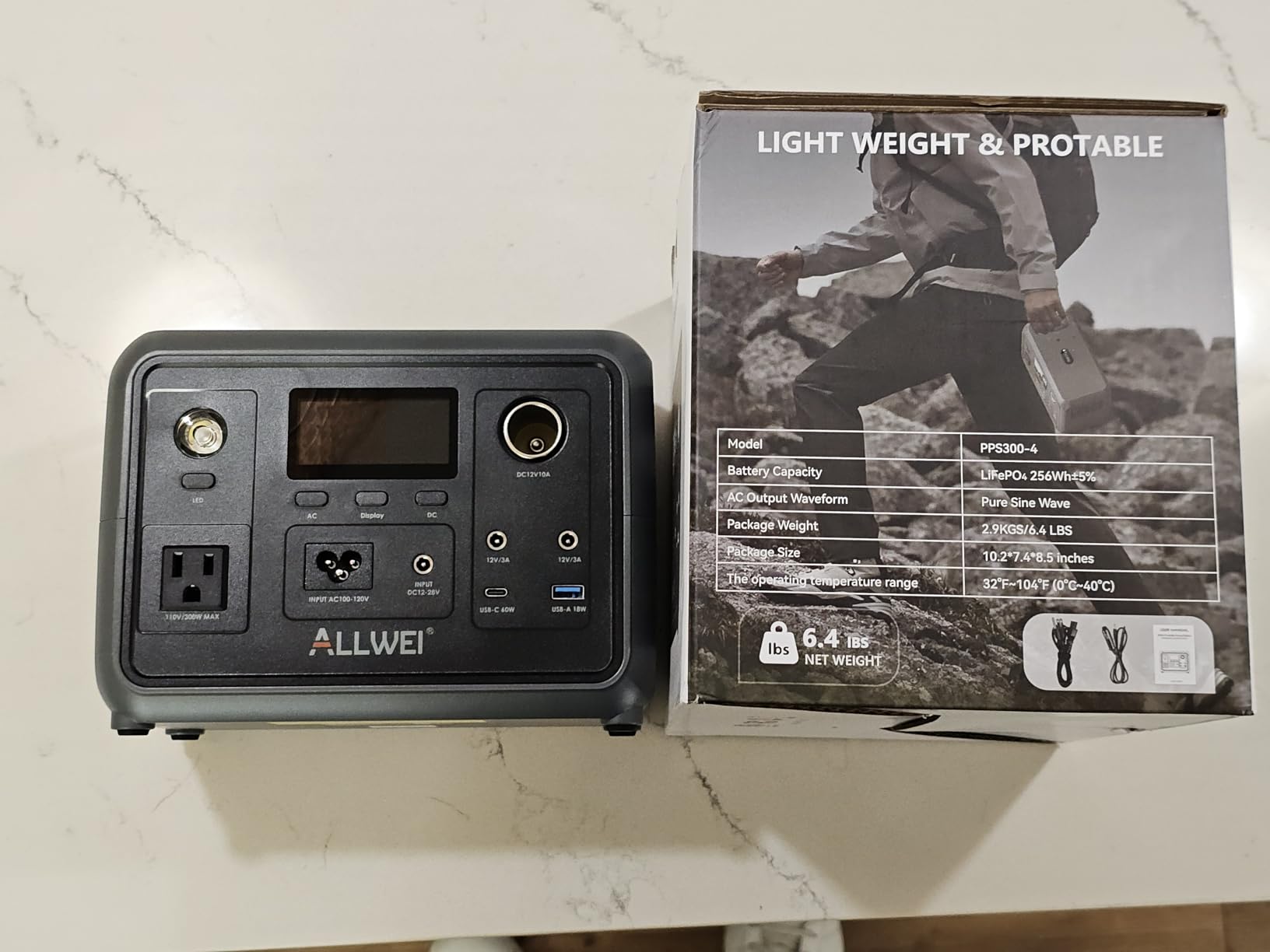
The reason to look at this one is the ceiling. It expands with up to four external battery packs to 10,240Wh, well beyond what any other unit in this roundup can reach. If you are building toward a full-time cabin and want to add capacity a pack at a time rather than replacing the system, that flexibility is the differentiator.
Base specs are 2,048Wh of LFP rated 3,500 plus cycles to 80 percent, 2,400W continuous and 4,800W surge, 11 outlets including 1,500W AC input and a 125V RV port for charging vehicle banks. The UPS transfer is 10ms.
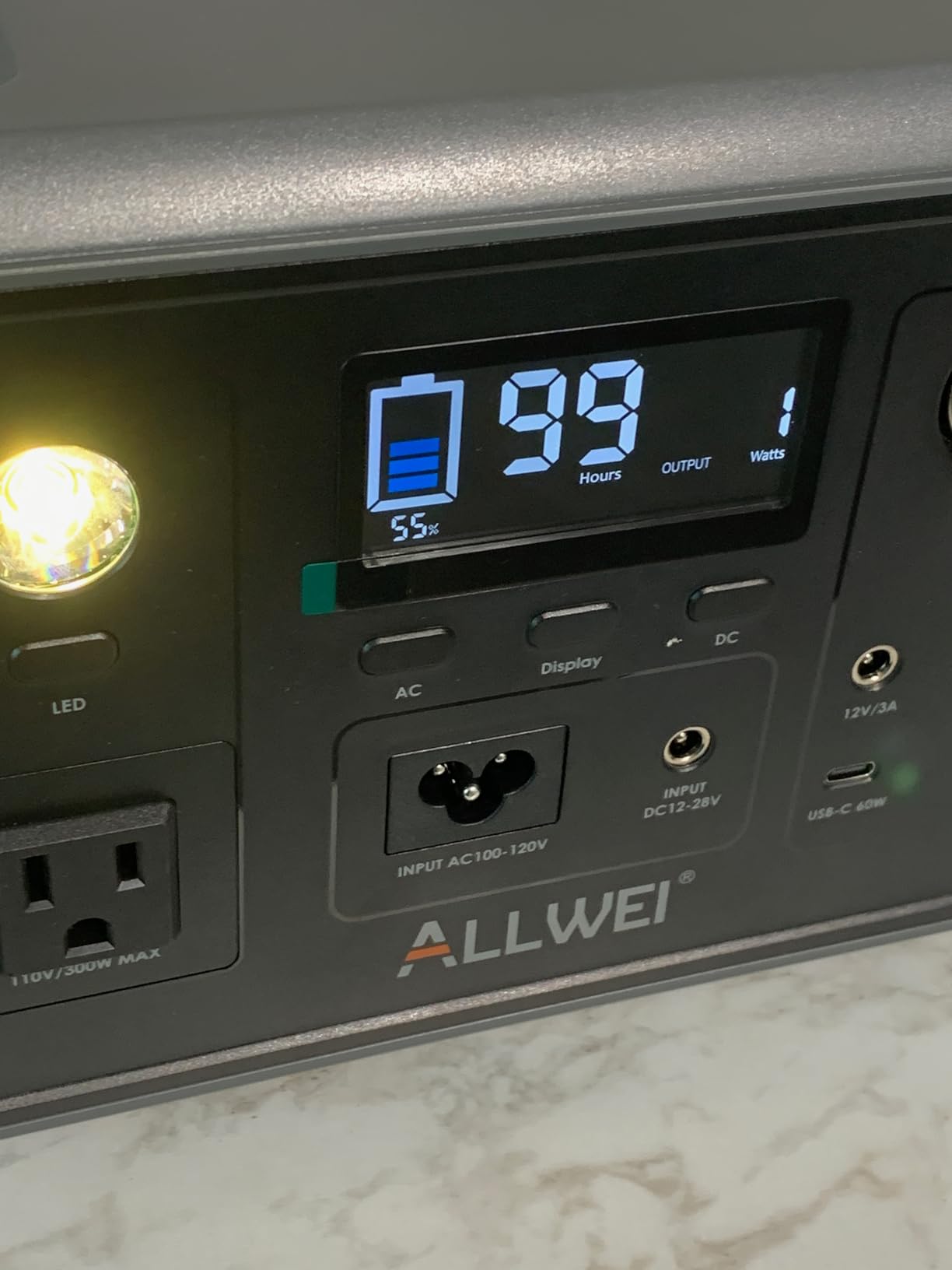
It holds 4.4 stars from 200 ratings, 78 percent five-star, which is the widest rating spread in this group. Positive reviews focus on expansion capacity, the 10 ms UPS behaviour and a full AC charge in about 1.5 hours. The unit is compact enough to stow in a vehicle, which suits a cabin you visit periodically.
Solar input of up to 1200W is the highest ceiling among the 2kWh units here, and the ALLWEI Landbook app handles monitoring, settings and firmware over Wi-Fi or Bluetooth.
Planning a build that grows in stages
Staged buying is the pattern experienced owners recommend, because the first winter of real consumption data tells you far more than a spreadsheet. Starting with a 2,048Wh unit and two or three expansion packs gets you to 6kWh or 8kWh without ever replacing a working inverter.
Because a well pump and a freezer are the two loads that push a cabin past 2kWh of daily use, expansion headroom is worth paying for before you need it.
Where it falls short
Two reports are worth taking seriously. The included 200W panel measured closer to 180W in practice, and the unit self-shuts at 80 percent charge rather than discharging further, with a display reading that does not match accurately. If you size batteries on the display, you will be disappointed.
Also confirm the warranty terms before buying, because some buyers report being asked to cover return shipping on claims, and that gets expensive from a remote cabin.
11. GROWATT HELIOS 3600 with 400W Solar Panel – Built for Deep Winter
GROWATT HELIOS 3600 Portable Power Station with 400W Solar Panel
3600Wh LFP battery
3600W continuous
2000W solar input
Cold start to -22F
Pros
- 3600Wh LFP with 3600W continuous output
- Rated for whole-house backup to 36kWh and 240V split phase
- Stable operation down to -22F
- No grid connection needed for solar charging
Cons
- At 149 pounds it needs a planned delivery route
- Some models had Bluetooth and Wi-Fi that would not connect
- Combining two stations for 240V automatically disables EPS mode
This is the only unit here with a stated cold-weather floor. It is rated for stable operation down to -22F, which for a northern cabin sitting unheated through February is not a marketing detail but the difference between a system that wakes up and one that does not. It is also the largest battery capacity in this group.
Solar charging runs at up to 2000W with 99 percent MPPT efficiency, so a full solar cycle takes about 2.5 hours with adequate panel coverage. stations can be paralleled to reach 7200W and 240V split phase.
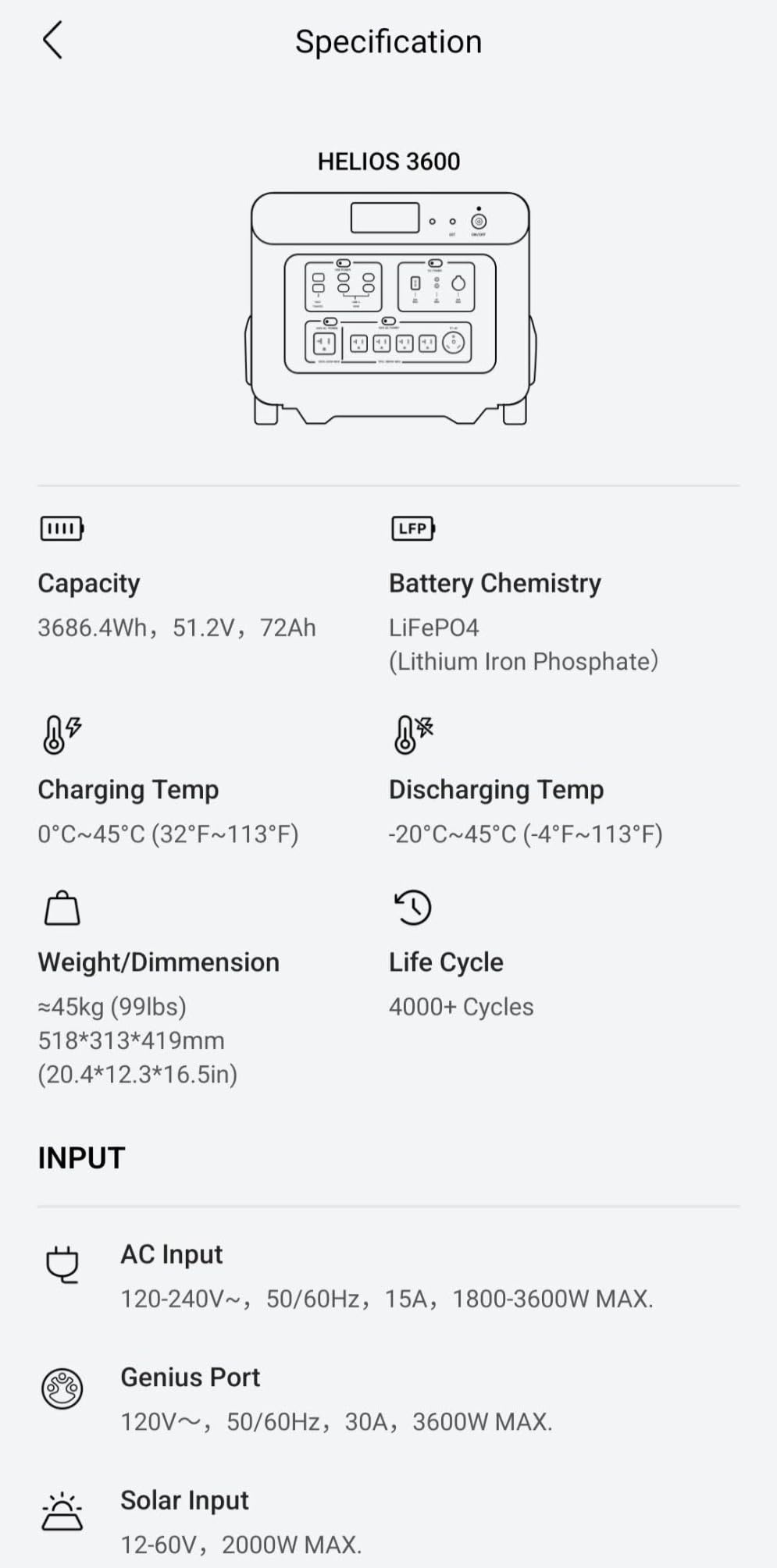
Ratings sit at 4.3 from 107 reviews, the lowest average and thinnest review base here, with 73 percent five-star. Off-grid and whole-house users rate the capacity and cold capability highly, and one owner reports running it as the main supply for an off-grid house for about a year.
GROWATT also has a track record of honoring warranty claims with replacement units and holds UL certification with US-based service, which matters more when a dead unit means a two-hour drive to the nearest town.
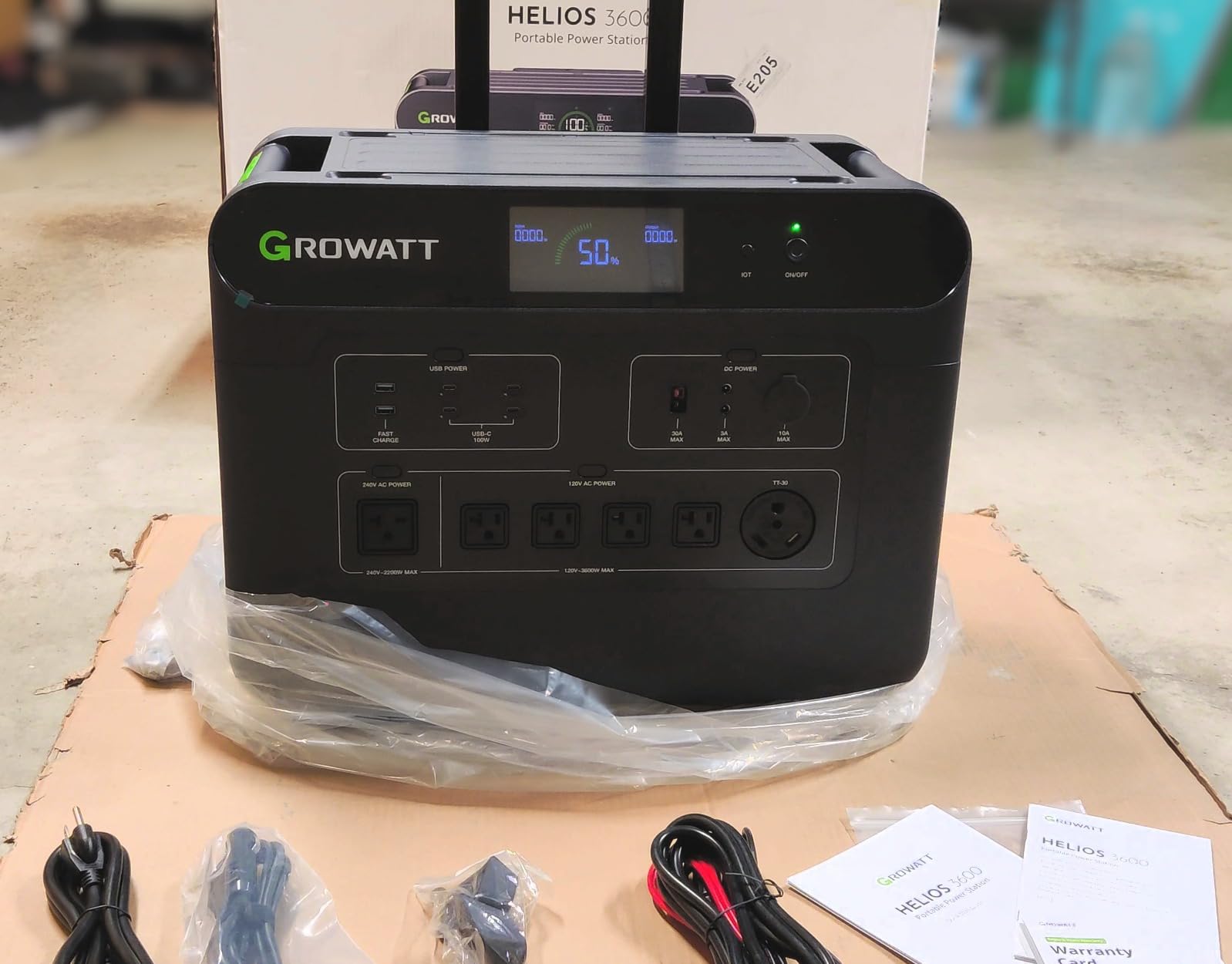
What whole-house backup rating actually means here
Expansion to 36kWh and 240V split-phase output puts this in a different category from every other kit on this page. It is the only one that can carry a cabin with electric heat, a full-size fridge and a freezer rather than the essentials only.
Basic function does not require Wi-Fi or Bluetooth, so a remote install still works if the app never connects, which is a fair complaint given the connectivity complaints in reviews.
Where it falls short
At 149 pounds it needs a planned delivery route, and reviewers cite transit damage on units in this size class. Plan the route before ordering.
EPS mode is strictly on or off with no granular setting, and combining two stations for 240V disables it automatically, and the operating guide is thin on charging detail. The thinner review base also means less long-term field data than the brands above.
12. Anker SOLIX S2000 with 400W Solar Panel – Longest Cycle Life Claim
Anker SOLIX S2000 Portable Power Station with 400W Solar Panel
2010Wh LiFePO4
1500W continuous,3000W peak
10000-cycle rating
35.7 pounds
Pros
- Longest battery specification in the group at 10000 cycles and a 15-year lifespan
- Lightest 2kWh unit at 35.7 pounds
- Up to 35 hours of fridge backup from the 6W idle draw
- Six recharge paths including generator and alternator charging
Cons
- No 12V DC port at all which limits RV and vehicle accessories
- 1500W continuous is low for 2kWh-class kits
- Power station and panel arrive as separate items
The 10,000-cycle battery claim is the headline, and it is the longest specification in this roundup, translating to a stated 15-year lifespan. At 2,010Wh built from 314Ah cells with a 35.7 pound weight, it is also the lightest 2kWh unit on the list, which makes it one of the more realistic units to move between a truck bed and a cabin deck.
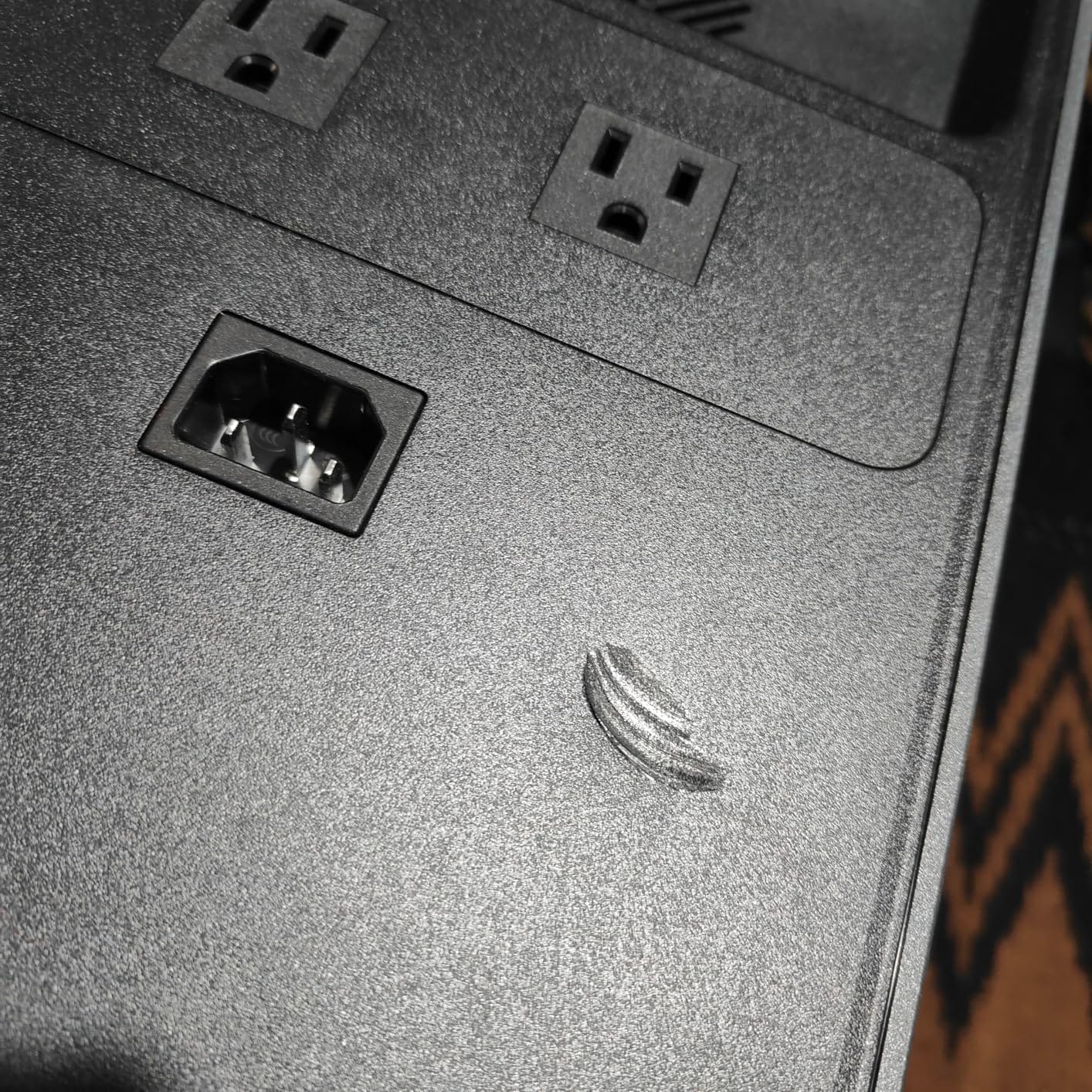
It provides 1,500W continuous and 3,000W peak across 8 outlets split across front and rear panels. Idle draw is 6W, which is where the fridge runtime claim comes from.
Ratings are 4.7 from 303 reviews, 84 percent five-star. Buyers consistently highlight the pairing of a 35.7 pound weight with a 10,000-cycle battery claim, and fridge runtime is the most commonly cited real use case, with a stated up to 35 hours of backup.
The rear outlet bank is a thoughtful layout for a cabin, because always-on loads like a router or a freezer plug in at the back and stay out of the way.
Choosing long life over high output
This unit makes a deliberate trade: endurance instead of power. If your cabin runs a router, lights, a laptop and a fridge, 1,500W continuous is more than adequate, and the 6W idle draw means a trickle load barely touches the bank over a long absence.
For a cabin where the freezer is the priority load and the bank is checked only every few weeks, those two specs matter far more than peak watts.
Where it falls short
There is no 12V DC port, which rules out direct RV or vehicle accessory hookups and forces a converter for 12V gear. And 1,500W continuous is the lowest among the 2kWh-class kits here, so anything motor-driven is out.
Note too that the power station and the 400W bifacial panel arrive as separate items, so both must be on hand before setup begins. Solar input is limited to 400W, the lowest ceiling in this group.
How Big a Solar System Does an Off-Grid Cabin Need?
Most weekend cabins need 400W to 800W of panels and 2kWh to 5kWh of batteries. Full-time cabins with a well pump, freezer and electric tools usually need 1.5kW of panels and 10kWh or more. The only reliable way to land in the right range is to audit the actual load rather than guess from nameplate wattage.
The audit takes five steps. List every device that will run while nobody is there, because a cabin that sits empty for weeks has a completely different profile from one in daily use. Find the running wattage on the label of each device. Estimate hours per day, and be honest about the fridge, since a compressor unit cycles rather than runs flat out. Multiply to get daily watt hours. Then add 25 to 30 percent as a buffer for cloudy stretches and cold weather capacity loss.
A worked example for a typical weekend cabin looks like this: a 100W compressor fridge running about 8 hours a day is 800Wh, four LED lights at 10W for 5 hours is 200Wh, a router and a phone charger is 150Wh, and a laptop for 2 hours is 60Wh. That is roughly 1,210Wh per day, so a 400W array is the minimum and a 600W to 800W array gives you a real margin.
Autonomy is the second number that matters. One sunny day of panel output covers a normal day, but two to three cloudy days do not. For a winter cabin, plan on two days of stored energy at minimum, which means 2.4kWh of usable storage for the example above, and more like 4kWh once you account for cold-weather capacity loss.
One sizing mistake recurs more than any other: the system gets sized on panel wattage rather than on measured daily consumption. The symptom always shows up the same way, with the fridge cycling on after sunset, the well pump kicking in and the bank dropping faster than expected. Our full off-grid system breakdown goes deeper on component sizing if you are past the portable-kit stage.
Which Solar Panel Type Is Best for Off-Grid Cabins?
Monocrystalline panels produce the most power per square foot, which is why they dominate every kit in this roundup. Polycrystalline panels cost less but need more roof or ground area for the same output, and bifacial panels add a second harvest from reflected light when mounted with a gap underneath. For a cabin where roof space is tight, monocrystalline is the practical answer in almost every case.
Durability specs matter more for a cabin than for a backyard array. Look for a snow load rating of at least 5,400Pa, a wind rating around 2,400Pa, and a junction box with an IP65 rating or better. The ECO-WORTHY set in this roundup publishes all three, which is rare enough to be worth noting.
Mounting and tilt deserve as much attention as the panel itself. In a snowy region, a steeper angle sheds accumulation faster and clears itself after a storm, while a flat mount can hold snow for days. If you expect to be away when it snows, a steeper tilt is cheaper than a roof rake or a plan to visit after every storm. For more on smaller array sizing, our panel selection walkthrough covers panel types in more depth.
12V vs 24V vs 48V: Which System Voltage for a Cabin?
12V suits small loads over short cable runs, and it is the simplest to wire. 24V reduces current for the same power, which means thinner cable over the longer distances from a cabin battery to a well pump or an outbuilding. 48V is the right answer for anything that needs a real inverter, a larger array or meaningful cable runs, and it is the standard for permanently installed systems.
The reason is resistive loss. Power is voltage times current, so doubling the system voltage halves the current and cuts the energy lost as heat in the wire roughly by a factor of four. Over a 50-foot run to a remote water pump, that difference is the whole game, and install errors around voltage drop are a common complaint among experienced owners.
One more constraint deserves attention before you buy a bigger array: the charge controller’s input window. Several units in this roundup cap solar input at 60V, which limits how many panels you can put in series. If your plan is to add panels in year two, confirm the input window now, because a 60V ceiling can be the thing that stops your expansion.
All of the kits here are effectively 12V-class portable systems, because portable power stations regulate internally. They are excellent for lights, refrigeration, electronics and short appliance runs. A 240V well pump, electric heat or a clothes dryer is a component-build conversation, not a bundle conversation.
Surviving Winter and Snow at an Unattended Cabin
Cold cuts battery capacity, and owners consistently underestimate how much. A LiFePO4 bank kept near freezing delivers noticeably less usable energy than the same bank at room temperature, which is a strong argument for storing the unit inside the cabin rather than in an unheated shed. If you must use a cold space, size the bank up by a third to compensate.
Snow is the other half of the winter problem. Options in ascending order of effort are a steeper panel tilt that lets snow slide off, a roof rake used after a storm, or a soft brush if you are on site regularly. If the cabin is empty for a week after heavy snowfall, plan on losing a week of production and having two to three days of stored energy to cover it.
Generator backup is insurance, and northern owners treat it that way. Keeping propane for cooking and hot water, plus a small gas generator for deep cold stretches, is a common pairing that lets the solar system stay smaller without risking the battery. Several of the kits here accept generator charging, which lets you top up a bank without running it down.
For a cabin that is unoccupied, a small camera on the same system is a common upgrade, and our solar-powered security camera roundup covers the ones that pair well with these kits. A 10 to 20ms UPS keeps a camera recording through a restart, which is where the certified units in this roundup earn their place.
Finally, test the system before you leave. Run a full charge, then turn off the array and confirm the fridge, lights and router all run from the bank alone. Doing that once in autumn is much cheaper than discovering a problem during the first January storm.
Frequently Asked Questions
What is the best solar kit for an off-grid cabin?
For most weekend cabins running lights, a refrigerator, a router and phone charging, the best solar kit is a 1,000Wh to 2,000Wh LiFePO4 power station paired with 400W to 800W of folding panels. The Anker SOLIX C1000 Gen 2 leads our roundup for recharge speed and rating, while the BLUETTI Elite 200 V2 is the better long-life choice and the ECO-WORTHY 200W kit is the most direct route to a permanent array.
How big of a solar system do I need for off-grid living?
A small weekend cabin typically needs 400W to 800W of panels and 2kWh to 5kWh of battery storage. A full-time cabin with a well pump, a freezer and power tools needs closer to 1.5kW of panels and 10kWh or more. Plan on two to three days of stored energy so a run of cloudy days does not stop the system.
Which solar panel is best for off-grid use?
Monocrystalline panels are the best choice for off-grid cabins because they produce the most power per square foot, and roof or ground space is usually the limiting factor. Bifacial panels add a second harvest from reflected light when mounted with a gap underneath. Look for a snow load rating of at least 5,400Pa and an IP65 or better junction box in cold regions.
Do off-grid solar kits work in winter?
They do, with two caveats. Cold reduces usable battery capacity, so a bank stored near freezing delivers less than the same bank at room temperature and should be sized up by roughly a third. Snow cover can stop production for days, so use a steeper panel tilt and plan on two to three days of stored energy to ride it out.
Are off-grid solar panels worth it?
They are worth it when a cabin has no grid connection and a propane or generator system is already handling backup. The savings come from replacing generator runtime, avoiding fuel transport and getting reliable power for refrigeration and a well pump. They are less compelling at a grid-connected cabin, where a smaller backup-only system usually does the job.
The Best Solar Panel Kits for Off-Grid Cabins in 2026
For most cabin owners, the best solar panel kits for off grid cabins come down to three names. The Anker SOLIX C1000 Gen 2 is our editor’s choice for a weekend cabin because it ties for the highest rating and carries the largest review base of the group. The BLUETTI Elite 200 V2 is the pick for a full-time cabin where battery longevity and inverter efficiency matter most over a decade, and the ECO-WORTHY 200W panel kit is the pick if you are building a fixed array.
Whatever you choose, audit your real daily load first, plan on two to three days of stored energy, and confirm the solar input ceiling before you plan to add panels later. Those three steps prevent nearly every sizing mistake that shows up in a cabin’s first real winter.