
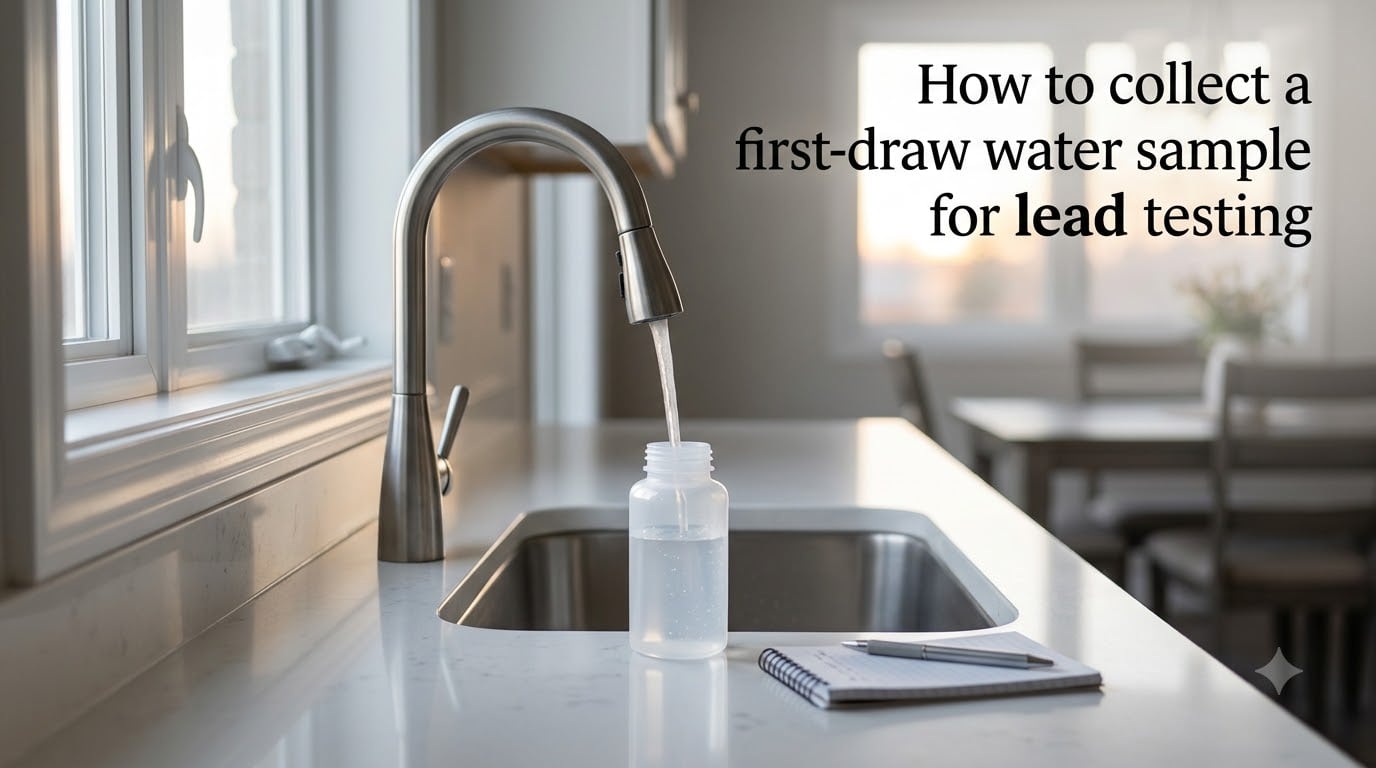
If you’ve ever wondered whether your home’s tap water contains lead, you’re not alone. I helped my sister test her home last year after she moved into an older house, and the procedure was simpler than I expected once I understood the rules. In this guide, I’ll walk you through how to collect a first-draw water sample for lead testing so your results actually mean something.
A first-draw sample is the very first water that comes out of your tap after the water has sat stagnant in your pipes for at least 6 hours, but no more than 18 hours. This overnight stagnation is exactly what allows the test to detect lead that may be leaching from your plumbing. Getting the procedure right is the difference between a useful result and one you’ll have to repeat.
Table of Contents
What Is a First-Draw Water Sample?
A first-draw water sample is water that has been sitting stagnant in your home’s plumbing for a minimum of 6 hours and a maximum of 18 hours, collected first thing in the morning before any water is used. The EPA defines this as a 250 mL sample representing water that may be consumed at the start of the day or after infrequent use.
I like to think of it as a “worst-case scenario” snapshot. If lead is coming off your pipes or solder, the highest concentrations show up in water that’s been sitting longest against those surfaces. A regular glass of water you pour during the day won’t reveal that. The first-draw method captures the highest potential exposure so you know if there’s a real problem.
The key elements that make a sample “first-draw” are simple but strict. The water must sit stagnant for 6 to 18 hours. It must come from a cold water tap. No water can run anywhere in the home during the stagnation period, including toilet flushes and shower use. Finally, you collect the very first water out of the tap without letting any run down the drain.
Why First-Draw Sampling Matters for Lead Testing?
Lead in drinking water is a serious health concern, especially for children and pregnant women. Even low levels of exposure can affect a child’s development, and there is no safe level of lead for anyone. Most lead in drinking water doesn’t come from the source water supply itself; it comes from lead solder, brass fixtures, or lead service lines inside the home’s plumbing.
A first-draw sample tests whether your plumbing is the source of contamination. When I helped my sister collect hers, we used this method precisely because it would show the highest possible lead level she and her kids could be exposed to. If the first-draw sample comes back clean, you can be confident your pipes aren’t actively leaching lead.
This approach is also the standard for regulatory compliance testing in schools and childcare facilities. The EPA’s Lead and Copper Rule uses this sampling protocol because it’s the most sensitive test for plumbing-related lead exposure.
How to Prepare the Night Before Collection?
The preparation step is what most people get wrong, and it’s where the test either succeeds or fails. The night before you plan to collect your sample, you need to make sure no water runs anywhere in your home for a full 6 to 18 hours.
What counts as water usage during the stagnation period? Here’s what to avoid:
Toilet flushing
Showering or bathing
Hand washing
Dishwasher or washing machine cycles
Running any faucet, including outdoor spigots connected to the same plumbing
The simplest schedule for most families is to choose an evening when nobody needs to be up late, stop all water use before bed, and collect the sample first thing in the morning. For our test, we stopped water use around 10 p.m. and collected the sample at 6 a.m., giving us 8 hours of stagnation right in the middle of the acceptable window.
Pro tip: leave a sticky note on the bathroom faucet and a reminder on the dishwasher so nobody forgets in the middle of the night.
How to Collect a First-Draw Water Sample: Step-by-Step Procedure
Here’s the exact procedure I followed when collecting the sample at my sister’s house. Follow these steps in order and your sample will be valid for laboratory testing.
Pick up your sample kit from a certified laboratory or order a home test kit ahead of time. Most labs send a sterile 250 mL bottle, paperwork, and return shipping materials.
Choose the cold water tap you most often use for drinking water, typically the kitchen sink.
The night before collection, stop all water use in the home for at least 6 hours.
Do not remove the aerator from the faucet unless your lab instructions specifically tell you to.
Place the sample bottle under the faucet and open the cold water tap fully.
Let the first water out of the tap flow directly into the bottle without running any down the drain. Fill to the 250 mL mark.
Cap the bottle tightly without touching the inside of the cap or lid.
Label the bottle with your name, date, time of collection, and sample location.
Place the bottle in the cooler provided with your kit and ship to the lab the same day, or refrigerate and ship within the timeframe your lab specifies.
The total collection itself takes less than two minutes once the timer starts. The hard part is the 6 to 18 hours of waiting beforehand.
Which Faucet Should You Use for Lead Testing?
The standard recommendation is the cold water kitchen tap because that’s where most households draw drinking and cooking water. The EPA and most state guidance documents name the kitchen cold tap as the default first-draw sampling location.
Avoid using faucets that won’t give you a representative reading. That includes hot water taps (which can leach more lead from solder but aren’t what you drink cold), filtered or treated water faucets (which would test the filter, not your plumbing), and drinking fountains (which usually aren’t connected to household plumbing in the same way).
If you want to test a specific faucet your child drinks from, like a bathroom sink, you can collect additional samples from that tap. Many homeowners test both the kitchen and a bathroom to map lead levels across their home. Just label each bottle clearly so the lab knows which came from where.
Common Mistakes to Avoid When Collecting a First-Draw Sample
After helping with my sister’s test and talking to lab technicians, I’ve seen the same handful of errors invalidate samples over and over. Here’s how to avoid them.
Don’t run the water before collecting. Even a quick burst to “clear the lines” ruins the stagnation period and defeats the purpose. The first water out of the tap goes into the bottle.
Don’t touch the inside of the bottle or cap. Skin oils and contamination can skew results. Use clean hands and avoid touching any interior surface.
Don’t use the wrong temperature. Hot water leaches more lead but doesn’t reflect what you actually drink cold. Always use the cold tap.
Don’t forget to track water usage elsewhere. A single toilet flush during the night can break the stagnation period in some plumbing configurations. If someone in your household forgets, you’ll need to restart the 6-hour wait.
Don’t use a household container instead of the lab bottle. Consumer jars may contain trace metals or residue that contaminate the sample. Always use the sterile bottle your lab provides.
Sample Handling and Shipping After Collection
Once your sample is bottled and capped, time matters. Most labs want the sample shipped the same day it’s collected, or at minimum refrigerated at 4 degrees Celsius until it can be shipped. The goal is to prevent any change in the lead concentration between collection and analysis.
If your lab sent a chain of custody form, fill it out completely before shipping. Common fields include the sample location, collection date and time, and your contact information. Incomplete paperwork can delay results or cause the lab to reject the sample.
Pack the bottle in the cooler with ice packs as instructed. Seal the chain of custody form in a separate plastic bag to keep it dry. Ship via the carrier your lab specifies, usually overnight or priority mail. Expect results within 5 to 10 business days after the lab receives the sample.
Frequently Asked Questions About First-Draw Water Samples
How do I collect a water sample for lead testing?
Collect a first-draw sample by letting water sit stagnant in your pipes for 6 to 18 hours, then filling a sterile 250 mL lab bottle with the first water out of the cold tap. Do not run any water in the home during the stagnation period, including toilets or showers.
When collecting a water sample for lead, is it best to collect the first draw?
Yes. A first-draw sample is the standard method for lead testing because it captures the highest potential lead exposure from your plumbing. This approach reveals whether lead is leaching from pipes, solder, or fixtures into your drinking water.
How long should water sit before testing for lead?
Water must sit stagnant for a minimum of 6 hours and a maximum of 18 hours before collecting a first-draw sample. Anywhere in this window gives a valid result, with overnight being the most common choice for households.
Is there an easy way to test for lead in water?
The easiest method is to order a certified lead testing kit from a state-certified laboratory, follow the first-draw sampling procedure, and mail the sample back for analysis. DIY test strips are available but less accurate than certified lab testing.
Take Action on Your Water Quality
Collecting a first-draw water sample for lead testing is a straightforward procedure once you understand the rules. Let the water sit for 6 to 18 hours, use the cold tap, fill the lab bottle with the very first water, and ship it the same day. That’s it.
If your results come back showing lead, the EPA recommends flushing your tap for 30 seconds to 2 minutes before drinking, using a certified lead-removing filter, and in some cases replacing lead service lines. Talk to your local water utility, many offer free testing and filter rebates. Start with a first-draw sample this month, and you’ll have a clear answer about your home’s water quality by next week.