
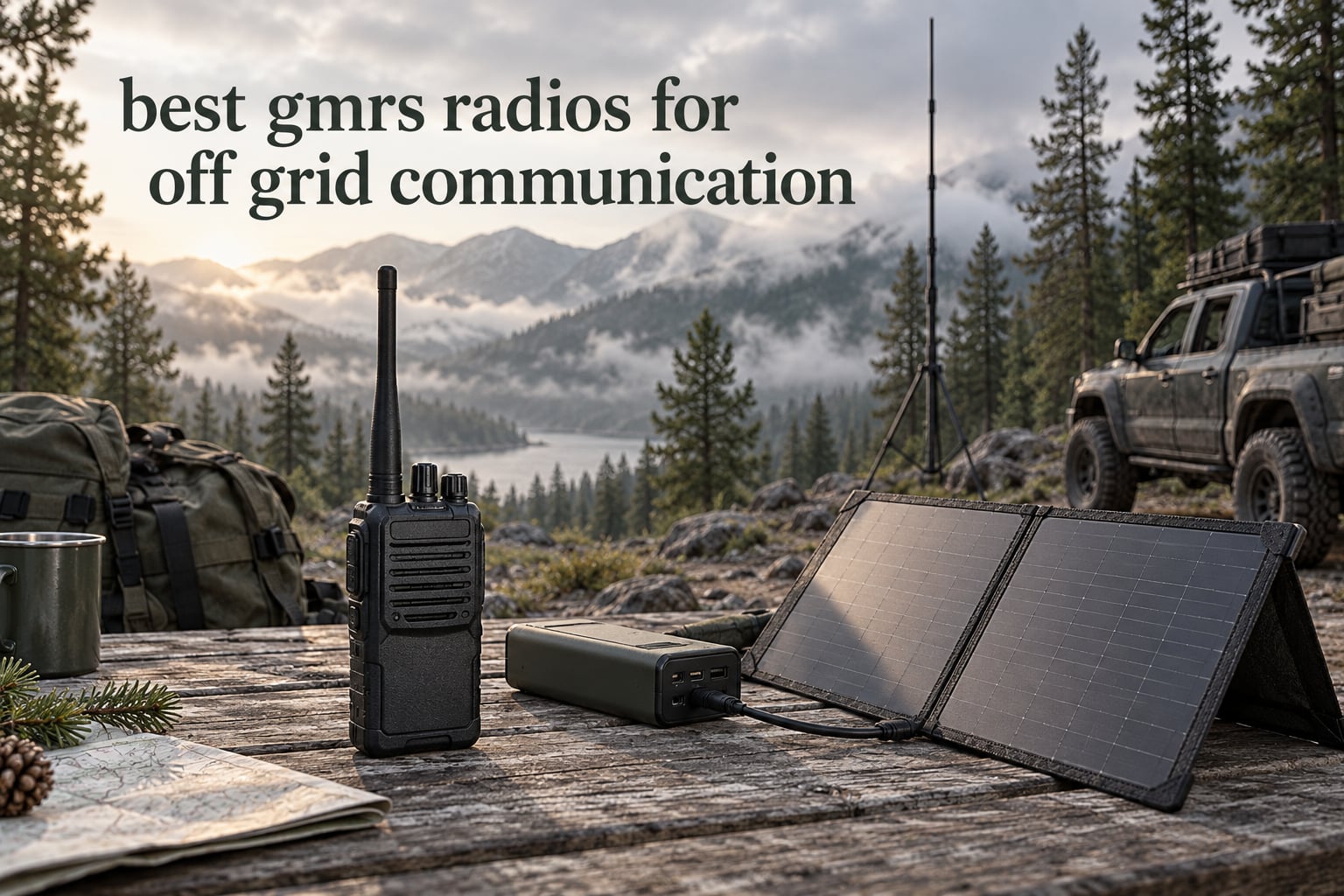
The best GMRS radio for off-grid communication is the Midland GXT1000VP4 for handhelds and the Midland MXT275 for vehicles. The GXT1000VP4 ships with two radios, rechargeable NiMH packs, a desktop charger and NOAA weather scanning, and it holds 22 GMRS plus 8 repeater channels across 50 memories with 142 privacy codes. The MXT275 is a 15-watt dash-mounted mobile with an integrated control mic. Both run entirely on stored power: no cell tower, no internet, no subscription.
That last point is why GMRS keeps showing up in off-grid and overlanding conversations. When the grid goes down, cell towers stop, landlines go silent and satellite messengers need a subscription plus a clear view of the sky. A GMRS radio needs none of that. It transmits on UHF 462-467 MHz from its own battery to another GMRS radio sitting on the same channel.
What it cannot do is ignore physics. Line of sight decides your range, not the wattage printed on the box. A 5-watt handheld typically manages 1-2 miles with buildings or trees in the way and 4-6 miles across open ground, which matches what r/gmrs users report repeatedly. Antenna height is the single biggest lever you can pull, and users on remote parcels say a rooftop or mast whip changes their usable range far more than upgrading to a pricier handheld.
We compared 10 radios for this guide, from budget handhelds to 20-watt mobiles, and sorted them by the things that actually matter when there is no infrastructure around you: transmit power, real battery capacity, water rating, repeater access, removable antennas and how long the radio stays quiet on standby. Every pick below ships with the specs to match.
A word on licensing, since it is the number one reason people never buy one. An FCC GMRS licence lasts ten years, requires no exam, and covers your immediate family. Any non-family operator who keys up needs their own licence. If you are planning power for the radios themselves, our guide to off-grid solar systems covers the charging side.
Table of Contents
Top 3 GMRS Picks for Off-Grid Communication (October 2026)

Midland GXT1000VP4
- 22 GMRS plus 8 repeater channels
- 50 memories and 142 privacy codes
- NOAA weather alert scanning
- Rechargeable NiMH packs with AA backup

Midland MXT275
- 15 watt GMRS micro mobile
- Integrated control microphone on 12V power
- NOAA weather scan and alert
- 8 repeater channels

Radioddity GM-30
- 5 watt output with selectable 0.5W and 5W
- 30 default channels including 8 repeater channels
- USB Type-C charging
- IP54 water resistance
The Best GMRS Radios for Off-Grid Communication in 2026
| Product | Specs | Action |
|---|---|---|
| Midland GXT1000VP4 |
|
Check Latest Price |
| Midland MXT275 |
|
Check Latest Price |
 BAOFENG UV-9G BAOFENG UV-9G |
|
Check Latest Price |
 Radioddity DB20-G Radioddity DB20-G |
|
Check Latest Price |
| Radioddity GM-30 |
|
Check Latest Price |
 BAOFENG UV-5G Plus BAOFENG UV-5G Plus |
|
Check Latest Price |
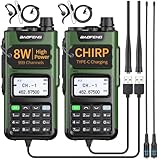 BAOFENG GM-15 Pro BAOFENG GM-15 Pro |
|
Check Latest Price |
 Retevis RB48 Retevis RB48 |
|
Check Latest Price |
 TIDRADIO TD-H9 TIDRADIO TD-H9 |
|
Check Latest Price |
 Retevis Ailunce HA1G Retevis Ailunce HA1G |
|
Check Latest Price |
1. Midland GXT1000VP4 – Best Overall for Off-Grid Comms
Midland GXT1000VP4 GMRS Two-Way Radios with Headsets, Black, 2 Pack
50 channels with 142 privacy codes
NOAA weather alert scanning
Rechargeable NiMH packs with AA backup
4.8 ounce body, 3 year warranty
Pros
- Ships as a working two-radio set with rechargeable packs and a desktop charger
- NOAA severe weather scanning built in
- VOX hands-free plus EVOX whisper mode
- Switches to AA cells when the packs run flat
- 13204 reviews averaging 4.4 stars
Cons
- JIS4 water resistance is splash-level rather than submersible
- Heavier and bulkier than modern compact handhelds
- Older 50-memory channel architecture
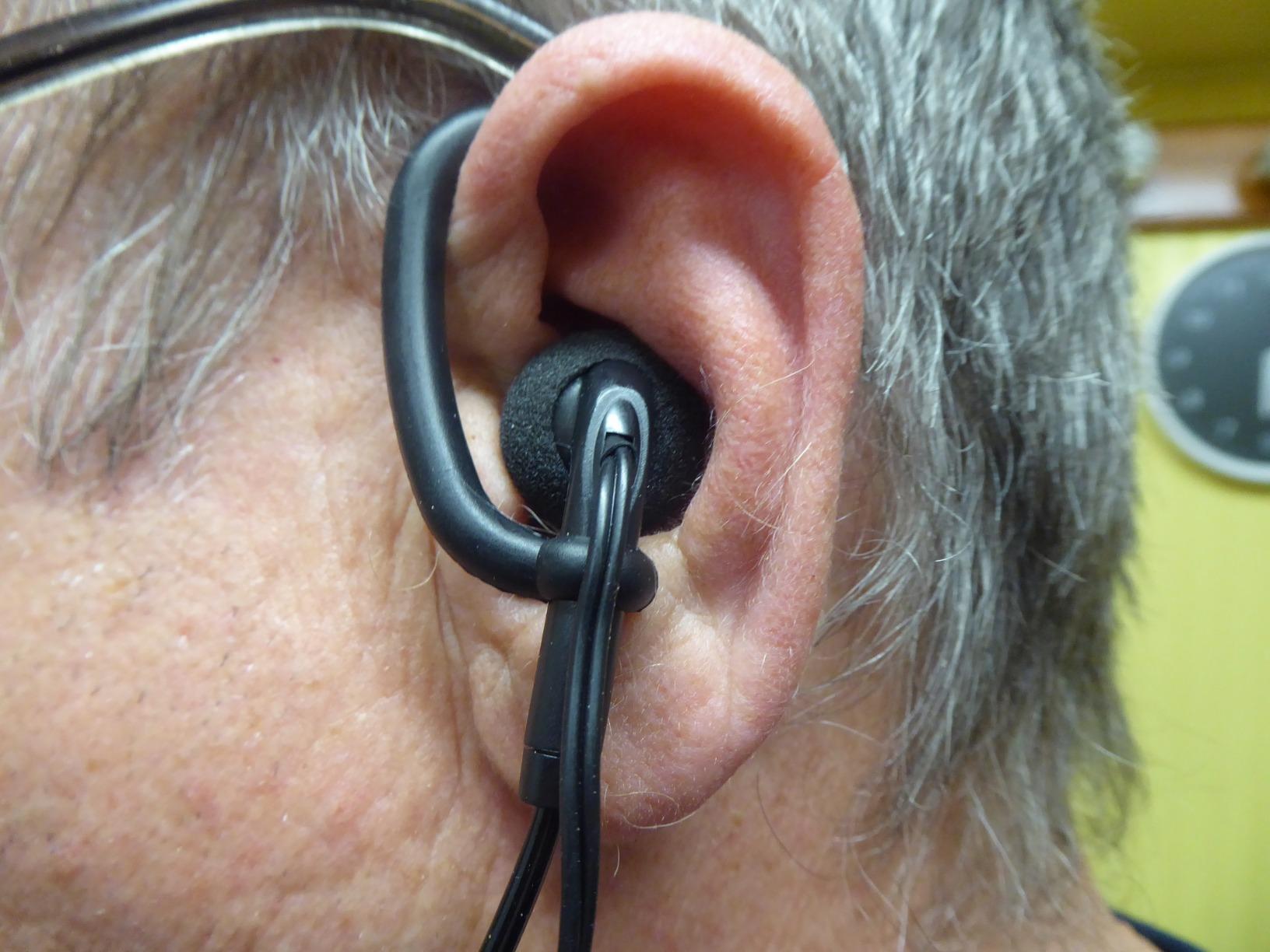
This is the radio we keep handing to people who want GMRS to just work without a learning curve. It arrives as a pair, already programmed to the shared GMRS channels, with rechargeable batteries, a desktop charging dock and two headsets in the box. Unpack it, pick a channel, talk.
The channel architecture matters more than most buyers realise. Fifty memories covering 22 GMRS simplex channels plus 8 repeater channels, with 142 privacy codes, gives a family or trail group plenty of room to run its own channel without hearing a stranger’s conversation. NOAA weather alert scanning runs in the background, which on an off-grid property is arguably more valuable than extra transmit power.
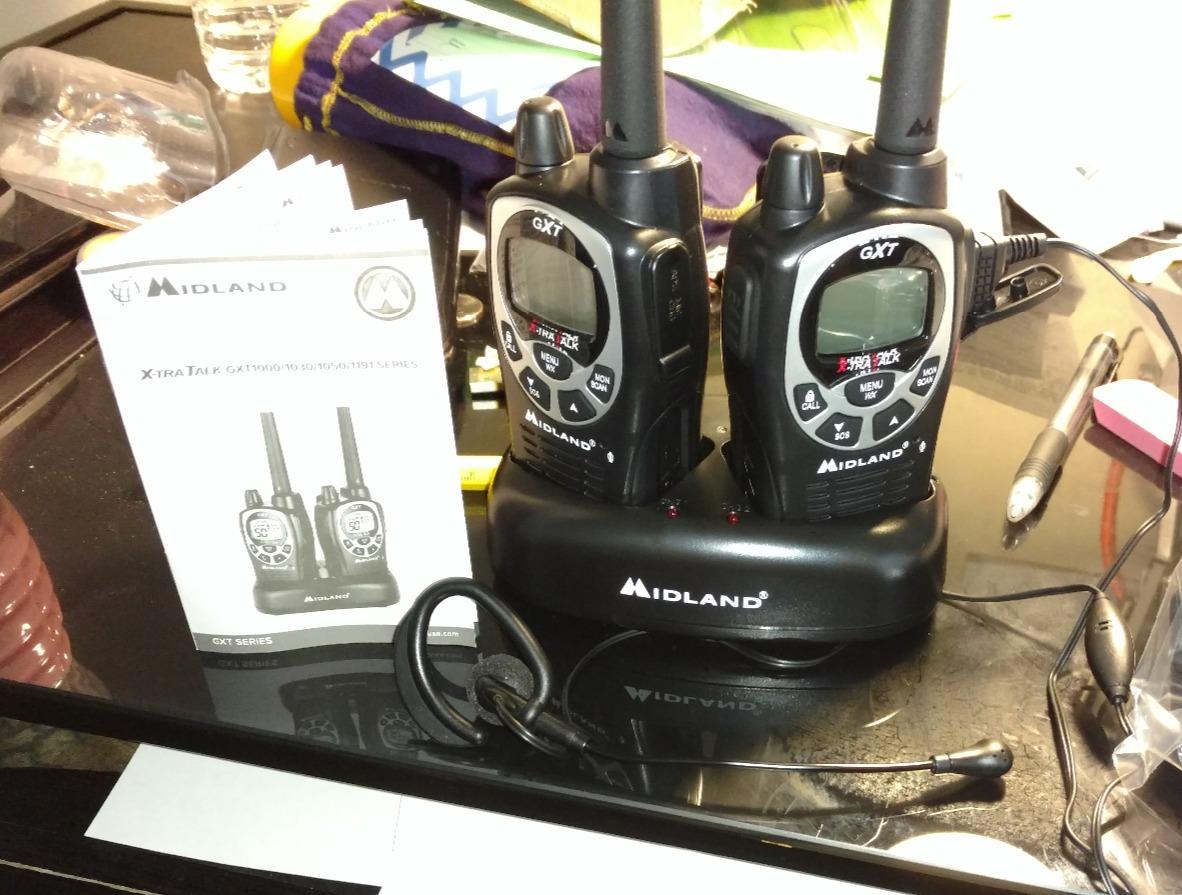
The dual-power design is the underrated feature here. Rechargeable NiMH packs give you roughly 11 hours of average use, and when those die you drop in AA cells. During a multi-day weather event that fallback matters more than any spec on the sheet.
Two things keep it out of first place for every scenario. The JIS4 water resistance is a splash rating, not a submersible one, so it is the wrong radio for river work or sustained rain. It is also the heaviest and largest handheld in this group, which is noticeable on a long day on foot.
Why it works for a homestead or family kit
Because it is dual-power, dual-radio and pre-programmed. A household can hand one radio to a teenager and everyone is on the same channel in under a minute. That is a genuine advantage when the power is out and nobody has time to read a manual.
The NOAA scanning is the quiet hero on a rural property. Severe weather alerts arrive on the radio itself, which is the one notification method that does not depend on a data connection or a working cell tower.
Where it falls short
Wet-weather and cold-weather work is not its strength. If your off-grid time involves river crossings, boat launching or open-desert storms, the IP67 options further down this list are built for that and this one is not.
It is also the heaviest handheld we listed, at 4.8 ounces before the battery. Over a full hunting day or a long convoy day that adds up in a way that the two-pound-micro-mobile option does not.
2. Midland MXT275 – Best 15W Micro Mobile for Vehicles and Homesteads
Midland MXT275 15W MicroMobile GMRS Two-Way Radio
15 watt GMRS micro mobile
15 high-power plus 8 repeater channels
Integrated control microphone
IP55 rated, 12V powered
Pros
- Highest rated in the group at 4.6 stars from 1823 reviews
- 15 watts of output for vehicle-to-vehicle and base station duty
- Integrated control mic keeps installation simple
- NOAA weather scan and alert as standard
- 142 privacy codes and 8 repeater channels
Cons
- Not portable
- needs 12V power and a mounted antenna
- IP55 is not submersible for heavy rain or river crossings
- Older channel count by modern standards
A handheld is a walking radio. The MXT275 is a vehicle radio, and that changes what you can cover. Fifteen watts from a dash mount with a decent roof antenna will reach people a handheld never will, and it runs off your vehicle or a bench supply indefinitely rather than off a battery pack.
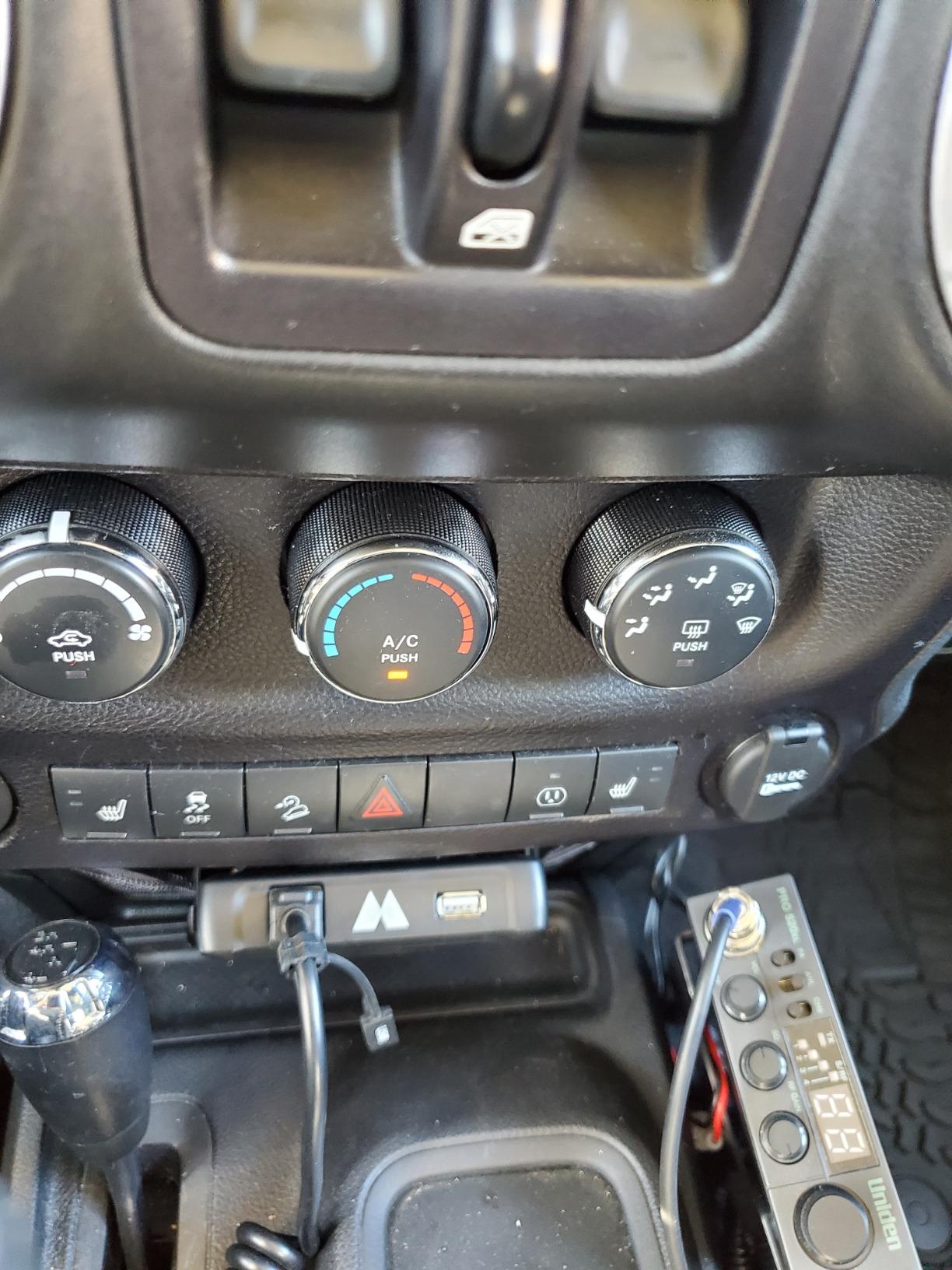
This is the unit we recommend to overlanders running convoy comms, and to homesteaders who want a base station on a shelf or a bench inside the house. Every function sits on the integrated control microphone, so the radio body itself can live anywhere in the vehicle and you operate it from the mic.
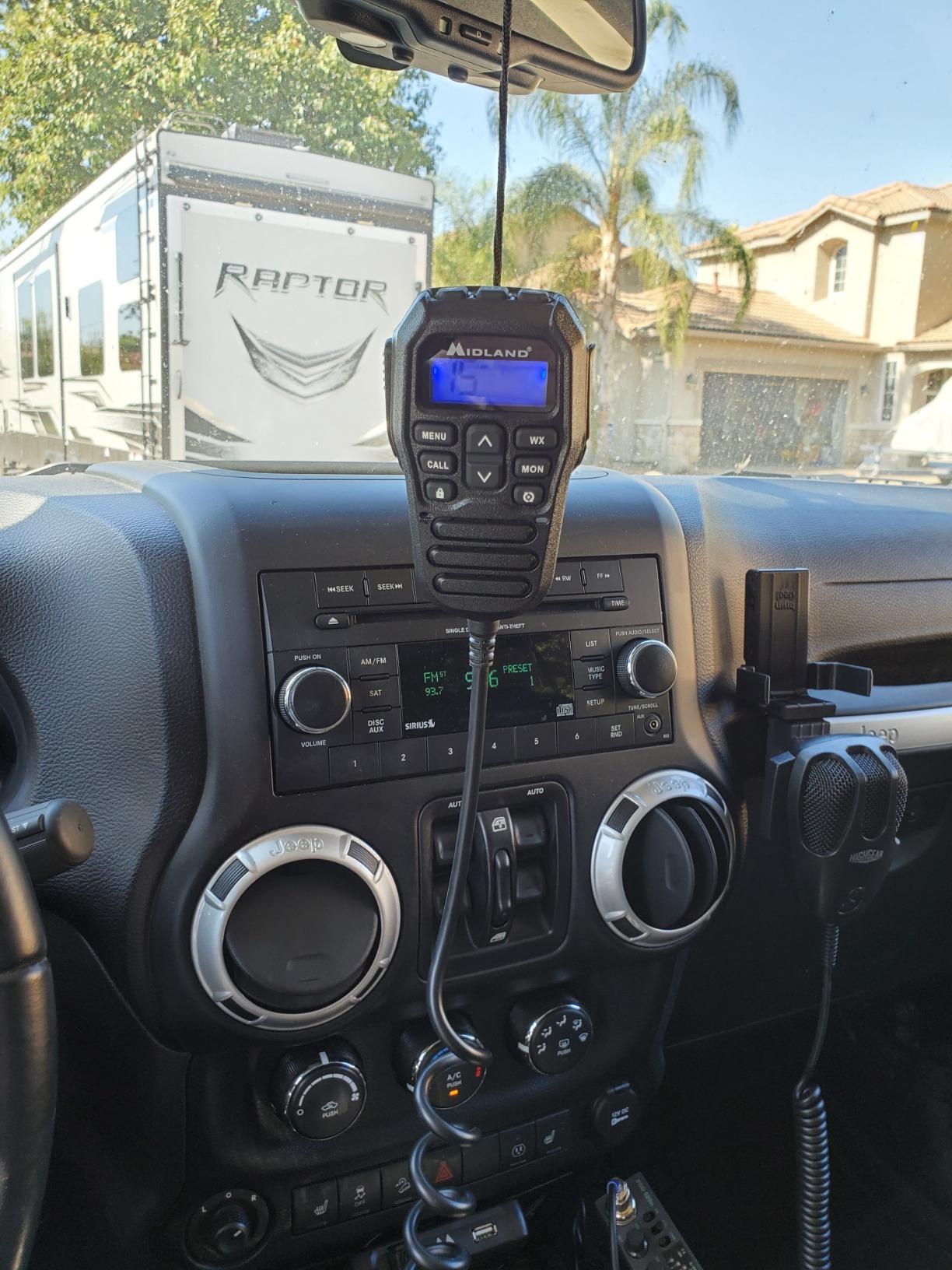
Installation is straightforward: mount the body, run a coax to an antenna, connect 12V and a ground. The 15 high-power channels plus 8 repeater channels and 142 privacy codes give the same channel plan as the handhelds in this list, so a mixed group can talk across devices without re-programming anything.
Reviewers consistently single out two things: the output level and how simple the integrated mic makes the install. The recurring complaint is the IP55 housing, which handles rain but not submersion, so mount it inside the cab or under a roof rather than on a bumper.
Why it belongs in a vehicle or on a homestead bench
Because power is the constraint that a handheld cannot solve. Fifteen watts on continuous 12V means you can transmit for as long as the situation lasts, with no battery anxiety at all. That is exactly the profile of an outage or a multi-day trail situation.
It is also the highest-rated product in this roundup at 4.6 stars from 1823 reviews, with 81 percent five-star ratings. For a piece of equipment you install once and then trust for years, that consistency matters.
Where it falls short
It is not portable. There is no battery option, so the second radio in a convoy has to be a handheld or a second mobile. Anyone who wants one device for both roles is better served by a handheld plus a mobile.
The 50-mile advertised range is a marketing figure under ideal conditions. r/gmrs users regularly point out that real-world numbers on flat ground with good antennas are far lower, and terrain does most of the deciding.
3. BAOFENG UV-9G – Best Truly Submersible Handheld
BAOFENG UV-9G GMRS Handheld Radio, Waterproof Walkie Talkies IP67, 2 Pack
IP67 submersible to 1 metre for 30 minutes
128 channels with DIY repeater channels
1800mAh battery with VOX
CHIRP compatible with included cable
Pros
- Genuine IP67 sealing
- submersible to 1 metre for 30 minutes
- 24 DIY repeater channels for custom group setups
- CHIRP programming cable included in the box
- Interoperates with other BAOFENG GMRS radios out of the box
Cons
- 1800mAh is smaller than most competitors
- Noisier receive and less refined audio than higher-tier BAOFENG models
- Menus and button layout take real practice
If your off-grid use involves water, this is the one. The UV-9G carries a real IP67 rating, meaning it is rated to sit under a metre of water for 30 minutes. For river crossings, boat work, monsoon-season trail runs and anything involving a dunking, that rating is the whole argument.
The rest of the spec sheet is built for group use. Thirty pre-programmed GMRS channels plus 11 NOAA channels sit inside a 128-channel radio, and channels 31-54 can be set up as DIY repeater channels. When a trail group wants its own private repeater-style channel, that flexibility is unusual at this level.
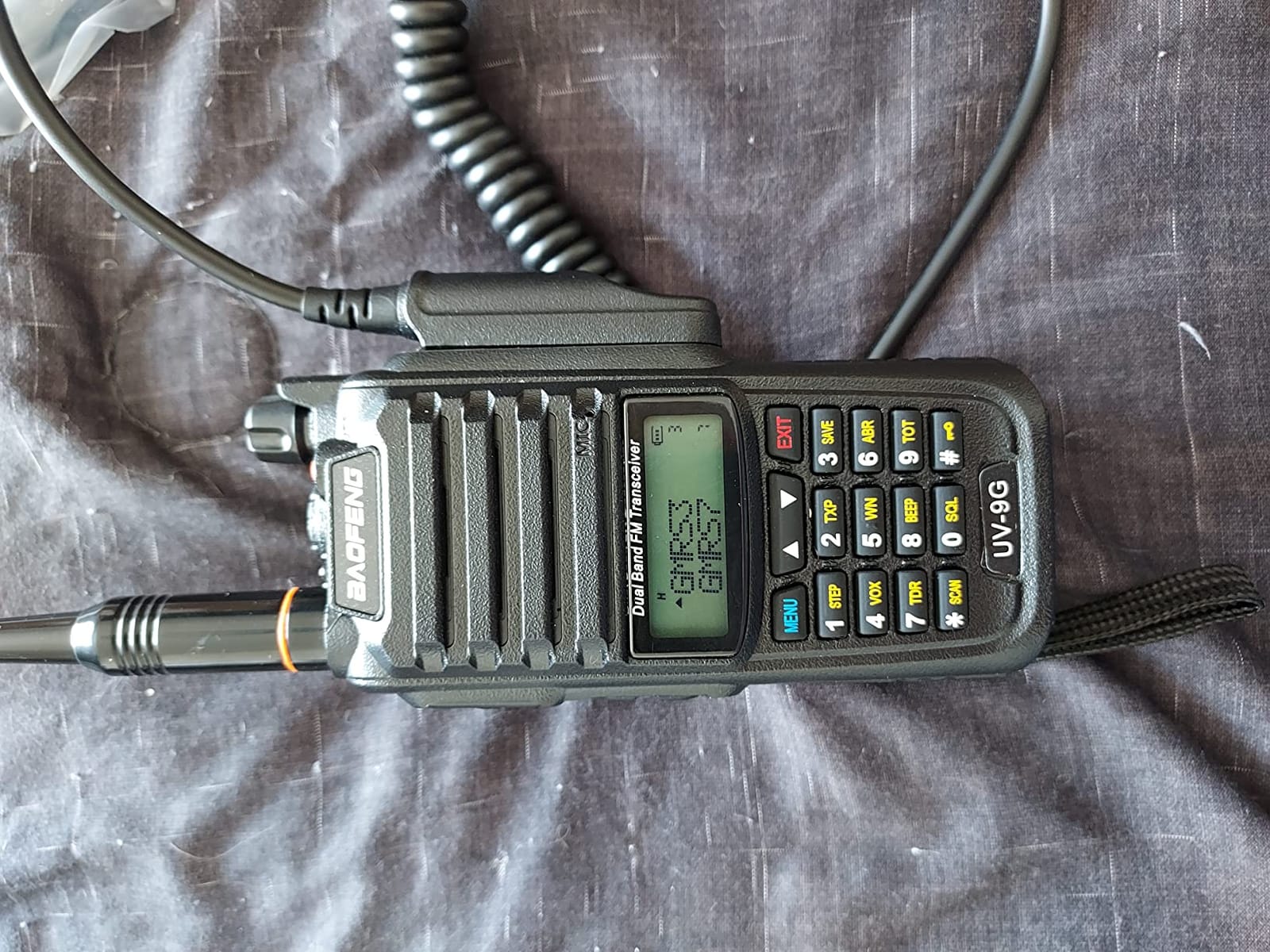
The included 328 Moto-Jack cable means you can program it with CHIRP, which is the software most experienced GMRS users already run. You also get a flashlight, a tri-color LCD and VOX hands-free transmission from a 1800mAh battery.
The honest drawback is audio. Reviewers rate the receive as noisier and the transmit audio as less refined than the higher-tier BAOFENG units. In a group of four or five radios in the same canyon, that difference is audible but not disqualifying.
Why it works in wet, cold and river country
Because IP67 is a verifiable rating, not a marketing adjective. The radio floats if dropped and survives the kind of handling that ends splash-rated gear. That is the difference between a radio you are willing to take on a boat and one you keep in a dry bag.
It also arrives as a two-pack, so you have a working pair from the box without buying a second unit separately.
Where it falls short
The 1800mAh battery is the smallest capacity among the handhelds that ship with the most features, and that shows up on multi-day trips. If you are running this as your only radio through a week-long outage, pack spare batteries or a power bank.
The menu-driven programming has a learning curve. Users migrating from a knob-and-screen radio like the Midland will spend an evening relearning how to change a channel, though the front keypad keeps basic operation quick.
4. Radioddity DB20-G – Best 20W Mobile for a Homestead Base Station
Radioddity DB20-G GMRS Mobile Radio 20W, Long Range, 500 Channels
20W GMRS mobile output
500 channels and 1075 privacy codes
9 extra customizable repeater channels
12V mobile bracket and control mic included
Pros
- 20 watts of output in a compact unit that fits a vehicle or a home bench
- 500 channels with 1075 privacy codes
- 9 extra programmable repeater channels save re-programming local networks
- Synchronised display of channel name and frequency
- Manufacturer support and painless replacement of a faulty unit
Cons
- Bundled CPS software is awkward and CHIRP needs a ham-band unlock
- Channels 8-14 ship listen-only
- Printed manual is poorly written
- Included microphone feels light with very soft buttons
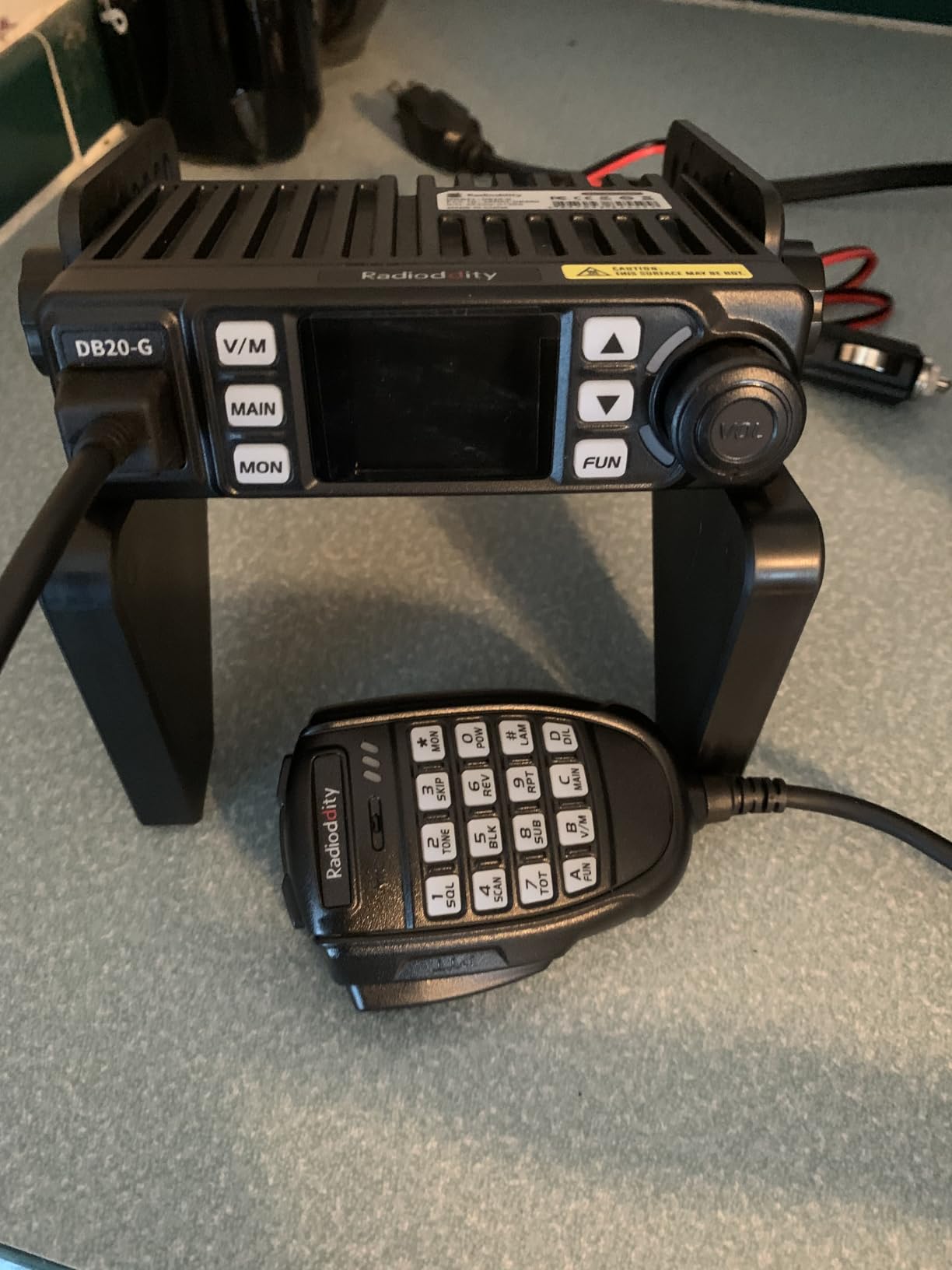
This is the mobile for someone who wants a permanent station rather than a truck install. Twenty watts is the highest output in this group, it runs on 12V from a vehicle or a home supply, and the box includes a mounting bracket, a speaker mic with holder, a programming cable and a 12V car charger.
The channel capacity is what separates it from the Midland mobile. Five hundred channels with 1075 privacy codes, plus nine extra customisable GMRS repeater channels, means a local group network can be built once and never re-programmed. It also scans and receives UHF, VHF and NOAA bands, so one box covers your weather channel too.
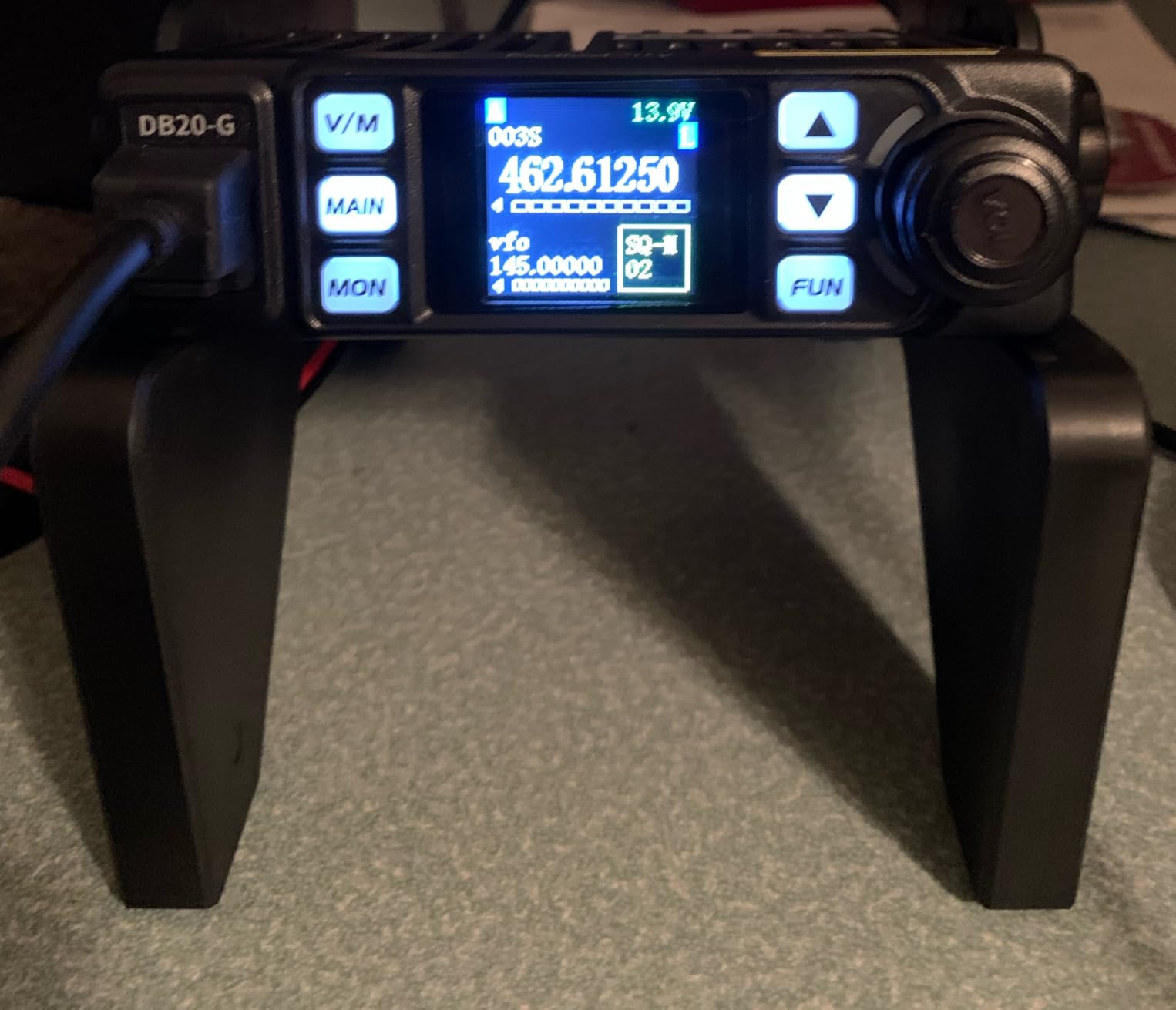
Users report it running cool during repeater traffic with a mag-mount antenna, and several long-term owners describe reaching repeaters 20-30 miles out. On the r/gmrs forums this radio comes up often as an inexpensive first step from handheld into mobile and base station territory.
Programming is the friction point. Radioddity’s own CPS software is not intuitive, and using CHIRP instead requires unlocking the radio. Channels 8-14 also ship listen-only, which matters if you expect to key up a repeater in that range.
Why it works as a fixed off-grid base station
Because it is built to sit somewhere permanently. Mount it at a desk, run a coax up a roof or mast, feed it from a battery bank or a small solar charge controller, and it becomes a node the whole household can reach. Our solar panel kit guide covers the power side of that build.
Nineteen to twenty watts against the Midland’s fifteen is a real difference when the far end is also on a mast. Pair it with a high-gain antenna and the usable radius grows in a way that changing handhelds never will.
Where it falls short
The software story is the weak point, and it is the number one complaint in reviews. Anyone who expects to open CHIRP, import a codeplug and go will hit a wall unless they unlock the radio first.
The included microphone is light, with buttons soft enough that reviewers notice them. Plan on a better mic if you intend to use this as a daily base station.
5. Radioddity GM-30 – Best Value 5W Handheld
Radioddity GM-30 GMRS Handheld Radio, Long Range Two Way Radio, 1 Pack
5 watt output with 0.5W and 5W selectable
30 default channels including 8 repeaters
USB Type-C charging
IP54 water resistance
Pros
- Full 5W GMRS with repeater capability at a budget level
- 250 channels with keypad and PC programming
- CHIRP compatible for codeplug work
- Dual watch with Display Sync and dual-band receive
- USB Type-C charging with a full accessory bundle
Cons
- Single-unit pack
- buying a second doubles the cost
- Small monochrome LCD is harder to read in daylight
- IP54 protects against splashes
- not submersion
This is the radio we recommend when someone asks where to start. It is a full 5-watt GMRS handheld with repeater capability, dual-band receive and scanning, NOAA weather reception and USB-C charging, in a single unit. The 4.5 stars from 1365 reviews reflect how consistently people get more than they expected.
Two power levels matter more than they sound. Running at 0.5 watt roughly quadruples your battery life when you are close to the group and only need local cover, and the radio lets you decide per channel instead of guessing.
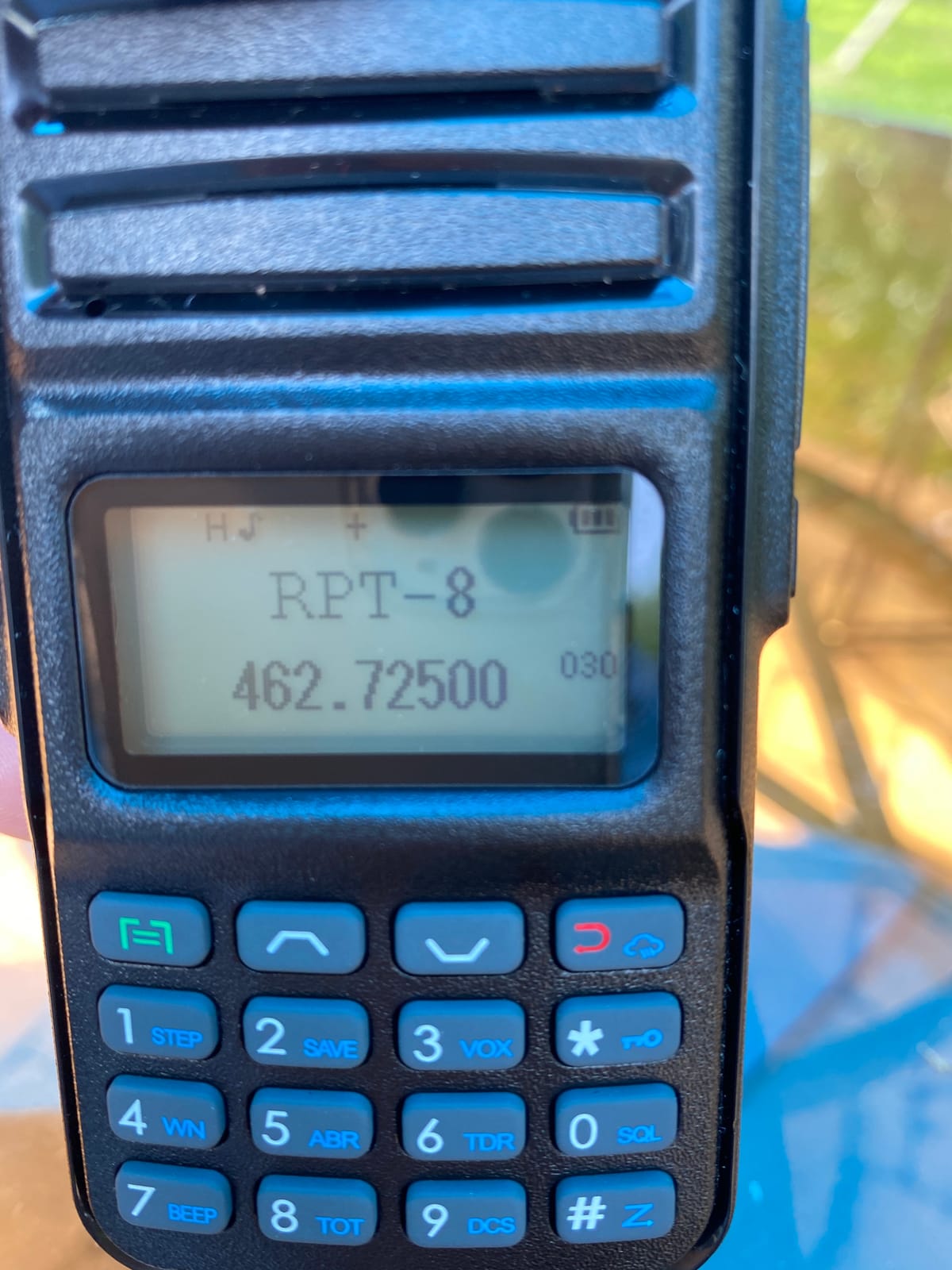
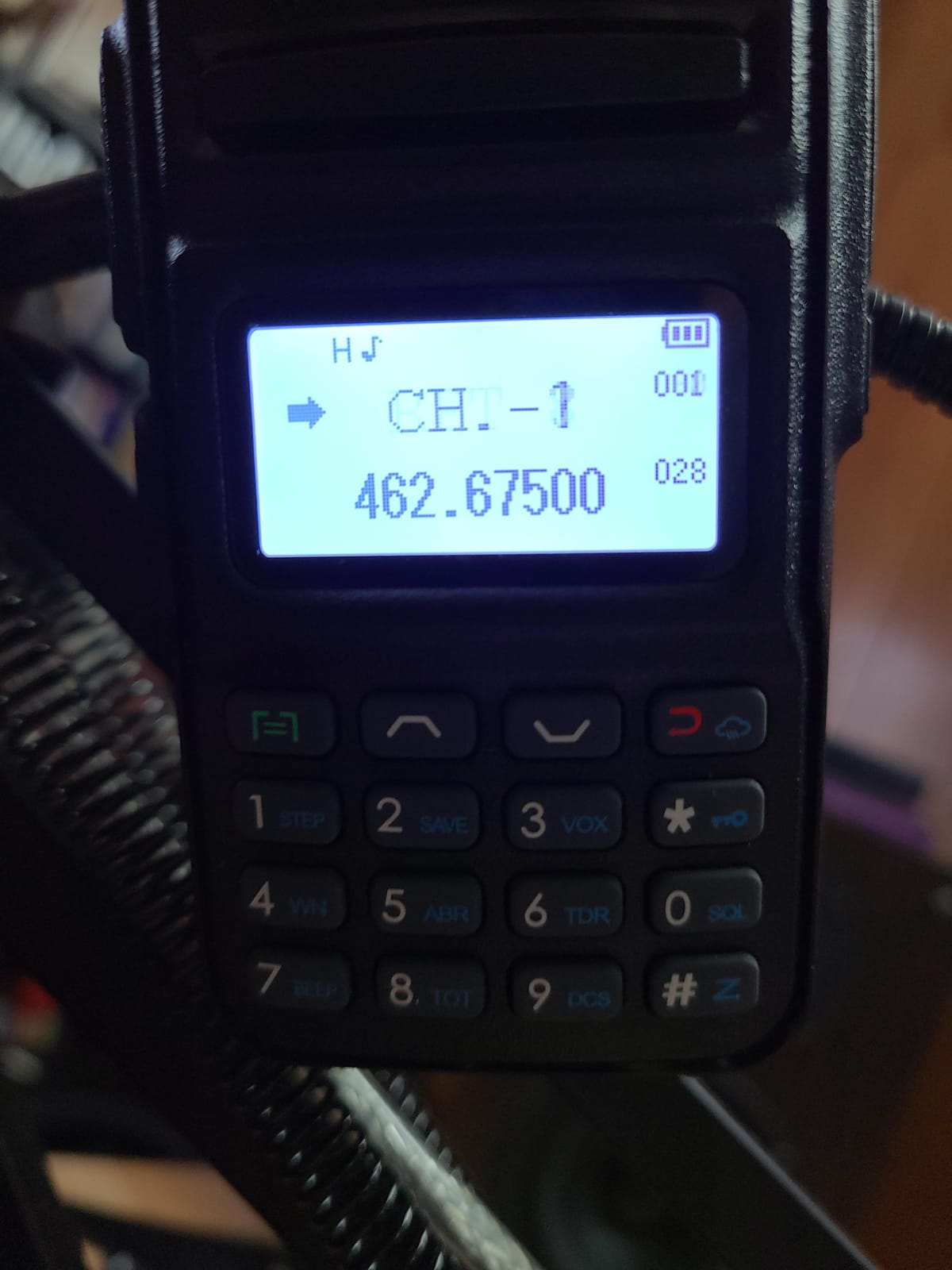
Programmers get a 250-channel radio with CTCSS and DCS privacy codes, editable scan lists, dual watch and Display Sync, and it works with CHIRP. Non-programmers get 30 default channels, which include all 22 GMRS simplex channels and the 8 repeater channels, ready out of the box.
The box includes a belt clip, wrist strap, earpiece, USB-C cable and wall adapter. The IP54 rating handles rain and dust, which is enough for most overland weather, but it is not a river-crossing rating.
Why it works as a first off-grid radio
Because it removes the two biggest barriers at once: cost and complexity. A 5-watt repeater-capable handheld that works immediately out of the box means a family can be communicating on the same channel within minutes of opening the packaging.
For a group that mostly stays within a few miles, the 0.5-watt setting on a full charge will run for days. That is the scenario where battery life matters more than transmit power, and this radio handles it well.
Where it falls short
It ships as a single unit. Building a working pair means buying a second radio, which doubles your outlay before you have started. Plan for that from the outset rather than discovering it mid-project.
The monochrome LCD is small and hard to read in direct sun. If you work outdoors in daylight, the colour-screen units further down this list are easier on the eyes even though they cost more.
6. BAOFENG UV-5G Plus – Best for Programming, Cloning and High-Gain Antennas
BAOFENG UV-5G Plus GMRS Handheld Radio, 999 CHs Chirp Compatible, 2 Pack
969 fully customizable channels
Up to 8W output on channels 15-30
2500mAh USB-C batteries
8 inch and 15.5 inch antennas included
Pros
- 969 programmable channels with CHIRP support and frequency copy
- 2500mAh USB-C batteries roughly double the older UV-5G
- Includes both an 8 inch and a 15.5 inch high-gain antenna
- Two-pack ready for a paired crew
- Bright 1.9 inch colour display readable outdoors
Cons
- Not water resistant at all
- 8W output exceeds GMRS power rules on many channels
- Menu-driven programming has a learning curve
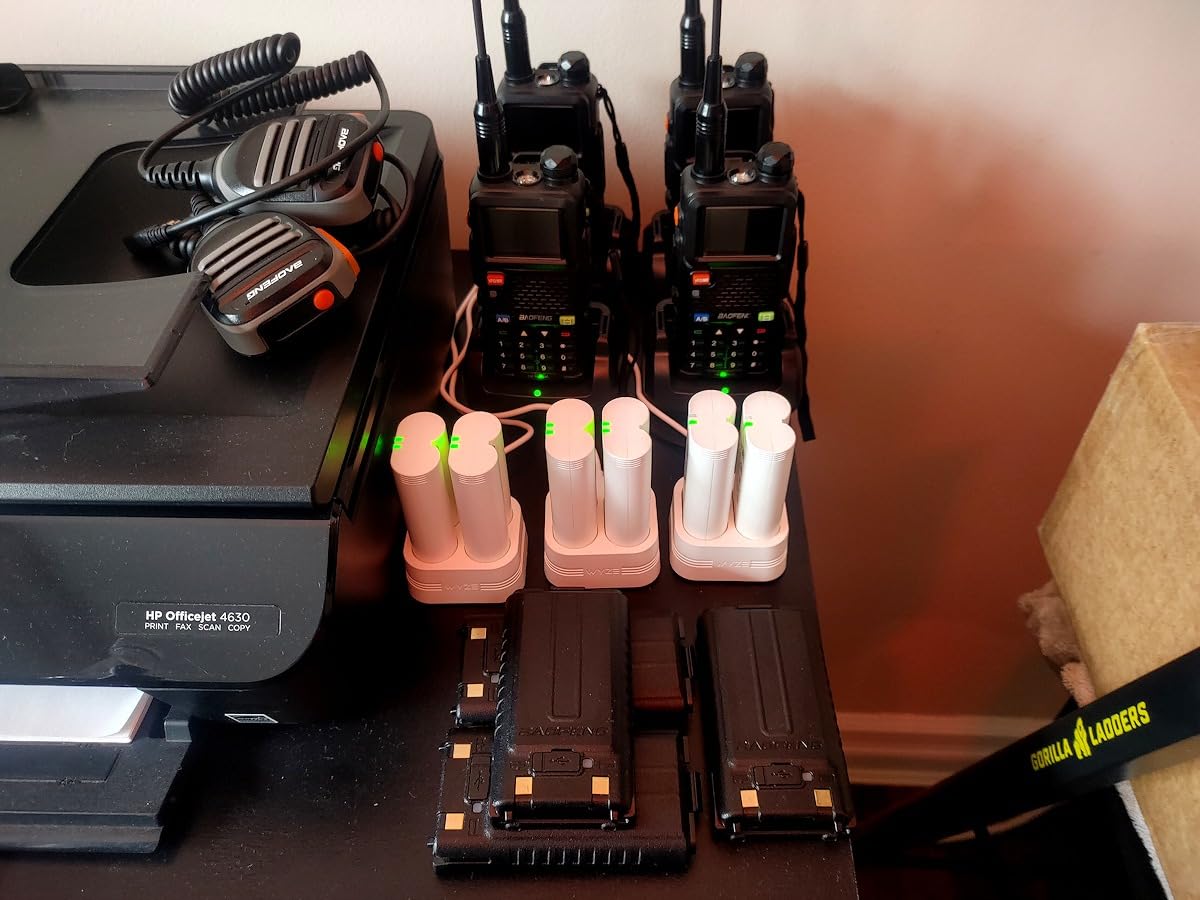
The UV-5G Plus is the enthusiast’s pick. Nine hundred and sixty-nine fully customisable channels, CHIRP support and a frequency-copy function mean you can clone one radio’s setup onto another in seconds instead of keying in dozens of channels by hand.
The included antennas are the quiet headline. Both an 8-inch and a 15.5-inch high-gain whip ship in the box, which is where most of the range gain actually comes from. Antenna length matters more than most buyers realise, and this package hands you the upgrade instead of making it a second purchase.
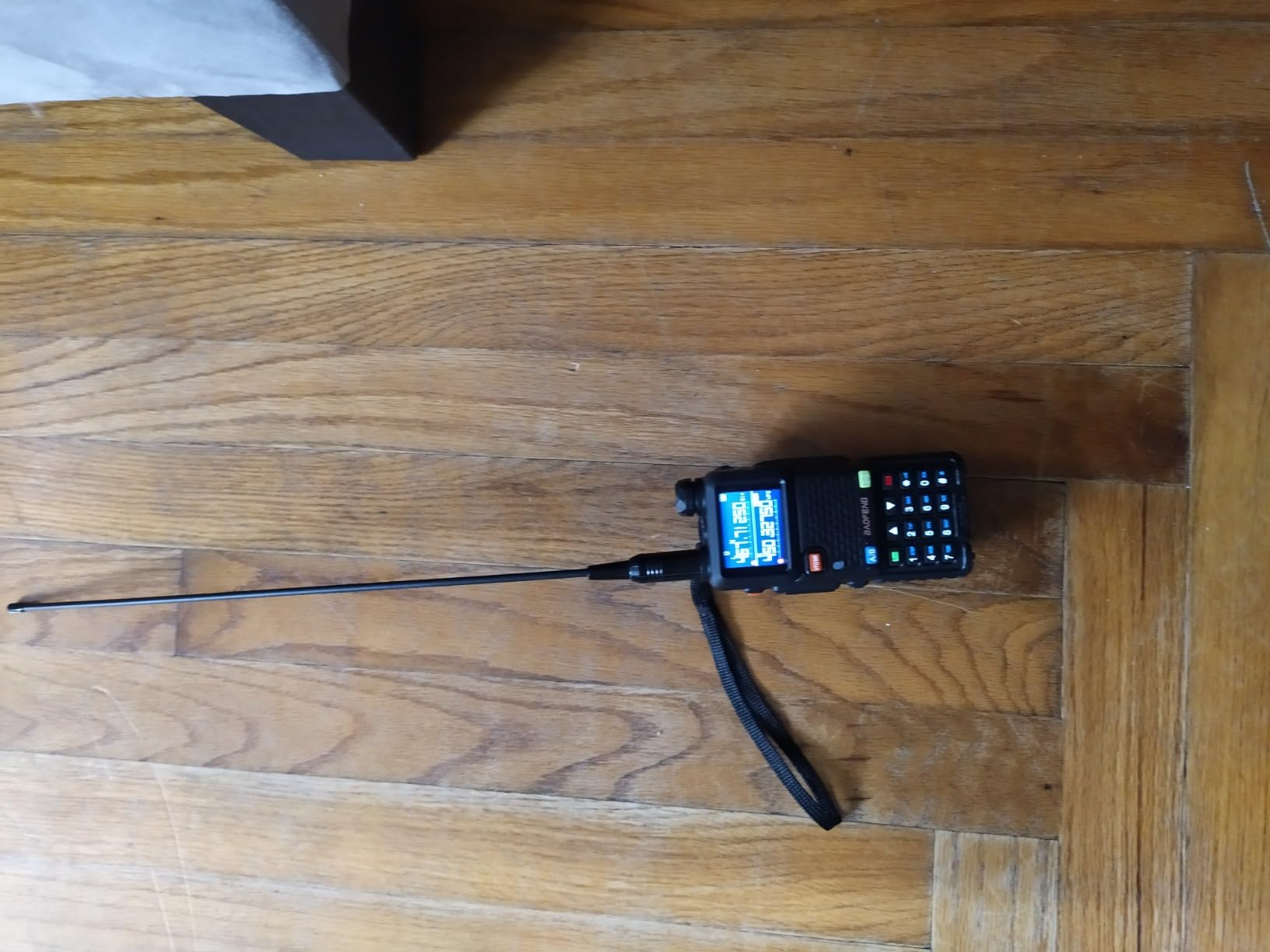
Battery capacity is the second upgrade over earlier versions: 2500mAh packs with USB-C charging and roughly 12 hours of use. On a multi-day scenario where charging is solar-dependent, that extra capacity is the difference between charging nightly and forgetting about it.
Two cautions. There is no water resistance, so it needs a dry bag in wet conditions. And the up-to-8-watt output on channels 15-30 exceeds GMRS power limits on many of those channels, so use high power only where it is legal.
Why it works for a group that programs its own channels
Because codeplug management is the whole point. Trail clubs, search-and-rescue volunteers and homestead groups that run multiple repeater networks can build a channel list once and clone it across a dozen radios in an afternoon.
The 15.5-inch antenna also makes it the easiest of the handhelds here to pair with a mast or rooftop setup later, since it ships with the high-gain whip already.
Where it falls short
Zero water resistance is a real limitation for anyone whose off-grid time involves rain exposure or water crossings. This is the radio to keep inside a pack liner, not the radio to clip to a wet harness.
The menu system is dense. First-time users should budget an evening with the manual before they need it urgently.
7. BAOFENG GM-15 Pro – Best for Large Groups and Flexible Repeater Channels
BAOFENG GMRS Radio Handheld Long Range GM-15 Pro 8W Walkie Talkie with Earpiece NOAA Weather Receiver Rechargeable GMRS Repeater Two Way Radio with USB-C Charger for Hunting Survival Gear,2Pack
250 memory channels with 154 privacy codes
24 customizable DIY repeater channels
11 NOAA channels with alert scanning
USB-C charging, two-pack with earpieces
Pros
- 24 customisable repeater channels plus 154 privacy codes for group-specific setups
- Two-pack with earpieces and USB-C charging from any power bank
- 250 memory channels with UHF and VHF receive
- NOAA alert scanning gives off-grid weather awareness
- Narrow body is easy to carry on a belt
Cons
- Not water resistant
- 1500mAh batteries are the smallest in the group
- Output must still respect GMRS channel power rules
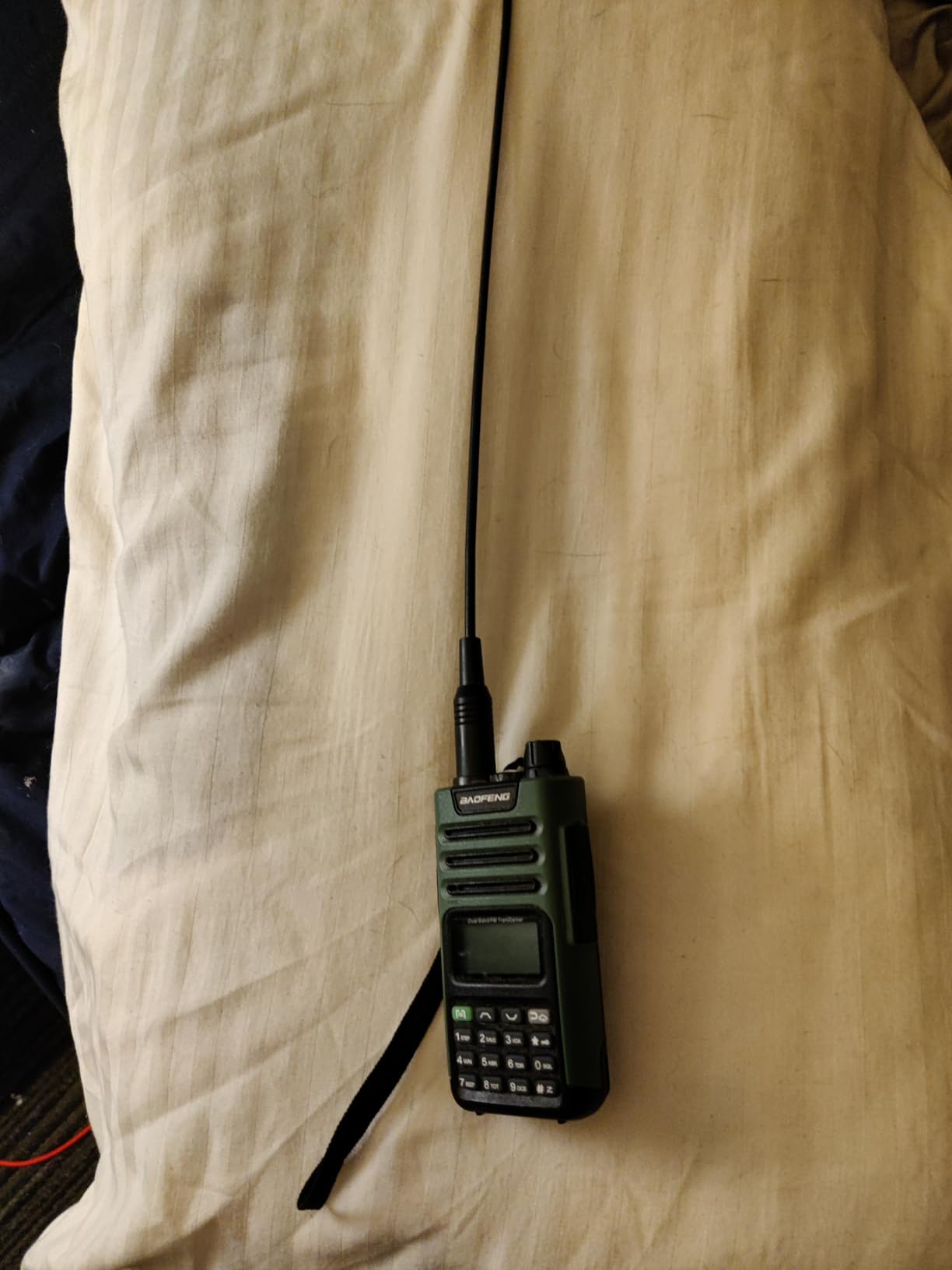
The GM-15 Pro is the one to look at when a lot of people need to talk and none of them want to fiddle. Twenty-four customisable DIY repeater channels and 154 privacy codes, split across 50 CTCSS and 104 DCS tones, give a convoy or a family network room to run its own private traffic.
It also does UHF and VHF receive in both channel and VFO mode, so it is not limited to GMRS if a group member turns up with a different band. Eleven NOAA channels with alert scanning come standard, which for an off-grid group means severe weather warnings arrive on the handheld itself.
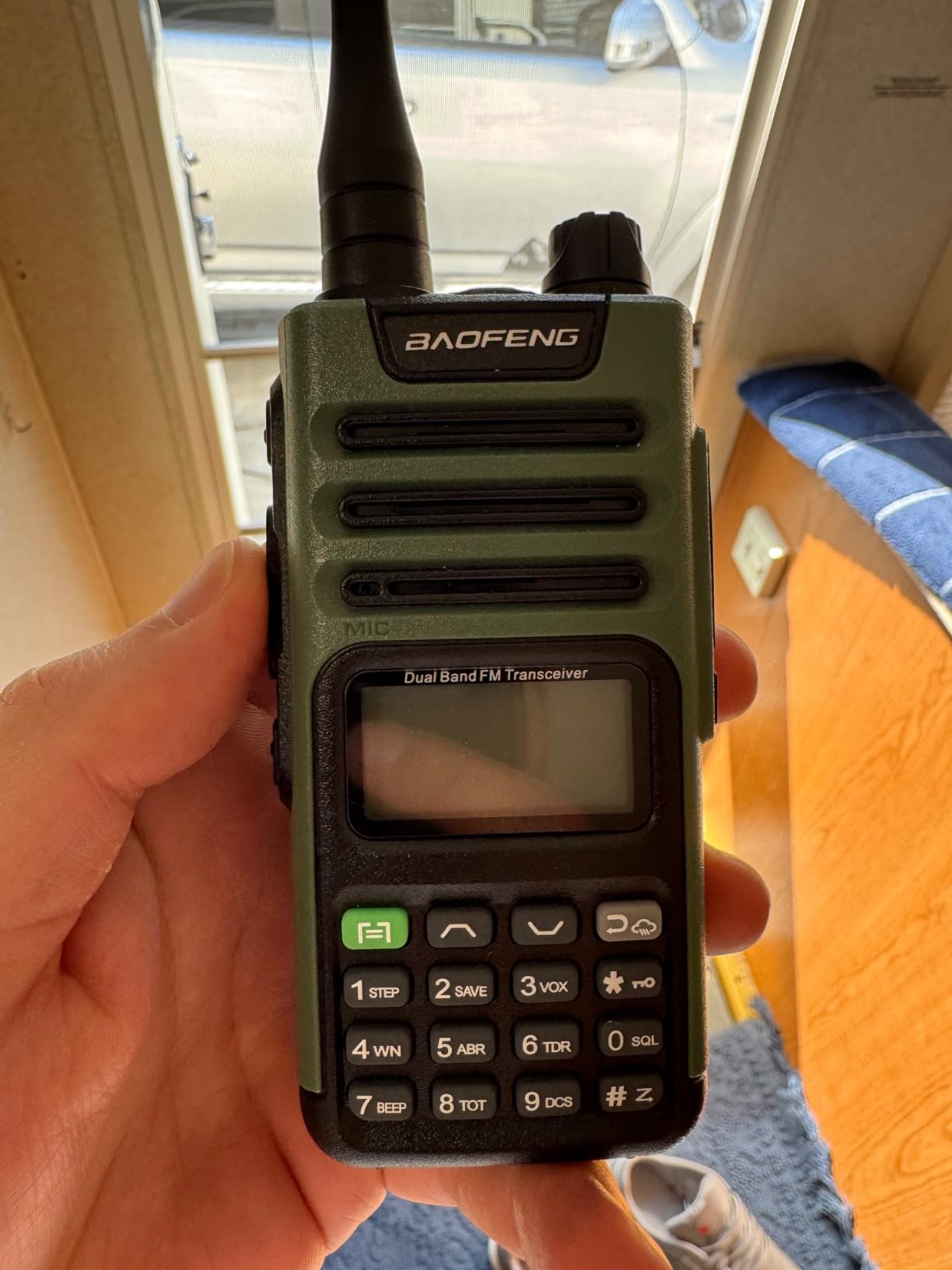
The charging story is straightforward and useful: USB-C from a power bank, a PC, a car or a wall unit. The two-pack includes earpieces, which is the right call for hunting, trail work or convoy use where you do not want the radio’s speaker announcing your position.
Its weakness is battery capacity. At 1500mAh these are the smallest packs in this roundup, and there is no water resistance at all. For a two-day trip with charging access that is fine; for a week without power it is not.
Why it works for a convoy or a family network
Because privacy-code selection is the feature that scales. When eight vehicles are spread across a valley, a single shared channel with a group tone keeps the chatter on your convoy and out of everyone else’s ears.
The included earpieces and the narrow body make it easy to wear all day on a harness or a belt without the radio swinging into things.
Where it falls short
No water resistance means rain cover is mandatory. In an exposed off-road setting that is a daily inconvenience rather than an occasional one.
At 1500mAh, expect shorter runtime than every other handheld here. Larger-capacity variants exist, and if your scenario runs past two days without charging, choose one of them.
8. Retevis RB48 – Most Rugged Four-Pack, FRS Only
Retevis RB48 Military-Standard & IP67 Waterproof Walkie Talkies Long Range
MIL-STD-810H certified with 19 tests passed
IP67 waterproof and floats
2000mAh batteries up to 20 hours
Four-pack with docks and adapters
Pros
- MIL-STD-810H certification covering 19 durability tests is rare at this level
- IP67 waterproof and it floats if dropped
- Large front PTT plus dual PTT works with heavy gloves on
- Vibration alerts let you catch a call with the radio clipped out of sight
- Four-unit pack with two docks and 2000mAh batteries
Cons
- Listed as an FRS radio with only 22 channels
- so it is not a GMRS transceiver
- Only 3 mile advertised range and no repeater channels
- 730 g for the four-unit set is heavy to carry
This is the toughest hardware in the group, and the specification behind it is unusually honest. MIL-STD-810H certification covering 19 tests including temperature shock, rain, salt fog, humidity, sand and dust, vibration, shock and immersion is a real certification, not a marketing line.
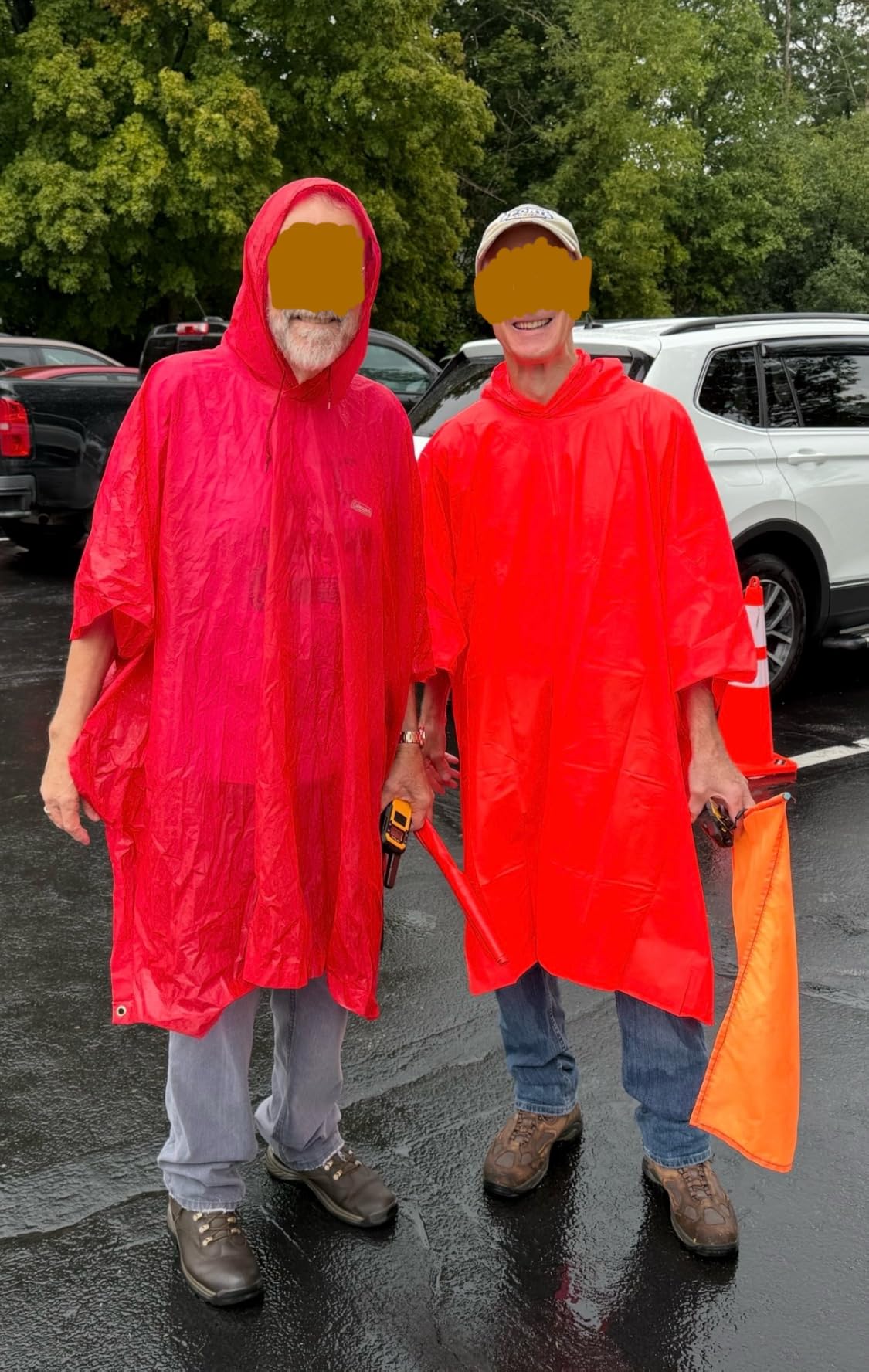
For search-and-rescue volunteers, polar expeditions or anyone working in conditions that destroy consumer electronics, that is worth more than any channel count. The glove-operable large front PTT and secondary side PTT mean you can transmit with heavy winter gear on, and vibration alerts tell you a call came in while the radio was clipped somewhere out of sight.
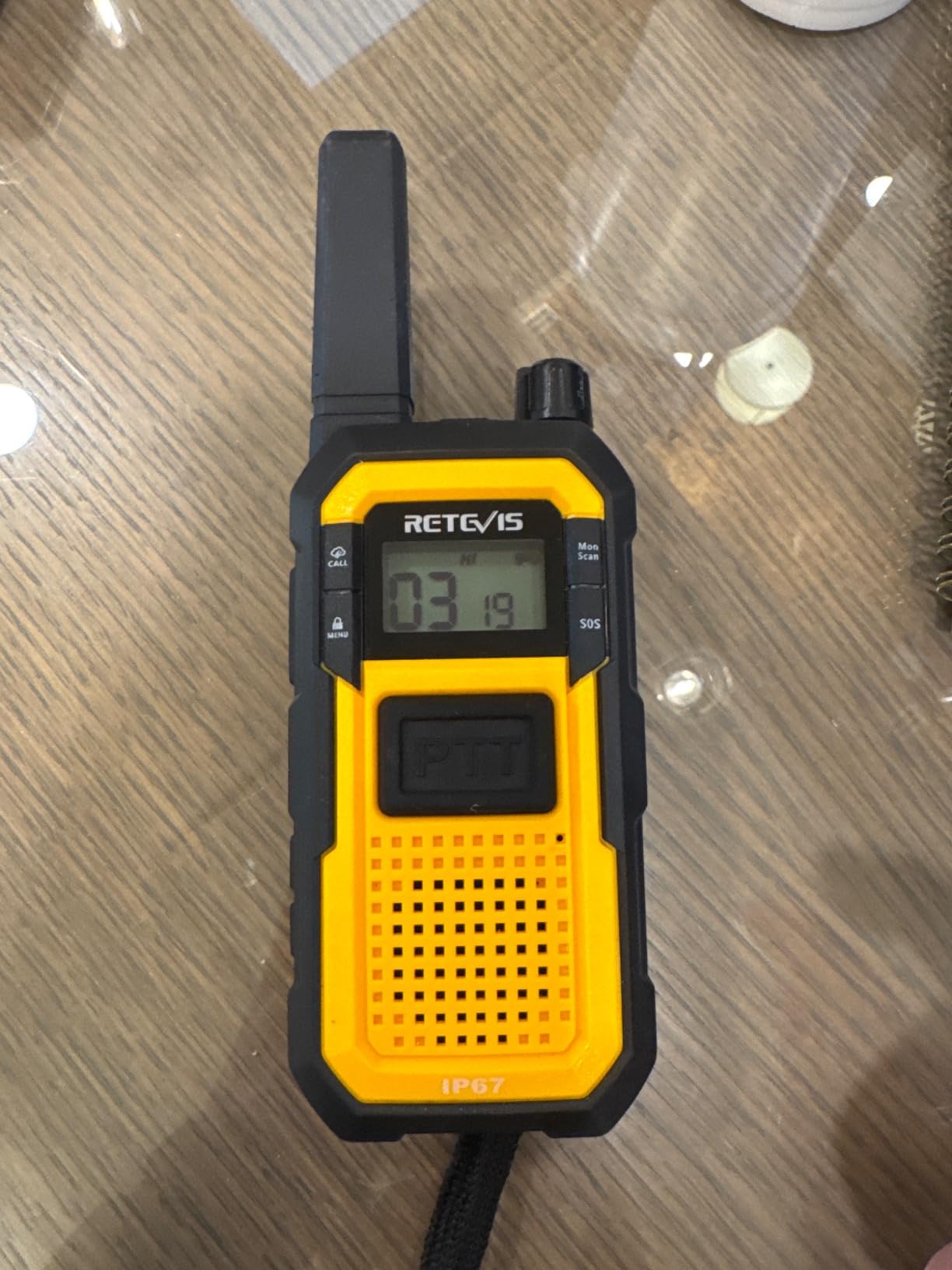
Four units with two charging docks and adapters cover a whole crew, and the 2000mAh batteries are rated for up to 20 hours of use. NOAA weather alerts are included, and the warranty runs five years on the radio body.
The catch is significant for this article specifically. The listing is FRS with 22 channels, not GMRS, and it cannot reach GMRS repeater channels. For a group already on GMRS, it will not join the network.
Why it works in the worst conditions
Because certified durability means the radio survives handling, not that the manufacturer hopes it does. The salt fog and immersion tests are the two that matter for coastal or wet-weather work, and both are on the list.
Twenty hours of battery life on 2000mAh packs gives you multiple days of standby without a charger, which matters when the charging options are solar and intermittent.
Where it falls short for this roundup
It is not a GMRS radio. If your group has standardised on GMRS channels and repeaters, these cannot follow. That is the single biggest reason it sits below the GMRS units despite being the most rugged option here.
The four-unit pack weighs 730 g, so carrying all four at once is a real load. Plan on distributing them across a crew rather than one person carrying the set.
9. TIDRADIO TD-H9 – Best for GPS, APRS and Position Sharing
TIDRADIO TD-H9 10W GPS/APRS GMRS Handheld Radio, APP/Web Programming, Bluetoth, Noise Reduction, Repeater Capable, Spectrum Analysis, Compass, Air Band, NOAA, Long Range Walkie Talkies for Off-Roading
Built-in GPS with APRS track and location sharing
Up to 10W output and repeater capable
Bluetooth programming and HFP headset support
2400mAh battery up to 72 hours
Pros
- The only handheld here with GPS and APRS position reporting
- Up to 10 watts of output with repeater support
- Bluetooth programming and headset support
- Reviewers rate its audio quality best in this class
- 2400mAh battery rated up to 72 hours
- SMS text messaging instead of open-channel broadcast
Cons
- CHIRP is not supported
- some units report a loose PTT and detachable LED lens
- USB-C port is on the bottom so the radio must lie down to charge
- Larger and heavier than compact handhelds
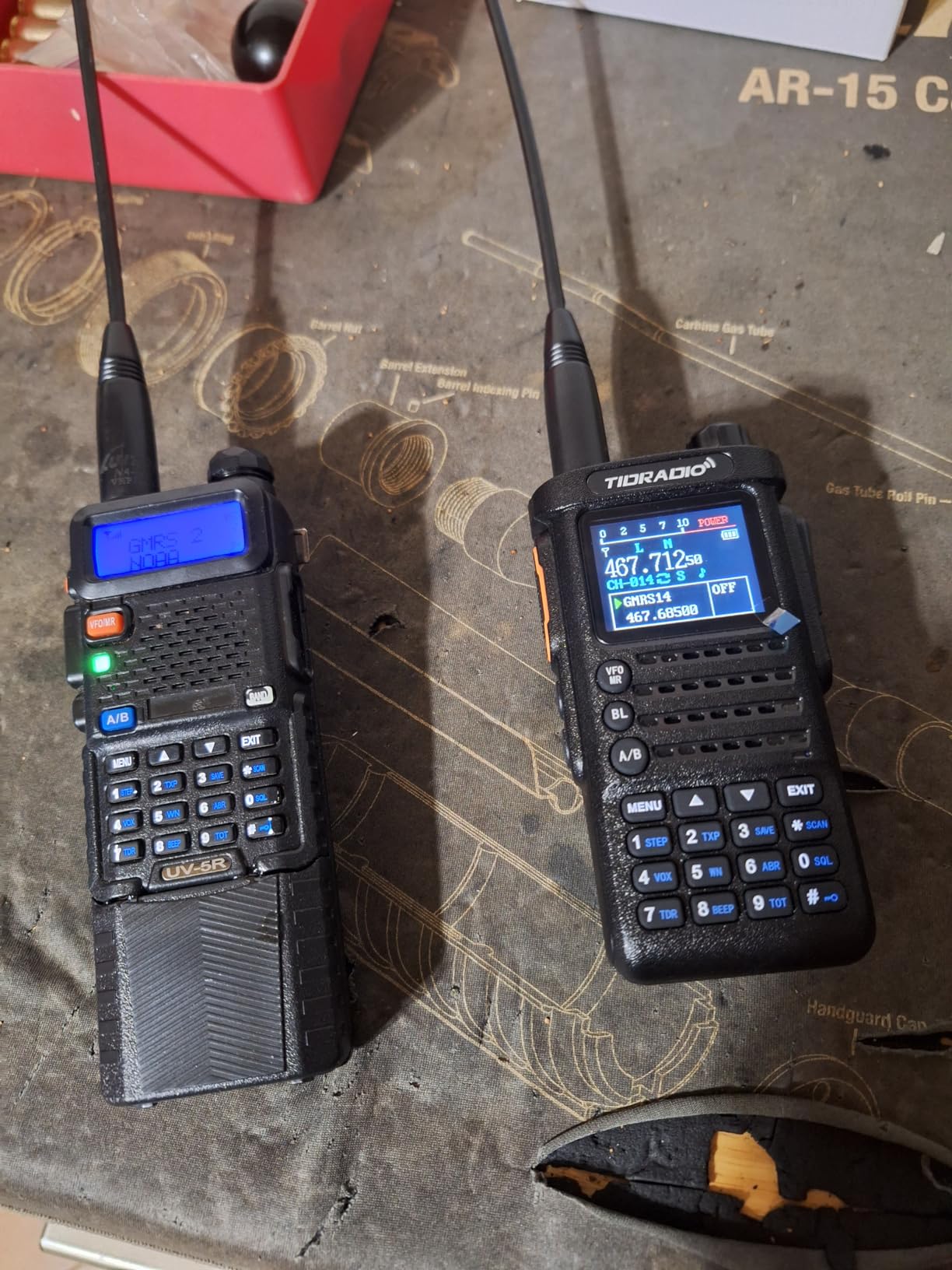
When a group is spread out, knowing where people are beats hearing from them. The TD-H9 is the only handheld in this roundup with built-in GPS, APRS position reporting and location sharing to the aprs.fi network, which turns it into something more than a voice radio.
On an off-grid property or a multi-day trail trip, that means you can see a teammate’s last reported position instead of guessing. The built-in KISS-mode TNC and companion app handle the data side, and SMS text messaging over GMRS lets you send a short update rather than broadcasting to everyone on the channel.
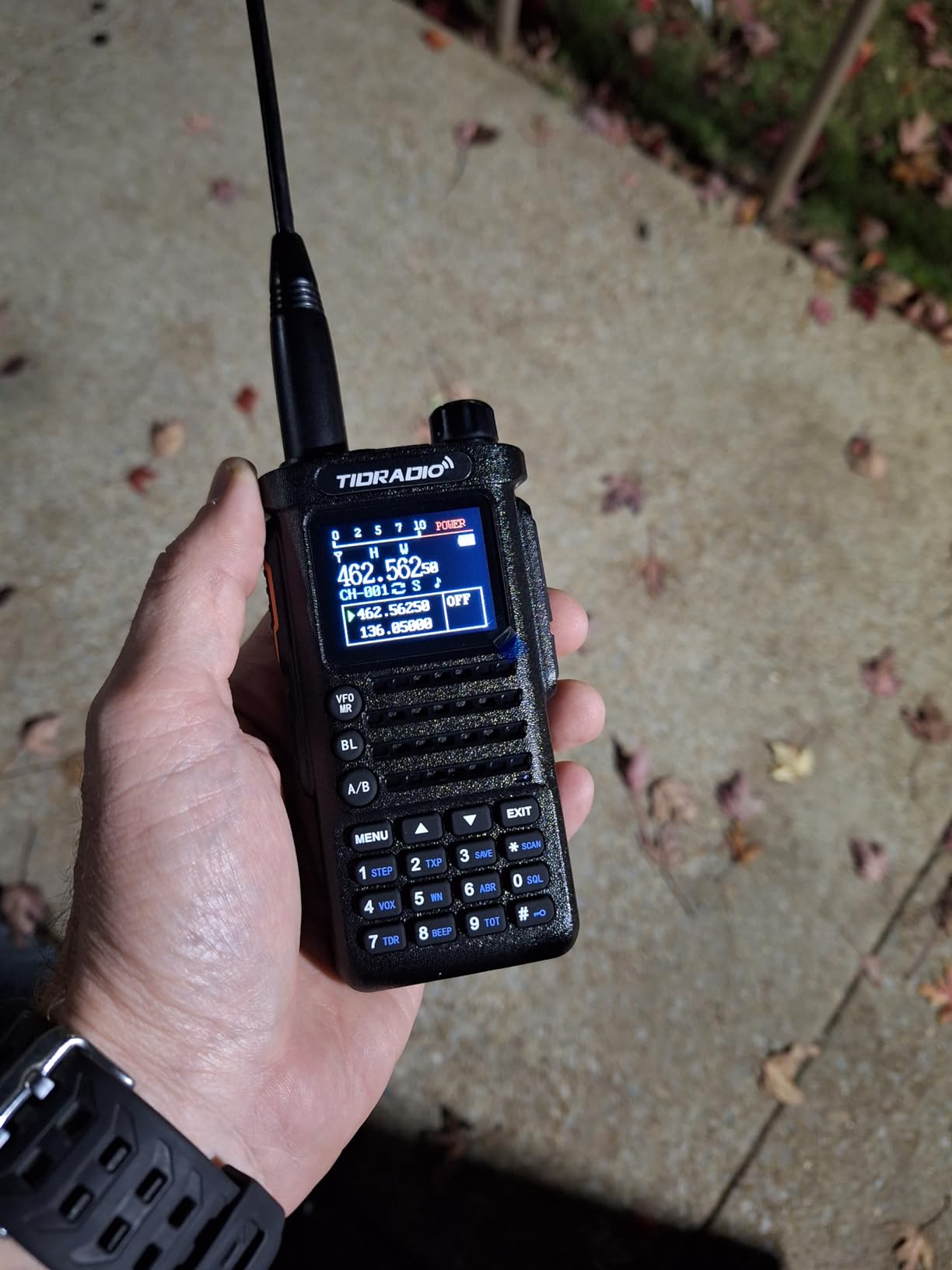
Power is the other headline. Up to 10 watts of output on channels 15-30 in simplex and repeater modes, and a 2400mAh battery rated up to 72 hours. Long-term owners report reaching repeaters 20-45 miles out with the right antenna.
Programming goes through the vendor CPS software over USB-C or Bluetooth rather than CHIRP, so if your workflow depends on CHIRP codeplugs this is the wrong radio. Some units have also reported a loose PTT switch and a detachable flashlight lens, both of which the manufacturer replaced under warranty.
Why it works for a spread-out group
Because position reporting removes the most common failure mode in off-grid comms, which is not silence but uncertainty. Knowing where the second vehicle is saves more time than any extra watt of transmit power.
The 3-in-1 version switch lets the same radio move between GMRS, ham and unlocked modes, which makes it useful for a group that also carries amateur gear.
Where it falls short
No CHIRP support is a genuine limitation for anyone who manages radios with codeplugs. The CPS app works, but it is a different and less flexible workflow.
The IP54 rating handles splashes but not submersion, and the bottom-mounted USB-C port means the radio has to be laid down rather than stood in a charging dock while in use.
10. Retevis Ailunce HA1G – Best for Multi-Day Battery Life
Retevis Ailunce HA1G IP67 Waterproof GMRS Radio, NOAA, 2800mAh, for Offroad
IP67 waterproof heavy-duty chassis
2800mAh battery with USB-C charging
250 channels with 8 repeater channels
1.77 inch colour backlit screen
Pros
- Largest battery in the group at 2800mAh with days of standby runtime
- IP67 waterproofing survived user dunking and concrete drop tests
- Exceptionally clear audio that on-air listeners praise repeatedly
- Squelch and mic gain controls cut wind and engine noise
- CHIRP supported with keypad programming and a bright colour screen
Cons
- Display washes out in direct sunlight
- Scan speed is slow and NOAA channels are buried in menus
- Some units show static on channel 19 unless brightness is maxed
- Unlocking extra bands needs a key sequence at every power-up
- Windows 11 driver issues can block PC programming
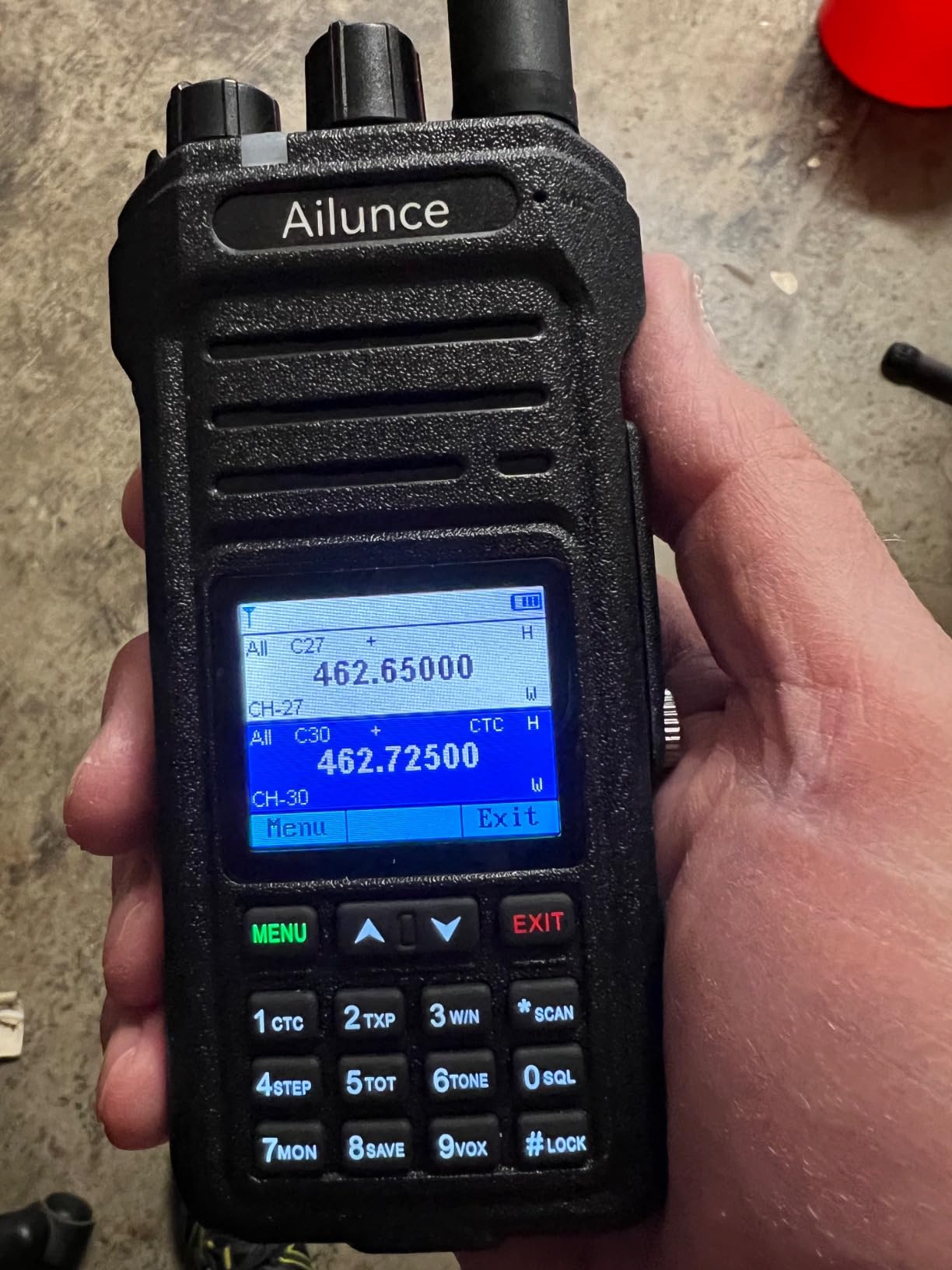
For an outage scenario measured in days rather than hours, battery capacity decides which radio you can actually depend on. The HA1G carries a 2800mAh pack, the largest in this roundup, and owners report days of standby and 10-12 hours of mixed use from a single charge.
The build is also better than its tier suggests. Reviewers compare it favourably to radios costing several times more, and the IP67 chassis has survived user dunking and concrete drop tests. Audio clarity comes up repeatedly as a strength, and the squelch and microphone gain controls are genuinely useful against wind and engine noise.
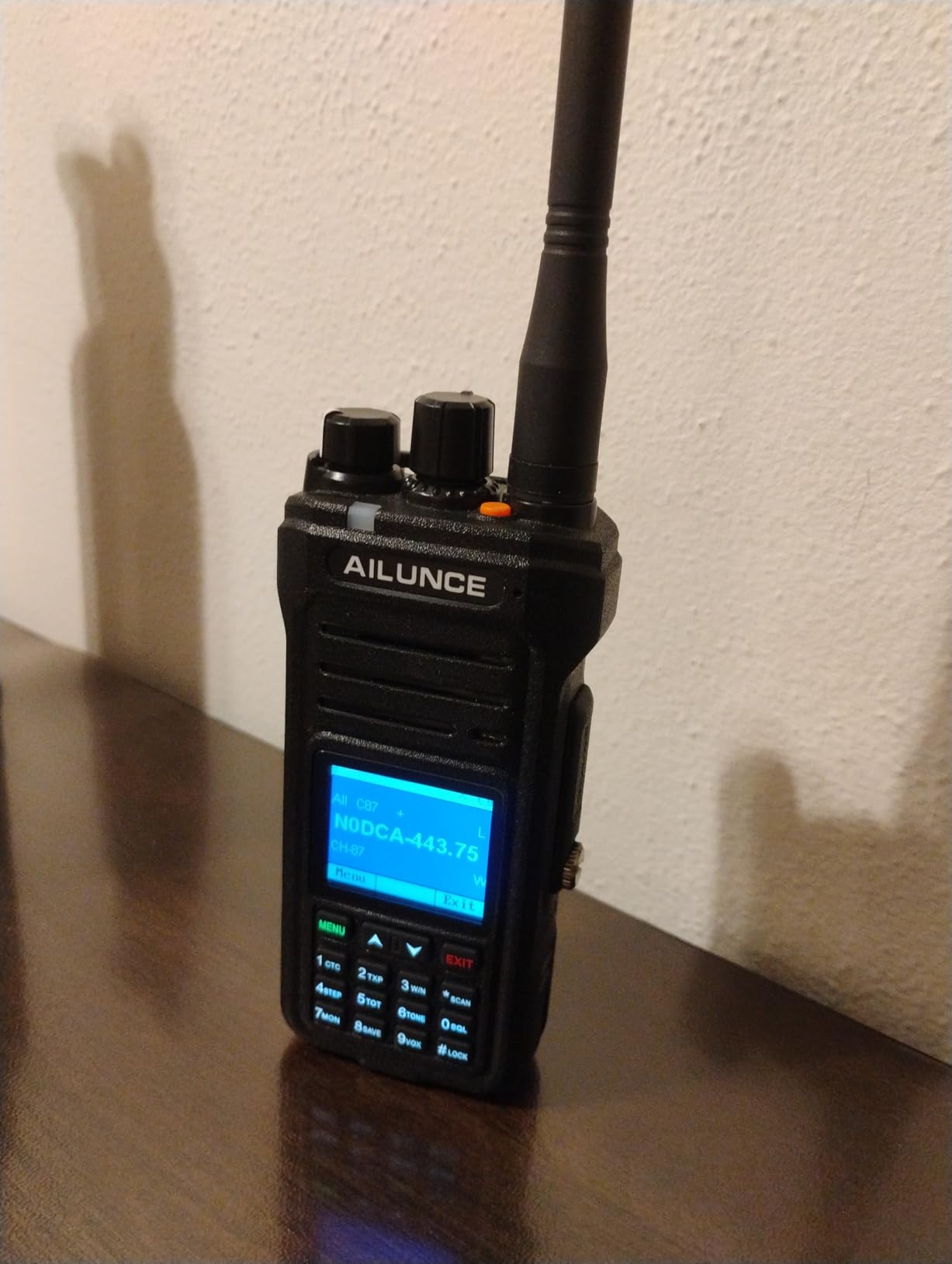
It is a full GMRS radio, not an FRS one. You get 250 channels with 30 defaults, 8 repeater channels, 12 NOAA channels with alert monitoring, CHIRP support, VFO, DTMF and a built-in FM radio receiver, with a charging dock and accessories in the box.
The complaints cluster around the screen and the software. Sunlight readability is poor despite adjustable brightness, scanning is slow, the NOAA channels sit deep in the menus, and Windows 11 users have hit driver issues when programming over USB.
Why it works for multi-day off-grid use
Because energy is the resource that runs out first. A 2800mAh pack changes a three-day scenario from nightly charging into something you can manage on a small solar panel or a power bank shared across a group.
The IP67 sealing also means it keeps working when a radio that is only splash-rated would have been retired after the first downpour.
Where it falls short
The display washing out in direct sun is the most common complaint, and it is a daily annoyance for anyone working outdoors at midday. Keep the brightness up and it is workable.
This radio also has the widest spread of ratings in the group at 4.3 stars, with a higher share of three-star reviews than the others. The faults are real but mostly software and screen related rather than fundamental.
Do GMRS Radios Work When the Power Goes Out?
Yes, and this is the core reason GMRS belongs in an off-grid kit. A GMRS radio needs no tower, no internet and no subscription. Two radios on the same channel talk directly to each other, which means radio-to-radio communication keeps working through a blackout even when nothing else does.
The catch is repeaters. If you are relying on a GMRS repeater to reach someone beyond line of sight, that repeater runs on mains power at its site, and when the grid goes down it goes down with it. This is the single most common planning mistake we saw in forum discussions: building coverage around a repeater without confirming the repeater site has independent power. RepeaterBook and the myGMRS forums are the places to check before you depend on one.
A repeater also does not extend radio-to-radio distance on its own. It extends the path to the tower. If you can already reach the repeater, you can already hear what it rebroadcasts, so a repeater only helps when the tower is closer than the far person is.
So the honest answer has two parts. Simplex radio-to-radio traffic on the standard GMRS channels is fully outage-proof as long as your batteries hold. Anything that depends on a repeater or a base station needs backup power at that site to survive a blackout.
The second dependency is licensing. An FCC GMRS licence lasts ten years, requires no examination, and covers your immediate family, so the radios keep working legally well past any single outage. Non-family operators each need their own licence.
For comparison, a satellite messenger needs a subscription and a clear sky, and an LTE push-to-talk app needs a working cell tower. GMRS needs a charged battery and nothing else, which is why most off-grid groups treat it as the base layer and add satellite or ham above it. Our off-grid power guide covers recharging when the grid is not there to do it.
What GMRS Channel Do Off-Roaders Use?
Most off-roaders use the standard GMRS simplex channels, usually channel 20 or 21 for group traffic, with a privacy tone set to keep their convoy chatter private from other users on the same frequency.
GMRS gives you 22 shared simplex channels and 8 repeater channels. Any of them works, which is why there is no single off-roading channel. The convention that has emerged is to agree on a channel before the trip and check in on it at trailheads and waypoints, so nobody is left calling into silence.
Set a CTCSS or DCS privacy tone to match on every radio in the group. The tone does not encrypt anything, it just makes your radio ignore traffic on that channel without your code, which means you will hear your own group and skip the rest. The same rule is what stops your conversation from being overheard by other off-grid users on the same channel.
If you want a channel nobody else uses, look at the extra repeater-style channels in the radios further down this list. Several models let you set channels 31-54 as custom repeater channels with your own tone combinations, which gives a club or family its own private network.
Before planning around a repeater, look it up on RepeaterBook and post on the myGMRS forums. r/gmrs users report repeaters with published ranges of only a few miles, so verify the real coverage yourself rather than trusting a map.
How Far Does a 5-Watt GMRS Radio Really Reach?
A 5-watt handheld realistically covers 4-6 miles in open, flat terrain with a clear line of sight, and 1-2 miles when buildings, trees or hills sit between you and the other radio. That is the planning baseline most experienced GMRS users work from.
The manufacturer numbers on the box are marketing. You will see advertised ranges from 3 miles up to 50 depending on the model, and none of them survive contact with terrain. r/gmrs threads repeat this point constantly, and users consistently report real-world figures far below the packaging.
Here is how to set expectations by terrain:
Urban or suburban with buildings: 1-2 miles
Open flat ground or long straight roads: 4-6 miles
Light forest with moderate obstruction: 2-3 miles
Dense forest or rolling hills: 1-2 miles
With a reachable repeater: whatever the tower and its antennas cover, provided it has power
Vehicle mobile at 15-20 watts with a roof antenna: several times the handheld figure
Note that UHF, which is what GMRS uses, behaves worse than VHF in dense foliage and hills. The r/amateurradio consensus on off-grid property is consistent: 5-watt handhelds give 4-6 miles in open terrain, and amateur VHF beats UHF when the terrain is full of trees or vertical relief.
Antenna height is the biggest lever you can pull. Putting a whip on a roof or a mast instead of holding it at chest height changes usable range far more than upgrading to a more expensive handheld. This is the single most repeated piece of advice in off-grid radio communities, and it costs a length of coax and some wire rather than a new radio.
Higher-gain antennas also matter. Several radios in this roundup ship with a long whip, and swapping a stock stub for a 15-inch antenna is one of the cheapest range improvements available.
GMRS vs FRS, CB, Ham, Meshtastic and Satellite Messengers
GMRS is the middle tier: more power than FRS, no exam, and a licence that covers your family. Here is how the options compare for off-grid use.
FRS walkie-talkies need no licence and are the simplest option, but they cap at 2 watts, so their practical range is roughly half that of a 5-watt GMRS handheld. Fine for a campsite, weak for a trail group.
CB radios are the trail courtesy channel among off-roaders and still work without any infrastructure, but they are 27 MHz, which means they are noisier at distance and worse in hilly terrain than UHF. They also cannot reach repeaters.
Ham radio is the most capable option, with far higher power, more modes and no repeater dependence at all. The trade is an exam requirement and a steeper learning curve, which is why most people start with GMRS and add ham later.
Meshtastic runs on low-power mesh and gives text and data without any licence, but it is not a voice-first system and it is not reliable as your only channel. r/meshtastic users pair it with GMRS, using GMRS for voice and mesh for data.
Satellite messengers such as Garmin inReach reach far outside radio range and work anywhere with sky, but they need a subscription and cost more per unit. r/preppers answers to SHTF comms questions most often pair satellite with ham, treating GMRS as the easy middle tier.
GMRS vs ham is the comparison people ask most often. If you want voice, group communication and simplicity, choose GMRS. If you want distance, modes and independence from repeaters, put time into ham.
IP Ratings Decoded: What IP54, IP55 and IP67 Actually Mean
IP ratings tell you how a radio handles dust and water. The first digit is solids, the second is liquids, so IP67 means dust-tight and submersible to one metre for 30 minutes.
IP54 means dust-protected against small particles and protected against splashing water from any direction. That is fine for rain and dust but not for a drop in a river. Several handhelds here carry IP54.
IP55 adds protection against water jets. The Midland MXT275 carries it, which handles a heavy rainstorm on a dash mount but not a river crossing.
IP56 adds protection against powerful water jets. You will rarely see it on a consumer radio.
IP67 is the rating worth paying up for. It means sealed against dust and submersible to one metre for 30 minutes, and the BAOFENG UV-9G and Retevis Ailunce HA1G both carry it. If your off-grid time involves water, this is the rating that matters.
JIS4, which the Midland GXT1000VP4 carries, is an older Japanese standard roughly comparable to a splash rating. It is not a submersible rating, and it is easy to mistake for one.
IP44 on the Radioddity DB20-G means limited ingress protection. It is a mobile meant for a vehicle or an indoor base station, so the rating matters less than the mounting position.
How to Choose a GMRS Radio for Off-Grid Use
Start with form factor. A handheld is right for anything on foot or in a pack. A micro mobile at 15-20 watts is right for a vehicle or a fixed property, and it removes battery anxiety entirely. Most serious off-grid setups end up running one of each.
Next, look at transmit power and how it is used. A 5-watt handheld is the practical ceiling for portable use, and having a selectable low-power setting matters as much as the maximum because it multiplies battery life at close range.
Then check repeater access. Any radio you buy should be able to key up the 8 GMRS repeater channels. Some listings advertise 22 plus 8 channels but ship with part of that range receive-only, so verify before you build a plan around a repeater.
Battery capacity is the other half of the decision. Packs in this roundup range from 1500mAh to 2800mAh, and that gap decides whether your radio survives a three-day event without a charger. If you are off grid for more than a weekend, buy the largest battery you can find.
Water rating should match your worst realistic scenario. Rain and dust need IP54. Snow, river crossings and storm-season work need IP67. Do not pay for a submersible rating you will never use, and do not skip one you will.
Removable antennas matter more than buyers expect. A radio with an SMA connector can take a longer whip, sit on a mast or move to a rooftop. A radio with a fixed antenna cannot. Users on remote parcels consistently say antenna height changed their coverage far more than the radio model did.
Programming is the last filter. If you want CHIRP codeplugs and radio cloning, check compatibility before buying. If nobody in your group will ever touch software, a radio with 30 pre-programmed channels is simpler and works the same day it arrives.
Power for the radios themselves deserves attention, because a radio you cannot recharge is a radio you will not use. Small solar panels and a battery bank handle handheld charging well, and our solar panel kit guide covers the sizing. For monitoring weather where the radios cannot tell you, our off-grid weather station picks pair well with a GMRS setup.
Setting Up an Off-Grid GMRS Station
You do not need a tower to build a working off-grid station. You need one handheld per person, one antenna as high as you can reasonably mount, and a charging plan.
Step one: pick a common channel and privacy tone and write them down. Everyone sets the same values before the group leaves. This is the step that prevents the most common failure, which is people on different channels.
Step two: mount an antenna as high as practical. A roof edge, a pole or a mast top will do. Height changes the effective horizon dramatically, and it is the cheapest range improvement available. Feed it with the coax length that keeps your losses reasonable rather than any excess you have.
Step three: choose the power tier. A 15-watt mobile like the Midland MXT275 or a 20-watt unit like the Radioddity DB20-G turns that antenna into a station rather than a handheld with a long whip. Run it from a vehicle, a battery bank or a bench supply.
Step four: plan charging. A USB-C radio and a handheld battery pack will charge from a small panel, and a bank of AA cells covers the radios that take them. Our off-grid solar power guide covers sizing panels for continuous loads.
Step five: if you plan to use a repeater, confirm the repeater site has independent power. If it runs on mains and the grid goes down, your repeater coverage goes with it. This single check prevents the most disappointing off-grid comms failure there is.
A practical 72-hour kit looks like this:
Two handhelds with charged batteries, plus spare batteries or a power bank
One micro mobile or base station radio with a mounted high-gain antenna
USB-C cables and a charging dock per radio type
A small solar panel sized to your total draw over three days
AA cells for any radio that accepts them
A written channel and privacy-tone plan for the group
A NOAA-capable radio or separate weather station for severe weather warnings
Group licensing is worth handling before the trip rather than at it. Immediate family members are covered by one licence, but any non-family operator who keys up needs their own. That detail stops more group purchases than any other.
The GMRS Licence: Who Needs One and What It Covers
An FCC GMRS licence lasts ten years, requires no examination, and covers your immediate family. You transmit as a primary licence holder, and your spouse, parents, children and siblings are included.
Non-family operators are not covered. If a friend keys up a GMRS radio, they need their own licence. For a convoy or a club this is the most common stumbling block, and it is easier to sort out before the purchase than after.
The licence does not change how the radio performs. It is a legal requirement, not a technical upgrade, which is why it belongs in the same roundup as the hardware rather than being an afterthought.
One more point worth checking locally: some radio clubs run programmes that help new users get set up, and those are often the fastest route through the FCC registration process for first-time operators.
Frequently Asked Questions
What is the best radio for off-grid communication?
For voice, the best GMRS radio for off-grid communication is the Midland GXT1000VP4 for handhelds and the Midland MXT275 for vehicles. The GXT1000VP4 ships as a working two-radio set with rechargeable packs, 50 channels, 142 privacy codes and NOAA weather scanning. The MXT275 is a 15-watt mobile that runs from vehicle power and needs no battery. GMRS beats satellite and cellular options because it needs no tower, no subscription and no clear sky.
Will GMRS radios work if the grid goes down?
Yes. A GMRS radio needs no cell tower, no internet and no subscription, so radio-to-radio simplex traffic keeps working through a blackout as long as your batteries hold. The important exception is repeaters: they run on mains power at their site and go dark when the grid does, unless that site has independent power. A repeater also only extends the path to the tower, not radio-to-radio distance.
What is the best communication device for off-grid use?
It depends on the job. GMRS is the best all-round choice for voice group communication with no infrastructure. FRS walkie-talkies are simpler but half the power. Ham radio reaches further but requires an exam. Meshtastic handles text and data without a licence. Satellite messengers work anywhere with sky but need a subscription. Most off-grid groups use GMRS as the base layer and add satellite or ham above it.
What GMRS channel do offroaders use?
There is no single off-roading channel, because GMRS provides 22 shared simplex channels plus 8 repeater channels and any of them is legal. The convention is to agree on a channel before the trip, usually channel 20 or 21 for group traffic, and check in at trailheads. Set a matching CTCSS or DCS privacy tone on every radio so your group hears each other and skips unrelated traffic.
How far will a 5 watt GMRS radio transmit?
A 5-watt GMRS handheld realistically covers 4-6 miles in open, flat terrain with a clear line of sight, and 1-2 miles when buildings, trees or hills intervene. Dense forest is closer to 1-2 miles, while open valleys and long straight roads give the best results. Advertised ranges of 20, 36 or 50 miles are marketing figures. Mounting an antenna higher, rather than raising transmit power, is the biggest real improvement.
Can you use a GMRS radio as a repeater?
You cannot legally operate your own repeater on GMRS, because repeaters are licensed separately. You can, however, key up existing GMRS repeater channels, and several radios here let you set extra channels as DIY repeater-style channels with your own privacy tones. That gives a group private channels without operating transmitting equipment. Always verify a repeater site has backup power before depending on it during an outage.
What is better, GMRS or CB radio?
GMRS is better for most off-grid use because it operates on UHF at up to 5 watts and can reach repeaters, while CB operates on 27 MHz at lower power and cannot. CB remains popular among off-roaders as a shared trail courtesy channel. GMRS needs an FCC licence valid ten years with no exam, while CB requires no licence at all. If you want the simplest possible option, CB still works without any paperwork.
Are rugged radios GMRS?
No. Rugged or heavy-duty describes construction, not the radio service. The Retevis RB48 in this roundup is certified to MIL-STD-810H and rated IP67, but it is listed as an FRS radio with 22 channels and cannot reach GMRS repeater channels. Check the service on the listing rather than inferring it from the build. A truly rugged GMRS radio in this group is the BAOFENG UV-9G or the Retevis Ailunce HA1G.
Our Top Pick for Off-Grid GMRS Comms
The Midland GXT1000VP4 is our pick for the best gmrs radios for off grid communication because it removes every reason to hesitate. It arrives as a working pair, pre-programmed, with rechargeable packs, a desktop charger and NOAA weather scanning, and its dual-power design means AA cells take over when the packs die.
Pair it with the Midland MXT275 if you run vehicles or a fixed property, because 15 watts on continuous power and a roof antenna reach people a handheld never will. Add the BAOFENG UV-9G or the Retevis Ailunce HA1G if your off-grid time involves water, since both carry a real IP67 rating.
Whatever you choose, decide the channel and privacy tone before anyone sets off, mount the antenna as high as you can, and confirm any repeater you plan to use has backup power. Those three steps do more for your coverage than any upgrade to the radio itself.