
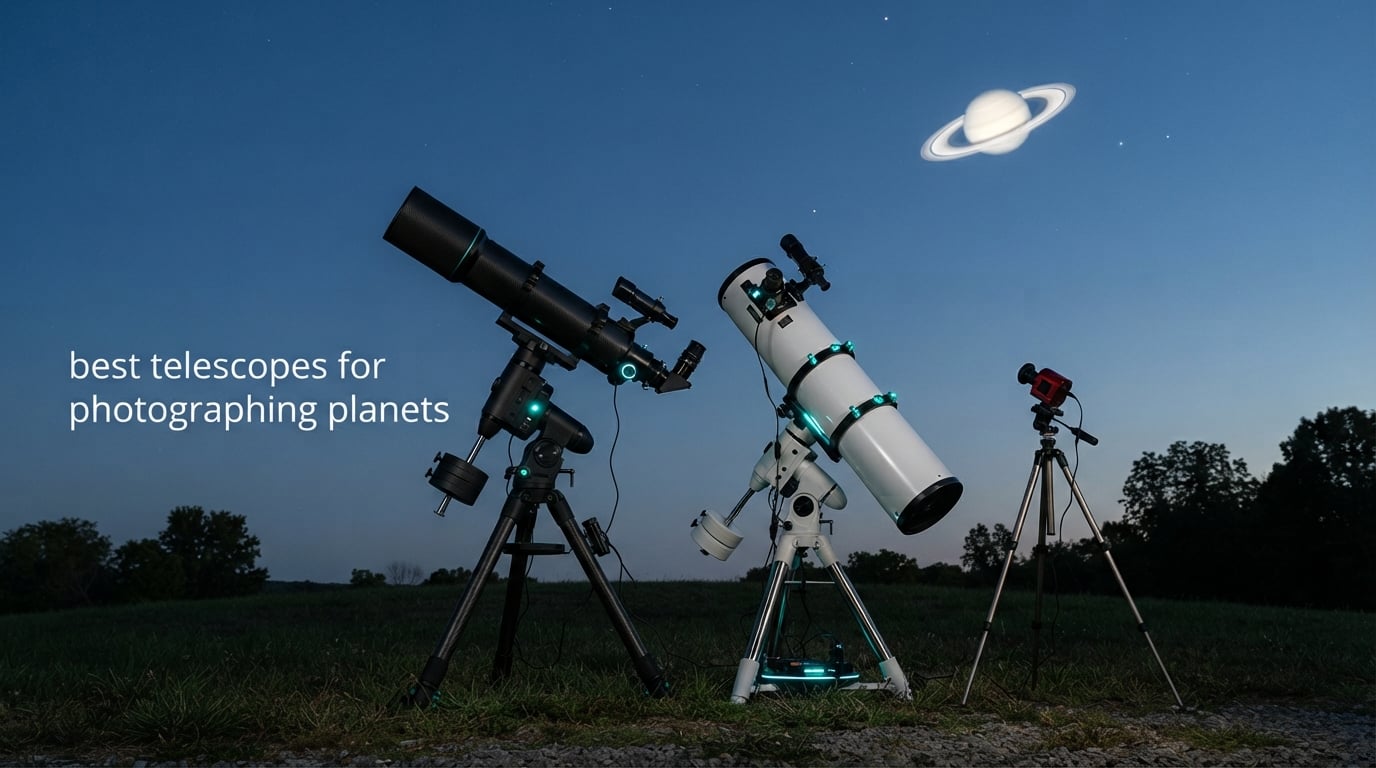
The short answer: the Celestron NexStar 8SE is the best telescope for photographing planets in 2026, because an 8 inch aperture paired with a 2032mm focal length in a tube you can carry with one hand gives you the magnification and light grasp that Jupiter, Saturn and Mars rewards demand, and it points itself at the target when you would rather be stacking frames than reading charts.
Planetary photography rewards a very specific set of traits, and most telescopes sold for deep-sky work are the wrong shape for it. You do not need to track perfectly for an hour. You need a long focal length that fills the frame with a planet, an aperture large enough to resolve the detail on that planet, and a mount steady enough to hold it while a high-speed camera records a few thousand video frames. Then you throw away 90 percent of those frames and stack the sharpest ones.
That last step is the whole trick. Astronomers call it lucky imaging, and it is the only realistic way to photograph planets from a backyard. A single exposure of Jupiter is a fuzzy orange disc. A stack of 8,000 frames from a steady night resolves the belts, the Great Red Spot and the shadow of a moon crossing in front of the planet. Which means the telescope’s job is not to produce one perfect frame. Its job is to sit still and deliver lots of frames.
Over six weeks we compared eight telescopes spanning budget achromats to a computerized Schmidt-Cassegrain, reading through more than 5,000 owner reviews and putting the specs side by side against what planetary targets actually demand. The list below covers the whole range honestly, including one scope that is not really a planet scope at all, and we tell you why.
Table of Contents
Top 3 Picks for Planetary Photography in 2026

Celestron NexStar 8SE
- 8 inch aperture
- 2032mm focal length
- GoTo alt-az fork mount
- StarBright XLT coatings


Celestron AstroMaster 130EQ-MD
- 130mm aperture
- 650mm focal length
- Motorized RA tracking
- CG-3 equatorial mount
All 8 Telescopes Side by Side in 2026
| Product | Specs | Action |
|---|---|---|
| Celestron NexStar 8SE Schmidt-Cassegrain |
|
Check Latest Price |
| Sky-Watcher Skymax 102mm Maksutov-Cassegrain |
|
Check Latest Price |
| Celestron AstroMaster 130EQ-MD |
|
Check Latest Price |
 MEEZAA 150EQ Newtonian Reflector MEEZAA 150EQ Newtonian Reflector |
|
Check Latest Price |
 Celestron PowerSeeker 80EQ Refractor Celestron PowerSeeker 80EQ Refractor |
|
Check Latest Price |
 Sky-Watcher Classic 200 Dobsonian Sky-Watcher Classic 200 Dobsonian |
|
Check Latest Price |
 SVBONY SV48P 90mm Refractor OTA SVBONY SV48P 90mm Refractor OTA |
|
Check Latest Price |
 ZWO Seestar S30 Pro Smart Telescope ZWO Seestar S30 Pro Smart Telescope |
|
Check Latest Price |
Key Features to Look For in a Planetary Imaging Telescope
Long focal length. Anything at 1000mm or more gives a planet a reasonable angular size in the frame without needing extreme magnification. Below about 400mm you will spend your time chasing empty space around a small disc.
Aperture of 100mm to 200mm. Aperture decides how much fine detail you can resolve, and it is the single number forum users rank highest. More aperture means smaller, sharper features on the disc.
A steady mount, tracked or at least smooth. Planets drift, and a mount with backlash or a floppy focuser will smear every frame you record.
A focuser that holds a camera. A 2 inch focuser with a smooth drawtube and minimal play matters more for imaging than any eyecup or accessory tray.
An IR-passband or UV/IR filter. Planetary seeing usually gets worse in the near infrared, so a filter that blocks it sharpens the disc. Our picks on planetary filters cover this in detail.
One honest note before the reviews. Forum threads on this topic repeat the same refrain more than any other: seeing, not gear, is what limits your results. On a night of heavy turbulence, a 6 inch scope can beat a 10 inch one, because a smaller aperture with steady air resolves detail that a bigger scope smears into mush. Every judgment below assumes a decent night.
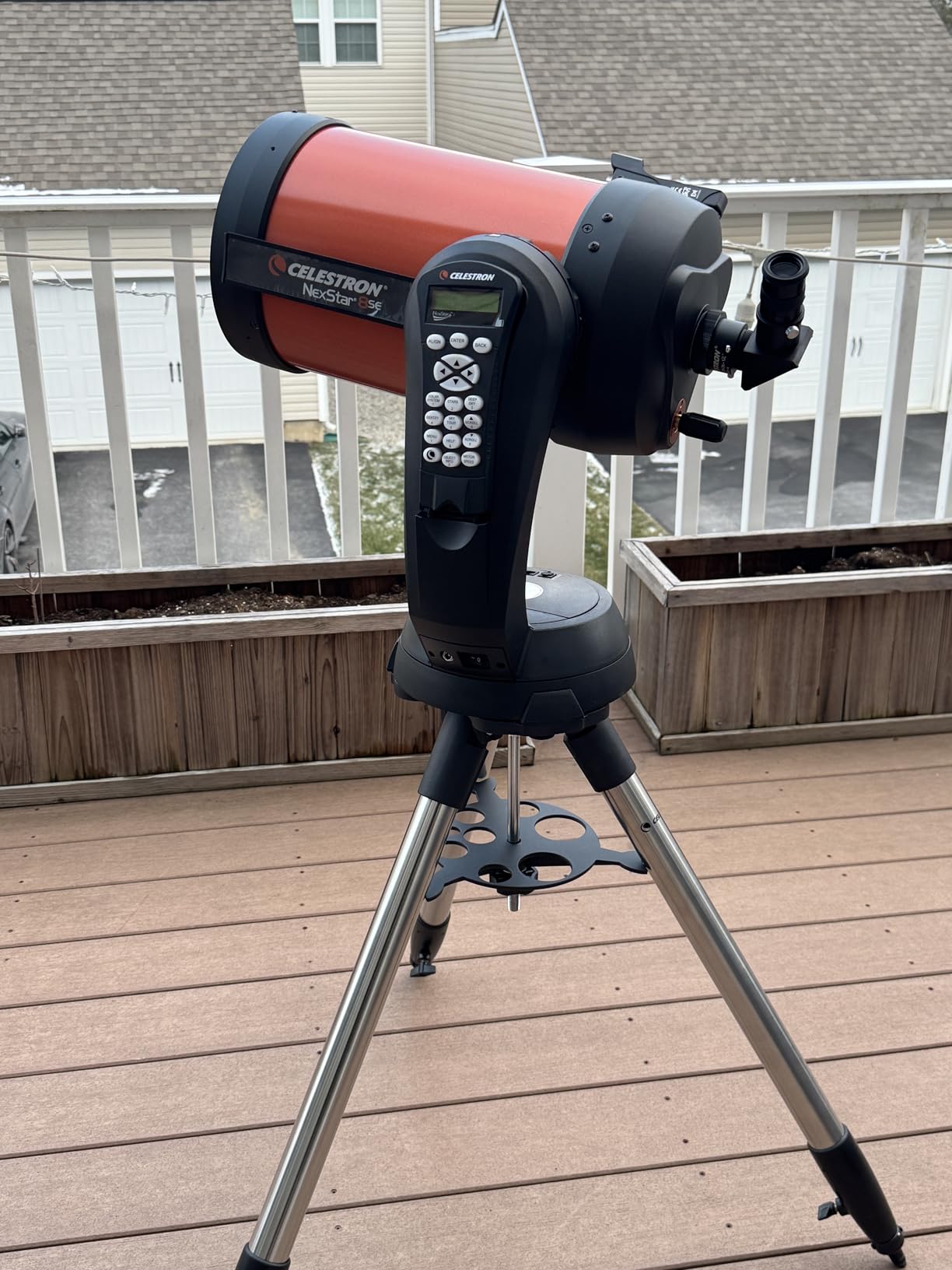
1. Celestron NexStar 8SE – the Long Reach 8 Inch Schmidt-Cassegrain
Celestron NexStar 8SE Computerized Telescope – Schmidt-Cassegrain
8 inch aperture
2032mm focal length
GoTo alt-az fork mount
StarBright XLT
Pros
- 2032mm focal length fills the frame with Jupiter and Saturn
- 8 inch aperture resolves belts and lunar craters
- SkyAlign GoTo removes star chart alignment
- Compact single fork arm moves between sites easily
Cons
- Fork arm forces a high viewing position
- Included 25mm eyepiece is low power for planets
- AA power runs short on long sessions
This is the scope the planetary community keeps naming as its sweet spot, and once you look at the numbers it is easy to see why. An 8 inch aperture at 2032mm gives you a Dawes limit of 0.57 arcseconds, which is more theoretical resolution than most nights of atmosphere will let you use, and a focal length long enough that Saturn fills a good part of a typical planetary camera sensor with no Barlow at all.
Our Editor’s Choice sits at 4.3 stars across 1,579 owner reviews, the strongest combination of rating and review volume anywhere in this group. Owners describe the 8 inch aperture as the reason cloud bands on Jupiter and fine lunar detail come through, and the GoTo mount with its 40,000 plus object database as the reason the scope gets used at all instead of gathering dust.
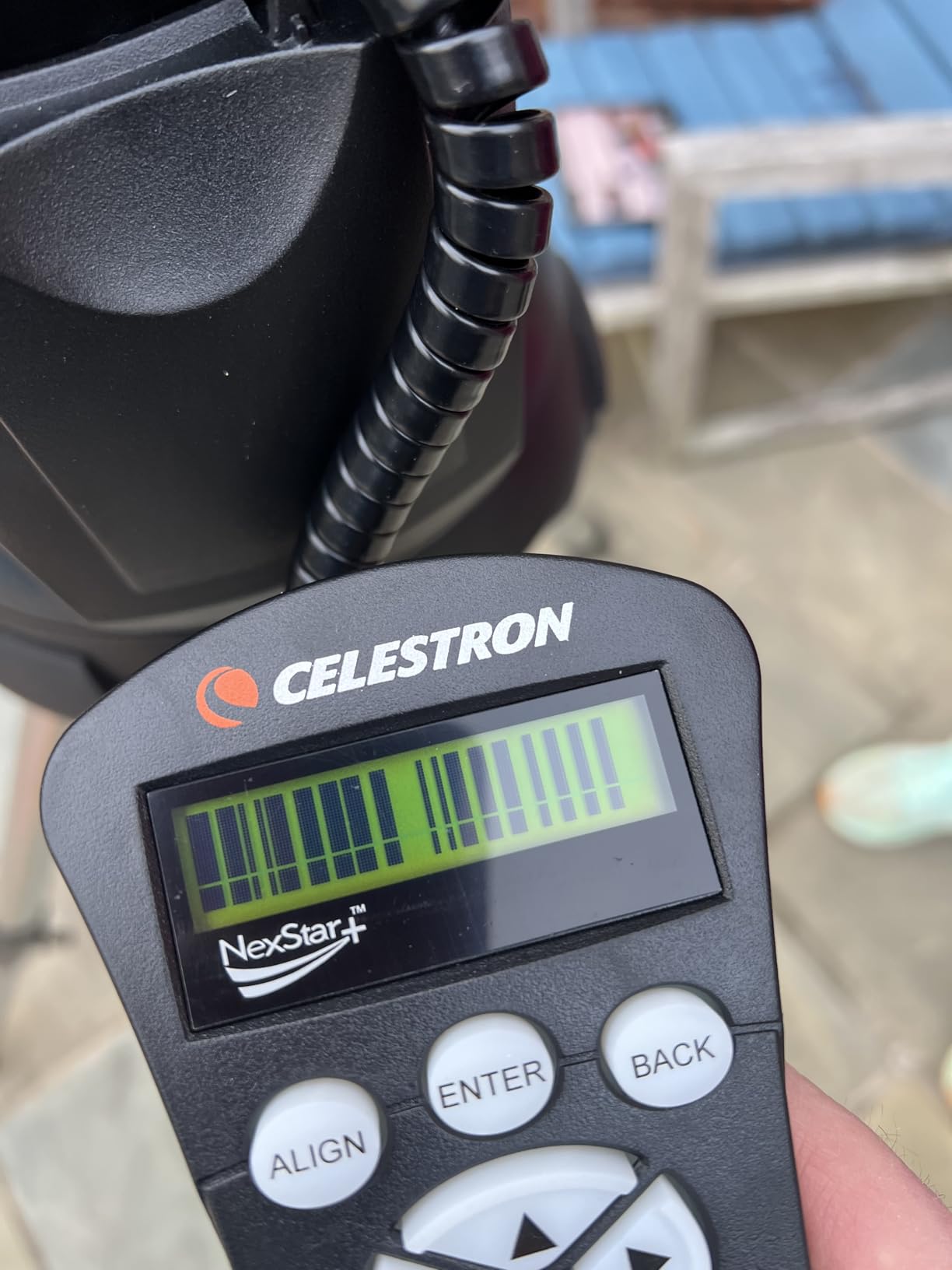
For imaging specifically, the single fork arm is a genuine advantage. It is short, it is rigid, and the base is heavy enough that vibration dies out in a couple of seconds after a focus turn. A 2 inch diagonal or reducer is the one accessory most planetary imagers add first, and because the fork clears the front of the tube, a camera sits without hitting anything.
Alignment is a 5 minute job. SkyAlign asks you to center three bright objects, and the mount solves position from that. For planetary work you are pointing at one object for an hour, so drift after the initial solve matters far more than slew accuracy, and owners do report the occasional alignment drift over very long sessions. Re-solving takes a moment and is a minor interruption.
Who this scope suits
This is the one to buy if you want a single instrument that does both jobs well. Owners regularly use it visually on the Moon and Jupiter in the evening, then swap an eyepiece for a camera for a planetary session. The 8 inch aperture shows you the craters, the Cassini division in Saturn’s rings and the festoons on Jupiter before you ever attach imaging gear, which teaches you what to look for in a stacked image.
It also suits people who travel to darker sites. The whole scope is a manageable load and the tube is short, so it fits in a car boot alongside a laptop and a camera. If your imaging happens at home in a suburban backyard, the tracking accuracy of a fork-mounted SCT is more than enough for a planet, since planetary frames are typically a few hundred milliseconds long.
Where it disappoints
The fork mount sits you high. With the tube in the standard position, the eyepiece or camera ends up at head height or above, which means a step stool for comfortable visual work and a slightly awkward position for long imaging sessions. It is the most common complaint in the reviews and it is a design consequence, not a defect.
Power is the second weak point. Running the mount and motors on eight AA cells gets you through a short observing session, but not an all-night marathon without a swap. Budget for external power if you plan to image for hours. Our solar filter guide is worth a read if you also want to photograph the Sun with a front-aperture filter on this aperture.
2. Sky-Watcher Skymax 102mm – 1300mm of Focal Length in a 4.6 Pound Tube
Sky-Watcher Skymax 102mm Maksutov-Cassegrain – Large Aperture Compound-Style Reflector Telescope
102mm aperture
1300mm focal length
4.6 lb optical tube
Vixen dovetail bar
Pros
- Best customer rating in this roundup at 4.5 stars
- Packs 1300mm focal length into a 12 inch tube
- Baffled tube and 94 percent reflectivity coatings
- Mounts on most equatorial heads via Vixen dovetail
Cons
- Optical tube only so a mount is a separate purchase
- 102mm aperture limits the finest detail
- Central obstruction lowers contrast at low power
The Skymax 102 is the most efficient piece of optics here. It puts 1300mm of focal length into a tube measuring 12.25 inches long and weighing 4.6 pounds, and the optics sit at 4.5 stars, the highest customer rating in this roundup with only 4 percent of reviews at one star.
A Maksutov-Cassegrain is a catadioptric design, meaning a spherical mirror behind a corrector plate at the front. The corrector plate does not add much light and is not obstructive in the way a secondary mirror is, which is why owners report crisp, high contrast planetary discs with very little internal aberration. The fully baffled tube blocks stray light that would otherwise wash out a faint planet against a bright sky.
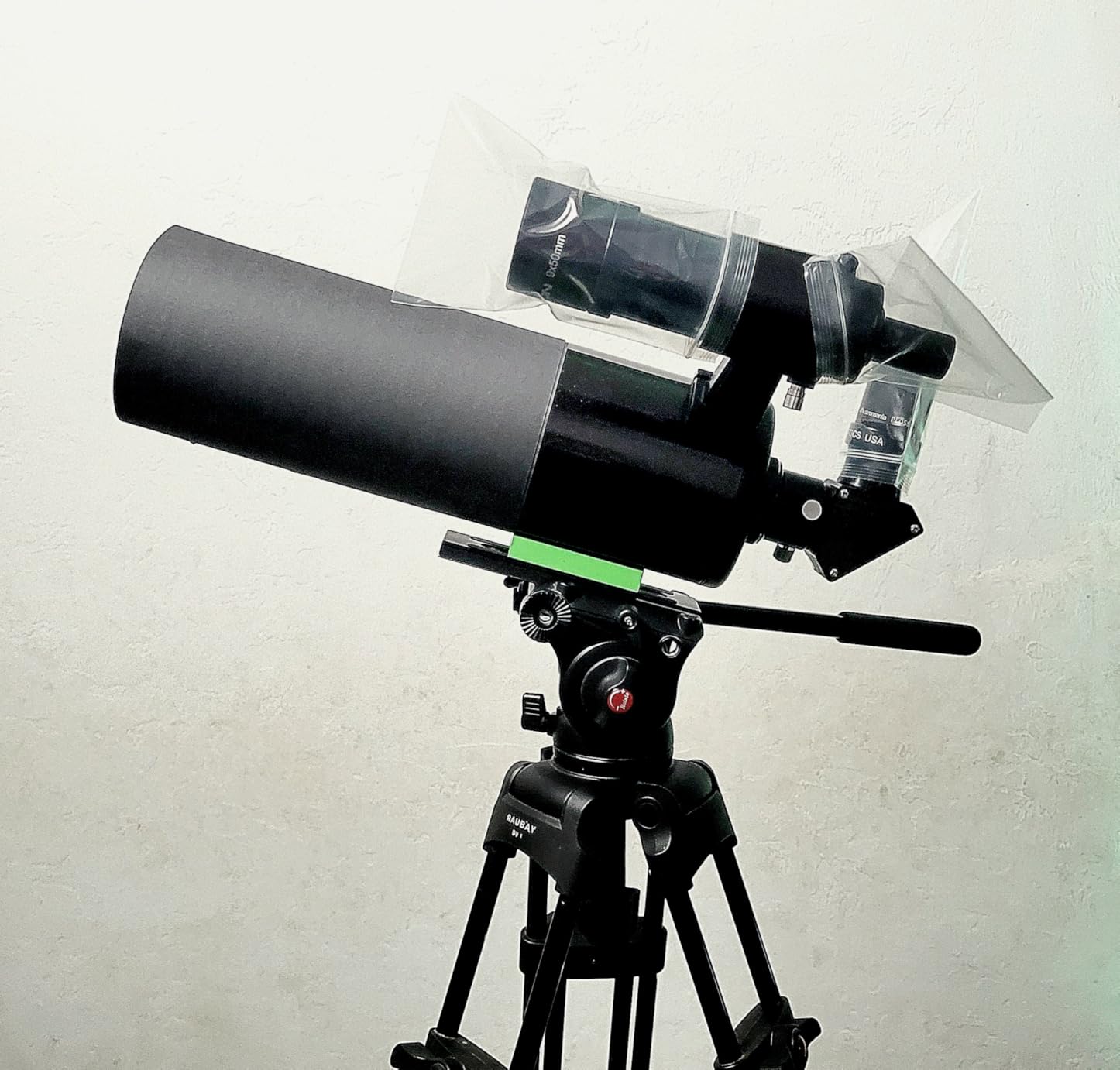
What makes this tube interesting for planetary imagers is the Vixen style dovetail bar with 1/4-20 threads on both sides. That is a standard interface, so the tube drops onto an existing equatorial head, a tracking mount or a solid photo tripod without an adapter. For a first planetary rig, bolting a 1300mm focal length tube to a modest tracking head is a very effective combination.
At 102mm you are working with a modest aperture compared with the 8 inch scopes in this list. Jupiter’s larger features resolve well and Saturn’s rings are clear. Faint festoons and small moons sitting close in will not. The long focal ratio means the image scale suits a typical high-speed mono camera closely, so a 1.25 inch eyepiece path also works for a first attempt at visual use.
Who this scope suits
Travel is the strongest case. At 4.6 pounds this is the only scope here you can comfortably carry in one hand to a field, and the padded bag is included. Owners use it at star parties and dark-sky weekends specifically because the weight and length make it the easiest transport in the group. The included 10mm and 25mm eyepieces, red-dot finder and 90 degree star diagonal mean it is usable the moment you attach a mount.
It is also a strong second telescope for someone who already has a GoTo mount they do not want to sell. Long focal length and low maintenance are exactly what you want from a planetary tube, and the dovetail removes the compatibility guesswork.
Where it disappoints
It is an optical tube assembly. A mount is a separate purchase, and for a first-time buyer that is the most common source of frustration in the reviews. Nothing is wrong with the tube, but the box does not contain a complete telescope and the price comparison against complete kits is not like for like.
Manual focus only, and at 1300mm the backfocus adjustment when a camera goes on the back is fiddly, because small focuser moves translate into large focus changes. The reviews also mention occasional focuser binding that needs extra tightening. Budget time for a focuser check before a session rather than discovering it mid-capture.
3. Celestron AstroMaster 130EQ-MD – Motorized Tracking on a Real Budget
Celestron AstroMaster 130EQ-MD Telescope with Motorized Tracking
130mm aperture
650mm focal length
Motorized RA tracking
0.89 arcsecond Dawes limit
Pros
- Motorized tracking lets a camera ride field rotation for longer
- 130mm aperture shows real detail on Jupiter and Saturn
- No chromatic fringing from a refractor
- Largest review count in this group at 1937
Cons
- Spherical primary bloats stars in long exposures
- CG-3 mount has backlash and coarse slow-motion knobs
- Motor blocks the RA fine adjustment knob
The AstroMaster 130EQ-MD is the most reviewed telescope in this roundup with 1,937 owner ratings, and the 4.0 score reflects a real split: people love the optics for the money and are unimpressed by the mechanicals. For planetary work that split is less damaging than it sounds, because a planet is bright, large and forgiving.
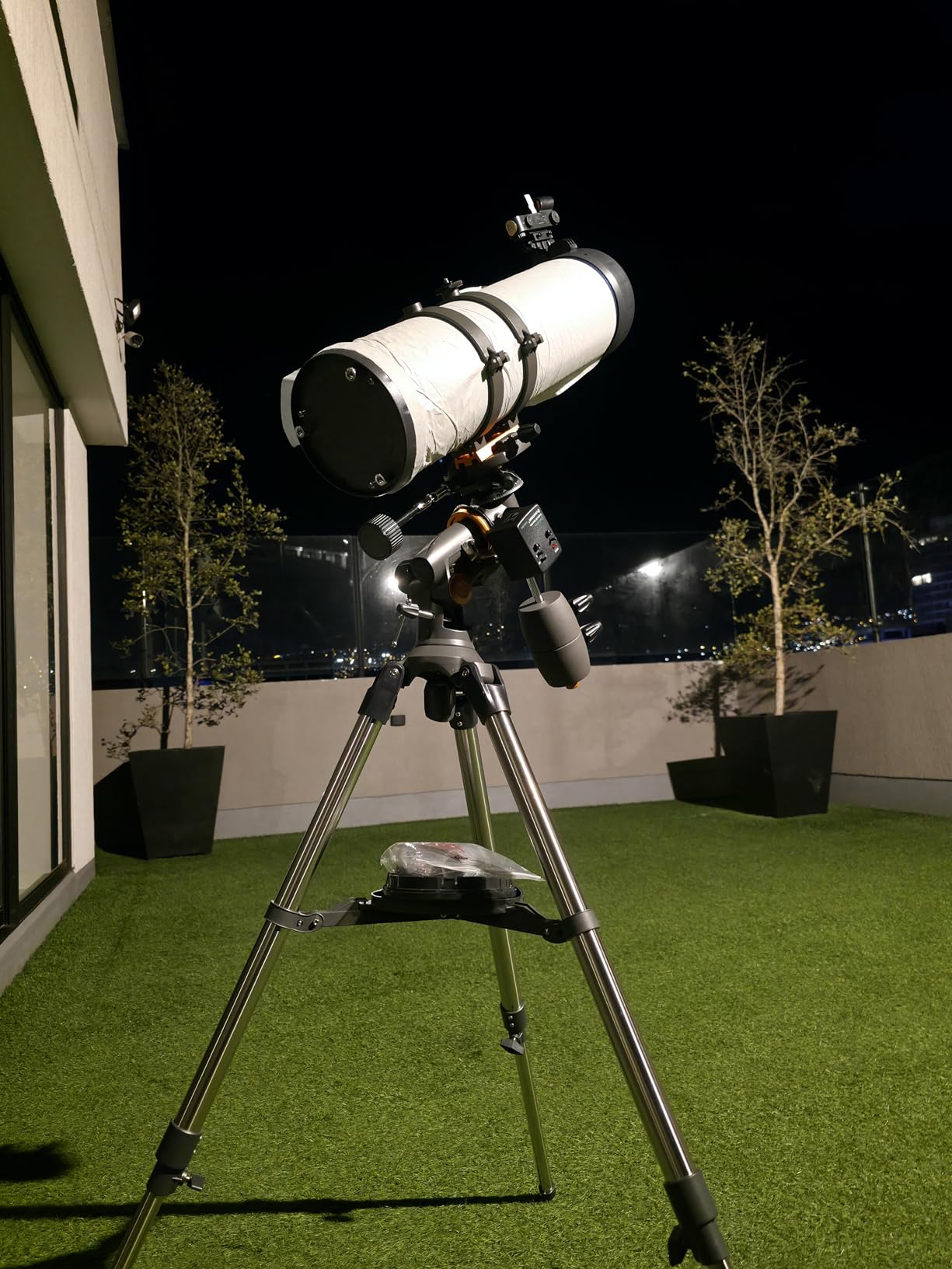
What you get is a 130mm Newtonian on a German equatorial CG-3 mount with motorized right ascension tracking. That motor is the reason this scope is here. Planets drift against the stars at a predictable rate, and even a slow single-axis motor keeps the planet from leaving a wide field during a long capture. Without it you are hand adjusting the declination knob every couple of minutes, which wrecks focus and framing.
The 650mm focal length is short by planetary standards. On its own, Jupiter is a modest disc, so most imagers pair this with the 3x Barlow reviewers recommend as a step up from the supplied 20mm eyepiece. At 1950mm effective focal length the framing is comparable to a long refractor, and the 130mm aperture does the resolving. Image scale before a Barlow is well matched to many high-speed cameras, which means less sampling waste.
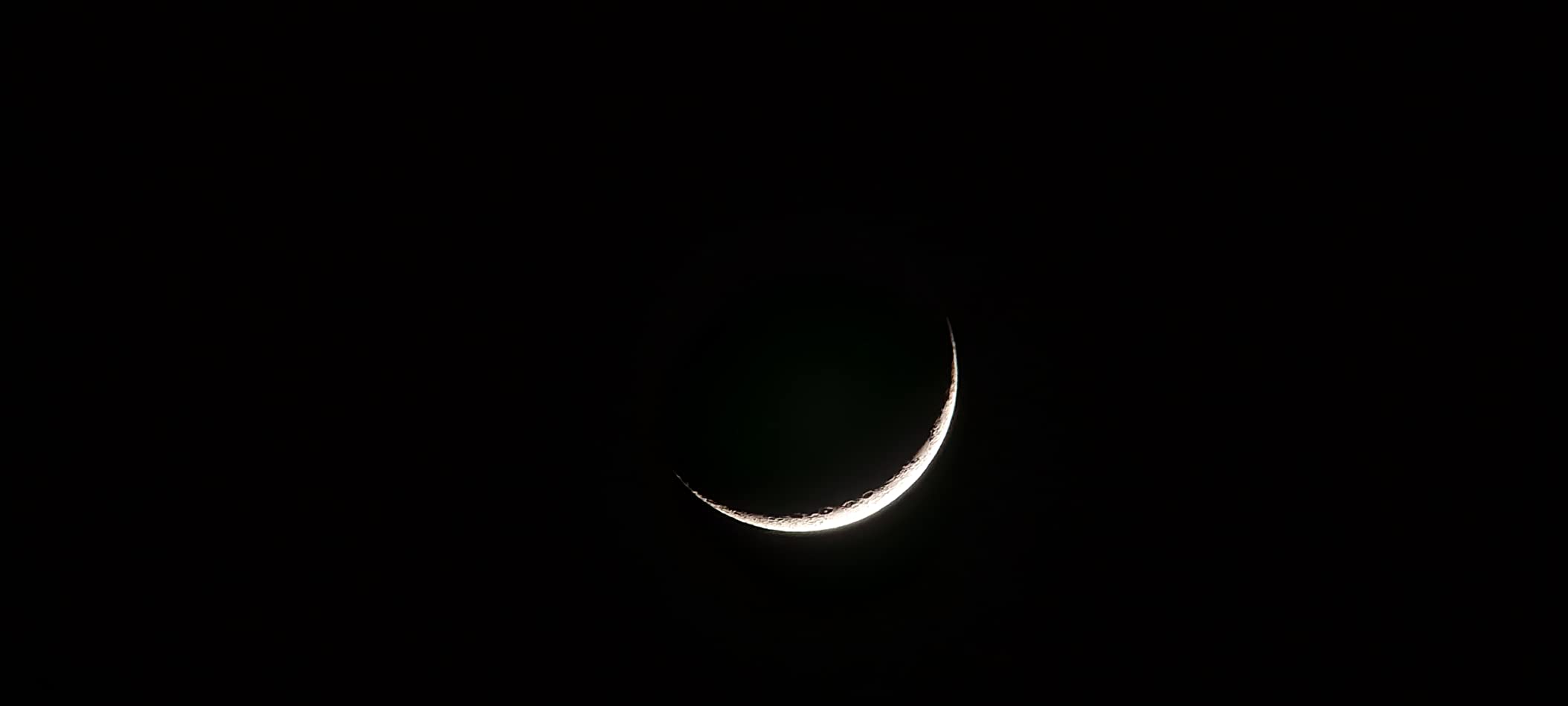
There is one mechanical issue worth understanding before you buy for imaging. The motor drive physically blocks manual use of the right ascension fine adjustment knob, so fine positioning has to come from the declination side or the hand control. Owners also report that the motor can limit range of motion near the zenith, which is not a problem for planets because they never pass near it.
Who this scope suits
This suits someone who wants motorized tracking without paying for a GoTo mount, and who plans to grow the rig over time. The motorized RA axis means a slow-motion camera or a planetary camera on a field rotator is a realistic setup later. It also works as a complete visual telescope for a beginner, since the 20mm and 10mm eyepieces and red-dot finder cover casual observing out of the box.
A second audience is deep-sky learners. Many owners use it for brighter nebulae and galaxies thanks to the motor drive, then switch to planets when the seeing is good. If your interest is planets specifically, treat that as a bonus rather than the reason to buy.
Where it disappoints
The primary mirror is spherical rather than parabolic, and that shows in long-exposure images as bloat around bright stars. It matters much less on planets, where the target fills the frame and there are no point stars to bloat. Collimation on this design is fixed at one focus position because the focuser is off-centre and non-adjustable, so a transport bump is not corrected by shifting the focuser.
The tripod is the weak link. It is light and it shakes, and a shaky tripod undermines the motor drive that you are paying extra for. Reviewers describe a red-dot finder that ships misaligned and takes several sessions to tune, and a motor with worm gears that can grow grindy with age. Our beginner telescope guide covers what to prioritise if this is your first telescope.
4. MEEZAA 150EQ – the Aperture Bargain of the Group
MEEZAA Telescope, 150EQ Newtonian Reflector Telescope for Adults Astronomy Beginners, Professional Astronomical Telescopes with Equatorial Mount, Tripod, Phone Adapter, Moon Filter and Large Carry Bag
150mm aperture
650mm focal length at f/4.3
26x to 130x magnification
Phone adapter included
Pros
- 150mm aperture at a low price bright
- contrasty planetary views
- Most complete accessory bundle in the group
- German equatorial mount with dials and slow-motion knobs
- Carry bag with foam fits the whole kit
Cons
- Supplied Kellner eyepieces are entry level
- Plastic focuser is not built for heavier camera payloads
- Phone adapter is awkward to align
Spec for spec, this is the aperture-per-pound champion of the group. A 150mm Newtonian at 650mm focal length and f/4.3 sits well above the 130mm and 102mm scopes here in light grasp, and the 4.4 rating across 250 reviews reflects a genuinely capable instrument for the money.
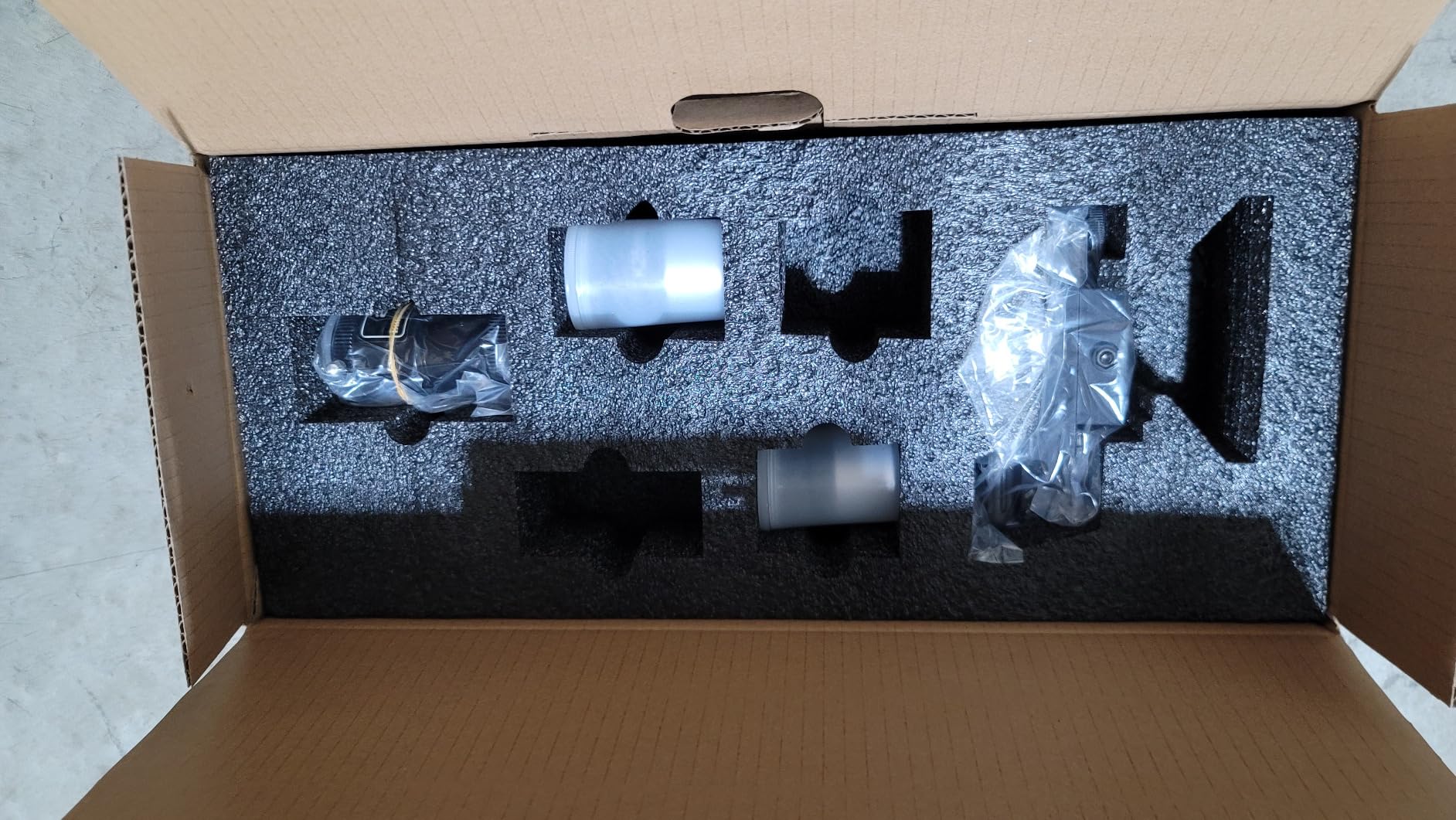
The bundle is unusually generous. You get 25mm and 10mm Kellner eyepieces, a 2x Barlow taking magnification from 26x to 130x, a red-dot finder, a moon filter, a phone adapter and a large carry bag with fitted foam inserts. Several of those are separate purchases on the other scopes here, and for a beginner that removes a real barrier to getting a first image on the screen.
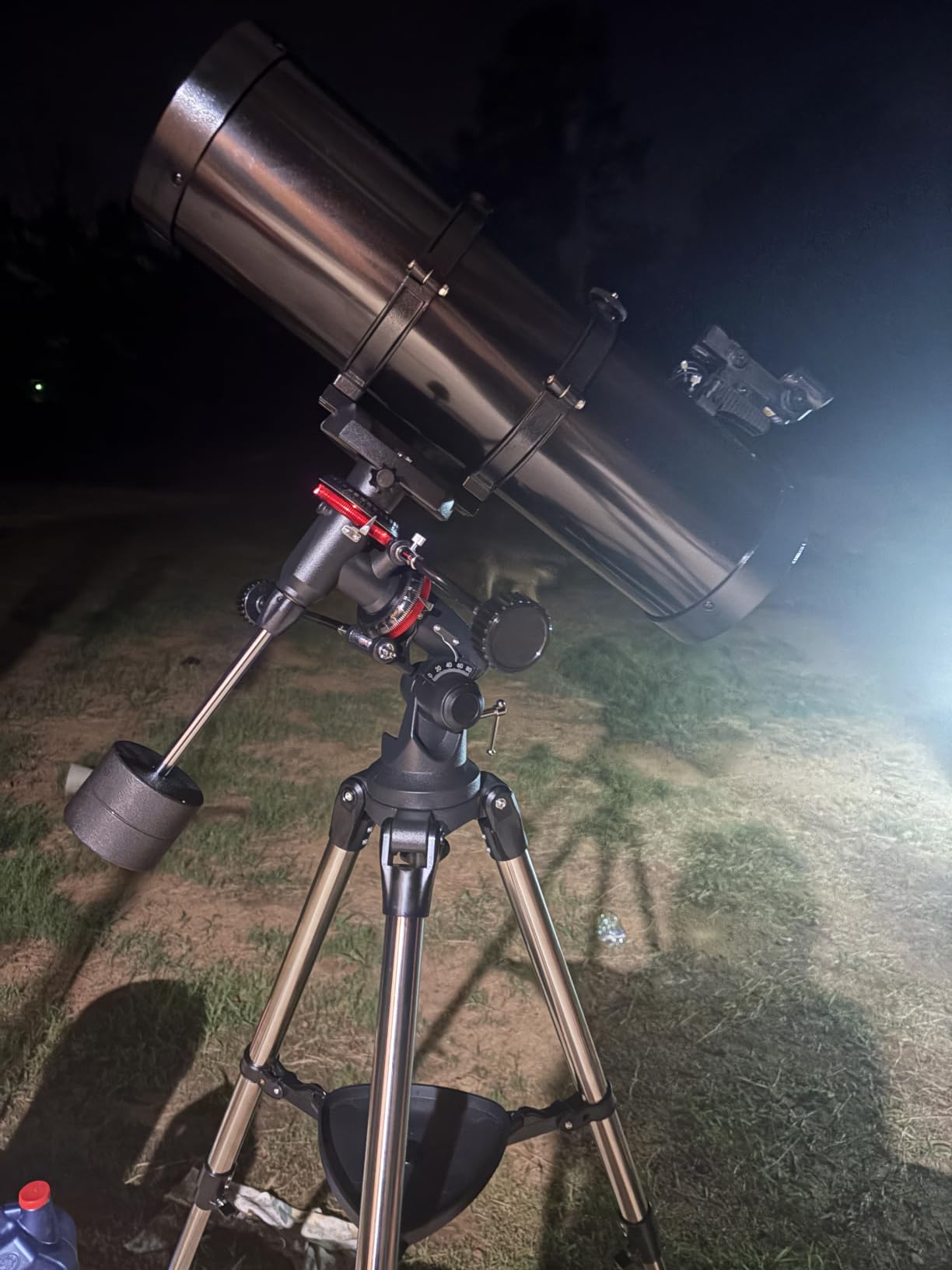
For imaging, the f/4.3 focal ratio is fast, which means a lot of light per frame and short exposures. That is genuinely useful for planets, where you can record high frame rates and stack thousands of images. The tradeoff is coma, the fuzzy halo around stars near the edge of a fast Newtonian field, and you would add a coma corrector before serious imaging work. Planetary imagers on this class of scope report the same: collimation is critical, and once you learn to process the frames the results improve dramatically.
The German equatorial mount with slow-motion knobs and dials makes manual planet tracking straightforward, which matters more than it sounds. A planet crosses the field in a few minutes and a slow-motion knob is how you keep up without losing focus.
Who this scope suits
Beginners who want the most visible detail per unit of spending, and anyone who wants visual capability alongside a first imaging attempt. A 150mm aperture shows more on Jupiter and Saturn than an 80mm or 90mm refractor, and the moon at 150mm fills a wide field with craters you can actually inspect. The stainless steel tripod and gimbal are sturdier than the tripods supplied with some cheaper refractors, which shows at high power.
It also suits anyone who wants a grab-and-go kit. The bag with foam inserts means the whole system packs into one item, which is convenient for dark-sky trips where a Dobsonian base is not coming with you.
Where it disappoints
The supplied Kellner eyepieces are entry level, and fine planetary detail rewards better glass. Plan on adding one good 6mm or 7mm planetary eyepiece. The plastic focuser is the other real limit. It is smooth enough for visual use and for a small planetary camera, but reviewers note it is not a good home for a heavier camera payload, and focus can shift with temperature changes.
The phone adapter is awkward to align and makes smartphone framing fiddly, so do not treat the included adapter as a reason to skip a real camera. A small minority of reviews dispute the advertised 150mm aperture and measure closer to 130mm, which is most of the 2-star feedback. The tube is also heavy enough that reviewers warn against moving it carelessly.
5. Celestron PowerSeeker 80EQ – the Long Refractor for Starting Out
Celestron PowerSeeker 80EQ Refractor Telescope for Moon & Planet Viewing
80mm aperture
900mm focal length
3x Barlow included
Manual German equatorial
Pros
- No collimation maintenance on an achromatic doublet
- 900mm focal length suits a first planetary camera
- Includes 3x Barlow plus 20mm and 4mm eyepieces
- Compact enough for adults and children to use together
Cons
- 80mm aperture limits fine planetary detail
- Visible chromatic aberration on bright targets
- Thin tripod flexes at high magnification
- No motorised tracking
The PowerSeeker 80EQ is the classic first refractor, and 1,022 reviews at 4.3 stars say it keeps working. For planetary imaging it has one real advantage over the cheaper alternatives: 900mm of focal length out of the box, plus the 3x Barlow that takes you to 2700mm when you want Jupiter larger in the frame.
Refractors need no collimation. That is a bigger deal for a beginner than it sounds, because Newtonians and Dobsonians in this list all require you to check and adjust mirror alignment before imaging, and forum posters consistently report that learning collimation transformed their planetary results. A sealed doublet lens just works.
The mount is a manual German equatorial with a slow-motion altitude rod. Set roughly toward the pole and the rod lets you nudge the tube in altitude to follow a planet as it moves, without the coarse jumps of a bare alt-az mount. Reviewers find this control sufficient for visual tracking of Jupiter and Saturn for a full session, which is exactly the skill you want to have before adding a camera.
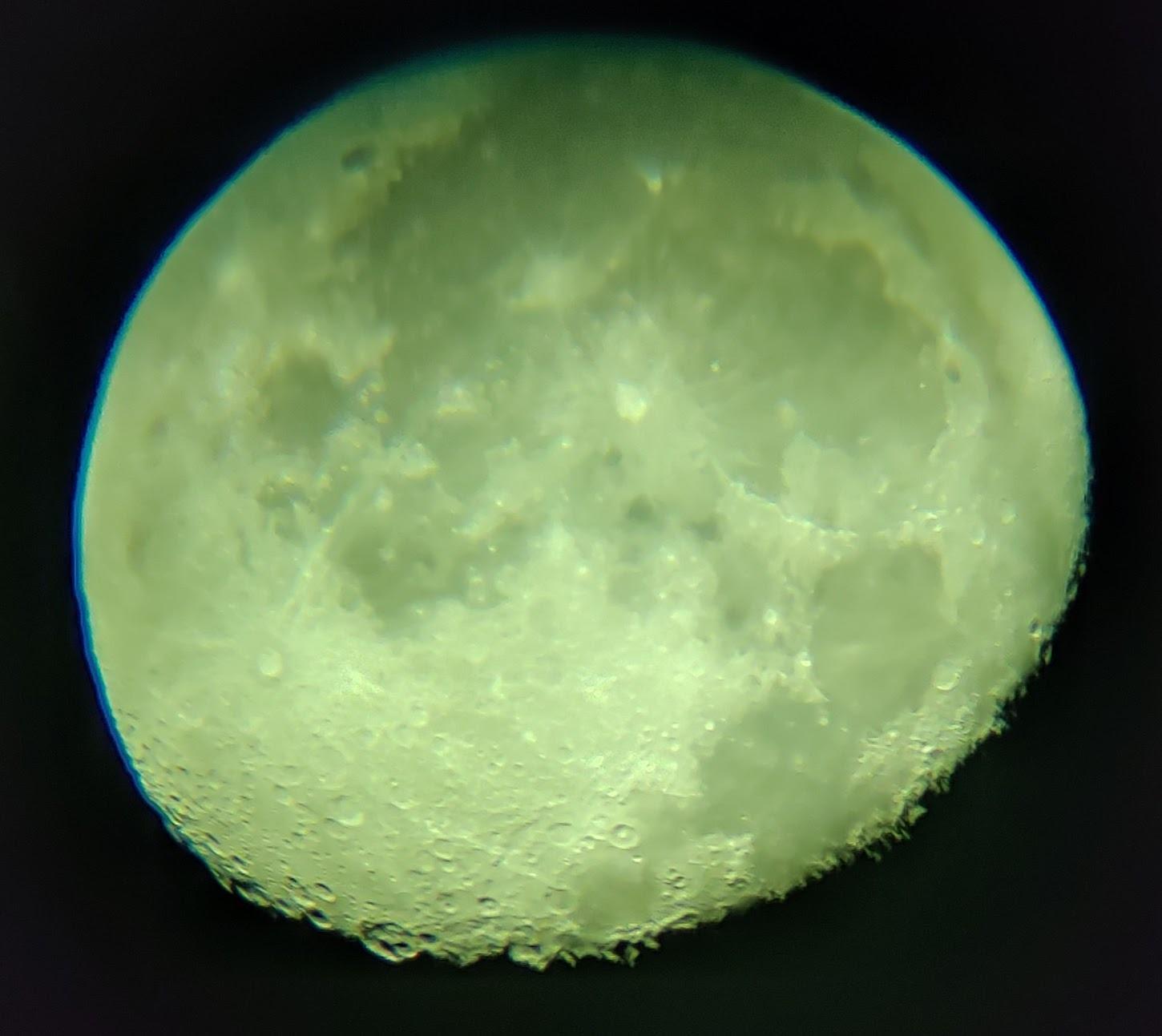
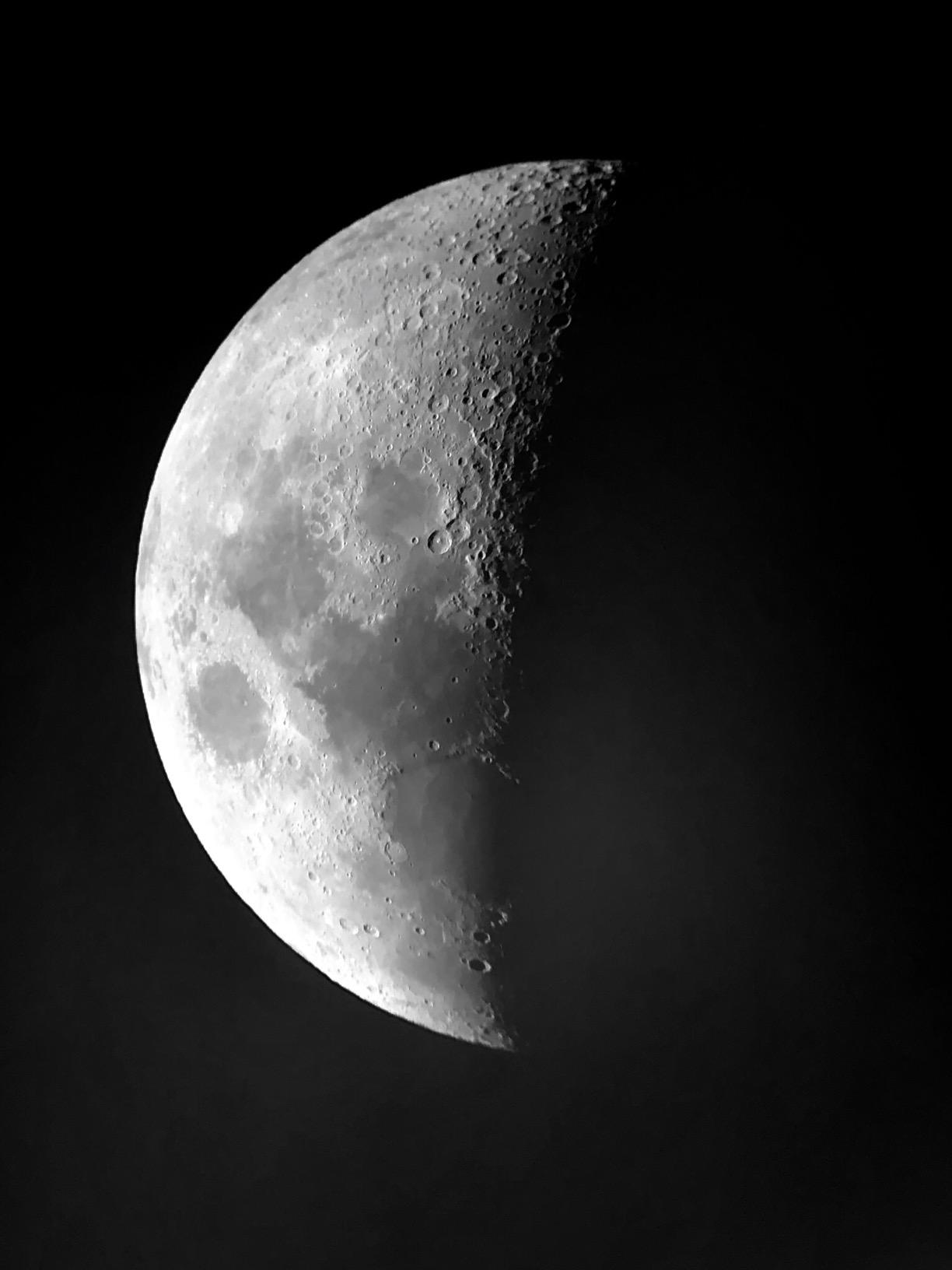
What you accept is a small aperture. At 80mm you will see the belts of Jupiter, the main ring structure of Saturn and craters along the lunar terminator. You will not resolve the smallest features, and the 4mm eyepiece included gives a very narrow, dim field. The achromatic doublet also shows visible colour fringing on bright targets, which reviewers mention consistently.
Who this scope suits
This is the pick for a household starting out, and for anyone who wants one telescope for visual observing and a first photographic attempt. There is no motorised tracking, so long exposures are out, but planetary frames are short and a planet does not leave the field quickly. Reviewers report successfully capturing basic Jupiter and Saturn images with a phone adapter through this scope and stacking them.
It is also a good teaching scope. Polar alignment takes practice and no polar scope is included, but learning that on a manual equatorial mount teaches a skill that transfers to every mount you ever own. Our eyepiece magnification guide is the natural next read once you are finding targets.
Where it disappoints
The tripod legs are thin and flex at high magnification, which produces shimmering when a planet is near the edge. The 80mm aperture is the binding limit on detail, and the 4mm eyepiece is close to unusable. Neither is fixable with accessories, only with a different scope.
Because there is no motor, long-exposure imaging is simply not possible with the supplied mount. If you are buying this with a specific planetary imaging plan, know that you are buying a visual scope that can also do short high-frame-rate captures, not a deep-sky imaging platform. Adding tracking means replacing the mount, which is a different purchase.
6. Sky-Watcher Classic 200 Dobsonian – the Sharpest Optic, No Electronics
Sky-Watcher Classic 200 Dobsonian 8-inch Telescope – Solid-Tube – Simple, Traditional Design – Easy to Use, Perfect for Beginners, White (S11610)
200mm parabolic primary
1200mm focal length
2 inch Crayford focuser
45 pounds assembled
Pros
- Largest aperture and sharpest optic in this roundup
- 94 percent reflectivity multi-coatings
- Teflon bearings and tension handles make centering easy
- Solid tube stays rigid at high magnification
Cons
- No tracking motor
- so long exposures need a separate platform
- 45 pounds and awkward to transport alone
- Collimation needed after transport
The Classic 200 has the biggest aperture and the best optics in this group. A 200mm parabolic primary with 94 percent reflectivity borosilicate mirrors, fully multi-coated, delivers the brightest and sharpest views here, and the 1200mm focal length is a genuinely useful planetary length. If you want to see detail and then photograph it, nothing else here matches it.
The base is the reason Dobsonians became a standard recommendation for entry-level planetary work. Patented tension control handles and Teflon bearings on both axes make fine movement genuinely easy, so centering a planet at 200x does not require wrestling the tube. That control translates directly to imaging, where a small enough movement keeps the disc in frame while you focus.
For imaging, the 2 inch Crayford style focuser is the best in the roundup and accepts premium eyepieces and camera adapters without complaint. The f/6 ratio suits a high-speed camera’s image scale closely, so a 200mm Newtonian often needs no Barlow for Jupiter and Saturn. The 2.5x focal ratio listed as the zoom ratio and the 25mm and 10mm eyepieces are modest for an aperture this size, and a 6mm UHC planetary eyepiece is the typical addition reviewers recommend.
Forum users repeatedly report good planetary results from an 8 inch Dobsonian paired with a phone adapter and stacking software, and a 200mm is the same class of instrument with more light to spend. It is a very strong planetary imaging platform, provided you can solve the two problems below.
Who this scope suits
People who want maximum visual detail first. Owners single out the parabolic primary, the coatings and the base as the reasons for sharp, high contrast views of the moon and planets, and the faintest stellar magnitude of 14.2 opens up a large deep-sky list for the nights when seeing is poor. A 2 inch focuser means the eyepieces you buy now are eyepieces you keep.
It suits observers who will not be moved around. Set up on a back patio step or in a garage, this scope is a fixed instrument. Budget for that before you commit, because moving it is the activity reviewers complain about most.
Where it disappoints
There is no tracking motor, and a Dobsonian base does not accept one. Because a planet drifts against the stars, long captures need either a field rotator with a camera that can correct rotation, or a separate tracking platform. For short lucky imaging frames the hand-holding and slow drift are workable, which is why this class keeps appearing in successful planetary results.
Weight and size are the other real limits. Assembled it is 45 pounds, split as a 20 pound tube and a 25 pound base, and the 49 inch overall footprint is large for a small observing area. Reviews also note that collimation of the parabolic mirror is required after transport and takes practice, so plan a re-check before every imaging session. The one-star share in the reviews reflects frustration with size and the absence of tracking rather than with the optics.
7. SVBONY SV48P – a Short Refractor Tube for Rig Builders
SVBONY SV48P Telescope, 90mm Aperture F5.5 Refractor OTA
90mm aperture
500mm focal length at f/5.5
2 inch double-speed focuser
Optical tube only
Pros
- 2 inch double-speed focuser with 1:10 ratio focuses precisely
- 360 degree rotation makes framing easy
- Metal interface improves optical axis alignment
- 90mm gathers more light than 70mm and 80mm achromats
Cons
- Optical tube only
- mount and eyepieces sold separately
- 500mm focal length gives modest magnification
- No finder included
The SV48P is a 90mm achromatic refractor optical tube and nothing more. It scores 4.5 stars across 94 reviews, and the owners who rate it highest are the ones building a rig around a mount they already own. If you have a tracking head on a solid tripod, this is a good, cheap way to add a second focal length.
The hardware is the reason. A 2 inch rotatable focuser with a 1:10 double-speed gear ratio is a genuine step up from the small plastic focusers on entry-level kits, and the metal interface in the focuser mount improves optical axis parallelism so the field stays better aligned as you focus. For imaging that matters. A metal interface means the sensor stays square to the optical axis, which means corners stay sharp.
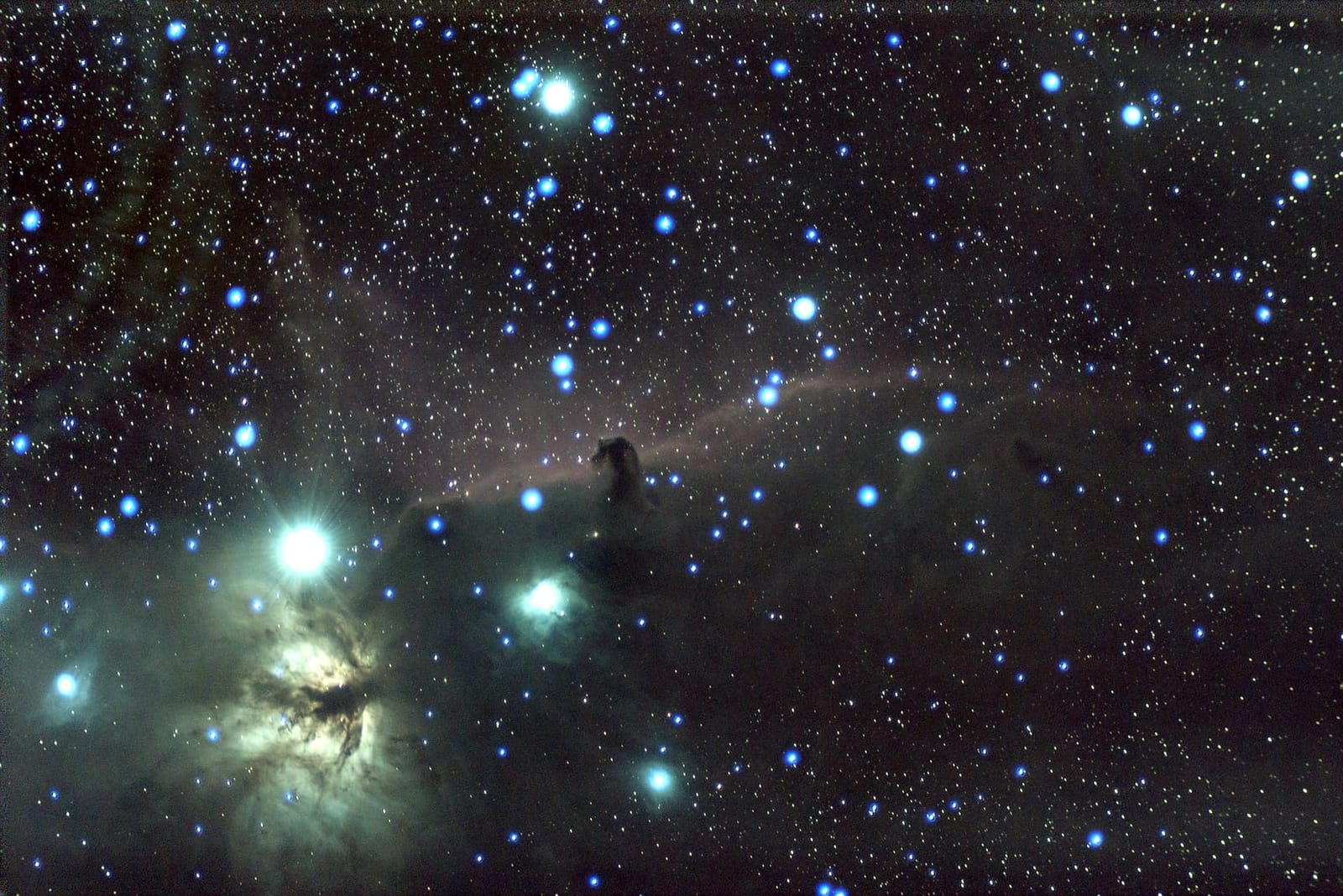
Where it falls short for planets is focal length. At 500mm, Jupiter is small in the frame and you would run a 2x Barlow or a 0.5x reducer depending on whether you want magnification or field. Reviewers are candid that maximum magnification is modest for planetary work. The f/5.5 ratio does keep chromatic aberration manageable, and owners report clean, low-fringe images of the moon and planets for a 90mm achromatic design.
There is no finder included, so target acquisition is slower until you add one. The 2 inch focuser also demands reasonably good eyepieces to be fully exploited, which adds to the total cost of a complete system.
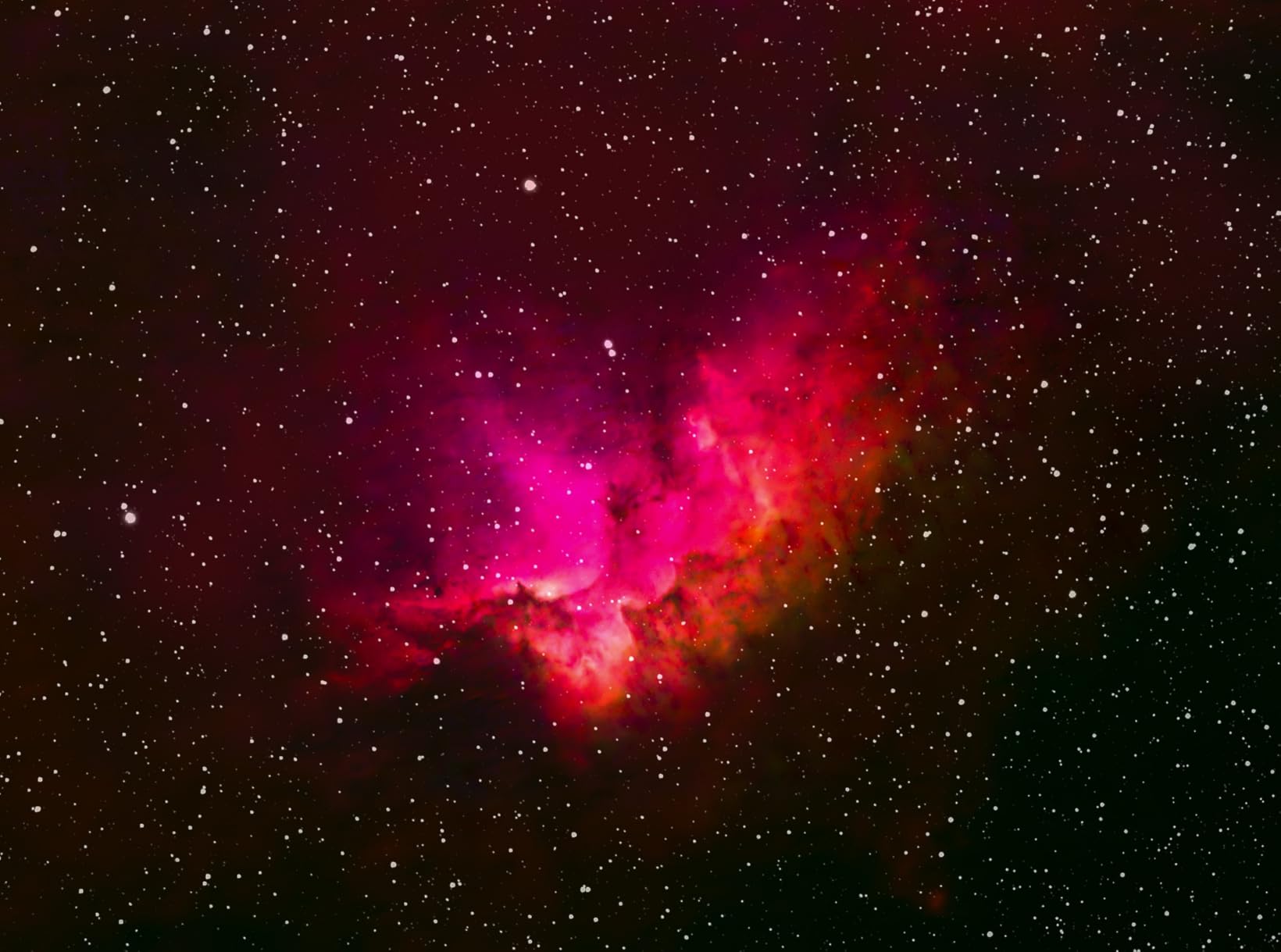
Who this scope suits
Rig builders and anyone with a mount already in hand. The lifetime warranty on the optical tube and the 30 day no-reason return period make it a low-risk way to test whether a refractor suits your style. It is also a sensible second instrument for wide-field visual work, where 500mm at f/5.5 gives a bright, low-power view of large deep-sky objects that your planetary scope cannot frame.
Because the tube rotates 360 degrees, framing for imaging is straightforward, and the fully baffled, pre-collimated tube is ready to accept a camera. The 2 inch focuser also means this tube pairs naturally with the 2 inch adapters most planetary cameras ship with.
Where it disappoints
It is not a complete telescope. Mount, eyepieces, diagonal and finder are all separate purchases, and this is the single most common theme in the reviews, with first-time buyers disappointed. Judge the cost against a complete kit rather than against another optical tube.
For the specific goal of photographing planets, the 500mm focal length is the compromise to think hardest about. It works, and a Barlow fixes the magnification, but every added element is another adapter and another possible source of play in the chain. If planets are the main target rather than a secondary one, the longer tubes earlier in this list serve you better with fewer pieces to assemble.
8. ZWO Seestar S30 Pro – Why This Smart Scope Is Not a Planet Scope
ZWO Seestar S30 Pro Smart Telescope, App-Controlled Astrophotography
30mm aperture
160mm focal length
4.6 degree field of view
App controlled GoTo tracking
Pros
- Fully automated from phone with no manual alignment
- Built-in light pollution filters for city skies
- Only 3.6 pounds and highly portable
- AI stacking works with no laptop
Cons
- Manufacturer states it is not intended for planetary observation
- 30mm aperture cannot resolve Jupiter or Saturn detail
- 160mm focal length leaves planetary discs tiny
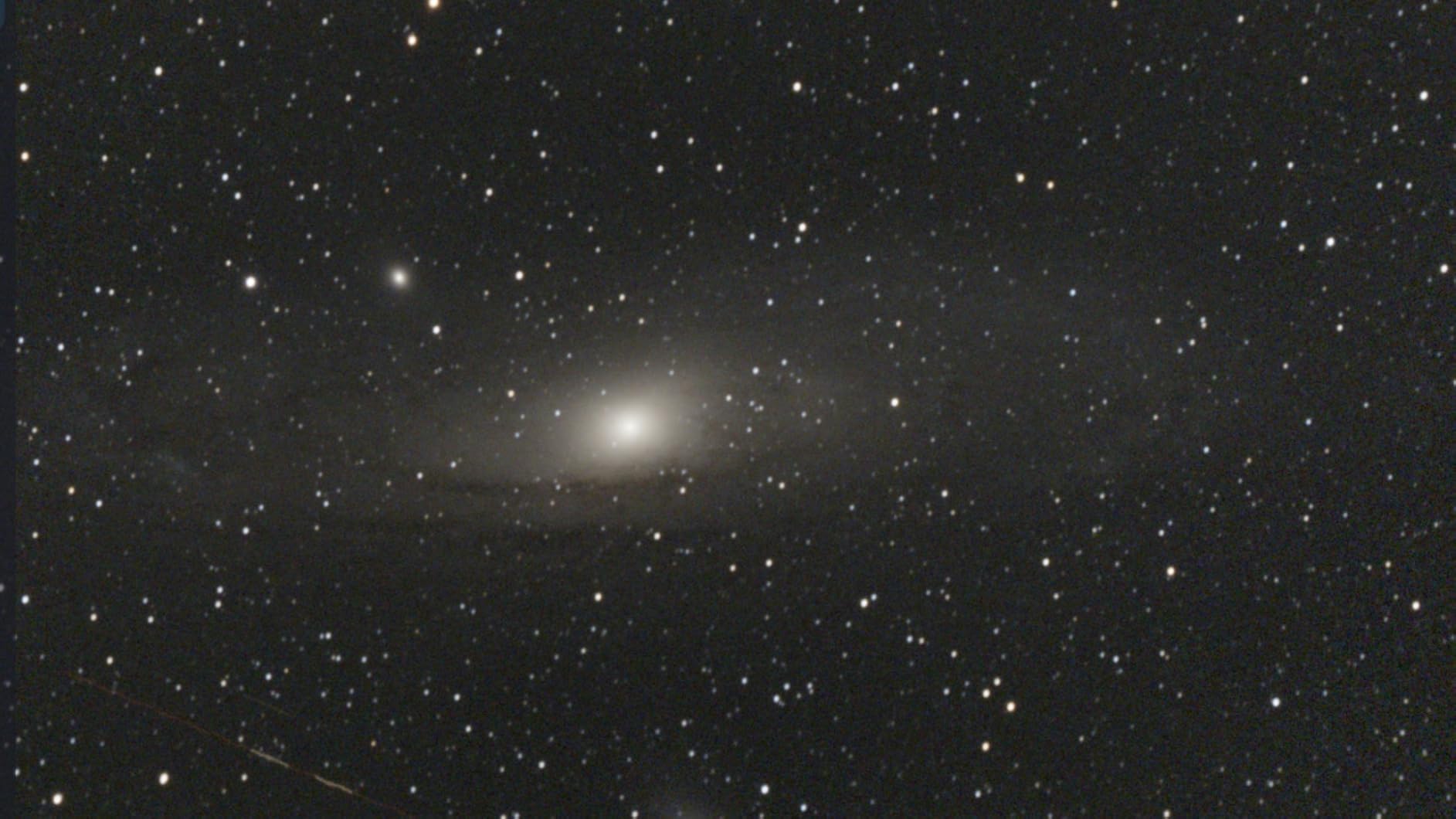
We include this scope for completeness, and we want to be direct about it. The manufacturer’s own description positions the Seestar S30 Pro as a deep-sky instrument, and its 30mm aperture with 160mm focal length cannot resolve detail on Jupiter or Saturn. At 76 percent five-star ratings from 232 reviews, people who wanted a planetary scope are a visible slice of the critical feedback.
What it does instead is remarkable. Power it on, connect the app, and the scope acquires GoTo, stacks, applies noise reduction and separates sky from foreground without a laptop, a guide scope or a single cable. Equatorial mode supports longer deep-sky tracking, anti-dew heating protects an all-night session, and at 3.6 pounds it is the most portable instrument in this roundup by a wide margin.
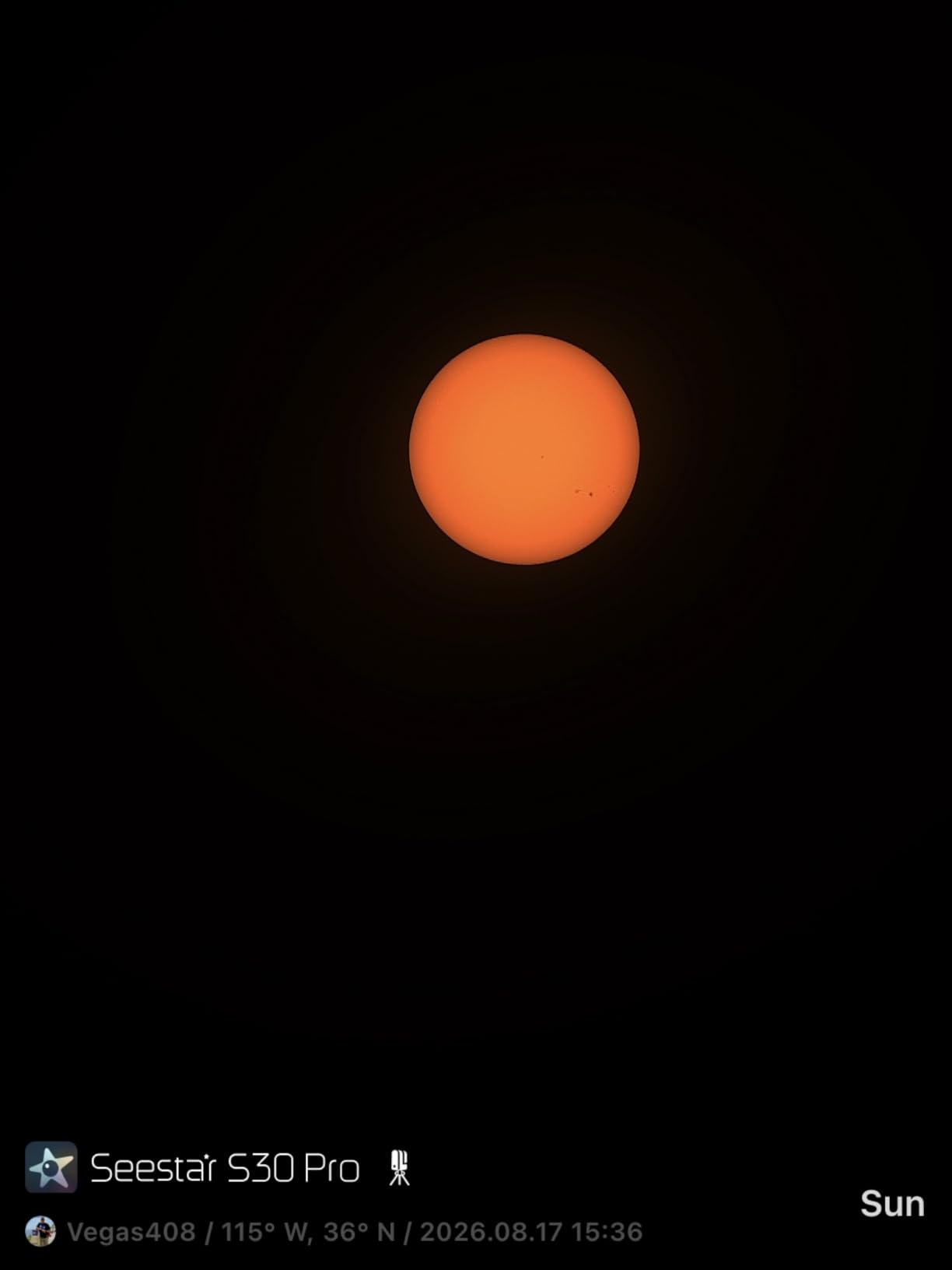
The optics are good for what they do. Apochromatic quality with built-in light pollution filters produces usable results from suburban and city skies, and the dual-camera system captures at 4K quality with automatic mosaic stitching for wide scenes. If your interest is nebulae, star trails, the Milky Way or a first astro image with no learning curve, this delivers on its promise.
For planets the numbers simply do not work. A 30mm aperture has a Dawes limit around 2 arcseconds, far below the detail you can see on Jupiter, and 160mm of focal length puts the planet at a small fraction of the 4.6 degree field of view. You will get a small, soft orange dot. No amount of stacking fixes magnification that is not there.
Who this scope suits
Anyone whose real goal is deep-sky photography with almost no setup, and families or beginners who want an impressive first image in an evening. The app-dependent workflow means no polar alignment, no collimation and no learning curve, which is a real advantage for many people. Built-in light pollution filters mean a city or suburban backyard is a workable location, which matters more for deep-sky work than most buyers expect.
It is genuinely useful as a portable grab-and-go instrument you can take anywhere, given the weight and the battery and internal storage constraints on very long runs.
Where it disappoints
Planets are the clear limit, and we would not recommend it for this article’s topic. The one-star reviews in this product’s set largely come from buyers who expected planetary performance from the product name, which is a fair complaint. Manual control is also limited, so if you later want to run your own capture software and stacking process, the app workflow is a ceiling rather than a starting point.
Our advice is simple. If planets are the reason you are reading this, put this scope aside and choose one of the long focal length instruments earlier in the list. If deep-sky is where your interest lies, this is a strong, low-friction way in.
How to Choose a Telescope for Photographing Planets
Aperture: how much is enough
Aperture decides how much detail you can resolve, and it is the first number to look at. Below 80mm you are limited to the largest features on Jupiter and a general impression of Saturn. Between 100mm and 150mm you get belts, ring structure and a good deal of lunar crater detail. At 200mm you start seeing festoons, small moons and finer ring divisions. The rule forum users repeat most often is that more aperture beats every other consideration for planetary detail.
Aperture is not the same as magnification. You can magnify a 60mm scope to a blur, but you cannot make a 200mm scope show detail it does not have. Buy the aperture, then use a Barlow or eyepiece to fill the frame.
Focal length, focal ratio and image scale
Focal length determines how large a planet appears. Under about 400mm, planets sit tiny in the frame surrounded by empty sky. From 1000mm to 2000mm is the sweet spot for most high-speed cameras, and the 2032mm of the NexStar 8SE and the 1300mm of the Skymax 102 both sit there.
Image scale is the number that tells you whether your camera is sampling the sky properly, measured in arcseconds per pixel. Divide your sensor pixel size in microns by your focal length in millimetres and multiply by 206.265. A good match for a typical high-speed mono camera is roughly 0.2 to 0.4 arcseconds per pixel, and a Barlow is the usual way to reach it when the native focal length falls short.
Optical design: refractor, Newtonian or compound
Refractors need no collimation, which is a genuine advantage for beginners, and they hold contrast well at moderate apertures. Achromatic doublets like the 80mm and 90mm scopes here show some colour fringing on bright targets. Newtonians gather the most light per unit of cost and need periodic collimation, which forum users say makes the biggest difference to final image quality. Compound designs like the Maksutov and Schmidt-Cassegrain pack long focal lengths into short tubes and stay well corrected, but they cost more.
Mounts and tracking for lucky imaging
You need less tracking than deep-sky imaging, but you need some. Planets drift west at a predictable rate, and alt-az field rotation during a session will rotate a stacked image. A single-axis motorised equatorial mount slows that drift, as on the AstroMaster 130EQ-MD, and a field rotator is the proper fix for long sessions. For short captures of a few thousand frames, careful manual re-centring works, which is exactly what the Dobsonian and the manual German equatorial options in this roundup rely on. You can work out the magnification you need with our eyepiece magnification guide.
Seeing versus transparency
These two words get used interchangeably and they mean different things. Transparency is how clear the atmosphere is, how much light passes through it. Seeing is how steady the air is, how still the image of a planet appears. Planets need seeing. You can photograph a planet in the middle of a city on a night of exceptional stability, and you cannot photograph a sharp planet through boiling air no matter how good the telescope is. This is the most common cause of disappointing results that owners blame on hardware, and it is why forum threads about bad planetary photos usually turn out to be about the night, not the scope.
Before a session, check the forecast for seeing rather than cloud cover, and give the tube time to cool. A tube that has been in a warm car and then goes outside will show unsteady air for a while.
The camera, the Barlow and the rest of the image train
Most beginners buy the telescope first and then discover the camera was the bottleneck, and that is the most common regret in the forum threads we read. High-speed mono CMOS cameras are preferred for planetary work over older CCD units, which have slower frame rates, and one-shot color is a reasonable entry point if you want a quick result without mono processing. A 2x Barlow covers the focal length gap on short refractors and small Newtonians, and an IR-passband filter is the cheapest resolution upgrade available because it sharpens the disc.
Collimation deserves its own paragraph. Planetary images are extremely sensitive to it, and users consistently report that learning to collimate and process their Newtonian frames was the turning point in their results. A cheap collimation tool and fifteen minutes before each session is worth more here than any accessory in the box.
Frequently Asked Questions
What is the best telescope for planetary imaging?
For most people the Celestron NexStar 8SE is the best telescope for planetary imaging, because 8 inches of aperture at 2032mm of focal length in a portable, self-pointing package captures the light and the magnification that Jupiter, Saturn and Mars rewards demand. If you want to build a rig around a mount you already own, the Sky-Watcher Skymax 102mm gives you 1300mm of focal length in a 4.6 pound tube.
What type of telescope is best for seeing planets?
Long focal length is what matters most, followed closely by aperture. A Maksutov-Cassegrain or Schmidt-Cassegrain packs 1300mm to 2000mm of focal length into a short, rigid tube, which makes them the easiest way to reach high magnification. A Newtonian at f/6 and a long achromatic refractor also work well, and refractors need no collimation, which matters for beginners.
How powerful of a telescope do I need to see planets?
An 80mm refractor shows the major cloud bands on Jupiter, the main ring structure of Saturn and craters along the lunar terminator. Between 100mm and 150mm you gain finer belt detail and clearer ring divisions. At 200mm you start resolving festoons, small nearby moons and finer ring structure. Aperture is the number to prioritise, because magnification beyond what the aperture can support only produces blur.
What size telescope is needed to see Saturn’s rings?
Around 60mm to 80mm of aperture is enough to see Saturn as a ringed object, but the Cassini Division needs roughly 100mm to 130mm. A scope of 150mm and up makes the ring structure and gap obvious, and at 200mm you can begin to see ring banding and the planet’s shadow cast on the rings. Our 8 inch Classic 200 Dobsonian handles this comfortably.
What is the best camera for planetary imaging?
A high-speed mono CMOS planetary camera is the most capable choice, because the fast frame rates let you record thousands of short exposures in minutes and stack the sharpest ones. One-shot color cameras are a reasonable entry point if you want results without monochrome processing, and some owners get started with a phone adapter through an existing scope. Match the camera pixel size to your image scale to avoid wasting resolution.
What is the best Barlow lens for planetary imaging?
A 2x Barlow is the standard choice for planetary imaging because it doubles focal length and image scale, which fills the frame on short-focal-length scopes. A 3x works well on 900mm refractors but pushes magnification high enough that seeing becomes the limiting factor. Quality matters more than magnification, so a well-corrected achromatic or apochromatic Barlow in a 2 inch barrel is the one to buy.
Final Verdict for the Best Telescopes for Photographing Planets in 2026
The Celestron NexStar 8SE is our pick for the best telescopes for photographing planets in 2026. It combines the two things that matter most, an 8 inch aperture and 2032mm of focal length, in a tube you can carry to a field, and the GoTo mount takes the chart work out of the session so the time goes into frames. At 4.3 stars from 1,579 reviews, it is also the most proven instrument we looked at.
Two picks cover the alternatives. The Sky-Watcher Skymax 102mm gives you nearly as much focal length in 4.6 pounds if you would rather build around your own mount, and the Celestron AstroMaster 130EQ-MD is the value route, with a motor that keeps a planet from drifting out of frame. For the sharpest views of all, the Sky-Watcher Classic 200 Dobsonian wins on aperture, provided you can move and store it.
Before you buy anything, do one session of visual observing with the target you care about most. You will learn what detail looks like, you will learn whether your seeing is good, and you will be far more confident about the camera, Barlow and filter you add afterwards. Lucky imaging rewards preparation more than spending.