
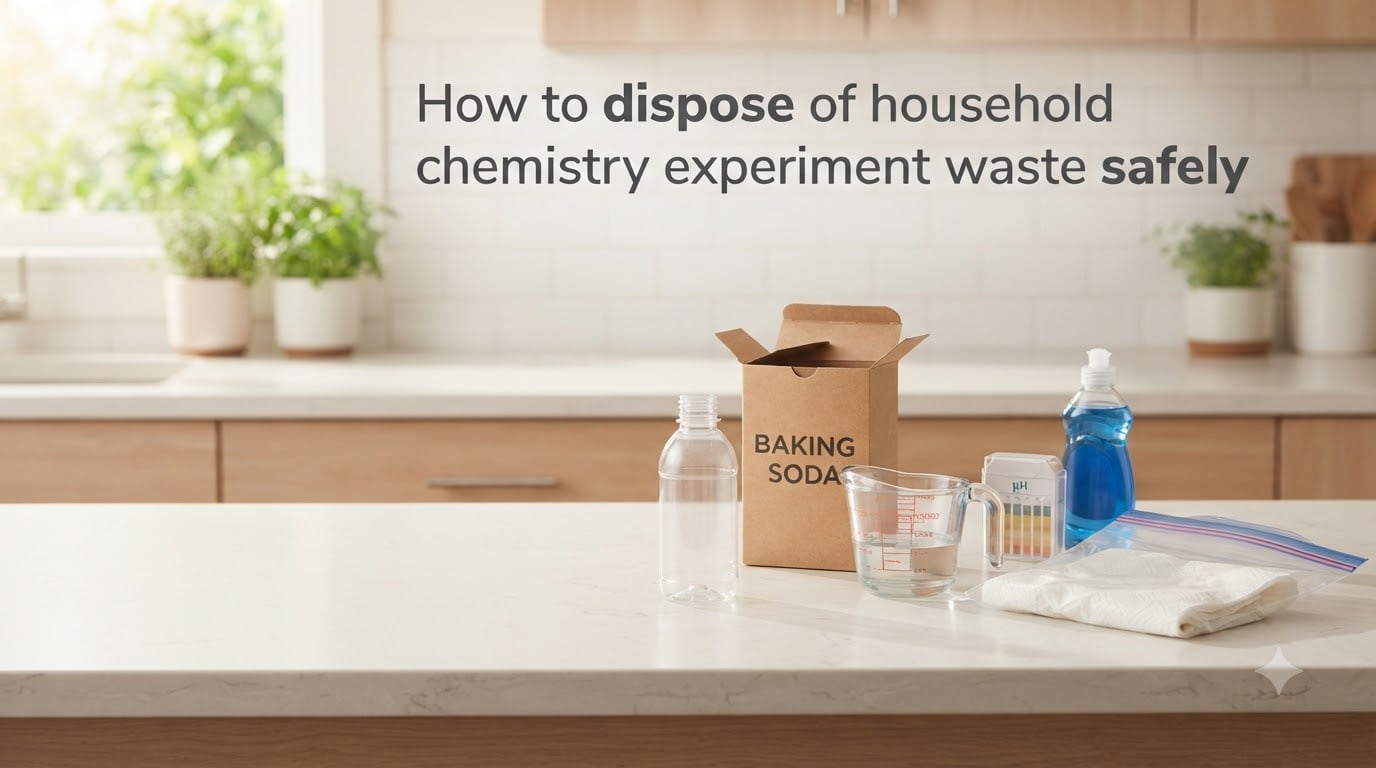
When you and your kids finish a volcano eruption with vinegar and baking soda, the cleanup is easy. But some home chemistry experiments leave behind materials that need a little more thought.
If you’re wondering how to dispose of household chemistry experiment waste safely, you’re not alone. Many parents hesitate to do science at home because they worry about the leftover materials. The good news is that most kitchen-chemistry waste is harmless. With a few simple rules, you can clean up with confidence and keep the experiments coming.
This guide covers what you actually have in your kitchen and bathroom, how to tell drain-safe from trash-safe, and when to call in a professional. I’ve worked through these same decisions with my own kids, so I’ll keep it practical and parent-friendly.
Table of Contents
Understanding Chemical Waste From Home Experiments
Chemical waste sounds intimidating, but most home science experiments produce very small amounts of very mild substances. A reaction between vinegar (acetic acid) and baking soda (sodium bicarbonate) creates water, carbon dioxide, and a salt. None of that is hazardous in kitchen-sized amounts.
The key is knowing which experiments produce waste that needs care. Anything that changes color dramatically, generates heat, or uses anything other than food items deserves a closer look. When in doubt, treat it like the most cautious option on this list.
Two factors decide your disposal method: the pH of the liquid and whether the chemical is on any hazardous list. We’ll cover both in the next sections.
What Can Go Down the Drain (And What Cannot)
The sink is the easiest disposal route for most home experiment liquids, but only if the pH falls between 5.5 and 10.5. Water treatment plants handle anything in this range without harm.
Safe to pour down the drain with plenty of running water:
Diluted vinegar (acetic acid) after neutralization with baking soda
Mild salt water solutions
Diluted lemon juice after a reaction
Dish soap and water mixtures from bubble experiments
Diluted hydrogen peroxide (3 percent, the brown bottle type)
Water used to rinse containers that held food-safe ingredients
Do NOT pour down the drain, even in small amounts:
Bleach or any bleach-containing mixture
Ammonia or ammonia-based cleaners
Drain cleaner, oven cleaner, or rust remover
Paint, paint thinner, or solvents
Pool chemicals of any kind
Any liquid that fizzes, smokes, or releases a strong smell after the experiment ends
Run cold water for at least 30 seconds while pouring drain-safe liquids. This dilutes the substance quickly and protects your pipes.
What Can Safely Go in the Regular Trash
Solid leftovers from home experiments usually belong in the trash, sealed up so kids and pets cannot reach them. Paper towels used to wipe up spilled vinegar or soapy water go straight into a tied plastic bag and then the trash can.
Safe to throw away in your household trash:
Dried baking soda residue from volcano projects
Used coffee filters from color-change experiments
Empty plastic bottles or containers that held food-safe liquids (rinsed first)
Paper towels soaked in vinegar, salt water, or soap solutions
Dried-out slime or putty made from food-grade ingredients
Eggshell pieces from crystal-growing experiments
Always seal liquid-soaked paper towels in a small zip-top bag before placing them in the trash. This prevents drips and keeps sanitation workers safe.
Step-by-Step Safe Disposal Process for Parents
Run through these steps after every home chemistry experiment. It takes about five minutes once you build the habit.
Stop the reaction. Make sure fizzing, smoking, or color changes have ended before you start cleanup.
Identify what is in your waste container. Make a quick mental list of every ingredient used in the experiment.
Check the pH if you have strips. Litmus paper or pH strips cost a few dollars and tell you in seconds whether a liquid is drain-safe.
Separate liquids and solids. Pour liquids into a holding container so you can decide on drain vs trash.
Neutralize when needed. Add baking soda slowly to acidic liquids (like vinegar or lemon juice) until fizzing stops. The result is a mild salt solution.
Flush drain-safe liquids with running water. Use cold water and pour slowly over 30 seconds.
Bag and trash solid waste. Place paper towels, dried residue, and rinsed containers in a sealed plastic bag.
Wash your hands and the workspace. A final wipe-down with a damp cloth and dish soap finishes the job.
If a step feels unclear or the experiment used anything not from your kitchen, stop and read the Safety Data Sheet for that substance. I’ll explain how in a moment.
Household Experiments and Their Specific Disposal Methods
Here is a quick reference for the experiments most parents try at home. I have run each of these with my own kids at some point, so the disposal advice comes from real kitchen-counter cleanup.
Vinegar and baking soda volcano. The leftover slush is mostly water with sodium acetate. Once fizzing has stopped, pour it down the drain with running water. The empty bottle and any dried material go in the trash.
Lemon juice invisible ink. Lemon juice is mildly acidic (around pH 2 to 3). Mix it with a small amount of baking soda in water to bring the pH closer to neutral, then drain it. Used cotton swabs and paper towels go in the trash.
Salt water density experiments. Saltwater is drain-safe in the small amounts used for layering experiments. Pour it down the sink with running water. Salt crystals left in containers go in the trash.
Hydrogen peroxide foaming reactions. Standard 3 percent hydrogen peroxide breaks down into water and oxygen. After the foam settles, the liquid is safe for the drain. If you used a higher concentration, treat it as hazardous waste.
Food coloring and milk color bursts. The colored milk goes down the drain with dish soap. Paper towels used to blot go in the trash. Food coloring stains are cosmetic, not hazardous.
Baking soda and vinegar balloon inflations. The gas is just carbon dioxide. Once the balloon is empty, pour the remaining liquid down the drain. The balloon goes in the trash.
Crystal growing with sugar or salt. The leftover liquid is essentially sugar water or salt water, both drain-safe. Solid crystals attached to string or pipe cleaners go in the trash.
What NOT to Dispose of at Home (Hazardous Materials)
Some chemistry sets and household products include substances that should never enter your drain, trash, or compost. Even tiny amounts can hurt plumbing, contaminate groundwater, or harm sanitation workers.
Keep these materials out of your home waste stream:
Old or leaking batteries of any type
Mercury thermometers or any mercury-containing item
Automotive fluids (antifreeze, motor oil, brake fluid)
Pool chemicals and test reagents
Photographic chemicals and darkroom supplies
Pesticides, herbicides, and rodenticides
Paints, stains, varnishes, and their solvents
Propane tanks and other compressed gases
Flares, ammunition, and fireworks
If your child uses a chemistry kit that contains any of these, supervise use carefully and return leftovers to the kit. Then deliver the kit to a household hazardous waste facility when the project ends.
Reading Safety Data Sheets (SDS) Made Simple
A Safety Data Sheet is a standardized document that tells you exactly how to handle, store, and dispose of a chemical. The disposal information is always in Section 13 of the sheet.
Here is what to look for. The sheet will say something like “flush to drain with plenty of water” for drain-safe items. It will say “hazardous waste” or give a specific disposal code for items that need professional handling. The words “neutralize” and “non-hazardous” are your friends. The words “ignitable,” “corrosive,” “reactive,” or “toxic” mean you need professional disposal.
Most kitchen ingredients do not come with SDS sheets because they are food items. You only need to check an SDS when you are working with cleaning products, pool chemicals, or items from a chemistry kit with ingredients you would not eat.
When to Call Your Local Hazardous Waste Service
Call your city or county household hazardous waste program when you have anything from the “do NOT dispose of at home” list. Most areas run free drop-off days several times a year. Some accept materials by appointment year-round.
Search “[your city] household hazardous waste disposal” to find the nearest site. Many hardware stores and pharmacies also accept specific items like batteries and fluorescent bulbs. When you go, keep chemicals in their original containers with labels intact.
Teaching Kids About Chemical Safety
Disposal is a great chance to teach kids that chemistry has rules. Even simple reactions need cleanup. Walk your child through the steps of pouring leftover liquid into the drain, wiping up solids, and washing hands.
For younger kids, focus on three ideas: never taste an experiment unless a parent says it is safe, always wash your hands after a science activity, and never pour anything down the sink without asking first. These habits build a foundation for lab safety later in life.
Frequently Asked Questions
What should you do with chemical waste after an experiment?
Let the reaction stop completely, then separate liquids from solids. Pour drain-safe liquids down the sink with running water for at least 30 seconds. Seal solid waste and paper towels in a plastic bag and place them in the regular trash. Save anything unknown or hazardous for a household hazardous waste drop-off.
How to dispose of chemical waste at home?
Most home experiment waste is kitchen-based and safe for the drain or trash. Use the pH 5.5 to 10.5 rule to judge liquids. Diluted vinegar, salt water, sugar water, and dish soap mixtures go in the drain with running water. Paper towels, dried residues, and rinsed containers go in the trash inside a sealed plastic bag.
Can I pour chemistry experiment waste down the sink?
Yes, if the liquid has a pH between 5.5 and 10.5 and does not contain bleach, ammonia, solvents, or other hazardous ingredients. Vinegar-baking soda leftovers, mild salt solutions, and diluted hydrogen peroxide all qualify. Always run cold water for at least 30 seconds while pouring.
What household chemicals are harmful if not disposed of properly?
Bleach, ammonia, drain cleaners, oven cleaners, pool chemicals, paint, paint thinner, pesticides, motor oil, antifreeze, and mercury from old thermometers. These can damage plumbing, contaminate water, or hurt sanitation workers. Take them to a household hazardous waste facility instead.
What chemicals can go in the regular trash?
Dried-out residues, paper towels used to wipe up food-safe ingredients, rinsed empty containers, dried slime made from kitchen items, and eggshell pieces from crystal projects. Seal liquid-soaked paper towels in a plastic bag first to prevent leaks.
Final Thoughts on Safe Home Chemistry Disposal
Safe disposal of household chemistry experiment waste is mostly common sense once you know the two rules: keep the pH between 5.5 and 10.5 for drain liquids, and keep the hazardous items out of your home waste stream entirely.
With these guidelines, you can run volcano eruptions, crystal gardens, and density towers without worry. Disposing of household chemistry experiment waste safely becomes a quick cleanup routine, not a roadblock to curiosity. Science at home is one of the best ways to spark a lifelong love of learning, and a five-minute cleanup is a small price for that.