
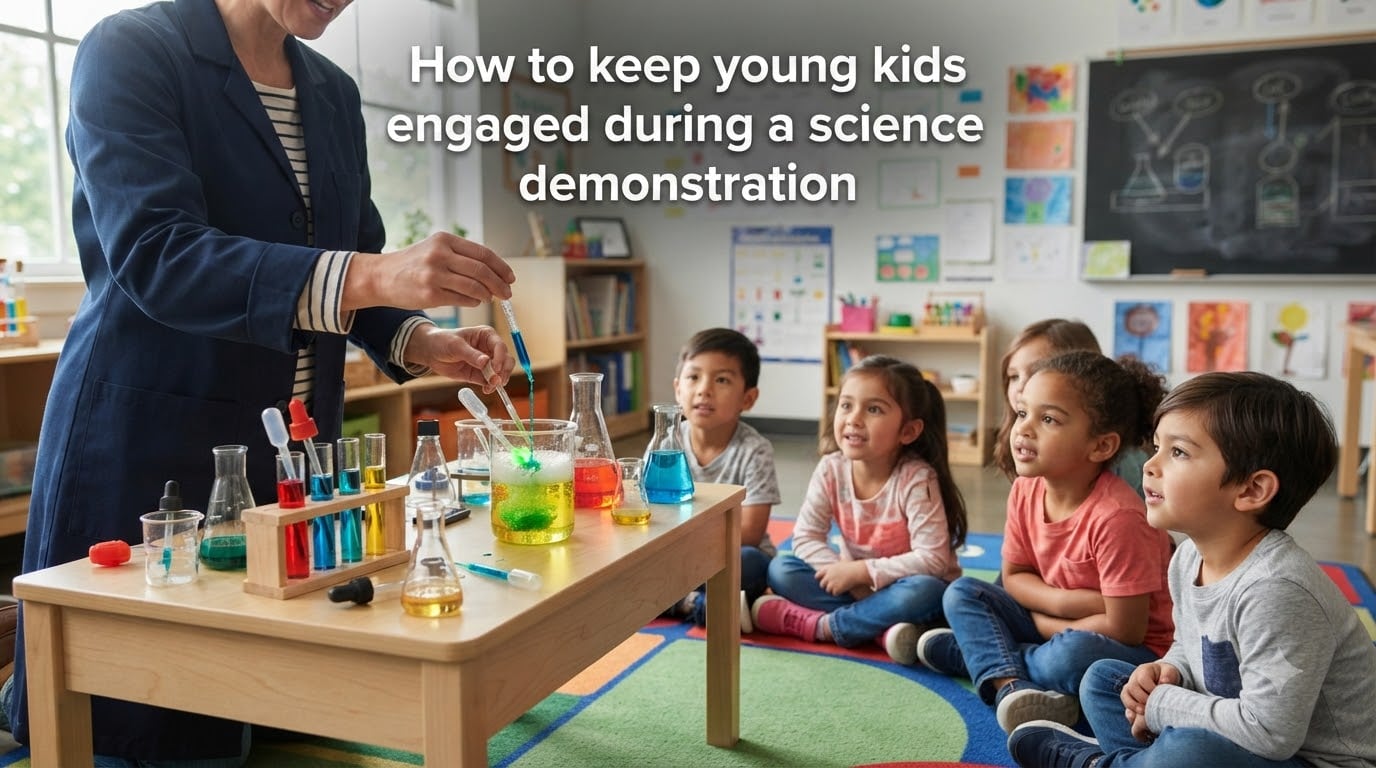
Anyone who has tried presenting a science demo to a room of five-year-olds knows the look. The one where eyes drift, wiggles take over, and suddenly half the audience is more interested in the carpet than the volcano erupting on your table. Figuring out how to keep young kids engaged during a science demonstration is part planning, part performance, and part reading the room in real time.
The good news is that engagement is not a personality trait you either have or lack. It is a set of repeatable techniques backed by early childhood education research and tested by teachers, parents, and museum educators. Whether you are running a classroom experiment, a birthday party demo, or a community science night, the strategies in this guide will help you hold attention from the first pour to the final question.
I have pulled together what works from classroom research, educator forums, and real-world experience running demos for kids ages two through ten. You will find preparation steps, in-the-moment techniques, age-specific adjustments, and a plan for when things go sideways.
Table of Contents
Why Engagement Slips During Science Demonstrations?
Attention spans in young children are short, and that is developmentally normal. A commonly cited guideline is roughly two to three minutes of focused attention per year of age. A four-year-old may give you eight to twelve minutes on a single task before needing a shift.
Science demonstrations fail to hold kids for a few predictable reasons. The demo is too long with no interaction breaks. The materials are visible but off-limits, which builds frustration. The language is too abstract, full of vocabulary kids cannot yet picture. Or the pacing drags during setup, leaving kids waiting with nothing to do while you measure, pour, or troubleshoot.
Excitement works against you too. A demo that produces a big reaction can spike energy so high that kids cannot refocus on the next step. Recognizing these patterns is the first move toward preventing them.
How to Keep Young Kids Engaged During a Science Demonstration: Preparation Steps
Preparation is where most engagement is won or lost. Walk into a demo unprepared and you will spend the first five minutes searching for materials while kids disengage. These steps set the foundation.
Step 1: Choose Age-Appropriate Demonstrations
Match the complexity of the experiment to your audience. Toddlers respond to cause-and-effect demos with immediate, visible results like color mixing or floating and sinking. Preschoolers can handle simple predictions and short sequences. Early elementary kids can follow multi-step experiments and record observations.
Step 2: Pre-Measure and Stage Every Material
Have every liquid pre-poured, every tool within arm’s reach, and every backup supply ready. Dead time during a demo is the number one engagement killer. If you are scrambling for a paper towel, you have lost them.
Step 3: Test the Demo Beforehand
Run the full demonstration at least once on your own. This catches failures, confirms timing, and helps you identify the most exciting moment so you can build toward it deliberately.
Step 4: Set Up the Space for Visibility
Arrange seating in a semicircle or U-shape so every child can see the demo surface. Use a raised table or tray for smaller groups. If kids cannot see what is happening, they will create their own entertainment.
Step 5: Prepare Two or Three Guiding Questions
Write down questions you will ask during the demo, such as “What do you think will happen when I add the blue water?” Planned questions keep you from going silent during transitions and give kids a reason to lean in.
Step 6: Build in a Hands-On Component
Plan at least one moment where kids touch, pour, sort, or manipulate something. Even a small hands-on element transforms passive watching into active learning.
During-Demonstration Engagement Techniques
Once the demo begins, your job shifts from planner to facilitator. These techniques keep energy steady and attention locked in.
Ask for Predictions Before Revealing Results
This is the single most powerful engagement move I have seen. Before you pour, mix, or drop, ask the kids what they think will happen. Wait for answers. When kids commit to a prediction, they stay focused to find out if they were right. Educators on Reddit repeatedly cite this as their go-to technique for holding a five-to-twelve-year-old audience.
Keep Each Segment Under Five Minutes
Break your demonstration into short chunks separated by a question, a movement break, or a hands-on moment. Even a thirty-second stretch or “turn to your neighbor and whisper your guess” resets attention for the next segment.
Use Multisensory Props
Kids engage through multiple senses, not just sight. Add sound cues like a countdown before a reaction. Let them smell safe materials like vinegar or lemon. Use bright colors and oversized props that are easy to see from across the room.
Narrate With Simple, Active Language
Replace abstract terms with concrete descriptions kids can picture. Instead of “the density changes,” say “watch how the heavy syrup sinks to the bottom.” Short sentences with action verbs keep pace brisk and comprehension high.
Create Suspense With Counting and Pauses
A slow three-count before a reveal builds anticipation. Hold a pause for two seconds after a reaction starts so kids absorb the moment before you explain it. These micro-dramatic beats give the demo rhythm.
Name Kids Individually to Participate
Calling a child by name to hold a cup, drop in a tablet, or stir a mixture makes them a co-presenter. Rotate through children so no one waits too long for their turn. This works especially well for wiggly kids who need a job to stay focused.
Age-Specific Strategies for Science Demos
What works for a three-year-old will not work for an eight-year-old. Adjusting your approach by age prevents both boredom and overwhelm.
Toddlers (Ages 2 to 3)
Keep demos under five minutes total. Focus on single-cause, single-effect experiments like color mixing with water and food coloring or objects sinking and floating. Use large, safe materials they can touch. Expect to repeat the same demo multiple times because repetition is how toddlers process novelty.
Preschoolers (Ages 4 to 5)
Preschoolers can handle seven to twelve minutes and love making predictions. Use demos with a clear before-and-after, like celery in dyed water showing capillary action or eggs in vinegar dissolving the shell. Both are real crowd-pleasers reported by educators in classroom forums. Ask simple questions and let them describe what they see in their own words.
Early Elementary (Ages 6 to 8)
These kids can follow multi-step experiments lasting fifteen to twenty minutes with interaction breaks. Introduce variables by running two parallel experiments with one changed element. Have them record observations with drawings or simple words. They are ready for questions like “why do you think that happened?”
Hands-On Participation Methods That Hold Attention
Passive watching fades fast. Hands-on participation extends engagement and deepens learning because kids are doing, not just observing.
Give every child their own small version of the demo when possible. Mini plastic cups with baking soda and a dropper of vinegar let each kid produce their own reaction. The cost is low and the engagement payoff is enormous.
Use a station rotation for larger groups. Set up three short activities and move kids through in small groups of four or five. Each station stays fresh and no one waits long enough to lose focus.
Assign roles within small groups. One child measures, one pours, one observes and reports. Roles give structure and prevent the chaos of everyone grabbing materials at once.
Let kids design a variation after the main demo. Ask “what would happen if we used warm water instead?” and let them test it. This moves them from following instructions to thinking like scientists.
Managing Excitement Before It Becomes Chaos
A great demo can backfire when excitement overwhelms the room. Managing that energy is a skill you can practice.
Set clear expectations before you start. Tell kids they will get a turn to touch, and explain the signal you will use to bring the group back together. A raised hand, a chime, or a rhythmic clap works better than raising your voice over the noise.
Insert movement breaks deliberately. After a big reaction, have kids stand up, stretch, or do three jumping jacks. This burns off the energy spike so they can refocus.
If the room gets too loud, lower your voice instead of raising it. Kids instinctively quiet down to hear a whisper. This technique works almost every time.
Keep a calm backup activity ready. If a demo fails or energy spins out, pivot to a quick sensory activity like passing around a mystery object in a bag. A smooth pivot keeps the session moving without dwelling on the disruption.
Quick Attention Refocusing Techniques
Even with great planning, attention drifts. These refocusing moves pull kids back in under ten seconds.
Use a call-and-response. Say “science rocks” and teach kids to respond “science rocks.” Repeat twice and you have the room. The novelty of responding is enough to reset focus.
Freeze and point. Stop talking, hold up the next material, and point at it silently. Curiosity about what comes next pulls eyes back to the demo without a verbal correction.
Whisper a secret. Lowering your voice to a dramatic whisper and saying “watch this very carefully” signals that something important is about to happen. Kids lean in instinctively.
Ask a question to a specific child by name. “Maya, what color do you think this will turn?” Directing a question to one child refocuses the whole group because everyone wants to hear the answer.
Post-Demonstration Reflection Activities
Engagement does not end when the reaction stops. Reflection locks in the learning and extends curiosity.
Ask kids to draw what happened. A quick sketch gives them time to process and gives you a window into what they actually understood.
Have them share one observation with a partner. Pair-share turns let every child speak, which matters in groups where only the loudest kids usually answer questions.
Send home a simple challenge. “Find something in your kitchen that fizzes” or “look for colors mixing in your bathtub.” Extending the demo into daily life keeps science thinking alive long after the session ends.
Frequently Asked Questions
How do you keep kids engaged in an activity?
Keep segments short, build in hands-on participation every few minutes, ask prediction questions before reveals, and use multisensory props. Movement breaks and call-and-response signals help reset attention when it drifts.
How do you make kids more engaged?
Give kids active roles like measuring or pouring, ask them to predict outcomes before you show results, and name individual children to participate. Kids engage more deeply when they feel like co-presenters rather than an audience.
What are some effective ways to keep preschoolers engaged?
Use demos under twelve minutes with clear before-and-after visuals like celery in dyed water or color mixing. Ask simple prediction questions, let them touch safe materials, and expect to repeat the same demo multiple times since repetition reinforces learning at this age.
What are some techniques to keep students actively involved in a lesson?
Use station rotations for larger groups, assign specific roles within small teams, ask open-ended questions, and let students design their own experiment variations. Active involvement comes from doing, predicting, and explaining rather than watching.
How long should a science demonstration last for young kids?
A rough guide is two to three minutes of focused attention per year of age. Toddlers need demos under five minutes, preschoolers can handle seven to twelve minutes, and early elementary kids can stay engaged for fifteen to twenty minutes if you break the session into short interactive segments.
What should you do if a science demonstration fails?
Stay calm and treat the failure as a learning moment. Ask the kids why they think it did not work, explain that scientists test things repeatedly, and pivot to a backup activity if needed. Never dwell on the failure or show frustration because kids model your reaction.
Conclusion
Learning how to keep young kids engaged during a science demonstration comes down to preparation, participation, and pacing. Choose age-appropriate demos, stage every material in advance, and break your presentation into short interactive segments. Ask for predictions, give kids hands-on roles, and use refocusing signals when attention drifts.
The techniques in this guide are not about putting on a show. They are about creating moments where curiosity takes over and kids forget they are learning. When a four-year-old gasps at color spreading through water or a seven-year-old insists on testing three more variations, you know the engagement strategies worked.
Start with one or two techniques from this guide for your next demo rather than trying everything at once. Add more as they become second nature. Each time you run a session, you will learn what your specific group responds to and refine your approach from there.