
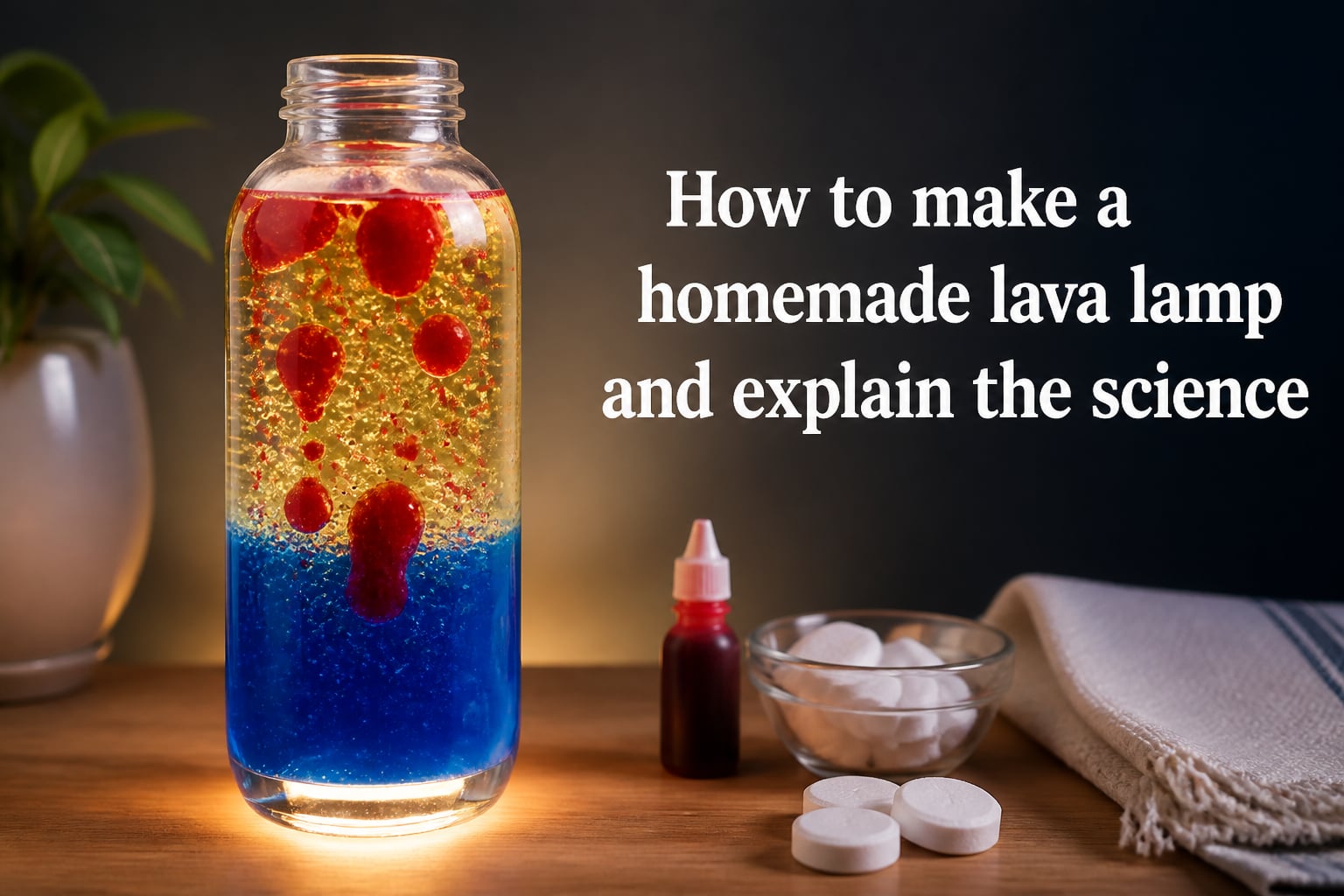
Building a homemade lava lamp science experiment is one of the most rewarding STEM activities you can do with items already sitting in your kitchen. In the next few minutes, you’ll learn exactly how to build one, what materials to use, and most importantly, the science that makes those colorful blobs dance.
Our team has tested this experiment dozens of times with kids, classrooms, and science fair judges. We’ve also done the research into why oil and water behave the way they do, so you get a deeper explanation than most guides offer.
Whether you need a last-minute science fair project, a rainy-day activity, or just want to understand density and chemical reactions better, this guide covers everything from the basic recipe to troubleshooting when things go wrong.
Table of Contents
Materials You’ll Need for Your DIY Lava Lamp
The beauty of this homemade lava lamp is that you probably already have everything at home. Here’s what to gather before you start.
Core materials:
A clear plastic bottle or glass jar (16-20 oz works best)
Vegetable oil (about 2 cups)
Water
Food coloring (any color, but red and blue look striking)
Fizzing antacid tablets (Alka-Seltzer is the gold standard)
Optional items for extra flair:
A flashlight or phone light for illumination from below
Biodegradable glitter for a sparkle effect
Baby oil instead of vegetable oil for a clearer look
Salt (if you want to skip the fizzing tablets entirely)
One note from our testing: generic fizzing tablets sometimes dissolve too slowly. If you can get actual Alka-Seltzer, the reaction is noticeably more vigorous.
How to Make a Homemade Lava Lamp Step by Step
This process takes about five minutes from start to your first blob. Follow these steps in order for the best results.
Step 1: Add water. Pour water into your clean bottle until it is about one-quarter full. This gives you enough colored water to create a strong lava effect without crowding the bottle.
Step 2: Add food coloring. Squeeze roughly 5 to 10 drops of food coloring into the water. We’ve found that deeper colors like red, blue, and green produce the most dramatic visual contrast against the oil. Screw the cap on briefly and swirl to mix the color evenly.
Step 3: Pour in the oil. Slowly fill the rest of the bottle with vegetable oil, leaving about an inch of space at the top. Pour slowly along the side of the bottle to avoid disturbing the water layer. The oil will float on top of the water immediately.
Step 4: Add the fizzing tablet. Break an Alka-Seltzer tablet into two or three pieces. Drop one piece in and watch the reaction begin almost instantly. Add more pieces whenever the bubbling slows down.
Step 5: Illuminate (optional). Place a flashlight or phone light under the bottle for a genuine lava lamp glow effect. This step makes a huge difference for presentations and science fair displays.
The Science Behind the Homemade Lava Lamp
This is where the experiment goes from fun to genuinely educational. Three scientific principles work together to create the lava lamp effect: density, molecular polarity, and chemical reactions.
Density: Why Oil Floats on Water
Density is the amount of mass packed into a given volume of a substance. Water has a density of about 1 gram per milliliter. Vegetable oil sits around 0.92 grams per milliliter. Because oil is less dense than water, it always floats to the top when the two are combined.
Think of it like a balloon in air. The balloon is less dense than the air around it, so it rises. The same principle applies here, just with liquids instead of gases.
Polarity: Why Oil and Water Never Mix
Even if you shake the bottle violently, the oil and water will eventually separate back into distinct layers. This happens because of molecular polarity.
Water molecules are polar, meaning they have a slight electrical charge at each end. One side is slightly positive, and the other is slightly negative. This polarity makes water molecules stick together like tiny magnets.
Oil molecules are non-polar. They have no electrical charge, so water molecules have no attraction to them. In fact, oil is described as hydrophobic, which literally means “water-fearing.” The water molecules cling to each other and push the oil away, keeping the two liquids permanently separated.
The Chemical Reaction: What Creates the Bubbles
When you drop the fizzing tablet into the bottle, a genuine chemical reaction takes place. Alka-Seltzer contains sodium bicarbonate (baking soda) and citric acid. When these dissolve in water, they react to form carbon dioxide gas.
Those carbon dioxide gas bubbles are less dense than both the water and the oil. As they rise, they attach to droplets of colored water and carry them upward through the oil layer.
When the bubbles reach the surface, they pop and release the gas into the air. Without the gas bubbles to lift it, the colored water droplet sinks back down through the oil. This continuous cycle of rising and falling creates the mesmerizing lava lamp effect.
So yes, the lava lamp experiment absolutely is a chemical reaction. The fizzing tablet reacting with water produces a brand-new substance (carbon dioxide gas) that did not exist before.
Variations and Alternative Methods
Don’t have Alka-Seltzer? You still have several options for making your lava lamp work.
The salt method: Instead of a fizzing tablet, sprinkle salt into your oil-and-water bottle. Salt is denser than water, so it sinks through the oil and pulls some oil down with it. When the salt dissolves in the water, the released oil floats back up. The effect is subtler but still visually interesting.
Baking soda and vinegar method: Mix baking soda into the water layer first, then add small amounts of vinegar. The classic baking soda and vinegar reaction produces carbon dioxide just like the tablets do. This version requires more careful measurement to avoid overflow.
Baby oil vs vegetable oil: Baby oil is completely clear, which makes the colored water blobs stand out more vividly. Vegetable oil has a slight yellow tint but is cheaper and more readily available. Both work well.
Troubleshooting Common Lava Lamp Problems
We’ve run this experiment enough times to hit every common snag. Here are solutions to the problems people ask about most often.
Problem: The lava lamp stopped bubbling after a minute. The reaction from each tablet piece only lasts a short time. Simply drop in another piece to restart the action. One full tablet typically gives you 5 to 10 minutes of continuous bubbling.
Problem: Not enough fizz or the reaction is weak. Make sure the water layer is at room temperature. Cold water slows down the chemical reaction significantly. Also, check that your tablets are fresh, because old tablets lose their potency.
Problem: The colors look muddy or dull. You may have used too much food coloring. Start with 5 drops and add more only if needed. Using baby oil instead of vegetable oil also makes colors appear more vibrant.
Problem: Everything mixed together into one murky layer. Wait a few minutes. Oil and water will always separate thanks to their different densities and polarities. Patience solves this one every time.
Real Lava Lamps vs Homemade Lava Lamps
A store-bought lava lamp works on the same density principle but uses a completely different mechanism. Instead of a chemical reaction, real lava lamps use heat.
Commercial lava lamps contain a special wax mixture (typically paraffin wax) in a liquid solution. A light bulb at the base heats the wax. As the wax warms, it expands, becomes less dense than the surrounding liquid, and rises to the top. Away from the heat source, the wax cools, contracts, becomes denser, and sinks back down.
This is why real lava lamps last for years while homemade versions only last as long as your supply of fizzing tablets. Your homemade version is a temporary chemical reaction. A commercial lamp is a self-sustaining thermal cycle.
What Kids Learn From This Experiment?
This single activity packs a surprising amount of science education. Here’s what children take away from it.
They see density in action and learn that some liquids are heavier than others. They observe a real chemical reaction producing a new substance (gas). They understand molecular polarity through the visual proof that oil and water refuse to mix. And they practice the scientific method by making predictions, observing results, and adjusting variables like tablet size or oil type.
For science fair projects, kids can extend the experiment by testing different oil types, comparing tablet brands, measuring how temperature affects reaction speed, or timing how long each tablet piece keeps the lava flowing.
Frequently Asked Questions
What is the science behind making a homemade lava lamp?
The science involves three principles: density (oil is less dense than water, so it floats on top), molecular polarity (water molecules are polar and oil molecules are non-polar, so they never mix), and chemical reactions (fizzing tablets react with water to produce carbon dioxide gas bubbles that carry colored water upward through the oil).
Is the lava lamp experiment a chemical reaction?
Yes, the lava lamp experiment is a real chemical reaction. When the fizzing tablet (containing sodium bicarbonate and citric acid) dissolves in water, it reacts to form carbon dioxide gas. This gas did not exist before the reaction, which is the hallmark of a chemical change.
What can I use instead of Alka-Seltzer for the lava lamp experiment?
You can use salt (which pulls oil down as it sinks and dissolves), a baking soda and vinegar combination (which also produces carbon dioxide gas), or any generic effervescent antacid tablet. Salt produces a gentler effect, while baking soda and vinegar create strong bubbling but require careful measurement to avoid overflow.
Can I use baby oil for the lava lamp experiment?
Yes, baby oil works very well for this experiment. In fact, baby oil is completely clear, which makes the colored water blobs stand out more vividly than they do in yellow-tinted vegetable oil. The science works identically because baby oil is also non-polar and less dense than water.
How do I make a lava lamp for a science fair project?
Use a tall clear bottle, fill it one-quarter with water, add food coloring, top with vegetable oil, and use Alka-Seltzer tablets for the reaction. Place a flashlight underneath for illumination. For a stronger project, test variables like different oil types, water temperatures, or tablet brands, and record your observations with photos and timing data.
Why does oil float on water in a lava lamp?
Oil floats on water because it is less dense. Water has a density of about 1 gram per milliliter, while vegetable oil is around 0.92 grams per milliliter. Less dense liquids always rise above denser liquids, just like a cork floats on water because it contains more air and weighs less per unit of volume.
Wrapping Up: Your Homemade Lava Lamp Science Experiment
Making a homemade lava lamp is a simple, affordable way to explore real science at home. You only need a bottle, some oil, water, food coloring, and a fizzing tablet to demonstrate density, molecular polarity, and chemical reactions in a single activity.
The troubleshooting tips and alternative methods in this guide should help you avoid the common pitfalls that trip people up. And the deeper explanation of polar versus non-polar molecules gives you the background to truly understand why those colorful blobs keep rising and falling.
The next step? Try varying the experiment. Test different oil types, compare tablet brands, or see how water temperature changes the reaction speed. Every adjustment is an opportunity to learn something new about the physics and chemistry happening right in front of you.