
A backyard phenology log is one of the simplest and most rewarding ways I know to connect with the rhythms of nature. In this guide, I’ll walk you through exactly how to track seasonal changes using a backyard phenology log, from setting up your first notebook to contributing data that scientists actually use.
Phenology, the study of when natural events occur throughout the year, has never been more accessible. With nothing more than a pencil, a notebook, and your own backyard, you can build a record that reveals patterns across months and years. By 2026, thousands of citizen scientists are doing exactly this through programs like Nature’s Notebook, and you can join them.
Table of Contents
What Is a Backyard Phenology Log and Why Does It Matter?
A backyard phenology log is a written or digital record of recurring natural events you observe in your own yard. These events, called phenophases, include things like the first crocus bloom, the return of robins, or the day your maple tree unfurls its leaves.
The practice dates back to 1736, when English naturalist Robert Marsham began recording “Indications of Spring” on his Norfolk estate. He tracked the same events for 56 consecutive years, creating one of the longest continuous phenology records in existence. In the American Midwest, conservationist Aldo Leopold popularized the idea in the 20th century, urging readers to keep a “phenology calendar” to notice seasonal shifts year after year.
Modern phenology builds on this tradition with scientific rigor. Each entry typically includes the date, the species, and the specific phenophase observed. Over time, your backyard phenology log becomes a personal climate record, and when combined with data from other observers, it contributes to large-scale research on how warming temperatures are shifting the timing of nature’s events.
Why Tracking Seasonal Changes Matters in 2026?
Tracking seasonal changes in 2026 matters because phenology is one of the most sensitive indicators of climate change. Plants and animals respond to temperature, daylight, and precipitation, so when those factors shift, the timing of blooms, migrations, and breeding cycles shifts too.
Your observations become scientifically valuable when submitted to programs like the USA National Phenology Network. Scientists use this data to detect trends such as earlier spring blooms, delayed fall colors, and migration timing changes. No single observer could notice these patterns, but tens of thousands of citizen scientists across the country create a dataset that researchers can analyze with confidence.
Beyond the science, keeping a backyard phenology log sharpens your awareness. After three years of recording, you’ll know that your daffodils typically bloom in mid-March, or that the first hummingbirds usually arrive around Tax Day. This kind of seasonal literacy changes how you experience your yard, turning ordinary walks into opportunities to notice what’s new.
For gardeners, phenology offers practical wisdom too. Folk traditions like “plant peas when forsythia blooms” or “wait until oak leaves are the size of squirrel ears before transplanting tomatoes” are rooted in real ecological relationships. Your log helps you tune into those cues for your specific microclimate.
How to Start a Backyard Phenology Log: Step-by-Step
Starting a phenology log takes about 30 minutes of setup and a few minutes of observation per week. Here’s the process I recommend after helping dozens of friends begin their own logs.
Step 1: Choose Your Format
Pick a format you’ll actually use. The best phenology log is the one you stick with. Options include:
A dedicated notebook (composition, bound, or spiral)
A digital spreadsheet with columns for date, species, and event
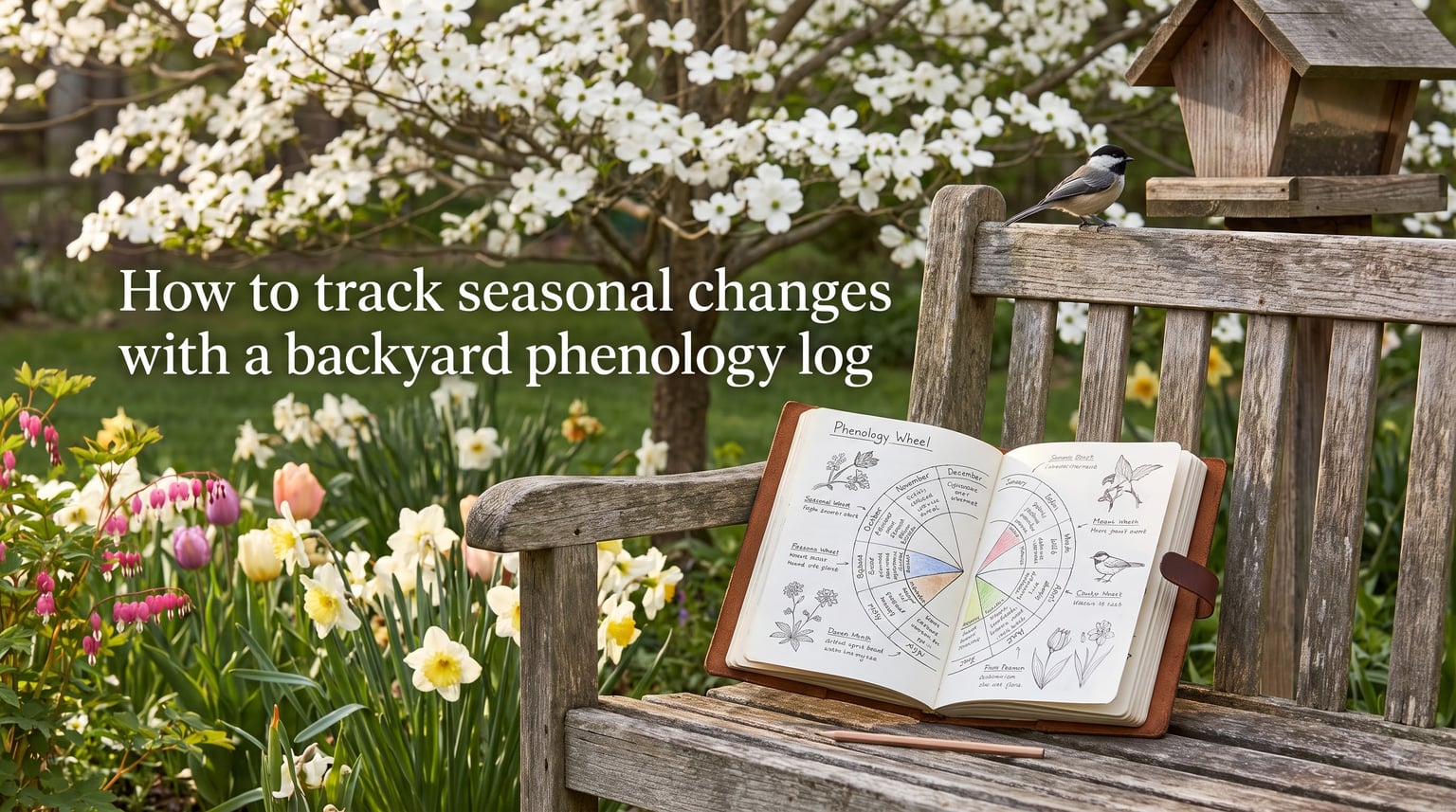
A phenology wheel template, a circular chart divided by month
A dedicated app like Nature’s Notebook or iNaturalist
If you love drawing, choose a sketch-friendly journal. If you prefer data, a spreadsheet works beautifully. Many people start with paper and migrate to digital after a year.
Step 2: Set Up Your Observation Areas
Walk your yard and identify a few reliable spots to check regularly. A flowering shrub, a bird feeder, a pond, and a vegetable bed give you diverse observations. Pick 5 to 10 “anchor” species or features you can monitor easily.
Step 3: Create Your Tracking Template
Draw or type a simple table with columns for date, species, event, weather notes, and observations. Leave room for sketches, photos, or notes about what else you noticed. Consistency matters more than complexity.
Step 4: Establish a Routine
Tie your observations to something you already do daily, like morning coffee or an evening walk. Two to three observations per week is plenty to start. Set a phone reminder if you need a nudge.
Step 5: Record Date, Location, and Conditions
Always include the date and year. Note the weather (temperature, rain, wind) and any unusual conditions. These details become valuable years later when you want to understand why something happened early or late.
What to Observe in Your Phenology Log
The “what to observe” question stumps most beginners. The answer depends on your yard and interests, but here are the most common and useful categories to track in a backyard phenology log.
Plant Phenophases
Plants offer the easiest observations because they stay put. Watch for these events:
First leaf unfurling (record the species)
First flower bud
First open bloom (the famous “first bloom” date)
Full bloom
End of bloom
First fruit or seed
Leaf color change in fall
Leaf drop
Pick 5 to 15 plants you can identify confidently. Native trees, common perennials, and your vegetable garden favorites make a great starting set.
Animal Observations
Wildlife tracking adds richness to your log. Record:
First sighting of migratory birds (robins, hummingbirds, warblers)
First calls or songs (peepers, wood frogs, cicadas)
Nesting activity (nests, fledglings, eggs)
First butterfly or bee sightings
Mammal activity changes (squirrels caching, bears emerging)
Insect emergences (fireflies, periodical cicadas)
Weather and Seasonal Markers
Don’t forget abiotic events:
Last spring frost
First fall frost
First snow
Last snow
First thunderstorm of the season
First ice on the pond
These weather markers help you connect biological events to climate conditions, exactly what makes phenology scientifically useful.
How to Record Your Phenology Data Effectively?
Good phenology records share a few key traits: consistency, specificity, and context. Here’s how to make your backyard phenology log truly useful over time.
Be Specific
Write “first dandelion bloom in lawn” rather than “first flower.” Use common and scientific names when possible. Note the exact location (“the maple in the southwest corner”) so future-you knows which plant you meant.
Note the Stage, Not Just the Presence
Saying “the lilac bloomed on April 12” is helpful. Saying “the lilac had its first open flowers on April 12, full bloom by April 18, and finished by May 2” is much more useful for detecting shifts.
Include Photos When Possible
A phone photo takes seconds and adds immense value. Date-stamped photos create a visual record you can compare year to year. They’re especially helpful for verifying IDs later.
Add Personal Observations
Beyond the science, jot down what you noticed. “Heard the first phoebe this morning while gardening,” or “Wren built a nest in the birdhouse.” These notes turn your log into a nature journal as well as a data source.
Review Seasonally
Set aside time each season to review your entries. Notice which events came early or late compared to past years. This reflection is where phenology becomes meaningful, rather than just a list of dates.
Joining Citizen Science Programs with Your Data
Your backyard phenology log becomes even more valuable when you contribute it to a larger effort. The two main programs in the United States are Nature’s Notebook and iNaturalist, both free and beginner-friendly.
Nature’s Notebook (USA-NPN)
Nature’s Notebook is run by the USA National Phenology Network and is the gold standard for structured phenology observations. You create a profile, register your plants and animals, and record phenophases using standardized definitions. Your data feeds directly into scientific research on climate and seasonal change.
The program offers plant and animal species lists tailored to your region, online tutorials, and a community of observers. Their mobile app makes recording in the field quick and easy.
iNaturalist
iNaturalist focuses on species identification through photos, but its phenology observations are also valuable. When you post a sighting with a date, it automatically contributes to phenology databases. iNaturalist is less structured than Nature’s Notebook but more flexible, and its community can help you identify unfamiliar species.
Project FeederWatch and eBird
For bird-focused phenology, Project FeederWatch and eBird collect observation data that researchers use to track migration timing and population changes. Both accept backyard observations and provide useful tools for birders.
Local and Regional Programs
Many states, universities, and botanical gardens run their own phenology initiatives. Check with your local extension office, native plant society, or nature center to find programs specific to your region.
Tips for Keeping Your Phenology Practice Consistent
The biggest challenge in phenology isn’t the science. It’s consistency. Here are the strategies that work best for long-term success.
Start Small
Track just 5 species your first year. You’ll learn your routine without feeling overwhelmed. Expand in year two.
Tie Observations to Habits
Pair your log with coffee, dog walks, or morning garden checks. Habit stacking makes phenology automatic.
Use Reminders Wisely
Set a weekly phone reminder for the first six months. Once the habit is established, you’ll think about it without prompts.
Embrace Imperfection
You’ll miss weeks. You’ll forget species. That’s normal. The longest phenology records are rarely perfect, just persistent. Resume after any break without guilt.
Share Your Observations
Tell friends, post photos online, or join a local nature group. Sharing multiplies motivation and creates community around seasonal awareness.
Frequently Asked Questions About Phenology Tracking
How do I start a phenology journal as a beginner?
Start by choosing a simple notebook and picking 5 to 10 plant or animal species in your yard that are easy to identify. Record the date and a specific event, like the first bloom or first bird sighting, each time you notice it. Check your yard two or three times per week and write down what you see. Consistency matters more than complexity, so keep your format simple and stick with it.
Who is considered the father of phenology?
English naturalist Robert Marsham is often called the father of phenology. He began recording seasonal natural events on his Norfolk estate in 1736 and continued for 56 years, creating one of the longest continuous phenology records in history. His work established the practice of tracking the same natural events year after year to detect long-term patterns.
What should I record in a phenology log?
Record the date, the species observed, and the specific life-cycle event, such as first leaf, first bloom, full bloom, first fruit, leaf color change, or first animal sighting. Include weather notes and location details. Photos add valuable documentation. Aim for specific phenophases rather than general observations to make your data more useful for tracking patterns.
How hard is it to get into nature journaling?
Nature journaling is not hard, but it does require a small commitment to routine. Most beginners can start within an hour by choosing a notebook and identifying a few species to track. Two or three observations per week is enough to build meaningful data. The main barrier is consistency, not skill, so choose a format you enjoy and tie observations to habits you already have.
Begin Tracking Seasonal Changes with a Phenology Log Today
Starting a backyard phenology log is one of the most rewarding things you can do as a nature lover. In an hour, you can set up a practice that deepens your connection to your yard, contributes to real scientific research, and reveals the subtle patterns of seasonal change. Whether you choose a simple notebook or the Nature’s Notebook app, the act of recording what you notice transforms ordinary time outdoors into something richer and more meaningful.
Pick up a notebook today, choose five species you see every day, and write down what you notice. By this time next year, you’ll have a record that no one else in the world has, a personal chronicle of how your piece of nature moves through the seasons in 2026 and beyond.